Tag: 2021

  • Wes Streeting – 2021 Speech on Covid-19 Restrictions

    Wes Streeting – 2021 Speech on Covid-19 Restrictions

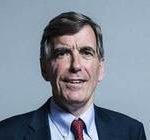
    The speech made by Wes Streeting, the Shadow Secretary of State for Health and Social Care, in the House of Commons on 14 December 2021.

    I begin by acknowledging that there are sincere and deeply held views on both sides of this debate and, indeed, on both sides of the House. I respect those who take a different view from the one I will be outlining on behalf of the Opposition, but we owe it to our country to have a debate worthy of the finest traditions of this House.

    In the light of comments made in recent days by at least one Conservative MP comparing these measures to the situation in Germany during the 1930s, it should not be for me, as shadow Secretary of State, to point out that we are not living in the 1930s and that the Secretary of State and his team are not Nazis. On their shoulders rest the health of our nation and the responsibility to protect our NHS. Indeed, it is a responsibility we all share. They need our support, and they are owed better treatment than they have received from some on their own side in recent days and even this afternoon.

    No matter how dysfunctional the Conservative party has become, the country can rely on Labour. We will act in the national interest, as we have throughout the pandemic, by putting public health before party politics and supporting the motions under consideration this afternoon. We do not do so lightly. Throughout the pandemic we have asked the British people to make big sacrifices to support the national effort against coronavirus—sacrifices that have impacted on lives, livelihoods and liberties. Whenever this House considers such measures, we owe it to the British people to explain why they are necessary. We believe these measure are a necessary response to the omicron threat, necessary to protect ourselves, necessary to protect the ones we love and necessary to protect our NHS.

    We cannot yet be sure about the severity of the omicron variant, but we can be certain it is spreading, and spreading fast—faster than any other variant. Even if a smaller proportion of omicron victims are hospitalised, the rapid advance of the virus through the population could see large numbers of people admitted to hospital during the months in which the NHS is under greatest pressure. There should be no complacency about this. The winter months present the greatest pressures on the NHS in any normal year and, as we know, this is far from a normal year. The NHS is contending with winter pressures, a serious backlog, the delta variant and now the omicron variant. When people invoke the story of the boy who cried wolf, of the warnings that came before but never materialised, they should remember that, in the end, there was a wolf.

    Many of the challenges facing the NHS are understandable, given the unprecedented challenges of the covid-19 pandemic, but we have to be honest and acknowledge that confronting these challenges has been made much harder because we went into the pandemic with NHS waiting lists at a record 4.5 million, 100,000 staff vacancies and 112,000 vacancies in social care. It is not just that the Government did not fix the roof while the sun was shining; they dismantled the roof and removed the floorboards.

    Now the NHS is locked in a race against time: a race against the fastest variant of covid-19 we have seen to date and a race to get as many people boosted as possible before the end of this month. The Opposition support the Government in that task, and let me say on behalf of all of us in the Labour party to every NHS worker, every GP, every pharmacist, every public health official in local government, every member of our armed forces and every volunteer stepping up to meet this enormous task that we are with them 100%. If anyone can do it, they can.

    John Stevenson

    Can the hon. Gentleman explain why the Labour party did not support mandatory vaccinations for care workers but has changed its mind for NHS workers?

    Wes Streeting

    I will outline our position on that, but the hon. Gentleman will have to be patient because I will come on to that later in my speech.

    We need to buy the NHS and its helpers some time. The measures put forward for consideration today are an attempt to do just that by slowing the spread of the virus whilst trying to protect Christmas so that people can enjoy the festive season safely, by limiting our interactions in the workplace, by wearing face coverings in settings where the virus finds it easier to spread, by testing before we attend large indoor gatherings, and by getting behind the booster roll-out to ensure that everyone is protected.

    Mr Perkins

    My hon. Friend is absolutely right that we are all very conscious of how important this time of year is to the hospitality sector, but does he agree that the greatest threat to the hospitality sector is not restrictions of the type that are before us today, but the sense that the virus is out of control, and widespread cancellations across the sector? So these restrictions enable the hospitality sector to survive in this really difficult time, but also enable us to take proportionate steps to ensure that the spike does not get out of control.

    Wes Streeting

    I wholeheartedly agree with my hon. Friend. Indeed, one of our primary reasons for supporting the measures for consideration today is that we on the Labour Benches support business, and we want to support it through a particularly difficult time, when normally trading would be at its busiest.

    The goal in the end must of course be to learn to live with the virus. That means effective vaccination, antiviral treatments, and public health measures that have minimal impacts on our lives, our jobs and our businesses. So let me take each of the measures in turn and explain why Labour supports them, and no doubt take interventions.

    First, on mask wearing, no one enjoys wearing a mask—I certainly do not, but it is nothing compared with the costs that more draconian restrictions have on our lives, livelihoods and liberties. Masks are simply a price worth paying for our freedom to go out and live our lives during this pandemic. They are proven to be effective, and not only that, but in times of rising infections, when people are feeling increasingly cautious, it is vital to our economy that people feel safe boarding a busy bus or entering a crowded theatre. In our view, the Government should never have got rid of the requirement to wear masks in those settings, but we know why they did. We have counted, in recent weeks, hon. Members on the Government Benches not wearing masks. I am glad to see that compliance has risen somewhat considerably. We know that the Prime Minister no longer has the authority to lead his own party, but I am grateful that Members on the Government Benches have at least listened to their Health Secretary.

    Turning to the vaccine pass, and testing to enter nightclubs and large events, I welcome the fact that the Government have listened to representations from Labour and responded. The Labour party has argued consistently against vaccine passports and insisted on people having the option of showing a negative test. Further, we argued that such passes should not be required for access to essential services. On both counts the Government have listened and amended the proposals, and we can support the measure before us today. It is not a vaccine passport. It is, in effect, a default requirement to show a negative test to enter venues where the virus is most likely to spread, with an opt-out available to those with an NHS covid pass.

    Lloyd Russell-Moyle (Brighton, Kemptown) (Lab/Co-op)

    My hon. Friend makes a very good point on that. Is not the reality that if we did not introduce these measures there would be a danger that our night-time economy—pubs, venues and other events—would have to shut completely? So this pass is actually a pass for freedom to allow us to continue to enjoy activities that otherwise would be shut down, and the libertarians opposite should be welcoming it, not bemoaning it.

    Wes Streeting

    I wholeheartedly agree with my hon. Friend. Let me be clear: we in the Labour party support this approach because we support British business. This is about giving people the confidence to go out and about despite the presence of omicron.

    Neale Hanvey

    I thank the shadow Secretary of State for giving way. I wonder whether he shares my concern about reports over the past couple of days that there has been an absence, or a lack, of lateral flow devices to be sent out for testing. What is also alarming is the lack of support for the domestic diagnostics market and the manufacturers in this country of lateral flow devices that are much more accurate and reliable and superior to the current Government lateral flow devices. If these devices are to make a difference, we must have the best quality devices in place.

    Wes Streeting

    I agree with the hon. Gentleman. Of course, in order for this measure to work as effectively as we would wish, there has to be an adequate supply of lateral flow tests. I heard what the Secretary of State said yesterday about the availability of testing, but it is no good if the tests are in the warehouse; they need to be available to people where they need them, when they need them. We have had supply issues and those really do need to be resolved, not least in the light of other measures, which I will come to shortly.

    Sammy Wilson

    Does the shadow Secretary of State not accept that rather than giving confidence to people, these measures, and the background against which they have been introduced, have actually reduced confidence? We have predictions of 75,000 deaths and we are telling people that they cannot go to venues unless they have certain tests; the experience in Northern Ireland is that the hospitality industry has already lost millions of pounds in orders coming up to the Christmas period because people are afraid to go out.

    Wes Streeting

    I will say to the right hon. Gentleman that it is my understanding from dispatches from the shadow Secretary of State for Northern Ireland, my hon. Friend the Member for Hove (Peter Kyle)—of course, Northern Ireland is ahead of England on this—that he had a perfectly nice time out last night enjoying the best hospitality that the people of Northern Ireland have to offer. I think people are drawing confidence from this. Let me also say that we should draw on the experience of other countries. Look at countries with strict covid passport rules, such as Italy, France and Denmark; all have seen their retail and recreation sectors fare far better than those here in the UK because there has been consistency and confidence.

    With passes and lateral flow tests, venues can operate at 100% capacity, punters can be confident that they are safe to attend and enjoy themselves, at this time of year the show goes on, and everyone stays in a job. Without these measures, with rising infections and more hospitalisations, we would risk seeing the Government forced to impose more draconian measures on these sectors, shutting down our cultural sector and collapsing the economy once again. I think we should be confident about this.

    Let me address the tension—it is a reasonable question—in the message that people should work from home if they can but that they can go out. I make no apology for trying to safeguard social interactions between people, their families and their friends at Christmas time. I also make no apology whatsoever for supporting our hospitality industry, which has been battered by the pandemic and which enjoys our support—our confident support, our full-throated support, and our support at the table and the bar in the coming days.

    Mr William Wragg (Hazel Grove) (Con)

    Can we take it from that that the hon. Gentleman is in favour of extending the certification, or vaccine passport, to all venues?

    Wes Streeting

    For now, we think the Government have struck the right balance. The measure is limited to nightclubs and larger venues. However, as the Secretary of State knows, we listen to the chief medical officer, we listen to the chief scientific adviser, we listen to the scientific advisory group for emergencies, we listen to the NHS and we make decisions based on evidence. If ever the Government want to come forward with further proposals, we will consider them in a genuinely bipartisan way and we will act in what we believe to be the national interest. I do not think anyone would expect less of us.

    Munira Wilson (Twickenham) (LD)

    With the covid passes, there is the option of using a lateral flow test or double vaccination. Does the hon. Member recognise that double vaccination, which many people will use, gives a very false sense of security? We know that someone can be vaccinated and still transmit. Most of the people we know getting covid at the moment have already been vaccinated. Double vaccination is not very effective, and it will give a real false sense of security.

    Wes Streeting

    I think the hon. Member should look at the evidence from our friends on the continent, which is that this approach not only works in giving people confidence to go out and enjoy themselves, but encourages people to take up vaccination. On that basis, I think the Liberal Democrats ought to reconsider their position.

    Holly Mumby-Croft (Scunthorpe) (Con)

    The shadow Secretary of State has obviously spoken to lots of people and he is really concerned about transmission. Could he tell the House the Labour party’s view on how much transmission is reduced by two vaccinations?

    Wes Streeting

    I direct the hon. Member to the SAGE advice, which is that there is some evidence—I would not put it any stronger than that—on the reduction of transmission. As I say, our primary reason for supporting the measure is to give people the confidence to continue to access hospitality and an added incentive to take up vaccination. On both those tests, our friends on the continent have shown us a better, effective way forward. I dare Government Members to suggest that France, for example, given its history and culture, is not a country that values liberty strongly.

    Let me move on, because I must make progress. For the passes to work, people must be able to access tests easily and readily. We cannot continue with the situation in which tests are out of stock and unavailable to the public who are required to take them—not if covid passes are required to work and not if close contacts of covid cases are to be able to take the daily tests required. This morning, the Government’s website showed PCR tests unavailable throughout England, and the only region where lateral flow tests are available today is the south-east. We need immediately to resolve such technical issues and the practical issues of test delivery. The measure on daily testing is the one measure that seems to have united the House in agreement, so the Secretary of State really needs to get a grip and ensure we have access to the tests we need.

    On the flexibility to work from home, we have called for workers to be given that flexibility for months and we support the guidance for them to do so where possible. I have addressed the contradiction in respect of people working from home and going out to Christmas parties. We want to protect people’s ability to enjoy Christmas safely this year, which is one of the key arguments for the measure. By limiting people’s interactions at work without disrupting their ability to do their work, we thereby lower contacts and infections and hope to preserve people’s ability to go ahead with the social interactions that they cherish most at this time of year.

    As the Prime Minister rather clumsily and unhelpfully tried last week to open a “national conversation” on mandatory vaccinations for the country at large, I wish to make it crystal clear that we do not support mandatory vaccinations in general. I welcome what the Secretary of State has said this afternoon—not the first time he has had to clean up the Prime Minister’s mess. We believe the vaccine is safe and effective and that everyone should choose to have it. I cannot give any stronger endorsement than to say that I have had my first two jabs and will be having my booster on Thursday. I would not take the vaccine or recommend it to others unless I believed it was safe.

    I recognise that mandatory vaccination for NHS staff is a difficult issue for colleagues from all parties and in our NHS, but the NHS has asked us for it, patients want it and we are persuaded that the threat of omicron makes it even more important for staff to be vaccinated to protect themselves and to protect the public they serve.

    Dr Dan Poulter (Central Suffolk and North Ipswich) (Con)

    I draw the House’s attention to my declaration, as a practising NHS doctor, in the Register of Members’ Financial Interests.

    I commend the hon. Gentleman for the consensual way he is approaching today’s debate and for the many points he has made with which I agree. On mandatory vaccinations for NHS staff, before I could train in medicine I had to have a Bacillus Calmette-Guérin injection for tuberculosis and a hepatitis injection; otherwise, I could not have practised medicine. It was about protecting my patients. It is the duty of all healthcare professionals to put their patients first, which is why it is absolutely right that they should have mandatory covid vaccinations. Does the hon. Gentleman agree?

    Wes Streeting

    I strongly endorse what the hon. Gentleman said. Infection control is going to be a real challenge this winter because of the nature of the omicron variant. By ensuring that the NHS workforce is fully vaccinated, we will protect not only patients but staff, who already put themselves in harm’s way enough. As the hon. Gentleman, who speaks with real knowledge and expertise, said, this is not a new precedent: NHS staff are already required to inoculate themselves against other diseases. It is a professional duty. The NHS clearly believes that the April deadline gives sufficient time to persuade the workforce to protect themselves, their patients and their loved ones without there being an exodus of staff.

    Dr Julian Lewis (New Forest East) (Con)

    I supported the requirement for people working with vulnerable people in care homes to be vaccinated or, if they would not be vaccinated, to be removed from direct contact with vulnerable people. Can the hon. Gentleman tell me—I did not get a chance to ask the Secretary of State—whether this proposal for members of the NHS who have not been vaccinated will affect only frontline staff who interact with the vulnerable, or whether it will apply to people throughout the NHS who might have no contact with the vulnerable? That will affect the way I cast my vote today.

    Wes Streeting

    I hope I can reassure the right hon. Gentleman that it will not be a case of saying to people, “If you don’t take up the jab, that’s it—you’re out.” There will also be the opportunity for redeployment to other roles where vaccination would not be mandatory. I hope that gives him the reassurance that he needs.

    Barbara Keeley

    My hon. Friend is handling his speech in just the right way. There is a balance of rights here, and patients have a right to be treated by staff who are fully vaccinated to protect them. I have a constituent who is clinically extremely vulnerable. She contacted me to say that she was not willing to go to her necessary hospital appointments once she realised that the hospital staff were not fully vaccinated. Does my hon. Friend agree that we have to think of that pretty large number of clinically extremely vulnerable people in this country?

    Wes Streeting

    My hon. Friend is absolutely right.

    We have heard the arguments in outline: this is about protecting staff and patients; it is not a new precedent; and there is a professional obligation, which makes it slightly different from the experience in the social care workforce. I will come on to talk about what the Government need to do. Those are broadly the arguments—

    Simon Hoare (North Dorset) (Con)

    Will the hon. Gentleman give way?

    Wes Streeting

    If the hon. Gentleman just lets me make this point, I will certainly give way.

    Those are broadly the arguments, but I would ask Members on both sides of the House to think about those NHS staff who go to work every day feeling unsafe because their colleagues are not vaccinated. If that is not persuasive enough, I ask them to think about how they would feel if a loved one were treated in a clinical setting or care home by an unvaccinated member of staff through whom they contracted covid and, with it, serious illness or worse. If I lost a loved one through serious illness in those circumstances, I am not sure that I would be very forgiving about the decisions made by Members of this House.

    Anthony Mangnall (Totnes) (Con)

    I appreciate the point that the hon. Gentleman is making, but that is not what the results of the survey of NHS staff in the healthcare and social care workforce found, which was that 55% of people in the NHS were against this proposal. How does he respond to that?

    Wes Streeting

    I have no doubt whatsoever that opinion in the workforce is divided. I do not dispute that, and it is divided partly because people resent the mandate. Ultimately, however, it comes down to this. It is not just about the broad arguments I have outlined or the specific cases we might be confronted with without this protection; we have to ask whether we as a House think it is acceptable for people working in health and social care, who have a duty of care to their patients, to say, “I am making a choice to put them at greater risk. I am working against the very principles that encouraged me to sign up to my vocation in the first place.” That is why, on balance, I think it is the right measure, but I will come on to talk about the way in which we need to take the workforce with us and what we need to do ahead of April.

    Andy McDonald

    My hon. Friend is setting out his response to these proposals with great care. On the vexed issue of mandatory vaccinations, does he acknowledge that 97% of those in my trust have been properly vaccinated and that a significant proportion of the remaining 3% are new starters making their journey towards proper vaccination? It is therefore not that clear. We have heard the responses from the British Medical Association, Unison, the Royal College of Nursing, Unite, the Chartered Society of Physiotherapy, the GMB and the Royal College of General Practitioners, who are opposed to making vaccination mandatory and prefer persuasion to coercion. Does he not think that we should be adopting that approach?

    Wes Streeting

    That is a helpful intervention from my hon. Friend. Let me be clear: I absolutely acknowledge the views that have been put forward by the royal colleges and by staff trade unions. Government ought to take them seriously and work heavily with them in this next phase, where there is still a window for persuasion. I also point the Government to the success that the Welsh Labour Government have had in persuading the workforce; there is much to learn and time available, and we have to work in a spirit of partnership.

    Several hon. Members rose—

    Wes Streeting

    I will say more about that in a just a moment, because the hon. Member for North Dorset (Simon Hoare), at the back, has been very patient.

    Simon Hoare

    I am grateful to the shadow Secretary of State for giving way. May I endorse and welcome what he said at the start of his speech with regard to comments about the Nazis? I called that out yesterday and he was right to do so at the Dispatch Box. I was looking through my inbox from the start of the pandemic and lockdown, and almost every person working in the care sector or the NHS in my constituency was saying, perfectly legitimately, “When the vaccine is available, we must be at the front of the queue, because we are dealing with the vulnerable and it is our duty to get vaccinated.” I do not think that has changed, and I think he is absolutely right, as is the Secretary of State, to say that those caring for the most vulnerable in society should, to try to reduce the risk that they face, be vaccinated.

    Wes Streeting

    I agree with the hon. Gentleman. We have a big effort to boost the booster this month and we have to boost the workforce as well, and make sure that people are supported.

    Dame Angela Eagle rose—

    Kim Johnson (Liverpool, Riverside) (Lab) rose—

    Wes Streeting

    This is a difficult decision—two Members from the same region—but my hon. Friend the Member for Liverpool, Riverside (Kim Johnson), right in the corner, has been very patient, so I will give way to her. I will then come to my hon. Friend the Member for Wallasey (Dame Angela Eagle).

    Kim Johnson

    I appreciate my hon. Friend giving way. He is making an excellent speech; however, the British Medical Association has identified some serious concerns about mandatory vaccines—the fact that we have a chronically under-staffed NHS. Does he believe that this policy is likely to have a significant impact and cause more harm than good?

    Wes Streeting

    That is such an important point, and I am grateful to my hon. Friend for making it. There is a reassurance I would like to offer her and a call to action that I would like to issue to the Government. The reassurance is that there were concerns about what would happen to the social care workforce, which very much influenced Labour’s position on that statutory instrument at the time, but we did not see the collapse in the social care workforce that was warned of and there was lots of evidence that there was a positive impact on take-up.

    I say to the Secretary of State and his team that if they are asking the health and social care workforce to do their duty as professionals, the Government must show greater respect to their professional voice and experience—on pay, conditions and workload. It is often said that the NHS runs on goodwill, so I would like to see the Government showing greater goodwill in return and engaging with the royal colleges and staff trade unions, not just on the plan for vaccine roll-out to their members, but on the debate about the future of our health and social care systems and the big workforce challenge.

    On vaccinations, there is still precious time to do the work on persuasion. I have met the trade unions in recent days, including a great meeting with Unison yesterday—I should declare that I am a member of Unison. Unison had some really helpful advice and practical feedback about the kind of conversations with occupational health that are making a big impact in giving staff the confidence to choose to take the vaccine well ahead of the deadline. Of course we would much rather persuasion than compulsion.

    Ms Marie Rimmer (St Helens South and Whiston) (Lab)

    In St Helens, 99% of care home staff are vaccinated, and at Whiston Hospital, the best one in the country, 91% have had the first vaccine, 89% the second vaccine and 64% the booster. That has all been done with persuasion, not with the threat of the sack. These people are in a vocation. It is not just a job to them; they believe in the patients. We must not get to the stage where we are threatening people. The GPs have even been involved in persuading the care home staff. Everyone has been involved for some considerable time and that is the way to do it—

    Madam Deputy Speaker (Dame Eleanor Laing)

    Order. Let me just make this clear: more than 40 people wish to speak this afternoon and if people make interventions, it is simply not fair on those at the end of the list who will be trying to speak later on. The hon. Lady is only one of many. The shadow Secretary of State is being very fair, as was the Secretary of State, in answering all the questions, but I must ask people to be reasonable.

    Wes Streeting

    It may have been a speech rather than an intervention, Madam Deputy Speaker, but I thought it was a very good one, and I welcome what my hon. Friend has said.

    Dame Angela Eagle

    Will my hon. Friend acknowledge that anti-vaxxers are using vicious and very effective psychological propaganda to upset and worry people who may be vaccine hesitant, particularly about issues with fertility, whether the vaccine is halal and all those things? Does he agree with me that the Government should do much more to counter this very vicious and damaging propaganda?

    Wes Streeting

    I wholeheartedly agree with my hon. Friend. This comes back to the point I made about the Government engaging with the staff trade unions and the royal colleges. Whatever their policy position on having mandatory vaccination, the Secretary of State will find in them willing allies who want to help the Government to persuade colleagues to engage with them and to deal with some of these dangerous conspiracy theories that are knocking public confidence, and creating real fear and anxiety entirely without basis. When the Minister for the Cabinet Office concludes later, I hope that he will set out how the Government plan to engage and that he will give an undertaking to work with the staff trade unions and the royal colleges, because that would do so much to achieve the objectives that we all share, but also to raise morale in the workforce, who often feel that they are slogging their guts out for the Government, but do not get the hearing they deserve.

    Bob Seely

    The hon. Gentleman is making a very good speech, and I apologise for interrupting him, but on a point of science, will he just accept that he has got it a little bit wrong? Someone having the vaccine does not stop them spreading it; it just makes it much less likely that it will harm them badly. Someone can have the vaccine and still spread it, and to imply otherwise is just wrong.

    Wes Streeting

    The hon. Gentleman has called repeatedly from a sedentary position that I do not know the science, but I have said nothing of any sort to contradict the points he has just made.

    With respect to Conservative Members, particularly those who oppose these measures, what they are missing is that it is indisputable that the booster does provide greater protection than the first and second jabs, that vaccination—full stop—provides better protection, and that if we are talking about NHS pressures and workforce pressures, the biggest danger is that the virus sweeps through the health and social care workforce, knocks a load of people out in the middle of the busiest period for the NHS, and then the system topples over. I do not know why it has to be explained again and again to Conservative Members that the objective is to protect the NHS and to stop it toppling over at a critical time. The points about the severity of the virus and the efficacy of the vaccine in preventing transmission or serious illness are largely secondary. We know that the virus is spreading, and doing so rapidly, and we know that if it rips through the health and social care workforce, that is the biggest risk to the NHS—that is what will topple it over. Conservative Members’ constituents will not thank them one bit if they allow that to happen.

    Clive Efford (Eltham) (Lab)

    My hon. Friend is making an excellent speech and putting his case very forcefully. On the issue of coercion versus persuasion and involving trade unions and the royal colleges in NHS managers taking the staff with them, what was not respected by the Secretary of State when he was asked about redundancies is that this is a retrospective change in people’s terms and conditions, and even people who are vaccinated will be resistant to the change being imposed upon them. We have to go forward carefully and take the staff with us. Will my hon. Friend urge the Government to work with the royal colleges and trade unions to take this forward?

    Wes Streeting

    My hon. Friend makes such an important point. Going back to the staff surveys, particularly given that the overwhelming majority of staff are vaccinated, it is not that they do not want their colleagues to be vaccinated, but that they have concerns about the way in which the Government are going about this. We accepted from the Government and from NHS England a very clear view that omicron has raised the stakes in this regard, which has had a big bearing on our position. It is very difficult for me and my colleagues on the Labour Benches to put ourselves in a position that is on the other side of the argument from the NHS and from the public, but the point about engagement is really important. The Government must work with and take the workforce with them. It is not good enough for us to just clap for the NHS, or clap for carers; we must work in partnership with them and respect that these are people who have given their lives to public service and caring for others. They do care. They will instinctively be on the right side, but they just need some persuasion, some patience and genuine engagement and that is where the Government have gone slightly wrong.

    Graham Stringer (Blackley and Broughton) (Lab)

    My hon. Friend started off his speech in an excellent way and has got better as he has gone through it. I say that, but I will almost certainly not be in the same Lobby as him on some of the votes this evening. There is a general point to the specific point that he is making on vaccines, which is that the Government should be clear, explicit and transparent on every issue that they raise if they want to take with them people who are not just worried about vaccines but worried about this whole affair. Repeatedly, the Government have refused to do a cost-benefit analysis on the impact of their policies. We have before us now a number of statutory instruments without impact assessments. Does he agree that that information should be available?

    Wes Streeting

    Let me say to my hon. Friend that, in his intervention, he started off well, dipped in the middle and then got better at the end. He made some absolutely fair points about impact assessments and transparency. In fact, I can see the Vaccines Minister waving impact assessments at me, so I am sure that she will make them available to my hon. Friend.

    It comes back, as we have discussed at various points today and previously in relation to these sorts of restrictions and measures—it is how I began, and will begin to close, my contribution—to how we really cannot be complacent when it comes to public support, public compliance and public consent for the measures that we are considering. We know that we have asked so much of the British people and they have played their part. We also know that recent events have dented their trust and confidence and their willingness to comply, because they have seen No.10 saying one thing and doing another. That makes it even more important that, when we discuss measures that impact on people’s lives, livelihoods and liberties, we have these sorts of exchanges, look over the evidence rigorously, test each other’s assumptions and come to a conclusion.

    With some of the exchanges that we have heard today, people across the country on both sides of these arguments can at least take some reassurance from the fact that, when these matters are under consideration, we do take them seriously. The Government could do a little better sometimes on bringing measures forward in advance of their implementation and on setting out the rationale and argument, and not just assuming that, because measures have been supported by the public previously, they will be supported today. I think we have public support for the measures under consideration this afternoon, but we should not be complacent about it. That is why it is right that we spend so much time exploring these issues.

    Several hon. Members rose—

    Wes Streeting

    I shall take one or two more interventions and then I shall conclude.

    Seema Malhotra (Feltham and Heston) (Lab/Co-op)

    My hon. Friend is making a very important point: we need to make decisions on the evidence that is available. Does he agree that having the debate today and passing these measures tonight is urgent? We have heard that the doubling rate of omicron is shortening. If we are to protect the public, our families, our communities, and the NHS in the run-up to Christmas and beyond, these measures need to pass today.

    Wes Streeting

    I agree with my hon. Friend, and particularly in this city. The reproduction rate of this virus is shortening every day and the numbers that the Secretary of State set out in his opening remarks should concentrate minds before people walk through the Division Lobby this afternoon. Fun though it might be to see the Government in hot water and struggling in votes, it is not in the national interest and that should be the thing at the forefront of our minds.

    Sara Britcliffe (Hyndburn) (Con)

    Does the hon. Gentleman agree that one thing that will reassure Members across the House is a commitment from the Government at the Dispatch Box that, if further restrictions were to come into play, a vote will be had in this House?

    Wes Streeting

    I agree with the hon. Lady. I appreciate that she is a newer Member of the House but I dare say she watched our proceedings before being elected, and we cannot have spent so much time talking about parliamentary sovereignty only to then throw it out of the window in the next Parliament, so her point is well made. The shadow public health Minister, my hon. Friend the Member for Denton and Reddish (Andrew Gwynne), and I have already agreed: he will bring the dinner, I will bring the pudding, and we will see if the Commons shop is doing crackers on discount if we meet over Christmas.

    Finally, and seriously, we think there are areas where the Government can go further without impacting on people’s lives, livelihoods and liberties and should do so. On ventilation in schools, young people have borne the brunt of this pandemic and we owe it to them, to their education and to the staff who support them to make sure that their schools are properly ventilated. They cannot wait until October next year for a review to be published; we need action now. In winding up, can the Minister for the Cabinet Office say something about that? On jabs for young people, the Christmas holidays seem to us to be an ideal time to get young people vaccinated, so when do the Government think we can see action on that front?

    Finally, on statutory sick pay, as we have heard very powerfully from my hon. Friends, there are people out there who are forced to choose between doing the right thing by their families and doing the right thing by public health because they simply cannot afford to isolate at home. So we again implore the Government to act by making sure that higher statutory sick pay is available to people immediately so that they can afford to do the right thing.

    We have not played games with these votes: we are not exploiting the divisions in the Conservative party to inflict defeat on the Government for the sake of scoring political points. The threat facing the country is too serious and Labour takes our duty to the country seriously. The Tories may be in disarray but the public can rely on Labour to keep the country safe, to do the right thing and to support these measures today, and we trust the British people to do the same.


  • Sajid Javid – 2021 Statement on Covid-19 Restrictions

    Sajid Javid – 2021 Statement on Covid-19 Restrictions

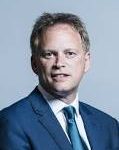
    The statement made by Sajid Javid, the Secretary of State for Health and Social Care, in the House of Commons on 14 December 2021.

    The covid-19 pandemic has caused upheaval across the world, forcing Governments everywhere to wrestle with how to keep their citizens safe while protecting the liberties that we all hold dear. We have learned a lot from our experience and the experience of others, and of course we are still learning. But we can take huge pride that thanks to the defences that we have built, so much of this year has been a year of recovery. We have enjoyed greater freedom than at any time during the pandemic so far. Thanks to the rapid progress of our vaccination programme, our investment in treatments and our decision to open up during the warmer summer months, we are in a far stronger position than we were last winter.

    But even as I stood at this Dispatch Box back in July to announce the major milestone of taking step 4 in our road map, I said that

    “we know that the greatest risk to the progress we have made is the possibility of another new variant, especially one that can escape immunity and puncture the protective wall of our vaccination programme”.—[Official Report, 12 July 2021; Vol. 699, c. 22.]

    We have always known that variants have the potential to knock us off our course, and we have built the capacity to identify and respond to those that pose a threat.

    The vast majority of new variants present no risk whatsoever. Since the summer, there have been hundreds of new variants, but only one of them—omicron—has been designated a variant of concern. For example, just last month, I updated the House from this Dispatch Box on AY.4.2, a new form of the delta variant, which preliminary analysis showed at that time might be more infectious. I said then that we would keep it under review, and that is what we did—and we took no action.

    But omicron is a grave threat. We acted early to slow its spread, strengthening our testing regime and placing 11 countries on the travel red list, but despite those swift steps, the data over the past few days has shown more cause for concern. I would like to reinforce to the House today—to all hon. Members—why omicron represents such a risk to the progress that we have all made so far together.

    Mr Mark Harper (Forest of Dean) (Con)

    I am listening carefully to the Secretary of State’s comments and am grateful that he has brought these measures before the House. I asked him yesterday whether he would give a commitment at the Dispatch Box to recall the House if the Government had to bring further measures in other than those being proposed today, so that we could be involved on behalf of our constituents in making that decision. He kindly agreed to take that matter away and discuss it with the Prime Minister. Is he able now, at the Dispatch Box, to commit that if the Government were to take further measures to deal with omicron during the recess, they would recall the House of Commons so that we are able to have all the evidence and participate in taking those decisions on behalf of the constituents we represent?

    Sajid Javid

    I of course understand the importance of my right hon. Friend’s question; as he said, he asked it yesterday and, understandably, has asked it again today. I hope he will understand that I am not able to give that commitment alone; it would not be a decision for me and my Department alone, but I know the Government would consider it together seriously.

    Dr Andrew Murrison (South West Wiltshire) (Con)

    Might the Secretary of State consider going a little further? Since the data is changing all the time—almost by the minute—it is inconceivable that in a week’s time and a week after that we will be in the same place that we are in today. This House needs to consider the information available to it in near real time, so will he go away and consider whether it would be appropriate now to ensure that the House is able to consider these matters for sure next week and the week after that?

    Sajid Javid

    I will consider that. My right hon. Friend is right to point out that this is a fast-moving situation and it is right that the Government continue to monitor it and respond when necessary, but I hope my right hon. Friend will agree that right here and now the matter being debated and the regulation before the House is the best possible response that can be given by this Parliament today.

    Andy McDonald (Middlesbrough) (Lab)

    Will the Secretary of State give way?

    Sajid Javid

    I will, but then I will need to make some progress.

    Andy McDonald

    I am grateful to the Secretary of State for giving way. If he is going to consider those matters will he also consider the following issue? The virus spreads if people are not able to isolate, so will he think about addressing the issue of statutory sick pay, and in particular spreading the scope of SSP and raising it to a proper rate so that people can isolate and therefore not spread the virus and not end up in our hospitals?

    Sajid Javid

    The hon. Gentleman will know that some measures are already in place such as the ability to get sick pay from day one and that there are hardship funds, but I understand the hon. Gentleman’s question: he asked us to look at that further and we will do so. All these matters are under review.

    Mr Toby Perkins (Chesterfield) (Lab)

    Will the Secretary of State give way?

    Sajid Javid

    No, I will take an intervention from the hon. Gentleman later.

    I want to turn now to some of the things we have learned about the new variant. This is a fast-moving situation and in the last week we have been able to determine the following things with a high degree of confidence. First, omicron is more transmissible than the delta variant. We can see that the growth in omicron cases here in the UK is now mirroring the rapid increase in South Africa, and the current observed doubling time is around every two days. Although yesterday we reported that there were 4,713 confirmed cases of omicron in the UK, the UK Health Security Agency estimate for the number of daily infections was 42 times higher at 200,000. Scientists have never seen a covid-19 variant capable of spreading so rapidly, so we have to look at what we can do to slow omicron’s advance.

    Several hon. Members rose—

    Sajid Javid

    I give way first to the hon. Member for Brighton, Pavilion (Caroline Lucas).

    Caroline Lucas (Brighton, Pavilion) (Green)

    The Secretary of State is making a strong point about exactly why we need to do far more to address the threat of omicron, but does he accept that the Government’s mixed messaging has been incredibly unhelpful? Telling people that a tsunami of omicron is on the way but at the same time saying we can go on partying absolutely undermines that message. Will he have the moral courage to say that we actually do need to reduce our social contacts, and will he make it possible for people to do that both with the sick pay we have already talked about and by ensuring businesses get the financial support they need if fewer people are going into their premises?

    Sajid Javid

    What I think we need to do are the measures that are in front of the House today, and I hope the House will support them. I think those are the most important measures we can take right now.

    Andrew Bridgen (North West Leicestershire) (Con)

    But has the Secretary of State seen the statement from Dr Angelique Coetzee, the head of the South African Medical Association, today? She says that the Government’s measures on lockdown may be counterproductive, that omicron is a mild form of covid-19 that will have huge benefits for herd immunity and protection, and that delaying its spread may give time for more virulent and pathogenic variants to take hold and cause more deaths in the UK.

    Sajid Javid

    First, I think my hon. Friend, if I heard him correctly, talked about the “Government’s measures on lockdown”. I am not sure where he has seen these measures on lockdown, because they are certainly not being presented by this Government here today. On whether the omicron variant is milder, I will come to that issue very shortly.

    Alec Shelbrooke (Elmet and Rothwell) (Con)

    Building on the point from my hon. Friend the Member for North West Leicestershire (Andrew Bridgen), which my right hon. Friend says he is about to expand on, the question is: when will we know whether omicron gives severe or mild disease? If it is mild, how quickly could the decision be made that this would be an advantage to get rid of delta and to get herd immunity while it does not create strong disease?

    Sajid Javid

    If my right hon. Friend will allow me, I am about to come to precisely the point he raises.

    The second thing about omicron that I want to share is that, although we do not yet have a complete picture of its severity, even if its severity is significantly lower, the much higher transmissibility of omicron means that it still has the potential to overwhelm the NHS. Let us take the current observed doubling time of two years—[Interruption.] Sorry. Let us take the current doubling time of two days. If, for argument’s sake, omicron is only half as severe as delta, after the lag between cases and hospitalisations has taken effect, that would buy us only two days before omicron hospitalisations reach the same level as for delta.

    Neale Hanvey (Kirkcaldy and Cowdenbeath) (Alba)

    Will the Secretary of State give way?

    Sajid Javid

    I will do so later.

    In England, 10 people are confirmed to have been hospitalised with the omicron variant. I know that some hon. Members have said that, because confirmed hospitalisations from omicron are low, we do not need to act, but it is the fact that omicron hospitalisations are low that means now is the best time to act. We have seen during previous waves—we have already seen this—that the lag between infections and hospitalisations is about two weeks. When infections are rising so quickly, we are likely to see a substantial rise in hospitalisations before any measure starts to have an impact, so there really is no time to lose.

    Bob Seely (Isle of Wight) (Con)

    I understand the nuanced point that my right hon. Friend is making, but on the forecasts, does he accept that many academics have doubted the previous forecasts, describing them as “hysterical”, “substantially inflated”, “consistently overconfident”, “lurid” and “severely flawed”? We have had a problem with inaccurate forecasts. Does he accept that point?

    Sajid Javid

    Yes, I absolutely accept that point. With previous variants of covid, we have seen forecasts and estimates—whether from academics, think-tanks or others—that have been completely off the mark, but all I would say, gently, to my hon. Friend and other hon. Members is that, just because several forecasts in the past have been wrong, it does not mean that every estimate or forecast is always wrong. I hope my hon. Friend will note that.

    Greg Clark (Tunbridge Wells) (Con)

    My right hon. Friend talks about hospitalisations and the danger they may cause to the NHS, but will he reflect on the fact that it is not just hospitalisations but the length of stay in hospitals that determines how many beds are occupied? Evidence from South Africa suggests not only that there are fewer hospitalisations, but that people are in hospital for a much shorter time. Is that reflected in his calculations?

    Sajid Javid

    Yes, I can confirm that to my right hon. Friend. First, he is absolutely right to make that point. Of course it is not just about individuals entering hospital but about how many days they are likely to stay in hospital. I believe that for the delta variant an individual stays, on average, about nine days in hospital. If that was cut to five or six days, of course it would help with capacity. First, we cannot assume that, because what we are seeing in terms of the impact in South Africa is that hospitalisations there are rising rapidly; there are hundreds of people in intensive care units and on ventilators. It is hard to completely read that across, given that the average age of the South African population is about 27. I hope he would agree that, as with the point I just made on severity, even if the hospital stay is half of what it is at the moment, the rate at which this thing is growing—and if it continues to grow at that rate—means that that benefit could be cancelled out in two days.

    Mr Perkins

    The Secretary of State is facing a lot of criticism from behind him, but he should be assured that on these Benches we absolutely recognise the dangers of the variant before him. Does he accept, however, that having come in to his post saying that the end of restrictions was “irreversible”, he has created an expectation that he is going to constantly ignore the scientific advice, which is why he is facing so much disappointment from those behind him now?

    Sajid Javid

    The hon. Gentleman may have heard earlier, when I started my remarks, that I talked about what I said at this Dispatch Box in July and, specifically, about the risk of a vaccine-escape variant. I do want to talk about the vaccines and this variant—

    Several hon. Members rose—

    Sajid Javid

    I will give way one more time for now and then I will come back to other colleagues.

    Mr Steve Baker (Wycombe) (Con)

    I am grateful, and I think my views on this are pretty well understood. Given the case the Secretary of State is setting out, one thing I am puzzled by is why he is only going as far as he is. Will he explain to us why, in his estimation, the measures he is taking are equal to the situation that he is describing?

    Sajid Javid

    That is a very fair question, as always from my hon. Friend. In the measures we are setting out, we are taking into account the very best advice we are being given—this includes making sure that we are not just listening to every piece of advice or every forecast we are seeing. He will recall that back in the summer had we listened to some of the advice we were receiving we would not have opened up in the way we did. So we are taking account of the advice, deciding whether it should influence our decision making and then coming to a balanced and proportionate response: the measures I have talked of and, for example, increasing the booster programme, which I will turn to in a moment too.

    Several hon. Members rose—

    Sajid Javid

    I must make some progress, but I will take further interventions in a moment. I wish to talk about the importance of what we have learned about omicron and the vaccines. Vaccines have proven to be highly effective against previous variants, such as the alpha and delta variants. That has weakened the link between cases, and hospitalisations and deaths, and it has allowed us to reopen our country once more. But recent analysis from the UK Health Security Agency has shown that two doses of a vaccine provide much lower levels of protection against symptomatic infection from omicron when compared with the delta variant. More encouragingly, effectiveness rose considerably in the early period after a booster dose, providing about 70% to 75% protection against symptomatic infection. This data starkly shows the importance of booster doses and why we are working so hard to get many more boosters into arms. I will say more about that in just a moment. Our strategy is to take proportionate action now, to come down hard on this virus and strengthen our defences, rather than waiting until it is too late.

    Richard Graham (Gloucester) (Con)

    Surely the whole point is that we cannot be complacent and assume that this likely huge increase in infections is all going to result in very mild symptoms. What the Government are doing, therefore, is taking modest steps to ensure that if that does not happen, we will be prepared. Will he promise that if this situation does not materialise, he will be able to relax again?

    Sajid Javid

    We all want to relax. I wish I was more relaxed now than I already am. My hon. Friend is absolutely right on that, and I agree with him.

    Rachael Maskell (York Central) (Lab/Co-op)

    I appreciate that this is an escalating situation which needs urgent attention, but the fact is that if we are enabling social mixing, that is the very context in which we will see transmission, as we did with delta last December. Will the Secretary of State review these measures, as it seems that the statutory instruments before us today are already out of date?

    Sajid Javid

    It is of course important that we keep measures under review, but, for the reasons I gave earlier, I will continue to present this set of measures to the House. They strike the right balance and are a proportionate response.

    Aaron Bell (Newcastle-under-Lyme) (Con)

    My right hon. Friend may be interested to learn that Dr Angelique Coetzee gave evidence to the Science and Technology Committee this morning, and, rather contrary to her piece in the Daily Mail, she actually endorsed what the Government are doing. She said that the boosters were definitely the absolute priority, but she also referred to masks and avoiding mixing. When asked specifically about the covid pass proposals, she said that they sounded like a proportionate response to the requirements of the situation.

    Sajid Javid

    I thank my hon. Friend for sharing that with the House. I think it is important to hear that support from South African experts too.

    Chris Grayling (Epsom and Ewell) (Con)

    We are all, of course, concerned to hear that plan C measures are already being discussed, and I should be grateful if my right hon. Friend could lay that to rest. However, I want to raise the question of hospitalisations. There is a difference between people who have been hospitalised with omicron and those who have hospitalised from omicron. Will my right hon. Friend tell us what he knows about those cases? How many people have been admitted to hospital for other reasons, and how many have arrived in hospital because they are seriously ill with omicron?

    Sajid Javid

    What I can tell my right hon. Friend is that there are approximately 6,000 people in English hospitals who have tested positive for covid, and of those—I have shared information like this with the House before, because I was determined to obtain it when I first became Health Secretary—approximately 80% are there because of covid symptoms, while about a fifth are there for other reasons, but were tested for covid and happened to have it. I hope that that is helpful to my right hon. Friend.

    Richard Burgon (Leeds East) (Lab)

    I really must press the Secretary of State on this issue, on behalf of workers in my constituency and across the country, particularly low-paid workers. Why are the Government not offering us a vote today on whether to increase sick pay to real living wage levels? We cannot have a situation in which the Government are making the case that this matter is so serious—which it is—while forcing low-paid workers to choose between food on the table and self-isolating to protect the rest of the community.

    Sajid Javid

    Where I agree with the hon. Gentleman is on the importance of using measures to support people. Support is already there, but I recognise from the way in which he phrased his question that he thinks there should be more support. I understand that we have a difference of view on that, but it is something we keep under review.

    When I announced our autumn and winter plan to the House in September, I explained that we would hold measures in reserve in case the NHS was likely to come under unsustainable pressure and stop being able to provide the treatment that we want all our constituents to receive. Yesterday NHS England announced that it would return to its highest level of emergency preparedness, incident level 4, and unfortunately there is now a real risk that the exponential rise in omicron cases will translate into a spike in hospital admissions and threaten to overwhelm the NHS.

    We have done so much to boost the capacity of the NHS. Over the past year we have increased the number of doctors by 5,000 and the number of nurses by almost 10,000, and we have expanded the number of beds available, but we have also had to put in place measures for infection control which have limited that capacity, and there are already more than 6,000 covid-19 patients in hospital beds in England.

    Despite the progress that we have made, the NHS will never have an unlimited number of beds, or an unlimited number of people to look after people in those beds. If we think that capacity risks being breached, we simply have to step in, because we know what that would mean in practice for both covid and non-covid care. It would mean one of the hon. Gentleman’s constituents, maybe a child, is in a car crash and is in need of emergency care, and the NHS has to make difficult decisions about who deserves treatment and who does not. Now, I know that some hon. Members think that this is merely hypothetical, but it is not. We have seen health services around the world become overwhelmed by covid-19 and we cannot allow that to happen here.

    Layla Moran (Oxford West and Abingdon) (LD)

    I am extremely grateful to the Health Secretary for mentioning frontline NHS staff. The all-party parliamentary group on coronavirus had a hearing this morning where we heard that staff are suffering moral injury because they are having to make exactly the decisions he outlined. The other thing we heard is that there is a worrying suggestion that omicron may be worse for children than delta. What assessment has he made of that risk? What is his plan for children to protect them against this deadly new wave?

    Sajid Javid

    First, I very much agree with the hon. Lady about the phenomenal work everyone in the NHS has been doing at all times, but especially over the past two years during this pandemic. They could not have delivered more. On her question about children and omicron, I am afraid we do not have any evidence on that yet that I have seen. We take the impact of omicron very seriously—I hope she can see that—and we will keep that under review.

    Several hon. Members rose—

    Sajid Javid

    I will take some interventions in a moment, but I want to just finish this section.

    We are also giving the NHS more time to put boosters in arms. I can assure the House that we will not waste a single second in doing that. We have already given more booster doses than anywhere else in Europe and 44% of the people in this country over the age of 18 have already been boosted. However, the recent data showing the importance of booster doses for our fight against omicron has highlighted the need to go even faster. Yesterday, I set out to the House how we are bringing forward the target we set ourselves, so that everyone who is eligible and aged 18 and over in England will be offered the chance to get their booster dose before the new year. This is a new national mission: a race between the virus and the vaccine to get as many people protected as soon as possible.

    Just as we embark on this huge logistical endeavour in the short term, we are also looking at the long term. We have already signed contracts to buy a total of 114 million extra doses of future-proof vaccines that will help our country’s vaccination programme over the next two years. The deals we have struck will give us the earliest access to modified vaccines to combat omicron and future variants of concern should we need them.

    Dr Luke Evans (Bosworth) (Con)

    The Secretary of State is absolutely right. I am overjoyed that boosters are the key to getting the country out of this issue. I have raised, over the past couple of weeks and last week in PMQs, the issue of the 15-minute wait post-Pfizer. I wonder if the Medicines and Healthcare products Regulatory Agency or the Joint Committee on Vaccination and Immunisation have come to a conclusion on that, because that would free up a huge amount of capacity when it comes to delivering the boosters?

    Sajid Javid

    My hon. Friend did raise that point yesterday. It is being looked at very urgently. I am sure he will agree that if it is done, it should be done in a safe way that our regulators are happy with. I can confidently say that I expect an urgent update later today as soon as I leave this Chamber.

    Alec Shelbrooke

    I entirely agree with what my right hon. Friend said about the pressure on the NHS and the difficult problems that will occur if we have unvaccinated people blocking ICU beds. As he said, however, variants come along. He is making the case that, even if symptoms are only mild there will be exponential growth of cases in hospitals. What is the plan going forward? There is a set of measures today to deal with the situation now—fair enough—but if this is going to keep happening, how do we avoid being sat here in three months’ time, five months’ time or six months’ time debating the same thing? What is the plan?

    Sajid Javid

    That is a very fair question. I will say more about that in a moment, but I point my right hon. Friend to one of the things I have just mentioned, which is better and better vaccines. In the future, we will have poly-variant vaccines. Because of the orders we have already placed, we are at the front of the queue for such vaccines.

    Dame Angela Eagle (Wallasey) (Lab)

    Has the Secretary of State noticed, as I have, the view that omicron may have originated in Africa in an immunosuppressed sufferer of HIV, where these viruses can mutate much faster than they would under other circumstances? Does he agree that the best way of dealing with this is to get vaccines into as many people in Africa as possible and to ensure that HIV/AIDS sufferers are given access to the proper treatment?

    Sajid Javid

    There is lots of speculation on how omicron may have originated. I will not add to that speculation now, but I agree with the hon. Lady’s general point, which is a powerful point, about the need to get more vaccines to people in developing countries, whether in Africa, Asia or elsewhere. We can be proud of what the UK has already done—more than 20 million vaccines delivered through COVAX or directly, and almost another 10 million on the way. We are completely committed to meet our target of 100 million vaccine donations by June 2022.

    Andrew Bridgen rose—

    Madam Deputy Speaker (Dame Rosie Winterton)

    Order. Just before the Secretary of State makes further progress, it is absolutely right that he should be taking a lot of interventions—there are a lot of questions to be asked—but people who have already made one intervention should not be making a second or a third intervention and certainly not if they also wish to be called to speak later in the day. I have too many people who wish to speak and there is not going to be enough time for everybody. Be sure—if you keep intervening, you do not get to speak. Let us have a little consideration for others.

    Sajid Javid

    I shall indulge my hon. Friend the Member for North West Leicestershire (Andrew Bridgen) because he is going to be really short.

    Andrew Bridgen

    The Secretary of State knows that I have been short all my life. He said earlier that the average age in South Africa was 27.5 years. I fear that he may have mis-spoken or been badly advised. In fact, the median age in South Africa is 27.5 and the comparative median age in the UK is 40.5—not radically different.

    Sajid Javid

    I am pleased that I took that intervention because I do not want people to think in the way my hon. Friend has suggested. I have to disagree with him. There is a big difference between those two ages, and the last time I looked the median can be described as an average. But I am pleased that he shared that because it highlights my point.

    Clive Lewis (Norwich South) (Lab) rose—

    Sajid Javid

    I do need to plough on, but I will take some interventions a bit later.

    For the reasons that I have set out, I believe that the responsible decision is to move to plan B in England, drawing on the measures that we have held in contingency to give more time to get those boosters into arms. These are not steps that we would take lightly. I firmly believe in individual liberty and that curbs should be placed on our freedoms only in the gravest of circumstances. Not only that, but I am, of course, mindful of the costs that restrictions can bring to the nation’s health, to our education and to the economy. So it is vital that we act early and we act in a proportionate way, doing whatever we can to build our defences and to preserve greater freedom for the long term. I am confident that these measures are balanced and proportionate, and that they still leave us with far fewer restrictions than are in place in most countries in Europe. I can assure the House that we will keep reviewing the measures that we have put in place and we will not keep them in place for a day longer than we have to.

    Stephen Hammond (Wimbledon) (Con)

    Specifically on the regulations, given the regulation on refusal of entry, the small number of venues and the large number of exemptions and the lack of protection for double-vaccinated people, why not make it a necessity for everybody to show a lateral flow test, rather than showing double vaccination?

    Sajid Javid

    If my hon. Friend allows me, I will come to that point shortly.

    I said a moment ago that we will not keep measures in place for a moment longer than we need to. For example, now that there is community transmission of omicron in the UK and that omicron has spread so widely across the world, the travel red list is less effective in slowing the incursion of omicron from abroad, so I can announce today that, while we will maintain our temporary testing measures for international travel, we will be removing all 11 countries from the travel red list, effective from 4 tomorrow morning.

    I wish to turn to the details of some of the regulations before the House. Regulation No. 1400 proposes extending the use of face coverings. In October, UKHSA published an updated review of the evidence on the effectiveness of face coverings and concluded that there is good evidence that they can help to reduce the spread of covid-19 when worn in the community. The regulation proposes extending the legal requirement to most indoor settings, including theatres and cinemas. They are not required in places where it would not be practical—for example, in hospitality settings such as cafés, restaurants, pubs, nightclubs or other dance venues, or in exercise facilities such as gyms.

    Regulation No. 1416 would mean that anyone over 18 would need to show a negative lateral flow test to get into a limited number of higher-risk settings, unless they were double vaccinated. As I announced to the House yesterday, however, in the light of new data on how vaccines respond to omicron, our intention is that boosters will be required instead of two doses as soon as all adults have had a reasonable chance to get their booster jab.

    Clive Lewis

    I thank the Secretary of State for being so generous in taking interventions. Does he agree that, if we are to get on the front foot in tackling the pandemic, we have to acknowledge that it is like our house being on fire and dealing with just one room rather than the rest of the house? Surely the TRIPS waiver, which gives other countries across the developing world and beyond the ability to produce the vaccine themselves, to increase the supply at a cost-effective rate and to stop big pharma from excessively profiteering, is the way to get on to the front foot in vaccinating the rest of the world and ensure that new variants do not continue to flourish.

    Sajid Javid

    As I said in response to an earlier question, in terms of getting vaccines to the developing world, donations through COVAX and bilateral donations are important. I must strongly but respectfully disagree, however, with the hon. Gentleman’s suggestion that waiving intellectual property and patent rights will help. That will not help. That will undermine the world’s ability to deal with the pandemic, because it will remove the incentive for pharmaceutical companies to develop these valuable drugs in the first place.

    Several hon. Members rose—

    Sajid Javid

    I need to make some progress.

    As I announced to the House yesterday, in the light of new data on how vaccines respond to omicron, our intention is that boosters will be required instead of two doses as soon as all adults have had a reasonable chance to get their booster jab. I reinforce to hon. Members that the proposal on getting a negative result from a lateral flow test, or not having to do so if you are double vaccinated, is not a vaccine passport.

    It is really important to me, as a point of principle, that people have a range of different routes to show how they are eligible, and that is what is before the House today. Those options include showing proof of a negative test for the last 48 hours, proof of vaccination, proof of a medical examination, or evidence of participation in a clinical trial. The regulations cover a small number of settings that present particular risk.

    Alexander Stafford (Rother Valley) (Con)

    My right hon. Friend knows that I am completely against vaccine passports and mandatory vaccinations. Can he confirm that lateral flow tests will always be used? That would allay my fears and those of my constituents that we are creating a two-tier system with mandatory passports. If lateral flow tests are always used, everyone can have access to all parts of our society.

    Sajid Javid

    I can give my hon. Friend that confirmation and I am happy to make that really clear. It is vital that there is always an option for a lateral flow test. I would not support a vaccine-only option.

    Dr Ben Spencer (Runnymede and Weybridge) (Con)

    In terms of providing proof of a negative lateral flow test, is that possible for someone who does not have access to the internet or a phone? What is the evidentiary requirement?

    Sajid Javid

    Lateral flow tests are available for everyone. The vast majority of people will have access to phones or through other ways. Once people have taken the lateral flow test and registered the result, perhaps with the help of someone in their family or a friend, they can get printed proof of that by using the 119 service. If there are other ways to improve that, of course we will, but we have found that that is available to the vast majority of people, including those who might not be as familiar with technology.

    Mr Alistair Carmichael (Orkney and Shetland) (LD)

    A vaccine passport with a lateral flow test alternative is still a vaccine passport. We have seen the use of vaccine passports in other parts of the country, in Scotland and in Wales. What difference have they made to the transmission of omicron in those parts of the country?

    Sajid Javid

    I will come to that specifically in a moment, but again I have to stress that this is not a vaccine passport. If the right hon. Gentleman wants to see a vaccine passport, he can do that in Scotland or he can go to France or some other countries. The measure is an attempt to reduce risk from covid in a high-risk venue. It is sensible and proportionate and provides several options and flexibilities.

    Several hon. Members rose—

    Sajid Javid

    I must make some progress. I will take some interventions later.

    The regulations—statutory instrument No. 1416—cover a small number of settings that present a particular risk: venues such as nightclubs, indoor events with 500 or more attendees likely to stand and move around, outdoor events with 4,000 or more attendees likely to stand and move around, and all events with 10,000 or more attendees. Those measures come into force tomorrow. We have given a week’s notice of those changes so that venues have time to put arrangements in place. I am pleased that many venues are already using the measures.

    We cannot eliminate the risk of covid-19—that is simply not possible, nor should it be tried—but we can reduce it. The proposals offer a pragmatic way of doing that. Under them, people can either show a negative lateral flow test result, meaning that they are less likely to be infectious, or they can be double jabbed, which means that they are less likely to become severely unwell if they are exposed to covid-19.

    Ruth Edwards (Rushcliffe) (Con)

    Many of my constituents have contacted me concerned that the measures today are the first step in further restrictions on social gatherings and businesses. Will my right hon. Friend assure them that that is not the case and that, if we can rescind the measures before 26 January, we will?

    Sajid Javid

    I think that what I am about to say will give my hon. Friend that assurance. The plans will make high-risk environments safer than they would otherwise be, but all the regulations will be reviewed by 5 January and sunset on 26 January. I emphasise in response to her question that they sunset on 26 January and that even if the Government wanted to do something different and change matters in some way, we would have to come back to the House and seek its approval.

    Mr Ben Bradshaw (Exeter) (Lab)

    The Secretary of State is right that the regulations do not provide for vaccine passports. Conservative Back Benchers and the Liberal Democrats are completely wrong about that. I warmly welcome what he said about abolishing the red list. Will he now release all those people who are currently incarcerated in so-called quarantine hotels in inhumane conditions in this country? Will he also get rid of the other extra restrictions he introduced only two weeks ago to try to keep the omicron variant out when it is already here?

    Sajid Javid

    The point about managed quarantine and those people who are already in it is important. I am told that the practice in the past was to require them to complete their quarantine period, but I understand the importance of the point. I have asked for urgent advice about what that means. I hope to add to that very soon.

    Neale Hanvey

    One of the things we know about omicron is the significant genetic mutations and changes that have happened to the spike protein. This morning, at the Science and Technology Committee, Kate Bingham, the Government’s vaccine tsar, said that the Government’s decision to pull the plug on the Valneva contract was mistaken. Will the Secretary of State make a commitment today to revisit that, given the specific technologies that exist with a whole-virus vaccine, which Ms Bingham described as “having the edge” over other vaccines, and which would help the distribution of vaccines to the rest of the world?

    Sajid Javid

    I think the hon. Gentleman will understand that when the Government make decisions on vaccines they take expert advice, most of which comes from the JCVI. We always listen carefully to that advice to make a final decision, but it is coming on a number of occasions and is constantly kept under review.

    Karl MᶜCartney (Lincoln) (Con)

    Referring back to the point made by the right hon. Member for Exeter (Mr Bradshaw), it is crazy that people who have been in self-isolation are going to have to remain there due to the 11 countries that have not been removed from the red list. Surely they should not only be released from their incarceration but reimbursed for the astronomical amount of fees they have had to pay.

    Sajid Javid

    I am very persuaded by what my hon. Friend says. I would love to stand here right now and just say that that is the case, but there are some issues that need to be resolved, and they are urgently being looked at. I hope that we can say something more on this as a Government, even as early as today. I do understand what he said, for exactly the reasons that he said it, including on reimbursement.

    As well as the new measures we are proposing, we are restoring freedoms too, drawing on the defences that we have already built. At the end of last month, this House passed regulations requiring all close contacts of a suspected or confirmed omicron case to self-isolate for 10 days, but given the increasing dominance of omicron, this approach no longer makes sense for public health purposes and nor is it sustainable for the economy. So we are drawing on the testing capacity that we have built to create a new system of daily testing for covid contacts that has started today. Instead of close contacts of confirmed cases or suspected cases having to self-isolate, all vaccinated contacts, irrespective of whether the contact was with an omicron case, will be asked to take lateral flow tests every day for seven days. Regulation No. 1415 allows us to put this plan into action by revoking the omicron-specific provisions for self-isolation.

    Steve Brine (Winchester) (Con)

    The Secretary of State knows that I welcome that. The isolation regs that we passed two weeks ago that I did not support were sinister, and well done to him for getting rid of that. On test and release, though, he will know that many of our constituents—many of mine have contacted me to say this—cannot, for love nor money, get hold of lateral flow tests right now. Could he update the House on whether this problem has been resolved?

    Sajid Javid

    My hon. Friend will understand that there has been a huge surge in demand for lateral flow tests, perfectly understandably of course. The situation at present is that the warehouses of the UKHSA have plenty of stock, but the distribution channel has been limited, although it has added to that significantly in recent days, including building on the channels it has with Royal Mail, Amazon and other suppliers, and also opening up more access points other than direct ordering online so that people can pick up tests from far more pharmacies, for example, than they currently can. It is being worked on, and whatever the current situation is, it will be improved very, very quickly. I hope that reassures my hon. Friend.

    Barbara Keeley (Worsley and Eccles South) (Lab)

    The Secretary of State is making some vital points about testing and self-isolation, but yesterday I raised a point with him about PCR testing that I would like to come back to. Although the supply of lateral flow tests is important, so is the PCR testing, which is a more reliable gold standard. Today there was a point when it was reported on social media that there were no PCR testing slots available in any region of England. Yesterday I asked him if he would authorise each director of public health across the country to have a float stock of 500 PCR tests they can use to disrupt covid outbreaks and to slow the transmission of omicron. This is a really important point. Only nine directors of public health have that float stock at the moment. Will he take this vital step and authorise it for all the other directors of public health?

    Sajid Javid

    We are, as the hon. Lady would imagine, working very closely with directors of public health throughout England, whether on testing or other areas. On PCR testing capacity specifically, capacity is usually roughly 600,000 a day, but it is already being expanded to about 800,000 a day, and it will be further expanded. It is important for hon. Members to know that testing is released at different times of day, so if someone checks the system and a test is not available, it might be available in their local area in the next couple of hours—it is not just a day-by-day process. As the process is surged, tests will become much more easily available. It is also important to remind people whenever one can that a PCR test should be used only if someone has symptoms; otherwise, lateral flow tests should be deployed.

    Finally, I turn to measures to help keep the health and care system safe for the long term by making vaccination a condition of deployment for more health and social care settings. Across the UK, the overwhelming majority of us have made the positive choice to accept the offer of a vaccination against covid-19, and 91% of NHS staff have already had two doses, but we need that figure to go even higher. Uptake rates vary among health and care organisations and across the country; despite the incredible effort to boost uptake across the country, approximately 94,000 NHS staff are still unvaccinated. It is critical to patient safety that health and care staff get the jab to protect some of the most vulnerable people who are in their care and keep the NHS workforce strong in the wake of omicron.

    We made vaccination against covid-19 a condition of deployment in care homes from 11 November this year. Contrary to what some people feared, we are not aware of any care home closures in which vaccination as a condition of deployment has been the primary cause. The regulations that we are putting before the House today will extend that requirement to health and other social care settings.

    Sammy Wilson (East Antrim) (DUP)

    The Secretary of State pointed out that the capacity of the health service is important and should not be breached. If 9% of staff to date have decided not to be vaccinated and will presumably stick with that decision, how does he expect that that will not reduce the capacity of the health service in future? Is it not a fact that there are already many people staying in hospital because a care home cannot be facilitated owing to lack of staff?

    Sajid Javid

    The right hon. Gentleman asks a fair question. I will answer precisely that question in just a moment.

    Mr David Davis (Haltemprice and Howden) (Con)

    We know that the vaccines are only 33% effective at reducing omicron infection. We know that the reduction of infectiousness falls dramatically—to zero after 12 weeks, in the case of AstraZeneca. What does the Secretary of State view as better for protecting people from infection: daily lateral flow tests or vaccination?

    Sajid Javid

    I think both have a role to play. In the NHS and in social care, there is very frequent testing—lateral flow testing, in the case of the NHS, and often PCR testing—but I think vaccination has a role to play. At this point in time, many people still have two doses; that is rapidly changing. When they have a third dose or their booster dose, that gives them an even higher degree of protection.

    Dr Caroline Johnson (Sleaford and North Hykeham) (Con)

    I draw attention to my entry on the Register of Members’ Financial Interests. The Secretary of State is making a very clear argument for the need to do something; he talks about how a very small proportion of a much larger number of cases could overwhelm the NHS in the way that a larger proportion of a much smaller number of cases might not. However, we know that the NHS has a huge backlog of people awaiting diagnostic and operative procedures. What evidence does he have that mandating vaccines for NHS staff will help? Given that we know that vaccination does not particularly reduce transmission, and given what he has said about the importance of choice, why does he not think that it would be reasonable to offer medical staff and nursing staff the option of daily testing instead of vaccination, should they make that choice?

    Sajid Javid

    In coming to this decision, we held an extensive consultation with thousands of responses. Importantly, we also consulted with the NHS itself; as I shall touch on in a moment, it has weighed up the decision. My hon. Friend is right if she is suggesting that there may be some people who choose to leave the NHS rather than stay and be vaccinated—that is a choice for them to make, but there is also an issue of patient safety. That is also the view of the NHS. As I said in response to my right hon. Friend the Member for Haltemprice and Howden (Mr Davis), testing can be used alongside, but vaccinations help as well.

    I want to talk about settings.

    Several hon. Members rose—

    Madam Deputy Speaker (Dame Eleanor Laing)

    Order. Let us allow the Secretary of State to finish his speech. He has some important information to put before the House, and I now want to hear that information.

    Sajid Javid

    The settings to which this measure would apply include, of course, NHS hospitals, and GP and dental practices, regardless of whether a provider is publicly or privately funded. Anyone working in health or social care activities regulated by the Care Quality Commission will need to be vaccinated against covid-19 if their role will involve direct contact with patients, apart from a few limited exemptions—for example, for medical reasons. The definition of “fully vaccinated” is currently two doses, but we are keeping this under review, and of course I urge everyone who works in the NHS and social care to get their boosters too.

    As we have just heard, concerns have been raised about the impact of the measures on the workforce, especially during these winter months, although even before the pandemic workplace policies were in place requiring the hepatitis B vaccine for those who have to perform certain clinical procedures. We are already allowing a 12-week grace period to give people the chance to make the positive choice to get protected, and we are aiming to start enforcing these requirements from 1 April next year—subject, of course, to the will of the House.

    John Stevenson (Carlisle) (Con)

    If a member of the NHS decides that they do not want to be vaccinated, will they be given a redundancy payment; and if not, why not? But if they are and that is the policy, how much would it cost the NHS, and would that be a good use of taxpayers’ money?

    Sajid Javid

    I believe that it would not be classed as redundancy because it would not be redundancy; that job would not have become redundant. If an individual chooses not to get vaccinated, that is of course a decision for them to make. The way in which this should be, and no doubt will be, implemented by the NHS is that getting vaccinated should always be a positive choice. The NHS has put in place a number of methods to try to provide the information that people want to share, including through one-to-one consultations and providing more information especially for those who may have received misinformation. The outcome when a similar measure was implemented for care homes was that many staff—when provided with the right, positive information—chose to be vaccinated, rather than to leave their jobs.

    Several hon. Members rose—

    Sajid Javid

    I must make progress. I am sorry.

    Madam Deputy Speaker (Dame Eleanor Laing)

    Order. The Secretary of State is right; he must make progress, as other people need to speak now. Please let us allow the Secretary of State to conclude his speech.

    Sajid Javid

    Thank you, Madam Deputy Speaker.

    Today, the chief executive of NHS England has written to me, reinforcing the importance of getting the jab in the interests of patient and staff safety. I will be placing a copy of this letter in the Libraries of both Houses today. Despite the concerns that some people have raised, I am pleased to say that we have already seen a net increase of more than 55,000 NHS staff vaccinated with a first dose since we consulted on the policy in September.

    Although I firmly believe that these measures are a proportionate way of protecting those at greatest risk, I know that hon. Members have questions about whether we would extend them further. Let me say clearly to the House today—once and for all—that although we have seen plans for universal mandatory vaccination in some countries in Europe, I will never support them in this country. I firmly believe that getting vaccinated should be a positive decision. I assure the House that the Government have no intention of extending the condition of deployment to any other workforces or of introducing mandatory vaccination more widely.

    The regulations that we are debating today are not measures that any of us would like to be putting in place, but they are measures that the situation demands, because when the facts change, our response must change too. As we look ahead to a winter with omicron in our midst, the measures before the House today will fortify our national defences and guard the gains that we have all made against this deadly virus. I commend these regulations to the House.

  • Robert Courts – 2021 Speech on National Lost Trawlermen’s Memorial Day

    Robert Courts – 2021 Speech on National Lost Trawlermen’s Memorial Day

    The speech made by Robert Courts, the Parliamentary Under-Secretary of State for Transport, in the House of Commons on 13 December 2021.

    I warmly congratulate the hon. Member for Kingston upon Hull East (Karl Turner) on securing this important debate on the creation of a national Lost Trawlermen’s Memorial Day. Fishing and the courage of fishermen are woven deep into the fabric of this nation. Perhaps too few are truly aware of the dangers that fishermen face to put food on our plates, or of their place in our maritime history, serving our nation in peace and war to keep this country fed and protected.

    I was particularly struck by the hon. Gentleman’s speech. More than 6,000 fishermen from Hull have lost their lives in the past 100 years, either through fishing tragedies or when their vessels were engaged in wartime service. More than 1,200 fishermen working from Hull died in the first world war; 300 Hull ships were used as minesweepers and for searching for submarines, and by the end of the war, only 91 Hull-owned ships were still afloat. Between 1939 and 1945, 191 trawlers from Hull were taken into military service, and 96 of them were lost. My hon. Friend the Member for Great Grimsby (Lia Nici) is right to say that this sacrifice and this service are nowhere near well enough publicised. The work of the Royal Naval Patrol Service and others ought to be remembered by all of us in this House and across the nation.

    David Duguid (Banff and Buchan) (Con)

    I congratulate the hon. Member for Kingston upon Hull East (Karl Turner) on securing this debate. Does my hon. Friend the Minister agree that the number of people who are in the Chamber for this Adjournment debate tonight, representing all parts of the United Kingdom, just goes to show how much we owe the fishermen who have been described tonight? I should also like to add my thanks, through the Minister, to the Prime Minister and the Secretary of State for Business, Energy and Industrial Strategy for visiting my constituency earlier this year and for signing the book of condolence in Fraserburgh. I think they both found it quite touching that such a memorial already existed, but I totally agree with the hon. Gentleman that a specific day for recognising our fishermen is a worthy cause.

    Robert Courts

    I warmly agree with everything my hon. Friend says. We have heard moving speeches from Members on both sides of the House. The support from all parts of the United Kingdom and all political parties makes very clear how important this matter is to the entire country, and I commend all hon. and right hon. Members for having taken part and having made their contributions so movingly.

    We have been hearing this evening about sacrifice and service. That tradition continues to this day and is likely to continue through the challenges of the covid pandemic. It is absolutely clear that we all owe a debt of gratitude to those we have lost. I start my thanks by paying tribute to the hon. Member for Kingston upon Hull East for having secured this debate, and to his constituents, who commemorate the memory of those lost trawlermen already at the annual Lost Trawlermen’s Day held locally in Hull.

    If I may, I shall take a moment to recognise that this country owes a debt of gratitude to all those who work in perilous working conditions—not just fishermen, but all those who work at sea to keep our critical supply chains moving. A timely reminder of this is the collision that took place early this morning between the UK-flagged Scot Carrier and the Danish-flagged Karin Hoej in Swedish territorial waters near the Danish island of Bornholm. The detail of the incident is still emerging, and I hope the House will understand that I must not comment further until the maritime accident investigation branches have concluded their investigations. What I can say is that I extend my thoughts and prayers to the families of all those seafarers who are still missing, and my very best wishes to all those involved, including those from the Swedish and Danish search and rescue services who have been responding to this incident today. I am sure I speak for the whole House when I thank them and salute them.

    I must praise the critical role that the families of fishermen in Hull have played. Their work is the foundation stone on which we are building and improving fishing safety. Following the tragic loss of 58 lives on three fishing vessels—the triple trawler tragedy from Hull at the start of 1968—the campaigning of the headscarf revolutionaries led by Lillian Bilocca, Christine Jensen, Mary Denness and Yvonne Blenkinsop resulted in the first steps in improving fishing safety. They were all fishermen’s wives. How extraordinarily moving and poignant it is that we have in the House my hon. Friend the Member for South East Cornwall (Mrs Murray), who added her devastating personal loss to the debate today. We thank her and salute her for her passionate work on fishing safety, ongoing for so many years.

    Members were all as struck as I was by the words of my hon. Friend the Member for Cleethorpes (Martin Vickers) about the hush of cold silence that descended over the town when a trawler was lost. The determination of the headscarf revolutionaries to see full crewing of ships, radio operators on every ship, improved weather forecasts, better training for crew and more safety equipment led to the publication of the Holland-Martin trawler safety report in 1969. At that time, more than 60 fishermen a year were being lost. As we heard from the hon. Member for Strangford (Jim Shannon), each one of those represents for their families mourning that never ends.

    In 1975, we saw the first significant regulations introduced for fishing vessels of 12 metres and over. As the hon. Member for Kingston upon Hull East said, the introduction of the regulations is a testament to the work of the headscarf revolutionaries and those who supported them, and I pay tribute to them.

    Fishing has changed since the 1960s and 1970s. When the Holland-Martin report was published, we had a sizeable deep water fleet; now our vessels tend to be smaller. Actual trawlermen, as the technical phrase is, are fewer, but the danger to those who fish commercially remains, albeit in different forms. I welcome the opportunity to recognise and highlight the real dangers that fishermen face every time they go to sea, as the hon. Member for Lancaster and Fleetwood (Cat Smith) rightly said, to provide food for us.

    Cherilyn Mackrory (Truro and Falmouth) (Con)

    I congratulate the hon. Member for Kingston upon Hull East (Karl Turner) on securing the debate. As, I think, the only current Member of the House who is married to a fisherman, I thank my hon. Friend the Minister for his kind words in suggesting that all fishermen need to be remembered, not just those who work on large boats. My husband works on an under-10 metre vessel. There is a bit of déjà vu because I mentioned it in my maiden speech, but we can send them out on a calm clear day, and then the weather turns and we do not know if they are going to come home safely or not. They can call you and say, “It could be two hours before I get back,” and the worry is very palpable. So I thank my hon. Friend for his words and hope that the memorial day will connect everybody in the country to their fishermen and their coastal communities, and to the dangers involved in bringing food to their tables.

    Robert Courts

    I thank my hon. Friend very much for that intervention. She really brings home to us all the importance of what we are discussing. I very much hope that this debate and the idea the hon. Member for Kingston upon Hull East has had will help, as she says, to connect people. Perhaps that is the point the hon. Member for Lancaster and Fleetwood was making as well—about connecting people to an understanding of what others do in order to bring food to them. They both make that point exceptionally well and I thank them for doing so.

    Mr Carmichael

    I am grateful to the Minister for giving way on that point of connection and for reflecting on the contribution of our fishing industry during times of conflict. It is worth remembering that we have just seen the passing of the last man who was part of the Shetland Bus, Jakob Strandheim. That still lives very strongly in the communities I represent in Shetland, but as we get further from the memory of what they did, acts of commemoration like this will be all the more important.

    Robert Courts

    The right hon. Gentleman is quite right, and I thank him for making that point. He is absolutely right that the memories of the sacrifices made by communities runs deep, but we must not be complacent. Those extraordinary acts of sacrifice, through the sheer passage of time become something we have to redouble our efforts to remember. There are those we have lost, but also, as we have heard, those currently working in what is a uniquely dangerous industry.

    I believe there is merit in exploring further the idea from the hon. Member for Kingston upon Hull East, supported by so many Members across this House, of a national memorial day dedicated to those who have lost their lives. Consequently, I have asked my officials to explore the proposal further. I would like it very much if the hon. Gentleman and all the right hon. and hon. Members who have spoken were a part of that engagement as we consider the proposal further.

    Mrs Murray

    I am really pleased to hear those words from my hon. Friend, because there are so many people in my position, but they have no grave to visit, no body to bury, because some fishermen are lost at sea, never to be seen again. To give them a day when they will be able to pay tribute to their loved ones is very, very important thing. Believe you me, I know. I am one of the lucky ones.

    Robert Courts

    I thank my hon. Friend for making the point so beautifully, so poignantly, so eloquently. All I can do is pay tribute to her again for her fortitude and for her passionate campaigning. I hope very much that she will take part in the work we do as we explore the proposal further. I am glad that it may offer her, and others like her, comfort and solace.

    I hope the House will allow me, while we remember those we have lost, to say a word or two to focus on what we can do to make the industry a safer working environment for the men and women working in it today and in the future. The 1980s, 1990s and 2000s saw new requirements to improve safety. For example, we now have basic safety training for those who want to work on a fishing vessel. Skippers must have certificates of competency. We have better health and safety requirements, such as the need to assess risks. We have seen the progressive introduction of new standards for smaller fishing vessels. Those changes have had a significant impact on fatalities in fishing, which have reduced from 60 a year in the 1960s to an average of six in recent years, as we have heard. Of course, that is still too high. It is true that the numbers fishing at sea have reduced by about 45% since those days, while fatalities have reduced by 90%. That must show that the safety changes have had an impact.

    While that is a massive improvement on where we used to be, sadly this year we have seen the loss of 10 fishermen to date. No one should lose their life to provide food for our plates, so there is more to be done to make fishing safer and to protect those who choose to work in this historic industry. After all, fishing remains the most dangerous industry in the United Kingdom. On average, there are approximately 53 fatalities per 100,000 in fishing, set against 0.5 per 100,000 for the general workforce. For us, this continued loss of life is unacceptable. To think otherwise would be a betrayal of the memory of those we have lost over the years.

    As my hon. Friend the Member for Aberconwy (Robin Millar) told us so movingly, the loss of life continues right up to today. The loss of the Nicola Faith on 27 January 2021 resulted in the loss of Alan Minard, Ross Ballantine and skipper Carl McGrath in the Colwyn Bay area of north Wales. Again, this matter is still under investigation by the marine accident investigation branch. While I can say nothing further, I of course send my condolences and thank my hon. Friend for his moving contribution.

    What more can be done? Do we accept that fishing is dangerous and the loss of life therefore inevitable? My Department and I do not believe that to be the case. I say that as someone who reads all the marine accident investigation branch reports before they are published. I am determined that more can be done.

    We should be encouraged by what has been achieved in Iceland. In the 1980s, it experienced on average more than 12 fatalities a year in its fishing industry. From 2017 to 2020, there were none. Our fishing industry can be safer. That is why the Maritime and Coastguard Agency, the Royal National Lifeboat Institution, the Sea Fish Industry Authority and the national fishing federations, partnered together in the Fishing Industry Safety Group, have the aim of eliminating preventable fatalities by 2027.

    We know that in the UK, based on the investigations undertaken by the marine accident investigation branch, there are three main causes of fatality: people going overboard, vessel stability and personal accidents. The MCA and its partners are working tirelessly to address those challenges. I will say a word or two about each, if I may.

    Starting with going overboard, ideally not going overboard in the first place is the best option. To help fishermen think about how not to go overboard, in 2018 new health and safety regulations were introduced that require risk assessments. Risks that might cause someone to go overboard now have to be recorded alongside steps to prevent it happening, or at least to reduce the chances. The new requirements cover everyone on board, not just those under contract.

    Where the risk of going overboard cannot be eliminated, people must wear a personal flotation device. The industry has been working hard for many years to get fishermen to wear personal flotation devices. Seafish and the national federations have provided more than 8,000 devices free to crews, particularly those on small fishing vessels. We have heard from the hon. Member for Plymouth, Sutton and Devonport (Luke Pollard) how valuable that is and the massive difference it has made in his constituency. I thank him for his work, as well as other Members who have helped spread the word about personal flotation devices around our coasts and in their constituencies. Excellent work is being done by the RNLI and Seafish through practical demonstrations at environmental pools around the country.

    Even with the great work that is going on, sadly we still see regular fatal incidents where fishermen enter the water and are found not wearing a personal flotation device. When the encouragement, training and guidance fail, the Maritime and Coastguard Agency, as the regulator, can use its aerial surveillance capability to check that personal flotation devices are being worn when the risk of going overboard has not been eliminated, and it can take action.

    I will say a word about vessel stability. Requirements have existed for larger fishing vessels since the introduction of new rules in 1975 as a result of the work of the headscarf revolutionaries, but no such requirements existed for small vessels, making up the majority of the fleet. Unlike going overboard, which normally involves just one person, capsize can be a sudden and catastrophic event that ends the lives of everyone on board. The loss of vessels such as the Stella Maris, the JMT, the Purbeck Isle, the Sarah Jayne, the Nancy Glen and the Heather Anne, to name but a few, led to the introduction in September of new stability requirements for smaller vessels.

    We heard of the importance of safety and newer vessels and new safety requirements from my hon. Friend the Member for Tiverton and Honiton (Neil Parish), and he is right. Just last week, we saw the launch of the latest phase of the Maritime and Coastguard Agency’s “Home and Dry” campaign, with videos on how to conduct tests and avoid compromising a vessel’s stability. Since 2008, the MCA has invested more than £3 million to support training in stability awareness and other safety skills. It is anticipated that, next year, the MCA will consult on introducing mandatory stability training.

    Although stability nowadays is a problem for small fishing vessels, the working environment of a fishing vessel, with the dynamic movement of the vessel and equipment, means that accidents for those on board are all too common. Despite the challenging working conditions, accidents are not inevitable. The good maintenance of equipment, safe operating systems, regular review of those systems and following good safety behaviours can reduce or eliminate the risks, whether someone is working a machine on land or fishing gear at sea. I am heartened that the industry has developed a free online safety management system that helps to achieve those things. I encourage all those fishing commercially either to adopt that system or develop their own in line with the MCA’s maritime guidance note covering the topic.

    Mrs Murray

    Will my hon. Friend join me in paying tribute to his predecessor, who worked with me in 2011 to try to introduce safety stop buttons for deck equipment, which was one of the things that was entirely responsible for my late husband’s death?

    Robert Courts

    Yes, I wholeheartedly pay tribute to my predecessor for that work and to my hon. Friend the Member for South East Cornwall for her passionate advocacy of that critical step. Thank goodness that is one step we have been able to take, but there is so much more to do, and I look forward to working with her and others on that.

    Changes can take time to have an effect. Although we can introduce new requirements, have more robust enforcement, develop training, give guidance, run publicity campaigns and provide funding, ultimately, safety is the responsibility of the owners of the vessel on which people work and, undoubtedly, those on board. We must always remember those who, sadly, have died while fishing, and there is no better way of remembering than by looking to the industry to eliminate all preventable deaths in future. We should follow the lead of the headscarf revolutionaries by bringing together people with all groups, not just in Government, who can influence and drive change in the industry.

    Ultimately, although the Government can support initiatives and introduce new requirements, only those involved in fishing can prevent further fatalities and we will need to work with them to help to improve their safety. However, we will not sit back and wait to see whether safety improves. In the new year, I intend to write to all hon. Members with constituency fishing interests. I would like to explore this and use their unique insight and knowledge gained through their work in their constituencies—their thoughts and ideas on what they, their constituents and others can do to improve safety in this critical industry.

    Jim Shannon

    I thank the hon. Gentleman for his response to everyone tonight; it has been exemplary and we really appreciate it. He understands where we are all coming from. In my village of Portavogie, which I represent, we have a memorial—a statue of a fisherman in a sou’wester as he steers a boat. It epitomises and captures the feelings of us all in the area. I had a brother who fished on the boats and I have lost some dear friends over the years, so I understand the issue.

    It is really important for the hon. Gentleman to get all the viewpoints, not just of those who are here, but of the fish producer organisations that have the knowledge of the local communities who have lost their loved ones. We can feed all that into the process. I think he is saying that that is what he wants to do, and if that is the case, that is the way forward.

    Robert Courts

    I thank the hon. Gentleman for what he has said. That is indeed what I should like to do. I have been very struck by the tragedies about which I have read and heard since I have been fortunate enough to be in this post, and I should very much like to seek the aid of hon. Members such as him to ensure that communities, representatives, and indeed everyone who wants to feed in their views to assist this can have those views heard. Driving down those unnecessary fatalities is a goal towards which we can all strive, and of which we can be proud. It would be a fitting achievement, and a fitting tribute to all those who have lost their lives.

    Let me end by leaving one thought with the House. Over this winter, if any of us or any of our constituents—anyone watching this debate—turns in for a late night after a fish-and-chip supper in a warm pub, deep in landlocked safety, I hope we will take a minute, just once, to tune in to the shipping forecast, with its calm gale warnings, and will think of those at sea, risking life and limb that we might be in bed, safe and warm and fed.

  • Karl Turner – 2021 Speech on National Lost Trawlermen’s Memorial Day

    Karl Turner – 2021 Speech on National Lost Trawlermen’s Memorial Day

    The speech made by Karl Turner, the Labour MP for Kingston upon Hull East, in the House of Commons on 13 December 2021.

    Thank you, Madam Deputy Speaker, for providing me with the opportunity to speak on this subject, which is incredibly close to my heart, and means a great deal to the people of Hull and many others across the country.

    For the past 32 years, Hull has come together, with a date now fixed—the last Sunday in January—to remember and commemorate the more than 6,000 trawlermen of our city who lost their lives at sea. Although the covid-19 pandemic may have moved the annual service online last year, I have no doubt that Lost Trawlermen’s Day will, as soon as possible, return to its rightful place in the city and our civic life.

    As someone who was born and bred in Hull, it is a source of immense pride, every year, that hundreds of people brave the January wind and cold on the banks of the Humber to attend the service to the lost trawlermen—that is how much it means to the people of our city.

    Mrs Sheryll Murray(South East Cornwall) (Con)

    I pay tribute to the hon. Gentleman for raising this today. As the widow of a trawlerman, who lost her husband at sea, I genuinely believe that what he is asking for today is something that we should all support. I know that my family would really like to see a day when they can celebrate —my children celebrate their father and I my late husband. There are many fishermen’s wives out there who do not have anything other than a memory because they did not even have their husbands recovered. My friend has raised this but I genuinely believe that it has cross-party support. On these Conservative Benches, we believe as well that we should be doing this.

    Karl Turner

    I am very grateful to the hon. Lady. She and I were elected together in 2010 and I remember that terrible event. She paid tribute to me, but may I pay tribute to her for what she has just said in this important debate?

    People come together in the city. They do that because, at one time, Hull was the largest and most successful fishing port in the world and the city’s development was closely tied to the industry. That success came at a terrible human cost. The price of fish at market may have gone up and down but, at least until recent years, it was always high in terms of lives lost at sea. I think I am right in saying that it was Walter Scott who wrote, over two centuries ago:

    “It’s not fish you’re buying, it’s men’s lives.”

    Sadly, that was very true.

    Jim Shannon (Strangford) (DUP)

    I congratulate the hon. Gentleman on bringing this debate forward and pay tribute to the hon. Lady for her heartfelt thoughts.

    I represent Portavogie, the second largest fishing village in Northern Ireland and I have known in my lifetime many a brave man lost at sea. Indeed, just last week, my office had contact with a widow who lost her husband at sea in 1986—35 years ago—and she still mourns him today. Does the hon. Gentleman not agree that the widows and the children of these men will be warmed in the knowledge that their loved ones have not been forgotten by us in this House tonight?

    Karl Turner

    I do agree, and I pay tribute to the hon. Gentleman, because I know he is incredibly proud of the industry in his area and campaigns tirelessly for the interests of those who earn their living fishing at sea.

    Fishing was and is a hard, tough and unimaginably dangerous job. In the mid-20th century, workers in the fishing industry were four times as likely to be killed as those in the UK’s next most lethal profession, underground coalmining.

    Mr Alistair Carmichael (Orkney and Shetland) (LD)

    I am grateful to the hon. Gentleman for giving way, because this is a proposition that I am sure will have support in coastal and island communities right around the country. I was brought up on Islay, with a population of 3,500 people, and even of those who were at school with me I can count no fewer than six who have lost their lives in the industry. The real benefit that would come from what he proposes is not just that it would be an act of remembrance but, in its own small way, it would help to improve the culture within the industry so that the many lives that were lost needlessly would not be lost in future generations.

    Karl Turner

    I am grateful to the right hon. Gentleman; the fact that he speaks as he does adds incredibly strong support to the argument. I think I am right in saying, having spoken briefly with the Minister prior to the debate, that to some extent we are pushing at an open door.

    Fishing in Hull and the rest of the UK was not only deadly during peacetime. Trawlermen were on the frontline of both world wars, not only braving enemy action to keep those at home supplied with vital food when rationing tightened belts, but playing an active role in minesweeping, U-boat detection and saving lives at sea. At the height of the first world war, fishing trawlers on active service were lost at the rate of one every other week, with an average of half of all crew lost in every single incident. The contribution of fishing communities to the wider conflict has been woefully under-recognised, in my respectful view, and that must be addressed.

    Lia Nici (Great Grimsby) (Con)

    I congratulate the hon. Gentleman on bringing this debate forward. As we both know, Grimsby and Hull have had a healthy competition over the years, because Grimsby is well-known as the world’s premier fishing port. On the point about the first and second world wars, however, does he agree that our minesweeping, our anti-submarine work, our convoy work and our armed trawling work has not been very well publicised, and that the 66,000 men around the UK who joined the Royal Naval Patrol Service helped to save the UK and to keep it fed, since fish was the only food that was not rationed at the time?

    Karl Turner

    I am very grateful to the hon. Lady, who makes the point better than me, I suspect, and very passionately; I spotted the Minister listening intently while she spoke.

    While fishermen are among those commemorated on the Tower Hill memorial in London, their relative absence from the wider story of this country’s war effort should be further evidence of the need for a National Lost Trawlermen’s Memorial Day. We mark Lost Trawlermen’s Day in Hull on the last Sunday in January, deliberately and for a significant reason: with high winds and stormy seas, it was always a perilous time for Hull’s fishing fleet, with many losses occurring at that time of year.

    However, January 1968 marked one of the darkest periods in our city’s history, the triple trawler tragedy, when the St Romanus, the Kingston Peridot and the Ross Cleveland all sank within weeks of each other, with the loss of 58 lives. Only one man survived. The devastating blow dealt to Hull’s tight-knit fishing community was a call to arms, and the headscarf revolutionaries, led by Lillian “Big Lil” Bilocca, achieved more for safety at sea in a few days than others had achieved in many decades. Dr Brian Lavery paid tribute to her in his book.

    Martin Vickers (Cleethorpes) (Con)

    I congratulate the hon. Gentleman on securing this debate. He talks of the triple tragedy, and I am old enough to remember the hush of cold silence over Grimsby when a trawler went missing. I remember regularly going down to Grimsby docks with my father, who worked on the docks all his working life. I went on the trawlers and saw how little protection they offered to the trawlermen, so I congratulate the hon. Gentleman on achieving not only cross-party support but, as my hon. Friend the Member for Great Grimsby (Lia Nici) said, cross-Humber support, which is not always quite so obvious.

    Karl Turner

    The hon. Gentleman is of course right that he and I and colleagues from across the Humber do not always agree, but I am grateful that we do on this point.

    Luke Pollard (Plymouth, Sutton and Devonport) (Lab/Co-op)

    It is not just cross-Humber, as there is cross-Tamar support from Devon and Cornwall MPs. In Plymouth we have lost two trawlerman in recent years: one on the Solstice and one on the Laura Jane. In remembering them as individuals and the risks they take in going to sea, may I ask my hon. Friend to use this opportunity to talk about the need to invest in improved safety such as the further roll-out of the Plymouth life jacket scheme? A personal locator beacon is included on the life jackets, which takes the search out of “search and rescue” if a person goes overboard.

    Karl Turner

    I thank and pay tribute to my hon. Friend for his work on this issue over the past couple of years as shadow Secretary of State for Environment, Food and Rural Affairs. He is right, of course, and we should extend the scheme further not just to those most at risk but across the industry and to all fishers, because these relatively cost-effective, inexpensive things can save lives.

    Neil Parish (Tiverton and Honiton) (Con)

    I thank the hon. Gentleman for securing this Adjournment debate. Further to what the hon. Member for Plymouth, Sutton and Devonport (Luke Pollard) said, we can greatly improve the safety of our boats. There will always be risks at sea, but we can minimise those risks by introducing better safety and more up-to-date boats. I would like to see us invest even more in fishing and fishing boats so that we can see our fishermen safer at sea.

    Karl Turner

    The hon. Gentleman is right that the industry was never safe. Fishermen in Hull and across the country were referred to as “three-day millionaires” because they were paid well, relatively speaking, but when we think about it, they were not paid well enough. The risk of going out to sea on those vessels often meant they did not come home. He makes a good point.

    If I may, I am keen to get back to “Big Lil” Bilocca. She is remembered with folk-hero status in Hull, and her legacy is the cornerstone of our respect for this once dominant industry.

    The cultural institutions marking the contribution of trawlermen and the wider industry to the city of Hull have gone from strength to strength in recent years. Both the Arctic Corsair and the Spurn lightship have recently undergone dry-dock repairs to preserve them for generations to come, which I am delighted to see. It has chiefly been led by Hull City Council and its leader Daren Hale, and they have ensured that the “Hull: Yorkshire’s Maritime City” project undertakes the vital work needed to preserve and promote Hull’s 800 years of seafaring history.

    Cat Smith (Lancaster and Fleetwood) (Lab)

    I pay tribute to Hull City Council, which is clearly doing a lot of work on its fishing heritage. Will my hon. Friend join me in paying tribute to Fleetwood Town Council, which since 2017 has taken on responsibility for the two memorials to fishing in Fleetwood? There is one on Dock Street next to Asda and, of course, one on the promenade. As we have two memorials in one fishing town, does that not suggest that a national memorial could solidify how communities across the British Isles have paid the ultimate price to put food on the table?

    Karl Turner

    My hon. Friend makes an excellent point. It is no secret that she is a powerful voice for the industry in her constituency. Indeed, she has often discussed the issue with me and other colleagues who are keen to ensure that it is raised.

    Mrs Sheryll Murray

    I pay tribute to the Looe harbour commissioners, who have a memorial on the harbourside with my late husband’s name on it, among many others. I also pay tribute to Plymouth City Council, which has a memorial on Plymouth Hoe for merchant seamen. Every year, the fishing industry is included in Merchant Navy Day, but we really must look to have a fishermen’s memorial day.

    Karl Turner

    I am grateful once more to the hon. Lady. She reminds me of how merchant seamen always remark of the bravery of fishermen. I think merchant ships used to be referred to as big boats, and seamen went out on big boats that had some protection, so they were safer, even all those years ago. Fishermen often went out on tiny vessels in perilous conditions, risking their lives on every occasion—no matter the weather—to put food on the table.

    It is very much a team effort to mark the contribution of the fishing industry—not just to our city—and to commemorate those who lost their lives, and I am pleased to see that it has cross-party support in the Chamber. I pay tribute in particular to the founders and organisers of Lost Trawlermen’s Day, the St Andrews Dock Heritage Park Action Group—also known as STAND—in Hull, as well as my constituent Ian Bowes and his fellow tour guides on the Arctic Corsair, who are keeping the history alive for younger generations. I also pay tribute to my hon. Friend the Member for Kingston upon Hull West and Hessle (Emma Hardy), who is just as passionate about the subject as I am. She would have been incredibly keen to be involved in the debate, but unfortunately she could not be here. Most of all, credit must go to all the family and loved ones of trawlermen lost at sea, who have worked tirelessly to ensure that they were not forgotten.

    Hull’s history as a city built around the fishing industry and off the backs of hard-working fishermen is mirrored in many towns and cities across the country. Fishing is an essential part of our identity as an island nation. For all the difficult arguments around national identity, I think that fish and chips is high on the list of those on all sides of the political divide.

    The building of the railways in the mid-19th century at a stroke expanded the potential market for fresh fish, creating a direct route to supply the growing industrial working classes with affordable protein. Somewhere along the way, some bright soul paired the fried white fish with chips. It was a fabulous idea, for which I am sure Members across the House are entirely thankful. I am—although I am not sure that my waistline is very pleased. I am afraid to tell you, Madam Deputy Speaker, that it is something that I enjoy quite regularly.

    Lia Nici

    I will spare some of the hon. Member’s blushes—we all like fish and chips a little bit too much. On a serious note, does he agree that we should also remember that, as Lloyd’s Register Foundation estimates, about 24,000 fishermen die around the world each year catching fish for all of us to eat?

    Karl Turner

    That is an excellent point, and I have to confess that it is a point I had not intended to remark upon in my notes.

    I believe the moment is long overdue for formal nationwide recognition of the contribution of trawlermen to our shared national story, and I urge the Government to take Hull’s lead and officially recognise the last Sunday in January, if at all possible, as the UK’s Lost Trawlermen’s Day.

    I should make it clear, because I think it is an extremely important point, that the reference to trawlermen in the title of this debate is drawn directly from its use in Hull’s Lost Trawlermen’s Day. It is not in any way intended to exclude those who have lost their lives at sea fishing by means other than trawl—other methods are dominant in many regional industries—or, indeed, to exclude women at sea. I am happy for any national day to have a different title reflecting these very important facts. It is the principle of remembrance for those who risked, and frequently lost, their lives to put the national dish on the table that I am advocating tonight.

    Although I am happy to be corrected, my understanding is that, in the absence of a formal mechanism by which the day would be instituted, the Minister could commit the Government today, from the Dispatch Box, to recognising Lost Trawlermen’s Day as a national day of remembrance, and I hope that he will. If the Government truly want to recognise the contribution of fishing communities to our national life, especially the sacrifice of those who never came back, they could perhaps commit some money as well.

    We could establish a formal ceremony on the last Sunday in January with the Government’s backing. Exactly what form this should take is not for me or indeed for the Minister to decide, but I would respectfully suggest a public consultation to enable organisations working with current and ex-fishermen and families who have lost loved ones to have their say on this important issue. However, if the Government are willing to put some effort in and give fishing communities the respect they deserve, recognising the historic role they have played, they could do no worse than follow Hull’s lead.

  • David Rutley – 2021 Statement on Funding to Counter Benefits Fraud

    David Rutley – 2021 Statement on Funding to Counter Benefits Fraud

    The statement made by David Rutley, the Parliamentary Under-Secretary of State for Work and Pensions, in the House of Commons on 13 December 2021.

    Fraud is stealing from honest taxpayers. It is right we bring the collective weight of Government to bear on this growing challenge and I am determined to take further decisive action.

    Across Government, 16,000 people, including counter-fraud experts, are currently working to tackle fraud. The world’s first Government Counter-fraud Function works to identify new and emerging fraud risks and to support Departments to improve capability to access and use data and analytics to tackle these risks.

    My Department has worked hard to drive out fraud. Officials prevented more than £1.9 billion of fraud during the first year of the pandemic through strengthening our checks and disrupting the operations of serious and organised crime groups.

    However, it is clear that we need to go further, both in terms of eradicating fraud from our current cases and designing fraud out of the system.

    At spending review (SR) 2021, DWP secured £103 million for fraud and error activity to continue funding key fraud and error detection and prevention work originally agreed in spring Budget 2021. This first phase of funding enables DWP to secure the completion of our current transformation programme which will enhance our ability to prevent and detect fraud and error.

    Today, I can announce additional funding of £510 million over the next three years. This second phase of funding, which will deliver significant savings over the SR period, will enable us to drive down the level of fraud in universal credit (UC) and collect more debt, through:

    A targeted review of UC claims to allow us to systematically review stock UC cases to uncover fraud and error and remove it from the system;

    a debt enforcement function to allow us to target hard to collect debt.

    This funding also includes provision for a fraud prevention fund, which will allow us to explore and test innovative approaches to designing out fraud and error. This investment represents a further important step towards our long-term vision, dramatically reducing the level of fraud and error in the UC stock and more effective collection of debt while continuing to provide effective counter fraud operations on a larger scale.

  • Grant Shapps – 2021 Statement on TFL Funding

    Grant Shapps – 2021 Statement on TFL Funding

    The statement made by Grant Shapps, the Secretary of State for Transport, in the House of Commons on 13 December 2021.

    I am updating the House on an interim extension of the current Transport for London funding settlement that was due to expire on 11 December 2021 by one week. This has been agreed by the Mayor of London.

    On 8 December, the Department for Transport received a letter from the Mayor of London that provided further information on how Transport for London and the Mayor will raise new income of between £0.5 billion and £1 billion in line with the commitment agreed under the June 2021 emergency settlement. This response was already three weeks past the original deadline of 12 November. Government require further clarification on these proposals and the Mayor of London has been asked to provide more detailed information by 15 December. Should sufficient information be received, work on an extended further settlement will continue, to support the capital and its transport network. We have thus far supported London with over £4 billion of funding and will make sure services are protected while work on the next settlement is underway.

    Support to Transport for London has always been on the condition that Transport for London reaches financial sustainability as soon as possible and with a target date of April 2023. The condition on identifying new or increased income sources is integral to Transport for London achieving that objective. An extension of the existing funding settlement will provide Transport for London with support until 17 December 2021 by rolling over the provisions of the existing settlement, providing continued support to Transport for London and certainty to Londoners while we work with Transport for London on their funding needs.

    The Government are committed to supporting London and the transport network on which it depends, while balancing that with supporting the national transport network. I will update the House on the details of the next financial settlement after the close of this extension period.

  • Liz Truss – 2021 Statement on Myanmar Sanctions

    Liz Truss – 2021 Statement on Myanmar Sanctions

    The statement made by Liz Truss, the Foreign Secretary, in the House of Commons on 13 December 2021.

    On International Human Rights Day, 10 December, the UK announced a further tranche of sanctions in response to the military coup in Myanmar under the Myanmar (Sanctions) Regulations 2021. Asset freezes have been imposed on four Myanmar entities responsible for manufacturing or procuring arms and equipment and providing support and finance to the Myanmar military, which has continued to undermine democracy and violate the fundamental rights of the civilian population. The UK is committed to preventing the flow of arms to Myanmar and will continue to use sanctions and diplomatic pressure to this end.

    In parallel, the UK imposed an asset freeze and travel ban on one individual under the Global Human Rights Sanctions Regulations 2020 for serious human rights abuses in Pakistan. The designation of a former Lashkar-e-Jhangvi commander who facilitated the 2017 bombing of the Lai Shahbaz Qalandar shrine, which killed at least 70 people, sends a strong message that the UK will use all tools at our disposal to defend freedom of religion and belief.

    The UK announced the designations during the US-hosted summit for democracy, as part of our commitment to continue to use our targeted sanctions to defend human rights as well as counter serious corruption globally.

    The full list of designations is below:

    Under the Myanmar Sanctions Regulations 2021

    Myanmar

    The Quarter Master General’s Office.

    The Directorate for Defence Industries, a state-owned enterprise.

    The Department for Defence Procurement.

    The Myanmar War Veterans Organisation, a quasi-reserve force for the Myanmar military Under the Global Human Rights Sanctions Regulations 2020.

    Pakistan

    Furqan Bangalzai; a former commander in the terror organisation Lashkar-e-Jhangvi.

  • John Redwood – 2021 Speech on Lords Amendment 2B of the Armed Forces Bill

    John Redwood – 2021 Speech on Lords Amendment 2B of the Armed Forces Bill

    The speech made by John Redwood, the Conservative MP for Wokingham, in the House of Commons on 13 December 2021.

    I will be supporting the Government, as they have made welcome progress on creating better conditions and support for our armed forces, but I would like to press the Minister on housing. When we wish to recruit and retain the best people in the future as we have in the past, it is important that we provide something better on housing than we traditionally have. It is a disgrace if armed services personnel, after providing substantial service to our country, cannot afford to buy a house of their own, and instead have to scramble to get rented accommodation, which they often find difficult.

    I hope the MOD can do more through its potential and current schemes to promote home ownership, and to promote buying property nearer home base, for example, so that people leaving the armed forces have a property of their own. If service personnel are not able to do that, a surrogate scheme is needed so that when they leave the armed forces after holding important jobs and earning reasonable money, they are not debarred from the private housing market and they do not come to see their service career as a gap in making those contributions and building up savings in a house of their own. They should have as much opportunity to own their own property as the rest of the community.

    Yes of course we need an expeditionary service and service personnel may need to serve in a variety of places abroad, but that should not get in the way of either having a home of their own with their family or having the wherewithal to have a home of their own when they leave the armed services. I hope my hon. and gallant Friend the Minister will sympathise and do more to make sure it can be true. I do not think we need a legal requirement, but we need a firm pledge of intent from the Government.

  • Sarah Atherton – 2021 Speech on Lords Amendment 2B of the Armed Forces Bill

    Sarah Atherton – 2021 Speech on Lords Amendment 2B of the Armed Forces Bill

    The speech made by Sarah Atherton, the Conservative MP for Wrexham, in the House of Commons on 13 December 2021.

    The Bill is excellent and much needed. It will improve the lives of service personnel while modernising our military for the future. I support the Bill and commend the Minister for getting it through so far.

    I want to focus on Lords amendment 1B, which would see murder, manslaughter and rape with penetration tried in a civilian court. The House is aware that the Defence Committee’s inquiry into the experiences of women in the armed forces opened up a catalogue of harrowing evidence around sexual assault, rape, gang rape, poor standards of investigation, and the manipulation of power to deliberately disadvantage servicewomen in complaining or seeking justice. Indeed, the Committee concurred with the recommendations of the Government-commissioned, judge-led Lyons review, which stated that rape should be heard in civilian courts. Given the evidence, I do not believe the proposed concurrent jurisdiction protocol will be good enough to cut through the laddish culture that is entrenched in the military system as it stands. I welcome the Minister’s comments on transparency, but I fail to see how collecting even more data on serious offences, as proposed by the MOD, will translate into improved outcomes for victims of rape. As my hon. Friend the Member for North Dorset (Simon Hoare) explored, I would like to see how we will improve the lot of women in our military based on collecting data, but I am pleased with the establishment of the defence serious crimes unit, which is a mammoth step forward for the MOD.

    Last week the House rejected an amendment that would have mandated all rape cases to be heard under civilian jurisdiction except in extraordinary circumstances, as determined by the Attorney General. The MOD rejected the amendment on the basis that it would have politicised the process. Lords amendment 1B accepts and rectifies this by leaving responsibility for the decision to the Director of Public Prosecutions, after consultation only with the Attorney General. This removes the MOD’s objection, and I am not convinced by the argument of expeditionary salami-slicing. The amendment means that cases of rape perpetrated in the UK would primarily be heard in civilian courts unless there are exceptional circumstances. I know that the 4,200 women who contributed to the Defence Committee’s inquiry and people across the country—both military and civilian, and both men and women—who believe in British values of fairness and justice will want the MOD to consider this point.

  • Carol Monaghan – 2021 Speech on Lords Amendment 2B of the Armed Forces Bill

    Carol Monaghan – 2021 Speech on Lords Amendment 2B of the Armed Forces Bill

    The speech made by Carol Monaghan, the SNP MP for Glasgow North West, in the House of Commons on 13 December 2021.

    There is a debt of gratitude that we owe to members of the armed forces, and we have seen that acutely over the last few days as they mobilised to help with the vaccine booster campaign. I received my booster on Friday, and there was certainly a large armed forces presence there. As well as thanking members of the NHS, I would like to extend my gratitude to members of the armed forces who are contributing to that campaign over the next few weeks.

    As we renew the Armed Forces Act, it would have been great if we had done so with some provisions that delivered a real impact for members of the armed forces. I suppose the litmus test for this is: will members of the armed forces notice any real difference as a result of this legislation? I think that for the majority the answer, sadly, is no, and that is disappointing.

    The Lords amendments today are a final attempt by those in the other place to flesh out the provisions of this Bill, and to attempt to improve what had been billed as a great opportunity to improve our offerings to those who serve. It is disappointing that the expertise of Members of the other place, which was mentioned by the Chair of the Defence Committee, the right hon. Member for Bournemouth East (Mr Ellwood), has essentially been disregarded. That is not how this should work. I am not a great fan of the other place myself, but I must admit that there is real legal and military expertise there that was not listened to or paid attention to, which is disappointing.

    What would we have liked to see? We would have liked to see improvements in service accommodation. As the Bill progressed, the SNP put forward very modest amendments on this, such as asking that the basic standards of accommodation for social housing should also apply to members of the armed forces. That was a reasonable amendment, but it was thrown out. We saw no movement on visa fees for Commonwealth service personnel. There was the idea that they should serve for 12 years before we even consider this, but that is utterly unrealistic; it is not a reasonable position for us to take.

    Most disappointingly, there is very little improvement to service justice, particularly for rape or sexual assault. I pay tribute to the hon. Member for Wrexham (Sarah Atherton), as I did last week, for the superb work she did in the Defence Sub-Committee report on the experiences of women in the armed forces, and I echo some of the comments already made. If we really want to increase the number of women who serve—as we should, because diversity is positive—we must look at their experiences as they go about their duties.

    To give the Minister his due, he has acknowledged that there have been failings in service justice in the past. It is important that that has been recognised. Conviction rates remain disappointingly low—a point I shall return to—but it is not just about conviction rates: it is also about those who made complaints and reports who were subsequently asked to withdraw those complaints. How are we going to deal with that? The data the Minister talks about will certainly shine a light on the issue, which is important, but we need to see what happens, because there are too many reports of people being asked to withdraw complaints.

    As I mentioned in last week’s Westminster Hall debate, some of these amendments, particularly on service justice, are so reasonable that many Members on both sides of the House question why they have been rejected. I am concerned that the Government are worried about the visibility of these issues, whereas I feel that the public spotlight must be shone on them, because that would be beneficial. We need to accept and admit what is going on before proper change can take place.

    Last week, the Minister said he would be

    “making non-legislative changes and enhancements in procedure so that the experience of the victim in the civil or military system has parity.”—[Official Report, 6 December 2021; Vol. 705, c. 97.]

    That is positive. I also welcome his remarks today about the statistical data on serious crime in terms of reports, prosecutions and convictions, but I echo the concerns already raised this evening about what we will do if this data shows no improvement. I ask the Minister to accept that it is not enough just to publish the data, and to commit to making a regular statement to the House, preferably annually, based on the data, so that Members are able to scrutinise it and discuss how it is going to be used. Data on its own is of no use if we have no plan in place to actually use it.

    The Scottish National party will of course support the Bill, but as the Minister knows, this is a missed opportunity. Ultimately, it fails to deliver the changes required for those who serve.