Tag: 2021

  • Jeffrey Donaldson – 2021 Speech on HRH The Duke of Edinburgh

    Jeffrey Donaldson – 2021 Speech on HRH The Duke of Edinburgh

    The speech made by Jeffrey Donaldson, the DUP MP for Lagan Valley, in the House of Commons on 12 April 2021.

    On behalf of the Democratic Unionist party and the people in Northern Ireland we have the privilege to represent, I convey our sincere sympathy to Her Majesty the Queen and the entire royal family on the sad passing of His Royal Highness The Prince Philip, a devoted husband and a much loved father, grandfather and great-grandfather, and indeed a father figure for our nation. We uphold them all at this time in our prayers.

    During his lifetime, the Prince made more than 50 visits to Northern Ireland, and on many of those occasions, he stayed at Hillsborough castle in my constituency, which is the home of the royal family in our part of the United Kingdom. The royal family is always welcome in Hillsborough. The people of the village, and their neighbours throughout the Lagan Valley constituency, share in our sense of loss at this time. Prince Philip was very fond of Hillsborough, and especially the beautiful gardens of Hillsborough castle. His memory will live long within our local community and among those who had the privilege to meet him.

    Ulster people prefer plain speaking, and in Prince Philip they found a man who was reassuring in his honesty and in his passion for ensuring that our young people, in particular, had the best opportunity to enjoy a meaningful and purposeful life. He recognised that when we invest in young people, we invest in the future. The Duke of Edinburgh’s Award scheme has been referred to by the Prime Minister and by many colleagues across the House. In Northern Ireland, young people from right across the community—from all parts of that community —took part in the Duke of Edinburgh’s Award scheme, and I know that he took great pride in the fact that the young people in that scheme in Northern Ireland came from all kinds of backgrounds.

    In the last year alone, more than 6,000 young people in Northern Ireland have started their programme in the Duke of Edinburgh’s Award scheme, and more than 3,000 have completed their awards. Many young lives have been shaped and influenced by that scheme, and by the attributes that the Duke inculcated into the scheme. Young people in Northern Ireland are the leaders of the future, and we thank His Royal Highness for his investment in their future.

    We also salute the Duke’s service to our country––his service with and support for our armed forces. He served with courage and distinction, and he was an inspiration to many, not least our veterans, with whom he identified so closely.

    In her annual message, Her Majesty the Queen refers often to the importance of her Christian faith in dealing with the challenges that we all face in life. Losing a loved one is one of the greatest challenges. It is our prayer that in these days of mourning and in the times ahead, Her Majesty, and, indeed, the royal family as a whole, will be able to draw upon this deep well of faith, and that it will bring comfort and sustain them, especially Her Majesty. As she continues her journey of service to this nation of the United Kingdom of Great Britain and Northern Ireland, and to the Commonwealth of nations and the overseas territories, she will do so without the support of her much loved companion, Prince Philip. As a nation, we will miss him. In Northern Ireland, we salute his memory.


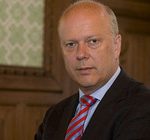
  • Chris Grayling – 2021 Speech on HRH The Duke of Edinburgh

    Chris Grayling – 2021 Speech on HRH The Duke of Edinburgh

    The speech made by Chris Grayling, the Conservative MP for Epsom and Ewell, in the House of Commons on 12 April 2021.

    We have heard a series of fulsome tributes to the Duke of Edinburgh this afternoon, and much has already been said about his extraordinary life and contribution to this country. As somebody who had the honour of serving as Lord Chancellor and then Lord President of the Council over a four-year period, I particularly wanted to say a few words on this very sad occasion. In particular, I wanted to convey my deep condolences to Her Majesty the Queen and the whole of the royal family.

    Listening to the debate this afternoon, few would disagree that the reign of Her Majesty Queen Elizabeth II has been the most distinguished in the history of the monarchy in this country. She is not just a much loved figurehead for our nation; she is respected around the world and continues to be a remarkable figure as Head of State to this country and many others around the Commonwealth, and as head of the Commonwealth. But it is absolutely not, in my view, an exaggeration to say that she could not have done everything she has without the tireless support of the Duke of Edinburgh through the nearly 70 years of her reign. Through all those years, he has been at her side and has helped her give the country the leadership that has been so valuable to us all.

    As my right hon. Friend the Member for Chingford and Woodford Green (Sir Iain Duncan Smith) said, that duty came with personal sacrifice. The Duke of Edinburgh was a very distinguished defender of this country in the second world war and did some extraordinary things during that conflict, but then he gave up a promising career and the potential for high rank—possibly the highest rank—in the Navy to follow the Queen in her role both here and abroad. He did so with a sense of service to this country that few could match.

    That sense of duty ran well after most people had long retired. I remember the Duke of Edinburgh taking the time to visit my constituency to open a new building when he was in his 80s. As he strode around the building—and he did stride around the building—I remember remarking to his equerry how impressive and extraordinary it was that he was still doing so much for the country at that age. “He is a lesson to us all,” was the reply, and indeed he was. That visit was nearly 20 years ago, and for most of the years since then, he just carried on with the same work he had been doing for most of his lifetime, retiring only at the age of 96. I do not suppose that many of us will be able to match that.

    Away from public duties, the Duke of Edinburgh was a charming and engaging man. I remember, as a Cabinet Minister, attending a dinner at one of the livery companies as its guest for the evening, and being a little surprised to find the Duke around the table as well, clearly outranking me. It turned out that he was not a guest at all but one of the members and a regular attender of the dinners there. He was lively and great company as well—not, of course, to mention that well-known and sharpest of wits.

    The Queen and the Duke of Edinburgh have been a national team for the United Kingdom for as long as I can remember, and it is going to be very strange without him. This is a very sad time for our country. We have lost somebody who has been a central part of our national life for most of our lifetimes, but for the royal family this is much more. They have lost a husband, a father, a grandfather and a great-grandfather. My simple, final message today is to Her Majesty the Question and her family. What I want to say is this, and I imagine it is on behalf of all of us in this House. We all feel deep sorrow about your loss. We are all thinking of you, and we are all sending you our best wishes on this sad occasion for our whole country.
  • Iain Duncan Smith – 2021 Speech on HRH The Duke of Edinburgh

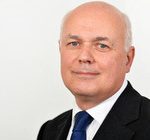
    Iain Duncan Smith – 2021 Speech on HRH The Duke of Edinburgh

    The speech made by Iain Duncan Smith, the Conservative MP for Chingford and Wood Green, in the House of Commons on 12 April 2021.

    I rise to extend my condolences to Her Majesty the Queen on the death of her liegeman of life and limb, who was her husband, a father, grandfather and great-grandfather, and a remarkable man.

    He was talented in his own right, as we have heard and read so much in the last few days, at many things that I suspect many of us had no idea he did. I try to paint, and I understand what it is to be described as adequate, but I have to tell anyone who does not paint yet that they have something to discover—that even getting the right colours in the right place at the right time is, as far I am concerned, brilliant. We have discovered that he had all these elements and talents, and did so many things, and was not just innovative, designing his own machinery, but just had that intelligence, drive and leadership. From the armed forces, through hundreds of charities and so many thousands of public events, the Duke of Edinburgh added much distinction throughout. He brought distinction to all that he did, even if it was telling business leaders to pull their fingers out, saying it was quite clear the UK needed business leaders who actually led and actually produced something people wanted to buy. He was quick to spot that was missing—it was not about the people working in the businesses, but about the people not leading them properly—and that was considered quite outrageous.

    The thing that has struck me has been the huge fondness—the outpourings of fondness––that have come in the last few days. I did not expect quite that level of fondness, because I thought by now many of the new generations would not recognise or even understand some of the things the Duke of Edinburgh had done, but their fondness and their sense of who he was is quite interesting.

    I would like to reflect on the fact that in a way there is something else the Duke of Edinburgh represents: he represents the passing, finally, of the greatest generation. That generation was prepared to sacrifice everything—everything—so that the rest of us could live in peace and prosperity. They did not ask any questions and what defined them so much, and I think defined him in a way, was this sense of duty and an obliging sense of service no matter what the request or command. They were uncomplaining or, as the Duke of Edinburgh would say, they never bellyached. They were always understated and never complained. With those of my father’s generation, we could hardly ever hear them say a word about what they went through; they just shrugged. They never complained about their illnesses or their war wounds, but just got on with life. He was very much a representative of that remarkable—remarkable—generation, as is of course Her Majesty the Queen.

    The one area I wanted to remark on is that that generation had this incredible sense of humour in the most difficult and appalling times. I hope my right hon. Friend the Secretary of State for Health does not mind if I relate one particular story so typical of His Royal Highness. We were in the receiving line for civil service awards, and I was standing but one or two away from my right hon. Friend when the Duke of Edinburgh arrived. Her Majesty the Queen went through very calmly and quietly: she shook everyone’s hand, said a few words to them and moved on. He came through just behind her, and as he was getting to my right hon. Friend asking people what they did, he asked him, “What do you do?” He boldly announced—this was some years ago—that he had just been put in charge of nuclear submarines. “But,” he said, smiling, “I don’t know anything at all about them, Your Royal Highness”, whereupon he guffawed immediately and said, “How typical! Typical of politicians—in charge of something, and not a single clue about it.” He roared with laughter and walked on, with everybody else in complete and utter silence. He asked me what I did, and I said, “Sir, nothing that important”, which had the merit of being true, and he moved on.

    I have to say that the Duke of Edinburgh was straight and very funny, and that is a key element of this. In this generation, I wonder what he thought about social media, where everybody complains or bellyaches the whole time about everything and about each other, often rudely and arrogantly—something that he and that generation would I think have considered appalling. “If you have nothing good to say about someone,” the old rule was, “then don’t say it.” Of course, this will fly over our heads here, I suspect, quite happily.

    I end by simply saying that the one thing we must all remember is that here was a man with a glittering potential career who chose, because of love, to walk a pace behind the woman he loved and to serve her, and by serving her he served his country with distinction. Nothing else needed to be said. His departure is a loss for us all, but in relation to the fact that we have such a great monarch, the reality is that it is because we had a great man beside her, and for that I give thanks.

  • Ed Davey – 2021 Speech on HRH The Duke of Edinburgh

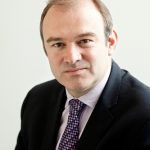
    Ed Davey – 2021 Speech on HRH The Duke of Edinburgh

    The speech made by Ed Davey, the Leader of the Liberal Democrats, in the House of Commons on 12 April 2021.

    Princess Anne said yesterday:

    “You know it is going to happen but you are never really ready.”

    That is a truth shared by so many grieving families. Most people know that their loved one is near the end of their life because they are old or very sick, but that does not mean that they can avoid the tidal wave of grief—that moment of finality. This year more than most so many families have faced that moment, so I am sure that the Princess Royal speaks for not just the Queen and the royal family but the whole country: you are never really ready.

    However, as people grieve, we can also say thank you— thank you to one of Britain’s greatest public servants of the last 100 years. As other party leaders have said, Prince Philip has been a rock in the life of our nation since his betrothal to our Queen, then the young Princess Elizabeth. Above all, he has always been her rock. After 73 years of marriage, it will be our Queen who feels this loss far more than anyone else. If anyone says that bereavement is easier when a loved one has lived a long life, I have to say that that is not my experience. So, ma’am, our hearts go out to you.

    Thankfully, there are so many wonderful memories to comfort the Queen and the nation. We have already heard about many of the Duke’s contributions to our public life. I would mention his role as president of the Royal Society for Arts, Manufactures and Commerce, for nearly 59 years. It was there that he helped to lead the major wave of British and global environmentalism and conservation, and where his commitment to British industry and design was so remarkable. As the Prime Minister said, it is fitting that his coffin will be carried in a specially adapted Land Rover that he himself designed.

    I spoke to the Prince briefly on two occasions many years ago, once when he came to my school and once when I went to his palace at Saint James’s, as one of the millions of young people lucky enough to have taken part in the Duke of Edinburgh’s Award scheme. To be at the palace that day, I had hiked round Kinder Scout, camped in Snowdonia and got lost in the Cheviots. For the gold award, among much else, one has to learn a new skill. When the Duke came to my group, he asked us what new skill we had learnt. I told him proudly that I had learnt to drive. So the Duke asked, “With four or six horses?” He pretended to be surprised when I said, “No, Sir, a car.”

    I have spoken to several people in preparing my words today. Lady Ashdown, Jane, kindly shared her late, great husband’s experience of the Duke. As a former royal marine, Paddy bonded well with the longest ever serving captain general of the Royal Marines. The Duke said that no other politician had ever laid a wreath on Remembrance Sunday as well as Paddy did, with his royal marine heel-click. Paddy also wrote in his memoirs about a state banquet for the King of Malaysia. After dinner, the Duke was touring the room and came to speak to Paddy. Well briefed as always, he asked Paddy why he had learnt Malay. Paddy writes: “I told him I’d been in the Commando Brigade in Singapore as a bachelor and had discovered that in Malay

    “there was one word…which meant ‘Let’s take off our clothes and tell dirty stories’”,

    So how could I resist learning Malay? The Duke roared with laughter and followed up with some pretty salty jokes, including a very fruity one about wanting a pee in China. Much giggling.”

    A state banquet also features in an anecdote from the former Deputy Prime Minister Nick Clegg. He recalls how he went to a state banquet for the Spanish King, not in his own right but as the husband of Miriam González Durántez. At the reception, Nick explained to the Duke that was merely accompanying Miriam. The Duke replied: “I know the feeling.”

    There can be no doubt, for the Queen has said it herself, that the Duke was far more than a companion. He was a man who should be celebrated in his own right—for his courage, so evident in his war record; for his foresight, so marvellous in the championing of young people across the world; and for his determination to show real leadership on the environment. He was not, as he described himself,

    “a discredited Balkan prince of no particular merit or distinction”;

    he was special—a man who brought all his amazing European ancestry to the service of our country. Britain’s special monarchy has been made more special thanks to Prince Philip. As we thank him for his unique service, let us thank him above all for the wisdom, counsel, friendship and love he gave to our Queen.

  • Roger Gale – 2021 Speech on HRH The Duke of Edinburgh

    Roger Gale – 2021 Speech on HRH The Duke of Edinburgh

    The speech made by Roger Gale, the Conservative MP for North Thanet, in the House of Commons on 12 April 2021.

    I am very grateful indeed to have the opportunity to place on the record, on behalf of my constituency, the huge appreciation that we all share for the life and service of His Royal Highness The Prince Philip, Duke of Edinburgh. We also place on the record our condolences to Her Majesty the Queen, and to all the Royal family, about which much has already been said. The bottom line is that we are talking about a father, a grandfather, a great-grandfather, and most of all, a devoted husband.

    It is inevitable on these occasions that there will be a degree of repetition, but I wish to return to the award scheme to which the Duke of Edinburgh gave his name. At the weekend I spoke with David Walker who, for 30 years, was chairman of the Thanet award scheme. He received his gold award in 1966 at Holyrood from the Duke of Edinburgh. I also spoke with Stephen Dyke from east Kent. Stephen received his gold award this year by post—inevitably, because of the circumstances we face. I said to Stephen, “Weren’t you disappointed?”, and he said, “No. It didn’t matter who gave it to me; what mattered was the achievement and the fact that I won the award.”

    David and Stephen, generations apart, echo the thoughts and sentiments of so many of my young constituents and those represented by colleagues in the House, who have been through the bronze, silver and gold awards. To a man and a woman, they all say, “It has changed my life.” As Stephen said to me, “There is nothing—nothing—that I feel I cannot now achieve.” We in this House owe it to the memory of the Duke of Edinburgh, who gave his name to the scheme, to ensure that it is not allowed to wither on the vine but goes forward, prospers and moves from strength to strength.

    It has already been said that the Duke of Edinburgh was way ahead of his time in his concern for wildlife and habitat, and that is absolutely true. Many of us on both sides of the House take a keen interest in those issues now; I only wish we had all been listening to him 50 years ago, because we might not be where we are.

    Mr Speaker, you mentioned in your opening remarks the Duke’s interest in ties. My wife reminded me at the weekend that when I was introduced to him, his only comment was, “That’s a very loud tie.” Colleagues who know the tie of the Wooden Spoon Society will understand that he was absolutely right.

    I would like to place on record the thanks of the armed forces parliamentary scheme for the very considerable interest that Prince Philip took in its work. You will remember, Mr Speaker, that it was not so very long ago that he found the time to make presentations in your state apartments to graduates of the scheme. With typically robust language, he reminded us that provision for the future defence of the realm lies in our hands.

    My right hon. Friend the Prime Minister said that he hoped we would think of a fitting commemoration of the Duke’s life. I can think of no finer tribute than naming the new royal yacht The Duke of Edinburgh.

  • Harriet Harman – 2021 Speech on HRH The Duke of Edinburgh

    Harriet Harman – 2021 Speech on HRH The Duke of Edinburgh

    The speech made by Harriet Harman, the Mother of the House, in the House of Commons on 12 April 2021.

    I am grateful for the opportunity to add my tribute to the powerful speeches that have already been made to celebrate the life and role of the Duke of Edinburgh. For more than 70 years, he was at the heart of the royal family, that most historic and traditional of British institutions. Yet, as has been said, in many ways he was ahead of his time.

    He was ahead of his time on the environment. This year the UK will host the 26th United Nations climate change conference, amidst the recognition here and globally of its importance. Yet more than five decades ago, he was urging us, with clarity and foresight, to understand how all living creatures on this planet are interdependent. These views were so much ahead of their time that they were met by some with derision.

    He was ahead of his time on young people, with the Duke of Edinburgh’s Award scheme, recognising the interconnection of physical and mental wellbeing as a route for young people to develop to their full potential. One of the many success stories of the Duke of Edinburgh’s Award is the work that goes on at Westminster House youth club in my constituency of Camberwell and Peckham. It gets more black and minority ethnic young people through the award than almost anywhere else. Many of those young people have had a difficult start in life or have not thrived at school, yet through the Duke of Edinburgh’s Award they find a route to self-confidence and success.

    The Duke of Edinburgh was ahead of his time as a husband. One of the remarkable things about Prince Philip is that he chose, in his marriage, to put himself second and make his central role in life that of supporting his wife in her role as the Queen. He sought never to eclipse her, only to support her. Way back half way through the last century, that was profoundly counter-cultural. The expectation was that to be a man was to be head of the family, and particularly in the public domain it was the man who would play the leading role, and the wife who would support him. If that—sadly—still remains largely true today, how much more of an iron rule it was 70 years ago. His decision to give up what would have been a glittering career in the Navy, and to make it his duty to support his wife in her role, took him into uncharted territory and left him exposed. For if he was not the head of the family, what did that make him? There was no reassuring recognition that he was no less of a man for what he did in putting the Queen first, and himself second. It takes a remarkable man to be a leader, but an even more remarkable man to support a woman leader, and that is what Prince Philip did.

    When we hear the Queen speak, we know that she always weighs her words carefully. What she said at their golden wedding anniversary in 1997 was that Prince Philip had,

    “quite simply, been my strength and stay all these years.”

    What a loss it is for her to lose that husband, that partner, her liegeman of life and limb. We rightly pay tribute to Prince Philip’s work on the environment, young people, our armed forces, and much else besides. He did his work, but, above all, he enabled the Queen to do hers. For that he deserves our recognition and gratitude. He served this country by serving his Queen.

  • Theresa May – 2021 Speech on HRH The Duke of Edinburgh

    Theresa May – 2021 Speech on HRH The Duke of Edinburgh

    The speech made by Theresa May, the former Prime Minister and current Conservative MP for Maidenhead, in the House of Commons on 12 April 2021.

    I join with the Prime Minister and everyone across this House in sending my heartfelt condolences to Her Majesty the Queen on the death of His Royal Highness the Prince Philip. Our thoughts and prayers are with Her Majesty and the whole royal family.

    In recent days, there have been many tributes to Prince Philip: some from those who knew him well, some from those who had barely met him, and some from those who had never met him, but whose lives he had touched. I had the privilege of meeting him and having a number of conversations with him. He was a truly remarkable man; a man of so many talents. We have heard some of them referred to already today: a distinguished naval officer, an inventor, an innovator, a designer, a painter, a sportsman, and so much else.

    What always struck me when he spoke, when I was having those conversations with him, was not just the incredible breadth and wide range of interests that he had, but the depth of knowledge that he had about each of those interests. He did not just dip into a subject; he did not pick something up because it was fashionable. He was deeply interested, he cared, and he understood the importance of getting to know the issues that he was involved in. He was indeed a man ahead of his time, particularly in the areas of the environment and conservation, but that was not a passing whim. He deeply loved the natural world; he understood nature; and he was passionate about wanting future generations to be able to enjoy and benefit from the natural world, too.

    I remember, on my first visit to Balmoral as Prime Minister, Prince Philip driving myself and my husband around the estate and talking to us about it. It was if he knew every single inch of it. He talked about the ancient Caledonian forest, about the birds, many of which were protected, about the animals and plants on the estate, about the changes he had seen over the years, and about what was needed to ensure that the environment could be protected and enjoyed by future generations. He was indeed a man ahead of his time. He showed his deep knowledge, but he was also an immensely practical person.

    He was also a man of high standards. That did indeed come through in his attention to detail in the cooking of the meat at the Balmoral barbecues. But I also remember a black tie event, hosted by the then mayor of the royal borough of Windsor and Maidenhead, which Prince Philip was coming down from Windsor castle to attend, but probably for no more than half an hour. Now, some people might have said, “You’ll have to take me as you find me, so I’ll just turn up and that will be it,” but he dressed immaculately in black tie. He took the time and trouble because he had high standards, but also because he respected the event and the people attending, and he wanted them to be at their ease.

    I remember my last day at Balmoral. My husband and I, as everybody knows, enjoy walking. Prince Philip had very kindly suggested a particular walk, so we were grateful for the suggestion and set off. When we got back to the castle, several hours later, we were told that Prince Philip did indeed enjoy this walk, but normally he drove around it in a car. I am not sure whether it was a test—and, if it was, whether we passed it. On that last visit, when we went to say our farewells, initially we could not find Prince Philip. When I eventually caught up with him, he was watching the cricket. How I would have loved to have stayed and watched the cricket with him.

    I am a Berkshire MP, and in Berkshire we feel a particular connection with the royal family. Prince Philip set up the Prince Philip Trust Fund, which provides grants to individuals and causes in the royal borough of Windsor and Maidenhead, and many of my constituents will have benefited from that trust fund. Among the causes it focuses on are young people, and this is reflected, as others have said, in the Duke of Edinburgh’s Award scheme. It is one of his particular legacies that he had this passion for enabling young people to find themselves, challenge themselves, broaden their horizons and develop what are, for some, life-changing skills.

    Millions across the world have much to be grateful to him for, but perhaps the most important aspect of his life was his absolute commitment to supporting Her Majesty the Queen. It is in no way comparable, but I do know how important it is to have a husband—a partner—who is a source of strength and a rock in times of trouble. As a hugely talented person, Prince Philip could have been enormously successful in his own right, but he put his life to ensuring the success of his wife. It was that willingness to put himself second and to serve, to understand the importance of duty and to exercise it day in, day out, that will be his true lasting legacy, and that should be an inspiration to us all.

    All of us here in the UK and across the Commonwealth have so much to be grateful to him for, and we say thank you. He understood the requirements of responsibility, the demands of duty and the sacrifices of service. We will never see his like again. May he rest in peace and rise in glory.

  • Ian Blackford – 2021 Speech on HRH The Duke of Edinburgh

    Ian Blackford – 2021 Speech on HRH The Duke of Edinburgh

    The speech made by Ian Blackford, the SNP Leader in the Commons, in the House of Commons on 12 April 2021.

    Let me begin by echoing the warm and thoughtful words of the Prime Minister, the Leader of the Opposition, and, indeed, the Father of the House, who have spoken before me.

    Since the news emerged last Friday of Prince Philip’s death, the time has been filled with genuine sorrow right across these islands. For myself and for the people throughout Scotland, my thoughts and prayers remain with the entire royal family, but most especially with Her Majesty the Queen. For most people, the response and the reaction have been very simple and purely human. We collectively grieve for a wife who has lost her husband, a mother who has lost her life partner and her constant companion after a remarkable 73 years of marriage.

    In the past few days, across our institutions and across the media, there has been a very public marking and mourning of the passing of the Duke of Edinburgh. These tributes have come from every corner of the world. I am very conscious, though, that the scale of public commemoration does not diminish the depth of private grief. At the very heart of this is a family grieving the loss of a beloved husband, a father, a grandfather and a great-grandfather—a man who was at the very centre of their family life. As with every death, following the funeral, that loss and absence will be felt all the more. It is right that we seek to remember and respect that loss and the need for private mourning in the days, weeks and months ahead.

    When it comes to reflecting on the life of Prince Philip, there is no shortage of material. His was a remarkable life packed full of experience and involvement spanning across diverse communities and continents. That life and those experiences were made possible by probably his most defining trait—a devotion to duty.

    Already today in this Chamber and across the airwaves for the past few days, there have been great insights into that long life and the period of history in which he had a presence or a part. From military service to the promotion of environmental causes or his patronage of more than 800 organisations, there is a long and lasting legacy on which to reflect. It would be impossible to encapsulate all of it in any remarks, so instead, I will focus my remarks on the Duke’s deep connection to Scotland. That connection came before and went way beyond a royal title that contained our capital city of Edinburgh. It was a connection that stretched right across his entire life from childhood to old age. As a child, he attended school at Gordonstoun. It was there that he established many of his interests and hobbies that would stay with him. In those early years, he made his mark as an athlete in cricket and in hockey, captaining the school teams and becoming head boy of the school.

    The Duke’s love of the sea first found its spark in Scotland, where he frequently went on school trips, sailing around the coast of Scotland. His affection for his time at Gordonstoun is obviously demonstrated by the fact that he sent all his sons there in later years. He also remained a regular visitor—most recently in 2014 to mark Gordonstoun’s 80th anniversary. That link with Scotland and the highlands only grew and deepened after his marriage to Queen Elizabeth. The love they have for Balmoral castle has been evident for years and their presence there is now part of the fabric of that local community. Whether it was his attendance at the Braemar Gathering, a highland tradition that has been ongoing for the best part of 900 years, or his presence at Crathie kirk, Balmoral became an enduring part of their life together. Despite his ailing health, it is very telling that he still made the effort to make his final journey to Balmoral as recently as last August.

    For many people, I suspect that the most memorable and impactful legacy that Prince Philip leaves is the scheme that he lent his title to—the Duke of Edinburgh Award. Once again, the Scottish connection with the scheme could not be clearer. It was inspired by the Moray badge, created by Dr Kurt Hahn, the founder of Gordonstoun, with the intention of giving a sense of responsibility. The tasks in the scheme, from volunteering to outdoor expeditions and personal development, have helped community and educational organisations for generations. Since its inception in 1956, it is truly incredible to reflect that more than 6 million people have undertaken the Duke of Edinburgh Award in the UK. However, its reach did not stop there, with more than 130 countries participating in the international award across the globe.

    The Duke was a very hands-on patron, and he personally attended the scheme’s award ceremonies, presenting his 500th gold award in 2013 at St James’s Palace. That emphasis and commitment that Prince Philip placed on the value of education was a mainstay of his life. The Duke was appointed chancellor of the University of Edinburgh in 1953, and served in that role for almost 60 years. During that long period, he took a particularly keen interest in scientific development, and was a regular at graduation ceremonies. He only retired in 2010, and I know that the staff and students at the university also valued the role and the time he willingly gave.

    It has also been noted in recent days that Prince Philip took a keen interest in Scottish architecture. There are memorable photographs circulating of when the Prince joined the Queen to open the Forth road bridge in 1964. They were the first people to cross the link between the kingdom of Fife and that great city of Edinburgh, and that enduring interest in the Forth crossing was replicated some 50 years later, when he made a private visit to see the construction of the Queensferry crossing. Once again, alongside the Queen, they became the first people to cross the new bridge after it officially opened in 2017. I know that political campaigning remains suspended, but I am sure that Members opposite will forgive me for saying that I am pretty sure Prince Philip would have appreciated that the bridge was delivered on time and under budget.

    Perhaps people’s most lasting memories of the Duke were of the informality he often brought to very formal occasions. Throughout the years, I think it is fair to say that he was not a man for drizzling honey on his words. That trait equally applied to the advice he gave, and there is one memorable piece of advice he gave on the length of speeches, which I dare say some Members might even think applies to myself. He advised:

    “The mind cannot absorb what the backside cannot endure.”

    With that timeless piece of advice from the Duke of Edinburgh, I shall bring my remarks to a close. In doing so, though, I again convey the condolences of myself, my party, and people right across Scotland to the Queen and to the entire royal family. By any standard—by any measure—Prince Philip lived a long, energetic and full life. May he now rest in peace.

  • Peter Bottomley – 2021 Speech on HRH The Duke of Edinburgh

    Peter Bottomley – 2021 Speech on HRH The Duke of Edinburgh

    The speech made by Peter Bottomley, the Father of the House, in the House of Commons on 12 April 2021.

    Prince Philip would have laughed at the Leader of the Opposition’s jest about finding a compass and comparing that with politics. The Leader of the Opposition, following the Prime Minister’s excellent speech, also spoke about the titles that the Duke of Edinburgh held. One was “the Maharaja of Not Very Much”. That is a translation of a title given to him by Sir Reggie Bennett MP when, at the Thursday Club, Prince Philip volunteered to join the Imperial Poona Yacht Club, to which I will return later.

    There have been fair and full tributes in many of our papers. I pay tribute to the journalists, who, from a standing start have managed to go on providing interesting reading. I mention, not as the best but as some of the most recent examples, articles by Alice Thomson and Libby Purves in The Times today.

    For those who think that only the House of Commons is having such a sitting, I point out that the House of Lords has had some really good speeches including those by, to mention just a few, Lord Boyce, Lord Alderdice, Lord Janvrin and Lord Dholakia. I hope that what we say here will be of interest to those who pay attention to proceedings in Parliament.

    In your House, Mr Speaker, Prince Charles observed to George Thomas, later Lord Tonypandy, that if the Duke of Edinburgh or he never said anything interesting, they were accused of being dull, and if they were not dull, they were accused of being controversial. Each was willing to lead on issues that were not already fashionable or dominant among popular concerns. In 1952, on the death of his father-in-law, Prince Philip became patron of the Industrial Society, which followed on from the Duke of York camps. That then developed No. 3 Carlton House Terrace, for a time called Peter Ranch House, which is now known as Prince Philip House and is the headquarters of the Royal Academy of Engineering. In developing the fellowship of engineers and later the Royal Academy, Prince Philip gave attention and paid tribute to the successful endeavours of many people who should be considered as important as those who studied economics, politics or the classics.

    Prince Philip was guest of honour at the Taxi Charity’s 1979 visit to Worthing, and, with Her Majesty the Queen, at Durrington High School in 1999, he met all kinds of members of the community. It is the sort of engagement that matters a lot in each of our constituencies. We remember that they did that in all constituencies, all over the country.

    I referred to Reggie Bennett. He is quoted as saying that the Imperial Poona Yacht Club had 25 really excellent sailing members and that Prince Philip was an honorary member, which was a back-handed compliment to one of the best sailors around. In the foreword to the book of the club’s history—I will conclude with this, as it is quite a long quotation—Prince Philip wrote that

    “it is true that all the members are serious yachtsmen in the sense that they are rather good at it, but what is equally important is that they all share a keen appreciation of the value of anti-seriousness. If you can bring yourself to read this book from cover to cover, you will be in a position to judge for yourself whether or not life can be significantly improved by not taking it too seriously all the time.”

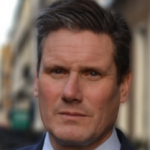
  • Keir Starmer – 2021 Speech on HRH The Duke of Edinburgh

    Keir Starmer – 2021 Speech on HRH The Duke of Edinburgh

    The speech made by Keir Starmer, the Leader of the Opposition, in the House of Commons on 12 April 2021.

    In supporting the Humble Address, I would like to echo the remarks made by the Prime Minister and, on behalf of my party, to come together today in appreciation of a life well lived, a life of service and of duty, and a life that shaped modern Britain and provided much needed stability to our national story.

    My thoughts, first and foremost, are with Her Majesty the Queen and the royal family. Prince Philip was a man of many titles—Duke of Edinburgh, Lord High Admiral, a royal Commander, Baron of Greenwich—but above all he was a much loved father, grandfather and great grandfather. To Her Majesty the Queen he was not only her beloved husband, but, in her words, her “strength and stay” for seven decades, so it is right that, today, this House and the country come together to pay tribute not just to a man, but to the virtues he personified, and to his ceaseless optimism about the country Britain can be and what the British people can achieve.

    The life of Prince Philip was extraordinary, lived in a century on fast-forward and a time that saw world war, a cold war, the fall of empire, 20 Prime Ministers, and the invention of the television, the internet, artificial intelligence and technology so extraordinary it might have seemed to a lesser person as if from another world. Throughout that time, the monarchy has been the one institution in which the faith of the British people has never faltered. As we have seen once again in recent days, the royal family has a connection with the British people that runs as deep today as it did when Philip Mountbatten married the then Princess Elizabeth in 1947. That is not by chance; it reflects the quiet virtues, the discipline and the sacrifices we commemorate today.

    My own connection to the Duke of Edinburgh began long before I entered this place. Like millions of other children, I—aged 14—started the Duke of Edinburgh Award scheme, or the DofE, as we called it. My first activity was to volunteer at a local mental health hospital where, unbeknown to me at the time, my late grand-dad would later be admitted. My final activity was wandering around Dartmoor in a small team, with a compass and a map in the pouring rain, frantically trying to find our way. Mr Speaker, if that doesn’t prepare you for coming into politics, nothing will.

    In recent days, I have been struck by the countless stories of lives turned around by the DofE Award—young people who found their confidence and found their way. This was summed up by a 14-year-old girl who said, on passing her bronze award, that she felt:

    “I can do anything now.”

    The DofE Award now covers 130 countries and has helped millions of people around the world. It is perhaps the best symbol of the Duke’s global legacy. He was also patron to more than 800 charities and organisations. He was the first president of the World Wildlife Fund. He was the patron of the British Heart Foundation. He was president of the British Academy of Film and Television Arts, and he was chancellor of the Universities of Cambridge, Edinburgh, Salford and Wales. He carried out, as has been said, a staggering total of more than 22,000 solo engagements, and countless others alongside Her Majesty the Queen.

    The Duke will also be remembered for his unstinting support of our armed forces. It was in Dartmouth in 1940 that he graduated as a naval cadet. As the Prime Minister has described, he went on to a distinguished naval career. Today, the British armed forces mourn one of their greatest champions.

    The Duke was a funny, engaging, warm and loving man. He loved to paint. His work has been described, characteristically, as

    “totally direct, no hanging about. Strong colours, vigorous brushstrokes.”

    He was also a great lover of political cartoons—not something the Prime Minister and I can say often. Although I saw a cartoon this weekend that I think captured this moment of national and personal loss perfectly. It depicted Her Majesty dressed in black, looking back at her shadow and seeing the Duke standing there, as ever at her side, attentive and holding her hand.

    Britain will not be the same in the Duke’s absence. For most of us, there has never been a time when the Duke of Edinburgh was not present. At every stage of our national story for the last seven decades, he has been there, a symbol of the nation we hope to be at our best, a source of stability, a rock.

    Her Majesty once said:

    “Grief is the price we pay for love.”

    The Duke loved this country and Britain loved him in return. That is why we grieve today. But we must also celebrate him: a life lived in vigorous brushstrokes, like his painting, and we offer up this tribute, “To the Duke of Edinburgh, for a lifetime of public service, the gold award.”