Tag: 2021

  • Cat Smith – 2021 Comments on Electoral Commission’s Investigation into Boris Johnson’s Flat

    Cat Smith – 2021 Comments on Electoral Commission’s Investigation into Boris Johnson’s Flat

    The comments made by Cat Smith, the Shadow Minister for Democracy, on 28 April 2021.

    It is welcome that the Electoral Commission is set to investigate the series of murky revelations around the refurbishment of Boris Johnson’s Downing Street flat.

    No stone should be left unturned to get to the bottom of who’s funding the Prime Minister’s luxury lifestyle, and what they could be expecting in return.

    If the Conservatives want to do something about the stench of sleaze engulfing them, they must cooperate fully with the Electoral Commission and publish the paper trail and any invoices relating to this matter.

    The Government must take this opportunity to immediately publish the Register of Ministers’ Financial Interests.

  • Kate Green – 2021 Speech to the Confederation of School Trusts Annual Conference

    Kate Green – 2021 Speech to the Confederation of School Trusts Annual Conference

    The speech made by Kate Green, the Shadow Education Secretary, on 28 April 2021.

    Thank you, conference. It is a pleasure to speak to you this morning. Firstly so I can thank you, for the role you have played in the most difficult of circumstances.

    You have been at the forefront of the most extraordinary and challenging year; a year that has seen the greatest disruption to young people’s learning we have known in peacetime. You have kept pupils, staff, and your school communities safe, and ensured pupils continued to learn in and outside the classroom.

    The efforts of critical workers – in schools, in hospitals, in social care, and in all areas of our society – have been nothing short of heroic. And now, as we begin to emerge from the pandemic, I believe that it is the duty of politicians to work closely with all of you who have helped to get us through the past year, so that we begin to rebuild our country together, with a new settlement for a fairer, more equal society, a prosperous economy that creates opportunities for all, a Britain that is the best place to grow up in and the best place to grow old in.

    Nobody knows better than you and your colleagues the huge impact that this pandemic has had on the education, wellbeing, and life chances of our nation’s children.

    But while teachers and leaders moved mountains to keep children learning remotely during the pandemic, we all know that the best place for children, for their learning, development, and wellbeing, is in school, in the classroom.

    Yet the difficult truth is that no matter how good a job our schools and teachers do, education on its own cannot resolve the inequalities and injustices that damage the life chances of millions of children. What happens in the classroom, while hugely important, is shaped by the lives of children beyond the school gate.

    And while that has been thrown into stark relief by the pandemic, as children were left without the resources to learn, and the Government had to be dragged kicking and screaming to ensuring they didn’t go hungry during school holidays, it was true even before coronavirus. The children in over-crowded accommodation, without devices for remote learning, with parents struggling to make ends meet, are the same children who have not seen their educational outcomes improve for a decade – those growing up in persistent poverty.

    For those children, the attainment gap simply is not closing, and hasn’t been closing for years. And, at a time when the most disadvantaged children are facing ever greater challenges, schools area getting less funding to support them.

    Changes to the pupil premium are leaving schools across the country thousands of pounds worse off. For many, they are losing more from this change than they have gained in catch-up funding. This is a dangerous false economy, taking resources out of the classroom at a time when they are needed more than ever.

    Gavin Williamson and the Westminster government have simply not been honest about this, they have refused to publish any assessment of the financial impact of their own policies. But as every head knows, the lack of adequate resources to support the learning and recovery of the most disadvantaged children will only serve to embed the inequalities that already scar our society.

    Inequalities that were too often ignored, even as they held back the opportunities of a generation of children, have been exacerbated by the pandemic, and in the months and years ahead they will become even worse if we return to business as usual.

    So it must now be our collective mission to tackle those injustices and guarantee a bright future for all children as we rebuild our country.

    That is something that we can only achieve by working together. Deeply embedded inequalities and the consequences of the last year cannot be fixed by Whitehall alone. It will need you, the education professionals who make such a difference to children’s lives, it will need parents, carers, wider public services and the whole community to work together if we are to transform children’s lives.

    And in many ways, the challenges of the last year have brought people closer together.

    Parents working from home have been closer to their children’s learning than they ever were before. They have seen, first hand, the incredible work of both education staff and children and young people. Many parents now know more about what their children learn, the value of the education they receive, and the work that goes in to delivering it. They want a closer partnership with their children’s schools to continue in future

    But it’s not just parents to whom schools are important. Schools are one of the only public services that will touch all of our lives, as children ourselves, and if we have children of our own; they are one of the most powerful means we have to shape the life chances of every child and the life of every community.

    So we must harness that opportunity to ensure that every school acts as a genuine anchor for the whole of their community, bringing together people of all backgrounds with a common cause: to improve the lives of young people in every city, town, and village in England.

    The task is not just about teaching and learning. Children cannot enjoy their childhood or achieve their full potential if we do not work together to address the persistent, pernicious link between poverty and educational outcomes.

    On this, Labour has a proud record in government, one that I am still happy to stand beside ten years later.

    We delivered a huge and sustained fall in child poverty, while investing in schools and the early years. We transformed the life chances of a generation of children and their families because that was a priority not just for successive education secretaries, but for every part of our government.

    And it is that commitment to children’s futures that we will again take in to office after the next election.

    With a central role for our schools as civic institutions at the heart of every community.

    Schools as places where educators and employers, voluntary & community organisations and public services, families and professionals, all work together to improve children’s outcomes and prospects. The power of schools to transform lives does not begin and end with the sound of the school bell; but it is an opportunity we have every day, as millions of children pass through them, one of the only public services we can be sure they will access.

    And it is this role as anchors of their community, above and beyond their core function of education, that means schools can evolve to offer wraparound care, holiday activities, extracurricular activity, support for parents.

    Labour’s call for breakfast clubs in every school exemplifies this wider role for schools as civic institutions. By extending the school day to offer a healthy breakfast to every child, we get them ready to learn, improve attainment, give time for socialising with teachers and friends, support their emotional wellbeing. And we can also take the chance to involve volunteers, work with business, and make life a little easier for millions of working parents, particularly mothers.

    This policy would help millions of children every day, in every city, town, and village in England. It is a small investment that we can make in the future of every child, to help guarantee a bright future for all.

    It’s one small example of how an extended school offer can make a difference, to children, their families, their employers, and the wider community.

    The Confederation of School Trusts has always argued that schools and school trusts are civic institutions, and that your leaders are civic leaders. That civic mission can bring our communities and schools together in the months ahead, as we build a new future for schools and children across the country.

    But we must recognise that the schools system we have now is not a perfect one, and that schools’ role as civic institutions also means schools working more effectively with one another to advance education for the public good and for every child in the local community.

    While we have world class schools with world class leaders and staff, our school system is fragmented, opaque, and over-complex – to the detriment of pupils and wider society. Instead of one school system we have several.

    Schools operate as their own admissions authorities, have different levels of accountability to their community and to government, and there is no consistent role or voice for parents.

    They are incentivised to compete against one another, and to operate admissions and exclusions policies that serve the interests of some children at the expense of others. Governance and decision making have become detached from the local community.

    The Secretary of State’s answer this morning – every school in an academy trust – is based on a simplistic dichotomy between strong trusts and failing maintained schools.

    The reality is more complicated, with all the evidence demonstrating that it is the quality of teaching and school leadership, not structure, that determines a school’s success.

    So while Labour has long said that schools working together in families is the right way to go, this top down solution cannot guarantee successful outcomes for all children, their families and communities, and is at odds with the role of local communities to determine the schools that work for them and that represent their local needs and priorities.

    This is not criticising the extraordinary work that goes on in individual schools, academies or trusts every single day to transform the lives of the children they educate.

    So I want to make an open invitation, to you, to your profession, to parents, and to local political leaders and representatives, to work with me, to come together with ideas and solutions that achieve the best outcomes for every child and help rebuild strong and resilient communities.

    My priorities will be to ensure the system is responsive and accountable to local needs; that it attracts, supports, and retains world class staff, in the classroom and among school leaders; encourages fairness, cooperation, and transparency between schools; and gives a clear and powerful voice to the communities they serve and work in.

    A system that ensures that every child gets the knowledge and skills they need in a broad curriculum; that wellbeing is front and centre in every school; that education professionals are genuinely empowered to improve lives; and every child in every school receives a world class education.

    The work of you, your colleagues, and all those who work in schools will be essential to meeting that challenge. Because we know that nothing matters more for educational outcomes than the teaching a child receives, which means that training, retaining, and investing in the teaching profession is one of the most important things that a government can do to improve outcomes for children.

    Sadly, in the last ten years, that has simply not been the case.

    The last decade has seen real terms cuts to pay that have left teachers thousands of pounds worse off in real terms, top-down structural changes that have pushed up workloads and driven teachers from the classroom, and, even in this last year, the teaching profession and its representatives have been treated by the Secretary of State not as allies in meeting a national challenge but as a problem to be solved, or a political enemy to be briefed against.

    That does a gross disservice to you and to all those who work in schools. It ignores the huge role you play in enabling every child to reach their potential, and that, in the last year, you have gone above and beyond all that could be expected from you.

    But I know that it takes more than warm words to keep you in the classroom, and it takes more than promises from politicians to build a world-class teaching profession. That is why I want to give you a voice in the work we do, to tell me what it is that can keep teachers in our schools, that can support them to grow as professionals, and empower them to change lives.

    This is one of the most important things that Labour can do in government, but it is not something that we can do alone. That is why I hope that you will join us in meeting that challenge, so that we can all work towards our shared goal – a bright future for every child, one where every child can fulfil their potential.

    The first White Paper published by the Confederation of School Trusts begins with the words of Kofi Annan:

    “There is no trust more sacred than the one the world holds with children.”

    Those words have never been more important than now, as, in Britain and across the world, children begin to emerge from a year of disruption that would have been unimaginable a little over a year ago.

    It is a trust that we all hold, and it is tied to a promise that we are all responsible for – to offer to the next generation greater opportunities than we ourselves had.

    The last decade – which has seen cuts to education spending, rising child poverty, stagnant real wages, and, now, a global pandemic – has made it harder to fulfil that promise.

    But as we emerge from one of the most difficult years most of us will ever have known, we must grasp the opportunity to rebuild our country, to enrich the life of every child, and give them the chance to fulfil their potential.

    That is why earlier this year, we set up our Bright Future taskforce, to help us devise the solutions that children across the country need as we recover from the pandemic and look to their future. The taskforce has been clear that those solutions must be far reaching, covering policy and practice not just in, but beyond, the classroom. Because they know and I know that it is only by listening to and working with the wider community – the staff in our schools, the experts who work around them, young people, their parents, civil society, businesses and employers – and putting schools as civic institutions at the heart of our communities, that we will deliver on our ambition, that Britain will be the best country for every child to grow up in.

    I very much look forward to working with you to make the vision a reality.

  • Lisa Nandy – 2021 Speech on India’s Second Wave Crisis

    Lisa Nandy – 2021 Speech on India’s Second Wave Crisis

    The speech made by Lisa Nandy, the Shadow Foreign Secretary, in the House of Commons on 28 April 2021.

    Mr Speaker, India is in a Covid crisis of unprecedented proportions.

    We will all have seen the haunting footage of families pleading with doctors to treat their loved ones or queueing to cremate their dead.

    In the last 24 hours, India has once more reported the world’s largest single day total, with more than 360,000 new confirmed cases and more than 3,000 deaths. There have been more than two million cases confirmed in the last week. India now makes up around 40 per cent of all the new cases in the world and experts believe this is almost certainly an underestimate. The peak of this crisis may yet be weeks away.

    This is not just a heart-breaking crisis for India, it is global emergency that has consequences for all of us. We all face the same disease. We are all in this together. We are in a global race between vaccines and variants. No one is safe until we are all safe.

    Mr Speaker, for many of us in Britain, our ties to India are personal. My father came to this country from India, and being half Indian is an important part of who I am. Family ties between our countries are woven into the fabric of this nation. For the more than one million British Indians of different generations, this is a moment of fear and anxiety. So many British Indians will have gone to work today in the NHS, to which they make such a remarkable contribution. They have helped to carry this country through this crisis. Today many will be worried for loved ones, family and friends in India.

    Mr Speaker, just over a year ago, when the UK was facing one of our darkest moments in this pandemic, the Government of India sent 3,000,000 packets of paracetamol to the UK to meet our needs. That was an act of solidarity and support. It is now our turn to help the people of India in this hour of need.

    I’m grateful to the Foreign Secretary for outlining what support the government has already provided.

    I believe we can and must do more. I would be grateful if the Foreign Secretary could assure me the government is exploring all avenues available in the following areas:

    First, Medical supplies: including oxygen, but also empty canisters and cylinders, oxygen concentrators, ventilators; and surplus therapeutic medicine like remdesivir;

    Second, Genomic sequencing and epidemiology: utilising the UK’s world leading capacity in genomic sequence to track potential further mutations and variants in the Indian outbreak.

    Third, Vaccines: we need a much greater effort to ensure we ramp up production and manufacturing capacity and overcome barriers to expanding supply, the greatest challenge we face.

    Fourth, coordination – working with the government of India but also partners in North America and Europe to ensure our contributions have the greatest effect;

    Mr Speaker, this is a time for solidarity and common cause with the people of India. I hope that today we can come together as a House and show that we are doing all we can.

  • Lucy Powell – 2021 Comments on Toyoda Gosei Job Losses

    Lucy Powell – 2021 Comments on Toyoda Gosei Job Losses

    The comments made by Lucy Powell, the Shadow Minister for Business and Consumers, on 28 April 2021.

    This is really distressing news for workers at Toyoda Gosei who will be worried about their jobs, and for communities in Yorkshire and Swansea where these plants provide opportunities for good, high-skilled employment.

    The Conservatives have no plan for the car industry, having scrapped the industrial strategy and having failed to deliver the sector deal they need.

    The drive to electric is an opportunity to help the industry to succeed, yet Ministers are failing to grasp it. Labour backs our automotive manufacturers and has set out plans for an electric vehicle revolution to back car businesses and protect and create jobs.

  • Liz Kendall – 2021 Speech on the Importance of Social Care

    Liz Kendall – 2021 Speech on the Importance of Social Care

    The speech made by Liz Kendall, the Shadow Care Minister, on 28 April 2021.

    If you neglect your country’s physical infrastructure you get roads full of potholes, and buckling bridges, which prevent your economy functioning properly. The same is true if you fail to invest in social infrastructure.

    President Biden gets this, which is why he has made investment in home care a central plan of his post-pandemic Infrastructure Plan.

    When the virus struck, our care system was more vulnerable than it ever should have been. The conservatives weakened its foundations with an £8 billion cut from local authority social care budgets since 2010, despite growing demand.

    This was compounded by a failure to grasp the deep rooted and long standing problems in our care system, which must be addressed if we are to build a care system that is fit for the future.

    We have a welfare state in the 2020s built on the life expectancy of the 1940s. When the NHS was created, average life expectancy for men was 63. Now it’s 80, and 1 in 4 babies born today are set to live to 100 years old. Our health and care system has struggled to keep pace with these changes, with social care in particular developing in a piecemeal, fragmented way.

    One of the underlying reasons for this is that caring just isn’t valued like other professions. It’s seen as women’s work, mostly left to families, and if they can’t cope provided by some of the lowest paid workers in this country – the vast majority of whom are women, with many from Black, Asian and ethnic minority communities.

    Many of us will spend over a third of our lives beyond the traditional retirement age, but our economy, public services and wider welfare state have barely begun to wake up to this fact.

    Changing this requires political leadership to seize the opportunities, and tackle the challenges, our century of ageing brings.

    But so far our politics has proved woefully inadequate: too short-term in its thinking, too narrow in its horizons and too limited in its ambitions. Labour’s missions is to change this – in social care and many other areas.

    Our aim isn’t merely to ‘fix the crisis in social care’ – as the Prime Minister has repeatedly promised – but to transform support for all older and disabled people, as part of a much wider ambition to make this the best country in which to grow old.

    Labour understands that – in the century of ageing – social care is as much a part of our economic infrastructure as the roads and the railways.

    If you neglect your country’s physical infrastructure you get roads full of potholes, and buckling bridges, which prevent your economy functioning properly. The same is true if you fail to invest in social infrastructure.

    President Biden gets this, which is why he has made investment in home care a central plan of his post-pandemic Infrastructure Plan.

    Britain deserves this level of ambition too. We need a 10 year plan of investment and reform – not simply to put more money into a broken system.

    Labour’s priority will be to empower older and disabled people to live the life they choose, fundamentally shifting the focus of support towards prevention and early help, under the guiding principle of ‘home first’ – because that’s what the overwhelming majority of people want.

  • Rachel Reeves – 2021 Comments on the Independent Adviser for Ministerial Interests

    Rachel Reeves – 2021 Comments on the Independent Adviser for Ministerial Interests

    The comments made by Rachel Reeves, the Shadow Chancellor of the Duchy of Lancaster, on 28 April 2021.

    In our country, the police don’t require the permission of a thief to investigate a burglary.

    The Prime Minister can’t be judge and jury on his Ministers’ – or indeed his own – behaviour.

    The Prime Minister shouldn’t be able to block investigations into his Ministers or himself when breaking the Ministerial Code.

  • Kate Green – 2021 Comments on Pupil Premium Funding

    Kate Green – 2021 Comments on Pupil Premium Funding

    The comments made by Kate Green, the Shadow Secretary of State for Education, on 29 April 2021.

    The Conservatives have weakened the foundations of our school system through a decade of real-terms cuts which are forcing head teachers to use this funding – designed to support children on free school meals – to plug holes in school budgets.

    The Government’s ‘stealth cut’ to pupil premium will further undermine school finances and the planned delivery of early interventions, small group tutoring and hiring additional staff to support those pupils most likely to have struggled to learn at home.

    Labour wants to see children at the heart of an ambitious national recovery but the Conservatives are failing to deliver for our children and putting their recovery from this pandemic at risk.

  • Chi Onwurah – 2021 Speech on the Post Office Court of Appeal Judgment

    Chi Onwurah – 2021 Speech on the Post Office Court of Appeal Judgment

    The speech made by Chi Onwurah, the Labour MP for Newcastle upon Tyne Central, in the House of Commons on 27 April 2021.

    I thank the Minister for advance sight of his statement.

    This is the largest legal miscarriage of justice in our history: 900 false prosecutions, each one its own story of persecution, fear, despair, careers ruined, families destroyed, reputations smashed, lives lost, and innocent people bankrupted and imprisoned. I want to congratulate each and every postmaster and their families who withstood this onslaught of false accusations and fought back. I want to congratulate the Justice for Subpostmasters Alliance and the Communication Workers Union who campaigned to get at the truth for over a decade. I want to congratulate hon. and right hon. Members across this House who fought for justice for their constituents.

    I wish I could congratulate the Minister and the Government, but I cannot. I am pleased to see the Minister here making today’s statement, but the Government have consistently failed to stand with the postmasters in their quest for justice: investigations delayed, claims denied and not one word of explanation or apology as to why the Government let it take so long to clear these innocent victims.

    Now, to add insult to injury, the Government are failing to deliver the proper statutory public inquiry that postmasters, their families and the British public deserve. Let us be clear: Friday’s judgment vindicates the postmasters, but to deliver justice we need a statutory inquiry with genuine subpoena and witness compulsion powers, and a specific remit to consider compensation claims. We have the greatest respect for Sir Wyn Williams, but his inquiry has no real powers and key questions about compensation, the criminal prosecutions of postmasters, and the responsibility of civil servants and Government, are outside its remit. As such, the inquiry is toothless and may even lead to a whitewash. Postmasters have been clear that they will fail to recognise and participate in such an inquiry. How can the Minister stand there with the wreck of hundreds and hundreds of lives before him, and say that this scandal does not warrant a statutory inquiry?

    The sad truth is that this horrific miscarriage of justice did not happen overnight. For a decade now, we have known that there were serious problems with the Horizon system, but the Post Office denied all wrongdoing, pursuing the victims and imposing huge lawyers’ fees on the claimants. Even after the High Court ruling vindicated postmasters in 2019, the Government refused to act. Given the long litany of Government failure, there are a number of urgent questions for the Minister. The Government are the Post Office’s only shareholder, yet time and time again the Post Office was allowed to abuse its power over postmasters. That was the finding of the court. Will the Minister acknowledge the Government’s failure of oversight and due diligence with regard to public money? Will he apologise to the victims and their families today?

    The postmasters were criminalised for a culture that assumed technology is infallible and workers dishonest. How will the Minister change that and what are the implications for algorithmic management? The faulty software was provided by Fujitsu. What steps are the Government taking to hold it to account? Will ongoing Government contracts with Fujitsu be reviewed? Paula Vennells led the Post Office during this time and was honoured with a CBE. Is it right that she continues to be so honoured? The Minister referred to what he described as a full and final settlement for some postmasters with the Post Office. Their compensation was largely taken in lawyers’ fees. Does the Minister agree that they should be considered for appropriate compensation? Finally, does the Minister agree that actions should have consequences, and that it is therefore essential that there is a thorough criminal investigation into any potential wrongdoing?

    In recent weeks, we have heard about the special access and power that millionaires and billionaires have with the Government, Ministers and the Prime Minister personally. Compare and contrast that with how the postmasters have been treated. They did not have the Prime Minister’s personal phone number. They did not have a former Prime Minister lobbying for them. They were not millionaires looking for tax breaks. They were ordinary working people. This speaks to a broader question of whose voice the Government hear and whose justice they deliver. On behalf of the working people who have had their lives ruined, I urge the Minister to apologise, own the Government’s mistakes and commit to a real public inquiry so that justice, for far too long delayed, can finally be delivered.

  • Paul Scully – 2021 Statement on the Post Office Court of Appeal Judgment

    Paul Scully – 2021 Statement on the Post Office Court of Appeal Judgment

    The statement made by Paul Scully, the Parliamentary Under-Secretary of State for Business, Energy and Industrial Strategy, in the House of Commons on 27 April 2021.

    On Friday 23 April, the Court of Appeal handed down its judgment to quash the convictions of 39 postmasters. This is a landmark judgment, and I know that colleagues on both sides of the House will join me in welcoming the court’s decision to quash those convictions. I will turn to what more needs to be done to address the wrongs of the past and to ensure that injustices such as this do not happen again, but I will begin by setting out the context to the judgment.

    Over the years, the Horizon accounting system recorded shortfalls in cash in post office branches. The Post Office at the time thought that they were caused by postmasters, and that led to dismissals, recovery of losses and, in some instances, criminal prosecutions. A group of 555 of those postmasters, led by former postmaster Alan Bates, brought a group litigation claim against the Post Office in 2016. In late 2019, after a lengthy period of litigation, the Post Office reached a full and final settlement with claimants in that group.

    It is clear from the findings of the presiding judge, Mr Justice Fraser, that there were real problems with the Horizon IT system and failings in the way that the Post Office dealt with postmasters who encountered problems or raised complaints in relation to Horizon. The findings of Mr Justice Fraser led the Criminal Cases Review Commission to refer the convictions of 51 postmasters for appeal: eight to the Crown court and 43 cases to the Court of Appeal. The Crown court quashed the convictions of six postmasters back in December 2020, and 42 further appeals were heard in the Court of Appeal in late March.

    The Court of Appeal was asked in late March to decide whether the convictions of those postmasters were safe based on two grounds of appeal, namely whether the prosecutions were an abuse of process either because of the postmaster being unable to receive a fair trial or because of its being an affront to the public conscience for the postmaster to be tried. On Friday, the Court of Appeal announced its judgment. The Court decided to quash the convictions of 39 postmasters. The Court of Appeal also concluded that the failures of investigation and disclosure were so egregious as to make the prosecution of any of the Horizon cases an affront to the conscience of the court. In the remaining three cases, the convictions were found to be safe.

    In response to the Court of Appeal judgment, the Post Office has apologised for serious failings in historical prosecutions. Tim Parker, the Post Office chair, has said that the Post Office is

    “extremely sorry for the impact on the lives of these postmasters and their families that was caused by historical failings.”

    The Government recognise the gravity of the court’s judgment in those cases and the hugely negative impact that the convictions have had on individual postmasters and their families, as has been highlighted on a number of occasions in this place. The journey to get to last Friday’s Court of Appeal judgment has unquestionably been a long and difficult one for affected postmasters and their families, and the Government pay tribute to them for their courage and tenacity in pursuing their fight for justice. The Government also pay tribute to colleagues across the House who have campaigned tirelessly on their behalf.

    However, while the Court of Appeal decision represents the culmination of years of efforts by those postmasters, it is not the end of the road. The Post Office is already contacting other postmasters with historical criminal convictions between 1999 and 2015 to notify them of the outcome of those appeals and provide information in respect of how they could also appeal. The Post Office’s chief executive officer, Nick Read, is also leading a programme of improvements to overhaul the culture, practices and operating procedures throughout every part of its business. The Government continue to closely monitor delivery of those improvements. The changes are critical to ensure that similar events to these can never happen again.

    Last week, the Post Office announced the appointment of two serving postmasters, Saf Ismail and Elliot Jacobs, as non-executive directors to the Post Office board. I wholeheartedly welcome those appointments. Their presence on the Post Office board will ensure that postmasters have a strong voice at the very highest level in the organisation. As part of the 2019 settlement, the Post Office also committed to launch a scheme to compensate postmasters who did not have criminal convictions who had suffered shortfalls because of Horizon, and who were not party to the 2019 settlement. The Post Office established the historical shortfall scheme in response.

    Applications to that scheme were much higher than anticipated. Consequently, in March 2021, the Government announced that it would provide sufficient financial support to the Post Office to ensure that the scheme could proceed, based on current expectations of the likely cost. Payments under the scheme have now begun, and the Government will continue to work with the Post Office to see that the scheme delivers on all of its objectives, and that appropriate compensation is paid to all eligible postmasters in a timely manner.

    While those are positive steps in the right direction, the Government are clear that there is still more to do. Postmasters whose convictions were quashed last week will also now be turning to the question of appropriate compensation, which I know will again be of great interest to the House. The judgment last week will require careful consideration by all involved. The Government want to see all postmasters whose convictions have been overturned fairly compensated as quickly as possible, and we will work with the Post Office towards that goal. I commit to keep the House informed on this matter going forward.

    Finally, it is essential that we determine what went wrong at the Post Office during this period to make sure a situation like this can never happen again. To ensure the right lessons have been learned and to establish what must change, the Government launched an independent inquiry led by ex-High Court judge Sir Wyn Williams in September last year. The inquiry has made swift progress already, having heard from a number of affected postmasters and a call for evidence has recently closed. The inquiry is now planning public hearings. The Horizon dispute has been long-running. For the benefit of everyone involved, it is important that the inquiry reaches its conclusions swiftly. I look forward to receiving Sir Wyn’s report later this summer. As the Prime Minister said, lessons should and will be learned to ensure that this never happens again.

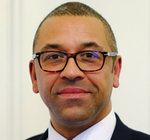
  • James Cleverly – 2021 Statement on Nazanin Zaghari-Ratcliffe

    James Cleverly – 2021 Statement on Nazanin Zaghari-Ratcliffe

    The statement made by James Cleverly, the Minister for the Middle East and North Africa, in the House of Commons on 27 April 2021.

    Iran’s decision to sentence Nazanin Zaghari-Ratcliffe on further charges is totally inhumane and wholly unjustified. This Government remain committed to doing all that we can to secure Mrs Zaghari-Ratcliffe’s return home to the United Kingdom so that she can be reunited with her daughter, Gabriella, and her husband, Richard. It is indefensible and unacceptable that Iran has chosen to continue this wholly arbitrary court case against Mrs Zaghari-Ratcliffe. The Iranian Government have deliberately put her through a cruel and inhumane ordeal. We continue to call on Iran in the strongest possible terms to end her suffering and allow her to return home.

    Since her arrest in April 2016, Mrs Zaghari-Ratcliffe has faced terrible hardship and appalling treatment. This Government have relentlessly lobbied for an improvement to both the conditions endured by Mrs Zaghari-Ratcliffe while she was in prison and those conditions still experienced by others, including Morad Tahbaz and Anoosheh Ashoori, who are still incarcerated. Although Iran does not recognise dual nationality, and therefore views Mrs Zaghari-Ratcliffe as only an Iranian citizen, that has not stopped this Government from lobbying at every opportunity for their release, and her return home to the UK. We have never been granted sight of the judicial process, or consular access to our dual British nationals detained in Iran; however, that has not stopped our ambassador in Tehran consistently pressing for her full and permanent release with senior Iranian interlocutors, most recently today, 27 April.

    Since I was last at the Dispatch Box, the Foreign Secretary and Foreign, Commonwealth and Development Office officials have been in regular contact with Mrs Zaghari-Ratcliffe and her family. Our ambassador in Tehran has visited Mrs Zaghari-Ratcliffe at her parents’ home in Tehran to reiterate the Government’s commitment to do all that we can to secure her return to the UK. The Foreign Secretary has spoken with both Mrs Zaghari-Ratcliffe and her husband to underline the fact that the UK Government, from the Prime Minister down, remain committed to doing everything that we can to achieve that.

    Since Mrs Zaghari-Ratcliffe’s arrest in 2016, we have raised the case regularly at the highest levels of Government. The Prime Minister has raised it with President Rouhani, most recently on 10 March, and the Foreign Secretary’s personal ongoing engagement with Foreign Minister Zarif continues, with their most recent call being on 3 April. That lobbying of Iranian interlocutors at every opportunity has helped to secure the release of Mrs Zaghari-Ratcliffe in March 2020 and the removal of her ankle tag on 7 March this year.

    As I have said, however, what we ultimately seek to achieve, and what we are ultimately working towards, is the release of all British dual nationals held in arbitrary detention in Iran, and their ability to return home. The UK continues to take concrete steps to hold Iran to account for its poor human rights record. At the Human Rights Council in March 2021, we strongly supported the renewal mandate of the United Nations special rapporteur on the situation of human rights in Iran, and we made clear to Iran that its repeated violations of human rights, including those of foreign and dual nationals, are completely unacceptable. The UK Government also joined the Canadian initiative against arbitrary detention on 15 February. We continue to work with G7 partners to enhance mechanisms to uphold international law, tackle human rights abuses and stand up for our shared values.

    I assure the House that the safety and the treatment of dual British national detainees in Iran remains a top priority for the UK Government. Iran is the one responsible for putting Mrs Zaghari-Ratcliffe through this cruel and inhumane ordeal over the last five years, and it remains on them to release her to be reunited with her family, and to release the others. We continue to stress that these second charges are baseless. She must not be returned to prison.