Tag: 2021

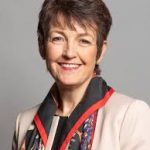
  • Julia Lopez – 2021 Speech on Digital Government

    Julia Lopez – 2021 Speech on Digital Government

    The speech made by Julia Lopez, the Cabinet Officer Minister, on 13 May 2021.

    Good morning everyone, and many thanks to Govnet for inviting me here today and giving me the opportunity to share the plans and priorities for the Digital, Data and Technology Function for the coming year, led by the Central Digital and Data Office. The theme of the next two days is enhancing government to citizen engagement through the digital evolution, and there is so much to talk about as always.

    Earlier this year, the Cabinet Office announced the new DDaT leadership team. The appointments of Paul Willmott and Joanna Davinson to the newly established Central Digital and Data Office, strengthen the leadership and vision needed for the next phase of digital delivery and transformation in government.

    The CDDO has been established to lead the DDaT function across departments. Our mission is to improve user access and experience of government services and harness the power of data. As such, through this collective leadership we will use and upskill the expertise of our cross-government DDaT community and put the strategy, standards and assurance mechanisms in place to deliver the digital transformation we’ve been waiting for at scale.

    Government, and the stakeholders that it exists to serve, are rapidly becoming ‘digital’ in every way. The shift to digital is a long term trend that has been accelerated by COVID-19 and will continue with improving technology like the rollout of 5G. Now, more than ever, digital must be front and centre of government’s priorities to meet user needs.

    There is strong backing and support from my Ministerial colleagues and leaders across government to accelerate the digital transformation of public services – the introduction of the CDDO is evidence of this.

    With the creation of CDDO, and a reinvigorated GDS, this is a critical moment we must seize. We must take the opportunity this new focus provides and deliver the transformational agenda to meet our citizens’ expectations. Already we are seeing glimpses of the future today. With GOV.UK Accounts we will enable people to better understand government through a more personalised, low-friction experience, one that joins up whole journeys for services in a single space. I’m excited to see how this work will see a positive shift in the relationship citizens have with government.

    Underpinning this work will be digital identity assurance. We have recently begun a digital identity pilot project, deliberately small in scale at the start, that will create the proof of concept. This is being led and coordinated by GDS, co-designed with departments and public services, and be largely government-built and government-owned. This will be a successor to Verify and, in time, replace other digital identity systems used across government. Further reducing the complexity of needing multiple accounts to interact with government.

    Citizens rightly expect a modern service fit for the 21st century. This vision will provide that and has the potential to radically transform the relationship between government and people, delivery of public services and development of joined-up policy; enabling the UK to remain at the forefront of digital government.

    But none of this can be achieved without a strong strategic centre, making better use of data, and building capability across the Digital, Data and Technology Function.

    The Prime Minister made a manifesto pledge during the 2019 election campaign to improve the government’s use of data. Since then, our experiences of crisis response – such as trying to identify the 2.6 million people most in need of financial support in the early days of tackling the coronavirus – have shown just how significant data sharing is to the economy, society and the public sector; and how it will help to power growth as we set about our recovery.

    Take, for example, government data from PAYE and the benefits system which has boosted the Treasury’s furlough scheme and DWP’s expansion of universal credit. Or the data from NHS Digital which was used to draw up the ‘shielding’ list of vulnerable people and was the basis for how we supported over half a million vulnerable people with almost 5 million food boxes, priority supermarket delivery slots and other support services by local authorities; and the vaccination programme owes its success in part to being able to organise cohorts by age and risk from patient lists already held by GPs.

    As the country emerges from lockdown we will take forward what we have learned, to make sure that we use data more intelligently and sensitively in how we craft and deliver public services, balancing having innovative, joined up services with privacy and ethical considerations. The pandemic has given fresh impetus to digital projects across the public sector, with 90 services stood up across government since March in response to COVID-19. So it is timely that today I can talk to you about the ambitions for the CDDO in 2020/21: the immediate priorities across data, infrastructure and capability, and the longer term ambitions for the CDDO and digital transformation in government.

    True digital transformation can only be achieved with robust, reliable and accessible data. It is a crucial enabler which will make the UK the world-leading digital government we aspire to be. At the heart of this aim is better, more personalised and responsive services for citizens, improving the government’s approach to policy and decision-making, and bringing efficiencies for government, saving taxpayer money.

    By building a truly joined-up and interoperable data ecosystem for government, we will improve the way government collects, uses and shares data. This will benefit citizens and government by providing them with tailored and responsive public services,

    We need to tackle the issues that are stopping us from using data on tap. Data is too often stuck in silos within departments and agencies – there are also other legislative, technical and security blockers which stop us from sharing data. Crucially, there isn’t enough of the right talent and tools in place which means that even when data is made available, we aren’t able to take full advantage of new technologies that could not only help us fix current issues, but predict and more effectively manage future challenges.

    Through the CDDO, we intend to tackle this long-standing issue head on. We will do this by establishing a common data model for government with core data standards, reference data and policies. This will enable easier and ethical sharing of data.

    We are also committed to transforming the way data is collected, managed and used across government. We intend to create a joined up and interoperable data infrastructure.

    We have already made progress in this area as set out in the National Data Strategy published last year. At last year’s Digital Government event, GDS launched plans for a GOV.UK Account, to enable a joined-up, proactive, efficient and personalised public services on GOV.UK. And later this morning, Ash Smith from the GDS Digital Identity team will be speaking about ‘one login for government’ – another step in harnessing the power of data to bring real-life benefits to users using government services. But we know there is still more to do, and CDDO has been established to tackle this.

    CDDO is responsible for delivering the third mission of the National Data Strategy, transforming the government’s use of data to drive efficiency and improve public services. In order to achieve this mission, there are some fundamental areas we need to focus on.

    Firstly, we need to tackle the cultural and legal barriers to good quality data in government. We need to develop a clear understanding of what data is held and where, promote better data collection and efficient data sharing. So engaging with departments is critical – understanding their challenges and where the CDDO might provide immediate, tactical support to remove blockers.

    Secondly, we must look at standards and assurance. We have already made great strides in this area, thanks to the Data Standards Authority, which was set up in April 2020 to improve how the public sector manages data.

    For over a year now, the DSA has been working with experts across the public sector and devolved administrations, the private sector and academia, to identify, improve and help implement data standards that meet user needs and improve interoperability. The standards we have established now make it easier and more effective to share and use data across government.

    An example of setting data standards is the API Catalogue, which collates a list of government APIs to help unblock issues such as reuse and data exchange. To continue the progress in this area, the DSA will continue to focus on setting and driving the adoption of standards for data, so it can lead to greater consistency, integrity and interoperability.

    It will be important to link these data standards to spend controls and form a consensus on government data infrastructure and continuing to prioritise the wide and effective use of data across government through a reliable API ecosystem.

    Thirdly, we will increase our accountability and responsibility for this work through new governance structures, and leveraging spend controls.

    To achieve our ambitions, we of course need the right people in post and for them to be trained and upskilled to face the challenges ahead. This is our fourth area of focus, which I will talk about later about when I go through our plans for capability, leadership and culture.

    And finally, and arguably most critically, we need to take the public on the journey with us, and place ethics and public trust at the core of our delivery.

    We recently refreshed the UK’s Data Ethics Framework, and are now embedding the Framework in various government processes and scoping opportunities for developing and promoting data ethics skills.

    We are also committed to the open data agenda, and through our transparency will retain the trust and confidence of the public.

    In order to make the most of data we need to fix the elephant in the room – legacy IT. Because as long as we continue to rely on outdated systems and technology, we will be unable to fully harness the opportunities of emerging technologies and modern digital solutions.

    This is a problem felt across the public sector. And a core reason the Central Digital and Data Office has been established is to work across government to define the future for HMG’s technology estate and to clarify priorities and roadmaps for dealing with red-rated legacy IT.

    Although a decade of transformation has brought major improvements, approaches to technology across government have not yet been sufficiently modernised, or joined up enough, to support our ambition. Despite departments separately taking steps to transform, single departmental accountability, sub-optimal procurement and varied approaches have allowed siloed and restrictive architectures to develop.

    Too many systems are disconnected, offer poor user experience and are insufficiently responsive to deliver at pace. Teams struggle to collaborate because systems are not interoperable and built on open standards.

    This is not a new issue, and we know much more needs to be done to address it. Over the past year for example cross government working has raised the profile and understanding of legacy leading to the investment of more than £600 million at the last spending review to address critical risks – but this is only one step.

    Addressing legacy remains a key focus. Our next phase of work will build on what we have done so far, further identifying legacy assets and agreeing prioritisation and funding while working with departments to develop roadmaps for addressing risks. Removing legacy IT also achieves value for money by removing excessive costs to support out of date technology.

    Progress has also been made moving to cloud, but generally in a siloed way, with the result that many systems stand on different, disconnected cloud architectures with disparate ways of working, while some departments remain locked in to inefficient legacy data centres.

    In order to work collaboratively there needs to be clarity on what should be done consistently, and what should be allowed to vary, and then managing compliance with the approach. So we will shortly be starting discovery work to understand the most effective way of aligning and assuring technology strategies and roadmaps with careful consideration given to existing cross-government assurance structures and of course all of our past experience.

    We want to ensure that interoperable IT supports improvements to collaborative working across the Civil Service. So we will develop a framework and a blueprint for our office systems that provides a baseline and allows us to monitor progress towards better interoperability. In the future, no new IT systems will be created without consideration of interoperability with other relevant government systems.

    Our vision is for highly capable and interoperable systems, with plug and play technology that allows products and components to be swapped in and out as technologies, legislation and ways of working change and advance. This is vital to meet new challenges and serve different users flexibly, at pace, and in line with changing needs and expectations. For government, it will support more agile ways of working, along with more efficient and better organisational outcomes. For citizens, it will lead to improved services and ensure that the experience when interacting with the government is much more akin to what they are used to from the private sector.

    To achieve this vision we need to continue with the work to integrate agile ways of working across government. Citizens should be involved in the services we’re building for them from the first stages of concept design through to the service going live. Many teams across government are already working along agile lines because it allows them to build and test quickly, iterating their work based on regular feedback from users. It puts users first and means services are much more responsive to the needs of the public, and able to respond quickly to policy changes.

    The CDDO will promote agile ways of working across government, specifically in digital projects and programmes. To do this we want to build capability and equip all civil servants with the digital skills required to lead and run modern organisations. We want to continue the work we’ve been doing with HMT for a number of years to improve the business case process and introduce a common set of KPIs to measure how agile services and teams are performing.

    Using agile puts users first and means services are able to respond quickly to policy changes and the needs of the public.

    Having the right digital skills underpins everything we want to do. So continuing to invest in building more capability within the Digital, Data and Technology Profession is vital. Over 18,000 civil servants work in this profession and we want people to see working in government as a destination of choice for their career. As part of this we’ll be increasing opportunities across the UK through the creation of jobs outside London and investment in apprenticeships and training as we build back better.

    Equally important is looking at career development opportunities and making sure the right incentives are in place to encourage people to pursue engineering and other specialities. Alongside regularly reviewing things like the DDaT pay framework to make sure we remain competitive.

    Finally there is an ambition to make more of our early talent programmes like the DDaT Fast Stream, with potential for university feeder courses and building tech hubs across the country to help seed local technology ecosystems being explored.

    But looking beyond the DDaT Profession, we need digital skills and understanding across all levels of government – we need to bring everyone along on this journey. So improving the digital and data literacy of all civil servants and members of government, particularly senior leaders, is crucial to realising the ambition of having world leading digital services and the next phase of digital transformation. It is central to the effective running of any modern organisation.

    We also need to be able to continually monitor and understand how digital services are being used by citizens, and the benefits they are giving. This is not just so we can constantly iterate and evolve them, but key to ensuring the UK has a world leading digital offer.

    The UK is rightly recognised as a global digital leader, we consistently rank in the top ten worldwide in international digital government rankings. The UK is currently ranked 2nd in the OECD’s Digital Government Index, 7th in the UN’s E-Government Development Index and 1st in the Open Data Barometer.

    But we don’t want to stop there. Our aim now is to build on these achievements and ensure the UK becomes the world’s leading digital government, our citizens deserve nothing less.

    To help achieve this the CDDO are exploring what a cross-government performance framework should look like and how this can be used to track and report progress.

    This framework will include a set of outcome focused metrics to be used consistently across government with a central approach to monitoring and reporting progress.

    We need to move away from building and monitoring in isolation, or in silos, now we must build together.

    So those are our priorities for the first year, but we must also prepare for the pace of transformation to be sustained and continue into the future. It will come as no surprise to hear that the CDDO have been giving a lot of thought around what our longer term goals should be.

    Many services have been improved over the past decade, but all too often it has not been the end-to-end transformation that is now required. CDDO, working with departments and GDS, will explore how services and departments work together to cover major life events and where the join up should be. This ties into wider government ambitions to reduce multiple logins through GOV.UK Accounts.

    Current government funding models are largely designed to support project work within departments. With projects, you generally know exactly what you will build upfront, but Digital, Data and Technology products are often created in an iterative way, so this is a bit of a different approach and requires a different funding approach too. We need to try to bring together ways of funding Digital, Data and Technology that allow for innovation and flexibility across departments, as well as provide enough certainty that government money is being spent in the right ways. The CDDO will be working with HMT to explore options and ways to do this, including agile business case approaches, promotion of cross-department solutions, and outcome based accountability.

    With our new found procurement freedoms from exiting the EU the CDDO, working with the Crown Commercial Service, will strengthen commercial technology skills and create a sourcing playbook to support departments who need to bring in services or specific skills. We’re also keen to hear from departments to understand the appetite for joint procurement.

    We don’t want to just simplify procurement though, we need to develop genuine partnerships with strategic suppliers and ensure the focus is on outcomes and value delivered.

    Thank you for listening and giving me this opportunity to introduce the mission and priorities of the CDDO.

    There is a lot still to do – and with the creation of the CDDO, and all of our commitment and determination, I know we are up for the challenge. There is so much we can achieve by working together, sharing our knowledge, experience and expertise, to shape and deliver digital transformation. And for all of us there could be no greater prize than to improve people’s experience of government, and through that change people’s lives – for good.

  • Eddie Hughes – 2021 Comments on Rough Sleeping

    Eddie Hughes – 2021 Comments on Rough Sleeping

    The comments made by Eddie Hughes, the Minister for Rough Sleeping, on 15 May 2021.

    Across the country, there are staff and volunteers working tirelessly to make a real difference to the lives of rough sleepers.

    From providing bed spaces and night shelters, to funding dedicated support staff and medical treatment, today’s funding will mean that crucial work to help people off the streets can continue.

    This is part of an unprecedented £750 million of government investment this year to help us reach our goal of ending rough sleeping by the end of this Parliament.

  • Robert Jenrick – 2021 Comments on Rough Sleeping

    Robert Jenrick – 2021 Comments on Rough Sleeping

    The comments made by Robert Jenrick, the Housing Secretary, on 15 May 2021.

    At the beginning of the pandemic we took swift and decisive action to bring rough sleepers in from the streets and settled them into longer-term accommodation in record numbers. That work continues, the results are clear and are a huge credit to all involved.

    Ending rough sleeping is a personal mission for the Prime Minister and me – and we have made huge progress since he came into No.10, reducing rough sleeping by 43%.

    To build on this progress, we are making the biggest ever investment under the Rough Sleeping Initiative to provide vital services to those who need it most, as part of our drive to end rough sleeping for good.

  • James Heappey – 2021 Comments on Daesh in Mali

    James Heappey – 2021 Comments on Daesh in Mali

    The comments made by James Heappey, the Minister for the Armed Forces, on 15 May 2021.

    This was the first operation of its kind by UN forces in Mali, demonstrating how UK personnel have made a significant contribution to the mission during their first six months in the country.

    Removing the weapons and disrupting the terrorist operation will make a real difference to the local community and importantly the intelligence collected will help develop our understanding and help to prevent the threat from armed groups in the future.

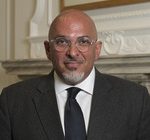
  • Nadhim Zahawi – 2021 Comments on the Vaccine Confidence Summit

    Nadhim Zahawi – 2021 Comments on the Vaccine Confidence Summit

    The comments made by Nadhim Zahawi, the Minister for Vaccine Deployment, on 15 May 2021.

    Vaccines are the route out of the pandemic, and nobody is safe until we’re all safe.

    This UK-hosted Summit is a significant opportunity for G7 countries to come together with partners across the world to take action to maintain high levels of trust in vaccines and those that provide them.

    The monumental vaccination programme in the UK will start us on the road to building back better from Covid-19 and we must work collectively to ensure people across the world can reclaim their lives and livelihoods.

  • Vicky Ford – 2021 Comments on Language Training

    Vicky Ford – 2021 Comments on Language Training

    The comments made by Vicky Ford, the Children and Families Minister, on 13 May 2021.

    We know the first years of a child’s life can be the most formative, which is why this Government is making it a priority to make sure all children have the best start in life.

    Speaking and communicating with confidence sets a child up for success in life, so it’s vital that we support children to grow in confidence with these skills – especially those for whom English is not their first language or who have been more isolated during the pandemic than their peers.

    The early results from Nuffield are very encouraging and I encourage every school with a Reception class to sign up in this second phase.

  • Peter Kyle – 2021 Comments on Number of Collapsing Criminal Cases

    Peter Kyle – 2021 Comments on Number of Collapsing Criminal Cases

    The comments made by Peter Kyle, the Shadow Victims and Youth Justice Minister, on 13 May 2021.

    Victims should be at the heart of our criminal justice system. Yet faced with a lack of enforceable rights and delays of several years until their case comes to trial, they are increasingly choosing to drop out of the process altogether – allowing perpetrators to go free.

    The Tories are failing in their core duty to protect victims, and to keep the public safe.

  • Jonathan Ashworth – 2021 Comments on NHS Waiting List Reaching 5 Million

    Jonathan Ashworth – 2021 Comments on NHS Waiting List Reaching 5 Million

    The comments made by Jonathan Ashworth, the Shadow Secretary of State for Health and Social Care, on 13 May 2021.

    This week the five million patients waiting for treatment needed a Queen’s Speech that delivered an NHS rescue plan to provide timely treatment for those waiting for health care.

    These shocking levels of unmet care needs risk serious illness and permanent disability for thousands of people.

    This is a devastating verdict on 11 years of underfunding, cuts, understaffing and neglect of social care that left both health and care services weakened and exposed when the pandemic hit. We entered the crisis with sky high waiting lists, cancer targets missed and young people denied mental health support. It’s time for a reset on the NHS to deliver the care patients deserve.

  • Matt Warman – 2021 Speech on Dame Vera Lynn National Memorial

    Matt Warman – 2021 Speech on Dame Vera Lynn National Memorial

    The speech made by Matt Warman, the Parliamentary Under-Secretary of State for Digital, Culture, Media and Sport, in the House of Commons on 11 May 2021.

    How fitting, on this day of the Gracious Speech, that we should be talking about Dame Vera Lynn, because I think it was one of the most moving speeches that Her Majesty the Queen has ever made, and she herself quoted the line that we will meet again. It is right that we understand what Dame Vera Lynn has contributed to this country and to all that we have gone through in the past couple of years as well. It was only in September that my hon. Friend the Member for Southend West (Sir David Amess) raised this important matter, and I thought at the time that we would meet again. I did not know where and I did not know when, but today has been a sunny day, and here we are. I would like to echo his warm words about the lasting legacy of Dame Vera Lynn. The importance of her words and actions was brought home to us not just by the speech that Her Majesty the Queen gave last year, but by the 75th anniversary of VE Day— we all remember the fitting tribute to Dame Vera during the closing stages of the celebrations, when the nation came together to sing that most famous song. Indeed, my right hon. Friend the Prime Minister, Her Majesty the Queen and countless members of the public shared their condolences with Dame Vera Lynn’s family following her death last June, at the grand age of 103.

    To hear all about Dame Vera Lynn’s endeavours in later life through the Dame Vera Lynn Children’s Charity, the Bluebird appeal and the Dame Vera Lynn Charitable Trust is truly inspiring.

    Whether Dame Vera was aiding former servicemen and women or working with children and schools, it is clear that she was a true public servant who helped people of all ages and backgrounds throughout her life. My hon. Friend the Member for Lewes (Maria Caulfield), whom my hon. Friend the Member for Southend West mentioned, has written to me personally to say that Dame Vera is much missed in her home village of Ditchling in Sussex, where she was a key figure in the local community. It is clear that Dame Vera touched many people, across this country and this House, through her music and her philanthropy; I can only echo the warm praise of the general public and of my colleagues here today for her lasting legacy.

    As I said in the previous Adjournment debate, this country has a long and well-established tradition of commemorating its national and local individuals through statues and memorials. I reiterate the Government’s support for public monuments and statues, which serve as a long-lasting reminder of individuals and their efforts for this country, bridging the gap between the past and the present.

    I look forward to the day when the memorial to the great Dame Vera Lynn that my hon. Friend the Member for Southend West mentioned gazes down from the white cliffs of Dover. As he mentioned, he has a successful track record of managing to have public statues erected, and we should look forward to future success, whether it follows on from Eric Cole’s or from Raoul Wallenberg’s in adding to the 12,000 outdoor statues and memorials in England alone. We all know that Dame Vera Lynn will be a huge addition to that roster, and that my hon. Friend is the man to do it.

    The debate gives me an opportunity to detail the Government’s position more broadly on erecting new memorials and statues. As my hon. Friend said, it is not normal practice for central Government to fund new memorials, but we all know that in this case many organisations, public and private, have been hugely successful in proposing funding—I can think of few more fitting recipients of that funding than the projects he mentions—and delivering memorials, marking a variety of incidents and historical figures that they are best placed to deem appropriate and sensitive to their local area. There is no more appropriate area than the white cliffs, I am sure.

    Many successful memorials are created by a wide range of authorities and organisations, allowing each memorial to respond sensitively to the particular circumstances that it seeks to commemorate. I will not dwell on the excellent example of the jolly fisherman in Skegness—another example of funding by public subscription—or on the excellent Gracie Fields statue in Rochdale. Those memorials and statues were conceived, fundraised and erected through local efforts and ownership. Many people will have seen the recent proposals for a new memorial inside St Paul’s cathedral to those who have died as a result of the covid-19 pandemic.

    Statues matter. They provide a memorial and a memory for people who wish to remember vital parts of our nation’s history. There are a great many people and organisations interested in establishing memorials. As a general rule, it is for those groups to work with the relevant local planning authority and other organisations to identify a suitable site and obtain the necessary planning permissions. The good news is that, following the passing of the Deregulation Act 2015, consent is not even required from the Secretary of State for Digital, Culture, Media and Sport to erect statues in London; the process is determined through the planning system only—although I do not think in this case I am going too far by saying that my right hon. Friend the Secretary of State is as much of a fan of the great Dame Vera as is my hon. Friend the Member for Southend West. I hope that provides him with some of the reassurance he has sought on the process around new monuments and statues.

    I wish my hon. Friend, and all those involved, the deepest best wishes in their efforts to raise funds for this commemoration of Dame Vera. It sounds like an ambitious and transformative proposal for the south coast, truly befitting Dame Vera. I look forward to that moment when her statue looks down from the white cliffs.

    I thank my hon. Friend the Member for Dover (Mrs Elphicke) for her intervention this evening. I share her commitment to the important role of arts and culture in truly levelling up and reinvigorating towns and cities across the country. I know that she recently met the Minister for Digital and Culture, my hon. Friend the Member for Gosport (Caroline Dinenage), to discuss her plans and had a productive conversation with Arts Council England. We at DCMS look forward to seeing the outcomes of her work across Dover and Deal.

    I would take this opportunity to burst into song, such is my enthusiasm for this project, but I think that could possibly send it in the wrong direction, rather than the one we would all like to see. I thank my hon. Friend the Member for Southend West for all his work in promoting the cause of this statue. I wish him and all those involved—foremost the family of Dame Vera Lynn—the best of luck in this hugely deserving endeavour, and I look forward to seeing it in real life.

  • David Amess – 2021 Speech on Dame Vera Lynn National Memorial

    David Amess – 2021 Speech on Dame Vera Lynn National Memorial

    The speech made by David Amess, the Conservative MP for Southend West, in the House of Commons on 11 May 2021.

    I am so very pleased that this Adjournment debate is taking place at the end of a very special day for all of us. It is of specific importance that none other than Her Majesty the Queen was here to start our proceedings, because the lady I am going to talk about was held in very, very high regard by the royal family and particularly Her Majesty the Queen. I am so pleased that it is you, Dame Eleanor, who is presiding over our proceedings this evening, because I happen to know on good authority that you were very fond of this lady because your late father held her in the highest regard. I know that you and your team—Mr Speaker and the other two Deputies—are quietly rather supportive of what I am now going to share with the House.

    Dame Vera Lynn holds a special place in the hearts of everyone in the United Kingdom for her wonderful, uplifting singing during the dark years of the second world war. Her voice on the radio brought warmth and hope into the homes of ordinary people whose lives had been thrown into chaos by war. She travelled to many of the theatres of war, particularly in the far east, to support the fighting men she called “her boys”. Viscount Slim, grandson of Field Marshall Sir William Slim, commander of Fourteenth Army in Burma, has told me that his grandfather called the Fourteenth the “forgotten Army”. Dame Vera’s visits to the troops in the far east were so appreciated by the men who fought there. She went on an extended tour of India and Burma, sharing the basic conditions experienced by the soldiers, and they never forgot that. She ate the same food, slept under the same canvas, travelled through hostile and rugged terrain without complaint and with a cheerful disposition that brought sunshine wherever she went.

    We have all seen pictures of Vera singing to crowds of young soldiers far from home. It must have been as if a lovely angel had descended to sing to them in the midst of the horrors of war. For a few short hours, she helped them forget the bad food, exhaustion, fear and heat, and connected them with their homes and families, so far away, through her magical voice.

    I knew Vera for many years, because she happened to live next door to a friend of mine. I know that my hon. Friend the Member for Lewes (Maria Caulfield), whose constituent she was, would have liked to contribute to this debate, but as a Government Whip she is not able to do so. Vera’s daughter, Virginia, and her husband Tom, are both good friends, and they have taken on the mammoth task of continuing Vera’s charitable work, ensuring that her legacy continues.

    I feel that a lot of people do not actually know what Vera did. Like me, she came from an ordinary background in the east end of London. Indeed, my family home is in Forest Gate, and just round the corner, down the road, is Dame Vera Lynn road. She experienced tough times, and she was always down to earth, kind and generous. These days—this will probably backfire—celebrities can be somewhat aloof and remote, but Vera was never like that, and she never forgot the sacrifices made by the troops in the second world war.

    Vera was 103 when she died. My own mother reached the age of 104—they breed them tough in the east end of London. Vera’s career spanned an incredible 96 years, as she began performing publicly at the age of just seven. Her first radio broadcast was with the Joe Loss orchestra in 1935, and she first recorded one of her most popular songs, “We’ll meet again”, in 1939.

    Jim Shannon (Strangford) (DUP)

    I congratulate the hon. Gentleman on securing this debate. It is so pertinent and something we all love. I am pleased to hear about the special affection that his family has for Dame Vera Lynn—it is wonderful to hear it expressed in such a way. Does he agree that in a world where some are ashamed of our past, Dame Vera Lynn is a treasure to be remembered and celebrated, as part of a generation of selfless British patriots, whose love of and devotion and dedication to their country is something to be memorialised and immortalised?

    Sir David Amess

    How could anyone disagree with anything the hon. Gentleman says? I will certainly not disagree on this occasion. He described this wonderful woman brilliantly.

    During the second world war, Dame Vera would sing to people using London underground stations as air raid shelters. The title of “forces’ sweetheart” came about after the Daily Express, backing the campaign, asked British servicemen to name their favourite musical performer. Of course Vera topped the poll. Her radio programme, “Sincerely Yours”, began in 1941, and included messages to troops serving abroad. However, after the fall of Singapore, the programme was taken off air for 18 months, because it was viewed—I mean, this is crazy!—as too sentimental, and it was thought it would interfere with the war effort.

    Vera toured Egypt, India and Burma with the Entertainments National Service Association. In 1985 she rightly received the Burma Star for entertaining British guerrilla units in Japanese occupied Burma. How those young men must have enjoyed having a star like Vera appear among them, and what courage she showed to put herself in such a dangerous position. In her later years, Vera was a frequent performer at commemorative events such as VE day, and we see the royal family on the balcony enjoying every minute when Vera and others appeared. Her final public performance was in Trafalgar Square in 2005, where she made a speech and joined in with a few bars of “We’ll meet again”.

    Her career was not finished there. In 2009, at the age of 92, she became the oldest living artist to make it to No.1 in the British album chart—I wonder what the Brits will be making of that at tonight’s awards. In 2017, the year of her 100th birthday, an album of her songs, which I have, with new orchestral settings and duets with many contemporary artists, was released. She was the best-selling female artist of the year—at the age of 100!—and received a lifetime achievement award at the Brit awards, which is taking place this evening. She was the first centenarian performer to have a top 10 album.

    It is not just Dame Vera’s wonderful voice that should be commemorated, but the enormous amount that she has done for others less fortunate than herself. Many people will be unaware of all the marvellous work done by her two charities; the Dame Vera Lynn Children’s Charity and the Dame Vera Lynn Charitable Trust.

    The Dame Vera Lynn Children’s Charity was established in 2001 to help children with cerebral palsy and other motor learning impairments and their families. I know that, in her own constituency, my hon. Friend the Member for Castle Point (Rebecca Harris) holds that particular organisation very dear. The charity has its origin in the announcement by Scope that it was no longer able to fund its School for Parents network, including Ingfield Manor, which was close to Dame Vera’s home in Sussex. The school provided early intervention services to support parents in raising pre-school age children with cerebral palsy, enabling the children to learn and develop physically, socially and emotionally.

    Vera launched the Bluebird appeal to raise funds to save the school, and the charity continues to provide early intervention services as well as other activities, such as music therapy, swimming, sensory sessions and help for families. In the words of Dame Vera:

    “Early intervention is key to helping young children with cerebral palsy and other motor learning conditions gain a solid base from which they can develop their independence and self-esteem in later life.”

    So, Madam Deputy Speaker, what am I asking for tonight in this Adjournment debate? The Dame Vera Lynn Charitable Trust was set up in 1989 with her late husband, Harry. The main aim of the trust is to relieve hardship or distress among former members of the armed services and their families—another cause close to her heart. The trust has donated to many military charities, as well as giving money to other causes, such as children’s charities and, more recently, the national health service silent soldiers campaign. So, together with Dame Vera’s family, I am launching a campaign for a permanent memorial to one of the most loved stars that this country has ever produced. One place immediately came to mind for her memorial—the iconic white cliffs of Dover, immortalised in one of Vera’s most famous songs. In 2017, Vera raised more than £1.5 million to enable the National Trust to purchase 700,000 square metres of land immediately behind the cliff top. That amazing feat was accomplished within a week and is a tribute to her enduring popularity and her hold on the British public’s imagination.

    The memorial will be a permanent reminder to future generations of what this marvellous lady accomplished and how much she was loved. The project has the backing of my hon. Friend the Member for Dover (Mrs Elphicke), who is the vice-chairman of our committee, so, if something happens to me, she is standing ready to take over. Most importantly, it also has the backing of Dover District Council, and what a wonderful council it is. It is what I call a “can-do” council. It is so helpful and so proactive. I just could not be more pleased with its welcoming of this scheme.

    After an initial site visit to the cliffs in April to find a suitable accessible home for the sculpture, the committees got to work. The most impressive and relevant site and one that has captured the spirit of Dame Vera is a proposed open-air amphitheatre or bowl overlooking the harbour and the white cliffs, which is such a wonderful idea. This project will provide a venue for concerts, theatrical productions and military events in a stunning natural setting. The memorial to Dame Vera will be at the heart of the plans, and her musical legacy will live on in the enjoyment of visitors and audiences for many years to come. You can see it now, Madam Deputy Speaker: there she will be, presiding over the bowl and looking over the channel. It is just wonderful. People talk about statues and memorials. The team have come up with such a wonderful scheme—I cannot take any credit. I intend to visit the proposed venue this Friday to see for myself how the site could be landscaped to provide the best possible setting.

    The people of Dover—I do hope my hon. Friend the Member for Dover will catch your eye, Madam Deputy Speaker—have taken Dame Vera to their hearts. There will be an enormous sense of pride in the memorial, which will cement the link between Dame Vera and the town. I have no doubt that the amphitheatre and memorial will prove to be a popular destination for visitors from all over the world and a magnificent venue for artistic and musical performances. In fact, I must say to my hon. Friend that, when Southend becomes a city, we can have an event at the end of the pier, and I can see us linking up together—it is just wonderful. I can see musical performances as well as acts of commemoration —my right hon. Friend the Member for Rayleigh and Wickford (Mr Francois) will enjoy this—for the armed forces. I am sure Vera would have loved the combination of her two great loves: music and her boys.

    The renowned sculptor Paul Day, whose work includes the Battle of Britain memorial on the Embankment and the Queen Mother’s memorial, will create the sculpture, and the initial sketches promise a stunning design that he hopes will tell Vera’s story. He will be involved at every stage of the bold project—I think a documentary will be made—so the memorial and the setting will form a cohesive whole and a fitting commemoration of Vera’s life and work. The memorial will be paid for by donations and public subscription, so I, as a politician, will not be making the public appeal; I am just sort of chairing it all. I have no doubt that the British people will want to see Vera commemorated in a fitting manner that everyone can enjoy.

    The campaign will go live on 18 June—the first anniversary of Dame Vera’s death. An application to set up a charitable trust to collect the donations has been sent to the Charity Commission and is being dealt with right now. I very much hope that all the necessary paperwork will be approved in time for the launch on 18 June. The campaign launch video will feature contributions from Katherine Jenkins OBE, Sir Tim Rice, Sir Paul McCartney and Anthony Andrews, each of whom has been touched by Dame Vera’s life in some way. Katherine Jenkins has sung many of Dame Vera’s songs, interpreting them for a new generation. Anthony Andrew’s father was a musician, arranger and conductor at the BBC and played the trumpet on many of Dame Vera’s radio performances. There will also be a few surprise contributions, but hon. Members must tune in on the day to find out who they are.

    I think all hon. Members would agree that Dame Vera Lynn is one of the most iconic and best loved personalities of the last century.

    Mr Mark Francois (Rayleigh and Wickford) (Con)

    As the son of a D-day veteran, I wish to wholeheartedly endorse my hon. Friend’s suggestion of creating a memorial to Dame Vera Lynn. During this country’s darkest hour—darker even than the wicked pandemic that we have had to endure—she helped to maintain our nation’s morale as we fought, alone for a period, in a battle for national survival against Nazi tyranny. She kept up the country’s spirits and those of all those who were fighting in the armed forces, including my own father. He cannot be here, but if he were, he would be thoroughly encouraging my hon. Friend in everything he is doing. This is an incredibly fitting tribute to a remarkable woman and, as my hon. Friend’s parliamentary friend and neighbour, I wish him Godspeed.

    Sir David Amess

    I have no doubt at all that my right hon. Friend’s late dear father is looking down from heaven now, full of pride in his son and the tribute that he has just paid to Dame Vera Lynn. I really thank my right hon. Friend for his support.

    Vera is one of the most iconic and best loved personalities of the last century. I do not understand celebrities any more, but to me she was a true star in the old-fashioned meaning of the word. She was never one to court the limelight offstage, preferring to maintain her family’s privacy wherever possible. However, she gave so much of herself to the people of this country that I believe it is only fitting that the country should give something back to commemorate such a wonderful lady.