Tag: 2021

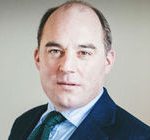
  • Alex Norris – 2021 Comments on NHS Patient Data Collection Delay

    Alex Norris – 2021 Comments on NHS Patient Data Collection Delay

    The comments made by Alex Norris, the Shadow Minister for Public Health and Primary Care, on 8 June 2021.

    This is a welcome decision, but it was only achieved after overwhelming pressure from patients, and health professionals alike.

    This must now mean that all elements, including the opt-out, are delayed and there must be a full public consultation about this issue before the data collection is resumed. Labour will continue to raise this with Ministers to ensure this is the case.

  • Peter Kyle – 2021 Comments on School Absence Rates in the North West

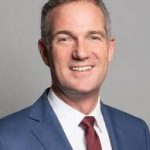
    Peter Kyle – 2021 Comments on School Absence Rates in the North West

    The comments made by Peter Kyle, the Shadow Minister for Schools, on 8 June 2021.

    Today’s shocking new data demonstrates the government once again failing to keep our children learning in school, with those in the North West hit the hardest.

    Over the last year the Conservatives have ignored Labour’s calls for Covid security measures in schools – from proper testing to Nightingale classrooms, and the resources to make schools COVID-secure. Now it’s children and families in the North West who are paying the price.

  • Gavin Williamson – 2021 Statement on Education Recovery

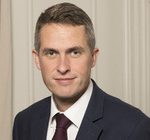
    Gavin Williamson – 2021 Statement on Education Recovery

    The statement made by Gavin Williamson, the Secretary of State for Education, in the House of Commons on 7 June 2021.

    With permission, Mr Deputy Speaker, I will make a statement regarding the latest phase of our education recovery programme.

    Helping our children recover from the impact of the pandemic is an absolute priority. Pupils, parents and staff have all experienced disruption, and we know that continuous actions are required to help recover lost learning. That is why we have already made provision available to support children to catch up. As a result, a quarter of a million children will receive tutoring this year who would not have been able to access it beforehand; over half a million pupils will be able to attend summer schools; and schools have access to both a catch-up and a recovery premium to enable them to assess what will help their pupils catch up on lost learning and to make provision available to ensure that they do so.

    The evidence we have shows that disadvantaged children and those who live in areas that have been particularly hard hit by high covid rates, such as the north-east of England and Yorkshire, are among those whose learning is most likely to have been affected. We have always been clear that we will continue to take the action that is required. That is why we continue to pledge significant packages of investment and targeted intervention to help them to make up on their lost learning. I would like to take this opportunity to thank Sir Kevan Collins for his contribution to these efforts, his thoughts and his inputs over the past few months.

    Last week, I announced the details of the next step in our efforts to ensure that children and young people catch up after the disruption of the pandemic and to support our ongoing education recovery plans. We have announced an additional programme of extra help and support, particularly for those from disadvantaged backgrounds, which focuses on areas that we already know are going to be most effective. They are high-quality tutoring and more effort, more work and more programmes to support great teaching. This brings our total recovery package to more than £3 billion. The lion’s share of this new money—£1 billion of it—will fund a tutoring revolution, delivering 6 million 15-hour tutoring courses for schoolchildren and the equivalent of 2 million 15-hour courses for 16 to 19-year-olds who need additional support to catch up. Year 13 pupils will also have the option to repeat their final year where this is appropriate.

    The evidence shows that one course of high-quality tutoring has been proven to boost attainment by three to five months, so additional tutoring will be vital for young people in recovering the teaching hours lost in the past year. This represents a huge additional teaching resource, putting it among the best tutoring schemes in the world. It means that tutoring will no longer be the preserve of the most affluent but will instead go to those who need it most and who can get the most benefit from it. Schools will be able to provide additional tutoring support using locally employed tutors, and that will build on the successful national tutoring programme, which is on target to provide a quarter of a million children with tutoring in its first year.

    I can also tell the House that it is not just data that shows us that tutoring works; we are seeing the positive impact on children at first hand. As we go around the country, speaking to children in different schools, we hear how it is helping them to learn, to catch up and to achieve the very best of themselves. We hear time and again how these activities are helping young people to make up for the time they lost through not being in school. It is also giving them the increased confidence and self-esteem that they develop through the extra tutoring and the extra attention.

    I have said that we are determined to fund these catch-up activities based on the evidence of what works, and the next stage of our recovery plan will include a review of time spent in school and college and the impact that that could have on helping children and young people to catch up. Schools already have the power to set the length of the school day, but there is a certain amount of disparity in approach across the sector. I know it is not just the Government who are thinking about the length of the school day; it is an important issue with so much catching up still to do.

    When that is the case, I question whether it is justifiable that some schools send their children home at 2.45 pm when others keep them in for much longer. The findings of the review will be set out later in the year to inform the spending review, and a broad range of reforms and changes to our school system will be set out.

    I said that we would be concentrating this huge investment on two areas that we know work, and the second of them is to give our teachers more professional support. Teachers have done so much for children in the pandemic. Now it is time for us to do even more for those teachers. An extra £400 million will be made available to help provide half a million teacher training opportunities across the country, alongside professional development for those working in early years settings. We will make sure that all of them can access high-quality training, giving them the skills and tools to help every child they work with fulfil their potential.

    Of that funding, £153 million will provide professional development for early years staff, including through new programmes that focus on key areas such as speech and language development for very young children, and £253 million will expand existing teacher training and development to give schoolteachers the opportunity to access world-leading training, tailored to whatever point they are at in their careers, from new teachers to aspiring headteachers and headteachers themselves.

    We know from numerous studies that the most powerful impact on a child’s learning is made by the teacher in front of them in the classroom. By investing in our teachers, enabling them to grow professionally and develop their skills, we invest not just in them but in every pupil in every class. It is worth adding that we have not lost sight of our main aim, which is to provide world-class education for every child, whatever their background, and to set them up with the knowledge and skills that they need to fulfil their potential and look forward to a happy and fulfilling life. The recovery package will not just go a long way to boost children’s learning in the wake of the disruption caused by the pandemic, but help bring down the attainment gap between disadvantaged children and their peers that we have been working so hard to get rid of for so long.

    This is the next stage in what will be a sustained programme of support, building on the landmark £14.4 billion uplift in core schools funding that was announced in 2019 and the more than £3 billion in addition that has been announced so far for recovery. As the Prime Minister said last week,

    “there is going to be more coming down the track, but don’t forget this is a huge amount that we are spending”.

    For that reason, I commend the statement to the House.

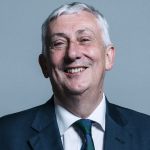
  • Lindsay Hoyle – 2021 Statement on the Foreign Aid Amendment

    Lindsay Hoyle – 2021 Statement on the Foreign Aid Amendment

    The statement made by Lindsay Hoyle, the Speaker of the House of Commons, on 7 June 2021.

    Before we move to the statements, I want to say something about the selection of amendments and new clauses to the Advanced Research and Innovation Agency Bill.

    I told the House in my statement on 29 January 2020 that as Speaker of the House, I am committed to transparency and I respect and trust the advice from Clerks in this House. As the House knows and as “Erskine May” states:

    “The Chair is not expected to give reasons for the decision on selection of amendments.”

    However, on an exceptional basis, I want to say something about why new clause 4 has not been selected. I am doing so on this occasion because of the high level of interest in the new clause in the House and outside it.

    Amendments and new clauses that are not within the scope of the Bill are out of order. “Erskine May” states:

    “The scope of a bill represents the reasonable limits of its collective purposes, as defined by its existing clauses and schedules.”

    In this instance, having taken advice from the House’s senior Clerks and the Office of Speaker’s Counsel, I have deemed new clause 4 to be outside the scope of the Bill. New clause 4 is therefore not selected and may not be debated today.

    I wish to make a further point. As we all know, the Government have, through our Standing Orders, significant control over the business the House considers on any given day, and its control is particularly strong when it comes to the initiation of public expenditure. Under the International Development (Official Development Assistance Target) Act 2015, it is the duty of the Secretary of State to ensure that the target for official development assistance to the amount of 0.7% of gross national income is met by the United Kingdom each year. Until now, however, the House has not—I repeat, not—had an opportunity for a decisive vote on maintaining the UK’s commitment to the statutory target of 0.7%. I expect the Government to find a way to have this important matter debated and to allow the House formally to take an effective decision.

    I should say that, on an exceptional basis, I will hear and consider for debate, to be held tomorrow, any applications made under Standing Order No. 24 by 5.30 pm today. Applications should reach my office no later than 5 o’clock this afternoon.

    Having taken this exceptional step of explaining my decision on selection in this case, I will take only one point of order, from the lead Member for the proposed amendment, Andrew Mitchell.

    Mr Andrew Mitchell (Sutton Coldfield) (Con)

    On a point of order, Mr Speaker. Further to your statement, of course I completely accept that you are the referee on these matters, and that is that, but the Government Front Bench are treating the House of Commons with disrespect. They are avoiding a vote on the commitments that each of us made, individually and collectively, at the last general election on a promise made internationally, and in the opinion of some of Britain’s leading lawyers, the Government are acting unlawfully.

    Had we secured a vote on the new clause tonight, I can assure the House that it would have secured the assent of the House by not less than a majority of nine, and probably of around 20 votes.

    In the week of the British chairmanship of the G7, the Government’s failure to address this issue will indisputably mean that hundreds of thousands of avoidable deaths will result. It is already attracting criticism from all round the other members of the G7. What advice do you have, Mr Speaker, for my right hon. and hon. Friends and I to seek to stop the Government riding roughshod over Parliament in this way and seeking to thwart our democratic rights as Members of the House of Commons?

    Mr Speaker

    Can I first thank the right hon. Member for the courtesy of giving me advance notice of this point of order?

    On the first point—that Government may have behaved unlawfully—I have to advise the right hon. Member that that will be a matter for the courts to determine, not me, as he is well aware. I know that he has worked very hard in looking at that, if it were needed.

    On the right hon. Member’s more general point, I have already expressed my view that the House should be given an opportunity to make an effective—I repeat, an effective—decision on this matter. I have also indicated that I would, exceptionally, be prepared to accept an application today for an emergency debate tomorrow.

    I would say that I share the House’s frustration. It is quite right that this House should not continue to be taken for granted, but we must do it in the right way. I believe the Government need to show respect and need to come forward—I totally agree with the right hon. Member—because not only the House but the country needs this matter to be debated and aired, and an effective decision to be taken.

    I have now put that on the record, and I hope that the Government will take up the challenge and give the House its due respect, which it deserves. We are the elected Members. The House should be taken seriously and the Government should be accountable here. I wish and hope that that is taken on board very quickly. I do not want it to drag on. If not, we will then look to find other ways in which we can move forward. I am taking no more points of order.
  • Preet Gill – 2021 Comments on International Aid Cuts Amendment Not Being Selected

    Preet Gill – 2021 Comments on International Aid Cuts Amendment Not Being Selected

    The comments made by Preet Gill, the Shadow Secretary of State for International Development, on 7 June 2021.

    The strength and depth of support for protecting the aid we send to help the world’s poorest is clear.

    The Conservative Government is leaving the UK isolated among wealthy countries by being the only one to cut this budget. A failure to reverse the cuts would entirely undermine our ability to solve global challenges, from the pandemic to the climate crisis.

    Rather than trying to evade another vote, the Government must end its retreat and reaffirm its commitment to spending 0.7% of national income with a clear timeline.

  • Emily Thornberry – 2021 Comments on “Government Fraud” over Trade and Agriculture Commission

    Emily Thornberry – 2021 Comments on “Government Fraud” over Trade and Agriculture Commission

    The comments made by Emily Thornberry, the Shadow International Trade Secretary, on 7 June 2021.

    Last Autumn, MPs had the chance to pass Labour’s amendments to the Trade and Agriculture Bills banning imports of agricultural products that did not meet the UK’s standards on food safety, animal welfare and environmental protection, and would undermine the competitiveness of British farmers.

    The Government persuaded their backbenchers not to back those amendments on the basis of a promise that the Trade and Agriculture Commission would do the job instead, and be given the authority to tell Parliament if any future trade deals would be damaging for British farmers.

    But now the truth is clear. The Government has misled its own MPs and perpetuated a fraud on Britain’s farming communities. A hugely damaging deal is about to be struck with Australia, and the Commission which was supposed to act as the voice of British farmers will have nothing at all to say.

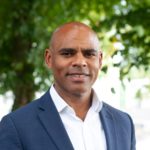
  • Marvin Rees – 2021 Comments on World Environment Day

    Marvin Rees – 2021 Comments on World Environment Day

    The comments made by Marvin Rees, the Mayor of Bristol, on 4 June 2021.

    Bristol’s journey towards carbon neutrality by 2030 needs to be fair and inclusive. Achieving a just transition where everyone feels the benefits of a healthier and better environment is central to our approach.

    We need to continue to build sustainable solutions to tackle the twin challenges of a climate and ecological emergency. We need our buildings, streets and open spaces to support wildlife and create a more nature friendly city, and we need new developments to do the same. We need to consider the natural world when we make any big city decisions.

    As a council, we want to lead by example, and we will be considering the environmental impacts of all the decisions we make, however we know we cannot do this alone, and are calling out to all businesses and organisations in the city to help us make a difference to our planet before it is too late. We will also do everything we can to help our communities across Bristol who want to make changes to their own lifestyles.

  • James Duddridge – 2021 Comments on Nigeria and Twitter

    James Duddridge – 2021 Comments on Nigeria and Twitter

    The comments made by James Duddridge, the Minister for Africa, on 7 June 2021.

    I am concerned that the Government of Nigeria has suspended Twitter. We hope that all Nigerians are able to enjoy their full rights to freedom of expression, and do so responsibly.

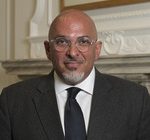
  • Nadhim Zahawi – 2021 Comments on Dating Apps and Vaccinations

    Nadhim Zahawi – 2021 Comments on Dating Apps and Vaccinations

    The comments made by Nadhim Zahawi, the Vaccines Minister, on 7 June 2021.

    I am thrilled that we are partnering up with dating apps to boost vaccine uptake across the country. This is another incredible asset to our vaccination programme – the biggest and most successful in our history.

    The vaccine is our way out of this pandemic and we have made incredible progress so far with over three-quarters of adults receiving at least one dose.

    I encourage everyone who is eligible to roll up their sleeves and get the jab – it could save your life and protect your loved ones.

  • Gordon Brown – 2021 Comments on Aid Cuts

    Gordon Brown – 2021 Comments on Aid Cuts

    The comments made by Gordon Brown, the former Prime Minister, on 7 June 2021.

    It’s a life-and-death issue, we’re actually deciding who lives and who dies, particularly at this point where if we withdraw the money for vaccination it’s the equivalent of pulling away the needle from a kid or from an adult who is sick who needs the vaccination, a 90% cut, for example, in support for polio vaccination.

    There has been an all-party consensus, all parties, for 25 years that we need 0.7%, we need to play our role in the world by being one of the leaders in aid and, really, this is not the right time to pull things away because basically this is when the poorest countries need help most.