Tag: 2021

  • James Heappey – 2021 Comments on Help for People on St. Vincent

    James Heappey – 2021 Comments on Help for People on St. Vincent

    The comments made by James Heappey, the Armed Forces Minister, on 12 June 2021.

    Recent events on St Vincent were a tragedy, but disasters like this are precisely why we have Royal Navy assets deployed to the Caribbean – to provide vital relief and assistance to people there when needed in times of crisis.

    Our servicemen and women were able to act quickly and decisively when this request came in, delivering these essential supplies to where they needed to be within hours.

  • Boris Johnson – 2021 Comments on the G7 and the Environment

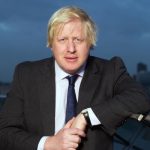
    Boris Johnson – 2021 Comments on the G7 and the Environment

    The comments made by Boris Johnson, the Prime Minister, on 12 June 2021.

    Protecting our planet is the most important thing we as leaders can do for our people. There is a direct relationship between reducing emissions, restoring nature, creating jobs and ensuring long-term economic growth.

    As democratic nations we have a responsibility to help developing countries reap the benefits of clean growth through a fair and transparent system. The G7 has an unprecedented opportunity to drive a global Green Industrial Revolution, with the potential to transform the way we live.

  • Gavin Williamson – 2021 Comments on the Duke of Edinburgh’s Award Scheme

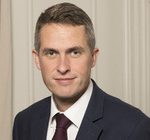
    Gavin Williamson – 2021 Comments on the Duke of Edinburgh’s Award Scheme

    The comments made by Gavin Williamson, the Secretary of State for Education, on 13 June 2021.

    The Duke of Edinburgh’s Award has become synonymous with service and personal achievement. This expansion into more schools is a fitting tribute to Prince Philip who did so much to give young people opportunities to develop skills and abilities while making a difference to society.

    We know from those who have achieved The Duke of Edinburgh’s Award that it helps to build the resilience, perseverance and discipline needed to overcome life’s obstacles.

    I’m pleased to be working with The Duke of Edinburgh’s Award to help make it more accessible to schools and pupils in some of the most disadvantaged areas of England, levelling up their opportunities to get involved in these life-changing activities.

  • Humza Yousaf – 2021 Comments on NHS Dental Services in Scotland

    Humza Yousaf – 2021 Comments on NHS Dental Services in Scotland

    The comments made by Humza Yousaf, the Scottish Health Minister, on 10 June 2021.

    The remobilisation of the NHS is one of our number one priorities and the Scottish Government remains committed to ensuring that NHS dental services emerge from this pandemic well-placed to care for the oral health of the population.

    This new funding is an important step in ensuring the continued remobilisation of NHS dental services and to ensure more patients can be seen safely. We will also continue to fund free PPE for the dental sector and, from July, we will increase it by up to 50 per cent.

    We are continuing to work with the sector to provide much-needed support to fully remobilise dental services.

  • Humza Yousaf – 2021 Comments on Expanding Vaccine Rollout to International Students

    Humza Yousaf – 2021 Comments on Expanding Vaccine Rollout to International Students

    The comments made by Humza Yousaf, the Scottish Health Secretary, on 11 June 2021.

    There is a huge amount of work going on to ensure that everyone is able to get vaccinated. This is crucial to the success of the programme and our efforts to bring the virus under control.

    Based on the latest data, we estimate there could be around 65,000 international students studying in Scotland in the next academic year. I am pleased to confirm they will be included in our national vaccination programme.

    Of course many will be from countries where there is a mature vaccination system and they will already be fully or partially vaccinated. However, some may not yet have been vaccinated or may still require a second dose and we are currently working with the Universities and Colleges Scotland as well as local health boards to firm up plans for these students.

    We continue to urge everyone to take up their appointment for a vaccine when it is offered and remember the second dose offers greater and longer protection against the virus.

  • Mairi Gougeon – 2021 Comments on the Seafood Industry and Brexit

    Mairi Gougeon – 2021 Comments on the Seafood Industry and Brexit

    The comments made by Mairi Gougeon, the Scottish Rural Affairs Secretary, on 11 June 2021.

    Six months on from Brexit and the seafood sector is still trying to work through the red tape and barriers to trade imposed by a damaging and last minute deal.

    At this crucial point, where we are starting to see some hope of recovery there remains a strong need for a forum where Ministers from the UK and Scottish Governments, and industry, continue working together to minimise the impact of changes to import regulations.

    Given the significance of seafood to our national economy and our coastal communities, we are continuing to do all we can to protect the livelihoods of those working in the industry.

    We have provided support through the Seafood Producers Resilience Fund to more than 800 vessels and 26 aquaculture businesses impacted by COVID-19 and Brexit.

    Funding has also been used to support ports and harbours who have lost landing fees, while welfare advice and Brexit advisers to assist businesses navigate through the new processes have also been made available.

  • Preet Gill – 2021 Comments on Donating Surplus Vaccine Doses

    Preet Gill – 2021 Comments on Donating Surplus Vaccine Doses

    The comments made by Preet Gill, the Shadow International Development Secretary, on 11 June 2021.

    It’s taken the government months to finally begin setting out a plan to donate surplus doses of Covid-19 vaccines to low-income countries. Once again, this Conservative government has gone heavy on rhetoric and light on detail.

    To limit deaths and the chances of new variants we need to speed up the proposed timeline and produce a sustainable, fully-funded strategy. Failure to do so would be unforgivable.

    That’s why, in addition to donations from wealthy countries, Labour has set out a 10-point plan to produce and distribute enough coronavirus vaccines for the whole world and put in place the tools we need to fight future pandemics.

  • Bill Esterson – 2021 Comments on Trade Safeguards on Steel

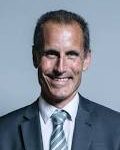
    Bill Esterson – 2021 Comments on Trade Safeguards on Steel

    The comments made by Bill Esterson, the Shadow International Trade Minister, on 11 June 2021.

    This is a deeply disappointing – if sadly unsurprising – recommendation from an organisation that is fundamentally flawed in its composition and its remit and has simply not given sufficient weight to the implications of this verdict for steelworkers, their families, and the communities that rely on that industry.

    The Government will say their only option is now to accept this recommendation, but that is simply not true. They must instead accept Labour’s offer to work together in the national interest and come forward with emergency legislation, which we will support, to amend the regulations and allow Britain’s steel safeguards to be maintained in full.

    That is the only responsible and acceptable course of action to protect the British steel industry and the tens of thousands of jobs it supports.

  • Emily Thornberry – 2021 Comments on Breach of FOI Guidelines

    Emily Thornberry – 2021 Comments on Breach of FOI Guidelines

    The comments made by Emily Thornberry, the Shadow Secretary of State for International Trade, on 12 June 2021.

    What we are seeing revealed here is something deeply dangerous and corrosive to our democracy: evidence of a government department breaching the FoI guidelines, categorising information according to its sensitivity and the person requesting it, and taking advice on handling requests from the secret Cabinet Office Clearing House.

    It is patently obvious that none of those things are being done in the interests of transparency and integrity; but what we need to know now is whether they are being done to circumvent or delay the government’s obligations under the law, and whether the system in place at the Department for International Trade is in widespread use in other government departments.

    In addition, it is now all the more urgent that the Cabinet Secretary accepts Angela Rayner’s demand for an independent investigation into whether Michael Gove broke the Ministerial Code when he denied the existence of all these practices in his evidence to Parliament last December.

  • John Whittingdale – 2021 Speech on the Safety of Journalists

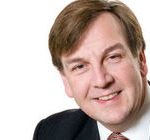
    John Whittingdale – 2021 Speech on the Safety of Journalists

    The speech made by John Whittingdale, the Minister for Media and Data, in the House of Commons on 10 June 2021.

    I beg to move,

    That this House has considered the safety of journalists.

    I very much welcome this opportunity to debate what is, as you have rightly said, Mr Deputy Speaker, an extremely important subject. It is the second such debate we have had in the space of two weeks, as we recently debated World Press Freedom Day. I congratulate my hon. Friend the Member for Folkestone and Hythe (Damian Collins) who has been an assiduous campaigner on this topic and who chairs the all-party parliamentary group on media freedom.

    The safety of journalists is of critical importance, as journalists play a vital role in ensuring that democracy functions properly and in contributing towards a free society. The role that journalists play in exposing corruption, holding power to account and informing the electorate of the truth is absolutely central to a democratic, free society. Investigative journalism plays a critical role and we will all remember examples, such as the exposure of the thalidomide scandal, the corruption that riddled FIFA, the Panama papers and even MPs’ expenses.

    Such journalism shone a powerful light into areas that needed to be exposed. That is particularly important at the moment. The need for the provision of trusted and reliable information is absolutely critical, and has been over the course of the last year, at a time when fake news has been so prevalent and it has been all the more important for people to be able to turn to trusted journalism for reliable reports of the truth.

    For that reason we regarded it as vital to support the media during the pandemic. The media came under significant economic pressure and we were able to provide support to local newspapers and radio, and recognised the important role that journalists play by affording them key worker status.

    While the role of journalists has never been more important, it is the sad truth that it is also increasingly dangerous. I pay tribute to the organisations that regularly highlight the harassment and intimidation of journalists that takes place in far too many countries.

    Reporters sans frontières, which is responsible for the world press freedom index, has recorded that 50 journalists were killed in the course of their duties last year. The deadliest countries in the world are Mexico, Iraq, Afghanistan, India and Pakistan.

    Justice for Journalists monitors the treatment of the press in the countries of the former Soviet Union. It lists 84 journalists currently held in detention or imprisoned. The most recent and most shocking example of a journalist being illegally detained is that of Raman Pratasevich, whose flight was forced to land in Belarus and who has since been held, with significant concern about his future wellbeing.

    The Committee to Protect Journalists has identified 1,404 journalists who have died since they started keeping records in 1992. I pay tribute to the courage of those journalists around the world who are operating in extremely dangerous environments, particularly a number of British journalists who are on the frontline of conflict or reporting in authoritarian regimes. As we did two weeks ago, we remember Marie Colvin of The Sunday Times who was killed alongside her French colleague as a result of being deliberately targeted because of the job they were carrying out as journalists.

    The UK has taken a lead in campaigning for the safety of journalists. We established the global conference on media freedom in July 2019 and I pay tribute to my right hon. Friend the Member for South West Surrey (Jeremy Hunt) who led that initiative. We continue to co-chair the Media Freedom Coalition, which now comprises 47 member countries.

    We have used our presidency of the G7, which is coming to its conclusion over the course of this weekend, to continue to highlight the importance of the protection of journalists. Indeed, we have included that in the communiqué that was issued by the Foreign Ministers, which has a number of paragraphs setting out exactly why it is so important that journalists should be afforded protection.

    We established the global media defence fund, to which the Government are contributing £3 million over five years, and I am going to be speaking tomorrow at the Council of Europe in support of the resolutions being passed there highlighting the protection of journalists.

    However, we are also conscious that if we are to be able to campaign on this issue, we need to set an example, too. The UK currently ranks 33rd out of 180 in the press freedom index, which represents a small improvement but it is nothing like enough. For that reason, the Government established, a year ago, the National Committee for the Safety of Journalists, which I co-chair along with the Minister for safeguarding, the Under-Secretary of State for the Home Department, my hon. Friend the Member for Louth and Horncastle (Victoria Atkins). That committee brings together representatives of the police, from the National Police Chiefs Council, the Police Service of Northern Ireland and Police Scotland; the prosecuting authorities—the Crown Prosecution Service and the Crown Office and Procurator Fiscal Service in Scotland; the Society of Editors; the National Union of Journalists, and some of those campaigning organisations such as Index on Censorship and Reporters Without Borders. As a result of the committee’s establishment, we published in March the national action plan for the safety of journalists, whose aim is to increase our understanding of the scale of the problem and enhance the criminal justice system response, so that in future there will be new training for police officers and a police officer in every force dedicated to investigating complaints relating to the safety of journalists. It will give greater resources and advice to journalists, agreed by their employers, and there will be a commitment from the online platform to do more. Finally, greater efforts will be made to improve the public recognition of the value of journalists. Last week, we published our call for evidence, to try to establish hard facts on the scale of the problem. It closes on 14 July and I hope very much that anyone who has experience will make a submission to it, but we have already received 200 responses which make it clear that online threats and harassment are indeed widespread and that this is a significant problem, which we need to do more to address. The committee will continue to meet to review the plan, but we are determined to ensure that the UK is as safe an environment as possible for journalists to carry out their job. We will also continue to campaign to raise the importance of this issue in every country around the world.