Tag: 2021

  • Kevin Tighe – 2021 Statement on Disorder in Oakham

    Kevin Tighe – 2021 Statement on Disorder in Oakham

    The statement issued by Kevin Tighe, the CEO of Rutland Agricultural Society, on 19 June 2021.

    We are currently hosting a religious festival on our site which we are aware is causing disturbance to our neighbours. We wholeheartedly apologise for this. We agreed to the booking after assessing the organisers risk assessment and with the belief that this was an event primarily about Christian worship. However there is a minority of people who are disrupting the event and causing significant problems around the showground. Our priority is to help maintain public order and minimise disruption and allow the event to refocus on its Christian worship as quickly and quietly as possible. We have been in contact with the police who have been on site today.

  • Jim McMahon – 2021 Comments on Northern Powerhouse Rail

    Jim McMahon – 2021 Comments on Northern Powerhouse Rail

    The comments made by Jim McMahon, the Shadow Secretary of State for Transport, on 21 June 2021.

    Warm words and vague promises, the likes of which we have seen from the Prime Minister during recent by-election campaigns, are simply not good enough. Labour will not stand by while cities like Bradford – among those set to benefit most from vital infrastructure upgrades – risk being stifled by this government’s failure to keep its side of the bargain.

    Our party is clear – Northern Powerhouse Rail should be built. Estimates predict it will connect millions more people and thousands of businesses and help tackle our imbalanced economy.

  • Eluned Morgan – 2021 Comments on Keeping Wales Safe

    Eluned Morgan – 2021 Comments on Keeping Wales Safe

    The comments made by Eluned Morgan, the Welsh Minister for Health and Social Services, on 21 June 2021.

    As we move into the summer months, now is not the time to be complacent. Coronavirus has not disappeared, and the transmission of the Delta variant reminds us just how quickly it can spread.

    Our fight against this virus depends on the actions we all take together and we need to keep doing all those things which have helped keep us, our families and Wales safe. We all must ensure that we continue to follow the guidelines on social distancing, washing our hands, wearing face coverings, and limiting our contact with people indoors to keep Wales safe and keep transmission as low as possible. We must also try to meet people outdoors if we can, and to keep indoor spaces well-ventilated.

    Testing is especially important as new variants emerge to help identify positive cases and manage outbreaks more effectively. I would like to remind anyone who has symptoms – even if they are mild – to follow the self-isolation guidelines and to arrange a PCR test.

    If we all take responsibility and keep the guidelines at the front of our minds, we will have the best chance of getting back to doing the things we miss most.

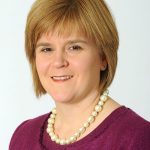
  • Nicola Sturgeon – 2021 Comments on Rumours Scots Throughout UK Could Vote on Independence

    Nicola Sturgeon – 2021 Comments on Rumours Scots Throughout UK Could Vote on Independence

    The comments made by Nicola Sturgeon, the Scottish First Minister, on 21 June 2021.

    I see the anti independence campaign is trying to rig the rules of #indyref2 again (tho in doing so they also concede that it’s going to happen). Maybe they should just argue their case on its merits and allow everyone who lives in Scotland to decide #democracy

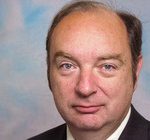
  • Norman Baker – 2021 Comments on Flexible Season Tickets

    Norman Baker – 2021 Comments on Flexible Season Tickets

    The comments made by Norman Baker, from the Campaign for Better Transport, on 21 June 2021.

    Finally, after years of campaigning people who commute part time are being offered an alternative to full-time season tickets. Unfortunately, these new flexible tickets do not appear to offer the kind of savings we had hoped for and are not comparable to the discounts for people commuting full time. There appears to be no standard level of discount and in some cases the flexible season ticket could end up being more expensive than the day return option.

    The projected growth in hybrid working has made this an urgent issue and to avoid an increase in commuting by car we need to encourage people back on board trains. The test will be whether the level of discounts offered will entice people onto rail. Sadly, we don’t think they will, except at the margins, so this could turn out to be a real missed opportunity.

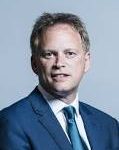
  • Grant Shapps – 2021 Comments on Flexible Season Tickets

    Grant Shapps – 2021 Comments on Flexible Season Tickets

    The comments made by Grant Shapps, the Secretary of State for Transport, on 21 June 2021.

    Our railways work best when they are reliable, rapid and affordable.

    As we kickstart the biggest reforms to our railways in a generation, flexible season tickets are the first step. They give us greater freedom and choice about how we travel, simpler ticketing and a fairer fare.

    With a season ticket calculator to see which option works best for you, and a book with confidence guarantee to make journeys stress-free, the future of fares is flexible.

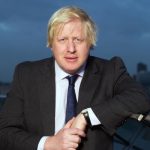
  • Boris Johnson – 2021 Article on Science

    Boris Johnson – 2021 Article on Science

    The article written by Boris Johnson, the Prime Minister, on 21 June 2021. The article was published in the Daily Telegraph and republished by the Cabinet Office.

    I cannot think of a time in the last 100 years when the entire population of this country has been so deeply and so obviously indebted to science – and to scientists.

    Had it not been for our scientists, we would not now be able to enjoy the most basic human freedoms: hugging relatives, meeting friends, playing football, going to the pub; or at least not without the risk of spreading a lethal disease.

    It is thanks to the vaccine roll-out that literally every person and every family in this country has an immediate future that is happier, more prosperous, more full of hope and opportunity, and if you think I am belabouring this point, it is because it needs belabouring.

    We have spent too long in a state of semi-detachment from science, as though it was something intimidating and remote from our lives. Too many people in our country lack training in science and technology, too many children think STEM subjects are not for them.

    Most glaringly of all, this country has failed for decades to invest enough in scientific research, and that strategic error has been compounded by the decisions of the UK private sector.

    It is a wretched fact that British firms are currently investing a fraction of the OECD average on research; and though the speed of the discovery of Oxford AstraZeneca was little short of miraculous, it was also something of a miracle that it took place here at all. Before Covid, the UK domestic vaccine industry had almost perished out of benign neglect.

    Had a couple of investment decisions gone the other way, this country might not have possessed the skills or practical capability to make vast batches of the vaccine that has been so indispensable to our success.

    So this is the moment to learn this stark lesson of the pandemic – our daily dependence on high-quality scientific research. It is also the moment to abandon any notion that government can be strategically indifferent, or treat research as a matter of abstract academic speculation.

    I am not suggesting that government should try to exercise scientific judgment, or impose some dogma on the scientific world – like the deranged genetic theories of Stalinist Russia.

    On the contrary, it is because we want to support high science, and to foster research that may or may not lead nowhere, that we are setting up the high-risk high reward ARIA agency, on the lines of DARPA in the US. We need to intensify the search for the unknown unknowns.

    And then there are the known unknowns, the nuts we know we need to crack, for the sake of our health and happiness. If the covid experience has taught us anything, it is that government does have a role in making demands, in explicitly framing the challenges we hope that science can meet.

    If we don’t, there are others who will. We made no particular effort to develop 5G, for instance, and we have paid a price. For the first time since the second world war, the largest western democracies were left behind in the race for a major new communications technology. It is a mistake that has proved expensive to rectify, and we don’t want to make another one like it.

    So we are investing unprecedented sums, increasing government spending to £22 billion for scientific research of all kinds; and we need to use those billions of state spending to leverage in the many more billions of the markets.

    One way to encourage those private sector investments is to give the market players the confidence that they are backing national priorities – so that public and private sector come together to deliver the breakthroughs, like the covid vaccine, that can transform our lives and economic prospects.

    To shape those priorities I will be chairing a new National Science and Technology Council, with Sir Patrick Vallance as my National Technology Adviser, so that together we can give the scientific world – in academia and across commercial laboratories – a sense of where we think we need to go.

    Some imperatives are already obvious. We need science urgently to accelerate the solutions that will help us to tackle climate change. We need progress on efficient power storage, hydrogen manufacture, net zero aviation, and other knotty problems raised in our ten point plan. We have a huge challenge to meet net zero by 2050, and not much time. But the vaccine programme has shown that when the pressure is on, humanity can produce feats of Manhattan Project-like speed, as the research of decades is compressed into months. It will be the job of the new National Science and Technology Council to signal the challenges – perhaps even to specify the breakthroughs required – and we hope that science, both public and commercial, will respond.

    We will be thinking about medical imperatives, such as tackling dementia or using new gene therapies to cure the hitherto incurable.

    We will be thinking about the new threats and opportunities in cyber, in space, and in the field of AI. We will of course be hoping that British science will play a leading role in fixing the problems of the world, providing everything from cheaper pharmaceuticals to drought-resistant crops.

    We will pursue these missions not just because each breakthrough could be a boon for humanity, but also because we want to see the expansion of scientifically-led start-ups and scale-ups, and a growth that goes beyond the golden triangle of Oxford-London-Cambridge and across the whole country.

    We want the UK to regain its status as a science superpower, and in so doing to level up. The UK has so many of the necessary ingredients: the academic base (four of the world’s top ten universities), a culture of innovation, the amazing data resource of the NHS, the capital markets.

    What we are offering now is record funding combined with the strongest possible political support and backing for science and a clear indication of where government sees greatest need.

    Of course we must generously fund pure science. We must allow for serendipity. You cannot plot or plan every breakthrough. But you can certainly set out to restore Britain’s place as a scientific superpower – while simultaneously driving economic prosperity and addressing the great challenges we face – and that is the plan of the government.


  • Dominic Raab – 2021 Statement on the UN’s Durban Conference

    Dominic Raab – 2021 Statement on the UN’s Durban Conference

    The statement made by Dominic Raab, the Foreign Secretary, on 21 June 2021.

    Following historic concerns regarding antisemitism, the UK has decided not to attend the UN’s Durban Conference anniversary event, later this year.

  • Angela Rayner – 2021 Comments on “Snobbery” in Government Appointments

    Angela Rayner – 2021 Comments on “Snobbery” in Government Appointments

    The comments made by Angela Rayner, the Deputy Leader of the Labour Party, on 20 June 2021.

    If Michael Gove really wants to attract the most talented people to work in our civil service, then he should end the ingrained snobbery that underpins attitudes towards different types of qualifications and the outdated assumption that academic qualifications should be a basic entry requirement for government jobs.

    Academic qualifications like degrees or A-Levels should only be a requirement when they are actually necessary to do the job. This will ensure that the government is more representative of the country it serves and that a greater range of talented candidates are not put off by snobbish and patronising attitudes about qualifications.

    This government has long talked a good game on parity of esteem but that rhetoric has not been matched by action. The Tories have cut billions from further education and while achieving this parity of esteem will need more resources, it will also need deep-seated culture change too. That culture change requires leadership from government, setting an example to other employers and showing that it is skills, experience and hard work that matter, not a particular type of education or where somebody went to school or university.

  • Kate Green – 2021 Comments on Education Recovery Plan

    Kate Green – 2021 Comments on Education Recovery Plan

    The comments made by Kate Green, the Shadow Secretary of State for Education, on 21 June 2021.

    We have seen failure, upon failure from this Conservative Government which has treated children as an afterthought and is now failing to invest in their futures.

    Not only is there nothing in their proposals to support children’s wellbeing or social development but the academic element is woefully insufficient, failing to live-up to the promised tutoring revolution.

    Labour has listened to parents, teachers and children and set out a recovery plan that is ambitious for children futures, with tutoring for all who need it alongside investment in activities and clubs creating new opportunities for every child.