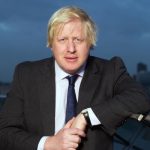
Tag: 2020

  • Nigel Huddleston – 2020 Speech on Historic Churches

    Nigel Huddleston – 2020 Speech on Historic Churches

    The text of the speech made by Nigel Huddleston, the Parliamentary Under-Secretary of State for Digital, Culture, Media and Sport, in the House of Commons on 16 July 2020.

    First, I offer my sincere thanks to the hon. Member for Strangford (Jim Shannon), who is a very good friend, for introducing this debate on this important issue. As always, he spoke with great eloquence and knowledge about the matter. His passion for the Church and churches came through clearly, and we all know that that passion is shared by many of our constituents right across the country.

    I also thank my hon. Friend the Member for Ipswich (Tom Hunt) for his comments, in particular about the important community asset that is St-Mary-at-the-Quay church. My understanding is that the Churches Conservation Trust is working to ensure that the space is able to reopen and serve his community again.

    As the Minister for sport, heritage and tourism, I am always heartened to see our historic churches and places of worship of all faiths evoke passion and commitment. Our historic churches have served as focal points for their local communities for tens, hundreds and even thousands of years. Across the country, historic parish churches are the lifeblood of the communities they serve. The hon. Member for Strangford raised many important points, and I hope to give him some of the assurances he was seeking.

    Supporting historic churches protects our cultural heritage and our community cohesion. Although heritage is a devolved responsibility, I am pleased to say that the Government support the maintenance of historic churches throughout the UK through the listed places of worship grant scheme. The vast majority of historic working churches are listed buildings, as the hon. Gentleman said, and are therefore eligible for support under the scheme, which was established in 2001 to provide grants towards VAT paid on repairs and maintenance.

    Since its inception, the scheme has made grants totalling more than £285 million and has played a significant part in ensuring that listed places of worship are in their best overall condition for many years. The scheme presently handles around 7,000 claims a year, is open to all faiths and denominations and is delivered UK-wide. In 2012, my Department and the Treasury became joint funders of the scheme, with the annual funding increased to £42 million. The level of funding is guaranteed up to 31 March 2021, and any extension to the scheme is on hold until the completion of the spending review.

    Further, since 1994, the Heritage Lottery Fund has awarded more than £985 million to more than 6,400 projects supporting the UK’s places of worship. In response to the extraordinary times we are now all facing, the fund has refocused its efforts, temporarily halting new awards through its core programmes to provide a package of emergency support to help the country’s heritage sector navigate the covid-19 crisis.​

    Covid-19 has had a profound impact on many of the individuals who regularly attend our places of worship and are responsible for their everyday care. It has affected the income of places of worship, including income derived from regular giving, tourism, venue hire, fundraising and many other measures, as the hon. Member for Strangford mentioned. It has also affected the schedule of repair and maintenance for many places of worship, and over the past few months, I have had weekly calls with representatives from the heritage sector about the impacts of covid-19, including representatives from the Church of England. Those calls have been incredibly useful and provided valuable insight into the challenges that grassroots organisations and churches have been facing and the support they require.

    The Government are committed to supporting all heritage organisations, including historic places of worship, through the coronavirus outbreak, and I would like to explain a couple of the measures we have taken. To help our historic places of worship get back on their feet, it is important that we help them reopen as soon as possible and as safely as possible. The heritage working group that I chair, together with the places of worship working group, chaired by my right hon. Friend the Member for Newark (Robert Jenrick), have provided input into the guidance we published last month on the safe use of places of worship during the pandemic. That offers a blueprint for safe, socially distanced worship from 4 July onwards. It offers in-depth guidance for places of worship, with specific advice for those based in historic buildings. Hon. Members will be aware that places of worship are still operating under a number of restrictions in terms of the types of activity that can be carried out. The Government are keeping their advice under close review and will continue to work with places of worship on the issue.

    I will also set out some of the financial support package that we have recently launched. In response to feedback received from organisations across all sectors, the Government have announced an unprecedented stream of support schemes. The highly visible job retention scheme is one part of that, but, with regard to support specifically targeted at the heritage sector, Historic England and the National Lottery Heritage Fund are also administering grant funding worth more than £55 million.

    That funding comprises the Heritage Fund’s £50 million heritage emergency fund, which was launched on 1 April and is already helping places of worship right across the UK to respond to the crisis by supporting them while closed and preparing them to reopen, and Historic England’s covid-19 emergency response fund, which was launched on 17 April and extends a safety net worth £2 million to small heritage organisations. The grants will help organisations, voluntary groups and self-employed contractors to survive the immediate challenges posed by coronavirus.

    Historic England launched a second emergency fund on 9 June to help to fund urgent maintenance repairs and investigations for heritage at risk. The £3 million fund ​will award grants of up to £25,000. Of course, listed places of worship are not precluded from the support package for the cultural sector recently announced by the Chancellor, the £1.57 billion fund that the hon. Member for Strangford mentioned. The new funding will mean an extra £188 million for the devolved Administrations, including £33 million for Northern Ireland and £96 million for Scotland, while Wales will receive £59 million.

    That funding will support our vibrant culture and heritage sectors, supporting hundreds of projects. It will also protect hundreds of jobs in our heritage construction industry through a £120 million capital investment programme supporting highly specialised skills and businesses such as architects and woodwork restorers.

    Jim Shannon

    I did ask whether there would be any help for the choirs and the choristers, because I understand, and the Minister understands, the importance of encouraging and retaining the choirs. We cannot lose that talent either.

    Nigel Huddleston

    It is not a debate without an intervention, as well as a main participation, from the hon. Gentleman. The eligibility criteria for that grant are still to be detailed, but they will be released very soon, certainly by the end of July. Hopefully that will give him further guidance.

    Finally, on covid funding, the charity support fund is a £200 million fund to support registered or excepted charities, including eligible historic places of worship, to provide essential services for vulnerable people affected by the current crisis. We recognise that, notwithstanding these generous support schemes, there will still be challenges for our historic places of worship. They will face these challenges over the coming months as we resume normal activities following the pandemic, and we are committed to keeping the dialogue going and seeking to support this sector in whatever way we can.

    My thanks again to the hon. Members who have contributed to today’s debate. I know how important our historic churches are and want to see them and the country recover and thrive. Our historic churches are vital assets, treasured for their heritage, community and social value, and they must be protected for generations to come and this Government will continue to vigorously support them.

    Madam Deputy Speaker (Dame Eleanor Laing)

    It should be noted that, as the hon. Member for Strangford (Jim Shannon) almost always intervenes in Adjournment debates, he did not spoil his record as he managed to intervene in his own Adjournment debate. That is quite an achievement, but it was an excellent debate.
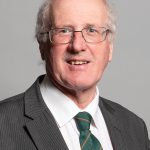

  • Jim Shannon – 2020 Speech on Historic Churches

    Jim Shannon – 2020 Speech on Historic Churches

    The text of the speech made by Jim Shannon, the DUP MP for Strangford, in the House of Commons on 16 July 2020.

    First, let me say what a pleasure it is to have you in the Chair, Madam Deputy Speaker, on a subject matter that I know you have great interest in. I am very pleased to have an Adjournment debate; I usually intervene in Adjournment debates, but on this occasion I actually have one. I want to put on record my thanks to Mr Speaker for making it possible. I know that it is due to his forbearance and interest in this matter. When I spoke to him about it a week or 10 days ago he was obviously quite intrigued to see what was going on and wanted to ensure that this House had a chance to hear the story.

    Obviously, we are very pleased to see the Minister in his place. He and I came into this House at the same time and are friends. We have done the armed forces parliamentary scheme together, and many other things. I am very pleased to see him in his place, and I look forward to his response.

    I am very thankful to have the privilege and honour of being the MP for Strangford, which boasts much rich heritage and history, with Greyabbey being noted as the best example of Anglo-Norman Cistercian architecture in Ulster. It was founded in 1193 by Affreca, wife of John de Courcy, the Anglo-Norman invader of East Ulster. Poor and decayed in the late middle ages, the abbey was dissolved in 1541, but in the early 17th century it was granted to Sir Hugh Montgomery and the nave was refurbished for parish worship until the late 18th century.

    At the south-east edge of Newtownards, the substantial remains of a Dominican friary founded in 1244 may be viewed. They are the only ones of their type in Northern Ireland. Built by the Savage family, the buildings were destroyed by Sir Brian O’Neill to prevent English soldiers from using them. Sir Hugh Montgomery restored the church in 1607 and added a small chapel, but it fell into disrepair in the middle of the 18th century. We also are blessed to host the St Patrick’s trail in memory of the legacy of St Patrick, the British missionary to Ireland, and many of the abbeys that were erected as his legacy exist only as ruins and relics.

    Members may wonder why I am bringing up the history of those churches, but the reason is clear. Although they were designed as houses of worship, they are now wonderfully rich pieces of history, having lost their true purpose, and it would make my heart ache to see world-renowned St Margaret’s, the parish church of Westminster, become another wonderfully rich old building that is not fulfilling its true design as a house of prayer and worship. It is also our church, as was discussed the other night. It is very clear that it is the church for MPs and Peers as well.

    I was absolutely gutted to receive notification last week that services were to be halted at St Margaret’s, and as time has passed I see that I am not the only one to feel that way. I thank every person who has signed the online petition, with more than 1,300 people asking for us to be able to make a way forward to enable that church to be a tourist attraction, because if we look at the background, it clearly is a part of the ceremony of ​this place—the House of the Commons and the House of Lords—and we want it to do what it was built for: to be a place for seekers of Christ to meet and worship Him. That is what the congregation are asking for, and that is what I am asking in this place. I am looking longingly and beseechingly to the Minister for that purpose: to facilitate as best we can the costs of churches, which are tourism attractions and places of worship, to ensure that they can remain open.

    I think of St Mark’s church in Newtownards, my main town. That beautiful historic building is a real central hub in the town, with children’s work, work for disabled people, the women’s institute, the men’s group and a thriving community hub, whose primary aim remains to glorify God. That is what we need to see in churches throughout this land, and the fact that something completely out of our control—covid-19—has put some of those things in jeopardy means that we need to step up and step in, as we have done for almost all facets of life affected by the coronavirus pandemic.

    I want to put on record my eternal thanks to the Government for all they have done.

    I am very pleased to see the hon. Member for Ipswich (Tom Hunt) in his place, and I know that he wants a couple of minutes to make a contribution, if the Minister is happy with that. I am very happy to let that happen. The hon. Gentleman wants to raise some pressing matters, similar to what I am asking for, but for his own constituency.

    Church tourism is a massive income generator throughout the UK. Four world heritage sites in the UK specifically include church buildings—Durham Cathedral, Westminster Abbey, Canterbury Cathedral and Fountains Abbey. Of the 16,000 Church of England church buildings, 4,200 are listed grade I, representing 45% of all secular or religious buildings listed at that grade, and a further 8,000 are listed grade II. There are 340 listed buildings of national importance in the care of the Churches Conservation Trust and other listed faith buildings include 622 Roman Catholic churches, 537 Methodist churches, 306 Baptist churches, 69 Congregational churches, 28 synagogues and one mosque. So that is the magnitude of what we are asking for. A further 146 ecclesiastical sites are in the care of English Heritage or the National Trust.

    Statistics for English tourism revealed that 55% of all day trips include at least one visit to a cathedral or a church—the third most visited of all types of attraction. Church tourism is phenomenal, and one of the largest attractions is our own Westminster Abbey, which incorporates St Margaret’s, just outside the House of Commons. It has an enormous number of visitors each year and creates a revenue that sustains Westminster Abbey and St Margaret’s. What we need is some help and assistance. The amount of revenue created through the visitors to Westminster Abbey and Saint Margaret’s is a loss somewhere in the region of £9 million to £12 million. It is enormous, and I spoke to the Secretary of State about it. I always feel a bit guilty when I see Ministers at tea time or at meals and say, “I’m sorry to bother you, but can I ask you…” I nab those opportunities and then think, “Oh, I hope he didn’t mind me doing that.” But he did not, and I am very pleased to see the Minister in his place.

    A scoping study by the North West Multi-Faith Tourism Association estimated 17 million visits to 45 cathedrals and 52 places of worship. That is an incredible figure, ​suggesting that each parish church typically receives around 700 to 4,000 visitors each year. That tourism absolutely provides revenue to keep those wonderful churches open and working, although they may need regular work carried out and may have smaller congregations. We understand that the size of congregations in churches across the whole of the United Kingdom of Great Britain and Northern Ireland is decreasing, and not just because of covid-19. But the virus has exacerbated that and taken away that revenue stream. I read in the paper one day that one Church of England church had 150 people in the congregation, but when it went virtual there were 25,000 people. So there are other ways of doing church, but speaking personally, I love going to church. I have done so probably nearly all my life. I went because my dad made me go when I was a wee boy, but I now go because I want to go. I believe it is important to have the communion and the chance to pray and worship, and to do that in fellowship with other people. I am very much a people person and always have been. I find Zoom incredibly hard to get used to and I find the virtual Parliament extremely difficult, but I love coming here and intermingling with people. That is important to me.

    The issue was highlighted to me by members of St Margaret’s parish church who are desperate to find a way to retain their parish church. I believe there is a way to retain weekly worship, and I believe the House and the Minister can facilitate that. There has been a church on the site of St Margaret’s next to Westminster Abbey since the 12th century. In 1614, it became the parish church of the Palace of Westminster. It has a regular congregation of between 70 and 120 people and more than 250 on the community roll. When I first came here in 2010, I was made aware that there was holy communion once a month at St Margaret’s. That was my first attendance at a Church of England church on the mainland. I look forward so much to that Wednesday service. We were fortunate to have an opportunity for that just yesterday, not at St Margaret’s, but here in the House. I know that many MPs and peers look forward to the encouragement that we get on a Wednesday morning through a service, holy communion and then breakfast at Mr Speaker’s house. That cannot happen at the moment because Mr Speaker’s premises are being renovated, but we usually go there for breakfast and it is always part of the occasion—part of the fellowship and part of who we are.

    Services at the church are spiritually uplifting and beautifully led by the priest vicars, and the choral music is absolutely exceptional. I have loved the choral services that St Margaret’s holds for the Palace of Westminster. We are blessed in the House to have some wonderful singers. Some right hon. and hon. Members have the most wonderful voices. I am sorry—I know their names, but I cannot remember their constituencies, so I will not name them because it is not appropriate. I have witnessed some of their contributions in St Margaret’s and they are truly uplifting.

    The congregation of St Margaret’s is made up of an unusual mixture of local residents, employees at the Palace of Westminster, staff at Westminster School, Members of Parliament, parents of boy choristers, enthusiasts for top class choral music and many other ​congregants, some of whom come halfway across London on a Sunday. Not a week passes without a visit from a former chorister, or someone who was married at St Margaret’s, or someone who remembers it from their time working in London. I am sure that you personally, Madam Deputy Speaker, and hon. Members present can understand that because we meet people who have worshipped at St Margaret’s and they always say that it was a wonderful occasion. Tourists are not usually part of the congregation. Although they are welcome, they prefer to go to the Abbey. Sometimes the queues to get into the Abbey do not lend themselves to visitors being able to worship there.

    There is an acknowledgement that worship will change—as has every church throughout the land. I understand that, but I honestly feel that aid from a specific churches fund will enable the Church to deal with the deficit caused by coronavirus. Indeed, perhaps new forms of income could be considered for during the week, such as conferences or exhibitions as long as Sunday worship is preserved. Sunday worship is critical for churches to survive. Could financial assistance be available through the £1.4 billion that the Government announced for culture, arts and heritage the week before last? Perhaps there is a way of doing that through the choral groups or the choristers. It is important to maintain St Margaret’s if we can.

    I believe that, as a body that uses St Margaret’s when the need arises, we should play our part in this House not simply to secure that place. There are other historic churches that can normally stay open due to tourism income, but are struggling and I believe that we have a duty to protect them. It is not only about St Margaret’s and Westminster Abbey, which are important to us in this place; it is also about other churches. The hon. Member for Ipswich will refer to them during his contribution. It must be remembered that before this time, those churches were viable and the congregations were larger. They simply need support at this time, not in the long term. If we move towards pre-covid-19 normality—I do not know what normality is; I do not think any of us do, but we hope at some stage to get back to normal—we can resume services in churches and resume the tourism, and we will hear again the many different accents, languages and voices that we used to hear whenever we walked out of this place.

    I look to the Department for Digital, Culture, Media and Sport, which has striven to secure our arts venues. I look forward to the Minister’s response. I ask that historic churches, and on this occasion our very own St Margaret’s, receives the help that is needed to see her through this troublesome time.

    In this time of fear and despair, the mental health impact of lockdown and bereavement is very real. It is very real to me personally, and I believe it is probably very real to every one of us who represents our areas, knows our people and knows the losses that there have been. I have had two good friends who have died through coronavirus. I was unable to attend both of their funerals and pay my respects personally to the families because of adhering to the rule on 10 people at a funeral. We hope to celebrate their lives at some later stage, and I believe we will, whenever we get back to normality—but that is not just yet. So this bereavement is very real to us all.​

    It is clear that churches, which have a vital role in our relationship with the Lord Jesus and our God, also have a role to play as essential community hubs. People want to seek God and his guidance and comfort, and to attend church at Sunday services with the prayer and worship that are a key component of this need. We must, I believe, facilitate that, and not see more churches falling or failing due to something out of their control—covid-19. I look to the Minister for the help that we need in seeing what can be done and what will be done to secure churches not simply as historic buildings but places of vibrant and spiritually fulfilling worship. Thank you so much, Madam Deputy Speaker, for giving me the chance, through this debate, to ask that in this House.

  • Chris Heaton-Harris – 2020 Statement on Crossrail

    Chris Heaton-Harris – 2020 Statement on Crossrail

    The text of the statement made by Chris Heaton-Harris, the Minister of State at the Department for Transport, on 20 July 2020.

    Over the past year, several milestones have been reached on the Crossrail project and work continues despite the new challenges presented by COVID-19.

    When complete, the Elizabeth line will be transformative, reducing overcrowding, delivering spacious new trains, adding significant additional rail capacity to London and the South East, and delivering a huge boost to the recovering UK economy. Its benefits will be vast and long-lasting.

    Important progress is being made on taking the Crossrail project towards completion and for its transition to Transport for London (TfL), the future Elizabeth line operator.

    In December last year, TfL Rail commenced operating services between Paddington and Reading using the new UK-built Class 345 trains, marking another important stage in the delivery of the Elizabeth line. This year, the higher capacity 9-carriage trains are being introduced along this part of the route.

    The Office of Rail and Road (ORR) has approved the new trains to run in passenger service between Paddington and Heathrow Airport, paving the way for a future increase in services to 4 trains per hour, adding important extra service capacity to the local rail network.

    Final testing and driver training is taking place with Bombardier and MTR Elizabeth Line ahead of the services being introduced.

    Over the past year, Crossrail Limited (CRL) has made further progress on the final completion of the new central section. Signalling and train software testing have progressed and a number of assets including completed shafts and portals together with the new Custom House station have now been handed over to TfL. All of the stations in the central section are now ready for the trial running of services, with the exception of Bond Street which requires further work.

    Network Rail (NR) works on the eastern and western sections of the route have continued to progress over the past year with the delivery of the enhanced ticket halls and access improvements on the surface section progressing at Ilford and Romford, Acton Main Line, Ealing Broadway, West Ealing, Southall, Hayes & Harlington and West Drayton, with step-free access being prioritised where possible.

    In March this year, future Elizabeth line stations Hanwell, Iver, Langley, and Taplow were also provided with step-free access from street to platform.

    Together, these milestones represent key steps forward in the operational development of the railway.

    But there have been challenges as well.

    In January, CRL announced that it planned to open the central section of the railway in summer 2021 and the full Elizabeth line by mid-2022, citing challenges with completing the software development and the safety assurance processes preventing it from meeting its previously planned opening window.

    Progress was further affected by the ‘safe stop’ announced on 24 March, when CRL ceased all physical work at its construction sites, including Network Rail’s station upgrade works, as a result of the COVID-19 crisis and in line with TfL’s decision to pause work on project sites, though essential business-critical and remote assurance work continued.

    In November last year and before the impact of COVID-19, CRL announced that it would not be able to deliver the railway within the funding package originally announced by the department and the Mayor of London in December 2018 and that it would require between £400 to £650 million in additional funding.

    The further schedule delays and cost increases to this project since the last annual update are very disappointing. A revised funding package will now need to be developed for Crossrail that is fair to UK taxpayers, with London as the primary beneficiary bearing the cost.

    Works have now restarted as part of Crossrail’s recovery plan with sites operating within the framework of Public Health England’s safety guidelines, with CRL intensely focussed on achieving the next key programme milestone – commencement of the intensive testing of the railway, known as ‘trial running’.

    CRL are currently in the process of updating their cost and schedule forecasts in light of their recovery plan, including assessing the impact on their opening schedule and will make a further update on this shortly.

    A further update to the overall costings for Network Rail’s programme shows that the Crossrail On Network Works requires an extra £140 million of funding with the cost of the surface works package now standing at just under £3 billion. The additional costs, which were assessed before the COVID-19 crisis, are the result of some station and power upgrade work taking longer than planned.

    The department will continue to work with its joint sponsor, TfL, to closely scrutinise the project, supporting its delivery as soon as is safely possible and to deliver the vital assurance and safety certification that is required before passenger services can commence.

    The department will also work with TfL to oversee the effective review and evolution of Crossrail’s future governance arrangements to make sure the right decisions are taken as the project moves towards completion, and that it successfully transitions to TfL operations as soon as possible. CRL together with both sponsors remain committed to ongoing transparency with regard to the project.

    During the passage of the Crossrail Bill through Parliament, a commitment was given that an annual statement would be published until the completion of the construction of Crossrail, setting out information about the project’s funding and finances. Further details on CRL’s funding and finances in the period to 29 May 2020 are set out in the table below. The relevant information is as follows:

    total funding amounts provided to Crossrail Limited by the department for Transport and TfL in relation to the construction of Crossrail to the end of the period (22 July 2008 to 29 May 2020): £14,164,813,354

    expenditure incurred (including committed land and property spend not yet paid out) by Crossrail Limited in relation to the construction of Crossrail in the period (30 May 2019 to 29 May 2020) (excluding recoverable VAT on Land and Property purchases): £1,014,218,000

    total expenditure incurred (including committed land and property spend not yet paid out) by Crossrail Limited in relation to the construction of Crossrail to the end of the period (22 July 2008 to 29 May 2020) (excluding recoverable VAT on Land and Property purchases): £14,972,678,000

    the amounts realised by the disposal of any land or property for the purposes of the construction of Crossrail by the secretary of state, TfL or Crossrail Limited in the period covered by the statement: £16,000,000

    The numbers above are drawn from CRL’s books of account and have been prepared on a consistent basis with the update provided last year.

    The figure for expenditure incurred includes monies already paid out in the relevant period, including committed land and property expenditure where this has not yet been paid. It does not include future expenditure on contracts that have been awarded.

  • Gavin Williamson – 2020 Comments on Education Funding

    Gavin Williamson – 2020 Comments on Education Funding

    Text of the comments made by Gavin Williamson, the Secretary of State for Education, on 20 July 2020.

    This year has been incredibly challenging for schools, teachers, and students due to the COVID-19 outbreak, with everyone working in education going to incredible lengths to support children and ensure they can get back to the classroom.

    Not only are we confirming another year of increased and better targeted funding for our schools, but with our transformative national funding formula we are making sure the money is distributed fairly across the country so all schools can drive up standards. With two thirds of local authorities now having moved towards the national funding formula, it is time for the remainder to follow suit and ensure fairness for every child.

    Our £1 billion Covid catch up fund comes on top of this £14.4 billion three-year school funding boost, meaning that this government is leaving no stone unturned in levelling up opportunities for every young person up and down the country.

  • Alok Sharma – 2020 Comments on Green Investment in Aerospace

    Alok Sharma – 2020 Comments on Green Investment in Aerospace

    The comments made by Alok Sharma, the Secretary of State for Business, Energy and Industrial Strategy, on 20 July 2020.

    We have an incredible aerospace industry right here in the UK that defines the way aircraft are manufactured globally.

    This £400 million ATI investment will help secure our world-leading position in developing new flight technology to make air travel safer and greener into the future.

  • John Glen – 2020 Comments on the UK Fintech sector

    John Glen – 2020 Comments on the UK Fintech sector

    The text of the comments made by John Glen, the Economic Secretary to the Treasury, on 20 July 2020.

    The UK is one of the leading places in the world to start and grow a fintech firm, and I am determined to ensure this continues. The sector is worth around £7 billion to our economy and will therefore be vital in ensuring both that the country bounces back post-Coronavirus, and continues to be at the forefront of financial innovation now we have left the EU.

    This independent review will help us to uphold and enhance our global reputation, support growing firms, and promote the integration of new technologies across financial services to the benefit of businesses and their customers.

  • Keir Starmer – 2020 Comments on Summer Support for Parents

    Keir Starmer – 2020 Comments on Summer Support for Parents

    The text of the comments made by Keir Starmer, the Leader of the Opposition, on 19 July 2020.

    We all want society to get moving again, but it requires a clear plan and national leadership from the government. Despite ordering millions of parents back to the office, the Prime Minister has refused to provide any extra help for families, penalising parents by putting them in an impossible position.

    Parents got a back-to-work notice on Friday just as the summer holidays began. But they got no support for structured activities, no summer catch-up schemes, and no support for a childcare sector on its knees.

    If we are going to reopen our society and economy safely and successfully, we need the public to have confidence in the government’s advice, we need test, track and trace to be working properly, and we need proper support for children to learn and for parents to get back to work.

  • Kate Green – 2020 Comments on School Funding

    Kate Green – 2020 Comments on School Funding

    The text of the comments made by Kate Green, the Shadow Secretary of State for Education, on 20 July 2020.

    Additional funding for schools is necessary and welcome, but it was this Conservative government that cut school budgets for the first time in a generation, and only began to provide additional investment due to tireless campaigning from parents, school staff, and the Labour Party.

    The fact is schools will still be worse off in 2023 than they were in 2010 under these plans, as a direct result of the Conservatives’ decision to cut school budgets.

    Far more must be done for every child to have the opportunity to reach their full potential.

  • Matthew Pennycook – 2020 Letter to Alok Sharma on Climate Change

    Matthew Pennycook – 2020 Letter to Alok Sharma on Climate Change

    Text of the letter sent by Matthew Pennycook, the Shadow Climate Change Minister, on 20 July 2020.

    Dear Alok,

    UK credibility on climate change

    I am writing to you as the Minister with lead responsibility for tackling climate change regarding the need for consistency across government policy to ensure the UK’s credibility ahead of the crucial COP26 UN climate summit in Glasgow next year.

    As you know, we are at the start of the decisive decade in the fight against runaway global heating. COP26, now rescheduled for November 2021, will be a critical moment in that fight. As the first country in the world to industrialise, the world’s sixth-largest economy and the summit’s host, we have a particular responsibility to make it a success.

    Establishing the credibility of our COP26 Presidency depends on demonstrable leadership. That has to begin here at home with action to make up the ground lost over recent years and put us on track for net zero emissions.

    The need to rebuild our economy in the wake of the coronavirus pandemic presents the Government with a once in a generation opportunity to bring forward an ambitious stimulus package geared towards the rapid decarbonisation of our economy; one that would create swathes of new jobs across the country, lay the foundations for an enhanced 2030 climate pledge and build momentum in the lead up to COP26.

    Yet while other major economies are racing ahead, we risk slipping behind. The energy efficiency measures set out in the summer statement were welcome but what has been announced to date in no way amounts to the “green recovery” that the Chancellor of the Exchequer has promised. Narrowing the gulf between the Government’s rhetoric on climate action and the reality is going to require far more domestic ambition before the year’s end.

    However, the credibility of our COP26 Presidency also rests on the consistency of our actions abroad. I know that you recognise this fact and I note that just this month, you used your London Climate Action Week keynote address to state your commitment to making sure that “climate risk is factored into every single investment decision taken around the world”[1].

    Yet over the last decade the Government has directed £6 billion of public money into fossil fuel projects around the world via UK Export Finance (‘UKEF’)[2], the UK’s export credit agency. Indeed, between 2013 and 2018, 96% (£2.5 billion) of UKEF’s support for global energy projects went to fossil fuel ventures – the vast majority of which (£2.4 billion) was channelled in projects in low and middle-income countries[3].

    In May 2019, a report from the Committee on Climate Change made clear that UKEF “is not aligned with climate goals, and often supports high-carbon investments”[4]. Similarly, in June 2019, the House of Commons’ Environment Audit Committee (‘EAC’) found that UKEF’s activities were “undermining the UK’s international climate and development targets” and called for UKEF to end its support for new fossil fuel projects by 2021 and to align all its investments with the UK’s 2050 net zero target [5].

    Those recommendations have so far been ignored. Instead, at this year’s UK-Africa Investment Summit, 90% of the £2bn invested in energy deals went into fossil fuel projects[6] with the Government committing at that summit only to end UKEF support for overseas coal – an easy pledge to make given the UK has not provided finance for overseas coal projects since 2012[7]. Just last month, it was reported that UKEF will provide a £1bn loan guarantee for Mozambique’s first onshore gas pipeline which, on completion, will account for 10% of that country’s greenhouse gas emissions[8].

    When it comes to the climate crisis, the Government’s deeds need to consistently match its words. It is clear that the Government’s support for overseas fossil fuel energy projects is not in line with the UK’s obligations under the Paris Agreement, which commits signatories to make “finance flows consistent with a pathway towards low greenhouse gas emissions and climate-resilient development”[9].

    What is more, by backing these projects, we send a strong signal about their viability to other investors; de-risking them, crowding in further financing, and locking low and middle-income countries into high-carbon dependency for decades to come.

    Nor is it at all clear that investing in such schemes provides value for money for UK taxpayers. In a Paris-complaint world most will not be economically competitive and will become stranded assets[10]. As the Conservative MP and current chair of the EAC Philip Dunne said last month, “such investments look very poor value for British taxpayers compared with renewable alternatives”[11].

    The government has highlighted[12] the jobs in the UK oil and gas sector that could be put at risk by ending support for fossil fuel projects abroad. This is a legitimate concern and one that we share. However, research shows that with the right policies, job creation in clean energy industries will exceed affected oil and gas jobs more than threefold in the years ahead[13].

    Rather than ducking this issue and simply storing up problems for the future, the government must align its policies at home and abroad with the transition that we know must take place and bring forward the investment and support necessary to help those whose jobs currently depend on the financing of overseas oil and gas projects begin the transition to the low-carbon industries of the future.

    We urgently need a different approach. The Government has an opportunity to match its stated net zero priorities at home with its practices abroad, and to show the leadership and consistency required from its COP Presidency to make next year’s summit a success.

    As such, we are asking the Government to:

    1. Immediately end all financing of new overseas fossil fuel projects and review the decision to use public money to underwrite the Mozambique onshore LNG project;

    2. Change UKEF’s mandate to ensure that any financing provided by it is aligned with the UK’s climate commitments and the Paris Agreement;

    3. Leverage UKEF’s position among other OECD export credit agencies to ensure multilateral action towards net zero emissions by taking up the EAC’s recommendations from last June and:
    a. Reporting on the forecast and actual emissions of the entire UKEF portfolio, including scope 3 emissions, to ensure maximum transparency; and
    b. Committing to follow recommendations by the Task Force on Climate-related Financial Disclosures to quantify and report its exposure to stranded assets due to climate change and its actions to support energy transition.

    4. Bring forward a Just Transition Plan for British workers affected by these changes to retrain and reemploy them in decent, long term jobs in renewable projects instead.

    I look forward to hearing from you at your earliest convenience.

    Best wishes,

    Matthew

  • Boris Johnson – 2020 Comments on New Special Free Schools

    Boris Johnson – 2020 Comments on New Special Free Schools

    The text of the comments made by Boris Johnson, the Prime Minister, on 19 July 2020.

    Every child deserves a superb education, regardless of their background or where they grew up, and these new schools will allow those with the most complex needs get the very best start in life.

    We are delivering on our promise to reform our education system to ensure the next generation reach their full potential, and have already committed to increasing funding per pupil in primary and secondary schools.