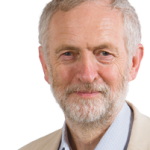
The speech made by Gordon Brown, the then Chancellor of the Exchequer, to the CBI Conference held on 28 November 2006.
Let me say first of all that what a pleasure it is to be able to thank you John for your Chairmanship, and you Richard, for starting your new role as director general in a way that has impressed the whole country, and most of all at this the tenth CBI conference in a row I have had the privilege to address as Chancellor, let me thank all you, the business leaders of Britain for the success you have achieved in a challenging last year and for the contribution you as business leaders make every year to the economy – and through your work also in corporate social responsibility, the well being of our country.
The CBI’s presence is global – indeed I opened your office in Beijing – and I am delighted this conference’s speakers are global, and the theme of this conference is that globalisation is a fact and here to stay. The real question not whether it exists or not, but whether it is well managed or badly managed, and one of my themes today is that it is for us to be evangelists for globalisation, taking on the anti-globalisation and protectionist forces who fail to recognise today’s economic truth that free trade, open markets and flexibility are preconditions of modern economic success across our global economy.
Such are the contradictions of those who are simply anti-globalisation that a few months ago when I went to Washington I found demonstrators waiving a banner:
Worldwide campaign against globalisation
I believe that, instead, we need a worldwide campaign for globalisation and its benefits
And there is no better person to work with on such a campaign than – and I am pleased to join John in welcoming to this conference – a great friend of Britain, Hank Paulson, formerly Chairman and CEO of Goldman Sacks, and now the US Treasury Secretary.
Now today Asia is producing more than Europe:
China is producing 50 per cent of the world’s computers and textiles, 60 per cent of digital cameras and mobile phones;
over the next fifteen years up to half the worlds future growth will come from China and India alone;
by 2020 our G7’s share of growth – once the majority of global growth – will fall to just one third.
And there is a real question about what is the destiny of Britain and what we want our destiny to be in a world where globalisation means that you can buy and service almost anything from almost anywhere and that we succeed now, not by protecting our markets, but only if we out-innovate, out-think and out-perform our competitors.
My passion is that our country, Britain, be the great global success story of this century.
As you know, every company that is successful has a clear mission.
You as successful chief executives and business leaders know what you are aiming for; a determination to turn the new realities of globalisation into an opportunity; a clear sense of purpose led clearly from the top; a culture and commitment to take what are often tough decisions; to be both far sighted in your vision but very much living in the present tense when making sure things get done and get delivered.
It’s the same for our country. We must also have a mission, strong sense of direction, clear and ambitious objectives: the same confidence to take difficult decisions, to reform and restructure, to focus and give priority to what we can do best.
And that’s my theme today:
how we as a nation do what companies are already doing and continuously rise to the challenge of globalisation;
how we enhance our commitment that government work more effectively to support business at every level; and
how, on a concern which affects every advanced industrial economy, including the USA, regulation – and building on what Tony said yesterday, we create a real and effective push back. And here I want to share with you some fresh thinking that could be the basis of a real change in our approach.
Two years ago at this conference, I asked whether it was possible to build an agreed national consensus: a shared purpose about what we as a nation have to achieve.
Since then I have been asking businesses this question as I have visited every region of Britain meeting people, touring round companies and firms, talking with people at universities and colleges, meeting business leaders and young entrepreneurs;
I’ve seen how in every city – from Bristol to Liverpool, and Manchester to Birmingham to Leeds, from Cardiff and Belfast, to Newcastle and Edinburgh – financial, retail, education and creative industries – in manufacturing and services – are bringing new life and prosperity;
I’ve witnessed the remarkable growth of financial services here in London and been to East London to see how a derelict but massive plot of land can be transformed into the scene of not just an Olympic games but of urban renewal and regeneration;
and just a few days ago at the Treasury’s business summit we tested ideas with many of your companies
And my conclusion is that there is a strong, shared view, indeed agreement, about what Britain can be, and Britain can do, in the global economy – and the priorities we must pursue.
And there is a strong sense that we have the talent, the ability and the determination to do what we have to do to succeed – to out-innovate and out-perform other countries and that to do so, we need to upskill our economy.
I have found a shared view among business that the priority for any advanced economy like ours, meeting the global challenge, is:
to be stable seeking always low inflation and low interest rates;
to be for free trade and open markets;
to be flexible and champion entrepreneurship; and
as a nation, to make the necessary long-term investments in education, innovation and infrastructure.
These are the ways we are agreed that we will out-think, out-perform and out-compete other countries – and find our destiny as a nation.
All the best British companies are successful because this is what they actually do – in the DNA of your companies, and in your forward planning, is to be outward looking, entrepreneurial, competitive, adaptable, challenging the world and investing heavily in innovation and skills.
So are we as a country well placed for what we need to do?
And what are the next steps so that we can do better?
We are well placed as a nation because our fundamentals are strong.
First, our monetary and fiscal reforms, which have turned us from a stop go economy to one of the most stable economies in the world are the foundations on which we can support continued growth and continued prosperity.
And I will continue with my programme of making government decisions long-term, and independent of short-term political pressures by making not just interest rate decisions independent, but also competition policy, statistics policy and much of industry policy.
We will entrench out stability, keep public sector pay under control, maintain discipline in public finances, and my watchword will be stability, now, tomorrow, and into the future.
Second, we are well placed for globalisation not just because we are among the most stable economies in the world but because we are the most open economy. Britain is the pioneer of free trade – we have constantly advocated openness above protectionism and our openness extends to embracing new ideas, and new influences – as proven by the strength and diversity of our economy, from the City of London, to our science, and our universities.
Third, we have more global reach than almost any other country – seeking out trade in every continent, deep links with the European Union, the Commonwealth – and as we celebrate today – the United States of America.
Fourth, from the industrial revolution right up to the internet, the human genome project and stem cells in the 21st century, our historic commitment to liberty of thought has given us faith in the importance of discovery through science and creative innovation, more so I believe than any other country.
And because innovation is what is driving the dynamic sectors of the global economy, we – Britain – are well placed in the fastest growing high valued added manufacturing and services from IT and aerospace to pharmaceutical, and of course financial and business services, education and the creative industries, which account for a larger share of our economy than in any other G7 country.
So, all of these qualities – our stability, our openness, our reach, our innovation and our scientific and creative strength – make me convinced that of all countries, Britain is one of the best placed to step up to the next stage of globalisation – if we make the right long term decisions now.
In other words they give us the platform on which we should build.
And because the challenge for Britain is to out perform our competitors, the answer to the jobs lost through offshoring is to upskill, and the answer to outsourcing is to out innovate.
It is to meet this supreme challenge, the economic challenge of our generation, that a year ago I commissioned a number of your colleagues in business to work with me, to look at Britain ten years from now, and to analyse in depth how we can equip ourselves better in areas critical to our future:
in transport infrastructure, Sir Rod Eddington;
and planning, your former Chief Economist, Kate Barker;
on skills, Lord Leitch;
on intellectual property, Andrew Gowers; and
on innovation, Sir David Cooksey’s report on scientific and medical advance.
So today I want to discuss with you what we must now do.
Innovation
You, the leaders of business alongside our scientists and universities are Britain’s innovators.
The task ahead is to have a seamless and effective progression from pure scientific invention to the commercialisation of innovation in small medium and large companies.
Our role as government is to give you the best support we can.
And the recommendations of Andrew Gowers and Sir David Cooksey will be important in this.
I want to encourage our universities to become more dynamic knowledge centres which are linked up to business and the economy.
I want to offer, within an affordable framework, business the best regimes of fiscal incentives for research and development
I want to give modern manufacturing and the smaller high tech and innovative companies the benefits of access to capital through a range of financial instruments from venture capital trusts to enterprise capital funds.
I want to give more support to new technologies in manufacturing and services from IT and the biosciences through to environmental technologies, because as we now know they provide new ways to create new wealth.
And, in a world where piracy and stealing copyright is becoming more of a problem, I want Britain to lead in the digital age as the secure home of intellectual property.
And so I can promise that next week’s Pre Budget Report will build on our decision to double investment in science to over £3 billion a year and to modernise our support for innovation.
Skills
Second, I invite you to become partners with us in building the very excellence in education we need to compete globally.
There is today a global market for skilled people.
China and India are turning out 4 million graduates a year, Britain 250,000; and these people are not only raising skills in their countries, but challenging us Britain and other advanced nations in a race to the top.
If we are to succeed in global economy, it is clear that we will have to make more of the potential of our own people.
Let’s face it: the number of new computer scientist graduates Britain produces has quadrupled to 37,000 since 1997; but China now produces 150,000. The number of engineers has doubled also to 37,000; but this compares to the 375,000 of China and India.
And, as a result of the advent of Asia, there has been an astonishing 400 per cent in increase in the numbers of unskilled workers, most of them offering their labour at 5 per cent of the cost of Britain’s.
So, for today’s 6 million British adults without basic skills there are now jobs for only 3 million of them – and by 2020 there will probably be jobs for only half a million.
So, either we will have to bear the social security costs, or they will have to gain new skills.
Some people ask if we can afford to invest in skills. The actual truth is we cannot afford not to.
This is a task that cannot be met by government on its own or business on its own, but by government and business in partnership together:
responsible employers;
responsible employees; and
responsible government.
How do I see it working?
Raising standards in our schools, not least in specialist schools and city academies, and with our new 14 – 19 vocational path, where we want you to engage on how we train our young people and to take a bigger role in setting the agenda for our further education colleges.
And on apprenticeships, how many of you know that in 1997 there were just 75,000 and now there are 250,000, and that the numbers of manufacturing and construction apprenticeships have risen from 27,000 to 110,000. We must build on this momentum in economically relevant crafts and trades.
And because 70 per cent of the workforce of 2020 is already in work today, there is a special reason why government and business need to work in partnership.
Employees taking responsibility to upskill, employers offering time off, government paying for the basic training, and I am grateful to you for helping 1 million learners by 2010 and I hope after the Leitch report we can chart the way forward.
Flexibility
But, greater investment in innovation and education must be combined with greater flexibility all round. And I know we have more to do.
On pay, we must do more to encourage local and regional pay flexibility.
On infrastructure and planning, it is to make our system more flexible and more responsive that next week Kate Barker will set out the challenges we still face – to which I can say we will rise.
On transport, the Eddington review will be the basis on which the public and private sectors can work together to meet our long term investment priorities.
On tax, I have read the most recent international tax survey by Price Waterhouse Coopers comparing countries. It says our corporate tax rates are lower than the rest of the G7, and because of capital allowances and interest rate deductibility, so too are the effective rates of tax paid. And just as in the past we have been ready to cut long-term capital gains tax from 40p to 10p, corporation tax from 33p to 30p and small business tax from 23p to 19p, I promise that we will continue to look with you at the business tax regime.
On Europe, where will continue to resist removing the opt-out from European working hours legislation, as well as promoting greater deregulation across Europe, we will stand up for an approach that is pro-Britain, pro-business and pro-European single market – for a Europe which is outward looking, reforming, liberalising and lighter touch in its regulation. And I am today publishing the report I commissioned last year from Lord Davidson who has identified ten areas where we can work together to prevent unnecessary goldplating of European directives.
And let me say this about regulation more generally: whenever I go to the USA – and Hank I am sure will verify this – businesses express the same frustrations about regulation and the same hopes about reducing burdens as you do here.
Last year when I spoke to you, I set out the risk based approach we are pioneering in Britain.
The priority now is delivery.
First, we are introducing new early rulings by HMRC, quicker binding decisions, and for large firms, risk assessment. So, if you are making an investment and you want early advice you will no longer be told you cant be given it; when you ask for certainty you will get it within a standard 28 days; and where there is an issue to resolve, you can have the confidence that only the areas of high risk will be looked at, so they can be concluded more quickly.
Second, most inspection is done by local authorities. So we are today publishing details of how the risk based approach will be applied to all their inspections, with enforcement based on your feedback of what you experience locally; and for firms who have outlets round the country less inspection where there is low risk. And to make immediate progress, we will extend to 70 areas the pilots in Bexley and Warwickshire that have already cut retail inspections by a third.
And our approach will now be backed up by professor Richard MacCrory’s recommendation of a proportionate system of penalties because its right to distinguish between the rogue trader who should be pursued and the good company who should not.
You know the old regulatory model, the implicit principle from health and safety to the administration of tax and financial services has been, irrespective of known risks or past results, 100 per cent information requirements, 100 per cent form filling and, if resources allow, 100 per cent inspection, whether it be premises, procedures or practices.
The risk based approach of the future that Britain is now pioneering is founded on a different view of the world – trust in the responsible company, the educated consumer and the informed employee, with then on a risk basis the goal should be a fraction of forms, a fraction of information requirements and a fraction of inspections needed.
And over time this new model of regulation should not only apply the concept of risk to the enforcement of regulation, but also to the design and indeed to the decision as to whether to regulate at all.
But throughout, the crucial test I will apply is action: concrete results in what you experience as companies on the ground.
Internationalism
Among the discontents of globalisation that together we must address is the threat of protectionism. And with this old enemy that is not outside our gates, but across the continents, now inside our gates, I believe we, the 19th century pioneers of free trade, must become the 21st century protagonists for free trade. And there can be no greater signal of our commitment to openness than our support as businesses and government – as Hank and I said in the Wall Street Journal yesterday, for an urgent resumption of the stalled talks on a new world trade deal.
Hank and I are meeting today to discuss trade but also energy and the environment, the global economy, and how we tackle terrorist finance.
And our discussions are founded on shared values we celebrate that bind our two countries ever more closely together and it is for that reason – the common destiny our two continents share – that I welcome this friend of Britain to the CBI today.
Indeed since becoming Treasury Secretary he has broken new ground: not just in his backing for trade and his recognition that protectionism does not work, but on our relationship on China, and with his approach to regulation.
It has been a pleasure to work with him on these issues where we are at one, and also in our broader determination to make globalisation work.
I know that we share the same approach – that a successful globalisation will match a commitment to openness and flexibility with investment in education, and innovation and to equip those in danger of being left behind both in our own countries and the developing world.
I want globalisation’s children – the coming generation – to enjoy the vastly increased opportunities it brings.
And I believe Britain, and America so strong in the ties that bind us, not just the shared history but the shared values that link us together and give us shared purpose, can play a unique role in making globalisation work.
So it is my privilege and my pleasure to ask you to welcome America’s Treasury Secretary, a great friend of our country, Hank Paulson, and invite him to address our conference today.