Tag: 2020

  • Grant Shapps – 2020 Statement on the Global Travel Taskforce

    Grant Shapps – 2020 Statement on the Global Travel Taskforce

    The statement made by Grant Shapps, the Secretary of State for Transport, in the House of Commons on 7 October 2020.

    I committed to keep the House updated on proposals for testing international arrivals to safely reduce the 14-day self-isolation period in my statement on 7 September; this statement provides an update on next steps.

    The introduction of travel corridors in July was a major step forward in safely re-starting international travel whilst retaining the Government’s ability to act quickly if public health was at risk, with international passenger numbers handled at UK airports up by around 400% between June and July to 3.1 million passengers.

    However, many of our major markets remain or have become high risk, and therefore are not eligible for our travel corridor list. A potential solution that has been widely debated is the use of testing to reduce or replace the need for self-isolation.

    As I made clear in my statement to the House on 7 September, based on scientific evidence, the Government do not support the use of a single test on arrival as an alternative to self-isolation. However, a combination of self-isolation and testing is promising.

    Since then, my Department and the Department of Health and Social Care have been working extensively with clinicians, health experts and the private testing sector on the practicalities of such a regime. My ministerial colleagues and I have agreed that a regime, based on a single test, provided by the private sector and at the cost of the passenger after a period of self-isolation, could achieve our objectives.

    The next step is to further develop how this approach could be implemented. Therefore, I am pleased to announce that, at the request of the Prime Minister, the Secretary of State for Health and Social Care and I are standing up the global travel taskforce.

    The overall aim of the taskforce will be to consider what steps the Government can take, both domestically and on the international stage, to enable the safe and sustainable recovery of international travel. To do this, the taskforce will work at pace to consider:​

    How a testing regime for international arrivals could be implemented to boost safe travel to and from the UK;

    What steps we can take to facilitate business and tourist travel on a bilateral and global basis, through innovative testing models and other non-testing means; and

    More broadly, what steps we can take to increase consumer confidence and reduce the barriers to a safe and sustainable recovery of international travel.

    The taskforce will further consider what day that testing should be taken on, informed by public health analysis of when this would be effective, but taking into account economic and other factors, as well as finalising a delivery plan. However, testing is not the only solution and so the taskforce will also consider steps to support the recovery of international travel more broadly, including non-testing based interventions.

    Facilitating safe international travel is not a task that can be undertaken by the Government alone, so this taskforce will operate in collaboration with the transport industry, the tourism and local business sectors and the ​private testing sector. It will also engage with partners from governments across the globe, including on the development of bilateral testing pilots.

    Each country has understandably implemented its own measures, but these are confusing and complex for the consumer and for operators, so we will show global leadership by developing a framework for international travel to provide that global consistency, while protecting public health.

    The taskforce will be chaired by myself and the Secretary of State for Health and Social Care. It will include collaboration between officials from Departments across Government, and will liaise with the travel sector in order to work on the operationalisation of testing approaches designed to safely reduce self-isolation.

    The taskforce will operate at pace for a time limited period, and will formally report back to the Prime Minister no later than early November. I will update the House on its conclusions and outputs. I have published terms of reference alongside this statement on gov.uk and will place a copy in the Libraries of both Houses.
  • Andrew Stephenson – 2020 Statement on HS2

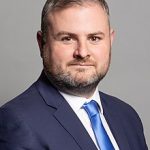
    Andrew Stephenson – 2020 Statement on HS2

    The statement made by Andrew Stephenson, the Minister of State at the Department of Transport, in the House of Commons on 7 October 2020.

    I have today published new information on the development of the western leg of HS2 phase 2b, running between Crewe and Manchester with a link to the west coast main line. This includes:

    A Government consultation on four proposed changes to the design;

    A response to western leg changes included in the 2019 design refinement consultation;

    A route-wide update, which sets out how the route has developed, including changes in response to feedback from affected communities; and

    Updated safeguarding directions for the western leg.

    The Government have accepted the findings in the review by Douglas Oakervee that phase 2b should be delivered in smaller sections with legislation brought forward as it is ready. Therefore, HS2 Ltd has taken forward work to develop legislation for the western leg of HS2 phase 2b.​

    The Government have also accepted the Oakervee recommendation that plans for HS2 and other major schemes need to be brought together in an integrated rail plan (IRP) for the north and midlands.

    The IRP will set out the form, scope and phasing of the phase 2b route, across the western and eastern legs, and the Government will therefore consider responses to this consultation alongside the IRP outcomes. If the IRP favours any major changes, further redesign will need to take place. This consultation seeks to ensure that unnecessary delay is avoided in the event that the IRP does not support change.

    Work on HS2 phase 1 from London to Birmingham is already well under way at over 250 active sites, stimulating the economy and providing jobs through the approximately £10 billion worth of contracts already announced, two thirds of which will go to small and medium sized enterprises.

    Legislation for phase 2a, from Birmingham to Crewe, is currently being considered by Parliament.

    The proposals I am putting forward today are the next step in developing the design and legislation for the western leg of phase 2b, following the 2019 design refinement consultation. Phase 2b of HS2 is key to delivering Northern Powerhouse Rail (NPR) and the consultation includes proposals to integrate the designs at a series of “touchpoints”, which are pieces of infrastructure to enable future connections between NPR and HS2. These proposals have been developed in partnership with Transport for the North and will reduce the amount of infrastructure required to deliver NPR in the future.

    This consultation deals with four technical refinements to the western leg of phase 2b: a new Crewe connection, which would also support the vision for a Crewe hub; changes to the already proposed rolling stock depot at Crewe; expansions to the stations at Manchester Piccadilly and Manchester Airport; and a newly proposed facility for stabling rolling stock at Annandale in Scotland.

    Changes at Manchester Piccadilly to facilitate Metrolink and Manchester Airport High Speed station are subject to the agreement of local funding contributions. We continue to collaborate positively with Greater Manchester Combined Authority, Manchester Airports Group and other Greater Manchester delivery partners on this matter. Greater Manchester partners have confirmed that they are prepared to prioritise the funding of the local proposals for Metrolink underground at Piccadilly in future funding rounds. This will form part of the shared programme between DfT and Greater Manchester in implementing the Manchester HS2 growth strategy. In the 2020 Budget, the Government made £4.2 billion of funding available to eight city regions for intra-city transport initiatives over the period 2022-23 to 2026-27.

    In addition to today’s consultation, I am publishing my response to the proposed western leg changes included in the June 2019 phase 2b design refinement consultation. The Government have decided to proceed with these changes subject to the outcome of the IRP.

    I have also published a route-wide update which sets out wider developments to the route. The safeguarding directions for the phase 2b western leg route have also been updated to reflect the project’s updated land requirements.​
    Engagement with affected communities is at the heart of our plans for HS2 and it is our commitment to ensure we listen to those affected by these proposals. Restrictions put in place in response to the covid-19 pandemic mean that we will not be able to hold local information events in the same way that we usually would as part of our formal consultation process. HS2 Ltd will deliver information events via digital platforms instead. These digital events will allow those affected the same opportunities to understand what refinements are being proposed and to ask any questions that they may have to our representatives. Where owners of land or property are newly affected by the proposals, they will be contacted directly by HS2 Ltd to arrange online or telephone appointments.

    Copies of the consultation Command Paper and safeguarding directions will be placed in the House of Commons and House of Lords Libraries.

  • Graham Stuart – 2020 Comments on UK Export Finance

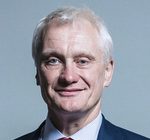
    Graham Stuart – 2020 Comments on UK Export Finance

    The comments made by Graham Stuart, the Parliamentary Under-Secretary of State at the Department of International Trade, on 7 October 2020.

    As well as negotiating new free trade agreements and removing trade barriers, we are able to offer export finance support that can unlock the potential of the UK sup-ply chain. UKEF helps overseas buyers access the financial support they need to procure from the UK. This helps UK companies win more business on the world stage.

    UKEF’s huge increase in capacity can be a real game-changer for the prospects of UK exporters, and will be vital to thousands of suppliers across the country.

  • David Duguid – 2020 Comments on Global Trade

    David Duguid – 2020 Comments on Global Trade

    The comments made by David Duguid, the Minister for Scotland, on 7 October 2020.

    The UK Government is committed to supporting Scottish businesses to trade globally.

    We encourage businesses to work with our world-leading credit agency, UKEF, and take advantage of export finance support to bolster their exports worldwide and strengthen their position on the global stage.

    Through the Trade Hub in Edinburgh, businesses will be able to utilise UKEF, as well as the UK Government’s global networks, expertise and influence.

    Scottish produce is world famous and will benefit from new global trade opportunities once the EU transition period ends. UKEF has the potential to provide a real boost to exporters in Scotland, and every corner of the UK.

  • Liz Truss – 2020 Comments on Government Procurement Agreement

    Liz Truss – 2020 Comments on Government Procurement Agreement

    The comments made by Liz Truss, the Secretary of State for International Trade, on 7 October 2020.

    Today’s announcement will provide British businesses with the certainty they need to continue bidding for £1.3 trillion worth of government procurement contracts overseas, which will ultimately help deliver the growth and jobs we need to recover from the economic challenges of coronavirus.

    It is another significant step towards re-establishing Britain as a major force in global trade and a truly independent trading nation.

  • Jonathan Ashworth – 2020 Comments on Excel Testing Blunder

    Jonathan Ashworth – 2020 Comments on Excel Testing Blunder

    The comments made by Jonathan Ashworth, the Shadow Secretary of State for Health and Social Care, on 6 October 2020.

    Because of this Government’s incompetence, there are potentially thousands of people who have been exposed to the virus who could be wandering around not knowing they were exposed and could be infecting people, and the Health Secretary couldn’t even tell us if they’ve been traced. Ministers urgently need to get a grip of their test and trace service.

  • David Lammy – 2020 Comments on Wellingborough Prison

    David Lammy – 2020 Comments on Wellingborough Prison

    The comments made by David Lammy, the Shadow Secretary of State for Justice, on 6 October 2020.

    G4S’s past performance illustrates the failings of privatisation in the justice system. Its well-publicised failure to manage HMP Birmingham led to reports of violence, unsanitary conditions, drink, drugs, and the bullying of staff.

    Serious questions must be asked about why the government has handed the contract for the new prison in Wellingborough to G4S.

    To deliver justice and keep the country safe, prisons must be well-run, disciplined environments that punish offenders while enabling them to rehabilitate.

  • Ian Murray – 2020 Comments on New Restrictions in Scotland

    Ian Murray – 2020 Comments on New Restrictions in Scotland

    The comments made by Ian Murray, the Shadow Secretary of State for Scotland, on 7 October 2020.

    It should never have come to this. Under the SNP Government’s watch, Scotland now has the highest R rate in the UK following a complete failure to tackle the spread of the virus.

    The SNP took too long to set up Test and Protect and ignored warnings about the return of students to university. Businesses and livelihoods are now at risk as a result of the SNP’s incompetence.

    While public health is the priority, people’s jobs must now be protected and there is an urgent need for both the UK and Scottish governments to put their differences aside and work together on the economic impact.

  • Jim McMahon – 2020 Comments on a New Global Travel Taskforce

    Jim McMahon – 2020 Comments on a New Global Travel Taskforce

    The comments made by Jim McMahon, the Shadow Transport Secretary, on 7 October 2020.

    The Government is again incompetently slow to react. They’ve had months to set up a taskforce, months to look into airport testing and months to sort out the flaws of their quarantine proposals. Tory Ministers are in a mess and need to get their act together.

    It will take a long time to recover from the impact of the virus. The Government must come up with a comprehensive financial support package for the aviation sector and its supply chain which supports almost a quarter of a million jobs and protects the environment.

  • Keir Starmer – 2020 Letter on British Farming to Boris Johnson

    Keir Starmer – 2020 Letter on British Farming to Boris Johnson

    The letter sent from Keir Starmer, the Leader of the Opposition, to Boris Johnson, the Prime Minister, on 7 October 2020.

    I want our country to produce the best food in the world, where our farmers compete on the basis of quality and are not undermined by producers working to lower standards elsewhere. Britain should be a beacon of quality, high standards, ethical treatment of animals and environmental protections in all aspects of food production.”

    Conservative MPs have until now voted down Labour’s attempts to use the Agriculture Bill or the Trade Bill to enshrine in law the UK’s high environmental protection, animal welfare and food standards. The next opportunity for change will come when the Agriculture Bill returns to the Commons next week.

    Labour also wants the new Trade and Agriculture Commission – set up in the wake of the NFU’s million-strong petition – to have the teeth to assess each trade deal against core standards and ensure proper Parliamentary oversight, as called for in the Government’s own National Food Strategy.