Tag: 2020

  • Keir Starmer – 2020 Statement on the Coronavirus

    Keir Starmer – 2020 Statement on the Coronavirus

    The statement made by Keir Starmer, the Leader of the Opposition, on 13 October 2020.

    Good afternoon. We’re at a decisive moment in the fight against coronavirus. The figures are stark and I’m afraid they’re all heading in the wrong direction.

    The number of Covid cases has quadrupled in the last three weeks. Cases may be doubling as quickly as every 7-8 days. There are now more people in hospital with Covid than on 23 March when we went into national lockdown. And while the number of cases is rising more sharply in some areas it is increasing across all regions of the UK and in all age groups.

    We know from bitter experience and great personal loss where all this leads. Three things are now clear: the Government has not got a credible plan to slow infections. It has lost control of the virus. And it’s no longer following the scientific advice.

    The SAGE minutes from 21 September – published yesterday – underline this. They warn that: “A package” of “stringent interventions” is now urgently needed. SAGE also says that: “not acting now…..will result in a very large epidemic with catastrophic consequences….”

    They warn that: “As in the first wave…..the burden of a large second wave would fall disproportionately on the frailest in our society [and] on those on lower incomes and Black, Asian and minority ethnic communities”.

    Among their recommendations is a “circuit breaker”, a short period of national restrictions that SAGE believes would bring the R-rate down and “re-set the incidence of disease to a lower level”. “SAGE’s advice is that this could set the “epidemic back by approximately 28 days or more.”

    They’re very clear that: “The more rapidly these interventions are put in place the greater the reduction in COVID-related deaths and the quicker they can be eased. The Prime Minister has not acted on this advice.

    In the last three weeks he’s introduced two sets of far less stringent restrictions – one on 22 September, one yesterday. Both times the Prime Minister has promised that his measures will control the virus and drive down the R-rate. But we now know this is not supported by the evidence.

    We also know that SAGE has concluded the £12 billion test and trace system is only a having – in their words – “marginal impact.”

    And we also know that in 19 of the 20 areas that have been under local restrictions for over two months infection rates have gone up, not down. There’s no longer time to give the Prime Minister the benefit of the doubt. The Government’s plan simply isn’t working. Another course is needed.

    That’s why I am calling for a two-to-three week circuit break in England in line with SAGE’s recommendation.

    A temporary set of clear and effective restrictions designed to get the R rate down and reverse the trend of infections and hospital admissions.

    This would not mean closing schools. But if this happens imminently….it can be timed to run across half-term to minimise disruption. But a circuit break would require significant sacrifices across the country.

    It would mean only essential work and travel. That everyone who can work from home should do so. Non-essential offices should be closed. Household mixing should be restricted to one household except for those who’ve formed support ‘bubbles’. And all pubs, bars and restaurants would be closed for two-to-three weeks – but compensated so that no business loses out because of the sacrifices we all need to make. It should also mean the UK Parliament moves to remote working.

    A circuit break would also provide an opportunity to reset and to rectify some of the mistakes the Government has made. In particular to get a grip on testing and hand over track and trace to local authorities. A circuit break will have to be accompanied by extensive support for jobs, businesses and our local economies.

    Because if we’re requiring businesses to close we must provide the financial support necessary to protect people and our local communities – because every job matters and every business matters.

    Introducing these kind of restrictions is not something anyone wants to do. This was not inevitable. But it is now necessary if we are to: protect the NHS, fix testing, and get control of the virus.

    I also want to say this directly to the Prime Minister. You know that the science backs this approach. You know that the restrictions you’re introducing won’t be enough. You know that a circuit-break is needed now to get this virus under control. You can’t keep delaying this and come back to the House of Commons every few weeks with another plan that won’t work.

    So act now. Break the cycle. If you do you will have the votes in the House of Commons. I can assure you of that. You don’t need to balance the needs of your party against the national interest.

    As the Deputy Chief Medical Officer said a few days ago, we’re at a tipping point. But if we act now – if we follow the science and break the circuit – we can get this virus under control.

    If we don’t, we could sleep-walk into a long and bleak winter. That choice is now for the Prime Minister to make. I urge him to do so.

    Thank you.

  • Rishi Sunak – 2020 Comments on Job Support Scheme Being Expanded

    Rishi Sunak – 2020 Comments on Job Support Scheme Being Expanded

    The comments made by Rishi Sunak, the Chancellor of the Exchequer, on 12 October 2020.

    Throughout the crisis the driving force of our economic policy has not changed. I have always said that we will do whatever is necessary to protect jobs and livelihoods as the situation evolves.

    The expansion of the Job Support Scheme will provide a safety net for businesses across the UK who are required to temporarily close their doors, giving them the right support at the right time.

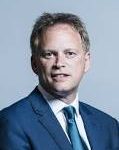
  • Grant Shapps – 2020 Comments on Improving Accessibility at Motorway Service Stations

    Grant Shapps – 2020 Comments on Improving Accessibility at Motorway Service Stations

    The comments made by Grant Shapps, the Secretary of State for Transport, on 12 October 2020.

    In a modern country, everyone should be able to travel. Despite improvements in some areas, we need our roadside services to be better for the quarter of a million people who cannot use standard accessible toilets.

    This is why we would like to go even further by extending this to the trunk road network. I encourage as many operators as possible to apply for funding, to open up our road network to everyone who wants to use it.

  • Gavin Williamson – 2020 Comments on Students Getting More Time for 2021 Exams

    Gavin Williamson – 2020 Comments on Students Getting More Time for 2021 Exams

    The comments made by Gavin Williamson, the Secretary of State for Education, on 12 October 2020.

    Fairness to pupils is my priority, and will continue to be at the forefront of every decision we take in the lead up to exams next summer. Exams are the fairest way of judging a student’s performance so they will go ahead, underpinned by contingency measures developed in partnership with the sector.

    Students have experienced considerable disruption and it’s right we give them, and their teachers, the certainty that exams will go ahead and more time to prepare.

    Combined with our £1 billion catch-up programme and the changes proposed by Ofqual to free up teaching time, the changes I am announcing today give young people the best chance of being ready for their exams without undermining the value of the qualifications they receive.

    I will continue to work closely with stakeholders and I’m grateful for the commitment and willingness that’s been shown in delivering this additional time to ensure young people have the best opportunity to succeed.

  • Edward Timpson – 2020 Speech on Universal Service Obligation for Broadband

    Edward Timpson – 2020 Speech on Universal Service Obligation for Broadband

    The speech made by Edward Timpson, the Conservative MP for Eddisbury, in the House of Commons on 8 October 2020.

    I am grateful to Mr Speaker for granting this debate and to the Under-Secretary of State for Digital, Culture, Media and Sport, my hon. Friend the Member for Boston and Skegness (Matt Warman), for extending his Front-Bench stint to respond to it.

    As someone from the last generation to be brought up in the analogue age, when pay phones, posted letters and patter by the water cooler were our default ways to communicate, Channel 4 was a novelty, and bookcases were full of books that we actually read, mobile phones and the onset of the internet age have been nothing short of a revelation to me. To the list of essential public utilities—water, gas, electricity and so on—can now be added broadband. It has rapidly become a critical part of our national infrastructure, reshaping the way we do business, access information and interact socially with the world around us.

    Yet the speed, reliability and affordability of broadband across the UK are still playing catch-up with the new-found demand, leaving some communities, often rural, falling on the wrong side of what is termed the digital divide. That divide has been exposed and exacerbated further by the pressure put on all our broadband connections at home since the covid-19 outbreak in March. As the Minister said in the previous debate, up to 60% of the UK’s adult population were working from home during lockdown, as well as the millions of students who shifted to learning online.

    It is therefore a real concern that despite the extensive efforts of those working in the telecoms industry and elsewhere, a recent survey revealed that a third of UK households are still struggling with inadequate broadband speeds, and that as banking and Government services increasingly move online, some communities have found themselves cut off from essential facilities.

    In rural areas, including much of my Eddisbury constituency, continued poor connectivity represents a huge missed opportunity for economic development, let alone for help on other important and growing issues such as isolation and access to education. In 2018, 11% of rural premises, where more than 1 million small businesses are based, could not get a 10 megabits per second fixed-line connection, which is the speed required to meet a typical household’s digital needs—this is often named the “Netflix test”—and 24% could not get a 30 megabits per second, or superfast broadband, connection.

    Let me put that into a local context. As of May 2020, Eddisbury had 2,162, or just under 5%, of all premises unable to receive “decent broadband”—this was two and a half times the national average. Drilling down further reveals figures of 9% for those living in Churton, Farndon and Malpas, 11.1% for those living in Dodleston, Tattenhall and Duddon, and 12.3% for those living in Audlem, Bunbury and Wrenbury. Depending on the subject matter, being 59th on a list of 650 constituencies can be a cause for celebration, but when the list is of which has highest proportion of residents unable to get good broadband it is not one to shout about.​

    That is why I was pleased to stand on a manifesto that committed a Conservative Government to delivering nationwide gigabit-capable broadband by 2025, which was backed up by the 2020 Budget statement, which confirmed a total of £5 billion to roll out full fibre across the country. Progress is being made. On 10 September, the telecoms regulator, Ofcom, revealed that more than 4.2 million homes—about 14%–across the UK were now able to access faster, more reliable full fibre services, which is an increase of 670,000 since January. But it remains a real challenge to accelerate the extension of fibre to those hard-to-reach locations where there is an inherent lack of digital infrastructure.

    Andy Carter (Warrington South) (Con)

    Does my hon. Friend agree that although organisations such as Connecting Cheshire have done a tremendous amount of good in constituencies such as mine, we still have villages that are isolated and cut off? Higher Walton, just outside Warrington, has no fast broadband at all. Organisations such as Connecting Cheshire can really make a difference in getting those sorts of villages really plugged into the network.

    Edward Timpson

    My hon. Friend is right on that. We live not far from each other, and suffer some of the same problems in our constituencies, particularly in some of those black spots, where residents sometimes do not know where to turn. Having a way of co-ordinating that effort to bring together some of the solutions for their poor broadband is a way of trying to ensure that no one misses out as we deliver on our manifesto commitment.

    The Government have rightly sought to address this situation, through their gigabit voucher scheme, which I will leave the Minister to explain in more detail, and, as of March this year, through the new legal right to request a decent, affordable broadband connection from BT under the new universal service obligation for broadband. That is defined in law as a service with a download speed of at least 10 megabits per second and an upload speed of at least 1 megabit per second. Ofcom has also determined that a USO-compliant service must cost the customer no more than £46.10 per month. If the existing fixed-line or mobile solution does not allow that level of service, the USO also requires BT to upgrade the connectivity to meet or exceed those requirements, at no cost to the customer, as long as the necessary works cost less than £3,400. On the face of it, that is a significant step forward in ensuring that no household or business is left behind, but it is also fair to say that its implementation has brought with it some serious issues that threaten to undermine its laudable aims, not least in those cases where the cost of delivering on the USO far exceeds the £3,400 threshold.

    Let me illustrate that. Where an individual household meets the criteria to trigger a USO broadband service, an installation quote is pulled together by BT to establish the work costs. Where they exceed £3,400, the additional costs must be met by the customer, and herein lies one of the fundamental limitations of the current set-up. Legally, the USO works quote can be calculated only for each individual household that has applied. The subsequent bill therefore cannot be shared out among a wider number of neighbours who would otherwise benefit from the upgrade if it was carried out. The total amount still falls on the shoulders of the original single applicant.​

    If that sum only dribbled over the £3,400 threshold, there may be some wider level of acceptance of that approach, but we know that quotes are landing on doormats, or, where possible, via email, significantly in excess of that number. For example, in Eddisbury, we have seen five-figure sums. My hon. Friend the Member for Clwyd South (Simon Baynes), the constituency next door, shared with me a quote for a resident in Llangollen of over £85,000. My hon. Friends the Members for North Norfolk (Duncan Baker) and for North West Durham (Mr Holden) and other colleagues have provided similar stories, not forgetting the well-publicised case of Mr Roberts in the Lake District, who was asked to contribute just over half a million pounds.

    While accepting that the situation is often a result of the major engineering and planning work required to connect the hardest-to-reach premises, it still means that overall an estimated 60,000 premises will cost up to 30 times more to connect, with residents still having to fund the excess and some facing waits of up to 24 months to be connected. In the absence of a facility to spread the cost, this is asking the impossible for what should be the legally obtainable.

    Eddisbury residents have also told me of not having had the USO properly explained to them, it not being clear who was responsible, and being told they were not eligible when they in fact were. I know that this was not and is not the intention, and I am very aware of and grateful for the work and commitment of the Minister in trying to resolve these issues, but it would be helpful to hear from him this afternoon how the Government are working, and propose to work, with BT, BT Openreach, the wider industry, Ofcom and others to formulate a new approach that does not penalise the consumer in this way, especially those in more remote areas, in the development and roll-out of digital solutions for every house in the UK.

    In that spirit of collective effort, may I propose some ways of doing just that? For instance, it seems a nonsense that each individual household should be treated as a discrete case when surrounding houses could also be eligible or, if not, could significantly benefit from an upgraded broadband connection where costs are more equitably distributed. The irony of all this is that if someone were not to go down the USO route but to band together with their neighbours by way of a community fibre partnership or similar model, while also accessing the gigabit voucher scheme, they may well get their 10 megabits per second download, if not much faster, for nothing, or at least a much more realistic price.

    The truth is that broadband is not an optional extra anymore in this digital world and rural consumers should not be expected to pay excessive amounts to be connected. Surely the way to go is to allow properties to share the costs under the USO, ultimately to help rural residents, and, depending on how many individuals are involved, to bring the cost below the current cost cap. To that end, it was encouraging to hear from BT that it is developing a way to enable customers to share excess quotes among their neighbours who would also benefit, where there are other nearby households that will share the upgraded infrastructure. Under this, customers would retain the legal right to trigger network build by paying all excess costs, but they would also be given the opportunity to meet the costs together with others. How that is communicated will also be crucial as, at the moment, ​someone receiving a jaw-dropping quote is only likely to have their confidence eroded in the belief that the system is fair and the market is functioning rather than failing. It may also be worth considering the impact of the obligation to charge VAT at 20% to those who do pay an excess cost on USO work—something that is not generally applied to publicly funded network infrastructure bills.

    Will my hon. Friend the Minister update the House on what discussions are taking place and what progress is being made with BT, Ofcom and other key players to ameliorate the problems in the implementation of the USO, break down the financial and logistical barriers getting in the way of better broadband, and deliver a decent, affordable connection for all? Is he able to say more about the not insignificant £5 billion that will be spent to make this achievable and as timely as possible? Above all, can he reassure my constituents and many more across the country that this is an absolute priority for this Government between now and 2024—and, I hope, beyond?

    There is no doubt that our national digital infrastructure has the potential to make or break many of the opportunities and challenges that we as a nation have lying ahead of us. The past seven months have simply magnified and accelerated the necessity for every house in every part of the UK to be able to play its part. It can be done, and I am confident that the Government will ensure it is done, but what my Eddisbury constituents want, whether through the USO or other means, is every support possible to help to make it an affordable reality. If we start getting nostalgic for the analogue age, we have not lived up to that perfectly reasonable request.

  • Ed Davey – 2020 Speech to Liberal Democrat Party Conference

    Ed Davey – 2020 Speech to Liberal Democrat Party Conference

    The speech made by Ed Davey, the Leader of the Liberal Democrats, on 28 September 2020.

    The challenge facing our country has rarely been so great.

    Families and whole communities fearing for their future – in the face of an invisible enemy.

    It’s natural and right that in such troubled times, people look to government for reassurance. Help. Leadership.

    Given the enormity of the threat to our country, it’s with deep regret and sadness that I must say: this Government and this Prime Minister have just not risen to this challenge.

    With unbelievable incompetence, this Conservative Government is failing our people, in one of our darkest hours.

    If you judged the UK’s response to this crisis solely on what the Government is doing, it would be easy to despair.

    But as I travel the country, listening to people…

    As I hear what they are doing to beat the threat of coronavirus – to support their neighbours, save their businesses, care for their relatives…

    As they share with me their dreams as well as their worries…

    As we all witness how NHS staff, carers and key workers have shown amazing resilience in the face of extraordinary challenges…

    I am far from downhearted. I am inspired.

    Take Anne and Bob – who own a fish and chip shop in Stockport and put me to work on a lunchtime shift a few weeks ago.

    They’d been planning to sell the business and enjoy a well-deserved retirement. Then COVID struck.

    Anne and Bob put retirement on hold, to lead their restaurant through the crisis. They put their staff and customers first, and worked harder than ever to save the business.

    They hope they’re past the worst now – and can pass the business on to their young manager, Jamie, who’d joined them aged 14, after struggling at school. This amazing couple had nurtured him and feel he is now ready to take over.
    Jamie and his partner have just moved house. They are expecting their first child. And his enthusiasm for taking the business forward, after 13 years working there, is uplifting.

    I hear stories like this, from people like Anne and Bob and Jamie, in every community I visit. And I am in awe of how hard people are fighting to prevent this disease from stealing their dreams.

    Coronavirus is causing enormous hardship and forcing all of us to make big changes. But it’s also showing the best of the British people.

    People’s resilience, kindness and hard work make me absolutely sure we can get through this.

    But it’s those qualities – demonstrated every day by people across Britain – that are in sharp contrast to how Government Ministers have responded to the pandemic.

    Just look how Boris Johnson refuses to take even the slightest responsibility for the chaos and harm his Government has caused.

    Their failure to get protective gear to frontline workers in hospitals and care homes?

    Not his fault.

    When Johnson’s chief adviser undermined public trust by breaking lockdown with his trips to Durham and Barnard Castle?

    Different rules, for him.

    When Johnson’s “world-beating” test-and-trace system turns into a shambles?

    Claims instead a huge success.

    When children’s entire futures were thrown into doubt by the summer’s results fiasco?

    Blame the civil servants.

    Blame Ofqual.

    Blame the teachers.

    Blame anyone but Boris Johnson.

    Johnson’s hero, Winston Churchill, said that the price of greatness is responsibility. It seems that’s a price this Prime Minister isn’t willing to pay.

    When I’ve listened to people who’ve lost loved ones to COVID, listened to the bereaved families our Prime Minister refuses even to meet…

    The public inquiry into the Government’s handling of COVID, that I first called for in April, could not be more urgent.

    And the public inquiry, when it comes, must look into one Government failure above all.

    Ministers’ abject failure to protect people in care homes. The elderly people. And the carers.

    From the lack of tests and PPE, to the lies about a “protective ring” around care homes, while people died in horrifying numbers.

    For this pandemic has reminded everyone of something Liberal Democrats have always understood: caring for people’s health doesn’t stop at the hospital exit, or the GP’s surgery door.

    You can only truly protect our NHS, if you protect our care homes too. You can only truly speak up for doctors and nurses, if in the same breath, you stand up for carers. For young carers and professional carers, paid and unpaid, in care homes and in people’s homes.

    This is personal for me. You see, I’ve been a carer for much of my life.

    First as a teenager, when I nursed my mum during her long battle against bone cancer. My dad had died when I was four. My mum was my whole world. So on one level, it was easy caring for mum: I loved her.

    But it was also incredibly tough. Taking her tumblers of morphine for her agonising pain, before going off to school. Coming home to look after her. Helping her on and off the toilet. Taking life, day by day. Because there was nothing else you could do.

    And at the end. Visiting her on a totally unsuitable dementia ward in my school uniform, alone by her bedside. When she died.

    I was a carer as a son. And then as a grandson: Organising the care for my Nanna, getting her into a good home, figuring out how we could afford it. Trying to make her last few years as comfortable as we could.

    And now, as a father. As Emily and I care for our son John every day.

    John is 12. He can’t walk by himself. He was 9 when he first managed to say “Daddy”. John needs 24/7 care – and probably always will. And that’s my biggest challenge: John will be on this planet long after Emily and I have gone.

    So we worry. No one can possibly love him like we do. Hold him like we hold him.

    And our fears are shared by so many parents. Many not as fortunate as Emily and me.

    So let me say this, to all of you who need care, to all of you who are carers, to the parents of disabled children, to the thousands of young people, caring for your mum or your dad.

    I understand what you’re going through.

    And I promise you this:

    I will be your voice. I will be the voice of the 9 million carers in our country.

    It’s you I’m fighting for.

    Just like we Liberal Democrats did in Government, when we fought to tackle the funding crisis in adult social care.

    Through the Dilnot Commission and the Care Act, we carefully stitched together a cross-party agreement, based on the same values that underpin our NHS. Only to see the Conservatives rip it up as soon as they could.

    So now, more than a million people miss out on the care support they need.

    With people stranded in hospital, unable to leave, as the follow-up care isn’t there. With the challenge passed back to the NHS, already struggling for cash.

    You see, if Ministers really care about the NHS, they need to care about care. The cross-party talks on social care – long promised by Boris Johnson – cannot wait any longer. The Covid crisis makes the need to fix social care more urgent, not less.

    So, today, our Health and Care Spokesperson Munira Wilson and I have invited the Government, the Labour Party, and leading care organisations to begin these talks in earnest and finally make the progress people deserve.

    And I’m proud that our party is now championing a universal basic income – because by far the largest group to benefit will be carers.

    I am determined that the Liberal Democrats will lead the way to a more caring society as we emerge from this pandemic.

    A society that cares for those whose jobs and businesses have been taken by coronavirus.

    Our economy was unfair enough before this. But we cannot allow the random unfairness of this pandemic to scar people’s lives, especially the young.

    We must stand together. Leaving no one behind.

    Employers in hard-hit sectors must be given more support, to prevent many more people losing their jobs. People excluded from the self-employed scheme must be given the help they desperately need.

    And Liberal Democrats: we must also lead the way to a new economy. One that’s fairer. And greener. An economy offering real hope and opportunity for everyone.

    This pandemic has already changed so much. The daily commute. The congested roads. The lunchtime sandwich. Home-working may have changed that forever.

    But as we weigh the positives of home-working – more time with the family. More time to care. With the negatives – too much isolation. Too many working with too little space.

    I want us to listen to people – to understand how they want their working lives to be. The Conservatives aren’t listening. Their answer is all about going back. Back to the office. Back to the old ways.

    I say: let’s do the future differently. Starting by finding out what people want.

    We can’t let Dominic Cummings – in his NASA-style Whitehall mission control – plan our future. No. The future will be shaped by people and businesses in every community across the UK.

    So as we listen to people, we must listen to people in business. Businesses that create jobs and opportunities for people across the UK. Businesses facing the COVID challenge. The Brexit challenge. The climate challenge.

    No one else is listening to them. So the Liberal Democrats will.

    And in partnership with business, let’s mould the new economy.

    So if there’s less demand for office space, let’s work with businesses to turn those buildings into sustainable, affordable homes to help solve the housing crisis.

    If there’s less demand for air travel – let’s switch investment from Heathrow’s doomed third runway into green zero-carbon flight, and save jobs in our aerospace sector.

    If there’s less demand for oil and gas, let’s work with industry to transition the UK into the world-leader in clean energy technologies – from hydrogen for heating to tidal for power.

    If you listen and work with business, you can build new green industries, with thousands of green jobs.

    I know, because I’ve done it.

    In government, we Liberal Democrats helped make the UK the world-leader in offshore wind. We brought green jobs to the UK’s nations and regions. Something the Tories said simply wasn’t possible.

    Like the Siemens factory in Hull, where they now produce the incredible 75-metre-long blades for offshore wind turbines. It has created more than 1,000 new jobs – in a city that once had the country’s highest unemployment. It has breathed new life into a dock, long after its original purpose died.

    Once, ships left Alexandra Dock full of coal, to be burnt in the dirty power stations of the past. Now, ships leave Alexandra Dock carrying wind turbines, to be installed in the clean power stations of the future.

    Liberal Democrats did that.

    By listening to business, and in partnership with business.

    And that’s how we can build the new green economy we need.

    But if we want to change the country’s future, we first have to change our party.

    It’s an incredibly humbling thing to be elected leader of the party I joined 30 years ago.

    I’d like to thank Layla Moran, for making the leadership campaign a positive one, full of ideas and energy.

    And it’s a huge privilege to follow in the footsteps of my personal hero, Paddy Ashdown. Of the great Charles Kennedy. And of my good friend, the wonderful Jo Swinson.

    Jo did our party proud. Parliament is so much poorer without her. But Jo leaves a fitting legacy: the first majority of women MPs in our parliamentary party, ever. And Jo, I want to follow your lead, and make our party the most diverse party in British politics.

    Because, my friends, we are right to take the knee, and support the Black Lives Matter movement. But unless we have more black members, more black Councillors. Unless we have black Liberal Democrat MPs. Can we truly say we are listening to Britain’s black communities as they demand a voice?

    Friends, we need to listen to everyone.

    I am proud of everything we stand for as a party and everything we have achieved together.

    The listening I’m talking about. The listening we need to do. It isn’t about changing our values.

    We will always be a proud Liberal party. Defending individuals. Nurturing community. Protecting civil liberties. Championing the environment.

    Patriotic. Internationalist. And yes, always pro-European.

    These values are why I love this party.

    But we have endured three deeply disappointing general elections, in five tough years. At the national level at least, too many people think we’re out of touch with what they want.

    We can’t fix this with a catchy new slogan. Or by fighting the same battles, in the same way. The answer is to listen to what people are really telling us. And to change.

    We know that people want a better future for themselves and their families. So let’s show them that the Liberal Democrats can build that better future. That we will help them get on in life.

    Let’s show that we’re a party that understands the worries that keep people up at night. That can deliver on the things that matter most to them.

    And let’s show that we stand for fairness. For the rights of every individual.

    But to do all this, we can’t just talk to ourselves. We can’t just speak for people like us.

    We have to represent the whole country, not just some people.

    We are not a think tank or a pressure group. We don’t exist merely to put forward ideas or espouse a set of principles – however noble they may be.

    We are a political party.

    If we want to help people get on, and build a fairer, greener, more caring future, we have to win.

    And that is why, next May, we must get more Liberal Democrats elected to councils across England, to the Assembly in London, to the Senedd in Wales and – crucially – to Parliament in Scotland.

    Elections often determine the future of our country, but these Scottish elections could well determine if our country has a future.

    Once again, the forces of nationalism threaten to tear our family of nations apart. So it is imperative that we get brilliant Liberal Democrat MSPs elected to Holyrood in May.

    To reject more division and instead put forward a positive partnership. To work for Scotland and work for a better United Kingdom.

    This is why we must change. So people choose positively to elect more Liberal Democrat MPs at the next General Election. To kick the Tories out of Government and Johnson out of Number 10. To restore compassion to our politics and justice to our society. To champion the values of liberty, equality and community. To tackle the climate emergency and build green jobs and opportunity for all.

    It’s only by listening…

    by rebuilding our connection to people in communities across the UK…

    by demonstrating that we are on their side, that we do want to help them get on…

    that we can win those elections and make a real difference to people’s lives.

    Only then can we guarantee Anne and Bob the dignity in retirement they deserve.

    Only then can we make sure that Jamie’s child grows up in a country of genuine opportunity.

    Only then can we give all disabled children and young carers real hope for the future.

    That is the mission now before us. So let’s get to it.

  • Steve Reed – 2020 Comments on Robert Jenrick

    Steve Reed – 2020 Comments on Robert Jenrick

    The comments made by Steve Reed, the Shadow Communities Secretary, on 11 October 2020.

    Robert Jenrick must answer serious allegations that he used the Towns Fund to channel public money to help Conservative Party candidates ahead of the General Election. His admission that Jake Berry selected his constituency to receive funds, and that he in turn selected Jake Berry’s throws up further questions about what went on.

    If Robert Jenrick has nothing to hide, he should submit himself to a full investigation to clear up this murky affair. People deserve to know that taxpayers’ cash isn’t being misused by the Conservatives for their own gain.

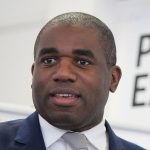
  • David Lammy – 2020 Comments on Virus on Prisons

    David Lammy – 2020 Comments on Virus on Prisons

    The comments made by David Lammy, the Shadow Secretary of State for Justice, on 9 October 2020.

    The sudden jump in coronavirus cases in prisons is very concerning and should act as a warning against complacency in the Ministry of Justice.

    We know from explosions of coronavirus cases among prison populations in other countries that prisons can be ticking time bombs in this pandemic. Major outbreaks in prisons will not only cause unnecessary deaths of prisoners and staff, they can overwhelm local hospitals and spread the virus outside of their walls.

    To prevent the virus from getting out of control in prisons, Ministers need to do more to meet their target headroom across the prison estate of 5,500, as outlined by Public Health England and HMPPS. Alongside this, the government needs to urgently fix coronavirus testing and tracing across the population as a whole.

  • Matt Hancock – 2020 Speech to NHS Providers

    Matt Hancock – 2020 Speech to NHS Providers

    The speech made by Matt Hancock, the Secretary of State for Health and Social Care, on 8 October 2020.

    Good afternoon.

    I’m very glad to have the chance to talk to you today. Because we are at a perilous moment in the course of this pandemic.

    I am very worried about the growth in the number of cases, especially in the North West and North East of England, and parts of Wales, Scotland, Northern Ireland, and parts of Yorkshire.

    You have all had the most extraordinary 9 months, and in my view you have risen to the challenge.

    But in parts of the country, the situation is again becoming very serious.

    Hospitalisations in the North West are doubling approximately every fortnight.

    And have risen by 57% in just the just last week alone.

    Unfortunately, we are seeing hospitalisations of the over 60s rising sharply, and the number of deaths from coronavirus also rising.

    And we know from bitter experience that the more coronavirus spreads, the harder it is to do all the other vital work of the NHS.

    Yesterday, we heard from the Academy of Royal Colleges.

    Helen Stokes-Lampard said: “If we don’t act fast we risk the NHS being overwhelmed and risk all the good work done to restore services.”

    And then this morning, we heard from the Royal College of Emergency Medicine.

    When Katherine Henderson said: “If we do not come together and take effective precautions, COVID will continue its explosion across the country, the consequences of which could be the implosion of the NHS this winter.”

    The message to the public must be that we all have a part to play, to control this virus.

    Our strategy is simple: suppress the virus, supporting the economy, education and the NHS, until a vaccine can make us safe.

    My message to you, and to everyone who works in the NHS, is that we can, and we will, get through this.

    Sadly, there will be more difficult times ahead.

    But we will get through it together.

    And one of the good things that has happened this year, and there have been some good things, is that the whole public, has shown just how much it appreciates the NHS.

    There’s only one organisation that can inspire people to applaud from their doorsteps and balconies, come rain or shine.

    That can inspire colourful support in windows across the land.

    There’s only one organisation that can inspire a heroic centenarian to walk laps of his garden and inspire millions of people to sponsor him.

    The NHS. The best gift a nation ever gave itself.

    And this year, when all nations faced peril and adversity, the NHS was there for us, as it always is, and always must be.

    The spontaneous outpouring of admiration that we have seen from all corners of this country, I think that is testament to how much people cherish this amazing institution.

    We all pulled together to protect the NHS.

    But crucially, it’s the NHS that protects us all.

    Not just the doctors and nurses, and I want to say this very directly, but the cleaners, porters, mental health teams, ambulances, and all the diverse and varied parts of this incredible system.

    During the greatest public health crisis in a generation, you have been the linchpin of our national effort.

    And we must work together for the population who we serve, through this pandemic and beyond.

    Today I want to say a few words about how.

    People

    First of all, of course, the NHS is only as good as its people.

    And if the last few months have shown us anything it is that the NHS is blessed with exceptional people.

    And we are doing everything in our power to support them, and boost their number.

    During the crisis, we put out a call for former health and care professionals to return to the front line – and 47,000 volunteered to play their part.

    I think this is an incredible testament. To them, and to every single one of our 1.4 million strong team – and the over 2 million in social care – I want to say, on behalf of the nation, thank you. Thank you for your service.

    Our returnees were supported by people from all walks of life who stepped up.

    Furloughed cabin crew redeployed into call handling roles.

    Clinically trained firefighters provided surge capacity for our ambulance services.

    Volunteers delivered hot food to the vulnerable, and to NHS staff.

    This was a phenomenal effort from so many, new recruits and established colleagues.

    And we all learned just how flexibly we can work when needs must. This sort of flexibility helped the NHS really deliver, and it is something we should hold onto for the future.

    And, of course, we are looking to expand the workforce for the long term, through our plans to recruit 50,000 more nurses, and more clinical staff.

    This work is bearing fruit.

    This year we have seen doctors numbers at their highest ever.

    And over the last year, we’ve seen the number of nurses increase by over 14,000.

    And we owe it to them, and all our NHS colleagues, to take forward some of the positive changes that we’ve seen during this pandemic.

    From my point of view I’ve seen that the white heat of the crisis showed us a lot about our health service.

    And for me, what was most illuminating was to see how some of the things that I know frustrate you all.

    Like some of the bureaucracy and the hierarchy that too often gets in the way of caring for patients.

    How a lot of this melted away.

    Of course, it is important that we have the guide rails so we can measure performance and hold ourselves to the highest standards.

    But in a health and social care system like ours, that has evolved over the course of over 70 years.

    It is easy for layers of overlapping and disproportionate bureaucracy to build up over time.

    I hear from providers what this can mean on the ground – multiple requests for information that don’t add value.

    Multiple layers of instruction when we need to devolve trust.

    Not enough support for the frontline staff who are doing a really stressful job.

    So, we must learn from this illumination.

    We must look at every rule and process afresh, and ask whether it makes sense after what we’ve learnt from the pandemic.

    And we must increase our support to the frontline.

    A few months ago, I launched our Red Tape Challenge within the NHS and social care, inviting views from colleagues on how we could bust bureaucracy.

    How we could free up our colleagues’ time to focus on what matters – giving care.

    And our team has been interviewing people from across the system.

    And we have received hundreds of submissions directly from staff, with over 1,000 suggestions of where things could be improved.

    The responses themselves have been illuminating.

    As one frontline member of staff told us: “All of a sudden we could do everything we needed to do quickly and efficiently because of COVID.”

    And that: “We have coped fine without endless meetings and forms.”

    Hallelujah.

    I can hear lots of you relating back to seeing the same experience.

    We also heard from providers that they welcome the ability to act with more flexibility – for example, greater freedom around redeploying staff and contracting.

    And I heard, too, of the multiple reports that have proposed reduced bureaucracy in the past, but haven’t been acted on.

    Many times I was told that this question has been asked and then nothing has been done about it.

    So we will act on the suggestions we’ve heard.

    We will act on the recommendations of the reports that have already charted the way, but been left to one side over the past decade.

    I want to keep this momentum going, working with you with the goal of making it easier for you to do your jobs.

    So that we build a better health service, ultimately for our patients and for our colleagues on the front line to deliver care.

    Now, I know how difficult these past few months have been for so many.

    And the survey published by NHS Providers this week showed that many colleagues are feeling tired and burnt out.

    Believe me, I get it. I want to do everything I can.

    The People Plan has already set out our commitment to investing in health and wellbeing in the future.

    Through increased flexible working.

    Through creating an inclusive and diverse workplace. That’s a culture change that we know we need to see.

    And through boosting opportunities for education and training.

    And today I can announce a new research project to understand and address the impact of this pandemic on our NHS staff.

    Researchers will work across England to identify those most in risk, and most in need of tailored support.

    And we will place a particular focus on colleagues from black, Asian and minority ethnic backgrounds, who we know, tragically, have been particularly affected by this virus.

    There is more to do.

    And I pledge, every day, that I will do whatever it takes to protect the people who do so much every day to protect us.

    Systems

    The next thing I want to turn to, is how we make sure the systems work as well as possible. Even if people are healthy and happy, they can’t perform at their best if the system isn’t set up to support them.

    No one designing the NHS would set it up in the way it is set up now.

    A system where primary care, community care, pharmacies, mental health trusts, and many, many, other parts, exist – at least in law – as atomised and isolated institutions.

    No. A collaborative approach is essential for us to have better, less fragmented decision-making.

    To treat complex conditions better.

    And to provide the best care for everyone who needs it, in the setting that is best for them.

    And to provide preventative care to keep people healthy in the first place.

    Now, I don’t believe in reorganisations designed in Whitehall offices, based on management consultants’ spreadsheets.

    I am allergic to all that. It is my job to improve the system we’ve got so it works better for everyone. It is the hard yards of incremental reform.

    In fact, it’s every single person’s job to improve their part of the system, so that it works better for everyone.

    All 1.4 million of us ought to be working together to improve the system that we’ve got.

    I know there is a strong and growing consensus behind the systems-led approach.

    Streamlining work by bringing together commissioners, providers and local authorities, to plan services for the populations we serve.

    And we will move to the system by default. We will remove barriers that prevent collaboration, and follow the approach set out in the Long-Term Plan.

    We will improve, rework, join up and tie systems together so we can all focus on the people that matter: the populations we serve.

    When battling coronavirus, we have been able to solve problems together at a systems level that previously would have been impossible to crack.

    We will deliver ICSs in all geographies by April, and take them further still.

    We will strengthen how systems operate, across all parts of the NHS, and tie in tightly with local authority colleagues who share our mission to the populations we serve.

    So bringing to bear the whole wealth and diversity of experience that exists in a local area.

    All with the shared goal of helping people to live healthier lives for longer.

    Recovery

    We must make these improvements, even while we battle coronavirus, because they will help us to battle coronavirus.

    And we must learn from how we have battled coronavirus.

    And we’ve got to recognise the Herculean efforts, both to keep services going, and to get us ready for winter.

    And I want to touch on what I think is a seldom-discussed success during this pandemic, which was just how much urgent non-COVID work we were able to keep going at the peak.

    As well as treating COVID , cancer treatments continued at 82% of usual levels between March and July.

    Our A&Es stayed open.

    Primary care and outpatients switched to telemedicine faster than I could ever possibly have imagined.

    It has been a phenomenal team effort and I would like to thank and pay tribute to everyone who has been involved.

    Not just to those who maintained and delivered the services, but everyone who created the infrastructure – including that digital infrastructure – that made it possible.

    We will keep doing everything we can to keep non-COVID treatments and diagnostics going over the next few months.

    And the more coronavirus is under control, the more we can continue the recovery and keep essential services open.

    As we prepare for the tough months ahead, I have no doubt that we will see the same dedication and care that we have seen all the way through 2020 – the NHS’s most challenged year.

    Conclusion

    And I pledge you this:

    This year has proved beyond measure the importance of our nation’s most cherished institution.

    At our best moments in our lives, and at some of our worst.

    The NHS is always there for all of us.

    And at a time when it is being tested like never before, for this pandemic and into the future, it will be always at your side.

  • Keir Starmer – 2020 Comments on the Prime Minister’s Handling of the Crisis

    Keir Starmer – 2020 Comments on the Prime Minister’s Handling of the Crisis

    The comments made by Keir Starmer, the Leader of the Opposition, on 9 October 2020.

    We are at a crossroads in our national effort to defeat the coronavirus. Infection rates are rising, hospital admissions are climbing and families across Britain are increasingly anxious about the looming threat of a second national lockdown.

    At this moment of national crisis, people want hope that there is light at the end of the tunnel. Families want to know that they will be able to send their children to school, grandparents want to know that they will be able to see their grandchildren at Christmas and businesses want to know that they have a future.

    This is the moment when we needed maximum confidence in the Government’s approach. People aren’t asking for miracles – they just want to know that the Prime Minister has a plan and a strategy in place. However, what we have seen in recent weeks is a Government that has lost control: lost control of its message; lost control of testing; and – crucially – lost control of the virus.

    I understand the need for local restrictions. We have long argued that the only way we can curb the spread of the virus and keep the economy going is by having a targeted response that can tackle local outbreaks and reduce the infection rates. However, something is going seriously wrong with the Government’s approach at the moment. Out of the 20 areas of the country that have been in restrictions for at least two months, 19 have seen the infection rate go up. That is a sign of significant failure.

    We are a great country. We should not have one of the highest death rates in the world or one of the worst recessions. Nor should it be inevitable that we have to impose further restrictions. But, because of the Government’s serial incompetence, further restrictions are becoming increasingly likely and, sadly, necessary.

    The Government has got to get a grip of this situation urgently before it spirals out of control.

    First, we need to guarantee local leaders are in the room and involved in decisions about restrictions in their area. At the moment the Government is operating under the misguided, arrogant and counterproductive view that ‘Whitehall knows best’, that decisions can be made behind closed doors, without any real consultation or by even picking up the phone to those on the frontline.

    The party that was elected on a promise to level up is instead talking down to huge swathes of the country. This is fuelling public frustration and resentment in the system.

    Second, we have got to fix testing. We can only control the virus if we know where the virus is. That is why I said a few months ago that the Government needed to spend the summer, when cases were much lower, building a testing system that works. They failed to do so, distracted by a series of fiascos of their own making. Now we hear stories of families struggling to get a test and, when they do, having to wait days for a result.

    We don’t need a world beating testing system, we just need one that works. That is why I have said repeatedly to the Government that it needs to invest in NHS and university labs to expand capacity, and to put local public-health teams in charge of contact-tracing. We also need to ensure routine, regular testing for high-risk workplaces and high-transmission areas, with results within 24 hours to improve infection control, including for NHS staff, teachers and carers.

    Finally, we need to give people confidence that there is a strategy in place. It was an act of gross irresponsibility for anonymous Number 10 sources to tell a few newspapers on Thursday about plans to impose further restrictions on millions of people, without any detail, without any consultation and without any statement from the Prime Minister. This has significantly added to the sense of confusion, chaos and unfairness in the approach that is being taken.

    Families who have already sacrificed so much during lockdown will now spend the next few days anxious and worried about whether they will be able to see each other.

    Businesses, which have stepped up to help our country and economy through this pandemic, will face a weekend of uncertainty about whether or not they will be able to stay open.

    People will be confused about whether or not they can go to pubs and restaurants. The government has not lived up to its side of the bargain.

    When I was elected Leader of the Labour Party, I said that we would be a constructive opposition, with the courage to support the Government where that’s the right thing to do, and the courage to challenge the Government where mistakes are being made. I stand by that commitment.

    However, that approach only works if the Government, for its part, is constructive and competent, able to learn from its mistakes and willing to take the decisions that are necessary in the best interests of the British people. For too long, the Government has failed to acknowledge obvious problems, treated challenge with contempt, ploughed on with disastrous consequences and then sought to blame others for its own mistakes. If we are to find a constructive way through this pandemic, that has to change.