Tag: 2020

  • Rosena Allin-Khan – 2020 Comments on Mental Health of Children

    Rosena Allin-Khan – 2020 Comments on Mental Health of Children

    The comments on Rosena Allin-Khan, the Shadow Mental Health Minister, on 22 October 2020.

    Covid-19 is clearly having a negative impact on the wellbeing of children and young people, with the impact being felt even more by those with an existing mental health problem.

    The relationship between financial security and probable mental illness is undeniable in this report. This inequality is well documented, but successive Conservative governments have failed to address it, leaving less well-off children to fall through the cracks.

    If the Government continues to fail our children, the consequences will be felt for a generation.

  • Tulip Siddiq – 2020 Letter to Amanda Milling on Ben Bradley

    Tulip Siddiq – 2020 Letter to Amanda Milling on Ben Bradley

    The letter sent by Tulip Siddiq, the Shadow Children and Early Years Minister, to Amanda Milling, the Conservative Party Chairman, on 24 October 2020.

    Dear Amanda

    I am writing regarding a tweet this evening by Conservative Member of Parliament Ben Bradley.

    Before the summer, I was delighted when the Conservative Party decided, after representations by campaigners including Marcus Rashford, to U-turn on providing free school meals over summer and agree to fund this crucial support.

    The reason why many people were so disappointed this week when Conservative MPs chose to vote to withdraw this support is precisely because we have seen the huge difference it has made throughout this pandemic, when many children have gone without the food they need.

    However, in a tweet this evening Mr Bradley appeared to claim that free school meal vouchers “effectively” gave “£20 cash direct to a crack den and brothel”.

    Notwithstanding the fact that free school meal vouchers could only be redeemed in participating supermarkets for the purchase of food and groceries, I am sure that you will want to make clear that this kind of crass stigmatisation of children from poorer families is deeply damaging, and distance yourself from Mr Bradley’s misleading and troubling comments.

    In the meantime, I respectfully ask you to request an apology from Mr Bradley to the millions of children from lower income households who benefit from free school meal support.

    I look forward to hearing from you at the earliest possible opportunity.

    Yours sincerely,

    Tulip Siddiq MP.

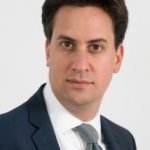
  • Ed Miliband – 2020 Comments on Help for the Self-Employed

    Ed Miliband – 2020 Comments on Help for the Self-Employed

    The comments made by Ed Miliband, the Shadow Business Secretary, on 23 October 2020.

    The promise of doing ‘whatever it takes’ to protect workers is a distant memory. Despite public health restrictions tightening and many sectors being shut, Ministers are leaving self-employed people in the lurch.

    Almost half a million self-employed people work in industries either partially or fully closed. They’re in desperately choppy waters with many deeply worried about their future.

    Yet Ministers are taking away their life raft and leaving them to sink or swim. That’s not just callous, but economically wrong. These are our country’s artists and performers, and people in our vibrant tourism, sports, cultural and hospitality sectors.

    The Business Secretary must stand up for them and ensure they are given a fair deal.

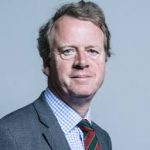
  • Alister Jack – 2020 Statement on August GDP Figures

    Alister Jack – 2020 Statement on August GDP Figures

    The statement made by Alister Jack, the Secretary of State for Scotland, on 21 October 2020.

    The UK Government is doing everything possible to keep people safe and protect the Scottish economy from the shock of the pandemic.

    We will continue to support jobs and businesses in Scotland through the difficult months ahead. We have expanded our Job Support Scheme, extended our scheme for self-employed people and provided additional support for business.

    This direct support to people in Scotland is on top of an £7.2 billion in additional funding to the Scottish Government.

  • Dominic Raab – 2020 Statement on Violence in Nigeria

    Dominic Raab – 2020 Statement on Violence in Nigeria

    The statement made by Dominic Raab, the Foreign Secretary, on 21 October 2020.

    I am deeply concerned by the recent violence and continued clashes in Nigeria, and am alarmed by widespread reports of civilian deaths.

    We call for an end to violence. The Nigerian government must urgently investigate reports of brutality at the hands of the security forces and hold those responsible to account.

  • Robert Jenrick – 2020 Comments on Funding for Local Councils

    Robert Jenrick – 2020 Comments on Funding for Local Councils

    The comments made by Robert Jenrick, the Secretary of State for Housing, Communities and Local Government, on 22 October 2020.

    Since the start of the pandemic, we have backed local councils with the funding they need to support their communities, protect vital services and recover lost income.

    This extra £1 billion funding will ensure that councils have the resources that they need over the winter and continue to play an essential role on the front line of our response to the virus while protecting the most vulnerable and supporting local businesses.

  • Dominic Raab – 2020 Comments on Rohingya

    Dominic Raab – 2020 Comments on Rohingya

    The comments made by Dominic Raab, the Foreign Secretary, on 22 October 2020.

    The people living in Cox’s Bazar face unimaginable hardship and many have been victims of violence. We have imposed sanctions on the perpetrators of this brutality, and this new funding will save lives in the camp and help Bangladesh become more resilient to disasters such as coronavirus.

    Today I urge the world not to turn away from the Rohingya’s suffering and to take the action necessary to allow them to safely return to the homes they fled in terror.

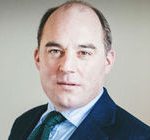
  • Ben Wallace – 2020 Comments on Afghan Interpreters

    Ben Wallace – 2020 Comments on Afghan Interpreters

    The comments made by Ben Wallace, the Secretary of State for Defence, on 22 October 2020.

    Interpreters played a vital role in supporting our Armed Forces in Afghanistan and we owe it to them to make sure their sacrifice is properly rewarded.

    For the first time, today’s legislation puts in place similar requirements for those who resigned and were made redundant, recognising the unique pressures and circumstances faced by locally employed Afghans.

    This fair and simple system will offer dozens more courageous individuals who served alongside British troops the chance to build a new life in the UK.

  • Guy Opperman – 2020 Statement on Private Pensions and Annual Benefit Statements

    Guy Opperman – 2020 Statement on Private Pensions and Annual Benefit Statements

    The statement made by Guy Opperman, the Parliamentary Under-Secretary of State for Work and Pensions, in the House of Commons on 19 October 2020.

    The Government have published their response to the consultation on the approach to delivering simpler annual pension benefit statements.

    Participation in pension saving has been transformed through the success of automatic enrolment. However, there is a growing likelihood that people will have a number of different jobs in their lifetime, and therefore multiple pension pots and annual pension statements.​
    This is why the Government’s ambition is for pension benefit statements to be simpler, more consistent and jargon free. Consistency across pension benefit statements will help savers better understand their pensions and effectively plan for retirement. A standardised template will be more accessible, drive member engagement and signpost members to detailed information on costs and charges and investment strategy. It will also complement the work Government are doing with the pensions dashboard to bring pensions online to your phone or laptop.

    We will focus first on defined contribution schemes used for automatic enrolment, but it remains the long-term ambition to improve consistency across all schemes. We will consult later this year on draft regulations for a ​mandated approach to simpler statements, working with industry on the detailed design of the regulations and associated statutory guidance.

    In addition, the Government will work with the pensions industry to introduce a statement season, building on the success of pensions awareness month. It will support the normalisation of workplace pension saving, provoke debate among the public and enable easier comparison between statements and providers.

    These measures will help individuals engage with their workplace pension savings, and enable savers to achieve greater financial security in retirement.

  • Alok Sharma – 2020 Statement on the Energy Tariff Cap

    Alok Sharma – 2020 Statement on the Energy Tariff Cap

    The statement made by Alok Sharma, the Secretary of State for Business, Energy and Industrial Strategy, in the House of Commons on 2o October 2020.

    I am today announcing that the price cap on standard variable and default energy tariffs will remain in place for 2021.

    The independent energy regulator, Ofgem, has carried out an assessment into whether the conditions are in place for effective competition in domestic supply contracts. Ofgem have been transparent in how they made their assessment. As required by the legislation, Ofgem have made a recommendation as to whether the price cap should be extended. The Government value the expertise and insight of Ofgem, and I have considered that report and recommendation in reaching my decision.

    As set out in the relevant legislation, the price cap can be extended for a year at a time up to the end of 2023 at the latest.

    While there have been some improvements across the market in recent years, such as increased consumer engagement, rising switching levels and progress with the smart meter rollout, there is still more to do to ensure consumers will not face unfair prices in its absence.

    More than half of energy consumers are still on standard variable or default tariffs, where in the absence of the cap they would likely be paying excessive charges for their energy use.​

    Extending the cap means that 11 million households will continue to be protected from overcharging in the energy market. The cap will continue to safeguard these consumers, while other initiatives such as faster switching, ​the smart meter rollout and consumer engagement programs continue to contribute to a more competitive market.