Tag: 2020

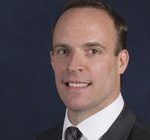
  • Dominic Raab – 2020 Statement on Britain in the World

    Dominic Raab – 2020 Statement on Britain in the World

    Below is the text of the statement made by Dominic Raab, the Foreign Secretary, in the House of Commons on 13 January 2020.

    On 12 December, the British people had their say. They delivered a clear majority for this Government and a mandate to take Britain forward. That mandate, set out in the Queen’s Speech, marks a bold new chapter for our country, ambitious, self-confident and global in its international outlook. We are leaving the EU in 18 days’ time, but we vow to be the strongest of European neighbours and allies. We are taking back control of our laws, but we are also expanding our global horizons to grasp the enormous opportunities of free trade. While we will always serve the interests of the small businesses and the citizens of this country, we will also look to reinforce our national mission as a force for good in the world.

    The UK will leave the EU at the end of this month because the House passed the European Union (Withdrawal Agreement) Bill’s Third Reading with a majority of 99, which is the strongest signal to the EU and the world about our ambition and resolve as we chart the course ahead. That clarity of purpose now gives us the opportunity to be masters of our destiny and chart our course independently but working very closely with our international partners. We will strive with our European friends to secure the best possible arrangements for our future relationship by the end of 2020—a new relationship that honours the will of the people in the 2016 referendum but cherishes the co-operation we have in trade, security and all the other fields with our European friends.

    As we enter this decade of renewal, the Government will engage in a thorough and careful review of the United Kingdom’s place in the world, including through the integrated security, defence and foreign policy review. It is an opportunity for us to reassess the ways in which we engage on the global stage, including in defence, diplomacy and our approach to development, to ensure that we have a fully integrated strategy. As we conduct that review, our guiding lights will remain the values of free trade, democracy, human rights and the international rule of law.

    Jonathan Edwards (Carmarthen East and Dinefwr) (PC)

    This is a very wide-ranging review. I think everybody would agree with that. How is the Foreign Secretary going to ensure that there is sufficient parliamentary scrutiny of the review as it is undertaken?

    Dominic Raab

    We will look at all the mechanisms—whether debates in this Chamber, or the operation and scrutiny of the Select Committees—and, indeed, we already welcome the input of individual MPs, caucuses and Select Committees in the normal way. We will make sure that there is proper scrutiny and that we can bring as many people together as possible in charting the course for the UK as we go forward.

    James Gray (North Wiltshire) (Con)

    Does my right hon. Friend not agree with me that there have been many security and defence reviews over the years and they have all been hampered by one thing in particular, which is that they happened at precisely the same moment as a comprehensive spending review? I very much welcome his announcement of this very extensive review—it is the right time to do it—but does he not agree that it must be done independently of the Treasury? We must decide what Britain is for and what assets we need to achieve that, and then only subsequently—a year later—should the Treasury become involved.

    Dominic Raab

    I am not sure it is likely to work exactly as my hon. Friend suggests, but I do take his point. We need to be very clear in our minds about the strategy we are charting and then reconcile our means, including our financial means, to those ends, so he makes an important point.

    Dr Julian Lewis (New Forest East) (Con)

    In support of what my hon. Friend the Member for North Wiltshire (James Gray) has said, may I remind the Foreign Secretary that, in 2017-18, we had a national security capability review that sought to look at both security and defence together, but it was so limited by having to be financially or fiscally neutral that it meant that extra resources for, for example, cyber-warfare would be granted only at the cost of making cuts in, for example, the Royal Marines? That is no way to conduct a review—to play off one necessary part, say security, against another necessary part, such as defence.

    Dominic Raab

    I think my right hon. Friend makes an important point, although at the same time we need to be mindful of the overarching financial parameters that any Government—any responsible Government—are going to be within if we are to make credible investment decisions. Certainly, on the issue of cyber and its being somehow nudged out of focus or set up as a zero-sum game with troops, I can assure him that that will not be the case. Cyber increasingly plays an important role not just in our security, but in our ability to project our foreign policy.

    Crispin Blunt (Reigate) (Con)

    Will the Foreign Secretary give way?

    Dominic Raab

    I will give way one more time and then make some progress.

    Crispin Blunt

    This is on the same theme. It is my right hon. Friend’s Department that has suffered the worst cuts over the last period because it has been an unprotected Department. What we must do if we are to direct defence, development and the intelligent services in the right direction is to have the capacity within his Department to do that. Will he ensure that he fights very hard for the necessary resources to be able to recreate the capacity of a Rolls-Royce Department of State?

    Dominic Raab

    Quite right, and I welcome my hon. Friend’s support as I make those overtures to the Treasury.

    Catherine West (Hornsey and Wood Green) (Lab)

    Will the Foreign Secretary give way?

    Dominic Raab

    Of course, and I am sure the hon. Lady is going to be supporting the Foreign Office in the next spending review.

    Catherine West

    I will, indeed, given that a comparison across all Departments shows that the Foreign Office has been cut back at least as badly as the Ministry of Housing, Communities and Local Government. May I urge, in any review of finance, that we look carefully at the ability for human rights to be at the forefront of what the Foreign Office does? Traditionally, that has been strong; it is less so now.

    Dominic Raab

    I thank the hon. Lady and I think, given what I am about to say, that I will be able to give her the kind of reassurance she needs. I look forward to working with her in the weeks and months ahead to make sure that we never lose sight of our values, and human rights is a key component of that.

    We will strengthen our historical trading ties as we leave the EU, while boosting British competitiveness by tapping wider global markets. We want strong trade with our existing EU partners. They are important and valuable to us as a market; I do not think anyone doubts that. At the same time, we are making good progress in paving the way for our first round of future free trade agreements with the rest of the world. When I was out in the US, Secretary of State Mike Pompeo told me in Washington that the US is poised

    “at the doorstep, pen in hand”,

    ready to sign a deal. A free trade deal with the US would boost businesses, create jobs, reduce the cost of living and expand consumer choice on both sides of the Atlantic, so there is a huge opportunity for a win-win deal.

    Stewart Malcolm McDonald (Glasgow South) (SNP)

    Will the Foreign Secretary give way?

    Dominic Raab

    I want to make some progress but will be happy to take an intervention from the hon. Gentleman shortly.

    It is also at the same time important that we broaden our horizons to embrace the huge opportunities in the rising economies of the future from Asia to Latin America, and set out our stall as a global champion of free trade not just bilaterally but in the WTO as well.

    Of course, a truly global Britain is about more than just trade and investment, important though those things are for our prosperity and the quality of life we have in this country; global Britain is also about continuing to uphold our values of liberal democracy and our heartfelt commitment to the international rule of law—values for which we are respected the world over.

    Mr Alistair Carmichael (Orkney and Shetland) (LD)

    Does the Foreign Secretary agree that nowhere in the world at the moment are these values under greater attack than in Hong Kong, and will he join me in condemning the refusal of the Hong Kong authorities to allow the director of Human Rights Watch entry at the weekend?

    Dominic Raab

    I do join with the right hon. Gentleman in making the following point. The international principles and norms and the rule of law in relation to freedom of peaceful protest and freedom of expression apply as a matter of customary international law; it also applies directly because of the joint Sino-UK declaration in relation to Hong Kong. Of course we want China as a leading member of the international community to live up to those responsibilities, and the case the right hon. Gentleman highlights is a very good example of that.

    We will continue to be standing up for those values. We will continue to be a leading member of NATO, ensuring that that alliance can rise to the new challenges ahead. We will hold Iran accountable for its destabilising and dangerous actions in the region, but we will also, as we made clear in the response to my right hon. Friend the Member for Bournemouth East (Mr Ellwood) earlier, encourage it to de-escalate and to seek a path to an alternative future through diplomatic dialogue.

    We will call out those who flout international law, like the Russian Government, from its illegal annexation in Crimea and its chemical weapons attack in Salisbury to its cyber-attacks and its propensity for spreading fake news.

    Stewart Malcolm McDonald

    On Russia, and indeed to go back to what the Foreign Secretary said on the US, the United States has been vocal in its opposition to Nord Stream 2, correctly in my view, and the United Kingdom Government have taken the view that it has little to nothing to do with the United Kingdom. Can he assure me that that will be looked at properly in the integrated review he mentions, because it very much is in our interests that Nord Stream 2 does not go ahead?

    Dominic Raab

    I take the point the hon. Gentleman made, and he made it eloquently. We will consider all those issues as part of the review, and it is important that we get the right balance; that is the most I will say for the moment.

    Mr Steve Baker (Wycombe) (Con)

    Will the Foreign Secretary give way?

    Dominic Raab

    Let me make a little progress as I have been generous, but I will be happy to give way again in the future.

    We will call out those who flout international law. We will live up to our responsibilities, as the right hon. Member for Orkney and Shetland (Mr Carmichael) asked, in relation to the people of Hong Kong. That means supporting their right to peaceful protest and encouraging dialogue on all sides within the one country, two systems framework that China itself has consistently advocated since the Sino-British joint declaration in 1984, a treaty which has and holds international obligations on all sides.

    We will use our moral compass to champion the causes that know no borders. This year we have the opportunity—and the honour and privilege—to host the UN climate change summit COP26 in Glasgow, and that is the UK’s chance to demonstrate global leadership on climate change. Under the Conservatives, we are the first country to legislate to end our contribution to global warming, and this Government know that we must leave the environment in a better state for our children.

    Chi Onwurah (Newcastle upon Tyne Central) (Lab)

    I thank the Foreign Secretary for referring to the emergency that is climate change and legislation to bring about a net-zero economy, but legislation is not enough; we need to see actual implementation. Does he agree that the UK has much more to do to deliver on a green industrial revolution, which means that we can continue to be an industrial nation while having a net-zero economy, before 2050?

    Dominic Raab

    I agree with all of those things and pay tribute to the hon. Lady for the way in which she articulated her intervention. We need to make sure we have the legislation in place, we need to work with our international partners, and we will harness the British expertise—the technology, the innovation and the entrepreneurialism that this country is so great at—to find the creative solutions so that we leave our precious environment in a better state for the next generation.

    The Government are also proud to maintain our commitment to spend 0.7% of gross national income on international development. We want to support developing countries, so that they can stand on their own two feet. We are helping them to strengthen their economies, make peace and forge security arrangements that are sustainable, so that their people are healthier and have a better standard of living.

    Harriett Baldwin (West Worcestershire) (Con)

    In highlighting the importance of our 0.7% commitment with regard to international development, does the Foreign Secretary agree that, as in our manifesto, one of the most effective ways we can spend that money is to ensure that every girl in the world gets 12 years of quality education?

    Dominic Raab

    I entirely agree with my hon. Friend. I will come on to say a little bit more about that, because it is one of the crucial campaigns we are taking forward. We should not be so shy about the incredible work we are doing. We are proud of our role in working to eliminate preventable deaths and overcome diseases such as Ebola and malaria. We will be there for those who need our help most in their hour of need, as we demonstrated with our world-leading humanitarian response capability, which was put into action in the Bahamas following Hurricane Dorian. Being a force for good in the world also means championing basic human rights. Coming on to the point raised by my hon. Friend, we are leading global action to help to provide 12 years of quality education for all girls by 2030 so that no girl is left behind, all their potential is tapped, and they can realise their ambitions individually and for their countries.

    We are also proud to continue, with our Canadian partners, our work to defend media freedoms. I was in Montreal last week to talk about that with my Canadian opposite number. Led by our two countries, we are working with partners around the world to create legislative protections for journalists; support individual journalists who find themselves at risk; and increase accountability for those who threaten journalists whose work shines a light on conflicts and tyranny around the world. We are dedicated to shielding those with the courage to speak truth to power. On that note, I will give way to the SNP.

    Stewart Malcolm McDonald

    I am extremely grateful to the Foreign Secretary for that attempt at humour. [Laughter.] I thank the Foreign Secretary for what he has just said. He is entirely correct. Will he do everything in his power—this was the subject of the first debate I ever had as a Member of this House five years ago—to secure the release of the jailed Saudi writer Raif Badawi?

    Dominic Raab

    I thank the hon. Gentleman. The important thing, whether we are dealing with Saudi Arabia, China, Iran and all those partners with whom we have, let us say, difficult issues to address—Saudi, of course, is a very close partner—is that we are always, particularly with the closer relationships we have, such as with Saudi and other middle eastern partners, willing and able to speak very candidly. I have raised human rights issues with my Saudi opposite number and will continue to do so, including in relation to cases such as the one the hon. Gentleman highlights.

    Mr Steve Baker

    My right hon. Friend will know that for people like me who represent diverse diaspora communities, the internal and external affairs of other countries often raise issues of the most acute local importance. I do not want to draw him on to Kashmir today, but will he, in the course of his reviews, consider how foreign policy might be made more democratically accountable? The reality, particularly when foreign policy survives between Governments of successive parties, is that it does not actually survive contact with the electorates in constituencies like mine. I wonder whether foreign policy might somehow be more responsive to what voters think when they are from those diaspora communities.

    Dominic Raab

    My hon. Friend is absolutely right. If Brexit was in part a reaction by the British people to having decisions imposed on them, I think there is a wider lesson in foreign policy that we are there to serve our citizens, including communities such as those that are very powerful and contribute a huge amount in Wycombe. More generally, we can see that with consular cases, for example the recent case in Cyprus, the Ukrainian airliner case and others where we represent individual citizens who have suffered or lost lives. There needs to be a sensitivity to individual citizens, whether they are the victims or the communities more broadly, and a strong sense that the Foreign Office is not just on a different level but is acting and serving for them.

    I would just like to take this opportunity to pay a huge tribute to the consular department in the Foreign Office, which day in, day out is serving the interests of British families, British victims and British nationals. It rarely gets the credit that is due to it, but it does a superb job. I have seen that in my six months as Foreign Secretary and I am very proud of the work they do.

    Rehman Chishti (Gillingham and Rainham) (Con)

    I welcome the Foreign Secretary’s commitment on human rights and I thank him for the fantastic work he has done—I remember serving with him on the Joint Committee on Human Rights many years ago when we first came to Parliament. Will he confirm that freedom of religion or belief will always be a key priority for the United Kingdom? Eighty per cent. of individuals around the world identify themselves as of one faith or another, and our Government have a strong track record of standing up for freedom of religion or belief. They commissioned the Truro review, and 10 out of its 22 recommendations have been taken forward. Will he confirm that that will always be a key priority? I thank him and his Ministers for their support.

    Dominic Raab

    I thank my hon. Friend and pay tribute to him for his extraordinary work and dedication to implementing the Truro conclusions. I confirm that we absolutely want to protect not just individual freedom of expression, but the rights of religious groups as well as the right for people to exercise their faith and conscience. One of the issues that I discussed with Foreign Minister François-Philippe Champagne in Canada on Thursday was a new global award for media freedoms that we have announced to recognise those who defend journalists and keep the flame of freedom alive in the darkest corners of the world. That is not just because we want to protect them individually, but because transparency and getting the stories out and holding regimes, and often, non-Government actors to account can happen only if we get the facts. Journalists do an incredibly brave job in getting those facts into the public domain.

    Once we have left the EU and regained control of our sanctions rules, the Government will implement the Magnitsky provisions of the Sanctions and Anti-Money Laundering Act 2018. That will give us a powerful new tool to hold the perpetrators of the worst human rights abuses to account.

    Bob Blackman (Harrow East) (Con)

    Will my right hon. Friend give way?

    Dominic Raab

    I will, for the last time.

    Bob Blackman

    In the Conservative manifesto, three conflict zones were specifically mentioned: Israel and the middle east, Sri Lanka and Cyprus. Will my right hon. Friend give us a further illustration of what action the Foreign Office will take in those three regions to help to end those conflicts and bring perpetrators of war crimes to justice?

    Dominic Raab

    My hon. Friend is right: those three areas remain a priority. There is a huge amount of diplomatic work. We talk to our international partners, including not only our traditional partners—the Europeans, Americans and Canadians—but those in the regions of the different conflicts, about not just the importance of getting peace, but the kind of reconciliation that can come only with some accountability for the worst human rights abuses. Bringing into effect the Magnitsky regime is our opportunity to build and reinforce that at home.

    Mr Shailesh Vara (North West Cambridgeshire) (Con)

    Will my right hon. Friend give way one more time?

    Dominic Raab

    For my hon. Friend, I will—one more time.

    Mr Vara

    I am most grateful. Does the Foreign Secretary agree that one of the United Kingdom’s assets is the diversity of its population? For example, within the UK, we have some 1.5 million people of Indian origin, who provide a living bridge in terms of our contact and help to strengthen our relationship with India. Likewise, there are other communities here who provide a strong link with other countries. Does he agree that as we seek to strengthen our role on the global stage, that can only help us?

    Dominic Raab

    I entirely agree. The Indian community make an incredible contribution and help us to sell UK plc abroad not just in India, but around the world, as do many other communities. The point that was made by my hon. Friend the Member for Wycombe (Mr Baker) is that we need to not just respect and safeguard the interests of those communities, but be proud of them and enable and empower them to champion the UK on our behalf. My hon. Friend the Member for North West Cambridgeshire (Mr Vara) makes an excellent point.

    From our brave armed forces serving on the frontline to the diplomats nurturing our relations with nations around the world, and the aid workers providing life-saving support to those who need it most, British foreign policy will of course serve the citizens of this country, but we are also proud of our ability to make a difference to the poorest, the oppressed and the most vulnerable around the world. We will continue that effort every day of every week, because that is our calling as a country and that is the mission of this Conservative Government.
  • Dominic Raab – 2020 Statement on Iran

    Dominic Raab – 2020 Statement on Iran

    Below is the text of the statement made by Dominic Raab, the Foreign Secretary, in the House of Commons on 13 January 2020.

    Further to the oral statement made by the Defence Secretary on 7 January, I will make a statement on Iran in response to the urgent question from my right hon. Friend.

    Let me first express my condolences, and those of the Government, to the loved ones of those who tragically lost their lives on Ukrainian International Airlines flight PS752. Our thoughts are with all those affected during what must be a devastating time. Among the 176 passengers who tragically lost their lives were four British nationals, as well as 82 Iranians.

    On 9 January we stated publicly—alongside partners such as Canada and the United States—that, given an increasing body of information, we believed that Iran was responsible for the downing of the aircraft. Despite initial denials, the Government of Iran acknowledged on 11 January that they were responsible. Now it is time for a full, transparent and independent investigation. It must be a collaborative endeavour, with a strong international component. The families of the victims—including those in Iran—must have answers, and must know the truth. The UK is also working with the Canadian-led International Coordination and Response Group, consisting of countries with nationals killed in the plane crash. The group will help with the issuing of visas and the repatriation of the bodies of the victims.

    Separately, Her Majesty’s ambassador to Iran, Rob Macaire, was arrested over the weekend, and was illegally held for three hours. On 11 January, the ambassador attended a public vigil to pay his respects to the victims of flight 752. He left shortly afterwards, when there were signs that the vigil might turn into a protest. Let me be very clear about this: he was not attending or recording a political protest or demonstration. His arrest later that day, without grounds or explanation, was a flagrant violation of international law. Today, in response, we will summon the Iranian ambassador to demand an apology, and to seek full assurances that this will not happen again.

    Given the treatment of the ambassador, we are keeping security measures for the embassy under review, and, as I am sure the House would expect, we updated our travel advice on 10 January. We currently recommend that British nationals should not travel to Iran or take any flights to, from or within Iran. On the diplomatic front, in the past week I have met our international partners in Brussels, Washington and Montreal, and I attended an E3 meeting yesterday in Paris. I spoke to Foreign Minister Zarif on 6 January, and the Prime Minister spoke to President Rouhani on 9 January. We welcome the overwhelming international support for Her Majesty’s ambassador to Iran, and for the rights to which all diplomats are entitled under the Vienna convention on diplomatic relations. The regime in Tehran is at a crossroads, and it can slip further and further into political and economic isolation, but there is an alternative. The regime does have a choice. The diplomatic door remains open, and now is the time for Iran to engage in diplomacy and chart a peaceful way forward. I commend this statement to the House.

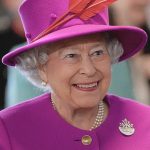
  • Queen Elizabeth II – 2020 Statement on Prince Harry

    Queen Elizabeth II – 2020 Statement on Prince Harry

    Below is the text of the statement made by HM Queen Elizabeth II on 13 January 2020.

    Today my family had very constructive discussions on the future of my grandson and his family.

    My family and I are entirely supportive of Harry and Meghan’s desire to create a new life as a young family. Although we would have preferred them to remain full-time working Members of the Royal Family, we respect and understand their wish to live a more independent life as a family while remaining a valued part of my family.

    Harry and Meghan have made clear that they do not want to be reliant on public funds in their new lives.

    It has therefore been agreed that there will be a period of transition in which the Sussexes will spend time in Canada and the UK.

    These are complex matters for my family to resolve, and there is some more work to be done, but I have asked for final decisions to be reached in the coming days.

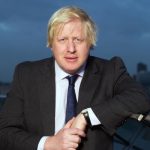
  • Boris Johnson – 2020 Statement on the Death of the Sultan of Oman

    Boris Johnson – 2020 Statement on the Death of the Sultan of Oman

    Below is the text of the statement made by Boris Johnson, the Prime Minister, on 11 January 2020.

    I am deeply saddened to hear of the death of His Majesty Sultan Qaboos bin Said al Said, Sultan of Oman.

    He was an exceptionally wise and respected leader who will be missed enormously. He will be remembered for his devotion to the development of Oman into a stable and prosperous nation, and as the father of the nation who sought to improve the lives of the Omani people.

    I had the pleasure of meeting His Majesty Sultan Qaboos and was struck by his commitment to peace and understanding between nations and between faiths. He leaves a profound legacy, not only in Oman but across the region too.

    The UK is a proud friend and enduring partner of Oman, and our thoughts and prayers are with the Omani people.

  • Boris Johnson – 2020 Statement on Iran Plane Crash

    Boris Johnson – 2020 Statement on Iran Plane Crash

    Below is the text of the statement made by Boris Johnson, the Prime Minister, on 11 January 2020.

    Iran’s admission that Ukraine International Airlines Flight 752 was shot down by mistake by its own armed forces is an important first step.

    This will be an incredibly difficult time for all those families who lost loved ones in such tragic circumstances. We will do everything we can to support the families of the four British victims and ensure they get the answers and closure they deserve.

    We now need a comprehensive, transparent and independent international investigation and the repatriation of those who died. The UK will work closely with Canada, Ukraine and our other international partners affected by this accident to ensure this happens.

    This tragic accident only reinforces the importance of de-escalating tensions in the region. We can all see very clearly that further conflict will only lead to more loss and tragedy. It is vital that all leaders now pursue a diplomatic way forward.

  • Boris Johnson – 2020 Statement on Northern Ireland

    Boris Johnson – 2020 Statement on Northern Ireland

    Below is the text of the statement made by Boris Johnson, the Prime Minister, on 11 January 2020.

    This is a momentous day. As we begin a new decade, we can now look forward to a brighter future for all in Northern Ireland with an Executive that can transform public services and improve people’s lives.

    The parties of Northern Ireland have shown great leadership in coming together to accept this fair and balanced deal in the interests of everyone in Northern Ireland.

    After three years without devolved Government, an Executive can now get on with the job of delivering much needed reforms to the health service, education and justice.

    We could not have got this far without the Northern Ireland Secretary Julian Smith who has dedicated himself to this process and has worked closely with the Northern Ireland parties and Irish Government to make this happen.

  • Deborah Bull (Baroness Bull) – 2020 Speech on the Queen’s Speech

    Below is the text of the speech made by Baroness Bull in the House of Lords on 9 January 2020.

    My Lords, in the days following Her Majesty’s gracious Speech, noble Lords may have missed the announcement of 0.3% as UK statistic of the decade. It represents UK productivity’s average annual growth, down over 10 years from 2%. According to the Royal Statistical Society’s Hetan Shah, it is

    “the most important boring statistic that you have never heard of.”

    Productivity did not feature much in election campaigns, but it should have. High productivity growth leads to higher wage growth and more money for public services. Shah is not alone in linking low productivity with social discord. The University of Sheffield’s Richard Jones suggests that it is not

    “far-fetched to ascribe our current dysfunctional and bitter political environment … to a decade of stagnation in productivity growth.”

    I therefore welcome the commitment to boost productivity through new investment and R&D tax incentives. As the notes on the Speech explain:

    “R&D is vital to a productive economy—firms that invest in R&D have around 13 per cent higher productivity than those firms that do not”.

    The Government intend to

    “prioritise investment in industries of the future where the UK can take a commanding lead”—

    life sciences, clean energy, space, design, computing, robotics and AI. But in focusing on the cutting edge, they need to take care not to ignore everyday and foundational areas where poor productivity is a drain on the economy: low-wage, low-skill industries such as catering and retail; the public sector, which makes up one-fifth of the economy; or health and social care, where advances in biomedical science need to be balanced with research that improves productivity in the system.

    Too narrow a focus on becoming a “global science superpower” also risks excluding areas of existing dominance. This includes the creative industries, which generate 5.5% of the economy and contribute across every region of the UK. Yet they are absent from the Queen’s Speech—as they were from the last—and are seemingly excluded from any additional support for research and development. Creative businesses undertake almost as much R&D as manufacturing, but as much of it relies on arts, humanities and social science research, ​it does not qualify for targeted R&D tax relief. This is because in applying R&D definitions that draw on the Frascati Manual, HMRC requires that R&D relates to scientific or technological delivery, despite the manual’s wider scope. Arts, humanities and social sciences are specifically excluded, and are deemed

    “not science for the purpose of these Guidelines.”

    This narrow definition excludes advances in knowledge that lead to production of experiences or to enhanced understanding of human behaviour.

    The benefits of a unified R&D definition across all knowledge domains go beyond the support of legitimate innovation in the creative sectors, and I am grateful to the noble Lord, Lord Duncan, for agreeing to meet on this. A unified definition would ensure that technological solutions are informed by insights into human behaviour, making adoption more likely; it would also encourage knowledge exchange across disciplines where innovation often occurs.

    The correlation between creativity and scientific discovery is well understood, including, I know, by the noble Baroness, Lady Blackwood. Galileo was a poet; Newton was a painter; and Leonardo was both, and more. A 2008 study of 40 Nobel laureates in science found them three times more likely to have arts and crafts avocations than other scientists. Several observed that

    “purely academic skills are not sufficient to train a person for creative scientific work.”

    This makes obvious sense: it takes creative thinking to come up with new hypotheses and to imagine the experiments that will prove them.

    Given this, the Government’s decision to opt out of the PISA 2021 test for creative thinking is surely a mistake. This is a unique opportunity to collect internationally comparable data and increase understanding of how education best develops creative thinking—vital for the workforce of the future and vital in solving global challenges. It is an opportunity that the Government should not turn down.

    The Conservative manifesto promised to promote creativity in schools, but measures to do so are noticeably absent from the Queen’s Speech. Reversing the decision to opt out of the PISA 2021 test for creative thinking would be a first step in addressing this. I am sure noble Lords will agree that it would be unfortunate if, in our efforts for the UK to become the global science superpower, we were to lose our position as a global superstar in creativity.

  • Sarah Mullally (Lord Bishop of London) – 2020 Speech on the Queen’s Speech

    Below is the text of the speech made by Sarah Mullally, the Bishop of London, in the House of Lords on 9 January 2020.

    My Lords, I am grateful for the opportunity to speak during this debate on Her Majesty’s gracious Speech. I note my interests, which I have declared, and I will limit my comments purely to health and social care.

    I welcome Her Majesty’s Government’s focus on the NHS: health, social care and the workforce. I also welcome the additional funding. However, we must not be misled into thinking that this is a funding bonanza; it will serve only to stabilise NHS services. Between April and September, for all nine NHS cancer targets the lowest percentage of patients was treated on time since the standards were introduced. All 118 A&E units fell below the 95% threshold in November as the NHS posted its worst performance since targets were introduced more than a decade ago. We have a long way to go simply to stabilise the status quo. Are Her Majesty’s Government confident that the action outlined will make up the ground that is required?

    The NHS is only as good as its workforce, and I am glad to see the focus on recruitment, training and immigration. However, issues related to immigration must be acted on as soon as possible. The new NHS visa is welcome, but it is a limited response to the need to recruit international staff to meet pressing workforce shortages. Health workers coming to the UK still need to pay the immigration surcharge, which is set to increase to £625 per person every year, on top of £464 for a visa. I wonder whether more needs to be done.

    The Her Majesty’s Government’s commitment to bring forward draft legislation to support the implementation of the NHS long-term plan is to be commended. As already mentioned, this should be based on the targeted proposals NHS England has developed. This will make it easier for NHS organisations to collaborate with not only each other but their partners in local communities to improve services for the people they serve. However, as any nurse working in a hospital today knows, too often patients, many of them vulnerable, cannot be discharged, despite being medically fit, because they have nowhere safe to go. A strategy for social care and its workforce is also needed.

    The additional £1 billion is welcome, but in a sense it may give only a short-term boost to social care services for adults and children. I wonder whether it is enough to meet the rising demand for care while maintaining quality and accessibility of services. I am reassured to see that there is a cross-party approach to seeking consensus on social care reform, but it will take tremendous commitment, tenacity and creativity if the Prime Minister is going to honour his promise to fix the social care system once and for all and to bring forward meaningful proposals for reform. I look forward to lending my support to this work.

    Would Her Majesty’s Government consider bringing forward proposals for health and social care integration? As the British Medical Association states:

    “Challenges for Britain’s health do not end in GP surgeries or hospitals and the Government needs a credible long-term plan on how to care for people at home and in communities.”

    Given the scale of the task of merely maintaining the current situation and the combined demands on healthcare ​needs, such a plan is increasingly important. Plans should be there to see health in its wider community context.

    The diocese of London is collaborating on a pioneering project with Health Education England to place mental health students in faith communities in the Grenfell area to enable mutual learning. We need more such initiatives. They free up capacity, relieve pressure on various parts of the NHS and also contribute to the health of the community. I wonder whether more progress could be made to commission, partner and champion with local charities and churches to provide services to support the vulnerable and at-risk groups and to look at health and well-being in broader terms.

    Finally, I hope that the implications of the European Union withdrawal Bill on policy and legislative business do not distract from improving the NHS, health and social care. Improving health and social care is good not just for the individual but for the nation.

  • Christopher Fox (Baron Fox) – 2020 Speech on the Queen’s Speech

    Below is the text of the speech made by Baron Fox in the House of Lords on 9 January 2020.

    My Lords, after what might be described as a sluggish arrival of Bills and legislation to your Lordships’ House over the past few years, the Queen’s Speech sets out a dazzling array of Bills and legislation, which the Chief Whip said he expects to keep us very busy. We should welcome the fact that we are moving to address legislation because it quite rightly deals with some very important issues for this country.

    After the dazzling speeches of the noble Baroness, Lady Blackwood, and the noble Lord, Lord Griffiths, and with regard to the 70 other people who will follow me, I will have a self-limiting ordinance and will try to speak quickly and limit what I say around the business, energy and industrial strategy portfolio that I represent. Others on these Benches will of course cover other areas. I am trying with this speech, in the spirit of positivity, to get more information and some sense of how this legislation will flow and about some of the unanswered questions that have come up.

    The noble Baroness, Lady Blackwood, spoke with great brio on the employment rights Bill. Indeed, if it is as good as she tells us it will be then I am sure we will all welcome it. However, I share some of the reservations that the noble Lord, Lord Griffiths, just set out, in that once these measures start to come before your Lordships, there will be a reining back. This is, as the noble Baroness knows, an area in which the EU has had a strong influence over the United Kingdom’s rules. We will be judging this Bill not just by what it contains but by when it comes. Perhaps the noble Viscount, Lord Younger, can give us some idea ​of the conveyor belt of these Bills and of what will be coming when. That will give us some sense of the priorities within the lump of Bills in this Queen’s Speech. The background notes for the Bill state that the purpose of the employment Bill is to

    “protect and enhance workers’ rights as the UK leaves the EU”.

    As far as I can see, the list of main elements of the Bill does not include the protection of retained EU workers’ rights. Perhaps the Government can clarify where they stand on that.

    The financial services Bill aims to maintain the UK’s regulatory standards and ensure that we remain open to markets when we leave the EU. This is “remain” and “maintain”—in other words, we are pushing toothpaste back into the tube. I will avoid the obvious Brexit jibe here, but does the Minister think that we will in fact maintain the access we currently enjoy to the European financial services market? What grounds does the Minister have for that opinion?

    The national security and investment Bill seeks to establish a notification system whereby businesses would flag transactions with potential security concerns. This is something we should all be concerned about, and indeed have been in the past. Given Her Majesty’s Government’s recent conduct—as Ministers will remember —around waving through the Cobham deal and its takeover by a US investor, I think I join other noble Lords in being sceptical about the Government’s intention. It is all very well increasing the Government’s powers and giving them the ability to apply conditions, or indeed to block deals, but if the Secretary of State chooses not to do that and to bend the knee to the market, then those powers are essentially useless. Perhaps the Minister can help me with a thought experiment: can the Minister name one British business that would be protected by this rule that would not, or could not, in fact be protected by existing legislation?

    The science, space and research Bill is really important, and elements of this Bill have been perhaps the most trailed in the newspapers. I speak of the Government’s so-called ARPA approach to a big investment. We are told that there will be £800 million invested in something, and that that something will be in the north. The details will follow, no doubt, in this Bill. However, what has not been mentioned is the role of UK Research and Innovation. As noble Lords will remember, we went through a very long legislative process to establish UKRI. It was given a co-ordinating role in order to simplify and focus the research activities of this country. If noble Lords want to see how complex the current research and development funding structure in this country is, there is a report from the Science and Technology Select Committee that has one of the most mindbendingly complex box-and-wire diagrams imaginable. This seems to add more complexity and to call into question the role of UKRI. Can we have some clarification around that? In any case, £800 million does not reproduce the level of investment we are getting through the European Union, particularly through Horizon 2020 looking forward. Will Ministers also guarantee that, beyond the current assurances, which have been very well accepted by the research community, research organisations will have access to at least as much as the total funds that are coming from Europe?​

    While we are on the subject of UKRI, two words that have been all over other Queen’s Speeches we have heard but have not appeared in this one are “industrial strategy”. I do not see those two words in conjunction anywhere in the Queen’s Speech. Is this a slip of the drafting pen? When the current Chancellor of the Exchequer was briefly Secretary of State for BEIS, he proscribed the term. Are the Government proscribing the words “industrial strategy”, or are they merely hiding their light under a bushel? The Queen’s Speech does mention a couple of new sector deals. If there is not an industrial strategy, in what context are those sector deals to be delivered? I seek some clarity. Industrial strategy was, or is, the purview of UKRI, so what is its role going forward, particularly in the context of this ARPA-style research organisation that is coming? Where does industrial strategy lie? While we are in this area, what is the status of existing sector deals? Will they be honoured? Many of them stretch far into this Parliament and, indeed, probably beyond, so where are they and will they be honoured?

    The Made Smarter review was very important in the area of revitalising regional economies, but it too was not mentioned in the Queen’s Speech, so what is its status? I shall not go into the details of the national infrastructure strategy Bill, but the area I would like the Government to focus on is energy strategy. It is absolutely clear, even before the targets we have set ourselves on zero carbon, that this country is bereft of an energy strategy. We absolutely need a stand-alone energy strategy, so can the Minister fill us in on when we might expect that process to start, when we might actually have that debate and when the industries that will have to deliver this strategy can actually start work? It is already too late in many cases, and we need to move. Leaving aside conversations about all the other elements of infrastructure, that should be top of this Government’s pile.

    By any measure, this package is formidable in terms of objectives. I am sure that if this were “Yes Minister”, the civil servant would say, “Very ambitious, Prime Minister”, yet the election campaign stoked expectation even higher, and this will be the challenge. The noble Baroness, Lady Blackwood, talked about challenges. The challenge is going to be public expectation of delivery—that is the phrase du jour that we must use. Those expectations will have to be delivered in a difficult climate. Not only are all these Bills coming, but there is the small matter of free trade agreement negotiations going on, at least with the European Union, if not with other parallels. They are designed simply to reproduce what we have already or to deliver the equivalent economic basis. Meanwhile, economic growth, with all due respect to the other numbers trotted out just now, slowed to about 0.4% between the second and third quarters of 2019, with construction and manufacturing struggling in particular, and the service sector essentially holding its breath at the moment to see what happens.

    National expectations have been pushed up, and we on these Benches will work hard with the legislation that comes our way and do our best to make sure that these Bills get the scrutiny that the country deserves.​

  • Leslie Griffiths (Baron Griffiths) – 2020 Speech on the Queen’s Speech

    Leslie Griffiths (Baron Griffiths) – 2020 Speech on the Queen’s Speech

    Below is the text of the speech made by Baron Griffiths in the House of Lords on 9 January 2020.

    My Lords, I express my gratitude to the noble Baroness for the wide-ranging announcements in the speech she just delivered. I rise with some trepidation and no little sense of honour and privilege as I introduce our side of this debate.

    We have a new Prime Minister. He has certainly earned the right to sit in the driving seat—we cannot deny that—but our job on these Benches is to remind him to fasten his seatbelt. We are all passengers on board now and must remain vigilant.

    So many subjects crop up in this compendium agenda item, but I will limit myself to just three. My noble friends will no doubt pick up on others, and expert interventions from around the House will deal with a great deal. I will concentrate on education, the internet and transport.

    I have been a school governor, a trustee and, for the last 10 years—and here I declare an interest; it is all in the register—chairman of the board of the Central Foundation Schools. I want to say that, because I believe it has given me a front-row seat, allowing me to see and be part of the reinvigoration of failing schools that have risen to take their place among the best schools in the country through initiatives such as Teach First, City Challenge and the establishment of academies in their first iteration.

    We must also acknowledge the contribution made by the Liberal Democrats through the introduction of the pupil premium in their time in the coalition Government and thank them for this. In London and other cities I know, those initiatives and items have turned schools that were at a loose tether and in measures into front-ranking and high-achieving schools. It has been an honour for me to put in the spadework to achieve those objectives.​
    In doing so, we have been able to define a model for education that works. We do not have to invent anything de novo. Just as much as a rail system, an airport terminal, broadband accessibility or other things mentioned in the Minister’s speech, I believe that education simply has to be viewed as part of our national infrastructure. It is not just roads and bridges; if you have an infrastructure strategy, it must include education.

    From my own personal involvement in education over the decades, I can attest that investing in education yields measurable and immeasurable outcomes of the first order: skills, efficiency, culture, productivity, aspiration, mobility, personal development, well-being and citizenship. All this and more can be directly attributable to a properly focused and functioning education system. Alas, we have lived through 10 years when a lot of the progress looks to be coming towards disintegration. I have heard the measures proposed. The proposal to

    “ensure every child has access to a high-quality education”

    was clearly stated, with some figures put on it by the Minister. But the promise to

    “increase levels of funding per pupil in every school”

    while being welcome will leave us by 2022-23 only just at the levels that the Labour Government left as per-pupil expenditure in 2009-10. We have to recognise that what seem like alarming increases are increases of a relative nature.

    At the same time, school budgets are having to pick up extra costs such as national insurance and pension increases. Pupil premium inputs have not increased with inflation and changes to the benefit system have diminished the number of people premiums without significantly compensating the families concerned. While we acknowledge the proper demands and expectations of Ofsted—of course we do—schools are telling me that they do not have the financial resources to implement them. Budgets for schools in the maintained sector are set in April, but in September for academies, while changes in teachers’ pay are decided in the summer. A simple thing could bring both budgeting exercises in line with each other, which would be an achievement in its own right. So budgeting becomes very hazardous for maintained schools, which have to take a guess at what the salaries are going to be later in the year.

    “Education, education, education” is a mantra that we do not have to attribute to its source, but from an interview in the current number of the New Statesman I can add another sophism:

    “Social mobility is something I care passionately about”,

    says the subject,

    “and the key to social mobility is education.”

    All I can say is that that can be attributed to someone who I want to call my noble friend, although he usually sits on the opposite Benches: the noble Lord, Lord Howard of Lympne. We were at school together and know the advantage in mobility that education can provide.

    All of us want education to improve. Can the Minister who replies let us know, I wonder, whether he is aware of the factors that have led to the success of London schools? Will he be prepared, instead of levelling things down from an admittedly unequal distribution ​of resource so that everybody gets the lowest common denominator, to level up to the success levels that we can now quantify and recognise from good practice over the last 10 years?

    It was spelled out in the manifesto or the Queen’s Speech that

    “We will legislate to make the UK the safest place in the world to be online—protecting children … and … the most vulnerable … and ensuring there is no safe space for terrorists to hide online”.

    The duty of care has been well delineated in the online harms White Paper; of course we welcome these commitments and will do our best to support them. But we are not best assured by the turnover of those holding office as Secretary of State for this part of the Government’s work. It seems to be a launching pad for people with aspirations beyond DCMS—but what am I? I do not know anything about politics.

    Nor do we feel able to continue the fruitful conversation already begun in this area until we have sight of the results of the consultation which, let us remind ourselves, ended in July last year. I attended seminars and conferences. I have held discussions with various interested parties throughout the period and since. We are told that more detailed discussion between the Government and unnamed “stakeholders” has been going on. This is a matter that demands cross-party, non-partisan collaboration. It is too important an area of our national life for it to become prey to the goings-on of party politics. I do not like being kept out of the loop. I hope that the promised pre-legislative opportunity will materialise before a final shape emerges in the form of a Bill. We need to get this provision right, or as right as we can make it, and it is vital for us not to cut corners as we find our way forward. I must plead with the Minister to give us some timetabling precision on this point.

    The Government have pledged

    “to bring full fibre and gigabit-capable broadband to every home and business across the UK by 2025”.

    I thought that I had a good vocabulary; it has been enriched since people put me in charge of this brief. We ought all of us to gasp with astonishment at this seemingly simple promise for two reasons. First, the Government have brought forward their previous commitment from 2033 to 2025—by eight years. That means that if the target stated is to be reached—while I am not very good at internet gigabit stuff, I got 100% in arithmetic at O-level, so I can do this bit—BT’s current rate of progress, at 80,000 homes per month, will have to be increased fivefold to 400,000 homes per month. Have the Government received the nod from BT Openreach that this is achievable? Has it been costed? Will the £5 billion mentioned in the Conservatives’ manifesto be enough to do the job? There is so much more that needs to be said on these matters that I leave it to other noble Lords who will surely follow on later.

    I come finally to transport, and I am not going into the aeroplane side of things. The proposed railway minimum service legislation sets a dangerous precedent on the right to strike. Nobody likes to be inconvenienced by strikes, especially on the railways. I am a regular user of Southern Railway and have been as frustrated ​as many others in this House by these actions, but this Government’s attempt to restrict the collective bargaining of rail workers, to scapegoat them, is reprehensible. Surely it is time to sort out the mess of underfunding and franchising that has characterised the entire history of our railway system since its privatisation in the early 1990s. Here is another Tory mess, I am afraid to say, that needs to be looked at in the round rather than dealt with by populist measures aimed against the workforce. Can the Government assure the House that we will not see a race to the bottom of deregulation and a slashing of workers’ rights in this and other areas, especially in the post-Brexit era?

    The arguments for and against the continuation of the HS2 project have been very much in the news, and I commend the dissentient report made public earlier this week by my noble friend Lord Berkeley. However that project turns out and whatever decision is made—high speed, high cost; that is what it seems like—it should not be at the expense of the vast improvements needed in the commuter and inter-regional networks around our major cities in the Midlands and north of England. This is a time for joined-up thinking to produce joined-up transport systems. There can be no serious regeneration without adequate infrastructure of this kind. The House will welcome some reassurance and commitment on these points.

    I look forward to sitting through the next endless number of hours as I listen to other people’s more splintered views, as I have been able to luxuriate in a few extra minutes. With that, I take my leave.