Tag: 2020

  • Andrea Leadsom – 2020 Statement on a Green Industrial Revolution

    Andrea Leadsom – 2020 Statement on a Green Industrial Revolution

    Below is the text of the statement made by Andrea Leadsom, the Secretary of State for Business, Energy and Industrial Strategy, in the House of Commons on 15 January 2020.

    May I start by congratulating you on the superb way you have taken over the speakership, Mr Speaker? The atmosphere in the Chamber demonstrates the dignity and respect that we all want to see, and I commend you and your Deputies for the leadership you are showing.

    Speaking of leadership, I wish the hon. Member for Salford and Eccles (Rebecca Long Bailey) all the best in her party’s leadership contest. It takes courage to put oneself forward, and I commend her for her service.

    Also on leadership, there is one woman—the first ever female Conservative leader—who definitely deserves 10 out of 10: Margaret Thatcher. Just over 30 years ago, she became the very first global leader to warn of the dangers of climate change at the United Nations, saying:

    “It is mankind and his activities which are changing the environment of our planet in damaging and dangerous ways.”

    She predicted that

    “change in future is likely to be more fundamental and more widespread than anything we have known hitherto.”

    How right she was.

    Mr Speaker, you recently called the Australian wildfires

    “a wake-up call for the world.”—[Official Report, 7 January 2020; Vol. 669, c. 235.]

    I agree. From wildfires in Australia to flooding in Indonesia and record temperatures across the world, the impacts of climate change are in the here and now. People throughout the UK and around the world are calling for us to act, and we are doing just that. Just as the UK has led the past 30 years of climate action, we will lead the next 30 years, seizing the opportunities of the green industrial revolution.

    Since Margaret Thatcher made that speech in November 1989, the UK can be proud of its record of action. Since 1990, we have cut our emissions by 42% while growing our economy by 73%.

    Caroline Lucas (Brighton, Pavilion) (Green)

    Will the Secretary of State give way on that point?

    Andrea Leadsom

    In a moment.

    Since 2000, we have decarbonised more quickly than any other G20 country. Since 2010, we have quadrupled our electricity generation from renewables, including through the installation of 99% of the UK’s solar capacity.

    Caroline Lucas rose—

    Alan Brown (Kilmarnock and Loudoun) (SNP) rose—

    Andrea Leadsom

    In 2017, low-carbon fuels produced more electricity than fossil fuels for the first time, and in that year we also saw the first coal-free day for a century, followed in 2019 by the first coal-free week and coal-free fortnight. Building on the world’s first climate change Act, last year we became the world’s first major economy to legislate to end our contribution to climate change altogether by 2050.

    Alan Brown

    We obviously welcome some of the things that the Secretary of State has outlined, but on the net zero target that she just outlined, Lord Deben, the chair of the Committee on Climate Change, said in his covering letter to an update report that

    “policy ambition and implementation now fall well short of what is required”

    to achieve the target of net zero by 2050. Is the Secretary of State going to address that in her speech?

    Andrea Leadsom

    I will indeed address it, and I can also tell the hon. Gentleman that the Government have taken the advice of the Committee on Climate Change in setting our legally binding commitments to net zero by 2050. Throughout the year, we will set out precisely how we think we can achieve that.

    Caroline Lucas

    The Secretary of State will know that the Government are off track when it comes to the fourth and fifth carbon budgets, but I wish to take her up on the constant repetition from the Government. She says that greenhouse gas emissions have fallen by 42% since 1990, but she knows that if we calculated consumption-based emissions and factored that in, our emissions have actually fallen by only 10%. Does she agree that we need a common understanding of what is facing us? If she keeps using numbers in a slightly misleading way, we are not going to get to where we need to be by getting our emissions down.

    Andrea Leadsom

    On the one hand, the hon. Lady is absolutely right: the carbon emissions figures for the United Kingdom do not take into account our consumption emissions or, indeed, our contribution to the reduction of carbon emissions around the world—both are important points. On the other hand, I would take issue with her from a philosophical point of view, because in order to measure progress, we need to have measurements, so it is incredibly important to talk about our UK territorial emissions at the same time. I look forward to working with the hon. Lady constructively, as she and I have done previously on a number of occasions, to make the UK’s ambition to lead the world in tackling climate change a reality in the run-up to COP26.

    Janet Daby (Lewisham East) (Lab)

    Will the Secretary of State give way?

    Andrea Leadsom

    I will make some progress and give way again in a moment.

    As the cooling towers have come down, wind turbines are going up in their thousands, with offshore wind capacity increasing by more than 500% under Conservative ​Prime Ministers. We can all be proud that no other country in the world has more offshore wind than the UK, with a third of global capacity off our coastline. This is creating thousands of future-proof, planet-saving, profit-making jobs, as well as skills investment all around the United Kingdom.

    Many of my new, true blue hon. Friends have green-collar jobs in their constituencies. The constituency of Sedgefield makes underwater-cable protection systems that are exported all over the world. Great Grimsby leads the world in offshore wind operations and maintenance, while in Blyth Valley, where I was proud to pay a visit to support our excellent new colleague my hon. Friend the Member for Blyth Valley (Ian Levy) during the general election campaign, our offshore renewable energy catapult recently tested the world’s longest offshore wind turbine blade. At over 100 metres, it would, if we stood it next to Parliament, be taller than Big Ben.

    Anna McMorrin (Cardiff North) (Lab)

    The Secretary of State talks about offshore wind, but does she agree that this Government have effectively banned onshore wind, which is the most tried and tested of all forms of renewable energy technology? Will she commit to bringing that technology back across all parts of the UK?

    Andrea Leadsom

    What I can say to the hon. Lady is that onshore wind produces electricity for 10 million homes in the United Kingdom. We are promoting offshore wind as the most effective way to increase our power generation from renewable technology. It is a huge success story for the United Kingdom and something of which we can be proud. She will be aware that the Conservatives are committed to producing 40 GW from offshore wind by 2030.

    Janet Daby

    The Government’s policies are not sufficiently ambitious to meet their own climate change targets. Does she agree that according to the Government’s official advisers, the Committee on Climate Change, the UK is even off its own climate change target of an 80% reduction in emissions by 2050?

    Andrea Leadsom

    As I said in answer to the hon. Member for Kilmarnock and Loudoun (Alan Brown), we work very closely with the Committee on Climate Change. Our target of net zero by 2050 has been set on the basis of its recommendations so that we can grow our economy, sustain our future and contribute to tackling global climate change in a way that is sustainable for the UK, with the creation of green growth, so I am confident in that regard. We will bring forward more measures throughout the year to help us to meet that target of net zero.

    Philip Dunne (Ludlow) (Con)

    My right hon. Friend is being very generous in giving way. She mentioned the cooling towers coming down. Was she aware that the four cooling towers of Ironbridge power station came down during the course of the general election, and that one of the companies interested in that industrial brownfield land is one of the leading companies involved in driverless vehicles? If the company is successful, I hope that she will come and open the factory.

    Andrea Leadsom

    My right hon. Friend might be setting up a bit of contest, because I think that my right hon. Friend the Secretary of State for Transport, who is ​sitting next to me on the Front Bench, will be fighting me for that honour. None the less, my right hon. Friend the Member for Ludlow (Philip Dunne) makes a really good point about how, particularly in some of our areas of heavy industry, the fossil fuels of yesterday are giving way to the green future that we all want. He gives us a fantastic example of the work that is going on.

    We have made great progress, but there is still much more to do. Our challenge now is to ramp up and scale up successes such as offshore wind, providing new sources of pride and prosperity across our United Kingdom.

    In the first industrial revolution, our pioneers from Scotland to Cornwall forged their own path, and in so doing they became the envy of the world. James Watt’s Prussian rivals travelled hundreds of miles to sneak a glimpse of his steam engines in Birmingham. Richard Trevithick travelled as far as Peru to personally oversee his engines. Today, like them, we must be the first movers, not the last to act. From creating supply chains for electric vehicles to decarbonising our industrial clusters and designing low-carbon buildings, the opportunities of net zero are immense. In 2020, the first year of a new decade of decarbonisation, we must seize those opportunities.

    Jim Shannon (Strangford) (DUP)

    The Secretary of State has outlined a number of important stats. Local councils such as mine—Ards and North Down—are specifically involved in achieving climate change standards and environmental targets. Will she consider implementing a reward system for councils that are specifically involved in education and setting targets for them to achieve? If we do that, we may encourage councils to do even more.

    Andrea Leadsom

    The hon. Gentleman makes a very good suggestion. It is clear that central Government will not be the only actor in spending taxpayers’ money and driving every bit of innovation; they will be hand in glove with local civic leaders and, really importantly, the private sector. Government must set the direction and provide incentives, and then let others take the mission forward.

    Steve Double (St Austell and Newquay) (Con)

    My right hon. Friend rightly highlights Cornwall’s history in new technologies. Is she aware that large deposits of lithium have been identified in Cornwall? That has the potential to put Cornwall at the forefront of technology once again and to revive our precious mineral extraction industry. Will she ensure that her Department gives that fledgling industry all the support it needs to thrive?

    Andrea Leadsom

    My hon. Friend is a great champion for his constituency and for Cornwall more widely. In many ways, Cornwall is playing a major role in our moves toward net zero, and we in my Department will always be happy to talk to him about that.

    Mr Tanmanjeet Singh Dhesi (Slough) (Lab)

    Will the right hon. Lady give way?

    Dr Rupa Huq (Ealing Central and Acton) (Lab)

    Will the Secretary of State give way?

    ​Andrea Leadsom

    I will make more progress before giving way again.

    Crucial to this debate is the UK’s global leadership. The UK contributes only about 1% of global emissions, and that figure is falling. We cannot solve the challenge of global climate change just by doing the right thing at home, so we are using our strength to help to transform the world, from doubling our international climate finance contribution to nearly £12 billion to using our £1 billion Ayrton fund to support the world’s most vulnerable—for example, by designing clean stoves for the billions who rely on firewood. In 10 months’ time, COP26 in the fantastic UK city of Glasgow will be a seminal moment for climate action, as well as a massive opportunity for British business—a giant global shop window for the UK’s clean tech prowess, with countries across the world heading home with their pockets crammed full of British ideas, technology and expertise.

    Mr Dhesi

    The Secretary of State mentioned electric vehicles and charging points, and Slough Borough Council, in my constituency, is leading the way in Berkshire. Although we gratefully receive platitudes regarding the good work of local authorities, what measures will the Government put in place to support excellent councils financially, in addition to those mere platitudes?

    Andrea Leadsom

    There are far too many initiatives for me to talk about now at the Dispatch Box, but one example is the £1 billion that was recently announced for electric charging infrastructure. If the hon. Gentleman writes to me, I shall send him a full submission on the subject.

    Jamie Stone (Caithness, Sutherland and Easter Ross) (LD)

    What the Secretary of State says about electric vehicles is absolutely right and I applaud it. My vast constituency comprises 5,752 sq km and has 18 charging points, so that is a move in the right direction. My point, however, is that electric cars are expensive—more than most people can afford. Does the right hon. Lady agree that a tax break—perhaps through the PAYE system —should be considered as a way to encourage people to buy electric cars?

    Andrea Leadsom

    My right hon. Friend the Transport Secretary is sitting right next to me, and he and I work closely on all sorts of incentives for people to move away from fossil fuels and toward decarbonisation. Of course, as the hon. Gentleman knows, transport is a key target area and we will talk more about it later.

    Several hon. Members rose—

    Andrea Leadsom

    I will make more progress before I give way again.

    From fighting climate change across the world to backing British ideas, we need a thriving economy to pay for it all. That is why I have set out my Department’s clear mission to build a stronger, greener United Kingdom. That mission is underpinned by three priorities: to lead the world in tackling climate change; to solve the grand challenges facing our society; and, quite simply, to make the UK the best place in the world to work and to grow a business. Today, as well as prioritising the pathway to net zero, we are solving the grand challenges facing ​our society, backing a new generation of problem solvers in science and business. From space technology to life sciences, the UK is developing satellites that measure climate change and creating ways to help people to enjoy five extra healthy years of life by 2035. From artificial intelligence to robotics, and from advanced manufacturing to green tech, the UK will seize the opportunities offered by this new industrial revolution. That will be underpinned by our commitment to increase our research and development spending to 2.4% of GDP by 2027.

    Clive Efford (Eltham) (Lab)

    Again, we are hearing the right noises from the Government, but the action is not being followed through. The commitment to net zero trips off the tongue, but can we achieve it if we continue to fail to meet our environmental targets?

    Andrea Leadsom

    I urge the hon. Gentleman to consider what I have just said in explaining the achievements, the ambition and what we are actually doing in practice. Perhaps he just needs to listen to what I am saying.

    To seize the opportunities that lie ahead, we must make the UK the best place in the world to work and to grow a business. This Government will back business to the hilt, promoting inward investment and new export markets while also stamping out the poor practices that can sometimes give businesses a bad name. Our plan is to reduce burdens on business by reviewing and reducing business rates, and by resolving the scourge of late payments. As we leave the European Union, we will protect business confidence in supply chains, securing the best possible trading arrangements with our European partners. From diversity to sustainability and beyond, we will hold businesses to the same high standards, putting in place reforms to keep the UK a world leader in audit, corporate governance and transparency.

    Dr Huq

    I wanted to congratulate the Secretary of State on one thing that caught my eye in both the Queen’s Speech and last year’s Environment Bill: the biodiversity net gain mandated for planning authorities when making their decisions. That has not yet taken effect. Ealing Council has a meeting of its planning committee tonight. Will she encourage me by making a new year’s resolution of ensuring that such committees adopt the measure now so that the bulldozers do not sacrifice our nature? The future of our planet is at stake.

    Andrea Leadsom

    The hon. Lady will hear that there is a lot of support for her initiative across the Chamber. She is right that we do not want Government to be telling people what to do; we want people to draw their own conclusions and to seek to protect and preserve our incredibly valuable biodiversity, our green spaces and our precious habitats for future generations.

    At the same time as making the UK the best place in the world to work and to grow a business, we want our employment Bill, to which we committed in the Queen’s Speech, to make sure that work is fairly rewarded. We want to protect workers’ rights and ensure fair pay, to create a world where flexible working is just called “working”, and to do more to support the crucial work that people do as carers and parents, helping people to balance work with the other things that matter in their lives.​

    Margaret Thatcher ended her UN speech in 1989 by saying:

    “We are the trustees of this planet, charged today with preserving life itself—preserving life with all its mystery and all its wonder.”

    I hope that that is something on which we can all agree, whatever our party or politics. Thirty years ago, politicians could barely have imagined the technologies that would be available today. Today, we can only dream of the world of 2050. Together—as a House, as a country and as an international community—we must act. Our action can make a global difference. Instead of self-doubt, we need self-belief in our ability to build the low-carbon, high-tech United Kingdom that we all want, a stronger, greener future for people across our shores, and a sustainable future for our planet.
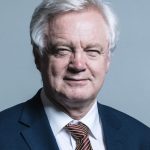

  • David Davis – 2020 Speech on Education and the Queen’s Speech

    David Davis – 2020 Speech on Education and the Queen’s Speech

    Below is the text of the speech made by David Davis, the Conservative MP for Haltemprice and Howden, in the House of Commons on 14 January 2020.

    The first thing to say is that I will not focus solely on education today. As you know, Mr Deputy Speaker, I always focus on my favourite line in the Queen’s Speech, which is the last one:

    “Other measures will be laid before you.”

    It gives us the option of talking about whatever we like. I should also, en passant, like to say a personal thank you to the Secretary of State for his announcement of the extra funding for special needs. He may know that I have a special interest in this, a personal interest, and this funding will go to a very important sector.

    This Queen’s Speech was the longest ever Queen’s Speech I have known in terms of duration. At the beginning of the debate on the Queen’s Speech before Christmas, my hon. Friend the Member for North East Derbyshire (Lee Rowley) said that these had been “troubled times” for Parliament. But that is always the case when this country faces a point of inflection and a change of historic position. Our nation now faces a reset moment on a par with 1945, when the Attlee Government came ​in, and with 1979, when the Thatcher Government came in. Both of them had enormous national problems to solve, and we are in the same position. Thatcher’s revolution, controversial as it was, was above all a revolution of expectations, in which the United Kingdom once more realised it was able to stand on its own two feet. In truth, we are facing something similar today.

    However, in the next decade, Brexit will not be the biggest challenge to the UK Government and our nation. Fast globalisation of trade and massive technological change will create bigger challenges and bigger opportunities even than Brexit. In the past 30 years, that globalisation has raised half the world out of poverty, but that trend is not secure. We as a nation need to be ready to act, both politically to ensure that free trade remains central to the world’s economic operating systems, and commercially to seize the advantages in that for ourselves. Brexit is the catalyst in that process; it is not the outcome. Brexit by itself is not enough. To exploit the opportunities given to us by Brexit, we need to overhaul British society and the British economy. That is the challenge in front of us.

    High-quality public services, education, healthcare, social support and the rule of law are vital parts of a decent society, but the Government can provide them only if they have the resources to pay for them. That is our first challenge, and the fundamental weakness in all the Opposition arguments so far today. The reason that Labour lost hundreds of thousands of votes in the north of England is that nobody believed it was able to pay for its promises. The public were right, as always, and the Labour party was wrong.

    So what will dictate whether we are able to meet our own aims for our society? The key issue that determines the affluence of citizens, the delivery of public services and even the level of opportunity in society is one boring technical term: productivity. From shortly after the war in 1948, when they started measuring it, until 2008, productivity in this country—whether it was total productivity or labour productivity—grew by 2.25% a year. It bounced around a bit, but never by very much. It grew by 2.25%, year on year, every year in the 60 years from 1948 to 2008. Since 2008, it has been at 0.5%.

    Mike Amesbury (Weaver Vale) (Lab)

    On that point about productivity, people in my constituency and constituencies across the country cannot get trains or buses because the infrastructure has been decimated. That is because it has not been invested in for the past 10 years or so, and that has a real impact on productivity up and down the country. How are the Government going to address that?

    Mr Davis

    I will come directly to the hon. Gentleman’s question later in my speech. He is exactly right in one respect: that is a contributory factor for productivity. But he should not look just at the past 10 years if he wants to comment about our infrastructure. The most used phrase by George Osborne when he was Chancellor was to say, while pointing at Gordon Brown, that he never mended the roof when the sun was shining. That is exactly what happened through those Labour years: profligate spending—poor spending, inadequate spending —that nevertheless did not provide the services that we needed.​

    Now, what has been the effect of that change in productivity? What is the size of the impact? Had productivity continued at the level it had been for the previous 60 years, had we not had the financial collapse, which happened largely under the watch of the Labour Government and the earlier Clinton Administration in the US, then wages, income and the economy would have been about 22% bigger than they are today. The tax take would have been higher, the deficit would have been easier to pay off, austerity would have been more manageable and shorter. All those things stemmed not just from the crash, but from the damage to our ability to recover from the crash as productivity was allowed to collapse. This dramatic and apparently permanent reduction in productivity has had spectacular consequences across the whole of society and the entire economy, and that is what we have to solve.

    The productivity problem is a universal problem. No productivity means no progress. How do we deal with that? The answers include education, skills, training, research and investment, and of course, as the hon. Member for Weaver Vale (Mike Amesbury) rightly said, infrastructure. If we are to reset our economy and our society, we must be unflinching in our analysis and in the critique of our own past as well as those of the other parties.

    Mr Betts

    The right hon. Gentleman denigrates the efforts, policies and achievements of the previous Labour Government on productivity. Will he therefore explain why productivity went up by over 2% under that Labour Government on a consistent basis? Since 2010, however, productivity has hardly risen at all.

    Mr Davis

    Productivity had been at that level for 60 years. It is not difficult to keep things the same as they were before; the really hard thing is to smash productivity down from 2.3% to 0.5%, which is what the hon. Gentleman’s Government did.

    If we are to reset the economy, let us look at what we got wrong, as well as at what Labour got wrong. Take research. The past 30 years, under Governments of all persuasions, have seen the UK decline from one the most research-intensive economies to one of the least. In the past decade, China has overtaken us, and South Korea now spends three times as much as we do. The Queen’s Speech committed to establishing the UK as a world leader in science with greater investment—so far so good. In my view, we need to do even more than that in quantitative terms. In the short term, we need to double the amount of research spend not just by the Government, but by the private sector. In the longer run, we need to treble that joint expenditure, and I stress that it should be joint expenditure. We should also address the things that we have not been so good at. It is easy to put money into genetics, artificial intelligence, self-driving cars or IT—the things we are historically world leaders in—but we should also try to ensure that that money goes where it will make a big difference by improving the things that we have not been so good at.

    Historically, we have not been so good at what is called translational research. That means taking a good idea from the laboratory and making a great product, which leads to a great company, which leads to more and more jobs, more wealth creation, more tax and the rest of it. We would do well to build on some of the ​great institutions that we currently have. The University of Sheffield Advanced Manufacturing Research Centre, which is essentially an aviation-based operation, is doing fantastic, world-class, world-beating work. We should do similar things with the Warwick Manufacturing Group. There is a great deal of work to do to encourage those operations and build on them. Maybe we should even look to build a Massachusetts Institute of Technology of the north, because that is the sort of thing that we should be considering if we are to fix our economy.

    I have some sympathy with one area of Opposition Members’ comments, which is the university underpinning of the research and the response to the Augar report. I know Philip Augar very well, and I spoke to him about his review before the report. If anything, it pulled its punches. The truth is that the university tuition fees and loans scheme invented and implemented by the Blair Government and carried on by us has failed. It has done a bad job. It has delivered poor-quality education, high levels of expectations and low levels of outcome. It has landed young people—some are now middle-aged—with liabilities for almost their entire lives, putting a cap on their aspirations. It has not delivered what it was intended to deliver, which was people paying for their component, not the public advantage component. It does not work that way. It has encouraged all sorts of perverse consequences and behaviours in our universities, so we must deal with it. I would argue to the Secretary of State for Education—I know that this is wider and much bigger than just the Department for Education—that he and his colleagues should be radical and brave.

    Mr Sheerman

    When we do things on a cross-party basis, we sometimes get it right. When we had that agreement on higher education funding—the Dearing report—we said that there should be a balance between who pays: the student who benefits, the employer that benefits, and the country as a whole that benefits. What went wrong was not that there was a student contribution, but it was raised too far and too fast.

    Mr Davis

    That was not the only thing that went wrong. I recommend that the hon. Gentleman reads the Augar report carefully, because a lot of things went wrong, including the lack of restrictions on what universities could do. However, if he wants to approach the Secretary of State or have his Front-Bench team approach the Secretary of State to offer a joint approach, I am sure that the Secretary State will be very polite and talk it over with them over a cup of tea.

    Carol Monaghan

    Will the right hon. Gentleman give way?

    Mr Davis

    Yes, but this must be the last time.

    Carol Monaghan

    Does the right hon. Gentleman share my concerns about the suggestion in the Augar review that the time limit on paying back should be removed? That could saddle people with university debt for life.

    Mr Davis

    My point here is that we are not about tinkering with one or two rules. We should be rethinking the whole system. The hon. Lady will forgive me if I do not go down the route that she has laid for me, because we should think about rethinking the whole system.​

    The Secretary of State was eloquent about the achievements at school level, and he was right. While I am on my feet, I pay tribute to the Minister for School Standards, my right hon. Friend the Member for Bognor Regis and Littlehampton (Nick Gibb), who did a fabulous job of developing phonics-based education—[Interruption.] Oh, he is there on the Front Bench. He did a fabulous job on phonics—one of the great successes of all the Education Departments of the past 30 years. Of course, I take it as a given that we have done better than Labour would have and, of course, we have mostly kept up with our international competitors. However, to use a phrase that came up more times than any other in my school reports, my reaction is, “Can do better.” That was the theme or motto of my school reports, and I think we can do better here.

    In the friendliest possible way, we are not doing what some of our competitors, including the Chinese, the Uruguayans, believe it or not, and the Belgians, are doing, which is seizing an opportunity. Technology is such that we ought to be re-engineering the classroom. We ought to be able to re-engineer it so that the best can do better and the least good can be pulled up to the best possible outcome. That would be great for them, great for social mobility, and great for the economy as a whole. We ought to think hard about looking closely at all the things China has done. Something like 1,300 schools are now using artificial intelligence, which is driving its teaching systems and ensuring that every child is diagnosed to find what they are good at and what they are not good at. There is much to be done there.

    Productivity, however, will have to be fixed with a universal approach, and that includes, of course, investment. On an international scale, we do investment well. With all the furore and negativity about Brexit, people forget that we are still the third-highest recipient of foreign direct investment in the world—way above any European country—and we have been for years and we will continue to be. We must not damage that. When we come to the question of domestic investment, which has been up and down in recent years, we must ask ourselves what should guide our policies. We have the most productive industries in Europe by far, and the least productive. We have nine of the 25 fastest growing companies in Europe, but we have a long tail of poor performance.

    One notable aspect of the productivity conundrum that stands out is that it is not uniform.

    The key point in this debate is that it is the same regionally, because the golden triangle of London, Oxford and Cambridge has by far the highest productivity in Europe—the average wage in that area is 90% higher than the European average—yet some regions of our economy are down with the lowest performers in the European Union, such as southern Italy and the old East Germany. I hope the Scots Nats forgive me for including Scotland as a region in that context.

    We have to do something about that. Where productivity is low, jobs are scarce and, of course, wages are low, which is a fundamental problem that this Parliament needs to attack. It argues for targeted policies like free ports and, to come directly to the point made by the hon. Member for Weaver Vale (Mike Amesbury), for a great focus on—forgive me for the phrase—unglamorous, smaller infrastructure projects designed to sort out problems that are on the deck now. We must de-bottleneck the whole economy, because that is much more likely to be ​effective than grand vanity projects, and everyone knows what I am talking about. We can do that because we will have very low interest rates for the foreseeable future. If that is not enough, perhaps we should cancel High Speed 2 to pay for it.

    A strategy of modestly sized infrastructure projects—road, rail, air and broadband—will help but, again, it will not be enough by itself. We need to make it more attractive to stay in the regions. We need to turn more of our regional towns and cities into magnet towns and cities, places that attract talent, money and enterprise, and it can be done. If we look around the world, there are dozens of examples. From Bilbao to Pittsburgh, and from Denver to Tel Aviv, cities have transformed their futures. We must ensure that our towns and cities can do the same.

    Finally, house building has simply not kept up with the huge increase in population over the past 20 years. Year after year, the combination of a slow planning process, nimbyism and speculative land hoarding has limited the availability of housing. This has simultaneously led to higher house prices, smaller homes—our homes are now half the size they were in the 1920s, and they are the smallest in Europe—massively lower rates of home ownership, and severe rent poverty.

    It is hard to solve that in London and the crowded south-east, but it can be solved in the provinces, making them more attractive in the process. The Government are actively thinking about garden villages and garden towns, and we should step up that programme. If we allowed every planning authority in the country to nominate one garden village or garden town of between 1,500 and 5,000 houses, which is big enough to be viable for a school and shops, and so on, we would not solve, but we would seriously mitigate, our housing problem. We would make it attractive for people to live in places other than the south-east. Again, that would majorly improve productivity by attracting talent back out to the provinces.

    The problem of productivity is a tough one to tackle but tackle it we must. Research, investment, education, infrastructure, magnet cities and garden villages all have a contribution to make in simultaneously improving the lives of our citizens and helping us to solve this fundamental problem. If we do not solve it, we will not be able to afford to solve any of the others.

    If we do all of that, we will have a very good chance of making the Prime Minister’s promise of a golden future a reality for all our citizens.

  • Carol Monaghan – 2020 Speech on Education

    Below is the text of the speech made by Carol Monaghan, the SNP MP for Glasgow North West, in the House of Commons on 14 January 2020.

    I welcome you to your new position, Mr Deputy Speaker.

    I am slightly concerned by the closing remarks of the right hon. Member for Epsom and Ewell (Chris Grayling) about not paying the blindest bit of attention to those on the Opposition Benches. The purpose of the Opposition is to scrutinise Government, and a Government that has a free rein to do what it wishes is a very dangerous tool, so we should all be aware that while we might not agree politically on different issues, we should be listening and paying attention to points raised, regardless of where they come from.

    On education, the Queen’s Speech had a lot of small promises that are not going to deliver the punch required. In our considerations, we have to ask whether education is about personal gain or societal good. If it is about personal gain, why should we be that bothered? If it is about societal good, education must be from early years to employment and must be provided by Government, regardless of the path a young person takes. Every year round about the time of national exam results there is a great campaign called NoWrongPath. There is no wrong path—different young people will take different routes to achieve what they want—but we must be there to support them, financially and in other ways, because this is not just about getting young people to university; it is about positive destinations and employment. Some 93% of young people in Scotland achieve positive destinations, which is the highest in the UK, and that means employment, training and tertiary education. I talk about tertiary education, rather than higher and further education, because in Scotland the lines are blurred, and should be blurred regardless of where someone lives in the UK. It should not be about HE being the gold standard and FE being something different. We need to work in collaboration, and all types of tertiary institutions have their place.

    The investment in FE in the Queen’s Speech will not have clout if FE is considered second best to HE. The £1.8 billion to upgrade the infrastructure does not come close to what is required for FE in England. Frankly, it is too little too late. A lot of that money will be used up dealing with a backlog of maintenance problems and ​ongoing issues. Given the huge number of locations delivering FE in England, what has been proposed is merely a small sticking plaster to cover a huge, gaping wound.

    City of Glasgow College, in the constituency of my hon. Friend the Member for Glasgow Central (Alison Thewliss), is one of the institutions that have benefited from the £810 million invested by the Scottish Government since 2007. That is approximately 45% of the amount that the UK Government are proposing to invest in FE in England, which is far closer to the figure that is required. Scaled up, it would be £8 billion, not £1.8 billion.

    City of Glasgow College benefited hugely from the Scottish Government’s investment, receiving £228 million to create a “supercampus” for 40,000 youngsters in Glasgow. The college sits between two higher education institutions, Strathclyde and Glasgow Caledonian Universities. For a long time, youngsters attending colleges felt second best because their institutions looked second best, but City of Glasgow College is the absolute jewel of Cathedral street in the centre of Glasgow, and no young people studying at that college consider themselves to be second best.

    Let me say something about schools. School funding is an ongoing issue. In England, according to the Institute for Fiscal Studies, school spending per pupil has fallen by 8% in real terms since 2010. That entirely contradicts the Prime Minister, who has said that school spending is at record levels.

    Sir Desmond Swayne

    The two are not mutually exclusive. School funding is at record levels, although pupil numbers grew faster during that period, putting pressure on and reducing the amount per pupil. Will the hon. Lady accept that, even given that reduction, we still spend more per pupil than any other rich nation in the world—more than Japan or Germany—with the exception of the USA?

    Carol Monaghan

    But you spend significantly less per pupil than we spend in Scotland. Even with the Government’s proposals—even with the increase in per-pupil funding—you are still not coming close to what we are spending per pupil.

    Sir Desmond Swayne

    And the results in Scotland are not as good as those in England. Not every problem is solved by throwing more money at it. Just look at the studies by the Programme for International Student Assessment which were released only recently.

    Carol Monaghan

    I am glad that the right hon. Gentleman has mentioned the PISA studies, because that gives me an opportunity to talk about them. Let us talk about PISA. What exactly is it? It is an extremely crude metric that looks at very particular things. What it does not look at are communication skills. It does not look at problem-solving skills, and it does not look at employability skills. Those are the very skills that employers have been asking for, which is why we transformed our curriculum in Scotland. Countries that do well in PISA, such as China and South Korea, also have extremely high levels of student suicide. I do not want that for my young people in Scotland, and not one of us should. China also selects the pupils whom it puts forward for PISA. So there are many things that are wrong with it.​

    These are the questions on which we should be judging our young people. Are they in employment? Yes. Are they having a positive experience? Yes. Are they developing the skills that employers and businesses are asking for? Absolutely.

    Jonathan Gullis

    The hon. Lady has mentioned PISA. Does she not share the concern of Conservative and, I hope, Opposition Members about the decline among students in Scotland in maths and science—which provide the vital skills to which she referred—in comparison with their compatriots in England?

    Carol Monaghan

    When I look at the tiny differences between students in England and students in Scotland—and there are tiny differences—and at the holistic education that has been developed in Scotland, no, I do not share that concern. Scottish students are developing a broad range of skills. Unlike youngsters in England whose curriculum is being squeezed and narrowed, they still have a broad range from which to choose. No: I absolutely defend our Scottish education system. In the last 10 years, our attainment gap has narrowed, while we are still battling with the effects of austerity. The hon. Gentleman is a teacher. I am a teacher too. I have been there, trying to teach children who have had no breakfast. How can we deal with an attainment gap when the kids who we are teaching are so hungry that they cannot concentrate? That is what we should be looking at.

    I mentioned teachers’ pay earlier. It is a bold statement that, by September 2022, the Government will increase teachers’ starting salary to £30,000. Great; fantastic; but Scotland is already there. From this year, after their initial probation year, Scottish teachers will be earning £32,994. That is happening now, but unfortunately this Government are miles behind. If we are talking about teaching as a profession—if we are talking about valuing the very people who make the difference to our young people—we need to pay them properly.

    The Secretary of State did not answer my question about the guaranteeing of teaching salaries in academies. For too long, academies have been able to set their own pay scales, and to work outside the scales that are negotiated with teachers’ unions and the profession. Academies pay what they want, and that means, once again, that they are able to pay salaries that are below the nationally agreed levels. Yes, in some cases they may pay above, but they often pay below, and that is certainly not the way to encourage others to join the profession. In Scotland we have more teachers per pupil, and that too must be looked at: while the Government are sorting out the salary, they might deal with that as well.

    Let me now say something about tertiary education. We in Scotland are often attacked about the number of youngsters achieving entry to university. As I have said, I do not make the distinction, but for the benefit of those who do, I will say some things about universities. The largest-ever number of Scottish students are at universities, and record numbers of our poorest students are going to them: 15.6% of full-time first-degree entrants are from the most deprived areas of Scotland. That is tackling inequality in a real way.

    In January last year, the Commissioner for Fair Access, Sir Peter Scott, said that “significant, and welcome progress” had been made on access, and that

    “Scotland is now the pace-setter among UK nations in fair access to higher education”.​

    He went on to say that Scotland’s improving widening access figures vindicated our free tuition policy. He said:

    “The latest figures vindicate Scotland’s policy of free higher education, which of course has other aims apart from making universities more socially inclusive—not least the commitment that higher education should be seen as a public good from which society as a whole benefits and not just as a private investment producing higher earnings for individuals.”

    Sir Desmond Swayne

    I thank the hon. Lady for giving way again. She is most generous. How can it be a vindication for a Scottish university such as St Andrews—a Scottish university—to limit its intake of Scottish students to 20% of the university population?

    Carol Monaghan

    Despite that, more Scottish students are achieving a university education than ever before. I am happy with that. There has again been a nod to the Augar review, which was mentioned by the shadow Secretary of State. “Considering thoughtfully the recommendations made in the Augar review”: what does that mean? What does it mean for the higher education institutions that are thinking about their funding for August and September this year? Will it be £7,500, or will it be £9,250? What will the fees be?

    Of course we would welcome any reduction in fees for students in England. That would be of benefit, but it will not be of benefit to have student loans with no time limit. At the moment, we write them off after a period of time, but to allow those student loans ad infinitum, as is being suggested, is extremely worrying. We would be burdening young people not with 30 years of debt but with a lifetime of debt.

    Scotland’s universities are internationally successful but we know that Brexit threatens that, and we have not had the assurances we need at this stage to put our minds at ease.

    Ben Lake (Ceredigion) (PC)

    Does the hon. Lady agree with my concern that institutions such as Aberystwyth University in Wales still have no clarity as to whether they will receive the same level of investment for research and innovation as they did under the European structural funds?

    Carol Monaghan

    Yes, absolutely. We have had these generous promises of money to match European funds. I would like to see us continuing in Horizon 2020 or the next version of it. That would be the best way. I am concerned about the funding, because it is important for any research group or higher education institution. However, this is not just about the funding; it is about the collaboration. When we start removing European funding, we also remove the infrastructure around rich collaborations that have been going on for many decades. Also, EU staff account for about 11% of our staff in Scotland, but they are still not sure what their position is.

    A recent report from the Royal Society has shown that the UK’s share of EU funding has fallen by €500 million since 2015. There has also been a drop of 40% in UK applications to Horizon 2020. We are still in it just now, but we have had that drop because people do not have any certainty. The UK is now seen as a less attractive place to come and do research, with 35% fewer scientists coming to the UK through key schemes. That is ​of concern, as is Erasmus and what Brexit will mean for that programme. We know about the benefits of young people coming here on Erasmus and of our young people managing to travel throughout Europe on Erasmus. They are young people for whom this opportunity would not historically have been available, and it will potentially not be available again. It would be useful if the Minister could confirm whether it is the Government’s intention for us to continue to associate with Erasmus and whether we are going to pay into it.

    David Linden (Glasgow East) (SNP)

    When the Secretary of State opened the debate, he spoke about the importance of Erasmus, but does my hon. Friend find the Government’s warm words about Erasmus bizarre, given that they voted against the amendment to the Brexit legislation last week that would have committed them to working with Erasmus?

    Carol Monaghan

    Yes, and we are talking about very little money. It really is a small amount of money that would allow our continued participation and that valuable and rich experience for young people to continue, so this makes absolutely no sense to us.

    I have yet to see any evidence, in the few years that I have been a Member of this Parliament, of this Government really considering education to be a societal good. We saw the abandonment of the nursing bursary. Obviously, we then had a drop in applications. The Government then partially went back on that, but nurses will still have to pay them £9,000-odd a year, regardless of the nursing bursary, so I am not seeing that.

    The Secretary of State also talked of collaboration and the sharing of best practice between Scotland and England. That is brilliant. I am really pleased to hear that, and I hope that he is going to match our per-pupil funding, our teacher-pupil ratio, our teachers’ pay, including for teachers in academies, and our commitment to further and higher education. I also hope that, rather than giving young people debt through fees of £9,000-odd or £7,000 a year, this Government will look at abandoning tuition fees altogether. Let us look to best practice: look to Scotland.

  • Angela Rayner – 2020 Speech on Education

    Angela Rayner – 2020 Speech on Education

    Below is the text of the speech made by Angela Rayner, the Shadow Secretary of State for Education, in the House of Commons on 14 January 2020.

    Let me welcome you to the Chair, Mr Deputy Speaker. I also welcome the new Members to the Chamber for today’s debate. We look forward to hearing some fantastic maiden speeches, so I will keep my speech relatively brief. That will be easy because, quite frankly, there is so little actual substance in this Queen’s Speech for us to respond to.

    Today, the Secretary of State made his first speech since November. Education was the issue that the Conservatives did not want to talk about in the election. When they did, they had a lot more to say about our policies than their own. I am glad they paid particular attention to an area that gets little attention in these debates: the care of the most vulnerable children. Our manifesto committed to a wholesale review of the care system and a replacement for the troubled families programme. A week later, their manifesto promised a review of the care system and an improvement to the troubled families programme—to think that Ministers once promised to crack down on plagiarism!

    I hope that that was not simply a cheap imitation. Will the Secretary of State confirm that their review will include kinship care, and consider the need for national standards for fostering and proper regulation of semi-supported housing? When will the review begin? What will its terms be? Who will undertake it, and precisely what does he want it to achieve? Can he tell us what improving the troubled families programme means, and whether any successor programme will not just fall victim to yet more local government cuts?

    Let me offer this in a genuinely constructive spirit. I proposed a simple policy that could transform the lives of children who have experienced care. Many do not have a permanent home address and going to university with only term-time accommodation available is a challenge. Barely more than a tenth of children leaving care go to university and 40% drop out—the highest among all groups of students. Yet those who stay on are as likely to attain the best grades as any other. Providing free all-year-round accommodation for those students would transform their lives. The cost is tiny and would be repaid many times over, not just economically but with something more than money: human potential realised.

    The Conservatives made another election promise to the most vulnerable children. Their manifesto pledged to:

    “grant asylum and support to refugees fleeing persecution”,​

    yet last week, just two weeks into the parliamentary Session, they rejected an amendment protecting the right of unaccompanied child refugees to be reunited with their family after Brexit. Surely, it is our most basic moral duty to ensure that children can be reunited with their families? If we judge the Government on how they treat the powerless and penniless, then the judgment on this must be damning. It is a betrayal not just of those children, but of the best traditions of this country. Frankly, I hope that Members—even Conservative Members—will urge the other place to overturn it.

    The Prime Minister described the Queen’s Speech as a blueprint for the future of Britain, so it is telling that education is missing from the blueprint. I have now responded to three Queen’s Speeches by three Education Secretaries in three years. Between them, there has not been one single piece of primary legislation. The only education bills produced by the Government are the ones being handed to parents by headteachers desperate for donations for their school gates to stay open. Despite the Education Secretary’s boast, the Government will not even reverse the school cuts they have imposed since 2010. As the Institute for Fiscal Studies found, even in the financial year 2022-23, when the new money that was promised is due finally to appear, schools will still be hundreds of millions of pounds worse off than they were in 2010. Capital funding for education, which has already been cut by 40% since they came to power over nine years ago, will continue to fall even further. The money that they are slowly putting in has been deliberately taken away from the schools and the pupils who need it most. They call it “levelling up”, Mr Deputy Speaker. What I call it is an absolute joke.

    The Government are not targeting help at the most disadvantaged; they are keeping them in their place. As the Education Policy Institute found, under these plans a child on free school meals will get less than half the funding of a child who does not. What of the previous Conservative Government’s totemic policy, the pupil premium? The past two Tory manifestos promised to protect it. The past two Tory Governments went on to cut it. This Prime Minister has solved that problem: he has given up even making the promise in the first place. The Conservatives’ manifesto contained not a word or a penny for it, so the Minister has the chance to make his intentions plain today. Will they keep the pupil premium, and will they finally increase it in real terms, rather than continue to see it fall year on year?

    Another set of pupils deserve more support but are not getting it. By the financial year 2020-21, local councils face a spending shortfall of over £1 billion for children with special educational needs and disabilities. Despite what the Education Secretary said, his Department is not offering to make up that shortfall—and, even then, there is only a one-year deal. Councils and schools have no idea how much more funding, if any, they will get to support pupils with high needs in the years ahead. They cannot plan their provision and ensure that every child gets the support that they need. When will the review of high-needs funding be completed, and will the Government guarantee that local government will not simply be handed yet more responsibilities without resources?

    What of the parents struggling with the basic costs of school thanks to the stagnating wages, axed tax credits and years of cuts that the Government have overseen? ​How many times have we heard Ministers pledge action on the cost of school uniforms and equipment? They first did so in November 2015. We are four years and four Education Secretaries on. Just before Dissolution, the Minister for School Standards told the House that the Government were waiting for a “suitable legislative opportunity”. Perhaps the Education Secretary can answer this: if the Queen’s Speech is not a suitable opportunity for legislation, what on earth is? In the previous Session, the then hon. Member for Peterborough tabled a private Member’s Bill that would have addressed the issue—frankly, she managed more legislation in six months as an Opposition Back Bencher than the Government managed in four years in office. Labour’s Welsh Assembly Government have done the same, using existing powers to regulate. I have yet to hear why this Government cannot also do the same, so perhaps the Minister will tell us whether, if they will not act, they will at least support a private Member’s Bill from an Opposition Member who will.

    While we are on the subject of Bills that are missing in action, perhaps the Government can tell us what has happened to their legislation to regulate home education. The right approach would have cross-party support, but we cannot scrutinise what does not exist, so where is it? The same goes for their school-level funding formula, which they said needs primary legislation. There was also no detail on the expansion of childcare, maintained nurseries, or Sure Start funding. The Secretary of State must be aware that the funding for early years that was announced in the spending review does not even begin to meet the cost of inflation.

    The story is the same in further and higher education. The Augar review went from being a flagship to a ghost ship. The last Education Secretary, the right hon. Member for East Hampshire (Damian Hinds), promised when it was published that the Government

    “will come forward with the conclusion of the review at the end of the year, at the spending review.” —[Official Report, 4 June 2019; Vol. 661, c. 58.]

    Both have gone by and we have had just vague words. Further education is meant to be the Education Secretary’s passion, but since 2010 the Government have cut funding for this vital area each and every year. In real terms, funding has been cut by over £3 billion. In adult education, with over £1 billion cut from annual funding, the national skills fund will embed hundreds of millions of pounds in annual cuts.

    Lloyd Russell-Moyle

    My hon. Friend is talking about areas that the Government failed to address and Bills that they should perhaps support. In the last Parliament, I introduced a Bill on youth work, which the Government have cut by £1 billion annually. They have proposed a fund of £500 million for estate rebuilding but there is none for youth workers, the people who interact with young people. Is that not another area in which the Government have let down education and young people?

    Angela Rayner

    I commend my hon. Friend for the work he has done since coming into the House to ensure that we have a great universal youth service. What the Government have done to our youth services is an absolute scandal, not only plunging our youth into lives where they do not reach their full potential, but failing to address many of our young people’s concerns.​

    The funding that the Secretary of State boasted about does not even come close to reversing the extent of the cuts that his Government have delivered. When it comes to Ofsted, instead of weaponising the inspectorate, they should adopt another of our promises: to produce an independent Her Majesty’s inspectorate that has the faith of teachers, school leaders and parents and that is resourced effectively so that it can do the job.

    The Secretary of State said that education is a mirror on society, and sadly that is true. Our education system today reflects the society that 10 years of Tory Government have left. There is a simple lesson that we have learned: education and austerity simply do not mix.

  • Gavin Williamson – 2020 Speech on Education

    Gavin Williamson – 2020 Speech on Education

    Below is the text of the speech made by Gavin Williamson, the Secretary of State for Education, in the House of Commons on 14 January 2020.

    May I say how delighted I am to see so many new faces among us? They could not have arrived at a more exciting time. This Government have a historic mandate to push through an ambitious and challenging agenda, to make changes that will transform the lives and prospects of a generation. We are poised to shape a new Britain. We are primed for a new era. This Government are ready to ensure that Britain can seize the opportunities that lie ahead of us after we leave the European Union—a Britain where the young people of today are prepared for the world of tomorrow.

    Education is a mirror to the kind of society that we want to see—an open, flexible tolerant and supportive society where everyone, wherever they are from and whatever their talents, has the chance to achieve their dreams and ambitions. Since becoming Education Secretary, I have been committed to making those ambitions a reality. As Her Majesty the Queen set out in her Gracious Speech on 19 December, we are about to embark on a full programme to ensure that everyone feels the benefit of these changes.

    Sir Desmond Swayne (New Forest West) (Con)

    The Secretary of State has sent me a most welcome spreadsheet telling me what schools in my constituency can expect from the settlement he has reached. I am glad to say that all my secondary schools are set to receive more than £5,000 per pupil, but how will he ensure that they get it and that local authorities will not increase their slice or use their own formula to redistribute it?

    Gavin Williamson

    I thank my right hon. Friend for making such an important intervention, and for his compliment on the spreadsheet, which is a compliment I have not received before. He makes an important point about making sure that money that has been allocated to schools is going to be properly passported through. It will be the Government’s intention to move a statutory instrument to ensure that the minimum funding of £5,000 for every secondary school and £3,750 for every primary school is passported through to schools in the next financial year. For primary schools, that will obviously be increased to £4,000.

    Alex Cunningham (Stockton North) (Lab)

    Will the Secretary of State give way?

    Gavin Williamson

    If I may, I will take the opportunity to make some more progress. The hon. Gentleman always has lots of interventions that can be placed at any point in a speech, as they usually have very little relevance to the speech taking place.

    Money spent on schools is an investment in our futures. I am pleased to say that we are going to deliver the biggest funding injection into schools in a decade. Over the next three years, we are going to put an additional £14.4 billion into schools in England, with areas in most need seeing the greatest gains. My Department is acutely aware of the huge responsibility we have for all our children, but none more so than the most vulnerable, especially those with special educational needs. That is why we announced £780 million additional high needs funding for the following financial year, an increase of 12% compared with this year. That will be the largest year-on-year increase since the high needs funding block was created in 2013, and I am sure it is something everyone will welcome.

    Alex Cunningham rose—

    Gavin Williamson

    I am sure the hon. Gentleman is about to welcome it.

    Alex Cunningham

    I always welcome additional finance for special needs, but schools in Stockton also know what they are going to get. They are going to get a £6.2 million reduction or shortfall by 2020, a loss of £210 a pupil. How is that fair?

    Gavin Williamson

    The hon. Gentleman has never been known for his skill at maths. If he were to look at the Confederation of School Trusts figures, an independent organisation that has done the calculations of what every school will receive, he will see that every school is getting a per pupil increase in funding. It is a shame that he did not take the opportunity to welcome that.

    One of our most pressing priorities is to make sure that all children in care or in need of adoption are given a loving and stable home. We are providing councils with an additional £1 billion for adult and children social care in every year of this Parliament. That is alongside the £84 million to be spent over five years to keep more children at home safely. We are also going to review the care system to make sure that all care placements and settings provide children and young adults with the support that they need.

    John Redwood (Wokingham) (Con)

    West Berkshire and Wokingham are very appreciative that at last we are going to get a bit more money, which we really need for our schools, and I am grateful for the work the Secretary of State has put in. Does he agree that, to get many more people to fulfil their potential, schools in their careers education should identify self-employment, as well as jobs, as a very good way of fulfilling people’s expectations in many cases? That often gets ignored.

    Gavin Williamson

    My right hon. Friend makes an important point about the need to encourage entrepreneurialism within our education system. We see this in many schools, and of course we also see it in many further education colleges and universities. I was very fortunate to visit King’s College London recently to see the brilliant student business incubator model it has there, which is making such an impact. How do we ​expand that to more universities, while making sure that schools are teaching the value of entrepreneurialism in what they are doing?

    Kevin Hollinrake (Thirsk and Malton) (Con)

    Is the Secretary of State aware of the excellent families of schools initiative, which works with primary schoolchildren —again, exactly the point made by my right hon. Friend the Member for Wokingham (John Redwood)—in extolling the benefits of self-employment to very young children to instil such values at that age?

    Gavin Williamson

    My hon. Friend highlights an important scheme that is going out there and selling the virtues of entrepreneurialism at the start of a child’s educational learning. That is certainly something we very much want to encourage across the education spectrum.

    We all know how important a loving home is to a child’s development and we want to give parents all the support we can. We have announced a new £1 billion investment to create more high-quality, affordable childcare provision for families with school-age children, including a £250 million capital fund to help schools to overcome barriers to offering on-site childcare provision. The aim of this Government is always to be there supporting parents and families as they bring up their children.

    Thanks to our reforms, standards in schools have been rising, but that does not mean that this is the moment to ease up or stop that progress. Schools should be safe and disciplined spaces, where pupils can learn in a happy and secure way. That is why we are investing £10 million to establish behaviour hubs to help teachers who are having to deal with disruption in the classroom and within a school. We are also expanding alternative provision schools for troubled or disruptive youngsters. We have launched a £4 million alternative provision innovation fund. Projects being run as part of that will guide our plans for this important sector, which needs reform and change.

    Layla Moran (Oxford West and Abingdon) (LD)

    I am a former teacher, and believe me, behaviour was probably the most important thing in ensuring that I had the space to be able to deliver such content. Does the Secretary of State not appreciate that a lot of these children are behaving in that way because they do not have support, and much of the way in which they used to get that support was through things such as youth services? Has he planned any extra money for youth services and support for young people who are often facing adverse issues at home and desperately need help themselves?

    Gavin Williamson

    I thought the hon. Lady was going to talk about our youth investment fund, and the half-a-billion pound investment that has been pledged by the Chancellor of the Exchequer to make a real difference. [Interruption.] The Liberal Democrat Member sneers at the mention of half-a-billion pounds as if this is a small amount of money, but I think most Conservative Members recognise that half-a-billion pounds is an awful lot of money.

    Suella Braverman (Fareham) (Con)

    Speaking about behaviour and discipline, the Secretary of State and indeed his Minister for School Standards will be very much aware of Michaela Community School, which they have both visited and have supported over many ​years. It is an outstanding free school, which I co-founded and chaired. Does he agree with me that such schools—free schools where innovation in education has been pioneered and disciplinary methods have succeeded—are working to revolutionise education in this country, and that had the Labour party got into power, they would be no more?

    Gavin Williamson

    The Labour party’s ideological hatred of free schools is, frankly, quite shocking, as we see those like the Michaela Community School making such an enormous difference to the local community. I would like to pay tribute to my hon. Friend for the work she did along with Katharine Birbalsingh, who has worked so hard to create this shining example of what can be done—changing the lives of so many children from some of the most disadvantaged communities in London. That is what we want to be seeing more of, not less, and that is what this Government are going to deliver.

    Lloyd Russell-Moyle (Brighton, Kemptown) (Lab/Co-op)

    Will the Secretary of State give way?

    Gavin Williamson

    I am going to make some more progress, as I have been very generous in allowing interventions.

    We have made great strides with the more rigorous academic programmes of study, but we know that the arts are vital in helping young people learn creative skills and widen their horizons. We also know that the creative industries play an important role in the United Kingdom economy. For those reasons, we will offer an arts premium to secondary schools to fund activities from 2021. We will also continue to fund music education hubs next year, with an extra £80 million.

    I would now like to come on to standards. Thanks to Ofsted inspections, we have seen standards in our schools rise continuously since 2010. Plans are in place to take forward our pledge to lift the inspection exemption that currently applies to outstanding schools. That will mean parents have up-to-date information and reassurance about the education being provided by their child’s school.

    Jonathan Gullis (Stoke-on-Trent North) (Con)

    I was a schoolteacher up to the last general election and have worked as a head of year in the pastoral system and have worked both in London and inner-city Birmingham. Does my right hon. Friend share my opinion that it is terrifying to think that had Labour got into power it would have scrapped Ofsted, leaving our children in a much more dangerous position going forward?

    Gavin Williamson

    My hon. Friend and fellow Staffordshire Member makes a powerful point, because what the Labour party was doing was throwing away the ability to ensure that we enforce ever-increasing standards and better attainment for our children. What is even more disturbing were the proposals to scrap Ofsted. Labour was saying that for those children who are most vulnerable—those who are in social care—there would be no independent inspectorate to make sure that their interests were being protected, and it was letting local authorities mark their own homework. That is not what any of us wish to see. I hope that the Labour leadership race will give Labour the opportunity to ​rethink some of its more imaginative policies and come back with something that works for both pupils and parents.

    Since 2010 the Government have been transforming the education system to place more autonomy and freedom in the hands of teachers, giving parents more choice. The free schools programme has been a key part of this and is a stand-out success. Our manifesto pledges to build more free schools, to continue to promote innovation and to continue to drive higher standards in schools, especially in some of the communities that are most deprived and that need to see something better in the education provided.

    Jack Brereton (Stoke-on-Trent South) (Con)

    Does my right hon Friend agree that Stoke-on-Trent is exactly the sort of place where we should be building a new free school?

    Gavin Williamson

    My hon. Friend makes a very powerful case, and I look forward to working with him and other Conservative Members who represent the great city of Stoke-on-Trent to look at how we can ensure that we have the right type of education provision there and that we continue to raise educational standards, which, sadly, under Labour representation on the council and often at parliamentary level, were not as high as our aspirations for that great city.

    Mr Barry Sheerman (Huddersfield) (Lab/Co-op)

    Does the Secretary of State agree that, although it is not always the best rule, good guidance is evidence-based policy, and is not the evidence still that early-years intervention and pre-school stimulation for children from poorer backgrounds is the best value investment our country can make?

    Gavin Williamson

    The hon. Gentleman makes a good point about the importance of evidence-based investment in education. I know that he has had an interest in education over many years, so I am sure he will be keen to look at some of the opportunity areas we have been investing in, one of which is in Bradford, which is very close to his own constituency, and there is also one on the north Yorkshire coast. They are delivering real results in terms of children’s attainment, especially in the early-years environment. I would be more than happy to share information with the hon. Gentleman on the work being done in those opportunity areas.

    Let me go back to the subject of free schools. A disproportionate number of the free schools we have created have been built in London and the south-east. I want to see this revolution in education delivery rolled out, spread much more widely through the midlands, the north and the south-west of England, driving up standards and attainment in all our schools and all our communities.

    It is obvious that to deliver these world-class standards we need more of the very best teachers to join those we already have. That is why we have pledged to raise starting salaries to £30,000 by 2022, which will put teaching on a par with other top graduate professions. We are also offering early career payments worth up to £9,000 to new physics, mathematics, languages and ​chemistry teachers, in addition to generous bursaries of up to £26,000. Simply, we always want to attract the very best into the profession, and that is what we are determined to do.

    Carol Monaghan (Glasgow North West) (SNP)

    The teacher salaries the Secretary of State is talking about will, of course, be welcomed by the profession; they do not match the salaries in Scotland yet, but he is moving in the right direction. Can he confirm that those teaching in free schools and academies will be paid the nationally agreed pay rates, because at the moment they are not?

    Gavin Williamson

    I thought the hon. Lady was going to raise some exciting prospects. One of the key areas where we can get so much benefit is schools working together right across the country, whether through multi-academy trusts or local education authorities, and I thought the hon. Lady was going to suggest that we have more collaboration between England and Scotland, which we would very much want. The hon. Lady has already heard of our commitment to raise the starting salaries for teachers and to negotiate in terms of teachers’ salaries, and to make sure we listen to what the pay review board comes forward with. But I would like English schools and Scottish schools and those in Wales and Northern Ireland to have much more collaboration—whether in the university sector, the FE sector or the school sector, we can all benefit from that. We have seen great attainments, as were celebrated in the PISA results, where we saw English schools making very good progress. It would be good to have the opportunity to work closely with our Scottish colleagues on how we can share best practice from both Scotland and England.

    Our future economic prosperity will depend on having a workforce that has the skills that businesses need now and into the future. We will invest an additional £3 billion over the course of this Parliament to support the creation of a national skills fund, which will build on existing reforms, including ongoing work to develop a national retraining scheme. This is on top of additional capital investment of £1.8 billion into the further education estate, investing in the skills and education required for our nation’s future.

    Talented international students and researchers are queuing up to study in the United Kingdom, and they enrich our universities culturally and economically, bringing fresh ideas and new perspectives. That is why the Government aim to host 600,000 international students by 2030. Our new student visa will help us attract the brightest and best and allow those students to stay on to apply for work here after they graduate.

    As we prepare to forge a new place on the international stage we want our young people to have the opportunity to study abroad through exchange programmes. The United Kingdom is open to participation in the next Erasmus+ programme, and this will be a question for future negotiations with the European Union. We do truly understand the value that such exchange programmes bring all students right across the United Kingdom, but to ensure that we are able to continue to offer that we will also develop our own alternative arrangements should they be needed.

    I have been focusing until now on the ways that we are going to enrich the educational experience for all our pupils and students, but in just the same way as our ​postcode should not be a lottery that decides the kind of schooling our children receive, it should not determine whether we feel safe when we close our front door. For that reason, we are bringing forward legislation to further the recommendations from Dame Judith Hackitt’s independent review on building safety, and we will give residents a stronger voice, ensuring that their concerns are never ignored.

    We also committed to taking forward the recommendations of the first phase of the Grenfell Tower inquiry report to ensure that the tragedy of Grenfell Tower never happens again. We are working to deliver a rental system that protects tenants and supports landlords to provide the homes the nation needs. We will abolish no-fault evictions, helping tenants to stay in their homes while ensuring landlords are given the protections they also need. We are determined to improve standards in rented accommodation and to professionalise the sector. There is no place in this country for squalid or unsafe rented properties. We will make sure that all tenants have a right of redress if theirs is not of an acceptable standard.

    Mr Clive Betts (Sheffield South East) (Lab)

    This may be a question more appropriately directed at the Secretary of State for Housing, Communities and Local Government, the right hon. Member for Newark (Robert Jenrick), who is sat next to the right hon. Gentleman on the Treasury Bench, but he mentions Grenfell and dealing with fire safety issues. The problem is that, at present, there is a difference according to where you live. I know the Government are doing a review, but if leaseholders have a form of cladding that is not of limited combustibility but is not ACM cladding, basically there is no help for them. Many are living in flats that are now unsaleable. The Government really have to address that issue. I look forward to a commitment that that will be done, if not from him then from his colleague next to him.

    Gavin Williamson

    As the hon. Gentleman said, that is currently being reviewed by an expert panel. I am sure that my right hon. Friend the Secretary of State for Housing, Communities and Local Government will go into more detail when he responds to the debate at close of business today.

    We, as a Conservative party, understand the importance of owning your own home. As a Government committed to a fairer society, it is crucial that we address the divide between those who can afford their own home and those who cannot. Our first-home scheme will provide local people with a discount on the costs of a new home, which will save them tens of thousands of pounds. Our shared ownership reforms will provide a further route to home ownership. We will deliver at least 1 million more homes over the next five years to help more people on to the housing ladder. We will also put an end to the abuse of leaseholds by banning new leasehold houses and restricting future ground rents to a peppercorn.

    No less important than people’s homes are the communities they live in. We are committed to keeping our town centres vibrant. We are changing the business rate system to give small retailers a bigger discount on their rates, as well as extending the discount to cinemas and music venues, and, importantly, introducing additional discounts to pubs. We will conduct a fundamental review of business rates and we will increase the frequency of business rates revaluations.​
    It is the Government’s intention to unleash the potential of every corner of England, Wales, Scotland and Northern Ireland by bridging the productivity gap, levelling up opportunity and prosperity across the nation, and starting a skills and infrastructure revolution. We will create more mayors across England to devolve power away from Westminster, and we will bring forward a framework for devolution and a White Paper.

    I do not want to delay any further in getting straight on with the work of this challenging and ambitious agenda; an agenda that is driven by fairness and that will make a difference to more people, enabling them to look forward to a future with optimism and confidence. In Her Majesty’s Gracious Speech, we see the beginnings of a better Britain for everyone. I commend the Gracious Speech to the House.

  • Emily Thornberry – 2020 Speech on the Joint Comprehensive Plan Of Action

    Emily Thornberry – 2020 Speech on the Joint Comprehensive Plan Of Action

    Below is the text of the speech made by Emily Thornberry, the Shadow Foreign Secretary, in the House of Commons on 14 January 2020.

    I thank the Foreign Secretary for advance sight of his statement. For all of us who regard the Iran nuclear deal as one of the crowning diplomatic achievements of this century and a path towards progress with Iran on other issues of concern, it is deeply distressing to see Iran join the United States in openly flouting the terms of the deal, as the Foreign Secretary has described.

    I firmly agree with the action that has been taken today alongside our European partners. I welcome every word of the joint statement issued at the weekend by Britain, France and Germany in relation to the JCPOA. I agree with their commitment to uphold the nuclear non-proliferation regime. I agree with their determination to ensure that Iran never develops a nuclear weapon. I agree with their conclusion that the JCPOA plays a key role in those objectives. I would have been stronger in my wording. Although I agree with their “regret” and “concern”, I would have said “revulsion” and “condemnation” over the Trump Administration’s attempted sabotage of the JCPOA and their re-imposition of sanctions on Iran.​

    I agree with the E3’s attempts to preserve the agreement despite the actions of Donald Trump and the reciprocal actions of the Iranian regime, to which the Foreign Secretary referred in his statement. I also agree that Iran must be obliged to return to full compliance with its side of the agreement. That was a sensible and balanced statement on the JCPOA, stressing the international unity around the importance of retaining and restoring it, and accepting that both sides have breached it in terms and that neither has any justification for doing so.

    That is what makes it all the more remarkable that this morning we heard from one of the signatories to that statement—our very own Prime Minister—telling “BBC Breakfast” the following:

    “the problem with the JCPOA is basically—this is the crucial thing, this is why there is tension—from the American perspective it’s a flawed agreement, it expires, plus it was negotiated by President Obama…from their point of view it has many many faults. Well, if we’re going to get rid of it let’s replace it—and let’s replace it with the Trump deal. That’s what we need to see…that would be a great way forward. President Trump is a great dealmaker by his own account, and by many others…Let’s work together to replace the JCPOA and get the Trump deal instead.”

    In the space of two or three days, the Prime Minister has gone from signing a joint statement with France and Germany calling for the retention and restoration of the JCPOA, to calling for it to be scrapped and replaced by some mythical Trump deal. The Foreign Secretary did not refer to any of that in his statement, and we could be forgiven for thinking that he and the Prime Minister are not exactly on the same page, but perhaps in his response he could answer some questions about the Prime Minister’s remarks.

    First, will the Foreign Secretary confirm that in his discussions with his American counterparts, they have said that one of the problems with the JCPOA is that, to quote the Prime Minister,

    “it was negotiated by President Obama”?

    We all suspect that that is Trump the toddler’s main issue with it, but can the Secretary of State confirm that the Prime Minister was correct?

    Secondly, can the Foreign Secretary tell us how this supposed alternative Trump deal, which the Prime Minister is so enthusiastic about, differs from the current JCPOA—or, like his mythical middle eastern peace plan and his mythical deal with the North Koreans on nuclear weapons, is it simply another Trump fantasy?

    Thirdly, can the Foreign Secretary tell us why on earth Iran would accept a new deal negotiated with Donald Trump, with new conditions attached, when he has shown his readiness to tear up the existing deal and move the goalposts in terms of what it should cover?

    Finally, based on what the Prime Minister said this morning, are we now to understand that—despite everything the Foreign Secretary said in his statement just now and everything contained in the joint statement at the weekend—it is now the official policy of the UK Government to replace the JCPOA and get a Trump deal instead, and that that would represent a “great way forward”? If that is not official Government policy, why did the Prime Minister say it, and why is he walking all over the Foreign Secretary’s patch?

  • Dominic Raab – 2020 Statement on the Joint Comprehensive Plan Of Action

    Dominic Raab – 2020 Statement on the Joint Comprehensive Plan Of Action

    Below is the text of the statement made by Dominic Raab, the Foreign Secretary, in the House of Commons on 14 January 2020.

    With permission, Mr Speaker, I would like to make a statement on the Iran nuclear agreement known as the joint comprehensive plan of action.

    I addressed the House yesterday on wider concerns in relation to Iran’s conduct in the region. The strategic aim for the UK and our international partners remains as it has always been: to de-escalate tensions; to hold Iran to account for its nefarious activities; and to keep the diplomatic door open for the regime to negotiate a peaceful way forward. Iran’s destabilising activity should serve as a reminder to us all of the danger to the region and to the world if it were ever to acquire a nuclear weapon. We cannot let that happen.

    With that in mind, today, the E3, consisting of the United Kingdom, France and Germany, has jointly taken action to hold Iran to account for its systematic non-compliance with the JCPOA. As the European parties to the deal, we have written to the EU High Representative, Josep Borrell, in his capacity as co-ordinator of the JCPOA. We have formally triggered the dispute resolution mechanism, thereby referring Iran to the Joint Commission.

    Let me set out the pattern of non-compliance by the regime that left us with no credible alternative. Since last May, Iran has step by step reduced its compliance with critical elements of the JCPOA, leaving it a shell of an agreement. On 1 July 2019, the International Atomic Energy Agency reported that Iran had exceeded key limits on low enriched uranium stockpile limits. On 8 July, the IAEA reported that Iran had exceeded its 3.67% enriched uranium production limit. On 5 November, the IAEA confirmed that Iran had crossed its advanced centrifuge research and development limits. On 7 November, the IAEA confirmed that Iran had restarted enrichment activities at the Fordow facility—a clear violation of JCPOA restrictions. On 18 November, the IAEA reported that Iran had exceeded its heavy water limits. On 5 January this year, Iran announced that it would no longer adhere to JCPOA limits on centrifuge numbers.

    Each of those actions was serious. Together, they now raise acute concerns about Iran’s nuclear ambitions. Iran’s breakout time—the time that it would need to produce enough fissile material for a nuclear weapon—is now falling, which is an international concern. Time and time again, we have expressed our serious concerns to Iran, and urged it to come back into compliance. Time and time again, in its statements and more importantly through its actions, it has refused, undermining the very integrity of the deal and flouting its international commitments.

    Iran’s announcement on 5 January made it clear that it was now effectively refusing to comply with any of the outstanding substantive restrictions that the JCPOA placed on its nuclear programme. On that date, the Iranian Government stated that its

    “nuclear program no longer faces any operational restrictions, including enrichment capacity, percentage of enrichment, amount of enriched material, and research and development.”

    With regret, the E3 was left with no choice but to refer Iran to the JCPOA’s dispute resolution mechanism. The DRM is the procedure set out in the deal to resolve disputes between the parties to the agreement. Alongside our partners, we will use this to press Iran to come back into full compliance with its commitments and honour an agreement that is in all our interests.

    The European External Action Service will now co-ordinate and convene the DRM process. As a first step, it will call a meeting of the Joint Commission, bringing together all parties to the JCPOA within 15 days. This process has been designed explicitly to allow participants flexibility and full control at each and every stage. Let me make it clear to the House that we are triggering the DRM because Iran has undermined the objective and purpose of the JCPOA, but we do so with a view to bringing Iran back into full compliance. We are triggering the DRM to reinforce the diplomatic track, not to abandon it. For our part, as the United Kingdom we were disappointed that the US withdrew from the JCPOA in May 2018, and we have worked tirelessly with our international partners to preserve the agreement. We have upheld our commitments, lifting economic and financial sanctions on sectors such as banking, oil, shipping and metals. We lifted an asset freeze and travel bans on listed entities and individuals. We have sought to support a legitimate trade relationship with Iran. The UK, France and Germany will remain committed to the deal, and we will approach the DRM in good faith, striving to resolve the dispute and bring Iran back into full compliance with its JCPOA obligations.

    As I made clear to the House yesterday, the Government in Iran have a choice. The regime can take steps to de-escalate tensions and adhere to the basic rules of international law or sink deeper and deeper into political and economic isolation. So too, Iran’s response to the DRM will be a crucial test of its intentions and good will. We urge Iran to work with us to save the deal. We urge Iran to see this as an opportunity to reassure the world that its nuclear intentions are exclusively peaceful. We urge the Iranian Government to choose an alternative path and engage in diplomacy and negotiation to resolve the full range of its activities that flout international law and destabilise the region.

    I commend the statement to the House.

  • Andy McDonald – 2020 Speech on Flybe

    Andy McDonald – 2020 Speech on Flybe

    Below is the text of the speech made by Andy McDonald, the Shadow Secretary of State for Transport, in the House of Commons on 14 January 2020.

    I congratulate the right hon. Member for Romsey and Southampton North (Caroline Nokes) on securing this important urgent question. It is agreed on both sides of the House that Flybe, a great British brand, is a hugely important regional airline that provides a vital lifeline and connectivity for many of our communities. News of its difficulties will worry workers and passengers alike.

    There is clearly a case for Government intervention, and I trust the Government will learn the lessons from their inept response to the Thomas Cook collapse, which saw other nation states being prepared to step in while this Government sat on their hands and contacted the company only after it was too late. We cannot have a repeat of that debacle. Flybe’s workers and passengers deserve better.

    What restructuring plan has been agreed as part of the Government’s support, and what discussions is the Secretary of State having with the trade unions Unite and the British Airline Pilots Association? Will the Minister and the Secretary of State commit to ensuring those unions are fully engaged in the process?

    The Government must avoid simply feathering the nests of the new consortium, including Virgin Atlantic and the Stobart group. Surely they knew the scale of the financial challenges facing them when they acquired the business. What was known to the new owners at the time of their acquisition? Prior to the acquisition, did they seek assurances on Government assistance and an indication of the Government’s intentions for APD? What discussions is the Minister having with the industry about transitioning to greater sustainability, including electric flights, and about whether current plans are compatible with reducing emissions?

    Slashing air passenger duty across the board would make a mockery of the Government’s supposed commitment to climate emissions. It would also benefit a wealthy minority. Some 70% of UK flights are made by a wealthy 15% of the population, with the great majority of people not flying at all. Aviation is set to be the biggest source of emissions by 2050, with Ministers planning for demand to double.

    The Government’s own advisory body on climate change has said that the UK is “way off track” to meet its climate change targets. Rather than proposing to slash aviation tax, will the Minister not listen to the recommendation of the Committee on Climate Change for a frequent flyer levy that would remove people who fly just once a year from taxation while making wealthy frequent flyers pay more?

    I encourage the Minister to do all he can to support Flybe and its workforce, and to protect passengers, but can he assure the House that his Government will simultaneously and fully accept their responsibility to protect the planet?

  • Paul Maynard – 2020 Statement on Flybe

    Paul Maynard – 2020 Statement on Flybe

    Below is the text of the statement made by Paul Maynard, the Parliamentary Under-Secretary of State for Transport, in the House of Commons on 14 January 2020.

    I thank my right hon. Friend for raising this matter. She is a strong advocate for her local airport.

    Let me stress that Flybe remains a going concern. Flights continue as scheduled, and passengers should continue to go to the airport as usual. I must also emphasise that regional air carriers and airports are vital to the Government, playing a key role in providing connectivity between communities, regions and nations across the United Kingdom.

    The speculation surrounding Flybe relates to commercial matters. The Government do not comment on the financial affairs of or speculation surrounding private companies. We are working hard, but there are commercial limits on what a Government can do to rescue any firm.

    Be in no doubt, however, that we understand Flybe’s important role in delivering connectivity across the entire United Kingdom. This Government are committed to ensuring that the country has the regional connectivity that it needs. That is part of our agenda of uniting and levelling up the whole country. We do not have good enough infrastructure in many areas, and people do not feel they have a chance to get to the opportunity areas with high-skilled and high-paid jobs. That is what this Government are addressing now.

    I hope the House will appreciate that I regret that I am not able to go into further detail at this stage, but I will update the House further when it is appropriate to do so.

    Caroline Nokes

    Flybe is, as the Minister said, an important regional airline, serving the UK market for business and leisure travel. I must confess from the outset that Southampton airport sits on the boundary between my constituency of Romsey and Southampton North and the Eastleigh constituency, but it employs many of my constituents and, of course, serves the much wider region. It is a crucial part of Hampshire’s connectivity, located adjacent to the mainline to London Waterloo and the M27 motorway, and it serves the cruise terminal at Southampton. It is in every sense a transport hub for the south-east, and about 90% of flights out of Southampton are run by Flybe.

    I know that my hon. Friend the Minister is working hard on this issue, for which I sincerely thank him. He has been diligent in keeping me updated and has been in close contact with colleagues across the country who believe that the Government need to find a practical and pragmatic solution to the current reported difficulties, as indeed I do. It is a sensitive time for the company, but my questions today are not criticisms. We are seeking reassurance from the Government that solutions can be found.

    I welcomed the comments from my right hon. Friend the Prime Minister this morning about regional connectivity. He specifically referenced Northern Ireland, and Southampton airport has a thriving route in and out of Belfast, not to mention Glasgow and Edinburgh, with onward routes to Aberdeen. It is a hub that serves the whole United Kingdom.

    I do not wish to put the Minister in a corner, but I hope that he may be able to expand a little on what might be achieved with regard to air passenger duty, which has long been a concern to airlines and airport operators. We leave the European Union at the end of this month, which might give us some opportunity to consider the freedoms that there could be from state aid rules. I do not expect the Minister to make any sweeping announcements from the Dispatch Box, but I hope he and his officials are closely considering it.

    What powers does the Minister have to protect the key strategic routes operated by Flybe and, of course, to protect its staff? Flybe employs 200 people at Southampton, and the airport employs some 900 people. A far wider supply chain relies on a thriving regional airport with a functioning operator.

    We have an opportunity to use every lever of government to make sure that regional connectivity is maintained to ensure that businesses can operate smoothly and that people can move around the country seamlessly. I seek reassurance from my hon. Friend that he is pulling all those levers.

    Paul Maynard

    I thank my right hon. Friend once again for working hard on behalf of Southampton airport. I am acutely conscious of the fact that some 94% of Southampton’s passengers are Flybe passengers, and she makes an important series of points about the airport’s importance to her region. Indeed, I gather the airport is also important to inbound tourism.

    My right hon. Friend tries to tempt me on to the topic of APD. It may help the House if I make it clear that Transport Ministers never comment on air passenger duty, which is a matter for the Treasury, and I do not intend to change that now. I will not be making any comments on air passenger duty.

  • Emily Thornberry – 2020 Speech on Britain in the World

    Emily Thornberry – 2020 Speech on Britain in the World

    Below is the text of the speech made by Emily Thornberry, the Shadow Foreign Secretary, in the House of Commons on 13 January 2020.

    I start by welcoming my new Front-Bench colleagues, my hon. Friend the Member for Manchester, Gorton (Afzal Khan), who brings a wealth of experience and passion on foreign policy issues, and my hon. Friend the Member for Brighton, Kemptown (Lloyd Russell-Moyle), who has been a thorn in the side of the Government over unlawful arms sales. He is now even closer to the Mace—should the urge ever take him again.

    I am, however, deeply sorry to lose from the Front Bench and our Parliament our good friends Helen Goodman and Liz McInnes. They were both fabulous constituency MPs and very well liked Members of the House, and their contributions on foreign policy from this Dispatch Box and in Westminster Hall were always constructive but forceful. Whether it was Helen’s brilliant work in forcing the Government to introduce the Magnitsky sanctions or her campaigning for the Uighurs in China or Liz’s passionate efforts to draw attention to the plight of civilians being attacked by their own Governments in Cameroon and Sudan, they both made a great contribution to the public discourse and will be sadly missed from those debates.

    On a personal note, may I also say how delighted I am to be facing the Foreign Secretary today? In the national hunt season, it is apt to say that both of us got away quickly in our respective party leadership stakes. I joined him in making it over the first fence. I hope that, unlike him, I do not fall at the second, but I do hope that whoever wins, the outcome on our side will be better for the country than the outcome on his. I found myself at the weekend looking through some of my old exchanges with the Prime Minister at this Dispatch Box when he was Foreign Secretary and thinking about the chance of taking him on in the future. I want to read to the House one of the responses he gave to me in March 2017 when I asked our future Prime Minister about the Trump Administration’s reported desire to withdraw from the Paris climate agreement. I say this just to reassure every Member, especially the newer ones on both sides, that our country is in the safest of hands and in the care of the most insightful of minds. This is what he said in response to my concerns about Donald Trump, the Paris agreement and other issues:

    “With great respect, I must say that I think the right hon. Lady is again being far too pessimistic…. We were told that the JCPOA”—

    the nuclear deal with Iran—

    “was going to be junked; it is now pretty clear that America supports it.”—

    supports it!—

    “We were told that there was going to be a great love-in between the new US Administration and Russia; they are now very much…in line. As for climate change, I think the right hon. Lady is once again being too pessimistic. Let us wait and see. We have heard the mutterings of the right hon. Lady; let us see what the American Administration actually do. I think she will be pleasantly surprised, as she has been, if she were remotely intellectually honest, in all other respects.”—[Official Report, 28 March 2017; Vol. 624, c. 116.]

    That was the strategic genius who is now in charge of our country, the intellectually honest politician, who, to be honest, clearly has no intellect. After all, as I have just recounted, in the space of just one answer to one question from me, he made four catastrophic and careless misjudgments on foreign policy issues—and that is before we get started on the hopeless faith in Trump’s son-in-law to negotiate a middle east peace deal, his horribly reckless treatment of Nazanin Zaghari-Ratcliffe, his craven attempts to champion monsters such as Crown Prince Salman and President Sisi, his disgraceful jokes about clearing dead bodies to make way for golf courses in Libya, his leading role in the unlawful sale of arms for use in Yemen and his shameful inaction in holding Myanmar to account for its genocidal treatment of the Rohingya.

    So we now have a Prime Minister in place for the next five years with no heart when it comes to human rights and civilian deaths, no brain when it comes to Donald Trump and the fate of jailed Britons and no courage when it comes to taking on tyrants overseas. When it comes to foreign policy, he is the Tin Man, the Scarecrow and the Cowardly Lion rolled into one, and he hasn’t got Dorothy to help him; he just has a pair of Dominics.

    Mr Vara

    As the right hon. Lady is in full flow in criticising colleagues, will she take this opportunity to criticise the present leader of the Labour party for his antisemitism and for presiding over a party that has done very little to rectify the issue? Will she also criticise her leader for his friendship with Hamas and other terrorists who have been directly involved in attacking British citizens?

    Emily Thornberry

    I have made it perfectly clear that it is my belief that our party has not dealt with antisemitism in the way that it should have, but I know my right hon. Friend the Member for Islington North (Jeremy Corbyn) and he is not antisemitic. I have nothing—[Interruption.] If the hon. Gentleman will stop heckling me, I will move on to the second half of—

    Mr Vara rose—

    Emily Thornberry

    I am not giving way to the hon. Gentleman again, so he can sit down.

    James Gray

    On a point of order, Madam Deputy Speaker. I am a little unclear about the precise ruling on this matter, but a moment or two ago, the right hon. Lady, who speaks from the Front Bench for the Labour party, described the Prime Minister as a cowardly liar. Is that really within the highest standards that we use this House?

    Madam Deputy Speaker (Dame Eleanor Laing)

    I am sure that the right hon. Member for Islington South and Finsbury (Emily Thornberry) will know that I was listening very carefully and my interpretation was that, had she said that any Member of this House was a cowardly lion, or words to that effect, I would have stopped her. I have given her the benefit of the doubt, in that she was drawing an allegory from a well-known work of fiction, but it is marginal, and I think she knows that.

    Emily Thornberry

    I was talking about a pair of Dominics, which explains why we are having today’s debate on the international aspects of the Queen’s Speech, which, Brexit and extradition policy aside, has absolutely nothing new to say on foreign policy, defence or international development, at a time when the world is crying out for new initiatives and global leadership on these issues. At a time when Her Majesty has got quite enough on her plate, I ask all her supporters in the House whether it was really necessary to waste her time asking her to read out the following lines, drafted by Downing Street:

    “My Government will honour the Armed Forces Covenant…and the NATO commitment to spend at least two per cent of national income on defence.”

    Nothing new, no substance behind it—that is a statement that sounds all too hollow to our armed forces families living on substandard salaries in substandard accommodation.

    Let me continue:

    “As the United Kingdom leaves the European Union, my Government will ensure that it continues to play a leading role in global affairs, defending its interests and promoting its values.”

    Nothing new, no substance behind it, and it bears no relation to reality when it comes to our role in the world under this Government. Let me continue:

    “My Government will be at the forefront of efforts to solve the…complex international security issues.”

    Nothing new, no substance behind it, and it is at odds with a Government who cannot even explain the strategy for Syria, Libya or Yemen, Iran, Israel or Palestine, let alone the ongoing crisis with Iran.

    There is more:

    “My Government…will champion global free trade and work alongside international partners to solve the most pressing global challenges.”

    Waffle, waffle, waffle—nothing new, no substance behind it—[Interruption.] Unfortunately, I am quoting Her Majesty, who had those words written for her by the people at No. 10—nothing new, no substance behind any of it, and an insult, when we consider how this Prime Minister actively acquiesced when his friend and hero, Donald Trump, started ducking all those global challenges and actively making them all worse, and told me that I was being pessimistic for warning as much.

    Among all those vacuous, meaningless lines that Her Majesty was forced to read out, there is one of greater interest in the foreign policy section of the speech, which I would like to highlight:

    “My Government will take steps to protect the integrity of democracy and the electoral system in the United Kingdom.”

    Let us bear in mind that those words were drafted by Downing Street for our sovereign to read out in front of Parliament. That was a solemn promise from the Government, in Her Majesty’s name, to protect the integrity of democracy here in Britain. Yet here we are, still waiting—still waiting!—for the Government to publish the Intelligence and Security Committee’s report on Russian interference with our democracy.

    Shortly before the election, the Foreign Secretary stood at the Dispatch Box and told us that the delay was perfectly normal because it usually took six weeks for ISC reports to be published, although this report had already been cleared in full by the Committee and the intelligence services, and just needed to be signed off by Downing Street. Most important, of course, it needed to be signed off by the two architects of the leave campaign and renowned friends of Russian oligarchs, the Prime Minister and Dominic Cummings.

    Six weeks, the Foreign Secretary told us, but how long has Downing Street now been sitting on the report? I will tell you how long: 12 weeks and five days. Now we are told that it has been cleared for publication, but that can only happen when the new Intelligence and Security Committee is convened. On behalf of the former Chair of the ISC, Dominic Grieve, who is sadly no longer in the House, let me read on to the record his reaction to that news. He said:

    “The fact that he”

    —the Prime Minister—

    “has been able to sanction its publication now shows that in fact it was perfectly possible to sanction its publication before parliament was dissolved…The reasons he gave at the time for non-publication were bogus.”

    So there we have it: bogus arguments, bogus timetables, bogus excuses, and still no sign of the ISC report. Yet this Government have the barefaced cheek to ask Her Majesty to announce that they are protecting the integrity of our democracy.

    In the absence of anything else of substance on foreign affairs in the Queen’s Speech, let me raise some of the other issues that were not mentioned, and ask the Minister who winds up the debate to address them. First, may I ask what on earth has happened to the Trump Administration’s so-called middle east plan? Has the Foreign Office still not had any sight of that plan? Is there even a plan to look at? Now that he is in a place of greater influence, perhaps the Prime Minister will press ahead with the international summit that he promised to convene as Foreign Secretary, so that we, and our fellow allies with an interest in the middle east, can spell out our red lines on the American plan. Or will he go one better, and use such a summit to demand that if the Trump Administration keep prevaricating, we and others will resume the role of honest broker between Israel and Palestinian that Donald Trump is clearly incapable of fulfilling?

    Secondly, talking of honest brokers, may I ask—for what is now the fourth year running since I became shadow Defence Secretary—why the Government are still refusing to use the power vested in them by the United Nations to draft a Security Council resolution demanding an immediate and comprehensive ceasefire in Yemen, to be observed by all parties? Yemen has just started its second year at the top of the International Rescue Committee’s rankings for the world’s worst humanitarian crisis. How many more years do its people need to suffer before the Government finally pull their finger out and do their job at the United Nations?

    Thirdly—this is a related matter—it is now more than 15 months since the murder of Jamal Khashoggi. Last month, we saw the horrific spectacle in Riyadh of four junior Saudi operatives being sentenced to execution while all Bin Salman’s most senior aides were cleared of all charges. The Government have consistently asked us to have confidence that justice will be done by the Saudi authorities. Well, that was not justice. So I ask the Government, yet again, when they will publish their own assessment of who was responsible for ordering and carrying out the murder of Jamal Khashoggi, and when they will deliver the “serious consequences” that were promised from the Dispatch Box

    Fourthly, it was distressing last week to read the report of the Independent Commission for Aid Impact into the Foreign Office’s prevention of sexual violence initiative, which was intended to tackle the global use of rape as a weapon of war. We welcomed that initiative at the time, but we now read in the commission’s report that “ministerial interest waned” after William Hague left the Foreign Office—[Interruption.] That is a quote from the report, which goes on to say that

    “staffing and funding levels dropped precipitously”.

    The commitment to the campaign in London fell and a budget of £15 million and 34 staff in 2014 has fallen to £2 million and four workers, including the intern.

    Catherine West

    First, I congratulate my right hon. Friend on the progress that she made earlier today. Does my right hon. Friend agree that we cannot just talk the talk? This is about matching the resource to the priority, and sadly, violence against women and girls in areas of conflict does appear to have dropped down the agenda under this Government.

    Emily Thornberry

    My hon. Friend makes a powerful point, and the report confirms that. The budget has been cut, and the group of experts who are supposed to lead overseas support to the victims of sexual violence in war zones has been cut from 70 to 40. This is a damning indictment of a Government who have steadily deprioritised the importance of human rights since the departure of William Hague and who now treat them as an afterthought next to the vital importance of doing trade deals with human rights abusers. [Interruption.] If Foreign Office Ministers reject that charge, let them stand up and explain themselves over the downgrading of sexual violence as a priority.

    Dominic Raab

    Wrong.

    Emily Thornberry

    The right hon. Gentleman says that that is wrong. If he would like to get up and explain how it is that the budget has fallen to that extent and how that is not evidence that this is no longer being prioritised, he is welcome to intervene on me right now.

    Dominic Raab

    It is not true. We take issue with the report. There have been a whole series of initiatives to take this forward, and it remains a key priority and agenda item for the Government. We do not accept this, based on either the figures that the right hon. Lady has provided or the level of diplomatic work that has gone in. We will ensure that there is a fuller account, and I can write to her if that would be useful.

    Emily Thornberry

    I am grateful to the right hon. Gentleman. I would like to know whether it is right that, for example, the number of experts has dropped from 70 to 40. Could he perhaps tell us that? Is it right that the budget has fallen from £15 million to £2 million and that, instead of there being 34 staff, there are only four including an intern? What conclusions we can draw from that? Perhaps we can particularly focus on that, because it seems to be a damning indictment of this Government.

    Dominic Raab

    We have committed £46 million since 2012. Our upcoming international conference in November will bring together countries from around the world to focus on justice and accountability. On that basis alone, to say that this has dropped off the radar is clearly nonsense. We hosted the global summit to end sexual violence in conflict in June 2014. We are the only Government in the world to have a special representative for taking that forward, and the only Government in the world to have a dedicated team and funding focused on tackling conflict-related sexual violence. And because actions matter more than words, our team has completed more than 90 deployments to places from Libya to northern Iraq and the Syrian borders, and we look forward to continuing that crucial work. So I am afraid that the right hon. Lady has again got her facts wrong.

    Emily Thornberry

    It is interesting that, in answering my question, the right hon. Gentleman relies on spending that has happened since 2012. I accept that in 2014 the budget was £15 million and there were 34 staff. My point is that now, in 2020, under this Government, the budget is £2 million and there are four workers, one of whom is an intern. That is the point. We cannot just keep rolling back to previous things. My point is that this started well, but is now trailing off and is no longer a priority. That is an indictment of the current Government. This is what being held to account looks like—[Interruption.] The point is what they are doing now, today; that is what is important. They cannot rely on what happened eight years ago.

    If I might move on, I have a fifth point, which is on Iran. I echo everything my hon. Friend the Member for Leeds North East (Fabian Hamilton) said in response to the urgent question earlier. As he rightly said, the rest of the world cannot sit back and wait and see what happens. As we saw with the disgraceful shooting down of the Ukrainian airliner, we are now only one misdirected missile away from not just further appalling loss of life, but an escalation of violence and brinkmanship that could finally topple all of us into war with a country that is five times the size of Iraq and nine times the size of Syria and that has a population of 83 million people. That cannot be allowed to happen.

    Hard as it is, I believe that the UN and the EU need to go back to the drawing board, get all the parties around the table, and discuss how we can revive the process of engagement, starting with getting the nuclear deal back on track. What actions are the Government taking to that end?

    In closing—I will not take any further interventions—I said at the outset that I have been looking at my past debates with the current Prime Minister, and I note that he is to the art of prescience in foreign policy what Basil Fawlty was to customer service. I looked back at our Queen’s Speech debate in 2017—I believe it was the only one in which he took part as Foreign Secretary—and what is so depressing is that, just like today, I had to point out that there were no new policy initiatives to discuss: a total vacuum where British global leadership should be; no solutions on Iran, Yemen, Syria, North Korea or Libya; silence on Russia, China, Iraq, Afghanistan and the middle east; and a pathetic paucity of action on climate change.

    I closed my speech two and half years ago with words that I will repeat now. Unlike the current Prime Minister, every word I said has been proven utterly true and is just as depressingly relevant today. I said:

    “Why is…this Tory Queen’s Speech such a blank space with regard to foreign policy?…their sole foreign policy ambition is to stay in lockstep with Donald Trump, whatever hill he chooses to march us up next. That means we are left with a Government who no longer know their own mind on foreign policy because they are beholden to a President who keeps changing his…we could have a Britain that actually has a foreign policy of its own—a Britain ready once again to be a beacon of strength and security, prosperity and values for every country around the world. This Queen’s Speech does nothing to advance that. This Government are doing nothing to advance that.—[Official Report, 26 June 2017; Vol. 626, cc. 424-25.]

    Two and a half years later, as someone once said, absolutely nothing has changed.