Tag: 2020

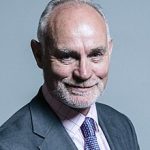
  • Peter Gibson – 2020 Maiden Speech in the House of Commons

    Below is the text of the maiden speech made by Peter Gibson, the Conservative MP for Darlington, in the House of Commons on 27 January 2020.

    The people of Darlington voted for Brexit in 2016 and, fulfilling my promise to them at the general election, we will be delivering on that this coming Friday. It is an honour to follow in the footsteps of others who have represented Darlington. My immediate predecessor, Jenny Chapman, served for almost 10 years, and many in this House have told me how she was respected and liked here. While she and I agreed on very little, Mrs Chapman stuck to her guns on her Brexit position and was a passionate campaigner.

    Sir Michael Fallon, in his first two Parliaments, and Alan Milburn, a former Secretary of State for Health, also represented the town. Further back in time, Joseph Pease was the first Quaker to take his seat in this House. Joseph’s family produced many Members of this House who represented Darlington and other neighbouring constituencies. Other notable MPs include Ossie O’Brien, who won a by-election in 1983 but served for one of the shortest periods on record when he lost his seat at the subsequent general election. Perhaps our most exotic ​representative was a Liberal MP elected in 1910 who went by the name Trebitsch Lincoln, and he was a convicted fraudster.

    Darlington is the birthplace of the railways. We are the home of Locomotion 1, the engine that pulled the first passenger railway in 1825. Many will have read last week of the cultural vandalism seemingly imposed upon us in planning to relocate our most precious historical asset to another place. The retention of Locomotion 1 in our town is a fight I will continue on behalf of the people of Darlington. It is no longer good enough for decisions about the north to be taken by quangos here in London, with no consultation or consideration for the people that they affect. As it is a railway town, I will be continuing to campaign for further investment in our mainline train station, as we gear up for better train services in the north and ready ourselves for the 2025 bicentenary of the railways.

    Our marketplace in Darlington is graced by the beautiful 12th-century church of St Cuthbert, along with buildings designed by notable architects, including the famous Alfred Waterhouse. He was responsible for our Market Hall clock tower, which was in part inspired by the Elizabeth Tower of this Palace. Indeed, I am told that the bell in our clock tower is in fact the sister bell to Big Ben. Our clock and our bell are in full working order, and I am quite sure we will be able to act as a stand-in for the 11 pm slot this coming Friday should a substitute be needed.

    Darlington is an ingenious town, notable for engineering too. Cleveland Bridge, which built the Sydney harbour bridge, has its home there. Cummins the engine manufacturer is there too, as is Subsea Innovation and many more besides. We are also home to a large EE workforce, the Teachers’ Pensions service and the Student Loans Company. Amazon is coming to Darlington, with over 1,000 jobs being recruited now. We have much to celebrate, but more work to do in bringing more investment and more jobs to this fantastic town.

    We enjoy excellent transport links, spanning three junctions of the A1(M). Our ring road is not quite complete, but I am continuing to press my right hon. Friend the Secretary of State for Transport for the final piece of the jigsaw with the Great Burdon to A1 link, which will open up the A1 direct to the Tees valley. We are also connected by air via Teesside International airport, thanks to the intervention of our combined authority Mayor, Ben Houchen. Indeed, only on Friday last week I was delighted to attend the announcement of seven new routes from Teesside airport, including a direct daily flight to London City. Devolution has reinvigorated our region and rejuvenated our pride.

    For the past 20 years, I have practised as a solicitor, and for the 13 years up to August last year, I established and built a regional high street law firm. I am also proud to have served as a trustee of a hospice for almost 10 years, and it is my intention in this place, through the all-party parliamentary group, to promote the work of the hospice movement. Hospices provide an important service not only to those at the end of their life, but to their loved ones’ families, and it is right that we do all that we can to support them.

    Historical figures, buildings and companies are important, but it is the hard-working people and the fantastic community groups who make our town. I pay tribute to those valiant campaigners in Darlington who ​have saved our beautiful library, another gift from our town’s Pease forefathers. I pay tribute to the work of the 700 Club and First Stop, which work hard to ensure that no one need ever sleep rough in our town, and I pay tribute to the work of Firthmoor community centre, building a shining example of what a community centre can be. There are many examples in Darlington of service above self, right across town, and I look forward to working with them and for them all.

    I welcome the NHS Funding Bill, which we are debating today, enshrining in law our commitment and pledge to our national health service. Darlington Memorial Hospital, at the heart of my constituency, is a fantastic hospital. It is loved by the community I represent. It holds a special place in my heart too, as the place where my mother, years before I was born, began her nursing career. I want to thank the Secretary of State for his visits to Darlington during the general election—two of them—and I look forward to welcoming him back on a visit and a tour of Darlington Memorial Hospital very soon. I have promised the people of Darlington that I will do everything in my power to preserve, protect and progress our precious memorial hospital, and by supporting this Bill today, I will be furthering that promise.

    As a working-class boy, educated in a comprehensive school in the north of England, I never dared to dream that one day I would be elected as a Conservative MP for a great northern town, watched from the Gallery by my husband. It is a dream realised; an ambition fulfilled. Our country has changed, and so too have these Benches—from the places we represent to the backgrounds of our newly elected hon. Friends: a truly one nation party. The privilege and position that the people of Darlington have given me will not be wasted as I do all I can to serve them to the very best of my ability in the years ahead.

  • Boris Johnson – 2020 Statement on Leaving the European Union

    Boris Johnson – 2020 Statement on Leaving the European Union

    Below is the text of the statement made by Boris Johnson, the Prime Minister, on 31 January 2020.

    Tonight we are leaving the European Union.

    For many people this is an astonishing moment of hope, a moment they thought would never come.

    And there are many of course who feel a sense of anxiety and loss.

    And then of course there is a third group – perhaps the biggest – who had started to worry that the whole political wrangle would never come to an end.

    I understand all those feelings, and our job as the government – my job – is to bring this country together now and take us forward.

    And the most important thing to say tonight is that this is not an end but a beginning.

    This is the moment when the dawn breaks and the curtain goes up on a new act in our great national drama.

    And yes it is partly about using these new powers – this recaptured sovereignty – to deliver the changes people voted for.

    Whether that is by controlling immigration or creating freeports or liberating our fishing industry or doing free trade deals.

    Or simply making our laws and rules for the benefit of the people of this country.

    And of course I think that is the right and healthy and democratic thing to do.

    Because for all its strengths and for all its admirable qualities, the EU has evolved over 50 years in a direction that no longer suits this country.

    And that is a judgment that you, the people, have now confirmed at the polls.

    Not once but twice.

    And yet this moment is far bigger than that.

    It is not just about some legal extrication.

    It is potentially a moment of real national renewal and change.

    This is the dawn of a new era in which we no longer accept that your life chances – your family’s life chances – should depend on which part of the country you grow up in.

    This is the moment when we really begin to unite and level up.

    Defeating crime, transforming our NHS, and with better education, with superb technology.

    And with the biggest revival of our infrastructure since the Victorians.

    We will spread hope and opportunity to every part of the UK.

    And if we can get this right I believe that with every month that goes by we will grow in confidence not just at home but abroad.

    And in our diplomacy, in our fight against climate change.

    In our campaigns for human rights or female education or free trade we will rediscover muscles that we have not used for decades.

    The power of independent thought and action.

    Not because we want to detract from anything done by our EU friends – of course not.

    We want this to be the beginning of a new era of friendly cooperation.

    Between the EU and an energetic Britain.

    A Britain that is simultaneously a great European power.

    And truly global in our range and ambitions.

    And when I look at this country’s incredible assets.

    Our scientists, our engineers, our world-leading universities, our armed forces.

    When I look at the potential of this country waiting to be unleashed.

    I know that we can turn this opportunity into a stunning success.

    And whatever the bumps in the road ahead.

    I know that we will succeed.

    We have obeyed the people.

    We have taken back the tools of self-government.

    Now is the time to use those tools to unleash the full potential of this brilliant country and to make better the lives of everyone in every corner of our United Kingdom.

  • Jeremy Hunt – 2020 Speech on the NHS Funding Bill

    Jeremy Hunt – 2020 Speech on the NHS Funding Bill

    Below is the text of the speech made by Jeremy Hunt, the Conservative MP for South West Surrey, in the House of Commons on 27 January 2020.

    It is a pleasure to see you in your place, Madam Deputy Speaker. I refer hon. Members to my entry in the Register of Members’ Financial Interests as a trustee of the charity Patient Safety Watch. I also wish to correct a detail in the last speech I gave in the House in which I said there were four instances of wrong site surgery every day; I should have said every week. It is still an enormous number, but it is important to get the record absolutely right.

    I congratulate the Health Secretary on putting the NHS front and centre of the Government’s agenda. When I was in his job, I fought two general elections with Prime Ministers who were rather keen not to talk about the NHS. The second of the two did want to talk about the social care system, and I think both of us, with the benefit of hindsight, rather regret that. But if the Conservatives want to be the party of NHS, we have to talk about it, and my right hon. Friend is doing precisely that.

    I thank my right hon. Friend for putting into law the deal for the future of the NHS that I negotiated in May 2018. It is the challenge of the holder of his job—formerly mine—to stand at the Dispatch Box and constantly say that the NHS has enough money, when in reality it very rarely does. One of the most difficult challenges for Health Secretaries of all parties is meeting people who are denied access to a medicine that is not available on the NHS. He did that with the Orkambi families just before the election, and he did a brilliant job in securing access to that medicine, which will transform the lives of many families. I hope that he will now use the same magic to get access to Kuvan for sufferers of phenylketonuria, including Holly and Callum, the children of my constituent Caroline Graham, who kindly agreed to a meeting.

    On funding, the central issue of this debate has been whether the amount the Government propose is enough. The facts are relatively straightforward: we spend 9.7% of our GDP on healthcare, and the EU average is 9.9%—almost the same. Our spending is almost identical to the OECD average and slightly less than that of the majority of G7 countries. Those numbers only reflect the situation today, though. We are in the first year of a five-year programme whereby spending on the NHS will rise by about double the growth in GDP, so we are heading toward being in the top quartile of spenders on health as a proportion of GDP among developed countries. That is a significant increase.

    Dr Whitford

    The right hon. Gentleman’s overall figure for health spend is correct, but the public health spend—as opposed to private patients—is only 7.5% of GDP, and that is the figure the public are interested in, not the figure including people who can afford to go private.

    Jeremy Hunt

    I suggest to the hon. Lady, whom I greatly respect, that the overall figure is actually what counts. I agree that public health spending matters, but it is absolutely the case that we are heading to being one of the higher spenders in our commitment to health. That is very significant and should not be dismissed.

    Often, the debate about funding can distort some of the real debates that we need to have about the NHS. One of those is the debate on social care. If we do not have an equivalent five-year funding plan for social care, there will not be enough money for the NHS. That is because of the total interdependence of the health and social care systems. It is not about finding money to stop people having to sell their homes if they get dementia, important though that is; it is about the core money available to local authorities to spend on their responsibilities in adult social care. I tried to negotiate a five-year deal for social care at the same time as the NHS funding deal we are debating today. I failed, but I am delighted to have a successor who has enormously strong skills of persuasion and great contacts in the Treasury. I have no doubt that he will secure a fantastic deal for adult social care to sit alongside the deal on funding, and I wish him every success in that vital area.

    The second distortion that often happens in a debate about funding is that while everyone on the NHS front line welcomes additional funding, their real concern is about capacity. The capacity of staff to deliver really matters. I remember year after year trying to avert a winter crisis by giving the NHS extra money, and most of the time I gave the money and we still had a winter crisis, because ultimately we can give the NHS £2 billion or £3 billion more, but if there are not doctors and nurses available to hire for that £2 billion or £3 billion, the result is simply to inflate the salaries of locum doctors and agency nurses and the money is wasted. Central to understanding capacity is the recognition that it takes three years to train a nurse, seven years to train a doctor and 13 years to train a consultant, so a long-term plan is needed. It is essential that alongside the funding plan, we have in the people plan that I know the NHS is to publish soon an independently verified 10-year workforce plan that specifies how many doctors, nurses, midwives, allied healthcare professionals and so on we will need.

    Victoria Prentis (Banbury) (Con)

    Will my right hon. Friend give us his views on the maternity safety training fund, which I understand is up for renewal soon, and its importance to the midwives of the future?

    Jeremy Hunt

    When we talk about the workforce, training is vital. We know from the 2018 “Mind the Gap” report on the issues at the Shrewsbury and Telford and the East Kent trusts, among others, that only 8% of trusts supply all the care needs in the saving babies’ lives bundle, so the maternity safety training fund is essential. I hope the Health Secretary will renew it, because it makes a big difference.​

    It is vital that we have an independent figure for the number of doctors and nurses the NHS needs, not a figure negotiated between the Department of Health and Social Care and the Treasury because the Treasury will always try to negotiate the number down and we will end up not training enough people. I know the Health Secretary is on the case.

    The final distortion when we talk about funding for the NHS is the link between funding and the quality of care. It is totally understandable that many people think that the way to improve the quality of care is to increase funding, but in reality the relationship is much more complex. As the Health Secretary knows well, we pay the same tariff to all hospitals in the NHS, and with the same amount of money some of them deliver absolutely outstanding, world-class care and others do not. Almost without exception, hospitals rated good or outstanding by the Care Quality Commission have better finances than those rated as requiring improvement or inadequate, which are often losing huge sums. The reason for that, as every doctor or nurse in the NHS knows, is that poor care is usually the most expensive type of care to deliver. A patient who acquires a bedsore or an MRSA or C. diff infection, or has a fall that could have been avoided, will stay in hospital longer, which will cost more. It will cost the hospital more, it will cost the NHS more, and finances will deteriorate. Invariably, the path the safer care is the same as the path to lower cost. That is why it is so important that we recognise that the safety and quality agenda is consistent with the plan to get NHS finances under control.

    It is also why it is important to remember that the Mid Staffs scandal happened in a period of record funding increases for the NHS. So when it comes to NHS funding, transparency, openness, a culture that learns from mistakes, innovation and prevention are every bit as important as pounds and pence.

  • Jonathan Ashworth – 2020 Speech on the NHS Funding Bill

    Jonathan Ashworth – 2020 Speech on the NHS Funding Bill

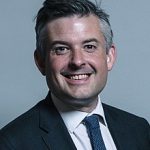
    Below is the text of the speech made by Jonathan Ashworth, the Shadow Secretary of State for Health, in the House of Commons on 27 January 2020.

    This is not a serious funding Bill; it is an underfunding Bill. It is a political gimmick of a Bill. The Secretary of State hoped that the Bill would signal the Tories’ commitment to the NHS, but it actually reveals their lack of commitment to the NHS. I remind the Secretary of State that the last Labour Government, who I did indeed work for, did not need a piece of legislation to increase NHS funding by record levels—6% extra a year. We just got on and delivered record investment in the NHS in spending review after spending review. That record investment delivered the lowest waiting times, the highest satisfaction ratings, and 44,000 more doctors and 89,000 more nurses. He is unable to match that record.

    This Bill essentially caps NHS funding—[Hon. Members: “No it doesn’t.”] It certainly does because, as the Secretary of State outlined, the amounts in the Bill are in cash terms, not real terms, which is what the previous Secretary of State presented to the House in summer 2018. The amounts in the Bill are in cash terms, and when my hon. Friend the Member for Nottingham South (Lilian Greenwood) asked the Secretary of State whether the NHS will get the real-terms increases that the previous Secretary of State outlined should inflation run at unforeseen levels, he could not give that commitment.​

    The Secretary of State could not give my hon. Friend the cast-iron commitment needed by the NHS chief executives on the ground because this Bill outlines only the cash figures. If inflation runs at a higher level than expected, the NHS will not get the extra money that the Secretary of State boasts about from the Dispatch Box unless we have that commitment. As the hon. Member for Glasgow North (Patrick Grady) said, the money resolution has been tightly drawn to restrict hon. Members from tabling amendments to give the NHS the levels of funding it needs. This Bill is a political stunt.

    The Bill attempts to enshrine revenue spending in law, but the test will be whether the uplift outlined by the Secretary of State, albeit in cash terms, is sufficient to deliver on the promise made by the Prime Minister at the Dispatch Box two weeks ago:

    “We will get those waiting lists down.”—[Official Report, 15 January 2020; Vol. 669, c. 1015.]

    That means reversing the significant deterioration in care under this Government over a decade of decline.

    This Bill fails the Prime Minister’s test, because the level of health expenditure that the Secretary of State is asking the House to put into law will not drive down waiting lists or drive up A&E performance to the levels our constituents deserve. The level of expenditure that the Secretary of State presents as an act of great munificence are not sufficient to enable the NHS to deliver the aspirations of its long-term plan. What he says is not what NHS Providers, the British Medical Association, the Health Foundation, the Institute for Fiscal Studies, a whole host of think-tanks and staff representatives are saying about the Bill.

    Matt Hancock

    It is what the British people say.

    Jonathan Ashworth

    That is pretty dismal by the Secretary of State’s standards. [Interruption.] I am aware that his party won the general election, but it does not mean he is correct about NHS funding.

    The Secretary of State is not prepared to put it in the Bill, but let us suppose he delivered on the real-terms increases outlined by the previous Secretary of State—around a 3.3% annual uplift for NHS England revenue. The problem is that NHS activity usually increases by 3.1% a year. We have an ageing population with a wide variety of complex conditions and a wide variety of co-morbidities, and we have seen years of austerity for which the Secretary of State was responsible as George Osborne’s right-hand man. We have seen health inequalities widen, needs increase and demands on the NHS rise, which is why health experts, including the IFS, the Health Foundation, NHS Providers, the BMA and a whole range of Royal Colleges, have said that health expenditure should rise across the board—not just in NHS England but in capital, education and public health—by 3.4% just to maintain current standards of care.

    If we are to start driving down waiting lists, improving performance in A&E and driving down GP waiting times, as the Prime Minister promised on the steps of Downing Street, the NHS needs at least a 4% increase across the board. As the Health Foundation has said, investing in modernising the health service, as set out in the NHS long-term plan, requires around a 4.1% uplift a year. The Government are not giving the NHS 4.1% a year.

    Feryal Clark (Enfield North) (Lab)

    In my constituency and the borough of Enfield, almost 16,000 people do not have access to a GP. Does my hon. Friend agree that the chronic GP shortage in this country is an absolute disgrace?

    Jonathan Ashworth

    The Secretary of State talks about recruiting all these new GPs. The Tories fought the 2015 general election on delivering 5,000 extra GPs, but GP numbers have gone down. Now he is imposing pension tax arrangements that are driving GPs and other doctors out of the NHS or driving them to cut back on their shifts. He has no solution to that and, again, it was another one of George Osborne’s ideas—the Secretary of State probably came up with it when he was George Osborne’s bag carrier—so I do not believe anything he says on recruiting extra GPs.

    The 4% increase is the historic increase that the NHS used to get throughout its 61 years until the coalition Government were elected. That is why we tabled an amendment in the debate on the Loyal Address calling for the 4% increase. Every Tory Member voted against it, but a 4% increase is what the NHS traditionally got—indeed the previous Labour Government gave it 6%. Instead, we have now had a decade of decline where it received an uplift of about 1.5%. This Tory decade of decline with 1.5% increases is why the funding settlement is inadequate, because it simply cannot make up for that decade the NHS has gone through. This Bill simply cannot make up for the decade of decline in which those gains in quality care and outcomes made by the last Labour Government have been squandered by this Tory Government. The Bill cannot make up for the decade of decline where these Ministers forced the NHS through the tightest financial squeeze in its history, which has left hospital trusts with deficits of £571 million and billions in debt, and left the NHS facing a repair bill of £6.6 billion, leaving hospitals with roofs leaking, pipes bursting, equipment faulty, IT systems breaking and ligature points in mental health trusts deeply unsafe. This decade of decline means the NHS is short today of 106,000 staff and our brilliant NHS staff are being pushed to the brink every week, working a million hours extra than they are contracted to work. They are working every hour God sends to make up for the austerity these Ministers have imposed.

    The speech we have just heard from the Secretary of State bears no resemblance to the realities of what is happening on the ground after the decade of decline under the Tories. Month after month, week after week, we see NHS performance data showing our hospitals recording the worst performance on record against the four-hour standard for accident and emergency. Month after month, we see the number of people on the waiting lists for routine surgery and treatment rising—it is has now risen to 4.4 million. More than 690,000 of our constituents are waiting beyond 18 weeks for treatment. That is an increase of more than 185,000—a 37% increase—since this Secretary of State took up his post. Waits for diagnostic tests are at their highest levels for a decade, cancer waiting times are their worst on record and we are bottom of the league for cancer outcomes.

    Since 2010, more than 17,000 beds have been cut. Hospitals are dangerously overcrowded. Patients are left languishing for hours as trolley waits, being moved from cubicle to corridor in need of a bed. We read in the ​newspapers about 90-year-old war veterans left for hours upon hours on trolleys. We see photos of toddlers treated on floors or sleeping in makeshift beds on chairs. Trolley waits are not some inconvenience for patients; they lead to increased mortality in our hospitals. Research from the Royal College of Emergency Medicine shows that almost 5,500 patients have died in the past three years because they have spent so long on a trolley waiting for a bed in an overcrowded hospital. That is utterly unacceptable.

    Eddie Hughes (Walsall North) (Con)

    Given the vision the hon. Gentleman has just created of the NHS in such a parlous state, why does he think the British public chose not to hand over the management of it to the Labour party?

    Jonathan Ashworth

    We lost the general election, but that does not give Tory Members a free pass on the state of the NHS. We have seen an increase in trolley waits in hospitals in December of 65%, and trolley waits in the past year, on this Secretary of State’s watch, have risen to 847,000—the highest number of trolley waits in hospital corridors on record.

    Siobhain McDonagh (Mitcham and Morden) (Lab)

    Is my hon. Friend aware that twice in the past fortnight St George’s Hospital in Tooting has been on OPEL—Operational Pressures Escalation Level—alert in A&E? It has been one level below having to close its doors to all emergencies because the hospital was so full. Such a closure would have a devastating impact on south-west London.

    Jonathan Ashworth

    My hon. Friend speaks movingly about the situation in her local trust. Of course, St George’s is one of the trusts that has a high maintenance backlog of around £99 million. The reason why hospitals such as St George’s have maintenance backlogs, which mean that they cannot get the flow through the hospital that is needed so that my hon. Friend’s constituents are treated on time, is because capital budgets have been raided repeatedly. The underfunding of the NHS has been such that NHS chiefs have had to shift money from capital budgets into the day-to-day running of the NHS. That is what Tory austerity has done to our NHS. That is what Tory austerity means for my hon. Friend’s constituents.

    Janet Daby

    Does my hon. Friend agree that we have a crisis in respect of mental health nurses, who are not being recruited and supported in the way in which they should be? Not only is that putting strain on the mental health nurses who are there, but it will affect patient care as well.

    Jonathan Ashworth

    My hon. Friend is absolutely right. Of course, we are short of 44,000 nurses across the whole national health service. One of the most damaging policy decisions that George Osborne made—probably another of the Secretary of State’s ideas—was to cut nurse training places in 2011 and get rid of the training bursary. The Government say that they will bring back a grant, but they are not going to go the whole hog, are they? They are not going to get rid of tuition fees. They still expect people to train to be nurses and build up huge debts, because the nature of the training that they have to go through means that they will not be able to take a job on the side. I do not believe that is the way we ​should recruit nurses for the future; we should bring back the whole bursary for nurses, midwives and allied health professionals.

    Seema Malhotra (Feltham and Heston) (Lab/Co-op)

    My hon. Friend is making an important speech and has just made reference to the cuts to capital budgets. Does he agree that it is staggering that since 2014 we have seen five consecutive switches from capital budgets to revenue budgets, totalling about £4.29 billion? The consequences are now being felt by all our constituents throughout the country.

    Jonathan Ashworth

    My hon. Friend is absolutely right. Because of the austerity that the Government have imposed on the NHS, its leaders—trust bosses and clinical commissioning group bosses—have had to raid capital budgets repeatedly and transfer from capital to revenue, as my hon. Friend said. These sorts of smash-and-grab raids, which have happened five times, have taken around £5 billion out of the capital budgets, which is why so many of our hospitals now have this huge £6.6 billion-worth of repair backlog, with sewage pipes bursting and roofs falling in.

    It is all very well for the Secretary of State to stand there and talk about 40 new hospitals, even though he has not outlined a multi-year capital settlement at all. He just went around the country telling Tory candidates, who have now become MPs—congratulations to them—that he will build a hospital here and they will have a new hospital there. I lost count of the number of times that he committed to new A&E departments and new hospitals that were not on any list that he has published in the House of Commons. We do not actually have a multi-year capital plan to deal with the more than £6.5 billion backlog that faces our hospitals. This is not a serious way to make policy for the national health service. Our trusts’ chief executives need certainty on capital, which is why we need to see the multibillion-pound capital plan. We do not even know whether we are going to get one in the Budget. We do not know when it is coming: the Secretary of State has given us no detail or clarity on that whatsoever.

    Whether it is waiting for pre-planned surgery, for cancer treatment, for test results, in A&E or on trolleys, thousands of our constituents wait longer and longer in pain, agony and distress, thanks to years of austerity that the Secretary of State designed. As George Osborne’s right-hand man and chief bag carrier, he designed the years of austerity and is now asking the House to endorse the continued underfunding of the NHS.

    Sarah Atherton (Wrexham) (Con)

    I refer the hon. Gentleman to the NHS in Wales, which is run by the Welsh Labour Government. In north Wales, Betsi Cadwaladr University Health Board has been in special measures for five years, and it is run by the Welsh Labour Government. Last year, in north Wales alone 6,600 people waited more than 12 hours to be seen in A&E. I would like to hear the hon. Gentleman’s comments.

    Jonathan Ashworth

    It is unacceptable, and sadly it is happening constantly in the English NHS. Of course, on certain performance targets there is improvement in Wales; there is no improvement on any performance targets when it comes to A&E or electives in the English ​NHS. I welcome the hon. Lady to her place and she is right to raise that issue, but I hope she will also raise with the Secretary of State his poor leadership on performance data for the English NHS.

    The long-term plan rightly calls for more investment in areas of the NHS that have been neglected for many years, particularly mental health services, community health services and primary care. We endorse the approach outlined in the long-term plan. Mental illness represents around 23% of the total disease burden, but only 11% of NHS England’s budget. Mental health patients are some of the most let down by the decade of decline in the NHS. We regularly read heartbreaking reports in the newspapers of patients forced to wait up to 112 days for talking-therapy treatments, when we know that people are supposed to get an improving access to psychological therapies appointment in six weeks. We regularly read of the shortage of mental health beds, which means that too many people—often young people—are sent hundreds of miles across the country. They are often young people in desperate circumstances, sent away from their family and friends, often receiving ineffective care in poor-quality private providers. The rationing of care for children in particularly desperate circumstances has seen more than 130,000 referrals to specialist services turned down, despite those children showing signs of eating disorders, self-harm or abuse. It is totally unacceptable.

    The long-term plan calls for increased investment in mental health services, which we welcome. Had we won the general election, we would have gone further and invested more to deliver parity of esteem for physical and mental health, and we would have legislated to ensure health and wellbeing in all policies with a future generations wellbeing Act. None the less, we welcome the ambition in the long-term plan to increase the proportion spent on mental health. In the past 10 years, under intense financial pressures because of underfunding and austerity in the NHS, commissioners have had to raid budgets, especially child and adolescent mental health services budgets, to fund the wider NHS. In the past 10 years, mental health services have often lost out because of financial pressures in the system so, if such an amendment would be in scope, we will seek to amend the Bill to ensure guarantees for mental health funding and that mental health funding can be ring-fenced. We will also seek look to ensure that there is a framework of accountability, under which the Secretary of State would come to the House, perhaps once a year, to update it on mental health funding and where it is being spent.

    We endorse the increased funding for mental health, community services and GP services at a faster rate. If the Government are genuinely committed to that, and if at the same time the NHS is to live within its 3.3% uplift, that means that by definition less money will remain for growth in funding for the acute sector. The Secretary of State will need to moderate the rate of growth in acute demand, because if he cannot, there is a risk that either the money that he is allocating to mental health services will be diverted back to hospitals, as has happened in the past 10 years, or waiting times will have to increase and A&E performance will have to worsen ever further.

    The problem is that the Secretary of State will not be able to drive up performance and moderate need without a fully funded plan for the whole of the health and social care sector. That is why the Bill is fundamentally inadequate. When in June 2018 the previous Secretary of State, the ​right hon. Member for South West Surrey (Jeremy Hunt), came to the House to outline the funding settlement, he quite rightly said that he would not be able to fix the various problems facing the NHS if that did not happen alongside a funded staffing plan, a funded multi-year capital plan and a funded social care plan. The previous Secretary of State was correct. The problem with the Bill is that, as the Secretary of State conceded, it excludes key areas of health spending, such as public health; health visiting; the training of doctors and nurses; the capital budgets to build and maintain hospitals; and the capital budgets for community health facilities. That is before we even get on to social care funding, which is another issue that has in effect been kicked into the long grass by the Secretary of State.

    We all know that public health services are crucial services that keep people well, prevent ill health and keep people out of hospital. A year ago, the Secretary of State would do interviews to tell us that public health and prevention was his big, No. 1 priority. I remember his interview in The Sunday Times in which he said that he had ordered the behavioural insights team to target those who are obese, smokers and people who drink to excess. He said he would “not rule out” using social media to target people to change their ways. Pregnant smokers would get emails to encourage them to stop smoking. This is my favourite; this is what he actually said—well, it is quoted in the article:

    “Those in hospital with ailments related to alcohol abuse will be targeted for a ‘stern talking to’”.

    That is what he said on prevention a year ago. What did we get instead? We got more cuts to smoking cessation services, more cuts to alcohol addiction services, and more cuts to drug misuse services. That is what we have had in the past 12 months, because budgets have been cut as part of the wider £870 million cut to the public health grants. The Secretary of State did not mention public health in his remarks. We still do not know what the public health allocations will be for this year. He is asking the House to legislate for a funding allocation that the previous Secretary of State outlined to the House 18 months ago. He cannot even tell us the public health allocations beyond the next three months. That just reveals what a ridiculous political stunt this Bill is.

    Kevin Hollinrake (Thirsk and Malton) (Con)

    In his earlier remarks, the hon. Gentleman mentioned social care. He will be aware that the Health and Social Care and the Housing, Communities and Local Government Committees recommended in a joint report a range of options, one of which was a social insurance premium. Will he agree to cross-party talks, and does he think that all those different options laid out in that report should remain on the table for discussion?

    Jonathan Ashworth

    I am grateful to the hon. Gentleman for his intervention. He is a considered authority on these matters, and I appreciate the spirit in which he has made his intervention. We are not convinced that a social insurance model will work. In those countries where there is a social insurance model—I think in Germany and in Japan—they have largely been building on a social insurance model for their healthcare delivery. In Japan—I may be wrong on this, and I will correct the record if I am wrong—there is a taxation element as well.​

    We believe that there is a degree of political consensus on the future funding of adult social care. We agree with the House of Lords Committee, which includes people such as Michael Forsyth and Norman Lamont, that we need a form of free adult social care paid for by taxation. There is a version of it in Scotland and in Northern Ireland. We believe that, if the Government are prepared to talk to us on those terms, we could find political consensus, but at the moment the Secretary of State stands outside that political consensus.

    Kevin Hollinrake

    The hon. Gentleman makes some interesting points, but is it not the case that the best way forward is not to have a precondition about the subject of those talks, and that we should simply have a cross-party discussion? In that way, he can find out more of the detail behind the Japanese system, which he says he is lacking. Why does he need to make preconditions to those talks?

    Jonathan Ashworth

    The Government have no proposals whatsoever. They have been talking about bringing forward a social care plan for years now. As I have said before in the House, Members are more likely to see the Secretary of State riding Shergar at Newmarket than see a social care plan. The truth is that, if the Government want to put forward some proposals, we will always be happy to talk to them. We are clear that taxation is the best way to fund adult social care, and that we need a version of free personal adult social care. That is what we have put in our manifesto, and that is what the House of Lords has proposed, and, as I have pointed out, there are some very Thatcherite Tories on that Committee in the House of Lords—they are by no means red in tooth and claw socialists. They have looked at all these different options and came to the conclusion that a taxation-funded system is the best way to go, but, of course, we are prepared to have discussions. I am grateful to the hon. Gentleman for the way in which he put his question. He is a very thoughtful figure in the House and he has done a lot of work on this matter, and Members on both sides of the House appreciate that.

    As I was saying, the Secretary of State cannot tell us the allocations for public health budgets beyond the next three months. We have talked about capital, but we still do not have a multi-year capital settlement. We still do not know whether the Secretary of State will rule out the capital to revenue transfers that have taken place over the past 10 years. If we can find an amendment in scope, we will put it down to rule out capital to revenue transfers. If he agrees that capital to revenue transfers are not in the interests of our hospitals that desperately need to deal with their repair backlog, I hope that he will support such an amendment.

    The Bill does not provide a proper costed plan for the workforce. There is nothing in the Bill on training budgets, when every single trust chief executive reports that understaffing is their biggest challenge, and a hindrance to delivering safe care. The numbers employed by trusts over the past decade have grown at half the rate of 2000, and this is at a time of increasing need. As I have said, with vacancies numbering more than 100,000, the situation across the NHS is chronic. Staff shortages mean overcrowded wards, lengthening queues in A&E, cancelled operations and exhausted, burned-out staff with low morale who feel that they must do more with less. Perhaps we should not be surprised that the numbers leaving the NHS citing bad work-life balance has trebled under this Government.​

    In these circumstances, the Government expect to retain 19,000 nurses and recruit an additional 31,000, although they are not actually bringing back a full bursary to do so. At the same time, vacancies for nursing today stand at about 44,000, so the Government are hardly going to resolve the crisis in nurse vacancies that our trusts are facing. Not only have the Government failed to train enough nurses, they have not dealt with the taxation changes affecting doctors. On diagnostics, one in 10 posts are vacant in England, so if the Government are to meet their promise to diagnose three in four cancers at an early stage by 2028, we need to see significant growth in the NHS cancer workforce as well. We have no funded workforce plan, even though it was promised by the Government when they announced these funding allocations back in summer 2018.

    This all matters, because the NHS will simply not be turned around without the investment in public health that is needed, without recruiting the extra staff that are needed, without modernising buildings and equipment and without fixing our broken social care service. The Secretary of State will not be able to improve performance across the NHS and level up health outcomes while the Government continue to pursue their austerity agenda.

    We have seen a decade of cuts, which has seen child poverty rising—it is set to rise to record levels—increasing rough sleeping on our streets, insecure work becoming the norm, poor quality housing becoming commonplace, local services being cut back and closed, and an increase in air pollution. All of these things determine the health of our constituents.

    Austerity means that the advances in life expectancy that we have come to expect since the second world war have begun to stall. Infant mortality rates have increased three years in a row. The last time that that happened was during the second world war. We are seeing increasing mortality rates for those in their 40s—so-called deaths of despair from suicide, drug overdose, and alcohol abuse—and the gap between the health of the richest and the health of the poorest getting wider and wider. Not only have we seen in this decade of austerity widening inequalities in health outcomes, but we are now seeing widening inequalities in access to health services—the poorest wait longer in A&E, the poorest wait longer for a GP appointment because there are fewer GPs in poorer areas, the poorest have fewer hip replacements, and the poorest are less likely to recover from mental ill health.

    Siobhain McDonagh

    Is my hon. Friend aware that there is also a tendency for capital funding in new schemes to go to those areas that are far more wealthy than those with the greatest health inequalities? Let me give my own experience of Epsom and Saint Helier Trust, where the local NHS is consulting on moving all acute services to Belmont.

    Madam Deputy Speaker (Dame Eleanor Laing)

    Order. The hon. Lady will have her chance to speak for quite some time later in the debate, and I think that the hon. Gentleman is just concluding his speech.

    Jonathan Ashworth

    My hon. Friend’s point is absolutely right, and she is right to raise it.

    The point is this: those most in need of health services now experience the poorest quality of care. It is an absolute disgrace. This political stunt of an underfunding ​Bill will not deliver the scale of improvements that our constituents deserve. We will not divide the House tonight, but instead seek to amend the Bill. Let us be clear: the Government should have brought forward a fully funded financial settlement for our NHS and social care. The ever lengthening queues of the sick and elderly in our constituencies deserve so much better.
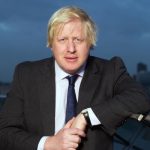

  • Kit Malthouse – 2020 Statement on Automated Facial Recognition Surveillance

    Kit Malthouse – 2020 Statement on Automated Facial Recognition Surveillance

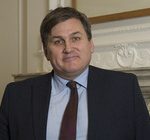
    Below is the text of the statement made by Kit Malthouse, the Minister for Crime, Policing and the Fire Service, in the House of Commons on 27 January 2020.

    The Government are supporting the police and empowering them with the tools they need to deliver on the people’s priorities by cutting the crime that is blighting our communities. We have already pledged 20,000 more officers, new powers and the biggest funding increase in a decade, but embracing new technology is also vital and we support the use of live facial recognition, which can help to identify, locate and arrest violent and dangerous criminals who may otherwise evade justice.

    Live facial recognition compares the images of people passing a camera with a specific and predetermined list of those sought by the police. It is then up to officers to decide whether to stop and speak to those flagged as a possible match. This replicates traditional policing methods such as using spotters at a football match. The technology can make the search for suspects quicker and more effective, but it must be used strictly within the law.

    The High Court has found that there is an appropriate legal framework for the police use of live facial recognition, and that includes police common-law powers, data protection and human rights legislation, and the surveillance camera code. Those restrictions mean that sensitive personal data must be used appropriately for policing purposes, and only where necessary and proportionate. There are strict controls on the data gathered. If a person’s face does not match any on the watchlist, the record is deleted immediately. All alerts against the watchlist are deleted within 31 days, including the raw footage, and police do not share the data with third parties.

    The Metropolitan Police Service informed me of its plans in advance, and it will deploy this technology where intelligence indicates it is most likely to locate serious offenders. Each deployment will have a bespoke watchlist made up of images of wanted people, predominantly those wanted for serious and violent offences. It will also help the police to tackle child sexual exploitation and to protect the vulnerable. Live facial recognition is an important addition to the tools available to the police to protect us all and to keep murderers, drug barons and terrorists off our streets.

  • Matt Warman – 2020 Statement on Huawei

    Matt Warman – 2020 Statement on Huawei

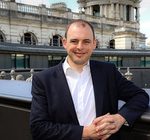
    Below is the text of the statement made by Matt Warman, the Parliamentary Under-Secretary of State for Digital, Culture, Media and Sport, in the House of Commons on 27 January 2020.

    I thank my hon. Friend the Member for Tonbridge and Malling (Tom Tugendhat) for this question. I know he has a deep interest in this issue, and my right hon. Friend the Secretary of State has corresponded with him about it over the past few months. She will address this issue herself in the other place later today.

    New telecoms technologies and next-generation networks like 5G and full fibre can change our lives for the better. They can give us the freedom to live and work more freely, help rural communities to develop thriving digital economies, and help socially isolated people to maintain relationships, so the security and resilience of the UK’s telecoms networks is of paramount importance. The UK has one of the world’s most dynamic digital economies, and we welcome open trade and inward investment. However, our economy can prosper and unleash Britain’s potential only when we and our international partners are assured that our critical national infrastructure remains safe and secure.

    As part of our mission to provide world-class digital connectivity, including 5G, my Department carried out a cross-Whitehall evidence-based review of the telecoms supply chain to ensure a diverse and secure supply base. That review’s findings were published in July 2019 and set out the Government’s priorities for the future of our telecommunications. Those priorities are strong cyber-security across the entire telecommunications sector, greater resilience in telecommunications networks and diversity across the entire 5G supply chain. It considered the UK’s entire market position, including economic prosperity, the industry and consumer effects, and the quality, resilience and security of equipment.

    However, in July, the review did not take a decision on the controls to be placed on high-risk vendors in the UK’s telecoms network. Despite the inevitable focus on Huawei, that review was not about one company or even one country. We would never take a decision that threatens our national security or the security of our allies. The Government’s telecoms supply chain review is a thorough review into a complex area that made use of the best available expert advice and evidence, and its conclusions on high-risk vendors will be reported once ministerial decisions have been taken.

    The National Security Council will meet tomorrow to discuss these issues. This work is an important step in strengthening the UK’s security frameworks for telecoms and ensuring the roll-out of 5G and full-fibre networks. I know that Members on both sides of the House feel strongly about this issue, and the Government will make a statement to the House to communicate final decisions on high-risk vendors at the appropriate time. We will always put national security at the top of our agenda.

  • Lindsay Hoyle – 2020 Statement on Holocaust Memorial Day

    Lindsay Hoyle – 2020 Statement on Holocaust Memorial Day

    Below is the text of the statement made by Lindsay Hoyle, the Speaker of the House of Commons, in the House of Commons on 27 January 2020.

    Today is Holocaust Memorial Day and the anniversary of the liberation of Auschwitz-Birkenau, the largest Nazi death camp. Many powerful speeches were made in the debate on this subject last Thursday, highlighting the personal stories of those terrible events. We remember the millions of people murdered during the holocaust under Nazi persecution and in the genocides that followed in Cambodia, Rwanda, Bosnia and Darfur.

  • Boris Johnson – 2020 Speech at Holocaust Memorial Day

    Boris Johnson – 2020 Speech at Holocaust Memorial Day

    Below is the text of the speech made by Boris Johnson, the Prime Minister, on 27 January 2020.

    Last week Mala told me her story, including the scene that awaited Ian and our British forces when they liberated Bergen Belsen almost 75 years ago.

    I am lost in admiration for Mala’s courage and endurance and her unwavering determination to ensure that we remember.

    As she said to me, the Holocaust is unique, because it was the industrialised murder of a race, of 6 million Jews, of whom 1.5 million were children, along with millions of other targets of Nazi persecution.

    As Prime Minister, I promise that we will preserve this truth forever.

    I will make sure we build the National Holocaust Memorial and Education Centre, so that future generations can never doubt what happened, because that is the only way we can be certain that it never happens again.

    And I feel a deep sense of shame that here in Britain – in 2020 – we seem to be dealing with a resurgence of the virus of anti-semitism – and I know that I carry responsibility as Prime Minister to do everything possible to stamp it out.

    As we resolutely proclaim “never again”, it is right that we should also ask what happened to our resolve in the genocides that followed in Cambodia, Rwanda, Bosnia and Darfur.

    And as I stand here, in the presence of many of Britain’s Holocaust survivors, I feel a special obligation towards the sanctity of their testimonies, because nothing can compare with hearing directly from a survivor.

    I will do everything I can as Prime Minister to ensure these testimonies are shared as widely as possible, encouraging the use of technology so the tangible, palpable, irrefutable reality of this experience is preserved as something not just for this generation but for every generation.

    In doing so, we will ensure that Britain never forgets the truth of the Holocaust.

    In the name of all those who perished, may their memory be a blessing for ever.

  • Matthew Offord – 2020 Speech on Holocaust Memorial Day

    Matthew Offord – 2020 Speech on Holocaust Memorial Day

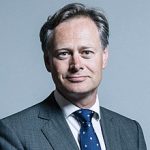
    Below is the text of the speech made by Matthew Offord, the Conservative MP for Hendon, in the House of Commons on 23 January 2020.

    Thank you, Mr Deputy Speaker, for calling me to speak after that passionate speech.

    I am very pleased to have the opportunity to contribute to the debate, as I have more Jewish constituents than anyone else in the Chamber today, apart from, of course, my hon. Friend the Member for Finchley and Golders Green (Mike Freer). Unfortunately he is not able to speak because he is a Whip, but I am sure he will be thrilled that I am, no doubt, speaking on his behalf as well.​

    If, as a Member of Parliament for any faith group, I either promote or defend a cause or an issue, many critics will say, “Well, you would say that, wouldn’t you, because your constituents would expect you to do so.” For many of my constituents—and, by default, for me as well—the holocaust is something very personal. I have constituents who were in places such as Bergen-Belsen, one of whom I have spoken about previously in the Chamber, of whom I am indeed very fond, and whom I visit regularly. I should take this opportunity to wish mazel tov to Manfred Goldberg and Kurt Marx, who both received the British Empire Medal for services to holocaust education in the new year’s honours list. We are very proud of them.

    Just like the hon. Member for West Ham (Ms Brown), I take the opportunity at this time of year to do two things. First, I always like to read a memoir or factual account of the holocaust, and I am pleased to be reading “If this is a man” by Primo Levi right now. The second thing I like to do—again, like the hon. Member for West Ham—is to consider Holocaust Memorial Day from a different perspective, and for the past few months I have been thinking about concentration camps on British soil.

    Any Member who has read Nikolaus Wachsmann’s brilliant book “KL: A History of the Nazi Concentration Camps” will know how the concentration camps came about. The KL refers to the German word “Konzentrationslager”. In Germany in 1933, many of the first people arrested by the Nazis were detained in a variety of locations, including police stations, stables, schools and even industrial buildings—certainly none of the locations we have in our public consciousness. Those people were held in “protective custody” for their own safety, and most of them were released at a later stage. During that time, the law was used to defend many of them. Their relatives went to the courts to say that their treatment was not as it should be, and under the law they did have some protections, but of course that did not last. We know that, as the second world war continued, the rules certainly changed.

    The Konzentrationslager of Dachau in 1933 was very different from the Konzentrationslager of Auschwitz in 1944. Initially, Dachau targeted political opponents of the Nazis, such as German communists, socialists, Roma, Jehovah’s Witnesses, homosexuals and persons accused of asocial or socially deviant behaviour. By contrast, Auschwitz was a sprawling death camp containing European Jewry, Gypsies and others. As Primo Levi wrote:

    “Trains heavily laden with human beings went in each day, and all that came out was the ashes of their bodies, their hair, the gold of their teeth.”

    Representation of these camps in films and popular culture depicts Auschwitz-Birkenau as the pinnacle of the death camps, but Treblinka was close behind it in the number of people who were murdered, alongside other camps such as Belzec, Chelmno and Sobibor. All those camps were devoted to killing. They were death camps, and anyone who went through their gates would not come out again. In 1967, the West German Ministry of Justice drew up a list of 1,200 camps that it said were sub-camps of the main ones. The Jewish Virtual Library has come up with the even greater figure of 15,000 camps that it says were effectively Konzentrationslager.​

    To many of us, the representation of the camps through their names suggests a distant location and an otherness that is foreign and certainly not part of the British collective consciousness, but that is not the case. Last summer I was fortunate enough to sail to the Channel Islands, the only part of the British Isles to be inhabited by the Nazis during the second world war, and I visited Alderney. In January 1942, the Nazis built four camps in Alderney. There were two work camps, Lager Helgoland and Lager Borkum, and two concentration camps, Lager Sylt and Lager Norderney. Lager Norderney contained Russian and Polish prisoners of war, and the Lager Sylt camp held Jewish slave labourers. There are 397 graves in Alderney, out of a total population of about 6,000. On their return to Alderney, the islanders had little or no knowledge of the crimes that had taken place, because when they were finally allowed to return in December 1945, the majority of the senior German officers had left and no one really knew what had happened.

    Interestingly, in research being conducted by Professor Caroline Sturdy Colls at Staffordshire University, she has described the estimate of the number of victims as “very conservative”, given the difficulty of identifying prisoners in war records. The whole issue of post-holocaust archaeology is very much a contested area, and indeed very painful for many people who had direct experience of the holocaust. The professor has said that her research on the island has come up against great “hostility”, including from the Alderney Government, who she said had refused a permit for her to excavate some of the sites, forcing her to rely, in the research that she undertook, on “non-invasive” methods of analysis, such as drone filming.

    I have to tread carefully as I say this, but there is also some reluctance on the part of the Jewish community in the United Kingdom to give permission for the excavation of Jewish burial sites. This is a very delicate area, and I know that the great Chief Rabbi, Ephraim Mirvis, who is my constituent, has been involved in this issue. Rabbinic law dictates that the grave sites of Jewish people should not be disturbed. I have a great deal of sympathy with that point of view, but I do have a belief that unmarked graves, mass graves and locations of bodies hidden by their murderers are not proper graves in themselves, and I believe that it is appropriate for the identification of bodies to be undertaken, because people do need a proper resting place. I do not believe that the locations that I have described are proper graves; and as Elie Wiesel wrote,

    “to forget the dead would be akin to killing them a second time.”

    So I certainly will continue with the conversations that I have had with others about the delicate, sensitive process of identifying locations of bodies, and also the persons in those graves.

    So for me, Holocaust Memorial Day is not just something that is evoked through films such as “Schindler’s List”; it is something that is very personal and pertinent to many of my constituents. I shall conclude with the words of Primo Levi, in his fantastic book, in which he says:

    “It happened, therefore it can happen again: this is the core of what we have to say.”

  • Crispin Blunt – 2020 Speech on Holocaust Memorial Day

    Crispin Blunt – 2020 Speech on Holocaust Memorial Day

    Below is the text of the speech made by Crispin Blunt, the Conservative MP for Reigate, in the House of Commons on 23 January 2020.

    As my hon. Friend the Member for Chichester (Gillian Keegan) noted earlier, it is a privilege to take part in this debate, and it is a very special debate. Before the hon. Member for Leeds North East (Fabian Hamilton) departs, I want to say just how much his speech has contributed to this debate, with the enormous emotion, which we were all moved by, that sat behind the testimony of his own family. It is of course a pleasure to follow my hon. Friend the Member for Harrow East (Bob Blackman), who has committed so much to this issue during his time in the House.

    For the beginning of my remarks, I want to pick up where the Minister began, which is by making it clear that this day marks a number of appalling horrors. He mentioned the Khmer Rouge, as did my hon. Friend the Member for Chichester. What I would describe as my first launch into public speaking was on the issue of the Khmer Rouge, when I took part in a United Nations Association speaking competition. As a 17-year-old then, I was trying to understand how on earth 1.7 million people had been killed in Cambodia through the work of the Khmer Rouge. It was quite appalling testimony to a failure of global policy to prevent that from happening.

    We heard moving testimony from my hon. Friend the Member for Rutland and Melton (Alicia Kearns) about her visit to Srebrenica, and of course from my hon. and truly gallant Friend the Member for Beckenham (Bob Stewart). I am utterly convinced that had he been in command of those Dutch troops who were charged with the defence of Srebrenica at the time, there would have been a very different outcome. That is the difference ​in the traditions and the pride that we take in our Army, and the proper latitude that we give our field commanders to deliver on their mission.

    The right hon. Member for Barking (Dame Margaret Hodge) mentioned today’s judgment in the International Court of Justice about the Rohingya, which is another searing issue that is current. Srebrenica of course happened in the context of the massacre in Rwanda just a year before. The fact that the ICJ is considering the Rohingya today should mean that we understand the purpose of today’s debate: it is current. However, the single worst atrocity of the 20th century—and possibly, in scale, of all time—was of course the holocaust visited on the Jews of Europe by the Nazis under the German Government of Adolf Hitler.

    This is very personal for me. My father, towards the end of the second world war, commanded a company that defended Field Marshal Montgomery’s army group headquarters. He was one of the young officers sent to go and see what had been found in Bergen-Belsen. He recalled that to explain to the German population, who had averted their gaze from what was happening very close to them, local leaders were invited to go and see what had happened.

    That is the lesson. This happened in a “civilised” nation. My hon. Friend the Member for Harrow East gave some of the historic background. It is now in school curriculums. Pupils are taught about the causes and how it ended with this worst ever atrocity. I wholly applaud the work of the Holocaust Educational Trust. I have had the opportunity to use its resources and to go with it, with schoolchildren, to Auschwitz-Birkenau. I think my hon. Friend the Member for Harrow East suggested that one should be there for more than one day. I have to say that a day was more than enough. It was one of the grimmest experiences of my life. As someone interested in history from a young age, it did not tell me anything new. I can vividly remember, aged 13, the episode of “The World at War” which focused on the holocaust and the camps. I grew up with the books of authors, such as Leon Uris, who made it clear what had happened to the Jewish people of Europe.

    I do not think that there is any doubt that this experience has been seared into the German soul. One can see it in its foreign policy. My hon. Friend the Member for Shrewsbury and Atcham (Daniel Kawczynski), wholly understandably, has a Polish perspective. These events and these days are so important, so that we do not forget and that we try to learn. But we have not learnt. What we need to understand is that too often other conflicts in other parts of the world have their base in hatred. Antisemitism is the virulent hatred that led inexorably to the holocaust, which is why it is so important it is called out. Other hatreds, based on ethnicity, sexuality and other characteristics, continue to exist. We saw that with ISIS, only too recently controlling a very large area of territory in Iraq and Syria, visiting out its version of it what it thought were its values that are so appalling and so anti the very tenets of civilisation. We have to pick up and learn the lessons that we do not pass by on the other side.

    There is no monopoly of good in the world. I have in this House pointed out, and will continue to point out, that there is very unlikely to be security for Israel until ​there is a decent measure of justice for the Palestinians. It is the elision sometimes of these issues that makes things extremely difficult. I have, in the whirl of social media, been called an antisemite, because I have had the temerity to stand up for the Palestinians. It is deeply hurtful—I worked for four years for the first Jewish Secretary of State for Defence and for the second Jewish Foreign Secretary, who is a very close friend of mine—to have that accusation made, simply because I have expectations of the Government of the state of Israel, as an important ally of the United Kingdom and as a font of democratic values in that region, that their policy should be not only in their interests but based on the morality and law that they expect their people should have respect to. We have to continue to find a solution there.

    I will finish with the words of Pastor Niemöller:

    “First they came for the Communists

    And I did not speak out

    Because I was not a Communist

    Then they came for the Socialists

    And I did not speak out

    Because I was not a Socialist

    Then they came for the trade unionists

    And I did not speak out

    Because I was not a trade unionist

    Then they came for the Jews

    And I did not speak out

    Because I was not a Jew

    Then they came for me

    And there was no one left

    To speak out for me.”

    It is the duty of this House, and the lesson of today’s debate, that where we see injustice in the world and it is perpetrated on the back of ethnic hatred, we call it out.