Tag: 2020

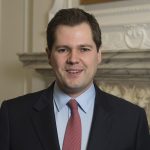
  • Tracy Brabin – 2020 Point of Order Following Journalist Walkout from Downing Street

    Below is the text of the point of order made by Tracy Brabin, the Labour MP for Batley and Spen, in the House of Commons on 3 February 2020.

    On a point of order, Madam Deputy Speaker. I am seeking your advice on an urgent and important matter. This afternoon, accredited lobby journalists based here in the House of Commons were denied access to an important briefing with David Frost, the Prime Minister’s Europe adviser on post-Brexit trade plans. David Frost is a civil servant and therefore his briefing on the most prominent issue of the day is supposed to be neutral and not political. The issue of post-Brexit trade plans is one of great public concern, and access to a high-level briefing should not be hand-picked by Government and political advisers. The exclusion of some publications led to every major national broadcaster and newspaper walking out.

    I know that all Members of this House will agree that lobby journalists’ access to Government is vital for a functioning and healthy democracy, and this latest deterioration in relations between the Government and the lobby is deeply concerning. Members are also aware, Madam Deputy Speaker, of your commitment to improving the culture in this place, and pass-holding lobby journalists are part of our community. Therefore, what advice can you offer me as to how Members might be able to formally raise this issue with the Government and ensure that this does not become commonplace?

    Madam Deputy Speaker (Dame Eleanor Laing)

    I thank the hon. Lady for her point of order and for giving me notice that she wished to raise it. Of course I agree with her, as everyone will, that accredited lobby journalists are indeed part of our parliamentary community and so of course must be, should be and normally are treated with respect—and, indeed, within the behaviour code that we all apply, or should apply, to each other. The responsibilities of the Chair do not extend to the specific matter that she raises, so I can give no further answer, but I am quite sure that she will find a way of bringing her concerns to the attention of the Government in some other way. If she has any difficulty in doing so, she should please ask for further advice and I will be happy to help.

  • Michael Russell – 2020 Statement in the Scottish Parliament on the EU Exit

    Below is the text of the statement made by Michael Russell, the Cabinet Secretary for Government Business and Constitutional Relations, in the Scottish Parliament on 30 January 2020.

    I want to provide an update on the EU-United Kingdom negotiations, including Tuesday’s meeting of the joint ministerial committee on European negotiations where, along with representatives of the Welsh Government and the Northern Irish Government—making a welcome return to the forum after three years’ absence—I discussed the role of the devolved Governments in the forthcoming negotiations.

    Before continuing, I must acknowledge the desperately sad fact that, despite the unambiguous message of the Scottish electorate in the referendum in 2016 and in subsequent elections, the UK and Scotland will be leaving the European Union at 11 pm tomorrow—although we will be back. After tomorrow night, the UK will become a third country.

    One minute past 11 on 31 January may feel no different from one minute before 11, but a profound change will have taken place. No one should be lulled into a false sense of security by that initial sameness, because at one minute past 11, the clock will start again, ticking inexorably down towards the end of the year, when the UK Government insists that the transition period must end, and when we will feel the full impact of what is the most damaging change to our constitutional settlement in generations. It will be ticking down, once again, to no deal or something very similar, with all the extra hardship that that will entail.

    The Scottish Government’s single overriding concern over the 42 months since the Brexit referendum—in which we did not choose to leave the EU—has been to protect Scotland’s national interests. We will continue to do everything that we can, inside and outside the formal structures, to minimise the profound damage that Brexit will inevitably cause. That is why I continue to attend increasingly difficult meetings of the JMC(EN).

    I go to those meetings because it is vital that Scotland’s core interests—those include the competences exclusively held by the Scottish Parliament—are always spoken for and protected.

    It is a fact that the JMC(EN) terms of reference, agreed jointly by heads of Government in October 2016, have so far never been fulfilled. The JMC(EN) is ostensibly the mechanism by which the four Governments

    “seek to agree a UK approach to, and objectives for,”

    and have

    “oversight of”,

    negotiations—those are the words of the protocol—in order to secure joint outcomes.

    The core problem is that the actions of UK ministers have never matched those commitments, despite the best efforts of the devolved Administrations to persuade them to do so. There are many examples of that disrespectful behaviour—too many to list in full. They began as early as January 2017, when the then Prime Minister announced in the Lancaster house speech her intention to leave the single market and customs union without any consultation and without even considering the detailed arguments that we set out in “Scotland’s Place in Europe” only a few weeks before. It has gone on, right up to the European Union (Withdrawal Agreement) Bill, which we saw in its final form only after it had been sent to Westminster to begin its parliamentary process.

    We know that UK Government departments are now working feverishly on negotiating positions and proposals. Ministers have had no sight of those, despite a formal request being made by us and the Welsh Government at the meeting of the JMC(EN) that was held in London earlier this month. How can we contribute effectively to the development of the UK negotiating position on the most broad and complex negotiations in living memory while being left in the dark about the way in which the UK Government is shaping its own approach?

    The fact is that the UK Government has ignored our views, and those of the people of Scotland, throughout the Brexit process. We have repeatedly tried to alter that pattern. Three weeks ago, at the meeting in London, I acknowledged, openly but with regret, the electoral mandate that the UK Government has for Brexit. However, I continue to think that it is fundamentally the wrong approach and will damage Scotland enormously. Regrettably, the UK Government has refused to reciprocate and will not acknowledge the clear mandate that we received to give Scotland the right to choose.

    Without mutual recognition of mandates, there can be no trust. With a mutual recognition of mandates, we could start to move forward. With that in mind, I also proposed a model for engagement in the second stage of negotiations. The model suggested an approach that would allow detailed discussion of devolved competences and could make a difference if there was also a genuine commitment from all parties to take part and make it work. With a recognition that Scotland will be able to choose this year whether to become an independent country, the model could provide a period of stability in the political structures and allow a more constructive dialogue. However, it cannot work if there is no binding commitment to it through a reformed intergovernmental relationship, the UK Government proposals for which have not yet been provided to the devolved Administrations, despite promises.

    Alas, the UK Government has also made the situation worse by two actions in recent days. First, after this Parliament refused on 8 January by a margin of 92 votes to 29 to give its consent to the European Union (Withdrawal Agreement) Bill, the Northern Ireland Assembly did the same on 20 January, and the Welsh Senedd followed suit on 21 January. That is a unique situation, but the Chancellor of the Duchy of Lancaster and the Secretary of State for Exiting the European Union responded by simply confirming that the decision of all three devolved bodies would be ignored. In fact, they went further, insulting our intelligence by profusely supporting in their statements the very convention—the Sewel convention—that they had just buried forever.

    Secondly, as members in the chamber heard in the debate yesterday, the Prime Minister wrote two weeks ago to the First Minister rejecting summarily her request for a section 30 order that would allow the right of Scotland’s people to choose their own future.

    For more than three years, the Scottish Government has sought to engage with the UK Government in the Brexit process. We have developed and passed primary and secondary legislation for withdrawal, and ensured that Scotland is as ready as we can make it for exit, however much we oppose and regret that fact. We have played our part: the UK needs to reciprocate. We must move beyond the current process, mandated by the UK Government, which does not allow constructive engagement and meaningful input, and restricts our ability to protect Scotland’s interests.

    How do we make progress? The negotiations, like all aspects of our relationship with the UK Government, cannot be treated as business as usual without a mutual recognition of mandates. Once again, we have done our part. The UK Government must do its part, and it is enabled to do so afresh by the vote in this Parliament yesterday to take forward a new referendum. Despite the shadow that the situation casts over the negotiations, I will continue to seek the meaningful engagement with the UK Government that will allow me to protect Scotland’s interests. That is now urgent, with negotiations likely to start with the EU in a matter of weeks.

    At the JMC, alongside my devolved Government colleagues, I identified the two essential components of the step change that is required. The first is for the UK to provide the necessary detail of its developing thinking, in order for us to have a meaningful discussion of the UK negotiating mandate. We are ready to have that discussion at the earliest possible moment but, in order to contribute in a constructive way, we need the information that the UK Government has. The UK must commit itself to a process, no matter how brief, that is seen to offer the devolved Administrations a clear and effective input to that vital final document.

    Secondly, the UK Government must give us confidence that, in spite of all the previous false dawns, it will work with us on the negotiations in a way that meets our legitimate expectations and the remit of the JMC(EN). We need to see the imminent UK proposals for the new relationship between the Governments. As devolved Governments, we must be given the space to consider them together and to seek changes as required, with a view to securing statutory backing, in order that—for as long as we are part of this union—we have a platform for discussion and decision making.

    It is my sincere hope that this Parliament will support the continued efforts of the Scottish Government to ensure that the legitimate voices of this Parliament and of Scotland are heard in the most important negotiations that any of us are likely to witness, and that it will support the constructive way that we are going about it.

    We oppose many things in the Brexit process, as well as the process itself. We must continue to have the right to argue against the UK Government’s reckless decision to rule out any extension to the transition period. Imposing an arbitrary end-of-2020 deadline will sacrifice the depth and quality of any future relationship and, at best, will result in a bare-bones agreement that will serve no one’s interests.

    It is a stark fact that, tomorrow, we leave—dragged out against our will, despite the clear instruction of the Scottish people.

    Scotland has the right to choose its own future, and the best option for Scotland is to be an independent country in the EU. In the meantime, we will stand shoulder to shoulder with the rest of Europe around our shared values and interests, while doing everything in our power to ensure that none of Scotland’s interests are adversely affected as the Brexit process continues. That is a mature way to go forward, but it requires the UK to show an equivalent maturity and a respect for democracy.

    Scotland might lie on the edge of Europe, but we have always been—and want to remain—at its heart. We are committed to doing all that we can to get back to where we belong. As we do so, we ask all the remaining 27 members to leave a light on for Scotland as we navigate our way out of an incorporating union that does not work for us into a union of equals that does. We will leave a light on here, to guide us back into our European home.

    We ask the UK to behave like the decent, generous democracy that it has been and—I hope—will be again, and to work with us as friends and neighbours as we make our choices for ourselves.
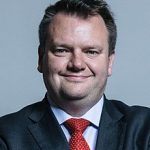
  • Danny Kruger – 2020 Maiden Speech in the House of Commons

    Below is the text of the maiden speech made by Danny Kruger, the Conservative MP for Devizes, in the House of Commons on 29 January 2020.

    I rise for the first time in this place as the hon. Member for Devizes and as the successor to my friend the great Claire Perry O’Neill. Claire was a brilliant Minister in several Departments, and she brought huge zest and zeal to her work in government. Most of all, however, she was a great campaigner for our constituency. We owe her for the faster, better trains through Pewsey and Bedwyn and for the superfast broadband that is now enjoyed by some of our smallest communities. Thanks to her, we have the promise of a new health centre in Devizes, which is badly needed and, I am afraid to say, quite long overdue. I have inherited from Claire the tradition of posing with the Health Secretary in an empty field outside Devizes, pointing to the spot where the health centre will appear at any moment. I pledge to Claire that I will see the project through as soon as possible.

    Claire is now focusing on the presidency of COP26, the UN climate conference that the UK is hosting in Glasgow in November. This vital role is crucial for the future of our country and the world. I wish her all the very best in this, and I thank her for her work locally and for her friendship to me.

    I represent a corner of the country that is not only the most beautiful in the land but, in a sense, the oldest. It is the ancient heart of England. My constituency neighbour, my hon. Friend the Member for Salisbury (John Glen), can boast all he likes about Stonehenge, but we have Silbury Hill, the largest prehistoric structure in Europe— a great mound of earth the size of a small Egyptian pyramid built, for reasons we will never know, on a bend of the A4 just outside Marlborough.​

    We have Avebury, the largest stone circle in the world. It is not only much bigger but much older than Stonehenge, which is a vulgar upstart by comparison. We have the ancient burial grounds of our forgotten forebears in tombs and barrows 4,000 years old. We have white horses on the chalk hillsides.

    We have big skies and tough people, and we have the British Army. A quarter of our Army is based in Wiltshire, including the regiments recently returned from Germany and now stationed in Tidworth, Larkhill, Bulford and villages round about. I am deeply honoured to represent our soldiers, and I pledge to serve them and their families as faithfully as they have served us.

    My constituency is in a beautiful part of the country, but we face deep social challenges and many of the problems that are familiar to rural communities everywhere. We need better funding for our health service, for education, for police and for rural transport, and we need a new deal for our farmers. In the brave new world we are entering, in which rural businesses will face global competition and new environmental responsibilities, we need to remember our own responsibilities to the stewards of our countryside. I will be their champion.

    I voted leave in 2016, and I am glad that we are leaving the EU on Friday. The 21st century will reward countries that are nimble, agile and free, but Brexit is about more than global Britain; it is a response to the call of home. It reflects people’s attachment to the places that are theirs. Patriotism is rooted in places. Our love of our country begins with love of our neighbourhoods. Our first loyalties are to the people we live among, and we have a preference to be governed by people we know. That impulse is not wrong; it is right.

    As we finally get Brexit done this week, it is right that we are considering how to strengthen local places, especially places far from London. I wholeheartedly support the plans to invest in infrastructure to connect our cities and towns—the broadband and the transport links that will drive economic growth in all parts of the UK.

    Just as important as economic infrastructure is what we might call social infrastructure: the institutions of all kinds where people gather to work together, to play together and to help each other. I make my maiden speech in this debate because I spent 10 years as the chief executive of a project I founded with my wife Emma that works in prisons and with young people at risk. It was the hardest job I have ever done, and I worked in some very tough places. We often failed, but we were always close to the people we tried to help. Never bureaucratic, and never treating people as statistics or—a phrase I do not like—service users, we saw them as people whose lives had gone wrong and whose lives, but for the grace of God, could have been ours.

    We are now trustees of that charity. If I might make a plea to Ministers, it is for them to recognise the role of independent civil society organisations—charities and social enterprises—in the fight against crime and, indeed, against all the social evils we debate in this place.

    Social problems demand social solutions, not just a state response. Of course we need the police, the prison system and the probation service—we need them very badly, and we need them to be better—but, just as important, we need the social infrastructure that prevents crime, supports victims and rehabilitates criminals.​

    The Government have a great mission as we leave the EU and try to fashion a UK that is fit for the future. This mission represents a challenge to some of the traditional views of both left and right. The main actor in our story is not the solitary individual seeking to maximise personal advantage, nor is it the central state enforcing uniformity from a Department in Whitehall; the main actor in our story is the local community.

    We need reform of the public sector to create services that are genuinely owned and cared for by local people. We need reform of business so that directors are incentivised to think of people and the planet, as well as their quarterly profits. And we need reform of politics itself to give power back to the people and to make communities responsible for the decisions that affect them.

    I finish on a more abstract issue, but it is one that we will find ourselves debating in many different forms in this Parliament. It is the issue of identity, of who we are both as individuals and in relation to each other. We traditionally had a sense of this: we are children of God, fallen but redeemed. Capable of great wrong but capable of great virtue. Even for those who did not believe in God, there was a sense that our country is rooted in Christianity and that our liberties derive from the Christian idea of absolute human dignity.

    Today those ideas are losing their purchase, so we are trying to find a new set of values to guide us, a new language of rights and wrongs, and a new idea of identity based not on our universal inner value or on our membership of a common culture but on our particular differences.

    I state this as neutrally as I can, because I know that good people are trying hard to make a better world and that Christianity and the western past are badly stained by violence and injustice, but I am not sure that we should so casually throw away the inheritance of our culture. There is so much to be positive about. I share the Prime Minister’s exuberant optimism about the future, but we need a set of values and beliefs to guide us.

    As we advance at speed into a bewildering world in which we are forced to ask the most profound questions about the limits of autonomy and what it means to be human, we may have reason to look about for the old ways and to seek wisdom in the old ideas that are, in my view, entirely timeless.

  • Nick Thomas-Symonds – 2020 Speech on UK Telecommunications

    Nick Thomas-Symonds – 2020 Speech on UK Telecommunications

    Below is the text of the speech made by Nick Thomas-Symonds, the Shadow Solicitor General for England and Wales, in the House of Commons on 28 January 2020.

    I am grateful to the Foreign Secretary for his statement and for giving me advance sight of it.​

    I am pleased that the Government have finally set out the conclusions of the telecoms supply chain review in relation to high-risk offenders after far too long a period of dither and delay. As the Intelligence and Security Committee made clear in July of last year, this debate has been unnecessarily protracted and damaging. A decision was required urgently so that everyone concerned can move forward. Our telecoms sector, businesses and households need clarity and certainty to move forward; leaks, rumour and confusion on this simply cannot continue.

    The safety and security of our critical national infra- structure is crucial. Robert Hannigan, the former head of GCHQ, has said that decisions about providers should be made on

    “technical expertise and rational assessment of risk”,

    and I agree. It is for the Government to consider the best expert security advice they are given, and act upon it. Ministers should have robustly investigated the risk posed to our critical national infrastructure. I appreciate the confidentiality of National Security Council meetings, but I hope the Foreign Secretary can provide a firm assurance that that is the case.

    Guarantees about the safety and security of the network going forward are now absolutely crucial if Huawei is to be involved in building the 5G network. It is for Ministers to make decisions in our national interest now and going forward, and never to be held hostage by shifting transatlantic geopolitics. A rush by the Government to throw themselves into the arms of President Trump to secure a trade deal must not govern everything they do. There is a wider point here. As we assess potential risks to our critical national infrastructure, whether from Huawei or anywhere else, we should ensure that the UK network is constructed in such a way that it is in the best possible condition to withstand attacks, wherever they come from. Resilience in the network is essential, irrespective of this decision or decisions about any other 5G provider. I hope the Foreign Secretary will provide reassurance on that.

    Huawei is already embedded in the 4G network, but there is a wider question. After a decade of successive Conservative Governments, we do not have our own capacity to secure our critical national infrastructure and security, rather than relying on other countries. As I think the Foreign Secretary conceded, the UK has been left to choose between just three 5G vendors. What will the Government do to support local manufacturing and our own tech sector in growing businesses that can secure our critical national infrastructure? I have heard his words today about market diversification, but they are not enough. The Government need to act.

    5G will have an extraordinary impact on our day-to-day lives. It is transformational, with faster data speeds, higher capacity and faster responsiveness. The majority of our constituents now have access to a large number of smart devices. Every year that number is growing, and the 5G network will have the advantage of being able to cope with that growing capacity. 5G will shape the economy of the future. Innovative technologies of the future rely on its development, and it must progress speedily.

    The Government’s original announcement that the UK would be a global leader in 5G was back in 2017. The Government also set a target of the majority of the population being covered by a 5G signal by 2027. In his ​statement, the Foreign Secretary committed to securing national coverage of gigabit-capable broadband by 2025. Those targets have to be met. The UK is already way too far behind in its digital infrastructure, and we need to act fast. In September 2019, about 10% of premises in the UK—3 million premises— had access to full fibre. In France, 38% of households have access. In Spain, it is 77%. In Portugal, it is 70%. It is simply not good enough. It is letting all our constituents and businesses down, and the Government have to do more.

    Moving forward, I would be grateful if the Foreign Secretary responded to the following points. Given the concerns expressed by our Five Eyes partners, if Huawei is to be deemed a high-risk vendor, will the Foreign Secretary again be as transparent as he can be and make clear how the decision will not bring about risk to communication channels that are used for intelligence sharing? Will he explain how the controls on how high-risk vendors are deployed will work? How durable is the barrier between core and periphery in the 5G network, and how will that be overseen? He mentioned the Huawei cyber-security evaluation centre oversight board, and more detail on how that will work would be appreciated.

    The Intelligence and Security Committee’s statement on 5G suppliers of July last year set out that the Government must assume all worst-case security scenarios and protect the network accordingly. Will the Foreign Secretary confirm that such contingency planning is taking place? Finally, will he also confirm when the world-leading regulations he talked about will be brought before the House?

    The public deserve a durable, secure and reliable 5G network for the future to ensure that our economy moves forward. The Government’s decision today is a small step in a very long process. They can be assured that we will hold them to account on the delivery of a secure, world-class service for all our constituents.

  • Dominic Raab – 2020 Statement on UK Telecommunications

    Dominic Raab – 2020 Statement on UK Telecommunications

    Below is the text of the statement made by Dominic Raab, the Foreign Secretary, in the House of Commons on 28 January 2020.

    Mr Speaker, with permission, I would like to repeat the statement by my noble Friend the Secretary of State for Digital, Culture, Media and Sport in the other place on the security of the telecoms supply chain.

    This Government are committed to securing nationwide coverage of gigabit-capable broadband by 2025, because we know the benefits that world-class connectivity can bring—from empowering rural businesses to enabling closer relationships for the socially isolated and new possibilities for our manufacturing and transport industries. We are removing the barriers to faster network deployment, and we have committed £5 billion of new public funding to ensure that no area is left behind. It is of course essential that these new networks are secure and resilient; that is why the Government have undertaken a comprehensive review of the supply arrangements for 5G and full-fibre networks.

    The telecoms supply chain review laid before this House in July underlined the range and nature of the risks facing our critical digital infrastructure, from espionage and sabotage to destructive cyber-attacks. We have looked at the issue of how to maintain network security and resilience over many months and in great technical detail; we would never take decisions that threaten our national security or the security of our Five Eyes partners.

    As a result, the technical and security analysis undertaken by GCHQ’s National Cyber Security Centre is central to the conclusions of the review. Thanks to its analysis we have the most detailed study of what is needed to protect 5G anywhere in the world, and because of the work of the Huawei cyber-security evaluation centre oversight board, established by the NCSC, we know more about Huawei and the risks it poses than any other country in the world.

    We are now taking forward the review’s recommendations in three areas. First, in terms of world-leading regulation, we are establishing one of the strongest regimes for telecoms security in the world, a regime that will raise security standards across all the UK’s telecoms operators and the vendors that supply them. At the heart of the new regime, the NCSC’s new telecoms security requirements guidance will provide clarity to industry on what is expected in terms of network security. The TSRs will raise the height of the security bar and set out tough new standards to be met in the design and operation of the UK’s telecoms networks. The Government intend to legislate at the earliest opportunity to introduce a new, comprehensive telecoms security regime to be overseen by the regulator, Ofcom, and Government.

    Secondly, the review also underlined the need for the UK to improve its diversity in the supply of equipment to telecoms networks. Currently, the UK faces a choice of only three major players to supply key parts of our telecom networks, and this has implications for the security and resilience of those networks, as well as for future innovation and market capacity. It is a market failure that must be addressed. The Government are developing an ambitious strategy to help diversify the supply chain, and this will entail the deployment of all the tools at the Government’s disposal, including funding. ​We will do three things simultaneously: we will seek to attract established vendors who are not present in the UK to our country; we will support the emergence of new, disruptive entrants to the supply chain; and we will promote the adoption of open, interoperable standards that will reduce barriers to entry.

    The UK’s operators are leading the world in the adoption of new, innovative approaches to expanding the supply chain, and the Government will work with industry to seize these opportunities. We will also partner with like-minded countries to diversify the telecoms market, because it is essential that we are never again in the position of having such limited choices when deploying such important new technologies.

    The third area covered by the review was how to treat vendors who pose greater security and resilience risks to UK telecoms, and I know that the House has a particular interest in this area, so I will cover the recommendation in detail. The risks identified may arise from technical deficiencies or considerations relating to the ownership and operating location of the vendor. As hon. Members may recall, the Government informed the House in July that they were not in a position to announce a decision on this aspect of the review. We have now completed our consideration of all the information and analysis from the NCSC, industry and our international partners, and today I am able to announce the final conclusions of the telecoms supply chain review in relation to high-risk vendors.

    In order to assess a vendor as high-risk, the review recommends that a set of objective factors are taken into account. These include the strategic position or scale of the vendor in the UK network; the strategic position or scale of the vendor in other telecoms networks, particularly if the vendor is new to the UK market; the quality and transparency of the vendor’s engineering practices and cyber-security controls; the vendor’s resilience both in technical terms but also in relation to the continuity of supply to UK operators; the domestic security laws in the jurisdiction where the vendor is based, and the risk of external direction that conflicts with UK law; the relationship between the vendor and the vendor’s domestic state apparatus; and, finally, the availability of offensive cyber-capability by that domestic state apparatus or associated actors that might be used to target UK interests.

    To ensure the security of 5G and full-fibre networks it is both necessary and proportionate to place tight restrictions on the presence of any companies identified as high-risk. The debate is not just about the core and the edge of networks, nor is it just about trusted and untrusted vendors. The threats to our networks are many and varied, whether from cyber-criminals or state-sponsored, malicious cyber-activity. The most serious recent attack on UK telecoms has come from Russia, and there is no Russian equipment in our networks. The reality is that these are highly complicated networks, relying on global supply chains where some limited measure of vulnerability is almost inevitable. The critical security question is how to mitigate such vulnerabilities and stop them damaging the British people and our economy.

    For 5G and full-fibre networks, the review concluded that, based on the current position of the UK market, high-risk vendors should be excluded from all safety- related and safety-critical networks in critical national ​infrastructure; excluded from security-critical network functions; limited to a minority presence in other network functions up to a cap of 35%; and subjected to tight restrictions, including exclusions from sensitive geographic locations. These new controls are also contingent on an NCSC-approved risk mitigation strategy for any operator who uses such a vendor.

    We will legislate at the earliest opportunity to limit and control the presence of high-risk vendors in the UK network, and to allow us to respond as technology changes. Over time, our intention is for the market share of high-risk vendors to reduce as market diversification takes place, and I want to be clear that nothing in the review affects this country’s ability to share highly sensitive intelligence data over highly secure networks, both within the UK and with our partners, including the Five Eyes. GCHQ has categorically confirmed that how we construct our 5G and full-fibre public telecoms networks has nothing to do with how we share classified data, and the UK’s technical security experts have agreed that the new controls on high-risk vendors are completely consistent with the UK’s security needs.

    In response to the review’s conclusions on high-risk vendors, the Government have asked the NCSC to produce guidance for industry. This guidance was published earlier today on its website. The NCSC has helped operators manage the use of vendors that pose a greater national security risk, such as Huawei and ZTE, for many years. This new guidance will include how it determines whether a vendor is high-risk, the precise restrictions it advises should be applied to high-risk vendors in the UK’s 5G and full-fibre networks, and what mitigation measures operators should take if using high-risk vendors.

    As with other advice from the NCSC on cyber-security matters, this advice will be in the form of guidance. The Government expect UK telecoms operators to give due consideration to this advice, as they do with all their interactions with the NCSC. I hope the whole House will agree that if we are to achieve our digital connectivity ambitions, it is imperative that we can trust the safety and security of our telecoms networks. Risk cannot be eliminated in telecoms, but it is the job of Government, Ofcom and industry to work together to ensure that we reduce our vulnerabilities and mitigate the risks.

    The Government’s position on high-risk vendors marks a major change in the UK’s approach, and when taken together with the tough new security standards that will apply to operators, this approach will substantially improve the security and resilience of the UK’s telecoms networks, which are a critical part of our national infrastructure. It reflects the maturity of the UK’s market and our world-leading cyber-security expertise, and follows a rigorous and evidenced-based review. It is the right decision for the UK’s specific circumstances.

    The future of our digital economy depends on having trust in its safety and security, and if we are to encourage the take-up of new technologies that will transform our lives for the better, we need to have the right measures in place. That is what this new framework will deliver, and I commend this statement to the House.

  • Robert Jenrick – 2020 Statement on the Rough Sleeping Initiative

    Robert Jenrick – 2020 Statement on the Rough Sleeping Initiative

    Below is the text of the statement made by Robert Jenrick, the Secretary of State for Housing, Communities and Local Government, in the House of Commons on 28 January 2020.

    Today, I am announcing provisional allocations of up to £112 million for a third year of rough sleeping initiative and rapid rehousing pathway funding. This funding covers around 270 local authorities in England, including those that were part of joint funding proposals and represents an uplift of £26 million on last year’s rough sleeping initiative and rapid rehousing pathway funding.

    We announced the rough sleeping initiative in March 2018 to make an immediate impact on rough sleeping. Our impact evaluation of the initiative (published September 2019) demonstrated that it drove the first national reduction in rough sleeping in almost a decade. The analysis demonstrated a 32% net reduction in the number of rough sleepers, compared to what the level would have been had the initiative not been in place.

    To build on the rough sleeping initiative, we launched the rapid rehousing pathway. This approach includes funding for Somewhere Safe to Stay hubs, which provide warm and dry shelter, rapid assessment, and support to people who are already, or at risk of, sleeping rough; specialist navigators, who act as a single point of contact to support people from the streets into settled accommodation; the establishment of local lettings agencies to source, identify, or provide homes and advice for rough sleepers or those at risk; and funding for supported lettings initiatives, which will provide flexible support to help individuals sustain their tenancies.

    For the next financial year we have combined the rough sleeping initiative and rapid rehousing pathway to form one consolidated funding pot for 2020-21, to simplify the process for local authorities. We have drawn on learnings from both programmes to optimise the effectiveness of next year’s funding, which was open to ​all local authorities in England. Since October 2019 our expert adviser teams have worked intensively with local authorities to co-produce plans to further reduce rough sleeping.

    A full list of the areas funded is available here:

    https://www.gov.uk/government/publications/rough-sleeping-initiative-2020-to-2021-funding-allocations.​

    With the funding I have announced today, local areas will be able to enhance services that connect people with the right support and sustainable housing to move them swiftly away from the street and facilitate their recovery. This important work is part of delivering on the commitment made in the Government manifesto to end rough sleeping by the end of this Parliament.

  • Christopher Pincher – 2020 Statement on the Foreign Affairs Council

    Below is the text of the statement made by Christopher Pincher, the Minister for Europe and the Americas, in the House of Commons on 28 January 2020.

    The High Representative of the European Union (EU) for Foreign Affairs and Security Policy (HRVP), Josep Borrell, chaired the Foreign Affairs Council (FAC) in Brussels on 20 January. The United Kingdom’s permanent representative to the EU (Sir Tim Barrow) represented the United Kingdom.​

    Current affairs

    The HRVP and Foreign Ministers had an exchange of views on a number of pressing issues.

    The German Foreign Minister Heiko Maas briefed on the outcome of the 19 January Berlin conference on Libya. Ministers discussed EU engagement towards a political solution, in particular in helping to implement the agreed ceasefire and enforce the UN arms embargo.

    HRVP Borrell discussed the situation in Bolivia and set out EU support towards the general election on 3 May 2020. He also touched on Venezuela and concern about recent escalations following the events in the National Assembly.

    The HRVP debriefed on his recent trip to New Delhi, India, where he participated in the Raisina dialogue and he discussed preparations for the upcoming 15th EU-India summit, scheduled for 13 March.

    Cyprus raised Turkey’s hydrocarbon exploration activity in the eastern Mediterranean, following Turkey’s announcement on 18 January that it would engage in further drilling.

    Sahel

    Following France’s and the G5 Sahel (Burkina Faso, Chad, Mali, Mauritania, and Niger) leaders’ summit that took place in Pau on 13 January, Ministers exchanged views on the deteriorating security and humanitarian situation in the Sahel and the role the EU could play as an important partner and donor in the region. They expressed support for renewing the existing Sahel strategy to try to increase the impact of the EU’s security, stability and development engagement. Ministers emphasised the importance of an integrated approach between the different actors involved and resources deployed. Ministers also welcomed the planned EU-G5 Sahel summit in March, noting it would be an opportunity to identify joint priorities and ensure G5 ownership.

    Climate diplomacy

    The Council adopted conclusions on climate diplomacy and agreed to focus diplomatic outreach to third countries to encourage key partners and emitters to implement concrete actions and achieve the best results ahead of COP26. There was support for a proposal that all new EU international agreements, including all trade agreements, contain a clause to hold partners to ambitious climate standards.

    The United Kingdom underlined that success in Glasgow would rely on concerted diplomatic efforts and the importance of ensuring tangible outcomes when updating nationally defined contributions (NDCs).

    Middle east peace process and the wider region

    Over lunch, Foreign Ministers discussed the middle east peace process and restated their national positions on the recognition of Palestine. The United Kingdom underlined the importance of firmly rejecting illegal annexation but made clear that our position on recognition was unchanged and reiterated our commitment to a two-state solution.

    Ministers touched on the future of the joint comprehensive plan of action (JCPoA) and the importance of continuing efforts to de-escalate tensions in the region. The United Kingdom, France and Germany underlined the importance of the E3’s work to find a diplomatic path through the JCPOA’s dispute resolution mechanism to bring Iran back into compliance and preserve the deal.​

    Council conclusions

    The Council agreed a number of further measures:

    The Council approved the terms of reference for the EU-Ecuador dialogue on human rights. Since 2014, the EU and Ecuador meet at least once a year to review the state of their relationship and discuss issues of common interest.

    The Council adopted conclusions on the continued presence of Operation Althea in Bosnia and Herzegovina to support authorities in maintaining a safe and secure environment for its citizens.

    The Council adopted a decision on the conclusion of the enhanced partnership and co-operation agreement between the EU and the Republic of Kazakhstan (12409/16). The decision will be published in the Official Journal of the European Union in accordance with Article 17 (1)(a) of the Council’s rules of procedure.

    The Council appointed 120 members and 114 alternate members to the European Committee of the Regions (CoR) for its new five-year term running from 26 January 2020 to 25 January 2025 (14986/19).

    Regarding public access to documents, the European Council approved on 15 January 2020 the reply to confirmatory application No. 39/c/01/19 (doc. EUCO 35/19). On 20 January 2020, the Council adopted by written procedure the reply to confirmatory application No. 38/C/01/19 (doc. 14533/19).

  • Peter Aldous – 2020 Speech on the NHS Funding Bill

    Below is the text of the speech made by Peter Aldous, the Conservative MP for Waveney, in the House of Commons on 27 January 2020.

    It is an honour to follow my hon. Friend the Member for Ipswich (Tom Hunt), as Ipswich is both my birthplace and my football club.

    The main provision of the Bill is to enshrine in law the Government’s commitment to increase NHS spending by at least £34 billion by 2023-24. Some may say that this is just gesture politics, but it provides the NHS with the certainty that it needs to make long-term plans and strategic investment in front-line services. This contrasts with operating on a hand-to-mouth short-term basis, as it has often done in the past.

    If this approach is successful, then in future, as suggested by the King’s Fund, the Government should look at pursuing this approach with other items of health spending, such as capital investment, public health and staff and education training. It is one of these latter items that I wish to highlight—investment in NHS buildings and infrastructure, which is so important in providing a high-quality environment for patients and health professionals.

    As well as making commitments to revenue funding, the Government have undertaken to invest in hospital buildings—six new hospitals now and seedcorn funding to work up the plans for 38 more such developments. One of the latter is the James Paget Hospital on the Lowestoft Road in Gorleston in the constituency of my right hon. Friend the Member for Great Yarmouth (Brandon Lewis). The James Paget serves his and my constituencies as well as part of that of my right hon. Friend the Member for Suffolk Coastal (Dr Coffey).

    The James Paget is at the heart of our local health economy, and thus this investment is extremely welcome. I understand that the seedcorn funding is due to be paid over to the hospital very shortly, and that it is already mapping out its plans for the future. It has moved quickly since the announcement of the seedcorn funding was made in the autumn. Its board, liaising with the Great Yarmouth and Waveney clinical commissioning group and the Norfolk and Waveney sustainability and transformation plans, is working up its development plans. Although at an early stage, these include developing a health and social care campus, encompassing acute community primary care, mental health and care facilities, it also wishes to expand its education training, investing in its health and care staff, and also to improve its digital services.​

    As the plans for the James Paget are worked up, it is important to have in mind three requirements. First, it is important that the needs of the people who use the hospital are taken fully into account. Ours is an area with an ageing population that places pressure on local health services. In Lowestoft and Yarmouth, there are deep pockets of deprivation with serious inequalities, which must be addressed. We are a popular tourism area, which puts additional demands on the hospital and its services.

    Once the James Paget has fully worked up its provisional plans, a wide-ranging and full public consultation should take place so that the views of local people can be fully considered.

    Secondly, while the board of the James Paget is taking the lead in working up the redevelopment plans, it is important that all those involved in health and social care services in the area have their say as we, quite rightly, move towards an integrated health and social care system in which all those involved collaborate and work together. The James Paget recognises this, and doctors, mental health and social care professionals, the CCG, the mental health trust and the county and district councils must be fully involved, as well as the voluntary sector and patient representative groups. Thankfully, the silo mentality of the past is gradually being knocked down.

    Thirdly, attracting health and medical staff to the Waveney and Great Yarmouth area continues to be a challenge. The redevelopment of the James Paget provides an exciting opportunity to address that by providing centres of excellence in specialisms for which there is a need in the area. The importance of working with the University of East Anglia and the University of Suffolk cannot be underestimated. The former has a medical and health science faculty that includes the Norwich medical school, which provides clinical rotations at both the Norfolk and Norwich and the James Paget hospitals. There is also a science faculty that includes biological science and pharmacy courses. The University of Suffolk, which is more recently established, includes a school of health sciences, which has courses in adult nursing, mental health nursing and radiography, and postgraduate courses in public health nursing and advanced clinical practice. It would be great if in future more of those courses could be delivered on the Lowestoft and Great Yarmouth campuses of East Coast College.

    The seedcorn funding for the James Paget is extremely welcome. We now need to ensure that the hospital’s redevelopment takes place in a timely manner and that bespoke, high-quality facilities are provided for local people that meet their needs. By doing that, we can ensure that we have a resilient district general hospital serving the Waveney and Great Yarmouth area for many years to come.

  • Neale Hanvey – 2020 Maiden Speech in the House of Commons

    Below is the text of the maiden speech made by Neale Hanvey, the Independent MP for Kirkcaldy and Cowdenbeath, in the House of Commons on 27 January 2020.

    Thank you, Madam Deputy Speaker, for the opportunity to make my first speech, in this important debate. I would like to pay tribute to the hon. Member for Ashfield (Lee Anderson), who had quite a lot of good lines. I do not think I am going to match his humour, sadly. I would also like to pay tribute to the hon. Member for Darlington (Peter Gibson) for making his maiden speech tonight.

    Being elected here to represent the communities that I grew up in is an extraordinary and humbling honour. To do so today in the presence of my partner Lino and our children makes it especially memorable. The honour of representing my constituency carries with it a significant responsibility to be my constituents’ voice and advocate on matters both here and at home, and to endeavour to serve the best interests of every constituent.

    As a new Scot and a pragmatist, I am a product of this Union. Born in Northern Ireland and raised in the east of Scotland, I forged my professional career for the most part here in the heart of London. My apologies to hon. and right hon. Members from Wales: I landed in Cardiff airport once for refuelling, and I am not sure that counts, but hopefully I will remedy that as soon as possible.

    If, to go by the Prime Minister’s repeated assertions, this is the most successful political union in the world, why have I and so many others never felt that to be true? Could this be an example of the iniquity that my predecessor, Lesley Laird, rightly focused on in her maiden speech, as she began her service to the constituency, from May 2017 until December of last year? Indeed, she lamented that the arguments for economic equity and social justice had been a theme not just of hers, but also of her predecessor, Roger Mullin. On this matter they have no quarrel with me.

    From the coalmining communities of Benarty and Kelty, through to our largest conurbation, the Lang Toun of Kirkcaldy, and the picturesque coastal towns and villages stretching from Dalgety Bay to Dysart, the constituency I serve is bursting with ambition. That potential has been damaged by the ravages of Thatcherism and restricted in many respects by the limitations placed upon my constituency—and, indeed, Scotland as a whole—by politicians in this place who have not won an election in Scotland since 1955. All these communities have a proud history of hard work and great intellect and a strong sense of community. That sense of community has somehow withstood the imposition of political and economic policies that neglect, ignore, dismiss and sometimes extinguish the hopes, aspirations and potential of so many. While some Members of this Parliament may jeer at, dismiss and deny the potential of Scotland, I will not tire of giving voice to those aspirations and the hope of a better, independent future that works for all of Scotland.​

    As the UK turns in on itself, wrapped in the false promises of a Brexit that Scotland did not vote for, this Government have shaken the magic money tree to give cash-strapped public services some of the funding that they have been denied over 10 long years of neglect. This brings me to the subject of the debate and my reflections on it. While I readily agree that the proposed funding in the Bill is preferable to ruinous austerity economics, we must never forget that that was initiated by those on the Government Benches, aided by the Liberal Democrats and eased into being by the abstention of many members of the Labour Opposition.

    If the English NHS is the patient, then this Bill is a fig leaf, treating the symptoms and not the cause of the English NHS’s woes. The cause is, of course, pernicious and has proven deadly for many—Tory economic and social policy—but the Government must know that. Why else would they refuse to publish their own impact assessment on universal credit and the two-child cap? What are they afraid of—the truth? In Scotland, many of us on these Benches have been working on a remedy for some time, but this Government are withholding consent and, at the same time, they ignore the refusal of consent to this damaging folly from the devolved Parliaments. We must take our Brexit medicine regardless.

    In 2014, the people of Scotland voted for a status quo that no longer exists. They were promised equal status, respect and greater autonomy. That vow lies shattered, as does Scotland’s trust in this place. If Scotland is not equal, if it is not respected and if it is not listened to, are we to assume that we are hostages in our nation, forever prone to the wiles of our larger neighbour? Well, let me say this: that is neither right nor, indeed, honourable. The health of a nation cannot be improved using honorific titles in this place. It requires right, and right honourable deeds, not words. If this is the most successful union in the history of the world, why is it that we need to measure deprivation, poverty and homelessness? Whether I support this EVEL policy or not, I am denied a vote, despite the consequences for Scotland.

    In closing, I will—like my predecessors—turn to the words of one Adam Smith fae Kirkcaldy, in the hope that this will be the final time they need to be said in this place:

    “No society can surely be flourishing and happy, of which the far greater part of the members are poor and miserable.”

    The Government should publish the impact assessments. Thank you, Madam Deputy Speaker.

  • Lee Anderson – 2020 Maiden Speech in the House of Commons

    Below is the text of the maiden speech made by Lee Anderson, the Conservative MP for Ashfield, in the House of Commons on 27 January 2020.

    Thank you, Madam Deputy Speaker, for allowing me to make my maiden speech; as we would say in Ashfield, “Thank you, mi duck.”

    I am bursting with pride as I stand here as the newly elected Member of Parliament for Ashfield, but I want to pay tribute to my predecessor, Gloria De Piero, who was the MP for Ashfield for nine years. I am sure ​everybody in the Chamber will agree that she was well respected on both sides of the House. I also want to pay respect to my seven colleagues in Nottinghamshire, who were all elected on the same day as me last month. They did a fantastic job and I make special mention of my good friend, my hon. Friend the Member for Bassetlaw (Brendan Clarke-Smith), who overturned a 5,000 deficit and won a 14,000 majority, and saw the largest swing in the country. He is a modest man—

    Eddie Hughes

    He hasn’t mentioned it at all.

    Lee Anderson

    This is my speech; thank you, Eddie.

    My hon. Friend the Member for Bassetlaw has only mentioned his 14,000 majority on one occasion to me—sorry, once a night as we go home across Westminster bridge. He tells me every single night, but I pay him great respect—he certainly has raised the bar.

    Ashfield was once voted the best place in the world to live—by me and my mates one Sunday afternoon in the local Wetherspoons. It really is the best place. Ashfield is a typical mining constituency. To the south of the constituency we have Eastwood, birthplace of D.H. Lawrence, to the north we have Nuncargate, birthplace of our most famous cricketer, Harold Larwood, and further north we have Teversal, which is where D.H. Lawrence wrote probably his most famous novel, “Lady Chatterley’s Lover”—a book I have read several times. We have many other great towns and villages in Ashfield, such as Sutton, Kirkby, Annesley, Selston, Jacksdale, Westwood, Bagthorpe and Stanton Hill, but the place that is closest to my heart in Ashfield is the place where I grew up, a mining village called Huthwaite.

    Like with many villages, when I was growing up in the 1970s most of the men in Huthwaite worked down the pits. I went to a school called John Davies Primary School, and I was always told at school in the ’70s, as many of us were, “Work hard, lad, do well, take the 11-plus, go to grammar school and you’ll not have to go down the pit like your dad and your granddad and your uncles.” Unfortunately, a couple of years before we were due to take our 11-plus, the Labour Government at the time withdrew it from our curriculum, so I was unable to go to grammar school, and none of our school went as a consequence of that. Just a few years later I was down the pit with my dad—working at the pit where my granddad and my uncles had worked. I did that for many years and I am sure my dad, who is watching this right now—a decent, hard-working, working-class bloke—did not want me down the pit. He wanted better for me, but that was taken away. I cannot help but think that, had children in my day had the chance to go to grammar school, they would have had more opportunities and probably a better life. Because I am telling you now, when I worked down those pits in Nottinghamshire, I worked with doctors, with brain surgeons, with airline pilots, with astronauts—with all these brilliant people who never a chance. The Prime Minister is quite right when he says that talent is spread evenly across this country but opportunity is not, and my constituency is living proof of that.

    People of Ashfield are a straight-talking bunch—a bit dry, a wicked sense of humour, a bit sarcastic sometimes—but that is borne out of our tough industrial past. You have to remember that we were the people who dug the coal to fuel the nation. We were the people ​who sent our young people—our young men and women—to war to die for this country. We were the people who made the clothes that clothed the nation. And we were the people who brewed the beer that got us all persistently drunk every single weekend.

    In 1993, under a Conservative Government, we reopened the Robin Hood line in Ashfield, and all through the county of Nottinghamshire, which created endless opportunities for passengers to travel for work, for play and for jobs. Standing here as a Conservative MP in 2020, I am proud to say that this Government are once again looking at extending our Robin Hood line to cover the rest of the county. They are also looking at reopening the Maid Marion line, which will again carry passengers to the most isolated and rural areas of our country. It is all well and good having good education and good training, but transport means just as much to the people in my community.

    My friends, family and constituents have asked me every single day what it is like to be down here in Westminster. I say, “It’s brilliant—amazing. We’ve got great staff—the doorkeepers.” Every single person who works here has been absolutely brilliant to me. It is an amazing place. I have met all these famous people—I have met MPs, Lords and Ministers—but the best moment for me was last Wednesday night, when I got invited to Downing Street, to No. 10, for the first time ever in my life. I walked through that door and there he was, the man himself—Larry the Cat. [Laughter.] Told you we were funny.

    I was born at the brilliant King’s Mill Hospital in Ashfield. King’s Mill was built by the American army during world war two to look after its injured service personnel. After the war, the American Government gave King’s Mill Hospital—the buildings and equipment—to the people of Ashfield as a thank-you gift. What a wonderful gift that is from our American cousins—absolutely stunning. I cannot praise the current staff and management at King’s Mill highly enough. They have really turned things around. Just 20-odd years after the American Government gave King’s Mill Hospital to the people of Ashford, I was born there, and later my children were born there.

    It is not just our hospital in Ashfield that means a lot to me; it is the fact that it has saved my wife’s life for many, many years now. My wife was born with a condition called cystic fibrosis. She was not diagnosed until she was 18, and for anybody, to be told that they have cystic fibrosis is like getting an early death sentence. But undeterred, my wife—my beautiful wife—went to work for a year. She then went to university, she studied, she became a teacher and she taught for 10 years, until she got to her early 30s, when she could not really carry on any more and gave up work. All that time, our brilliant NHS staff looked after her and kept her alive—I cannot thank them enough—but things got really bad in her mid-30s and she had to go on the list for a double lung transplant. She was on that list for two years, and we had five false alarms before we finally got the call on 19 December 2016. The operation was 14 hours and she spent three days in critical care. I thank my lucky stars for our brilliant NHS. They looked after her, they have kept her alive, and last year she was elected as a Conservative councillor in our home town.​

    I am incredibly proud, and when people say that this party is a party of privilege, I say to them, “I’m privileged to be in this party.”