Tag: 2020

  • Debbie Abrahams – 2020 Speech on Social Security Benefits and Claimant Deaths

    Below is the text of the speech made by Debbie Abrahams, the Labour MP for Oldham East and Saddleworth, in the House of Commons on 24 February 2020.

    Thank you, Madam Deputy Speaker, for granting an Adjournment debate on such an important issue.

    The first duty of any Government is to keep its citizens safe, particularly the most vulnerable among us. This evening, I want to discuss the deaths of vulnerable social security claimants since 2014. That those deaths have been linked to the actions of the Department for Work and Pensions is a matter of grave concern. It shows abject failure on the part of not only the Department, but the Government. Ministers set policy and the Department implements it, so both are culpable. However, this is not just about what policies are implemented but about how they are delivered, and that relates to the culture in the Department. [Interruption.]

    Madam Deputy Speaker (Dame Rosie Winterton)

    Order. May we have a little bit of quiet? We cannot hear what the hon. Lady is saying.

    Debbie Abrahams

    Thank you, Madam Deputy Speaker. I shall speak up.

    As I was saying, the leadership determines the culture in an organisation. In a Department, that culture is determined by Ministers. It is a question not just of the policies and their implementation, but of the tone and culture that are related to their delivery.

    We know that the Government’s health assessment process and sanctions regime leave sick and disabled people in fear and dread as they wait for the inevitable envelope to drop on their doormat inviting them to participate in a work capability assessment or a personal independence payment assessment, or possibly both. More than three quarters of claimants who appeal against assessment decisions telling them that they are fit for work have those decisions overturned, and that is because these are poorly people. We also know that in 2013 the death rates among people on incapacity benefit or employment and support allowance were 4.3 times higher than those in the general population, an increase from 3.6 times higher in 2003. That showed the level of sickness and ill health in that group of people.

    Peer-reviewed research published in the Journal of Epidemiology and Community Health estimated that, between 2010 and 2013, work capability assessments were independently associated with an additional 590 suicides, 280,000 cases of self-reported mental health problems, and 725,000 antidepressant scripts. Not only are those assessments not fit for purpose; they are actually doing harm.

    Jim Shannon (Strangford) (DUP)

    I congratulate the hon. Lady on her assiduity. She has made a name for herself in the House not only on behalf of her constituents, but on behalf of everyone affected by this issue. Does she agree that, in this day and age, for anyone to die in stress while awaiting rightful help and aid from the Government should be deemed nothing short of obscene and disgraceful, that the shame of it has an impact on every person who takes a seat in this place, and that what we need is an urgent change in the present system?

    Debbie Abrahams

    I could not agree more with the hon. Gentleman. He is absolutely right. This shames us all. These are the most vulnerable in our society, and, as I shall go on to show, evidence is revealing that policies driven by the Government are having this impact.

    Over the last 10 years, five reviews of the work capability assessment have repeatedly raised issues relating to the assessment process, from the loss of medical records to blatant lies in assessment reports. Nearly 3,500 individuals shared their experiences for the purpose of the Work and Pensions Committee’s 2018 reports on ESA and PIP assessments, which was an unprecedented public response to a departmental Select Committee inquiry. Tonight, however, I want to raise a number of cases which have been in the public domain, and in which the Department’s processes to safeguard vulnerable claimants have been an abject failure.

    On 23 January this year, Disability News Service brought to public attention the death of Errol Graham in 2018. Weighing just 4½ stone, Errol’s body was found eight months after his employment and support allowance had been stopped. He was 57 years old. His social security support was cut off in October 2017, just weeks after he failed to attend an appointment for a DWP fit-for-work assessment. He had been on incapacity benefit since 2003, after his father—whom he had cared for—died. He was reassessed as unfit for work in 2013, and was on ESA when the DWP called him for a retest in 2017, as, according to a letter from the Department,

    “the claimed level of disability was unclear”.

    The inquest heard that it was standard DWP procedure to stop the benefits of a claimant marked on the system as vulnerable after two failed safeguarding visits. It made two visits, on 16 and 17 October. Errol’s ESA payment, due on 17 October, was stopped on the same day. There was no formal requirement for DWP staff to seek more information about Errol’s health—for example, from his GP—or about how he was functioning before ceasing his benefits, and the inquest heard that they had not done so.

    The coroner’s report into Errol’s death found that the

    “safety net that should surround vulnerable people like Errol in our society had holes within it”.

    Furthermore, she said:

    “He needed the DWP to obtain more evidence”—

    from his GP—

    “at the time his ESA was stopped, to make a more informed decision about him, particularly following the failed safeguarding visits.”

    A consultant psychiatrist told the inquest that

    “Errol was vulnerable to life stressors”,

    and that it was

    “likely that this loss of income, and housing, were the final and devastating stressors that had a significant effect on his mental health”.

    Errol’s daughter-in-law, Alison, has been scathing, telling me of the anger she and her husband Lee feel. She said that it was particularly shocking that the QC acting on behalf of the Government in the inquest tried to intimidate not just the family but others, shouting at the police officer who found Errol’s body about what else he had seen. In particular, they were deeply offended that the police officer was asked whether he had found any takeaway menus or cartons. It was clear at that ​inquest that the Government were far from being in listening mode or trying to learn from this. Rather, they were seeking to blame, which is absolutely unforgivable.

    Lilian Greenwood (Nottingham South) (Lab)

    I congratulate my hon. Friend on securing this important debate. It is now more than 18 months since Errol Graham starved to death and more than eight months since the inquest into his death. At that inquest, the coroner asked for robust policy and guidance for DWP staff to prevent future deaths, yet the Department’s serious case panel is not even expected to consider the systemic issue identified in Errol’s case until next month. Does my hon. Friend agree that this inaction makes it hard to believe the Secretary of State when she tells me that the Department took Errol’s tragic death very seriously?

    Debbie Abrahams

    I totally agree with my hon. Friend. I shall go on to show that this has been going on for years now, and that nobody has responded. Systematic errors are coming out in repeated coroners’ reports and other reports, yet there is still no action.

    Stephen Timms (East Ham) (Lab)

    I commend the determined way in which my hon. Friend has pursued this issue consistently over a long time. She has talked about the coroners getting in touch with the Department. Does she share my concern that, as was shown in the National Audit Office’s recent report, there is no systematic way at the moment of compiling what coroners say about suicides and other cases that they report to the Department on?

    Debbie Abrahams

    My right hon. Friend hits the nail on the head. There are systemic failures within the Department and they have to be addressed. This is just not good enough.

    Jodey Whiting, who was from Stockton, died on 21 February 2017. She was a vulnerable woman with multiple physical and mental health illnesses, which left her housebound and requiring 23 tablets a day. That meant that she was entirely reliant on social security support. In late 2016, the DWP began to reassess Jodey’s entitlement to ESA. Jodey requested a home visit as she rarely left the house due to her health, and she had made it clear in her reply that she had

    “suicidal thoughts a lot of the time and could not cope with work or looking for work”.

    Despite this, the DWP decided that Jodey should attend a work capability assessment in January 2017. Unfortunately, Jodey missed that appointment and, on 6 February, the DWP decided to stop the fortnightly ESA payments that Jodey relied on. She was immensely distressed to learn that her last payment would be made on 17 February. With the help of her family, Jodey wrote to the DWP to explain the severity of her health conditions and to ask the Department to reconsider the decision to terminate her ESA, but that did not happen until after her death. She also received letters informing her that her housing benefit and council tax benefit would be stopped because they are linked to ESA. She told her mum, Joy, “Mam, I can’t walk out of the house, ​I can’t breathe, how am I going to work?” Jodey took her own life just three days after her last ESA payment on 21 February.

    The Independent Case Examiner concluded that DWP was guilty of “multiple” and “significant” failings in handling Jodey Whiting’s case and found that the DWP failed to follow its own safeguarding rules five times in the weeks leading up to the suicide. In addition, a report by psychiatrist Dr Trevor Turner says that Jodey Whiting’s mental state was likely to have been “substantially affected” by the DWP’s decision to remove her out-of-work benefits for missing a work capability assessment that she did not know about. The case is now the subject of an appeal to the Attorney General for a new inquest, and I know from speaking to Jodey’s family today that they are desperate to know when they may hear from the Attorney General.

    Then there is Stephen Smith. Last April, we learned that Stephen, the Liverpool man many people remember from the front pages of various newspapers and whose emaciated body was more reminiscent of someone from a concentration camp than 21st century Britain, had died of multiple organ failure after being found fit for work. But there are many, many more cases of DWP claimants dying, some of which I raised in last year’s Westminster Hall debate.

    Jimmy Ballentine took his own life in 2018 after being found fit for work. Amy Nice also took her own life in 2018 after being found fit for work. Kevin Dooley committed suicide in 2018 after losing ESA. Brian Bailey died in July 2018, again taking his own life after being found fit for work. Elaine Morrall died in November 2017, taking her own life. Daniella Obeng died in December 2017, again taking her own life. Brian Sycamore died in September 2017, taking his own life after leaving a note blaming the DWP after failing his work capability assessment.

    Mark Scholfield, who died in July 2017, was a terminal cancer patient who did not receive any UC before he died in spite of his illness. Chris Gold, who died in October 2017, was found fit for work following a stroke and was facing foreclosure when he died because he could not work. Lawrence Bond collapsed and died in the street in January 2017 after being found fit for work. Julia Kelly died in 2015, taking her own life after losing ESA for a third time. Ben McDonald took his own life in March 2015 after being found fit for work. Chris Smith, who died in 2015, had cancer and was found fit for work despite a terminal diagnosis.

    David Clapson could not afford to power his fridge to store his insulin and died as a result in July 2014. Michael Connolly took his own life on his birthday in 2014 after losing his ESA. George from Chesterfield died of a heart attack in May 2014, eight months after being found fit for work despite having had three previous heart attacks. Robert Barlow died of cancer in April 2014 after losing his ESA. David Barr died in September 2014, taking his own life after losing ESA. Trevor Drakard took his own life in 2014. Shaun Pilkington—

    Jim Shannon

    The hon. Lady is referring to a number of names. When someone comes to my office or to the office of another MP talking about anxiety, depression or suicide, we always say to ourselves, “These people need help.” Is it not time for the Government to instruct ​office staff that action must be taken when they hear someone threatening suicide or meet someone who has tried to commit suicide?

    Debbie Abrahams

    Absolutely. I thank the hon. Gentleman.

    This is unforgivable. These are people’s family members and we are failing them. We must not let this continue.

    Stephen Timms

    My hon. Friend will probably have seen, as I did, the comment in the recent National Audit Office report on suicides that internal process reviews, which are perhaps not carried out as frequently as they should be, are often carried out when a claimant takes their own life, but the Department does not know whether the lessons from those reviews are implemented. Does that not point to another dramatic change that is required here?

    Debbie Abrahams

    My right hon. Friend is spot on. There are so many learning points that we should have already picked up on, and I will go through them in a minute.

    I will finish the list if I can. Shaun Pilkington died in January 2014, and Terry McGarvey died in February 2014. This is not an exhaustive list, but it shames us all. This inaction shames the Government. I have raised this so many times over the past five years, and there has been no change whatsoever.

    For years now, there have been warnings that the Department’s safeguarding policies are not working. In 2014-15, as a member of the Select Committee on Work and Pensions, I asked for an inquiry on sanctions policy. From this inquiry, the Committee recommended:

    “DWP should seek to establish a body modelled on the Independent Police Complaints Commission, to conduct reviews, at the request of relatives, or automatically where no living relative remains, in all instances where an individual on an out-of-work working-age benefit dies whilst in receipt of that benefit. Such a model, operated within the purview of the Parliamentary and Health Service Ombudsman, should ensure that the role of all publicly-funded agencies involved in the provision of services or benefits to the individual is scrutinised, so that a learning document can be produced setting out how policy, and the service delivery pathway, can be improved at every stage.”

    In their formal response—[Interruption.] Would the Minister like to intervene? I believe there is something he finds amusing about this.

    The Minister for Disabled People, Health and Work (Justin Tomlinson)

    No, there is not.

    Debbie Abrahams

    Okay. I just saw a bit of a smirk.

    Justin Tomlinson

    It was not.

    Debbie Abrahams

    I hope it was not.

    In the Government’s formal response, there was no recognition or acknowledgment of the recommendation, which was completely rejected by the Government.

    In 2014, the Disability News Service asked, via a freedom of information request, for the Department to publish 49 internal peer reviews into deaths. After nearly two years, and following an information rights tribunal, redacted versions were published. It was clear from the limited information available that Ministers were repeatedly ​—repeatedly—warned by their own civil servants that their policies to assess people for out-of-work disability benefits were putting the lives of vulnerable claimants at risk.

    More recently, as my right hon. Friend the Member for East Ham (Stephen Timms) mentioned, on 7 February 2020, following a request from the former Chair of the Work and Pensions Committee, the NAO published a briefing report setting out the findings of its inquiries with the Department on the information it holds on benefit claimants who ended their life by suicide.

    The NAO found:

    “The Department has received nine contacts from coroners via its official coroner focal point relating to suicide since March 2016…received four Prevention of Future Death (PFD) reports from coroners since 2013, of which two were related to suicide…investigated 69 suicides of benefit claimants since 2014-15… It is highly unlikely that the 69 cases the Department has investigated represents the number of cases it could have investigated in the past six years”.

    In other words, this is just the tip of the iceberg. We do not even know the actual number of people who have taken their own life as a result of what they went through.

    The report continues:

    “The Department does not have a robust record of all contact from coroners.”

    How can that be? This is a Government Department, for heaven’s sake.

    “The Department accepts that not all its staff are aware of the IPR guidance.”

    What is the point of doing them if they are not aware?

    “We also found that the Department’s guidance does not necessarily reflect the full scope of issues that could trigger an IPR.”

    That just beggars belief. The report continues:

    “the Department told us that there is no tracking or monitoring of the status of these recommendations. As a result, the Department does not know whether the suggested improvements are implemented.”

    Do Ministers not feel ashamed? The report also said that

    “the Department does not categorise IPR outputs to identify larger trends or themes from within the outputs, and so systemic issues which might be brought to light through these reviews could be missed.”

    The NAO report found similar conclusions to those found by the Select Committee five years earlier: that lessons have not been learned. This is absolutely damning. I hope that the Ministers here take on board these results. Not only that, but because this is rarely covered in the media I hope that everyone in the Press Gallery is going to be reporting on this. It is a scandal: British citizens are dying as a result of policies implemented by this Government. Everybody should be taking note. I have asked for a full and independent inquiry, given the serious failures that are clear just from the speech I have given. I appreciate that the Minister needs to consult others, but I would like a response by the end of this week. This is too serious to be ignored.

    The Department stated that there will be a new system of serious case reviews, so who will sit on the panel? Will there be independent panel members, not just DWP employees and contractors? Will they have medical expertise? Will there be a commitment to publishing ​the panel’s membership and terms of reference? How will the trends or themes to be investigated be identified? How will the recommendations made by the panel be tracked? Will the Department undertake to review its safeguarding policies in the round, including the training of staff? In the light of the NAO’s findings, how will the Department ensure that its guidance reflects the full scope of issues that could trigger an internal process serious case review and that all its staff are well aware of the relevant guidance?

    The death of any person as a result of Government policy is nothing less than a scandal. It is clear that from the cases that I have talked about, and from the NAO report and others, that this is just the tip of the iceberg. We do not know what is going on. For too long, the Department has failed to address the effects of its policies. It must now act. Enough is enough.

  • Luke Pollard – 2020 Speech on Flooding

    Below is the text of the speech made by Luke Pollard, the Labour MP for Plymouth Sutton and Devonport, in the House of Commons on 24 February 2020.

    I would like to thank the Secretary of State for advance sight of his statement and welcome him to his role. I have a lot of time for my fellow west country MP. I regard him as decent and competent, and I look forward to working with him. To be fair, this is a much better statement than the one the Government made only a few weeks ago about Storm Ciara, but not enough is being done. Simply explaining what has happened does not stop it happening again.​

    On behalf of the Opposition, I want to send my condolences to the families who have seen loved ones die as a result of Storms Ciara and Dennis. I would also like to thank the emergency services, the Environment Agency, local councils, volunteers and those who have worked tirelessly to protect homes and businesses, rescue people and animals from rising waters and fallen trees and reinforce flood defences.

    It is because I have so much time for the Secretary of State that I am disappointed by the slow and pedestrian approach we have seen from Ministers since the flooding hit. Where was the Prime Minister? Where was he? Why was a Cobra meeting not convened? Why was there no national leadership from this Government? Why have the Welsh Government and communities in Wales not received the same extra support as those in England?

    During the general election, the Prime Minister reluctantly visited flood-hit communities to win votes—he was out with his mop, pushing water around shops. But now that he has his majority, he is nowhere to be seen; he is missing in action. He was taking a break in a mansion in Kent instead of giving our nation the leadership that those communities under water genuinely deserve.

    We know that the climate crisis means that we will see more extreme weather more often, and the consequences will be felt most by the communities that are most vulnerable. Since Parliament has declared a climate emergency, it is clear that the Government need to do things differently, but they are not yet, and I say to the Environment Secretary that that needs to change. I want the Government to wake up to the reality that more extreme weather will happen more often. It is not a one-off incident—these are not freak accidents. This is the world in which we live, and we need to have a proper plan for flooding that will address the causes and help the communities that are under water.

    That plan needs to match the scale of the crisis, with proper funding, reversing austerity cuts and ensuring that funding is available to those areas that suffer the most—a new plan not bound by match funding rules that discriminate against poorer areas compared with more affluent ones. It must look at catchment management; upstream solutions, to ensure that we hold more water upstream; tree planting and hitting tree planting targets; a new role for our farmers and water companies; and banning burning on peatlands. It must resource our emergency services fairly, and importantly, the councils that carry the highest flood risk should be adequately recognised in the local government spending review. In short, we need a plan that recognises the climate crisis, and we must act before it is too late.

    We need to move away from building homes on floodplains. Banning building on floodplains makes sense, but it depends on our definition of a floodplain. Most of London is in a floodplain, so let us be clear about the immediate need to ban building on vulnerable floodplains, where rising waters are a genuine risk. Will the Government continue to allow house building on vulnerable floodplains, against the advice of experts? What extra steps will the Government take to listen to the communities that have been devastated by two successive storms? Will the Government allow homes built after 2009—especially those on floodplains—to be covered under the Flood Re reinsurance scheme, since they are not at the moment? We cannot build flood defences with austerity or Government press releases, ​so by what date will the Government have reversed the austerity cuts to flood defence schemes that Conservative Members so enthusiastically voted for in the past?

    I wish the Environment Secretary a very long and prosperous stay in his new job, but I offer him this one piece of advice. Every time homes flood, every time the Prime Minister is missing in action and every time Government press releases outweigh Government action, I will ask him to act. Today, therefore, I ask the Environment Secretary for a new plan for flooding, a new approach to reverse austerity cuts to flood defence schemes, and a proper investigation into these floods, which carries the confidence of communities currently under water, so that lessons can be learned and homes protected from the inevitable flooding that will happen again.

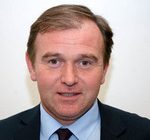
  • George Eustice – 2020 Statement on Flooding

    George Eustice – 2020 Statement on Flooding

    Below is the text of the statement made by George Eustice, the Secretary of State for Environment, Food and Rural Affairs, in the House of Commons on 24 February 2020.

    With permission, I will make a statement to the House on the recent flooding caused by Storm Dennis, which followed Storm Ciara and affected many parts of the country.

    I would like to begin by extending my condolences to the families and friends of the five individuals who sadly lost their lives as a result of these storms. I am sure that the thoughts of the whole House are with those grieving families today. Our thoughts are also with those who have suffered damage to their properties as a result of the storms. To have one’s home flooded is an incredibly traumatic experience, and I am conscious that some have flooded repeatedly over recent years.

    Storm Dennis cleared the UK during the course of Monday 17 February. However, this remains a live incident, and I would urge people in at-risk areas to remain vigilant. We are monitoring the situation closely, and most areas are moving into recovery phase. However, rainfall over the past few days is still leading to higher water levels, so we will continue to see effects this week.

    Communities have been affected across our Union. We have had an incredibly wet winter. Some areas have already received almost double their average rainfall for February, with others experiencing a month’s worth of rain in just 24 hours. Records have been broken. Eighteen river gauges across 15 rivers recorded their highest levels on record during or triggered by Storms Ciara and Dennis, including the Colne, the Ribble, the Calder, the Aire, the Trent, the Severn, the Wye, the Lugg and the Derwent. Storm Ciara flooded over 1,340 properties, and the latest number of properties affected by Storm Dennis stands at over 1,400. Wales has also seen significant impacts, and we are in close contact with the Welsh Government.

    In anticipation of the storm, we stood up the national flood response centre on Friday 14 February. The scale of the response has been huge, from setting up temporary defences to knocking on doors and issuing residents with warnings. The Environment Agency issued 343 flood warnings for Storm Ciara and 514 for Storm Dennis. On 17 February, we saw a record concurrent total of 632 flood warnings and alerts issued in a single day. Two severe flood warnings, 107 flood warnings and 207 flood alerts remain in place in England. There are also an additional 13 flood warnings and 39 flood alerts that remain in place in Wales, and one flood warning in Scotland.

    We have been sharing information with the public so that people can prepare for flooding wherever they live. We have deployed over 3 miles of temporary flood barriers and 90 mobile pumps, and we have been keeping structures and rivers clear of debris. Over 1,000 Environment Agency staff per day have been deployed, with the assistance of about 80 military personnel. In Yorkshire, the military helped to deploy temporary defences in Ilkley and kept the road open between Mytholmroyd and Hebden Bridge in Calderdale. I would like to record my thanks to all the response teams, including the Environment Agency, local authorities, our emergency services and the military. They are all still working hard, with over 20 Government bodies, local authorities and volunteers at work across the country.​

    The Government acted swiftly to activate the Bellwin scheme to help local authorities cope with the cost of response in the immediate aftermath. On Tuesday 18 February, we also triggered the flood recovery framework to help communities get back on their feet. I am working alongside the Secretary of State for Housing, Communities and Local Government to help households and businesses recover. This includes making available hardship payments and council tax and business rate relief. Households and businesses will also be able to access grants of up to £5,000 to help to make them more resilient to future flooding, and a ministerial recovery group is co-ordinating efforts across Government. Storms Ciara and Dennis affected thousands of acres of farmland, so we will consider the need to extend the farming recovery fund once we have all the necessary data.

    Investments made in recent years have significantly improved our resilience, but there is much more to do. We are investing £2.6 billion in flood defences, with over 1,000 flood defence schemes to better protect 300,000 homes by 2021. To put this into context, in the floods of 2007, 55,000 properties were flooded, but with similar volumes of water in place this year, thankfully far fewer properties have been flooded, and flood defence schemes have protected over 90,000 properties in England this winter. Our manifesto commits us to a further £4 billion in new funding for flood defences over the next five years.

    Since the incidents of 2015, we have strengthened and improved our system of flood warnings, and in 2016 we introduced the Flood Re scheme, so that insurance cover for floods is accessible for at-risk properties. An independent review of the data on insurance cover will help us to ensure that it is working as effectively as possible.

    Of course, we recognise that none of these steps will take away the anguish of those who have suffered flooding in the most recent storms. Climate change is making the UK warmer and wetter, with more frequent extreme weather events. We need to make nature’s power part of our solution, alongside traditional engineered defences. We are already investing £10 million to restore our peatland habitats, planting enough trees to cover an area the size of East Anglia, with a new £640 million nature for climate fund, and supporting farmers to be part of our plans to prevent flooding through the new environmental land management scheme, to reduce and delay peak flows in our landscapes.

    Later this year, we will set out our policies to tackle flooding in the long term, and the Environment Agency will publish the updated flood and coasts strategy. This country will also lead global ambitions on climate change as the host of COP26 later this year, urging the world to achieve net zero in a way that helps nature recover, reduces global warming and addresses the causes of these extreme weather events. I commend this statement to the House.

  • Stuart McDonald – 2020 Speech on Points Based Immigration System

    Below is the text of the speech made by Stuart McDonald, the SNP MP for Cumbernauld, Kilsyth and Kirkintilloch East, in the House of Commons on 24 February 2020.

    Despite lots of competition, this pretend points-based system surely amounts to one of the most damaging, unimaginative and unpopular policy announcements made by a Home Secretary in recent years. Do not get me wrong: it will be fine for the big multinational companies in the City with their armies of immigration lawyers, but it will be a disaster for everybody else.

    Surely the Home Secretary regrets that her paper insults half the population by characterising their hard work as “cheap” unskilled labour and, indeed, by insinuating that their work could just as easily be done by the long-term sick or by robots. Why have employers been given just a few months to prepare for these massive changes when the Home Office took three and a half years just to dream them up? Will she listen to the swathes of industry leaders telling her it will be impossible to fill vacancies because of the salary thresholds? Will she listen to the employers who are worried about being mired in the red tape and expense of sponsorship and visa processes?

    Why has the Home Secretary removed even the half-baked temporary worker scheme that was meant to operate as a transitional measure? Why is there no provision for self-employed workers? What has happened ​to the remote areas pilot scheme promised by her predecessor and to the heavily trailed extra points that were to be on offer for working outside London? And why has she said nothing about the tens of thousands of extra families that will be destroyed if she extends the UK’s barbaric family migration rules to their relationships? Is that her plan?

    This will be disastrous across all manner of key sectors in Scotland, from agriculture to hospitality, from fishing to manufacturing and from construction to social care. Free movement was the one part of the migration system that actually worked for Scotland. Does the Home Secretary even understand the basic point that reducing migration is a disastrous policy goal for Scotland? Has she read the Scottish Government’s paper on a Scottish visa, and will she finally commit to engaging on those proposals in good faith?

  • Bell Ribeiro-Addy – 2020 Speech on Points Based Immigration System

    Below is the text of the speech made by Bell Ribeiro-Addy, the Labour MP for Streatham, in the House of Commons on 24 February 2020.

    I would like to thank the Home Secretary for giving me early sight of this statement. She and the Government call this a points-based immigration system, but Professor Alan Manning, the departing chair of the Migration Advisory Committee, has derided this and called it a “soundbite”—that is, meaningless phraseology. The truth is that the Government are introducing a set of restrictions on migration for work including the damaging salary threshold, ​but that is not the sole restriction. Workers earning below the salary threshold are not low skilled at all. There is no such thing as low-skilled work: just low-paid work. All work is skilled when it is done well. In fact, outside London and the south-east, they are the majority of workers. Again, they are underpaid, not low skilled. In trying to exclude their overseas recruitment, Ministers run the risk of doing even greater damage to our public services than they have done already.

    Ministers must surely be aware that a key problem for the NHS is, as its leaders tell us, that the exit door is closed. Patients who are well enough to be discharged from hospitals are not being discharged, because they lack access to social care packages. Blocking the overseas recruitment of social care workers who are generally paid well below the threshold will cause major problems with social care. It is already in crisis and this will exacerbate the exiting problems in the NHS, yet Ministers seem unconcerned. I must mention the need for the new NHS-specific visa. Surely the obvious thing would have been to create points for NHS jobs in the new system, but then I suppose the Government would have to admit that the salary threshold was simply not feasible and that the system just would not work. This is certainly not a singular global immigration system, and it has already been proved that a number of exemptions will be needed to make it work.

    Social care and the NHS are not the only areas that will be hit. The Government tell us that the unemployment rate is currently close to its lowest, but that completely contradicts Ministers’ suggestions that immigration causes unemployment or creates slack conditions in the labour market, leading to low pay. The Home Secretary seems to believe that the gaps can be filled by the economically inactive, but I strongly doubt that the Government intend to get carers, the elderly and students into work by raising their wages. It is more likely that they will cut benefits once again. Many employers report that they will struggle to fill vacancies or even to close the gap caused by the departing EU workers, who will now lose their rights under the system.

    The requirement to speak English is a complete red herring. This is dog-whistle politics. Most people who come here to work—the Government’s system will demand that they have a specific job offer—come here with some English language skills and learn more as they go along. It is difficult to function in the labour market without any English at all, which is why they already speak English when they come here. Do the Government intend to split up families where the spouse or child has less-than-perfect English? This would be cruel and inhumane. Do the Government also intend to block the recruitment of scientists, mathematicians and IT specialists, for example, if they have less-than-perfect English? If so, that will completely undermine Ministers’ boasts about global Britain recruiting the brightest and best. In fact, the policy will tend towards recruiting only the most desperate if their spouse would be blocked from coming, because others may find employment in a country in which their spouse can reside.

    What of the right to a family life in general? Will the new work visas allow that right? If not, which scientist or person with a PhD would not choose a country that allows the right to a family life? There is also no justification for denying access to public funds for years. If someone is working here, they are paying taxes, and ​they and their family should have access to the benefits paid for by those taxes, including working tax credits and access to the NHS. Have Ministers considered the public health implications of restricting access to the NHS in that way, even if they are unable to consider the human costs? What about spouses who become victims of domestic abuse being denied access to refuges? That is shameful.

    Finally, I want to address a grave concern shared by many Opposition Members regarding workers and citizens’ rights. We cannot accept that work visas are tied to specific employers and want reassurances that that will not be the case. Otherwise, the Government will be creating conditions of bonded employment, where the threat of dismissal implies the threat of deportation. That would be disastrous for migrant workers and their families and detrimental to the interests of the entire workforce.

  • Priti Patel – 2020 Statement on Points Based Immigration System

    Priti Patel – 2020 Statement on Points Based Immigration System

    Below is the text of the statement made by Priti Patel, the Home Secretary, in the House of Commons on 24 February 2020.

    With permission, Mr Speaker, I would like to make a statement about the United Kingdom’s new points-based immigration system.

    Last week, I announced our plans for a radical new approach that works in the interests of the British people. It will be a fair, firm and fundamentally different system in the control of the British Government that prioritises those who come to our country based on the skills they have to offer, not on the country they come from, and it will enable the UK to become a magnet for the brightest and the best, with special immigration routes for those who will make the biggest contribution. We will create new arrangements for new migrants who will fill shortages in our NHS, build the companies and innovations of the future and benefit the UK for years to come.

    As this Government restore our status as an independent sovereign nation, we will set our own immigration standards and controls as an open, democratic and free country. The Government have listened to the clear message from the British public and are delivering what the people asked for in the 2016 referendum and the December 2019 general election. That includes ending free movement through the introduction of a single global immigration system that prioritises the skills that people have to offer, not where they come from, and restoring public trust in our immigration system with a system that truly works for this country. That is what people voted for, and we are a Government who will deliver on the people’s priorities.

    We are ending free movement: that automatic right for EU citizens to enter and reside in the UK, which does not apply to people from other countries. Now that we have left the EU, this ambitious Government of action are ending the discrimination between EU and non-EU citizens so that we can attract the brightest and best from around the world. Our country and our people will prosper through one system and an approach that is in the control of the British Government—one that will also deliver an overall reduction in low-skilled immigration, as the public asked for.

    Many of the values that define our great country originated in the huge benefits immigration has brought to our nation throughout its history. People from every corner of the globe have made an enormous contribution to the fabric of our society, which is why at the heart of this new single global immigration system will be a focus on attracting talented people from around the world and on the contribution they and their families will make, irrespective of their country of origin.

    Last Wednesday, I published a policy statement setting out the new UK points-based immigration system, which will start operating from 1 January 2021 and will work in the interests of the whole United Kingdom. This will be a single, comprehensive, UK-wide system for workers and students from around the world. Our points-based system will provide a simple, effective and flexible arrangement to give top priority to the skilled workers we need to boost our economy and support our brilliant public services. All applicants will need to demonstrate that they will have a job offer from an approved sponsor. The job must be at an appropriate skill level and the applicant must be able to speak English and meet tougher criminality standards and checks.​

    We have acted on the advice of the Migration Advisory Committee to make the skilled workers route more flexible, as businesses asked for, and we have reduced the required skill level to the equivalent of A-level qualifications and cut the general salary threshold to £25,600.

    The threshold for many NHS workers and teachers will be set in line with published pay scales to ensure that our public services do not suffer and we attract the talent that we need. Experienced workers who earn less than the general threshold, but not less than £20,480, may still be able to apply tradable points to reward vital skills and to bring us the talent that our economy needs. For example, a PhD in a relevant subject will earn extra points, with double the number of points for specialists in science, technology, engineering and mathematics. Additional points will be awarded for occupations that struggle to fill vacancies, and I am asking the Migration Advisory Committee to keep its list under regular review to ensure that it reflects the needs of the labour market.

    The Government will ensure that talented employees from overseas on whom our great NHS relies can come here to work and provide high-quality, compassionate care. That means that we will prioritise qualified staff who seek to move to the UK to work in our NHS, as well as retaining our own national commitment—through the investments made by this Government—to invest in and train more brilliant nurses, doctors and public health professionals in our own country. The new NHS visa system will provide a work visa with a fast-track decision, a larger dedicated advice service for applicants, and reduced fees.

    Like many other Members, I represent a partly rural constituency. Our commitment to British agriculture is clear. In addition to the reforms that I have outlined, I am quadrupling the size of the pilot scheme for seasonal workers in the horticulture sector to ensure that our farms and our horticultural sector continue to thrive. That is happening immediately.

    We will continue to welcome international students who want to study in our world- class universities across the United Kingdom, and there will be no cap on their numbers. Those who apply will be accepted provided that they are sponsored by an approved educational institution, have the necessary academic qualifications and English language aptitude, and are able to support themselves financially once they are in the United Kingdom. When they have finished their studies, our new graduate route will allow them to stay in the UK and work at any skill level for up to a further two years. Let me also take this opportunity to reassure the House that the immigration arrangements for members of the armed forces, musicians and other performers are completely unchanged, and those routes will operate as they do now.

    In line with the ending of free movement, there will be no immigration route for lower-skilled workers. No longer will employers be able to rely on cut-price EU workers. Instead, we are calling on them to invest in British people—as well as investing in technology and skills—to improve productivity, and to join the UK Government’s mission to level up our skills and economic growth across our country. Those changes are vital if we are to deliver a high-skill, high-wage and highly productive economy, and because we have provided certainty in respect of the new immigration system, the economy and businesses have had time to adjust.​

    The proposals set out in our policy statement are just the start of our phased approach to delivering a new immigration system. We will continue to refine our immigration system, and will build in flexibility where it is needed. Over time, more attributes for which points can be earned—such as previous experience and additional qualifications—may be added, which will allow us to respond effectively to the needs of the labour market and the economy. However, to be effective the system must be simple, so there will not be endless exemptions for low-paid, lower-skilled workers. We will not end free movement only to recreate it in all but name through other routes.

    The world’s top talent will continue to be welcome in our country. From January we will expand our existing global talent route to EU citizens, giving all the world’s brightest and best the same streamlined access across the UK. Reforms that I introduced last week will allow us to attract even more brilliant scientists, mathematicians and researchers through that route to keep this country at the cutting edge of life-changing innovation and technology, and the points-based system will provide even more flexibility to attract the finest international minds with the most to offer. Alongside the employer-led system, we will create a points-based unsponsored route to allow a limited number of the world’s most highly skilled people to come here without a job offer as part of the phased approach, if they can secure enough points.

    Our new fair and firm immigration system will send a message to the whole world that Britain is open for business as we continue to attract the brightest and best from around the world, but with a system that the British Government have control over. Our blueprint for taking back control will transform the way in which people come to our country to work, study, visit or even join their family. Our new independence will strengthen border security, allowing us to reject insecure identity documents from newly arriving migrants. We will be able to do more to keep out criminals who seek to do harm to our people, communities and country.

    Finally, I am pleased to say that when it comes to EU citizens already in the UK, the EU settlement scheme—the biggest scheme of its kind ever in British history—has already received 3.2 million applications resulting in 2.8 million grants of status. Through this system, we will finally develop a true meritocracy where anyone with the skills who wants to come here will have the ability to do so. This is just the start of a phased approach to delivering a new system. I will shortly be bringing forward an immigration Bill and radically overhauling and simplifying the complex immigration rules that have really dominated the system over a number of decades. For the first time in decades, the UK will have control over who comes here and how our immigration system works. I commend this statement to the House.

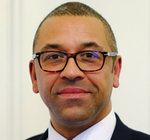
  • James Cleverly – 2020 Statement on Syria

    James Cleverly – 2020 Statement on Syria

    Below is the text of the statement made by James Cleverly, the Minister for the Middle East and North Africa, in the House of Commons on 24 February 2020.

    I am grateful to my right hon. Friend for bringing this urgent question to the House. We are deeply concerned by the crisis in north-west Syria, where the situation on the ground is deteriorating. Over 900,000 people have been displaced while fleeing the regime and Russian bombardment. They are fleeing northwards and being squeezed into increasingly dense enclaves. With camps full to capacity, many are sleeping in the open, in temperatures well below freezing.

    Nearly 300 civilians have been killed in Idlib and Aleppo since 1 January this year. The Office of the United Nations High Commissioner for Human Rights has confirmed that 93% of those deaths were caused by the regime and its allies. International humanitarian law continues to be ignored, with civilian infrastructure being hit probably as a result of active targeting. As recently as yesterday, the White Helmets reported that Russian warplanes hit a children’s and women’s hospital in the village of Balioun in Idlib.

    The UK has condemned, and continues to condemn, these flagrant violations of international law and basic human decency. Following UK lobbying, in August 2019 the UN Secretary-General announced a board of inquiry into attacks on civilian infrastructure supported by the UN or that were part of the UN deconfliction mechanism, which we continue to support. We look forward to the publication of the results as soon as possible.

    We have repeatedly pressed—including at the UN Security Council—for an immediate, genuine and lasting ceasefire. We have called a number of emergency council sessions on Idlib in New York, most recently on 6 February alongside the P3, where the UK ambassador to the UN, Karen Pierce, reiterated our clear call for a ceasefire and our support for Turkey’s efforts in the region. There is overwhelming support for that in the Security Council, and we regret very much that the Russians continue to obstruct the possibility of agreement.

    As the Foreign Secretary noted on 31 January this year, only a political settlement in line with UN Security Council resolution 2254 can deliver a lasting peace for Syria. The UK will continue to support the efforts of the UN special representative for Syria, Geir Pedersen, to that end. We regret that the Syrian regime continues to stall the process, despite the cost to the Syrian people and the loss of Syrian lives.

    Despite this political obstruction, the UK remains an active leader in the humanitarian space. In the financial year 2019-20, the Department for International Development has allocated £118 million to projects implemented by organisations delivering cross-border aid, primarily into north-west Syria, including into Idlib. This has helped to provide hundreds of thousands of vulnerable people with food, clean water, shelter and healthcare, including psychosocial support.​

    We have provided funding to response partners, including the UN, to pre-position essential supplies to support innocent families and civilians displaced by conflict and are supporting all our partners to respond to this humanitarian crisis.

  • Zarah Sultana – 2020 Speech on Coventry IKEA Store Closure

    Below is the text of the speech made by Zarah Sultana, the Labour MP for Coventry South, in the House of Commons on 13 February 2020.

    I am very pleased to have secured my first Adjournment debate, and on a topic of real importance to my constituency. The Tuesday before last, IKEA announced that it will be closing its flagship store in Coventry this summer, putting 352 jobs at risk. The store is in the city centre, at the northernmost point of my constituency. The announcement came out of the blue for many, including its workers.

    Coventrians have been in touch with me to express their shock and sadness at the announcement. Over 3,300 people have signed an online petition calling for the store to stay open. People have expressed their “devastation” at its loss, seeing it as “an iconic part” of the city’s landscape. It has been part of the city’s scene since 2007, when it became IKEA’s first city centre shop. It is indeed distinctive; its blue and grey walls, standing seven floors tall, can be seen from a distance. Since it opened, it has become a major site in the city’s shopping ecosystem, attracting people from across the region to the heart of Coventry. Its closure will be felt hard by the city—mostly, of course, by the workers and their families, who risk their livelihoods being devastated, but also by the many people who enjoyed spending time in its café, the small businesses that benefited from the people it attracted to the city, and the many students who relied upon it to fit out their university rooms. A friend even told me how sorely she would miss its meatballs.

    The closure speaks to two much broader trends that have significance for Coventry and beyond. The first is the rise and fall of industry and the effects of what we now see in Coventry and across the midlands and the north: deindustrialisation. Where we now have low-paid and insecure retail jobs, there was once strongly unionised, relatively well-paid and stable employment.

    Industry has always come and gone in Coventry. As with capitalism generally, it uses, exploits and discards working people as it pleases. This was true with the textile industry in the 17th century, which began with the labour of Huguenot refugees and at its height employed 25,000 people in the city, only later to crash and leave workers ruined. It was also true of the manufacturing of cycles and clocks, which in the late 19th and early 20th century became the backbone of the city’s industry. By the mid-20th century it was the motor industry that was booming, this time on the back of Irish migrants, and it provided the city’s working class with work.

    By the 1970s, Jaguar, Standard-Triumph and Alvis all had manufacturing plants in what was then dubbed “Britain’s Detroit”. With it there came good, unionised jobs and Coventry enjoyed relative prosperity. However, as had happened to the industries before it, at the whims of bosses in search of cheaper labour, much of the motor industry moved abroad, again leaving the city’s working class abandoned. Unemployment exceeded 20%, and by the early 1990s discontent triggered riots across the city. This abandonment was felt so ​much that it is even said that the city’s very own The Specials based their classic “Ghost Town” on the sense of loss felt in the city.

    The city has never fully recovered from deindustrialisation because today there are not the mass, well-paid, highly-skilled and secure employment opportunities for kids growing up in Coventry. This is clearly shown by the fact that where the IKEA store stands today there once stood the site of a General Electric Company factory.

    Taiwo Owatemi (Coventry North West) (Lab)

    Does my hon. Friend agree that we are in urgent need of a clear strategy to maintain and grow our city centres? The UK must remain a place of thriving town centres, with security and well-paid jobs, and places such as Coventry must be at the centre of this work.

    Zarah Sultana

    I thank my hon. Friend for making a really important point. I will be coming to the decline of the high streets and regional investment in a moment.

    The General Electric Company factory was a six-storey building, employing thousands of people in relatively decent and unionised work. With deindustrialisation, Coventry has seen secure and well-paid jobs replaced by insecure and poorly-paid work. This is the first story that the loss of the IKEA store speaks to. The second is the decline of the British high street.

    Coventry city centre, like all our city centres, is more than a place to shop. It is the beating heart of the city—a place that should provide community, culture and character. But in the last decade, the retail sector has been increasingly hard hit and empty shops are becoming commonplace. As one Coventrian said at the news of the store’s closure, the city risks becoming a ghost town again.

    Jim Shannon (Strangford) (DUP)

    As someone who has bought numerous furniture items from IKEA and spent frustrating hours putting them together, I understand the IKEA furniture concept. Does the hon. Lady agree that the potential loss of 352 jobs is horrific, and that there must be an onus on a chain store as large as IKEA to go the extra mile by placing members of staff in other stores or ensuring that they are trained for new jobs? It is not enough to just up sticks with a “too bad, too sad” attitude; that just will not be accepted.

    Zarah Sultana

    Absolutely. The priority has to be every single member of staff whose job is at risk. IKEA should prioritise their needs, and ensure that they are redeployed to other stores or offered skills and training.

    The words of The Specials risk becoming true once more. But there is a broader trend; there are now roughly 25,000 empty retail spaces around the country, which is a vacancy rate in excess of 10%. Last year, 57,000 retail jobs were lost, and a further 10,000 were lost last month alone. The market is only too happy to put workers on the scrapheap the moment that the profit motive demands, and there is a real danger that these IKEA workers will be discarded too, but they must not be forced into unemployment with all the strain and pain that it brings.

    I know how grim unemployment can be. I know what it feels like. I know the sense of shame for people who stand in the queue at the jobcentre. I know the loss of confidence they feel, the impact it has on their self-esteem ​and the fear they feel that they may lose their skills. I have been there. For the sake of these workers—and workers across Coventry and the country who are at risk of losing their jobs, are stuck in insecure work or are already out of work—I tell the Minister that it is his responsibility to ensure that this does not happen. It is his responsibility to protect workers from unemployment and to ensure that the training, reskilling and job opportunities exist to give everyone the chance to have decent, well-paid and secure work. We cannot have a Government who oversee the opening up of food banks and the closing down of good workplaces.

    The Prime Minister likes to talk about “levelling up” the country. Well, I hope I am forgiven for not believing a man whose party drove the deindustrialisation that now blights the midlands and the north; whose party slashed the funding of public services that working people rely on, cutting more in the midlands and the north than in the wealthy shires; and whose party continues to prioritise the City of London, which dominates the economy, and concentrate spending on the capital and the south-east. After all, in his own words, nobody “stuck up for the bankers” more than he did.

    If the Prime Minister were to follow up on his promise to invest in the region, here is what he would do for workers in Coventry—here is what he would do to ensure that the 352 workers at the IKEA store would not have to fear unemployment. It means reversing decades of deindustrialisation and instead investing in new green industries to kick-start the green industrial revolution, including manufacturing electrical vehicles to bring back the motor industry to the west midlands, but now reducing emissions and improving air quality. It means investing in Coventry’s public transport, opening up new rail lines and bringing them into public ownership to make travel free and green. It means reversing cuts to local government, whereby councils have lost 60p to every £1, so that Coventry City Council can support the local community as it wants to. It means rejuvenating Coventry city centre and high streets across the country by giving local councils the power to open empty retail spaces to start-ups, co-operative businesses and local community projects. It means not pretending that you are not to blame for the collapse in bus services, when Conservative Governments have cut £645 million in real terms from buses, and instead putting real money into our bus services and letting under-25s travel for free. That is how we can rejuvenate Coventry city centre and high streets across the country.

    Coventry is the city of culture 2021; it is a city rich in culture and industrial history. But the closure of IKEA will be the latest episode in what happens when Governments do not invest in all regions, allow deindustrialisation to go unchecked and let our high streets empty. That must not continue. I give my solidarity to the workers at IKEA at what is a difficult time for them and clearly state that I am here to fight for them and for all workers.

  • Siobhan Baillie – 2020 Maiden Speech in the House of Commons

    Below is the text of the maiden speech made by Siobhan Baillie, the Conservative MP for Stroud, in the House of Commons on 13 February 2020.

    Thank you, Madam Deputy Speaker. It is a pleasure to follow my hon. Friend the Member for Dudley South (Mike Wood)—especially without having had to do the weird Westminster thigh workout that is bobbing up and down for ages to get your attention, Madam Deputy Speaker.

    First, I wish to thank the people of Stroud, who put their faith in me. I am particularly proud to be the first ever female MP for Stroud. I am also an optimist. I said on the telly last year that I was the luckiest candidate in the UK, and now I am the luckiest MP. So I thank you all; I do not take this responsibility lightly.​

    I like the custom of giving credit to our predecessors in maiden speeches. Throughout his long career in politics, David Drew was known for his idealism and his commitment to his constituents. He had one of the longest-running political bromances with my predecessor, Neil Carmichael. They fought each other for nearly 20 years—that is some dedication. I wish David well in whatever he decides to do next.

    Anybody who has read Laurie Lee’s “Cider with Rosie” will know of the beauty and charm of Stroud’s five valleys. Please read his work soon if you have not already done so. Historically, the area was made prosperous through an early recognition that the local fast-flowing, clean river water could be used to power cloth mills. You will forgive me, Madam Deputy Speaker, for not wearing vintage Stroud cloth today; the truth is that I could not find it in animal print. [Laughter.] I am, however, wearing the creation of a young Stroud fashion designer who dedicates her talent to making sustainable fashion, completely without waste. And she does it in baby-bump size, which is very kind.

    As my constituency goes beyond the magnificent town of Stroud, the breadth and physical geography and the diversity of human activity found in the valleys and vale just defies simple description. From Sharpness to Stroud, Hardwicke to Horsley, Cranham to Cam, Berkeley to Bisley and Arlingham to Amberley, I am always impressed with people’s ideas and passion. So when people ask me why I am optimistic, I say, “Look at our current creativity, innovation and drive.” It is the people who are the real stars. They are some of the most innovative, hard-working, caring and creative souls I have ever met. Look at the young designers; our schoolchildren, who are leading on environmental change; and the energy packed into every quirky festival, litter-pick and Stroud town in bloom competition.

    Look, too, at our businesses: a company founded in Stroud is leading innovations in battery-powered aeroplanes; the Prince of Wales’ Aston Martin and the royal train are fuelled with Stroud biofuel; the fastest ever land rocket is being built in one of our schools; and stunning local wallpaper and fabric designs can be found in homes around the world, including those of the rich and famous.

    However, my job is not just to love-bomb Stroud or to talk idly about change. I am in this place to get things done. The people of this great country have given us a mandate; now, we must deliver for them. So I have cobbled together a few key thoughts. From my time as a councillor and having fought for local campaigns, I know that it is often the changes around us in our communities and neighbourhoods that we notice the most. It is often local effort and kindnesses that make the biggest difference to where we live. Therefore, while I welcome the recognition of the importance of place and the investment that is coming into infrastructure, we must not forget the people in that process. As I said before, it is the people who are the real stars.

    From my experience on the doorsteps across the Stroud constituency, I know that we must support our high streets. They need investment so that they can be the hub of communities once again. The Chancellor and the Secretary of State for Housing, Communities and Local Government saw that for themselves in Stroud during the election—this speech was only correct as ​drafted and the Chancellor has now changed, but I will not be put off seeking funding for my local high streets by a reshuffle.

    We must support our farmers. They are the great custodians of our land. All new legislation should focus on maximising their potential and maximising food production.

    We must support our schools and children with special educational needs. They are our future. The new school funding formula is welcome, but we have to correct long-standing issues with funding in Gloucestershire.

    We must support new green initiatives and lead the global emergency response. A commitment to the environment runs through every single thing that we do in Stroud, the valleys and vale.

    From my experience, working my way up to be a family law solicitor and being before the House today quite against the odds, in many respects, I know that we must support further education. University is great for some, but what about everybody else? Come to see the students at South Gloucestershire and Stroud College: be inspired by them, see what Government funding can do, and realise that we will all benefit from unleashing the potential of lifelong learning.

    We must support initiatives that strengthen relationships and early intervention for children. We know that mental health issues are established by the time of the teenage years, and we know about the five pathways to poverty. It is daft simply to throw money at problems for adults without a true preventive programme backing up children.

    We must support families going through times of separation. Children get caught in the middle, and couples now frequently litigate without any representation at all. Nobody wants this—not the parents, not the couples, not the judges and not the lawyers. We can and should change that system.

    I started by saying that I am an optimist, but of course we face challenges: we live in a world where competition is global; the pace of technological change is accelerating; and climate change threatens our very way of life. Addressing these challenges will require hard work and difficult choices. That is why our constituents sent us here. I look forward to working for all the people of Stroud and I look forward to working with Members on both sides of the House to deliver for this great nation. I, for one, truly believe that the best is yet to come.

  • Neil Hudson – 2020 Maiden Speech in the House of Commons

    Below is the text of the maiden speech made by Neil Hudson, the Conservative MP for Penrith and the Border, in the House of Commons on 13 February 2020.

    It is a great honour to stand to make my maiden speech as the Member of Parliament for Penrith and The Border. It is a tremendous privilege to be in this House, and I thank my electors for putting their trust in me. The three MPs before me—William Whitelaw, Lord David MacLean, and Rory Stewart—had amazing parliamentary careers, covering roles such as Home Secretary, Chief Whip and International Development Secretary. I pay special tribute to my predecessor, Rory Stewart. When I was selected as the candidate for my seat, Rory reached out to me and was extremely kind and generous with his support, for which I am grateful.

    Rory was a tireless champion for Penrith and The Border, famously walking around the entire vast constituency—even that did not tire him out. He helped ​countless numbers of constituents and campaigned hard for better broadband, overcoming rural isolation, protecting the environment, and flood management, which sadly has been critical again in Cumbria in recent days—my sympathies go out to the people of Appleby at this time. As a Minister, he was incredibly thoughtful, articulate and rational in portfolios such as the environment and prisons and, latterly, as International Development Secretary. As he moves on, I wish him and his family well. By the way, Rory, when you are next in Cumbria, you are welcome to come and kip with me.

    Penrith and The Border has a population of over 82,000 and an area of 3,120 sq km. As such, it is geographically vast and sparsely populated. The constituency contains many diverse and beautiful villages and towns. I will name but a few, with apologies to those that I miss out: Penrith, Wigton, Appleby, Longtown, Brampton, Alston, Kirkby Stephen and Shap. I am also proud to have parts of the original Hadrian’s wall in my constituency, as well as parts of the original “blue wall”.

    Agriculture is the lifeblood of the constituency, accounting for about 50% of land use, but there are other industries, too. Tourism is a hugely important sector for our local economy. Indeed, Cumbria has one of the largest tourist economies in the UK. There were 47 million visits to Cumbria in 2018 alone. In addition, there are over 5,700 businesses in Penrith and The Border. Such businesses are absolutely vital to our communities.

    Such a vast area has problems with connectivity, be it virtual or real. Whether it is broadband, mobile phone coverage or transport links such as trains and rural buses, communities and people need to be connected and joined together so that people can interact with and access their local services. I will champion these causes.

    As the name suggests, my seat goes right up to the Scottish border. I will join hands with my colleagues along and across the border. Working together, we can bring investment and infrastructure to the area through initiatives such as the Borderlands Partnership. I will also passionately stand up with all my heart for the precious Union that is our United Kingdom.

    I am a veterinary surgeon by background, and I believe I may be the first vet to be elected to the House of Commons since 1884, when Sir Frederick Fitzwygram was elected as the Member of Parliament for Fareham. The other vets at Westminster have included the late, great Professor Lord Soulsby, who was brought up in Penrith and was the dean of Cambridge Veterinary School, where I trained. Now there is Professor Lord Trees, who sits in another place. All three served as president of the Royal College of Veterinary Surgeons, of which I am proud to be a fellow.

    So why has this particular vet ventured into politics? My involvement as a veterinary inspector in the 2001 foot and mouth crisis spurred me into wanting to use my background in public service. I am sure Members will recall the dreadful scenes from that crisis—scenes we hope are never repeated. Supervising the culling of many, many animals is sadly emblazoned in my memory. Nationally, over 6 million animals were slaughtered. Cumbria was hit especially hard, with over 1.25 million animals lost. Forty-five per cent. of Cumbria’s farms were subject to culls, and this rose to 70% in the north. ​The crisis had severe effects on agriculture and the economy, and also on the mental health and welfare of the people who live and work in this area.

    As we all know, agriculture is incredibly important to the UK, contributing £9.6 billion to UK economic output in 2018, but it goes much wider than this. We are a nation of animal lovers. Some 40% to 50% of households have a pet and, as an equine vet, of particular relevance to me is the fact that there are over a quarter of a million horses in the UK. Issues in areas such as animal health and welfare, disease surveillance, public health and trade are pivotal, now more than ever, as we enter a crucial time of legislation and common frameworks in these areas.

    It is vital that, now we have left the EU, we stand up for our first-class standards of farming and animal welfare as we go on to secure trade deals. Indeed, this will be a great opportunity for the UK to be a beacon to the rest of the world on animal welfare. We can send out the message that if other countries want to trade with us, they need to bring their animal welfare standards up to our level.

    Sadly, the veterinary profession is over-represented in mental health issues and the incidence of suicide. I very much welcome the cross-party and, indeed, Government commitment to parity of esteem between mental health and physical health so that people, both young and old, can access the best mental health care in hospital and in the community.

    On a lighter note, being a vet in politics has some advantages on the doorstep. As I said, half of households have a pet, frequently a dog. When I am out canvassing and a dog hears a vet knocking at the door, either they run a mile, thinking they are about to get an injection or, worse, have their anal glands emptied—“anal glands” is something you will not read in Hansard every day—or they run towards me. I am reminded of the time a dog did just that and latched on to my leg, not in an aggressive fashion but more in an amorous manner. I looked down and said to the owner, “Well, I think I’ve secured his vote.” To which the owner smiled and replied, “Well, you’ve got mine now, too.”

    Finally, I would like to thank some specific people. First, I thank my family and friends for their enduring and steadfast love and support over the years—I could not have done this without you. I also thank Penrith and The Border Conservative association for all its help and support.

    I also thank specific Members of this House and another place for their support and encouragement in my journey here. To my right hon. Friends the Members for North Somerset (Dr Fox), for Epping Forest (Dame Eleanor Laing), for North East Cambridgeshire (Steve Barclay) and for Dumfriesshire, Clydesdale and Tweeddale (David Mundell), my hon. Friends the Members for Aldridge-Brownhills (Wendy Morton), for Berwickshire, Roxburgh and Selkirk (John Lamont) and for Moray (Douglas Ross) and, in another place, Lord McInnes of Kilwinning, thank you so much.

    On the other side of the House, I specifically mention the hon. Member for Edinburgh South (Ian Murray), whom I was up against as a candidate in 2010. When I was selected as the candidate for Penrith and The Border, he contacted me to wish me well, and he did so again when I arrived here. I feel strongly about that ​spirit of cross-party working. If someone on the other team has an idea that is good for the country, we should work together to bring it forward for the benefit of everyone. It is in that spirit that I enter this House and hope to continue.

    Finally, if you will permit me, Madam Deputy Speaker, I will say a final few words about someone you knew well, as he was a constituent of yours. My father, Christopher Hudson, sadly passed away just a few days ago. I have debated whether to say this and, indeed, whether to go ahead with my maiden speech this week, but I know it is what he would have wanted me to do.

    My dad, Christopher Hudson, was a professor of obstetrics and gynaecology, and he devoted his life to the service of his patients in the NHS and in Australia, and during periods spent in Nigeria and Pakistan. He notably worked to reduce maternal mortality and postpartum complications in the developing world. He delivered countless babies and saved countless lives through pioneering surgery in this area and, especially, in cancer surgery—those procedures are still making a difference today. In addition, he trained and mentored so many health professionals right up until the end. I am so sorry that he is not here today, but he is at peace now. With all my heart and soul: thank you, mum and dad. God bless you, dad. This one’s for you.