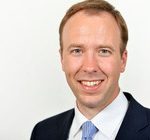
Tag: 2020

  • Matt Hancock – 2020 Speech on Social Care

    Matt Hancock – 2020 Speech on Social Care

    Below is the text of the speech made by Matt Hancock, the Secretary of State for Health and Social Care, in the House of Commons on 25 February 2020.

    I beg to move an amendment, to leave out from “House” to the end of the Question and add:

    “notes that the Government is committed to fixing the crisis in social care; and supports the Government’s commitment to find a long term solution for the growing need for care and commitment to an ambitious three point plan, including extra funding every year, seeking a cross party consensus and ensuring the prerequisite of any solution is a guarantee that no one needing care has to sell their home to pay for it.”

    This is a welcome opportunity to debate social care—a subject of vital importance—and I want to set out how we must rise to the challenges and celebrate all that is good. We must recognise at the start of the debate that there is much to celebrate, including the millions of people who work in social care, to whom we pay tribute. I want to welcome someone who is new to working in ​social care: my hon. Friend the Member for Faversham and Mid Kent (Helen Whately), who has joined the team as Minister for Care. I pay tribute to her predecessor, my hon. Friend the Member for Gosport (Caroline Dinenage), who led the care system so effectively and delivered a legacy of better training, better recruitment and a real focus on carers; that is a legacy to be proud of.

    Let me start with the context for this debate. It is rightly about both adults of working age and older adults. The people of this country are living longer. Over the next decade, the population aged 75 and over is set to increase by 1.5 million, and over the next 20 years, the number of people aged 65 and over is set to increase by almost half. That is emphatically a good thing. More people living for longer is not some problem to be managed; it is an opportunity to be welcomed, and welcome it we do.

    Dr Dan Poulter (Central Suffolk and North Ipswich) (Con)

    My right hon. Friend is right to highlight the significant challenge that an ageing population with multiple medical co-morbidities presents to the health and care system. In that context, it is not just about extra funding, which is obviously welcome to the care system; it is also about transforming the way we deliver care. Is it not time to consider a single point of commissioning for health and social care? If we were designing the system today, given the demographic challenges he has outlined, it would look very different from the system we have.

    Matt Hancock

    My hon. Friend is right that it is about more than just money. The money is, of course, important, but it is also about how the system is structured. There are parts of the country where the co-commissioning he calls for already exists, and we can see the improvement in efficiency that we get out of that. The hon. Member for Worsley and Eccles South (Barbara Keeley) rightly mentioned those with learning disabilities and autism, of whom there are more than 2,000 in in-patient settings. We are reducing that number and supporting more people to move into the community, including in the example that she mentioned. She talked about the challenge of that requiring more money. Actually, community settings are often better for the patient and cost the taxpayer less. As my hon. Friend says, improving the commissioning and the system is a critical part of the solution, so that yet more people can be moved out of in-patient settings.

    Liz Kendall (Leicester West) (Lab)

    The Secretary of State talks about transforming care and services so that we focus more on prevention, early intervention and help in the community and at home. That is what we should be doing, so why, as the National Audit Office has just reported, have we seen less money spent on public health, primary care and community care under this Government in the last five years? This Government are obsessed with hospitals, which is not the way that we want to go—it is about care in the community and at home.

    Matt Hancock

    The hon. Lady is dead right, and I have changed that direction of travel. This year is the first year for a generation when there has been an increase in the proportion of the NHS budget going to primary and community care. That change was at the core of the long-term plan. I insisted on that because I ​entirely agree with her analysis that getting more support out into the community is critical. This has been going in the wrong direction for a generation, and we are just starting to fix it.

    Debbie Abrahams (Oldham East and Saddleworth) (Lab)

    I want to pick the Secretary of State up on the point that he made a few moments ago. We had an exchange at the end of January about life expectancy. He says that life expectancy is increasing. It is absolutely clear from Professor Sir Michael Marmot’s report, and it has been clear since 2017, that life expectancy is stalling. Sir Michael said that

    “life expectancy actually fell in the most deprived communities outside London for women and in some regions for men.”

    I have written to the Secretary of State and I have not yet had a response, but he has an opportunity to correct the record now.

    Matt Hancock

    I saw the letter and I absolutely will reply to the hon. Lady. What I have said before, and I repeat now, is that life expectancy in this country is rising. There are parts of the country where that is not true.

    Debbie Abrahams

    It is flat.

    Matt Hancock

    It is not flat, it is rising, and it is really important that this debate, which is so critical, is based on the facts. The increase in life expectancy should be shared right across the country, and it is not, and we are determined to fix that. We are determined to ensure that life expectancy in this country rises everywhere. That is not the case and it needs to be the case, but life expectancy overall is going up. That is the fact.

    Debbie Abrahams

    The report says that it has almost ground to a halt since 2011. These are the facts, and there is an onus on the Minister to be absolutely clear about this. We cannot fudge this issue.

    Matt Hancock

    As I said, life expectancy is rising, Madam Deputy Speaker.

    Jonathan Ashworth (Leicester South) (Lab/Co-op)

    The Secretary of State will have seen Sir Michael Marmot’s report, launched today. Indeed, one of his own departmental officials spoke at the launch, because he could not make it, and said that no one could disagree with the analysis. Sir Michael Marmot says that life expectancy advances are flattening and even going backwards—they are decreasing—for the poorest 10% of women. Is Sir Michael Marmot wrong? Is that what the Secretary of State is saying?

    Matt Hancock

    No. What I am saying is that life expectancy, as I have repeated, is going up, but there are areas where it is not, and we will and we must tackle that. The challenge for us as a country is not to try to pretend that things are different to the facts. The challenge here, which Opposition Members will not accept, is that there are parts of the country where life expectancy is advancing rapidly and there are parts where it is not, and we must tackle that. We cannot have a decent policy conversation if half of the debate will not accept the facts on the ground.​

    The Marmot report was published this morning. It is absolutely critical that we level up life expectancy. The fact that in Blackpool a healthy life expectancy for men is 53 years yet in Buckingham it is 68 years is a disgrace, and we will put that right, but you cannot put things right if you ignore the facts when you are starting.

    Barbara Keeley

    I just want to round this point off. What does the right hon. Gentleman think happens with life expectancy when 1.5 million older people are going without care? Does he not think that the impact of the lack of social care, especially on women in deprived areas, is a key factor?

    Matt Hancock

    I do not recognise those figures, because—

    Andrew Gwynne (Denton and Reddish) (Lab)

    Because they don’t suit.

    Matt Hancock

    No, I do not recognise those figures because they are not the accurate representation of what is actually happening. There are many within that figure who are judged under legislation to need to pay for their own care, and they do. We have to start from a basis of fact and, frankly, until Labour Members start working on this from a basis of fact, it is very difficult to take their contributions seriously.

    The critical thing is that, as life expectancy is increasing, more people are looking forward to ageing in comfort and dignity, and that is good news. Opposition Members may not like it. It is odd; they do not seem to want to think that life expectancy is going up. We have a duty to ensure that our social care system is equal to the task. There are many things we should be proud of in our social care system, although we would not have gathered that from the speech by the hon. Member for Worsley and Eccles South. Some 84% of providers of social care are rated as good or outstanding, and 90% of people who receive care are satisfied with its standard. The proportion of adults with learning disabilities living in their own home or with their family has increased every year since 2014-15. That is good news, which we should welcome.

    Dr Caroline Johnson (Sleaford and North Hykeham) (Con)

    Is my right hon. Friend not right to say that life expectancy is continuing to go up? We would expect it to slow down, because we are not all going to live forever. The key thing is not just how long we live for; it is how long we live a high-quality, healthy life for.

    Matt Hancock

    My hon. Friend is absolutely right, and that is the sort of analysis on which we can make decent policy progress, because it based on the facts, rather than on making things up.

    Debbie Abrahams rose—

    Matt Hancock

    I will give way to the hon. Lady one more time and then I will move on, because we need to make some progress.

    Debbie Abrahams

    Again, for the record, let me say, as a former public health consultant, that healthy life expectancy is also going down.

    Matt Hancock

    I will write to the hon. Lady to give her the facts. Do Members know what the facts will say? The facts show that life expectancy is going up—I think I have made that point. Opposition Members may not like the fact that things are getting better in this country, but we will make sure that we level up, so that things get better in all parts of this country. We welcome progress, but we demand more.

    Several hon. Members rose—

    Matt Hancock

    I am going to make some progress and talk about the long-term solutions we are seeking on social care. For all its many strengths, it is clear that the system cannot remain as it is. Three out of four over-65s will face some care costs in their lifetime, and approximately one in 10 will face lifetime costs of more than £100,000. We need a long-term funding solution, so that the system can continue to do all that we ask of it long into the future. Crucially, we need a solution that solves the problem, commands the widest possible support and stands the test of time. We know in this House that that challenge has been ducked for many years; we have had more than a dozen commissions, reviews and reports, and more than two decades of inaction, from Governments of all political stripes. We do not need another commission —we need a plan. So in our manifesto we set out our three-point plan to solve the crisis, as referred to in our amendment tonight, which I hope the whole House will support.

    The first point is to deliver the funding that is needed now to stabilise the system. The funding will provide certainty for local authorities and providers while we put in place the long-term solution. At the last spending round, we said that would make an extra £1.5 billion available in 2020-21. That includes £1 billion of additional grant funding and the 2% adult social care precept, allowing councils access to a further half a billion pounds. Overall, that is part of a 4.4% real-terms increase in local authority core spending in 2021, and that spending comes on top of £2.5 billion in existing social care grants that will be maintained. All in all, our investment since 2015 has allowed an 11% cash-terms rise in social care spending by councils. So the amount of money going into the system is going up, and I am very glad about that, but clearly further progress needs to be made.

    Alison McGovern (Wirral South) (Lab)

    Will the Secretary of State commit to publishing a distributional analysis of where that money is coming from and who it is going to?

    Matt Hancock

    The £1 billion comes from general taxation and the half a billion comes from the social care precept, and we have been absolutely clear about that.

    The second part of the plan is to recommit to seeking a cross-party solution. In my view, past attempts at reform have not failed for lack of ideas or good will on the part of many people and many policy makers; they have failed because solving this problem is not just a task of policy making, but an act of political economy. The consequences of the decisions on the reform of social care will play out over decades and, as with past reforms—for instance, pension auto-enrolment—this is best done with cross-party support.

    Louise Haigh (Sheffield, Heeley) (Lab)

    Last year, the hon. Member for Chichester (Gillian Keegan), the right hon. Member for Ashford (Damian Green) and I set up the all-party group on social care. We produced a report on the professionalisation of the workforce, which looked, in particular, at the undervaluing of the wider workforce in pay, training and qualifications. Will the Secretary of State commit to looking at that report, as the basis of his cross-party consensus?

    Matt Hancock

    Yes, I have. As the hon. Member knows, my hon. Friend the Member for Chichester (Gillian Keegan) was my Parliamentary Private Secretary, and we talked about this a lot, so I welcome that work. Indeed, the amount of work from various Select Committees and groups in this House has been considerable, as my hon. Friend the Member for Thirsk and Malton (Kevin Hollinrake) made clear earlier. There has been an awful lot of reports and of very good work, including the work to which the hon. Member has contributed.

    Barbara Keeley

    The right hon. Member knows that I raised with him on the day of the first Queen’s Speech, in October last year, the need for us to set up cross-party talks. He has done nothing about that since then—nothing has happened on that. There was some vague talk about sitting down with the former Minister for Care for a cup of tea, but that is not cross-party talks. Will he say now: is he going to set up cross-party talks?

    Matt Hancock

    We will fulfil all the commitments in the manifesto, which, as the hon. Member set out, includes one on this subject, and that is part of our plan.

    Sir Desmond Swayne (New Forest West) (Con)

    We have been talking for some time. Indeed, we legislated: we decided to legislate for Dilnot. Can the Secretary of State take us through why we resiled from that position?

    Matt Hancock

    The honest truth is that that decision was made in the 2015-17 Parliament, and it was a decision the Government made at the time. I think that we need to take action to solve this problem, and that is what we are planning to do. The third part of the plan—[Interruption.] Well, I am halfway through explaining the plan.

    The third part of the plan is to seek a solution that brings dignity and security to all those who need social care, with a system in which nobody needing care is forced to sell their home to pay for it. Such a solution would go against one of the most basic human impulses, which is the drive to provide for one’s family. We want to encourage people to save and we want to reward them for the fruits of their endeavours. As we said in our manifesto, we want to guarantee that

    “nobody needing care should be forced to sell their home to pay for it.”

    We are determined to tackle this challenge in this Parliament, and to bring forward these reforms.

    Fixing the funding, as my hon. Friend the Member for Central Suffolk and North Ipswich (Dr Poulter) said, is only half of the equation, and the other half needs attention, too. We should be helping more people to live at home for longer; finding a cure for dementia, because we refuse to accept that dementia is an inevitable part of ageing; and harnessing technology to improve ​care. The stereotype of social care as a kind of digital backwater is increasingly out of date; there are many examples of brilliant social care organisations, public and private, using wearables and new technology to support the round-the-clock care that they give. We should also be breaking down the silos between health and social care. We will always support our carers, both paid and unpaid alike.

    Huw Merriman (Bexhill and Battle) (Con)

    In the 1990s, the Germans were grappling with exactly the same problem we are grappling with now, with regional imbalances, a postcode lottery in funding and a lack of a cohesive social offer. They came up with social care insurance—there was cross-party consensus, and it is now not a political issue—and it works. Will the Secretary of State look at that model?

    Matt Hancock

    That is the sort of contribution I think we need in this debate. We should not be saying, “We have one answer, and we won’t engage on anything else”, but saying, “Here is an interesting answer, and let’s solve it.” We are committed to solving it in this Parliament. We will not duck the difficult decisions, we will take the action that is needed and we will secure the future of social care in this country. As we are increasingly an older society, let us also be a wiser society, and commit to fixing this problem once and for all.
  • Barbara Keeley – 2020 Speech on Social Care

    Below is the text of the speech made by Barbara Keeley, the Labour MP for Worsley and Eccles South, in the House of Commons on 25 February 2020.

    I beg to move,

    That this House notes that almost ten years of Government cuts to council budgets have resulted in a social care funding crisis which means 1.5 million older people have unmet social care needs; further notes the increasing funding gap for adult social care; believes proposals from the Government for access to additional funding for both adult and children’s social care will do nothing to ease the crisis or address the funding gap; and calls on the Government to bring forward as a matter of urgency plans to reform social care including plans for free personal care.

    It is right that we have a chance to debate social care today: it is two weeks ahead of the Budget and there is the ever present hope that the Government will announce much-needed social care reform. This reform is long overdue. After nearly a decade of cuts, our social care system is on its knees. For the people who rely on social care and for their families, the reality is that things have got much worse under successive Conservative Governments. Every day last year, 2,000 older people who had approached their local authority for help with social care were turned down. The result is that there are currently 1.5 million older people who are not getting the support they need—each one struggling to cope with basic everyday tasks. This can mean people left trapped in bed all day or going unwashed all week, because family carers can visit them only on the weekends, and those are the people who are fortunate enough to have help from unpaid carers. Around half the 1.5 million get no help at all—not even from family and friends. They cope as best they can until they end up in hospital, and then they cannot get out of hospital because they can only be discharged safely once a social care package is set up, with the local authorities struggling to find the funding for it.

    Another failure in our social care system is where people are held in entirely inappropriate institutions because the local authority cannot fund the care they need to keep them safe in the community. There are 2,200 autistic people and people with learning disabilities who continue to be detained on in-patient wards. This is one of the most egregious failures of our social care system. They should be able to live in their own homes with a support package, but the funding is not there. For eight years the Government have been promising to end this scandal, but they have failed to do so.

    Thangam Debbonaire (Bristol West) (Lab)

    My hon. Friend is making a great start to a very important speech. Does she agree that it is quite astonishing that the Equality and Human Rights Commission has been forced into a position where it is having to threaten to take action over the Government because of their failure to accommodate people with autism and learning disabilities, and it is people who are suffering as a result?

    Barbara Keeley

    I absolutely agree with my hon. Friend. The only way that we will see real change is if the Government put in funding to provide the housing ​and support needed for those people currently trapped in inappropriate institutions. I first raised this issue with the Secretary of State in October 2018, citing the case of a young autistic woman called Bethany. It took 14 months before Bethany was moved out of a seclusion cell and into a more supported environment. Now we have, as my hon. Friend has said, the Equalities and Human Rights Commission launching a legal challenge against the Department for its failure to move those 2,200 autistic people and people with learning disabilities out of those inappropriate units.

    We must see action on this issue, because it is a national scandal. We need to see reform so that more people can get the care they need, rather than being left to struggle on alone. Even when people are able to access publicly funded care, there is no guarantee that it will be of acceptable quality. Last year, one in six social care services was rated by the Care Quality Commission as “inadequate” or “requires improvement”. That can mean care homes that are so unclean that residents are at risk of picking up infections. It can mean home care agencies that have not even carried out basic checks on their staff, or home care staff being so rushed that they do not have the time to take off their coats during a visit.

    Twenty per cent of councils in England and Wales still commission 15-minute care visits. That is clearly not long enough to provide care. It is not long enough to get to know someone and support them to do the things that they want to do.

    Kevin Hollinrake (Thirsk and Malton) (Con)

    A German style system of social insurance would allow somebody who is defined as needing social care to draw down a certain amount of money which they could then use to pay to a relative, a loved one, or a neighbour who understands that person best and who can care for them best. Is that not a sensible basis for a cross-party discussion, between the Opposition and the Government, about whether a German style social insurance system could solve this problem?

    Barbara Keeley

    I thank the hon. Gentleman for making that point; he does make it on every occasion that we debate this subject, so I congratulate him on doing so again. However, the person he needs to be directing his comments about cross-party talks to is sitting on the Government Front Bench. I am hopeful that the Secretary of State is going to tell us what he is going to do about cross-party talks, because those 15-minute visits are really not good enough.

    Mr Toby Perkins (Chesterfield) (Lab)

    I agree entirely about the need for cross-party consensus on this issue, but there can be no consensus until there is an acknowledgement of what has caused the care crisis—the underfunding of the health service and cuts to local government budgets, which have had an impact on A&Es, GPs and other services. Until there is an acknowledgement of what caused the situation, there can be no consensus towards a solution.

    Barbara Keeley

    My hon. Friend is right. I will come to the causes, because it is important to mention them.

    The 15-minute care visit reduces the giving of care by care staff to a series of physical tasks, rather than the staff being able to see a person with their own interests, ​desires and opinions. It really strips them of the time to do the job they want to do. I pay tribute to all care staff, who go above and beyond in their jobs to improve the lives of the people they support. Without them, our social care system would not work, but they do not get the pay and recognition that they deserve.

    Care staff, who provide essential practical and emotional support to some of the most vulnerable people in society, are among the most poorly paid workers. The average hourly pay for care staff is below the rate paid in most UK supermarkets. On average, care staff are paid less than cleaners and healthcare assistants in the NHS, and this has led to a vacancy rate of 122,000 care jobs and a turnover rate of 33%. Now the Government are planning to make the situation worse by turning away people who want to come to this country to work in social care. One in seven care workers is from outside the UK, but the average care worker earns £10,000 a year less than the Government’s immigration salary threshold, so will the Secretary of State tell us just how he thinks he is going to be able to fill the large number of vacancies in the social care workforce?

    Lilian Greenwood (Nottingham South) (Lab)

    My hon. Friend is making a powerful speech. Does she share my concern that poor pay and conditions mean not only that these workers are exploited, but that there is a high degree of turnover and a lack of investment in training and development, which in themselves have a significant impact on the quality of care that is delivered to some of our most vulnerable residents?

    Barbara Keeley

    Once again, I absolutely agree. My hon. Friend is right to emphasise that point.

    Last week I met home care support workers in my constituency who are campaigning to be paid a real living wage, and they told me about their struggles to manage financially. One staff member talked of working 90 hours for four consecutive weeks at an effective rate of £6.10 an hour. Others talked about being bitten or punched, yet still they continue to do the support job that they love. I pay tribute to their commitment; in the case of social care, doing a rewarding job does not pay the bills.

    Mike Amesbury (Weaver Vale) (Lab)

    Does my hon. Friend agree that far too many essential careworkers are employed on zero-hours contracts, which we really need to see kicked into history?

    Barbara Keeley

    I very much agree. We need to pay care staff the real living wage, provide them with training and end the use of zero-hours contracts.

    I think it is clear enough that the Labour party believes that the current system is not working, and I am sure that the Secretary of State knows it too. Councils just do not have the funding required to deliver the care that people need, and they are faced with a stark choice—either they cut back on the quality of care, or even fewer people receive any help at all. Only a third of directors of adult social services think that their budget will be enough to meet their statutory duties this year, which means that thousands of people who approach their local authority for help with their care are turned down for support. Without investment and a plan, social care services will be pushed deeper and deeper ​into crisis. Expert report after expert report has pointed to social care being on the verge of collapse, and those reports make it clear that councils cannot deliver adequate adult social care provision without a sustainable, long-term funding strategy. Yet what we have seen from the Government, year after year, is short-term and piecemeal funding.

    The Secretary of State may repeat, as his colleagues did yesterday, that the Government are allowing councils to raise council tax this year to fund social care services, but the Opposition know that council tax is a deeply unfair way to fund this vital public service. A 2% rise in council tax rates in Wokingham will raise twice as much money as it would in Knowsley. Even if we raised council tax by 2% every year, the Institute for Fiscal Studies says that by the end of the decade social care will make up over half of all local government spending. This means that other vital services will continue to be cut back. That is certainly the situation I see in my own local authority area.

    Alex Cunningham (Stockton North) (Lab)

    The shortage of resource and people in the system means that more responsibility falls on families. I know that my hon. Friend recognises the unsung heroes who are young carers—children who miss out on education, a social life and so much more to care for a parent or sibling. Does she agree that the Government need to do more to help to support organisations like the Eastern Ravens Trust in Stockton, which does so much to help these young carers to have a life of their own?

    Barbara Keeley

    Indeed I do. I am looking forward to the establishment of the new all-party group on young carers, but it is tragic, in a way, that we have to meet in new all-party groups to try to find some way of taking the burden from those young carers.

    As local authorities struggle to fund social care, an increasing number of people are forced to take on the financial burden themselves. Some 143,000 people are currently faced with catastrophic costs of over £100,000 for their own care. Over the past three years, 9,000 people have asked their local authority for help after completely depleting their own savings to pay for their care. This means that people are having to sell their homes that they may have lived in for their entire lives to fund the care that they need. The Prime Minister has promised to stop this situation, but with no plan and no proposals for how he achieves that, it is likely that many more people will be put in this position going forward. The Government could drastically reduce the number of people faced with catastrophic costs for their care if they set a lifetime cap on care costs. The Government proposed a cap in 2013. They legislated for it, but dropped it in 2016. That cap would have gone some way towards reducing the number of people now faced with catastrophic social care costs. The Government’s own impact assessment showed that by this year 37,000 people would have benefited from the cap if it had been introduced in 2016.

    But reform is not just about protecting housing wealth. It is important to do that, but reform also has to offer a solution to the people who are currently stuck in bed all day unable to get themselves dressed, or needlessly stuck in hospital. The solution that Labour favours is to ​offer free personal care to ensure that everyone is supported with the basic tasks regardless of their ability to pay. Free personal care was introduced by a Labour-led Government in Scotland in 2002, and it is ensuring that more people there receive publicly funded social care. Free personal care has been backed by the House of Lords Economic Affairs Committee and by charities and think-tanks.

    We believe that it is vital that we push forward with this reform because progress to date has been far too slow. In October 2018, the Secretary of State talked about:

    “The adult social care Green Paper, which will be published later this year”.—[Official Report, 17 October 2018; Vol. 647, c. 736.]

    In 2019, we were told that there would be a Green Paper “that summer” that would set out the future of social care, but it never arrived. It was delayed twice before being dropped completely. Seven months ago, the Prime Minister stood on the steps of Downing Street and said that he had a plan to fix the social care crisis. There is still no sign of it. Perhaps this plan is in the same state as the promised Green Paper. The Government said that they would instigate cross-party talks on social care within the first 100 days of the election. We are now 75 days on and we have yet to hear from the Government on their proposals.

    Labour is the only party, as it stands today, with clear plans for the future of social care. Labour’s plan for social care would close the funding gap, cap care costs, and introduce free personal care and improved pay and working conditions for care staff. In contrast, we have no action from the Government on social care. Councils are reliant on piecemeal funding announcements and raising ever higher levels of council tax, yet these measures leave them struggling to meet demand. So Labour’s message to the Prime Minister and the Secretary of State is clear: they need to put in the extra investment needed to stabilise the care system, introduce free personal care, bring back a cap on care costs, and develop a plan to improve the pay and working conditions of the care workforce. I want to make it clear that Labour will be happy to sit down with Ministers and talk them through our proposals, as the Prime Minister does not appear—at this point in time, at least—to have any plans of his own. I urge hon. Members to vote for our motion tonight to ensure that the Government have to finally meet their pledge to fix social care.

  • Damian Hinds – 2020 Speech on Tax Avoidance and Evasion

    Damian Hinds – 2020 Speech on Tax Avoidance and Evasion

    Below is the text of the speech made by Damian Hinds, the Conservative MP for East Hampshire, in the House of Commons on 25 February 2020.

    This is an important subject for debate this afternoon, first because we need tax receipts to fund our public services and, secondly, because as my hon. Friend the Member for Thirsk and Malton (Kevin Hollinrake) said, people expect to see fairness. They expect to see everyone and every entity shouldering their fair share of the burden. Sadly, there are people who have an interest in trying to get round the system and to cheat the system, and they strive harder and harder every year to do so. We live now in a more complex world and a more complex new economy that is more multinational, more digital, more services-based, and that can create new opportunities for those organisations and people.

    However, the gap is much bigger and older than that. According to HMRC’s own estimates, the biggest part of the tax gap is about individuals and organisations failing to take reasonable care, followed by legal interpretation, illegal tax evasion and then the exploitation of loopholes through avoidance. It is important to note that all economies suffer a tax gap. According to a UN World Institute study in 2017, the world loss from tax avoidance was estimated at $500 billion. That is not the whole tax gap; it is the element that results from avoidance. Proportionally, the countries that suffer most are not wealthy countries such as ours but low income and lower middle income countries. According to analysis by Statista of the total loss, the countries that suffer the biggest loss are the United States, with more than $180 billion; Japan, with somewhere around $50 billion; and France and Germany, with between $15 billion and $20 billion. According to the analysis, the UK was at that time down at somewhere below $2 billion. One can quibble about the detail of the methodology, but it would take a massive error and correction to put the UK close to some of those comparable countries.

    Overall, the UK tax gap is less than 6%, as my right hon. Friend the Chief Secretary to the Treasury said, and one of the lowest in the world. It is also one of the most accurately measured in the world. Some members of the Opposition Front-Bench team—they have gone now—were muttering earlier, “You’ve been in government for 10 years. What have you been doing?” Well, we have been bringing down the tax gap. If we compare the tax gap in 2005-06 with 2015-16, it has come down from somewhere close to 8% to somewhere under 6%. It is still a big issue to be tackled, and I am pleased and proud that this Government are redoubling their efforts and leading internationally in that regard.

    All countries do some degree of tax competition, either explicitly or implicitly, and our tax regime is one reason why we have attracted many international companies to base themselves here, create jobs and grow our economy. However, I am afraid to say that many companies do try to reduce their tax. Sometimes, they say that they have a fiduciary duty to their shareholders to do so, but Governments also have a fiduciary duty to their shareholders: our citizens and our taxpayers. We simply cannot have the sort of aggressive tax avoidance that we have seen from some companies, because our public services rely on tax receipts. There will be battles over what constitutes economic activity and over what is a legitimate location for intellectual property, but our argument is simple: “If you benefit from our economy, you must contribute to our economy.”​

    Since 2010, more than 100 measures have been taken on evasion, avoidance and non-compliance. On enforcement, HMRC’s litigation and settlement strategy was refreshed in 2011. The office of the Tax Assurance Commissioner was established in 2012. Now, we are committed to new anti-avoidance measures, including increasing the maximum prison term, a single beefed-up unit in HMRC and a new package of anti-evasion measures.

    Just as important—in fact, it is probably more important —is the work that this country has been doing internationally under Conservative Governments. That started with the 2012 joint statement with France and Germany calling for reform of international tax rules, given that our current system effectively dates back to the 1920s. We used our G8 presidency in 2013 to drive forward the G20 OECD agenda on base erosion and profit shifting—the so-called BEPS project. We were the first country to commit to the country-by-country reporting template and the first to adopt OECD rules to address hybrid mismatch.

    I was proud of the 25% diverted profits tax in 2015, and I am proud now that this Government are pushing ahead with the digital services tax. We have always been clear that we would prefer international agreement, but if that is not possible, we will go it alone. If international progress now makes the digital services tax obsolete, great. That would be the best outcome of all, but if it does not, unless and until that is the case, we are right to proceed.

    There is important work on avoidance, evasion and non-compliance, but what we cannot do, as we sometimes hear from Opposition Members, is to pretend and mislead people that overcoming this kind of cheating and making the system work better will solve all our fiscal challenges. The same goes for pretending that it is possible for just about anything to be paid for by “the rich” and “corporations”. In the end, all taxes are taxes on individuals. On company taxes—corporation tax is part of a suite of taxes alongside VAT, national insurance and business rates—it is right to offer companies an attractive rates of corporation tax that reward investment and job creation, but they must invest in their people’s skills, which is why we have the apprenticeship levy. We must also ensure that people are paid properly, and that is why we have the national living wage.

    I commend the Government for their world-leading work. There is always more to be done, but I will vote against this misleading motion.

  • Alison Thewliss – 2020 Speech on Tax Avoidance and Evasion

    Below is the text of the speech made by Alison Thewliss, the SNP MP for Glasgow Central, in the House of Commons on 25 February 2020.

    The tax system in the UK is hugely complex. Every Finance Bill that comes along adds layers of complexity, leaving a taxation system that is unwieldy and difficult to understand, and even more difficult for the Government and HMRC to control. It leaves loopholes that incentivise tax avoidance and evasion. My SNP colleagues and I have long argued for a root-and-branch review of the entire system, and I am grateful for the opportunity to repeat those calls today.

    The Scottish National party will continue to lead the fight against tax avoidance and evasion at Westminster. In the last Parliament, we were proud to secure the House’s support for a Finance Bill amendment seeking a review of the impact of UK tax avoidance measures. We forced the UK Government to accept the need to tackle the abuse of Scottish limited partnerships as money-laundering vehicles, and supported cross-party efforts by the right hon. Member for Barking (Dame Margaret Hodge) and her colleagues to drag the UK Government into the 21st century by adopting Magnitsky powers to sanction overseas officials guilty of human rights violations.

    The SNP has just won a landslide of Scottish seats on a manifesto demanding tougher action on tax avoidance, including a review of the closure of HMRC offices in Scotland and across the UK; immediate action, including reform of Companies House, to uncover the beneficial ownership of SLPs and other companies and trusts; measures to improve the transparency of tax paid by international companies to ensure that they make a proportionate contribution to tax revenues; multilateral efforts to address tax challenges resulting from the digitisation of the economy; further action by the UK Government to tackle international tax avoidance; the full implementation of the fifth money laundering directive; a fit-for-purpose online retailer tax; a review of the tax rules governing intermediaries—known as the IR35 tax rules—and problems with implementation of the loan charge; and a comprehensive inquiry into the digitisation of tax, to uncover the reasons for HMRC and UK Government delays which mean that we still do not have the 21st-century tax payments system that could help to tackle avoidance and evasion.

    We have heard a great many well-meaning arguments from the official Opposition this afternoon, but, unfortunately, this is a situation to which Labour ​contributed when it was in power. Instead of simplifying the tax system, it introduced policies such as the IR35 tax rules, which have made staffing extremely difficult for the NHS and other public sector organisations.

    While some very welcome action has been taken, no UK Government have yet created a comprehensive anti-avoidance rule. Legislation has come to shut down loopholes as quickly they have appeared, and then, as night follows day, new schemes have emerged to circumvent the law. We saw then, as we do now, plenty of tinkering at the edges of the system but no meaningful action to align taxes for different kinds of workers. Successive Chancellors have passed up opportunities for radical reform, and have simply added layers of bureaucracy and complexities to the existing system. There are now ample places in which those who do not want to contribute can hide within the system.

    Last year, Tax Justice UK published a report on the worrying scale of loopholes in, for example, inheritance tax. On the basis of HMRC figures, it states that the vast majority of those tax breaks go to properties worth more than over £1 million; and that is over and above the usual inheritance tax allowance. Instead of benefiting small farms or family businesses, the tax breaks constitute a massive tax giveaway to those who are already very wealthy. The report’s findings only highlight what we know to be true: that this UK Tory Government have ensured that the rich get richer, while at the same time the poorest people in society have experienced real cuts in their incomes, and are less likely to benefit from policies such as the increase in the income tax threshold.

    I appreciate that the new Chancellor has not yet had time to outline his plans, and I hope that he will take a different approach. However, the accounts of his professional background by the shadow Chancellor and in this week’s Private Eye lead me to hae ma doots. Extremely worrying noises have been coming from the Government in respect of the post-Brexit regulatory landscape. Already this year we have seen the UK inch closer to the world’s top 10 countries for financial secrecy, rolling back progress made in previous years on increasing transparency. We have all heard talk of a ”Singapore-on-Thames” approach to the City of London. That would be bad news globally, but also for the people who live here.

    With a Tory Government full of Thatcherites, who have no interest in creating a level playing field on tax with the EU, there is a real risk that the Prime Minister has set the UK on a race to the bottom on tax avoidance. Just weeks after the UK left the EU, the European Union has added a British overseas territory, the Cayman Islands, to a list of tax havens. Markus Ferber, of the group of the European People’s party (Christian Democrats), has said:

    “The UK would be well advised to take note that EU finance ministers put a British overseas territory on the blacklist of tax havens.

    This sends a clear signal that the idea of turning the UK into a tax haven will not be acceptable to the EU.”

    The Minister who will wind up the debate should explain exactly what he is doing to address that blacklisting as a matter of urgency.

    There are already significant holes in the system preventing dirty money from being moved around. My former colleague Roger Mullin and I have spoken on numerous occasions in this place about the problems ​surrounding Scottish limited partnerships, which still freely allow people to hide and move dirty money between countries.

    Hannah Bardell

    Scottish limited partnerships have a real human impact. Is my hon. Friend aware that money is being laundered from, for instance, Moldova through SLPs? That is having a hugely detrimental impact. One human rights defender whom I know from Moldova has been driven out of her own country, and is having to live elsewhere.

    We must bear in mind that human impact, but we must also bear in mind the reputational impact on Scotland. Scotland wants no part of schemes of this kind, and the UK Government should clean up their act.

    Alison Thewliss

    I totally agree with my hon. Friend. Anyone who thinks that moving money around in this way is consequence-free should look very carefully at what actually happens to the proceeds of these funds when they are moved around.

    SLPs have their own separate legal personality, which means that a firm can contract and own assets without lifting the veil to see who is really buying them. In 2016 the UK Government obliged SLPs to register a person of significant control, but there is virtually no enforcement and virtually no consequences for people who fail to register companies in the proper way. Last time I checked, thousands of partnerships had failed to register a person of significant control. I should be interested to learn from the Government how many fines have been recovered, and the value of those fines.

    This scandal is still having an impact, despite legislation being in place. The dogged investigative journalist David Leask revealed in January that SLPs had been implicated in the payment of mercenaries in a private air war in Libya. If the United Nations is taking an interest in the abuse of SLPs, this UK Government should be taking action urgently. A quick Google search reveals umpteen companies advertising their services in setting up SLPs from abroad and extolling the virtues of this tax-free, opaque way of conducting nefarious business. There is no comeback for firms protecting those who will not register a person of significant control, and no comeback for the perpetrators either. It is well known that SLPs are being used for criminal activity and have been linked to international scandals, not least the Azerbaijani laundromat, in which £2.9 billion was laundered through four UK companies, which were able to file paperwork disguising their true ownership without any flags being raised.

    At the heart of this is the gaping chasm in our regulatory system that is Companies House. Companies House is obliged only to register companies, not to carry out any verification or due diligence. This must change urgently, because it undermines the credibility of the UK. It is farcical that the only person convicted for filing false information has been a whistleblower, Kevin Brewer, who did it to highlight the nonsense of the registration process. I ask the Minister: what has changed since that prosecution? Why will the Government not reform a system that is open to such flagrant abuses? If I want to do my tax return online or get a passport, I would require to use the UK Government’s Verify scheme. If I want to set up a company, I can do so online for £12 with absolutely no checks. Why do the ​UK Government insist that people pay so much for driving licences, passports or UKVI applications but so little to set up a company, especially when those companies can go on to facilitate tax avoidance and evasion? It is high time the Tories sat up and took stock of the scale and extent of the tax avoidance and criminal activity linked to the lack of proper checks by Companies House and the abuse of SLPs. Only by doing so can they put forward a practical and effective solution that will adequately tackle the problem.

    HMRC highlighted a loss in 2016-17 of between £1 billion and £1.5 billion on digital sales through VAT fraud. I note that the Association of Accounting Technicians has called for online platforms to be made liable for the collection and remittance of VAT. That money is going uncollected. We know where the goods are going—they are going into people’s houses and through retailers—so there is a digital chain there that we can follow. The UK Government should deal with this VAT avoidance.

    I also ask for an update on the registration of overseas entities Bill, on whose pre-legislative joint scrutiny Committee I sat. Property is yet another way in which money can be hidden and taxes avoided, and that Bill will be a vital tool to clamp down on the flow of dirty money. The Committee also noted the abuse of trusts—as we close one loophole, another opens—and the Government must look into that as well. Trusts are being used as a means of hiding the true ownership of property and companies.

    Hannah Bardell

    My hon. Friend mentions the Bill on whose Committee we both sat. She led, admirably, for the SNP on that Committee. Does she recall that it was not until the attack on UK soil, in Salisbury, that the Government really sat up and took notice of the genuine issues that were raised in the Sanctions and Anti-Money Laundering Bill? It should not take an attack on UK soil for the Government to act on these issues.

    Alison Thewliss

    My hon. Friend is absolutely right. The change of tone during passage of the Sanctions and Anti-Money Laundering Bill was palpable. It really does say something that the Government only really took the issue of dirty money seriously when it arrived on their own doorstep. We cannot wait for that to happen again; we must take action now.

    Another area where the UK Government are taking entirely counterintuitive action is in closing local HMRC offices. My hon. Friend the Member for Cumbernauld, Kilsyth and Kirkintilloch East (Stuart C. McDonald) had an Adjournment debate in January on the closure of the Cumbernauld office, and I know that other colleagues share those concerns about the imminent closure of offices in Aberdeen, Bathgate, Livingston and other locations. While I have something of an interest, as the local Member for the proposed Glasgow regional centre, I cannot see the logic in cutting staff numbers and losing not only jobs in communities but the important local knowledge that can be brought to bear. My hon. Friend the Member for Livingston (Hannah Bardell) mentioned that a House of Commons Public Accounts Committee report last year criticised the Government’s lack of robust business planning ahead of the decision to base local HMRC offices in “expensive” cities. It is a colossal waste of public money to move offices into city centre locations where the rents will be significantly higher and the benefits will not be seen.

    Hannah Bardell

    On the matter of the movement of offices, another important issue is accessibility. A number of members of the union who have spent time in that new, expensive office in Edinburgh have said that the accessibility for people with disabilities is very poor. I wrote to the Government about this before the election last year but I got a very poor response. Does my hon. Friend agree that these new, expensive offices should at the very least be accessible, and that they should not have been moved in the first place?

    Alison Thewliss

    I agree. There is a strong argument that the value of the local offices in communities such as Livingston and Cumbernauld is significant. It is much easier for people to get to work there rather than commuting, which of course adds to the environmental damage. It is much better to have a shorter commute to work. The PCS union has also criticised the move and called into question HMRC’s rationale, as has my hon. Friend the Member for Glasgow South West (Chris Stephens), who may have more to say on these things later.

    All of this comes at a time when the head of HMRC says that the authority may need to hire an extra 5,000 staff to deal with the logjam at the border because of Brexit. This is a time of growing complexity, and investment in staff and expertise is crucial. Without that expertise, the UK Government are leaving themselves open to a further loss of tax revenue and further potential evasion and avoidance as we head into Brexit.

    It is only right that people should pay the taxes that they owe, but HMRC’s botched implementation of the loan charge is nothing short of a disgrace, leaving many people facing the prospect of bankruptcy. The UK Government must, of course, pursue vigorously the organisations that have facilitated those loans, and they must work constructively with those who are seeking a responsible and reasonable repayment plan—one that recoups the unpaid tax while avoiding the unacceptable risk of bankruptcy and homelessness. If HMRC cannot deliver that, an independent arbitration mechanism should be used.

    This is not some kind of academic argument. This issue has implications for the real world, for the money available to our public services and for the growing gap between rich and poor. The shadow Chancellor set out the limitations of HMRC’s estimate of the tax gap at some £35 billion. There is a real implication here for all our constituencies when we see cuts coming down the line. Paying tax is a duty. It is the price of a fair society, not a burden to be avoided. Those who seek to avoid and evade their responsibilities, and those who facilitate their behaviour, need a strong message from the UK Government. The Government must explain why they are failing to stop the siphoning away of money that could be paying to educate children and care for the elderly. The SNP is committed to clamping down on tax avoidance and evasion, but we do not yet have the full economic levers to do so as they are still held by the Treasury and HMRC. My hon. Friend the Member for Aberdeen North (Kirsty Blackman) has pointed out on many occasions that small countries are much better and more efficient at gathering tax, so I suggest that if the UK Government will not act, they should devolve the powers to Scotland and let us get on with the job of building a fairer society.

  • John McDonnell – 2020 Speech on Tax Avoidance and Evasion

    John McDonnell – 2020 Speech on Tax Avoidance and Evasion

    Below is the text of the speech made by John McDonnell, the Shadow Chancellor of the Exchequer, in the House of Commons on 25 February 2020.

    I beg to move,

    That this House notes that the tax gap, the difference between the amount of tax that should be paid to HMRC and what is actually paid, has been estimated at between a minimum of £35 billion and £90 billion; believes that successive Conservative governments have failed to address tax avoidance and evasion while making savage cuts to public services and undermining the social security net; further notes that the Tax Justice Network has described the UK as backsliding on financial transparency; is concerned by reports of the Conservative Party’s links with individuals and companies that have engaged in tax avoidance; and calls for the proper funding of public services after a decade of austerity and for robust action to tackle tax avoidance and evasion.

    With a Budget in just over a fortnight, over the coming days we will be setting out an agenda of issues that we believe the Government need to address to tackle the social and climate emergencies that our country now faces. And yes, there is a social emergency in many of our communities. Yesterday, my hon. Friend the Member for Leicester South (Jonathan Ashworth), the shadow Health Secretary, exposed the appalling levels of health inequality across the regions of our country. Today, the Marmot report shows what he described as the “shocking” results of 10 years of austerity: life expectancy has stalled for the first time in more than 100 years, and has even been reversed for the most deprived within our community, women in particular.

    Yesterday, the hon. Member for Denton and Reddish (Andrew Gwynne), the shadow Secretary of State for Communities and Local Government revealed the scandalous impact of cuts to local councils—for example, the impact they have had on the services desperately needed to keep our children safe. This afternoon, my hon. Friend the Member for Worsley and Eccles South (Barbara Keeley), the shadow Minister for mental health and social care, will describe the immense suffering and distress caused by the cuts in social care imposed by this Government. Members will remember the report only last year, reporting that 87 people died each day before actually receiving the care they needed.

    At present, we have a Government who, on this evidence, have proved to be incapable of providing care for our people, of housing our people, of feeding them or of providing the work that will lift them and their families out of poverty. There is a lot of hyped-up talk about the big expenditure numbers that might be associated with the coming Budget. What we are interested in is outcomes, and the impact on the wellbeing of our people. These will be the key tests of the forthcoming Budget. Will it really end austerity? Will it really reverse the decade of austerity cuts that have been imposed on our community by this Government? Will it ensure that our people are properly cared for, properly housed, properly fed and lifted out of poverty? Alongside all of this, in a week when we have seen the Prime Minister’s failure to respond to the flooding that has damaged so many of our people’s lives, the overriding test is: will this Budget tackle the existential threat of climate change?​

    It is interesting that, contrary to virtually all the advice from mainstream economists 10 years ago, the newly elected Conservative Government took the political decision to impose austerity cuts on our community. As we have repeatedly said, it was a political choice, not an economic necessity. The alternative was to ensure that we had a fair taxation system to fund our social infra- structure, and that we borrowed to invest in our physical infrastructure to grow our way out of recession. The reality is rather that the neo-liberal ideologues simply could not let the economic crisis go to waste. They seized the opportunity to launch their experiment to downsize the role of the state through cuts, outsourcing and privatisation. This was linked to ever more restrictions to reduce the effectiveness of trade unions to represent their members and to shift the balance of power between capital and labour in the workplace.

    The result has been that virtually every area of our public services is in crisis, with the slowest growth in wages in 200 years, 8 million of our people in working households in poverty and over 4 million of our children in poverty. The UN rapporteur has described levels of destitution in our country and the treatment of disabled people as an abuse of human rights. The Government’s alibi for austerity was the global financial crisis, even though Government spending was never a cause of that crash. Now, 12 years on, the Government no longer have that fake alibi for the cuts. It is clear the Tories do not just want to shrink public services and cut public sector jobs in the short term; they want to downsize our public services for good—as the Institute for Fiscal Studies has said, baking austerity into Government.

    All this suffering, all this hardship, all this holding back the potential of a near-generation of our people would have been rendered completely unnecessary if we had had a fair taxation system and had invested in our economy. A fair taxation system starts with ensuring that people and corporations pay their taxes. That patently is not the case at the moment. There is much talk about levelling up; well, let us start with levelling up the rules of taxation and the amount many of the rich and the corporations pay in taxes.

    Kevin Hollinrake (Thirsk and Malton) (Con)

    Surely the right hon. Gentleman will be aware that the top 1% of earners in this country now contribute about 29.6% of all taxation, whereas in 2009-10 the figure was only about 25%. How can he say that is a failure?

    John McDonnell

    They pay that much because they earn so much more than everybody else, but the other issue, and it relates—[Interruption.] Let me finish. We have this debate time and again. The hon. Gentleman is referring to income tax, but when we take into account overall taxation we see that the poorest-paid in our country are paying about 40% of their income while the richest are paying around 34% of their income. It is the poorest who are hit hardest, it is the poorest who have shouldered the burden of austerity, and it is the poorest whose life expectancies are being reduced at the moment. That cannot be right; surely to God no one in this House was elected to ensure that life expectancy for the poorest stagnates and for some goes backwards.

    Ms Angela Eagle (Wallasey) (Lab)

    Does my right hon. Friend agree that the other side of this calculation is that those who are best able to pay ought to pay their ​fair share of tax, and what we have seen over the last few years is the creation and mass-marketing of tax evasion schemes? Those now exist like package holidays—they are package schemes. Does he also agree that the Treasury has been very remiss in not cracking down on this awful emergence of tax schemes that are packaged to make it much easier for people to avoid paying their fair share?

    John McDonnell

    I want to pay tribute to a number of my colleagues in this House who have consistently raised this issue, and my hon. Friend is one of them. When we had the debate very early on—in, I think, 2012 or 2013—a number of hon. Members, including my hon. Friend, started describing what was taking place as tax avoidance on an industrial scale. That is exactly what has happened, and it has not got better; it has got worse consistently.

    At the moment, Her Majesty’s Revenue and Customs is saying that the tax gap is about £35 billion, and it defines that as the difference between its estimate of the tax that should be paid and what is paid. But we know, and HMRC accepts this, that that does not include many of the abuses of corporate profit shifting, and HMRC acknowledges

    “many sources of uncertainty and potential error”

    in its own calculations. So other experts have suggested—this is the point my hon. Friend is making—that the tax gap could be as high as £90 billion overall. So let us look at who we know is not paying their taxes.

    Paul Blomfield (Sheffield Central) (Lab)

    Each year I organise an annual community consultation, and each year there has been growing anger among my constituents about the sense that they are paying their fair share from very ordinary incomes while the level of corporate tax avoidance has been growing out of control as successive Conservative Governments have failed to step up to the mark in tackling it. We are apparently losing over £1 billion of tax due on UK earnings from just five of the biggest US tech firms; that is money that could pay for more than 42,000 rooms in care homes for people who desperately need them. So does my right hon. Friend agree that there is enormous public support for tough action on corporate tax avoidance?

    Mr Speaker

    Order. I can put the hon. Gentleman’s name down if he wishes to make a speech, but we must have shorter interventions.

    John McDonnell

    May I thank my hon. Friend for that wonderful speech?

    Whoever is in government needs to accept that this is an issue that we have to address, because there is now an increasing lack of confidence in the tax system, and I know from meeting companies, including some in the City, that fulfil their obligations that they feel anger towards those that do not; so this anger is felt within the wider community, but also within the business community. It destabilises the whole process of tax collection and undermines confidence in the system, and also undermines confidence in Government overall.

    As I have said, some have suggested that the tax gap could be as high as £90 billion. Let us look at who is not paying: it is the rich corporations, and in particular the multinationals. Successive Conservative Governments have been, I have to say, weak on multi- nationals. According to analysis by Tax Watch UK the top five ​tech companies alone avoided around £5 billion in UK tax over the last five years. We need to recognise that this is money that could be used by whichever Government for useful purposes. That sum is enough to reverse the cuts to homelessness services—we should remember that 700 of our fellow citizens died on the streets last year. It is enough to provide support for families to prevent children from being taken into care, and Members will recall that when we had a debate not long ago we had the report that there are record numbers of children coming into care because of the cuts in early interventions to support families.

    We have had discussions in the House about this, therefore. Recent years have seen secret sweetheart deals between HMRC and tech giants, and they have only been made public as a result of the tireless work of tax justice campaigners. The Government have trumpeted their digital services tax. It was trumpeted before the election, but that tax has been widely criticised. It is aimed only at digitalised business models, and many have said—and I agree—that it is hard to administer and becoming impractical. It creates a pitiful 2% tax on the revenues of a very small group of businesses and is predicted to raise £5 million only this coming year —and that is if it is brought into force on 1 April. Now there is talk of the Government dropping even that hollow half-measure. So let us be clear: if the Government drop or delay the digital services tax, as is rumoured, it will effectively be another tax giveaway to powerful multinationals.

    Let us look at non-doms again. Non-dom status is another tax giveaway. My right hon. Friend the Member for Barking (Dame Margaret Hodge) has been raising this issue consistently for quite a while. This is just another area where the Tories have said a great deal but have not had an effective clampdown. It is a colonial hangover from 1799 that allowed colonists to shelter their property from tax—a carve-out from the general rule that UK tax residents pay tax on income wherever it is earned. It is a carve-out that applies only to some who might have their domicile outside the UK.

    George Osborne, one of the many Chancellors I have dealt with over the years, tinkered with the process and introduced an annual charge of £30,000 to be paid by some non-doms and £60,000 by others. The Government now will claim they are abolishing non-dom status, but actually it is being kept intact for a significant number of years despite the evidence that those who use this status are the wealthiest individuals, able to pay, able to contribute to the funding of our public services, and able to contribute to our society, which they enjoy living in for long periods. Previous estimates have said that fully abolishing now the status of non-doms could raise £1 billion for our public services—think what that could do now to assist families whose homes are flooded.

    There are many other ingredients; non-dom status is just part of an array of ingredients that enable abuse of our tax system. Secrecy is at its core; it is financial secrecy, and especially the exploitation of overseas territories and Crown dependencies to avoid tax.

    Last week, to this Government’s shame, the Tax Justice Network judged that the UK had increased its secrecy score by more than any other country since it last measured financial secrecy. It said that the UK had been backsliding in recent years by building its “spider web” of satellite tax havens. Some of us were in this ​House when the Panama papers were exposed. They revealed that the most popular haven in the world is the Virgin Islands, which is a British overseas territory.

    A lot of words have been said about enablers, but there has been a history of failure to clamp down on the enablers of avoidance and evasion, including the auditors and, yes, the lawyers. One recent paper said—my hon. Friend the Member for Wallasey (Ms Eagle) made this point—that

    “the tax services industry, propagated by the Big Four—”

    the big four accountants—

    “is essentially the apex of this pyramid of factors that helps build, manage and maintain”

    the tax havens, but the Government have said and done little to crack down effectively on the tax services industry.

    There has also been a history of failure to recognise how the City of London is complicit in the financial misconduct affecting the global south when it comes to tax collection and the hiding of taxation. According to Oxfam, the global south is losing £170 billion in tax revenue due to the wealth of individuals and corporations hidden in tax havens associated with this country. Surely it is our responsibility to ensure that London is not used as a global laundromat for washing dirty money. It is the Government’s duty to protect our citizens by stopping that dirty money undermining the rule of law internationally and undermining international stability. What goes around comes around, and allowing the City of London to be used in that way will have its consequences in the long term for all of us. To collect taxes we need tax collectors, yet Her Majesty’s Revenue and Customs has seen its staff numbers plummet from 105,000 in 2006 to 65,000 in 2019.

    As we have raised before, there is a litany of legal loop- holes that the Tories have not acted on or have actively created. The general anti-abuse rule that many of us argued for has proved to be toothless—far weaker than anti-avoidance rules in other legislations. The use of legal professional privilege in tax avoidance cases is little short of a disgrace. George Osborne promised the “march of the makers”, but Nicholas Shaxson has said that the Tories have only created the “march of the takers”. I concur. A number of us have been working with a range of tax experts, accountants, the Public and Commercial Services Union, the HMRC staff union, tax justice campaigns and corporate reform groups. Labour has developed a plan to tackle each of those issues, and there is a range of expertise in this House on all sides arguing for more action.

    On secrecy, we believe, as others have said, that we need a stronger public register of trusts and beneficial ownership of companies. We need to put an end to financial secrecy, because the current register of trusts, so often a vehicle of tax avoidance, is not truly public and the penalties for non-compliance are pathetic. The current register of who controls companies is not being verified properly and has a high threshold for disclosure. We have a plan for working with overseas territories and Crown dependencies to accelerate their move towards tax transparency. It is just not good enough that the deadline for establishing public registers of company controls has slipped to 2023 at the earliest.​
    We believe there should be a clampdown on enablers through the introduction of stronger laws on facilitating tax evasion and, yes, harsher penalties for those who promote schemes. The current law has a wide defence for those accused of facilitation, and penalties for promoters of tax avoidance and evasion are just too weak. We urge the Government to introduce an overseas loan transparency register. That would tackle injustices of the kind that we have seen in, for example, Mozambique. We met a group of women from Mozambique, who told us what had happened in their country. Some of their politicians had undertaken secret lending using UK law and had ripped billions from the budget of Mozambique. Then, when the effects of climate change were felt through flooding following a major cyclone, Mozambique did not have the resources it needed to protect its own people.

    We urge the Government to introduce a plan to increase targeted audits undertaken by HMRC to raise the nearly £3 billion owed by self-assessment taxpayers. The majority of the self-assessment tax gap is owed by a small number of self-assessment taxpayers, who could be effectively targeted by such audits.

    Our concern is that far from moving forward on tackling tax avoidance in the coming Budget, the Government are opening up the opportunity for more abuse, specifically with their proposals for freeports. The evidence suggests that freeports simply relocate jobs and investment, rather than creating new jobs and investment. Far too often, they become hubs for the abuse of workers’ rights and tax evasion.

    Let me be straight with the Conservative party. There is a concern about why the Tories will not tackle tax evasion and avoidance effectively. It is argued by some that they are in the pockets of the City, and in the pockets of the avoiders, the evaders and the enablers. It is hardly surprising that some will be able to level that charge. For example, they could come to that conclusion when only this month we discovered that Lycamobile, which donated £2.1 million to the Conservative party, is embroiled in three tax disputes with HMRC over £60 million in unpaid tax. Indeed, the French auditors were blocked from accessing that company’s records in this country. The problem, however, may also lie closer to home: not just with donors, but with the Chancellor himself.

    I put it on the record that there are questions I believe the Chancellor himself, given his past associations, has to answer about his own attitude to tax avoidance. I have written to the Chancellor with a series of questions on this matter. In recent weeks, it has become clear that the Chancellor of the Exchequer, the right hon. Member for Richmond (Yorks) (Rishi Sunak), has had close associations with tax avoiders and tax havens. If people are expected to have any confidence in this Government’s commitment to tackling tax avoidance, it is critical that the Chancellor is fully open and transparent about his own past activities. A former close business associate in two companies in which the Chancellor held senior positions was ordered to repay £8 million after engaging in an unlawful tax avoidance scheme. Two of the firms in which the Chancellor held senior positions have made use of the notorious tax haven of the Cayman Islands.

    On our side, we will continue to press the case for a fair taxation system. To do that we need first of all to close the loopholes that allow tax avoidance and evasion to flourish. However, we also need to deal with the ​overall regulatory architecture of finance, a challenge raised by a report published this morning by the True & Fair Campaign. Let me quote from that report:

    “the last four years have seen a multiple pile-up of mis-selling scandals and incidents of regulatory failure. It has witnessed the repeated and wanton abdication of responsibility by leading market participants…Worst of all, it has demonstrated a breathtaking betrayal of the trust…rightly owed by so-called financial services professionals to their investors and employees.”

    That report is called “Asleep at the Wheel”. It singles out for criticism the Financial Conduct Authority, and in particular Andrew Bailey, appointed by the Government to be the next Bank of England Governor. On several occasions I urged the previous Chancellor, in this House and by correspondence, to delay the appointment and installation in office of Mr Bailey until there has been an independent review of his role at the FCA. This report adds urgency to that recommendation. I urge the new Chancellor to act on it now.

    In conclusion, the forthcoming Budget will be a test of whether the Tory party has, as it claims, turned a page. From the evidence so far it looks like a bit more Johnsonian bluster. There is nothing on the scale needed to address in any serious way the damage Conservative Governments have inflicted on our community over the past decade, and certainly nothing on the scale needed to tackle the climate crisis. Any realistic policy to end and reverse austerity and invest for the future needs, at its base, a fair taxation system. We will wait, therefore, to see whether in this Budget, the Government will at long last effectively confront the scandal of tax evasion and avoidance. All I can say is that judging on past form, I am not holding my breath, and I do not think many others are either.

  • Matt Hancock – 2020 Statement on Coronavirus

    Matt Hancock – 2020 Statement on Coronavirus

    Below is the text of the statement made by Matt Hancock, the Secretary of State for Health, in the House of Commons on 26 February 2020.

    With your permission, Mr Speaker, I would like to update the House on covid-19, or coronavirus. As of this morning, 7,132 people in the UK have been tested for the virus. So far, 13 people in the UK have tested positive, of whom eight have now been discharged from hospital. We expect more cases here. As planned, 115 people left supported isolation at Kents Hill Park in Milton Keynes on 23 February. All tested negative for covid-19. On Saturday, 32 people from the Diamond Princess cruise ship were repatriated and taken to Arrowe Park, where they will remain in supported isolation. Four of those have tested positive and been transferred to specialist centres. British tourists are currently being quarantined in a hotel in Tenerife, and the Foreign Office is in contact with them.

    We have a clear four-part plan to respond to the outbreak of this disease: contain, delay, research and mitigate. We are taking all necessary measures to minimise the risk to the public. We have put in place enhanced monitoring measures at UK airports, and health information is available at all international airports, ports and international train stations. We have established a supported isolation facility at Heathrow to cater for international passengers who are tested, and to maximise infection control and free up NHS resources.

    The NHS is testing a very large number of people who have travelled back from affected countries, the vast majority of whom test negative. In the past few days, we have published guidance for schools, employers, first responders, social care and the travel industry on how to handle suspected cases. If anyone has been in contact with a suspected case in a childcare or an educational setting, no special measures are required while test results are awaited. There is no need to close the school or send other students or staff home. Once the results arrive, those who test negative will be advised individually about returning to education. In most cases, closure of the childcare or education setting will be unnecessary, but this will be a local decision based on various factors, including professional advice. Schools should be guided by the advice on the gov.uk website, and contact their regional schools commissioner in case of queries. I can tell the House that in the coming days we will roll out a wider public information campaign.

    While the Government and the NHS have plans in place for all eventualities, everyone can play their part. To reiterate, our advice is for everyone to take sensible precautions, such as using tissues and washing hands more. Yesterday we updated our advice to returning travellers from northern Italy—defined as anywhere north of, but not including, Pisa and Florence—as well as from Vietnam, Cambodia, Laos and Myanmar. Those returning from Iran, the lockdown areas of northern Italy and the special care zone in South Korea should self-isolate and call NHS 111, even if they have no symptoms.

    We are working closely with the World Health Organisation, the G7 and the wider international community to ensure that we are ready for all eventualities. We are co-ordinating research efforts with international partners. Our approach has at all times been guided by the chief medical officer, working on the basis of the best possible scientific evidence. The public can be assured that we have a clear plan to contain, delay, research and mitigate, and that we are working methodically through each step to keep the public safe. I commend this statement to the House.

  • Sajid Javid – 2020 Resignation Statement

    Sajid Javid – 2020 Resignation Statement

    Below is the text of the statement made by Sajid Javid, the former Chancellor of the Exchequer, in the House of Commons on 26 February 2020.

    It has been eight years since I last stood to speak as a Back Bencher, and it is a privilege to do so again. When I left these Benches, it was to become a Minister in the Treasury, and it seems apt that I went back to whence I came: the circle of life. I am very proud to represent the good people of Bromsgrove, and I will of course continue to do so. I will also continue to champion the causes that I believe in most, albeit from outside the Government. I confess that I had hoped to have a little longer to make a difference from the inside, so—with thanks for your permission to make this statement, Mr Speaker—I thought it would be appropriate to briefly explain, first to the House, why I felt that I had to resign as Chancellor of the Exchequer. I would also like to take this opportunity to thank all colleagues in this Chamber and beyond for their messages of thanks in the last two weeks, and to thank my family for their love and patience over the last few years.

    I came into politics to give something back to the country that has given me so much. While I do not intend this to be my last chapter in public life, whichever form that may take, I am immensely grateful for the trust and the support of colleagues in all the roles that I have had. After first holding two ministerial positions within the Treasury, and then returning as Chancellor, I have had the huge privilege of running four Departments. Each taught me more than the last, and it shaped my understanding of government. I can look back and say to myself, very sincerely, that I have never once made a decision—or, indeed, given advice on a decision—that I did not believe was in the national interest. You see, Britain’s democracy and economy are strong because of its institutions and its people. Conservatives especially believe that no particular person, or even a Government, has a monopoly on the best ideas. It is through these checks and balances of credible institutions—be it the Treasury, the Bank of England, the Office for Budget Responsibility, or, indeed, this House—that we arrive at sensible decisions that are in the national interest.

    Now, when reflecting on the dynamic between No. 10 and No. 11, it is natural to look at past relationships. There is no one size that fits. Any model that works, or does not, depends on the personalities that are involved just as much as the processes. It depends on the mutual respect and trust that allows for constructive, creative tension between teams. It is that creative dynamic that means that it has always been the case that advisers advise, Ministers decide, and Ministers decide on their advisers. I could not see why the Treasury, with the vital role that it plays, should be the exception to that. A Chancellor, like all Cabinet Ministers, has to be able to give candid advice to a Prime Minister so that he is speaking truth to power. I believe that the arrangement proposed would significantly inhibit that, and it would not have been in the national interest. So while I was grateful for the continued trust of the Prime Minister in wanting to reappoint me, I am afraid that these were conditions that I could not accept in good conscience. I do not intend to dwell further on all the details and personalities—[Interruption]—the Cummings and goings, if you will. [Laughter.] Much of this commentary was just gossip and distraction, and now it is in the past.

    I very much hope that the new Chancellor will be given the space to do his job without fear or favour. I know this: that my right hon. Friend the Member for Richmond (Yorks) (Rishi Sunak) is more than capable of rising to the challenge. He worked for me as a Local Government Minister and as Chief Secretary, and I could not have asked for a better working relationship. Indeed, I had lobbied the PM for him to be given the role as Chief Secretary, and to keep it at the recent reshuffle—but I did not get my way on that one!

    My right hon. Friend the Prime Minister has won a huge mandate to transform our country, and already he is off to a great start: ending the parliamentary paralysis, defeating the radical left, getting Brexit done, a points-based immigration system, and an infrastructure revolution. Now our party—our Government—has a huge opportunity and responsibility ahead. We need a resolute focus on long-term outcomes and delivery, not short-term headlines. The Treasury as an institution—as an economic Ministry—should be the engine that drives this new agenda. Since last summer, it has done just that, from planning properly for Brexit, to bringing in a generational step-change in infrastructure investment; from rewriting the Green Book to better favour our regions, to long-term thinking on human capital and designing the blueprint for levelling up across our country. I am incredibly proud of the scale and speed of the work that has already been done.

    But the Treasury must also be allowed to play its role as a finance Ministry, with the strength and credibility that it requires. I am a proud, low-tax Conservative, and I always will be. Already, our tax burden is the highest it has been in 50 years. It is fair to say that not everyone at the centre of Government always feels the pressure to balance the books—it was ever thus. But the Treasury has a job to do. It is the only tax-cutting Ministry. Every other Department has an in-built incentive to seek and spend ever more money—not that I did that when I ran Departments, of course. I see that my right hon. Friend the Member for Maidenhead (Mrs May) is agreeing with that. But trade-offs have to be made somewhere.

    At a time when we need to do much more to level up across generations, it would not be right to pass the bill for our day-to-day consumption to our children and grandchildren. Unlike the US, we do not have the fiscal flexibility that comes with a reserve currency. That is why the fiscal rules that we are elected on are critical. To govern is to choose, and these rules crystallise the choices that are required to keep spending under control, to keep taxes low, to root out waste and to pass the litmus test that was rightly set in stone in our manifesto of debt being lower at the end of the Parliament.

    While I am of course disappointed not to be finishing what I started, I look to the future not with apprehension but with great optimism. We on the Government Benches have a shot at achieving nothing less than wholesale renewal for our economy, our society and our country—a chance to give everyone an opportunity to live up to their full potential, wherever they live and whatever their background; to put people, place and social justice at the heart of a more human capitalism; and to bring our country together as one nation. I know that this is a shared vision, and I firmly believe that my right hon. Friend the Prime Minister has the tenacity, the energy and the skill to see it through. I want to leave the House in no doubt that he has my full confidence, and the Government my full support, to get it done.

  • Alistair Carmichael – 2020 Speech on Hong Kong

    Alistair Carmichael – 2020 Speech on Hong Kong

    Below is the text of the speech made by Alistair Carmichael, the Liberal Democrat MP for Orkney and Shetland, in the House of Commons on 25 February 2020.

    I beg to move,

    That leave be given to bring in a Bill to place requirements on the Government relating to the Sino-British Joint Declaration 1984 and human rights in Hong Kong; to make provision about immigration for Hong Kong residents including granting rights to live in the United Kingdom; and for connected purposes.

    First, I want to thank Members from across the House who have offered their support for this campaign, either as co-sponsors of my Bill or through their support for the rights and freedoms of people in Hong Kong. I pay particular tribute to the work of Hong Kong Watch, of which I should declare I am a patron, and the many other civic organisations that continue to work tirelessly to advance the cause of democracy in Hong Kong. Most importantly, I should state my full admiration for the people of Hong Kong, who have demonstrated fortitude and resilience for their cause in the face of adversity and active suppression.

    The status of British nationals (overseas) in Hong Kong and their right to abode in the United Kingdom is an issue on which my party, with others, has campaigned for decades. It speaks to our values of internationalism, support for the rule of law and liberal democracy. During the handover process in the 1980s and 1990s, we demanded that the people of Hong Kong be given the right of abode in the UK if China were ever to renege on the promises made in the joint declaration. Our then leader, the late Paddy Ashdown, led that call, and he knew that the UK could not guarantee the promises we had made without such a supportive measure. Some decades later, it is clear that the value of the joint declaration is being challenged by China, which is why the issue of British national (overseas) passport holders is more important today than it has ever been.

    At the formation of the first ever all-party parliamentary group on Hong Kong last month, Members from all sides of the political discourse came together to create a new parliamentary focus on scrutiny of China’s actions and to hold our own Government to account. China has repeatedly undermined the principles of the joint declaration in recent years, weakening Hong Kong’s democratic systems. The one country, two systems arrangement is a shadow of what it was supposed to be. It has been mocked by Beijing officials as being a “historical document”. The former Governor of Hong Kong, Lord Patten, denounced that dismissive behaviour last month in the inaugural Paddy Ashdown memorial lecture. He said:

    “A treaty is what all the contracting signatories agree it is; it is not simply whatever one side says it is.”

    Far worse than Beijing’s rhetoric is what we have seen on the ground in Hong Kong. Reports of police brutality against protestors have arrived almost daily since the start of protests against proposed extradition laws last summer. That the Chinese state is reneging on the Sino-British joint declaration is no longer a matter of debate, and if ever there were a time to act in support of Hong Kong, this is it.​

    The Bill that I seek the House’s leave to introduce is supported and promoted by Members on both sides of the House. It is not a particularly radical set of proposals, but sadly, it is a necessary one. It seeks to discourage further infringements on Hong Kong’s historic freedoms by reopening the BN(O) passport scheme and establishing the right to abode in the UK for BN(O) passport holders. For Hongkongers, this is one of the most important signals that we can send. It is a signal that we in the United Kingdom have not forgotten our obligations to them and that, as it begins to look as if some of their worst fears may be realised, we shall do more than stand on the sidelines wringing our hands. Since the joint declaration was signed and implemented, however, international law has moved on significantly and it is only right that account should be taken of changes such as the evolution of Magnitsky sanctions.

    The joint declaration already includes a mandate for the UK Government to strengthen the six-monthly reports so that they issue a judgment on whether the joint declaration has been breached. The problem with that, however, is that as things stand there is no meaningful sanction for those responsible for any breach. That is why I am calling today for the Government to commit to employing Magnitsky-style sanctions for those whom it is judged have been responsible for human rights violations whether in Hong Kong or elsewhere in China. This, again, would be a powerful signal that the United Kingdom is serious about our commitments to the people of Hong Kong.

    These actions would not set us apart from the international consensus. Quite the opposite. At the end of last year, the United States Congress passed a Bill to take measures against those responsible for human rights abuses in Hong Kong, and to ensure an annual review of their trading relationship with China. The Bill was supported across Congress—a reminder for us that standing up for democracy should not be a single-party issue.

    I am realistic about the prospects of success for a Bill that starts its life as part of a ten-minute rule procedure. There are some who would say that even this is more than we should be doing and that it would be better to keep our heads down and avoid making waves when it comes to our dealings with an important trading partner. Members will have noticed this week already that the former Attorney General, Lord Goldsmith, was moved ​to rebuke the Government publicly for what he saw as misrepresentation of his legal advice on the issue of granting the right to abode. That was a quite extraordinary move and one that I hope will act as a shot across the bows of the Government. If there are good reasons not to act, then the Government should explain them. Good reasons, however, are one thing; excuses are quite another.

    Lord Goldsmith has been clear that

    “the UK Government can extend full right of abode to BN(O) passport holders without breaching its side of the Sino-British Joint Declaration”.

    This is an issue that is not going to go away. We have seen the continued resistance shown by Hongkongers over these past few months. They are not keeping their heads down, they are making waves, and that is why there is growing support and enthusiasm in the House and across the country for meaningful action to be taken now to stand with them.

    Rather than sitting on our hands, the UK can stand shoulder to shoulder with the people of Hong Kong. I am calling on the Government to take an active approach by adopting this Bill. It is time to do what we should have done during the handover; it is time to give the people of Hong Kong the guarantees they need, by providing their right to live in the UK.

    The idea of global Britain, so often trumpeted in recent weeks, is meaningless if we are timid in the advancement of international human rights. Human rights are nothing if they are not universal. What is good for us here must also be good for those in Hong Kong. This House must make its voice heard on essential values such as the rule of law and liberal democracy. I believe that there will be cross-party support and grassroots backing across the country and beyond to move this legislation forward. If the Government intend to give substance to their global rhetoric, they should put their weight behind the Bill as well.

  • Kit Malthouse – 2020 Statement on Licensing Hours on the 75th Anniversary of Victory over Japan Day

    Kit Malthouse – 2020 Statement on Licensing Hours on the 75th Anniversary of Victory over Japan Day

    Below is the text of the statement made by Kit Malthouse, the Minister for Crime, Policing and the Fire Service, in the House of Commons on 24 February 2020.

    Section 172 of the Licensing Act 2003 allows the Secretary of State for the Home Department to make a licensing hours order (“order”) relaxing opening hours for licensed premises (any premises with a premises licence or a club premises certificate) in England and Wales to mark an occasion of “exceptional international, national or local significance”.

    The Government have decided to consult on a proposal to make an order relaxing licensing hours in England and Wales to mark the 75th anniversary of Victory over Japan (VJ) Day. The proposed order will extend licensed opening hours from 11pm on Saturday 15 August 2020 until 1am the following morning on Sunday 16 August 2020, for premises licensed for the sale of alcohol for consumption on the premises and premises licensed for the provision of regulated entertainment.​

    An extension to licensing hours to mark this occasion will be subject to a short consultation with selected partners including representatives of licensing authorities, the police, residents’ groups, veterans’ groups, the licensed trade and the Welsh Government. The consultation will ​focus on the scope of the order including the dates, times, geographical extent and licensable activities to which it should apply.

  • George Eustice – 2020 Statement on Domestic Burning of Solid Fuels and Wood

    George Eustice – 2020 Statement on Domestic Burning of Solid Fuels and Wood

    Below is the text of the statement made by George Eustice, the Secretary of State for Environment, Food and Rural Affairs, in the House of Commons on 24 February 2020.

    The Department of Environment, Food and Rural Affairs published the Government response to the consultation on cleaner domestic burning of solid fuels and wood on Friday 21 February. This consultation ran between August and October 2018.

    Wood burning stoves and coal fires are the single largest source of the pollutant PM2.5 (fine particulate matter), emitting twice the contribution of industrial combustion and three times the contribution of road transport. This form of pollution consists of tiny particles which penetrate deeply into body tissues, including the lungs and blood. Long-term exposure can cause cardiovascular disease, strokes, asthma and lung cancer, shortening lifespans. It has been identified by the World Health Organisation (WHO) as the most serious air pollutant for human health. The WHO has stated that coal is a known carcinogen and strongly recommended against its use in domestic burning.

    These proposals are in line with our clean air strategy, which sets out our strong commitment to achieve our national emissions ceiling targets. We have legally binding commitments to reach specified emissions ceilings for 2020 and 2030 for five key emissions—nitrous oxides (NOx), sulphur dioxide (S02), fine particulate matter (PM2.5), ammonia (NH3) and volatile organic compounds (VOCs). With domestic combustion identified as the single largest contributor of PM2.5 emissions, it is essential to make changes in this area to make progress towards achieving these emissions targets. This announcement comes after statistics released on 14 February showed the significant progress that the Government have made in tackling air pollution, with nitrogen oxide, sulphur dioxide, particulate matter, and non-methane volatile organic compounds all down significantly since 2010. However, the statistics also highlighted the impact of the increased popularity of domestic burning on PM2.5 pollution, emphasising the importance of these measures.

    The consultation response sets out our intention to phase out the sale of house (bituminous) coal and wet wood for use in domestic burning to improve the health of millions by encouraging burners to use cleaner fuels. Wet wood is wood that has not been adequately seasoned and contains high levels of sap. Burning wet wood can result in at least twice the amount of smoke emissions than that produced when seasoned or dry wood is burned. When wet wood is burned, the heat output is significantly reduced, and chemicals build up on the inside of the stove and chimney, which increases the risk of chimney fires.

    The accompanying impact assessment shows that the benefits accruing from the expected reduction in PM2.5 and sulphur dioxide from these proposals will reach in ​excess of £7 billion over the period 2020 to 2030, with the cost to business over the same time period being less than £125 million.

    Furthermore, concerns raised about the impact of these policies on those in or at risk of being in fuel poverty have been taken on board and additional research was carried out to review the cost and efficiency of a range of solid fuels (house coal, wood and manufactured solid fuels). This research shows that manufactured solid fuels are more efficient on an energy density basis which means they are cheaper to burn than coal. The full report has been published alongside the Government response.

    In the light of the consultation and the evidence available, it is proposed to end the sale of wet wood and house (bituminous) coal in a phased approach between 2021 and 2023, giving both the public and suppliers time to move to cleaner alternatives such as dry wood or manufactured solid fuels. These proposals will come into effect in several stages:

    Wood sold in volumes of less than 2m3 will be required to be certified to show that the moisture content is 20% or less from February 2021.

    Wood sold in volumes over 2m3 will need to be sold with guidance on drying and advice on the issues of burning wet wood from February 2021.

    Small foresters will be allowed a further 12 months to become compliant with the legislation. They will need to be compliant with the 20% or less moisture content and be certified by February 2022.

    Manufactured solid fuels will need to be certified to confirm that they have a sulphur content below 2% and do not emit more than 5g of smoke per hour from February 2021.

    Bags of traditional house (bituminous) coal will no longer be available for sale from February 2021.

    Sales of loose coal via approved coal merchants will be phased out by February 2023.