Tag: 2020

  • Dawn Butler – 2020 Speech on International Women’s Day

    Dawn Butler – 2020 Speech on International Women’s Day

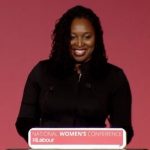
    Below is the text of the speech made by Dawn Butler, the Labour MP for Brent Central, in the House of Commons on 5 March 2020.

    I want to thank the Government for making time available for this debate—looking at the Minister, I am glad that I did not wear my pink jacket today; that would have been a little awkward.

    It is important for so many reasons to have this debate on the Floor of the House. We will mark and honour the important contributions that women make, not only in this place but across society. It also gives us a dedicated opportunity in this Chamber to illustrate the structural barriers that still exist for women, and to reflect on the deaths of the women who have been killed since the last International Women’s Day debate, with the names compiled by Karen Ingala Smith and read by my hon. Friend the Member for Birmingham, Yardley (Jess Phillips).

    I would also like to thank Mr Speaker for continuing a tradition that I started when I first became shadow Minister for Women and Equalities, by ensuring that the International Women’s Day flag is raised across the parliamentary estate—it will be raised on Sunday and Monday to mark International Women’s Day 2020.

    The theme for this year’s International Women’s Day is “Each for Equal”. An equal world is an enabled world. It is about recognising that collectively we can help to create a more equitable world. We need diverse ​voices and lived experiences around every decision-making table. That is not only good for society; it is also proven to be good for business.

    I acknowledge that we have seen progress here in Parliament, as has been mentioned. At the 2019 general election a record number of women were elected to this House. Women now make up 34% of MPs, up from 32% in 2017. I am particularly proud that the Labour party increased its proportion of women, meaning that women MPs now outnumber male MPs in our party. One of the legacies of my right hon. Friend the Member for Islington North (Jeremy Corbyn) will be that the parliamentary Labour Party is now 51% women—which mirrors society—the shadow Cabinet is 50% women, and the most recent intake was a whopping 77% women.

    For too long politics has been the preserve of a particular wealthy group in society—the old boys’ club. I am pleased that is slowly beginning to change. We in this place have a duty to lead the way. A good start would be to have a stand-alone women and equalities Department, with a full-time Secretary of State. That way, we would not have to wait a year to have a dedicated debate.

    New analysis published this week by the UN reveals that across the world close to 90% of men and women hold some sort of bias against women, which provides new insights into the invisible structural barriers that women face in trying to achieve fairness. That matches recent research done here in the UK by the Fawcett Society, which found that positions of power across public life and the economy are still dominated by men. At 21%, only a fifth of senior civil servants participating in the civil service board are women. At 35%, just over a third of permanent secretaries are women, and there are no women of colour in these roles; black, Asian and minority ethnic women are concentrated in the lower ranked roles.

    The Government’s race disparity audit has shown that we need to address the structural barriers that are limiting progress. In the judiciary, women make up around a quarter of those in senior positions, but the proportion falls to 17% in the Supreme Court. In the business sector, women make up just over one in 20 CEOs of FTSE 100 companies. Again, none of those CEOs is a woman of colour.

    Yesterday we saw new analysis published by the TUC showing that women work for free for two months each year as a result of the gender pay gap. Fifty years since the Equal Pay Act 1970, that is still the lived reality. It shows that gender pay gap reporting needs to go much further than simply publishing; we need compulsory action plans for what companies will actively do to close the gap. The Fawcett Society’s research shows that eight in 10 men and women support women being able to find out whether they are paid less than a man for equal work. It is time to give all women the right to know. Disabled women continue to face the most significant pay gaps of all; higher than those faced by disabled men and non-disabled women. Employers must take intersectionality seriously when tackling their gender pay gaps.

    The Labour party wants a workplace revolution to bring about a step change in how women are treated at work. The Government could start that process by ​adopting some of our policies, as they have done previously—I do not mind; they are welcome to them. They should start by enacting section 14 of the Equality Act 2010, so that people can bring forward cases on multiple grounds of discrimination. Women are more than just one-dimensional, and it is about time that the law caught up so that we can be recognised for all our intersectionalities.

    How about reinstating section 40 of the Equality Act, to protect against third-party harassment? We have had this debate over and over again. It is time that was done. Section 106 would mean that all political parties would have to publish diversity data about their electoral candidates. These simple steps would make a great change in the fight for gender equality. Women deserve better pay, increased flexibility and strengthened protections against harassment and discrimination. Women deserve equal pay and equitable recognition.

    Labour not winning the election was tragic for so many reasons. With a Labour Government there would have been a chance to deliver real change. Over 85% of the burden of the Tory-Lib Dem cuts has fallen on the shoulders of women. A Labour Government would have begun to undo the damage and tackle the injustice to women. In power, we would have required employers to devise and implement plans to eradicate the gender pay gap and pay inequalities. With proper enforcement mechanisms, there would have been no place for large employers to hide gender inequality in their organisations. Labour would have created extra protections for pregnant women, those going through the menopause and terminally ill workers.

    Labour would have ended zero-hours contracts and strengthened the law, giving all workers the right to flexible working from day one. The Labour party would have extended statutory maternity pay from nine to 12 months, and doubled paternity leave from two to four weeks, and we would have increased statutory paternity pay. The 1950s women would have received compensation for the injustice they have suffered. Unfortunately, Labour is not in government, but what we can do at every opportunity is demand more from this Government.

    If Parliament is closed because of coronavirus, that should not be an excuse for the Government to close down. We will expect daily Zoom calls, at the very least, by Ministers and the Prime Minister, to address publicly the people’s priorities, so that they can be acted upon. I hope that the Government will start to listen to people. I hope that they will have the courage to provide for women in a fair way.

    The upcoming Budget provides an ideal opportunity to address the imbalance and finally give the necessary resources. I hope the Treasury will publish meaningful equality impact assessments, which have been lacking year after year, and I hope we will finally see the right level of investment in vital social infrastructure, without which we will never make sufficient progress for women.

    We must not stop until we eradicate the structural inequalities in society and the violence against women and girls. Thankfully, the Government brought back the Domestic Abuse Bill earlier this week, and I pay tribute to all the campaigners who fought tirelessly to make sure that happened. I welcome the Bill, which includes a new legal obligation on councils to provide secure refuges for victims. That is progress, but we need ​to be certain that refuges have secure long-term funding. The Government have cut funding, and we have seen the closure of specialist services, which has affected the life chances of very vulnerable women.

    I also want to see better protection for children. Although we have seen a shift in how sexual violence and harassment are discussed following the #MeToo movement, we urgently need to consider the experiences of black, Asian and minority ethnic women and girls. That is why the Bill needs to be amended to recognise BAME women and migrant women.

    I hosted an event here in Parliament yesterday at which Imkaan launched its new report, “Reclaiming Voice: Minoritised Women and Sexual Violence.” It is the first report of this nature in the UK, and it specifically focuses on survivors of sexual violence and BAME women’s experience of sexual violence. We must look at the evidence in this report, and I will happily provide the Minister with a copy. As well as the report’s findings, we must listen to the voices of all women and groups and make sure that we do not leave any group behind.

    Violence against women and girls is unacceptable, as is how women are treated in the criminal justice system. The number of women in prison has more than doubled since 1993. There are around 2,400 more women in prison today than in 1993, which is disturbing. We know women account for a disproportionate number of self-harm incidents in prison, despite making up only 5% of the total prison population. Almost 60% of women in custody or supervised in the community have experienced domestic violence. That figure is too high, and we need to do more to address it. As a former magistrate, I have seen the failures of the justice system towards vulnerable women, and it needs to be looked at.

    Last year, the UK fell six places in the global rankings of gender equality. It is simply not acceptable that we dropped from being the 15th most equal nation in the world to the 21st. I want to be up there with the likes of Iceland, Norway and Finland. It is time the Government woke up, fixed up and took on board some of the progressive agenda of those countries.

    This year, on International Women’s Day, let us celebrate and unite, let us support each other and let us elevate and empower all women. No more excuses, no more reports, let us get equality done. The time for audits, reviews, roundtables and gender pay gaps is over. What we need now is action. We cannot wait another 50 years to see progress. Let us make 2020 the year that we have the vision to deliver for all women.

    I end with a quote from Sojourner Truth, the most powerful advocate for human rights in the 19th century:

    “If the first woman God ever made was strong enough to turn the world upside down all alone, these women together ought to be able to turn it back, and get it right side up again! And now they is asking to do it, the men better let them.”

    I say that the men better watch out.

  • Karl Turner – 2020 Speech on Flybe

    Below is the text of the speech made by Karl Turner, the Labour MP for Kingston upon Hull East, in the House of Commons on 5 March 2020.

    The collapse of Flybe is disastrous news for passengers and employees alike, and will cause real anxiety in many regions throughout the country. The loss of 2,000 jobs—many in areas that are very heavily reliant on aviation—will be an extremely heavy blow, as will the wider impact on supply chains and regional economies. About 2,000 direct jobs are due to be lost from this collapse. What steps is the Minister taking to help those workers to find new jobs?

    Sadly, Flybe follows an ever-growing list of British airlines to go under in recent years, and the Civil Aviation Authority has time and again made monumental efforts to look after passengers. Will the Government draw on the skills and expertise of the CAA if existing capacity does not prove sufficient to guarantee that every Flybe passenger gets home safely? We must recognise the generous offers of assistance from other businesses to support Flybe staff and passengers, but yet again airline workers face an anxious and uncertain future while the Government have sat on their hands and ​allowed this to happen. Recent airline failures have already lost approximately 11,000 jobs. This time the Government must respond and provide Flybe staff with all the necessary support. Flybe has said that the impact of the coronavirus has contributed to its collapse, so what assessment has the Minister made of the risk to other airlines, and what preparations are now in place?

    Flybe has provided critical regional connectivity for many locations throughout the country with no other viable option than flying. We listen to no end of rhetoric on the importance of regional connectivity, but yet again the Government have allowed a service of critical economic importance to fail. Any kind of positive or proactive approach has been completely lacking. The Government must now answer on how vital regional links will be maintained following Flybe’s collapse.

    Finally, the sector has asked the Government to review the 80/20 rule whereby if they do not use the slots, they lose them. This forces airlines to continue with flights that are half-empty, or worse. Will the Minister address the industry’s concerns on this matter urgently? Will she break the radio silence that has been happening for many, many months on the issue of regional connectivity?

    Kelly Tolhurst

    I absolutely agree with the hon. Gentleman in the sadness that he expressed about the loss of jobs for people working for Flybe. When any organisation collapses in this way, it is a sad day for the individuals and communities it affects. I personally am extremely committed to making sure that we, as a Government, are working with colleagues to ensure that those individuals—those staff members—are given the advice and support that they require. In particular, we are very lucky in that we have been engaging with the industry, which is pulling together, and some airlines have said that they are going to prioritise staff from Flybe within their recruitment process. So that is good, and I am hoping to see movement on it as time goes on.

    Turning to next steps, with regard to the passengers, obviously everybody is concerned about individuals travelling and how they will get back and move around the country. I reiterate that the majority of Flybe passengers are travelling domestically. As I have outlined, we are working with the airlines on fares and on making sure that the capacity is there. We are also making sure that people can travel on the railways. Of course, those conversations will continue. I am having a meeting later today, so if any MP would like to ask specific questions or get an update on where we are with that information, I would be very grateful if they attended.

    I have great respect for the hon. Gentleman, because we have had many debates and discussions on a number of things over the years, but I disagree with his statement that we have sat on our hands. We, as a Government, have absolutely been working hard on this. We have been determined to be able to work with shareholders and work with the company in order to secure Flybe for the future. I must be really clear: we are in this situation today because Flybe shareholders and directors took the decision to place the business in insolvency. This is not where I, as the aviation Minister, wanted to be with regard to Flybe.

    I am acutely aware of the impact that this will have on regional airports. The hon. Gentleman is right: we have spoken a lot about regional connectivity. However, ​we are determined to deliver on our promises to the country—that is, making sure that we are levelling up, and that regional connectivity via those airports remains viable. My Department and officials are working really hard with the airlines and the airports. We have been speaking to them today. I personally have had conversations with the airlines and the airports today. We will be maintaining that work in order to establish replacements and the ability of the industry to pick up some of the routes that are affected. We will look at and discuss some of the ongoing challenges relating to those specific airports.

    The 80/20 rule, as the hon. Gentleman will know, is controlled by Airport Coordination Ltd and the European Commission. The European Commission is central to that, as he will understand.

    My Department and I, specifically, have been having these conversations. I am in connection with the industry to understand the challenges, and I am taking that forward to do what I can, in my role as a Minister, to ease this burden. I stand here willing to speak to anyone this afternoon and to give people updates as and when I can. I hope that has given some comfort.

  • Kelly Tolhurst – 2020 Statement on Flybe

    Kelly Tolhurst – 2020 Statement on Flybe

    Below is the text of the statement made by Kelly Tolhurst, the Parliamentary Under-Secretary of State for Transport, in the House of Commons on 5 March 2020.

    With permission, Mr Speaker, I shall make a statement about the collapse of Flybe.

    In the early hours of this morning, Flybe ceased trading. This was a commercial decision by the company and Flybe has filed for insolvency. UK airports handled 9.5 million Flybe passengers in 2008, 80% of whom were travelling within the UK. An estimated 15,000 passengers were due to fly today, so our immediate priority is to support passengers travelling home and employees who have lost their jobs.

    Flybe has had a challenging year in terms of its financial performance, with a decline in bookings and increased competition. Levelling up connectivity across our regions and nations is a top priority for this Government. We are driving forward HS2 and Northern Powerhouse Rail, we have announced a £5 billion funding package for bus and cycle links, and we are investing £6.6 billion to improve the condition of local highway networks between 2015 and 2021. We are undertaking a review of regional connectivity to ensure that the UK has the domestic transport connections on which local communities can rely, including regional airports. The Treasury is also reviewing air passenger duty to ensure that regional connectivity is supported while meeting the UK’s climate change commitment to meet net zero by 2050.

    These measures featured in conversations with Flybe back in January and, in turn, it agreed to continue operating. Since then, we have been working tirelessly to explore multiple options with Flybe shareholders to find a solution. Flybe outlined that problems with its business had been compounded by the outbreak of coronavirus, which, in the past few days, has had a significant impact on demand. The directors have therefore decided that it was not viable to keep Flybe operating. Unfortunately, in a competitive market, companies do fail, and it is not the role of Government to prop them up.

    Given the time of year, the nature of Flybe’s business and fleet, and the routes that it flies, sufficient alternative transport arrangements should be available, either with other airlines or by road and rail.

    The number of passengers abroad is small and it is further reduced as a result of coronavirus. For those passengers who are abroad, there is sufficient capacity on commercial airlines to return to the UK. The Civil Aviation Authority and the Secretary of State are encouraging these airlines to offer rescue fares, and that is already happening. I thank those airlines, including easyJet, which has today announced that it will offer Flybe passengers a dedicated rescue fare until the end of May. We are working with bus and rail operators to support Flybe passengers to get to their destinations, and I am extremely grateful that the Rail Delivery Group has this morning confirmed that all operators are offering free travel to Flybe staff and passengers for a week.

    I ask passengers due to fly with Flybe in the next few days not to turn up at the airport. Instead, they should look at the website set up by the Civil Aviation Authority, and talk to their travel agents, travel insurance providers ​and credit card companies. For those who do arrive at UK airports today, we are making Government representatives available to offer support and provide information to affected passengers.

    I express my sincere sympathy to those who have lost their jobs as a result of this failure, including crew, engineers, technicians, staff at Flybe headquarters in Exeter and others. We understand that this is a worrying time for workers and their families. The Department for Work and Pensions stands ready to support anyone affected by the closure with its rapid response service offer, which will be available to all those affected through local Jobcentre Plus outlets. Additionally, in the event of any redundancies, there are special arrangements for employees who are owed redundancy payments and other payments by their insolvent employer. The redundancy payments service in the Insolvency Service can pay certain amounts owed to former employees from the national insurance fund. I will work with my ministerial colleagues to ensure that any redundancy payments are paid to affected employees as soon as possible.

    We recognise the impact that this situation will have on UK airports, particularly those which have large-scale Flybe operations. The Government stand ready to support the sector, and I have full confidence that it will respond as effectively as it always has. We are urgently working with the industry to identify opportunities to fill routes, and I have spoken to the airlines today to emphasise this. Aviation is facing challenges globally due to the impact of coronavirus. The Government are well prepared for this, and as the wider economic picture becomes clearer, the Chancellor has said that he stands ready to announce further support where needed. I will be chairing a roundtable with members of the aviation industry next week to discuss issues presented by coronavirus.

    I thank passengers for their patience and appreciate the work undertaken by everyone who has again stepped up to ensure that passengers and local communities are supported. We will continue to work across Government to ensure that passengers and staff are able to access the information and services they require at this sad and challenging time.

  • Jonathan Ashworth – 2020 Speech on Health Inequalities

    Jonathan Ashworth – 2020 Speech on Health Inequalities

    Below is the text of the speech made by Jonathan Ashworth, the Shadow Secretary of State for Health and Social Care, in the House of Commons on 4 March 2020.

    I beg to move,

    That this House notes the publication of Health Equity in England: The Marmot Review 10 Years On; is concerned by its findings that since 2010 improvements to life expectancy have stalled for the first time in more than 100 years and declined for the poorest women in society, that the health gap between wealthy and deprived areas has grown, and that the amount of time people spend in poor health has increased across England; agrees with the review that these avoidable health inequalities have been exacerbated by cuts to public spending and can be reduced with the right policies; and calls on the Government to end austerity, invest in public health, implement the recommendations of the review, publish public health allocations for this April as a matter of urgency, and bring forward a world-leading health inequalities strategy to take action on the social determinants of health.

    A former Health Secretary, Frank Dobson, whom we sadly lost towards the end of last year, said:

    “Inequality in health is the worst inequality of all. There is no more serious inequality than knowing that you’ll die sooner because you’re badly off.”

    He was absolutely right. Poverty and deprivation mean that people become ill quicker and die sooner. The current Health Secretary—I understand why he cannot be here for this debate; I do not criticise him for that, given what is going on, and we welcome the Under-Secretary of State, the hon. Member for Bury St Edmunds (Jo Churchill), to the Chamber—said, when we last debated health inequalities, that

    “extending healthy life expectancies is a central goal of the Government, and we will move heaven and earth to make it happen.”—[Official Report, 14 May 2019; Vol. 660, c. 153.]

    Well, last week the respected academic, Sir Michael Marmot, gave us his assessment of the Government’s attempts to move heaven and earth to narrow those inequalities and extend healthy life expectancy.

    Mr Toby Perkins (Chesterfield) (Lab)
    Share
    I absolutely congratulate my hon. Friend on bringing this crucial issue to the Chamber. The health inequalities that we have seen in our communities are bad enough, and the additional inequalities regarding access to GP appointments are even worse, but we are also seeing cuts in local government funding hitting the most deprived areas and adding to those inequalities we are already aware of.

    Jonathan Ashworth
    Share
    My hon. Friend makes that point very well. Not only are there inequalities in health outcomes, but inequalities are opening up in access to health services.

    I said that I understood why the Secretary of State cannot be here, but he has now joined his colleagues on the Front Bench. I will state, just for the record so that he can be reassured, that I did not criticise him for not being here—I said that I entirely understood why he could not be here. But he is always welcome to listen to my pearls of wisdom, of course.

    Michael Marmot’s analysis was shocking, and his conclusions devastating. Let me remind the House of what Professor Marmot found: for the first time in ​more than 100 years, life expectancy has essentially flattened overall since 2010, and has actually declined for women in the poorest areas of England. In last week’s Opposition day debate, the Health Secretary told Opposition Members that we must debate these issues based on the facts. In fairness, he said that there were life expectancy differences between, for example, Blackpool and Buckingham. [Interruption.] Indeed—gulfs. The Secretary of State made that point. If I may say so, however, I do not believe that he was as clear as he could have been in presenting the full picture for the benefit of Members. When we look at the figures, we see that for more than 100 years, life expectancy has been increasing by about one year every four years. More recently, from 2001 to 2010, the increase was 0.3 years for each calendar year for men and 0.23 years for women. Between 2011 and 2018, the average rate of increase was 0.07 years for males and 0.04 years for women. By any standards, that is a truly dramatic lowering in the rate of improvement in life expectancy between 2011 and 2018.

    Olivia Blake (Sheffield, Hallam) (Lab)
    Share
    The latest figures for my city of Sheffield show that life expectancy is nearly nine years more for women from the least deprived decile than the most deprived, and that gap has widened significantly since 2010. Does my hon. Friend agree that, as we approach International Women’s Day and the Budget, we must be mindful of the toll that austerity has taken on our cities and across the country, especially in relation to life expectancy and quality of life?

    Jonathan Ashworth
    Share
    I welcome my hon. Friend to her place. She is already an eloquent and passionate fighter for her constituents in Sheffield, and the point she makes is spot on: the reality is that 10 years of austerity has hit women hardest.

    Zarah Sultana (Coventry South) (Lab)
    Share
    Will my hon. Friend give way?

    Several hon. Members rose—
    Share
    Jonathan Ashworth
    Share
    I will give way to my hon. Friend, but then I must make some progress because, as I understand it, some Members want to make maiden speeches in the debate.

    Zarah Sultana
    Share
    I thank my hon. Friend for giving way. Health inequalities between regions are stark, but there are also huge disparities across short distances. In my constituency, the life expectancy of men in St Michael’s is 13 years shorter than it is of men just 2.5 miles away in Stoneleigh, just south of Coventry. Does he agree that to reduce those shocking health differences, the Government need to tackle underlying economic inequality and systemic poverty, and reverse 10 years of Tory cuts?

    Madam Deputy Speaker (Dame Eleanor Laing)
    Share
    Order. The hon. Lady’s intervention might not have seemed very long to her, and I appreciate that she is new to the House, but it was very long. I thank the hon. Member for Leicester South (Jonathan Ashworth) for what he said before he took that intervention. It would be much appreciated if the Front-Bench spokespeople took only a few interventions. This is a debate—we can have some ​interventions—but if Members who intend to intervene and then leave take up all the time at the beginning of the debate, those who sit here all afternoon will not get to speak at the end. We are talking about unfairness here, and that is unfair. The hon. Gentleman has been most courteous, and I know that the Minister has also been courteous in saying that she intends to take only a few interventions.

    Jonathan Ashworth
    Share
    I am grateful, Madam Deputy Speaker, but the point made by my hon. Friend the Member for Coventry South (Zarah Sultana) was an excellent one. She is right: this variance in life expectancy and these widening health inequalities are surely intolerable, and we have been sent here by our constituents to do something about it.

    Taking your guidance, Madam Deputy Speaker, I will try not to take any further interventions, because I am aware that Members want to make maiden speeches. I am sure that Members who have been in the House a bit longer will testify that I am usually very generous in taking interventions. I hope Members will understand.

    I dare say that the Minister will pray in aid the Office for National Statistics data that came out last night, but that is just a single data point. The ONS data also shows that regional inequalities in health have widened since 2010 and confirms that life expectancy for women in the most deprived decile outside London and the north-west has fallen. The rate of increase in life expectancy slowed markedly after 2010, which just happens to coincide with the swingeing cuts to public services and working-age benefits that the Tory Government imposed upon our society.

    When life expectancy stops improving, inequalities widen and health deteriorates. That is why Sir Michael Marmot found that time spent in poor health is increasing for men and women in the most deprived areas of England. He found that there is a north-south gap opening up, with some of the largest decreases seen in the most deprived 10% of neighbourhoods in the north-east. He found that the mortality rate among those aged 45 to 49 is increasing. So-called deaths of despair—the combined effect of increasing death rates from suicide, drug abuse and alcohol-related illness—are a phenomenon we have seen for many years in the United States, and they are now making their morbid presence felt here. Perhaps most shamefully of all, the most deprived 10% of children are now twice as likely to die as the most advantaged 10% of children, with children in more deprived areas more likely to face a serious illness during childhood and to have a long-term disability. Surely this stands as a devastating and shameful verdict on 10 years of Tory austerity and cuts. Of course, we have always had health inequalities since the NHS was created 70-odd years ago, but the point is that the Government should be trying to narrow them, not widen them, because as Professor Marmot says,

    “if health has stopped improving it is a sign that society has stopped improving.”

    Perhaps some will quibble with Marmot’s findings, but they coincide with what others have found. For example, the all-party group on longevity found a few weeks ago that men and women in our poorest areas are diagnosed with significant long-term conditions when they are, on average, only 49 and 47 years old respectively. The Institute for Fiscal Studies’ Deaton review has also ​warned about deaths of despair, pointing out that rates of long-standing illness and disability among people aged 25 to 54 have been increasing since 2013. The Royal College of Paediatrics and Child Health has today warned of stalling infant mortality rates and how a generation of children is being failed.

    I am afraid that this does not suggest that the Government are “moving heaven and earth”, in the words of the Secretary of State, to tackle widening health inequalities, and it does not fill us with much confidence that the Secretary of State is on target to meet his goal of five years’ longer healthy life expectancy by 2035. Will the Minister update us on how we are getting on in meeting that target?

    I hope that the Minister, who has responsibility for public health, will also give us some reassurance about the Government’s plans to mitigate the health inequality implications of the covid-19 outbreak. May I press her to explain exactly what the Prime Minister meant at Question Time earlier? Is the Prime Minister saying that statutory sick pay will kick in from day one? If so, we welcome that, but because of low pay, the earnings threshold, precarious work, the gig economy and zero-hours contracts, about 2 million people are not eligible for statuary sick pay. The Prime Minister seemed to suggest at Question Time that such people would be eligible for universal credit, but the Government’s own guidance—I checked the website just before the debate—makes the position crystal clear. The Government’s website says:

    “It usually takes around 5 weeks to get your first payment”

    in respect of universal credit. The public health implications of that should be blindingly obvious: some of the lowest-paid workers who need to self-isolate will be forced to make a choice between their health and financial hardship. Surely it would be far simpler and smoother just to guarantee statutory sick pay for everyone from day one.

    There are also practical problems with sick notes. People are being asked to self-isolate for a fortnight, but as the Secretary of State himself said yesterday, self-certification lasts for only seven days. Will this now be extended from one week to two weeks? I put it to the Minister, as I put it to the Secretary of State yesterday, that we will co-operate and help the Government with emergency legislation to ensure that statutory sick pay for all from day one is on the statue book as quickly as possible. Will Ministers take up our offer?

    I dare say that the Minister will want to remind us of the funding settlement for the NHS for the next four years, but she will not be able to remind us of the public health funding settlement for local authorities for the next month because Ministers have not told local authorities what their public health allocations are for the next financial year, which starts next month. It is not good enough to say that the grant overall will increase. These are services that prevent ill health and promote health and wellbeing, as she knows, and those services have been left teetering after years of real-terms cuts of about £1 billion. Smoking cessation services have been cut, obesity services have been cut and drug and alcohol services have been cut, while health visitor numbers are falling, school nurse numbers are falling and mandated health visits are abandoned, yet directors of public health are expected to plan for the next 12 months when they have not even been given their local public health allocations. When will they be published? We are expecting ​directors of public health to put in place plans to deal with the covid-19 outbreak, and they do not even know their budget lines. That is clearly irresponsible and unsustainable.

    It is not just about health funding, however, because that does not tell the full story, as the Secretary of State, in fairness to him, has recognised. He has said before that

    “only around a quarter of what leads to longer, healthier lives is…what happens in hospitals.”

    We need the Government to focus on the wider social determinants of ill health, too: the childhood experiences we are all exposed to; the neighbourhoods we grow up in; the schools we are nurtured in; the conditions of the work that we do, especially in today’s gig economy; the food we eat; the quality of air we breathe; and the support we rely on in our older years.

    Whether it is air pollution, the toxic stress of precarious work or how the benefits system operates, it is those in poverty whose health suffers as a result. Just last week, a longitudinal study in The Lancet found that universal credit is exacerbating mental health issues among claimants, causing tens of thousands to experience depression and mental distress. The Government cannot deny the links between poverty and ill health, because poverty, as Sir Michael Marmot says, “has a grip” on our nation. Some 14 million adults live below the poverty line. We have record food bank usage. More than 4,000 of our fellow citizens sleep rough on our streets, a huge increase since 2010, and over 700 die on our streets.

    The poverty a child experiences harms their health at that time and through the rest of their life. Child poverty impairs cognitive development and creates an environment in which mental health and emotional disorders fester. Children in poverty are more likely to be obese, less likely to be up to date with immunisations, and more likely to be admitted to hospital, yet under this Government, the number of children living in poverty has already risen to 4 million, and we have reports of children scavenging in bins. We have 120,000 children pushed from pillar to post in temporary accommodation—a huge increase under the Tories. The working-age benefit cuts that are set to come in will push child poverty levels to the highest since records began in 1961—higher than even in the Thatcher years. That is not levelling up; that is condemning future generations to ill health and shorter lives.

    But poverty need not be inevitable and life expectancy does not have to stall. This House should not let health inequality leave an indelible stain on our society. There is a better way, and I commend our motion to the House.

  • George Eustice – 2020 Speech on Flooding

    George Eustice – 2020 Speech on Flooding

    Below is the text of the speech made by George Eustice, the Secretary of State for the Environment, Food and Rural Affairs, in the House of Commons on 4 March 2020.

    I beg to move an amendment, leave out from “volunteers” to end and insert:

    “acknowledges that following the Pitt Review in 2008, local and national response was significantly improved through the establishment of Local Resilience Forums which have led to partnership working and in addition, the Cross Review in 2018 which led to the publication of new guidance on multi-agency flood plans; further ​acknowledges that following the National Flood Resilience Review in 2016 there were further improvements through the establishment of the National Flood Response Centre and improved weather and flood forecasting capabilities, but recognises that extreme weather events are becoming more frequent and that further investment in flood defence infrastructure will be necessary in the years ahead.”

    We have had three storms in three weeks affecting our Union, from Cornwall right up to the north of Scotland and Northern Ireland, with winds of up to 70 mph and waves of snow, ice and rain, making this the wettest February on record. Many areas have already received more than double their average rainfall for February. Some have received four times the average monthly rainfall and others have experienced a month’s worth of rain in just 24 hours. Eighteen river gauges across 13 rivers recorded their highest levels on record during, or triggered by, Storms Ciara, Dennis or Jorge. These are records that no one wants to see broken. Even if there are no further significant storms in March, it could still take three to four weeks for water to drain from the washlands in the East Yorkshire area.

    These storms at the end of an incredibly wet winter have brought consequences across the country as river systems were overwhelmed. Nothing can diminish the suffering felt across our country in communities affected by recent storms. Experiencing flooding, especially repeated flooding, is traumatic and distressing for the communities affected, and sadly over 3,400 properties have been flooded this February, with significant damage caused.

    John Redwood (Wokingham) (Con)

    Does the Secretary of State agree that too much building on floodplains is not helpful and that in future we should be much more restrictive and then try to deal with the backlog problem?

    George Eustice

    My right hon. Friend makes an important point. The Environment Agency is a statutory consultee on all planning applications.

    This is a live incident, so I urge vigilance as we monitor the situation and move into a recovery phase. I would like to take this opportunity to pay tribute to the work of the Environment Agency, local authorities and emergency services, including the fire brigade, which has been engaged extensively, the paramedics and the many voluntary groups that have played a role and, of course, local TV and radio, which have played their part—[Interruption.] And the BBC, which is a great part of local TV and radio.

    I have been in close contact with the Environment Agency every single day. More than 1,000 of its staff have been deployed across the country every day, putting up temporary barriers, clearing rivers of debris—a continuing role for the EA—and helping with evacuations where necessary. They have been deployed alongside around 80 military personnel who stepped in to assist in certain circumstances. Wales has also seen significant impacts, with more than 1,000 properties flooded. The EA remains in close contact with the Welsh Government, who are offering aid and support it might need to respond to their incidents. Some Members have expressed concern about the stability of some coal tips. My colleague, the Secretary State for Wales, has been in dialogue with the Welsh Government about this and, following that, we directed the national Coal Authority to conduct an urgent assessment of those tips where there were concerns.

    ​Chris Elmore (Ogmore) (Lab)

    On the point about the coal tips, will the Secretary of State confirm that this is not just a review of where they all are, and that the UK Government will fund the safety of those tips to reassure residents living in fear across constituencies represented by three Members here today, including my hon. Friend the Member for Cynon Valley (Beth Winter)?

    George Eustice

    I know that the Secretary of State for Wales has had discussions with the Welsh Government. In their discussions last week, there was no request for funds as it was too early to ascertain what help, if any, might be needed, but once that work is concluded by the national Coal Authority, they will be in a better position to know that.

    Chris Bryant (Rhondda) (Lab)

    I think the Secretary of State is slightly misunderstanding the point here. This is not about the financial request from the Welsh Assembly to this Government. This is about the tips in constituencies such as mine, where there is significant concern that there may be further movement and greater destabilisation of the slag heaps. That is the responsibility of his Government—the Department for Business, Energy and Industrial Strategy—and we need to ensure that the Government are doing everything to ensure that the people in my constituency are safe.

    George Eustice

    That is correct, and the national Coal Authority sits within BEIS. We have directed it to carry out an urgent assessment of those mines.

    The area that was worst affected by Storm Ciara was the Calder valley. Hebden Bridge flooded after Storm Ciara, but not after Storm Dennis. Many businesses there have adapted their buildings to flooding, which were back trading after a few days or weeks. The military were deployed to Ilkley in West Yorkshire, where 700 metres of temporary barriers were erected. They also worked in the Calder valley, building a temporary defence and sandbagging properties. The scheme in Mytholmroyd is due to be completed this summer, and further schemes are in the design and consultation phase at Hebden Bridge, Brighouse, Sowerby Bridge and other locations along the Calder valley.

    The area most severely affected by Storm Dennis was the Severn catchment. Since 2007, many parts of the Severn have been protected by demountable barriers. Those barriers are deployed to hard standings and permanent pillars along the river bank and removed when the risk of flooding recedes, so that people can gain access to the river for cycle paths and to prevent views from being affected. Those demountable barriers have been particularly popular with communities and have been effective during this most recent episode. While some homes were flooded, the defences put in place have protected around 50,000 homes.

    Tenbury Wells was the first place to be affected by Storm Dennis and had previously flooded in October. Soon after flood alerts were issued, community information officers assisted residents in the town. Sadly, the area of Tenbury is not suitable for temporary barrier deployment due to the length of defence needed, significant access issues and the need for pumps to mitigate water seepage on uneven ground. However, in our future programme, we are developing plans to deliver a scheme at Tenbury Wells protecting over 80 homes and 80 businesses and costing in the region of £6 million, and we are seeking ​partnership funding to develop that phased approach. My hon. Friend the Member for West Worcestershire (Harriett Baldwin) and the local county councillor have been keen advocates of the proposed scheme and have discussed it with me.

    In Selby, where there were concerns about water over- topping a flood retention bank, the Army were on standby but, in the event, Environment Agency and local authority staff deployed 3,000 sandbags to top up the defences, build the bank higher and ensure that there was protection.

    Turning now to Shrewsbury and Bewdley, where demountable barriers along the Severn played an important role in reducing the impacts, there are four phases of demountable barriers deployed to protect infrastructure and properties in Shrewsbury, and all were deployed in time for Storm Dennis. In Bewdley, we also deployed demountable barriers to complement the permanent defences and temporary barriers in part of the town. Environment Agency staff were present throughout the flooding, checking those barriers and pumping water back into the river.

    Mark Garnier (Wyre Forest) (Con)

    I thank the Secretary of State for talking about my constituency, and thank the floods Minister, the Under-Secretary of State for Environment, Food and Rural Affairs, my hon. Friend the Member for Taunton Deane (Rebecca Pow), for being there to see the demountable barrier being put up on the very first day. The demountable barriers are one of the finest gifts that one of the best leaders of the Labour party, Mr Tony Blair, has ever given us—in 2001, I think, with an £11 million investment. But the problem for Bewdley remains Beales Corner, on the other side of the bank. This highlights the difference between what is a demountable barrier and what is a dangerous temporary barrier, which gave way and was overtopped. A not-very-good approach was developed at Beales Corner, which is the property-led defences. I do not think they worked in the event of this flood.

    George Eustice

    My hon. Friend makes an important point. I was going to go on to say that the temporary barriers deployed to the Beales Corner area of Bewdley were overtopped by the sheer volume of water flowing through the town. Environment Agency staff deployed pumps to mitigate the overtopping, but eventually this operation was overwhelmed. I know that staff have continually provided updates to residents via local media, with live-streamed videos from site and post-strategic command meetings to inform the public.

    Geraint Davies (Swansea West) (Lab/Co-op)

    It is interesting to hear the individual cases, but does the Secretary of State not accept that it is 12 years since the Pitt review and that it is only another 10 years—less than that period—until we expect and predict that climate change will result in a 1.5° increase in temperature? Therefore, we want not a microcosmic look at individual demountables, but an overview of the strategic difference climate change will make—namely, where can we and should we defend? Where can we not defend? Where do we have to change land use management? Where do we have to have rain water capture in urban environments? Where do we have to have underground tunnels and so on? We need an overall review. We face massive and growing risk. He says, “Oh, let’s hope we don’t have more bad weather.” That is—

    ​Mr Speaker

    Order. The hon. Gentleman wishes to make a speech, but he is taking his own time away.

    George Eustice

    I am going to address all those points of review later, but I wanted to take the opportunity, since this does not always happen, to effectively acknowledge some of the great work that has been done on the ground by the Environment Agency and our emergency services.

    In Ironbridge, the substructure of the soil along the riverbank sadly does not lend itself to the demountable barriers that were so effective in other towns, but temporary barriers were deployed to contain the water that breached the river bank, with 800 metres of temporary barriers deployed along the Wharfage.

    While most effects in the days after Storm Dennis were felt along the Severn, there was further heavy rain late last week, which led to major challenges in parts of Yorkshire, notably around the washlands at Snaith and East Cowick. The washlands are one of the oldest man-made flood defence systems in the country, dating back some 400 years. However, the sheer volume of rainfall meant that they were overwhelmed. We have deployed 48 multi-agency pumps in operation across the Aire washlands, as water levels start to drop, to dewater homes. There is an urgency to this work, since next weekend we will also see peak seasonal tides on the east coast, which can lock rivers. We must therefore use the window of opportunity in the weeks ahead.

    The motion tabled by the Opposition suggests an independent inquiry. I am grateful for this opportunity to describe all the other inquiries that we have had on flood response over the last decade or so and what actions have been taken to implement those recommendations. First, the Pitt review, which was alluded to by the hon. Member for Swansea West (Geraint Davies) and which followed the 2007 floods, informed new laws better to manage flooding under the Flood and Water Management Act 2010. The crucial recommendations of the review regarding flood response led to the establishment of local resilience forums.

    Richard Graham (Gloucester) (Con)

    Will my right hon. Friend give way?

    George Eustice

    I will on that point, but then I am going to make progress.

    Richard Graham

    I am grateful. A lot of the Pitt review recommendations were implemented in Gloucester at that time and have made a huge difference. My neighbours suffered terribly this year. None the less, not a single home in Gloucester flooded, as a result of good work by the Environment Agency and local councils.

    George Eustice

    My hon. Friend makes an important point.

    Secondly, after the 2014 floods, another review was led by Oliver Letwin. It led to a number of further improvements, including the establishment of a new national flood response centre, based out of the Cabinet Office, to ensure that cross-government decisions on operational matters were taken expeditiously. The review also led to improved flood forecasting capabilities.

    Thirdly, because there were concerns that some local authorities were better prepared than others to meet the challenge of flood response, in 2018 the Cross review ​recommended that every local authority should have a formal plan of action to respond to flood risk in its area.

    The substantive recommendations in all three of those reviews have been implemented, and it is because they have been implemented that the response on the ground to these extraordinary weather events has been so effective and rapid. The Government amendment to the motion therefore recognises and corrects what might be an oversight in the Opposition motion, which is to recognise what has been done in response to previous reviews.

    The Government amendment also corrects another omission from the Opposition motion, relating to funding. Climate change means that extreme weather events are becoming more frequent.

    Several hon. Members rose—

    George Eustice

    I am going to make progress and conclude.

    We are investing £2.6 billion in flood defences—over 1,000 flood defence schemes to better protect 300,000 homes by 2021. To date, we have completed 600 of those schemes, protecting over 200,000 homes. Were it not for projects such as those, 50,000 more homes would have been flooded in these recent events.

    However, there is more to do. That is why the Government have a manifesto commitment to spend even more on flood defence in the years ahead, committing £4 billion in this Parliament further to improve our resilience and our ability to manage such events. The Government amendment, rather than proposing reviewing funding as the Opposition suggest, acknowledges the need for further investment. Our manifesto already commits us to further investment. I hope that this investment will not be opposed by Opposition Members.

    We are determined to be ready for the future, and we know we must expect more frequent extreme weather in this country. So as well as investing even more money in flood defence, the Government are committed to leading a global response to climate change through our work around the world. As host of the next climate change conference, COP26, we will urge nations to achieve net zero in a way that helps nature recover, reduces global warming and addresses the causes of these extreme weather events.

  • Luke Pollard – 2020 Speech on Flooding

    Below is the text of the speech made by Luke Pollard, the Labour MP for Plymouth Sutton and Devonport, in the House of Commons on 4 March 2020.

    I beg to move,

    That this House notes the damage caused by Storms Ciara, Dennis and Jorge and expresses thanks to workers from the Environment Agency, emergency services, local councils and volunteers; and calls for Ministers to set up an independent review into the floods, including the Government’s response, the adequacy of the funding provided for flood defences and prevention, difficulties facing homes and businesses with getting insurance and what lessons need to be learnt in light of the climate emergency and the increased likelihood of flooding in the future.

    It is a pleasure to move this motion on flooding on behalf of Her Majesty’s Opposition. Flooding has devastated our communities after three successive storms—Ciara, Dennis and Jorge—each compounding and deepening the damage caused by the storm that preceded it. I start by paying my respects to those who lost their lives as a result of these storms. I also thank all those involved in mitigating and fighting the floods: our fire and rescue service, police, local councils, the Environment Agency, and all who have helped to protect homes and businesses, rescue people and animals from rising flood waters, and reinforce flood defences. The motion thanks them for their service.

    The motion also pays tribute to the work of the BBC in keeping communities informed about flooding incidents, diversions and emergency measures. BBC local radio, in particular, but BBC Online as well, have been invaluable lifelines to those communities under water. I hope the Secretary of State will add his voice to mine in thanking them when he gets to his feet.

    It would be very easy to dismiss the recent flooding as a freak accident, an act of God, and leave it at that, but we need to take a difficult step and recognise that more could have been done. As the climate crisis produces more severe weather more often, we will be having more flooding more often, so we need to learn the lessons.

    Wera Hobhouse (Bath) (LD)

    As the climate emergency produces more and more flooding, so flooding will become more frequent, and yet the resources for the Environment Agency have been severely cut over the last decade. Does the hon. Member agree we need long-term, not just short-term, funding for the Environment Agency?

    Luke Pollard

    The hon. Member pre-empts my speech. It is important that we have a long-term plan for flooding with long-term funding attached to it so that we can protect communities at risk of flooding.

    We know that more could have been done to ensure that our fire and rescue services were fully equipped to deal with this national emergency; that more could have been done to put in place long-term flood defences; and that more could have been done to slow down the impact of the climate emergency.

    Robert Courts (Witney) (Con)

    I recently visited a natural flood management project in the Wychwoods, in my constituency, a partnership project with local councils, Wild England and many others, involving flood diversion, wildlife creation, habitat, leaky dams and so forth. It has been very valuable in protecting the villages of the Wychwoods. Is this something we could see much more of elsewhere?

    Luke Pollard

    Having more natural solutions to flooding is part of the solution; it is not the sole solution, but it is a very important part, and I will come on to that in a moment.

    Our motion makes a very simple ask—one that I am amazed but not surprised that Ministers are running from: that we have an investigation to learn the lessons from the floods, an investigation that will seek to protect more homes and businesses in the future, an investigation that will look at the difficulties people encounter in buying affordable insurance for their homes and businesses and in receiving timely pay-outs, an investigation into what measures are required from Government to fund flood protections and upstream catchment management measures and to resource emergency responses.

    When choosing the wording of the motion, the Opposition had two choices: we could have chosen wording that went hard on a part-time Prime Minister who was missing in action throughout the floods, a part-time Prime Minister who refused to call a Cobra meeting and unlock the scale of funding necessary for flooded communities, a part-time Prime Minister who failed to show national leadership when it was required; or we could choose wording that could unify the House in a sensible effort to learn the lessons, calmly and sincerely, from this disastrous series of floods. Labour chose to rise above that partisan debate, which is why every single Member of the House should feel able to support our motion. How is learning the lessons from an incident—in a review of what actions took place, what actions did not work as well as was hoped and of where improvements could be made—not a sensible and proportionate step to take after a national emergency such as the recent floods?

    Andrew Percy (Brigg and Goole) (Con)

    I represent the most flood prone constituency in the country—my constituents are presently under 400 million cubic metres of water. How does the hon. Member envisage this inquiry working with the section 19 inquiries already commenced in my area and in many other flooded areas, given that their purpose is to determine exactly those things.

    Luke Pollard

    There will be local inquiries and there will be different agencies looking at their own responses, but we need an overarching investigation into the whole response—the consequences of austerity, the flood prevention measures that could and should be taken, the fact that flooding will become more frequent, and so on. That is what is on the table in the motion today and what I hope hon. Members on both sides will vote for.

    Craig Whittaker (Calder Valley) (Con)

    In light of the fact that places such as the Calder Valley have had three 100-year floods in the last seven and a half years, ​does the hon. Member not think that another review would only cost more money and waste more time? We need action. We already have this information. We know exactly what happened in the floods. We had four times the monthly average rainfall in 24 hours.

    Luke Pollard

    I agree we need action, but it was action we did not get during the floods. It was action we required from the Prime Minister to call a Cobra meeting that we did not get. It was action to unlock the necessary funding that we did not get. I agree we need action and hope he will support this motion so that we get a lessons learned review that helps Ministers to make better decisions next time and get the action he desperately wants.

    The review we are asking for would look at how we learn lessons as a country, how the Government learn lessons and how the work and innovations of local communities can be recognised, but the Government’s amendment seeks to do only one thing: not learn the lessons of the flooding. It would delete the lessons learned review and silence the voices of flooded communities. I want the voices of those communities under water heard in the review we are proposing. I want to hear from the small business owners in Telford whose shops have been flooded about the difficulties they face replacing stock when insurance companies refuse to insure them. I want to hear from the farmers next to the River Severn who fear that their crops will have been destroyed by the water damage in their fields. I want to hear from the homeowners in west Yorkshire who have yet again had to wash dirty water from their homes, wash the smell of sewage from their homes, replace their furniture and carpets and worry about whether the insurance will pay out and how much the premiums will be next year, if they are to be covered at all. I want to hear the voices of the emergency services who have had their numbers cut and cut again by years of Tory austerity. I want to hear from the Welsh coal mining communities who are now living in fear of a landslide from water-sodden spoil tips.

    I want to hear from all of them in this review, and yet Ministers have proposed an amendment that says they will not have a lessons learned review, will not look at what worked well and what did not, and will not ask communities what works for them. Every Tory MP who votes against our motion will be doing something very simple: refusing to listen and learn the lessons of the flooding and refusing to improve their response to flooding in a calm and independent manner. Those under water communities, many of which are represented by Conservative MPs, will wonder what happened to their Members of Parliament. When given an opportunity to get the voice of those communities heard, they will have decided to turn against that—that is not leadership.

    Craig Tracey (North Warwickshire) (Con)

    The hon. Member talked about the role of insurance companies. I chair the all-party group on insurance and financial services and work quite closely with Flood Re. Since it was launched in 2016, Flood Re has been a great example of the Government and the insurance industry working together: 300,000 more properties have now been insured and four out of five properties with previous flood claims can now get insurance at half the price it ​was before. I am sure he will welcome that fact. It is a great example of the Government working with the industry to help solve this problem.

    Luke Pollard

    Flood Re has resulted in some improvements—the hon. Gentleman is right about that—but it does not insure homes or provide cover for homes built since 2009, and he will know that it does not include support for small businesses, so there are huge holes in the scheme that need to be filled. We need a scheme that works. At the moment, Flood Re is not delivering as was originally intended for all affected communities. The Government are carrying out a review of the Flood Re scheme, and I urge Ministers to encourage it to report quickly, because we need the Flood Re scheme to work properly to ensure that there are no gaps in it.

    The reason that we are calling for a review today is that the flood waters will, we hope, soon subside and the camera crews will pack up, but as the media agenda moves on, the damage, disruption and destruction of the floods will remain for those communities that have been affected. It will take many months for those communities to recover, but we know from past floods that it will actually take many years for the damage to be undone, for payments to be received and for the mitigations to be put in place. That is why a lessons learned review is so important.

    We know that the Prime Minister was missing during the floods, but he now has an opportunity to create a lessons learned review to learn the lessons of what has happened. However, he has decided against doing that. We know that the Conservatives’ political choice to implement a programme of brutal austerity over the past 10 years has made the fight against the climate crisis so much harder. The Environment Agency has again and again asked for extra money—£1 billion a year just to mitigate the impacts of floods and defend our communities. We need long-term structural change if we are to combat future floods, including restoring nature in uplands, ending the rotational burning of peatlands, implementing proper catchment area management strategies and building proper flood defences where appropriate. All these changes need genuine funding and a long-term plan.

    But it is not just the Environment Agency that has been cut; our local councils have too, and our fire and rescue services. There is a regional disparity in the cuts for fire and rescue services as well. Across England, 23% of our firefighters have been lost in Tory cuts since 2010, but West Yorkshire, where some of the most severe flooding has happened, has lost over a third of its firefighters in austerity cuts. I know that my hon. Friend the Member for Easington (Grahame Morris) has raised this issue directly with Ministers before, but I would like to invite the Secretary of State to look again at whether fire and rescue services need a statutory duty around flooding, as they have in Scotland and Wales.

    It is also important that we look at the effect of the flooding on our farmers. That includes considering short-term actions such as a derogation of crop diversification and a reinstatement of the farming recovery fund to mitigate the damage that flooding has caused. The Secretary of State came unstuck at the NFU conference and answered concerns about the three-crop rule very poorly, but there is now a genuine opportunity to help ​farmers by using the powers that he already has to support them. In the long term, we need to ensure that our farmland is used sensibly to prevent flooding and to restore the ability to keep more water upstream.

    We also need to recognise the need for change on match-funding. I have raised this matter before. Poorer communities should not be asked to match the same as wealthier communities, because we know that in that situation the wealthier communities have their flood defences funded and the poor ones do not. My hon. Friend the Member for Leeds West (Rachel Reeves) has raised this in relation to her city time and again, but she has still not had a satisfactory answer. The Budget next week is an opportunity for Ministers to fund flood defences properly. I would like to see the Budget used as a climate budget to recognise the true scale of the climate crisis and have funding directed accordingly. I suspect we will not have that, but I hope there will be some mention of flooding. I hope that funding will be directed at those communities that are currently under water and that a long-term plan is put in place in relation to this.

    We have our criticisms of the Government, and the Prime Minister in particular, for failing to act with the seriousness that the climate emergency requires, but setting that aside, we have before us in this motion a modest proposal to learn the lessons of the three storms and to conduct an independent review into what happened. We owe it to those communities that are currently under water, those that have been flooded and those that are repairing the damage from the storms to listen to them and to do everything in our power to learn the lessons to ensure that it does not happen again.

    I say to every Tory MP whose communities are under water and who votes against this modest ask that I wish them well on their return to their flooded communities. I wish them well in explaining why a review into the lessons learned will not be happening and why they voted against it. I wish them well in explaining to the people whose homes and businesses were flooded why they are denying them a voice. I wish them well in that, because they have the chance today to vote for such an independent review, and for those flooded communities, that will be a very modest ask as they scrub their floors to clean up the sewage that has come through the pipes, as they repair their homes and as they work out how to restore the stock in their businesses that have been so damaged. For them, this is a modest ask, and it is something that should be supported by everyone in this House. I hope that Tory MPs will reflect on this before they back the Government’s amendment to not learn the lessons of the flooding incidents. I hope that, as a Parliament, we can come together on this. I hope that the warm words that will be no doubt come from the Secretary of State at the Dispatch Box in a moment can be added to with the action that is so desperately needed. I commend this Labour motion to the House.

  • Peter Bone – 2020 Speech on New Public Holiday

    Below is the text of the speech made by Peter Bone, the Conservative MP for Wellingborough, in the House of Commons on 4 March 2020.

    I beg to move,

    That leave be given to bring in a Bill to make provision for an annual national public holiday on the Friday nearest to 23 June; and for connected purposes.

    I thank my excellent senior parliamentary assistant, Jordan Ayres, for his help with this.

    This public holiday will be called United Kingdom Day. In the recent Queen’s Speech, the Government included an employment Bill, which is intended to

    “Protect and enhance workers’ rights”

    in the UK post Brexit, and one very important issue that the Government should consider when enhancing workers’ rights is that of public holidays. In England and Wales, we have only eight of those each year. We have the lowest number of bank holidays in Europe—Germany has nine; France, Poland and Italy have 11; Greece and Belgium have 12; Austria has 13; Malta has 14; and Cyprus has 17. In the ranking of public holidays throughout the world, the UK is drastically low, at 226th out of 246 countries.

    Given that ours is the fifth largest economy in the world, and given that we have world-leading experts on medical research, financial services, aerospace technology, artificial intelligence, electronic systems and much more, it is time that the Government recognised the tremendous work carried out by British people. If we are serious about wanting to enhance workers’ rights, let us at least create one extra bank holiday. Critics will argue that businesses will have to absorb an extra day of paid leave for their workers, but every four years, owing to the leap year, millions of people up and down the country already work an extra day for free on 29 February.

    I spent more than 30 years in business, and anyone who has run a business knows that its success is down not to them, but to the quality and productivity of their employees. Companies do not succeed by making workers work as for many hours as possible; they succeed if their employees are happy and productive.

    Apart from those in Northern Ireland, there are no bank holidays between May and August, and a bank holiday in June would help to break up that long gap. Workers would have a day off to look forward to, at a time when the weather should be good, which would not only have a positive effect on their health and wellbeing, but be a great boost to their productivity, in turn helping businesses to thrive and prosper.

    There are a number of reasons why the Friday nearest to 23 June each year should be the new bank holiday. First, the second Monday in June is Her Majesty’s official birthday. She is the longest-serving monarch in our history, and this would be a fantastic opportunity to celebrate her service and dedication to our great country. Moreover, the Queen was crowned in June. Throughout the intervening time, she has been a steadfast and devoted monarch. It would be fitting to allow the people of the United Kingdom to celebrate Her Majesty’s birthday, all her wonderful achievements, and the way in which she guides the country through all its highs and lows.​

    Since 2003, 23 June has already been recognised as United Nations Public Service Day, so it is a wonderful opportunity to pay tribute to the fantastic people who work in our public services—those in our national health service, armed forces, police, fire services and schools, and all the many, many others who are unsung heroes. Unfortunately, however, the occasion has barely been recognised in the United Kingdom, and I believe it is time we corrected that. Millions of people devote their lives to public service and make great sacrifices for the good of the country. They deserve our thanks and recognition for their services, and by creating this public holiday, we would be giving them just that.

    Of course, 23 June 2016 was the day on which the United Kingdom voted on our membership of the European Union, in the largest act of democratic participation that the country has ever seen—33,551,983 people voted in the referendum. According to the Office for National Statistics, that figure is higher than that of the whole UK workforce. During the referendum, I worked alongside my hon. Friend the Member for Corby (Tom Pursglove) and Councillor Helen Harrison, travelling the length and breadth of the United Kingdom on behalf of the cross-party campaign group Grassroots Out. Whether we were in Glasgow, Newport, Belfast or London, and whether the people whom we met were big Brexiteers or real remainers, the public were energised. Fundamentally, the people of the United Kingdom were engaged. Many felt for the first time that their vote really mattered, and, indeed, many voted for the first time.

    Whether those people felt happy or sad about the outcome, nothing in history has invigorated the country as much as that political debate. The outcome of the vote has changed our relationship with Europe forever. We did not do this through revolution, we did not do it through war, and we did not do it through violence. Millions of people did not lose their lives. Instead, it was done peacefully—it was done through the ballot box. I remember the Cameron Government saying, “The people aren’t interested in the EU,” and, “We should stop banging on about Europe.” How wrong could they be?​

    As for the current Government, they have been quite sniffy about my Bill to create a new bank holiday entitled United Kingdom Day, which has rather surprised and disappointed me. I can understand the former Government’s reservations, as they always saw the UK’s leaving the EU as a duty rather than an opportunity. However, the present Government wholeheartedly believe in it, so my question to them would be, “Why not mark this great democratic event?”

    Finally, why do we not we celebrate our United Kingdom? We do not have a day to do so. Many countries throughout the world celebrate their national day with a public holiday. For example, France has Bastille Day, Canada has Canada Day, Sweden has the National Day of Sweden, and the United States, of course, has Independence Day. However, there is no day in the year on which we celebrate the Union of our four great nations as one United Kingdom. I believe that that should be corrected, and that the people of this country should be able to come together and rejoice as one. I do not believe that there is anyone in our great United Kingdom who does not support either the monarchy, the referendum, our public services, or the Union—surely everyone supports at least one of them—but if there is a handful of people who reject all those things, they can always work on United Kingdom Day.

    Question put and agreed to.

    Ordered,

    That Mr Peter Bone, Mr John Baron, Sir Christopher Chope, Philip Davies, Dr Julian Lewis, Andrew Rosindell, Nigel Mills, Esther McVey, Graham Stringer, Henry Smith, Sammy Wilson and Mr William Wragg present the Bill.

    Mr Peter Bone accordingly presented the Bill.

    Bill read the First time; to be read a Second time on Friday 26 June, and to be printed (Bill 101).

  • Andrea Leadsom – 2020 Personal Statement

    Andrea Leadsom – 2020 Personal Statement

    Below is the text of the personal statement made by Andrea Leadsom, the Conservative MP for South Northamptonshire, in the House of Commons on 4 March 2020.

    I want to use this personal statement to place on record what an incredible job this is, and to encourage others, particularly women, who are thinking about public service that they really can make a positive difference.

    Since 2010, we have lived through three general elections and three referendums, and I have worked for three different Prime Ministers and even had two tilts at the top job myself. During that time, we have learned a lot. First, there is the value of a punchy catchphrase, from “long-term economic plan”—remember that?—to “take back control” and “get Brexit done”, or as we like to say, “got Brexit done.” But it is the action behind those words that has given us the highest employment there has ever been, a superb Conservative majority, and a free and independent United Kingdom.

    I have also learned the value of knowing exactly what you are voting for. For example, colleagues, if your Whip tells you, as a newbie MP, to go through the Aye Lobby and vote for something called the Fixed-term Parliaments Act, just say no. The House has learned a lot about “Erskine May”, from the precise meaning of “forthwith” to the specific purpose of Standing Order No. 24, and even how a Speaker should vote in the event of a tie. But the key lesson for me has been the importance of focusing on your beliefs and behaving with honour whatever the cost. When I arrived in this place, bright eyed and bushy tailed if not strictly youthful after 25 years in finance, my ambitions were for what I called my three Bs: Brussels, banks and babies.

    Brussels, or Brexit, started out as an enthusiastic attempt to reform the EU from inside. I set up the Fresh Start project with my hon. Friend the Member for Daventry (Chris Heaton-Harris) and my right hon. Friend the Member for Camborne and Redruth (George Eustice), with support from 200 colleagues. We set out the case for EU reform, but it soon became clear that that was not on offer, and the rest is history.

    That time coincided with my first ever rebellion against a three-line Whip, as one of 81 Conservatives to vote for a referendum on EU membership, leading to media speculation that I had told the Chancellor, George Osborne, to—if you will forgive me, Mr Speaker—“eff off”. Well, I can assure you that there is only one person to whom I might be tempted to provide such frank advice, and that would not include any former or current Chancellor, and certainly not any current Speaker. [Laughter.]

    My second B, banks, was a personal mission after seeing the damage done by the financial crisis and Labour’s lack of oversight. As a new MP elected to the Treasury Committee, I could hold the banks to account over LIBOR rigging, stop their plans to scrap chequebooks and challenge our brand new rock star Bank of England Governor, as he was described at the time, over quantitative easing and the euro crisis.​

    City Minister was my first job in David Cameron’s Government, working to introduce new pensions freedoms, setting out the ring-fence for banking groups, arranging for the Post Office to provide banking services on the high street, and recovering over £1 billion from the Icelandic Government after the bail-out of Icesave.

    After David Cameron’s excellent win in 2015, I was moved to Energy. With my good friend Amber Rudd as Secretary of State, we rebalanced the needs of the fuel poor with speedy growth in renewables, we announced that coal would come off the grid entirely by 2025, and we kept the lights on through one of the tightest winter energy margins ever. And that was the year of Paris COP21. It is a real source of pride to have joined that global effort to tackle climate change. I wish my right hon. Friend the Secretary of State for Business, Energy and Industrial Strategy huge success as COP president when the UK plays host later this year.

    The result of the EU referendum in June 2016 is right up there with England winning the rugby world cup 16 years ago and with the look on John Bercow’s face when I told him to apologise for calling me a stupid woman, but it is a bit behind the happiness of my wedding day. Not surprisingly, the leadership election that followed is also forever etched in my memory. My own part in Brexit was always about doing what I thought was best for the UK. Whatever has been said about it, my decision to withdraw from the final two was to give the country the urgent certainty it needed. I am tempted to say something about a mother, but I am just not going there.

    As the new Environment Secretary in 2016, it was amazing to set up the huge Brexit project in the Department to deliver for farmers and fishing communities the bright future they were promised, to develop the 25-year environment plan, to ban the sale of modern ivory, to create the first ever litter strategy and to introduce CCTV in slaughterhouses. Those are just a few of the highlights.

    Throughout the time I spent in her Cabinet, I fully supported my right hon. Friend the Member for Maidenhead (Mrs May) in her determination that Brexit should mean Brexit. During my two years as Leader of the House of Commons after the 2017 election, the challenges of a hung Parliament were so evident right from day one. Delivering pizza was hard enough; delivering Brexit proved nigh on impossible. In spite of that, amazingly we achieved Royal Assent on almost 60 Bills and passed more than 600 pieces of secondary legislation to prepare for Brexit. But like the proverbial swan, while we were gliding on the surface, the business managers were paddling furiously underneath. I pay tribute to each of them and to my superb private office.

    When the harassment and bullying scandal hit Parliament in 2017, I was so proud to pull together the cross-party coalition that devised the independent complaints and grievance scheme, with the clear goals that everyone who works in or visits Parliament should be treated with dignity and respect, and that confidentiality should underpin everything.

    As Leader of the House, I had one of the most beautiful offices in the Palace; its only limitation was the rat living in my waste paper basket. So when a legislative slot appeared for the restoration and renewal Bill, we grabbed it. Preserving this iconic Palace as the seat of our democracy for future generations will be a huge achievement for all those involved, and I wish them success.​

    A long-awaited change that I was so glad to introduce was to give all Members of this House the same right as workers across the country to spend time with their newborn or adopted babies, which we did via a new proxy voting system.

    Which brings me to the third of my three Bs: babies. As many in this House know, better support for the early years is essential to levelling up, to solving health inequalities and to promoting lifelong emotional well- being. In 2011, I launched the “1,001 critical days” campaign with support from every party in the House, many Members of the other place and almost every early years stakeholder. Frank Field, the late Dame Tessa Jowell and the hon. Members for Washington and Sunderland West (Mrs Hodgson), for Manchester Central (Lucy Powell) and for Brighton, Pavilion (Caroline Lucas) always worked on a cross-party basis, and I am grateful to them.

    I set up PIP UK as a charity that would provide support across the country for families struggling with a new baby. I pay huge tribute to my hon. Friend the Member for East Worthing and Shoreham (Tim Loughton), who took over my early years campaigns and charity responsibilities when I joined the Government. He has done a brilliant job for so many years.

    As Leader of the House, the former Prime Minister asked me to chair an inter-ministerial group looking at early years and how the Government could provide better support. The team spent a year researching existing provision, from health visiting to breastfeeding advice and from talking therapies to parenting groups, and Select Committees held detailed inquiries into the impact of early years experiences on later outcomes. There is no doubt that a focus on this area could be life-changing for millions.

    So resigning as the Leader of the House last summer was a tough decision, driven by my concern that the withdrawal agreement Bill as then proposed, with the potential for a second referendum, would not have delivered our exit from the EU. As Leader of the House, I would have had to bring that Bill forward and I could not in all conscience do so. I was sorry to see the resignation of my right hon. Friend the Member for Maidenhead, the leadership of our country and party once again being challenged by the decision on the EU. No one could have worked harder than her and I feel sure that history will judge her kindly.​

    In the new leadership election, a number of candidates, myself included—supported by my great friends the hon. Members for Daventry and for South Derbyshire (Mrs Wheeler)—sought to offer a way forward for the country, but after defeat in the first round, I gave my wholehearted support to the Prime Minister. I genuinely believe he is the right person to seize the opportunities that await us outside the EU, and it was an honour to serve as Business Secretary in his first Cabinet.

    Brexit readiness was the urgent priority, but setting a new, clear direction for the Department for Business, Energy and Industrial Strategy was top of my agenda. With my ministerial team, we agreed our mission to build a stronger, greener United Kingdom and, to achieve that, our priorities—first, that the UK will lead the world in tackling global climate change; secondly, that we will solve the grand challenges facing our society; and thirdly, that we will quite simply make the UK the best place in the world to work and to grow a business. One key observation I would highlight from my six months in BEIS, and that is that our climate change ambitions are not just about doing the right thing: I believe there is also a huge early mover advantage. UK science and innovation could make the UK green tech sector as big in years to come as UK financial services are today, and I am confident that my right hon. Friend the Secretary of State will seize this opportunity.

    The last general election showed that when people said in 2016 that they wanted to leave the EU, they really did mean it, and I applaud the Prime Minister for his single-minded focus on getting Brexit done. For my own part, I will now focus my attention in Parliament on that third B—babies—and I look forward to renewing my passion for giving every baby the best start in life. When the Prime Minister asked me to step aside, he also gave me his word that he would enable me to take forward the early years work, and I am delighted that the wheels are in motion. I heartily congratulate him and Carrie on their decision to do their own bit of early years research—[Interruption.] The Prime Minister did not write it.

    I will of course continue to work hard for my fabulous South Northamptonshire constituency, and I look forward to spending some more quality time with my family. It has been an incredible 10 years, and it ain’t over yet. There is no greater honour than to serve community and country, and I will continue to do so with pride.

  • Victoria Atkins – 2020 Statement on the Domestic Abuse Bill

    Victoria Atkins – 2020 Statement on the Domestic Abuse Bill

    Below is the text of the statement made by Victoria Atkins, the Parliamentary Under-Secretary of State for the Home Department, in the House of Commons on 3 March 2020.

    I am pleased to announce that today the Government will be re-introducing the Domestic Abuse Bill in the House of Commons.​

    This landmark Bill will help better protect and support the victims of domestic abuse and their children and bring perpetrators to justice.

    The measures in the Bill seek to:

    Promote awareness—to put domestic abuse at the top of everyone’s agenda, including by legislating for a statutory definition of domestic abuse, emphasising that domestic abuse is not just physical and sexual violence, but can also be emotional, coercive or controlling, and economic abuse. Statutory guidance will accompany the definition to assist in understanding and dissemination of this important feature of the Bill, including taking account of the fact that the majority of victims of domestic abuse are women.

    Protect and support victims, including by introducing a new domestic abuse protection notice and domestic abuse protection order, and placing a new duty on tier one local authorities in England to provide support to victims of domestic abuse and their children in refuges and other safe accommodation.

    Transform the justice response, including by helping victims to give their best evidence in the criminal courts through the use of video evidence, screens and other special measures, and ensuring that victims of abuse do not suffer further trauma in family court proceedings by being cross-examined by their abuser.

    Improve performance—the new Domestic Abuse Commissioner will help drive consistency and better performance in the response to domestic abuse across all local areas and agencies.

    The Bill was originally introduced in July 2019 having had the benefit of pre-legislative scrutiny by a Joint Committee of both Houses, chaired by the right hon. Member for Basingstoke (Maria Miller). In the Government’s original response to the Joint Committee’s report (CP 137), we undertook to publish a further response addressing the outstanding recommendations; the Government have today published this further response alongside the re-introduction of the Bill (CP 214). Copies of the further response will be available from the Vote Office and it will also be published on the www.gov.uk website.

    Part 2 of the Bill establishes in law the independent office of the Domestic Abuse Commissioner. Clause 10 makes provision for a framework document which, in effect, sets out how the Home Secretary and the Commissioner will work together. The document deals with, among other things, matters relating to governance, and the funding and staffing of the Commissioner’s office. To assist the scrutiny of the Bill, I have today published a draft of the framework document which has been agreed with the designate Commissioner, Nicole Jacobs.

    The draft framework document, together with other Bill documents including a revised impact assessment and policy equality statement are available at: https://www. gov.uk/government/collections/domestic-abuse-bill.

  • Matt Hancock – 2020 Statement on Prescriptions

    Matt Hancock – 2020 Statement on Prescriptions

    Below is the text of the statement made by Matt Hancock, the Secretary of State for Health and Social Care, in the House of Commons on 3 March 2020.

    The National Health Service (Charges for Drugs and Appliances) (Amendment) Regulations 2020 (“the Amendment Regulations”) will be laid before Parliament to increase certain national health service charges in England from 1 April 2020.

    This year we have increased the prescription charge by 15p from £9 to £9.15 for each medicine or appliance dispensed. The cost of prescription pre-payment certificates (PPC) will also be increased: three-month PPC increases by 55p to £29.65 and 12-month PPC increases by £1.90 to £105.90. The increase is in line with inflation. Charges for wigs and fabric supports will also be increased in line with inflation. Details of the revised charges for 2020-21 can be found in the table below:

    Charge from 1 April 2020

    Prescription Charges

    (£)

    Single Charge

    9.15

    3 Month PPC

    29.65

    12 Month PPC

    105.90

    Surgical Brassiere

    30.05

    Abdominal or Spinal Support

    45.35

    Wigs and Fabric Supports

    Stock Modacrylic Wig

    74.15

    Partial Human Hair Wig

    196.40

    Full Bespoke Human Hair Wig

    287.20