Tag: 2020

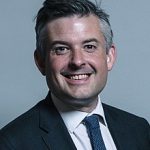
  • Jonathan Ashworth – 2020 Speech on the Coronavirus Bill

    Jonathan Ashworth – 2020 Speech on the Coronavirus Bill

    Below is the text of the speech made by Jonathan Ashworth, the Shadow Secretary of State for Health, in the House of Commons on 23 March 2020.

    May I start by thanking the Secretary of State for his kind words and for the way in which he has continued to keep me updated throughout this process, for the arrangements he has made for us to be briefed by officials and the chief medical officer, for keeping me informed of Government decisions, and for his ongoing engagement on the Bill? I hope that Members across the House understand that when we ask the Secretary of State probing questions, we do so constructively—not ​to undermine him or to create some false dividing line for the sake of political point scoring. This is a frightening time for our constituents and we all have an interest in ensuring that the Government get this right. We want the Government to succeed in defeating this virus.

    I will make a few remarks about where we are with responding to the virus before moving on to some specific comments about the Bill. As always, our thoughts are with those who have lost loved ones to the virus. Again, let me put on record our praise for the extraordinary efforts of our NHS staff and other dedicated public servants. This unprecedented global health crisis tests each and every one of them like never before; we are forever in their debt.

    Today this House is being asked to make decisions of a magnitude that I simply would never have dreamt of only a few weeks ago. I know that no Member came into this place to put powers like this on to the statute book—powers that curtail so many basic freedoms that our forebears fought so hard for, and that so many people today take for granted. But I also know that every Member here will want to do all they can to support all means necessary to save lives and protect our communities in the face of this virus.

    This is a global health emergency the like of which the world has never seen since the Spanish flu outbreak over 100 years ago. Throughout this outbreak, I have said that the virus spreads rapidly, exploits ambivalence and thrives on inequality. The Government have quite correctly sought to promote social distancing as a means of reducing person-to-person transmission of the virus. For the most part, these measures have been on a purely voluntary basis, but I am afraid that too many people are still not following the advice. This weekend we will all have seen the pictures of bustling markets, packed tube trains, and busy beaches and parks. I am afraid that the public health messages are still not being heard loud and clear. Everyone who can be at home should be at home. Everyone who can work from home must do so. This House must also send a clear message to young people—millennials—that they are not invulnerable to the virus; they are at risk too.

    To be frank, we in this House need to adjust our behaviour as well. I love and respect this Chamber, and I think Members will agree that I relish the cut and thrust of robust debate across these Dispatch Boxes. But if other workplaces can use Zoom calls, Skype, conference calling and so on to make decisions, why can’t we? I therefore look forward to the reforms that Mr Speaker is looking into.

    Kevin Brennan

    It would be remiss of me not to thank my hon. Friend and the Secretary of State for the way in which they are both responding to this crisis—even though they are on opposite sides of the House—in the interests of the whole country. The whole House appreciates the way that both of them have conducted themselves throughout this crisis. On the point that he raises, an acquaintance of mine, who is an NHS nurse, asked:

    “Why is the public creating more work for us medical staff and exposing us to the risk of dying?”

    I thank him for giving those messages so clearly, but does he think that there is more that can be done to communicate more effectively to the public what social distancing means in practice and how people should behave given the scenes that we have seen this weekend?

    ​Jonathan Ashworth

    I agree with my hon. Friend. I did note that the Secretary of State talked about the comprehensive public health advertising campaign. We welcome that campaign, but we encourage the Secretary of State to use his offices to see whether that comprehensive campaign can become even more comprehensive. Can we have more adverts on television and more adverts on radio stations? Can we have a leaflet going through every door, explaining what social distancing means, explaining what shielding means? Before this virus took hold, the words “social distancing” and “shielding” were probably not often used in the Chamber, so if they are not words that we are familiar with, we can bet that our constituents are not entirely familiar with them either.

    Mark Pritchard

    The shadow Secretary of State will know Telford and Wrekin very well as he has visited them many times in the past 12 months due to flooding and other issues. I am grateful for his visits despite the fact that he is a member of the Opposition. Is he aware that, today, the Labour-led council made a decision, which I support, to close all the public parks, play areas and open spaces that it runs, and that that in turn will put more pressure on the other open spaces that are not currently run by the local authority? May I encourage him to continue to press the Government to move quicker to this lockdown that we all want to avoid, but that will ultimately save lives.

    Jonathan Ashworth

    I must tell the hon. Gentleman that my attempts to change the political complexion of Telford and Wrekin have completely failed to date, but I am grateful to him for his comments about the Labour council. I think that this is the nub of the matter. I have a point to put to the Secretary of State while he is still in the Chamber. Sadly, it has just been reported on social media that the case fatality figures are continuing to climb and there is some discussion that we are seeing now an exponential growth in line with Italy. I appreciate that there are different demographic issues in different nations, but, clearly, people are concerned that our death rates are increasing at a rate that suggests that we could be heading to an Italian-style situation. We all know what is happening in Italy. The point is that clinicians are warning us that our intensive care bed capacity and our high-dependency unit capacity, could very quickly be overwhelmed. We have already seen a critical incident at one hospital, and no doubt we will see more in the coming days. This is a crisis and it is a crisis that demands an overwhelming Government response.

    Sir Edward Leigh

    It is vital that we have a sense of national unity on this. If it becomes necessary for the Government to impose a lockdown, which I suspect may well happen if people do not change their behaviour, can we rely on the Opposition to support the Government?

    Jonathan Ashworth

    The right hon. Gentleman has rather anticipated my point. Looking at the graphs—and I do caveat this with a recognition that different countries have a different demographic profile—we are now beyond the numbers of fatalities that existed in Spain and France when they announced their stricter enforcement measures and their lockdowns. I do not really like the term lockdown, because it means different things in different contexts, but I think that we broadly understand what we are talking about this afternoon. In answer to the right hon. Gentleman’s point, we, as Her Majesty’s ​Loyal Opposition, do now call on the Government to enforce social distancing and greater social protection as a matter of urgency. I am sorry and disappointed about that, but I am afraid that many people are not adhering to the type of social distancing that we expect.

    Imran Hussain

    My hon. Friend the shadow Secretary of State is absolutely right in what he says, but there are those who are finding it difficult to socially isolate because of the financial circumstances that they find themselves in. There are self-employed taxi drivers, those in the gig economy and others who are sometimes only just getting by in the first place. There needs to be clear financial packages available to put those people on an equal footing so that they can also take up that measure.

    Jonathan Ashworth

    My hon. Friend is absolutely right, and his point has been made repeatedly by my right hon. Friends the Leader of the Opposition and the shadow Chancellor. The challenge of social isolation will not be boredom and fatigue, as some behavioural scientists have suggested; I think the biggest challenge of social isolation will be personal finances, and so on. That is why our proposed measures on sick pay are so important, and it is why we welcomed some of the measures announced by the Chancellor last week, but we think they need to go further.

    Caroline Lucas

    I am grateful to the hon. Gentleman for giving way and for taking the issue of communication more seriously than the Secretary of State. We need leaflets going house to house, and we need them in different languages so that different communities can hear this.

    The hon. Gentleman’s point about a strict lockdown is well made, but I echo what others have said about the importance of guaranteeing economic security to make it much more possible for people to cope with that lockdown, particularly the self-employed who are now struggling so much. Statutory sick pay is not enough for them.

    Jonathan Ashworth

    The hon. Lady is absolutely right. I am proud to represent the great city of Leicester, which is probably the most diverse city in the United Kingdom—every language in the world is spoken there—so I entirely endorse what she says. If we funded local government properly, it would be able to put such measures in place.

    I entirely agree with the hon. Lady’s broader point that if we have to ask people to stay at home, or if we have to force them to do so—we would support the Government if they took that action, and I think they do need to take that action—we would also need to provide them with the economic security they rightly deserve.

    Stephen Doughty

    I thank my hon. Friend for his approach to this issue on a day-to-day basis. I completely support what he says about the need to enforce social distancing, and I know many Members on both sides of the House would do so, too.

    I am struck by the contact I have had with friends in Italy and elsewhere who are, frankly, aghast that we have not moved to tougher measures sooner. Anybody looking ​at the graphs of the situation in Italy would definitely want to avoid it here, so I wholeheartedly support such measures, but they have to come with the economic measures he rightly talks about.

    Jonathan Ashworth

    I totally agree.

    John Spellar (Warley) (Lab)

    There is a lot of talk about income, but it is also about expenditure. I have had many complaints from constituents about prices rocketing, particularly for staples, but it is unclear whether that is the fault of the retailers, the cash-and-carry wholesalers or, indeed, the suppliers. The Competition and Markets Authority is looking into it, but I urge the Government to crack down urgently on profiteering from people’s difficulty.

    Jonathan Ashworth

    My right hon. Friend makes an excellent point, and we are seeing it in my constituency. I have had complaints from constituents about exploitative profiteering, so I hope the Government will come forward with some proposals to stamp it out. It is an absolute disgrace that it is happening at this time of national crisis.

    Siobhain McDonagh (Mitcham and Morden) (Lab)

    May I raise, once again, the issue of housing? Social isolation is great, but it is really difficult for people who happen to live with their family in one room in a deeply overcrowded shared house—sharing a kitchen and sharing bathrooms—as so many of my constituents do, particularly when the kids are off school. There needs to be some thought about letting them out in parks and stuff like that, because they do not have gardens.

    Jonathan Ashworth

    My hon. Friend makes an excellent point. I represent an inner-city seat, and I appreciate that her seat is on the outskirts of London but, none the less, our seats have similar demographics. I know full well that many, many families are living in cramped, small flats. There are intergenerational families living with elderly mums, elderly grandmothers and so on who have various comorbidities and who need to be shielded.

    If we enter a situation in which we force people to stay at home, I hope the Government will look at how to support such families, because it is quite outrageous that, in many parts of the country—especially in London, but also in my constituency—there are flats with families of nine or 10 people sleeping on the floor, and so on, while property developers have flats standing empty. Why cannot we take over some of those empty flats to house some of these very vulnerable families and to help us get through this national crisis?

    Mr David Davis

    I commend the hon. Gentleman for the stance he is taking in this debate. The whole House will respect him for it. The series of interventions that he has just taken demonstrates a wider point: the need for the Government, sadly—and I did not think I would ever say this in this House—to get into intrusive levels of planning that we have never seen before, because every time we have a change in the level of ferocity or intensity of our dictating what the state and society should do, we run into a new set of problems, whether that is crowding on tube trains overwhelming our desire for social distancing, or young mothers with children at home finding it very difficult to get to supermarkets and therefore literally running out of food, which is even ​more fundamental than running out of money. We need to think forward, and I say that because we have seen in Europe—between Germany, Italy and Spain—very similar policy actions but with completely different outcomes. I suspect that it is because of a different approach taken by the German Government and society from that taken by the Italians or the Spanish, and we have to think about that as we go into the next stage.

    Jonathan Ashworth

    The right hon. Gentleman is absolutely right. We are asking people, and are probably on the cusp of probably of forcing people, to radically adjust their behaviour in a way in which we have not been used to for more than 70 years. The last time that we asked people to radically adjust their behaviour was in the second world war. We have generations who are not used to this. We are a society who are used to going where we want, buying what we want, doing what we want and socialising when we want, and clearly, for a lot of people, it is not dawning on them that they will have to change the way they behave. That has huge knock-on effects for how public services will be organised, how the criminal justice system will have to work and how food distribution systems are going to work. It is right that we as parliamentarians continue to ask Government Ministers serious questions about that, but we also have to be aware that we have a responsibility to set an example to the country. We have to socially distance ourselves, so I really hope that the good offices of the Speaker, the Leader of the House and everyone who is involved in House business can quickly find a satisfactory set of procedures for us to continue having our discussions and asking Ministers questions, but not setting the example that we are unfortunately setting today. I am not making any personal criticism of any Member, because it is the situation we are in—we have to debate the Bill today—but we are going to have to hold the Government to account on the far-reaching, extensive powers that they are taking.

    Dr Murrison

    As always, I am listening with great attention to what the hon. Gentleman has to say. Does he agree that part of the problem is that policy has to be based on behavioural science, but behavioural science is one of the most imprecise of sciences? The difficulty is that it is not like chemistry or physics. It means that we have to have a wider margin of error when designing policy, and what that means, in effect, is erring on the side of caution and safety, which I think is the burden of the direction that he is urging on Ministers. In a sense, it is about getting ahead of the curve by bringing in measures that we would all regret. However, if we are going to base policy on behavioural science—it being fairly inexact and difficult to predict, as we have seen over the weekend—we have to have that margin of error and caution, which I think he is recommending.

    Jonathan Ashworth

    The right hon. Gentleman has shrewdly interpreted the stance I am taking. Throughout all this, given the way in which the virus has spread so rapidly, its reproduction rate and the mortality rate, I have always urged the Government to take a precautionary principle approach to every decision that they make. I have been a bit sceptical about some of the behavioural modelling that has been used. Let me give him a quick example. Before the Government banned mass gatherings, we were told by Ministers and officials—I hope that no Minister takes this is a personal criticism; I certainly do not mean it in that way—that there is no point in ​banning a football match with 70,000 people in the stadium, because the person with the virus is not going to infect the other 70,000 people in the stadium and that if we stop them going to the stadium to watch the match, they would all go to the pub to watch it and infect more people there. I am sure he has heard that example.

    I am very proud to represent Leicester City football club, and all the football fans—or a large proportion of them—go to the stadium before the match, and go to the stadium after the match—[Hon. Members: “Pub!”] I beg your pardon, they go to the pub. They go to the pub before the match, and they go after the match—[Interruption.] Some of them do avoid the stadium, actually. I am sure that the right hon. Member for South West Wiltshire (Dr Murrison) sees the point I am making. Some of these behavioural models do not always, it would seem, reflect how humans behave. Given that, Ministers and Governments should follow a precautionary principle at all times. That is why Labour is now urging Ministers to come forward with their plans to enforce compulsory social distancing. There are different models in different countries—we have France, Spain and Italy, New Zealand, where they did it overnight, Greece, and Germany, where, other than families, they have banned more than two people from meeting outside the house—but we think that the time has come for the United Kingdom to go down this line. We would encourage the Prime Minister to come forward with plans for how he thinks that this should apply to the UK.

    Neale Hanvey (Kirkcaldy and Cowdenbeath) (Ind)

    Behaviour is changing, and, unfortunately, some of it is unhelpful. Today, I have had probably one of the most upsetting emails that I have received throughout this time from my local foodbank, which tells me that two of the main supermarkets in the area are refusing to sell it food. The people who get that food from the foodbank have no other means of obtaining food in the midst of this crisis. Does the hon. Gentleman agree that the Government need to speak urgently to the major supermarkets to ensure that foodbanks can secure sufficient supplies for those people who have no other option?

    Jonathan Ashworth

    The hon. Gentleman makes a good point, and I totally agree that that is an absolute disgrace. I hope that the Government will look into that, because although foodbanks should not be necessary in this day and age, we know that they are vital and I hope that the Government can resolve that swiftly.

    I was originally answering the point made by the right hon. Member for South West Wiltshire so long ago: we would support the Government if they came forward with such proposals, but suppressing and defeating the virus is about more than just so-called lockdowns and enforcement. We need more testing, we need more contact tracing and we need more isolation to break the chains of transmission. The World Health Organisation has famously instructed the world to test, test, test—and we agree. Labour has called for testing for the virus to be carried out in our communities on a mass scale, starting with NHS and care staff as a priority. We urge the Government rapidly to scale up testing and we thank all NHS lab staff and PHE staff who are working so hard.

    For example, could the Government consider what is happening in the Republic of Ireland, where there are 35 community testing facilities in operation? They have ​six more planned, and the largest, in Croke Park stadium in Dublin, provides a drive-through service that tests 1,000 people a day.

    Chris Bryant

    I completely agree with my hon. Friend on the need, in particular, to protect all key workers and to therefore make sure that there is testing available for them. Is it not important that at the same time we make sure that path labs have enough resources and capacity to be able to be able, for instance, to do cancer biopsies and get them back to people fast enough, because all those other conditions and diseases that are very time-critical will be just as important?

    Jonathan Ashworth

    My hon. Friend is absolutely right. Path lab and virology labs are under intense pressure, because not only are they being asked to test for covid-19 but they have other testing responsibilities as well, whether that is for HIV, influenza, measles or all the other illnesses that are still circulating and still need to be treated. He makes a very important point.

    I hope that Ministers can update us on testing capacity, because looking at the figures it appears that between 21 and 22 March, we did around 5,500 tests, but the previous day we did 8,400 and the day before that about 8,100. I am told that many labs at hospitals have not been able to start testing or are testing at under planned capacity because there are now supply chain issues with the chemicals that are used and the kits to do the testing. If this is the case, could the Government update the House on what they are doing urgently to procure the testing kits we need, and explain why we are not part of the EU joint procurement initiative on testing kits and other equipment?

    I emphasise the point I have made in this House before that we really need to be testing our NHS staff. Not testing NHS staff puts them at risk and it puts their patients at risk. This weekend, we heard powerful messages from doctors who were literally shouting out for help and telling us they feel like lambs to the slaughter because of failures in the distribution of protective kit and because they are not able to get access to testing. I have heard of GPs—indeed, GPs have got in touch with me directly telling me this going to DIY stores to make their own PPE kit. It has been reported today that one of the healthcare distribution chains has put out a call to DIY stores asking them to donate or hand over their visors and goggles.

    Pharmacists are worried that they cannot get through to CCGs to get appropriate PPE when sick patients are walking through the door daily asking for advice. We have heard stories of community nurses, health visitors and paramedics without PPE. Indeed, The Daily Telegraph reports today about staff at Norwick Park Hospital being forced to wear bin bags because of a lack of PPE.

    The health, happiness and lives of our constituents, and of their loved ones and neighbours, depend on our NHS staff now more than ever. We should not expect our NHS staff to go into battle exposed and not fully protected—lacking the armour they desperately need. If more PPE has been delivered in the last 24 hours, as the Secretary of State indicated, then we welcome that, but to be frank, it should not have taken so long. Our NHS staff deserve every ounce of support we can offer, and on that front, will Ministers also consider binning hospital car parking charges for NHS staff at this time of crisis?​

    Those working in critical services more widely—our police, our careworkers, our postal workers—need appropriate protective clothing too. We urge the Government to ensure that all public services can access the appropriate PPE speedily. For example, in The Sunday Times yesterday, it was reported that flights continue to arrive at Heathrow from Italy, Iran and China. Those flights are obviously coming from hotspots—perhaps Ministers could explain why that is still happening—but what protections are being afforded to airline and airport workers, and what measures are in place for those passengers on arrival? On the tube and on the train, there is real worry that services are being reduced too steeply, causing our key workers to get on to crowded carriages and putting everyone at risk. What assurances can Ministers give us that there is a sufficiency of public transport services to get our frontline workers safely to their workplace?

    Let me turn to some of the specifics in the Bill, and first to the health and social care clauses. On the health clauses—the hon. Member for Twickenham (Munira Wilson) raised this with the Secretary of State—the Bill makes provisions for retired staff and final-year medical and nursing students to rejoin or join the health service for the duration of the pandemic. We understand why, and we welcome this. Can Ministers tell the House, either in response to the debate or in Committee, whether final-year nursing and medical students will be able to return to learning and complete more supported clinical placements, if needed, once the crisis is over? Will Ministers also outline how these students will be fully supported while working during what will undoubtedly be an incredibly stressful time for new doctors and nurses? Will students be properly remunerated for their work, and what protections will be available for retired staff, many of whom could also be in a vulnerable group? I put on record our thanks to those retired staff who have returned to the frontline.

    Some of the most vulnerable people in the country absolutely depend on all of us here to defend their human rights and civil liberties, and they are the ones in receipt of adult social care services. On social care, this Bill makes sweeping changes to the duties that are placed on local authorities. It removes the duty to assess care needs, including on discharge from hospital, so there will be no duty to assess people who may need care or to assess their carers, and no duty to assess some of those with the most severe needs who may be eligible for continuing healthcare. Can Ministers reassure us that this will not mean that carers, disabled people and older people are left abandoned by the state until after this crisis?

    Most significantly, the Bill downgrades the level of support that councils are obliged to provide to older and disabled people. Rather than the current wellbeing measures, councils will now have to provide services where necessary to uphold people’s basic human rights. In short, this means people will only be entitled to receive social care to keep them alive and to uphold their rights to privacy and a family life. Obviously, that is not the vision for social care that we legislated for in 2014, but we all appreciate that these are incredibly difficult times.

    Many older and disabled people, and their families, will be concerned that this will lead to existing care packages being significantly reduced overnight. Local authorities are already struggling to meet statutory needs, and increasing levels of workforce absence will ​only make that harder. None of us wants to see the new legal minimum of support become the default. Where local authorities can provide more comprehensive packages of support, they should, and they should always bear in mind that people who use social care are not simply passive recipients; there are doctors and nurses who rely on social care, as well as teachers, shop staff, food manufacturers and countless other vital professionals. When councils reduce care packages, they must be careful not to end up causing yet more difficulties for staff in crucial services.

    Catherine West

    Does my hon. Friend agree that, since the courts are likely to be stood down, and in a context where disabled people often use them to ensure that their rights are protected, we are in a doubly difficult situation for disabled people and elderly people?

    Jonathan Ashworth

    Absolutely. That is why these particular clauses must be scrutinised so carefully by Members across the House.

    We have tabled amendments to schedule 11. We recognise that there will be difficulties delivering social care over the coming weeks and months, but it should not be possible for local authorities to immediately drop care packages to a lower level. As long as it is reasonably practicable to do so, they should continue to meet people’s care needs. The presumption should always be that services will be disrupted as little as they can be under the circumstances. Nothing in our amendments would stop a local authority cutting back care hours if it had to, but they would mean that disabled and older people could be reassured that any reductions in their care will be a last resort, and that their independence will not be the first sacrifice to be made.

    There are particular concerns about people who live alone or are being held in in-patient units and care homes. We have seen visits to those settings stopped as part of the Government’s shielding approach, and the CQC has halted all inspections, but we know from incidents such as Whorlton Hall that is too easy for abuse to go unnoticed—something the current situation could make worse. How will we ensure that in-patient units and care homes do not become hotbeds of abuse of human rights over the coming months?

    Mr David Davis

    That is precisely why I asked the Secretary of State whether, when we get to the six-month review and renewal of this legislation, we will be able to amend it. If there is oppressive behaviour in one part or another of it while the rest is all very important to the survival of our people, what stance will the Labour party take?

    Jonathan Ashworth

    The right hon. Gentleman is right: we cannot just have a take-it-or-leave-it approach to these things. Tonight, the House will give the Government extraordinary powers, like we have never seen before, and it is right that we parliamentarians are given an opportunity, after the appropriate timeframe, to look at how those powers have been used and hold Ministers to account. I agree with the spirit of the point he makes, although I cannot at this stage—I suppose it may emerge later in the debate—give him a commitment one way or the other on a particular amendment. We will see how the discussions proceed throughout the afternoon, but I certainly endorse the spirit of what he says. As I say, these are extraordinary powers that the House will grant the Government this week.​

    We have tabled a new clause related to schedule 11. We propose that a relevant body, such as the Equality and Human Rights Commission, should be tasked with overseeing the Bill’s impact on the provision of social care. That body would have to report every eight weeks on the operation of these changes and whether they should be amended. It would provide the oversight that is needed to prevent people’s rights from being undermined.

    One of the ways the Bill seeks to free up medical staff is by relaxing the requirements of the Mental Health Act 1983. Specifically, only one medical professional will have to agree to someone’s being sectioned, rather than the two it currently takes. The scale of that change should not be underestimated. No longer will a decision to section a person have to be taken in consultation by two doctors. There will be no requirement for anyone involved to have had prior involvement with the patient. Medical professionals are going to be under huge pressure in the coming months, and mistakes may well be made.

    The Bill says that a decision should be taken on the basis of one signature if requiring a second signature would be

    “impractical or would involve undesirable delay.”

    That seems to be too vague and potentially open to misreading. I hope Ministers can tell us what exactly that means and what safeguards will be put in place to prevent the change from being misused. Our amendments to schedule 7 would narrow the provision so that a second signature could be left off only if acquiring it would mean an undesirable delay. If something is impractical, it will by definition create an undesirable delay. By narrowing the wording in the Bill, we can avoid the potential misuse of powers.

    We propose changes to ensure that private mental health hospitals cannot detain someone solely on the single recommendation of one of their employees. That could create a conflict of interest whereby a doctor comes under pressure to sign a detention authorisation because doing so will provide their employer with income from the NHS. No medical professional should be put under that kind of pressure, and our amendment would ensure that they cannot be. [Interruption.] Is the hon. Member for Bracknell (James Sunderland) seeing to intervene?

    James Sunderland (Bracknell) (Con) indicated dissent.

    Jonathan Ashworth

    The Bill extends to five days from three the length of time for which somebody in hospital can be held waiting to be sectioned. That may seem like a minor change, but for the individual concerned it could make a significant difference. I hope Ministers can reassure the House that the intention should still be to adhere to the timetable set out in the Mental Health Act, with the changes we are discussing to be used only if absolutely necessary.

    Let me turn to some of the proposals on education and schooling. Many parents of children with special educational needs and disabilities will understand the need for flexibility during this difficult time, but they are also extremely nervous that they could see the erosion of the hard-fought-for rights of disabled children and young people, children and young people with special educational needs, and their families. The Bill gives the Secretary of State powers to change section 42 of the Children and Families Act 2014: rather than giving children rights in law, it would only request that public ​bodies take “reasonable endeavours”. That sets a low bar, and we will seek to change that provision to a duty to take all practical steps, which will go much further.

    Let me move on to some of the other issues in the Bill. Others have alluded to concerns that the Bill still does not go far enough in providing people with the incomes that they need to self-isolate. We welcome much of the Chancellor’s statement last Friday setting out plans to support the incomes of workers impacted by the coronavirus outbreak. However, there are still some gaps in the provisions that were offered. Currently, the proposal for income support through the job retention scheme does not include the self-employed and freelancers, whose incomes are increasingly being seriously affected by the coronavirus outbreak. Will the Government today offer assurances to those groups of workers, who do not have a safety net to safeguard and help them through this time?

    We have welcomed the new Government measures to improve access to statutory sick pay for workers. However, the Bill does not extend eligibility to all workers, including the just under 2 million workers who earn less than the qualifying threshold of £118 a week on average. It does not raise the level of statutory sick pay, which is, at £94.25, already the second lowest rate in Europe. We hope the Government will respond on those issues quickly because, as we have continually said throughout this crisis, people should not be expected to make a choice between their health and hardship.

    Nobody should lose their home because of this virus. It is welcome that Ministers have listened to Labour and committed to an evictions ban for renters, but despite the Prime Minister’s promises that the Government would legislate to that effect, no such measures are in the Bill. Some 8.5 million households rent their home from a private, council or housing association landlord in England. Our analysis of Government statistics shows that 6 million renting households have no savings at all and are particularly vulnerable if they lose their job or have their hours cut as a result of coronavirus. To give people confidence and reassurance during this difficult time and to ensure that no renter loses their home as a result of coronavirus, rent needs to be suspended for those adversely affected by the impact of the coronavirus outbreak.

    Like many Members across the House, the Opposition support this Bill with a very heavy heart—heavy not just with the shock and grief that this deadly virus has brought, but given the very real threats that emergency powers of this nature pose to human rights. The Bill contains the most draconian powers ever seen in peacetime Britain—powers to detain and test potentially infectious members of the public, including children, in isolation facilities; powers to shut down gatherings, which could impede the ability to protest against the overall handling of the crisis or against the abuse of the powers themselves. It needs no explanation and very little imagination to understand the huge potential for abuse that such powers and others in the Bill, however well intended and needed, still give rise. Those words will chill every liberal and libertarian instinct of Members across this House, which is why we were grateful to the Health Secretary and the Solicitor General for discussing these measures with us and with my shadow Cabinet colleagues in the rapid preparation stage of this Bill.​

    We have heard many wartime analogies in the press. Many here have talked about Winston Churchill. Of course, Churchill was remembered not only for victory in the war, but for the European convention on human rights at the end of the war. Notwithstanding the anti-Human Rights Act and anti-judicial review grumblings that we have heard in recent times, this Bill comes under the cover of a statement of compatibility under section 19 of the Human Rights Act. Further, the Bill does not attempt to oust the supervisory jurisdiction of the courts. That means that every exercise of Executive power or administrative action under the legislation must and will be measured against human rights and common-law standards. These include necessity, proportionality, rationality, fairness and, crucially, non-discrimination. I thank the Government for that concession on their part and for agreeing, I hope once and for all, that human rights and the rule of law, far from impeding national efforts in time of crisis, should instead guide and inspire them.

    It is important that various measures in the Bill, some interfering with liberties and others deregulating standards, may be turned on and off, as and when needed, by the appropriate Administration under our devolution settlement. It is welcome that the Bill contains a two-year sunset clause, but as we have discussed, two years is a very long time in normal days and longer still in the context of this pandemic. That is why we tabled an amendment last week seeking parliamentary votes on the renewal or revocation of these emergency powers at six-monthly intervals. Indeed, many of us would prefer even more frequent reviews, but given the particular challenge even for Parliament of this crisis, I am glad that the Government seem to have moved some way towards the compromise offered by the Opposition in the constitutional interest.

    Mr Steve Baker

    I welcome the spirit in which the hon. Gentleman is making his speech and also his proposal for a review at six months. I certainly support that, but does he agree that we could also sunset the powers in the Bill after one year and that the Government could then bring forward a Bill—there is plenty of time between now and then—that would go through Parliament about this time next year and make whatever changes proved to be necessary between now and then? Doing that—a six-month review and, after a year, a Bill—would not involve us signing off on two years today.

    Jonathan Ashworth

    As I understand it, our amendment calls for a review every six months, but the hon. Gentleman makes an interesting point, to which I am sure Ministers will respond in Committee, when we get to that point later.

    I hope the Government will be able to explain the differences between their amendment and ours, and to reassure the House that there will not be large exceptions to the six-monthly review, especially in England, which has only this House to hold Executive power to account.

    We have been scrutinising the Bill on behalf of our constituents. None of us came into politics to put a Bill like this on the statute book, and I for one will never rest until the day comes, hopefully not too far away, when I can come to this House and vote to get to get rid of it. But what we have seen in recent months is concerning, if not frightening, all our constituents, and it is right that ​we are taking the powers that we are taking today, although we have to continue to hold Government to account. We will overcome this virus, and when we do, serious lessons will have to be learned. The crisis has exposed the vulnerability of a society in which insecure work is rife, deregulation is king and public services are underfunded. When we come out on the other side, as we will, we have to build a society that puts people first.
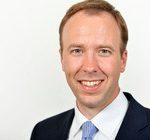

  • Matt Hancock – 2020 Statement on the Coronavirus Bill

    Matt Hancock – 2020 Statement on the Coronavirus Bill

    Below is the text of the statement made by Matt Hancock, the Secretary of State for Health and Social Care, in the House of Commons on 23 March 2020.

    I beg to move, That the Bill be now read a Second time.

    Coronavirus is the most serious public health emergency that has faced the world in a century. We are all targets, but the disease reserves its full cruelty for the weakest and the most vulnerable. To defeat it, we are proposing extraordinary measures of a kind never seen before in peacetime. Our goal is to protect life and to protect every part of the NHS. This Bill, jointly agreed with all four UK Governments, gives us the power to fight the virus with everything that we have.

    Kevin Brennan (Cardiff West) (Lab)

    Like many hon. Members, I have had a huge number of issues raised with me by NHS workers regarding the availability of personal protective equipment to frontline staff and testing. I know the Secretary of State wants to protect NHS staff through the Bill, so will he take the opportunity of Second Reading to update us, perhaps with any information he has from across the UK, about progress on these matters?

    Matt Hancock

    Yes. If it is okay with you, Mr Speaker, I will answer that intervention and then get on with the point in the Bill. These issues are outwith the Bill, but they are incredibly important and very much part of the topic.

    In terms of making sure that NHS staff, social care staff and those who need it clinically get the protective equipment they need—especially but not only the masks— we are undertaking enormous efforts to get that equipment out. The equipment is there; we have it. It is a distribution effort. I was not satisfied with the stories I heard of people running short, so we have brought in the military to help with the logistical effort. I want to hear from every single member of staff in the NHS or in social care who needs that equipment but does not have it, so we have also introduced a hotline and an email address, which is manned. I have had an update on that, and it has had a number of calls, which are all being responded to. In that way, we will find out where the gaps are, so that we can get this distribution out. It is a mammoth effort; we have been working on it for several weeks, but the increase in the use of the protective equipment in the last week has been very sharp, as I am sure the hon. Gentleman and the House will understand. The logistical effort is very significant.

    We are expanding the amount of testing. We are buying tests, both ones made abroad and ones made here in the UK, because testing is absolutely vital to getting out of this situation. I want to get to a point where anybody who wants to get tested can get tested. At the moment, we are having to reserve the tests we have for patients, especially in intensive care, so that they can be properly treated according to whether or not they have coronavirus. Very soon, we are getting the tests out to frontline staff so that they can get back to work, where somebody in their household might have the symptoms and they are household-isolating. I understand absolutely the importance of testing. We are working on it incredibly hard. We were working on it all weekend, and we are making some progress.

    Mark Pritchard (The Wrekin) (Con)

    On the point about testing, will the Secretary of State be absolutely clear? Does the current test that is available show whether somebody has got covid-19 or has perhaps previously had it? Does it do both, or does it do just one? If it does just do one, when are we likely to have a test that does both?

    Matt Hancock

    Tests for both have recently been developed. The test for whether someone has coronavirus, which we call the case test, was first developed here by Public Health England, and that is being expanded. The antibody test, which tests whether someone has the antibodies that make them immune to coronavirus, has now been developed, and we are buying it in large quantities.

    Sir Edward Leigh (Gainsborough) (Con)

    Nobody denies that the Bill is necessary, but given that it gives the state, for the first time in our history, unprecedented powers to enforce isolation on people who have committed no crime, will the Secretary of State reassure the House that it will be fully involved in renewing this once this crisis is over, and that there will be no drift in this matter?

    Matt Hancock

    Yes. I will turn to this point shortly, but let me just correct my right hon. Friend. The measures we are taking to be able to hold people in quarantine build on those in the Public Health (Control of Disease) Act 1984, which we have been using hitherto. In that element, the Bill is not unprecedented. The Bill makes these powers UK-wide and strengthens the basis on which they can be exercised, but the powers are not unprecedented. Nevertheless, the point he makes about the House’s ability to scrutinise these measures and to ensure that we are, as a House, content with their continuation is important.

    Greg Clark (Tunbridge Wells) (Con)

    Will my right hon. Friend give way?

    Matt Hancock

    Let me make a little more progress in answering my right hon. Friend the Member for Gainsborough (Sir Edward Leigh), and then of course I will give way.

    The Bill is jointly agreed between the four UK Governments. Of course, there are measures that are significant departures from the way we normally do things, but they are strictly temporary. I think that they are proportionate to the threat we face, and they will be activated only on the basis of the best possible scientific evidence. Crucially, to my right hon. Friend’s point, the legislation is time-limited for two years and the measures can each be switched on and off individually as necessary by the relevant authority, whether that is the UK Government or the devolved Government, depending on who exercises the powers. As an additional safeguard, we today tabled an amendment to give the House the opportunity to confirm that the powers are still required every six months.

    Greg Clark

    I am grateful to my right hon. Friend for giving way. Everyone admires the steps he is taking. He knows that I have been questioning and corresponding with him on testing for some time. Given that, as he pointed out, the test was developed in this country, can he explain why it seems to be so much less available in this country than in other countries around the world?

    Matt Hancock

    We have done more testing than most countries. There are some countries that are ahead of us, and we are racing to catch up. We have tested far more than, say, France or America, but not as much as Italy. It is something that we are putting a huge amount of effort into. I understand the pressure my right hon. Friend rightly puts on me to expand testing capability. We are increasingly using private companies to do the testing—to expand their production and execution of the tests—rather than just doing it in the brilliant public health labs we have at Porton Down and around the NHS.

    Stephen Doughty (Cardiff South and Penarth) (Lab/Co-op)

    I commend what the Secretary of State said about working with the devolved Administrations to get the measures in the Bill right. It is crucial that many of these measures are UK-wide; I realise that these are unusual times. There is a specific power in schedule 21 to limit entry to premises and, if necessary, to close them down, which applies to all four Administrations. Can he be clear about whether that will apply to care homes? I have heard a lot of concern from constituents who are worried that some care homes still are not restricting entry to individuals and are therefore putting elderly residents at risk. There is real demand for this to be unified across the country to protect elderly residents.

    Matt Hancock

    We have other ways to enforce that with care homes, not least contractually through local authorities. I understand the hon. Gentleman’s concern; people in care homes need to be protected, and many of them shielded, from the virus, because many of the most vulnerable people are in care homes. I will take away the point and look at whether more needs to be done, but we do have other powers available to deliver on what he and I—I think—agree is needed.

    Mr David Davis (Haltemprice and Howden) (Con)

    I commend the Secretary of State for accepting the six-month review that he has just announced, but in the event that the House decides that one element of the Bill is working badly, will we be able to amend or strike out that element, or will we have to take the whole thing or reject it at that six-month point?

    Matt Hancock

    As discussed with the Opposition, we are proposing a six-month debate and vote on the continuation of the Bill, and before that debate we will provide evidence and advice from the chief medical officer to inform the debate. There is also a reporting mechanism for a report every eight weeks on the use of the powers in the Bill.

    Tom Tugendhat (Tonbridge and Malling) (Con)

    I thank my right hon. Friend for the time he has taken in explaining at every stage how he has used the powers of his office to this House and, indeed, to the people through the media. I am hugely grateful and I know many others are. Could I just, however, state that over the last three weeks the world has changed in a rather more radical sense than many of us appreciate? The powers in the Bill, even over six months, are likely to change and to be exercised in different ways. Can he assure me that he and all other Ministers will exercise their powers reasonably, in keeping with only the coronavirus issue, and making sure that they are limited to the purpose for which they were intended, because these powers could—in different circumstances—be used in a particularly malicious fashion?

    Matt Hancock

    I can confirm that the Bill is to deal with the current coronavirus emergency, and that is an important point. But I would also say that although the world has changed in the past three weeks in ways that many could not have imagined, every measure that has been taken by the Government has been part of the action plan that we published three weeks ago. Of course, the Bill has been drafted over a long period, because it started on the basis of the pandemic flu plan that was standard before coronavirus existed and has been worked on over the past three months at incredible pace by a brilliant team of officials right across Government. The Bill is consistent with the action plan, so while some people might have been surprised by each of the measures we have taken, they have all been part of the plan that we set out right at the start. I can confirm that it is only for coronavirus.

    I also want to give further detail to my previous answer to the hon. Member for Cardiff South and Penarth (Stephen Doughty), which is that section 21 does not specify what it defines as a gathering or an event. It is deliberately broad, so it could include a care home, should we need it to, and that would be defined in secondary legislation should that be necessary.

    Mr Andrew Mitchell (Sutton Coldfield) (Con)

    I am sure the whole House will want to support my right hon. Friend and the provisions in the Bill. I just want to reinforce two points. The first is that I was very concerned to see the two-year provision, which is why I put my name to new clauses 1 and 6, and I am very pleased to hear what the Government have said about the six-month review. Notwithstanding what he just said about the period of time in which this has been produced, it is a heroic effort— 321 pages of legislation which may well be subject to changes in the next few weeks and months as this crisis develops. I hope, therefore, that he will see the six-month review not just as a rubber-stamping effort, but as a chance to improve the legislation, should it require that improvement.

    Matt Hancock

    We could consider that. The proposal is to have a debate and vote as opposed to a whole new piece of legislation and, of course, only to renew it if the measures in the Bill are still necessary. Then, of course, they will fall after two years. I understand the concern of my right hon. Friend and his wisdom. I know that as Secretary of State he dealt with some of these issues, albeit not here but around the world, and he knows the sorts of measures that are needed, which are contained in the Bill.

    Catherine West (Hornsey and Wood Green) (Lab)

    Will the Secretary of State provide clarity on the six-month period? Obviously, six months is quite a long time for people who are chronically ill or have a serious disability. Some of the proposals have implications for social care for the devolved regions or local government. What will happen if there are negative effects on people who receive social care within that six-month period? What recourse will Members have to bring that to the House?

    Matt Hancock

    There will be recourse, and I will come on to that in a moment. The purpose of the social care measures in the Bill, which are very important, is to allow for the prioritisation of social care, should that be necessary. However, there are a number of restrictions on that, because local authorities will still be expected ​to do what they can to meet everyone’s needs during that period. While local authorities will be able to prioritise to ensure that they meet the most urgent and serious care needs, there are restrictions to require them to meet everyone’s needs and, indeed, to fulfil their human rights obligations to those in receipt of care.

    Rehman Chishti (Gillingham and Rainham) (Con)

    I thank the Secretary of State for the excellent work he has done to ensure that individuals get the care they need in these difficult and challenging times.

    On the human rights perspective, I thank the Secretary of State and the Government for listening to faith organisations. Initially there were concerns that under part 2 loved ones would have to be cremated. As somebody from a Muslim background and the Prime Minister’s special envoy for freedom of religion or belief, it was completely unacceptable to consider that if taking account of the views of the Muslim and Jewish communities. I therefore thank the Government for ensuring that the wishes of the deceased will be taken into account in relation to their final rites.

    Matt Hancock

    I pay tribute to my hon. Friend, who has worked hard to ensure that we come to a solution in the Bill, through the amendments we have tabled today, that ensures we can not only have dignity in the case of a large proportion of the workforce not being available, but accede to the wishes of families from the many different faith communities who had concerns about the way it was originally drafted. I pay tribute to my right hon. Friend the Paymaster General, who found a way through that I think everybody can be content with.

    Essentially, the Bill gives all four UK Governments a legislative and regulatory toolkit to respond in the right way at the right time by working through the action plan. While I hope that some of the powers never have to be used, we will not hesitate to act if that is what the situation requires.

    Imran Hussain (Bradford East) (Lab)

    To follow on from the hon. Member for Gillingham and Rainham (Rehman Chishti), I am grateful for the work the Government have done in this area, because many of my constituents—both those from a Muslim background and those of the Jewish faith—were naturally concerned. It is one of the major tenets of faith that everybody has the right to dignity in death, so I am grateful to the Government for listening. Will the Secretary of State join me, at this difficult time for all our communities, in thanking our faith communities for the role they are playing, the difficult decisions they are taking and the support they are giving?

    Matt Hancock

    I entirely agree. This exchange is an example of the cross-party approach we are all taking. I am very grateful to the hon. Member for the work he has done, together with the Paymaster General, to bring this point to light.

    I am also grateful for the work the hon. Member and many others have done with faith groups of all religions who want to gather. Understandably, it is upsetting not to be able to do that, but it is right that they cease large gatherings—or, indeed, any gatherings—where there is social contact that can spread the disease. It is happening ​around the world. It is a difficult thing for some, and I pay tribute to the faith organisations and faith leaders across all faiths who have made the right decision. I urge all faith leaders to see what has been done by those who have taken the right steps and to follow them.

    I wish to thank the hon. Member for Leicester South (Jonathan Ashworth) for his constructive approach to the passage of this legislation and his constructive tone in respect of this whole crisis. I reassure him that I listen to what he says very carefully. Even when he does not agree, he has done so in a calm, sensible and evidence-based way. I think the House can see from the Bill that we have taken on many of his suggestions, and they will go into law. Along with the Labour Administration in Wales, the SNP Government in Scotland and the multi-party Administration in Northern Ireland, we have taken on ideas from all parties.

    The measures in the Bill fall into five categories: because we rely on the NHS and social care staff now more than ever, the first set of measures will help us to increase the available health and social care workforce; secondly, there are measures to ease the burden on frontline staff, both in the NHS and beyond; thirdly, there are measures to contain and slow the spread of the virus so that we can enforce social distancing; fourthly, there are measures on managing those whom the disease has taken from us with dignity and respect; and fifthly, there are measures on supporting people to get through this crisis. I shall briefly take each of them turn.

    The first part of the Bill is about boosting our healthcare workforce at a time when it comes under maximum pressure, both through increased demand and because of household isolation and the fact that large parts of the workforce may fall sick. The Bill allows for the emergency registration of health and social care professionals, including nurses, midwives, paramedics and social workers. I can update the House with numbers: 7,563 clinicians, including Members of this House, have so far answered our call to return to work, and I pay tribute to every single one of them. These are difficult times and they have risen to the call of the nation’s needs. We know that many more will join them.

    Our thanks also go to the social workers who play such a vital role in protecting the most vulnerable in this country. The Bill protects the income and the employment status of those who volunteer in the health and social care system. Volunteers will play a critical role in relieving the pressure on frontline clinicians and social care staff. Again, I offer our thanks.

    Sir Edward Davey (Kingston and Surbiton) (LD)

    Is the Secretary of State aware that many people in the refugee community in the UK are qualified healthcare professionals? I have spoken to the refugee charity RefuAid, which says it has 514 qualified healthcare professionals on its books. These are people who are willing to work and fully qualified in their own country, but there are bureaucratic barriers to their coming forward. Will he please look into this matter with great urgency so that such people can help us out?

    Matt Hancock

    Yes. If the right hon. Gentleman emails me with the details, we will get right on to it. He refers to bureaucratic barriers; we of course have to make sure that people are able to do the work that is necessary, but we have already shown in the Bill that we are willing not ​only to bring people back into service but to put into service those who are towards the end of their training, to make sure that we get as many people as possible in full service. I absolutely want to pick up on the right hon. Gentleman’s proposal and take it up with the General Medical Council or the relevant regulator to see whether we can find a way through for the period of this crisis.

    Chris Bryant (Rhondda) (Lab)

    I wonder whether the Secretary of State may not need an additional power in relation to the Home Office being able to waive fees for tier 2 and tier 5 visas for foreign nationals who are already working in the NHS and are about to have to renew their status in this country, or for those who have been studying as students.

    Matt Hancock

    It is already within NHS trusts’ power to pay those visa fees if it is necessary.

    Yvette Cooper (Normanton, Pontefract and Castleford) (Lab)

    Will the Secretary of State look at the immigration surcharge for doctors and nurses who are working in intensive care units? Will he also look personally at the issues relating to research trials for potential new drugs or treatments, or existing drugs or treatments that are being used? Concerns have been raised with me that those processes are all being delayed by the traditional randomised controlled trial processes, which may not be appropriate given the emergency we face.

    Matt Hancock

    Absolutely. The chief medical officer is personally looking into that issue to make sure that when there is a treatment, we can bring it to bear as soon as is safely possible. There is a challenge with a disease that has, thankfully, a mortality rate as a proportion of the overall population as low as this one, which is that we do not want to do more harm than good. Many of these drugs are safe, because they are licensed for another purpose. It is a question of repurposing them—this is for treatment, rather than vaccine—and that is something we are actively working on. If the right hon. Lady has examples of particular barriers that we need to crunch through I would like to know about them. If she could email me I will take that up with the Medicines and Healthcare Products Regulatory Agency.

    Matt Hancock

    I want to bring to the attention of the House to the professional indemnity clauses. Where there is no existing professional indemnity agreement in place the Bill provides legal protection for the additional clinical responsibilities that healthcare staff may be required to take on as part of the coronavirus response. I do not want any clinician not to do anything that they can do because that they worry about indemnity and what might happen if it goes wrong. I want everybody in the NHS to do their very best to the top of their qualification, looking after people and keeping them safe.

    Dr Andrew Murrison (South West Wiltshire) (Con)

    I commend the Health Secretary on everything that he and his team are doing. To ensure that returning healthcare professionals can do so at the right time, when the disease peaks around Easter, we have to move at pace to put the indemnity that he has cited in place, to ensure that people are physically and mentally fit to do this work and, crucially, to ensure that they are skilled or reskilled to do what we are asking of them. Can he assure the House that those three things are being put in place?

    ​Matt Hancock

    Absolutely—all of that is in hand. My right hon. Friend is quite right to raise it.

    Wes Streeting (Ilford North) (Lab)

    I thank the Secretary of State for everything that he is doing. We are all rooting for him to be successful. I am genuinely worried about what is happening in London hospitals, and what it says about the prospects for the rest of the NHS. He is right to try and get staff to return, but we have to be able to keep them when they arrive. I have seen disturbing reports over the weekend of agency staff walking out mid-shift because they do not have the right protective gear, the right sanitising hand gel, and the things that they expect to keep themselves and patients safe. Can he look urgently at this issue, because London is the story that will follow for the rest of the country if we do not get this right?

    Matt Hancock

    Yes, this is what I have been spending the weekend on—absolutely; it is incredibly important.

    Turning to the second part of the Bill, which is about easing the burden on the frontline and follows from that intervention, that refers not only to the NHS frontline but to the dedicated public servants who guard our streets, who care for our children, and look after communities, in local government—in short, all those who keep the UK running safely and securely. By cutting the amount of paperwork that they have to do, by allowing more remote working, by delaying some activities until the emergency has ended, we can keep essential services going while we get through the pandemic.

    Some of the measures are difficult, and not what we would choose to do in normal times. For instance, the Bill will modify temporarily mental health legislation, reducing from two to one the number of doctors’ opinions needed to detain someone under the Mental Health Act 1983 because they pose a risk to themselves or others. In circumstances in which staff numbers are severely affected, the Bill allows for the extension or removal of legal time limits governing the short-term detention of mental health patients. The Bill also allows for an expansion of NHS critical care by allowing for rapid discharge from hospital where a patient is medically fit. NHS trusts will be permitted to delay continuing healthcare assessments, a process that can take weeks, until after the emergency has ended. The people who need this support will still receive NHS funding in the interim.

    The Bill contains powers allowing local authorities to prioritise the services they offer, as we discussed earlier in relation to social care, and that prioritisation, while challenging, is vital. The measures would only be activated in circumstances where staff numbers were severely depleted. They do not remove the duty of care to an individual at risk of serious harm or neglect. We do not take any of these measures lightly. I hope that many will not have to be used, but we will do whatever it takes to beat this virus.

    Mark Pritchard

    I am grateful to the Secretary of State for giving way. He is being very generous. On frontline care, particularly those working in intensive care units around the country, may I press him again? When will those staff be tested? There are many staff who want to go to work, but are afraid that they may be carrying the virus. For those who are at work, if they are tested and they have the virus, they want to isolate so that they can return as quickly as possible to the frontline. When are they going to be tested?

    ​Matt Hancock

    The answer is as soon as the tests we are buying are available. Expanding testing is absolutely critical to everything we are doing.

    This part of the Bill also covers other mission-critical parts of public services, not just the NHS, including schools, borders, justice and national security. The Bill empowers schools, for instance, to respond pragmatically to this situation, including the ability to change teacher ratios, to adapt school meal standards and temporarily to relax provisions for those with special educational needs. The Bill also gives the Home Secretary the power to close and suspend operations at UK ports and airports, powers that will deployed in circumstances only where staff shortages at the Border Force pose a real and significant threat to the UK’s border security. It expands on the availability of video and audio links in court proceedings, so that justice can continue to function without the need for participants to attend in person. To ensure that the Treasury can transact business at all times, the Bill makes it possible for a single Minister or Treasury commissioner to sign instruments or act on behalf of other commissioners.

    At a time of unprecedented social disruption, it is also essential to maintain our national security capabilities. The Bill allows temporary judicial commissioners to be appointed at the request of the Investigatory Powers Commissioner and for an increase in the maximum time allowed for an urgent warrant to be reviewed from three to 12 days. That means that vital investigation warrants can continue to be issued, and our security services and police can continue to protect the public.

    Catherine West

    On the key points of people with mental health problems being signed off by one doctor and a loosening of the regulations relating to children with special needs, what measures can be put in place, by local authorities or others, so that there is a review mechanism on those two very crucial points for vulnerable people?

    Matt Hancock

    Clearly, these are issues of the highest sensitivity. It is important that we take those measures in case they are needed in the circumstances where staff numbers available are low, to make sure we can get the support needed as appropriate and make the interventions that are sometimes difficult to make. For instance, it can be, in some circumstances, far worse not to detain somebody under the Mental Health Act where they are a danger to themselves or others. If there is not the availability of a second doctor, because of staff shortages due to the virus, then I think that is appropriate, but the safeguards are an important part of getting this right and an important part of why this is time limited.

    Stephen Doughty

    I thank the Secretary of State for giving way. He is being incredibly generous. Clause 23 talks about food supply chains, which are absolutely crucial. He will have seen that many supermarkets are taking on additional workers to meet demand. Can he provide an answer on this point or get one from the Treasury? I have heard from many people who are thinking of applying for those jobs, perhaps to make up loss of income. If they are covered by the 80% wage subsidy, are they able to take on extra work or will they lose the 80% wage subsidy from their existing job? May we have urgent clarity on that point, because it could be deterring people from taking up those important jobs in our supermarkets and supply chains?

    ​Matt Hancock

    That really is a question for the Treasury. My understanding is that the 80% wage subsidy is for those who are furloughed, as the Chancellor put it, as opposed to those who have moved into other jobs, but the hon. Gentleman will have to ask the Treasury for a more detailed answer.

    Huw Merriman (Bexhill and Battle) (Con)

    I thank the Secretary of State for giving way and for all the work he is doing—indeed, I thank the House for all the work it is doing—on this essential legislation. With regard to university settings, there seems to be some confusion. I have looked at the Universities UK advice, but some universities do not seem to be following it and are requiring students, notwithstanding the advice the country at large is being given, to attend.

    Matt Hancock

    I am surprised to hear that, because we have been very, very clear about universities, alongside schools. It is, of course, a matter for my right hon. Friend the Education Secretary in the first instance, but on public health grounds we made it absolutely clear that we were taking steps to close schools, nurseries, universities and colleges, except for the children of key workers where they absolutely need to be at school, for example where neither parent can look after them. However, all those at university can stay at home on their own and do not need a parent, so I do not think there is any excuse whatever.

    Mr Steve Baker (Wycombe) (Con)

    Our local authority, the new unitary Buckinghamshire Council, has made the point that workers in leisure centres who are furloughed may need to be redeployed into other areas of council work where they would not normally be employed. That raises a problem. The council really needs to use the furlough scheme to take those workers out of leisure centres and put them into social care—quite a different industry. Will my right hon. Friend undertake to make sure that that is possible?

    Matt Hancock

    I do not think a legal change is needed to do that, because to second someone from one job to another is perfectly possible under existing employment law. In fact, the Bill brings in a statutory volunteering scheme, which is essentially a new form of employment through volunteering. That is one way that that could be done, but I would not expect it to be the main way used. If someone is moving to do a different type of job because we need more people doing some things and fewer doing others during this crisis, that sort of secondment can be done entirely normally—unless I have misunderstood my hon. Friend.

    Mr Baker

    My right hon. Friend has slightly misunderstood, and I hope he does not mind me saying so. The point really is that all councils will be haemorrhaging money at this time and they will need that 80% support for those workers whom they would otherwise furlough, so that they can then use them as volunteers. The point is to constrain cost.

    Matt Hancock

    I will take that up with the Chancellor of the Exchequer.

    Munira Wilson (Twickenham) (LD)

    While we understand that the circumstances are exceptional, there is understandably grave concern about lowering social care standards. We are talking about some of the most ​vulnerable in our society—the elderly and disabled of all ages. Having the convention on human rights as a back-up could lead to care standards being lowered to a dangerous level, putting those people at risk. Will the Secretary of State outline the thresholds for turning the powers on, and indeed off to ensure that they do not become the new norm?

    Matt Hancock

    The threshold is to do with staff shortages. I say gently to the hon. Lady that I understand her concerns, but in fact the purpose of these measures is precisely the opposite: it is to make sure that when there is a shortage of social care workers, those who need social care to live their everyday life get it and can be prioritised ahead of those who have a current legal right to social care under the Care Act 2014 but for whom it is not a matter of life and death. This is absolutely about prioritising the vulnerable. That is the purpose of the legislation, but I understand her concern, and that is why we put the safeguards in place to ensure that the prioritisation works as intended.

    Bob Seely (Isle of Wight) (Con)

    I have a general question about the supply of medicine. Paul Howard, a consultant in palliative medicine at our excellent hospice on the Island, says that under patient group direction—that is, group prescriptions—nurses can give out morphine, but due to a quirk in the rules they cannot give similar powerful opiate painkillers. Will the Bill enable nurses to give controlled drugs as part of patient group direction? I ask not only in case medical supplies run short, but specifically because we on the Island rely on ferries, and such a provision would give us slightly more diversity in patient treatment.

    Matt Hancock

    I will look into those specific points. There are parts of the Bill that would help to tackle the problem my hon. Friend describes if it is appropriate to do so, but I think it is better if I get some medical advice and then get back to him.

    The third part of the Bill contains measures to slow the spread of the virus. As the disease accelerates, our goal is to protect life, to protect the vulnerable and to protect the NHS by flattening the curve and minimising unnecessary social contact. This is a national effort, and everyone has their part to play—self-isolating if someone or anyone in their house has symptoms, working from home wherever possible, avoiding social gatherings and, of course, regularly washing your hands.

    The Bill provides for us to go further: it gives us stronger powers to restrict or prohibit events and public gatherings and, where necessary, to shut down premises; and it gives the police and Border Force the power to isolate a person who is or may be infectious. This part of the Bill also allows us to close educational settings or childcare providers, and to postpone for one year elections that were due to take place in England in May. These are not measures anyone would want to take, but they are absolutely necessary in this crisis.

    Ben Lake (Ceredigion) (PC)

    The Secretary of State will be aware that over the weekend thousands of people made their way to holiday areas and rural areas such as mine. Do the powers in schedule 21 allow Ministers to require people, in circumstances where local health boards are under increased pressure, to remain in their primary residences?

    Matt Hancock

    The hon. Gentleman makes an important point, because we have advised against all unnecessary travel and I do not regard going to a holiday home in Wales as a necessary journey. There is a risk of putting extra pressure on the NHS in rural areas from large numbers of people going to second homes, so I entirely understand the concern he has raised. The powers do allow for a constable to take somebody to a place in order to prevent the spread of the infection and make sure that we can police the public health guidance that we have given. We have been absolutely clear in the past few days that if people do not follow this advice, we will not hesitate to act. We acted last week on pubs, clubs and restaurants. We said that people should not go to them, but it was clear that some were still open and so we took the decision to close them down, with enforcement powers for the police and trading standards. This Bill provides those powers more broadly.

    Ian Blackford (Ross, Skye and Lochaber) (SNP)

    I am pleased with what the Secretary of State has said, as this is a significant problem. I received more than 1,000 emails over the weekend from constituents who are petrified about what is going on. The highland area makes up more than 10% of the UK landmass, but we have one acute hospital, in Inverness, and some of these tourist destinations are more than three hours from Inverness. We have been inundated with people who showed no concern for the local population. People are saying that they are now being denied the right to travel to the islands by ferry because we have stopped it and they are going to come to Skye. This is a dangerous situation, where they are imperilling the lives of our constituents. They must go home and they must stay at home, as I am sure the Secretary of State would agree.

    Matt Hancock

    Well, what can I say? I am concerned that people are not following the public health advice.

    Wes Streeting

    Some holiday companies have been responsible. For example, Sykes Cottages has cancelled a raft of bookings for weeks ahead. However, my hon. Friend the Member for West Ham (Ms Brown), by phone, has raised the fact that lots of Airbnb bookings are still available in holiday resorts. Surely that is irresponsible. If the companies will not do the responsible thing by limiting access to holiday properties, does the Bill give the Government the power to act? If so, will they act to stop this kind of behaviour?

    Matt Hancock

    If it is deemed a risk to public health, the Bill does give the potential power, through secondary legislation, to take action if that is needed.

    Caroline Lucas (Brighton, Pavilion) (Green)

    I mean this in a constructive way, but it does feel as though we are constantly behind the curve; we are always waiting for people not to do what we have asked them to do before we then step in and introduce more strict communications. So I beg him: will he underpin this legislation and everything else the Government are doing with a much bigger, wider, louder and more comprehensive public education campaign, because right now the message clearly is not getting through? Anyone who was looking at the coverage over the weekend of people gathering in Richmond park and elsewhere will know that it is not being heard. We need to be doing an awful lot more to be able to catch up and get ahead of this.

    Matt Hancock

    There is the most comprehensive public communications campaign probably in the history of Government peacetime communications—maybe I will send the hon. Lady a poster.

    Alicia Kearns (Rutland and Melton) (Con)

    The issue of Brits seeking to isolate in remoter parts of the country is a big issue in Rutland. Over the weekend, I went around the constituency, and I saw pile after pile of cars. I saw caravan parks open and hotels advertising self-isolation holidays and breaks in my constituency. Can the Secretary of State confirm, for the benefit of all in the House, that the current guidance is that people should stay in their own homes and not travel for self-isolation holidays or anything of the sort?

    Matt Hancock

    I agree with my hon. Friend.

    Mark Pritchard

    Will my right hon. Friend give way?

    Matt Hancock

    I will take one more intervention, and then I will make some progress.

    Mark Pritchard

    I am grateful to the Secretary of State for giving way; he is being very generous, but these are important issues. On the issue of social distancing, is there something that he feels might happen tomorrow that is not happening today, as far as people’s behaviour is concerned? People are gathering in their thousands on the beautiful landmark of the Wrekin in my constituency. It is right that people should have exercise for their physical and mental health and wellbeing, but social distancing is not being followed by many, whether it be in the Wrekin or Holland Park, Hyde Park, St James’s Park or counties around the country. What behavioural changes does he expect? Is it not the case that we will have lockdown, and would it not be better to have it today rather than next week?

    Matt Hancock

    My hon. Friend makes an important point. We are absolutely clear that we are prepared to take the action that is necessary.

    The fourth part of the Bill contains measures for managing the deceased in circumstances where many of those involved in the registration and management of death will themselves be self-isolating. We want to ensure that those taken from us by the virus are treated with the utmost dignity, while protecting public health and respecting the wishes of bereaved families. Among other measures, the Bill will expand the list of people who can register a death to include funeral directors. It will mean that coroners only have to be notified where there is not a medical professional available to sign a death certificate. It will allow death certificates to be emailed instead of physically presented. It will remove the need for a second confirmatory medical certificate in order for a cremation to take place, and it gives local authorities the power to take control of elements of the process if needed. Those powers would only be used if absolutely necessary and on clinical advice, but we plan for the worst, even while we work for the best.

    Mr Kevan Jones (North Durham) (Lab)

    The Secretary of State will know that a new medical examiner system has been introduced in many areas, including Durham. Their role is to look into deaths in hospitals, so they will be inundated if there is a large number of deaths. ​Is there any provision in the Bill that loosens up their role? Otherwise, they will be overwhelmed by the number of examinations that they will have to do.

    Matt Hancock

    I very much hope that they will not be. The medical examiners regime is very successful, and as the right hon. Gentleman says, we are expanding it across the country. We do not deem that necessary, not least because we think that we can expand it if necessary. We do not think that there is a need for statutory change in an area that is improving.

    Chris Bryant

    There may be instances where it is impossible to allow for a normal funeral in the way that one is used to. There might have to be mass funerals or, for that matter, instances where just one person is allowed to attend, apart from the celebrant. I wonder whether it might be possible to ensure that in all local authorities, and in particular crematoria, it is possible to film such moments, so that loved ones at least have an opportunity to feel that they are engaged online, if not in person.

    Matt Hancock

    I know that the hon. Gentleman speaks from experience of having presided over these events. That is available—increasingly so—and I entirely understand why many people would want that.

    The fifth and final part of the Bill includes measures to protect and support people through this crisis. This is not an exhaustive list of everything we plan to do, but the principle is that no one should be punished for doing the right thing and self-isolating if they or someone in their household has symptoms. To make that happen, the Bill will ensure that statutory sick pay is paid from day one, and this will be applied retrospectively from 13 March. Small businesses with fewer than 250 employees will get a full refund for sick pay relating to coronavirus during the course of the emergency. Finally, the Bill will require industry to provide information about food supplies. That all comes alongside our plan for people’s jobs and incomes announced by the Chancellor on Friday.

    The Bill allows the four UK Governments to activate these powers when they are needed and to deactivate them when they are no longer needed. We ask for these powers as a whole to protect life. We will relinquish them as soon as the threat to life from coronavirus has passed. This Bill means that we can do the right thing at the right time, guided by the best possible science. That science gets better every day. This disease can isolate us, but it cannot separate us from the ties that bind us together. With patience and resolve, with the painstaking use of data and evidence, and with the whole nation working together as one United Kingdom, we will get through this. I commend the Bill to the House.

  • Lindsay Hoyle – 2020 Statement on the Coronavirus and the Palace of Westminster

    Lindsay Hoyle – 2020 Statement on the Coronavirus and the Palace of Westminster

    Below is the text of the statement made by Lindsay Hoyle, the Speaker of the House of Commons, in the House on 23 March 2020.

    I wish to make a statement relating to parliamentary services, aspects of the Chamber and other parliamentary business. I ask that hon. Members bear with me, as it is longer than I would like.

    On Chamber attendance, Parliament as a whole continues to follow the latest Government advice relating to covid-19, including advising Members and staff to work remotely where possible and limiting all but essential access to the parliamentary estate. I remind Members and those watching our proceedings that steps are being taken to preserve social distancing in the Chamber. As a result, attendance will be more limited than usual, but that does not curtail the commitment of hon. Members to fulfilling their parliamentary duties.

    We recognise the need to improve our video conferencing facilities to enable those working remotely to engage in Committee proceedings. Regarding evidence sessions, these facilities are currently limited, not least because the management of these sessions requires expert operators to produce audio-visual output of a suitable quality for broadcast use and Hansard transcription purposes. The teams who make such arrangements work are currently under—I do stress—significant strain because of staff absences. Further work in this area will be taken forward as a matter of priority over the Easter recess. Once the current situation has settled, I will commission a review to ensure we can develop systems to ensure we are ready and able to be more agile in the future.

    Some Members and key parliamentary staff are still required to work on the estate to enable the House to continue to fulfil its important constitutional role. As this is a workplace, it is important that they continue to have access to adequate canteen facilities. A number of venues have been closed, but in those that remain open, we are employing a range of measures to increase social distancing, while encouraging diners to use takeaway options where possible. The following outlets remain open: Tea Room, Terrace Cafeteria, Debate and Dispatch ​Box. The Members’ Smoking Room remains open, but there is no service. I can confirm that, from today, the sale of alcohol in House of Commons catering venues has been suspended until further notice. I took that decision on Friday evening. All those measures will be kept under constant review.

    If Divisions take place from today onwards, until further notice, the arrangements will be modified to allow for social distancing. The entry of Members will be staggered, with entry at separate times for three alphabetical groups. Members will be able to record their names at any of the desks. A Division may take between 30 and 40 minutes to conduct in that way. Further details will be communicated via the Whips and announced again if a Division takes place. I want to ensure that Members feel satisfied that all the staff are trying to do their best.

    I understand the wish of Members—particularly those not able to attend the Chamber—to fulfil their duty to hold the Government to account. However, I urge Members to think twice before tabling parliamentary questions. In particular, they may want to think about the impact of such questions on Government officials who are working incredibly hard to respond to the current crisis. If they are desperate questions, I will understand, but multiple questions will block not only staff members in this House but Government Departments that need to be carrying on with their duties, so please think twice. When a Member puts 60 questions down, that is not helpful to anybody or to this country.

    I should also mention that names added to early-day motions that are not submitted electronically are not being processed. I am sure all Members will understand that, in these exceptional circumstances, some changes to procedural services have proved necessary, and further changes may be needed.

    Finally, I want to again express my thanks to Members and staff across Parliament for their hard work in enabling this House to continue to function and for their efforts in limiting the spread of coronavirus among our community. We have some absolute heroes in this House who I want to thank on behalf of all of us.

  • Boris Johnson – 2020 Address to the Nation on the Coronavirus

    Boris Johnson – 2020 Address to the Nation on the Coronavirus

    Below is the text of the statement made by Boris Johnson, the Prime Minister, on 23 March 2020.

    Good evening,

    The coronavirus is the biggest threat this country has faced for decades – and this country is not alone.

    All over the world we are seeing the devastating impact of this invisible killer.

    And so tonight I want to update you on the latest steps we are taking to fight the disease and what you can do to help.

    And I want to begin by reminding you why the UK has been taking the approach that we have.

    Without a huge national effort to halt the growth of this virus, there will come a moment when no health service in the world could possibly cope; because there won’t be enough ventilators, enough intensive care beds, enough doctors and nurses.

    And as we have seen elsewhere, in other countries that also have fantastic health care systems, that is the moment of real danger.

    To put it simply, if too many people become seriously unwell at one time, the NHS will be unable to handle it – meaning more people are likely to die, not just from coronavirus but from other illnesses as well.

    So it’s vital to slow the spread of the disease.

    Because that is the way we reduce the number of people needing hospital treatment at any one time, so we can protect the NHS’s ability to cope – and save more lives.

    And that’s why we have been asking people to stay at home during this pandemic.

    And though huge numbers are complying – and I thank you all – the time has now come for us all to do more.

    From this evening I must give the British people a very simple instruction – you must stay at home.

    Because the critical thing we must do is stop the disease spreading between households.

    That is why people will only be allowed to leave their home for the following very limited purposes:

    – shopping for basic necessities, as infrequently as possible

    – one form of exercise a day – for example a run, walk, or cycle – alone or with members of your household;
    any medical need, to provide care or to help a vulnerable person;

    – and travelling to and from work, but only where this is absolutely necessary and cannot be done from home.

    That’s all – these are the only reasons you should leave your home.

    You should not be meeting friends. If your friends ask you to meet, you should say no.

    You should not be meeting family members who do not live in your home.

    You should not be going shopping except for essentials like food and medicine – and you should do this as little as you can. And use food delivery services where you can.

    If you don’t follow the rules the police will have the powers to enforce them, including through fines and dispersing gatherings.

    To ensure compliance with the Government’s instruction to stay at home, we will immediately:

    – close all shops selling non-essential goods, including clothing and electronic stores and other premises including libraries, playgrounds and outdoor gyms, and places of worship;

    – we will stop all gatherings of more than two people in public – excluding people you live with;
    and we’ll stop all social events, including weddings, baptisms and other ceremonies, but excluding funerals.

    Parks will remain open for exercise but gatherings will be dispersed.

    No prime minister wants to enact measures like this.

    I know the damage that this disruption is doing and will do to people’s lives, to their businesses and to their jobs.

    And that’s why we have produced a huge and unprecedented programme of support both for workers and for business.

    And I can assure you that we will keep these restrictions under constant review. We will look again in three weeks, and relax them if the evidence shows we are able to.

    But at present there are just no easy options. The way ahead is hard, and it is still true that many lives will sadly be lost.

    And yet it is also true that there is a clear way through.

    Day by day we are strengthening our amazing NHS with 7500 former clinicians now coming back to the service.

    With the time you buy – by simply staying at home – we are increasing our stocks of equipment.

    We are accelerating our search for treatments.

    We are pioneering work on a vaccine.

    And we are buying millions of testing kits that will enable us to turn the tide on this invisible killer.

    I want to thank everyone who is working flat out to beat the virus.

    Everyone from the supermarket staff to the transport workers to the carers to the nurses and doctors on the frontline.

    But in this fight we can be in no doubt that each and every one of us is directly enlisted.

    Each and every one of us is now obliged to join together.

    To halt the spread of this disease.

    To protect our NHS and to save many many thousands of lives.

    And I know that as they have in the past so many times.

    The people of this country will rise to that challenge.

    And we will come through it stronger than ever.

    We will beat the coronavirus and we will beat it together.

    And therefore I urge you at this moment of national emergency to stay at home, protect our NHS and save lives.

    Thank you.

  • Kevan Jones – 2020 Speech on the Post Office Following the Horizon Settlement

    Below is the text of the speech made by Kevan Jones, the Labour MP for North Durham, in the House of Commons on 19 March 2020.

    I beg to move,

    That this House has considered Horizon settlement and future governance of Post Office Ltd.

    Innocent people jailed; individuals having their good name and livelihoods taken away from them; the full use of the state and its finances to persecute individuals. Those are all characteristics of a totalitarian or police state. But that is exactly what we have seen in the 21st century in the way the Government and the Post Office have dealt with sub-postmasters and their use of the Horizon system. The Horizon system was the biggest non-military IT project in Europe. It cost over £1 billion to install and affected 18,000 post offices throughout the UK.

    Before I go on, I would like to pay tribute to some individuals who I have been working long and hard with on this campaign. The first is the hon. Member for North West Leicestershire (Andrew Bridgen), who cannot be here today because, unfortunately, a family member is ill and he has had to self-isolate. He has been with me from the start in trying to get justice for sub-postmasters, and I will refer to some of his work later. He would like to have been here and sends his apologies; that he is not here does not mean that he is not interested in the outcome. I also thank James Arbuthnot, the former Member for North East Hampshire, who, despite being moved to God’s waiting room further along the corridor, has still consistently pressed the case for justice for sub-postmasters. I pay tribute to the work that he has done in the past and is doing now.

    I want to mention two other individuals. Alan Bates is the lead claimant in the class action. Alan has been a stalwart and stuck by his principles—knowing, as he said, that “I am right and I am going to make sure we get the truth out.” The other person is someone who has very helpfully shone a spotlight on the issue, and has spent many hours sitting through long court cases: Nick Wallis is a journalist who has kept this story in the public domain. Alan and Nick both deserve credit for their continued actions now and their work in the past.

    I first came to be involved in the issue when a constituent came to see me in my surgery. That constituent was Tom Brown. Tom, like many other thousands of sub-postmasters, was a hard-working and well-respected individual. He had won awards from the Post Office for fighting off an armed robber in his post office, but because of the introduction of the Horizon system, he was accused of stealing £84,000 from the Post Office. Even though he said and demonstrated that that was not the case, the Post Office took him to court, and he went through the agony of being publicly shamed in his local community—we must remember that a lot of these individuals are the stalwarts of their local communities.

    Tom went to Newcastle Crown court, and on the day of the trial the Post Office withdrew the case, but the damage had already been done. His good name had been ruined, and he had lost—because he had had to go bankrupt—in excess of nearly half a million pounds in the form of his business, the bungalow that he had bought for his retirement and some investment properties. ​He now lives with his son in social housing in South Stanley. The man who should have had a nice retirement, and who was well respected in his community, has been completely ruined and is destitute. Despite that—he came to see me last week—he is an individual who still has integrity, because he has always insisted that he is innocent of what he was accused of, and he has not been alone. Despite that—he came to see me last week— he is an individual who still has integrity, because he has always insisted that he is innocent of what he was accused of, and he has not been alone. The estimate from the class action that has been taken is 555, and there are many others, some unfortunately who have died since the case was taken forward.

    The scandal of this—what makes me so angry and why I have persistently hung on to the campaign—is that the Post Office knew all along that the Horizon system was flawed.

    Kevin Hollinrake (Thirsk and Malton) (Con)

    I congratulate the right hon. Gentleman on securing this important debate. Is not the other scandal in this that the courts time and again failed the victims? In the prosecutions that were taken forward by the Post Office, the courts found in favour of the Post Office, despite it being unable to properly evidence its case. It is absolutely wrong. We must stand up for David versus Goliath in our courts.

    Mr Jones

    I will come back to that, which is something that I think my hon. Friend the Member for Kingston upon Hull East (Karl Turner) will refer to in his contribution.

    The board minutes from 1999 show that the Post Office knew there were bugs in the system and software problems. It denied all the way through that, for example, the amounts that sub-postmasters inputted could be changed. That was just not true. It could be remotely done, and the hon. Member for North West Leicestershire and his constituent Mr Rudkin, who visited the headquarters where the data was being stored, proved that. In classic style, when he raised that the Post Office denied that he had ever visited the data centre in the first place, until he proved that he had. It was just one cover-up after another. The denial culture in the Post Office was described by Judge Fraser, in what I thought was a very good his judgment, as

    “the 21st century equivalent of maintaining that the earth is flat”,

    because the evidence was there all the way through. There is no way that anyone who took an objective look at the system, in terms of the Post Office or Fujitsu, the contractor, could argue that it was perfect.

    Duncan Baker (North Norfolk) (Con)

    It has also come to light that the people who were fixing the system from behind the scenes, as the right hon. Gentleman mentioned, and who could go in and balance the tills as it were, were incentivised and paid to be speedy and quickly fix the issues, which made a lot of these cases even worse, so that balances that were already poor got even worse.

    Mr Jones

    It was even worse than that: for many years the Post Office denied that that could ever be done. It was only in 2011, after campaigning by me and others, ​that the Post Office had the forensic accountants Second Sight take a look, and it discovered exactly what the hon. Gentleman has just outlined. But what does the Post Office do? It set up a mediation service, but still denied that there was any problem, even though the evidence was there.

    As for the operator, Fujitsu, it knew that there were glitches. Indeed, I have to say that it is as guilty of the cover-up as the Post Office. I cannot comment on the judgment—I think the judge has possibly referred the case to the Crown Prosecution Service to get its involvement, so I do not really want to go into the detail—but Fujitsu has a lot to answer for.

    John Spellar (Warley) (Lab)

    My right hon. Friend is outlining a litany of maladministration at the very least. Have any individuals at management level in either at Post Office Ltd or Fujitsu ever been held accountable for this?

    Mr Jones

    I shall come to that, which is a very good point. The complete opposite: most have been promoted or, in one case, appointed as a Government adviser when she left the Post Office.

    That denial then led the postmasters to get the group action together, with 555 taking the Post Office to court. The Post Office was still denying that there was a problem when it went into court; indeed, its consistent approach has been to deny any type of liability.

    Let me turn to the role of the Post Office and that of Government. The Post Office is an arm’s length body from Government, but the sole shareholder is the Government. They have a shareholder representative on the board. Despite that, millions of pounds of public money are spent every year. In fact, it is a nationalised company, whether we like it or not.

    But we are unable, as parliamentarians, to scrutinise the Post Office. For example, in spite of what it knew, it is estimated that the Post Office spent between £100 million and £120 million defending the indefensible in court. That was basically designed to whittle down the case, so that the other side ran out of money. Trying to scrutinise the Post Office and get it to account for that is virtually impossible. When I have asked parliamentary questions, they are referred to the Post Office. I will come on to the role of Ministers, but I am sorry that the right hon. Member for Kingston and Surbiton (Sir Edward Davey) is no longer in his place, because I would have liked him to answer for his role—or lack of role—when he was the Minister.

    The Post Office falls somewhere between a private company and a public company, but then there are the individuals involved, as my right hon. Friend the Member for Warley (John Spellar) said. Paula Vennells was the chief executive of the Post Office. She left last year. Obviously, as a board member she knew what was going on, including the strategy in the court case and the bugs in the system. What happened? She got a CBE in the new year’s honours list for services to the Post Office. That is just rubbing salt into the wounds of these innocent people. There is a case for her having that honour removed, and I would like to know how she got it in the first place when the court case is ongoing. Added to that, she is now chair of Imperial College Healthcare NHS Trust. Again, I would like to know why and what due diligence was done on her as an individual.

    Lucy Allan (Telford) (Con)

    I congratulate the right hon. Gentleman on his excellent speech and his stoical determination in trying to get to the bottom of this. Is he also aware that the head of Fujitsu UK is now working in the Cabinet Office?

    Mr Jones

    I do not know whether the hon. Lady has read my speech, but I am just coming on to the Cabinet Office, because lo and behold, guess where Paula Vennells also ended up? She was a non-executive member of the Cabinet Office. I am told that she was removed from that post yesterday; I do not know whether it was because of this debate. I welcome that, but why is someone who has overseen this absolute scandal still allowed to hold public positions? Worse than that, she is a priest. I respect those who have religious faith, and she does, but the way that she has treated these people cannot be described as very Christian—she certainly would not pass the good Samaritan test, given the way she has ignored their pleas. I hope she thinks about people like Tom, who have lost their livelihoods and are now living in social housing because of her actions. It angers me that these individuals have gone scot-free, and they need to be answerable for their actions.

    John Spellar

    Maybe she fulfils the role of the Pharisee in that parable. Does this not also speak to a deeper problem in our society, where relentlessly, time after time, the great and the good look after each other and hand out these positions to each other, irrespective of whether they have been successful or a massive failure? We see that particularly in the health service, where people move from job to job, taking payments each time they go and leaving catastrophic failures. Is this not a deeper failure in the system?

    Mr Jones

    It is, but how could somebody be given a CBE when this scandal was out there? How could somebody be appointed to the non-executive board of the Cabinet Office and a healthcare trust, given what is coming out of this court case? I find that remarkable.

    Then there is the role of Government. When the right hon. Member for Kingston and Surbiton was the Minister, he said that the Post Office

    “continues to express full confidence in the integrity and robustness of the Horizon system and also categorically states that there is no remote access to the system or to individual branch terminals which would allow accounting records to be manipulated in any way.”

    That is despite a board minute of 2009 which said that remote access was possible. What his role in it was I do not know, but he clearly did not ask many searching questions of the Post Office.

    I turn to how we scrutinise the Post Office. I have tabled numerous written parliamentary questions, but because the Post Office is an arm’s length body, the Department for Business, Energy and Industrial Strategy shift them over to the Post Office—it is at arm’s length, and therefore it is nothing to do with the Department. There is a question here about how we can scrutinise the Post Office. This week, I asked a question about what the complex case review team in the Post Office is. My able assistant rang BEIS and asked, “What is it?” BEIS did not even know about it. The parliamentary question has now been given to the Ministry of Justice, but it does not know what that team is. I know that last week two cases were settled out of court, each for £300,000. This is public money we are talking about here, and we ​need full scrutiny. I would love to see whether the Minister can shed some light on what this organisation actually is.

    Then we come to the role of Ministers. I have already mentioned the right hon. Member for Kingston and Surbiton, but Jo Swinson, Claire Perry and the Minister’s immediate predecessor the hon. Member for Rochester and Strood (Kelly Tolhurst) were all involved. They all completely believed what they were being told by the Post Office, never asked any questions about how public money was being spent and allowed the Post Office to continue what it has been doing. The Government cannot say that they never knew about this, because when the new Government came to power in 2010, myself, James Arbuthnot and the hon. Member for North West Leicestershire went to see Oliver Letwin, then a Cabinet Office Minister, to put our case to him. He had sympathy for it, because he had a similar case in his constituency. What happened to that? Nothing happened at all. Clearly there is an issue that the Government cannot hide from it.

    Dame Diana Johnson (Kingston upon Hull North) (Lab)

    My right hon. Friend is making an excellent case. I want to raise with him this issue about MPs not being able to find out what happened. In the Hillsborough inquiry, the Bishop of Liverpool talked about

    “The patronising disposition of unaccountable power”.

    This is a classic case of exactly that.

    I also want to put on the record how grateful my constituent Janet Skinner is that MPs such as my right hon. Friend and others have pursued this matter for many years to try to get justice for the people involved.

    Mr Jones

    I thank my hon. Friend for that. She uses a great description.

    We then come on to the issue of compensation.

    Mr David Jones (Clwyd West) (Con)

    The right hon. Gentleman mentioned the issue of Ministers. Of course the Post Office has a non-executive director appointed by the Government. One must assume that that non-executive director is reporting to Ministers. Would that not be an interesting topic for the inquiry?

    Mr Jones

    Yes, and I was going come on to that, because I would love to know who those non-executive directors have been over the years and what they said to Ministers. If I had been the Minister, I would have had that person in and scrutinised what was going on, as I am sure the right hon. Gentleman would. That would certainly have applied in the past few months, given the hundreds of millions of pounds that have been spent defending the indefensible.

    In December, the Post Office agreed a settlement worth £57 million. Unfortunately, most of that has been swallowed up in the fees and the after-the-event insurance that the litigants had to afford. I do not criticise the lawyers—the people who funded this—because without them we would not have got justice, but that leaves about £15,000 for each of the successful people in the class action. We must recall that my constituent has lost more than half a million pounds, and the Post Office is settling cases outside this settlement for £300,000. What has to happen now is that a scheme has to be set up to compensate individuals properly. We must remember that £15 million of those costs were legal costs for ​pursuing the case, and £4 million of that is VAT, which will go straight back to the Government. Over the time that Paula Vennells was at the Post Office, she earned nearly £5 million, which just shows how the individuals who have been affected are not having happy retirements and peace of mind, but have been put through this system. The issue is clear to me: the figures that are being paid out now privately need a scheme.

    I wish to make a couple of further points before I finish. The first is that the National Federation of SubPostmasters needs winding up now. It is not independent, nobody joins it—sub-postmasters are auto-enrolled. It is basically an arm of the Post Office and is paid for by the Post Office. Surely if it is going to be an independent voice for sub-postmasters, it should be that.

    If anyone saw the Business, Energy and Industrial Strategy Committee hearing last week, they will have seen the chief executive, who could not answer on how many of his members had been affected by Horizon or what his organisation had done about it. I will tell the House exactly what it did: nothing. In Tom Brown’s case it just said that the Post Office must be right. The organisation is a sham and it needs to be wound up now. We need an independent organisation to represent sub-postmasters—including through the recognition of the Communication Workers Union, which some people are members of—that can actually be an independent voice for sub-postmasters.

    The other thing that I, the hon. Member for North West Leicestershire and James Arbuthnot did was to take some cases to the Criminal Cases Review Commission, because there are people who have been found guilty and in some cases jailed unfairly. I pay tribute to that body, which took the issue seriously and took on a number of cases. It has stayed those cases—quite rightly, in my opinion—until the outcome of the civil litigation. It is important that those cases are now moved on and considered, because there are miscarriages of justice in some of those cases that need to be put right very quickly.

    The right of the Post Office to take forward its own prosecutions needs to be removed. This issue goes back many centuries in the Post Office’s history. When Tom Brown asked whether he could get the police or the Crown Prosecution Service involved in looking at the evidence against him, he was told no. Likewise, it was the same for everyone else. Removing that right is something that the Government could do straight away, because there is no adequate oversight of how cases are being prosecuted. In Judge Fraser’s summing up, he described the contract and the way in which the Post Office acted as

    “capricious or arbitrary ways which would not be unfamiliar to a mid-Victorian factory-owner”,

    and said that the Post Office appears to

    “conduct itself as though it is answerable only to itself.”

    That is the case: it was answerable only to itself, with little or no insight in terms of oversight from Government.

    Let me say what needs to be put right now. I have already mentioned that compensation needs to be put in place. We now need a full independent inquiry, and in ​a response in Prime Minister’s questions on 26 February, the Prime Minister indicated that that might be the case, calling the issue a “scandal”. In response to Lord Arbuthnot in the other place on 5 March, Lord Callanan said that the issue would be under consideration. We need as a matter of urgency an inquiry to cover not just what has gone on but how we can improve the situation for the future, and it has to be independent of Government. The Business, Energy and Industrial Strategy Committee is looking into the matter, and I give credit to it for doing that, but we need some recommendations about what went on in the past. I am sorry, but as my right hon. Friend the Member for Warley said, we need to expose who did what. I have to say, if in some cases what I would argue was criminal activity took place, people have to be prosecuted. Given their involvement, they certainly need to be removed from any public bodies on which they currently serve.

    The Minister’s predecessors have not been good at looking into this issue. They have not asked the right questions—they have not asked questions of their officials or the Post Office. The Minister now has a chance to put this right. I know that he spoke to Alan Bates yesterday, and I know that he is hiding behind the court case in terms of compensation—his officials are saying that they cannot get any more. I have to say: please do not do that. It is now time for bold action. If we do not take action, this injustice will continue.

    Let me finish with this: my constituent Tom Brown should be enjoying a happy, well-funded retirement, but he is not. He is still a proud man, as I said—he is a man who has not lost his dignity—but he is living in social housing with his son, and that is not his fault; it is down to people such as Paula Vennells and the board at the Post Office, and the failure and cover-ups that have been perpetrated by individuals. The Government, who should have stood up for him, have turned a blind eye.

  • Grant Shapps – 2020 Statement on the Rail Network

    Grant Shapps – 2020 Statement on the Rail Network

    Below is the text of the statement made by Grant Shapps, the Secretary of State for Transport, on 23 March 2020.

    In these uncertain times, the railway has a vital role to play in ensuring Britain’s key workers can travel and vital supplies are kept moving. My absolute focus is on making sure services continue so that journeys that are vital in tackling this crisis can continue to take place, so today (23 March 2020), to make sure our railways stay open, we are providing train operators on franchises let by my department the opportunity to temporarily transition onto Emergency Measures Agreements.

    These agreements will suspend the normal financial mechanisms of franchise agreements, transferring all revenue and cost risk to the government. Operators will continue to run day-to-day services for a small, pre-determined management fee. Companies entering into these agreements will see a temporary suspension of their existing franchise agreement’s financial mechanisms for an initial period of 6 months, with options for further extension or earlier cancellation as agreed.

    Today’s offer will provide greater flexibility to the train operators and the government and make sure the railway can continue to react quickly to changing circumstances and play its part in serving the national interest. It will ensure vital services continue to operate for key workers who are keeping the nation running and that we are able to reinstate a normal service quickly when the situation improves.

    In the longer term these agreements will also minimise disruption to the rail sector. The railways have already seen up to a 70% drop in passenger numbers, with rail fares revenue reducing as people increasingly work from home and adopt social distancing, and total ticket sales down by two-thirds from the equivalent date in 2019. Suspending the usual financial mechanisms will not only guarantee that services can be sustained over this difficult period, it will also provide certainty for staff working on the railways, many of whom are working hard every day in difficult conditions to make sure we keep the railway running.

    This is not a new model, it is a temporary solution, taking the steps necessary to protect services now in a cost-efficient way, and ensuring current events have as little impact as possible on the railway in the longer term. Allowing operators to enter insolvency would cause significantly more disruption to passengers and higher costs to the taxpayer.

    Fees will be set at a maximum of 2% of the cost base of the franchise before the COVID-19 pandemic began, intended to incentivise operators to meet reliability, punctuality and other targets. The maximum fee attainable will be far less than recent profits earned by train operators. In the event that an operator does not wish to accept an Emergency Measures Agreement, the Government’s Operator of Last Resort stands ready to step in.

    Alongside our focus on keeping the railways open to support key workers, we recognise there will be many who have heeded government advice and chosen not to travel. We don’t want people to lose money for doing the right thing, so I am also announcing today that passengers will be able to get refunds for advance tickets they aren’t able to use while the government advises against non-essential travel.

    We have agreed with all the train operators that passengers who have already purchased an advance ticket will be eligible for a refund without any charge. Those holding a season ticket that they no longer wish to use will also be eligible for a partial refund, determined by the amount of time remaining on the ticket. Ticket holders should contact their retailer for further details.

    Given the significant timetable changes that have put been in place we are also asking operators to use discretion to allow passengers with advance tickets to travel on an alternative train at a similar time or date if their ticket is technically no longer valid as a result of cancellations, but they still wish to travel.

    We are operating in extraordinary times, but today’s announcement will make sure key workers who depend on our railways are able to travel and carry on their vital roles, that hardworking commuters – who have radically altered their lives to combat the spread of coronavirus, are not left out of pocket, and it will provide certainty to the industry’s staff who are still working hard every day to make sure the railway plays its part in tackling this crisis.

  • Boris Johnson – 2020 Statement on the Coronavirus 22/03/2020

    Boris Johnson – 2020 Statement on the Coronavirus 22/03/2020

    Below is the text of the statement made by Boris Johnson, the Prime Minister, on 22 March 2020.

    Good afternoon everyone

    Thank you for coming, and thank you to Robert Jenrick, the Communities Secretary, and Dr Jenny Harries, the Deputy Chief Medical Officer.

    I want again to thank everyone in the country today for the huge effort that we are collectively making.

    I want to thank the amazing workers in the NHS, everybody working in social care, in every sector, in food distribution, transport, you name it – absolutely everyone who is keeping this country going today.

    And I want to thank everyone who is being forced to do something differently today.

    Everyone who didn’t visit their mum for Mother’s Day but Facetimed them, Skyped them, rang them instead.

    Thank you for your restraint and for what you did.

    Everyone who was forced to close a pub or a restaurant or a gym or any other business that could have done fantastic businesses on a great day like this.

    Thank you for your sacrifice, I know how tough it must be.

    And I can tell you again that this government will be standing behind you – behind British business, behind British workers, employees, self-employed – throughout this crisis.

    And the reason we are taking these unprecedented steps to prop up businesses, support businesses and support our economy and these preventative measures is because we have to slow the spread of the disease and to save thousands of lives.

    Today we have come to the stage of our plan that I advertised at the outset, when we first set out the plan of the UK government.

    When we have to take special steps to protect the particularly vulnerable.

    I said the moment would come where we needed to shield those with serious conditions. There are probably about 1.5 million in all.

    And in a minute Robert Jenrick will set out the plan in detail.

    But this shielding will do more than any other single measure that we are setting out to save life. That is what we want to do.

    Also to reduce infection and to slow the spread of the disease.

    We have to do more to make sure that the existing measures that we are taking are having the effect that we want.

    So it is crucial that people understand tomorrow that the schools are closed.

    And tomorrow you should not send your child to school unless you have been identified as a key worker.

    And more generally in the view of the way people have responded over the last few days to the measures we have set out I want to say a bit more about how we interact outdoors.

    Of course I want people to be able to go to the parks and open spaces and to enjoy themselves – it is crucial for health and mental and physical wellbeing.

    But please follow the advice and don’t think that fresh air in itself automatically provides some immunity.

    You have to stay two metres apart; you have to follow the social distancing advice.

    And even if you think you are personally invulnerable, there are plenty of people you can infect and whose lives will then be put at risk.

    And I say this now – on Sunday evening – take this advice seriously, follow it, because it is absolutely crucial.

    And as I have said throughout this process we will keep the implementation of these measures under constant review and, yes of course, we will bring forward further measures if we think that is necessary.

    Always remember that in following this advice- and I know how difficult that is – that each and every one of us.

    You are doing your bit in following this advice to slow the spread of this disease.

    The more we collectively slow the spread, the more time we give the NHS to prepare, the more lives we will save, the faster we will get through this.

    And always remember – we will get through this, and we will beat it together.

    Next Robert Jenrick to outline the shielding measures.

  • Ursula von der Leyen – 2020 Statement on the Coronavirus

    Ursula von der Leyen – 2020 Statement on the Coronavirus

    Below is the text of the statement made by Ursula von der Leyen, the President of the European Commission, on 17 March 2020.

    It was indeed very good to see how the Member States strongly endorsed the packages we have brought forward over the last days – it is the package on borders; the package on the economy; on the joint public procurement we have; and of course including the research part. So it was good to see that it was a full approval on the side of the Member States.

    To go into a few of these topics more deeply: Indeed, one of the first topics was the implementation of the temporary entry restrictions on the external borders. So we got a lot of support by the Member States. It is up to them now to implement – they said they will immediately do that, this is good in order to have an unanimous and united approach what the external borders are concerned. There was a lot of approval what our proposal is concerned.

    A big topic today were of course also the internal borders and consequently the blockages there. And here, it is absolutely crucial that we unblock the situation, because we know that too many people are stranded within the European Union and have a problem to go back home. They have to be supported to go back home.

    And of course, we have a lot of traffic jam of lorries transporting goods. The flow of goods has to be swift, we need these goods for the functioning of the internal market. And therefore, there was a broad welcome concerning the guidelines we issued yesterday, that were discussed yesterday in the Justice and Home Affairs Council. So big approval for the so-called ‘green lanes’, fast track lanes, mainly for the flow of goods.

    But we have also to make sure that the commuters can go back and forth where they live, or where they work. There was an impressive example from Luxembourg: The Prime Minister of Luxembourg said very clearly that it is for Luxembourg essential that they have the commuters coming back and forth, because the majority of the health workers in the hospitals are living either in France or in Germany and have to commute swiftly and it cannot take them hours to go to work or back home. So it is important that we fix that situation here. Same goes for the lorries: My Commissioners are in constant contact with the respective ministers of the different Member States in order to solve that now. We have the guidelines, there was approval for the guidelines and they have to be implemented now.

    One point that was very positive as well: We had been asked to set up a group of experts – virologists, epidemiologists – to give us advice and we had the first meetings and it was good to see that they fully approve in their recommendation what the measures for – the term is ‘social distancing’ are concerned. So it is absolutely correct on this evidence-based and scientific-based approach to have these measures: to slow down the spread of the virus, to make sure that we have no public gatherings, that universities and schools are closed, that entertainment places are closed. Because we want people, in this case, not to have contact with each other so that we can reduce the speed of the spread of the virus, and therefore reduce the pressure on the health sector and the patients that have to be treated.

    We launched today public procurement for gloves and masks, and yesterday for respiratory ventilators. 24 Member States are participating – that is good. The companies have now six days to tender and then, the Member State can immediately sign up the contract the day after the tender is closed within the next six days.

    We are working also with the industry throughout Europe to ramp up the production of these scarce goods, so concerning the personal protective equipment, but also the ventilators that are desperately needed.

    And finally, on Friday, indeed, we launched a strong economic package. This too was unanimously endorsed by the Member States. Friday feels already quite a while ago, because since Friday, we see that things have gotten even more serious. The situation has worsened, the economic situation is extremely serious and therefore all the measures that have been taken on the health side, which are correct to contain the virus, we see that they have a huge impact on our economy.

    This is an external shock and it hits the whole world. We have never had that before. The enemy is a virus and now we have to do our utmost to protect our people and to protect our economies. Since last Friday, we are working on all fronts to deliver on the ground. First, we are right now finalising the new Temporary Framework for state aid that will provide very high flexibility to Member States to support, for example, their companies. Second, it was good to see that yesterday the Eurogroup welcomed our readiness to activate the general escape clause. We are working on it and will come forward with a proposal to the Council in the next days.

    And let me stress once more, we are ready to do everything that is required. We will not hesitate to take additional measures as the situation evolves.

    Thank you.

  • Boris Johnson – 2020 Statement on the Coronavirus and Mother’s Day

    Boris Johnson – 2020 Statement on the Coronavirus and Mother’s Day

    Below is the text of the statement made by Boris Johnson, the Prime Minister, on 22 March 2020.

    Today is Mother’s Day. It is a day when we celebrate the sacrifice and the effort of those who gave us life, and across the country I know that millions of people will have been preparing to do something special; not just a card, not just flowers. I know that everyone’s strongest instinct is to go and see their mothers in person, to have a meal together, to show them how much you love them.

    But I am afraid that this Mothering Sunday the single best present that we can give – we who owe our mothers so much – is to spare them the risk of catching a very dangerous disease. The sad news is that means staying away. This time the best thing is to ring her, video call her, Skype her, but to avoid any unnecessary physical contact or proximity. And why? Because if your mother is elderly or vulnerable, then I am afraid all the statistics show that she is much more likely to die from coronavirus, or Covid-19. We cannot disguise or sugar coat the threat.

    The numbers are very stark, and they are accelerating. We are only a matter of weeks – two or three – behind Italy. The Italians have a superb health care system. And yet their doctors and nurses have been completely overwhelmed by the demand. The Italian death toll is already in the thousands and climbing. Unless we act together, unless we make the heroic and collective national effort to slow the spread – then it is all too likely that our own NHS will be similarly overwhelmed. That is why this country has taken the steps that it has, in imposing restrictions never seen before either in peace or war.

    We have closed the schools, the pubs, the bars, the restaurants, the gyms, and we are asking people to stay and work at home if they possibly can. In order to help businesses and workers through the crisis, we have come up with unprecedented packages of support. All of this is putting our country, and our society, under enormous strain. But already this crisis is also bringing out the best in us all – in the army of volunteers that has sprung up to help the vulnerable, in the millions of acts of kindness; in the work of all the people who are continuing to provide essential services, from transport workers to supermarket staff to health and social care workers.

    Yes, this disease is forcing us apart – at least physically. But this epidemic is also the crucible in which we are already forging new bonds of togetherness and altruism and sharing. This country will be changed by coronavirus, but there is every reason to think we will come through it stronger and better than ever before. And the more effectively we follow the medical advice, the faster we will bounce back to health – medically and economically.

    So this Mothering Sunday let’s all do everything we can to show our respect and love to those who gave us life – and minimise the risk to their own lives. Bit by bit, day by day, we are all helping to delay the spread of the disease, and to give our amazing NHS staff the time to prepare for the peak. So let’s follow the advice, stay home this Mothering Sunday. Send her your love by phone or skype.

    Let’s stay at home, protect our NHS, and together we will save literally thousands of lives.

  • Rishi Sunak – 2020 Statement on the Coronavirus

    Rishi Sunak – 2020 Statement on the Coronavirus

    Below is the text of the statement made by Rishi Sunak, the Chancellor of the Exchequer, on 20 March 2020.

    Good afternoon.

    The economic intervention that I’m announcing today is unprecedented in the history of the British state.

    Combined with our previous announcements on public services and business support, our planned economic response will be one of the most comprehensive in the world.

    Let me speak directly to people’s concerns.

    I know that people are worried about losing their jobs.

    About not being able to pay the rent or the mortgage.

    About not having enough set by for food and bills.

    I know that some people in the last few days have already lost their jobs.

    To all those at home right now, anxious about the days ahead, I say this: you will not face this alone.

    But getting through this will require a collective national effort, with a role for everyone to play – people, businesses and government.

    It’s on all of us.

    To meet our commitment to that effort, I am today announcing a combination of measures unprecedented for a government of this nation.

    Our Plan for People’s Jobs and Incomes, will: * Protect people’s jobs; * Offer more generous support to those who are without employment; * Strengthen the safety net for those who work for themselves; * And help people who stay in their homes.

    The first part of our plan is to protect people’s jobs.

    This week, the Government has taken unprecedented steps to fight the coronavirus.

    We have closed schools. We have told people to stay at home to prevent the spread of infection. We are now closing restaurants and bars.

    Those steps are necessary to save lives.

    But we don’t do this lightly – we know those measures will have a significant economic impact.

    I have a responsibility to make sure we protect, as far as possible, people’s jobs and incomes.

    Today I can announce that, for the first time in our history, the government is going to step in and help to pay people’s wages.

    We’re setting up a new Coronavirus Job Retention Scheme.

    Any employer in the country – small or large, charitable or non-profit – will be eligible for the scheme.

    Employers will be able to contact HMRC for a grant to cover most of the wages of people who are not working but are furloughed and kept on payroll, rather than being laid off.

    Government grants will cover 80% of the salary of retained workers up to a total of £2,500 a month – that’s above the median income.

    And, of course, employers can top up salaries further if they choose to.

    That means workers in any part of the UK can retain their job, even if their employer cannot afford to pay them, and be paid at least 80% of their salary.

    The Coronavirus Job Retention Scheme will cover the cost of wages backdated to March 1st and will be open initially for at least three months – and I will extend the scheme for longer if necessary.

    I am placing no limit on the amount of funding available for the scheme. We will pay grants to support as many jobs as necessary.

    And can I put on record my thanks to the Trades Union Congress, the CBI and other business groups, for our constructive conversations.

    We said we would stand together with the British people – and we meant it.

    We have never had a scheme in our country like this before – and we’re having to build our systems from scratch.

    I can assure you that HMRC are working night and day to get the scheme up and running and we expect the first grants to be paid within weeks – and we’re aiming to get it done before the end of April.

    But I know that many businesses are hurting now.

    I have already taken extraordinary measures to make cash available to businesses, through loans, grants and guarantees.

    I can announce today that the Coronavirus Business Interruption Loan Scheme will not be interest free, as previously planned, for 6 months – it will now be interest free for twelve months.

    Thanks to the enormous efforts of our critical financial services sector, those loans will now be available starting on Monday.

    And I will announce further measures next week, on top of those the Governor and I have already taken to ensure that larger and medium sized companies can also access the credit they need.

    I’m also announcing today further cash flow support through the tax system.

    To help businesses pay people and keep them in work, I am deferring the next quarter of VAT payments.

    That means no business will pay any from now until the end of June; and you will have until the end of the financial year to repay those bills.

    That is a direct injection of £30bn of cash to employers, equivalent to 1.5% of GDP.

    Let me speak directly to businesses.

    I know its tough out there.

    We in government are doing everything we can to support you.

    We’re paying people’s wages up to 80% so someone can be furloughed rather than laid off to protect their jobs.

    We’re deferring £30bn of taxes until the end of the financial year.

    We’re lending unlimited sums of money interest free for 12 months.

    We’re abolishing business rates altogether this year if you are in hospitality, retail and leisure.

    We’re providing cash grants of £25,000 for small business properties.

    The Government is doing its best to stand behind you – and I am asking you to do your best, to stand behind our workers.

    We’re launching in the coming days a major national advertising campaign to communicate the available support for businesses and people.

    Please look very carefully at that support before making decisions to lay people off.

    It’s on all of us.

    We are starting a great national effort to protect jobs. But the truth is we are already seeing job losses. And there may be more to come.

    I cannot promise you that no one will face hardship in the weeks ahead.

    So we will also act to protect you if the worst happens.

    To strengthen the safety net, I’m increasing today the Universal Credit standard allowance, for the next 12 months, by £1,000 a year.

    For the next twelve months, I’m increasing the Working Tax Credit basic element by the same amount as well.

    Together these measures will benefit over 4 million of our most vulnerable households.

    And I’m strengthening the safety net for self-employed people too, by suspending the minimum income floor for everyone affected by the economic impacts of coronavirus.

    That means every self-employed person can now access, in full, Universal Credit at a rate equivalent to Statutory Sick Pay for employees.

    Taken together, I’m announcing nearly £7bn of extra support through the welfare system to strengthen the safety net and protect people’s incomes.

    And to support the self-employed through the tax system, I’m announcing today that the next self-assessment payments will be deferred until January 2021.

    As well as keeping people in work and supporting those who lose their jobs or work for themselves, our Plan for Jobs and Incomes will help keep a roof over your head.

    We’ve acted already to make sure homeowners can get a three-month mortgage holiday if they need it.

    I’m announcing today nearly £1bn of support for renters, by increasing the generosity of housing benefit and Universal Credit, so that the Local Housing Allowance will cover at least 30% of market rents in your area.

    The actions I have taken today represent an unprecedented economic intervention to support the jobs and incomes of the British people.

    A new, comprehensive job retention scheme.

    And a significantly strengthened safety net.

    Unprecedented measures, for unprecedented times.

    Let me close with one final observation.

    Now, more than any time in our recent history, we will be judged by our capacity for compassion.

    Our ability to come through this,won’t just be down to what government or business can do, but by the individual acts of kindness we show one another.

    The small business who does everything they can not to lay off their staff.

    The student who does a shop for their elderly neighbour.

    The retired nurse who volunteers to cover some shifts in their local hospital.

    When this is over, and it will be over, we want to look back at this moment and remember the many small acts of kindness done by us and to us.

    We want to look back this time and remember how we thought first of others and acted with decency.

    We want to look back on this time and remember how, in the face of a generation-defining moment, we undertook a collective national effort – and we stood together.

    It’s on all of us.

    Thank you.