Tag: 2020

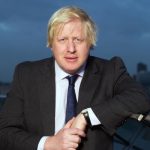
  • Boris Johnson – 2020 Statement on Testing Positive for the Coronavirus

    Boris Johnson – 2020 Statement on Testing Positive for the Coronavirus

    Below is the text of the statement issued by Boris Johnson, the Prime Minister, on 27 March 2020.

    Hi folks.

    I want to bring you up to speed on something that’s happening today which is that I’ve developed mild symptoms of the coronavirus. That’s to say – a temperature and a persistent cough.

    And, on the advice of the Chief Medical Officer, I’ve taken a test. That has come out positive.

    So I am working from home. I’m self-isolating. And that’s entirely the right thing to do.

    But be in no doubt that I can continue, thanks to the wizardry of modern technology, to communicate with all my top team to lead the national fightback against coronavirus.

    And I want to thank everybody who’s involved, I want to thank, above all, our amazing NHS staff. It was very moving last night to join in that national clap for the NHS.

    But it’s not just the NHS, it’s our police, our social care workers, teachers, everybody who works in schools, DWP staff.

    An amazing national effort by the public services. But also by every member of the British public who’s volunteering, an incredible response – 600,000 people have volunteered to take part in a great national effort to protect people from the consequences of coronavirus – I want to thank you.

    I want to thank everybody who’s working to keep our country going through this epidemic.

    And we will get through it.

    And the way we’re going to get through it is, of course, by applying the measures that you’ll have heard so much about.

    And the more effectively we all comply with those measures, the faster our country will come through this epidemic and the faster we’ll bounce back.

    So thank you to everybody who’s doing what I’m doing, working from home, to stop the spread of the virus from household to household.

    That’s the way we’re going to win, we’re going to beat it, and we’re going to beat it together.

    Stay at home, protect the NHS, and save lives.

  • Luke Hall – 2020 Letter to Local Authorities on the Homeless and the Coronavirus

    Luke Hall – 2020 Letter to Local Authorities on the Homeless and the Coronavirus

    Below is the text of the letter sent by Luke Hall, the Ministry of Housing, Communities and Local Government, to local authorities on 27 March 2020.

    Dear Local Leaders,

    Thank you for your continuing work in response to the COVID-19 crisis. This scale of the challenge we all face is unprecedented. I know this is a particularly challenging time and that you and your staff are going above and beyond to help support your communities at this time.

    Last week, the Government asked Dame Louise Casey to lead the Government’s response to COVID-19 and rough sleeping to help make sure that we bring everyone in. It is our joint responsibility to safeguard as many homeless people as we can from COVID-19. Our strategy must be to bring in those on the streets to protect their health and stop wider transmission, particularly in hot spot areas, and those in assessment centres and shelters that are unable to
    comply with social distancing advice.

    This approach aims to reduce the impact of COVID-19 on people facing homelessness and ultimately on preventing deaths during this public health emergency. Given the nature of the emergency, the priority is to ensure that the NHS and medical services are able to cope and we have built this strategy based on NHS medical guidance and support.

    The basic principles are to:

    focus on people who are, or are at risk of, sleeping rough, and those who are in accommodation where it is difficult to self-isolate, such as shelters and assessment centres

    make sure that these people have access to the facilities that enable them to adhere to public health guidance on hygiene or isolation, ideally single room facilities utilise alternative powers and funding to assist those with no recourse to public funds who require shelter and other forms of support due to the COVID-19 pandemic mitigate their own risk of infection, and transmission to others, by ensuring they are able to self-isolate as appropriate in line with public health guidance

    This should be done by taking the following programme of actions:

    1. Convening a local coordination cell to plan and manage your response to COVID and rough sleeping involving the local authority (housing, social care and public health) and local NHS partners together. This would then report in to wider local COVID structures.

    2. Seeking to stop homeless people from congregating in facilities such as day centres and street encampments where there is a higher risk of transmission

    3. Urgently procuring accommodation for people on the streets if you have not already done so – MHCLG will support you to do so if you are struggling to procure sufficient units

    4. Triaging people where possible into three cohorts driven by medical advice:

     those with symptoms of COVID19;
     those with pre-existing conditions but without symptoms; and
     those without any of the above.

    Attached to this letter is additional guidance on the approach that agencies should be taking to triaging agreed with NHS England and Public Health England.

    5. Getting the social care basics such as food, and clinician care to people who need it in the self-contained accommodation. It is likely that you will need to utilise your commissioned homeless services to provide support to people in this accommodation and we urge you to work with the commissioned and non-commissioned sector to make sure there are adequate levels of support provided.

    6. If possible, separating people who have significant drug and alcohol needs from those who do not.

    In the longer term it will of course be necessary to identifying step-down arrangements for the future, including the re-opening of shelter-type accommodation.

    Given the Prime Minister’s announcement on Monday night that the public should be staying in their homes wherever possible, it is now imperative that rough sleepers and other vulnerable homeless are supported into appropriate accommodation by the end of the week. Dame Louise is spearheading all of our efforts to get everyone in. As she has said ‘it won’t be perfect but all of us together will do our best’.

    We know that this requires funding. Last week, the Government announced £1.6bn for local authorities to respond to other COVID-19 pressures including for services helping the most vulnerable, including homeless people. This grant will cover all costs incurred in the first phase of the response, but we will keep future funding need under review. To support our understanding of what authorities or additional funding is likely to be required we will be working with local authorities to develop an ongoing assessment of costs.

    Thank you very much for everything you are doing to save lives and provide care for some of the most vulnerable in our society.

    Luke Hall MP

  • G20 – 2020 Statement on the Coronavirus

    G20 – 2020 Statement on the Coronavirus

    Below is the text of the statement made by the G20 leaders on 26 March 2020.

    The unprecedented COVID-19 pandemic is a powerful reminder of our interconnectedness and vulnerabilities. The virus respects no borders. Combatting this pandemic calls for a transparent, robust, coordinated, large-scale and science-based global response in the spirit of solidarity. We are strongly committed to presenting a united front against this common threat.

    We are deeply saddened by the tragic loss of life and the suffering faced by people around the world. Tackling the pandemic and its intertwined health, social and economic impacts is our absolute priority. We express our gratitude and support to all frontline health workers as we continue to fight the pandemic.

    The G20 is committed to do whatever it takes to overcome the pandemic, along with the World Health Organization (WHO), International Monetary Fund (IMF), World Bank Group (WBG), United Nations (UN), and other international organizations, working within their existing mandates. We are determined to spare no effort, both individually and collectively, to:

    Protect lives.

    Safeguard people’s jobs and incomes.

    Restore confidence, preserve financial stability, revive growth and recover stronger.

    Minimize disruptions to trade and global supply chains.

    Provide help to all countries in need of assistance.

    Coordinate on public health and financial measures.

    Fighting the Pandemic

    We commit to take all necessary health measures and seek to ensure adequate financing to contain the pandemic and protect people, especially the most vulnerable. We will share timely and transparent information; exchange epidemiological and clinical data; share materials necessary for research and development; and strengthen health systems globally, including through supporting the full implementation of the WHO International Health Regulations (IHR 2005). We will expand manufacturing capacity to meet the increasing needs for medical supplies and ensure these are made widely available, at an affordable price, on an equitable basis, where they are most needed and as quickly as possible. We stress the importance of responsible communication to the public during this global health crisis. We task our Health Ministers to meet as needed to share national best practices and develop a set of G20 urgent actions on jointly combatting the pandemic by their ministerial meeting in April.

    We fully support and commit to further strengthen the WHO’s mandate in coordinating the international fight against the pandemic, including the protection of front-line health workers, delivery of medical supplies, especially diagnostic tools, treatments, medicines, and vaccines. We acknowledge the necessity of urgent short-term actions to step up the global efforts to fight the COVID-19 crisis. We will quickly work together and with stakeholders to close the financing gap in the WHO Strategic Preparedness and Response Plan. We further commit to provide immediate resources to the WHO’s COVID-19 Solidarity Response Fund, the Coalition for Epidemic Preparedness and Innovation (CEPI) and Gavi, the Vaccine Alliance, on a voluntary basis. We call upon all countries, international organizations, the private sector, philanthropies, and individuals to contribute to these efforts.

    To safeguard the future, we commit to strengthen national, regional, and global capacities to respond to potential infectious disease outbreaks by substantially increasing our epidemic preparedness spending. This will enhance the protection of everyone, especially vulnerable groups that are disproportionately affected by infectious diseases. We further commit to work together to increase research and development funding for vaccines and medicines, leverage digital technologies, and strengthen scientific international cooperation. We will bolster our coordination, including with the private sector, towards rapid development, manufacturing and distribution of diagnostics, antiviral medicines, and vaccines, adhering to the objectives of efficacy, safety, equity, accessibility, and affordability.

    We ask the WHO, in cooperation with relevant organizations, to assess gaps in pandemic preparedness and report to a joint meeting of Finance and Health Ministers in the coming months, with a view to establish a global initiative on pandemic preparedness and response. This initiative will capitalize on existing programs to align priorities in global preparedness and act as a universal, efficient, sustained funding and coordination platform to accelerate the development and delivery of vaccines, diagnostics and treatments.

    Safeguarding the Global Economy

    We commit to do whatever it takes and to use all available policy tools to minimize the economic and social damage from the pandemic, restore global growth, maintain market stability, and strengthen resilience.

    We are currently undertaking immediate and vigorous measures to support our economies; protect workers, businesses—especially micro-, small and medium-sized enterprises—and the sectors most affected; and shield the vulnerable through adequate social protection. We are injecting over $5 trillion into the global economy, as part of targeted fiscal policy, economic measures, and guarantee schemes to counteract the social, economic and financial impacts of the pandemic.

    We will continue to conduct bold and large-scale fiscal support. Collective G20 action will amplify its impact, ensure coherence, and harness synergies. The magnitude and scope of this response will get the global economy back on its feet and set a strong basis for the protection of jobs and the recovery of growth. We ask our Finance Ministers and Central Bank Governors to coordinate on a regular basis to develop a G20 action plan in response to COVID-19 and work closely with international organizations to swiftly deliver the appropriate international financial assistance.

    We support the extraordinary measures taken by central banks consistent with their mandates. Central banks have acted to support the flow of credit to households and businesses, promote financial stability, and enhance liquidity in global markets. We welcome the extension of swap lines that our central banks have undertaken. We also support regulatory and supervisory measures taken to ensure that the financial system continues to support the economy and welcome the Financial Stability Board’s (FSB) announced coordination of such measures.

    We also welcome the steps taken by the IMF and the WBG to support countries in need using all instruments to the fullest extent as part of a coordinated global response and ask them to regularly update the G20 on the impacts of the pandemic, their response, and policy recommendations. We will continue to address risks of debt vulnerabilities in low-income countries due to the pandemic. We also ask the International Labour Organization (ILO) and the Organisation for Economic Cooperation and Development (OECD) to monitor the pandemic’s impact on employment.

    Addressing International Trade Disruptions

    Consistent with the needs of our citizens, we will work to ensure the flow of vital medical supplies, critical agricultural products, and other goods and services across borders, and work to resolve disruptions to the global supply chains, to support the health and well-being of all people.

    We commit to continue working together to facilitate international trade and coordinate responses in ways that avoid unnecessary interference with international traffic and trade. Emergency measures aimed at protecting health will be targeted, proportionate, transparent, and temporary. We task our Trade Ministers to assess the impact of the pandemic on trade.

    We reiterate our goal to realize a free, fair, non-discriminatory, transparent, predictable and stable trade and investment environment, and to keep our markets open.

    Enhancing Global Cooperation

    We will work swiftly and decisively with the front-line international organizations, notably the WHO, IMF, WBG, and multilateral and regional development banks to deploy a robust, coherent, coordinated, and rapid financial package and to address any gaps in their toolkit. We stand ready to strengthen the global financial safety nets. We call upon all these organizations to further step up coordination of their actions, including with the private sector, to support emerging and developing countries facing the health, economic, and social shocks of COVID-19.

    We are gravely concerned with the serious risks posed to all countries, particularly developing and least developed countries, and notably in Africa and small island states, where health systems and economies may be less able to cope with the challenge, as well as the particular risk faced by refugees and displaced persons. We consider that consolidating Africa’s health defence is a key for the resilience of global health. We will strengthen capacity building and technical assistance, especially to at-risk communities. We stand ready to mobilize development and humanitarian financing.

    We task our top relevant officials to coordinate closely in support of the global efforts to counter the pandemic’s impacts, including through proportionate border management measures in accordance with national regulations and to provide assistance where necessary to repatriate citizens. We value the efforts to safeguard our people’s health through the postponement of major public events, in particular the decision by the International Olympic Committee to reschedule the Olympic Games to a date no later than summer 2021. We commend Japan’s determination to host the Olympic and Paralympic Games Tokyo 2020 in their complete form as a symbol of human resilience.

    We stand ready to react promptly and take any further action that may be required. We express our readiness to convene again as the situation requires. Global action, solidarity and international cooperation are more than ever necessary to address this pandemic. We are confident that, working closely together, we will overcome this. We will protect human life, restore global economic stability, and lay out solid foundations for strong, sustainable, balanced and inclusive growth.

  • Rishi Sunak – 2020 Statement on the Self-Employed and the Coronavirus

    Rishi Sunak – 2020 Statement on the Self-Employed and the Coronavirus

    Below is the text of the statement made by Rishi Sunak, the Chancellor of the Exchequer, on 26 March 2020.

    Good afternoon.

    Today I can announce the next step in the economic fight against the Coronavirus pandemic, with new support for the self-employed.

    Our step-by-step action plan is aiming to slow the spread of Coronavirus so fewer people need hospital treatment at any one time, protecting the NHS’s ability to cope.

    At every point, we have followed expert advice to be controlled in our actions – taking the right measures at the right times.

    We are taking unprecedented action to increase NHS capacity by increasing the numbers of beds, key staff and life-saving equipment on the front-line to give people the care they need.

    That is why it is absolutely critical that people follow our instructions to stay at home, so we can protect our NHS and save lives.

    Our action plan to beat the pandemic is the right thing to do – but we know people are worrying about their jobs and their incomes.

    Working closely with businesses and trade unions, we have put together a coherent, coordinated and comprehensive economic plan – a plan which is already starting to make a difference:

    big employers like Brewdog, Timpsons and Pret have already said that our Coronavirus Jobs Retention Scheme means they can furlough thousands of staff, rather than laying them off. And we are publishing this evening detailed guidance on how the scheme will operate so that other businesses can take advantage, too

    small businesses are already benefiting from Coronavirus Business Interruption Loans of up to £5 million, which are interest free for 12 months – with 30,000 enquiries in just four days

    local authorities are already informing more than 700,000 retail, hospitality and leisure businesses that they will pay no business rates this year

    and the new hardship grants scheme, providing cash grants of up to £25,000 for the smallest businesses, is now up and running

    So if any business is struggling, and worrying they may need to lose staff, I would urge you to log on to businesssupport.gov.uk, and look very carefully at what support is available before deciding to lay people off.

    I’m proud of what we’ve done so far, but I know that many self-employed people are deeply anxious about the support available for them.

    Musicians and sound engineers; plumbers and electricians; taxi drivers and driving instructors; hairdressers and childminders and many others, through no fault of their own, risk losing their livelihoods.

    To you, I say this: You have not been forgotten. We will not let you behind. We are all in this together.

    So, to support those who work for themselves, today I am announcing a new Self-Employed Income Support Scheme.

    The government will pay self-employed people, who have been adversely affected by the Coronavirus, a taxable grant worth 80% of their average monthly profits over the last three years, up to £2,500 a month.

    This scheme will be open for at least three months – and I will extend it for longer if necessary.

    You’ll be able to claim these grants and continue to do business.

    And we’re covering the same amount of income for a self-employed person as we are for furloughed employees, who also receive a grant worth 80%.

    That’s unlike almost any other country and makes our scheme one of the most generous in the world.

    Providing such unprecedented support for self-employed people has been difficult to do in practice.

    And the self-employed are a diverse population, with some people earning significant profits.

    So I’ve taken steps to make this scheme deliverable, and fair:

    to make sure that the scheme provides targeted support for those most in need, it will be open to anyone with income up to £50,000.

    to make sure only the genuinely self-employed benefit, it will be available to people who make the majority of their income from self-employment

    and to minimise fraud, only those who are already in self-employment, who have a tax return for 2019, will be able to apply

    95% of people who are majority self-employed will benefit from this scheme.

    HMRC are working on this urgently and expect people to be able to access the scheme no later than the beginning of June.

    If you’re eligible, HMRC will contact you directly, ask you to fill out a simple online form, then pay the grant straight into your bank account.

    And to make sure no one who needs it misses out on support, we have decided to allow anyone who missed the filing deadline in January, four weeks from today to submit their tax return.

    But I know many self-employed people are struggling right now, so we’ve made sure that support is available.

    Self-employed people can access the business interruption loans.

    Self-assessment income tax payments, that were due in July, can be deferred to the end of January next year.

    And we’ve also changed the welfare system so that self-employed people can now access Universal Credit in full.

    A self-employed person with a non-working partner and two children, living in the social rented sector, can receive welfare support of up to £1,800 per month.

    The scheme I have announced today is fair.

    It is targeted at those who need it the most.

    Crucially, it is deliverable.

    And it provides an unprecedented level of support for self-employed people.

    As we’ve developed the scheme, I’m grateful for the conversations I’ve had with the Federation of Small Businesses, the association of Independent Professionals and the Self-Employed, and a range of trade unions, including the Trades Union Congress.

    But I must be honest and point out that in devising this scheme – in response to many calls for support – it is now much harder to justify the inconsistent contributions between people of different employment statuses.

    If we all want to benefit equally from state support, we must all pay in equally in future.

    These last ten days have shaken our country and economy as never before.

    In the last two weeks we have put aside ideology and orthodoxy to mobilise the full power and resources of the British state.

    We have done so in pursuit of a single goal: to protect people’s health and economic security, by supporting public services like our NHS, backing business, and protecting people’s jobs and incomes.

    What we have done will, I believe, stand as one of the most significant economic interventions at any point in the history of the British state, and by any government, anywhere in the world. We have:

    pledged that whatever resources the NHS needs, it will get

    promised to pay 80% of the wages of furloughed workers for three months up to £2,500

    deferred more than £30 billion of tax payments until the end of the year

    agreed nearly 17,000 Time to Pay arrangements for businesses and individuals

    made available £330 billion of loans and guarantees

    introduced cash grants of up to £25,000 for small business properties

    covered the cost of statutory sick pay for small businesses for up to two weeks

    lifted the incomes of over four million households with a nearly £7 billion boost to the welfare system

    agreed three-month mortgage holidays with lenders and nearly £1 billion more support for renters through the Local Housing Allowance

    and today we’ve announced one of the most generous self-employed support schemes in the world

    Despite these extraordinary steps, there will be challenging times ahead. We will not be able to protect every single job or save every single business.

    But I am confident that the measures we have put in place will support millions of people, businesses and self-employed people to get through this, get through it together, and emerge on the other side both stronger and more united.

    Thank you.

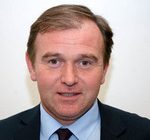
  • George Eustice – 2020 Letter to the Food and Drink Industry

    George Eustice – 2020 Letter to the Food and Drink Industry

    Below is the text of the letter sent by George Eustice, the Secretary of State for the Environment, Food and Rural Affairs, on 26 March 2020.

    To those working hard to feed the nation,

    In the face of what is perhaps the greatest health challenge this country has faced in our lifetime, I want to pay tribute to all those who are working around the clock to keep the nation fed – in our fields, processing plants, factories, wholesalers, stores and takeaways and all of those moving goods around the country and to our homes.

    The last three weeks have been stressful and difficult for everyone working to feed the country and provide them with other essential items. Food retailers have faced an unprecedented increase in demand and those working in food production and distribution have had to work harder than ever to ensure that food and drink are kept on the shelves.

    The Government has recently taken some unprecedented steps to close cinemas, leisure centres and other public venues and to instruct people to stay at home, protect our NHS and save lives.

    However, there are many key workers that are crucial to the resilience of our country. Our NHS staff will be working harder than ever in the weeks ahead. Those of you working to provide the nation with food and other essentials are also delivering an absolutely vital service.

    I am in regular dialogue with the food and drink industry and the Government has offered guidance to employers to ensure that when you do your job, you can do so safely. The advice of Public Health England is that there is very little risk of the virus being spread on food or packaging.

    Everyone working in the food and drink industry has rallied in an extraordinary way to respond to this unprecedented challenge. Having worked in the food industry myself, I am personally enormously proud and thankful for all the work that you have done in recent weeks, and will be asked to do in the weeks ahead. In many cases you are the hidden heroes, and the country is grateful for all that you have done.

    Yours sincerely,

    George Eustice

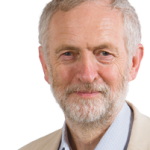
  • Jeremy Corbyn – 2020 Speech on the Financial and Social Emergency Support Package

    Jeremy Corbyn – 2020 Speech on the Financial and Social Emergency Support Package

    Below is the text of the speech made by Jeremy Corbyn, the Leader of the Opposition, in the House of Commons on 25 March 2020.

    I beg to move,

    That this House has considered the emergency financial and social package needed to support people, families and business through the covid-19 outbreak.

    Thank you, Mr Speaker, for accommodating the change that we wanted to make to the Order Paper today to make for a more efficient debate, and to ensure that Prime Minister’s Question Time ran for the extra time that you gave it. In response to what the hon. Member for Watford (Dean Russell) said, I join him in paying tribute to the life of Tristan Garel-Jones, whom I knew very well when he was a Conservative MP. He had an enormous knowledge of Latin America and central America, and spoke very fluent Spanish. He and I would often exchange pleasantries in Spanish in the Tea Room. I send my best regards to his family: “Siento la muerte de Señor Garel-Jones”.

    We are holding this debate amid a crisis unlike any other we have experienced in our lifetimes. I hope that the Leader of the House, whom I thank for the kind remarks he made about me, understands how important it is that, in this crisis, democracy is not closed down, but strengthened and enhanced. It is the job of Oppositions to hold the Government to account. I thank my right hon. Friend the Member for Walsall South (Valerie Vaz) for the kind remarks she made and for the work that she is doing in her role as shadow Leader of the House.

    The coronavirus outbreak will have a lasting impact on our economy and our society. Life is never going to be the same again. The immediate task of the Opposition is to help to arrest the spread of the coronavirus and to support the public health efforts that are being made, while being constructively critical where necessary to ensure that there is an improved official response. I thank all hon. Members for the questions they put to the Leader of the House about how the House can continue to operate as it should, even during a recess.

    The advice and instructions are crystal clear, so people know precisely what they should and should not do to limit or slow the spread of the virus, but there needs to be detailed guidance to employers and workers about which workplaces should close. Clear communication from the Government is vital for everybody’s safety. The crisis exposes the vulnerabilities in our economy and our society. Underfunded public services, insecure work and a threadbare social security system all carry a heavy burden, which is usually hidden from public view, but has been thrust into a brutal light by a public health emergency.

    The crisis also shows just how dependent we are on one another, and on the many ties of mutual aid woven together that make up the fabric of our society and our communities. We can come out of the crisis with that fabric strengthened if we value and support one another. ​I pay tribute to all the fantastic people, many of them young people, who are volunteering now to help people going through stress and crisis. Indeed, I met a group last week who were leafleting in my constituency to ensure that everybody gets some help if they need it. Our first duty is to say to all of them: thank you.

    Catherine West (Hornsey and Wood Green) (Lab)

    Does my right hon. Friend agree that although there are some excellent local initiatives, the announcement in the last two days of a national initiative is welcome? It would be great to have some co-ordination, however, to cut out any confusion about who should volunteer, when and where.

    Jeremy Corbyn

    My hon. Friend is right. There are lots of enthusiastic volunteers, which is great, but the initiatives need co-ordination and protection. We are dealing with assisting vulnerable people, so we have to be quite clear that the people who are volunteering are responsible and are doing it for all the right motives. All the volunteer groups that I have been in touch with and met are clear about that. They are well organised and responsible in the way that they are doing it, and I thank them for that. All those efforts will help us to overcome the crisis.

    It is also necessary to say thank you to those delivering essential public services, especially our national health service staff on the frontline: the medical professionals, healthcare workers, auxiliary staff, administrators, ambulance drivers, paramedics—the whole team in every health facility. They are already very stretched in normal times; now, they are coming under unimaginable pressure and stress at the same time as being vulnerable themselves to contracting coronavirus. We should acknowledge that and say thank you.

    We should also say thank you to those in our social care sector, who are so often unrecognised and ignored, and almost always badly paid. They are caring for the most vulnerable people in our society. As my hon. Friend the Member for Hove (Peter Kyle) explained earlier, the problem of contracting the virus in a home where people have not been tested only gets worse the longer we delay.

    Dr Rupa Huq (Ealing Central and Acton) (Lab)

    I completely agree with my right hon. Friend’s approach and the fact that we should all give a socially distant hug to care workers, and to those in other parts of the economy with precarious employment and housing situations. Does he agree that, against the background of the biggest crisis we will ever know, we need a collective approach, and that policies such as nationalising the railways, providing economic stimulus to kick-start our economy, and free broadband do not look so outlandish after all?

    Jeremy Corbyn

    It was not so long ago that I was making lengthy speeches about those subjects, and I am quite prepared to hand a copy of our manifesto over to the Government. They are already being forced to implement a great deal of it because of the crisis and because of the deficiency in public services that we exposed during the election campaign.

    Gareth Thomas (Harrow West) (Lab/Co-op)

    On a much more granular point, a care home owner has been in touch with me to say that he is increasingly short-staffed ​because of infection among staff, yet he is aware of staff from overseas who have the qualifications but are unable to work because the Home Office has not moved quickly enough to allow him to give them jobs and to sort out the sponsorship requirements. Will my right hon. Friend encourage the Minister to get this issue looked at quickly by the Home Office? I will write to the Home Office, but it would be good to flag that now.

    Jeremy Corbyn

    My hon. Friend makes a very strong point. Indeed, that has been raised by my right hon. Friend the shadow Home Secretary and others on many occasions. It is absurd that we have highly skilled people in our society who are awaiting a letter from the Home Office before they are able to contribute to our society. We are talking care workers, doctors, social workers—all sorts of highly skilled people. They want to contribute to help us out, so I absolutely agree with my hon. Friend and I strongly support the view that he is putting forward to the Home Secretary.

    We should also take a moment to say thank you to civil servants in the Department of Health and Social Care and other Departments. They are putting in incredibly long hours. I talk to local government workers in my local authority who are working really hard to try to ensure that the community and society are safe.

    We should thank teachers who are having to go into school to ensure that there are some facilities and teaching available for the children of essential care workers, as well as for children who have very special needs. Let us value them and the work they do, and thank the National Education Union and the other teaching unions for the work that they have put in to ensure that that takes place.

    Let us also thank those who deliver stuff—delivery workers, delivery riders and delivery companies, and also our postal workers—for what they do. Our postal workers suspended their industrial action—their wholly justified industrial action, I might say—to ensure that essential deliveries can carry on throughout this crisis. We should say thank you to the Communication Workers Union and to those workers for all of that.

    When we talk about key workers, it is not only those I have mentioned who keep society going. On Monday, the Minister for Crime and Policing, the hon. Member for North West Hampshire (Kit Malthouse), said that

    “when we emerge from the crisis…there will be a general reassessment of who is important in this country and what a ‘key worker’ means.”—[Official Report, 23 March 2020; Vol. 674, c. 15.]

    He is absolutely right. We can all now see that jobs that are never celebrated are absolutely essential to keep our society going. Think of the refuse workers, the supermarket shelf stackers, the delivery drivers, the cleaners—those grades of work are often dismissed as low skilled. I ask the House: who are we least able to do without in a crisis—the refuse collector or the billionaire hedge fund manager? Who is actually doing more for our society at this very moment? Let us value people for the contribution that they make and respect the skill of the cleaner, the refuse worker, the postal delivery worker and all those others. Let us have respect for those who are part of the glue of our society. Right now, they need our help, and I hope that, as we look beyond this crisis, they will continue to get our respect, because people we respect should not be treated in the way they have been treated throughout the past decade of austerity.​
    Right now, we must guarantee for our NHS staff the personal protective equipment that they are crying out for. There must be no excuses: get it there and deliver it for NHS staff, care staff and all the others. Doctors have said they have had to go along to Screwfix to buy face masks. They need visors, long gloves, surgical gowns and hand sanitisers—and they need them now. It is not as if this crisis happened yesterday; the coronavirus broke out in China some months ago and has spread rapidly across the whole world. One doctor was quoted as saying:

    “I feel totally abandoned. We don’t have the protective equipment that we desperately need and our children are being treated like orphans and sent off to care camps.”

    NHS staff are putting themselves on the line for the rest of us; we must not let them down for a moment longer. It is a matter of their safety and the safety of their patients. For the same reasons, let us test all our NHS staff for the virus as quickly as possible. It is an absolute requirement to accelerate testing throughout the population—“test, test, test”, as Dr Tedros Adhanom Ghebreyesus, the head of the World Health Organisation, instructed us all to do quite some time ago. I pay tribute to him and the World Health Organisation for their steadfast and calm leadership during this crisis, and for pointing out that a world pandemic is going on and some countries are better able to cope with it than others.

    As we look beyond this crisis, our NHS staff should be treated with respect, which means ensuring that the health service in which they work is well funded; bringing down their levels of stress, which are enormous; and ending the threat of the privatisation of their jobs and the outsourcing of services in NHS hospitals. Right now, can we ensure that our social care workers have the very best protective equipment that they need, and can we also have full testing for them? They also need financial security, an issue I raised at Prime Minister’s Question Time four weeks ago. A quarter of social care workers are on zero-hours contracts. Their job is, as we know, to travel from house to house, making contact with those often at the highest risk of death from this virus. They sometimes see 12 or more clients a day, spending time in their homes and potentially passing on the virus from one home to another and another. A lack of testing increases that danger all the time, so it is not just urgent, it is super urgent—like today, it has to be done. They need to be given the security to know that they can afford to stay off work if they have symptoms, yet none of them are included in the Chancellor’s scheme to pay 80% of wages. That must be addressed immediately. I pointed out in Prime Minister’s Question Time the situation for construction workers, and exactly the same applies to care workers.

    As we look beyond the crisis, we need to learn the lesson and end the scandal of paying so little to those entrusted with the care of our loved ones. Let us end the disgrace of 1.4 million people being denied the social care that they need. Right now, the Government can give peace of mind to all self-employed and insecure workers with an income protection scheme equivalent to the one devised for employees. The Prime Minister said he would work on this very quickly, and it has to be done very, very quickly indeed; otherwise, we are all put at greater risk and danger.​
    Freelancers, workers on zero-hours contracts and those with no recourse to public funds still have no support. From cabbies to childminders, actors to plumbers, people are being told to do something absolutely extraordinary: to stop earning a living. Having made that demand, the Government—yes, the Government—have an awesome responsibility to ensure that these people do not fall immediately into hardship and that they are able to do what is necessary for public health.

    Mr Kevan Jones (North Durham) (Lab)

    Does my right hon. Friend agree that there has to be a crackdown on some employers? Constituents have contacted me this morning to tell me that employers are insisting that people go to work and telling them that if they do not turn up, they will not get paid. Even businesses that are clearly not on the list of key industries have done this. Does he think the Government should crack down on employers that are putting their employees at risk?

    Jeremy Corbyn

    If employers are putting us all at risk by forcing people to work in a non-essential industry or company or non-essential work, they should be sanctioned, and those sanctions should include fines. They have to understand that they have a responsibility as well.

    The Government should ensure the closure of any construction work that is not urgent or health and safety-related, just as Transport for London and the Scottish Government have already done—and remember, both have many major building projects going on at any one time.

    Mr Tanmanjeet Singh Dhesi (Slough) (Lab)

    Having worked in the construction industry for the past two decades, I appreciate how critical that industry is. Does my right hon. Friend agree that because of the Government’s mixed messages and the lack of support for the many workers in that industry who are self-employed, freelance, working as consultants or on zero-hours contracts, they are left in the unenviable position of having to get on the tube and go to work, because they have no other source of income? That is why the Government must step in, give a clear and concise message and support the self-employed workers in the construction industry.

    Jeremy Corbyn

    My hon. Friend anticipates the point I was about to make. We have all seen the images this morning of construction workers packed on to the London tube and other trains all around the country, going on to site because it is the only way they can earn a living, and putting themselves and all of us at risk as a result. Action has to be taken now on this.

    Chris Stephens (Glasgow South West) (SNP)

    Is there not also a responsibility on Government contractors? I am thinking of Atos, Adecco and those that have call centres, which are telling at-risk employees to attend their work. Is not that disgraceful, and should not the Government intervene?

    Jeremy Corbyn

    It is absolutely disgraceful and totally unnecessary. If someone feels they are at risk, the advice from the Department of Health is that they should self-isolate—and eventually get tested, but clearly the tests are not available immediately. If the employer then ​forces that person to go into work, we all know what the consequences will be. There is a responsibility on employers as well in all this.

    I hope that the Government will take action to close building sites, provide the workers with the necessary economic support and tell the companies that this should not be seen as an opportunity to cut their workers’ wages by 20%; they are getting 80% from public funds and they should make up the rest with the profits they make on big construction projects. Many people on construction sites are, sadly, self-employed, which is a slightly different issue that I referred to earlier.

    As we look beyond the crisis we should all give workers respect, with proper social security extending to the self-employed as well. We have to understand that we have a very different economy than we had 10, 20 or 30 years ago. A very large number of people are self-employed. They are making their contribution. They deserve respect, recognition and the necessary social security support: full rights for workers, including those in the gig economy.

    We must raise statutory sick pay to European levels. The Secretary of State for Health and Social Care said, honestly, that he could not survive on £94 a week. I suspect that most Members would not want to survive on £94 a week and most probably could not survive on £94 a week, so how can expect others to do so? We are saying that they have to survive on £94 a week and we cannot. It is up to us to say that in this crisis we have to increase it, so that people can have a survivable income. Looking beyond the crisis, no one should become poor just because they become ill. Many people have been shocked—I have spoken to self-employed people—to find just how low statutory sick pay is. They imagined statutory sick pay was something they could live on. They did not realise what it actually was. Even more shocking is that disabled people on employment and support allowance are expected to survive on £73 a week, as are those on jobseeker’s allowance. Those figures are disgraceful. People cannot live on that sort of money, so they will be forced to take risks and therefore put us all at risk. For carers, it is even less money. Carers allowance is just £66 a week. That is simply unacceptable.

    Right now, we have to give support and security to renters in the private rented sector. The Government promised 20 million of them a ban on evictions, but then broke their promise. Emergency legislation does not stop people losing their home due to coronavirus; it just gives them three months in which to pack their bags. This public health emergency will become a housing and homeless emergency if the Government do not change course now on the treatment of people in the private rented sector. All of us represent large numbers of people in the private rented sector, none more so than my hon. Friend the Member for Brighton, Kemptown (Lloyd Russell-Moyle), who I know represents a very large number.

    Lloyd Russell-Moyle (Brighton, Kemptown) (Lab/Co-op)

    Does my right hon. Friend agree that there is a real problem that rents might increase straight after this crisis is over? Many mortgage companies are offering not a mortgage holiday but a payment deferral, which will be rolled into mortgage payments later on. Landlords ​will likely pass that on to tenants and tenants will be evicted a month after this crisis is over. There needs to be control on rents expanding straight after this crisis finishes.

    Jeremy Corbyn

    My hon. Friend understands the issue and represents his constituency extremely well. I know that a lot of his constituents are in that situation. We have to have better regulation of the private rented sector, with security of tenure and realistic rent levels. We also have to have the spirit of what was said, which was that there would be protection for people in the future. The danger, as he points out, is the opposite: it will just put costs up in a few months’ time. Remember, if somebody has a mortgage and they rent privately, they will pass on the cost of the mortgage to the private renter. That is a problem he quite rightly emphasises.

    Shelter estimates that 20,000 eviction proceedings are already in progress and will go ahead over the next three months unless the Government act to stop them.

    Matt Western (Warwick and Leamington) (Lab)

    I thank my right hon. Friend for giving way. He is making a powerful speech. Just last week, the Prime Minister assured us that he was bringing forward legislation to protect private renters from eviction. Pauline, a 76-year-old in my constituency, received a letter two days later saying that she would be evicted on 13 May. She has been in that property for 13 years and has paid her rent every month on time. How on earth is she supposed to find another property if she is not even allowed out of the house?

    Jeremy Corbyn

    Exactly. How on earth can she go around looking at places if she is not allowed out of the house? It is absurd.

    Labour’s demands are very clear: ban evictions for six months and suspend rent for those affected by coronavirus. It is going to cost and it is the right thing to spend it on. It protects people in their housing. As we look beyond this crisis, let us give tenants greater rights and control exorbitant levels of rent. We need real solutions to the housing crisis, as the shadow Housing Secretary, my right hon. Friend the Member for Wentworth and Dearne (John Healey), has said on many occasions.

    Let us end rough sleeping and homelessness once and for all. We are the fifth richest country in the world. It is not necessary—in fact, it is a national disgrace—that there are so many people sleeping rough in our society. Again, the coronavirus has shown just how vulnerable is the health of the most desperate and poorest people in our society. I want to pay tribute to the Mayor of London, Sadiq Khan, whose team have worked tirelessly to secure hotel accommodation for rough sleepers—well done Sadiq, and well done the team. They are aiming to get 3,000 hotel rooms for people who have been sleeping rough on the streets of London. I know that the Mayors of Greater Manchester and Liverpool City Region and others are doing everything they can to do exactly the same. The Government can make a pledge today that anyone who was homeless before the pandemic will not be returning to the streets at the end of the pandemic. If we can house people in a crisis, we can keep them housed when it is over. Right now, we need to support all our public services as they face their greatest test.

    Ms Diane Abbott (Hackney North and Stoke Newington) (Lab)

    Does my right hon. Friend share my concern for that particular group of victims who are people with no recourse to public funds? They cannot work in a situation where so much of the economy has been closed down, and they have no legal rights to benefits of any kind—even the paltry level of benefits that the Government are talking about. They are not the only group, but these people face destitution. I raised that with the Home Secretary on Monday. We have still not heard anything about what the Government are going to do to protect people and their children who have no recourse to public funds

    Jeremy Corbyn

    I thank my right hon. Friend for her intervention and for what she is doing about that. There are people with no recourse to public funds all over the country. Typically, they are people who are seeking asylum, their case is going endlessly through Home Office processes, and they are not getting help or an answer. Many groups are doing their best to help them. I pay tribute to the north London liberal synagogue for its monthly drop-in sessions and the support that it gives those people, and to many others, but it should not be down to charities to do it. We need to ensure that those people and their families are supported throughout this crisis. This is yet another lesson about the dislocation of our society and the way in which we treat people.

    Every single person in this country can now see how important public services are, and looking beyond this crisis, they must never again be subjected to the damaging and counterproductive cuts that have taken place over the past 10 years. The hard truth is this: austerity has left us weaker in the face of this pandemic. We should not have gone into it with 94% of our NHS beds already full, with 100,000 NHS job vacancies or with a quarter of the number of ventilators per person that Germany has. Ventilators are our most precious resource in this crisis; we should not have begun with so few. We need more of them urgently, and we need the staff trained to use them urgently as well.

    We all have a duty to do what we can for the collective good, to come together and to look out for each other—for our loved ones, our neighbours and our communities. But we also need collective public action to be led by the Government. That is the only power that can protect our people from the devastation that coronavirus could wreak on us.

    This crisis demands new economic thinking. We cannot rely on the old ways of doing things. A major crisis we face as a society cannot and will not be solved by the market. Coronavirus, the climate emergency, huge levels of inequality, increasingly insecure patterns of work and the housing crisis can only be solved by people working together, not against each other.

    The corporations and giant multinationals that wield so much power in our economy and appear to have the ears of the Prime Minister and presidents worldwide will always put private profit ahead of public good. Just look at the actions of Tim Martin, the chair of Wetherspoon—he told his staff, who are paid very little while he has raked in millions, to go and work in Tesco, instead of standing by them in their hour of need. Look at the attempts of Mike Ashley to keep his shops open, putting his staff at risk. The insatiable greed of those at the top is driving another crisis, one even more dangerous ​as we look to the future: the climate emergency. Oil companies and fossil fuel extractors continue to damage and destroy our planet, our air and our wildlife, threatening the future of civilisation itself. We need to find the same urgency to deal with that threat as we now see working against coronavirus.

    The coronavirus crisis will not be solved by those driven by private profit and share prices. It will be solved by the bravery of national health service workers and those who are on the frontline. It will be solved by communities coming together in all their diversity. It will be solved by the Government and public institutions taking bold action in the interests of the common good. The crisis shows what government can do; it shows what government could have always done. We have found the money to give more support to people in financial hardship. We have found the money to increase investment in our national health service. We have found the money to accommodate the homeless in hotels. If we can do it in a crisis, why could we not have done it in calmer times as well?

    We are learning, through this crisis, the extent of the interdependence of each of us with each other. If my neighbour gets sick, I might get sick. If the lowest-paid worker in a company gets sick, it could even make the chief executive sick. If somebody on the other side of the world gets sick, as they did in Wuhan’s province¸ it makes us all sick. Indeed, the virus is now hitting Syria and the besieged Gaza strip. If the healthcare systems of Europe cannot cope, just imagine what it will be like for countries in the global south. Save the Children has warned of the

    “perfect storm conditions for a human crisis of unimaginable dimensions.”

    This virus knows no national boundaries, and neither should our capacity for compassion and care for our fellow human beings. The internationalism of the doctors from Cuba who have gone to fight the virus in Italy is inspirational, as is the action of the European Union, which has given €20 million to help tackle the crisis in Iran at the present time, despite the sanctions. It is a scandal that sanctions have prevented many Iranians from accessing vital medical supplies, putting each other at risk and, inevitably, putting all of us at risk. The old trade union slogan goes, “An injury to one is an injury to all, united we stand, divided we fall.”

    People across our country know that. So many are showing such compassion in the face of adversity, as we see when we look at how people are coming together. Mutual aid groups have been springing up all over the country, with thousands of people organising to protect their communities. It is inspirational to see people who have never spoken to each other before suddenly getting together in this time of crisis and realising that they live in the same street and they need that help and support for each other. It is that spirit which will take us forward. There is no doubt that after this crisis our society and our economy will be, and will have to be, very, very different. We must learn the lessons from the crisis and ensure that our society is defined as a society by solidarity and compassion, rather than insecurity, fear and inequality.
  • Kevin Foster – 2020 Statement on Immigration Rules

    Below is the text of the statement made by Kevin Foster, the Parliamentary Under-Secretary of State for the Home Department, in the House of Commons on 25 March 2020.

    This Government are committed to creating a firm and fair immigration ​system that prioritises the skills people have to offer, not where their passport comes from, and restores public trust by ensuring the immigration system truly works for this country.

    The immigration rules form one of the foundations of our immigration system. So I am pleased today to publish our response to the Law Commission’s report and recommendations on simplifying the immigration rules. I am extremely grateful to the Law Commission for their detailed and constructive work.

    The first recommendation from the Law Commission is we should overhaul the immigration rules, consolidating and streamlining, based on the principles it has identified. I am pleased to announce we accept this recommendation. Our aim is to complete this overhaul by January 2021.

    Simplified rules will be at the heart of Britain’s new, global points-based immigration system.

    For far too long, users have struggled to understand the confusing and complex immigration rules. They create barriers for employers who want to bring skilled workers to the UK; to colleges who want to encourage international students to come to the UK, and to the brightest and best migrants from around the world who want to make a contribution to the UK.

    We will cut through the complexity and make the rules clear, consistent and accessible, to encourage those who have the skills or talent to benefit the UK, and to crack down on illegal migration and remove those who abuse our hospitality by committing criminal offences.

    In line with the Law Commission’s recommendations, I have already established a Simplification of the rules review committee to look at the drafting and structure of the rules. The committee will ensure the simplification principles put in place now continue to apply in future, while providing ongoing support to continuously improve and adapt the rules in our changing world.

    The Law Commission made 41 recommendations for change. We accept 24 of the recommendations, and partially accept the other 17 recommendations. Where we have not fully accepted a recommendation that does not mean we disagree with the ambition behind the recommendations; it generally means we want to explore how it can be delivered in practice.

    Simplification of the immigration rules, the global points-based immigration system, and the Immigration and Social Security Co-ordination (EU Withdrawal) Bill which will end free movement, will deliver the biggest shake-up of the immigration system in a generation.

    The Government’s response has been published on gov.uk and can be found at: https://www.gov.uk/government/publications/simplifying-the-immigration-rules-a-response.

    A copy of the response will also be placed in the Libraries of both Houses.

  • John Glen – 2020 Statement on Pension Reforms

    John Glen – 2020 Statement on Pension Reforms

    Below is the text of the statement made by John Glen, the Economic Secretary to the Treasury, in the House of Commons on 25 March 2020.

    The Government are developing proposals to address the unlawful age discrimination identified by the Court of Appeal in the 2015 reforms to the judicial and firefighters’ pension schemes.

    On 15 July 2019, the Government announced they would take steps to remove this discrimination retrospectively [HCWS1725]. It confirmed that this would apply to pension scheme members with relevant service across all those public service pension schemes that were introduced in 2014 and 2015, regardless of whether individuals had made a claim. This is a complex undertaking, and it is important to get it right.

    Since February 2020 relevant pension schemes have been conducting technical discussions with member and employer representatives to seek initial views on the Government’s high-level proposals for removing the discrimination.

    I am grateful for the constructive engagement of trade unions, staff associations, public service employers and other stakeholders in these discussions. The Government are considering the initial views of stakeholders and continuing to work through the details of the technical design elements of the proposals. Detailed proposals will be published later in the year and will be subject to public consultation. The Government will welcome views on these proposals.

    For the avoidance of doubt, members of public service pension schemes with relevant service will not need to make a claim in order for the eventual changes to apply to them.

    I would like to reassure members that their pension entitlements are safe. The proposals the Government are considering would allow relevant members to make a choice as to whether they accrued service in the legacy or reformed schemes for periods of relevant service, depending on what is better for them. The Government will provide more detail later in the year, but if an individual’s pension circumstances change as a result, the Government may also need to consider whether previous tax years back to 2015-16 should be reopened in relation to their pension.

    The Government will also set out their proposal to remove the discrimination for future service in the forthcoming consultation.

    In January 2019, the Government announced a pause to the cost control mechanism in public service pension schemes, due to uncertainty about benefit entitlements arising from the McCloud judgment. Alongside their proposals for addressing discrimination, the Government will also provide an update on the cost control mechanism.

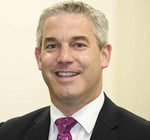
  • Steve Barclay – 2020 Speech on the Self-Employed and the Coronavirus

    Steve Barclay – 2020 Speech on the Self-Employed and the Coronavirus

    Below is the text of the speech made by Steve Barclay, the Chief Secretary to the Treasury, in the House of Commons on 24 March 2020.

    We know that many self-employed people are in real distress, but we are working urgently to address this problem, and I say to the self-employed: we have not forgotten you—help is coming. But the policy and delivery are complex, and we cannot and should not rush to announce a scheme that gives rise to more questions than it answers. The Chancellor has held meetings this morning with representatives of the self-employed and will continue to meet them this afternoon.

    It is important to remember that covid-19 is an urgent challenge to our entire economy, affecting workers of all types. It is essential that we respond swiftly, so that people can keep their jobs and businesses can carry on. That is the basis of our coherent, co-ordinated and comprehensive plan. It is a plan that gives those on the frontline the tools they need to tackle the virus, with all the support the NHS needs, backed up by an initial £5 billion fund for public services. It is a plan that puts a shoulder behind business with a statutory sick pay relief package for small and medium-sized enterprises, business rates holidays for all retail hospitality, leisure and nursery businesses in England, and grant funding for small enterprises, as well as support through Her Majesty’s Revenue and Customs’ time to pay scheme. As of yesterday, businesses with cash-flow concerns are also able to access the coronavirus business interruption loan scheme, offering up to £5 million for SMEs through the British Business Bank. For larger firms—[Interruption.]

    Mr Speaker

    Order. It might be easier if Members pass notes down the line, rather than going round and speaking to everybody.

    Steve Barclay

    The coronavirus business interruption loan scheme, on which Members across the House have raised questions, is now available, offering up to £5 million for SMEs through the British Business Bank. For larger firms, the Bank of England is providing a new facility to help support liquidity.

    I urge all Members of the House to continue speaking—as I know many are doing—to the business leaders in their constituencies and ensure they are aware that they are not alone and that help is coming. In this House, we are all standing behind business and everyone who works in it. To encourage businesses to retain staff, we are deferring VAT, and my right hon. Friend the Chancellor has announced the job retention scheme to facilitate that.

    Taken together, this is a huge programme of support, and we will keep thousands of workers in jobs, but we know that there are thousands of self-employed people who have been wondering what the future holds for them. My right hon. Friend the Chancellor has already set out a range of measures in support. Sole traders and freelancers will be able to access the business interruption loan scheme as long as activity is channelled through a ​business account. We are also removing the minimum income floor for the self-employed workers affected by coronavirus so that they too can access universal credit in full. That is not only the standard allowance, but a wider package of support for those with children, disabilities or, indeed, housing needs. At the same time, the next self-assessment income tax payments will be deferred until January 2021, helping those who have set money aside for those payments with immediate cash flow. That means there is a package on tax, on loans and, more widely, through universal credit, to support those with that safety net.

    Let me reassure everyone in this House and the self-employed people they represent that further help is indeed coming, but we have to make sure we get this right and that we target the right support to those who are most in need. The Chancellor will provide a further update on support for the self-employed in the coming days.

  • Chloe Smith – 2020 Statement on UK Parliamentary Boundaries

    Chloe Smith – 2020 Statement on UK Parliamentary Boundaries

    Below is the text of the statement made by Chloe Smith, the Minister of State at the Cabinet Office, in the House of Commons on 24 March 2020.

    In the written statement of 19 March, “Postponement of electoral events” (HCWS174 and HLWS169), the Government outlined their proposals for urgent electoral legislation to postpone forthcoming elections as part of the wider steps to tackle the spread of the coronavirus.

    Working to ensure the health and safety of the British public is the Government’s top priority. We still however have a responsibility to govern, plan for the future and ensure that where possible, essential parliamentary business continues and legal obligations are met.

    The House of Commons may debate the Government’s policy stance on UK parliamentary boundaries on Friday 27 March, in light of the Private Members’ Bill tabled by the hon. Member for Wellingborough (Peter Bone).

    I believe clearly setting out the Government’s emerging policy position would provide clarity for Parliament, the public and electoral administrators. Given this policy area is of direct relevance to the Commons, it is important that the first Chamber is properly informed.

    This is also pertinent because at present, the Government are legally required to give effect to the recommendations from the Boundary Commissions as set out in their 2018 reports—including reducing the number of constituencies to 600. In this statement I lay out the Government’s thinking on this matter.

    Need for equal and updated boundaries

    The Conservative Government committed, in our 2019 manifesto, to delivering updated and equal UK parliamentary boundaries with the essential aim of making sure that every vote counts the same—a cornerstone of democracy.

    The last boundary review to be implemented in England was based on data from 2000; the last to be implemented in Scotland, Wales and Northern Ireland used data from 2001-2003. In effect, our current constituencies reflect how the UK population was at the beginning of the century. Today’s youngest voters have been born since then: this disregards significant changes in demographics, house building and geographical migration.

    The Government have also taken into account representations from colleagues on all sides of the House, and from the Public Administration and Constitutional Affairs Committee.

    When parliamentary time allows, the Government are minded to bring forward primary legislation to set the framework for future boundary reviews, including the next review due to begin in early 2021. Such provisions would cover the number of constituencies, the frequency of reviews, the boundary review process, and the process by which those recommendations are brought into legal effect.

    Maintaining 650 seats

    Legislation currently provides that, on implementation of the 2018 boundary review recommendations, the number of constituencies in the UK shall be 600. The ​Government are minded to instead make provision for the number of parliamentary constituencies to remain at 650. In doing so, we would also remove the statutory obligation to implement the 2018 boundary review recommendations and the statutory obligation on the Government to make arrangements to review the reduction in constituencies to 600 by 30 November 2020.

    Under current legislation the Boundary Commissions are required to report on their next review by October 2023. In order to meet this deadline they would have to begin that review in early 2021. Without changes to primary legislation, there would be a legal obligation for the Boundary Commissions to undertake that review on the basis of 600 constituencies.

    This is a change in policy from the position previously legislated for under the coalition Government. Since that policy was established in the coalition agreement, the United Kingdom has now left the European Union. The UK Parliament will have a greater workload now we are taking back control and regaining our political and economic independence. It is therefore sensible for the number of parliamentary constituencies to remain at 650.

    Electoral quota tolerance

    The Boundary Commissions are generally required to propose constituencies whose electorates vary in size by no more than +/- 5% from the average (“The electoral quota”). The Government are not minded to amend this tolerance level which achieves equal and fair boundaries while allowing the Boundary Commissions the flexibility to take account of other factors, such as physical geographical features and local ties, subject to the overriding principle of equality in constituency size.

    Equal representation

    Updated and equal boundaries will ensure that every constituent nation in the United Kingdom has equal representation in the UK Parliament, and deliver parity of representation across the United Kingdom’s constituencies.

    Under the existing legislation, passed in 2011, there are four protected constituencies where the electoral quota tolerance does not apply on account of their unique geography: Orkney and Shetland, Na h-Eileanan an lar, and two seats for the Isle of Wight. The Government are not minded to make changes to these protected constituencies, or to propose any more protected constituencies given the need to ensure equal representation.

    Boundary review cycle

    Under the current legislation, boundary reviews must take place every five years. As the Government also intend to repeal the Fixed-term Parliaments Act 2011, future boundary reviews will inevitably be decoupled from the cycle of general elections. We need to strike a balance between regularly updated parliamentary constituencies and the disruption caused to local communities and their MPs by boundaries changing at every general election.

    The Government are minded to consider that conducting boundary reviews every eight years strikes the right balance. An eight-year review cycle would generally ​allow for updated constituencies to be in place for two general elections before being reviewed in time for a third general election.

    Implementing the recommendations of the independent Boundary Commissions

    Currently, at the end of a boundary review, the Government lay the reports of the independent and impartial Boundary Commissions before Parliament. The recommendations contained in the reports are then brought into effect by way of an Order in Council that must be approved by Parliament by the affirmative procedure before it can be made.

    The Government are minded to continue to provide that the reports are still laid before Parliament (by the Speaker who is Chair of the Boundary Commissions) but would change the means of bringing the Boundary Commissions’ recommendations into effect. The new recommended constituency boundaries will be brought into effect automatically by the Order in Council.

    This change would provide certainty that the recommendations of the independent Boundary Commissions—developed through a robust and impartial process that is open to extensive consultation—would then be implemented without interference. Parliament, of course, would remain sovereign and can amend primary legislation as it sees fit.

    Engagement with political parties

    The Government are keen to establish the broad support of Parliament for such changes and will engage with the political parties represented in the UK Parliament on such proposals.

    This will include engagement with the Parliamentary Parties Panel on the technical measures planned. These include provisions relating to the length of time the Boundary Commissions have to conduct their reviews within the boundary review cycle and the process involved in the reviews, such as public hearings and consultation. I hope there is scope for broad cross-party agreement on such improvements.

    In due course, the Government hope that such reforms will strengthen democratic accountability of Parliament to the British people.

    I hope this provides clarity on the Government’s policy intent over this Parliament. Of course, as stated above, the Government’s immediate legislative priority will be taking the necessary steps to protect the health and safety of the British public.