Tag: 2020

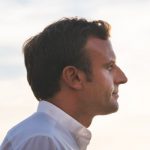
  • Emmanuel Macron – 2020 Statement on the Coronavirus

    Emmanuel Macron – 2020 Statement on the Coronavirus

    Below is the text of the statement made by Emmanuel Macron, the French President, on 13 April 2020.

    Frenchwomen, Frenchmen,

    My dear compatriots,

    We are living through difficult times.

    We are all feeling fear and distress right now, for our parents, and for ourselves, as we face this dreadful, invisible and unpredictable virus.

    Tiredness and weariness for some, mourning and sorrow for others.

    This period is even more difficult to deal with when there are several of you living in a cramped apartment, when you don’t have access to the means of communication necessary to learn, to have fun, to communicate. It’s even harder when there is tension, when there is violence in a family’s daily life and we are all aware of, in this period, the loneliness and sadness of our senior community.

    And yet, thanks to our efforts, we have improved every day. Our civil servants and health personnel, doctors, nurses, nursing assistants, ambulance-drivers, paramedics, our soldiers, our firefighters, and our pharmacists are our front line, and they have put all their energy into saving lives and caring for others. Their line held. French hospitals have been able to care for all those who came through their doors. These past days and weeks are, and will remain, a tribute to our caregivers working in hospitals and in the community.

    Within our second line, our farmers, teachers, truck drivers, delivery and warehouse workers, shop assistants, refuse collectors, security and cleaning staff, civil servants, journalists, social workers, mayors and local elected officials, and so many others I will have forgotten; helped by so many French people who have played their part. All have allowed life to continue.

    And each of you, in what I am calling our third line, each of you by your sense of civic duty, by respecting the rules of confinement, thanks also to the vigilance of our law enforcement officers, you have ensured that the epidemic is now beginning to stall.

    The results are in. Several regions have been spared. In recent days, the number of patients entering intensive care has gone down. Hope is returning.

    Tonight, I want to thank you very warmly, for your dedication and to express my gratitude.

    So, were we prepared for this crisis? Obviously not enough but we have faced the situation in France like everywhere else. We had to respond to the emergency, make difficult decisions on the basis of partial information, often changing, and we had to constantly adapt, because this virus was unknown and it still carries many mysteries to this day.

    Let’s be honest, the moment has revealed flaws, shortcomings. Like all the countries of the world, we have lacked gowns, gloves, hydro alcoholic gels. We were not able to distribute as many masks as we would have liked for our caregivers, for staff caring for our seniors, for nurses and home helpers.

    From the moment these problems were identified, we mobilised – government, local communities, manufacturers, associations – to produce and acquire the necessary equipment. But I fully appreciate that, when you’re at the front, it’s hard to hear that a global shortage is preventing deliveries.

    Orders are now placed. Above all, our French companies and our workers responded and, like in wartime, production has been set up: we reopened production lines and we requisitioned.

    Imagine, in three weeks, we will have multiplied by five the production of masks for our caregivers in France and we will have produced 10,000 more additional respirators on our soil. These respirators so precious in intensive care unit.

    Thanks to these efforts, we will be able to face the situation and we will continue to distribute more equipment.

    But like you, I saw failures, still too much slowness, useless procedures, and the weaknesses of our logistics. We will draw from this, in due course, when it comes to reorganising.

    Let us also be fair with our country, recent weeks have been marked by real successes: the doubling of the number of beds in intensive care, never achieved before, the unprecedented cooperation between the hospitals, private clinics and the city doctors, the transfer of patients, to the least affected regions but also to Luxembourg, Switzerland, Germany and Austria – which I thank – the establishment of distance education, organisation of solidarity chains in our municipalities, the success of all those who have continued to commit to feeding us during these weeks , the repatriation of tens of thousands of French and European nationals from countries around the world and support for the French from abroad.

    Very often, things which seemed impossible for years, we were able to do in a few days. We have innovated, dared, taken action on the ground, and many solutions have been found. We will have to remember this because so many strengths remain for the future.

    My dear compatriots, if I wanted to address you this evening, after having consulted widely over the past few days, it is to tell you in full transparency what awaits us for the coming weeks and months.

    Hope is reborn, I told you, yes, but nothing is taken for granted. In the Grand Est as in Ile de France, hospital services are saturated. Everywhere, in France as in the overseas territories, the system is under tension and the epidemic is not yet under control.

    We must therefore continue our efforts and continue to apply the rules. The more they are respected, the more lives we will save.

    This is why the strictest confinement must still continue until Monday, May 11. It is, during this time, the only way to act effectively.

    This is the condition for slowing the spread of the virus even further, succeeding in finding places available in intensive care and allowing our carers to rebuild their strength. Monday, May 11 will only be possible if we continue to be civic, responsible, obey the rules and if the spread of the virus has actually continued to slow down.

    I fully appreciate the effort I ask of you, telling you this. During the next four weeks, the rules laid down by the government must continue to be respected. They are showing their effectiveness and should not be strengthened or reduced, but fully applied. I ask all of our elected officials, whose importance I recognise during this period, I ask all of our elected representatives, to help ensure that these rules are the same everywhere on our soil. Curfews have been decided where it is useful, but further restrictions should not be added during the day.

    For our daily life, we must continue when we go out to apply social distancing measures: to keep away and wash our hands. I also want to remind you that everyone who has a chronic illness or suffers from other illnesses must be able to continue to consult their doctor. Because it is not only the virus that kills: extreme loneliness, the cessation of other treatments can also be dangerous.

    I also hope that hospitals and retirement homes can allow visits, with the right protections, from loved ones to dying relatives, so that they can say goodbye.

    During this confinement phase, the country fortunately continues to live. Certain activities are prohibited because they are incompatible with sanitary rules. For all other economic sectors, when the security of workers and entrepreneurs is guaranteed, they must be able to produce and have largely done so, for a month now.

    For all those who must be helped during this period, the partial unemployment measures for employees and financing for companies will be extended and reinforced. They are unprecedented and already protect more than 8 million of our employees and many of our companies.

    For craftsmen, traders, the liberal professions and entrepreneurs, the solidarity funds are a first response but I understand your distress, I have heard it, I have read it: the charges that keep coming in, the bills, rents, loans – this is why I asked the Government to greatly increase the aid, to simplify it, so you can overcome this period. I hope that the banks can shift payment deadlines further than they have ever done and the insurance companies must also be a part of this economic mobilisation. I will follow it closely.

    There is work to be done in the coming days to support you economically during this period.

    A specific plan will be implemented quickly for the sectors which, like tourism, hotels, catering, culture and events, will be affected in the long-term. We will cancel charges and put in place specific aid.

    For the most fragile and needy, these are also difficult weeks. I want to thank the mayors, locally elected officials and associations who have quickly mobilised alongside the Government. I have asked them to go further and provide immediate exceptional assistance to families with children who have the lowest incomes so that they can meet their basic needs. Students in precarious situations – sometimes living far from their families – especially when they come from overseas, will also be helped.

    As of Wednesday, the Council of Ministers will decide on new financial measures and the government will provide all the necessary answers.

    May 11, my dear compatriots, will be the beginning of a new stage. It will be progressive, the rules may be adapted depending on results because the primary objective remains the health of all French people.

    From May 11, we will gradually reopen nurseries, schools, colleges and high schools.

    This is a priority for me because the current situation is deepening inequalities. Too many children, especially in working-class neighbourhoods and in our countryside, are deprived of schooling without having access to digital technology, and cannot be helped by their parents in the same way. During this period, housing inequalities and inequalities between families are even more pronounced. This is why our children must be able to get back to school. The Government, through consultation, will have to develop specific rules: managing time and space differently, protecting our teachers and our children, all with the necessary equipment.

    For students in higher education, classes will not resume physically until the summer. The Government will specify the organisational requirements, in particular, for assessments and competitive exams.

    11 May will also be when as many people as possible will be allowed to return to work and when our industry, our businesses and our services will be restarted. The Government will start preparing immediately for these reopenings with industrial partners so that rules can be established to protect employees at work. This is the priority.

    Public places, restaurants, cafes and hotels, cinemas, theatres, performance venues and museums, however, will remain closed at this stage. Major festivals and events with a large audience will not be able to take place at least until mid-July. The situation will be collectively assessed each week from mid-May in order to make adjustments and to give you visibility.

    For their protection, we will ask the most vulnerable people, the elderly, those with severe disabilities, people with chronic illnesses, to stay confined even after the 11 of May, at least initially. I know it is a major constraint. I appreciate what I am asking you to do and we will, between now and the 11 May, work to make this time more bearable for you. But you will have to try to stick to it to protect yourself, in your own interests.

    From 11 May we will have a new way of organising things in order to succeed in this step. The widest possible use of tests and detection is a favoured weapon for exiting confinement at the right time.

    Until then and in the next few weeks, we will continue to increase the number of tests done each day. This is what has been done for the past fifteen days. During the weeks to come, I have asked that these tests first be performed on our elderly, our caregivers and the most vulnerable. And we should continue to mobilise all means of carrying out these tests, everywhere, that is to say in all public and private labs.

    On May 11, we will be able to test anyone with symptoms. We are not going to test every Frenchwoman and Frenchman, that would make no sense. But anyone with symptoms should be able to get tested. People with the virus will then be quarantined, taken care of and followed by a doctor.

    To support this phase, we are working on several innovative projects with some of our European partners, including a digital application which, anonymously and only for volunteers, will allow people to know whether they have been in contact with someone carrying the virus or not. You’ve probably already heard about it.

    The Government will have to work on this possibility; we must not neglect any option, any innovation. But I hope that before May 11, our Assemblies can debate this subject, and that the competent authorities can enlighten us. This epidemic cannot weaken our democracy, neither can it diminish our freedom.

    Until further notice, our borders with non-European countries will remain closed.

    We will deploy all the necessary means to protect the population. In addition to the social distancing measures that you know well and that you will have to keep practising, from 11 May the State, from May 11, together with mayors, will have to allow each French person to obtain a mask for the general public. For the most exposed professions and in some situations, such as in public transport, its use may become systematic.

    This will be possible thanks to our imports and thanks to the tremendous mobilisation of entrepreneurs and employees all over France to massively produce this type of mask.

    The Government will present within fifteen days, on the basis of these principles, a post-11 May plan and the details of the organisation of our daily life.

    Regular meetings will be held so that we can adapt to the measures taken and decide together, on a regular basis, how to adjust things.

    So when can we expect this hardship to end ? When can we get back to the lives we used to have? I know your questions, I share them. They are legitimate. I wish I could tell you everything and answer each of your questions. But frankly, in all humility, we have no definitive answer to this.

    Today, according to the first data which will soon be refined by so-called serological tests, a very small minority of French people have contracted COVID-19. This means that we are far from what specialists call collective immunity, that is to say the moment when the virus stops its circulation by itself because enough of us have been infected.

    This is why the first way out of the epidemic is vaccination. The world’s best talents, and researchers are working on it. France is recognised in this area and has excellent resources, because it is undoubtedly the safest solution, even though it will take at least several months to implement it. Our country will invest even more massively in research and I will carry in the coming days an initiative with many of our partners on your behalf to accelerate the work in progress.

    The second path is treatment. We’ve been working on it from day one. I know there have been many debates in the country. All options are explored and our country is the one that has launched the most clinical trials in Europe. I myself wanted to understand each of the possible options, to make sure that everything was tried as soon as possible and rigorously. It is not a question of giving a treatment if one is not sure about it. It is about carrying out all the clinical trials so that all the options are tested. And believe it, our doctors, our researchers are working hard. No option is overlooked, no option will be overlooked. I commit myself to this.

    Tonight, I share with you what we know and what we don’t know. We will eventually prevail, but we will have several months to live with the virus. With humility, today we have to decide and act with lucidity. Yes, because look at Asia, where the virus seemed to have been defeated and it is coming back in many countries which consequently again, decide to shut their economies down. We must therefore proceed with calm and courage.

    But what I know, what I know right now, my dear compatriots, is that our Nation stands strong, united, with a common goal.

    It was said that we were people lacking discipline, and now we respect some of the most rigorous rules and disciplines ever imposed on our people in peacetime.

    It was said that we were an expended people, set in our ways, far from the passions of our foundations, and lo and behold, so many of you are acting with dedication and engagement in the face of this unexpected threat.

    We stand together, brothers and sisters, united, fellow citizens of a country. Citizens of a country which debates, which discusses, which continues to live its democratic life, but which remains united. And I want to share my pride with you this evening.

    This idea that made France what it is today remains, alive and creative. And that should fill us with hope.

    During the coming weeks, the Government, the Parliament, our administration, with our mayors and local elected representatives, will have to prepare the next steps. As far as I am concerned, I will try to use our voice to encourage a more united Europe. The first decisions went in the right direction and we pushed a lot for that, whether it was about the European Central Bank, the European Commission or governments.

    But we are at a moment of truth which requires more ambition, more daring, a moment of refoundation.

    We must help our neighbours in Africa to fight the virus more effectively, and to help them economically by massively cancelling their debts.

    Yes, we will never win alone.

    Because today, in Bergamo, Madrid, Brussels, London, Beijing, New York, Algiers or Dakar, we mourn the dead from the same virus. So if our world as it will undoubtedly, fragments, it is our responsibility to stand together and find new ways to cooperate. It will also be up to us, in the coming weeks, to prepare for the aftermath.

    We will have to rebuild our economy stronger in order to produce and give full hope to our employees, our entrepreneurs, and keep our financial independence.

    We will have to rebuild French agricultural, health, industrial and technological independence and more strategic autonomy for our Europe. This will require a massive plan for our health, our research, our seniors, among others.

    We will also have to remember that our country depends entirely today on women and men whom our economies recognise and pay so poorly. “Social distinctions can only be based on common utility”. These words, the French wrote them more than 200 years ago. Today we must take up the torch and give full force to this principle.

    We will have to build a strategy focused on long term, the possibility of planning, low carbon emission, prevention, resilience which alone can make it possible to face the crises to come.

    These few obvious statements are clear to us today, but they will not suffice. I will therefore come back to you to talk about the “after.” The moment we are living through is a personal and collective shock. We should live it as such. It reminds us that we are vulnerable, something we had probably forgotten. Let’s not try and use this moment to confirm immediately what we had always believed. No. We must, in this moment, think outside the box, outside ideologies and reinvent ourselves – including me.

    There is an opportunity in this crisis: to reconnect with each other and prove our humanity, to build a new project in harmony with each other. A French project, a common foundation for our lives together.

    In the coming weeks, with all the composing elements of our Nation, I will try and create a path which makes this possible.

    My dear compatriots, we will have better days. I believe that truly.

    And the virtues which, today, allow us to keep going, will be those which will help us to build the future, our solidarity, our confidence, our will.

    So take care of yourself, let’s take care of each other.

    We will hold firm.

    Long live the Republic.

    Long live France.
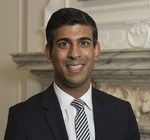
  • Rishi Sunak – 2020 Statement on the Coronavirus

    Rishi Sunak – 2020 Statement on the Coronavirus

    Below is the text of the statement made by Rishi Sunak, the Chancellor of the Exchequer, on 14 April 2020.

    Good evening from Downing Street, where I’m joined by Steve Powis, Medical Director of the NHS and Yvonne Doyle, Medical Director at Public Health England.

    Earlier today, the government’s independent fiscal watchdog…

    …the Office for Budget Responsibility, the OBR…

    …published a report into the impact of coronavirus on the economy and public finances.

    It’s important to be clear that the OBR’s numbers are not a forecast or prediction.

    They simply set out what one possible scenario might look like – and it may not even be the most likely scenario.

    But it’s important we are honest with people about what might be happening to our economy.

    So before I turn to the health figures, I want to spend a few minutes explaining what the OBR have said – and let me thank them for their continued work.

    There are three brief points I want to make.

    First, the OBR’s figures suggest the scale of what we are facing will have serious implications for our economy here at home…

    …in common with other countries around the world.

    These are tough times – and there will be more to come.

    As I’ve said before, we can’t protect every business and every household.

    But we came into this crisis with a fundamentally sound economy, powered by the hard work and ingenuity of the British people and British business.

    So while those economic impacts are significant – the OBR also expect them to be temporary…

    …with a bounce back in growth.

    The second point I want to make is that we’re not just going to stand by and watch this happen.

    Our planned economic response is protecting millions of jobs, businesses, self-employed people, charities and households.

    Our response aims to directly support people and businesses while the restrictions are in place…

    …and to make sure as restrictions are changed, we can, as quickly as possible, get people back to work; get businesses moving again; and recover our economy.

    The OBR today have been clear that the policies we have set out will do that.

    The OBR today have been clear that if we had not taken the actions we have, the situation would be much worse.

    In other words, our plan is the right plan.

    The third point I want to make is this: right now, the single most important thing we can do for the health of our economy is to protect the health of our people.

    It’s not a case of choosing between the economy and public health – common sense tells us that doing so would be self-defeating.

    At a time when we are seeing hundreds of people dying every day from this terrible disease, the absolute priority must be to focus all of our resources…

    …not just of the state, but of businesses, and of all of you at home as well, in a collective national effort to beat this virus.

    The government’s approach is to follow scientific and medical advice through our step-by-step action plan…

    …aiming to slow the spread of the virus, so fewer people need hospital treatment at any one time, protecting the NHS’s ability to cope.

    I said in my Budget a month ago that whatever the NHS needs, it will get – and we have honoured that promise:

    Yesterday we published an update showing that we’ve given our public services an extra £14.5 billion in recent weeks.

    We are taking action to increase NHS capacity, with more beds, more key staff and more equipment on the front-line.

    And the Secretary of State for Health and Social Care will be updating on our plans for social care tomorrow.

    This is why we are instructing people to stay at home, so that we can protect our NHS and save lives.

    I can report that through the government’s ongoing monitoring and testing programme, as of today:

    302,599 people in the UK have now been tested for coronavirus, with 93,873 people testing positive

    19,706 people in the UK have been admitted to hospital with the virus, down from 20,184 people yesterday;

    Sadly, of those in hospital, 12,107 people have now died – an increase of 778 fatalities since yesterday.

    Our thoughts are with the families and friends of all those who have lost their lives.

    These figures are a powerful reminder to us all of the importance of following the government’s guidance:

    Stay at home. Protect our NHS. And save lives.

    Thank you.

  • Robert Jenrick – 2020 Statement on Visiting Parents

    Robert Jenrick – 2020 Statement on Visiting Parents

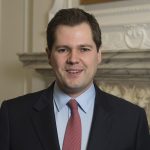
    Below is the text of the statement made by Robert Jenrick, the Secretary of State for Housing, Communities and Local Government, on 9 April 2020 following a news story in the Guardian.

    For clarity – my parents asked me to deliver some essentials – including medicines.

    They are both self-isolating due to age and my father’s medical condition and I respected social distancing rules.

  • Sheila Oakes – 2020 Comments about Boris Johnson

    Sheila Oakes – 2020 Comments about Boris Johnson

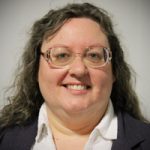
    Below is the text of the comment made by Sheila Oakes, the Mayor of Heanor, about the Prime Minister being taken into intensive care. The comments were posted on-line on 6 April 2020 and Oakes was expelled from the Labour Party for them.

    Sorry, he completely deserves this and he is one of the worst PMs we’ve ever had.

  • Dominic Raab – 2020 Statement on the Coronavirus

    Dominic Raab – 2020 Statement on the Coronavirus

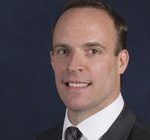
    Below is the text of the statement made by Dominic Raab, the Foreign Secretary, on 7 April 2020.

    Good afternoon, welcome to today’s Downing Street press conference. I’m joined by Chief Scientific Adviser Sir Patrick Vallance and our Chief Medical Officer Professor Chris Whitty.

    Before we get on to the detail, can I first give an update on the condition of the Prime Minister. I know a lot of people will be concerned about that.

    I can tell you he is receiving the very best care from the excellent medical team at St Thomas’ hospital. He remained stable overnight, he’s receiving standard oxygen treatment and breathing without any assistance. He has not required mechanical ventilation or non-invasive respiratory support. He remains in good spirits and, in keeping with usual clinical practice, his progress continues to be monitored closely in critical care.

    We will give further updates on the Prime Minister’s condition, when there are any material developments.

    And I know that there’s been a groundswell of messages of support from people here at home, from leaders around the world and I know that everyone will want to join with me in wishing the Prime Minister a very swift recovery.

    As you will know, the Prime Minister asked me to deputise for him whilst he recovers. In line with the Prime Minister’s instructions, this morning I chaired the meeting of senior ministers tackling coronavirus and this afternoon I chaired an update for members of the Cabinet.

    And I think it’s probably worth just worth remembering that, as will be the case for so many people up and down the country, who knows someone at work at work who has fallen ill with coronavirus, it comes as a shock to all of us. He’s not just the Prime Minister, and for all of us in Cabinet he’s not just our boss, he’s also a colleague and he’s also our friend.

    So, all of our thoughts and prayers are with the Prime Minister at this time, with Carrie and with his whole family.

    And I’m confident he’ll pull through because if there’s one thing I know about this Prime Minister, he’s a fighter and he’ll be back at the helm leading us through this crisis in short order. And for us in the Cabinet, we know exactly what he wants from us and what he expects from us right now.

    And following the Cabinet discussion today, I can reassure the Prime Minister, and we can reassure the public, that his team will not blink, and we will not flinch from the task at hand at this crucial moment. We will keep all of our focus and all of our resolve, with calm determination on delivering the government’s plan to defeat the coronavirus.

    And it’s with that objective and that unity of purpose, that Cabinet turned to business today.

    We had reports from the 4 Ministerial Groups on the action we’re taking across all of the strategic priority areas: including NHS capacity, procurement of ventilators and personal protective equipment, then delivery of public services including social care, on the economy and our support for both businesses and workers, and of course on the international action we’re taking to reinforce our efforts on all of the home front.

    As we’ve explained before, our action plan aims to slow the spread of the virus, so fewer people need hospital treatment at any one time, and that will help us protect the NHS’s ability to cope. At every step, we have been following the scientific advice, the medical advice, and we’ve been very deliberate in our actions that we’ve taken, so that we take the right steps at the right moment in time.

    We are increasing our NHS capacity by dramatically expanding the number of beds, key staff, life-saving equipment on the front-line, so people have the care they need when they need it most. As we’ve consistently said, we are instructing people to stay at home, so we can protect the NHS and so that we can save lives.

    So today I can report that through the government’s ongoing monitoring and testing programme that, as of today:

    213,181 people have now been tested for the coronavirus

    55,242 people have tested positive

    the number of people admitted to hospital with coronavirus symptoms now stands at 18,589

    of those who have contracted the virus, 6,159 have, I am very sorry to say, died

    Every death in this pandemic is a tragedy, and our thoughts and prayers are with the loved ones grieving at what must be an incredibly difficult time.

    I think these figures reinforce that the single most important thing we can all do right now, in this national effort to defeat the virus, is to keep on following the government’s advice to:

    – stay at home
    – protect our NHS
    – and save lives

  • Dominic Raab – 2020 Statement on the Coronavirus

    Dominic Raab – 2020 Statement on the Coronavirus

    Below is the text of the statement made by Dominic Raab, the Foreign Secretary, on 7 April 2020.

    Good afternoon, welcome to Downing Street for today’s coronavirus press conference. I’m joined by our Chief Medical Officer Chris Whitty, Chris it’s good to have you back. And also by Deputy Chief Scientific Adviser Angela Maclean.

    And before Angela gives us an update on the data, I would like to update you on the steps that the government is taking to defeat the coronavirus.

    Our step-by-step action plan is aimed at slowing the spread of the virus, so fewer people need hospital treatment at any one time, and that will protect the NHS’s ability to cope. At each point, we have been following scientific and medical advice and we’ve been very deliberate in our actions, taking the right measures at the right moment.

    We are taking unprecedented action to increase NHS capacity, by dramatically expanding the numbers of beds, key staff and equipment on the front-line, to give people the care they need, when they need it most. That is also why we are instructing people to stay at home, so we can protect our NHS and save lives.

    I can report that through the government’s ongoing monitoring and testing programme, as of today:

    208,837 people have now been tested for the virus

    51,608 have tested positive

    the number of people admitted to hospital with coronavirus symptoms now stands at 17,911 and of those who have contracted the virus 5,373 sadly have died

    Our thoughts, our deepest condolences are with their loved ones at this very difficult time.

    These figures are a powerful reminder of why we need everyone to follow the government’s guidance. We must stay at home, to protect our NHS and to save lives.

    As you will know, last night, the Prime Minister was admitted to hospital for tests following advice from his doctor. This was a precautionary step, because he continues to have persistent coronavirus symptoms, ten days after first having tested positive for the virus.

    I can tell you that the PM had a comfortable night in hospital, and he’s in good spirits. He’s still in hospital under observation. He is being given regular updates on developments, and he continues to lead the government.

    I can reassure the British people that the government remains united in a single overriding priority, which is to defeat the coronavirus and see this nation through the challenge ahead.

    In the last week under the Prime Minister’s leadership:

    the Chancellor of the Duchy of Lancaster Michael Gove has explained what we are doing to boost manufacturing capability here at home, to meet the rising demand for ventilators and other equipment in the NHS

    Business Secretary Alok Sharma has been setting what the government is doing to support small businesses and yesterday, Health Secretary Matt Hancock gave an update on what we are doing to bolster capacity in the NHS, including increasing the number of critical care beds

    The FCO is supporting all of these operational priorities.

    So we’re deploying the diplomatic network right around the world, to source and buy ventilators and protective equipment, so that we can reinforce the NHS frontline here at home.

    At the same time, we’re working with other governments and the airlines to bring home as many stranded British nationals as we possibly can, prioritising our most vulnerable citizens.

    On commercial flights we’ve helped over 200,000 UK nationals come home from Spain, 13,000 from Egypt, 8,000 from Indonesia.

    We’ve also charted flights from 7 different countries, bringing home more than 2,000 British nationals.

    We’ve repatriated a further 1,550 from cruise ships, including most recently the Coral Princess and the Zaandam.

    And for those travellers still stuck abroad, we’re doing everything we can to keep international airports open, to keep commercial flights running, and to charter flights, when there are no other options – under the new arrangements I announced last week, and which have now been agreed with 14 airlines.

    We’ve allocated £75 million to support those arrangements. We’ve already had flights back from countries including Peru, Ghana, and Tunisia.

    And we’re fixing further flights from India, South Africa, Nepal and the Philippines, which will fly later on this week.

    So, I want to reassure people that every arm of government is doing everything it possibly can to defeat coronavirus and rise to the challenges it presents us at home and abroad.

    Last night, Her Majesty the Queen reflected on the national spirit of unity and resolve that we are seeing in our country, as well as the collective effort we need to tackle the disease. From our heroic doctors, nurses and careworkers, through to those manning the tills at supermarkets and pharmacies, those driving the lorries and the buses. They are all worthy of our applause, they are all worthy of our admiration.

    And on that note, both the Prime Minister and I would like to thank all the NHS staff for their truly heroic work and we urge the public to continue to follow the government’s advice to:

    – stay at home
    – protect the NHS
    – and save lives

    And on that note, I will pass over to Angela for an update on the latest data.

  • Nicola Sturgeon – 2020 Statement on Catherine Calderwood

    Nicola Sturgeon – 2020 Statement on Catherine Calderwood

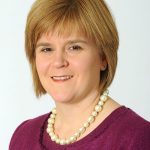
    Below is the text of the statement made by Nicola Sturgeon, the Scottish First Minister, on 5 April 2020.

    Dr Calderwood’s advice to me, to the government and to people across Scotland over the past few weeks has been the right advice. People should continue to stay at home to protect the NHS and to save lives.

    It is however clear that the mistake she made – even though she has apologised sincerely and honourably for it – risks distracting from and undermining confidence in the government’s public health message at this crucial time. That is not a risk either of us is willing to take.

    Catherine has been a transformational CMO, bringing changes to the way medicine is delivered in Scotland and in particular using her experience to bring an overdue focus to women’s health. Also, as I said earlier, her advice to me on Coronavirus will be missed – which is why she will work to ensure a smooth transition in the days ahead.

    While she has made a very serious mistake in her actions, that should not detract from the fact that as CMO she has made a highly valuable contribution to the medical profession and to health in Scotland, and I have no doubt she will continue to do so in future. She leaves office with my thanks and admiration.

  • Catherine Calderwood – 2020 Resignation Statement

    Catherine Calderwood – 2020 Resignation Statement

    Below is the text of the resignation statement made by Catherine Calderwood on 5 April 2020.

    I am deeply sorry for my actions and the mistakes I have made.

    The First Minister and I have had a further conversation this evening and we have agreed that the justifiable focus on my behaviour risks becoming a distraction from the hugely important job that government and the medical profession has to do in getting the country through this coronavirus pandemic. Having worked so hard on the government’s response, that is the last thing I want.

    The most important thing to me now and over the next few very difficult months is that people across Scotland know what they need to do to reduce the spread of this virus and that means they must have complete trust in those who give them advice. It is with a heavy heart that I resign as Chief Medical Officer.

    I will work with my team over the next few days to ensure a smooth transition to my successor.

  • Queen Elizabeth II – 2020 Commonwealth Day Message

    Queen Elizabeth II – 2020 Commonwealth Day Message

    Below is the text of HM Queen Elizabeth II’s Commonwealth Day Message on 9 March 2020.

    On Commonwealth occasions, it is always inspiring to be reminded of the diversity of the people and countries that make up our worldwide family. We are made aware of the many associations and influences that combine through Commonwealth connection, helping us to imagine and deliver a common future.

    This is particularly striking when we see people from nations, large and small, gathering for the Commonwealth Games, for meetings of Commonwealth governments, and on Commonwealth Day. Such a blend of traditions serves to make us stronger, individually and collectively, by providing the ingredients needed for social, political and economic resilience.

    Throughout my life, I have had the opportunity to see and hear how membership of the Commonwealth family means so much to those living in all parts of the world, often in places that are quite remote. Advances in technology and modern media have now enabled many more people to witness and enjoy – with remarkable immediacy – this experience of Commonwealth connection, in areas such as education, medicine and conservation.

    Looking to the future, this connectivity means we are also aware, perhaps as never before, that wherever we live, our choices and actions affect the well-being of people and communities living far away, and in very different circumstances. For many, this awareness awakens a desire to employ our planet’s natural resources with greater care, and it is encouraging to see how the countries of the Commonwealth continue to devise new ways of working together to achieve prosperity, whilst protecting our planet.

    As members of this very special community, on this Commonwealth Day, I hope that the people and countries of the Commonwealth will be inspired by all that we share, and move forward with fresh resolve to enhance the Commonwealth’s influence for good in our world.

    ELIZABETH R

  • Queen Elizabeth II – 2020 Broadcast to the Nation

    Queen Elizabeth II – 2020 Broadcast to the Nation

    Below is the text of HM Queen Elizabeth II’s Broadcast to the Nation which was shown on 6 April 2020.

    I am speaking to you at what I know is an increasingly challenging time. A time of disruption in the life of our country: a disruption that has brought grief to some, financial difficulties to many, and enormous changes to the daily lives of us all.

    I want to thank everyone on the NHS front line, as well as care workers and those carrying out essential roles, who selflessly continue their day-to-day duties outside the home in support of us all. I am sure the nation will join me in assuring you that what you do is appreciated and every hour of your hard work brings us closer to a return to more normal times.

    I also want to thank those of you who are staying at home, thereby helping to protect the vulnerable and sparing many families the pain already felt by those who have lost loved ones. Together we are tackling this disease, and I want to reassure you that if we remain united and resolute, then we will overcome it.

    I hope in the years to come everyone will be able to take pride in how they responded to this challenge. And those who come after us will say that the Britons of this generation were as strong as any. That the attributes of self-discipline, of quiet good-humoured resolve and of fellow-feeling still characterise this country. The pride in who we are is not a part of our past, it defines our present and our future.

    The moments when the United Kingdom has come together to applaud its care and essential workers will be remembered as an expression of our national spirit; and its symbol will be the rainbows drawn by children.

    Across the Commonwealth and around the world, we have seen heart-warming stories of people coming together to help others, be it through delivering food parcels and medicines, checking on neighbours, or converting businesses to help the relief effort.

    And though self-isolating may at times be hard, many people of all faiths, and of none, are discovering that it presents an opportunity to slow down, pause and reflect, in prayer or meditation.

    It reminds me of the very first broadcast I made, in 1940, helped by my sister. We, as children, spoke from here at Windsor to children who had been evacuated from their homes and sent away for their own safety. Today, once again, many will feel a painful sense of separation from their loved ones. But now, as then, we know, deep down, that it is the right thing to do.

    While we have faced challenges before, this one is different. This time we join with all nations across the globe in a common endeavour, using the great advances of science and our instinctive compassion to heal. We will succeed – and that success will belong to every one of us.

    I am speaking to you at what I know is an increasingly challenging time. A time of disruption in the life of our country: a disruption that has brought grief to some, financial difficulties to many, and enormous changes to the daily lives of us all.

    I want to thank everyone on the NHS front line, as well as care workers and those carrying out essential roles, who selflessly continue their day-to-day duties outside the home in support of us all. I am sure the nation will join me in assuring you that what you do is appreciated and every hour of your hard work brings us closer to a return to more normal times.

    I also want to thank those of you who are staying at home, thereby helping to protect the vulnerable and sparing many families the pain already felt by those who have lost loved ones. Together we are tackling this disease, and I want to reassure you that if we remain united and resolute, then we will overcome it.

    I hope in the years to come everyone will be able to take pride in how they responded to this challenge. And those who come after us will say the Britons of this generation were as strong as any. That the attributes of self-discipline, of quiet good-humoured resolve and of fellow-feeling still characterise this country. The pride in who we are is not a part of our past, it defines our present and our future.

    The moments when the United Kingdom has come together to applaud its care and essential workers will be remembered as an expression of our national spirit; and its symbol will be the rainbows drawn by children.

    Across the Commonwealth and around the world, we have seen heart-warming stories of people coming together to help others, be it through delivering food parcels and medicines, checking on neighbours, or converting businesses to help the relief effort.

    And though self-isolating may at times be hard, many people of all faiths, and of none, are discovering that it presents an opportunity to slow down, pause and reflect, in prayer or meditation.

    It reminds me of the very first broadcast I made, in 1940, helped by my sister. We, as children, spoke from here at Windsor to children who had been evacuated from their homes and sent away for their own safety. Today, once again, many will feel a painful sense of separation from their loved ones. But now, as then, we know, deep down, that it is the right thing to do.

    While we have faced challenges before, this one is different. This time we join with all nations across the globe in a common endeavour, using the great advances of science and our instinctive compassion to heal. We will succeed – and that success will belong to every one of us.

    We should take comfort that while we may have more still to endure, better days will return: we will be with our friends again; we will be with our families again; we will meet again.

    But for now, I send my thanks and warmest good wishes to you all.