Tag: 2020

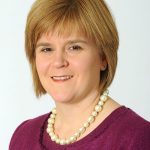
  • Nicola Sturgeon – 2020 Statement on the Coronavirus (27/04/2020)

    Nicola Sturgeon – 2020 Statement on the Coronavirus (27/04/2020)

    Below is the text of the statement made by Nicola Sturgeon, the Scottish First Minister, at St Andrew’s House in Edinburgh on 27 April 2020.

    Good afternoon everyone. Thank you for joining us for today’s briefing.

    I want to start as I always do with an update on some of the key statistics, in relation to COVID-19 in Scotland.

    As at 9 o’clock this morning, I can confirm that there have been 10,521 positive cases confirmed, which is an increase of 197 from yesterday.

    A total of 1,762 patients are currently in hospital with either confirmed or suspected COVID-19, that is an increase of 27 from yesterday.

    A total of 134 people last night were in intensive care with confirmed or suspected COVID-19. That is an increase of one since yesterday.

    I should say at this point that despite these occasional fluctuations, overall these statistics for hospital and intensive care admissions still give us cause for cautious optimism.

    I am also able to confirm today that since 5 March, a total of 2,380 patients who had tested positive for the virus have been now able to leave hospital, and I wish them well.

    On a much sadder note, I have to report that in the last 24 hours, 13 deaths have been registered of patients who had been confirmed through a test as having the virus, and that takes the total number of deaths in Scotland, under that measurement to 1,262.

    It is worth highlighting again, indeed it’s important that I do so, that although people can now register deaths on Sundays, we do know that from recent weeks that the figures that we report on Mondays, of deaths which were registered on a Sunday, tend to be relatively low. That means the figure I report tomorrow maybe significantly larger than today’s.

    And of course, once again, I want to stress and indeed reflect on the fact that the numbers I read out here every day are not just statistics.

    They are individuals whose loss is a source of grief and distress to family and friends. So once again, I want to send my deepest condolences to everyone who has lost a loved one to this virus.

    I also want to thank as I always do, our health and care workers, who continue to do extraordinary work in the most difficult of circumstances.

    And again, place on record my thanks to essential workers the length and breadth of the country, whose dedication each and every day is helping to keep vital services running.

    Tomorrow, on international workers’ memorial day, the Scottish Government will join a minute’s silence at 11am to honour those frontline workers.

    Particularly, though of course not exclusively, health and care workers, who have sadly lost their lives while working to tackle this pandemic.

    I invite all of you at home, and those taking part in essential work across the country, to join us at that time tomorrow.

    The silence will provide an opportunity to pay tribute to those who have died as a result of their work to serve, care for and save others.

    It will be a further reminder that, of all the duties government bears during a situation like this, the most vital is our obligation to help to keep care and health workers safe.

    I want to stress again today that I and the Scottish Government are acutely aware of that responsibility, and will work each and every day to do everything we can to fulfil that obligation.

    I have two things I want to comment on this morning. The first is to reflect a little bit more on some of the statistics I have just reported.

    I know that it might not feel this way, since the numbers that I am reporting each day, particularly those on the number of people who are dying, are always far higher than we want them to be – but it is nevertheless the case that we are now seeing some real signs of progress.

    The number of people in intensive care has fallen by around a third in the last fortnight, from the figure I would have reported to you two weeks ago today.

    The number of people in hospital, which was rising sharply in the first 10 days of this month, has also now broadly stabilised and the trend there may also now be a downward one.

    Our NHS, while working incredibly hard and in the most difficult of circumstances, has not been overwhelmed, which just a few weeks ago we really feared that it might be.

    Of course, we are not yet seeing a definite fall in the number of people who are dying each day from the virus.

    However, as we have always said, because of the way the illness progresses, that will be the last daily number that we do start to see declining, and we hope to see that in the next couple of weeks.

    But we do have evidence that the actions that all of us, all of you watching at home are taking, are making a real and a positive difference.

    Your efforts are working, so again today I want to thank you for that.

    However, and I realise that this is a less welcome and much more difficult point for me to make, this progress remains very fragile and now is a time for all of us to exercise careful caution. It is certainly not a time to throw caution to the wind.

    The margins we think we are working within, in respect to the reproduction number – that crucial R number that I spoke about last week, are very narrow.

    At this stage, even a slight easing up in the restrictions in place now, could send the reproduction rate back towards or above one, and the virus would then start to spread very quickly again.

    Within days of that, all the indicators that are suggesting progress now, would start to go in the wrong direction again.

    That would mean more cases, more hospital and intensive care admissions and sadly, more deaths.

    So for all our sakes, and to protect the progress that together we’ve made, all of the restrictions currently in place need to remain in place, for now.

    The job is not done yet – we need you to stay the course for a bit longer.

    Of course, we are now thinking about the ways in which we can begin to ease the lockdown a bit when it is safer to do so, although we can’t yet put dates on any of that.

    And as I said last week, lifting lockdown will not be a flick of a switch moment. We will instead be considering gradual and careful variations.

    It important and necessary to do that work now, and we are doing that work now, and as I said last week, I think it is really important to engage you in that work in an open and transparent way.

    So I can confirm that in the coming days, I will say more about the different options under consideration, and how we are going about assessing those.

    But let me stress again that the current restrictions are still in place. We have to stick with them for now, in order to be able to relax things in future.

    As well as the impact on all of us as individuals, I absolutely understand the anxieties of business, and I am acutely aware of the social and health impacts of economic damage.

    But let me make this point – a premature easing up on restrictions, if it led to the virus running out of control again, would not help your business or the economy. In fact, it would make the economic damage even worse.

    That’s why I am asking businesses as well as individuals to continue to do the right things, as indeed the vast majority of you have been doing already, for which you have my deep gratitude.

    So if you are a business on the list of those required by law to close, then obviously you should remain closed.

    But if you are not in that category but chose to close voluntarily at the start of the lockdown, and are now thinking of reopening – our view is that you should not contemplate doing so, unless you can comply fully with existing guidance, and are able to change your working practices to ensure safe social distancing at all times.

    The precautionary principle that I have spoken about before still applies, for the protection of your workers and for your customers.

    And for all of us, not just businesses. If you are now going out and about a little bit more than you were at the start of the lockdown, then you really shouldn’t be.

    Because you might be putting yourselves, and your loved ones at risk.

    Fundamentally, the basic restrictions of lockdown continue to apply.

    You should only leave home for essential purposes like buying food or medicine, or exercising.

    If you do leave the house, you should stay two metres apart from other people, and not meet up with people from other households.

    And you should wash your hands thoroughly and regularly.

    As I say every day, I know that all of this is difficult, and I know that it gets more difficult with every day that passes but it remains essential.

    As I’ve said many times, and again today, any easing up right now would risk us seeing the virus surge upwards again.

    So please, please stick with it, so we can continue to make progress together, and accelerate hopefully, the stage at which we can begin a process of restoring some normality to our lives.

    The other issue I want to very briefly update on relates to skills.

    Skills Development Scotland have updated their ‘My World of Work’ website to help people find free courses.

    This new service has been developed with the support of the Open University in Scotland, and it highlights free courses run by 12 providers in areas like digital technology, business studies, and languages.

    In the coming weeks and months, we will expand the range of courses available, by working with colleges and universities.

    We are also working with the UK Government and the other devolved administrations, who are all developing similar initiatives, in order to highlight the courses they offer.

    I‘m aware that doing courses like this may not be an option for everyone. If you have caring responsibilities, or if you have volunteered to help others, time to study might be pretty limited.

    But for some people, maybe especially, though not exclusively, people who are currently furloughed, or have been made unemployed, it could make sense to develop new skills during this period.

    We hope that this initiative will help people to do that, safely and free of charge.

    It’s a good example of the importance of digital public services, and I’m grateful to Skills Development Scotland for establishing this site so quickly.

    The courses are open to anyone. So if you are interested then go to myworkofwork.co.uk where you will find the free courses under the ‘Learn and train’ section of the main menu.

    That concludes my update for today. Before I pass on to the Chief Medical Officer, and then the Health Secretary, I simply want to end by thanking again each and every one of you for doing the right thing, and staying at home.

    I know it’s difficult, but it is as I hope I’ve demonstrated today, also making a difference.

    The steps we are all taking are helping to slow the spread of the virus, as we wanted to do.

    They are helping to protect the NHS as we wanted to do, and they are, notwithstanding the figures I have to report to you every day, helping to save lives.

    So please stick with them, and thank you for doing so.

  • Nicola Sturgeon – 2020 Statement on the Coronavirus (24/04/2020)

    Nicola Sturgeon – 2020 Statement on the Coronavirus (24/04/2020)

    Below is the text of the statement made by Nicola Sturgeon, the Scottish First Minister, at St Andrew’s House in Edinburgh on 24 April 2020.

    Good afternoon. Thanks for joining us for today’s briefing.

    I want to start – as I always do – by updating you on some of the key statistics in relation to Covid-19 in Scotland.

    As at 9 o’clock this morning, there have been 9,697 positive cases confirmed – an increase of 288 from yesterday.

    A total of 1710 patients are in hospital with Covid-19 – that is a decrease of 38 from yesterday.

    A total of 141 people last night were in intensive care with confirmed or suspected Covid 19. That is also a decrease of 7 since yesterday.

    These figures for hospital admissions and intensive care are giving us real and growing cause for optimism that the current lockdown is working to suppress the virus. That’s the good news, perhaps the less good news is that also tells us why we must stick with these lockdown restrictions, because as I’ve said many times before standing here, any easing up on that at all right now would risk us putting all that progress into reverse and the virus quickly running out of control again. So please stick with the restrictions because as you can see they are working

    I am also, in some other good news, able to confirm today that since 5 March, a total of 2,271 patients who had tested positive for the virus and been admitted to hospital have been able to leave hospital, and I wish all of them well.

    However on a much sadder note, I also have to report that in the last 24 hours, 64 deaths have been registered of patients who have been confirmed through a test as having Covid-19 – that takes the total number of deaths in Scotland, under that measurement, to 1,184.

    As I’ve said before, we provide these statistics for a very important reason, it helps tell us and tell you what is happening with the virus and how it is progressing across the country and what impact it is having. But the people behind these statistics could be the loved ones of any of us and that’s what I always bear in mind when I report the numbers to you every day. Each and every one of these statistics was a real person and across the country right now their deaths are being mourned by family members whose lives will never be the same again without them. So once again today I want to convey my deepest condolences to everyone who is grieving for a loved one as a result of this virus.

    I also want to thank again – as I always do and always will – our health and care workers. Last night, I – along with thousands of people across the country – once again took part in the applause at 8 o’clock. It has become a regular – and very special – feature of our week and our Thursday evenings in particular. And it’s just one small way in which we show our appreciation, for the extraordinary work that all of you do and I again today I give my sincere thanks to all of you.

    That Thursday night applause has also become a way for all of us in streets and communities up and down the land to briefly come together to share some kindness and show some solidarity. At a very grim and difficult time these really are special moments indeed.

    Now, there a two issues I want to cover today before handing on to my colleagues and opening up to questions.

    The first issues is just to recap the paper the Scottish Government published yesterday, on how we might begin to go through a process over the weeks to comes of restoring some level of normality to our everyday lives, while we also continue to contain and suppress the virus and minimise the harms that it does.

    I can tell you today that since it was published – this time yesterday – more than 250,000 people have viewed the paper on the Scottish Government’s website. So thank you to those of you who have taken the time to engage with this and I would encourage those who haven’t had the opportunity to do so yet to take some time to read the document. I noted yesterday that most people will never read a government document but if you are ever going to do it at all this is the time. So please take some time to read what we set out, the principles that are going to guide us, some of the factors we have to take into account. And if you’ve got views that you would like us to consider in this next phase of our work then please don’t hesitate to tell us what they are.

    As I said yesterday, this publication is an attempt to have grown up conversation with the wider public in Scotland. We want to be really frank with you every step of the way about the complexities and uncertainties of the decision that lie ahead. We need to be clear now that lockdown remains essential for the reasons I mentioned a moment ago, and that even as we are able to start to ease some of these restrictions, we’re going to have to do so very carefully, very cautiously – probably very slowly and gradually. We’re going to have to take what I described this morning as baby steps in doing this. We’ve got to try to seek a new normal, because how we are living our lives right now has consequences and can’t go on forever, but we have to recognised the virus has not gone away, so there will be changes in how we live our lives that will be necessary for some time to come, until science in the form of treatments and a vaccine offer new solutions to us.

    So this really is about all of us and its impact on the lives of each and every one of us and that’s why it’s important everyone feels part of this process.

    What’s important to me as First Minister, in contrast to the uncertainties that politicians usually like to express, is that I can also be frank with you about the uncertainties and the complexities of the decisions that lie ahead. Those decisions will make demands on all of us and the lives that we lead so I want that process to be as open as possible. And the paper that we published yesterday, which so many of you have already taken the opportunity to read, is the start of that process.

    As I said yesterday, in the days and few weeks ahead, we will set out more detail on the different options we will consider, as well as the modelling and scientific advice that underpins and informs our decisions. And of course, as we develop and assess those options, we will continue to engage as widely as possible, across the different sectors and groups of society.

    Lastly, I want to reemphasise an important point. It’s one that I made yesterday it and it’s one I’ve made already in my remarks to you today.

    Moving on from where we are now will only be possible only if and when we get the virus under control and we have more confidence that is the case. And so it remains absolutely vital that all of us continue to comply with the public health guidance and rules that are in place.

    To reiterate, that means staying at home, unless you are going out for essential purposes – such as exercising once a day, or buying food and medicines.

    It means that if you do go out, do not meet up with people from other households, and please stay two metres apart from other people.

    And it means wash your hands thoroughly and regularly.

    By following these rules, we can continue, as we are doing right now, to slow the spread of this virus. And we can hasten the day, when we return if not to complete, but to some semblance of normality in our everyday lives.

    The second item I want to update you on, is our work to ensure that Scotland’s NHS has the supplies that it needs to care for people in this time.

    Over the past month, the Minister for Trade Ivan McKee has been leading work to ensure that any shortages are overcome – and that supply chains can continue to meet demand.

    That has involved at times sourcing equipment from alternative supply chains. And where necessary, we have looked overseas to source the equipment we need.

    For example, last weekend, a major consignment of PPE arrived at Prestwick Airport, from China. It included 10 million fluid-resistant face masks, as well as equipment for use in intensive care units and laboratories.

    I can confirm that, just an hour ago, another of those consignments arrived at Prestwick. It includes 100,000 testing kits, as well as another 10 million face masks.

    Of course, alongside international procurement, we’re also working to boost Scotland’s domestic supply lines.

    About a month ago, we put out a call to action, to Scotland’s businesses. We asked them to support the flow of supplies and equipment, to our health and social care sector.

    To date, more than 1,600 businesses and individuals have answered that call. And I want to thank each and every one of them.

    We are working hard to assess and coordinate each of those offers, as quickly as possible. And in doing that, we are prioritising the support that is needed most.

    Our work with Calachem – a company based in Grangemouth – is a good example. Calachem have now produced 20,000 litres of hand sanitiser. The sanitiser was manufactured using denatured alcohol from Whyte & Mackay. It was bottled by the Stonehaven-based company, McPhie. And deliveries of the product – to our front line services – will begin from next week.

    The Scottish Government has formed this supply chain, in an incredibly short space of time. It will produce 560,000 litres of hand sanitiser, over the next four weeks. And that will be enough meet the needs of Scotland’s entire health and social care sector.

    Another example is the work we’re doing with the firm Alpha Solway. They are currently manufacturing 20,000 face visors per day, at their factory in Annan. And in total, they are supplying an order of over one million visors, to our NHS.

    These businesses – and many more like them – are doing hugely important work. Rightly and properly we will continue to talk about getting supplies of this kind of equipment to the front line, but I thought it was useful today to give you an insight into the work that’s being done to ensure these supplies keep flowing and the we have sufficient of them to get through this crisis. So these companies and many more in addition to the ones I’ve mentioned today are playing a critical part in our overall collective national endeavour in Scotland to tackle this crisis and I want to put on record today my heartfelt thanks to each and every one.

    Let me close today by saying something about this weekend. I’m conscious that it will be the fifth weekend, since Scotland went into lockdown. And I know that they only get harder, as time goes on.

    I also know that this weekend will be particularly difficult for Scotland’s Muslim communities – who are now observing the holy month of Ramadan. It will be tough not to be able to host people in your home, or visit friends and family, or attend your local mosque. And the Justice Secretary, who is himself observing Ramadan, will say a bit more about that, shortly.

    However, I want to end by emphasising the sacrifices we’re all making, are having a positive impact. We have a long way to go, I shared some of that with you yesterday, but it is equally true to say that we are seeing hopeful signs and so it’s vital that we stick with it – and build on the work we’ve done, so far.

    By doing that, we are slowing the spread of this virus, we are protecting our NHS, and despite the horrible statistics I report to you on a daily basis, we are saving lives. So I want to thank all of you, once again, for playing your part and doing that.

  • Andy McDonald – 2020 Statement on TUC’s Report

    Andy McDonald – 2020 Statement on TUC’s Report

    Below is the text of the comments made by Andy McDonald, the Shadow Secretary for Employment Rights and Protection, on 27 April 2020.

    With the country pulling together during this time of crisis, Labour is working constructively with the Government to stop the spread of the coronavirus and support workers and businesses.

    We want to ensure no stone is left unturned to keep people safe now and in the future, and the Government must go further to provide security to people in and out of work.

    It is not enough to just clap for our carers and key workers, we must build a better society that protects them and all workers, strengthens their rights and properly rewards them for what they do.

  • Steve Reed – 2020 Statement on Mocking Helpline Callers

    Steve Reed – 2020 Statement on Mocking Helpline Callers

    Below is the text of the statement issued by Steve Reed, the Shadow Communities and Local Government Secretary, on 27 April 2020.

    These reports are extremely distressing. A full investigation must be launched immediately.

    If vulnerable people who call the helpline are not getting the support they need, the programme must be overhauled.

    The Government rushed to set up the shielding programme as a national scheme instead of integrating it with existing call centres and local support run by councils and charities that know their neighbourhoods better. We need a scheme that’s better integrated with local support to avoid the mistakes the Government is making.

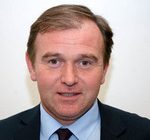
  • George Eustice – 2020 Statement on the Coronavirus

    George Eustice – 2020 Statement on the Coronavirus

    Below is the text of the statement made by George Eustice, the Secretary of State for the Environment, Food and Rural Affairs, on 26 April 2020.

    Good afternoon, and welcome to today’s Downing Street Press Conference. I’m pleased to be joined today by Stephen Powis, the National Medical Director of NHS England.

    Before I update you on the latest developments in the food supply chain, let me first give you an update on the latest data from the COBR coronavirus data file. Through the government’s ongoing monitoring and testing programme, as of today:

    669,850 tests for coronavirus have now been carried out in the UK, including 29,058 tests carried out yesterday;

    152,840 people have tested positive, that’s an increase of 4,463 cases since yesterday;

    15,953 people are currently in hospital with the coronavirus in the UK, down from 16,411 on 25 April.

    And sadly, of those hospitalised with the virus, 20,732 have now died. That is an increase of 413 fatalities since yesterday.

    We express our deepest condolences to the families and friends of these victims.

    At the beginning of the outbreak of this virus we saw significant problems in panic buying. That episode quickly subsided and food availability now is back to normal levels and has been for several weeks. All supermarkets have introduced social distancing measures to protect both their staff and their customers and it is essential that shoppers respect these measures.

    The food supply chain has also seen a significant reduction in staff absence over recent weeks. As staff who had been self-isolating through suspected coronavirus symptoms have returned to work. So absence levels are down from a peak of typically 20% in food businesses three weeks ago to less than 10% at the end of last week and in some cases individual companies reporting absences as low as 6%.

    We have put in place measures to support the clinically vulnerable. So far 500,000 food parcels have been delivered to the shielded group, that is those who cannot leave home at all due to a clinical condition that they have. In addition, the major supermarkets have agreed to prioritise delivery slots for those in this shielded group. So far over 300,000 such deliveries have been made, enabling people to shop normally and choose the goods that they want to buy.

    We recognise that there are others who are not clinically vulnerable and therefore are not in that shielded group but who may also be in need of help. Perhaps through having a disability or another type of medical condition, or indeed, being unable to draw on family and neighbours to help them. We have been working with local authorities to ensure that those people can be allocated a volunteer shopper to help them get their food needs. Charities such as Age UK and others can now also make also direct referrals on the Good Samaritan App to locate volunteers for those in need.

    Many supermarkets have taken steps to increase the number of delivery slots that they have. At the beginning of this virus outbreak there were typically 2.1 million delivery slots in the entire supermarket chain. That has now increased to 2.6 million, and over the next couple of weeks we anticipate that that will grow further to 2.9 million. So supermarkets have taken steps to increase their capacity but while this capacity has expanded, it will still not be enough to meet all of the demand that is out there.

    Some supermarkets have already chosen to prioritise some vulnerable customers with a proportion of the delivers slots that they have and others have offered to work with us and also local authorities to help establish a referral system so that when somebody is in desperate need, a local authority is able to make a referral to make sure that they can get a priority slot.

    As we look forward more generally towards the next stage in our battle against this virus, there are encouraging signs of progress, but before we consider it safe to adjust any of the current social distancing measures, we must be satisfied that we have met the five tests set out last week by the First Secretary.

    Those tests mean that the NHS can continue to cope;

    that the daily death rate falls sustainably and consistently;

    that the rate of infection is decreasing; and operational challenges have been met;

    and, most important of all, that there is no risk of a second peak.

    For now, the most important thing we can all do to stop the spread of the coronavirus is to stay at home, to protect the NHS and save lives.

    I want to pay tribute to all those who are working throughout the food supply chain from farmers, manufacturers and retailers. The response of this industry to ensure that we have the food that we need has been truly phenomenal.

    Thank you.

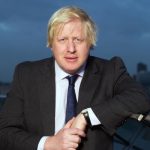
  • Boris Johnson – 2020 Statement on the Coronavirus

    Boris Johnson – 2020 Statement on the Coronavirus

    Below is the text of the statement made by Boris Johnson, the Prime Minister, at Downing Street on 27 April 2020. The text and formatting is as supplied by Downing Street.

    I am sorry I have been away from my desk for much longer than I would have liked

    and I want to thank everybody who has stepped up

    in particular the First Secretary of State Dominic Raab

    who has done a terrific job

    but once again I want to thank you

    the people of this country

    for the sheer grit and guts

    you have shown and are continuing to show

    every day I know that this virus brings new sadness and mourning to households across the land

    and it is still true that this is the biggest single challenge this country has faced since the war

    and I in no way minimise the continuing problems we face

    and yet it is also true that we are making progress

    with fewer hospital admissions

    fewer covid patients in ICU

    and real signs now that we are passing through the peak

    and thanks to your forbearance, your good sense, your altruism, your spirit of community

    thanks to our collective national resolve

    we are on the brink of achieving that first clear mission

    to prevent our national health service from being overwhelmed

    in a way that tragically we have seen elsewhere

    and that is how and why we are now beginning to turn the tide

    If this virus were a physical assailant

    an unexpected and invisible mugger

    which I can tell you from personal experience it is

    then this is the moment when we have begun together to wrestle it to the floor

    and so it follows that this is the moment of opportunity

    this is the moment when we can press home our advantage

    it is also the moment of maximum risk

    because I know that there will be many people looking now at our apparent success

    and beginning to wonder whether now is the time to go easy on those social distancing measures

    and I know how hard and how stressful it has been to give up

    even temporarily

    those ancient and basic freedoms

    not seeing friends, not seeing loved ones

    working from home, managing the kids

    worrying about your job and your firm

    so let me say directly also to British business

    to the shopkeepers, to the entrepreneurs, to the hospitality sector

    to everyone on whom our economy depends

    I understand your impatience

    I share your anxiety

    And I know that without our private sector

    without the drive and commitment of the wealth creators of this country

    there will be no economy to speak of

    there will be no cash to pay for our public services

    no way of funding our NHS

    and yes I can see the long term consequences of lock down as clearly as anyone

    and so yes I entirely share your urgency

    it’s the government’s urgency

    and yet we must also recognise the risk of a second spike

    the risk of losing control of that virus

    and letting the reproduction rate go back over one

    because that would mean not only a new wave of death and disease but also an economic disaster

    and we would be forced once again to slam on the brakes across the whole country

    and the whole economy

    and reimpose restrictions in such a way as to do more and lasting damage

    and so I know it is tough

    and I want to get this economy moving as fast as I can

    but I refuse to throw away all the effort and the sacrifice of the British people

    and to risk a second major outbreak and huge loss of life and the overwhelming of the NHS

    and I ask you to contain your impatience because I believe we are coming now to the end of the first phase of this conflict

    and in spite of all the suffering we have so nearly succeeded

    we defied so many predictions

    we did not run out of ventilators or ICU beds

    we did not allow our NHS to collapse

    and on the contrary we have so far collectively shielded our NHS so that our incredible doctors and nurses and healthcare staff have been able to shield all of us

    from an outbreak that would have been far worse

    and we collectively flattened the peak

    and so when we are sure that this first phase is over

    and that we are meeting our five tests

    deaths falling

    NHS protected

    rate of infection down

    really sorting out the challenges of testing and PPE

    avoiding a second peak

    then that will be the time to move on to the second phase

    in which we continue to suppress the disease

    and keep the reproduction rate, the r rate, down,

    but begin gradually to refine the economic and social restrictions

    and one by one to fire up the engines of this vast UK economy

    and in that process difficult judgments will be made

    and we simply cannot spell out now how fast or slow or even when those changes will be made

    though clearly the government will be saying much more about this in the coming days

    and I want to serve notice now that these decisions will be taken with the maximum possible transparency

    and I want to share all our working and our thinking, my thinking, with you the British people

    and of course, we will be relying as ever on the science to inform us

    as we have from the beginning

    but we will also be reaching out to build the biggest possible consensus

    across business, across industry, across all parts of our United Kingdom

    across party lines

    bringing in opposition parties as far as we possibly can

    because I think that is no less than what the British people would expect

    and I can tell you now that preparations are under way

    and have been for weeks

    to allow us to win phase two of this fight as I believe we are now on track to prevail in phase one

    and so I say to you finally if you can keep going in the way that you have kept going so far

    if you can help protect our NHS

    to save lives

    and if we as a country can show the same spirit of optimism and energy shown by Captain Tom Moore

    who turns 100 this week

    if we can show the same spirit of unity and determination as we have all shown in the past six weeks

    then I have absolutely no doubt that

    we will beat it together

    we will come through this all the faster

    and the United Kingdom

    will emerge stronger than ever before

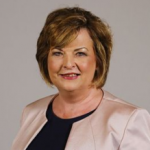
  • Fiona Hyslop – 2020 Statement on Covid-19

    Fiona Hyslop – 2020 Statement on Covid-19

    Below is the text of the speech made by Fiona Hyslop, the Cabinet Secretary for Economy, Fair Work and Culture, in the Scottish Parliament on 21 April 2020.

    The Covid-19 public health crisis has led extremely quickly to an economic crisis that is global in nature but also local, impacting on many people and businesses in Scotland. To combat the spread of the virus, many businesses have already closed and we face an enormous challenge in helping other businesses to survive, to provide jobs and to service the economy.

    I thank all businesses and their workers for following the social distancing guidance, the essential sectors and supply chains for continuing to keep the country running and those companies that have repurposed to manufacture supplies for the health sector.

    We estimate that up to 70 per cent of the workforce is still working, with many people delivering health, care and welfare services, and many others working from home, often combining that with childcare and home schooling. By staying home, they are playing their part in tackling the virus. They are helping to protect the health service and to save lives.

    As Covid-19 continues to have a significant impact across the world, there is major uncertainty in financial markets, supply chains and the functioning of the global economy as many countries, including Scotland, have had to reduce economic activity to stop the spread of the virus. The latest surveys for Scotland show a similar pattern to other countries, with falls in business activity in March that are even sharper than during the financial crisis. The chief economist’s “State of the Economy” report, which was published today, projects that Scotland’s gross domestic product will fall by a third during the period of social distancing.

    It is important, however, to put the economic impacts in context. This is no normal downturn and we need to view economic data and projections in that light, recognising that productive and profitable businesses across Scotland have been required to pause activity to support the public health effort.

    We have pursued three main aims for the economic response to date: to keep companies in business and with productive capacity so that they can recover; to keep staff in employment with appropriate income protection and support; and, most important, to provide support to staff so that they can self-isolate and care for loved ones.

    It is in everyone’s interest to help companies through this turbulent period. The United Kingdom Government has the immediate fiscal and macroeconomic powers to respond to the economic crisis and it has made substantial and welcome commitments to support businesses and employees. However, those commitments do not fully meet the needs of Scottish businesses. There are still significant gaps in both the job retention scheme and the support for the self-employed. Last week, along with the Cabinet Secretary for Finance, I wrote to the chancellor, outlining the changes that need to be made. I am also pressing the UK Government to urgently share data on the implementation of support schemes so that we are better able to tailor our support to businesses.

    To address Scotland’s specific needs, we announced additional funding to fill some gaps in the UK Government’s schemes. There is no doubt that we will be dealing with the uncertainty of the impacts and duration of the virus for some time. I engage regularly with businesses, business organisations and the unions and I have been building consensus in recent weeks in support of our four-step economic plan: response, reset, restart and recover.

    Initially, we have focused the majority of our efforts on the response stage. Our package of business support is now worth more than £2.2 billion: it is delivering almost £900 million-worth of rates relief and we continue to work with local authorities to progress our £1.3 billion business grants scheme. Support for the fishing industry of up to £22.5 million was announced by the Cabinet Secretary for Rural Economy and Tourism, and the Cabinet Secretary for Transport, Infrastructure and Connectivity has agreed further measures of support for the bus industry of £92 million, for ferry operators of £45.7 million and for rail franchisees of £254 million. We continue to work closely with the UK Government and Oil & Gas UK to assess what more can be done to support the oil and gas sector during its immediate and longer-term challenges.

    The Minister for Trade, Investment and Innovation has been working on procuring international and domestic supplies for the health service. On Saturday, 10 million masks arrived at Prestwick airport, and during this week 100,000 litres of sanitiser will arrive at the national health service’s central distribution warehouse. Our enterprise organisations have provided advice and support to over 178,000 companies.

    The additional £100 million that we allocated last week will be a vital lifeline for Scottish individuals and businesses to relieve hardship and protect the newly self-employed, who are ineligible for other support, and viable micro, small and medium-sized enterprises that are in distress and might be ineligible for UK Government sources of funding or not yet in receipt of the funds that they need to survive. The grant funding will be channelled through local authorities and enterprise agencies. The scheme will open for applications by the end of April and recipients will receive funds in early May. The provisional allocation will see £34 million for the newly self-employed, £20 million for creative, tourism and hospitality companies that are not in receipt of business rates relief and £45 million for firms that are vulnerable but vital to Scotland’s local and national economic foundations.

    The recently self-employed, who are excluded from the UK’s scheme but still suffering hardship, will be able to receive £2,000 grants. For creative, tourism and hospitality companies that have up to 50 employees, there will be easy access to £3,000 hardship grants or larger grants of up to £25,000 where it can be demonstrated that that amount is needed. Support and grants for pivotal SME enterprises will depend on the specific need of each enterprise, and will be developed by the relevant enterprise agency with wraparound support.

    I also recognise the challenges that are faced by the cultural sector, which is so reliant on social interaction in theatres, music venues, galleries and festivals. For artists who are facing hardship, I was pleased to announce, yesterday, that an additional £1 million will be given to Creative Scotland’s bridging bursary fund.

    Because of our decisions, thousands more businesses, including some that are in vital sectors of the economy, will benefit from support that is not available elsewhere in the UK. However, there will still be gaps, so we continue to engage with businesses on a regular basis to understand their needs and press the UK Government to deliver for them.

    The reset phase that we are now entering involves preparation to know what a safe restart will look like sector-by-sector across the economy and what needs to be done to help businesses deliver that. Together with industry sector leads and trade unions, we are developing sector-by-sector guidance to give assurance and confidence as closed businesses—at some point—reopen and restart economic activity. However, that will happen only when scientific and health advice supports it. As an example of the work that is being done, the Minister for Local Government, Housing and Planning and the construction leadership forum have formed a cross-industry group to address the wider issues that are needed to get the industry started again following lockdown. During the coming months, our plan for economic restart and recovery will need to be managed in a safe and orderly way.

    Public sector spending on infrastructure accounts for around 50 per cent of all construction activity across Scotland. Therefore, our infrastructure investment will play a vital role in how we reset, restart and recover the economy. So far, only essential construction activity continues in the sectors that are delivering critical national infrastructure—such as primary healthcare, energy, telecommunications, transport and water. Those networks and systems are vital to our ability to keep our country moving and sustain as much economic activity as possible in the current crisis. As we all know, our digital infrastructure has proved to be an essential lifeline for people, businesses and services across Scotland.

    The restart might be phased. A slower but more effective restart will reduce the danger of a second wave of the virus, and will avoid a false restart for the economy, which would require further closures. Recovery will not be quick and the post-crisis world will be very different, with different business practices, markets and behaviours.

    Last week, I announced the establishment of an advisory group on economic recovery. I am sure that members will agree that independent expert advice is more important than ever. The group will be steered by Benny Higgins and will include Professor Sir Anton Muscatelli. The challenge that I have set for the group is to engage, analyse and listen to those who are affected by the crisis, and to bring forward solutions to enable our economy to recover quicker and better.

    Mr Higgins will lead engagement with the business community alongside the enterprise organisations. I am pleased that Lord Smith of Kelvin, who is the chair of Scottish Enterprise, has agreed to be part of the process of gathering the views on the business aspects of the economic response.

    We will go wider, with active engagement with trades unions, local government, third sector and environmental representatives, because how the economy recovers is relevant to everyone.

    I am setting a demanding timetable: proposals to Government are due by the end of June. The proposals will be taken forward alongside a range of other sources of expert policy advice as we implement the Government’s agenda to build a wellbeing economy and ensure a green recovery. The advisory group will also draw on input from the Council of Economic Advisers.

    I can announce further members of the advisory group: Dame Sue Bruce, Professor Anna Vignoles, Professor Dieter Helm, Grahame Smith and Professor John Kay.

    The Scottish Government recognises the significant impact that the response to Covid-19 is having on Scotland’s economy, businesses and people. We are doing everything that we can to mitigate that impact, respond to the crisis and reset as much economic activity as we can. At the same time, we are planning ahead to restart the economy and, in due course, to support economic recovery.

  • Jeane Freeman – 2020 Statement on Covid-19

    Jeane Freeman – 2020 Statement on Covid-19

    Below is the text of the statement made by Jeane Freeman, the Cabinet Secretary for Health and Sport, in the Scottish Parliament on 21 April 2020.

    It is no exaggeration to say that the effort and sacrifice of the people of Scotland in complying with the restrictions that are in place has helped to save thousands of lives. I know that it has not been easy, but I cannot stress enough how much it matters and how much it is appreciated.

    We want to be clear with the public on what the future might look like and the principles that will shape any future decisions on easing any of the restrictions that are currently in place. Later this week, we will set out the principles that will guide us, the evidence that we will use and the framework for our decision making. However, it will not—yet—be a hard and fast plan with dates, because it is simply too early to be able to set out that level of detail.

    Once again, I thank the people of Scotland for complying with the rules and for their patience and continued support. Our aims now, and as we look to shape the steps that we need to take next in order to find different ways to live with this virus, are to minimise the impact of the virus, to continue to protect our national health service and social care services and to protect lives.

    As at 9 o’clock this morning, 8,672 positive cases had been confirmed, which is an increase of 222 on the numbers reported yesterday. A total of 1,866 patients are in hospital with Covid-19, which is an increase of 57 from yesterday. Last night, a total of 166 people were in intensive care with confirmed or suspected Covid-19. That is a decrease of three since yesterday. However, in the past 24 hours, 70 more deaths have been registered of patients who have been confirmed as having Covid-19, which takes the total number of deaths in Scotland, under that measurement, to 985.

    As always, we remember that behind those numbers are human beings—fathers, daughters, mothers, cousins, friends—who all meant so much to those they have left behind. Again, I extend my condolences to all those who have lost loved ones.

    The work that our national health service has undertaken to treble intensive care unit capacity and to increase bed availability has ensured that so far, we have kept the number of cases below our capacity to cope. To ensure that that capacity is in place, we completed the construction of the NHS Louisa Jordan hospital in Glasgow over the weekend. In just over three weeks, we have planned, developed and constructed a hospital that now stands ready for patients. We continue to hope that that temporary facility will not be needed, but its creation gives us greater certainty that our NHS will have the capacity that it needs in all circumstances.

    The effort and support from the army initially and the significant efforts of front-line NHS staff, construction and support staff and SEC staff has been awe inspiring, and I am sure that everyone in the chamber shares my gratitude for their remarkable achievement, the pride with which they have worked and the continued effort that they make to be ready.

    This virus is a particular and serious threat to the most vulnerable in our society. Among those are our oldest citizens and those with underlying conditions. That means that protecting the residents of care homes is vital—just as it is during flu season and when they experience outbreaks of norovirus.

    Guidance on isolation in care homes has been established for some time and requires clear social distancing, active infection prevention and control and an end to communal activity. However, to provide clarity, today I am setting out a series of tailored additional steps that we are taking to support staff and residents.

    I have required NHS directors of public health to take enhanced clinical leadership for care homes. For the first time, NHS directors will report on their initial assessment of how each home is faring in terms of infection control, staffing, training, social distancing and testing and on the actions that they intend to take to rectify—and rectify quickly—any deficits that they identify.

    To supplement that new clinical oversight, we are establishing a national rapid action group, comprised of the key partners with operational responsibility in the area, recognising that care homes are primarily operated by independent providers. The group will receive daily updates and activate any local action that is needed to deal with issues as they emerge, as well as co-ordinate our wider package of support to the sector.

    In addition, we are equipping the Care Inspectorate for an enhanced role of assurance across the country, including greater powers to require reporting.

    Testing for staff and residents is being expanded, including testing of all symptomatic residents of care homes. Covid-19 patients who are discharged from hospital to a care home should have given two negative tests before discharge. I now expect other new admissions to care homes to be tested and isolated for 14 days, in addition to the clear social distancing measures that the guidance sets out.

    I make clear that testing is not an alternative to following the guidance on social distancing, ending communal activities and enhancing infection prevention and control. However, it can and does provide necessary assurance to the families of people who are in or being admitted to care homes, which is important. Of course, it also provides assurance to staff.

    We are working to get students and social care retirees and returners into the system as quickly as possible and we are supporting care homes to recruit additional staff. Employers now have direct access to the Scottish Social Services Council recruitment portal, to enable the quick and effective redeployment of care workers. More than 80 staff have already been matched for work in care homes or care at home under the new portal; more will join them in the coming weeks.

    I have spoken to a number of stakeholders in recent days and I thank them for their support. In particular, I am pleased that Scottish Care, which represents the majority of care homes in Scotland, agrees that this strategy and approach is the right one.

    We owe enormous gratitude to workers who are safeguarding our most vulnerable loved ones in care homes and at home.

    To ensure that staff have the personal protective equipment that they need, we are increasing care homes’ access to NHS PPE. Although care homes have their own PPE supply route, as before, we have undertaken to supplement that, recognising the additional demand on care homes at this time.

    More than 16 million items of PPE have been distributed to social care since we launched the triage helpline for the sector on 19 March. This week, we began delivery of a week’s supply of aprons, gloves and fluid-resistant surgical masks direct to every single care home, prioritising those with known outbreaks; delivery of all that will be complete by the end of this week.

    The demand for PPE is a huge global challenge, but we are doing all that we can to ensure continued supply and distribution. On top of the supply of NHS PPE to care homes, we have delivered more than 80 million items to Scottish hospitals and provided eight weeks’ supply to general practitioners and primary care in Scotland.

    Global demand as a result of the pandemic is huge and we continue to run what is now a 24/7 operation to procure the supplies that we need for Scotland. In addition, we are working on a four-nation basis with our colleagues in the rest of the United Kingdom.

    We are continuously updating our guidance in line with the science, as our understanding develops, so that workers have clarity on the type of PPE that they should wear and in which setting or scenario.

    However, I should be clear that the guidance that Public Health England issued last week on actions to undertake in the event of shortages did not apply to Scotland. We continue to have sufficient stocks of PPE. However, we continue to have to work hard, every single day, to ensure that orders arrive on time, that delivery volumes are as ordered, and that we source new suppliers into the market. As always, if staff have concerns, we need to hear about them. They can contact us through the direct dedicated PPE email address, which I will give again: covid-19-health-PPE@gov.scot.

    Work has also been continuing on increasing our NHS testing capacity, and we are on track to meet our target of 3,500 by the end of this month. By that time, every health board will have local testing capacity, and we are working across academia and the independent sector to increase that capacity further. In addition to our own efforts to increase testing, we—again—work on a four-nation basis to increase testing capacity in Scotland as part of the UK effort.

    Increasing our polymerase chain reaction testing capacity and looking forward to other emerging forms of testing—if they are validated—will be essential to plans for the future. Our work on testing now matters now, but we are also building the testing infrastructure that we will need as we move to the next phase. Our capacity to test, trace and isolate will be critical to controlling the virus.

    We are witnessing the most significant transformation of health and social care in a generation. Tripling our intensive care unit capacity, massively scaling up and extending our procurement service, creating a new hospital in three weeks, protecting hundreds of thousands of our most vulnerable, and welcoming thousands of NHS and social care returners, student nurses, midwives, allied health professionals and medics to support our communities and our NHS are just some examples of what has been undertaken.

    All that is testament to the professionalism, dedication and sheer hard work of those who work in, and lead, our NHS and social care. In addition, the people of Scotland have stuck by the rules and stayed at home, maintained social distance, and sacrificed the contact with family and friends that means so much and the pleasures that they otherwise enjoy.

    That transformation and those sacrifices are impressive beyond words. However, alongside that, our NHS remains open. Services from GPs to accident and emergency and urgent care are all open and ready to care for those who need it. I say to everyone: please do not hesitate to come forward if your condition, or that of your child or family member, concerns you. If you have symptoms, seek help by contacting your GP, calling NHS24, or by attending A and E for urgent symptoms. The NHS is ready to cope—and is coping—with Covid-19, and it remains open for all those other important and urgent health issues, in relation to which it cares for people so well. The NHS and our social care services continue to scale up and to work to protect the health of people in Scotland, and we continue to do all that we can to support them.

  • Chris Philp – 2020 Statement on the Right to Rent Scheme

    Chris Philp – 2020 Statement on the Right to Rent Scheme

    Below is the text of the speech made by Chris Philp, the Parliamentary Under-Secretary of State for the Home Department, in the House of Commons on 22 April 1920.

    We welcome the Court of Appeal ruling that the Right to Rent Scheme is lawful and does not breach human rights law.

    The Right to Rent Scheme was launched to ensure only those lawfully in the country can access the private rental sector, and to tackle unscrupulous landlords who exploit vulnerable migrants, sometimes in very poor conditions.​
    In 2016, a requirement was introduced for landlords and lettings agents in England to take reasonable steps to check they are renting only to someone who has a right to do so. This is to help make sure our immigration laws are respected. It is only fair to the many people who come to the UK legally and to British citizens that accommodation is not taken by people who are here illegally.

    Right to Rent checks are straightforward and apply equally to everyone seeking accommodation in the private rental sector, including British citizens, and there are penalties for landlords who fail to complete the checks and who are later found to have rented to someone without a right to be in the UK. We have adapted the checks to make it easier for landlords to carry them out during the coronavirus outbreak. Prospective renters are now able to submit scanned documents, rather than originals, to show they have a right to rent.

    We have always been absolutely clear that discriminatory treatment on the part of anyone carrying out these checks is unlawful. Furthermore, the Right to Rent legislation provides for codes of practice which sets out what landlords are expected to do and how they can avoid unlawful discrimination.

    We are therefore pleased that the Court of Appeal has overturned the High Court’s ruling and found that the scheme has a legitimate policy purpose and is compatible with the European convention on human rights.

    As the Court noted, it is in the public interest that a coherent immigration policy should not only set out the criteria on which leave to remain is granted, but also discourage unlawful entry or the continued presence of those who have no right to enter or be here.

    The Right to Rent Scheme forms an important part of our immigration policy. However, as my right hon. Friend, the Home Secretary said in this House, we are carefully reviewing and reflecting on the recommendations in the Lessons Learned review report, including those relating to the compliant environment. We will bring forward a detailed formal response in the next six months, as Wendy Williams recommended.

    In the meantime, the provisions passed by this House in 2014 remain in force and a full evaluation of the Right to Rent Scheme is under way. The evaluation includes a call to evidence to tenants, landlords and letting agents; a large mystery shopping exercise; and surveys of landlords. Members of the Right to Rent consultative panel provided input into the design of the evaluation.

    The Government are committed to tackling discrimination in all its forms and to having an immigration system which provides control, but which is also fair, humane and fully compliant with the law. The Court of Appeal has found that the Right to Rent Scheme is capable of being operated in a lawful way by landlords in all individual cases. We will continue to work with landlords and lettings agents to ensure that is the case.

  • Maria Eagle – 2020 Speech on Establishing a Public Advocate

    Maria Eagle – 2020 Speech on Establishing a Public Advocate

    Below is the text of the speech made by Maria Eagle, the Labour MP for Garston and Halewood, in the House of Commons on 22 April 2020.

    I beg to move,

    That leave be given to bring in a Bill to establish a public advocate to provide advice to, and act as data controller for, representatives of the deceased after major incidents.

    We have just reached the 31st anniversary of the Hillsborough disaster. It has been a difficult and painful day for the families of the 96 innocent children, women and men who were unlawfully killed on that day. It has been a difficult and painful day for thousands of survivors, many still traumatised, who witnessed what happened at the ground on that day. It has been a difficult and painful day for the people of the city of Liverpool, and much of Merseyside beyond, still united in sorrow.

    The Hillsborough Family Support Group intended to hold their final public memorial service at Anfield—I and many thousands of others had planned to go—after which they had announced their intention to disband and in future to remember their lost loved ones privately in their own way. But the covid-19 pandemic has meant, quite rightly, that the final public memorial service has had to be postponed.

    As the families prepare to end their three decades of large public commemorations of the disaster, many feeling exhausted but vindicated, it is left to us, as lawmakers in this place, to ask ourselves how we can learn the many lessons of Hillsborough. How can it be that it has taken bereaved families so long to get the truth of what happened accepted officially and to get a measure of justice for their loved ones? It was 23 years before the truth was told by the Hillsborough Independent Panel and finally officially accepted. How can it be that bereaved families have had to campaign for over 30 years in the face of official indifference, and sometimes even hostility, to get truth and a measure of justice? What can we do, as lawmakers, to ensure that no other families bereaved in public disasters will ever again have to face what they have endured?

    This Bill is about learning those lessons. I would like to thank Lord Michael Wills for drafting the Bill following work that he and I did in consulting families involved in a number of disasters. It draws on his knowledge and experience of devising the mechanics of how the Hillsborough Independent Panel should work when he was a Minister in the Ministry of Justice in 2009. Without his efforts and expertise in devising its powers to obtain and process documentation, the ability of the Hillsborough Independent Panel to establish the full truth of what happened may well have been compromised, and its findings may not have been accepted officially in the way in which they were. It is a model that can work to stop things going wrong in future disasters if the correct lessons are learned, and the Bill draws upon those lessons. If enacted, it can ensure that what has happened to the Hillsborough families will never happen again to any other families bereaved in a public disaster. Its provisions will change how we handle the aftermath of such events so that we can better enable families of the deceased and injured survivors to be central to what follows.​

    Families usually want two simple things: they want to know what happened to their loved ones, and why; and they want to stop it ever happening again to any other family. This does not seem like much to ask, yet it is striking how frequently bereaved families feel let down by the official processes and legal proceedings that follow disasters. This is not just the experience of the Hillsborough families, but of others I have helped in my time as an MP. The MV Derbyshire families fought for 20 years to get to the truth that it was design flaws, not alleged poor seamanship, that led to the sinking of the bulk carrier that killed their relatives. The Marchioness families, the Lockerbie families and others have all had real misgivings about the outcomes and conduct of inquiries and other legal proceedings. Perhaps such failings are continuing. I have seen reports that the Grenfell families and survivors have similar misgivings about what is happening in the aftermath of that catastrophe. Bereaved families feel alienated and excluded from processes to which they should be central. This is a common experience.

    There are clearly issues about adequate resources for bereaved families to be properly legally represented, but this Bill seeks to prevent things from going wrong at an early stage and then having to right them many years later, and it is separate from those issues about legal aid. It proposes the establishment of an independent, adequately resourced public advocate for those bereaved in public disasters and injured survivors. The public advocate would be located in a Government Department and able to call on its resources, but crucially they would be independent of Government decision, direction or control. The public advocate would be required to act if in that person’s opinion an event had occurred that led to large-scale loss of life and involved serious health and safety issues of failure of regulation, or other events of serious concern.

    Crucially, 50% plus one or more of the representatives of the deceased and injured survivors would have to ask the advocate to act in order for them to get involved. This gives the families agency and facilitates collective solidarity among them, and it puts their collective voice at the centre of the aftermath. The public advocate would then be a representative of the interests of the bereaved and survivors collectively and act as an adviser and guide for them. The public advocate would not replace solicitors and barristers acting in legal proceedings for the bereaved and injured, but would fulfil an additional role.

    The public advocate, as a data controller, would establish a panel, like the Hillsborough Independent Panel, in consultation with representatives of the deceased and survivors, to obtain and review all documentation at a much earlier stage than happened with Hillsborough, thus facilitating transparency and disclosure by way of reports to the Lord Chancellor and to Parliament. Such transparency was key to getting to the truth of Hillsborough, but it came 23 years after the event. Getting it done sooner could prevent things from going so wrong for those affected, facilitate openness and establish the truth at an early stage; and the families would be in the driving seat. This would be an important improvement to public policy in reaction to the frequent examples of things going wrong in the aftermath of public disasters. It is a simple and relatively inexpensive measure.​

    In the Queen’s Speech of 2017, the May Government promised to establish such an office, but nothing has been done beyond a consultation in December 2018. The results of that consultation have not yet been published, and I do not know what the current Government’s intention is, because I have only received holding replies to parliamentary questions about this since December 2018.

    The role of the public advocate set out in that consultation document is very different from that envisaged by this Bill. The public advocate envisaged by the Government consultation would not be independent. They would not be a data controller, they would not be able to act at the behest of families but would be directed by the Secretary of State, and they would not have the power to establish and appoint independent panels like the Hillsborough Independent Panel.

    I hope that Ministers will commit to establishing the role as envisaged by this Bill, because unless families have more agency and the public advocate is truly independent, it will not work. To be effective, the public advocate needs independence, the confidence of the families and survivors, and the ability to establish, as a data controller, an independent panel to require the production of documents and to report findings outside of the legal proceedings. These are the essential elements that will prevent the aftermath of future disasters from being made more traumatic for families and survivors, and that will put us on the path to preventing the Hillsborough families’ experience from ever being repeated.

    I feel well placed, after more than 30 years of knowing some of the Hillsborough families, and after 24 years of representing some of them as my constituents in this House, to promote this Bill as close as possible, in parliamentary terms, to the 31st anniversary of the disaster. I am proud that so many Merseyside MPs, who would have wished to have been here today, have agreed to sponsor the Bill and to support it in other ways, because Merseyside MPs understand the extent of the damage and the trauma that has resulted from Hillsborough.

    May I close by saluting the courage and heroic persistence and indefatigability of the families of those unlawfully killed at Hillsborough? I know many of them. They are exceptional people—not least because they would deny that they are exceptional. By the sheer force of their determination to defend the reputations of their lost loved ones, to get truth, justice and accountability for those who were killed, to bring ease and peace to the traumatised survivors, they have won through. And backed by the people of the Liverpool city region, they have shown up the great injustices perpetrated on the innocent by the indifference and hostility of some of our official processes. I believe that this Bill, if enacted, will go a significant way towards preventing what has happened to them from ever happening to any other families in the future—something they fervently wish to see. As they end the big public commemorations on the anniversary of the disaster, it would be a fitting legacy for their efforts if they could help to ensure that what has happened to them never happens again to families who are bereaved in public disasters. This Bill would, I believe, do that. I commend the Bill to the House.