Tag: 2020

  • Sarah Dines – 2020 Speech on the Domestic Abuse Bill

    Sarah Dines – 2020 Speech on the Domestic Abuse Bill

    Below is the text of the speech made by Sarah Dines, the Conservative MP for Derbyshire Dales, in the House of Commons on 28 April 2020.

    It is a pleasure to follow the hon. Member for Brent Central (Dawn Butler) and, of course, my new colleague and hon. Friend the Member for Hyndburn (Sara Britcliffe)—I congratulate her on her fantastic maiden speech. Such passion was shown. I look forward to hearing more from her.

    I declare an interest in this debate in that I have practised as a barrister in the field of family law for more than 25 years. It is the great strength of this House that it brings together 650 people from a great number of backgrounds. There are right hon. and hon. Members who have first-hand experience of working in the field of law that we are debating today. They will, I am sure, agree that it is particularly distressing and very traumatic for those caught up in domestic abuse to go to court. At the same time, it has been hidden from view for far too long. Many victims have for too long been reluctant to come forward and that must stop. This legislation will encourage them to do so.

    There are many examples of the sorts of pressures on the victims of domestic abuse. Many of them are confronted by abusive and controlling partners, who threaten to kill themselves, sometimes by threatening to set fire to themselves, if their partners have the courage to leave them or report the abuse to the police. I have represented the subjects of such threats. I recall the abject fear of one such client, many years ago, when they faced the prospect of being cross-examined by in person by their former partner who had done just that with a can of petrol in front of small children, and I shall never forget that experience. Over many months, I watched that client forge a new life, with support, and become truly independent.

    Domestic abusers come from all sexes, and I do not differentiate by saying that it can only be one sex as opposed to another. This House should not differentiate between the sexes and the law certainly should not. The level of fear and intimidation such witnesses face is hard to describe and very harrowing to listen to. In many instances, legal cases have fallen by the wayside as the prospect of being cross-examined in person in court by an aggressive ex-partner has resulted in the reluctance or inability of that witness to give evidence. If they give evidence, their life may be changed for ever. Their evidence ​might not be believed because of the very nature and way in which it was drawn, but that does not make it untrue.

    The impact on a witness of the fear of being questioned by an abuser cannot be understated. It is definitely a continuation of a pattern of abuse, and it must stop. As a cab-rank barrister, I have also on occasion represented those accused of being domestic abusers, some rightly and some not, so I have seen it from both sides.

    I therefore strongly support clause 59, which is an innovation that prevents cross-examination in person where one party has been convicted of, given a caution for or charged with certain offences against the other party. The ban will also extend to circumstances where one party has an on-notice protective injunction in place against the other. That should be wholeheartedly supported by everyone in the House.

    I have represented parties in cases in the family courts on many occasions where evidence has been heard precisely in the way envisaged in the new legislation. As a former practitioner, I reassure all hon. Members that it can be done in a way so as to provide a fair hearing for all. Again, it does not differentiate in relation to the sex of the abuser or the alleged abuser.

    It is wrong to suggest that the change could result in an unfair or limited trial for an alleged abuser. Further protection can be given by the court and afforded to such alleged abusers. There will be the possibility, and in fact the power, for the court to appoint an advocate to undertake difficult cross-examination in the event that the alleged abuser is not legally represented. Such advocates need to be experienced and sufficiently paid.

    The clause seems particularly prescient as we go through the covid-19 pandemic. There has been a dramatic increase in domestic abuse due to the confines of the present lockdown. I have spoken to the chief constable of Derbyshire, Peter Goodman, who has keenly followed these issues. He and his officers are aware of the need to be proactive and extra-vigilant in these areas. He also pressed me last week on the need to protect vulnerable witnesses. I have also spoken to many constituents about the issue.

    I have been involved in the wider debates around these issues for a long time. I have no hesitation in supporting the Government on the Bill. As well as drawing on my own experiences—

    Madam Deputy Speaker (Dame Eleanor Laing)

    Order. I hope the hon. Lady is drawing her remarks to a very swift close.

    Miss Dines

    I have listened to friends such as Sir Geoffrey Nice, QC, and Stephen Harvey. This is a game changer. I am pleased that this Conservative Government have brought such a pressing issue to the House. I support the Bill wholeheartedly.

  • Pauline Latham – 2020 Speech on the Domestic Abuse Bill

    Pauline Latham – 2020 Speech on the Domestic Abuse Bill

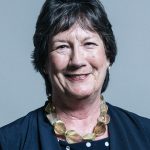
    Below is the text of the speech made by Pauline Latham, the Conservative MP for Mid Derbyshire, in the House of Commons on 28 April 2020.

    I welcome the Bill. I will cover two topics that I hope Ministers will take on board. First, we have taken a leading role internationally as a force for ending child marriage. However, our domestic law is undermining these efforts, as demonstrated by comments from Bangladesh that we are hypocritical because we allow children aged between 16 and 18 to marry, when they should be in school, completing their education.​

    When the sustainable development goals were being drawn up, with the UK led by Prime Minister David Cameron, he wanted to ensure the inclusion of child marriage within goal 5 of the SDGs. The Bill gives a timely opportunity to bring domestic legislation in line with global commitments to end child marriage, which is child abuse, which happens behind closed doors and which is also domestic violence. However, it is aided by parents and the state. The Bill should close this loophole.

    Children who are likely to live at home under the influence of their family and community, who tell them that this is their culture, are unlikely to report a forced marriage in order to be protected from it. Current civil law permits child marriage to be registered under the age of 18 in England and Wales through the legal exception of parental consent, which too often amounts to parental and community coercion. I hope that my right hon. and learned Friend the Secretary of State will look at this, to see how he can help these particular victims of domestic abuse.

    Secondly, I raise the issue of women and girls in ethnic communities. Apparently, the Home Office literature related to the campaign to help victims of domestic abuse does not speak to these victims, who are in real danger in their communities, because it suggests that they speak about and report abuse to their families and/or their communities—the very people who are often the perpetrators, which would explain why there is so much under-reporting in this area.

    There may have been increases of more than 100% in the number of calls to the national helpline that the Government have funded, but some victims have more challenges than others. For instance, translations are available on the national helpline but the victim has to wait and hang on for the translator to come on to the call. Organisations such as Karma Nirvana, which was founded in Derby some years ago, have bilingual counsellors who can relate much more to victims for whom English is not their first language. Unfortunately, the Government helpline does not always signpost this successful organisation, or many others that may be able to help the vulnerable victims of domestic abuse, forced marriage, honour-based violence or female genital mutilation, especially in respect of where they have advocated the broader domestic abuse agenda and access for victims. These vulnerable women and girls will not wait for long, because it has taken an enormous amount of courage for them to pick up the phone in the first place.

    Apparently, the head of the Government’s forced marriage unit has said that calls to its helpline have dramatically fallen: between 1 and 17 April last year, it received 72 referrals or calls; this month, it was down to only 15 calls. I believe that is because people are behind closed doors and have less access to the phone and are less able to call for help. The forced marriage unit also believes that there are girls with forced marriage protection orders who are abroad, waiting to come back to the UK. Apparently, there is only one person in a safe house. There are real concerns that there will be a surge in cases once we are no longer in lockdown. Surely this raises the question of the need for greater awareness now. We should be thinking about how we will monitor cases after lockdown—perhaps we should monitor families when the airports open more freely.​

    The Home Office has sent a letter suggesting that we disseminate information about domestic abuse among our communities—often the very communities where the problem lies. How do we, as MPs, reach these victims? It is really important that we do so. I recommend that the Minister look into these issues.

  • Matt Hancock – 2020 Statement on the Coronavirus

    Matt Hancock – 2020 Statement on the Coronavirus

    Below is the text of the statement made by Matt Hancock, the Secretary of State for Health and Social Care, on 1 May 2020.

    Good afternoon and welcome once again to Downing Street for the daily coronavirus briefing.

    I’m joined today by Professor John Newton, who co-ordinates our work on testing, and Professor Stephen Powis, who is the Medical Director of the NHS.

    Every day we are working through our plan to protect life and protect the NHS by slowing the spread and building the capacity so that, at all times, the NHS has got the capacity to give can offer the very best care to everyone who needs it.

    In today’s briefing, after setting out the daily statistics, I want to talk about testing.

    But beforehand I would like to share some really good news. Earlier this week, I said that we are now able to begin the restoration of NHS services. Now that we are past the peak, I can tell you about the next step ‒ the restoration of fertility services.

    Few families have been untouched by the amazing advances in fertility treatment over the past generation, and I know just how time-sensitive fertility treatment can be. And I know how important it is to the families affected. And I know that this treatment can change lives for the better, forever.

    So when I say thank you to all of you everybody watching for staying at home to protect the NHS, of course I’m saying thank you on behalf of the lives you are saving. But I’m also saying thanks on behalf of the lives that the NHS can now once again, help to create.

    Because, together, we have protected the NHS, and now we are now restoring the NHS, and restoring the chance for so many couples to start a family.

    Daily statistics

    Turning to the figures, 177,454 people have tested positive for coronavirus, an increase of 6,201 since yesterday. 15,111 people are currently in hospital with coronavirus and 27,510 people have now sadly died across all settings, an increase of 739. As one, we will remember them and treasure their memories.

    This is a virus that has a devastating impact on families, friends, on local communities. And right across government, we are working day and night to defeat it.

    At the beginning of last month, at this podium, I set a goal that anyone who needs a test should get a test. And that as a nation, we should achieve 100,000 tests per day by the end of the month. I knew that it was an audacious goal, but we needed an audacious goal because testing is so important for getting Britain back on her feet.

    I can announce that we have met our goal. The number of tests, yesterday, on the last day of April, was 122,347. This unprecedented expansion in British testing capability is an incredible achievement. But it is not my achievement. It is a national achievement, achieved by a huge team of people working together.

    And I tell you this: the testing capacity that we built, together, will help every single person in this country. Testing is crucial to suppress the virus.

    I know from personal experience, too, just how much people with symptoms want to know if they have got the disease. I know that I did. It helps remove the worry, it helps keep people safe, and it will help us to unlock the lockdown.

    So many people have tragically died and the challenge that we still face is so huge, but we are making real progress.

    I want to take a moment to thank and pay tribute to the incredible team who did this together and who joined together in one of the greatest national mobilisations that we’ve seen.

    We brought together the best civil servants, the best minds from the private sector, the best scientists, the best lab technicians and the best of the best in the armed forces.

    Setting stretching, ambitious goals in a crisis has a galvanising effect on everyone involved. It’s a mission. If we hadn’t been so bold, if we had chosen a safer, easier path, I just can’t see how we would have built the capacity that we need.

    In a short few weeks, we’ve:

    created a new test for the virus

    built a network of regional testing centres

    put a fleet of mobile testing units on the road

    and created home testing kits, so if you can’t get to a test, we can get the test to you

    We’ve more than doubled the capacity of NHS and Public Health England labs, and created 3 brand new mega-labs to analyse the results.

    So many people have played a part in this work. British diagnostic companies like Randox and Oxford Nanopore and Medical Wire and DNANudge and Samba. Logistics companies like the Royal Mail and Yodel, who were brilliant and got us out of a real hole this week. Academics like Professor Derek Crook and Sir John Bell from Oxford, and Professor Ara Darzi from Imperial.

    Deloitte and Boots who have delivered our drive-through centres, AstraZeneca, GSK and Novacyte, whose lab goes on stream next week, Public Health England and the NHS, of course, who pulled out all the stops. Professor Sharon Peacock, Professor John Newton And UK Biocentre and the Crick, who set up high-tech laboratories.

    And also it wasn’t just a national effort. People from across the world ‒ including ThermoFisher, Hologic, Abbott and Amazon from the US, Qiagen from Germany and Roche from Switzerland.

    And this is how we did it. Because everybody everyone worked together with grit and determination to reach a shared goal, and they thrived because the team contained a diversity of perspectives, backgrounds and, critically, a diversity of thought.

    And when things went wrong, which they did every single day, believe me, we didn’t ask who we could blame – we asked how we could fix it.

    So, to my team, I want to say: you toiled tirelessly, night and day, and I am so proud of what you have achieved. To all of you, on behalf of the government and on behalf of the whole country, thank you.

    As the Prime Minister has said, a big increase in testing provides a way to unlock the puzzle of coronavirus, and testing forms the first element of our plan to test, track and trace.

    By mid-May we will have an initial 18,000 contact tracers in place. That work is underway as we speak. And if it needs to be bigger, we will scale it as required.

    The combination of contact tracers and new technology, through our new COVID-19 NHS app will help tell us where the virus is spreading and help everyone to control new infections.

    People will be able to know if they have been in close contact with someone who is transmitting the disease, and take the action that they need to. Our full-scale test, track and trace model will drive the infection rate down and the lower the R, and the lower the number of new infections, the more effective the track and trace system will be.

    Tracking and tracing will allow us to get R down, and hold R down, and so it will allow us to lift lockdown measures.

    Now this disease affects us all indiscriminately, we’ve seen that. In recent weeks, we have had to impinge on historic liberties to protect our NHS and our loved ones, and yet our goal must be freedom. Freedom from the virus, yes – and we will not lift measures until it is safe to do so.

    But also we care about the restoration of social freedom and economic freedom too. Each citizen’s right to do as they please. For now, we are working together to stay home. We are impinging on the freedom of all, for the safety of all.

    With this next mission, of test, track and trace, I am seeking a solution that allows us – by each of us participating – to target the measures that are needed with much more precision, and so to reassert as much as is safely possible, the liberty of us all.

    That is our next mission. But for now, the most important thing for everyone to do, to keep R down and to get us all through this, is to maintain the spirit and the resolve that has had such an impact thus far.

    So, please, stay at home, protect the NHS and save lives.

  • Robert Jenrick – 2020 Statement on the Coronavirus

    Robert Jenrick – 2020 Statement on the Coronavirus

    Below is the text of the statement made by Robert Jenrick, the Secretary of State for Housing, Communities and Local Government, in the House of Commons on 2 May 2020.

    Good afternoon,

    Welcome to the coronavirus press conference from Downing Street.

    I’m joined by Dr Jenny Harries, Deputy Chief Medical Officer for England.

    Today’s data shows that:

    1,129,907 tests for coronavirus have now been carried out in the UK, including 105,937 tests carried out yesterday.

    182,260 people have tested positive, that’s an increase of 4,806 cases since yesterday.

    14,695 people are currently in hospital with coronavirus, down from 15,111 yesterday.

    And sadly, of those tested positive for coronavirus, across all settings, 28,131 have now died. That’s an increase of 621 fatalities since yesterday.

    These are heart-breaking losses for every family affected, and our thoughts and prayers are with their families and their friends.

    Jenny will provide an update on the latest data on coronavirus.

    But first, as Communities Secretary, I want to update on the steps we are taking to protect some of the most vulnerable people in our society.

    As the Prime Minister set out this week, we have now passed the peak of this virus.

    And he will provide more details on how we will address the second phase of this battle next week.

    We all know that the restrictive measures – as necessary and as lifesaving as they are – are difficult for everyone.

    All of you watching at home this afternoon have made sacrifices big and small, and I want to thank you once again for all that you are doing.

    You are helping us as a country to turn the tide on coronavirus.

    But for some in our society these measures involve sacrifices that none of us would wish anyone to bear.

    For victims of domestic abuse, it means being trapped in a nightmare.

    The true evil of domestic abuse is that it leaves vulnerable people, including children, living in fear in the very place where they should feel most safe and secure – inside their own home.

    Though domestic violence can leave physical marks, the true extent of the inflicted pain is much deeper than those marks – it can invisible, these are emotional scars.

    Scars that may never heal and which can even pass to the next generation, whose young eyes see things that they never should.

    And hear things that none of us would wish our children to witness.

    As a father of 3 girls, I cannot even imagine women and young children being put in this situation.

    But they are, and we must be alive to the reality of what is happening on all too many homes across the country.

    I want us to defend the rights of those women and children wherever we can, and that is what we are going to do.

    And this is not a crime inflicted solely on women: it affects men too.

    This government has already prioritised tackling domestic abuse.

    The Domestic Abuse Bill, which had its second reading in Parliament last week, is a landmark piece of legislation which will create the first ever legal definition of domestic abuse.

    And this is important because it holds those responsible to account and gives those suffering at the hands of others more confidence that action will be taken and perpetrators brought to justice.

    Today, I can confirm that through the Domestic Abuse Bill, the government will also be ensuring that victims of domestic violence get the ‘priority need’ status they need to access local housing services much more easily.

    This is a fully funded commitment which will mean that no victim of domestic violence has to make the unbearable choice between staying somewhere where they know is unsafe or becoming homeless.

    This government has been clear that we are determined to break the silence that surrounds victims, to stamp out the stigma and strengthen our support for survivors.

    We have already announced an extra £15 million to strengthen our support, and an extra £16 million is going directly to refuge services.

    But we recognise that the extra pressures that are being created due to COVID-19 and that necessitates more support.

    While the necessary social distancing measures remain in place, it is harder than before for victims of domestic abuse to reach out to their friends, to their family, to colleagues, and neighbours for the support that they urgently need.

    Today I can announce a package of over £76 million in new funding to support the most vulnerable in society during the pandemic.

    This funding will help charities support survivors of domestic and sexual abuse, it will support vulnerable children and their families and victims of modern slavery.

    This additional support will ensure more safe spaces and accommodation for survivors of domestic abuse and their children and the recruitment of additional counsellors for victims of sexual violence.

    And this funding will also help front line charities to be able to offer different ways of supporting those in need, including through virtual or phone based services.

    We know that some refuges have had to reduce or even to cancel their services they would want to provide during this pandemic.

    This funding will help them to meet the challenges posed in this national emergency and to continue to help those that desperately need support.

    I’d like to say a word of thanks to domestic abuse charities who are doing so much at this time to help so many people.

    The Women’s Aid refuge in my constituency is one example.

    I’d like to thank Marlene and her amazing team in Newark. People like that do incredible work and deserve all our thanks and gratitude now more than ever before.

    Where refuges don’t have enough capacity to support those in need during the pandemic, some have asked if they could use hotels or other accommodation nearby on a temporary basis.

    For example, as move-on accommodation, where they judge it to be safe and appropriate to do so. We will work with refuges to make this option available to them, if they judge it to be the right one where it’s necessary.

    And thank you also to pharmacies, such as Boots, who are providing a safe space for victims of domestic abuse in some of their shops, and are training more of their staff to be able to support those people when they come into the stores, so they can safely provide support and contact services for help and advice.

    For any victims of domestic abuse watching at home this afternoon, let me say once again that you are not alone.

    You do not have to stay at home. You can and should leave the home if you are in danger.

    Victims should call 999 if in an emergency or if you are in danger and unable to talk call 999 then press 55.

    Our outstanding police will be there for you. They will help you.

    And if you need support please call the national domestic abuse helpline on 0808 2000 247 at any time.

    Secondly, we have also been working with councils and charities to protect those sleeping who have been sleeping on our streets; a group particularly vulnerable to COVID-19.

    We set out to bring people in from the streets.

    So far, more than 5,400 rough sleepers known to councils have been offered safe accommodation in just under a month – ensuring some of the most vulnerable people can stay safe during the pandemic.

    This means that over 90% of rough sleepers known to councils have been offered accommodation where they can self-isolate during the crisis.

    This country is viewed around the world as having taken one of the most intensive and successful approaches to protecting rough sleepers during the pandemic.

    This was the right thing to do.

    By working with charities, local council, churches, faith groups and volunteers, we have helped to protect thousands of lives.

    I am extremely grateful to everyone who has been involved in this phenomenal national effort.

    Today I am announcing that Dame Louise Casey, who is already leading a review into rough sleeping and advising the government on ending it within this Parliament, has been appointed by the Prime Minister and I to spearhead this new government initiative and she will lead a new taskforce.

    In this role, she will oversee our national effort to ensure that thousands of rough sleepers now in safer accommodation continue to receive the physical and mental health support they need, while they self-isolate during the pandemic.

    And she will work hand-in-hand with councils and with other groups across the country to plan how we can ensure as many people as possible can move into long-term, sustainable and safe accommodation they deserve once the pandemic is over.

    We are determined that as few people as possible return to life on the streets, and I can think of nobody better than Louise to help us to achieve this.

    This is a major challenge and I don’t pretend that this second phase will be easy or that we will succeed in every case.

    But we will apply the same energy and commitment and determination to this national effort as we did to the first.

    And I am certain that the charities, the councils and the volunteers the people across the length and breath of the country that have achieved so much in the last month will do the same job again.

    Thirdly, and in closing, I’d like to update you on our shielding programme.

    For those who have been identified by the NHS as being extremely clinically vulnerable due to underlying health conditions, that’s now 1.8 million people in England alone.

    They have been asked to stay at home with no face-to-face contact outside their household, except for their carers, for those people in the shielding group who don’t have family or friends to support them, we’ve offered to provide a basic weekly package of food and essentials.

    I’m delighted to say today that we expect that the 1 millionth shielding package will be delivered in the next few days.

    This service is entirely without precedent – nothing on this scale has been attempted in this country at least since the Second World War.

    I am incredibly proud of the team who helped us deliver it.

    I have loved reading the emails I have received from people who have got the boxes and seeing the photos that have posted on social media.

    I said at the start of this process that there are many people who we are asking to be at home for a prolonged period of time as a result of the virus.

    Not least in the shielded category but that we as a government and as a country that they may be alone at home but that they shouldn’t feel that that they are on their own.

    You are not, and never will be.

  • Stephanie Peacock – 2020 Speech on the Domestic Abuse Bill

    Stephanie Peacock – 2020 Speech on the Domestic Abuse Bill

    Below is the text of the speech made by Stephanie Peacock, the Labour MP for Barnsley East, in the House of Commons on 28 April 2020.

    Nearly one in three women will experience domestic abuse in their lifetime, and that number is sadly on the rise, because during this public health crisis we are not all safe at home. As has been mentioned in the debate today, calls to domestic abuse helplines have surged during lockdown. Frontline domestic abuse services such as IDAS in Barnsley are doing their best to support victims and to provide refuge accommodation and community-based support, but they need even more funding to maintain the crucial support services they are providing during this crisis.

    The Domestic Abuse Bill is welcome, but it can and must do more. It has the potential to stop abusers exerting control over their victims long after they are supposedly free. I would like to praise the former Member for Ashfield, who stood up for the rights of domestic abuse survivors in this country. Her campaign to ban attempted murderers from recovering joint assets in probate and family court hearings is something that I believe should be reflected in the Bill. Right now, our legal system enables abusers to continue to inflict damage ​even when they are in prison for the attempted murder of their partner. This is an issue that I would like to focus some of my remarks on today.

    I spoke to a domestic abuse survivor who faced the possibility of having to sell her home to pay her attempted murderer’s £100,000 divorce settlement. She survived 30 stab wounds to then be served with a huge bill by her abuser’s lawyers—effectively paying her abuser to finally be free of him. We have an opportunity with this Bill to remove the automatic entitlement to joint assets in domestic abuse cases, to stop the re-victimisation of survivors in our legal system and to get them the justice that they deserve.

    At every level, our justice system lets down domestic abuse survivors while handing abusers the tools and means of exerting control over partners long after they have left, from divorce proceedings that force survivors to disclose their bank details, where they shop and what they spend money on, to compelling victims to live in the homes that their abuse happened in until their abuser gives them permission to let or sell the property. Family court proceedings allow perpetrators to cross-examine their victims, making them relive their original trauma again and again. I welcome the provision to prohibit that kind of direct cross-examination in cases where there is evidence of domestic abuse, but the issues surrounding domestic abuse in family courts go much wider and deeper than that alone.

    Family courts have come under repeated scrutiny because of their failure to protect victims of domestic abuse and the children of abusive relationships. One of the gravest abuses in the family courts is the presumption that contact with both parents is preferable, which is frequently put ahead of children’s welfare. There is little understanding of domestic abuse, and particularly coercive control, among judges, who frequently award contact to abusive fathers. Research by the “Victoria Derbyshire” show shows that four children in the last five years have been murdered by fathers following forced contact in the family courts.

    This campaign, led by my hon. Friend the Member for Sheffield, Heeley (Louise Haigh), led to the Ministry of Justice setting up a review of the family courts and domestic abuse. Its report was meant to be published in the spring, and its findings will clearly be extremely relevant to the Bill, so it makes no sense that it is not being published alongside the Bill and its recommendations incorporated. The Secretary of State referred to its publication in his opening statement. I hope he will now ensure that it happens imminently, so that the Bill can be amended at a later stage to reflect the report’s findings.

    Our justice system needs to be reoriented to protect domestic abuse survivors, instead of being a means through which abusers can continue their abuse.

  • Diane Abbott – 2020 Speech on the Domestic Abuse Bill

    Diane Abbott – 2020 Speech on the Domestic Abuse Bill

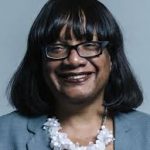
    Below is the text of the speech made by Diane Abbott, the Labour MP for Hackney North and Stoke Newington, in the House of Commons on 28 April 2020.

    We live in extraordinary times. Unfortunately, there is nothing extraordinary about domestic violence. It affects women of all classes and in all walks of life, and the figures show that it has got considerably worse in the course of the coronavirus lockdown.

    I welcome this important Bill. There are ways in which it could be improved, but in principle it represents a real step forward. First, however, I want to honour the campaigners. It was they who moved domestic abuse from something that the police and politicians did not necessarily take seriously to the very seriously regarded crime it is today. Without those campaigners, this Bill, although it is by no means perfect, would not have been brought forward.

    Domestic abuse and domestic violence are often hidden. The victims are frightened and even too ashamed to speak out. There are no more frightened and desperate victims than women of colour, whether they are refugees, asylum seekers, migrants or—[Inaudible.] Women of colour are fearful of approaching the authorities, because of their immigration status or general fear of the police. I have had to support—[Inaudible]—who were too frightened to report abuse, because they were worried that their partner might report them to immigration.

    I think it is important for the House to say that all women have the right to be protected from domestic abuse, regardless of their immigration status. To achieve that, this Government need to move away from the hostile war between immigration control and public services, including services for women who are victims of domestic violence. The women of colour who are reluctant to approach—[Inaudible]—so Government and local authorities need to recognise the importance of providing support for refugees and of services that provide specialist services to black women and migrants. I pay tribute to Ngozi Fulani and her project Sistah Space in Hackney, which has helped so many black women who are victims of domestic violence.

    We know that “no recourse to public funds” regulations stop many women of colour who are the victims of domestic violence from accessing support at all. For this and many other reasons, “no recourse to public funds” should be scrapped, but I have a practical proposal in relation to all victims. Labour’s new Front-Bench team is dealing very ably with the Bill and they will make the case for their amendments—[Inaudible]—for extra funds. I fully support that case, but the service providers who operate—[Inaudible]—conjure up additional living accommodation overnight every day, so I propose that the Government should acquire vacant hotel ​accommodation to house these victims until alternative, decent accommodation can be found. We know that some hotel chains have offered to help by providing accommodation, and they should be taken up on that offer. The policy has already been announced in France, and Britain should do the same. If, at a later date, more appropriate accommodation can be found, that is excellent, but the victims need accommodation now. Mine is a practical proposal that could be announced immediately. I hope that it will command widespread support across the House.

    To any women and men at home today who are watching this debate, I think the message of this House to you is that you are not alone.

  • Stella Creasy – 2020 Speech on the Domestic Abuse Bill

    Stella Creasy – 2020 Speech on the Domestic Abuse Bill

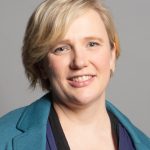
    Below is the text of the speech made by Stella Creasy, the Labour MP for Walthamstow, in the House of Commons on 28 April 2020.

    Mr Deputy Speaker, I hope that you can hear me.

    I start by congratulating the hon. Member for Hyndburn (Sara Britcliffe) on her extraordinary maiden speech. It is difficult to make a maiden speech at the best of times. I think that her mum would have been extremely proud of her, and I join her in wishing her dad a happy birthday. Many Labour Members are extremely grateful for what she said about her predecessor.

    This is a Bill that many of us have fought for, waited for and wanted for a long time. Before the covid-19 crisis, we had already seen the highest levels of domestic abuse in our society for the past five years, so we know that the pressure is as urgent as it is. I join my Front-Bench colleagues in calling for an emergency fund to tackle the issues created by covid-19 by providing a safe environment for everybody to stay at home in. I support the work of my right hon. and learned Friend the Member for Camberwell and Peckham (Ms Harman) and my hon. Friend the Member for Kingston upon Hull North (Dame Diana Johnson) in relation to the Bill to ensure that we give women the rights they deserve.

    In the short time available to me, I want to take up the Secretary of State’s challenge on how we can strengthen the Bill by setting out a number of areas in which I hope we, as a House, can make progress together. As my hon. Friend the Member for Birmingham, Yardley (Jess Phillips) reminds us in a powerful speech every single year, when we get this wrong, we see the human cost.

    First, we must see every victim in their own right—they are not a generic group of people. That is why we need to go further in protecting women who otherwise would find their immigration status a barrier to seeking help. It is also why we must recognise disabled women and ensure that our law works for them. We must look at the concept of what a personal relationship is. I look at the work that Stay Safe East has done on that; it makes a powerful case.

    If we are to protect every woman and see her in her own right as a victim, we must also ensure that we protect every woman where she is a victim. I am very moved by the words of Claire Throssell, who talked about the tremendous strength of her sons, Jack and Paul, and the horrific experience they had in the family courts. As Claire has said:

    “No parent should have to hold their children in their arms as they die knowing it’s at the hands of the other parent, someone who should love and cherish them.”​

    We need to go further in protecting people from unsafe contact, because we see in Claire’s case the damage that is done when that does not happen.

    We need to push for the stalkers register that we were promised many years ago. There are too many women—Alice Ruggles, Jane Clough and many more—whom we have to honour, and Paladin is doing work in that area. We must also ensure that housing does not become a barrier to a victim of domestic abuse getting help. I stand with SafeLives and Barnardo’s in calling for an amendment to the Bill to ensure that there is a statutory duty on local authorities.

    In my final minute, I want to flag the importance of us being a leader, not a follower, when it comes to tackling domestic abuse internationally. It is extremely concerning that although the UK, as a member of the Council of Europe, signed the Istanbul convention in 2014, we are one of the few countries that has not yet ratified it. As the hon. and learned Member for Edinburgh South West (Joanna Cherry) pointed out, that means that there are challenges in how we treat women from minority communities, particularly migrants.

    Ratification of the convention is also about our recognition that this is a gendered crime. Through the Bill, I hope that we can make progress on something that the Law Commission is looking at: recognising the misogyny behind crimes against women, and looking at misogyny as a hate crime. In particular, I look at the evidence from Nottinghamshire, where treating violence as a misogynistic act has transformed the way in which the police and other services are able to deal with it.

    I hope that Ministers look forward to debating not only how we protect migrant women and disabled women, but the need to call this out for what it is: a hatred of women. It is about not creating a new crime, but recognising the importance and value of identifying it as such within our criminal justice system. When we hear the words of victims such as Claire or the families of Jane Clough and Alice Ruggles, we know that we cannot afford to lose this precious legislative moment. We have fought for it for so long. All of us across the House want the Bill to be the best it can be, so I look forward to working with Ministers to make sure that it is.

  • Sara Britcliffe – 2020 Maiden Speech in the House of Commons

    Sara Britcliffe – 2020 Maiden Speech in the House of Commons

    Below is the text of the maiden speech made by Sara Britcliffe, the Conservative MP for Hyndburn, in the House of Commons on 28 April 2020.

    Today, I make my maiden speech in circumstances I could never have imagined. I always said that I got into politics to serve the community I love and have lived in all my life. I always said that I would somehow redefine what it meant to be a constituency MP. Along with making history as the first female MP for the area and the youngest Conservative MP in the country, I am the first Member of Parliament ever to make their maiden speech remotely, from their own home. I do that because I wanted to stay here, rooted in my community, to rise to the challenges we face. As I have always said, we are stronger together. It would be remiss of me not to mention my predecessor, Graham Jones, for his nine ​years of service, and to remind the House that, for the first time in 27 years, Hyndburn returned a Conservative MP. Ken Hargreaves, before that, was a truly honourable gentleman, who sadly lost his life in 2012.

    I want to tell the House about my home—what I consider to be the capital of Lancashire. Hyndburn and Haslingden have been at the heart of this country’s responses to our changing world time and again. They were at the forefront of the industrial revolution, and our local regiment, the Accrington Pals, led the charge to defend our peace and freedom. Today, as we face covid-19, businesses and community organisations in Hyndburn and Haslingden are being as innovative and resourceful as James Hargreaves, the Oswaldtwistle famed inventor of the spinning jenny. Our NHS, key workers and frontline services have proven to be as tough as the famous Accrington Nori brick: unbreakable no matter how much stress it is put under. While I hope we will soon be able to get back to supporting the local team of Accrington Stanley and enjoying the world-famous locally made Holland’s pies, it is that sense of community, in which we have been steeped for generations, that will get us through to that happy day—our children have also been steeped in it, as can been seen from my office wall.

    I have always believed in supporting those who need it the most, and that resonates now more than ever. While lockdown will help us defeat covid-19, it has resulted in an increase in domestic violence. Organisations like Hyndburn and Ribble Valley Domestic Violence Team in my constituency are working tirelessly to respond to this. We—now, more than ever—have to do right by those in such distressing and potentially life-threatening situations, which is why I wholeheartedly support this Bill.

    But this leads me on to what I want to personally champion during my time in office. Through the devastating effects of alcohol misuse and mental health issues, I lost my mum when I was nine years old. I witnessed a woman that I and many others adored, crumble before my eyes and a father who had to pick up the pieces. Sadly, my family’s experience is not an isolated case, and that is why it is so important that the right support is available—something I will be campaigning hard for as an MP.

    Over the coming months, I am sure we will beat this pandemic, and I will be ready to return to my main mission in this Parliament—fighting for levelled-up funding and investment in the north. The term “forgotten towns” only really became a common phrase since the seismic shift in votes in the general election, but it cannot just be a phrase—a one-off response to an election result. We northerners pride ourselves on our no-nonsense, straight-talking approach, so I apologise in advance to Ministers: I will be pestering for investment in infrastructure—support for businesses to thrive and grow the northern economy and to give our children the same opportunities in life whether they are from Hyndburn, Haslingden or Hertfordshire. To do this, I will have to follow the long and proud Conservative tradition of being, in Ken Clarke’s words, a “bloody difficult woman”.

    But first we have to beat the virus. This lockdown is hard but necessary, and I see the sacrifices that people are making even within my own family, as my dad, Peter Britcliffe, stays at home in isolation this week to celebrate his 70th birthday.​
    My virtual speech today is a first, but it will not be the last norm that is challenged. We can learn from how we have all utilised technology in this period to run even better and more efficient public services in the future, as well as remembering that the challenges people face cannot only be dealt with online. People need the sense of familiarity and humanity that shared space and face-to-face contact afford. This creates communities of geography—of belonging—that cyberspace cannot offer.

    Finally, I would like to reassure my constituents in Hyndburn and Haslingden that when we get through this—and we will get through this—I will continue to stand up and do what is right for our home, because these forgotten towns, under my watch, will be forgotten no more.

  • Harriet Harman – 2020 Speech on the Domestic Abuse Bill

    Harriet Harman – 2020 Speech on the Domestic Abuse Bill

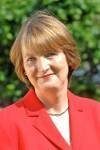
    Below is the text of the speech made by Harriet Harman, the Labour MP for Camberwell and Peckham, in the House of Commons on 28 April 2020.

    This is a very important Bill, and much needed for tackling the horrific and often hidden crime of domestic violence. I completely agree with all the points that have been made by previous speakers on the Bill. The truth is that a lot of us have pushed for this Bill, but I do not think we would even be debating this today were it not for the former Prime Minister the right hon. Member for Maidenhead (Mrs May), who has just spoken, and I want to acknowledge that.

    I strongly support the Bill, but there is one glaring omission, and that is what I want to speak about this afternoon. We need the Bill to tackle the problem of the defence being used by men who kill women and then say, “It’s a sex game gone wrong”. This is where a man kills a woman by strangling her or by forcing an object up inside her that causes her to bleed to death, and he acknowledges that these injuries killed her and that he caused them, but says it is not his fault—it is her fault; he was only doing what she wanted; it was a sex game gone wrong—and he literally gets away with murder. That is a double injustice. Not only does he kill, but he ​drags her name through the mud. It causes indescribable trauma for the bereaved family, who sit silently in court with the loss of a beloved daughter, sister and mother, to see the man who killed her describe luridly what he alleges are her sexual proclivities. She, of course, is not there to speak for herself. He kills her and then he defines her.

    That is what happened to Natalie Connolly. I see that the hon. Member for Wyre Forest (Mark Garnier) is in his place and will be speaking shortly. He was Natalie’s family’s MP. I urge everybody to listen very carefully to what he says about what happened in that case. Her brutal killer, John Broadhurst, escaped a murder charge by saying that it was what she wanted. We can stop that injustice. We can prohibit the rough sex gone wrong defence. We must do that by saying that if it is his hands on her neck strangling her, if it his hands that are pushing the object up inside her, then he must take responsibility. That is not a sex game gone wrong; that is murder and he cannot blame her for her own death.

    There are two lessons that I think we have learned from previous struggles to improve the law on domestic violence and sexual offences. The first is that it always takes too long. This is the Bill in which this must happen. Secondly, it is never sorted until the law is changed. It will not be sorted by judicial training, by Crown Prosecution Service guidance or by a taskforce, welcome though they are. It will not be sorted by good intentions either; they are never enough. It needs a law change. I fully accept the Government’s good intentions. The Lord Chancellor and Secretary of State for Justice, the right hon. and learned Member for South Swindon (Robert Buckland) and his team, particularly the Under-Secretary of State for the Home Department, the hon. Member for Louth and Horncastle (Victoria Atkins) and the Under-Secretary of State for Justice, the hon. Member for Cheltenham (Alex Chalk), have been very concerned and in listening mode on this issue. However, I say very directly to the Lord Chancellor that he is the man with the power here. He is the Government Minister and this is his Bill. I say to him, “Be the man who listens to what women are saying about this, not the man who knows better than us. Listen to what we are saying and make the change that we are asking for.”

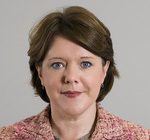
  • Maria Miller – 2020 Speech on the Domestic Abuse Bill

    Maria Miller – 2020 Speech on the Domestic Abuse Bill

    Below is the text of the speech made by Maria Miller, the Conservative MP for Basingstoke, in the House of Commons on 28 April 2020.

    To start this second Second Reading debate, I thank again the Members of both Houses who were members of the draft Bill scrutiny Committee, which I chaired a year ago. It was a Joint Committee, and I particularly thank Baroness Bertin, who was battling the symptoms of morning sickness in our early sessions. To mark the significant amount of time that has passed since our Bill Committee reported, I am pleased to tell the House that the very young Edward Louis Grist was born on 5 December and is almost five months old. General elections, Brexit and pandemics may have got in the way of the legislation, but we have a chance to put that right today.

    In our extensive scrutiny of the Bill, we held seven evidence sessions. The Government have responded positively to many of the recommendations that we made because of that evidence. I welcome the Government’s decision to include in the Bill the duty on local authorities in England to provide support for victims and their children in refuges and other safe accommodation, and to provide funding to do that. I am sure Ministers will be pressed firmly in Committee on that funding promise.

    At this point, I might want to welcome my hon. Friend the Member for Birmingham, Yardley (Jess Phillips) to her place on the Front Bench. I am very glad to see that she is still there, because I seem to recall a while ago her indicating that if funding for refuges were ever made statutory, her job would be done. I am sure she would agree with me that there is much more work for both she and I to do in this area and to make sure that the Government deliver on all their important promises.

    Other recommendations from the Committee that have been taken forward by the Government include the issue of the interpretation of the definition of domestic abuse. We had a long and hard debate on this, and we are particularly pleased to see that the statutory definition will be coupled with guidance, particularly on how to deal with the effects that domestic abuse has on children. There is also the fact that, overwhelmingly, this is a crime where the victims are women, and that is an important thing the Government have acknowledged. The Government have also agreed, as a result of the evidence they heard from the Committee, that there will be a mandatory ban on cross-examination of domestic abuse victims by their perpetrators in the family courts, as well as in the criminal courts. The Chairman of the Select Committee, my hon. Friend the Member for Bromley and Chislehurst (Sir Robert Neill), referred to that.​
    However, there are two outstanding issues on which I would like to press my right hon. and learned Friend the Lord Chancellor. The first is making sure that we have the report from the panel considering the extension of special measures to family courts as soon as possible, and that there is no further delay on that being put in place, particularly given the current circumstances.

    Secondly, and equally importantly, we must make sure that there are provisions for migrant women, and that they are made clearer by the Government not at any point in the future, but now and today, because there are currently no provisions in the Bill for migrant women facing domestic abuse, and that is not acceptable. As the hon. Member for Torfaen (Nick Thomas-Symonds) said, a victim is a victim regardless of their immigration status, which is an important point that we should all take away from today’s debate.

    The Committee recommended that a firewall be established separating the reporting of crime and access to support services from immigration control. I was alarmed to see that a recently published FOI request showed that 27 out of 45 police forces routinely share details with the Home Office if victims have insecure immigration status, so this is a live issue, which I know my right hon. and learned Friend will be very well aware of.

    We meet to debate the Bill in unprecedented times, and I know from speaking to my own local domestic abuse charity in Hampshire, Stop Domestic Abuse, that there are real concerns about the potential for funding issues in relation to a spike in cases when the lockdown is lifted. I would like to take this opportunity to applaud all the work that it is doing to support my constituents. Many domestic abuse organisations are concerned about this issue, and I would like to add my voice to the support for at least part of the very generous £750 million announced by the Chancellor to be earmarked for specialist services.

    The impact of this pandemic on our lives is profound, but for those living with domestic abuse it is not only the virus that is life threatening, and we need to take this opportunity today to act.