Tag: 2020

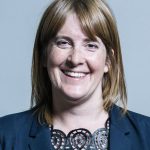
  • Wendy Chamberlain – 2020 Speech on the Census

    Wendy Chamberlain – 2020 Speech on the Census

    Below is the text of the speech made by Wendy Chamberlain, the Liberal Democrat MP for North East Fife, in the House of Commons on 6 May 2020.

    We live in a multicultural society that is full of self-expression, and a census provides a snapshot of that diversity. The questions in a census, therefore, are themselves important; if we do not ask the right ones, the picture of our country is distorted. Making sure that all people count is important.

    On census night 1911, Emily Wilding Davison hid illegally in a broom cupboard in the Palace of Westminster, to ensure that a woman would be recorded as being in the House of Commons that night. Clearly, the contents of a census take on their own intrinsic value, which is another reason to ensure that we take care how the questions are worded and what responses they enable people to give. That is one of the reasons why the addition of questions about sexuality and gender identity are so important: it demonstrates that we regard sexual and gender identity as a core part of people’s lives. For LGBTQ people, who often suffer so much discrimination, recognition in itself can mean a great deal.​
    Such care must also carry over to how members of the Government express themselves. I know that many Members were very concerned by the excluding comments of the Minister for Women and Equalities when she appeared before the Women and Equalities Committee. How politicians, as representatives of their constituents, use their language matters to the people they represent.

    We should take care in how we word our questions. If different groups and people are not carefully consulted, we risk generating questions that people do not want to answer. For some communities, their religion is also how they express their ethnicity, and in order to be truly inclusive we must work to ensure that the census reflects that. If a large number of individuals from a particular community, such as the Sikh community, feel that filling in a free-text box is the only way to express their identity, then we have failed to be truly inclusive.

    These questions of identity also matter practically. The census directly informs how Government go about delivering public services. One of the great benefits of the new questions on sexuality, gender identity and veterans is that, over the next decade, hopefully, we can ensure that those groups of people who have historically lacked support and provision can get the services they need. Having previously worked in military resettlement, I am pleased that the Government are recognising that community’s contribution. The census will help to ensure that the public services we provide meet the duties under the Equality Act 2010, one of which is to eliminate discrimination. I wholeheartedly support that.

    However, it seems strange to me that, while public service delivery is determined by the number of people in the census, for constituency boundaries we seem interested only in the number of people on the electoral roll. MPs provide a public service too—I think that is very obvious at this time. We are often the people our constituents turn to when all other public services have failed. It is electors who determine boundaries, but it should be the number of people who require services.

    It is not just about the questions on the census; it is also about who answers them. Looking forward to the next steps in the process, it will be the census regulations that will deal with the operational practicalities. Although 2021 will be the first time that the vast majority of responses will be made online, the census has to capture everyone in our society. We must ensure that the most vulnerable in particular are represented. I would welcome representations from the Minister on how the census will reach deprived and disadvantages communities and individuals, such as the homeless and rough sleepers.

    It is good that the Office for National Statistics is considering British Sign Language support, alongside Braille, large-print and easy-read versions of the census. I would like to see such measures in the UK Government’s daily covid briefings too.

    According to the White Paper on the census regulations, at least 17,000 census field officers are being recruited to support those who cannot complete the census online. Of course, with the census taking place in March 2021, the covid-19 outbreak might continue to pose a particular challenge. It is certainly not unforeseeable that we will still be in this state of social distancing by next March. Can the Government confirm what steps they and the ONS are taking now to ensure that, if social distancing is still in place, the census can still reach people who are not able to take part in it online?​
    This census represents a huge commitment of resources. We must take every opportunity to ensure that the results returned are truly reflective of all corners of British society.
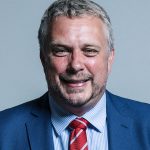
  • Steve Double – 2020 Speech on the Census

    Steve Double – 2020 Speech on the Census

    Below is the text of the speech made by Steve Double, the Conservative MP for St. Austell and Newquay, in the House of Commons on 6 May 2020.

    The Minister will not be surprised to hear that I wish to discuss the matter of a tick box for Cornish national identity.

    There is no doubt about the historic identity of the Cornish. We have been around for more than 12,000 years and, along with our Welsh cousins, we are the most ancient people on this island. We have our own language, which is about 5,000 years old but is enjoying a revival. We have our own flag, patron saint and even our own party. The idea of Cornish as a national identity in its own right is not some ageing romantic notion; it is a belief that is alive, real and passionately held today—and growing.

    The Cornish received a huge boost when, in 2014, the Council of Europe framework convention for the protection of national minorities officially recognised our identity. That was duly welcomed and embraced by the UK Government, who stated at that time that they would give the Cornish the same recognition as the other Celtic people of these islands—the Welsh, the Scottish and the Irish. It was a moment of celebration: at last, for the first time in centuries, the Cornish had been recognised by the UK Government. A sense of optimism was unleashed, the struggle was over: we had been recognised and told that we would be given equality of recognition.

    However, that optimism proved to be misplaced. Far from the struggle being over, it has never felt more important, because having been granted that recognition, what is now important is that it is acted upon—that it actually comes to mean something, not just in words but with something tangible.

    An advisory committee from the Council of Europe visited the UK in March 2016 to assess how the UK Government and other public bodies were complying with the articles of the framework convention. In early 2017, it published an opinion that was very critical of the UK Government and their failure to act on the articles of the convention. In the committee’s report, one key proposal to address that shortcoming is to include in the 2021 census a Cornish tick box for national identity. It is hugely disappointing, and indeed frustrating, that we are here today and a tick box for the Cornish has not yet been included in the upcoming census. ​It would be simple and straightforward to grant, and enable the Government to say that they had actually delivered something to recognise the Cornish.

    However, the frustration has not been having to convince Ministers; we have been consistently told that we need to convince the ONS. From the numerous meetings and discussions that I and others have had with the ONS, it is clear that it sees this as a localised and minority issue. It has failed to recognise that there are hundreds of thousands of Cornish men and women living across the UK who wish to be able to register their nationality as Cornish.

    I cannot say often enough that this is not about the geographical place of Cornwall; it is about the national identity of Cornish people, who are found living in all corners of the UK. I am sad to say that it appears that the ONS simply does not get this. It certainly feels as though the ONS was determined not to grant the tick box for Cornish national identity, whatever case was made, because every objection that it has raised to a tick box has been answered. We have demonstrated time and again the unique case for the Cornish, and it is a unique case—no other indigenous national people in these islands are able to make such a claim. We are the only indigenous national identity that is not recognised in that way.

    Sadly, because of the circumstances that Parliament is currently operating in, we find ourselves unable to push this matter to a vote in order to amend the order. If we had been able to vote, I feel sure that one would have been called.

    In winding up, I have two points to put to the Minister. First, we have been told that, in place of a tick box, a write-in option will be available for people to identify as Cornish, and that a campaign will be run to draw awareness to this, focused in Cornwall. But the Cornish diaspora are spread far and wide across this nation. In fact, more Cornish people live outside Cornwall than in it. Will the Minister therefore ensure that any such campaign is national and not limited to Cornwall?

    Finally, the Government continue to have an obligation to give the Cornish equal recognition as the other Celtic people, so if not a tick box, what will the Government do to ensure that the Cornish are recognised as we rightly should be?

  • David Amess – 2020 Speech on the Census

    David Amess – 2020 Speech on the Census

    Below is the text of the speech made by Sir David Amess, the Conservative MP for Southend West, in the House of Commons on 6 May 2020.

    As I make my maiden virtual speech, some people will say that the last thing we should be worrying about at the moment is a national census. Well, I disagree. In all the circumstances, this is an excellent moment to decide how we best prepare for the census. An awful lot has happened to our country in the past 10 years, and the world has changed. Accordingly, it is more important than ever that we know precisely how many people actually live in the country. Is it 65 million, 70 million or 75 million? What is the number?

    Stemming from that, we need to deal with an issue that has been dodged for so long: how many Members of Parliament should there be? I am not au fait with the Government’s current thinking as to how many Members of the House of Lords there should be, but I was one of those colleagues who were content to see the number of Members of Parliament reduced from 650 to 600. When we get the accurate figures for the number of people living in this country, I would hope that all Members of Parliament would represent roughly the same number of people.

    I would also like to hear from my hon. Friend the Minister a little more detail as to how the census will be conducted, what the penalties will be for failure to comply and over what period it will be carried out. We have heard from colleagues about the Sikh community being represented in the new questions. I would like to know the basis on which the new questions were included and who made the decisions. The more questions we include, and the more complicated the census becomes, the less accurate it will perhaps be.

    Apparently, the Government are hoping that 70% of respondents will fill in the form online, and paper copies will be made available only on request. Surely, it would make more sense and be more cost-effective to send people both the paper copy and the online details. How many people—particularly the elderly and the vulnerable—still do not have access to a computer at home? Will there be a cost for people who request paper copies?

    With that in mind, I would like to raise a further issue with regard to accessibility. What provisions are being made to ensure that the census is accessible to people who are blind or partially sighted? Will it be made available in large print, audio description or Braille? In addition, what provisions will be made for those for whom English is not their first language? Will the census be made available in other languages, and what languages will those be? While on the subject of accessibility, I would also like clarification of the special arrangements available to ensure that those who live in communal establishments rather than individual households are counted.

    I note that consideration is being given to changing the question on long-term health and disabilities, and I would welcome some clarification on that. Will the census now make a distinction between mental and physical health, and what guidance will there be on answering the relevant question?

    We need to think sharply about the purpose of this census. It is not to pry into people’s lives, but to make sure that we understand and get a real sense of what we are as a country. Let me pluck out just one bit ​of information: fair allocations of money in each area. Taking that into account, we need to encourage respondents to fill out the census online, so it will be more important than ever to ensure that individual personal data is secure. I therefore ask my hon. Friend the Minister: is there a robust system in place to ensure that no sensitive data is susceptible to cyber-attacks, and is there a contingency plan if a successful attack does happen?

    There is no point in conducting what will inevitably be an expensive census unless we put the information to good use. That debate can perhaps wait for another time, but the evidence produced by the census will undoubtedly prove that Southend should be made a city.

  • Hywel Williams – 2020 Speech on the Census

    Hywel Williams – 2020 Speech on the Census

    Below is the text of the speech made by Hywel Williams, the Plaid Cymru MP for Arfon, in the House of Commons on 6 May 2020.

    First, I want to congratulate those in Wales, including my Plaid Cymru colleagues, who have campaigned hard for the right of Welsh people to identify as Asian Welsh or black Welsh in the ethic question if they so desire. That reflects the reality in Wales today, and I am glad that the Welsh Government and the ONS have responded. I am, however, concerned that the census order does not reflect that change in the tick box options. Will the Minister therefore assure us that the census regulations, when they are laid before Parliament and in the Senedd, will reflect that change?

    This will be the first predominantly digital census, which I welcome. However, I am concerned about the robustness of the process where there is poor internet or no internet at all, as is the case in much of rural Wales. Will the Minister therefore update us on the arrangements with community organisations to support people to access the census, and give us the number of those who will need digital support or may want a paper copy instead?

    There are good census datasets, from the 19th century onwards, on the number, percentage, location and so on of Welsh speakers, but we have no information about Welsh speakers in other parts of the UK. In the 2001 census, some respondents in England were intrigued by question 17, which was marked “intentionally left blank”. That was because question 17 in Wales asked about the Welsh language ability of respondents—something that was not deemed to be required in England. However, the 2011 census showed that 507,000 people in England were Welsh-born. If 20% of those people speak Welsh, that is another 100,000 Welsh speakers on top of the 600,000 in Wales. That was a missed opportunity, because we have a target in Wales of increasing the number of Welsh speakers to 1 million. Will the Minister, even at this late stage, consider including a question on the Welsh language in the census in England?

    Finally, I would like to add my voice and those of my Plaid Cymru colleagues to the call for a Cornish identity tick box, for which Cornish Members rightly make a strong case, as we have just heard. In 2001, as we heard, there was no option for a Welsh tick box, so handy little stickers the size of the tick box were produced by a person or persons unknown, allowing people to tick that box, even though it was not part of the official form. There was also a write-in option, and 14% of Welsh people wrote “Welsh” in the “Other” box. Does that mean that only 14% of people at the time in Wales identified themselves as Welsh? No, it was a fault with the question. In the following census, there was a tick box, and the percentage of self-identifying Welsh people shot up to 67%.

    Enabling Cornish people to assert their national identity will not only allow them to feel represented, but give us a correct result as to the Cornish identity in 2021. Let me therefore conclude by saying meur ras, or diolch yn fawr in Welsh.

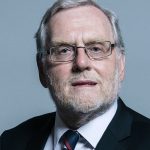
  • John Spellar – 2020 Speech on the Census

    John Spellar – 2020 Speech on the Census

    Below is the text of the speech made by John Spellar, the Labour MP for Warley, in the House of Commons on 6 May 2020.

    Frankly, this measure is a slap in the face for the Sikh community, a community that has contributed so much to our country not only in recent years, but over the past couple of centuries of our joint history. As we know, this sizeable, dynamic community is contributing in business, the professions, the armed forces—we recorded last year the huge contribution and the vast number of deaths in world war one—politics, the media and medicine. Only a month or so ago, that was highlighted by the death of Manjeet Singh Riyat, the A&E leader at Royal Derby Hospital. Clearly, the Sikh community feel strongly about this: in the 2011 census, 83,000 ticked the box saying “Other” and wrote in, “Sikh”.

    Why does this matter? First, because Sikhs have been legally recognised as an ethnic group for nearly 40 years, since a House of Lords ruling in 1983. The ethnic group set question was only introduced in the 1991 census. At that time, the Office for National Statistics stated that it was introduced to help public bodies assess equal opportunities and develop anti-discrimination policies. Ethnic group data, not religious data, is what is used by public bodies to make decisions on the allocation of resources and the provision of public services. The Prime Minister’s most recent race disparity audit indicated that there were 176 datasets spanning sectors from housing and education to employment, health and the criminal justice system, but no data on Sikhs. Effectively, ​they are invisible. As the covid-19 crisis has shown, there has been no systematic collection of data on the number of Sikhs tested as positive or on the number who have tragically died, even though we are inquiring into the question of differentiation in different groups of health outcomes. Although they come to prominence when a key worker dies, nobody is actually properly collecting the data. Quite frankly, we either need to change the local practice of how this is assessed and how Departments work, or we need an additional box in the census. I would argue that one is probably quite a bit simpler than the other.

    I am frankly still perplexed by the Government’s stubbornness on this issue. It seems perverse of the Government to marginalise and ignore this important community and our society. The Minister mentioned bringing forward further orders on the census at a later stage, so I ask her, even at this late stage, to restore the Sikh community to their proper place in the census.

    I will also touch on another matter: how we run the census in the first place. The Minister rightly indicated some improvements and changes, but fundamentally, the basic way of collecting the census remains unchanged over the last couple of centuries. My hon. Friend the Member for Lancaster and Fleetwood (Cat Smith) said that this is a snapshot. It is, but as public bodies, we are still using data from 2011, and in many of our constituencies and right the way across the country, there have been very significant changes. Are we capturing that or is there a better way of doing this? Would it not be better now, in the modern age of technology, to look at, for example, creating a virtual national register and having up-to-date information undertaken by sampling and polling?

    A whole number of areas are going to be changed by the coronavirus epidemic, including travel to work, work patterns and holiday patterns. A huge range of changes will take place, and we need to be able to capture those in real time. I therefore ask the Minister to look at that, and, by the way, there is an additional layer of her responsibilities where this would be an advantage: we could end up with a much more accurate and comprehensive electoral register, and do it much cheaper.

  • Cat Smith – 2020 Speech on the Census

    Cat Smith – 2020 Speech on the Census

    Below is the text of the speech made by Cat Smith, the Labour MP for Lancaster and Fleetwood, in the House of Commons on 6 May 2020.

    It is a pleasure to speak for the Opposition Front Bench, supporting changes to make a more inclusive census that is fit for the 21st century.​

    The census is an important tool for taking a snapshot of the country as it is today, useful for Government planning now and precious to the historians of the future, who will use this vast record of how we live our lives. Perhaps the most telling way in which this is a 21st-century census is the ambition that the majority of respondents will complete the census online. For many, this will make completing the census easier and collating the data faster. However, I urge the Minister not to forget those who are still digitally excluded.

    This legislation will introduce new voluntary questions about gender identity and sexual orientation, allowing as yet unknown numbers of lesbian, gay and bisexual citizens, as well as those who have transitioned their gender identity, the chance to be recognised in official statistics. This is a huge step forward for the lesbian, gay, bisexual and trans people of this country. It is not only symbolically important, but practically necessary. Information derived from the census helps to inform policy, plan services and distribute resources effectively to local government and health authorities. By building a clear picture of LGBT communities, resources can be targeted more effectively. I am proud of the progress that we are making on LGBT equality, which started under the previous Labour Government, by repealing the discriminatory section 28, introducing civil partnerships and equalising the age of consent. We are now seeing an LGBT-inclusive census for 2021.

    Labour is proud to support the LGBT community, and our support has never wavered. Although this is not personally the Minister’s responsibility, I cannot give up the opportunity to remind her that we are still waiting for her Government to publish the results of their consultation on reform of the outdated Gender Recognition Act 2004. I am sure that the House and the LGBT community, who will be following the progress made on the census today, would really appreciate an update from the Government for their reason in delaying reform of that Act.

    With regard to statistics, the LGBT community is currently a hidden population. Although we do not have accurate data about the size of the community, we do know that it has been hit hard by a decade of Tory austerity, preventing the development of truly specialist LGBT services, and we know that homophobic and transphobic hate crimes are on the rise. Since 2014, offences against gay, lesbian and bisexual people have doubled, while offences against trans people have trebled. This analysis was released after two women were attacked on a bus in London last year for refusing to kiss in front of a group of men. That is just one example of LGBT hate crime that was recorded.

    The position of LGBT homeless people warrants particular attention in this discussion, not least given the shocking statistic that up to 24% of the youth homeless population are from the LGBT community. I pay tribute to the Albert Kennedy Trust for its continued work in this area, but the unprecedented rise in homelessness under this Government is a national shame. I ask the Minister whether, when the census data eventually exposes the size of this community, which has been neglected for so long, the Government will finally provide the specialist LGBT services that are so desperately needed, including support for those who are homeless?​

    The Labour party fully supports the inclusion of a new question about armed forces personnel and veterans in the census. This will ensure that charities, public bodies and service providers will be able to meet the needs of this community. It is right and proper that those who have stood up and served our country are recognised and supported when they return to civilian life. Referring back to my earlier points on homelessness, it is a scandal that so many veterans find themselves street homeless.

    If minority groups are represented in the census, they will have a better chance of receiving the resources they need. That is why we warmly welcome the inclusion of the Roma community in the 2021 census. The Roma are among the most disadvantaged people in the country and have poorer outcomes in key areas such as health and education. The community has faced overt discrimination and abuse for generations. Data about this community will hopefully lead to better resource allocation.

    Last year, the Women and Equalities Committee released an eye-opening report, making a damning critique of the progress made in addressing inequalities faced by Gypsy, Roma and Traveller communities. I challenge the Government to do more to improve the outcomes in education and health and to tackle discrimination and hate crime, as well as violence against women and girls. Today’s inclusion of Roma in the next census is an important step in that, but will the Minister say more about what she hopes the Government will do, or what she believes they have done, to develop a clear and effective plan to support Gypsy, Roma and Traveller communities?

    I know that my hon. Friend the Member for Bedford (Mohammad Yasin), my right hon. Friend the Member for Warley (John Spellar) and my hon. Friend the Member for Warwick and Leamington (Matt Western) hope to speak in this debate about the issues raised by the Sikh communities that they represent in this place. They will express how their constituents want to see the campaign for the inclusion of a Sikh tick box in the ethnic identity question raised in our discussions this afternoon. There is no doubt that policy decisions have overlooked the Sikh community in our country. Up-to-date statistics are few and far between, but the UK Sikh survey in 2016 found that almost one in five Sikhs had encountered discrimination in public places over a year, with Sikhs who wear religious iconography or clothing most likely to experience abuse. The report stated that the Government had

    “systematically failed the minority Sikh community by not adequately responding to the disproportionate impact of racism and hate crime targeting Sikhs since 9/11.”

    A freedom of information request submitted by the Network of Sikh Organisations revealed that 28% of victims recorded under the Islamophobic hate crime category during 2015 were in fact non-Muslims. Indeed, in 2018 we saw a Sikh visitor to our Parliament racially attacked, with his turban ripped off while queuing for the security checks to enter Parliament. A lack of accurate data can mean that such anti-Sikh hate crimes are perhaps neglected, because many are inaccurately recorded. Indeed, evidence suggests that the census has historically underestimated the Sikh community in the UK. For example, Sikhs are believed to constitute just 1% of the London population, yet account for 5% of deaths among homeless men. Either the Sikh population ​is higher than estimated, or the Sikh community has been disproportionately affected by homelessness. That point is especially pertinent in the context of the disproportionate impact of the coronavirus pandemic on minority communities, including health and social care workers.

    How does the Minister plan to address such inequalities while we lack the accurate data needed on the Sikh community? Does she recognise that the chronic statistical under-reporting of communities such as the Sikh community could allow discrimination to go unnoticed? Currently, only data collected under the ethnicity question in the census is used by public bodies for resource allocation and service planning decisions. We know that data collected under the optional question of religion would be more accurate in reflecting the Sikh community. The religion question should not be made compulsory, but what action could be taken to ensure that the census data collected on religion could be used by public bodies in the same way that data on ethnic groups is handled?

    Lastly, will the Minister outline what action the Government are taking to ensure that the Sikh community does not remain statistically invisible to law and policy makers? It is clearer now more than ever that minority groups can no longer be left invisible to those responsible for making public policy decisions.

    We do not want to see delay in the census, and we support the important changes in the legislation. I look forward to hearing the Minister’s responses in her closing remarks.

  • Chloe Smith – 2020 Statement on the Census

    Chloe Smith – 2020 Statement on the Census

    Below is the text of the statement made by Chloe Smith, the Minister of State at the Cabinet Office, in the House of Commons on 6 May 2020.

    I beg to move,

    That items 2 (resident particulars), 5, 6 (visitor particulars), 10, 11, 13, 16, 19, 21, 22, 23, 24 (demographic particulars), 27, 28, 29, 32, 33, 34, 36(d) (education and employment particulars), 41, 42, 43 (accommodation particulars), 45, 46 (additional particulars for individual returns) in Schedule 2, and items 1, 2, 3 and 4 in Schedule 3 to the draft Census (England and Wales) Order 2020, which was laid before this House on 2 March, be approved.

    It is a pleasure to join you for my first time in the Chamber under these hybrid arrangements, Mr Speaker.

    The draft Order in Council was laid before both Houses on 2 March, under the provisions of the Census Act 1920. It provides for the 22nd census of England and Wales to take place on 21 March next year. It prescribes the date of the census, the people to be counted, the people responsible for making a census return and the information to be given in those returns. The draft order gives effect to the recommendations of the UK Statistics Authority and its executive arm, the Office for National Statistics, as set out in its December 2018 White Paper.

    The primary aim of the census is to provide accurate data on the population, so the information that it provides includes people’s characteristics, education, religion, ethnicity, working life and health. It gives decision makers in national and local government, as well as in community groups, charities and businesses, the opportunity to better serve communities and individuals in the UK. It enables a wide range of services and future planning to be supported.

    The statutory instrument before us today is unusual, with a mixed procedure. It is principally subject to the draft negative procedure, but under the terms of the 1920 Act, some questions—those printed in italics in the draft order—may be included in the census only if they are approved by an affirmative resolution of both Houses. It is with those elements of the order that the motion before us is concerned. They include questions on health, education and national identity. If the House wishes to debate the census more broadly, I would of course be happy to try to answer hon. Members’ questions, but would emphasise that the scope of the motion is somewhat narrow.

    The draft order is the first stage of the secondary legislation necessary for a census to be held. The order covers England and Wales. Subject to the approval of this Order in Council, the Government will bring forward census regulations for England, which will set out the final questions and govern much of the operation of the census. Those regulations will describe the content and functionality of the online forms for this, the first predominantly online census. It will also contain copies of the corresponding paper questionnaires. Separate regulations for the census in Wales will be laid before the Welsh Parliament by the Welsh Government. Hon. and right hon. Members will be aware that the census order for Scotland has already been approved by the Scottish Parliament, and the census order for Northern Ireland has been laid before the Northern Ireland Assembly. Together, these three statutory instruments allow for the 2021 census to take place on the same date across the United Kingdom.​

    Let me turn to the proposals for the census. The ONS’s work has been informed by extensive consultation, research and engagement. The majority of questions will stay the same as in 2011 to ensure comparability of data between censuses. New questions or response options are only included after research and consultation that provide compelling evidence for their inclusion. For 2021, there will be new questions on past service in the armed forces, and new voluntary questions on sexual orientation and gender identity.

    As I have mentioned briefly already, the 2021 census will be predominantly online, making it easier for people to take part when and how they want. Of course, help —including language support and paper forms—will be available for those who need it. Nobody will be missed out and everybody can identify as they wish. This will ensure that the 2021 census reflects the society we live in today, and that will enable national and local government, community groups, charities and businesses to better serve communities and individuals across the country.

    Our aim is for the census to be the most inclusive ever, so the ONS will work with local groups and organisations across the country to raise awareness of the census, to promote the different response options and the new search-as-you-type functionality, and to support people in completing the census online or on paper. To be successful in its aims, the census relies on the willing support and participation of the public, on whose behalf the information is collected. With hon. Members’ help and support to promote awareness of the census and its benefits in all our communities, the ONS can ensure that the ’21 census provides reliable data that benefits all our constituents.

    The census is unique in the insights that it provides into our nation and the data it provides to support policy making nationally and locally. Data from the census can inform a wide range of planning decisions, including on school places, hospital beds, GP and dental services, where to build houses and roads, and businesses’ decisions on where and in what to invest. The census provides us with the opportunity to build a detailed and comprehensive picture of the nation.

    At this point I will mention, as I am sure this will come up in the debate, that social distancing measures have of course meant that some national events have been postponed or cancelled. The 2021 census, which will be primarily online, is still nearly a year away, and the ONS is working to deliver it as planned, but we will continue to assess the situation and any implications for the census, including appropriate contingency measures, should they be needed.

    Community engagement will very much go ahead and onwards from now, including with local government in all our areas, to help ensure that everybody can take part. To this end, dedicated staff on the ground will have a particular focus on hard-to-reach communities, which I know will be welcome to all Members. I commend the draft order to the House, and look forward to our debate.

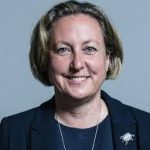
  • Anne-Marie Trevelyan – 2020 Statement on Global Response to Covid-19

    Anne-Marie Trevelyan – 2020 Statement on Global Response to Covid-19

    Below is the text of the statement made by Anne-Marie Trevelyan, the Secretary of State for International Development, in the House of Commons on 6 May 2020.

    With permission, Mr Speaker, I would like to update the House on the UK’s support for the global effort to tackle the coronavirus pandemic.

    The world is now having to address the biggest threat that it has faced in decades: an invisible killer on a global scale. Here in the UK, communities across the country are united in their determination to beat it, making their own personal sacrifices by staying at home, protecting our NHS and saving lives.

    There is a daunting outlook for countries in the developing world, simultaneously facing a health crisis, a humanitarian crisis and the risk of a protracted economic crisis leading to much greater hardship for years to come. The threat of famines, exacerbated by the worst locust plague for 70 years, fragile healthcare systems that enable the spread of the disease and economic disruptions risk a much longer and harder road back to recovery than for wealthy countries.

    However, through the altruism of the British people and the expertise of our scientists and engineers, the UK is proudly playing a leading role in the global response. On Monday, together with other world leaders, my right hon. Friend the Prime Minister co-hosted a virtual global coronavirus response pledging conference. He called on countries around the world to step up their efforts and work together on this, the

    “most urgent shared endeavour of our lifetimes”.

    World leaders responded, and some £6.5 billion was pledged for the covid-19 response, including the UK’s own £388 million commitment for vaccines, tests and treatments. The UK is proud to stand with our international partners—this is a truly global effort, and the only way to fight this pandemic is together.

    The UK is a development superpower, and we are also a scientific and medical world leader. This enables our response to this global pandemic to be greater than the sum of its parts. From Gloucestershire’s Dr Edward Jenner, who laid the foundations for immunology, to our researchers who developed vaccines for measles and Ebola, the UK has led the scientific response to many global health challenges in the past. I am so proud to be able to say that UK-based scientists, such as those at the Liverpool School of Tropical Medicine, are playing key roles in the global response to this deadly new virus. Scientists in Bedfordshire who developed rapid diagnostic devices to manage the recent Ebola outbreak, funded with taxpayers’ money through UK aid, are using that expertise to develop new rapid diagnostic tests.

    Researchers at Oxford University, funded through CEPI— the Coalition for Epidemic Preparedness Innovations —are now progressing to clinical trials, with funding from the UK Government’s vaccines taskforce, which is also funding a vaccine trial starting soon at Imperial College. In partnership with a British success story, AstraZeneca—one of the world’s largest pharmaceutical companies—our Oxford researchers are working towards ​their vaccine being manufactured at scale. We know that any vaccine might prove to be the solution, so through our Department for International Development aid budget, the UK is the largest single contributor of any country to CEPI’s international efforts to find a coronavirus vaccine. Through this fund, we are working to improve our understanding of the virus and to support scientists around the globe. CEPI is already backing nine potential vaccines.

    The Foreign Secretary outlined at the launch of the World Health Organisation’s access to covid-19 tools accelerator that the UK is proud to work with our international partners to ensure that new vaccines are accessible to everyone, as quickly as possible. No one will be safe until we are all safe. So we will need vaccines against this deadly disease, at home and abroad. Once a vaccine is found, delivering it globally will be the next big challenge. To help with that, we have invested the equivalent of £330 million a year for the next five years in GAVI, the global vaccine alliance that delivers vaccines in 68 of the poorest countries around the world. On 4 June, the UK will be hosting the global vaccine summit to co-ordinate international investment efforts for GAVI. Together with the announcement made by the Prime Minister on Monday, that is a combined additional investment in global health security that comes to more than £2 billion, helping combat the spread of disease. In investing globally, we are helping to protect our citizens—our families—from future waves of infection, and protecting our NHS.

    The global pandemic is one part of the challenge facing the world. DFID’s immediate coronavirus response to date amounts to £744 million. But this is on top of our work to pivot much of our existing work to provide health, humanitarian and economic support where it is needed most, as part of our response to these crises, with a health response that builds on the UK’s long-standing record of supporting countries to prepare for and respond to large disease outbreaks, including as the third largest donor to the World Health Organisation. We are investing on the frontier of research into new rapid diagnostics and therapeutics that can detect and treat coronavirus. Working in partnership with Unilever, we have launched an innovative hand-washing campaign that will reach 1 billion people around the world—a major contribution to global sanitation and hygiene. With the support of British and international non-governmental organisations, and advice from the London School of Hygiene and Tropical Medicine, we will reach one in seven people around the world with information on the most effective ways to stop the virus spreading and save lives.

    We are also working to reduce the global economic impact of the virus by preventing its spread, protecting both the UK public and the stability of our economy. Last month, the UK, together with other G20 countries, announced a commitment to suspend debt service payments to the poorest countries until the end of 2020. This will create up to $12 billion of additional fiscal space. DFID has also made up to £150 million available to the International Monetary Fund for debt relief. These measures will enable developing countries to direct greater domestic resources to their own healthcare efforts, helping to prevent the virus from spreading around the world. We are supporting developing country Governments to make proportionate, evidence-based trade-offs between containing the virus and maintaining open trade, so that ​essential goods and services, including critical medical and food supplies, can continue to move around the world. That supports developing countries, but it also means that British consumers will get the vital goods they need.

    Covid-19 is a global pandemic. It does not respect national borders. Individual efforts will succeed only as part of a global response. The UK will continue to play a leading role in galvanising the most effective co-ordinated international action. In 2017, the scientific community in the UK proudly played a key role in the international response to the Ebola outbreak in west Africa. I am proud to update the House that we are doing so again.

    We are using British expertise and funding to demonstrate leadership internationally. Recognising that needs will be great, we are doing whatever it takes to ensure that vaccines, treatments and technologies are available, to save lives and to support economies in the most vulnerable countries, and to help end the pandemic. That will help reduce the risk of the world being attacked by a second wave of infection. As the Prime Minister said on Monday:

    “It’s humanity against the virus—we are in this together, and together we will prevail.”

    I commend this statement to the House.

  • Andy McDonald – 2020 Speech on Lifting the Lockdown

    Andy McDonald – 2020 Speech on Lifting the Lockdown

    Below is the text of the speech made by Andy McDonald, the Labour MP for Middlesbrough, in the House of Commons on 6 May 2020.

    Last Sunday, the Government sent trade unions and businesses seven consultation documents outlining proposals for a return to workplaces. We all share a common objective of a safe return to work at the appropriate time that protects public health. However, when the Government’s plans fall short, it is our duty to say so. Trade unions were given just 12 hours to respond. The documents were not shared with the Opposition and the proposals themselves are wholly inadequate.

    No worker should have their life or the lives of their loved ones risked simply by going to work. This is a legal right, which held true before this crisis and, crucially, must not be cast aside now. The documents present measures to maintain safe workplaces, such as hand washing and social distancing, as being at the discretion of employers, when in fact they are requirements of the law. The Government must make this clear and inform workers and businesses of their respective rights and duties. I share the surprise of trade unions that the documents provide no recommendations on personal protective equipment, without which it is impossible to make judgments on safe working practices.

    Critically, the proposals exclude workers. A safe return to work is a significant challenge that can be met only if Government and business work with staff. My ask of the Minister is that the Government now bring forward guidelines requiring specific covid-19 risk assessments for most businesses, and that assessments are made public and registered with the Health and Safety Executive. Given the lack of capacity for inspections, these assessments must be agreed with staff. In workplaces with trade unions, this can be done by health and safety reps. In those without them, the Government should enable trade unions to assist workforces in their sectors to elect or appoint a rep to be consulted and involved in the settling, implementation and enforcement of assessments.​

    Finally, workers need to have confidence and trust that the Government have got their back, so will the Minister confirm that employees will not be prejudiced in any way for drawing attention to safety failings in the workplace? This time, we are truly all in this together. I trust that my comments are received in the constructive spirit in which they are offered.

  • Sarah Jones – 2020 Speech on Local Government in Manchester

    Sarah Jones – 2020 Speech on Local Government in Manchester

    Below is the text of the speech made by Sarah Jones, the Labour MP for Croydon Central, in the House of Commons on 5 May 2020.

    We are living through extraordinary times. Covid-19 has dealt a great blow to our country—its health, its economy and its way of life—and we are mourning the loved ones we have lost. But in the midst of this crisis, we have seen countless acts of extraordinary resilience and bravery.

    As usual, as the Minister just said, the fire service has been front and centre in this battle, answering our calls for help, driving ambulances, delivering personal protective equipment, helping to distribute food and even, I hear, delivering babies. The fire service is the most trusted of all our emergency services because it is always there when we need it, so it would not be right to begin this debate without paying tribute to the work of our firefighters across the UK. Yesterday was Firefighters Memorial Day. The minute’s silence at midday was a moment to reflect on the more than 2,300 UK firefighters who have lost their lives in the line of duty. Each one of those tragic lives lost paints a stark picture of the realities faced by firefighters. They risk their lives every day to ensure the safety of each and every one of us.

    We are here to debate the draft Greater Manchester Combined Authority (Fire and Rescue Functions) (Amendment) Order 2020. The Labour party supports the order. It is nearly two years since the Greater Manchester Combined Authority asked to bring responsibility of fire and rescue services into the hands of the deputy mayor for policing and crime, with no particular reason for the delay, as far as I can see, and there is precedent elsewhere in England for this model.

    This relatively straightforward order represents the gentle evolution of devolution. As Donald Dewar said at the opening of the Scottish Parliament, devolution is ​not an end, but a “means to greater ends.” We should be constantly open to change, to better serve our local populations.

    The order allows the Mayor to make arrangements for fire and rescue functions to be exercised by the deputy mayor for policing and crime, and amends the remit of the Greater Manchester police and crime panel to include scrutiny of the exercise of those fire and rescue functions in addition to their existing remit of police and crime commissioner functions. That allows the Greater Manchester police and crime panel to scrutinise the delivery of all the main functions of the deputy mayor for policing, fire and crime.

    The order will build on the success of devolution that we have already seen in Greater Manchester. Under Andy Burnham, we have seen real action to tackle rough sleeping, real support for young people and the biggest investment in cycling and walking outside London. Devolution enables good local, joined-up and effective policy making.

    I would like to take this opportunity to commend the efforts of the Mayor of Greater Manchester, Andy Burnham, his deputy mayor and the Greater Manchester Combined Authority for their recent work on fire and rescue services. Following the tragic fire at Grenfell, where 72 people lost their lives, they set up the Greater Manchester high-rise taskforce, chaired by Salford City Mayor Paul Dennett, to provide fire safety reassurance. They carried out proactive inspections of all high-rise residential premises to ensure that all buildings comply with fire safety regulations.

    Greater Manchester has 78 high-rise buildings that have had to adapt interim safety measures because of serious fire safety deficiencies and slow Government action to support remediation. In late February, I watched Andy Burnham, City Mayor Dennett and other civic leaders and MPs from across the country join residents caught up in the cladding crisis at a rally on Parliament Square, calling for urgent action from the Government in the Budget. The Government listened, and the Chancellor announced the £1 billion building safety fund for the removal of dangerous cladding of all forms from high-rise buildings.

    With thousands of leaseholders across the country still living in buildings wrapped in unsafe cladding, the focus must now be on completing remediation works as quickly as possible. We only need to briefly read the accounts of the Manchester Cladiators to know the dire situations they face on a daily basis.

    From blocks like Imperial Point in Salford Quays to Albion Works in central Manchester, the stories are painfully similar: lives put on hold as residents are trapped in unsafe buildings, unable to sell their properties, and living in constant emotional and financial distress. I do not want to rehearse all the arguments from last week’s Fire Safety Bill, but we know that there is much more to be done by the Government and that we must move faster. I press the Minister again to provide an update on the progress of the review and the costs that residents are incurring while paying for waking watches. Is this review looking into the whole costs of interim fire safety measures?

    As the Fire Brigades Union said yesterday, each time a firefighter dies at work, we need to understand what led to their death and what could have been done to ​prevent it. Yesterday we remembered the 2,300 firefighters who have died in service, but we must never accept their loss as inevitable. It is our duty to learn from every firefighter death and to fight for the improvements to operational practices that could save lives into the future. But that job has been immeasurably harder over the last decade, as we have seen brutal funding cuts.

    After a decade of austerity, we have 11,000 fewer fire- fighters, so when fires sadly do occur, fire engines may answer the call without enough firefighters to tackle the blaze. That is not only dangerous for the public, but potentially deadly for firefighters too. We could not debate this order without considering the heavy hand of 10 years of cuts to our fire services in Greater Manchester and across the country. The landscape of complexity post Grenfell, with the enormous fire risk of so many buildings across the country, compounds an already difficult situation. Given the extent of the crisis in recent years and the number of individuals who live in unsafe buildings, we need a strong fire service to be ready to deal with what can perhaps be described as a ticking time bomb for as long as the cladding remains in place. Central Government funding for fire and rescue services in Greater Manchester has been decimated over the past decade; it has fallen by almost a third from £75.2 million in 2010 to £52.9 million now. Across the UK, between 2010 and 2016, the Government cut central funding to fire and rescue services by 28% in real terms, followed by a further cut of 15% by 2020. These cuts have led to a cut of 20% in the number of firefighters.

    When a Grenfell Tower resident first called 999 just before 1 am on 14 June 2017, it was five minutes before a fire engine was at the scene and 13 minutes before the first firefighters entered the building. Equally, it was only a matter of minutes after the first call was made that fire services were on the scene of the fire at the student accommodation in Bolton in November last year. Clearly, when operating on such fine margins as the hazard of fire presents, fire services rely on rapid turnaround to be effective. It is shocking, then, to see that fire response times across Greater Manchester since 2010 have risen from seven minutes and 14 seconds to seven minutes and 20 seconds, with a rise of over 40 seconds across England. It may seem like only a matter of seconds, but with the fine margins that exist in fire and rescue situations, a rise in fire response times is unacceptable.

    But this is no damning indictment of the fire service across central Manchester or anywhere else. No—it is far more a wrong that stems from a decade of successive Conservative Governments’ neglect of fire and rescue services. While funding has been cut, the number of firefighters across Greater Manchester has fallen by 29% since 2010—down from 1,923, to 1,368 in 2019. The number of operational appliances has fallen by 14% over the same period. The Mayor and deputy Mayor in Greater Manchester, and their teams, are doing their best in these circumstances—namely, with their pledge to bring in 108 new firefighters—but, despite their best efforts, there remains a gaping hole left by increasingly scarce central Government funds.

    On Friday, we will celebrate VE day, marking the end of world war two. In the first 22 nights of air raids during the blitz, firefighters fought nearly 10,000 fires. According to Winston Churchill, the fire service

    “were a grand lot and their work must never be forgotten.”

    Well, the Opposition—and I am sure the Government—agree. With such extensive cuts across the past decade in ​provisions for fire and rescue services, and with a far more precarious environment facing those services in the wake of the Grenfell tragedy, will the Minister tell us when the Government are going to begin to make fire and rescue services in Greater Manchester and across the rest of the country a priority? With firefighters risking their lives to save our lives, the bare minimum they can expect is a properly funded service. After a decade of cuts and a covid crisis where our firefighters have gone above and beyond, we must now see real change.