Tag: 2020

  • Clive Efford – 2020 Speech on Covid-19

    Clive Efford – 2020 Speech on Covid-19

    Below is the text of the speech made by Clive Efford, the Labour MP for Eltham, in the House of Commons on 11 May 2020.

    This would be a difficult situation for any Government, but there are questions that must be answered and lessons that must be learned if we are to come out of lockdown safely. The large number of fatalities in this country was not inevitable. My heart goes out to those who have suffered a loss. The Government have made a religion of cuts and non-intervention, which led them to delay the decision to go into lockdown. Why did we ignore the warnings from other countries ahead of us in the epidemic? In Italy, lockdown began on 9 March; in Spain, it began on 15 March; in France, it began on 16 March. We finally entered lockdown on 23 March. Only Italy had more deaths at lockdown than the UK.

    The lack of urgency was repeated over PPE and testing. We hear of frontline staff terrified of going to work without appropriate PPE. As late as 13 March, covid-19 guidance for care homes was issued. It stated that facemasks do not need to be worn in residential settings, and stressed:

    “It remains very unlikely that people receiving care in a care home or the community will become infected.”

    That guidance was not changed until 2 April—10 days after lockdown. Why was it not changed earlier? How has it contributed to the epidemic in care homes?​

    There is a worldwide PPE shortage, yet we hear even now of companies in the UK offering to supply PPE and being ignored by the Government. Why did the Government not act earlier to set up a secure supply structure here at home?

    On testing, we have had announcement after announcement. On 18 March, the Prime Minister announced that we had a target of 25,000 tests per day. That was not reached for more than five weeks. On 25 March, he said that testing will “hopefully very soon” reach 250,000 per day. On 29 March, the Health Secretary tweeted, “We’ve reached 10,000,” but that was not correct. On 2 April, the Health Secretary announced that we will reach

    “100,000 tests per day by the end of this month.”

    That was achieved by sending 40,000 tests out in the post, and the 100,000 target has been missed every day since. This is more about media management than giving the public solid facts.

    This far into the crisis, why are we sending tests to the USA? Why have we ignored the laboratories around the country in hospitals, universities and the private sector, many of which said they were geared up to answer the call to help that never came? The Prime Minister has changed the message to be alert, but it is the Government who must stay alert. Without an effective and efficient tracking and tracing system, this is a reckless move. It has already caused confusion. People were given 12 hours’ notice to go back to work today, but the detailed guidance is not being published until today, with some further guidance due tomorrow.

    Too slow to lock down and secure the supply of PPE and testing; too rushed to end the lockdown in a coherent and planned way; the performance of the people has been superior to the Government’s. The Government must improve if we are to keep people safe as we come out of this crisis.

  • Desmond Swayne – 2020 Speech on Covid-19

    Desmond Swayne – 2020 Speech on Covid-19

    Below is the text of the speech made by Desmond Swayne, the Conservative MP for New Forest West, in the House of Commons on 11 May 2020.

    I do not set out to be a discordant voice, and I have at least some agreement with my right hon. Friend the Member for South West Surrey (Jeremy Hunt), but we are always told that the Government’s policy is a consequence of the best scientific advice. Well, the one thing the Government are certainly not short of—the one commodity not in short supply—is scientific advice. The question is: which are the siren voices? Which is the duff advice, and which is the best advice? I am not qualified to judge. I want an answer to a specific question: to what extent is the lockdown and this cautious plan for the lifting of it a consequence of advice from Professor Neil Ferguson and his modelling at Imperial College London? He has recently released the code for his modelling to very significant peer criticism. Again, I am not qualified to judge its robustness. What I can say as a layman, however, is that he has form. In the past, he has predicted the most blood-curdling of death tolls, which never materialised.

    There is no question but that the lockdown has inflicted significant additional damage to that which the pandemic has done to our economy. It will be costly and lasting. Whether it was done on the best advice, there is no question but that it was done for the best of motives—the motive of saving life—but the diminution of economic activity and employment itself takes a very heavy toll on life.

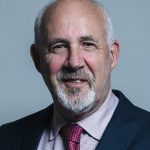
  • Jon Trickett – 2020 Speech on Covid-19

    Jon Trickett – 2020 Speech on Covid-19

    Below is the text of the speech made by Jon Trickett, the Labour MP for Hemsworth, in the House of Commons on 11 May 2020.

    It is a pleasure to follow such a powerful speech. I want to make two interconnected points. The first is that in post-industrial communities, such as the mining villages I represent, many former workers suffer from chronic underlying conditions—years of damaged lungs. They and their families are entitled to compensation for these industrial diseases, but the virus attacks older men with pre-existing conditions. If, sadly, tragedy then occurs, it is essential that medics ensure the death certificate records both the virus and the underlying industrial disease. The miners and the workers in similar heavy industries created the wealth of our country—we owe them.

    My second point is that covid has revealed how deeply divided our country has been and how damaging austerity was. It is clear that the people upon whom we depend the most, the nation’s heroes, its key workers, are those who suffered the most under austerity, yet they went to work every day, and still do, driven by selfless hard work and dedication, a sense of community and solidarity, and the ethos of care and responsibility. The average key worker is paid less in our country than other employees. I am thinking of the delivery drivers, posties, nurses, shopkeepers, teachers, lab technicians, food retailers, farmers, binmen, carers, police officers, doctors and all those others who have held our society together through this crisis. It is wrong that their incomes were held back, the services that they provide were cut and our social cohesion itself was damaged, leaving us exposed to risk from the pandemic. Yet when the crisis hit, they were there, without hesitation, ready for the challenge that the virus posed, just as the miners, steelworkers and shipbuilders were in another time.

    Working-class people emerge as the heroes in this crisis, although they are often poorly paid, with mortality rates among the highest. Let us remember that men in low-skilled jobs are four times more likely to die from the virus than those in professional occupations. People are already talking about finding an exit strategy from the lockdown, and we do need to lift our eyes to the horizon, but it is not acceptable—the Government appeared to envisage this yesterday—to drive poorer people back to work in conditions dictated purely by their employers, perhaps risking their health while their white-collar neighbours in more professional occupations remain at home safe. Workers need to get back to work, but they need unions, working alongside managers, to determine whether the workplace is safe enough before they go back.

    After the virus, we need a new economic and social settlement, one that puts health, not wealth, at the centre of our concerns and agrees that there should be no return to austerity. We need a rebuilt NHS, adequate care services, properly funded universal public services, fair wages and an end to grotesque inequality. The efforts of millions of people and the spirits of all those who fell during this crisis serving our country must hang over this House of Commons in quiet reproach for the shameless failures of the past decade. We must respond to their whispered demand for a better way, and we must resolve that their sacrifice will not have been for nothing.

  • Jeremy Hunt – 2020 Speech on Covid-19

    Jeremy Hunt – 2020 Speech on Covid-19

    Below is the text of the speech made by Jeremy Hunt, the Conservative MP for South West Surrey, in the House of Commons on 11 May 2020.

    I support the Government’s caution about lifting lockdown, and I commend the Prime Minister for being honest about the complex choices we face.

    I want to focus my comments on the quality of scientific advice received by Ministers. It is now clear that a major blind spot in the approach taken in Europe and America was our focus on pandemic flu rather than pandemic coronaviruses, such as SARS or MERS. Asian countries took a different path. As a result, Korea has had no more than nine deaths on any one day, Singapore is on just 20 deaths in total and Taiwan is on just seven.

    The failure to look at what those countries were doing at the outset will rank as one of the biggest failures of scientific advice to Ministers in our lifetimes. One can understand the reluctance to look at a totalitarian regime such as China, when it dangerously covered up the existence of the virus at the outset. But why, when the Scientific Advisory Group for Emergencies was modelling possible responses in January, did it look only at the extremes of total lockdown or mitigated herd immunity, rather than at the middle way of test, track and trace that was being pursued by the Asian democracies?

    That failure led directly to another, namely the advice to stop community testing on 12 March. That meant that we had no idea where the virus was, while countries such as Germany continued community testing and saved many lives as a result. A lack of interest in community testing led to another failure at the start of March. Even though infections were doubling every five days, SAGE advised Ministers against lockdown and advised them to continue with events such as the Cheltenham festival and the Liverpool champions league match. That meant that infections soon grew to a point where traditional contact tracing could not cope.

    Of course Ministers have to take responsibility for their decisions. They have a duty to challenge and probe any advice, but their decisions are shaped by that advice. In that context, it would be totally wrong to blame individuals. Sir Patrick Vallance and Professor Chris Whitty are outstanding scientists and any Government would be lucky to have their advice. At fault is a systemic failure caused by the secrecy that surrounds everything that SAGE does. Because its advice is not published, it cannot be subjected to scientific challenge. Nor is parliamentary scrutiny possible, even when a Government say they are following the science.

    Until last week, we were not even allowed to know who sat on SAGE. We used to have similar secrecy over the interest rate advice that was given to the Chancellor. In 1997, the Bank of England was made operationally independent, lines of accountability were clarified and advice was made transparent. Since then, inflation has not troubled the British economy. Had SAGE’s advice been published in January, an army of scientists from our universities could have challenged why test, track and trace was not being modelled. They could have demanded a ramp-up of testing and challenged the behavioural assumptions that delayed lockdown. We cannot know for certain, but the result may well have been better subsequent advice and many lives saved.

    British science is world-beating because we have always championed inventiveness and encouraged challenge, so let us sweep aside the secrecy that surrounds SAGE and publish what it recommends, including dissenting views. In that way, we will harness the robust exchange of ideas, which has always been one of our greatest national strengths, and, as the Prime Minister said yesterday, come out of this crisis wiser and stronger.

  • Philippa Whitford – 2020 Speech on Covid-19

    Philippa Whitford – 2020 Speech on Covid-19

    Below is the text of the speech made by Philippa Whitford, the SNP MP for Central Ayrshire, in the House of Commons on 11 May 2020.

    I would first like to express my sympathy for all those who have lost a loved one to covid during this epidemic, and to pay tribute to the millions of healthcare staff, key workers and volunteers who have shown that community spirit is alive and well.

    Unfortunately, the foundation of this crisis has been 10 years in the making. A decade of Government austerity has taken its toll on health and social care services in England and, through cuts to devolved budgets, right across the UK. The pandemic is unprecedented in our lifetimes and poses a real challenge for every single Government on the planet, but it has been No. 1 on the risk register in the UK for more than 10 years.

    In early February, the Government claimed to be fully prepared, yet more than three months on, they are still failing to supply sufficient PPE to protect their healthcare staff. Moreover, testing and contact tracing are still not fully up and running, yet they are lifting the current restrictions. In 2016, Exercise Cygnus highlighted the lack of PPE and ventilators, yet there has been a 40% reduction in the value of the stockpile. The management of it was outsourced to a private company, and we hear that 45% of items in the stockpile are out of date, including 80% of respirator masks. Last June, the new and emerging respiratory virus threats advisory group advised the Secretary of State for Health and Social Care to add gowns to the stockpile. Why was that not done? Is that why Public Health England guidelines, which were issued to all four nations, did not include gowns for staff in covid-positive wards outwith intensive care?

    Two hundred healthcare staff have died. We need to pay tribute to them, but it should not have happened. None of them were from intensive care units, the most dangerous setting, which shows that full PPE actually works. But now we hear that even ICU doctors in England report struggling to get gowns. There is no point in joining the Thursday clap for carers if you are not willing to protect staff. The excuse for the lack of gowns is that the stockpile was only planned for an influenza pandemic. This is a civil contingency measure, so why would you plan for only one virus? It is not as if this is the first coronavirus outbreak. We had the severe acute respiratory syndrome outbreak in 2002 and the middle east respiratory syndrome outbreak in 2014, and they were both much more lethal.

    The Prime Minister set five tests for easing lockdown. The Government clearly are not yet meeting No. 4. Scotland’s NHS has had central procurement and logistics for years and has its own stockpile, but the challenge for all Governments is achieving ongoing supply in the presence of high global demand. Yet the overseas offices of the Department for International Trade have apparently been advised not to assist the Scottish, Welsh or Northern Irish Governments in PPE procurement. Provision of PPE is a devolved responsibility. Why would the UK Government want to undermine those Governments’ efforts to protect the patients and staff in devolved health services?

    The Secretary of State for Health prides himself on having ramped up testing to 100,000 on 30 April, but that was only by counting 40,000 tests that were, as we say, “in the post”. I wonder if they are counted again when they come back in. The level, sadly, has not been maintained. One issue being reported is delays in getting results back. It is also the case that the result is not always reported back to the GP or the hospital if it is a staff member. It is not just about how many tests. The World Health Organisation advises that testing, contact tracing and isolation is critical to breaking the chains of infection and controlling the epidemic. Unfortunately, in February, that just was not in place and we ended up with the lockdown as an emergency measure because we could not identify who we should isolate.

    Understanding easing the lockdown involves difficult decisions, but we need to be aware that the virus has not changed. We hear all the time about the mystical R number guiding the way out of lockdown, but it is an estimate of how many people are infected by each person with the virus. It has three components: the ease of transmission from one person to another; how long a person is infectious; and how many contacts they have during that time. Ease of transmission is a balance between the infectiousness of the virus and the susceptibility of the population. Covid-19 is very infectious and, as a new virus, the population had no immunity. We can reduce transmission through the personal hygiene measures—I would just emphasise that that should include not shaking hands—but 50% of the spread is asymptomatic and that is the reason to advise the use of face coverings to reduce droplet spread from people without symptoms.

    The way to decrease susceptibility is with a vaccine, but that will take time. In early March, the Government seemed to get side-tracked over the idea of herd immunity. I was chair of the all-party group on vaccinations for all and I totally understand the aim of herd immunity, but it is usually achieved with an effective and safe vaccine, not by letting a dangerous disease just rip through the population, especially when we have no proof of how long any covid immunity would last. The duration of infectiousness is about five to seven days and we cannot change that, but one of the problems is that covid patients seem to become infectious about two days before symptoms.

    Finally, there is the number of contacts. That is the key thing we can manipulate in one of two ways: either by isolating everyone in a lockdown, which is a blunderbuss approach because we could not identify who we should be isolating; or by isolating just cases and their contacts, so they have no contact with others. That requires strong public health teams to provide testing, tracing and isolation of every single case to control the spread. That should be put in place during lockdown, while people have relatively few contacts, and before lifting restrictions.

    The Prime Minister set out a roadmap last night for easing lockdown in England if five tests are met. No. 3 is a sustained fall in new cases, but the UK is still hovering over 4,000 new cases a day, and that is just the ones that are proven by a test. No. 4 is the secure provision of testing and PPE, and neither of those criteria has been met. Telling people to go out to work is not a baby step, especially without clear workplace and transport safety measures—we only have to look at photographs of London transport this morning to see that. If the Prime Minister had wanted more people to leave home, I gently suggest that a “Stay apart” message might have been a bit more helpful. Crucially, local public health teams must be in place to monitor the impact of any changes so that they can spot early warning signs of a local outbreak and take action, and that is not the case.

    None of the devolved nations is ready to come out of lockdown. In Scotland, the number of cases is falling, but we do not consider it low enough to be sure that there is no risk of a rise in infections. I know that the political decisions on the next steps are difficult, and I do not underestimate the mental, social and economic impact of lockdown or the misery it is causing. However, a second surge of covid cases would lead to many more deaths and put us right back to square one.

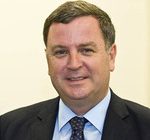
  • Mel Stride – 2020 Speech on Covid-19

    Mel Stride – 2020 Speech on Covid-19

    Below is the text of the speech made by Mel Stride, the Conservative MP for Central Devon, in the House of Commons on 11 May 2020.

    Thank you Madam Deputy Speaker. May I begin by associating myself with the very poignant and moving remarks made by those on both Front Benches about those who have sadly lost their lives to this devastating virus, and with the appreciation that they showed to those who have helped so much and are on the frontline?

    I will address my remarks specifically to some of the economic issues around covid-19, not least the inevitable withdrawal of some of the Government’s support for businesses as we come out of lockdown. I do not say “inevitable” because the Government were not right to introduce the scheme in the first place—the Chancellor did entirely the right thing, and came in with the scale and pace to support business—but in the longer term, the amount of spend involved in such measures is simply unsustainable.

    For example, the furlough scheme is costing as much on an ongoing basis as the funding of the national health service. Before coronavirus, Governments agonised over whether we could spend another 1%, 2% or 3% on the national health service, but here we are spending the equivalent of 100% on furloughing 25% of all workers in the United Kingdom.

    I want to focus for a moment on how we might unwind the furlough scheme most productively and effectively. First, we should seek to taper it away, from 80% down to 60% and then to 40% and so on, to smooth our exit. Secondly, it is particularly important that employers should contribute to the cost of furlough beyond the end of June, because many of those with staff currently on furlough are not having to pay them and have no intention, in the medium term at least, of bringing them back in to their business. Thirdly, we need to encourage part-time working within the furlough scheme, where possible.

    Finally, the Chancellor should look very closely at targeting support, not just in respect of the furlough but in respect of the other support that the Government are providing. There are at least three categories of businesses in our economy at the moment. There are those that will survive without any additional support through this crisis. Indeed, there is a small minority of businesses whose business model has actually thrived under our current circumstances. They clearly do not warrant support. Secondly, there are companies that, in the medium term, can be bridged out of the current crisis, through the provision of support. That is where a particular focus must lie. Thirdly, there are those businesses whose business model is such that, under the new economy of social distancing and before a vaccine arrives, they are, sadly, going to struggle to survive even if they are given support. I urge the Chancellor to take the courageous and difficult decisions on targeting at business and sector level, to make sure that the Treasury’s finite resources are used productively to support jobs and the economy as we emerge on the other side.

    We also need to start talking about the plan beyond coronavirus, even though that may seem some way away. We need to talk about growth and how we are going to support consumer expenditure in particular, given that consumers do not feel like spending and may have increased their savings during this crisis. Temporary tax incentives, such as a time-limited VAT break, may be good in that regard. Finally, as I stick within my four minutes, business indebtedness will have increased. We need the Government to look at how some of that debt can be turned into equity, so that businesses can focus on investing and creating jobs.

  • Rachel Reeves – 2020 Speech on Covid-19

    Rachel Reeves – 2020 Speech on Covid-19

    Below is the text of the speech made by Rachel Reeves, the Labour MP for Leeds West, in the House of Commons on 11 May 2020.

    I thank the Minister for that thoughtful opening speech. We all need the Government to get this right. Labour has been clear: we will always put the national interest first. We will support the Government when they get it right but challenge them to do more when that is needed.

    We all know how hard lockdown has been, especially for those who fear for their jobs and their businesses; the elderly; the lonely; and those living with an abusive partner or carer. At the moment, most grandparents want nothing more than to be able to hug their grandchildren. Thousands of people are missing out on the chance to say goodbye or even to hold the hand of the person they love in a care home. The same applies to the ambiguous situation relating to funerals and cremations, which is causing enormous pain and distress to so many families. It is in depriving us of these poignant moments—opportunities to hug, to hold and to say goodbye—that the impact of the virus causes the most distress.

    There are so many profound social costs, and it all has to be balanced with the huge challenges and risks faced by people working in health and social care. We all want the Government to get this right, but, frankly, the Government’s response in the past 24 hours has been a shambles.

    Last Thursday, the Government’s briefings to newspapers led to headlines proclaiming that we could look forward to “Happy Monday” and “Lockdown Freedom”, the day before a sunny bank holiday weekend. When I saw those headlines, I recalled the world war two poster in my history class at secondary school that said, “Careless talk costs lives”. I wonder sometimes whether the Government pause to contemplate the health impacts of some of their briefings and statements.

    Last night’s statement by the Prime Minister was a chance to provide some clarity about the situation, but it obscured as much as it revealed. This morning, the Foreign Secretary told “Today” programme listeners that they were free to see both their parents at the same time. Almost immediately afterwards, it was clarified that people may see only one parent at a time. The Foreign Secretary then told Sky News that people should return to work from Wednesday, but the press release issued by Downing Street alongside the Prime Minister’s statement clearly stated that people should be encouraged to return to work from Monday. If senior members of the Cabinet struggle to follow the advice, what are the rest of us meant to do?

    A four-nation strategy is essential to ensure a coherent and consistent message. It has served us well so far, so why is England now pursuing a different strategy from Northern Ireland, Scotland and Wales? If someone lives in Bristol but works in Cardiff, should they be going to work? What about if someone lives in Berwick but works in Edinburgh?

    When it comes to Northern Ireland, the Government must also consider cross-border co-operation. Northern Ireland is unique in that it shares a land border with the Republic, so close co-operation with the Irish Government and the Northern Ireland Assembly is vital to ensure a joined-up approach to effectively combating the virus, particularly with regard to contact tracing. The UK has the highest death toll in Europe. That calls for greater care, not greater risks.

    The most substantive change in Government advice today is that workers who cannot work from home should return to work. We want workers to earn an income and businesses to thrive, but for that to happen, workers need to know that they and their families will be safe. Businesses want that knowledge and security as well.

    Let us be clear that the biggest risk to our economic security and recovery would be decisions that led to a second peak of the virus, so it is deeply worrying that workers were asked last night to return to work today with no guidelines published with regard to safety in the workplace. If someone has been told to return to work, but lives with a partner with a pre-existing condition or an elderly parent, what are they meant to do?

    What if someone has a school-age child but is now expected by the Government and their employer to return to work without the childcare to be able to do that? Can people still be furloughed? Is that at their employer’s discretion? If people cannot work through no fault of their own, will they be required to go on to statutory sick pay?

    Who will assess whether a workplace is sufficiently safe? Is it up to the individual employee? I refer the Minister to section 44 of the Employment Rights Act 1996, which permits an individual employee not to return to work without risk of detriment if they reasonably believe that adequate safety measures are not in place. I hope that employers and Ministers will protect those rights.

    Meanwhile, workers are told to avoid public transport if possible, but for millions of people in the UK, it is not possible to get to work any other way but by public transport. We have already seen bus drivers in London lose their lives to covid-19. People need to know that they can go to work without endangering themselves, or indeed others. If we are to balance concern for the economy with concern for public health, the Government should bring unions, business leaders and scientists together to develop a national safety standard. The safety of workers and their families is not, and can never be, an optional extra.

    It is vital that the furlough scheme continues to support workers, including enabling people to work part time, particularly if businesses are unable to operate at full capacity. We need to hear more from Ministers about ongoing support until the time is right to operate at full capacity for some of the hardest-hit sectors, such as hospitality and travel. We need to support areas such as our coastal communities, which are so dependent on tourism.

    The impact of the virus exposes deep inequalities in our society. The poorest areas of the country have been hardest hit. Lower earners are most exposed while the better-off are insulated from the biggest threats. Of the bottom 50% of earners, just one in 10 can work from home. At the top, it is five times that.

    This crisis has shown who the real key workers are, from NHS staff to care workers, supermarket workers, cleaners, delivery drivers and bus drivers. They are often underpaid, under-appreciated and undervalued, and they have been asked to put their lives at risk while keeping others safe. Now, more working people who do manual jobs in manufacturing, food processing and construction are being asked to risk their health, and that of their family, while those doing office jobs, which are often better paid, can work from home and face fewer risks.

    Black and minority ethnic Britons are disproportionately at risk. We know that black Britons are four times more likely to die from this virus compared with white people. We need a public inquiry into that, which Baroness Lawrence called for today, and we need urgent action to protect the most vulnerable from this virus. Coronavirus did not cause those inequalities, but it has thrown a sharp light on them. We must not let them deepen even further.

    In our care homes the spread of the virus continues and the death toll is still too high. Half of workers in care homes earn less than a real living wage, and a quarter are on zero-hours contracts. Many have died. Last Wednesday, the Prime Minister reported that 29 care workers have died since the start of this crisis, but data from the Office for National Statistics show that there were 131 coronavirus-related deaths among social care workers up to 20 April. According to the National Care Forum, just one in five care workers with symptoms have been tested, and they still lack priority testing for coronavirus. Those who dedicate their lives to caring for others, and who care for the sick and the dying whose relatives cannot be with them, are being left without adequate protection, and we are only beginning to know the real cost.

    One reason why the lockdown rules are causing so much worry is that new infections and deaths are still at higher levels than when we went into lockdown. The test and trace strategy is still a mess. MPs from across the House will have constituents who have been waiting for well over 48 hours to get their results, and some who have been waiting for more than a week. We see reports of tests having to be flown to the United States because we lack the capacity here. How did we get into that position? Without a test, trace, and isolate strategy it is almost impossible to identify a new spike in infections, or to do anything about it. The Government need to sort that out. Relaxing lockdown will work only if it is sorted out.

    At some point we will come through to the other side of this virus, and we will go about rebuilding our lives, our communities, and our economy. The recovery will not be easy, and it will require boldness and imagination to build something better. The contribution of the British public and all our key workers has been immense, but the crisis has revealed huge injustices and inequalities. We deserve a fairer country—that will be Labour’s mission, and I hope it will be the Government’s mission too.

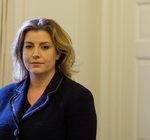
  • Penny Mordaunt – 2020 Statement on Covid-19

    Penny Mordaunt – 2020 Statement on Covid-19

    Below is the text of the statement made by Penny Mordaunt, the Paymaster General, in the House of Commons on 11 May 2020.

    I beg to move,

    That this House has considered Covid-19.

    We gather here today in the midst of a very great darkness that has descended upon our nation, and not just our nation—all nations. It has been by far the biggest challenge we have faced in a generation. We knew it was coming, but not when and not what its clinical characteristics would be. We trained to face it. How we have all responded to it has been a defining moment for us as individuals and as a nation. We have all been involved. We had no choice about dealing with it, but we had a choice about how we did so.

    In the past few weeks, the darkness that has engulfed us all has been emotional, economic and extensive, but it has been illuminated by a million points of light: the response from the British people has been immense. People in all our communities have performed selfless, heroic acts—stoic, disciplined, kind—from now Colonel Tom to our health and care workers, our scientific and tech community, businesses, those who came out of retirement, critical workers, volunteers and the public who through their resolve have reduced the rate of infection and sent this virus into decline.

    People have faced this crisis with personal courage and often good cheer, and I pay tribute to their resilience with pride. This virus called forth the question of who we are, and that question was answered—for families, for parents, for children, for communities, for the nation. It illuminated our values and our strengths: we chose to prioritise lives; we chose to support businesses and jobs; so many stepped up and volunteered; we pull together in times of crisis; we have seen the validation of a devolved but national health service that is free at the point of use and not linked to employment—our NHS. It has shown what we believe in and how much we value the actions of so many who are taking on a greater share of the risk to protect us all and defeat the virus, including, I am very proud to say, some Members of this House of Commons working in health or as first responders. When united in a national effort, the British people are a powerful force.

    The virus has also shown a fragility: the structural and funding complexity of social care; the invisibility of some of those in care settings and mental health, of those with learning or behavioural disabilities, as well as older people; the lack of resilience in supplies of equipment when faced with a crisis of global proportions; the obstacles to providing support to some of our most entrepreneurial people; and the challenges of getting the world working together when nations are also focused at home.

    This debate offers us parliamentarians the opportunity not just to scrutinise what has happened and the next steps in our response, but to discuss how we can continue to improve our resilience and adapt to what will be fundamental changes in the way we live

    our lives. This is, without doubt, an inflection point for our country and for the world, and we all need to rise to those challenges. We all have a role to play in finding solutions and answers.

    This debate affords us the opportunity to remember and mourn all those who have lost their lives to this disease, and to think of those who are grieving without comfort—in some cases, without having said goodbye. The reported death toll stands at 31,855 souls. Our thoughts, too, must be with those who have survived covid but whose health has been impaired as a consequence, and to acknowledge those who have had to put their treatment and therapy for other conditions on hold because the NHS would not have been able to cope unless they did so. The full cost of that sacrifice has yet to be counted.

    In particular, it is right that we acknowledge all those working in health and care who have succumbed to the disease. In full knowledge of the risks, they chose to work on the frontline to save lives, give comfort to others and provide care to those in their charge. The metaphor of this pandemic as a war against coronavirus has been used, and the courage and duty demonstrated by all those working with those who are infected is the same as going into battle. Many will have seen their friends fall ill. Some will have seen their colleagues die. And they will have headed back into the danger zone, day after day. I know that there will be disagreements during the course of this debate, but I also know that every Member of this House will want to express their gratitude and humility in the face of such service, and all will agree that, despite the difficulties, we must ensure that all frontline workers in this crisis have the equipment that they need to keep them safe. We are all aware of the challenges and of the efforts being made, but that is irrelevant. We must, and we will, do what is necessary.

    I also want to thank the volunteers who have stood up to help care and health services. This includes individuals who are facing the prospect of losing their job, financial hardship or worries about relatives. Instead of devoting themselves to their own needs or those of their families, they have gone into care homes, medical wards and Nightingale hospitals to serve their communities—often having to separate from their own loved ones to do so. Over 3 million additional volunteers stepped up.

    We should also thank the critical workers who have carried on so that we could all be fed, protected and provided for: those in the supermarket and the store; the police and fire services; post office workers; public transport workers; cleaners; prison officers; refuse collectors; pharmacists; teachers; nursery workers; public servants, especially those in the resilience forums; and, of course, our armed forces, who have delivered aid to those being shielded, brought testing to communities, and provided planning expertise at every level of this response and in every local resilience forum in the land—all while carrying out their other duties to protect the nation. They have taken risks for all our sakes.

    In the past few months we have seen so many people and organisations rally: from the businesses that adapted so swiftly to meet the needs of the nation, expanding services, altering their production lines and generously donating equipment and expertise; to the others who managed to keep their businesses going throughout this ordeal in order that they could provide for our families and support our public services. We must remember that without the wealth they generate, we cannot fund the services that we all rely on.

    We have been right to provide an unprecedented level of support to retain jobs and help cash flow, with 25,000 loans, half a million firms furloughing workers, and 600,000 grants. We as a Government and all of us as citizens must do all that we can to get Britain back to work and start the recovery, as my right hon. Friend the Prime Minister has set out.

    We have seen charities, faced with their fundraising plans in tatters, lead the local response and, of course, the public have followed the requests of the chief medical officer by staying at home. It has been tough, especially for those in cramped housing with no gardens, but they have done it, and thanks to them R is now below 1. In the next phase of the response, we must all continue to demonstrate that resolve.

    In all the steps and all the issues that colleagues will raise in this debate, we will be more successful if we tackle them together, across party lines and across the Administrations of the United Kingdom, as we continue to do, with international co-operation, and across all sectors—public, private and the third sector—no longer deterred by dogma, just pulling together and focusing on what needs to be done.

    In that spirit, opening this debate affords me an opportunity to thank all Members of this House who joined the Cabinet Office daily calls at the start of the pandemic. They were cross-party and they were constructive. We helped each other to help our constituents, shared our ideas, cut down workloads and supported each other. The information gathered on personal protective equipment, care homes, businesses and operational matters was incredibly helpful to every Department.

    We should continue to work together not only to tackle the challenges but to seize the opportunities to tackle problems that were previously almost impossible. For example, since the start of this crisis, 90% of rough sleepers are now in accommodation. They are safe and secure. There will never be a better opportunity to wrap the services that those individuals need around them while we deal with the crisis, so we must.

    These are dark times, but they are also illuminating times. We have reminded ourselves, as a country, what we can do when we are united in a mission. Millions of us chose not to curse the dark but to light a candle. The British people have given us a beacon of hope in the days ahead.
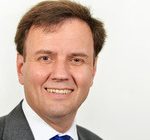
  • Greg Hands – 2020 Statement on Mis-use of Parliamentary Stationery

    Greg Hands – 2020 Statement on Mis-use of Parliamentary Stationery

    Below is the text of the speech made by Greg Hands, the Conservative MP for Chelsea and Fulham, in the House of Commons on 11 May 2020.

    Mr Speaker, you will be aware that the Committee on Standards last week published a report following an inquiry into the use of parliamentary stationery for the purpose of a communication with my constituents. This mail-out was sent to some of my constituents in April 2019. I accept that this constituency mail-out did not conform with the rules set by the House. I also accept that it was inappropriate for me to have insisted on a reference of the case to the Committee when I had already acknowledged that I was in breach of the rules and when I had been informed by the commissioner that the Committee was not the body with which to raise a possible change to the rules.

    The Commissioner for Standards herself has recognised that this breach was at the

    “less serious end of the spectrum”.

    As I expressed in my representations throughout the inquiry, I believe the rules in question to be in need of updating, to reflect the fact that combining different communications into one single letter can save money and staff time.

    None the less, I am sorry for the length of time that this investigation has taken and accept that at the time, I acted outside the current House rules. I am therefore today taking the earliest opportunity to offer the House my apology both for the initial breach of the rules and for insisting on an unnecessary reference to the Committee, thereby extending the length of the inquiry. I undertake to reimburse the House for the relevant costs of my mailing, which the commissioner has assessed at £4,865.55.

  • Lindsay Hoyle – 2020 Statement on the Department of Health and Social Care

    Lindsay Hoyle – 2020 Statement on the Department of Health and Social Care

    Below is the text of the Speaker’s statement made in the House of Commons on 11 May 2020.

    Before calling the Prime Minister to make a statement, I would like to make a statement of my own accord. I am aware of widespread concerns across the House about delays in Government Departments, and the Department of Health and Social Care in particular, responding to written questions and correspondence. I have received representations on this matter from the Procedure Committee and from Back Benchers across the House from Opposition parties.

    Last Wednesday, the Leader of the House argued that a degree of latitude is allowable for the Department. However, the Secretary of State himself has referred repeatedly to the value of parliamentary scrutiny. Written questions and letters to Ministers are integral to such scrutiny. I accept that the Department of Health and Social Care faces many challenges, but I am sure that resources across Whitehall can be mobilised to support it in maintaining proper standards of accountability.

    While I think it is right for me to call for improvements within the Government, I also make a plea to all hon. Members to be targeted and considered in the written questions that they table at this time, and to avoid swamping Departments with questions on a fast-moving situation that will be superseded before they can be answered.

    I now call the Prime Minister, who should speak for no more than 10 minutes.