Tag: 2020

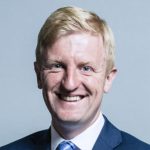
  • Oliver Dowden – 2020 Statement on the Coronavirus

    Oliver Dowden – 2020 Statement on the Coronavirus

    Below is the text of the statement made by Oliver Dowden, the Secretary of State for Digital, Culture, Media and Sport, on 20 May 2020.

    Good afternoon, and welcome to today’s briefing. I’m pleased to be joined by Steve Powis – the National Medical Director at NHS England.

    First, I want to update you on the latest data on the coronavirus response.

    2,962,227 tests for coronavirus have now been carried out in the UK, including 177,216 tests carried out yesterday;

    248,293 people have tested positive, that’s an increase of 2,472 cases since yesterday;

    9,953 people are currently in hospital with coronavirus, down 13 % from 11,443 this time last week.

    And sadly, of those who have tested positive for coronavirus, across all settings, 35,704 have now sadly died. That’s an increase of 363 fatalities since yesterday. Of course, my thoughts are with everyone of the families of those people who have been affected by this.

    Before we begin questions from the public and from the media I just want to remind people of the details of the next phase of our fight against Coronavirus.

    First, in order to monitor our progress, we are establishing a new COVID Alert Level System, with five levels, each relating to the level of threat posed by the virus.

    The alert level will be based primarily on the R value and the number of coronavirus cases.

    And in turn that alert level will determine the level of social distancing measures in place.

    The lower the level the fewer the measures; the higher the level the stricter the measures.

    Throughout the period of lockdown which started on March 23rd we have been at Level 4.

    Thanks to the hard work and sacrifices of the British people in this lockdown, we have helped to bring the R level down and we are now in a position to begin moving to Level 3, in careful steps.

    We have set out the first of three steps we will take to carefully modify the measures, gradually ease the lockdown, and begin to allow people to return to their normal way of life – but crucially while avoiding what would be a disastrous second peak which overwhelms the NHS.

    After each step we will closely monitor the impact of that step on the R and the number of infections, and all the available data, and we will only take the next step when we are satisfied that it is safe to do so.

    Step 1 – as the PM announced this week:

    Those who cannot work from home should now speak to their employer about going back to work.

    You can now spend time outdoors and exercise as often as you like.

    You can meet one person outside of your household in an outdoor, public place provided that you stay 2 metres apart.

    Having taken the first step in carefully adjusting some of the measures and our advice to people on what to do, we have also updated what we are asking people to do, which is to Stay Alert, Control the Virus and Save Lives.

    Yes – staying alert, for the vast majority of people, still means staying at home as much as possible. But there are a range of other actions we’re advising people to take.

    People should Stay Alert, by:

    working from home if you can;

    limiting contact with other people;

    keeping distance if you go out – 2 metres apart where possible;

    washing your hands regularly;

    wearing a face covering when you are in enclosed spaces where it’s difficult to be socially distant – for example in some shops and on public transport;

    and if you or anyone in your household has symptoms, you all need to self-isolate.

    Because if everyone stays alert and follows the rules, we can control coronavirus by keeping the R down and reducing the number of infections.

    This is how we can continue to save lives, and livelihoods, as we begin as a nation to recover from coronavirus.

    Over the past months, we’ve all naturally been focused on the huge, life-or-death health implications of this pandemic.

    But I’d now like to provide an update on some of the crucial work taking place behind the scenes to support and protect the things that give our lives added meaning – such as sport, art, tourism and our charities, music and theatre.

    And when we look back on coronavirus, one of the things we’ll remember is the incredible contribution made by so many people.

    As a way of showing our national gratitude to these everyday COVID heroes, we are announcing today that we are delaying Her Majesty The Queen’s Birthday honours list until the Autumn so that they can be recognised and celebrated.

    And as the Prime Minister said today, I’m delighted that Her Majesty The Queen has approved a knighthood for Captain Tom Moore, in recognition of his outstanding achievement in raising nearly £33 million for NHS charities.

    Captain Tom set a marker for generosity, and the public have matched it.

    Incredibly, it looks as if British people and businesses have now contributed over £800 million – just through national fundraising campaigns alone – and a great deal more has obviously been raised at a local level.

    As the British people have generously given both their time and money, the government has sought to back them every step of the way. We promised to match every penny raised by the BBC’s Big Night In campaign and, after a fantastic public response, I’m delighted to announce today that over £70 million is now being distributed by Comic Relief, Children In Need and the National Emergencies Trust to charities on the frontline.

    This comes on top of the hundreds of millions of pounds we’ve already announced for charities doing vital work to support those suffering with poor mental health, to help victims of domestic abuse, and to make sure hospices can continue to care for families in these most difficult circumstances.

    And today, I am pleased to confirm that the Government’s dedicated support scheme for small and medium sized charities – the Coronavirus Community Support Fund – will open for applications this week.

    Initially there will be a £200 million tranche of government funding and this will be administered by the National Lottery Community Fund and will focus on those charities we may not know nationally, but are a lifeline to communities at a local level.

    On top of that I can also announce that we are releasing £150 million from dormant accounts to help social enterprises get affordable credit to people who are financially vulnerable and support charities tackling youth unemployment.

    Our charities, both large and small, have really been at the forefront of the national effort to defeat the coronavirus. And together this all amounts to a multi-billion pound boost for Britain’s charities.

    I know people are also eager for news on the return of live sports and arts. The last few months have felt odd without them, and our calendars strangely bare.

    Finding creative, crowd-free ways to navigate coronavirus is the biggest challenge for our recreation and leisure sectors right now.

    So this week I am setting up a renewal taskforce which will help them bounce back. It will be made up of the brightest and the best from the creative, tech and sporting worlds. These are experts in their fields and they’ll be advising me on how to find new and different ways to get their industries back up and running. They include:

    Alex Scott, a former Lioness and Olympian, and now an award winning broadcaster. She will help us think through how we can get sport back safely in a way that works for clubs, players and supporters alike.

    Similarly Lord Grade, a former Chairman of both the BBC and ITV, will provide an insight into how we can get our creative and media industries back up and flourishing again.

    Tamara Rojo, the English National Ballet’s Artistic Director, will give us ideas for how we start to get our arts scene back up and running.

    And Martha Lane Fox, well-known as the founder of lastminute.com, will advise on how tech can power the recovery of all these sectors, but particularly in tourism, as part of the much wider role it will play in driving our economy forward, as it has done already.

    Meanwhile, bit by bit, we are developing guidance that is helping some of the lighter bits of our economy return to a new normal.

    So we have supported the safe return of TV production, meaning our broadcasters are able to keep some of our favourite shows on the TV screens, whether that’s Corry or Eastenders.

    We’ve helped to reopen the country’s tennis and basketball courts, and guided elite athletes back into training safely – and that in turn will pave the way for the return of live sports behind closed doors in the near future.

    Normal life as we have known it is still a long way off, and the path to get there is a narrow one.

    But these things will return, when it is safe for them to do so, thanks to the same drive and creativity that makes a great performance or a great piece of art.

    And I really think that when they do, and when we have overcome this crisis together, we will appreciate them that much more.

  • Sarah Olney – 2020 Speech on Covid-19

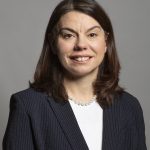
    Sarah Olney – 2020 Speech on Covid-19

    Below is the text of the speech made by Sarah Olney, the Liberal Democrat MP for Richmond Park, in the House of Commons on 12 May 2020.

    It is a pleasure to be beaming into the Chamber this afternoon. Like every other MP, I want to pay tribute to my community in Richmond Park and the way that they have stepped up to the challenge of coronavirus. On International Nurses Day, I want to talk in particular about the nurses at Kingston Hospital and those nurses and midwives who are taking time out from their training at the hospital to serve on the frontline. We thank you from the bottom of our hearts for everything that you are doing.

    I also want to take this opportunity to highlight our transport sector and, in particular, the extraordinary contribution that our transport workers have made throughout this crisis. They have kept our buses and trains moving to get our frontline workers to their places of work, and they have had to face the same dangers. I pay tribute to the 29 Transport for London workers who have died during this crisis, including 23 bus drivers, and I know that the whole House will join me in paying tribute to Belly Mujinga, a ticket checker at Victoria station who died after contracting coronavirus from a traveller who spat at her.

    We are asking a huge amount of our transport workers. We are now asking them to keep us safe as we return to work. We can all appreciate how enormously difficult it will be to maintain social distancing on public transport, ​and I acknowledge the efforts of all those who will be charged with keeping us safe. With the support of MPs from across the House, I wrote to both the Secretary of State for Transport and the Mayor of London last week to call for PPE for transport workers to protect them as they go about their essential work. When we think of the families of those who have already died, we know that this is the very least we can do.

    The Government need to think now about the future of our transport network. We have the opportunity that we have been waiting for to drive through real change to achieve a greener transport network and to meet the challenge of climate change. The massive drop of cars on our roads has led to massively increased air quality, and I know that this is a benefit that my constituents and those elsewhere will want to maintain. It was extremely encouraging to hear from the Secretary of State for Transport about his support and game-changing investment in cycling and walking solutions, not just for our cities, but for communities elsewhere. It is beyond time that the Government threw their support behind active travel for all the environmental, financial, mental, social and physical benefits that it offers to every traveller. It will be not just a crucial part of getting people back to work, but part of a long-term solution for our cities and towns as we adjust to the challenge of the climate emergency, because as long as we understand that we need to avoid public transport, our bus and train companies will continue to see a catastrophic loss of revenue. The Government need to start thinking now about how public transport networks can be maintained so that they are ready to support our workforce as they make a full return to work, as we all hope one day to do.

    We also need to think long term about essential economic infrastructure and how we move freight around our country and internationally. Hauliers and the aviation industry are also facing disaster. They make an essential contribution to our critical supply lines, such as food and medicine, and we need to think long term about how we support those supply lines. I have been calling on the Government to address this; if they feel that it is necessary to support those industries with a Government bail-out, this is the opportunity we have been waiting for to force the pace on meeting the challenge of climate change and to ask those industries to really start embedding greener forms of fuel and movement into their industries.

  • Lee Rowley – 2020 Speech on Covid-19

    Lee Rowley – 2020 Speech on Covid-19

    Below is the text of the speech made by Lee Rowley, the Conservative MP for North East Derbyshire, in the House of Commons on 12 May 2020.

    I am grateful for the opportunity to contribute to this debate. Like so many Members who have spoken in the Chamber and by video link, I want to start by paying tribute to all the work that has been done in my constituency over the last few difficult months. In particular, I want to put on record my thanks to everybody at Chesterfield Royal Hospital who has dealt so brilliantly with such a challenging time, to the healthcare workers in the community, to the people working in our GP surgeries across the towns and villages of North East Derbyshire, to the pharmacists who have been in touch and are working hard, and to everybody working in our care homes and social care settings across north Derbyshire. My thanks go out to all those who are working so hard at this incredibly difficult time.

    And it goes beyond that. I also want to thank the people working in our jobcentres in Chesterfield and Staveley, those who are helping in our schools to allow the sons and daughters of keyworkers to continue, and our local councils. Derbyshire County Council has been ensuring that the people who need to shield—of whom there are 1 million across the country—by staying out of the community for their own safety get the medicines and food that they need. North East Derbyshire District Council has done some wonderful work over the last few weeks, contacting those who are self-isolating to make sure that they get the support and help they need and to check up on people where necessary. I am incredibly grateful for all the work that has been done.​

    The little acts of kindness are particularly important, and I want to mention a few that have come through my inbox in the last few days alone—the PPE that is being created by Dronfield Henry Fanshawe School and St Mary’s at the moment; the pupils of New Whittington Community Primary School who have done a video to say thank you to their teachers; Mrs Shelagh Cheetham and her friends, who have made thousands of pieces of PPE for local hospitals and healthcare settings; and James Cutts from Wingerworth, who goes on his daily run around the village not in normal running wear but in a Batman or Superman suit, to cheer up local children when he goes past their windows. I am grateful for all that they are doing, and I hope that they continue.

    In the time I have left, I want to spend a few moments looking at the broader challenge that we face. Members have raised many different questions today. Some are fair questions. Some, in my view, are unfair questions, but I understand why they are being asked. A series of broader truths has come forward over the past few weeks. We live in unprecedented times. There is no absolute certainty in decisions, and fundamentally, it reminds us all of the frailty of humanity. We think that we control our environment. Actually, our environment controls us. However brilliant our science, however able our politics and however fantastic our communities, ultimately, decisions are sometimes beyond us.

    We have done so much over the past couple of months to get on top of this virus, and I am confident that we will do more in the coming days, weeks and months. This is the first pandemic in a century that we have had to deal with, and it is the first pandemic in a globalised world. We are seeking to do something that has never been done in the history of humanity: to turn back the tide of a pandemic and stop it overwhelming us. We have made huge progress, and I am grateful to everybody for the work they have done. Together, we will continue to do that work, and together, we will get through this, to a better world at the end.

  • Luke Evans – 2020 Speech on Covid-19

    Luke Evans – 2020 Speech on Covid-19

    Below is the text of the speech made by Luke Evans, the Conservative MP for Bosworth, in the House of Commons on 12 May 2020.

    It is nice to have the chance to put on record my thanks to constituents in Bosworth and the key workers. A couple of weeks ago, I wrote to the GPs, the pharmacies, indeed the police, the schools, the care homes, to congratulate them on the work they are doing, and continue to do. I am most grateful for all that they do.

    It is fair to say that the virus reaches all areas of our lives, and in turn all areas of Government, and that brings pain—pain with the loss of businesses, pain with the loss of jobs, but, most importantly, pain with the loss of lives. However, out of crisis comes opportunity, and there are some positives. I would like the Government to take those forward. I envisage that in the form of a time-limited department called the “department of virus legacy”.

    At the end of April, I wrote to the Cabinet Office and the Prime Minister, because I think it is so important, as we have heard in these debates, to encapsulate and draw on all the positive aspects that have come out of this crisis. We have had a revolution overnight, rather than the usual evolution. In my sector as a GP, literally overnight everyone has begun teleconferencing. That is something that the industry has tried to do for over a decade, and has not been able to achieve—and just like that, it has happened.

    Pharmacies are now all digital, with electronic prescribing. In my role on the Health and Social Care Committee, I asked all the witnesses we have had what positive aspects had come out of this. Those in cancer care talked about how they were able to bring 10 teams into one hospital to deal with a patient, and maternity talked about the fact that they have actually had more contact because they can do remote teleconferencing. It is the same with mental health. There are positives out there, and that is just in the sector that I come from.​

    More widely, we have looked at remote working. We have looked at the societal benefits of now knowing your neighbour, caring for your neighbour and caring for your community. These are absolutely critical things, which we need to embed into our society. To do that, I urge the Government to consider establishing such a department.

    Legacy planning, as we found in the Olympics, is absolutely critical. Now more than ever we have the time-limited opportunity to enshrine, post virus, the positive changes in the fabric of our policies and, in turn, our Government and society. To the Minister listening I say, “I hope you will take this on board when you hold discussions with the rest of Government.”

  • Christine Jardine – 2020 Speech on Covid-19

    Christine Jardine – 2020 Speech on Covid-19

    Below is the text of the speech made by Christine Jardine, the Liberal Democrat MP for Edinburgh West, in the House of Commons on 12 May 2020.

    It is a pleasure to take part in this debate today, as I look out of the window at this beautiful day in Edinburgh. Although the past few months have been tough and we have come through much, the people of this city and my constituency know that it will take every ounce of our energy to preserve what it is that makes Edinburgh such a wonderful place. Traffic at our airport is now almost negligible, the Royal Highland Show, which contributes £65 million to our economy, has been cancelled, and that shining gem in Scotland’s cultural calendar, the Edinburgh Festival, will not bring the world to our city this August. Across Edinburgh, myriad small, medium-sized and international companies are concerned for their future—a future of challenges for which they are not responsible.

    For us here in Edinburgh West, as in most constituencies up and down the country, perhaps the biggest task is looking after the thousands of people concerned about their health, their jobs and their financial future. We calculated yesterday that during this period of lockdown we have dealt with around 1,000 pieces of individual casework, every one a personal emergency.

    Much of this crisis has been managed by the UK Government, but also directly, here in Edinburgh, by the Scottish Government. The issues that they face are exactly the same; but in tackling them I would appeal to both our Governments to work together. Much has been said this week about mixed messages, uncertainty, a lack of clarity about what the UK Government were saying about lifting lockdown. Imagine what that is like ​for the people of Northern Ireland, Wales and Scotland, with advice that is often contradictory—not just different: completely contradictory. Can I go out? Can I go to work? Which Government do I listen to? Which advice do I follow? Which guidelines are appropriate if I am out walking my dog? That is ridiculous. It is also not good enough for my constituents, or for any other constituent in any other part of the devolved nations. And for those organisations and companies that I mentioned earlier, any uncertainty is a potential recipe for disaster. In Scotland, our businesses have now had more than eight years of debate about our future. Will our economy be in an independent Scotland? Will our economy be in the UK? Will we be part of the European Union or not? All the uncertainty they have had to deal with seems small now in comparison to the emergency that is Covid-19.

    I would ask both our Governments to work together, so that our airports and our airlines, which are so vital to our economy, are able to build a strategy in which they know that they will be speaking to not just the devolved authority but the UK authority and wider authorities, so that companies like Diageo, based here in Edinburgh West, know which framework they are falling into, and the people of Edinburgh West, Scotland and the rest of the United Kingdom have a clear path- way out of this crisis—a clear, united pathway, with their Governments walking in lockstep for everyone’s future.

  • Greg Smith – 2020 Speech on Covid-19

    Greg Smith – 2020 Speech on Covid-19

    Below is the text of the speech made by Greg Smith, the Conservative MP for Buckingham, in the House of Commons on 12 May 2020.

    In addition to placing on record my gratitude to everyone in the NHS and on the frontline, I would like to pay tribute to the many of my constituents who have gone above and beyond. From the community hub set up by Buckinghamshire Council, the support network on Facebook for the town of Buckingham, St Laurence’s church in Winslow delivering meals to the most vulnerable, and the Haddenham Scrub Hub sewing garments for the NHS and care staff, every corner of my constituency is playing a part.

    In particular, I would like to highlight two schemes: the incredible Risborough Basket, set up by Councillor Matt Walsh and the team at Princes Risborough Town Council, which delivers orders from local shops and has its own fruit and veg service for isolating households; and Bernie the Bus, set up by Councillors Paul Irwin and Ashley Waite, which collects food bank donations from people’s driveways. It blasts out music, bringing a note of cheer as it passes through the villages, and on the days I volunteered with it in Quainton, Ashendon, Wescott, Marsh Gibbon, Grendon Underwood, Oakley and Brill, I was blown away by the generosity that so many people showed through their donations. Once we are through this crisis, I hope we can capture the very best of the great British spirit shown by these community heroes, and ensure that we can strengthen our country’s strong record of voluntary service for the long term.

    I have also been proud of the many businesses that have adapted, including farm shops doing deliveries and pubs doing takeaways, and even the drive-through beer service at the Chiltern Brewery. So many businesses have done their very best, and I encourage everyone to shop local to support them. One business, sadly, has completely failed to follow the guidance. HS2 Ltd’s contractors have worked throughout the crisis, not social distancing and causing great alarm in villages such as Steeple Claydon. Contractors have been refusing to follow the rules on staying on site, instead using local shops and making residents fearful of the virus being spread. The chief executive of HS2 Ltd gave me many ​assurances on this at the Transport Select Committee, but the gap between promises and reality continues to be wide. I am hopeful that the HS2 Minister can use the evidence I am sending him to hold HS2 Ltd fully to account.

    On business support, the speed with which the Government put in place financial support and security for people’s jobs, including today’s extension of the job retention scheme, has been incredible. That was no small or easy task. With an economy as diverse and dynamic as ours, however, it was inevitable that not every eventuality would be covered, and I am grateful to the Government for listening and adding support throughout the crisis. An example is the additional £10,000 grants announced for the hardest-hit dairy farmers, which I and other colleagues argued for.

    However, a couple of pieces of the jigsaw need to be put in place if we are to complete the picture. Many owner-directors of small businesses—the backbone of our economy—who perfectly legitimately pay themselves through dividends are becoming increasingly desperate. They are facing uncertain futures. I accept that there is no easy solution, but for those who continue to be unable to trade, support needs to be made available. Secondly, many suppliers to the events and hospitality sector do not have the support that the companies they serve have received, despite their inability to trade being the same. I am hopeful that councils will use their new discretionary grants to support them, along with other firms that have contacted me, such as coach companies, kennels and hauliers. With those two calls heard, I commend the Government for their continuing strong response to this crisis.

  • Steven Bonnar – 2020 Speech on Covid-19

    Steven Bonnar – 2020 Speech on Covid-19

    Below is the text of the speech made by Steven Bonnar, the SNP MP for Coatbridge, Chryston and Bellshill, in the House of Commons on 12 May 2020.

    Thank you, Madam Deputy Speaker, for the opportunity to take part in this general debate on covid-19 and to be a voice for the people of Coatbridge, Chryston and Bellshill in these unprecedented times. This pandemic has presented completely new challenges for us all, demanding responses that have no precedent, but this is by no means an excuse for the response of this UK Government.

    This is not the first time that these nations have been faced with a crisis. Indeed, just last week, images of world war two were again broadcast into our homes. It was a time when our nations fought bravely together and when strong leadership provided the ultimate protection against our enemy threats. Today, we face a new fight and a new enemy, but there is no protection in the leadership of this Prime Minister. Where we looked for leadership, calmness, and direction, we found stand-ins, mixed messages and confusion. Covid-19 is no more a natural disaster than a famine; both are highly politicised events. We can waste time blaming the outbreak of disease on global agribusiness, but it would be an insult to the intelligence of the people of these nations if we do not recognise that the true failure in preparation lies at the very heart of the UK Government. For years, this Government have tried to fool us into thinking that their austerity-driven attack on our vital public services has been a societal necessity. Yet the current crisis has magnified the absurdities of these complacent assumptions. Will they now admit that austerity has always been an entirely political decision from which we are all now suffering: hence, the failure to implement immediate isolation and contact tracing for all those entering our borders; hence, the fatal delay in implementing lockdown; hence, the vast shortages of PPE in our hospitals and care homes; hence, the failure to meet revised testing target after revised testing target; and hence, the thousands upon thousands of lonely, untimely deaths that could and should have been prevented.

    Despite those vast failings, a vague optimism has been added to proceedings: a vague optimism that people can go back to work but only if their work is open; a vague optimism that we can travel as far as we desire for exercise, but as long as public transport is not involved; and a vague optimism that we can meet with another outwith our household, but only if we do not plan to meet up with them beforehand. This vague optimism has become the epitome of the UK Government’s message. It is a strange pretence that everything is suddenly normalised: that witnessing the news of hundreds of deaths on our TV screens every evening is just to be accepted and that we can continue with life as we did in the past. A de facto muddling-through has emerged in this UK Government, one that is concentrating on maximising market power rather than on prioritising public health. It is quite disgraceful.​

    My constituents, like many others up and down these countries, are bearing the brunt of this confusion. No one should be forced to risk their health or the health of their loved ones in order to maintain their employment, and yet that is the very dilemma that my constituents are facing after this Prime Minister, on Sunday night, chose, as he always does, to prioritise one-nation Conservatism over a four-nation approach.

    Let me finish by saying this, Madam Deputy Speaker: our death toll is nothing short of catastrophic. Our daily counts have far surpassed that of our neighbouring countries and somehow there is a determination to cloak this in the illusion of a Great Britain; a mythology built on inflated pride and lowered expectations. It is not this Government who are great—far from it—but the people of these nations who make it so. It is the health and social care workers, our security officers, our emergency responders, our till operators, our delivery drivers, and our teachers. It is to them that I give my thanks and appreciation. Those people are the backbone of our society and only when this UK Government begin to prioritise human life over economic prosperity will this country have something to be optimistic about.

  • Huw Merriman – 2020 Speech on Covid-19

    Huw Merriman – 2020 Speech on Covid-19

    Below is the text of the speech made by Huw Merriman, the Conservative MP for Bexhill and Battle, in the House of Commons on 12 May 2020.

    It is a pleasure to speak in this debate and to see you looking resplendent in the Chair, Madam Deputy Speaker.

    I wish to take the opportunity to thank all my constituents, who have done the most amazing job rallying around and looking after each other—that is what makes my part of the East Sussex coast so special. I also wish to recognise and thank the Government for the support that they have given and the lead they have taken in these difficult times.

    As MPs from all parties will be aware, we face day-to-day challenges. For the past few weeks, my daily challenge has been to try to get our Bexhill testing centre plugged into the central link. We have a frustrating situation whereby we have a testing centre, but it is not plugged in. If anyone from Deloitte is following proceedings, I ask them to plug our local centre in to the national link so that local people can use their local testing centre.

    In my few remaining minutes I wish to focus on the Transport Committee’s inquiry on coronavirus and the implications for the transport sector. We have been looking at the aviation sector, which is clearly on its knees right now and needs our assistance. I note the Government support and welcome it, but recent days have seen us looking towards quarantine. My question to the Government is why now? If it is required from a health perspective, why was it not introduced at the start of lockdown? If it is required now, what help will there be for the aviation sector so that it can pick up? It is important not just for jobs and travel, but for our imports and exports. Some 40% of all imports arrive in the belly of airliners arriving at Heathrow, and it is important that we support them.

    The aviation sector itself needs to do more to support its staff. Yesterday, the chief executive of British Airways’ parent group, Willie Walsh, appeared before the Select Committee. Almost a third of BA staff are facing redundancy, and those who remain have been told that their terms and conditions will be lowered and altered. Some of those terms and conditions have nothing to do with costs—for example, they may relate to grievance procedures. It feels as if BA is using this as an opportunity to undertake long-held reforms of terms and conditions. I asked the chief executive whether he would be willing to allow those employees to share the proceeds of growth if things return back to normal times, but he refused to give that assurance. Thousands of BA staff have contacted me and other members of the Select Committee. They are clearly the best of employees—they care about their carrier and they care about each other— and I hope that BA will use the welcome extension of furlough to put the redundancy plans back in the hold, where they deserve to be.

    I also want to talk briefly about Gatwick, my local airport. It is—or has been—the busiest single runway airport, handling 46 million passengers each year. It is an important national asset, and I really hope that it will survive.

    The next Committee session for us will be on buses and trains. We are very concerned about the worker situation. There are 9.9 coronavirus deaths per 100,000 UK males, yet in the bus sector the figure is 26.4 deaths. Clearly, more needs to be done to protect those workers. I support the measures that the Government have brought in today regarding passengers using their own PPE, ​although I note that, in France, PPE is being handed out on a more professional basis by workers. In Germany, the transport system is back operating as normal because it recognises that social-distancing just does not work in practice. As we move out of lockdown, I hope that we can be more flexible so that we protect our economy and our transport sector.

  • Kirsten Oswald – 2020 Speech on Covid-19

    Kirsten Oswald – 2020 Speech on Covid-19

    Below is the text of the speech made by Kirsten Oswald, the SNP MP for East Renfrewshire, in the House of Commons on 12 May 2020.

    I start by sharing my huge gratitude to all the key workers in East Renfrewshire, who are doing such important ​work, and to the brilliant volunteers supporting our local community at this difficult time. I also pass on my condolences to those in East Renfrewshire who have lost loved ones.

    For the UK Government to be described as “reckless” by the British Safety Council in the midst of a pandemic should make even this Prime Minister pause. It was a disappointment that he did not share his planning or consult—not just with the devolved Administrations, but with local authorities, trade unions, employer representatives, and even, reportedly, his own Cabinet. Having set his announcement for Sunday to allow people to get going with the measures on Monday, it emerged that no preparation had been done with regard to transport, childcare and many other issues. Confusion reigned, even among the Ministers set out to do the morning media rounds. Most announcements applied only to England—although you would struggle to tell—but many in the Prime Minister’s party are demanding that all four nations march towards the cliff edge in lockstep. The response from Scotland is firm: no chance.

    Is it really time to stop protecting the NHS? If not, why is that disappearing from the heart of the campaign in England? And why was the “Stay Alert” slogan launched with green imagery? It is not difficult to see the signal that that is designed to send. As the Prime Minister prevaricates and blusters, it is clear that he is trying to nudge the population into an ill-considered move. Telling people to deal with the pandemic by staying alert is an abrogation of responsibility. A crisis of this magnitude demands leadership; thank goodness for Nicola Sturgeon and her fellow First Ministers.

    But there is no going back to the same old, same old—even if we wanted to. The Prime Minister’s enthusiastic but vague encouragement for people in England to hop in their cars and get back to work is neither sensible nor realistic. It displays a lack of connection to the reality of people’s lives, never mind their working lives. The Prime Minister needs to remedy that as a matter of urgency if he has any interest in workers’ safety and wellbeing.

    I applaud the UK Government for bringing in the furlough scheme but, as ever, the devil is in the less publicised detail. There will be disquiet at the impact on jobs of the employer contribution that the Chancellor announced today that he is looking for. I and other colleagues have been calling for flexibility in furloughing, and the Chancellor said today that there can be flexibility from August; we need to see partial furloughing before that. The Scottish Chamber of Commerce asks that flexibility takes account of a company’s ability to contribute, which will differ depending on location and sector. I hope that the Chancellor will take that on board.

    Despite the recognition of the vulnerability of pregnant women at the start of this crisis, it took until yesterday for half a sentence of guidance to be produced. Women have had to take sick leave or annual leave because the UK Government failed to listen when the issue was highlighted to them. If we are to achieve an orderly end to lockdown when the time is right, listening will be vital, and fair, safe, flexible work will be key. The Government should focus on not only sustaining jobs but enhancing fairness and employment rights as we look ahead. They must properly examine how a universal basic income could underpin a sustainable and fair recovery, which will be so important in the months and years ahead.

  • Neil Hudson – 2020 Speech on Covid-19

    Neil Hudson – 2020 Speech on Covid-19

    Below is the text of the speech made by Neil Hudson, the Conservative MP for Penrith and the Border, in the House of Commons on 12 May 2020.

    The covid-19 pandemic has affected all our lives in so many ways. First, I offer my condolences and prayers to all those who have lost loved ones during this crisis. I pay tribute to all those on the frontline in our NHS and the care sector who have been working tirelessly to look after people and to keep us safe. I also thank the key ​workers who have kept society going, be that in looking after children, supporting our food supply lines or working in our vital public services.

    I thank all those who have come together in Cumbria to support our local communities: our local resilience forums, local volunteer groups, emergency groups, churches and the like. It has been so heartening how people have rolled up their sleeves and are looking out for their neighbour and providing much needed help and support, especially to the vulnerable at this time.

    I very much welcome the unprecedented support measures that the Government have put in place during this crisis, which have provided the lifeline and bridge to allow jobs and businesses to be there on the other side. I also thank the Government for listening to feedback from me and other colleagues and adapting the support schemes so that more people can be included.

    In my constituency of Penrith and The Border, key changes that have helped our tourism sector include the expansion of business grants to bed and breakfasts. I am also so grateful to the Department for Environment, Food and Rural Affairs for responding to our calls for a dairy hardship fund. I hope that the Government can further and widen the support to include directors of companies who have paid themselves a salary through dividends, to expand the flexibility of the furlough scheme —I very much welcome the Chancellor’s announcements today—and to widen the business grants and rates relief strategies. That will really help vital businesses such as vets and dentists.

    As a vet, I pay tribute to the profession of which I am a proud member. Vets, nurses and their allied staff have stepped up in this crisis to provide necessary care for our animals and support for our food supply chains. In addition, the veterinary sector has transferred much needed medical equipment, such as ventilators, into the NHS, and veterinary staff have stepped up in large numbers to volunteer in the NHS and in their communities.

    As we are now looking ahead to the transition phase, it is important that support is in place and is targeted at businesses that may be slower to recover, such as those in the tourism and hospitality sectors, which are so important for Cumbria. [Inaudible].

    The covid pandemic has thrown into sharp relief the importance of food production and security, and the critical areas of health and social care. Newton Rigg College in Penrith has over 1,000 learners and 130 staff, and provides education in vital areas such as agriculture, land-based studies, and health and social care. The college is now the subject of a local provision needs analysis by the Further Education Commissioner’s office, creating uncertainty over its future. It is critical that the Government work with local stakeholders to try to secure a viable and sustainable future for this important institution. Now more than ever, we must look after colleges such as Newton Rigg, that play such a big role in supporting our vital farming industry and providing important career options for our local communities. Covid-19 can and will be overcome, but we must make sure that our communities, businesses and institutions are supported to be there for the long term.