Tag: 2020

  • Michael Ellis – 2020 Comments on Callum Haycock

    Michael Ellis – 2020 Comments on Callum Haycock

    The comments made by Michael Ellis, the Solicitor General, on 11 December 2020.

    Haycock’s sickening actions have had a significant impact on the victim and her family, and it is right that the Court of Appeal has increased his sentence today. My thoughts remain with the victim and her family for their ordeal.

  • Alok Sharma – 2020 Speech on Climate Change

    Alok Sharma – 2020 Speech on Climate Change

    The comments made by Alok Sharma, the Secretary of State for Business, Energy and Industrial Strategy, on 11 December 2020.

    Thank you very much and good afternoon everyone. And thank you particularly to His Excellency the Honourable Kausea Natano; Dame Meg Taylor; and the Pacific Island Forum Leaders, for inviting me to speak.

    The message coming from regions like the Pacific on climate change has a moral urgency and the world cannot ignore it.

    I hear what you say. That climate change is the single greatest threat to the livelihoods, security and wellbeing of your people. And I am committed to working with you, throughout my COP Presidency. To make sure that your voices are heard. To address the issues that matter most to you. And to find practical solutions.

    I commend the leadership your region has shown on climate change. Which is reflected in the Kainaki II Declaration, the Framework for Resilient Development in the Pacific.

    And despite contributing only a fraction of the world’s greenhouse gas emissions, many of you are coming forward with updates to your NDCs.

    You are setting a powerful example and encouraging countries around the world to raise their ambition. On mitigation, on adaptation and on finance.

    Last week, the United Kingdom announced its NDC. Committing to cut our emissions by at least 68% by 2030, which keeps us on the pathway to our 2050 Net Zero commitment.

    Soon we will be submitting our first Adaptation Communication.

    And more leaders will announce commitments at the Climate Ambition Summit, which the UK is hosting tomorrow, with the UN and France and in partnership with Italy and Chile.

    And the Summit builds on events that have taken place across the world.

    From the CARICOM Moment of Ambition Roundtable that the UK is co-hosting with Caribbean partners today.

    To this “Kainaki II to COP26” Roundtable.

    I would like to thank all those of you who are making announcements at the Summit tomorrow.

    And also those who have said they will announce new commitments in the coming months.

    Such targets are absolutely vital. But alongside them, we must drive practical solutions for reducing emissions. By working together, we can make progress faster.

    So our COP26 campaigns are focusing attention on five critical areas: transport; energy; nature-based solutions; adaptation and resilience; and finance.

    And we are highlighting adaptation as a priority and encouraging action. We’ve recently appointed a new international champion for adaptation and resilience, Anne-Marie Trevelyan.

    Anne-Marie will help to lead our drive forward towards global ambition and action.

    And it’s by supporting countries on the frontline of climate change that we will be able to help the adaptation to its impacts and build resilience.

    We’re also working to increase public and private finance, urging donor countries to meet the $100 billion commitment. And to go beyond it.

    Leading by example, the UK is doubling its international climate finance commitment to £11.6 billion over the next five years.

    We’re also working to make public finance more accessible.

    And to get more money for adaptation. We’re working with multilateral development banks, investors, and others.

    And I know that this approach is shared by Australia and New Zealand., and I’m committed to our working closely together.

    I have heard this forum’s call on averting, minimising and addressing loss and damage.

    And over the next year I want to increase our understanding of all the issues that matter to you. And how they can be addressed.

    And this includes listening to your views on how best the Kainaki II recommendations can be reflected in the outcomes of COP26.

    So we will be increasing our engagement with the Pacific.

    In the new year, we’ll be holding events to discuss the issues that matter to vulnerable countries.

    And we will also ensure that your priorities are heard at the G7 and the G20. And, of course, at the Commonwealth Heads of Government meeting next year.

    Because I am determined to amplify the voices of climate vulnerable countries and put them at the heart of the COP26 process.

    So that together, we unleash the full potential of the Paris Agreement in Glasgow. And by doing so build a brighter and more sustainable future for us all.

    Thank you.

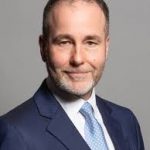
  • Christopher Pincher – 2020 Speech at the Insider Midlands Residential Property Conference

    Christopher Pincher – 2020 Speech at the Insider Midlands Residential Property Conference

    The speech made by Christopher Pincher, the Minister of State for Housing, on 11 December 2020.

    Good morning and a very warm welcome to everyone attending today’s Insider Midlands Residential Property Conference.

    It is a real pleasure to be joining you, albeit remotely, which as we all know is the way of the world at the moment.

    Can I begin by thanking you, the housing professionals, business owners and executives – those based in the Midlands, a part of the world well-known to me, and those of you further afield – for all of the resilience, perseverance and hard work that you have put in throughout this extraordinary period.

    I think all of us today recognise the unique role which the housing sector plays in our economy, working in close partnership with the government. We’ve sought to do everything that we can to keep the sector running as smoothly as possible during this pandemic crisis.

    From the Safe Working Charter launched with the Home Builders Federation back in May when the sector reopened, to the Business and Planning Act in July, we’ve worked to make sure the sector has remained open and has been able to work safely and effectively to keep our construction and housing economy on track.

    Now with the Pfizer vaccine being rolled out, we have a post-Covid world in sight. We also have in sight the greatest economic comeback the country has ever known. The housing industry has been leading that charge and is pivotal in that process of reconstruction.

    For the Midlands, that starts with meaningful investment in growth-spurring projects which support regeneration and new development.

    That includes over £100 million of investment from our Land Fund for the West Midlands Combined Authority to deliver 8,000 homes across the region.

    That is in addition to the significant funding package announced by the Prime Minister on a visit to Dudley earlier this year with Mayor Andy Street, which saw £84 million from the government’s Brownfield Fund supporting the West Midlands Combined Authority to build thousands of new homes on former industrial land.

    But this is not just about building new homes – important as we all know that is.

    We are also investing in shovel-ready, job-creating infrastructure projects which will be key to helping businesses get back on their feet and for the Midlands Engine economy roar back into life.

    Local Enterprise Partnerships across the Midlands are receiving in the region of £214 million from our Getting Building Fund to support innovative, growth-spurring projects.

    Initiatives like the Warwickshire Green Recovery Project, which is rapidly expanding on-street charging points for electric vehicles, all the way through to a new Digital Advanced Manufacturing Centre in Chesterfield which is pushing the envelope in 3D prototyping and modular construction.

    Of course, government cash, however useful and significant and however targeted, can only go so far in our national mission to build back better.

    We need regulatory reform as well, and as many of you will know, the government has published its ambitious ‘Planning for the Future’ White Paper with proposals for a reformed planning system to make it simpler, quicker and more accessible.

    Local Plans still need to be prepared by local councils, but will be more map-based, more visual, and more digital – to that extent they will be much more easy to use.

    Land will be put into one of three categories: areas for growth, for renewal, or for protection.

    And to make sure we get the houses we need, we’re proposing a new measure for calculating a housing requirement figure for each local planning authority, which will still be the building block for planning.

    There will also be a new time limited statutory timetable for preparation, rather than the average 7 years it presently takes to adopt a plan.

    If you look around the Midlands, something like 40% of local authorities have a plan which was adopted more than 5 years ago – our reforms will mandate everyone to have up-to-date local plans to benefit their communities.

    Together, these reforms will inject much-needed agility into the planning system.

    It is the greatest overhaul we have proposed in planning in over 70 years since the Town and Country Planning Act was introduced.

    It is fair to say the proposals have conjured up some spirited debate. We have had 44,000 submissions to our consultation, which is the beginning of the process of refining our proposals.

    Although the consultation is now closed, I am very keen that we maintain connection with all the people and parties that have contributed to the consultation – that we continue to work with professionals across the sector to ensure we approach those reforms on a consensual basis and that we get them right.

    Because we know that it is incumbent upon government to equip the housing industry with the right tools, the right regulations and the right resources and funding to build the homes the country needs at pace and at scale.

    That also means accelerating delivery of Modern Methods of Construction (MMC), including offsite and smart techniques, to encourage a more innovative, diverse, competitive market.

    I think you will be hearing from a host of speakers later today about MMC – we certainly believe in government that MMC could be revolutionary for the industry in terms of improved productivity, build speed, and economies of scale.

    That is why we are committed to tackling the barriers to increasing use of MMC – the most common one being a lack of standardisation in components and designs.

    Those difficulties add unnecessary costs to the MMC process and hampers the sector from being able to compete with traditional methods of building.

    We will shortly engage with industry on this very issue to drive efficiencies and create a more resilient MMC pipeline.

    We know that Modern Methods of Construction are thriving in the Midlands too.

    We are investing £30 million in a landmark deal between Sekisui House and Urban Splash to build thousands of homes using the latest modular construction techniques from Japan.

    So I think MMC can be a tremendously powerful tool for us and can also help us build out those greener, more sustainable homes.

    Industry research shows homes built using MMC techniques can have up to 80% fewer defects whilst reducing heating bills by up to 70 per cent.

    That’s not just important when it comes to fuel poverty, but is important when we consider that housing accounts for around 15% of the UK’s greenhouse gas emissions through their use of oil and gas for heating and hot water.

    Making homes greener, cleaner and better insulated is integral to combatting climate change and is one of the reasons why we have introduced the Future Homes Standard, which by the middle of this decade will see new houses producing at least 75% fewer emissions.

    Homes built to those new standards will be future-proofed, with low carbon heating and high levels of energy efficiency.

    Crucially, they will be ‘zero carbon ready’ – so there will be no costly retrofits. MMC has a crucial role to play in the development of those homes and in the Future Homes Standard.

    That, I think, is what lies ahead – a modern housing industry truly empowered to build cleaner, greener, more sustainable homes for the communities around the country and around the Midlands that need them – and build those homes faster than ever before.

    And you are the integral players in making that vision a local reality.

    The Midlands – I was born there, brought up there, have a constituency in the Midlands – was the cradle of the industrial revolution.

    It’s where the nail makers came together to “gi’it some ‘ommer”, as we used to say in Wolverhampton.

    Now, with its unrivalled expertise, with its skills and its innovation, I think it is perfectly placed to lead Britain’s green revolution – to be the new green workshop and tech chamber of the world.

    It’s a ‘once in a generation’ opportunity to grasp – to build back greener, to build back faster, and build back better from this pandemic.

    And I know you in the Midlands will grasp it.

    I hope you enjoy your conference. Thank you for listening.
  • Anneliese Dodds – 2020 Comments on Financial Stability Report

    Anneliese Dodds – 2020 Comments on Financial Stability Report

    The comments made by Anneliese Dodds, the Shadow Chancellor of the Exchequer, on 11 December 2020.

    Small businesses are the backbone of our economy. They have been hit hardest by the pandemic, and now face a huge cashflow problem. Many have already taken on significant debt just to make it through. Today’s report shows they face a worrying future.

    Labour has repeatedly called on the Government to set out a plan for rebuilding business and tackling high levels of corporate debt. Without that, we risk rising insolvencies and yet more job losses.

    The Government needs to do the responsible thing and act now to help our small businesses.

  • Paul Eagland – 2020 Comments on BDO Not Repaying Furlough Money

    Paul Eagland – 2020 Comments on BDO Not Repaying Furlough Money

    The comments made by Paul Eagland, the managing partner of BDO, on 10 December 2020 following the company’s decision to pay partners £137 million.

    It’s been a year completely unique to any other. A year when we have all worried about the health of friends and family but also one where economic uncertainty has led to increased anxiety for everyone.

    To fully understand our annual results, they should be broken down into two very different periods: pre-lockdown and lockdown. The strength of our overall financial results derives entirely from the first nine months before the crisis hit us. The last three months tell a completely different story with revenues and profits falling as lockdown took hold.

    To brace ourselves for the COVID-19 impact, our first step was to ask partners to reduce their monthly ‘pay’ and forego their quarterly distributions. Subsequently – and in order to protect the jobs and pay packets of our 5,500 UK people – we applied to use the Coronavirus Job Retention Scheme. We ensured our furloughed employees were paid in full by topping up their wages to 100% during their time on furlough, and we brought all our employees back into full time employment with no redundancies made across our workforce.

    COVID-19 has already had a huge impact on our business and we don’t know what lies around the corner. This means we have had to take a number of tough but prudent decisions to ensure the sustainability of the firm and to protect our people’s jobs – not just for the initial lockdown period but also looking ahead to the slow, challenging recovery.

  • Nadine Dorries – 2020 Statement on the Ockenden Review

    Nadine Dorries – 2020 Statement on the Ockenden Review

    The statement made by Nadine Dorries, the Minister for Patient Safety, Suicide Prevention and Mental Health, in the House of Commons on 10 December 2020.

    With permission, Madam Deputy Speaker, I would like to make a statement on the initial report from the Ockenden review, which was published this morning.

    Before I update the House on the findings, I wish to remind the House of the tragic circumstances in which the review was established. It was requested by the Government following concerns raised in December 2016 by two bereaved families whose babies had sadly died shortly following their birth at the Shrewsbury and Telford Hospital NHS Trust. I am grateful to my right hon. Friend the Member for South West Surrey (Jeremy Hunt), who, as Secretary of State for Health and Social Care, asked NHS Improvement to commission the independent inquiry.

    The inquiry is chaired by senior registered midwife Donna Ockenden, a clinical expert in maternity who was tasked with assessing the quality of previous investigations and how the trust had implemented recommendations relating to newborn, infant and maternal harm. As the report acknowledges, this year the country has rightly united in pride and admiration for our NHS, but we must accept that in the past not everyone has experienced the kindness and compassion from the NHS that they deserved.

    The review team has met face to face with families who have suffered as a result of the loss of brothers and sisters, or who have, from a young age, been carers to profoundly disabled siblings. The team has also met parents in cases where there have been breakdowns in relationships as a result of the strain of caring for a severely disabled child or the grief after the death of a baby or resultant complications following childbirth.

    The original terms of reference for the review covered the handling of 23 cases; however, since its launch more families have come forward and extra cases have been identified by the trust. As a result, the review now covers 1,862 cases, and this has led to an extension of its scope and delivery. An interim report has therefore been published today, and it contains a number of important themes that the review team believe must be shared across all maternity services as a matter of urgency. Indeed, I personally, and the Government, pushed to have this interim report at this point in time so that we could learn from the findings of the inquiry so far.

    This is the first of two reports, based on a review of 250 cases between 2000 and 2018; the second, final report will follow next year. Today’s report makes it clear that there were serious failings in maternity services at the Shrewsbury and Telford Hospital NHS Trust. I would like to express my profound sympathies for what the families have gone through. There can be no greater pain for a parent than to lose a child. I am acutely aware that nothing I can say today will lessen the horrendous suffering that these families have been through and continue to suffer. Nevertheless, I would like to give my thanks to all the families who agreed to come forward and assist the inquiry.

    The review team held conversations with more than 800 families who have raised serious concerns about the care they received. I know that it has not been easy for them to revisit painful and distressing experiences, but through sharing their stories we can ensure that no family has to suffer the same pain in the future. From the outset the inquiry wanted families to be central to the team’s work and for their voices to be heard, and I am pleased that the families were able to see the report first, this morning, shortly before it was presented to Parliament. I assure them, and Members of this House, that we are taking today’s report very seriously and that we expect the trust to act on the recommendations immediately.

    I thank Donna Ockenden and her team for their diligent work. Their valuable work provides essential and immediate actions to improve patient safety and ensure that maternity services at the trust are safe. Four of those actions are for the trust and seven are for the wider maternity system. The report sets out clear recommendations for what the trust can do to improve safety relating to overall maternity care, maternal deaths, obstetric anaesthesia and neonatal services.

    The report also sets out actions that can make a difference to the safe provision of maternity services everywhere. They include recommendations on enhancing patient safety and how we can best listen to women and families, developing more effective staff training and ways of working, managing complex pregnancies and risk assessments throughout pregnancies, monitoring foetal wellbeing, and ensuring that patients have enough information to give informed consent. I welcome those recommendations and the others in the report. We will be working closely with NHS England, NHS Improvement and Shrewsbury and Telford Hospital NHS Trust, which have accepted each of the recommendations and will take them forward. We learn from these tragic cases so that we can give patients the safe and high-quality care that they deserve.

    Patient safety is a big priority for me and the Government. We want the NHS to be the safest place in the world to give birth, and this report makes an important contribution towards that goal. Our ambition is to halve the 2010 rates of stillbirths, neonatal and maternal deaths, and brain injuries in babies occurring during or soon after birth by 2025. We have achieved early our ambition of a 20% decrease in stillbirths by 2020, but of course there is always more to do and we owe it to the families to get it right.

    The Ockenden review is an important document that vividly shows the importance of patient safety. I assure the House that we will learn the lessons that must be learned so that the tragic stories found within these pages will never be repeated again. I commend this statement to the House.

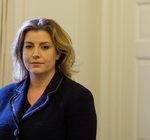
  • Penny Mordaunt – 2020 Statement on the Future Relationship with the EU

    Penny Mordaunt – 2020 Statement on the Future Relationship with the EU

    The statement made by Penny Mordaunt, the Paymaster General, in the House of Commons on 10 December 2020.

    I am grateful for the opportunity to update the House again on the progress of our negotiations with the European Union. The Prime Minister met the Commission President yesterday evening in Brussels. They, along with the chief negotiators, Lord Frost and Michel Barnier, discussed the significant obstacles that still remain in the negotiations. It is clear that we remain far apart on the so-called level playing field, fisheries and governance. However, they agreed that talks should resume in Brussels today to see whether the gaps can be bridged. They also agreed that a decision should be taken by Sunday regarding the future of the talks.

    We are working tirelessly to get a deal, but we cannot accept one at any cost. We cannot accept a deal that would compromise the control of our money, laws, borders and fish. The only deal that is possible is one that is compatible with our sovereignty and takes back control of our laws, trade and waters. As the Prime Minister said, whether we agree trading arrangements resembling those of Australia or Canada, the United Kingdom will prosper as an independent nation. We will continue to keep the House updated as we seek to secure a future relationship with our EU friends that respects our status as a sovereign, equal and independent country.

  • Justin Madders – 2020 Comments on the Ockenden Review

    Justin Madders – 2020 Comments on the Ockenden Review

    The comments made by Justin Madders, the Shadow Health Minister, on 10 December 2020.

    This is a heart-breaking report that lays bare the tragic consequences of a catalogue of failures in maternity care.

    Strong leadership, challenging poor workplace culture, safe staffing and access to training are all key to improving safety and we must work to ensure this is in place right across the NHS.

    Patient safety must a priority for both health professionals and Ministers, and the tragedies outlined in this review must be learned from and acted upon swiftly by all maternity services so that all women and children receive the best possible care.

  • David Lammy – 2020 Comments on Pay for Prison Officers

    David Lammy – 2020 Comments on Pay for Prison Officers

    The comments made by David Lammy, the Shadow Justice Secretary, on 10 December 2020.

    This is an insult to prison officers, who have gone into work tirelessly throughout this pandemic in order to keep the country safe. It is a disgrace that the government is overlooking key workers while handing out multi-million pound dodgy contracts to enrich their cronies.

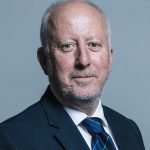
  • Andy McDonald – 2020 Comments on Employment Tribunal Backlog

    Andy McDonald – 2020 Comments on Employment Tribunal Backlog

    The comments made by Andy McDonald, the Shadow Employment Rights and Protections Secretary, on 10 December 2020.

    The government’s failure to get a grip on the Employment Tribunal backlog has left working people waiting years for justice and undermined their ability to uphold their rights at work, leaving them unprotected at a time when they most need protections.

    With so many outstanding cases, many workers might not bother to make claims and will end up denied the pay, annual leave and other rights they are entitled to.

    The government must put forward a real plan to relieve this backlog without watering down rights to ensure that workers are not at the mercy of bad employers. Without rapid action, rights in the workplace will not be worth the paper they’re written on.