Tag: 2020

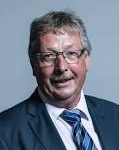
  • Sammy Wilson – 2020 Speech on EU Negotiations

    Sammy Wilson – 2020 Speech on EU Negotiations

    Below is the text of the speech made by Sammy Wilson, the DUP MP in East Antrim, in the House of Commons on 4 June 2020.

    May I say at the very start that we support the Government in getting this deal done by the end of this year, and in honouring the commitment that has been made, including in manifestos to the people of the UK?

    I could rehearse the things that we in Northern Ireland want to see undone in this withdrawal agreement. Of course, it is most damaging to the Northern Ireland economy and Northern Ireland businesses—it puts burdens on them and puts additional administrative checks on them—and, indeed, it leaves Northern Ireland open to anti-competitive dumping by EU countries. However, I want to widen this today. Many people see the Northern Ireland protocol as something that simply affects Northern Ireland: “It was unfortunate; we had to do it; we had to get a deal through; we don’t like parts of it, but given the special circumstances, it was the best we could do.” The point of the Northern Ireland protocol is this: it is the back door through which the EU is going to continue to undermine the sovereignty of this Parliament.​

    The Minister congratulated the hon. Member for Stone (Sir William Cash) on the fact that he has worked tirelessly to restore the sovereignty of this House. This withdrawal agreement and the protocol undermine and continue to undermine the sovereignty of this House. It does that through article 10 of the Northern Ireland protocol, which insists that the state aid rules will apply not to Northern Ireland, as paragraph 40 of the Government’s Command Paper suggests, but to the United Kingdom as a whole. Any state aid that the Government of the United Kingdom give to any firm that trades in Northern Ireland, as this therefore has an effect on possible trade by those firms through Northern Ireland into the rest of the EU, will be subject to EU laws, and the final adjudication on that, according to article 12 of the Northern Ireland protocol, will be by the European Court of Justice.

    Let me give an example about any support that the Government give. Nissan has been mentioned today. If the Government decide they are going to help Nissan to develop battery cars, as Nissan sells cars in Northern Ireland, other car makers in Europe could challenge that, and the final adjudication on it will be not in the British courts, but in the European Court of Justice. That could extend to almost any activity, and for that reason it is important, if the Government are to live up to the commitment in the third part of their motion, that they address the withdrawal agreement. In the Command Paper, they see the withdrawal agreement as temporary anyway. They see it going along with a future trade arrangement.

    Sir William Cash

    Did my right hon. Friend notice the remarks that I made at the end of my speech with respect to the question of the Northern Ireland protocol?

    Sammy Wilson

    I did, and I appreciated the point that was made. It is important that this is revisited, and not just for the good of the economy and businesses in Northern Ireland. It is essential that it is addressed for the sovereignty of this Parliament and for the freedom of this Government to use fiscal policy, monetary policy and any kind of state support policy for the whole of the United Kingdom.

    There is hardly a business in GB that does not trade with Northern Ireland, so either they do not invest in or do not trade in Northern Ireland, or else they will find that they are subject to EU laws, and any Government policy addressed to them would be perceived as giving an advantage. By the way, that advantage only has to be theoretical, according to EU law. The effect does not have to be real, it does not have to affect sales—in theory, it does have to affect sales—and it does not have to be substantial; it can be a very small proportion of help or a very small proportion of the market. This is a huge foot in the door.

    I say to the Government that, during the scrutiny of and in the reports on this, we want to see what has been done. The withdrawal agreement must not be seen as set in stone if the Government, in their own Command Paper, see it as temporary anyway, albeit with the consent of the Northern Ireland Assembly. They also have to address the issue of how the withdrawal agreement impacts on sovereignty and on the ability of this Government to conduct their own economic policy in the United Kingdom.

  • Joanna Cherry – 2020 Speech on EU Negotiations

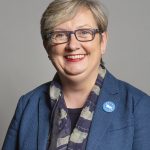
    Joanna Cherry – 2020 Speech on EU Negotiations

    Below is the text of the speech made by Joanna Cherry, the SNP MP for Edinburgh South West, in the House of Commons on 4 June 2020.

    It is a pleasure to follow the hon. Member for Stone (Sir William Cash). We disagree about much, but we are both committed to the restoration of sovereignty. He is committed to the restoration of the sovereignty of this Parliament, whereas I am committed to restoring the sovereignty of the people of Scotland, which of course was famously asserted in the declaration of Arbroath, whose 700th anniversary we are celebrating this year. In the June 2016 referendum, people in Scotland voted overwhelmingly to be part of the EU.

    That preference has been reinforced in Scotland in two subsequent United Kingdom general elections and in the European Parliament election, yet on 31 January this year, people living in Scotland found themselves being taken out of the European Union against their expressed wishes. At that time it was said that this was, “Getting Brexit done”, but of course Brexit is not done. All that has been agreed are the terms of withdrawal. Nothing has been agreed regarding the future relationship between the UK and the EU. Judging from what I see and hear in my role as a member of the Select Committee on the Future Relationship with the EU, there is very little chance of an agreement being reached by the end of this year.

    The Scottish National party thinks that it is not and will not be possible to conduct and conclude the negotiations and implement the results within the truncated timescale that has been set. We also think that in the context of an unprecedented global pandemic and a catastrophic economic recession, which might turn out ​to be the worst in 300 years, it is frankly irresponsible to think that things can be done properly within that timeframe.

    That view is widely held by those who have the misfortune to watch and comment upon the British Government’s conduct of the negotiations, which includes the ill-judged and rather petulant letter sent by Mr Frost to Mr Barnier last month. That is widely seen as having been something of a nadir in the British Government’s approach to the negotiations.

    Andrew Griffith (Arundel and South Downs) (Con)

    Will the hon. and learned Lady give way?

    Joanna Cherry

    I will make a little bit of progress, and then I will give way. It is the view of the Scottish Parliament that it is essential that the UK indicates that it will seek to extend the transition period for up to two years, as provided for in the withdrawal agreement. It is not just the SNP who think that, as the Chancellor of the Duchy of Lancaster said. All the parties in the Scottish Parliament, including the SNP, Labour, the Greens and the Lib Dems—all that is, apart from the Scottish Conservatives—believe that there should be an extension. The deadline that is coming fast at us at the end of this month is a very real deadline, because after the end of this month it will not be possible to extend under the terms of the withdrawal agreement, and no other plausible route to an extension has been put forward.

    Andrew Griffith

    Will the hon. and learned Lady care to recall her party’s policy in respect of the withdrawal agreement and its prognosis for the triumphant renegotiation of that? Does she recall how few weeks it took the Government to obtain that renegotiation with the services of David Frost?

    Joanna Cherry

    I am not sure I follow that intervention. I am not going to be pulled off my track by it, because I do not want to take up too much time.

    The global economy is declining fast and we must do everything we can to give business the best support for recovery from that decline. The next couple of years will be crucial. Ending the European Union withdrawal transition period at the end of this year would subject Scotland and the United Kingdom as a whole to an entirely unnecessary second economic and social shock on top of the covid crisis. More jobs would be lost, living standards would be hit and essential markets and opportunities for recovery would be damaged. For the many businesses that manage to survive the covid crisis, this second, Brexit-related shock could be the final straw.

    Yesterday, the Scottish Government published a report indicating that ending the transition this year would result in Scottish gross domestic product being between £1.1 billion and £1.8 billion lower by 2022 than if the transition was extended to the end of 2022. That is equivalent to a cumulative loss of economic activity of between £2 billion and £3 billion over those two years. A proportionate impact would be likely for the UK economy, so it is against the background of those figures and projections for the Scottish economy and the UK economy that the vast majority of Scotland’s elected representatives would like to see an extension of the transition period.​

    I do not expect the Chancellor of the Duchy of Lancaster to take what Scotland’s elected representatives vote for remotely seriously. I know that whether he is affecting a courtesy and a concern for our voices, or whether he is putting the boot into us for the benefit of his Back Benchers, Scotland is not his concern, because Scotland returns very few Conservative Members to this Parliament. However, the economic impact of failing to extend the transition will affect not just Scotland, but all the United Kingdom, including those who, in good faith—particularly in the red wall—voted for the Conservative party in England last December. Even if the Government give not a jot for the concerns of Scottish voters and the vast majority of their elected representatives, I am sure that they do give a jot for the concerns of the people who put them where they are. Many of those people, particularly working-class voters in the north and midlands of England, will be most adversely affected by the sort of double whammy of leaving at the end of this year without an agreement or an extension and the covid crisis.

    Jacob Young

    Will the hon. and learned Lady give way?

    Joanna Cherry

    I am coming to an end. I say to the Chancellor that he should swallow his pride and seek an extension of the transition period. For all that has been said about him in this place, Michel Barnier has all the graciousness that the Chancellor affects to have, so I have no doubt that if the request for an extension is made, it will be granted.

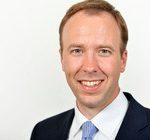
  • Matt Hancock – 2020 Statement on the Coronavirus

    Matt Hancock – 2020 Statement on the Coronavirus

    Below is the text of the statement made by Matt Hancock, the Secretary of State for Health and Social Care, on 5 June 2020.

    Good afternoon and welcome to Downing Street’s daily coronavirus briefing.

    Before taking questions from members of the public and the media, I’d like to start by sharing the latest data.

    First slide please.

    The first slide shows the information on infections, and the data published by the Office for National Statistics this morning shows the number of people who had coronavirus in England fell from around 139,000 between 3 and 16 May to around 53,000 between 17 and 30 May.

    That’s represented in percentage terms in this right-hand chart. It demonstrates that the percentage of the population testing positive has been falling consistently over recent weeks. SAGE have confirmed that the R across the whole of the UK is between 0.7 and 0.9.

    The ONS survey also estimated the number of new coronavirus infections which stands at 39,000 per week which is equivalent to around 5,600 per day. And this is lower than the similar estimate made last week. So these are encouraging trends about the reducing spread of coronavirus across the country.

    This slide shows progress on testing and the number of new confirmed cases. In total 5,214,277 tests have been carried out including 207,231 tests yesterday. And these data on tests include both the swab tests to find out if you have coronavirus and also the antibody tests, which stand at just over 40,000 antibody tests a day.

    The antibody tests find out if you have had the virus. And if you have had the virus you can help make a difference because by donating your plasma from your blood that has your antibodies in it then you can help somebody who is currently suffering in hospital with coronavirus.

    I did this earlier today. I gave my antibodies and the process is simple, it’s straightforward. If you have had coronavirus, if you go to the NHS Blood and Transplant website NHSBT then you too can donate your antibodies and help protect somebody who is currently in hospital with coronavirus. And I’d encourage anybody who can do that to step forward.

    The chart also shows that the number of confirmed cases is 1,650 yesterday which brings the total of confirmed cases, confirmed by swab tests, to 283,311.

    This slide shows the data from hospitals. There were 694 admissions, new admissions, with COVID-19 on the latest data, which has fallen over the last week. Those data include England, Wales and Northern Ireland. They don’t include Scotland. And also the bottom data which is across the whole UK, shows the number of people in ventilator beds has fallen from 751 on 28 May, a week ago, down to 571. This is down from a peak of over 3000 on 12 April.

    Slide 4 shows the regional breakdown of people in hospital. And it shows that over 7,000 people remain in hospital, 7,080 to be precise. But this is down 15% from 8,285 a week ago and a peak of over 20,000 in April. The final slide shows the number of people who have sadly lost their lives. And this number stands at 40,261 on the latest information, which is 357 higher than yesterday.

    These slides demonstrate, although the past few months have been a time of sorrow for so many people, because of these deaths is not a statistic but the loss of a loved one for so many families. The slides also show that we have made a progress in our fight against this virus. But they also show that there is so much more to do.

    It shows that we must always remain vigilant.

    Especially when it comes to protecting our NHS, which has been at the front line of the battle.

    And of course thanks to an enormous national effort, we protected the NHS and prevented it being overwhelmed which in turn saved lives.

    And today I want to set out further that we are taking further steps to protect the NHS and especially around face coverings and face masks.

    Yesterday, the Secretary of State for Transport announced that face coverings will become mandatory on public transport from June 15 – with a few specific exceptions – for instance those with breathing difficulties.

    This doesn’t mean surgical masks, which need to be kept for clinical settings, but the kind of face masks that you can easily make at home – in fact there’s a good guide on GOV.UK.

    As more people go back to work, and the passenger numbers start to increase, so face coverings on transport are more important.

    Likewise, as the NHS reopens right across the country, it is critically important to stop the spread amongst staff, patients and visitors too.

    So today we are setting out that all hospital visitors and outpatients will need to wear face coverings.

    One of the things that we’ve learnt is that those in hospitals, those that are working in hospital are more likely to catch coronavirus, whether they work in a clinical setting or not.

    And so to offer even greater protection, we are also providing new guidance for NHS staff in England which will come into force again on the 15 June, and all hospital staff will be required to wear Type 1 or 2 surgical masks.

    And this will cover all staff working in hospital.

    And it will apply at all times, not just when they are doing their life-saving work on the frontline. It will apply in all areas, except in those areas designated as covid-secure workplaces.

    And of course where PPE guidance recommends more stringent protection, of course, that remains in place.

    We are upgrading this guidance to make sure that even as this virus comes under control, as we saw the falling incidences across the country, our hospitals are a place of care and of safety.

    We have also strengthened infection control in care homes. And we are working with the social care sector on how this approach can apply appropriately in social care too.

    It’s about protecting our NHS and social care, which means protecting our colleagues who work in the NHS and in social care.

    And I want to say this to you all my colleagues in health and social care.

    As we get this virus under control, it is so important that we stamp out new infections and outbreaks.

    And of course in health and care you do this brilliantly all the time – and coronavirus is no exception.

    That means that if one of your team tests positive, you have to follow the isolation advice.

    The natural impulse of course of anyone in care, in the NHS is the thing you can best do is be there to help. To be there for the patient.

    But if you have the virus, or are at risk of having the virus, the best thing you can do for them, as well as yourself, is to isolate at home.

    And this means that social distancing in the workplace also must be reiterated and it matters just as much as anywhere else.

    And I know that social distancing and self-isolation can cause big logistical challenges, and we will support you in doing what is right and necessary.

    All of us have a role to play here.

    And the last thing I want to say is this, ahead of this weekend, when I know there are plans for further protests, I want to say something to you as Health Secretary.

    Like so many, I am appalled by the death of George Floyd and I understand why people are deeply upset.

    But we are still facing a health crisis and coronavirus remains a real threat.

    And the reason that it is vital that people stick to the rules this weekend is to protect themselves and their family from this horrific disease.

    So please for the safety of your loved ones, do not attend large gatherings – including demonstrations – of more than 6 people.

    We all need to stay alert, control the virus and save lives.

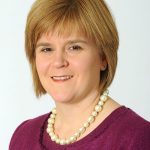
  • Nicola Sturgeon – 2020 Statement on the Coronavirus

    Nicola Sturgeon – 2020 Statement on the Coronavirus

    Below is the text of the statement made by Nicola Sturgeon, the Scottish First Minister, on 5 June 2020.

    Good afternoon everyone. As you can see, I’m joined today by Iain Livingstone, Chief Constable of Police Scotland and by Professor Jason Leitch, our National Clinical Director.

    I’ll start today – as I always do – by updating you on some of the key statistics in relation to COVID-19.

    As at 9 o’clock this morning, there have been 15,582 positive cases confirmed – which is an increase of 29 from yesterday.

    A total of 995 patients are in hospital with confirmed or suspected COVID-19. That represents a decrease of 26 from yesterday, including a decrease of nine in the number of confirmed cases.

    Now as I said yesterday, in relation to the number of people who had their deaths registered in the previous day, we have to be very careful at reading too much into single day figures, but nevertheless I think it is reasonable to point out, that this is the first time since the 30 March, that the number of patients in hospital has been lower than 1,000. So again, a positive indication of the progress that we are making.

    A total of 23 people last night were in intensive care with confirmed or suspected COVID-19. That is a decrease of five since yesterday.

    I am also able to confirm today that since 5 March, a total of 3,778 patients who had tested positive for the virus have now been able to leave hospital.

    In the last 24 hours though, 14 deaths have been registered of patients confirmed through a test as having COVID-19 – that takes the total number of deaths in Scotland, under that measurement, to 2,409.

    Now as I always do, I want to stress that these numbers are not just statistics. They are individuals whose loss is being deeply felt by their loved ones. So – once again – I want to send my deepest condolences to everyone who has lost a loved one to this virus.

    I also want to express my thanks – as I always do – to our health and care workers. Your efforts are enormously appreciated – and not just by me and by the Scottish Government, they are appreciated, I know, by everyone in Scotland.

    There are – of course – many other frontline and key workers who are helping the country through this crisis and with the Chief Constable here today, I want to take the opportunity to say a special thank you again, to our police officers and staff. They are also working under real pressure at the moment but they are doing an exceptional job for all of us.

    There are two items I want to cover today.

    The first concerns the economic impact of COVID-19. I have just come from the Cabinet sub-committee on the economy earlier this morning – where we noted the latest monthly report, from our Chief Economist.

    That document, which was published this morning, provides a summary of Scotland’s key economic statistics.

    Among other things, it shows that – in the first half of May – almost 1/5 of businesses in Scotland were temporarily closed and that contributed to more than 750,000 people being furloughed or unable to work as normal.

    The report also shows that turnover is down in almost every sector of our economy.

    And it contains new modelling, which takes account of the different phases for easing lockdown. On that basis, the report forecasts a more gradual economic recovery – one which might not see us return to pre-crisis levels, for a number of years.

    In short, today’s publication confirms the scale of the economic crisis that we now face. In doing that, it further underlines why government action is so important and why it will continue to be so important.

    The Scottish Government has already allocated more than £2.3 billion to help businesses and protect jobs. And of course that’s before we consider important UK-wide measures currently in place – such as the Job Retention scheme.

    That kind of support is helping to mitigate some of the economic impact of this crisis. And it will continue to be vital as our businesses seek to rebuild.

    And I want to again today give an assurance that the Scottish Government is determined to everything we can to support that process of rebuilding and recovery. We will continue to do everything we can to protect your livelihoods. That’s important in the short-term, but it is also vital to help lay the groundwork, for a sustainable economic recovery.

    Of course that recovery will be helped by continued progress against this virus. If we have a set-back in tackling the virus, it will make the re-opening of our economy all the more difficult.

    So the second item I want to cover today, is directly related to the first, and it concerns the current lockdown restrictions and particularly how I hope the people will comply with them over this weekend and beyond.

    We’re now, of course, at the close of the first full week since we moved into phase 1 of our route map out of lockdown – and eased some of the restrictions. So far, the vast majority of people have stuck by the new rules. And I want to take the opportunity again today, to thank all of you who have continued to do the right thing.

    However, it’s also clear that – over the past week – not absolutely everyone has done that. The Chief Constable may say more later about compliance – and how the restrictions will be enforced, if necessary.

    For my part, I want to set out very clearly again today, what the current rules are. And to do that, instead of focussing on what we are now allowed to do, I want to again emphasise what we’re asking everyone not to do because it’s by not doing the things, that we know from the evidence that allows the virus to spread more easily, that we will keep it under control.

    So to start, you mustn’t meet people from other households indoors. I know that might be a particular temptation on a weekend like this – when we’re expecting again poor weather. But let me be clear, that is extremely high risk. We know – and we don’t know everything yet about this virus – but we do know that it transmits much more easily between people inside than it does outside. So if you’re not willing to meet outdoors – in all likelihood the rain – please do not meet up with people from other households at all and I cannot emphasise that strongly enough. I am not exaggerating when I say that if you do meet people from other households indoors, you are putting yourselves and you are putting them at risk of getting the virus of becoming ill with it and potentially dying from it and I would ask you not – please – to take that risk.

    However, while the risk of meeting outdoors is lower, it is not absolutely zero – so that means that if you do meet outdoors, you must not get within 2 metres of members of another household.

    You should certainly not be shaking their hands or hugging them, difficult though I know that is and you shouldn’t share food of utensils with people from other households of touch hard surfaces that they may also have touched because again, these are ways in which we know the virus spreads relatively easily.

    And were asking that – when two households do meet up – there should be no more than eight people in total in a group. In addition, you should not go more than five miles for recreation and you shouldn’t leave your face uncovered if you are in and enclosed space like a shop and public transport.

    Wearing a face covering helps you protect others – and having others wear a face covering – means that they help protect you.

    A more general point I want to make is that – even now – you should still be seeing far fewer people than you might normally do. And you should still be trying to stay at home as much as you possible.

    Basically, if you start to feel that your social life is returning to normal – that’s not a good sign right now.

    That message applies to everyone – but it’s perhaps particularly relevant to young people. I want, today, to make a special plea to all of you, the young people of Scotland. Many of you – I know – will be desperate to spend more time with your pals, after weeks of being apart. You might even think that as young people, you are less likely to become seriously ill as a result of the virus and I know this from speaking to the young people in my own life.

    But I want to be very clear – you are not immune from this virus, you can get it and it can be very harmful to you.

    But even if you’re not seriously affected yourself, you can still pass it on to other young people. They might then pass it on to others who are at greater risk from COVID-19 – such as their parents or grandparents. And that could have really tragic consequences.

    So I would urge you – and I know you all know how important this is – please don’t just think about your own risk, please think about the risk to your parents and your grandparents and to your friends’ parents and grandparents. Don’t take risks that you could end up regretting and possibly grieving in the weeks ahead. Please stick to the rules.

    Can I also say finally, just a very brief word and a very heartfelt word to those who I know want to make their voices heard this weekend in support of Black Lives Matter.

    I want to urge you to make your voices heard. We all feel very strongly about this but I want to ask you, to do so safely.

    In normal times, I may well have been planning to join a gathering of support this weekend. But coming together in mass gatherings right now is simply not safe. It poses a real risk to health and it poses a real risk to life.

    So I would encourage you to read the statement that was issued yesterday by Kadi Johnson, Sheku Bayoh’s sister, and by Humza Yousaf, Anas Sarwar and Aamer Anwar asking people to protest in different ways.

    For example you can make your voice heard online, you can lobby elected representatives, or you can make a donation to anti-racism campaigns but please, please, try to stay within the rules that are there for your own protection and above all please stay safe.

    In fact, that’s a message which all of us should heed. If you’re wondering whether or not it’s okay to do something this weekend, ask yourself if you’ve giving the virus an opportunity to spread. And if you’re in doubt about whether your plans are within the rules or not, please err on the side of caution.

    Above all else, please remember that every single decision we take right now as individuals, will affect the safety and the wellbeing of everyone.

    The progress we’ve made against this virus – over these past few weeks – is real and I say that every day because I mean it – and it is as a result of all of us, overwhelmingly, sticking to these rules. And that kind of collective effort will continue to be vital – as we slow the spread of this virus, even further.

    I’m confident that the vast majority of you will continue to play your part. And I want thank all of you, in advance, for showing that solidarity with each other and for doing exactly that.

  • Nicola Sturgeon – 2020 Statement on the Coronavirus

    Nicola Sturgeon – 2020 Statement on the Coronavirus

    Below is the text of the statement made by Nicola Sturgeon, the Scottish First Minister, on 4 June 2020.

    Good afternoon. Thank you very much for joining us for today’s briefing.

    I want to start with my usual update on the current position in relation to Covid-19.

    As at 9 o’clock this morning, there have been 15,553 positive cases confirmed – that is an increase of 49 from yesterday.

    A total of 1,021 patients are currently in hospital with either confirmed or suspected Covid-19. That represents a total decrease of 96 from yesterday, including a decrease of 21 in the number of confirmed cases.

    A total of 28 people last night were in intensive care with confirmed or suspected Covid 19. That is a decrease of 6 since yesterday.

    I am also able to confirm today that since 5 March, a total of 3,758 patients who had tested positive and required hospital treatment for the virus have been able to leave hospital.

    And in the last 24 hours, 9 deaths have been registered of patients confirmed through a test as having the virus – that takes the total number of deaths in Scotland, under that measurement, to 2,395.

    Now, as I often say, we cannot and indeed we should not read too much into any one day’s figures – and tomorrow’s figure or the next day’s figure may be higher than the one I have just given you – but I think it is still worth noting that yesterday was the first weekday, since 27 March, when the number of deaths registered under our daily measure was in single figures. I think that demonstrates the progress we are making against this virus, but it also underlines why we all continue to need to comply with the public health guidance, so that we can continue to make this progress and don’t allow it to go into reverse.

    But of course 9 deaths is still too many, and thinking of those 9 lives lost reinforces the point I make every day: that these figures are not just statistics; they represent people – unique and irreplaceable individuals – whose loss will have left families shattered and grieving. So I want to send my condolences once again to everyone who has lost a loved one to this virus.

    I also want to express my thanks– as I always do – to our health and care workers, for the incredible work you are doing in incredibly challenging circumstances. My thanks goes to each and every one of you. The entire country owes you a debt of gratitude.

    I am joined today by the Chief Medical Officer and the Cabinet secretary for Health. The Cabinet Secretary has some information to share about the prioritisation of cancer services, and the Chief Medical Officer will focus on figures which were published yesterday relating to patients in intensive care.

    Before they speak, I want to acknowledge the job losses announced yesterday at Rolls Royce in Inchinnan. That announcement will have been devastating news for the workforce and their families, at what is already a very anxious time – and unfortunately it may not be the last of its kind in the period ahead. I want to stress that the Scottish Government will do everything we can to secure as good an outcome as we can for those whose jobs are at risk.

    Yesterday’s news emphasises a point I have made before – that alongside a public health emergency, we are also now dealing with an economic emergency, on a scale none of us have experienced.

    And that requires – and it will get – the attention and focus of the Scottish Government, just as the health emergency has and continues to get.

    We have already allocated more than £2.3 billion to help businesses in Scotland through measures such as grants and business rates relief. That is in addition to welcome UK Government measures such as the furlough scheme.

    Mitigating and addressing the economic costs of Covid is going to become an even greater priority in the weeks and months ahead.

    But alongside that, and as part of our response, we also want to help businesses, where possible, to adapt and find new markets.

    One of the areas where we have been doing that already, is in relation to personal and protective equipment, or PPE – in Scotland.

    We are publishing a report today that summarises how we are securing PPE for health and care workers in Scotland – it also sets out the work we are doing to develop a manufacturing chain for that equipment.

    To demonstrate the scale of some of this work, it’s maybe worth looking at an item such as fluid resistant surgical masks. Those are masks which help to prevent blood, bodily fluids and secretions from one person – including water droplets from coughs – coming into contact with the mouth or nose of the person wearing the mask.

    Prior to Covid-19, National Services Scotland would provide around 57,000 of those masks to our health and care sector each week.

    Now, instead of needing 57,000 masks a week, we need 4 ½ million. That is an 80-fold increase.

    To meet that demand, we are importing equipment from overseas. 100 million fluid resistant masks have been imported from China, and a further 60 million are on order.

    But we are also working with suppliers in Scotland to establish domestic supply chains.

    Alpha Solway, a firm based in south-west Scotland which specialises in protective clothing, is due to start producing masks in August. They have taken on 30 new staff to do so, and they are using raw material sourced from Don & Low in Forfar.

    As a result, we hope that in due course, manufacturers in Scotland will be able – not just to meet demand for these masks here in Scotland – but also provide them to other parts of the UK or to other countries in Europe.

    There is a similar story in relation to other items of equipment. We are creating supply chains for non-sterile gowns and FFP3 masks. In addition, Berry BPI are planning to make 2-3 million new aprons a week in Greenock. A number of smaller Scottish enterprises are planning to make visors.

    And CalaChem Ltd has produced 580,000 litres of hand sanitiser at its Grangemouth plant, using ethanol provided by Whyte & Mackay.

    Many other Scottish businesses have diversified in order to help with the provision of PPE and I am grateful to each and every one of them.

    They have worked alongside public service bodies such as NHS Scotland, Scottish Development International and the National Manufacturing Institute for Scotland.

    And it is worth highlighting that in many cases, companies are not simply making existing products. They are often using innovation to improve the equipment – for example by ensuring that face masks fit better on small faces, and that more equipment can safely be re-used.

    Fundamentally, the Scottish Government’s priority – which we are achieving – must always be to ensure that we have adequate stocks of PPE.

    Our health and care service workers – the people who help and protect us – must themselves be protected.

    That is important at the moment, but also for the future, as we look to reopen the NHS, and maintain secure stocks of equipment for social care.

    We will always, when necessary, place major orders with overseas suppliers.

    However we are also increasingly taking advantage of the expertise of manufacturers here. Doing that gives us greater reassurance that supplies will be secure in the long term, and it also creates real benefits in terms of jobs and exports.

    Those benefits don’t of course come close to balancing the wider economic harms caused by this pandemic – and so the Scottish Government will continue to work with business and the UK Government to address those. But these benefits are welcome nonetheless. And they are a testament to the ongoing importance and excellence of our manufacturing sector here in Scotland.

    I will hand over to the Cabinet Secretary and Chief Medical Officer in a moment. Before I do that, however, I want to re-emphasise our key public health guidance.

    And I’m asking you today to focus not just on what you are now allowed to do as a result of the small changes we made last week – but to focus even more so on what we are still asking you not to do.

    It is by not doing certain things right now that we will help stop the virus spreading – so that means not meeting other households indoors, not coming within 2 metres of people from other households, not shaking their hands or hugging them, not sharing food or utensils with others or touching hard surfaces they may also have touched and not leaving your face uncovered in enclosed spaces like shops and public transport.

    So I’m asking you to think about all of that every time you leave home or meet with someone from another household.

    And, particularly, ahead of a weekend when the weather forecast is more traditionally Scottish ie heavy rain – I want to particularly emphasise this point:

    You cannot and must not meet people from another household indoors – that is a sure fire way of allowing this virus to spread again.

    So if you’re not willing to get your waterproofs on and meet outdoors, don’t meet up at all.

    I cannot emphasise that enough.

    So to recap –

    You should still be staying home most of the time, and you should still be meeting fewer people than normal. If your life feels like it is getting back to normal at the moment, you should ask yourself whether it should be and whether you are complying with all the guidance.

    When you do meet people from another household, you must stay outdoors, and you must stay 2 metres apart from them.

    Don’t meet with more than one other household at a time, don’t meet more than one a day – and keep to a maximum – I stress, a maximum – of 8 people in a group.

    Wash your hands often. Take hand sanitiser if you are out and about.

    Wear a face covering when you are in shops or on public transport.

    Avoid touching hard surfaces – and clean any you do touch.

    And if you have the symptoms of Covid-19 – a new, continuous cough; a fever; or a loss of, or change in, your sense of smell and taste – you must get tested, and follow the advice on self isolation.

    Above all else, please remember that the decisions each of us take as an individual, affect the health and wellbeing of all of us.

    Please, continue to do the right thing, and to stick to those guidelines. It really, really matters, and it matters as much now as it did at the start of this pandemic. By doing so, we will continue to slow the spread of the virus, and save lives. So thank you, once again, to all of you for doing that.
  • Alok Sharma – 2020 Statement on World Environment Day

    Alok Sharma – 2020 Statement on World Environment Day

    Below is the text of the statement made by Alok Sharma, the Secretary of State for Business, Energy and Industrial Strategy, on 5 June 2020.

    Ladies and gentlemen,

    All of us here know that failing to act on climate change will cause irreversible consequences.

    As temperatures continue to rise, droughts and heatwaves will become more common.

    This will devastate nature and biodiversity. And exact a catastrophic economic cost.

    So it is great to see cities and countries, businesses and investors, uniting against this global threat.

    Last week, the COP Bureau of the UNFCCC, with the UK and our Italian partners, agreed that COP26 will take place between 1st and 12th November 2021.

    COP26 can be a moment where the world unites behind a fairer, greener recovery from the effects of Covid-19.

    A recovery which delivers for both our people and our planet.

    In recent years, the UK has shown that green growth is absolutely possible.

    Since 1990 we have grown our economy by 75% whilst cutting emissions by 43%.

    And in doing so, we have built entirely new industries.

    20 years ago the UK had two offshore wind turbines powering just 2,000 homes.

    Fast-forward to 2020, and the UK has more offshore wind capacity than any other country in the world.

    Earlier this year construction began at the world’s largest offshore wind development, Dogger Bank. A project which, when complete, will be able to power 4.5 million UK homes.

    Globally, the cost of wind power has fallen by 49% and that of solar power by 85% since 2010.

    Renewables are already cheaper than coal power in two-thirds of all countries in the world.

    This progress was made possible by the countries, companies, cities and regions who led the way.

    Shifting investment, spurring innovation, scaling-up technologies and driving down costs.

    And in the lead up to COP26, we have defined five areas which need particular attention:

    Clean energy, clean transport, nature-based solutions, adaptation and resilience and, bringing it all together, finance.

    From releasing capital for green projects, to making electric cars cheaper to buy, the opportunities of the green economy are broad.

    And by working together, we can make progress faster.

    That is why the UK, in partnership with Chile and the UN, is leading the Climate Ambition Alliance.

    Bringing together 120 countries, 1,000 businesses, 36 investors, nearly 500 cities and regions, and more than 500 universities.

    The Alliance is the largest ever coalition of leaders committed to reaching net zero by 2050.

    It already represents over half of global GDP and covers nearly a quarter of CO2 emissions.

    But we must go further.

    So today the High-Level Champions for the UK and Chile, Nigel Topping and Gonzalo Munoz, are launching the ‘Race to Zero’.

    Urging businesses, investors, cities and regions around the world to commit to reaching net zero by 2050.

    We are off to a great start.

    It is great to see big names like Diageo and Rolls-Royce joining the ‘Race to Zero’ today.

    Ladies and gentlemen,

    Whether we live in the South, the North, the East or the West, we share one life-giving but fragile planet.

    And as we recover from the Coronavirus, the world has an opportunity to not just rebuild what went before, but to build back better.

    Uniting behind a green global recovery.

    We must all do our part.

    And I would urge everyone involved in today’s event to join the ‘Race to Zero’ and commit your region, city or company to reaching net zero by 2050 at the latest.

    Thank you.

  • Bill Cash – 2020 Speech on EU Negotiations

    Bill Cash – 2020 Speech on EU Negotiations

    Below is the text of the speech made by Bill Cash, the Conservative MP for Stone, in the House of Commons on 4 June 2020.

    I welcome the Chancellor of the Duchy of Lancaster, who has adopted, on behalf of the Government, the motion proposed by the European Scrutiny Committee, which I have the honour to chair. This motion derives from section 13A of the European Union (Withdrawal) Act 2018, as provided for by the 2020 Act. I emphasise that, because it was passed on Second Reading in this House by a majority of no fewer than 124 Members.

    Under the motion, my European Scrutiny Committee has the duty of reviewing EU laws made and proposed during the transition period that affect UK vital national interests. In pursuance of that, and our report of 11 March, the motion is concerned with the Council decision in February that sets out the EU’s negotiating mandate, instructing Michel Barnier, which raises clear matters of our own vital national interests. We left the European Union on 31 January. The Chancellor of the Duchy of Lancaster has special responsibilities in relation to these negotiations, consistent with those of his distinguished predecessor John Bright, who coined the expression “the mother of Parliaments”.

    The 2020 Act passed following the general election last December, and it contained in section 38 the historic affirmation of the sovereignty of the United Kingdom Parliament, to rectify the failure of successive Government policies on the EU, including the European Communities Act 1972 itself. Now that we have left the EU as the result of a succession of Acts of Parliament, including the referendum Act itself and the result of the referendum to leave, endorsed by the general election last year, we have a Conservative majority of 81. That endorsed Brexit, and left the other parties floundering in the wake of the democratic will of the British people, in line with the Conservatives’ commitment to our democratic self-government.

    My Committee’s report on the EU’s negotiating mandate noted that, on the one hand, the EU recognises the autonomy of the UK, as well as our right to regulate economic activity as we deem appropriate. That is then contradicted by the EU proposing draconian conditions of UK compliance with what the EU describes as

    “robust level playing field commitments”.

    These include massive EU tax, social, employment and environmental standards, and EU state aid laws, as well as a fisheries deal with the EU enjoying pre-Brexit access to UK waters—not to mention the vexed Northern Ireland protocol.​

    That protocol was badly conceived by the previous Administration and included concessions on EU jurisdiction and the status of Northern Ireland. There were even reports that Martin Selmayr, the then deputy to Mr Juncker, regarded Northern Ireland as the price that the UK would have to pay for leaving the EU. Furthermore, there never has been a level playing field. For example, the subsidies in relation to steel and coal generally have always been continuously distorted against the interests of the UK.

    I can remember raising these questions over 20 years ago in relation to, if I may say to the hon. Member for Sheffield Central (Paul Blomfield), my experience having been brought up in Sheffield, which was surrounded by coal communities and, of course, was the engine of the steel industry of the United Kingdom and the world. It was quite clear that the European Coal and Steel Community was operating on a basis that, for example, gave the German nation £4 billion a year in authorised subsidies, which put it in a hopelessly advantageous position as against us. Ambrose Evans-Pritchard and a list of other great economists have continually made clear the distortions in relation to state aid that have such a devastating impact upon us. We cannot allow ourselves to be drawn back into the framework of state aid prescribed by the European Union.

    Indeed, according to The Brussels Times a few days ago, the German economy is receiving 52% of the total state aid approved by the European Commission under the EU coronavirus package. Similarly, the EU insisted on law enforcement and criminal justice conditional on our continuing with the European convention on human rights and personal data law along EU lines. It went further, insisting on an overall governance framework that would include a continuing role of the European Court of Justice. What planet are they living on?

    This is encapsulated by the difference in language between the EU and the UK in relation to these negotiations. It speaks about a new partnership. Our White Paper refers to the future relationship. The EU is not a sovereign state. We are, and we have a sovereign Parliament. We have decided to leave, and we have left. It is bound to recognise us as such, but it refuses to do so.

    Hilary Benn

    The hon. Gentleman has set out the clear Government policy that they will not accept the adjudication of the European Court of Justice, but in any agreement—and we all hope an agreement is reached—there will have to be a dispute resolution mechanism. It would be helpful if he could tell the House his views on what kind of mechanism that would be and whether there might be a place within that for independent arbitration to deal with disputes. Given that he has just argued that EU member states have got away with state aid to the disadvantage of the UK, is he satisfied that the Government are asking for sufficient reassurance from the European Union that that will not happen in future under any agreement that is reached?

    Sir William Cash

    To answer the second point first, I am, of course, very conscious of what is going on in the negotiations. I hear what has been said repeatedly by the Government with respect to maintaining and protecting our vital national interests, and I believe that that will be the outcome—namely, we will ensure that ​we are not made subject to EU state aid in the way in which we have experienced it in the past. I have made the case. I can say more about it, but I do not need to for the moment.

    With respect to the question of arbitration, it refers back in a funny way to my reference to John Bright, who was one of the initiators of the notion of international arbitration in the Alabama case. I will simply say this. I believe that the European Court’s jurisdiction cannot be allowed, but I go further: I think that some form of arbitration may be necessary, but not, under any circumstances, including our being subjugated to the rules and jurisdiction of the European Court.

    I will now move on. For our report, my Committee consulted with 24 Select Committees, and we are immensely grateful to all of them for their contributions. The Prime Minister, in a written statement, followed by a Command Paper in February, made it clear—in line with Acts of Parliament that had already been passed, not to mention the outcome of the general election—that there would be no rule for the European Court of Justice, nor any alignment of our laws with the EU, and nor would any of the European institutions, including the Court, have any jurisdiction in the UK. Those statements and policies are entirely consistent with the democratic will of the British people. We asked the Government to publish their draft legal text, and I am glad to say that that has been done.

    The timing of this debate is crucial because the Prime Minister will engage in a high-level meeting towards the end of this month. I ask the Chancellor of the Duchy of Lancaster for the exact date when that will take place, the agenda that will be before the meeting and who will attend on behalf of the EU and the EU27. This, in turn, is crucial, because Germany takes over the presidency on 1 July and there is all the sensitive history associated with Germany’s engagement with the EU, which I have debated and written about since April 1990, and have discussed face-to-face with many of its leading politicians, including Helmut Schmidt and others. My approach has been demonstrably justified by events. For example, the coronavirus package would move the EU towards greater EU fiscal and political integration, which the Germans would influence much more heavily than even they do today. Their slogan for the presidency is:

    “Together. Making Europe Strong Again”

    I simply add that we were not a minute too soon in leaving the EU.

    The Government, in their Command Paper, say that by the end of June there is the opportunity for the

    “outline of an agreement…capable of being rapidly finalised by September. If that does not seem to be the case…the Government will need to decide whether the UK’s attention should move away from negotiations and focus solely on…preparations to exit the transition period in an orderly fashion.”

    Recent correspondence between our chief negotiator, David Frost, and Michel Barnier indicates that there is no real progress in the negotiations, because the EU is invariably asking for the impossible and, as correctly indicated by David Frost, the EU is not offering a “fair free-trade relationship” but a

    “low-quality trade agreement…with unprecedented…oversight of our laws and institutions..”

    Our vital national interests, which derive from our democracy and self-government, which is what this debate is about, are paramount.​

    I was extremely glad to hear what the Leader of the House said at today’s business questions on the issue of the extension of the transitional period, because he used the hallowed words of the late Margaret Thatcher, “No, no, no.” I am delighted to hear similar sentiments expressed by the Chancellor of the Duchy of Lancaster this afternoon. Any extension of the transition period, through which Mr Michel Barnier is outrageously trying to seduce remainers, would simply prolong negotiations; as David Frost stated, it would create more uncertainty, leaving us paying far more to the EU and binding us to EU laws, when we have democratically and lawfully decided to leave the EU by our own sovereign decision and our own sovereign legislation.

    As for the Labour amendment to this motion, it completely turns the purpose of the “good faith” and “best endeavours” in article 184 of the withdrawal agreement, which places an obligation on the EU to enshrine European sovereignty, on its head. The amendment would betray that and with it the democratic will of the British electorate. In conclusion, I urge the Government to review the Northern Ireland protocol, which raises concerns about EU law and European Court jurisdiction, and the status of Northern Ireland. I look to the Government to ensure that the whole UK leaves on our own terms, because our sovereignty and self-government is an absolute bulwark of our freedom and our democracy.

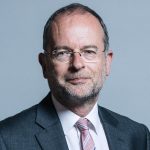
  • Paul Blomfield – 2020 Speech on EU Negotiations

    Paul Blomfield – 2020 Speech on EU Negotiations

    Below is the text of the speech made by Paul Blomfield, the Labour MP for Sheffield Central, in the House of Commons on 4 June 2020.

    I beg to move an amendment, to leave out from “the UK’s Approach to Negotiations,” to end and insert—

    “commends the European Scrutiny Committee on its Fifth Report of Session 2019–21, HC 333, whose Annex draws upon responses from other select committees identifying matters of vital national interest in the EU negotiating mandate; recalls that during the 2019 general election and the passage of the Withdrawal Agreement Act, Government ministers committed that negotiations on the UK’s future relationship with the EU would be based on the Political Declaration; notes that in Article 184 of the Withdrawal Agreement the UK agreed to “use their best endeavours, in good faith and in full respect of their respective legal orders, to take the necessary steps to negotiate expeditiously the agreements governing their future relationship referred to in the Political Declaration of 17 October 2019”; therefore calls on the Government to negotiate an “ambitious, broad, deep and flexible partnership”, including an “ambitious, wide-ranging and balanced economic partnership” that entails “no tariffs, fees, charges or quantitative restrictions across all sectors”, a deal that would safeguard “workers’ rights, consumer and environmental protection”, including “effective implementation domestically, enforcement and dispute settlement” and a “broad, comprehensive and balanced security partnership” underpinned by “longstanding commitments to the fundamental rights of individuals, including continued adherence and giving effect to the ECHR, and adequate protection of personal data”.

    I join the Chancellor of the Duchy of Lancaster in commending the determined work, over so very many years, of the Chair of the European Scrutiny Committee, and I thank him, and members of the Committee, for their report. That is both because of the important issues that the report raises, and because it provides the House with a rare opportunity to debate with Ministers about the negotiations as they reach a crucial stage. There might be issues in the report that Labour would set out differently, and we have shaped those in our ​amendment. At this stage, however, because of the extraordinary circumstances in which we are currently conducting business, although I will speak to the issues in the amendment, we do not intend to press it to a vote.

    Let me begin with the issue on which we agree wholeheartedly with the Committee, and indeed with the motion, which is the central point of accountability. We have consistently pressed for accountability and transparency throughout these negotiations, as we were promised at the outset. The Prime Minister told us on 20 December that

    “Parliament will be kept fully informed of the progress of these negotiations.”—[Official Report, 20 December 2019; Vol. 669, c. 150.]

    On 27 February, the last time that the Chancellor of the Duchy of Lancaster actually addressed or made a statement to the House on these negotiations, he said that

    “we will keep Parliament fully informed about the negotiations, and colleagues will be able to scrutinise our progress.”—[Official Report, 27 February 2020; Vol. 672, c. 469.]

    But it has not worked like that, has it? Indeed, since those negotiations started, the Chancellor of the Duchy of Lancaster has made no oral statement on them at all. He has only updated the House once when he was forced to do so by an urgent question from my hon. Friend the Member for Leeds West (Rachel Reeves). That silence has spanned three months for negotiating rounds, Joint Committee meetings and all the disruption resulting from covid-19. By comparison, during phase one of the negotiations, either the Brexit Secretary or the Prime Minister reported personally to Parliament after every key negotiating round and after each meeting of the European Council.

    This week, as the Chancellor has made clear, sees the fourth and crucial round of talks before the Joint Committee and high-level meeting at which progress is to be reviewed. I hope that, in her wind-up, the Minister will give an assurance to the House that the Chancellor of the Duchy of Lancaster will commit to making a statement to the House on Monday, and that the Prime Minister will update the House in person after the high-level meeting in June. I hope she will also commit to making real efforts to consult the devolved Administrations, because the terms of reference for the Joint Ministerial Committee referred to reaching agreement with the devolved Administrations on the approach to the negotiations and Ministers made repeated promises that engagement would be stepped up, after disappointment was expressed at an earlier stage, once we moved on from the withdrawal negotiations. That has not happened, has it?

    Michael Gove

    I would like to take this opportunity, as the hon. Gentleman is kind enough to give way, to say that the Paymaster General has indeed stepped up engagement with all the devolved Administrations, and we are grateful to them for their work. One thing has come through though: the Welsh First Minister—the Labour First Minister—has been clear that he seeks an extension of our time in the transition period. Is that official Labour party policy?

    Paul Blomfield

    I am looking forward to addressing precisely that point. I do understand why the Minister is so keen to talk about the process. It is because he does not really want to address the substance of the negotiations. ​Let me just say a further word on the consultation with the devolved Administrations, because that may be his perspective, but it is certainly not the perspective of the devolved Administrations themselves who feel that the engagement has been cursory, and has not been meaningful either around the negotiating mandate or in updating them on the progress.

    Joanna Cherry (Edinburgh South West) (SNP)

    Does the hon. Gentleman agree with my colleague, the Brexit Minister in the Scottish Parliament, Mike Russell, that the whole process of involvement with the devolved Administrations has been merely about letting them know what is happening rather than letting them influence what is happening in the negotiations or having any input in decisions on any crucial issues?

    Paul Blomfield

    I do indeed, and that is a concern that has, I think, been widely expressed by others as well. Indeed, it reflects the Government’s approach to this Parliament. They keep us a little bit informed, with a written ministerial statement here and there, but there is no meaningful engagement.

    Parliament must be given the opportunity of holding the Government to account for the pledges they made to the British people in the election to which the Minister referred. At that election, the Conservative manifesto promised an “oven-ready deal”. That deal was the new withdrawal agreement and political declaration that the Prime Minister triumphantly renegotiated in October 2019.

    Jacob Young

    I appreciate what the hon. Gentleman has just said about the fact that we had a clear pledge in our manifesto and that you are well aware of the fact that we won the general election. In the light of that, what is your view on Michel Barnier’s letter to Opposition leaders calling for an extension to the transition period?

    Madam Deputy Speaker (Dame Eleanor Laing)

    Order. I appreciate that the hon. Gentleman is new to the House and I do not want to upset the flow of the debate, but other Members may not be aware that you should not address someone in the House as “you”. “You” only means the Chair. During these unusual times, standards have been slipping and we must not allow that to happen. I know that I can trust the hon. Gentleman. I do not want to pick him out but he has just given me the opportunity to make sure that, from now on, he will refer to the hon. Gentleman as the hon. Gentleman.

    Jacob Young

    But the question stands.

    Paul Blomfield

    And the question will be answered, but one of the things the hon. Gentleman will learn is that there is no firmer upholder of standards than you, Madam Deputy Speaker.

    The hon. Gentleman is right to focus on the mandate that the Government secured in December, and we acknowledge that the arithmetic the general election produced gives them a clear a majority in the House, but instead of talking about process, we should focus on the substance of the mandate. What was that promise? It was not, “Get Brexit done at any price.” It was, “Get Brexit done on the basis of the oven-ready deal.”

    That deal promised the British people

    “an ambitious, broad, deep and flexible partnership”​
    with

    “no tariffs, fees, charges or quantitative restrictions across all sectors”.

    It promised to safeguard workers’ rights and consumer and environmental protection, and to include

    “effective implementation domestically, enforcement and dispute settlement.”

    The Minister talks about deals such as that with Canada as a reference point. He will know that the comprehensive economic and trade agreement contains some provisions for a level playing field with enforcement mechanisms, and in fact negotiations are taking place for those to be enhanced.

    Delivering on those promises matters, because the Government have sought to talk down expectations about their ability to achieve the pledges they made to the British people. We face a huge economic hit as a result of covid-19. We must not make that worse through a bad deal on our future relationship with the European Union.

    The director general of the CBI said on Tuesday:

    “For many firms fighting to keep their heads above water through the crisis, the idea of preparing for a chaotic change in EU trading relations in seven months is beyond them. They are not remotely prepared. Faced with the desperate challenges of the pandemic, their resilience and ability to cope is almost zero.”

    One of those firms, Nissan, warned yesterday that tariffs on cars exported to the EU would make its business model unsustainable if we left the transition, for example, on the much-vaunted Australia model—the “no deal exists” model. Meanwhile, obviously concerned about progress, the Governor of the Bank of England has urged banks to step up their preparations for the UK leaving the transition period without a future trading relationship in place.

    Of course, the deal is not just about goods and services; there are nine other strands to the talks, among which security is critical. At the general election, the public were promised

    “a broad, comprehensive and balanced security partnership …underpinned by long-standing commitments to the fundamental rights of individuals, including continued adherence and giving effect to the”

    European convention on human rights,

    “and adequate protection of personal data”.

    However, since the election, the Government have rowed back on their commitment. On 11 March, the Chancellor of the Duchy of Lancaster told the Committee on the Future Relationship with the European Union that

    “we may not necessarily have concluded everything on internal security by”

    31 December.

    That is of deep concern, as the former Prime Minister, the right hon. Member for Maidenhead (Mrs May), pointed out yesterday at Prime Minister’s questions. Without a comprehensive security agreement, even for a short period, extradition would be slower and more bureaucratic, law enforcement agencies would find it harder to get crucial information for investigations as they lost access to EU-wide databases, and it would be more difficult for UK investigators and prosecutors to collaborate with EU partners.

    We have left the European Union. The task now is to build the best possible new relationship for jobs and the economy in all parts of the UK through tariff and ​barrier-free trade in goods and services, to maintain the security of the UK by retaining existing co-operation as far as possible, and to maintain protection for workers, consumers and the environment. And of course nothing must be done that undermines the Northern Ireland protocol and the Good Friday agreement.

    That is what the country was promised at the election. That is the deal that the Government have to deliver. They have said that they will deliver that deal by December. They should confirm today that they remain confident that the oven-ready deal that they pledged to the British people, summed up in the political declaration that they signed with the European Union, will be delivered—not any deal; that deal—and by the end of the year. They should also spell out how they plan to, in the words of their own motion, “facilitate essential parliamentary scrutiny” on their progress.

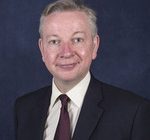
  • Michael Gove – 2020 Statement on EU Negotiations

    Michael Gove – 2020 Statement on EU Negotiations

    Below is the text of the statement made by Michael Gove, the Chancellor of the Duchy of Lancaster and Minister for the Cabinet Office, in the House of Commons on 4 June 2020.

    I beg to move,

    That this House, having regard to the constitutional and legal functions enshrined in the European Union (Withdrawal) Act 2018 and the European Union (Withdrawal Agreement) Act 2020, urges the Government to conduct its negotiations with the European Union with the fullest possible transparency to facilitate essential parliamentary scrutiny; also urges the Government to make regular progress reports on the negotiations, including on stakeholder contributions to the consultation on The Future Relationship with the EU: the UK’s Approach to Negotiations, and to address the issues identified by the European Scrutiny Committee in its Fifth Report of Session 2019–21, HC 333, as matters of vital national interest.

    I am delighted to be opening this important debate. In particular, I would like to thank my hon. Friend the Member for Stone (Sir William Cash). I am sure the House will be aware that, having first been elected in 1984, he has been a distinguished campaigner on a number of issues, including improving the UK’s role in overseas development. Above all, he will be remembered for his commitment to restoring the sovereignty of this House. For more than 35 years he has served on the European Scrutiny Committee, which he now chairs. Having served on it for a brief period when I was a Back Bencher in the 2005 to 2010 Parliament, I can say that his attention to detail, his commitment to this House and his service to the country are things that all of us should recognise and applaud.

    The motion we are considering today asks the Government to do three things: to negotiate transparently in order to ease the way for essential parliamentary scrutiny of the Executive; to provide regular reports on the progress of the negotiations; and to address the issues raised specifically by the European Scrutiny Committee about the impact of legislation being passed at European Union level while we are in the transition period, not fully part of the EU but of course subject to its acquis.

    With respect to the transparency of our negotiations, it is the case that a Command Paper was published earlier this year outlining the approach that the UK Government would take towards the negotiations. I made an oral statement in this House to outline our approach. Since that time, the UK Government have outlined their approach in detail by the publication of draft texts covering not just our future economic partnership but areas such as fisheries and security. The publication of those draft texts has also been accompanied by my appearance alongside David Frost, the Prime Minister’s sherpa and EU negotiator, in front of the Select Committee of the right hon. Member for Leeds Central (Hilary Benn) on the future relationship with the European Union on three occasions, in front of the House of Lords Select Committee covering European affairs on ​two occasions and, of course, in front of the Public Administration and Constitutional Affairs Committee on one occasion as well.

    Hilary Benn (Leeds Central) (Lab)

    The document to which the right hon. Gentleman has just referred makes it clear that the Government want an agreement that involves no tariffs, but in the interests of transparency, will he explain to the House why the Government are prepared to contemplate tariffs being imposed from 1 January next year, when he will know that the president of the National Farmers Union has described that prospect as catastrophic for the industry, and that only this week the chief operating officer of Nissan has warned that the Sunderland plant would not be sustainable if tariffs on car exports transpire?

    Michael Gove

    The right hon Gentleman is right; it is our intention. Indeed, it is a commitment in the political declaration that accompanies the withdrawal agreement that both sides will work towards ensuring that we have a zero-tariff, zero-quota approach. One of the problems we face is that the European Union is placing an unprecedented demand on the United Kingdom, which is that in order to secure that zero-tariff, zero-quota approach, we accept a suite of commitments—the so-called level playing field commitments—that would place obligations on the UK Government and our institutions to follow EU law in a way that no other sovereign nation would and in a way that no other free trade agreement requires. That takes us to the heart of the UK’s approach.

    In all these appearances and opportunities in which the House has allowed me, on behalf of the Government, to explain our approach, we have taken a consistent line, and that is in keeping with the political declaration. We want a free trade agreement with the European Union, and the free trade agreement that we seek is built on precedent. There is nothing novel, outrageous or excessive about our requests, and the free trade agreement that we seek is, as I say, one that builds on precedents from Canada, Japan and South Korea and agreements that other sovereign nations have entered into with the EU.

    The challenge that we face, however, is that the European Union argues that, because of the size of our market and our geographical proximity, we should be subject to rules of the club that we have left, which they impose on no other sovereign nation. At the same time, the EU insists that in the hugely important area of fisheries, it should continue to have access on terms that are similar, if not identical, to the common fisheries policy, which so many people in this country recognise as having worked against the interests of our coastal communities and of marine conservation.

    It is on that basis that the fourth round of negotiations is currently being conducted. David Frost, our negotiator, is negotiating hard today, and I am sure that Michel Barnier will update us with his perspective on these negotiations tomorrow. We will also be laying a written ministerial statement next week and, of course, should the House require any further updates on the progress of the negotiations, I would be delighted to give them.

    Sammy Wilson (East Antrim) (DUP)

    Does the Chancellor of the Duchy of Lancaster also accept that another impediment is Michel Barnier’s insistence that the EU’s draconian interpretation of the provisions of the withdrawal ​agreement and the Northern Ireland protocol should be implemented? Does he agree that the Government cannot and must not give in to those demands?

    Michael Gove

    I am grateful to the right hon. Gentleman for making that point. The protocol is part of the withdrawal agreement, but it makes it clear that Northern Ireland is part of the UK customs territory. Also, in the Command Paper that we published recently—which was broadly welcomed, albeit with caveats by political parties, businesses and citizens across Northern Ireland—we made it clear that we would not impose additional physical customs infrastructure and that we would do everything we could to ensure that the Good Friday agreement was upheld in its essentials, and that means that the citizens and the businesses of Northern Ireland should continue to enjoy unfettered access to the rest of the United Kingdom’s internal market, its customs territory and its nation overall.

    In these negotiations, there will inevitably be commentary, in the form of shots fired from outside and attempts by some who do not have an interest in us reaching an agreement, to suggest that an agreement is impossible, and certainly impossible within the time allowed. However, there is ample time for us to reach an agreement. The detailed work that has been undertaken by both sides should not be set aside or diminished. All that is required is political will, imagination and flexibility, and I believe that with the advent of the German presidency of the European Union on 1 July, we will see the leadership required to guarantee that we secure the agreement that we need.

    Jacob Young (Redcar) (Con)

    I thank my right hon. Friend for everything he has just said. What is his response to Michel Barnier’s letter to Opposition party leaders on 25 May, encouraging them to extend the transition period beyond 31 December? Would that be a betrayal of our voters and the recent general election?

    Michael Gove

    Yes, I think it would be a mistake. Different people have sincere views on this matter. For example, the Welsh Assembly Government—Labour—want an extension; the Mayor of London—Labour—wants an extension. The position of the Labour leader is not clear on this matter, but perhaps the hon. Member for Sheffield Central (Paul Blomfield) will enlighten us. The Scottish National party is clear in its view that there should be an extension, and the Democrat Unionist party is clear that there should not be. Every party in the House has a clear position—either for or against an extension—apart from the Labour party, although that point might be elucidated.

    The reason I think we should not have an extension is that if we did, we would end up paying the EU more money, which we could spend on our own NHS. We would have to pay for continued membership. We would not know how much that would be; we know only that it would more than we currently pay on an annual basis. We would also be subject to rules shaped at European level, although we would have no say, and that would constrain our capacity to respond not just to the coronavirus crisis, but to other coming economic challenges. During that period, the decisions made by the EU27 will be, entirely legitimately, in their interests, and not necessarily in ours. That is why an extension would be unwise and run counter to the clearly expressed view of the British ​people when they elected my right hon. Friend the Member for Uxbridge and South Ruislip (Boris Johnson) as Prime Minister, on a manifesto that clearly spelled out that we will leave the European Union’s transition period at the end of this year.

    Before I sit down and allow other Members to make their points, I am conscious that the explanatory memorandums that some Departments have provided to the Committee chaired by my hon. Friend the Member for Stone (Sir William Cash) have not always been as diligent and detailed as they should have been in ensuring that the European Scrutiny Committee can do its valued work. I assure my hon. Friend that I and the Paymaster General have spoken to all Departments to ensure that the Committee’s work can continue. It is vital, particularly during a period when we are not represented at European level, that any new addition to the acquis is scrutinised effectively by the House, and that the House has a chance to determine what response we make.

    I look forward to contributions from across the House, and in particular I thank all 23 Select Committees that joined the European Scrutiny Committee in putting forward propositions for the Government to take account of during the course of the negotiations. I am grateful to Members from across the House for the continued and constructive engagement in helping us to secure a good deal.

  • Robin Walker – 2020 Statement on Payments to the Victims of the Troubles

    Robin Walker – 2020 Statement on Payments to the Victims of the Troubles

    Below is the text of the statement made by Robin Walker, the Minister of State at the Northern Ireland Office, at the House of Commons on 4 June 2020.

    The Secretary of State has asked me to pass on his apologies for not being able to answer this urgent question in person, as he is currently in Northern Ireland engaging in discussion on these and other matters and was unable to return to the House in time for it. I hope that the House will not mind, therefore, if I answer on his behalf. He has written to the hon. Lady, my hon. Friend the Member for North Dorset (Simon Hoare), the Chair of the Northern Ireland Affairs Committee, and the Victims’ Commissioner on this matter today.

    Last summer, the House agreed that in the continuing absence of an Executive, the Government should make regulations establishing a troubles victims payment scheme. There was cross-party support for establishing the scheme, which was intended to provide much needed acknowledgement and a measure of additional financial support to those most seriously injured during the troubles. We made regulations establishing a victims payment scheme in January and did so, yes, to fulfil our legal obligation under the Northern Ireland (Executive Formation etc) Act 2019, but also because we are committed to doing what we can to progress a scheme that has been too long delayed by political disagreements. Having spoken personally to a number of victims’ groups and the Victims’ Commissioner in recent weeks, I am very aware of how long many people have waited for an acknowledgement of the physical distress and emotional trauma caused by injuries to themselves or loved ones during the troubles.

    Much has been made in the media of the suggestion that funding is holding up the establishment of this scheme, but that is not the case. Funding is not preventing the Executive from being able to take the vital steps to unlock implementation; rather, the key step to unblocking the process is the designation of a Northern Ireland Executive Department to provide administrative support to the Victims’ Payments Board. I am afraid to say that despite this decision being the subject of discussion by Executive Ministers for some time and one on which the Secretary of State is currently engaging them in Northern Ireland, they have not yet designated a Department to lead on the implementation of this scheme. The Justice Minister is prepared to lead on the scheme, but Sinn Féin has been clear that it wants to reopen the criteria by which eligibility for the scheme will be determined. That is already set in legislation and provides a fair basis for helping those who suffered most throughout the troubles. It is therefore imperative that Sinn Féin, along with all the parties, enables the scheme to move forward, as the time for delay is gone.

    The Government take this matter very seriously, and we are extremely disappointed by the current delay. It is because of the high priority we place on this issue that the Secretary of State has written to and had meetings with the First Minister and Deputy First Minister. ​We have been offering and providing all appropriate support to help progress the implementation of this scheme. I assure all right hon. and hon. Members that the UK Government are committed to seeing this matter progress; victims have waited too long for these payments. The Northern Ireland Executive committed to finding a way forward on this issue in 2014. The UK Government have provided that way forward, through the regulations made in January, following public consultation. The Executive must now set aside their political differences and deliver for victims.