Tag: 2020

  • Jonathan Ashworth – 2020 Comments on Cancer Waiting Times

    Jonathan Ashworth – 2020 Comments on Cancer Waiting Times

    Below is the text of the comments made by Jonathan Ashworth, the Shadow Secretary of State for Health and Social Care, on 11 June 2020.

    These figures should ring alarm bells for ministers – the drop-in urgent referrals suggests that people are either finding it difficult to access services or are being put off seeing a doctor because of the virus.

    Early diagnosis is key to better treatment and saving lives with cancer, so the effects of not being seen early could be devastating. Ministers urgently need to prepare for the backlog of care that is building up as a result of the pandemic.

    We need a new resourced plan for the NHS; a strategy that enables us to move between the competing demands of the Covid-19 pandemic and non-Covid related care in the months and years ahead.

  • Steve Reed – 2020 Comments on Westferry Planning Application

    Steve Reed – 2020 Comments on Westferry Planning Application

    Below is the text of the comments made by Steve Reed, the Shadow Secretary of State for Communities and Local Government, on 11 June 2020.

    Instead of answering questions about his behaviour, Robert Jenrick sent in a junior minister to speak on his behalf while he apparently laid low in the tea room. This attempt to avoid scrutiny shows contempt for the public who are concerned about the integrity of the planning process.

    Robert Jenrick dodged questions from MPs about his biased and unlawful decision to over-rule his own advisors and force through a billion-pound luxury development which saved Richard Desmond tens of millions of pounds in tax. Just weeks later, Desmond made a generous donation to the Conservative Party.

    The Conservatives have broken confidence in the planning system. They can only mend it by returning the donation to Mr Desmond and by Robert Jenrick immediately publishing all correspondence with Richard Desmond so the public can see the true reasons for his decision.

  • Lucy Powell – 2020 Comments on Job Losses at Bombardier

    Lucy Powell – 2020 Comments on Job Losses at Bombardier

    Below is the text of the comments made by Lucy Powell, the Shadow Minister for Business and Consumers, on 11 June 2020.

    This is a further body blow to our world-leading aerospace industry and a devastating loss of high skilled, high paid jobs in an area that can ill afford to lose them.

    France and Germany have stepped in to support and sustain their aerospace industry, while our Government continues to drag its feet. With the right action now the UK could lead the world in the green revolution in aerospace; no action will lead to devastation and long-term damage to communities which rely on these jobs.

  • Rebecca Pow – 2020 Statement on the Water Industry

    Rebecca Pow – 2020 Statement on the Water Industry

    Below is the text of the statement made by Rebecca Pow, the Parliamentary Under-Secretary of State for Environment, Food and Rural Affairs, in the House of Commons on 10 June 2020.

    I beg to move,

    That the draft Water Industry (Specified Infrastructure Projects) (English Undertakers) (Amendment) Regulations 2020, which were laid before this House on 28 April, be approved.

    Mr Speaker—no, Madam Deputy Speaker. I got that completely wrong before I had even started. I apologise.

    The instrument before the House is a simple amendment to the Water Industry (Specified Infrastructure Projects) (English Undertakers) Regulations 2013 to remove the sunsetting provision. That would allow the 2013 regulations to continue in force and to be available as part of the regulatory framework of the water industry. Without this SI, the 2013 regulations would expire on 27 June 2020. Before I talk a little further about the Government’s reasons for bringing forward this amending SI, I wish to outline the purpose of the 2013 regulations.

    Water and sewerage services in England are provided by companies known as undertakers. The 2013 regulations were designed to help contain and minimise the risks associated with large or complex water or sewerage infra- structure projects, thereby helping to protect undertakers, their customers and UK taxpayers. Containing and minimising risks is likely to reduce the overall cost of borrowing for a given water undertaker and so ensure better value for money for that undertaker’s customers. It also makes sure that delivery of such infrastructure projects will not adversely impact on the existing water or sewerage services provided by undertakers.

    The 2013 regulations enable the Secretary of State or Ofwat to specify, by notice, an infrastructure project where either is satisfied that two conditions had been met. The first is that the infrastructure project is of a size or complexity that threatens an undertaker’s ability to provide services to its customers. The second condition is that specifying the project would likely result in better value for money than if the project was not so specified, taking into account charges to customers and any Government financial assistance. A good example of this, just to set this all in context, is the Thames Tideway Tunnel, which meets both of those conditions.

    Once specified, an undertaker is required to put the infrastructure project out to tender and a separate Ofwat regulated infrastructure provider is then designated to finance and deliver the project. Such infrastructure projects raise many complex issues, particularly around determining the cost of their financing, coupled with the construction risk that is far greater than that normally associated with an undertaker’s typical capital investment.

    Requiring an undertaker to tender competitively for an infrastructure provider for a large or complex project provides an objective means of testing whether the financing costs of such a project are appropriate and reasonable. Without the tendering process, competitively determining the cost of capital for this type of infrastructure project would not be possible. The ability to create Ofwat-regulated infrastructure providers also helps to ring fence their associated higher risks and should result in more effective risk management for these projects. Creating designated infrastructure providers in this way means that a large or complex infrastructure project will not affect the ability of an undertaker to provide its ​day-to-day services for its customers and avoids any resultant extra costs that would ultimately be borne by their customers—in other words, the people using the water.

    John Redwood (Wokingham) (Con)

    Will the Minister assure the House that this provision will not be used as a device to prevent the additional provision of water capacity, which is much-needed in the south-east? We have had huge overdevelopment, without the proper additional provision of water. We now wish to see an awful lot more food grown locally and in our country, which will need a lot of irrigation. So will she assure the House that increasing capacity will be an important part of the greener growth that we look forward to?

    Rebecca Pow

    My right hon. Friend makes an exceedingly good point. Of course the Government are completely aware of the situation on water supply and dealing with the issues he is talking about is on our top list of priorities, but what we are dealing with here is quite separate. We are talking about big infrastructure projects, some of which will deliver some of the water he is referring to and will be very helpful, but they will be separate projects, as is the Thames Tideway Tunnel, from the general work of the water companies and the smaller-scale projects that they will still undertake to keep our water supply as we need it.

    The amending statutory instrument was laid in Parliament following a post-implementation review of the 2013 regulations, carried out in 2018. Eight key stake- holders were consulted, five of which submitted responses —Ofwat, Thames Water, Bazalgette Tunnel Ltd, Bazalgette Tunnel Ltd investors and the Consumer Council for Water. The review found that the 2013 regulations had been successful in fulfilling all their policy objectives: facilitating large or complex projects; minimising risks to undertakers; providing value for money to customers; and promoting innovation in the sector. Accordingly, the review recommended that the 2013 regulations’ sunsetting provision be removed.

    In March 2020, we undertook a further, targeted consultation on our proposal to remove the sunsetting provision in this piece of legislation. Views were sought from Ofwat, Water UK, Thames Water, Bazalgette Tunnel Ltd, the Environment, Agency the Drinking Water Inspectorate and the CCFW. Water companies were consulted via Water UK and Bazalgette Tunnel Ltd was given the option to consult its investors. Four written responses were received, from Ofwat, the Environment Agency, Thames Water and Affinity Water. All indicated that they were in favour of this amendment.

    Currently, the only project regulated under the 2013 regulations is the Thames Tideway Tunnel, which I referred to earlier. However, Ofwat has identified four large or complex water infrastructure projects currently in development that may benefit from being specified in accordance with the 2013 regulations over the next 10 years, which might be of interest to my right hon. Friend. They are the south-east strategic reservoir at Abingdon, a joint project proposed by Thames Water; the London effluent re-use scheme, a project proposed by Thames Water; the south Lincolnshire reservoir, a joint project proposed by Anglia Water and Affinity Water; ​and the River Severn to River Thames transfer, a joint project proposed by Thames Water, Severn Trent Water and United Utilities.

    John Redwood

    Will the Minister give way?

    Rebecca Pow

    I have been generous in giving way, but I will do so again.

    John Redwood

    I thank the Minister, because she has got to the point that I was hoping she might be making, which is that we need more reservoir capacity urgently. It is crazy that with just one month of dry weather we are already at risk of some kind of hosepipe ban, after the wettest, long autumn and winter I can remember.

    Rebecca Pow

    My right hon. Friend makes a sound point. A lot of the issue is that we have been in lockdown and there has been an enormous increase in demand for water because people have been at home, filling their paddling pools and watering their gardens and vegetable patches, as I have. That increased use of water has put on immediate pressure. It is not a drought situation, but he is right: we need to deal with our overall water supply, and that is absolutely on this Government’s agenda.

    A decision as to whether the infrastructure projects I have referred to could come within the scope of the 2013 regulations will be made on a case-by-case basis at the appropriate time when the schemes are brought forward. The Government are committed to improving water supply resilience, as set out in our strategic policy statement to Ofwat and our 25-year environment plan. That ambition is made more challenging because of the growing population, increased water demand from agriculture and industry and, of course, climate change.

    We also want to ensure that there is sufficient water left for the natural environment. Without any action, many areas of England will face water shortages by 2050. The starting point for action is to reduce water use by reducing leakage from the water distribution networks and reducing our personal consumption. However, even if leaks and personal consumption are reduced, we will continue to need new water resource infrastructure. In our “Water conservation report”, published in December 2018, we set out our progress on promoting water conservation from 2015 onwards.

    Jim Shannon (Strangford) (DUP)

    The Minister responded to an Adjournment debate secured by a Member from England on the decreasing water supply in rivers because of water being taken out by water companies. Is it her intention to ensure that that practice will stop and that river water levels will be retained?

    Rebecca Pow

    The water supply is to be looked at in the round. If the hon. Gentleman would like to have a conversation with me, I would be happy to tell him about all the things we have in train to deal with that, to ensure that we have enough water for everyone in future and take account of climate change and the growing demands. He raises an important point; keeping the right status for our rivers is incredibly important.

    We endorse the industry’s existing commitment to a 50% reduction in leakage by 2050, and we announced a consultation to enable us to set an ambitious target for personal water consumption. We consulted on measures ​to reduce personal water consumption, including supporting measures on amending building regulations, water efficiency labelling and smart metering. Most of those measures can be taken forward without the need for new primary legislation, and we will publish a Government position on it later this year.

    Alongside reducing leakage and personal water consumption, new water resources infrastructure, including reservoirs and water transfers, is needed to provide a secure supply of water for future generations. In the current price review period, Ofwat has made £469 million available to nine water companies to investigate and develop integrated strategic regional water resource solutions, in order to be construction-ready by 2025. That work will be supported by the Environment Agency’s national framework for water resources, which was published in March this year.

    In summary, this statutory instrument enables the Water Industry (Specified Infrastructure Projects) (English Undertakers) Regulations 2013 to continue in force, in order that they can continue to be used in the future delivery of large or complex water or sewerage infrastructure projects. Such projects play an essential role in strengthening the future resilience of water resources in England. Retaining the 2013 regulations will help to reduce the associated financial risks of such projects, ensure that water undertakers continue to deliver their existing water or sewerage services to customers and provide greater value for money. I commend the regulations to the House.

  • Jim Shannon – 2020 Speech on Brexit and Civil Aviation

    Jim Shannon – 2020 Speech on Brexit and Civil Aviation

    Below is the text of the speech made by Jim Shannon, the DUP MP for Strangford, in the House of Commons on 10 June 2020.

    First, I wish the Minister every success in her new role; we look forward to watching her progress. It is also nice to see the shadow Minister, the hon. Member for Bristol East (Kerry McCarthy), in her place. I am sure a long career beckons for both—perhaps in different roles, but it is none the less important to say that.

    I thank the Government, and the Minister in particular, for bringing forward the regulations to ensure that the removal of what would be onerous European legislation is complete. The very nature of aviation means that we travel large distances into different countries and uphold their aviation rules, but the fact is that we must be the ones who set our own standards, and they must be safe and appropriate and give the cover that is needed, as the Minister indicated.

    Regulation (EC) 785/2004 established minimum insurance requirements for air carriers and aircraft operators in respect of passengers, baggage, cargo and third parties. It also required air carriers and aircraft operators to have insurance that covers specific risks, including all things that could possibly take place—acts of war, terrorism, hijacking, acts of sabotage, the unlawful seizure of aviation and civil commotion. Such protections obviously need to be in place, yet the point of the matter is that if anything is to change in our aviation, it is imperative that although we will in all likelihood align with basic regulations, the decision lies where it should: with Ministers of our Government.

    Our aviation sector is in unprecedented times. The regulations before the House remind the industry that we have a role to play in the industry going forward, as other Members have said. Whether that is by supporting the industry through production in the Bombardier factory in Newtownards in my constituency, similarly to the situation mentioned by the hon. Member for Arundel and South Downs (Andrew Griffith); by supporting our airports to enable them to maintain connectivity across the whole of the United Kingdom of Great Britain and Northern Ireland, and globally; by supporting airline staff and their baggage handlers; or by supporting individual airlines—for instance, British Airways, to which the hon. Member for Arundel and South Downs referred, and in respect of which a number of my constituents, some with 30-plus years of loyal commitment to British Airways, are very concerned about ​their future—the pandemic will mean change for our aviation sector. Hard times are ahead, but tomorrow can be a better day if we have the commitment that the Minister and our Government are showing for the aviation sector.

    We have a role to play, and this statutory instrument clearly shows that we are determined to leave Europe and stand alone at that date, regardless of coronavirus and European determination to exploit an awful time not just for the global economy, but for all the families directly involved with the aviation sector in the UK. This small wording and legislative change shows not only that are we prepared to leave, but that we are mindful of the needs of the industry and are equipped to deal with those needs. It is such a small change, which may seem meaningless to some, yet the message is clear: the aviation industry is a priority for Members of this House. I, for one, will look into anything that affects the strength of the industry. With that in mind, I support this instrument, which brings power back to the House.

  • Andrew Griffith – 2020 Speech on Brexit and Civil Aviation

    Andrew Griffith – 2020 Speech on Brexit and Civil Aviation

    Below is the text of the speech made by Andrew Griffith, the Conservative MP for Arundel and South Downs, in the House of Commons on 10 June 2020.

    This is my first chance to welcome the Minister and the hon. Member for Bristol East (Kerry McCarthy) to their places. I congratulate them both on securing such an important brief at such a critical time.

    I am pleased to support the Government on the Bill. As we leave the European Union and become a sovereign state once again, we should feel capable of regulating our own affairs, and to set our own level of insurance requirements in aviation. Just as it makes sense to control our own fisheries and protect our own marine environment, so it makes sense to do so for the sky above our heads. The acid test of a regulatory structure, however, must be whether it supports the aviation and aerospace sectors.

    Having taken back control, we must be generous and collaborative with our international partners. I encourage the Minister, therefore, to seek bilateral aviation safety agreement with both the US Federal Aviation Authority and the European Union Aviation Safety Agency and ensure that where there are opportunities to deregulate further than either, we remain in alignment with both in respect of matters such as type certification, personnel licensing and trading standards.

    While I am on the subject of regulation, I should like to congratulate Sir Stephen Hillier on his appointment as the new chair of the Civil Aviation Authority. My constituency, as well as being one of the most beautiful from the ground, is even more spectacular from the air. It is home to the excellent South Down gliding club, formed in 1930 and one of the oldest in the United Kingdom. Sir Stephen has a distinguished aviation career, and I ask him to consider making one of his priorities during his term in office the protection of airspace for recreational general aviation, such as gliding, which is so critical to providing affordable access to the skies and thereby inspiring future generations.

    Going into this pandemic, our aviation sector was world leading in growth, jobs and competitiveness, but that is now at real risk. Aviation has taken the full force of the economic impact of the covid-19 crisis, devastated by border closures and the drop in passenger demand. Many of my constituents work for British Airways, Virgin, TUI and other airlines, or for businesses that are part of the extended Gatwick supply chain. I know of constituents such as Antonello and Grainne Patteri, who have served British Airways loyally for 24 years but whose loyalty sadly is not being reciprocated. I share their worry and frustration at how they are being treated, and it is right that I raise it with the Minister today.

    While other industries are beginning their recovery, the downturn for aviation has only been exacerbated by the imposition of blanket quarantine, which hangs the “closed” sign on Britain just as our competitors reopen for business. I believe that the Minister fully understands, having previously worked in the financial sector, that if planes full of passengers from Iceland, whose last death from covid was in April, or from covid-free New Zealand were landing in the UK this afternoon, it would actually lower our average infection rate. I am reassured by the Government’s undertakings to implement air bridges as a matter of urgency, as well as to look again at testing ​on arrival—something I first raised in April—but could she be so kind as to provide an update in her winding-up speech?

    My final point relates to future opportunities. Together with quantum computing, artificial intelligence, fintech and the life sciences, aviation and aerospace is one of the key industrial sectors where UK businesses have a global competitive advantage in a growing and high-value industry.

  • Kerry McCarthy – 2020 Speech on Brexit and Civil Aviation

    Kerry McCarthy – 2020 Speech on Brexit and Civil Aviation

    Below is the text of the speech made by Kerry McCarthy, the Labour MP for Bristol East, in the House of Commons on 10 June 2020.

    It has been some four years since I stood at this Dispatch Box, so it is a pleasure to be back. I took part in Transport orals a few weeks ago, but that was on one of the screens above us. I am very pleased to be here shadowing the Minister today. We have already established a constructive relationship. We debated our first statutory instrument together yesterday in Committee. As I said to her, I will be writing to her and scrutinising what she does, but in a spirit of constructive working. We have the decarbonisation of transport brief and the EU transition brief, both of which are incredibly important in the current circumstances.

    The statutory instrument that we are discussing today is uncontroversial in that we accept that, now that Britain has left the European Union and the end of the transition period is in sight, we need to transfer relevant powers away from the European Commission and to the Secretary of State for Transport as smoothly as possible. I understand, a number of statutory instruments will be issuing forth from the Minister in the coming months, and that could be seen as a mechanistic process to ensure continuity. That does not mean to say, however, that we will not scrutinise and challenge if we have concerns about the way that the Government are doing things.​

    As the Minister said, the function of the measure is to ensure that there are minimum insurance requirements for air carriers and aircraft operators in respect of passengers’ baggage, cargo and third parties. My understanding is that that stems from the 1999 Montreal convention, whereby airlines are responsible for compensation in the case of death and injury to passengers, and are required to be adequately insured to cover any liabilities. The EU civil aviation insurance regulation sets out the minimum level required.

    I have one question, which the Minister may have answered in her opening remarks. Given that the statutory instrument transfers power from the European Commission to the Secretary of State to set those minimum requirements, and that he—or she in future—can do so by regulation, is there potentially a risk that the minimum insurance levels will not be the same as they would be if we were still part of the EU scheme? I think that is quite an important point to note.

    The statutory instrument is one of many that the Government are having to rush through Parliament as a result of what I would say is an unnecessary focus on an arbitrary date in our exit from the transition period. Given the limitations on parliamentary scrutiny at the moment because of the need for social distancing and the fact that not as many Members can take part in proceedings, as well as the delay that we have had over the past few months, there is a danger that we could be rushing delegated legislation rather than giving it the proper attention that it deserves. Given the need for certainty for the people who will be affected by such legislation, we do not want a logjam towards the end of the year, giving rise to uncertainty about whether arrangements will be put in place or not.

    The fact that we have now got started, and that we have dealt with two of the statutory instruments this week, is a good start. I do not think, however, that fixing in law the end date for the transition period has been beneficial to the legislative process, and I am uneasy about the apparent lack of progress in ongoing negotiations with the European Union. The concerns about a damaging exit at the end of the year are very real. That is particularly important for the aviation industry, given that we are in a time of unprecedented economic upheaval for the sector.

    The aviation sector’s need for certainty has never been greater. Brexit will inevitably have an impact on a business that is, by its very nature, about crossing borders and relationships with other countries, and the global pandemic has hit aviation especially hard. There has been a devastating collapse in air traffic of approximately 90%, which is putting at risk an economically vital industry that supports 230,000 jobs.

    We need clarity from the Government on three major policy areas. The first is the one that we are discussing today—the legislation related to the European Union and the transition period. We also need clarity on the financial support for the industry, and on the nature of the measures that the industry must implement to avoid further spread of covid-19.

    I am pleased that today we are establishing a degree of clarity on one aspect, as it relates to the EU transition period, but confusion still reigns over the Government’s quarantine for new arrivals, and we continue to wait for a specific conditional support package for the aviation industry. I and my colleagues in the shadow Transport ​team are very happy to work with Ministers to try to ensure that the aviation industry is given the certainty, the clarity, the direction and the support that it needs.

  • Rachel Maclean – 2020 Statement on Brexit and Civil Aviation

    Rachel Maclean – 2020 Statement on Brexit and Civil Aviation

    Below is the text of the statement made by Rachel Maclean, the Parliamentary Under-Secretary of State for Transport, in the House of Commons on 10 June 2020.

    I beg to move,

    That the draft Civil Aviation (Insurance) (Amendment) (EU Exit) Regulations 2020, which were laid before this House on 5 March, be approved.

    It is a great pleasure to debate this statutory instrument. It is my first SI debate on the Floor of the House, and I had my first ever SI debate only yesterday.

    This draft instrument will be made under the powers conferred by the European Union (Withdrawal) Act 2018 and will be needed at the end of the transition period. As hon. Members are aware, the Government are committed to ensuring that the UK has a functioning statute book at the end of the transition period, while we continue to work to achieve a positive future relationship with the EU. Although the Government will seek to reach the best outcome for the UK and the EU, it is our duty to make reasonable preparations for all scenarios, including by ensuring that there is a functioning statute book, irrespective of the outcome of the negotiations. To that extent, we have conducted intensive work to ensure that there continues to be a well-functioning legislative and regulatory regime for aviation, including for insurance.

    This instrument is made under section 8 of the European Union (Withdrawal) Act 2018. It is subject to the affirmative procedure because it transfers an EU legislative function to a public authority in the UK. This procedure also enables the right level of parliamentary scrutiny for the proposed changes.

    EU regulation 785/2004 requires air carriers and aircraft operators to be insured in respect of passengers, baggage, cargo and third parties, and against other risks, such as acts of war, terrorism, hijacking, sabotage, unlawful seizure of aircraft and civil commotion.

    The amounts for which carriers and operators are required to be insured are measured in special drawing rights, an international reserve asset created by the International Monetary Fund.

    The EU regulation also requires air carriers and aircraft operators to demonstrate their compliance with the minimum insurance requirements set out in the regulation. Elements of the regulation were developed in the aftermath of the 9/11 terrorist attacks in the US. They make provision for exceptional situations where a failure of the insurance market means that carriers are not able to demonstrate that they are adequately insured in respect of all the risks specified in the regulation.

    The withdrawal Act will retain regulation 785/2004 in UK law in its entirety at the end of the transition period. The draft regulations we are considering make further changes that are necessary so that the EU regulation continues to function correctly after the end of the transition period. The withdrawal Act will ensure that the same minimum insurance requirements for air carriers and aircraft operators that apply today continue to apply after the transition period.

    The Civil Aviation (Insurance) (Amendment) (EU Exit) Regulations 2018, which were debated in Committee in October 2018, made changes to the retained regulation ​so that it continues to function correctly after EU exit. The need for this additional statutory instrument arose due to the EU adopting regulation 2019/1243, which amended regulation 785/2004, after the 2018 regulations were made. The purpose of this SI is to fixed further deficiencies introduced by those amendments.

    The amendments made by this SI are technical in nature. Regulation 785/2004 includes powers for the Commission to adjust minimum required levels of insurance where international treaties make that necessary. The 2018 regulations converted those powers into powers for the Secretary of State to do the same via regulations. However, since the 2018 regulations were made, the EU’s amendments to regulation 785/2004 have replaced the Commission powers with new versions more closely aligned to the legal framework established by the treaty of Lisbon.

    To ensure that UK legislation continues to function correctly after the end of the transition period, these regulations take the same approach used in the 2018 regulations for the previous versions of the Commission powers. They replace them with powers for the Secretary of State to amend the minimum insurance requirements by regulations. That is what the SI is for. In summary, no change in policy is made by these regulations; they make only minor technical and consequential changes to ensure that UK legislation on aviation insurance continues to function effectively after the end of the transition period.

    As I said in my opening remarks, we continue to work to achieve a positive future relationship with the EU. However, this instrument is an essential element in ensuring that we have a functioning statute book at the end of the transition period. It makes technical changes to ensure that UK legislation on aviation insurance continues to function. I hope colleagues will join me in supporting the regulations, which I commend to the House.

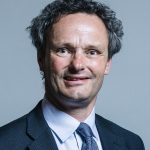
  • Peter Aldous – 2020 Speech on Local Electricity

    Peter Aldous – 2020 Speech on Local Electricity

    Below is the text of the speech made by Peter Aldous, the Conservative MP for Waveney, in the House of Commons on 10 June 2020.

    I beg to move,

    That leave be given to bring in a Bill to enable electricity generators to become local electricity suppliers; and for connected purposes.

    As the UK emerges from the lockdown, and as we look out across a different landscape, there is a need to rebuild local communities and local economies for the benefit of local people and local businesses and, in doing so, to meet head-on the challenge of climate change. To do that successfully, we need power—electricity in a low-carbon form, to light up and to heat our homes and workplaces and to run our transport networks and our vehicles.

    In recent years, the UK has made great strides in decarbonising our energy system, but we still have a very long way to go, and the way we regulate the supply of electricity means that we are in effect operating with one arm tied behind our backs. We currently have a system that prevents local generators from becoming local suppliers. This very short Bill would help remove that barrier. I thank Power for People, which has carried out most of the background research, campaigning and preparatory work ahead of this Bill.

    Today we face two great challenges: one immediate—the seismic economic shock created by the covid-19 pandemic —and the other looming large, which is the devastating impact of climate change. The Bill addresses both challenges. As a nation, we have made significant progress in meeting the targets under the Climate Change Act 2008, but the Committee on Climate Change is clear that ambitious new policy and regulation is needed if we are to continue to meet those targets in the future. At present, renewable electricity generation accounts for only 11% of all UK energy use, and our transport and heating networks need to be electrified to decarbonise our economy. To ensure that the dramatic rise in electricity demand that this will create is met by renewable generation, we must put the right policy and regulatory frameworks in place.

    There is tremendous potential for a significant proportion of renewable energy generation to come from new community projects right across the country, whether solar, hydro on rivers and estuaries, batteries in former factories, or wind in the uplands. Such schemes can bring many benefits to many local economies—opportunities that are desperately needed, given the devastating economic impact of the covid-19 pandemic. A Government report published in 2014 found that the community energy sector could deliver at least 3,000 MW of generating capacity, yet at present it is producing only a tenth of that, equating to less than 0.5% of our total generating capacity.

    There is a great opportunity for renewable energy to be the lead player in the economic recovery, but it is being blocked by the current energy market and licensing rules that lead to huge costs and burdensome bureaucracy being imposed on new supply entrants, with the result that some great and highly innovative schemes never see the light of day. A report by the Institute for Public Policy Research shows that the financial, technical and ​operational challenges involved in setting up a licensed energy supply company are such that the initial costs could exceed £1 million. It is a bit like someone setting up a micro-brewery, planning to deliver their beers to local pubs, off-licences and homes, and then being told that they have to pay £1 million in road tax for their delivery van.

    To solve the problem, the costs and complexity of being a licensed electricity supplier must be proportionate to the supply of the supply operation. If they are, it becomes financially viable for renewable generators to supply electricity, and suppliers will spring up all over the country. This is what happens in Germany, where there are 1,000 such supply companies, compared with 60 in the UK. Most of them are local suppliers, which are community owned and supply renewable energy. Germany’s big four control only 40% of the market. We need to empower local community groups and businesses to sell locally generated clean energy directly to local people and local companies.

    The Bill would do that by establishing a right to local supply. That would give the energy market regulator, Ofgem, the duty to establish new market rules that ensure that the set-up and running costs of selling locally generated energy directly to local consumers are proportionate to the scale of the supply business. The Bill is a first attempt to lay out a mechanism that will fix the UK’s local supply problem. It is accepted that there is scope for improvement and refinement, and new ideas are welcome for how that can be done.

    Clause 1 states the purpose of the Bill: to enable the local supply of electricity. Clause 2 states that it is generators of electricity that can become local suppliers. This is intended to achieve the aim of smaller-scale renewable generators being able to supply electricity to a local area. There is a case for amending the clause to allow any organisation to become a local licensed supplier; the logic for that is that currently licensed suppliers do not also need to be generators.

    Clause 3 goes to the heart of the Bill and gives Ofgem the task of setting up the local supplier licence process; it also requires that the process ensures that local suppliers face set-up costs and complexity proportionate to the scale of their operations. The exact details of that process are not laid out in the Bill, as it is believed that Ofgem should carry out this task. Subsection (1) requires Ofgem to set up the local supply licence mechanism to ensure that the costs and complexity of becoming a local supplier are proportionate to the size of the operation. Subsection (3) allows for the local supplier operation to be based on a radius area, although that could arguably be improved, if amended, to be a defined area.

    The result of the Bill would be that building new community-scale renewable generation infrastructure and selling the electricity direct to local people through a locally licensed energy supply company would become financially viable. The benefits would be significant. These new local energy businesses, creating local jobs and being paid by local customers, would keep significant additional value in their local economies, thereby making them stronger. There would also be the knock-on benefit of greater public support for the transition to sustainable energy. There would be improved air quality. The nation’s energy supply would be more secure and less dependent on imports. Being able to sell to local customers would reduce the need for renewable subsidies. Renewable generators would receive significantly more than their current 4p per kilowatt-hour and would be paid by their customers, not the state.

    It may sound as though I am painting a picture of utopia, but this is nothing new. It has been done before. Local amenities across the UK, such as parks, swimming pool baths and libraries, were built from the revenues of the municipal energy companies of the 19th and early 20th centuries. In this respect, we need to turn back the clock.

    One hundred and fifty-one MPs from right across the Chamber have declared their support for the Bill, from all parties. This is an advance on the 116 Members who did so when a presentation Bill was submitted in the last Session. Power for People, which is co-ordinating the public campaign for the Bill, have also mobilised the grassroots movement and brought together a broad coalition of support, including from 50 national non-governmental organisations and 43 local councils.

    In conclusion, the Bill would enable local people to come up with local solutions to meet the challenge of climate change. In doing so, they would be creating sustainable jobs and making their local economies more resilient. I am very much aware that, very often, Bills such as this do not advance very far in this and the other place, but let us work together to turn the compelling objectives of this Bill into reality. It is now time to deliver power for people.

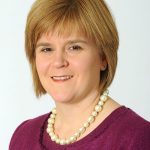
  • Nicola Sturgeon – 2020 Statement on the Coronavirus

    Nicola Sturgeon – 2020 Statement on the Coronavirus

    Below is the text of the statement made by Nicola Sturgeon, the Scottish First Minister, on 9 June 2020.

    Good afternoon.

    I’ll start – as I always do – with an update on some of the key statistics in relation to Covid-19 in Scotland.

    As at 9 o’clock this morning, there have been 15,653 positive cases confirmed – an increase of 14 since yesterday.

    A total of 1,011 patients are in hospital with confirmed or suspected Covid-19. That represents a total decrease of 31 from yesterday, including a decrease of 14 in the number of confirmed currently cases in hospital.

    A total of 21 people last night were in intensive care with confirmed or suspected Covid 19. That is a decrease of 3 since yesterday.

    I am also able to confirm today that since 5 March, a total of 3,820 patients who had tested positive for the virus have been able to leave hospital. I wish all of them well.

    And in the last 24 hours, 7 deaths were registered of patients confirmed through a test as having Covid-19 –the total number of deaths in Scotland, under that measurement, is therefore 2,422.

    Of course, tomorrow we will have the weekly report from National Records of Scotland which includes confirmed and suspected deaths from the virus.

    After two days of reporting zero deaths, today’s figure of 7 is, of course, not what we would want to hear.

    However, it is important to stress that it is not a surprise either – we know there is a weekend lag in registration of deaths and so the numbers we report on Tuesdays are usually higher than those on Sundays and Mondays. Last Tuesday, for example, we reported 12 registered deaths.

    So, today’s figure though an increase on the last two days, is nevertheless a further indication of a clear downward trend in the number of people who are losing their lives to this virus. And that, of course, is clearly welcome.

    We know, however, that this will be no consolation whatsoever to people who are grieving these lost lives. The figures I have just read out are not simply statistics. They represent individuals who are being mourned and grieved by many. So – once again – I want to convey my deepest condolences to everyone who has lost a loved one to this illness.

    I also want to express again my thanks to our health and care workers. The entire country is so grateful to you for everything you continue to do during this very difficult time.

    And, during what is Carers Week, I also want to thank our unpaid carers. This pandemic has demonstrated again the importance of what you do – but it has also, I know, created additional stress and anxiety for many of you.

    That is why the Health Secretary announced some additional help for young carers on Sunday, and it is why we are paying an additional Coronavirus Carers Allowance at the end of this month, to those who receive the Carers Allowance.

    In addition, we have also helped carers’ centres to work remotely. That means that help, advice and support is still available – online or on the phone – to all carers across the country. That support is not just available to people who have been carers for several months or years – it also applies to people who have had to take on caring responsibilities as a direct result of this pandemic.

    And so I’d recommend to any carer, including any new carer, that if you need advice – or practical help, or just a friendly word – you can search for your local carers’ centre on the Care Information Scotland website, and get in touch. Help is available for you if you need it.

    And finally, thank you once again to all of our carers for everything that you do. Your efforts make such an enormous difference obviously to those you care for, to all of their loved ones, and to the wider community and our whole country. All of us are grateful to you for that.

    I want to highlight two further issues today.

    Firstly, I can confirm that we will publish initial data in relation to our Test and Protect system tomorrow. That information will include how many positive cases have been identified so far through Test & Protect, and how many of those have had their contacts traced. At this stage, this will be national data though we intend to break it down regionally in the weeks ahead and add more detail to it. It is also data that will, at this stage, reflect the early stage of Test & Protect.

    One point that it is important to note at this stage is that the figures that we publish tomorrow will not completely match our daily testing figures that we publish at this daily update, because they will also include results from the drive-through centres that are situated in various parts of the country.

    The Covid update I give tomorrow – which I will deliver in parliament just before First Minister’s Questions – may be too short to explain those new figures in detail. However I will say more about them later in the week.

    For now, though, I want to stress that if you have symptoms of the virus – a new, continuous cough, a fever, or a loss or change in your sense of taste or smell – you should immediately take steps to book at test. Please do not wait to see if you feel better first, do it straight away. And you and your household, of course, should isolate immediately.

    You can book a test at nhsinform.scot or by phoning NHS 24 on 0800 028 2816.

    If you don’t have symptoms but you are contacted to say you’ve been a contact of someone who has tested positive, please do follow the advice you are given on self isolation.

    I can’t stress enough that the willingness of all of us to fully co-operate with Test & Protect in the weeks and months to come will be absolutely vital to our efforts to keep the virus suppressed as we try to restore some normality to our everyday lives.

    The second issue I want to cover relates to the impact of Covid-19 on people from minority ethnic communities.

    Public Health Scotland’s preliminary analysis of data from Scotland, which was published towards the end of May, does not appear to show that people from ethnic minorities are disproportionately affected by Covid in terms of its impact on their health.

    But these are preliminary findings based on limited data, and we know that studies in other parts of the UK and indeed around the world have provided different results to that. And we also recognise that people from ethnic minorities could be disproportionately affected by the economic and social impacts of COVID-19 – as well as the health impact.

    The Scottish Government has already allocated more than £500,000 to organisations that work directly with ethnic minority groups across Scotland. But we know that we may well need to do more.

    For that reason, I am establishing a new expert reference group, made up of academics and other advisers.

    That group will consider the evidence on Covid-19 in Scotland – including the data provided by NHS Scotland, National Records of Scotland and Public Health Scotland – to assess the impact of the virus on minority ethnic communities. In areas where Covid is having a disproportionate effect, they will also make recommendations on policies and approaches to mitigate that.

    It is always essential – at any time – to listen to people from our ethnic minority communities, to work with them, and to ensure that the policies we adopt and implement do not have disproportionate and adverse consequences. It is, however, especially important at this time, and I hope that this expert reference group will ensure that our response to Covid 19 takes full account of the needs and experiences of our minority ethnic communities.

    Finally, I want to end by emphasising once again our key and very important public health guidance.

    Right now you should still be staying home most of the time, and you should still be meeting fewer people than you would normally. If your life feels like it is getting back to normal, ask yourself why that is the case – because it really shouldn’t yet be getting back to normal.

    When you do meet people from another household, you must stay outdoors, and you must stay 2 metres, at least, apart from them.

    Don’t meet up with more than one other household at a time, don’t meet more than one a day – and please keep to a maximum of 8 people in any group.

    Wash your hands thoroughly and often. If you are out of your home, take hand sanitiser with you.

    Please wear a face covering when you are in shops or on public transport or in any enclosed space where physical distancing is more difficult.

    Avoid touching hard surfaces – and any you do touch, make sure you clean them regularly and thoroughly.

    And if you have the symptoms of Covid-19 – a new continuous cough, a fever, or a loss of or change in your sense of taste or smell – you must get tested, and follow the advice on self isolation.

    And above all for all of us, if we all remember each and every day that the decisions we are taking as individuals now have a big impact on the health and wellbeing of all of us, then we will all do the right thing and it is more likely that we get through this crisis more quickly.