Tag: 2020

  • Neil Parish – 2020 Speech on BBC Regional Politics Coverage

    Neil Parish – 2020 Speech on BBC Regional Politics Coverage

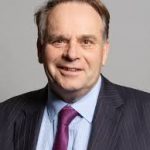
    Below is the text of the speech made by Neil Parish, the Conservative MP for Tiverton and Honiton, in the House of Commons on 22 June 2020.

    Thank you, Madam Deputy Speaker, for granting this debate tonight. I think we have five hours for the debate, so I feel a speech coming on, but I promise you I will try not to go on for more than 4 and a half hours. I called for the debate because BBC regional programmes could well be under threat. MPs across the House will be alarmed at the direction of travel.

    During covid-19, valued programmes such as “Inside Out” and the regional “Sunday Politics” shows have had to be taken off air, with no return date as such at the moment, although I just learnt today that ITV’s programmes are returning by September. BBC executives have said that the cuts are to do with safety, but a review of English programming is taking place, which is looking to save costs. Many regional journalists fear that they will be cut and never return to work on those vital programmes. If that were the case, that would be a great loss to all of us and our constituents.

    The “Sunday Politics” show covers 11 regions of England, from the south-west to the north-east and Cumbria. Those shows are a crucial part of our local and national democracy, holding us all to account throughout the year. All our regions have their identities. This is essential. With the Government looking towards more regional representation, such a step by the BBC would be a retrograde one.

    Jim Shannon (Strangford) (DUP)

    I congratulate the hon. Member on bringing the debate to the Chamber. The number of right hon. and hon. Members present illustrates how deeply interested we are in it. Does he not agree that the boost that regional TV provides to communities, and the information it contains, is essential to addressing regional issues? While the BBC must cut its cloth to suit, perhaps it should look at renegotiating contracts with some of its higher paid broadcasting staff as well as its directors, which would easily pay for regional programming.

    Neil Parish

    My hon. Friend the Member for Strangford (Jim Shannon)—I got the constituency right—makes a really good point. Northern Ireland, Wales and Scotland have quite a lot of regional coverage, and rightly so. They could do with more, but so could the rest of the regions.

    The merging of those 11 shows into one “Politics England” programme deprives local communities of properly funded regional and relevant politics.

    Mr Mark Harper (Forest of Dean) (Con)

    My hon. Friend is also from the fantastic south-west of England. He has touched on the BBC’s discussion about costs. Is he, as I am, struck by the fact that when we visit Broadcasting House we see lots of costs having been spread about, but when we visit our regional centres, be it BBC Gloucestershire or the BBC’s headquarters in Bristol, we see a very cost-effective organisation—far more cost-effective, dare I say it, than BBC HQ?

    Neil Parish

    My right hon. Friend makes a very good point. We have BBC Gloucester, BBC Bristol, the BBC in Exeter and the BBC down in Plymouth. Even in our region, there is a massive difference between Devon and Cornwall, and Gloucester and Wiltshire. Having, at one time, as an MEP, represented the whole of the south-west, I can assure Members that it is a massive region. We could probably do with a regions cut up, rather than cutting the regions—I hope that makes sense.

    Lilian Greenwood (Nottingham South) (Lab)

    The hon. Gentleman was starting to make an important point about the fact that the work done in the regions is very local. Does he agree that one great value of the work done on those regional political programmes is that it is done by local reporters who live and work in the communities themselves? Therefore, they can bring greater insight and analysis than would be the case if we had a single programme produced in Salford. No matter how good the reporters based in Salford may be, they do not have that same level of knowledge that local reporters have.

    Neil Parish

    I could not agree more with the hon. Lady. Whether we are talking about a steelworks in Scunthorpe, a farm in Devon or a fisherman in Cornwall, all these people have a particular link to those particular areas. That is why, especially with regional newspapers now getting less and less all the time—they are cutting their numbers, the number of journalists and offices—we need the BBC programmes to really focus on our local issues, so that not only we, as politicians, but constituents and business can also be represented in the media.

    Simon Jupp (East Devon) (Con)

    As a former BBC editor and journalist, I am acutely aware of the fantastic opportunity the BBC has to super-serve our communities, and it only does so through programmes such as “Inside Out”, “Politics South West” and “Spotlight. My hon. Friend was mentioning local newspapers, whose demise we have seen in the past 10 years. In my area, I am lucky to have the Sidmouth Herald, the Exmouth Journal, the Express & Echo, and other great newspapers, and an independent local radio station in Radio Exe. But without the BBC providing real investigative journalism, journalism in our region will be eroded greatly. It is about time the axe fell somewhere else in the BBC.

    Neil Parish

    I thank my hon. Friend for that. He is my neighbour and it is great to have him here in this debate. I will forgive him for the fact that he has been part of the BBC; we will allow him that much. He raises an incredibly good point. Although we have got regional newspapers, all the time they are getting less. The Western Morning News is not a fraction of the size it was and the Western Daily Press is not what it was. When it comes to representing not only a given area, but a region, those newspapers are very weak compared with what they were.

    Sir Robert Syms (Poole) (Con)

    In addition, BBC local radio feeds into local television. As much of our media is London-centric, it does not always pick up what is going on out and about in the country. We have high-quality journalism and it picks up stories from the counties that otherwise would not be picked up.

    Neil Parish

    My hon. Friend is exactly right. Without being too controversial and repeating the debate we had for three years over Brexit, it could be argued that the ​BBC and the media generally were very London-centric, and that is why the result was different from the one expected here in London. It is not only its representing views but its representing political views that is sometimes found wanting.

    Mr Toby Perkins (Chesterfield) (Lab)

    I thank the hon. Gentleman for securing this debate, which is incredibly important. I am a great defender of the BBC and will happily defend the licence fee. I feel strongly that one of the things the BBC gives us that would be lost in its absence is regional accountability—the ability for people to find out what is happening in their local area, so that they can hold their politicians to account. The BBC risks losing that if it carries on in this way, so I support the hon. Gentleman’s argument. Does he think we should say to the BBC that if it wants to continue to justify the licence fee, it needs to protect the things that are precious about the BBC?

    Neil Parish

    The hon. Gentleman makes an excellent point. Most of us—especially as we represent an area over the years—have a very good rapport with our regional BBCs. Not only do they hold us to account, but we can feed stories and things that matter to our constituents into them. These regional programmes would therefore be a great loss. Let us imagine trying to achieve that in a London-centric system—it is bad enough feeding in what we want from our given areas with our political parties sometimes, and it would be even more difficult with the BBC. It would be a huge loss, and once it is lost, it will be very difficult to regain.

    Bob Stewart (Beckenham) (Con)

    I thank my good friend for allowing me to intervene. As a London-centric Member of Parliament, may I point out to colleagues that we who live in London very much appreciate having a London programme that is not just London-centric—it is about London? We want to know what is going on in London and outer London too.

    Neil Parish

    My hon. Friend is right. We from the provinces and the sticks—not all Members present are, but I am—want those different types of flavour, and London wants its flavour as well. That is the whole argument for regionally-based programmes. London is a very large region with a lot of people, so it is right that it has not just the national news but London-based news.

    Jim Shannon

    Does the hon. Gentleman recognise the importance of local, regional opportunities so that people can shine and then move on to bigger jobs elsewhere—for instance, in the London circle? Many people in my constituency and in Northern Ireland as a whole have had opportunities in the regional BBC and then progressed. Does he recognise that that progress is very important to bring us all together? This is the United Kingdom of Great Britain and Northern Ireland, all together.

    Neil Parish

    The hon. Gentleman makes an interesting point. Sometimes when we publish a Select Committee report, I do regional radio across the whole country, and I often have to ask which radio station someone is from because their accent is not from the region. It just shows that, through radio and television, people move around the whole country, and that is really good. ​My hon. Friend and neighbour, the Member for East Devon (Simon Jupp), is a case in point: not only did he do well in the BBC, but he is now here in Parliament. That is probably a retrograde step—I did not say that, did I?

    John Spellar (Warley) (Lab)

    The hon. Gentleman has touched on an important point. In many parts of the media—this also applies to ITN—the reporters stay for a long time, and they become fixtures for the public as, basically, the people who give them the truth. That is one reason why there is now far more cut-through from regional programmes to the public than anything they are seeing on the national news or, indeed, in national newspapers. A lot of that is about continuity, but it is also about relevance.

    Neil Parish

    I agree with the right hon. Gentleman too; I am agreeing with everybody tonight—it is very dangerous. He raises a really good point. People recognise the local face on the television and have seen them for a long time, so they trust them. I expect that he and all hon. Members usually find it much easier dealing with our regional BBC colleagues; we have much more rapport with them than with the national journalists and BBC presenters. That, too, is very useful.

    Jonathan Gullis (Stoke-on-Trent North) (Con)

    As someone who is pro scrapping the licence fee, I put it on the record that while the licence fee and the BBC are in place, we have superb local and regional reporters—Sophie Calvert was on the phone harassing me to make sure I was here for this evening’s debate. The fear is that if we lose the BBC’s regional media, there will be an impact on ITV and it will also be likely to remove its regional media. Therefore, we will have no regional outlets at all.

    Neil Parish

    My hon. Friend is exactly right. I do not know what ITV has done in his region, but in my region it has had to consolidate, so it does not have as many offices across the region. The south-west is more than 250 miles from top to bottom, so it is a massive region in length. It is therefore split up by the BBC. We would not want to lose that, and the trouble is that ITV has already done it.

    The BBC bosses need to be aware that if they were to lose this regional base, regional coverage and regional support, they would weaken the BBC terribly. Therefore, it is not only in our interests and the interests of our constituents that it is maintained; I would argue that it is in the interests of the BBC.

    Graham Stringer (Blackley and Broughton) (Lab)

    I hope I will not break the sequence of the hon. Gentleman agreeing with all hon. Members who have intervened. Like me, he must have received a letter from the BBC this morning, proudly saying that it spent two thirds of its money in the regions and other nations. Of course, London is not a third of the economy. That shows that there have already been cuts to the regional broadcasting service, and we are suffering from them. We do not want any further cuts.

    While I do not want to be a little Englander or a little UK-er, does the hon. Gentleman also agree with me that there is an imbalance in the obsession the BBC has with Donald Trump? It is more likely that we get reports from Washington DC than from Washington in the north-east.

    ​Neil Parish

    Again, the hon. Gentleman—he is also my hon. Friend—makes a very good point. We are, by our very nature in this country, London-centric, for obvious reasons to do with Government and so on. Therefore, in order to try to dissipate that across the whole country, we need the regional strength of the BBC. The hon. Gentleman also makes a point about spending. The funding is not spent equally now. He made the point that London already gets more than its fair share.

    Martin Vickers (Cleethorpes) (Con)

    It would be remiss of me not to join colleagues in praising our local newspapers—a useful thing for any politician to do. As my hon. Friend the Member for Great Grimsby (Lia Nici) will know, we are served by the daily Grimsby Telegraph, which is magnificent. We are never, ever critical of it.

    Over the years, I have regarded myself as a critical friend of the BBC, although in the last year or two that has been strained somewhat. Does my hon. Friend agree that the one thing we should expect from the national publicly funded broadcaster is regional news, and that regional political news is a vital part of that?

    Neil Parish

    I thank my hon. Friend for his intervention. I am sure he is now guaranteed the front page of his local newspaper, at the very least. Again, he raises the point about keeping these regional identities. We still have many regional accents. As far as I am concerned, speaking with a Somerset accent, I would like to keep some of those accents. There are lots of accents heard in this Chamber, and that is absolutely excellent. They link in very much to what we want to see in our regions as well. We all have different types of business interests in our regions, and they must be focused on.

    David Linden (Glasgow East) (SNP)

    I do not want to upset the consensus too much, but far be it from a Scottish nationalist to say that we are far too London-centric and the money should be going elsewhere. While it is good that we are having this debate about regional programming, it would be remiss of me not to introduce the issue of funding for the likes of BBC Alba, which is the Gaelic language service. There is an absolutely massive imbalance between funding for the Welsh language services, for example, and funding for BBC Alba. I hear what the hon. Gentleman is saying and congratulate him on securing this debate, but we have to look at that again as well. If we are talking about preserving the Gaelic language in Scotland—many of us are trying to do our bit on that—we have to get the funding for it.

    Neil Parish

    I am not an expert on the Gaelic language, but I can understand the hon. Gentleman wanting to make sure that there is enough coverage. I think it is about the number of people who speak a language at a given time, and there is an argument as to how much coverage there is, but he has certainly put a good point on the record.

    Steve Brine (Winchester) (Con)

    I can see how much my hon. Friend is enjoying this four-hour Adjournment debate. There are presenters on the BBC’s “Newsnight” who earn more than the entire BBC South politics team put together, but the show they put out in our patch achieves a bigger audience than Andy Marr. May I disagree somewhat with his thoughts on regional coverage? Yes, there might be regional parts of local broadcasting, but in the digital age we should be able to achieve more ​local television broadcasting, because, with the greatest respect to what goes on in East Sussex, it is not of huge interest to my constituents in Winchester and Hampshire. We should really be seeing investment in localised broadcasting by the BBC, not disinvestment.

    Neil Parish

    Yes, my hon. Friend makes a really good point. As I said, the south-west region is split up by the BBC, so we could get even more local. He is saying quite clearly that in the digital age we can break it down much more, almost by county or even town. That is a very interesting point.

    Rachel Hopkins (Luton South) (Lab)

    I thank the hon. Gentleman for securing this important debate. I apologise for arriving slightly late, but I was at the Housing, Communities and Local Government Committee, where we were talking about devolution and regional accountability and democracy, which is absolutely relevant to this debate.

    On the point about the digital age and local reporting, “Look East” in the eastern region goes all the way out to the coastal regions, and someone might say, “What’s that got to do with Luton?” I would say, look east and west, my friend, because we can take it right down to the issues that impact Luton but do not impact the coastal regions of Norfolk. Does the hon. Gentleman agree that the ability to focus on the local is absolutely vital to the future of our scrutiny of politicians?

    Neil Parish

    The hon. Lady is echoing so much of what has been said in this debate. The message we need to send to the BBC is that we not only want the regional BBC to be saved—we want it to be broadened and made even more local in this digital age.

    We have all got much more used—certainly I have got much more used—to using the computer for the Zoom, the Microsoft Teams and all these things, and being able to link in wherever. We sometimes almost spend too much time on creating the best-quality television—not the quality of the programme but the quality of the production and the science behind it—rather than making it as broad as possible. If there is anything we can learn from this epidemic, it is that we can probably widen things by doing more Zoom stuff and getting people in from all over the place—we can do that much quicker and more easily and get a better message. Quite a lot could be learned. I hope the BBC is listening to this debate and that by the time we finish, it will be open to many more ideas than it was before we started.

    Ruth Edwards (Rushcliffe) (Con)

    I thank my hon. Friend and congratulate him on securing this Adjournment debate. Does he agree that programmes such as “Inside Out” are incredibly cost-effective? I understand that it costs about £6 million a year for all 11 regions that it covers, which, to me, indicates great value for money. The BBC’s charter says that the BBC should reflect, represent and serve the diverse communities of all the United Kingdom’s nations and regions, and that it should offer a range and depth of analysis and content that is not widely available from other UK news providers. This is a point that so many hon. Members have made here tonight. If regional news and current affairs are not an essential part of any offering from a public service broadcaster, then what is? Surely, when looking at making savings, cutting investment in these programmes should be the last thing on the list rather than the first.

    ​Madam Deputy Speaker (Dame Rosie Winterton)

    Order. Just before the hon. Gentleman answers, may I say that the interventions are getting very long? They are almost mini speeches, dare I say it? Hon. Members may be wishing to catch my eye later, and they can indicate to me if so, but I would just point Members to the fact that interventions should be fairly short.

    Neil Parish

    Thank you very much, Madam Deputy Speaker. I think that most Members are probably making interventions rather than speeches. I promise you that I do not intend to speak for four hours, despite what I said at the start of my speech.

    My hon. Friend the Member for Rushcliffe (Ruth Edwards) makes a very good point about “Inside Out” and the value that it offers for £6 million. She also emphasises the fact that we are, all the time, looking for a much more local basis for our politics today, which means that this would be going in completely the wrong direction. Whatever the party politics of this country at the moment, we have shown over the past few years that politics is not all about London, but about the whole of the country. People’s views are significantly different across the country and that is what we do not always see.

    Lia Nici (Great Grimsby) (Con)

    As somebody who launched and ran the first local television station—run from Grimsby—I know that a very high-quality local television station can be run, producing news and political programming, for around half a million pounds a year. That is a challenge that I would give to the BBC. What is vitally important is that our local radio and television is impartial, which is not something that our online services and papers have to do. It is very important to get good quality impartial news to our constituents.

    Neil Parish

    My hon. Friend makes a really good point about impartiality. Of course, that is very much what the BBC is set up to do—to be impartial. Sometimes some of us, from all parts of the House, wonder about that impartiality, but it is quite clearly there, and it is what the BBC represents. We therefore want that impartiality in both the regional and the local BBC. I have to say that, in our own BBC in the south-west, the people I deal with are pretty good and I must pay tribute to them. I will not name them here tonight, because that would be embarrassing to them. None the less, we are well represented and we have good people across the regions. It would be such a shame to lose them, it really would.

    Jonathan Gullis

    It is amazing to see the cross-party support and work on this subject, which is sadly not something that is often shown on our national television. I note that, in the west midlands, we have had more than 100 Labour Members of Parliament and councillors sign a letter, with Conservative backing, to the BBC’s “The Politics Show”. Will my hon. Friend be willing to lead the charge by going on “the Zoom”, as he says, and setting up a call with the director-general, so that we can all have our say?

    Neil Parish

    My hon. Friend raises an interesting point. I will make that offer to the director-general of the BBC; it will interesting to see whether it happens. I agree with the Secretary of State’s position, and I have confidence in him being able to put our case very firmly ​to the BBC. As my hon. Friend says, this is a cross-party matter, because we are all politicians; we are all in politics and we believe in representing our constituencies and getting our message across. We need the BBC and the media to deliver our message, irrespective of what party we belong to. It is at these moments that we can come together. Perhaps the public ought to see us on occasions such as this, when we are agreeing with each other. They watch Prime Minister’s questions and ask, “Why are you always shouting at each other?” but in fact we do not; sometimes—occasionally—we agree.

    Bob Stewart

    One of the reasons why we—colleagues—like local radio and television is that it tends to give us a better crack of the whip than going national does, and we are allowed to express ourselves a bit better. We like it, and that is why we support it.

    Neil Parish

    I think what my hon. Friend means is that on BBC national news, the moment you open your mouth you are interrupted, whereas on our regional programmes we often have a chance to make a point before we are stopped. I have probably put a few words into my hon. Friend’s mouth, but I think he is absolutely right. I should probably make a little progress now, or I will be on my feet for four hours.

    This weekend, “Politics England” has the right hon. Member for Leeds Central (Hilary Benn) and my hon. Friend the Member for Thurrock (Jackie Doyle-Price) on the show to discuss freight travel and Brexit. Leeds and Essex are a long way apart. England is clearly too large to be a region that can be covered in one show. There are 533 English MPs in the House of Commons, and political issues differ from Yorkshire to Cornwall, from Essex to the west midlands. Brexit, as many interpreted it, was a statement against over-centralisation and a demand for more control over decision making. As more power is devolved away from Whitehall through greater local authority powers and new regional Mayors, the BBC should prioritise more investment in regional programmes, not less. It is vital that local politicians are scrutinised fairly, impartially and specifically on the matters that affect those regions.

    Like the “Sunday Politics” show, “Inside Out” broadcasts across 11 English regions; it was due to return in September, but the autumn series has now been cancelled. As I said earlier, ITV is bringing its programmes back in September, and I think the BBC should do the same. Shall we send the message loud and clear from this House tonight that that is what we want the BBC to do? “Inside Out” has consistently won awards for its investigations and in-depth coverage, despite being made on a relatively small budget. It is the BBC’s most popular current affairs programme, outperforming “Panorama” and “Newsnight”, as hon. Members have said.

    On 26 March, before “Inside Out” was taken off air, it had 3.29 million viewers across England. Premier League football, which was broadcast live for the first time on the BBC this weekend, had 3.9 million viewers. Surely the Government and the BBC should be funding local journalism, rather than intervening in the already lucrative market for live sport? The regional “Sunday Politics” shows and “Inside Out” are examples of the best of British broadcasting, and to lose or reduce them is to undermine the values on which the BBC is built.

    Lilian Greenwood

    The hon. Gentleman is making a really powerful case on behalf of “Inside Out”. Does he agree that it is one of the programmes that have made a real difference? Iain Wright, the former Member for Hartlepool and a former Chair of the Business, Innovation and Skills Committee, said that “Inside Out” was the key first step in exposing the exploitation at the Sports Direct factory in Shirebrook. It had a direct impact, not just on the people there, but on our work here. That would not have happened if local journalists had not been listening to local people and taken up that story.

    Neil Parish

    I think it brought the situation of workers at Sports Direct to the forefront, and hopefully much has been done to improve the situation since that was revealed. She is right to put that on the record.

    The regional “Sunday Politics” shows and “Inside Out” are examples of the best of British broadcasting, and to lose or reduce them would undermine the values on which the BBC is built. At its best, properly funded local journalism engages the public, shines a spotlight on local issues and can change the country for the better. Recently, “Inside Out South West” broadcast a piece about the fate of amputees following surgery. A Mr Hopper, a vascular surgeon at the Royal Cornwall Hospital in Truro, developed sepsis and unfortunately had to have both legs amputated. Having performed thousands of amputations himself as a surgeon, he found as a patient that there was a gap in the rehabilitation care for amputees in the NHS. His story was broadcast in depth by “Inside Out” and it helped to spark a debate that led to changes in the allocation of resources by Public Health England. So again, real change can come from the programme. “Inside Out” was able to do the story justice and effect real change: it just shows how valuable properly funded local journalism can be.

    Local news delivers local stories, a training ground for journalists and, importantly, a way for the BBC to demonstrate its commitment to and knowledge of the local area. A decade ago, ITV slashed its regional coverage, and MPs received assurances at the time that the BBC would not do likewise, and we want that honoured. With local newspapers struggling, the market cannot provide the depth of regional coverage the BBC is currently providing to our constituents.

    As the BBC reviews its regional programmes in England, I sincerely hope that the views of MPs in this debate—we have had many great contributions tonight and I thank all Members for them, because it sends a really loud and clear message to the BBC—will be taken into account. The debate has shown how passionately we care about our communities, local journalism and local democracy. I hope that the Minister will join us today in asking the BBC to continue providing high-quality regional programmes. They are vital, valued and cherished in the south-west, as they are across all our English regions.

  • Jo Stevens – 2020 Comments on BBC Journalism Cuts

    Jo Stevens – 2020 Comments on BBC Journalism Cuts

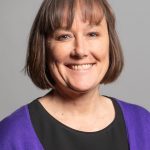
    Below is the text of the comments made by Jo Stevens, the Shadow Digital, Culture, Media and Sport Secretary, on 22 June 2020.

    Across the country, local and regional BBC reporting is a lifeline for communities, keeping people connected and informed.

    Too often, politics and current affairs feel remote and London-centric. But local issues deserve a platform as much as those dominating at Westminster.

    The Conservative Government has repeatedly tried to undermine our BBC, and the coronavirus crisis presents huge challenges for media organisations. But local reporting is vital for democracy and transparency. Despite the challenges it faces, we urge the BBC to protect local programmes.

  • Tulip Siddiq – 2020 Comments on Crisis in Foster Care

    Tulip Siddiq – 2020 Comments on Crisis in Foster Care

    Below is the text of the comments made by Tulip Siddiq, the Shadow Minister for Children and Early Years, on 23 June 2020.

    This pandemic has taken a terrible toll on vulnerable children, who have been far more exposed to domestic abuse, online grooming, and other threats in recent months. The result is that many more children now need foster care and other support services, which have been cut to the bone in the last decade.

    Labour has been warning for months that there will be a huge rise in demand for children’s services. The scale of this crisis is now starting to come to light, and it’s not clear how the Government plans to deal with it.

    The Government must come forward with a proper plan to ensure that vulnerable children and those moving into the care system can access the support they need. Ministers must also scrap the unnecessary and dangerous regulations that have weakened safeguards for children entering foster care placements.

  • Lucy Powell – 2020 Comments on UK Automotive Jobs

    Lucy Powell – 2020 Comments on UK Automotive Jobs

    Below is the text of the comments made by Lucy Powell, the Shadow Minister for Business and Consumers, on 23 June 2020.

    This warning from the automotive industry underlines the scale of the crisis facing British manufacturing. It’s clear that the government must act to safeguard our car industry and the hundreds of thousands of high paid high skilled jobs in communities that can ill afford to lose them.

    We are in danger of being overtaken by international competitors like France who have stepped in to support and sustain their car industries through this crisis. With the right action now, the UK could lead the world in a green revolution in automotive. No action will lead to devastation and long-term damage to communities who rely on these jobs. That’s why Labour is calling for a green recovery and a back to work budget focused on jobs, jobs, jobs.

  • Kenny MacAskill – 2020 Speech on the Reading Terrorist Attack

    Kenny MacAskill – 2020 Speech on the Reading Terrorist Attack

    Below is the text of the speech made by Kenny MacAskill, the SNP MP for East Lothian, in the House of Commons on 22 June 2020.

    On behalf of my party, I wish to start by expressing our sorrow at the lives that have tragically been lost and extending our deepest sympathies to the families and friends, and to those who are currently ill and recovering in hospital. It is never easy to lose a loved one, but especially not in these circumstances or in these times. I echo the Secretary of State’s comments regarding our gratitude to those who served and showed great courage, and we will continue to prosecute and investigate.

    First, let me call for a calm response—to be fair, the Secretary of State has been clear on this. Sadly, we have had previous terrorist atrocities; it is a product of our time. We do not expect and should not have to live with it, but we have to recognise that they do occur and that we have to show calm judgment, not rush to an analysis or make a decision without knowing the full facts. Obviously, that has been commented on by you, Mr Speaker, as regards this being sub judice. There may very well be mental health or other aspects that we do not know about, and we await the outcome of an investigation. However, what we can be clear about—I seek the Secretary of State’s reassurance that we will make this clear—is that terrorist acts are not perpetrated by communities, but are carried out by individuals. They do not represent any faith, constituency or cause other than their own misguided, malevolent and wicked views, and we need to take that into account. We also need to remember that although we have suffered not just this recent tragedy but all too recent ones, including those involving Members very close to this House, what some people view as the epicentre of the areas that perpetrate terrorism suffer far more from it than we have done in our entire history—we need to take that account.

    On that issue, I seek reassurance from the Secretary of State that steps will be taken to ensure that reassurance and protection are given to minority communities, because I know from my experience in Scotland that there can be those who rush to judgment and seek to apportion blame, and will, through misguided views, or indeed their prejudice and dogma, seek to carry out attacks against minority groups. Therefore, I ask that steps on that, which are no doubt probably ongoing, are carried out. Equally, I seek reassurance that as well as contest, we will seek to prevent: we need not only to protect our minority communities, but to deal with issues that are bubbling under the surface there, so as well as contesting terrorism and rightly confronting it, we need to protect communities and address injustice, wherever it is.

  • Nick Thomas-Symonds – 2020 Speech on the Reading Terrorist Attack

    Nick Thomas-Symonds – 2020 Speech on the Reading Terrorist Attack

    Below is the text of the speech made by Nick Thomas-Symonds, the Labour MP for Torfaen, in the House of Commons on 22 June 2020.

    I thank the Home Secretary for advance sight of her statement and for her briefing call over the weekend.

    Like the whole House, I was shocked and appalled by the scenes we saw in Reading on Saturday evening. While doing no more than visiting a beautiful park, three innocent people were stabbed to death and another three were seriously injured. Today we remember those who have died, and our thoughts and condolences are with their families and friends at this moment of terrible loss. We send best wishes to those who were injured and wish them a swift recovery, and thank our magnificent NHS staff for the care that they are providing.

    The incident was one of senseless violence, and, as always, we are indebted to our outstanding police officers and other emergency services personnel for their swift response and work at the scene, helping others by putting themselves in danger. They represent the very best of us. We thank them and the public at the scene who assisted, and recognise their courage and bravery in this most awful of situations.

    We now know that this has been declared a terrorist incident, and I know that the whole House will support the police as they carry out the highly detailed and careful investigation that is necessary with an incident such as this. I hope that the Home Secretary can confirm that all necessary resources will be made available to Thames Valley police and to counter-terrorism policing. I am sure she will also agree that although there are, quite understandably, many questions about this specific case, the best thing to do is to give the police the space they need to conduct the investigation and to establish the facts, not to indulge in unhelpful speculation. I also thank my hon. Friend the Member for Reading East (Matt Rodda) for his calm and measured leadership in such a difficult moment.

    It is heartbreaking that we are having this conversation again so soon after the terrible attack at Fishmongers’ Hall in November, which tragically took the lives of Jack Merritt and Saskia Jones, and the attack in Streatham in February. As you have said, Mr Speaker, this is a live investigation so we have to ensure that there is due process and that the police can do their job, but the country will want answers about these incidents, which have occurred in such quick succession. Although the priority today must be to ensure that there are no further related threats, and that the victims and families are cared for, it is vital that questions are addressed. I hope that the Home Secretary will confirm that she will further update the House on this awful incident and the lessons that need to be learned, but there are some matters that I would like her to deal with today.

    The Home Secretary mentioned the piece of emergency legislation in February, and there is another Bill on counter-terrorism going through the House at present with cross-party co-operation. I hope that any further legislation will also be on a cross-party basis. But does she agree that legislation alone is not enough? We need a comprehensive look at deradicalisation in our prisons, at how people who pose a threat are risk assessed and how different agencies can work together to safeguard against tragedies.

    Community police are the eyes and ears of our society. The intelligence gathering that they do is vital. Can the Home Secretary assure me that the Government will never again cut the numbers of community police and will instead build the capacity that is required for law enforcement? Can she also assure me that the serious violence taskforce, which has not met since 26 June last year, will meet soon and on a regular basis?

    The Home Secretary rightly praised the intelligence and security services, but the Intelligence and Security Committee has not met for over six months. Will she confirm when the Committee will have all its members in place and exactly when it will meet next?

    Finally, I know there will be many issues in the weeks ahead, but let the message go out from this House today that we stand alongside the wider community in Reading at this dark moment and say that those who have lost their lives will never be forgotten.

  • Nicola Sturgeon – 2020 Statement on the Coronavirus

    Nicola Sturgeon – 2020 Statement on the Coronavirus

    Below is the text of the statement made by Nicola Sturgeon, the Scottish First Minister, on 16 June 2020.

    Good afternoon, and thank you for joining us today.

    I’ll start – as I always do – with an update of some key statistics in relation to COVID-19.

    As at 9 o’clock this morning, there have been 18,045 positive cases confirmed – you will recall that since yesterday, this total now includes data from UK wide testing sites. That is an increase of 15 overall from the figures yesterday.

    A total of 986 patients are in hospital with confirmed or suspected COVID-19. Now, that represents a total increase of 116 from yesterday – but let me stress that includes a reduction of 11 in the number of confirmed cases.

    A total of 19 people last night were in intensive care with either confirmed or suspected COVID-19 and that that is an increase of 1 since yesterday.

    I am also able to confirm today that since the 5 March, a total of 3,929 patients who had tested positive and previously required hospital treatment have now been discharged from hospital

    However, in the last 24 hours, 5 deaths were registered of a patient confirmed through a test as having COVID-19 – the total number of deaths in Scotland, under that measurement, is therefore now 2,453. Tomorrow of course we’ll see the weekly publications from National Records of Scotland which gives us the total number of deaths of those confirmed through a test and of those who are suspected of having had COVID-19.

    Once again I want to send my deepest condolences to everyone who has lost a loved one as a result of this virus and is currently grieving one of the unique human beings who lie behind these statistics.

    Let me always as usual express my thanks to our health and care workers and indeed to all our key workers, for the everything you continue to do in very challenging circumstances.

    As well as the Chief Medical Officer, I am joined today by Fiona Hyslop – the Cabinet Secretary for the Economy, Fair Work and Culture – since the main focus for today’s remarks is the economy.

    This morning, the latest labour market statistics for Scotland were published, they covered the period from February to April. April was of course the first full month of lockdown restrictions.

    Today’s figures show that – when compared to the three months from November to January – unemployment in Scotland increased from 97,000 to 127,000. The unemployment rate during this period increased from 3.5% to 4.6%, and the employment rate fell from 74.9% to 74.3%.

    Now I should stress, this is a sample survey. Fraser of Allander Institute reminded us that we have to be cautious about what we conclude from it.

    However, we do know that the protection of the Job Retention scheme will mean that these figures are likely to be an underestimate of the full impact of COVID-19 on business activity.

    And secondly because they cover only until April they don’t give us a fully up to date picture.

    The statistics that were also published this morning on claimant count for May give us a more up to date indication, even though it’s important to stress that they are experimental. They suggest that the claimant count in Scotland in May was 7.8% – which is the same level as the UK as a whole.

    However what all of this data undoubtedly demonstrates is that dealing with the public health crisis of COVID-19, has created an economic crisis that demands our full focus and attention.

    I know increasing economic anxiety will lead some to argue for a quicker than planned exit from lockdown and I absolutely understand that.

    But, difficult though as all of this is, we must guard against a reckless relaxation of lockdown measures. If we ease restrictions too quickly – and allow the virus to run out of control again – that would be economically counterproductive, but it would also cost many more lives.

    Indeed, the progress we have made in suppressing the virus – progress which was evident once again in the figures I reported today – is an essential foundation for the sustainable economic recovery we want to secure.

    And the key point is this – the more we can suppress the virus now, the more normality we can restore as we do re-open the economy and society. And the more able we will be to cope with any resurgence of the virus – either from sporadic outbreaks like the one China is dealing with now, or increased transmission as we face the winter period and the flu season.

    However all of that said, Scotland does like many countries around the world does face the challenge of opening up our economy in a way which is safe and sustainable.

    On Thursday, I will announce the outcome of our review into lockdown restrictions and, I hope and expect, that on Thursday we will be able to confirm a move from Phase 1 to Phase 2 of our plan for reopening the economy and lifting restrictions more generally.

    This does not mean that all major changes will happen overnight.

    But I do hope that in the coming weeks, further important restrictions will be lifted so that workers can return to factories – with strict hygiene and physical distancing measures in place; so that the construction industry will continue its own restart plan; and so that non-essential retail businesses can have a date for safe reopening.

    Now none of this will restore the economy immediately to full health, but it will be a significant, and a sustainable, improvement on our current position and that of course is important.

    That gradual re-emergence from lockdown is crucial. That is how we allow our businesses to get back to operate and make money again. But we know that because the emergence by necessity is gradual, it must also be accompanied by continued support for business as business seeks to recover.

    We have welcomed assistance from the UK Government, such as the Job Retention Scheme, but it is essential that this scheme is extended if proves necessary, which I think it almost certainly does, and we are making this case to the UK government

    In addition, the Scottish Government has provided £2.3 billion of support for business – for example through domestic rates relief – a sum which more than matches the total we received through UK Government consequentials.

    Today I can confirm two additional measures to promote economic recovery in the immediate term.

    Later today Kate Forbes, the Cabinet Secretary for Finance, will set out to Parliament details of a further £230 million of support for the economy.

    Among other things, this package will fund maintenance for further and higher education facilities and for roads; it will help public transport to prepare for physical distancing measures; and it will include a further investment in companies of high potential, and in developments such as Ravenscraig, Edinburgh Bioquarter and the Michelin site in Dundee.

    It will support, and is designed to support, projects which can provide an immediate boost to jobs and growth, while also helping to prepare our economy and our public services for the future.

    We are also providing further support today for skills and training.

    During this crisis, the Scottish Government has already invested additional money in services such as Fair Start Scotland – and I have said standing here on previous occasions, Skills Development Scotland has expanded some of its support for people who are looking for training and employment.

    Today we are making individual training accounts available to people who are out of work, or on low incomes.

    Last year, these accounts helped more than 18,000 people to develop new skills and to take up new positions. This year, we are adapting them to respond to emerging labour market challenges.

    From July, they will offer access to online training in areas such as computing and IT, construction, early years provision and care.

    Initially, we expect to release 14,000 accounts –with more becoming available later in the year. Further details of the courses will be available on the “My World of Work” website.

    I know that not everyone who is eligible will be able to take advantage of this. If you have care responsibilities, or have volunteered to help others – time to train and study will be pretty limited.

    But for some people – especially, but not exclusively, people who are currently furloughed on a relatively low income, or have been made unemployed – it does makes sense to develop new skills at this time. The learning accounts will offer a further way of supporting people who want to do that, as we seek to emerge from lockdown.

    The other issue I want to talk about today is free school meals, and emergency food support more generally.

    Free school meals are currently being made available to around 175,000 children across Scotland – either within local authority and early years premises which are still open, or more often through direct cash payments, supermarket vouchers, or the direct supply of food or meals. I can confirm that this provision will be extended throughout the summer holiday period.

    We know families are under considerable financial pressure just now and free school meals are a vital help to many but they are also important to the health and well-being of many children.

    So we will provide £12.6 million in funding for Local Authorities to enable the continuation of free school meals during the period from the end of June to the start of the new term in August. The funding will be allocated in a way that allows councils – as many of them currently do – to co-ordinate school meal provision with wider support they may be making available to families.

    In addition, we are making £15 million available to councils, to maintain some of that wider support – in particular, the support for food which is currently available for people in severe poverty, people who face other barriers to getting food, and people who are being asked to isolate under the new Test and Protect system

    Our support for those who are shielding – which I should say, comes from a different budget – is also of course being maintained.

    At a time when – as the employment figures today show – many families will be finding it harder than normal to make ends meet – I hope that these announcements provide some reassurance, during a extremely difficult time.

    Before I hand over to the Cabinet Secretary, I want to close by emphasising our key public health guidance. Following this guidance now remains crucial to keeping the virus under control, and allowing us to reopen the economy and to emerge from lockdown on a firm and sustainable basis.

    You should still be staying home as much as possible, and still be meeting fewer people than normal.

    Let me remind you, when you do meet people from another household, please stay outdoors, and you must stay 2 metres apart from them.

    Don’t meet with more than one other household at a time, don’t meet more than one a day – and please keep to a maximum of 8 people in a group.

    Please wash your hands often.

    Wear a face covering when you are in shops or on public transport or in any enclosed space where physical distancing is a bit more difficult.

    Avoid touching hard surfaces – and clean any you do touch.

    And remember this will be important for some time to come.

    If you have the symptoms of COVID-19 – a fever; a new cough; or a loss of, or change, in your sense of taste or smell – please book a test immediately, and follow the advice on self-isolation and you can book a test at the NHS inform website.

    By doing the right thing, and by sticking to these rules, we are saving lives. We are suppressing the virus.

    And by continuing to do that, we are giving ourselves a much stronger opportunity to take both further and also firmer steps out of lockdown.

    So my thanks, once again, to all of you for doing all of the right thing.

  • Nicola Sturgeon – 2020 Statement on the Coronavirus

    Nicola Sturgeon – 2020 Statement on the Coronavirus

    Below is the text of the statement made by Nicola Sturgeon, the Scottish First Minister, on 15 June 2020.

    Good afternoon, and thank you very much for joining us again today.

    I’ll start – as always – with an update on the key statistics in relation to COVID-19.

    29 new positive cases were confirmed in Scotland yesterday. Now I’m going to say more about the total number of positive cases in a moment, because from today we are incorporating new data into that total.

    A total of 870 patients are in hospital with confirmed or suspected COVID-19. That represents a total decrease of 94 from yesterday, but an increase of 3 in the number of confirmed cases in hospital.

    A total of 18 people last night were in intensive care with confirmed or suspected COVID-19. That is also an increase of 3 since yesterday.

    And I can confirm today that since 5 March, a total of 3,909 patients who had tested positive and needed to go to hospital with the virus have been able to leave hospital.

    In the last 24 hours, zero deaths were registered of a patient confirmed through a test as having COVID-19 – so the total number of deaths in Scotland, under that measurement, therefore remains at 2,448.

    I would however stress – as I did last Monday – that although this is clearly hugely welcome and very encouraging, it is nevertheless common for fewer deaths to be reported at weekends and unfortunately I do expect that we will almost certainly report further COVID-19 deaths in the days ahead.

    And as always, I want to emphasis that when we do report these figures, they are not simply statistics – they represent individuals whose loss is a source of grief to many. So once again, I want to send my condolences to everyone who has lost a loved one to this illness.

    I also want to express my thanks – as I always – to our health and care workers, and indeed to all key workers across the country. The Scottish Government and indeed I think people the length and breadth of the country are grateful to you for the work you are doing.

    I’m going to focus on education in my remarks today, but before I do that, I want to highlight some new data which we are publishing for the first time today.

    Up until now, we have only been able to publish testing results that come from NHS Scotland laboratories.

    We have been able to report the total number of tests carried out by facilities run by the UK Government – for example drive-through centres and mobile testing units – but we have not yet been able to publish the breakdown of positive and negative results. Though I should say for the avoidance of doubt, the individuals tested have of course been notified directly of their results.

    Public Health Scotland has been working with the UK Government to rectify this issue, and from today, we are able to provide daily figures for all tests in Scotland. For example, we can see that of those people tested in the 24 hours up to 8 o’clock this morning, 29 positive cases were confirmed. Of those positive cases, 9 were from tests conducted at UK Government facilities, and 20 were from NHS Scotland facilities.

    So In total, there have been 18,030 confirmed positive cases in Scotland since the beginning of this outbreak.

    15,687 of these confirmed cases were tested in NHS Scotland laboratories and a further 2,343 were test through UK facilities.

    Now I know that some people compare each days figures with the previous day’s very carefully. If you have been doing that, you will have expected the NHS lab number I’ve just given to be 88 cases higher than it is.

    The reason it’s not is that where a person has been tested more than once – first at a UK facility and then in an NHS Scotland facility – we have removed them from the NHS figure to avoid double counting of testing.

    It is also important to stress that including this data from UK facilities does not change the total number of lab confirmed COVID-19 deaths that we have been reporting throughout.

    From Thursday onwards, we will be able to provide a more detailed breakdown of test results – by date and by region – on the Scottish Government’s website and I hope that this information will be helpful in giving a full picture of the progress that has been made on testing over the last three months.

    Now as I indicated the main issue I want to talk about today is school education.

    And I want to address parents and young people very directly today.

    I know you are deeply anxious – as I am – about the impact of this crisis on schooling.

    So I want to be very clear today about the some of the principles that we are working on and the Scottish Government’s expectations – and as we look forward to the new school year. I hope to leave you in no doubt about the priority I and the whole government attaches to making sure our young people do not lose out on education or have their life chances damaged as a result of this crisis that we are all living through right now.

    So, firstly, I want to be clear that it is our expectation that, by the time schools return on 11 August – and obviously within necessary safety guidelines – councils will have put in place arrangements that maximise the time that young people spend in a school environment having face to face learning.

    In this immediate period that we are in right now, the Scottish Government will be scrutinising council plans closely – and where we conclude that all possible steps have not been taken to maximise face to face teaching and learning, we will ask councils to reconsider and revise their plans.

    Innovation and creativity will be required here – but let me also be clear that where there are genuine issues of resources, the Scottish Government will work with councils to address those and the quality of your children’s education will be the absolute priority in those discussions.

    And then from the 11 August starting point, our aim will be to return to normal schooling as quickly as we possibly can – recognising that of course that along the way we need to build the confidence of parents, young people and teachers that schools are safe.

    And I want to be particularly clear on this point.

    While we of course have a duty to be open with parents that none of us right now have a crystal ball, and that the path the pandemic will take in the months ahead remains uncertain, it is absolutely not the case that we are ‘planning’ for blended learning, with children learning at home for part of the school week, to last a year – or anything like it.

    On the contrary, we do not want blended learning to last a single moment longer than is absolutely necessary and so we will be working with councils to return schools to normal as quickly as we can.

    We want young people to be back having face to face teaching for 100% of the school week as soon as it is feasible.

    To that end, our regular three-weekly reviews of the Coronavirus regulations will now include specific consideration of the evidence and data relating to transmission of the virus within schools and amongst young people – and where that suggests that safety restrictions can be lifted or eased without putting pupils and teachers at undue risk, we will do so.

    As part of these reviews, we will ask our International Council of Education Advisers to consider experiences in other countries.

    We will also be working with councils to ensure ongoing and enhanced support for any time that young people do spend learning at home.

    And let me be clear it is our firm intention, as things stand right now, that next year’s exam diet will go ahead.

    We will also be considering carefully how we work to address and mitigate and make up over time any impact of this crisis period on young people’s learning.

    Ensuring that our children and young people have the highest quality education – and that life chances are not negatively impacted by what we are all living through right now – is of absolutely critical importance.

    I want to give you my personal assurance that it is central to my and to the whole Government’s thinking as we plan and steer the country through our emergence from lockdown.

    Before I hand over to the Chief Medical Officer, I want to end by emphasising again our key public health guidance because sticking to this guidance right now remains the most important way of enabling us to make further progress out of lockdown – which I very much hope we will do later this week.

    You should still be staying home most of the time, and you should still be meeting fewer people than normal.

    When you do meet people from another household, please stay outdoors, and stay 2 metres apart from them.

    Don’t meet with more than one other household at a time, don’t meet more than one a day – and keep to a maximum of eight people in a group.

    Wash your hands often. Take hand sanitiser with you if you are away from home.

    Wear a face covering when you are in shops or on public transport.

    Avoid touching hard surfaces if you can and clean any that you do touch.

    All of these measure – hand washing, surface cleaning and wearing face coverings – will all help us to reduce the risk as we start to return to more normal life.

    Indeed – if anything – these measures become more important, not less important, as we move through this pandemic.

    I’d ask all of you to bear that in mind.

    And, just as importantly, if you have the symptoms of COVID-19 – a fever; a new cough; or a loss of, or change, in your sense of taste or smell – ask for a test immediately, and please follow the advice on self-isolation.

    You can book a test at nhsinform.scot or by phoning NHS 24 on 0800 028 2816.

    Sticking to these rules- as you can see from the numbers we are reporting each day – has had and is having an impact. By doing the right thing, we are suppressing the virus.

    We are saving lives.

    And we are creating the firm foundations on which we can take further steps out of lockdown.

    So my sincere thanks, to all of you once again, for continuing to abide by these rules and by this guidance.

  • Nicola Sturgeon – 2020 Statement on the Coronavirus

    Nicola Sturgeon – 2020 Statement on the Coronavirus

    Below is the text of the statement made by Nicola Sturgeon, the Scottish First Minister, on 14 June 2020.

    Good afternoon everyone, thank you for joining us this afternoon

    I’ll start – as always – with an update on some of the key statistics in relation to Covid-19.

    As at 9 o’clock this morning, there have been 15,755 cases confirmed through our NHS laboratories – that’s an increase of 25 from yesterday.

    A total of 964 patients are in hospital with confirmed or suspected Covid-19. That represents a total reduction of 19 from yesterday, including a reduction of 7 in the number of confirmed cases.

    A total of 15 people last night were in intensive care with either confirmed or suspected Covid 19. That is a decrease of 5 since yesterday.

    I can confirm that since 5 March, a total of 3,904 patients who had tested positive for the virus and required to be in hospital have now been able to leave hospital. I wish all of them well.

    And in the last 24 hours, I can confirm that 1 death has been registered of a patient confirmed through a test as having Covid-19 –which takes the total number of deaths in Scotland, under that measurement, to 2,448.

    I want to stress as I always do that these numbers are not just statistics – they represent people whose loss is being mourned right now. That point is just as important when we are reporting one death, as it is when we report multiple deaths. So – once again – let me send my deepest condolences and my thoughts to everyone who has lost a loved one as a result of this illness.

    Let me also express my thanks – as always – to our health and care workers for the extraordinary work that you continue to do in very testing circumstances. And indeed, let me broaden that today to all of our key workers – health and care, obviously, but our police officers, our prison officers, those who are keeping our energy systems working, keeping food on our tables, everybody who has played a part in ensuring our country has kept operating during this very difficult time.

    I’ll move on to questions fairly soon, but I want this afternoon to give an indication of what you can expect in the week ahead.

    I hope to be able to confirm on Thursday, that people who are shielding will be able to go outdoors for exercise.

    In addition, as you know, we are required by law to review the lockdown restrictions every three weeks. The next review date is Thursday. At that point, I will set out to parliament our assessment of whether the current suppression of the virus allows us to move to phase 2 of our route map.

    As things stand right now, I remain optimistic that, on Thursday, while we might not be able to do absolutely everything we hoped to do in phase 2, we will nevertheless be able to enter that next phase and announce some further important steps on our journey back to normality.

    The reason for my cautious optimism is that since we last announced changes, we have continued to see a downward trend in COVID-19 cases, and also in the weekly number of deaths. In addition, the R number – which as you know is the rate at which the virus reproduces – has fallen slightly, and is now between 0.6 and 0.8, and it’s crucial that it remains under 1.

    So I hope, for example, that as well as allowing a bit more social interaction, from Thursday we will also be able to move forward with the remobilisation of the NHS and also indicate a date from which our retail sector can begin to re-open.

    All of that and any other changes that we’re able to announce on Thursday will be in line with the careful approach that we set out in our route map.

    And that is really important. The evidence suggests that the careful approach we have adopted so far is working.

    The lesson I take from that is that we should stick with that plan – not discard it.

    Because – and this is the much harder bit – while transmission of the virus is much reduced, the virus hasn’t gone away yet.

    We still have a significant number of infected people in Scotland. And we are still seeing new cases each day. The risk remains that, if we move too quickly, and if we start coming into closer contact with too many people, cases of the virus could start to multiply again very quickly and we need to avoid that happening.

    On the other hand, if we hammer down the incidence and prevalence of the virus down to the lowest levels we can, our exit from lockdown may then involve a return to more normality in the medium term than we previously thought possible.

    And that’s of course what we must hope for right across the board – but it will be particularly important as we try over the next few months to restore as much normality as we can to children’s schooling. Which of course is a big priority, not just for the Government and for local authorities, but for parents and young people the length and breadth of the country.

    So while there are no risk free options – and we shouldn’t slow down progress in pursuit of perfect risk free options that don’t exist – equally we must not ease restrictions at a pace that very obviously heightens the risks.

    And we should also realise that the prize for going perhaps a bit more cautiously now, could be a return to greater normality in the medium term.

    We have seen in England and some other countries, that the R number may have increased, particularly in certain regions – and we might see that here too. That’s won’t necessarily be a cause for panic – but it should be a reminder to us to constantly check and assess the impact of our actions.

    All of that means the judgements we make about phase 2 will by necessity be finely balanced.

    Phase 2 contains a number of significant measures – including potential changes to the rules on how we can meet each other, what workplaces can reopen, and which public services can resume.

    We are currently assessing the impact of those different measures. That means considering the particular risks that each element will bring, and thinking also about what mitigating actions might be needed to reduce those risks. And it means – as we have done right throughout this crisis – weighing up both the harms that come from Covid, and also the harms that come from lockdown itself.

    As I said earlier, we might not be able to do absolutely everything – but we want to do as much as possible, and we will do as much as we possibly can.

    It is also likely that not everything that we are able to do in phase 2 will kick in straight away on Friday.

    Regulatory changes will have to be made.

    Our public transport operators will need time to implement their plans to increase capacity safely.

    And workplaces that we hope will be permitted to open, will need to ensure they have the appropriate physical distancing measures in place; that guidance is being followed; and that employees feel confident that they can return to work safely.

    We are producing additional guidance this week – in advance of any possible changes – for Early Learning and Childcare, for the retail sector, and on the use of public spaces.

    Steps such as these are essential, to ensure we continue to suppress the virus as much as possible.

    Once we determine what changes can be made, we will phase them in, in the most constructive way we can. We want people to be confident that they will be safe, as more social and economic activities gradually resume.

    It’s also vital that we all understand the crucial point that I stressed earlier. Just because the number of cases is currently declining, and we are thinking of easing the restrictions – that does not mean the threat of coronavirus has gone. It hasn’t. The progress we have made still remains fragile, and the virus call too easily could run out of control once again.

    There are some worrying signs of that right now in some states in America, for example.

    So we must work hard to get the balance as right as we can. And as we do that, some of the most basic public health advice becomes even more important.

    As we move through the routemap what we are doing, as a society, is relying less on strict lockdown restrictions to suppress the virus – and relying more instead on all of us following the public health guidance, maintaining physical distancing and of course participating in Test and Protect.

    Our ability to move to further phases, and to sustainably re-open our society and economy – so that we do not need to lockdown again in the future – depends on all of us strictly following those principles.

    In the weeks and months ahead – perhaps even more than at the present time – we all have to remember that the decisions we are making as individuals, will affect the health and wellbeing of all of us.

    And so it remains critical that we stick with the current public health guidance. So let me end just by recapping on what that is.

    We should all be staying home most of the time, and seeing fewer people than we normally would. When we do meet people from another household we should stay outdoors. We must stay outdoors and stay 2 metres apart from them. We shouldn’t meet more than one other household at a time, and not more than one a day – and keep to a maximum of 8 people in a group.

    We should all be washing our hands often and thoroughly. If we’re not at home, make sure we have hand sanitiser with us.

    And please wear a face covering if you are in a shop or on public transport, or in any enclosed space where physical distancing is more difficult.

    Avoid touching hard surfaces – and clean any you do touch.

    And if you have the symptoms, get a test immediately and follow advice on self-isolation. You can book a test by going to the NHS Inform website.

    If we all continue to do these things and make sure we don’t ease up on the basic public health guidance then we will continue to see this virus suppressed and we will continue to see easing of lockdown restrictions become much more possible in the future.

    My thanks again to all of you for doing that. I’m going to hand over now to the Chief Nursing Officer and then to our National Clinical Director to say a few words before taking questions.

  • Priti Patel – 2020 Statement on the Reading Terrorist Attack

    Priti Patel – 2020 Statement on the Reading Terrorist Attack

    Below is the text of the statement made by Priti Patel, the Home Secretary, in the House of Commons on 22 June 2020.

    With permission, Mr Speaker, I will make a statement on the senseless terror attack that took place in Reading on Saturday evening. That appalling attack is now subject to an ongoing police investigation, and as such there are limits to what I can say. However, I want to share as much detail as I can with the House this afternoon, on behalf of the police, following my conversations with them over the weekend and my visit to Reading this morning.

    Around 7 pm on Saturday evening, a 25-year-old male entered Forbury Gardens in the centre of Reading, and began to viciously attack several groups of people. The outstanding police officers from Thames Valley police responded with great courage and great speed. The armed suspect was tackled to the ground by an unarmed officer and was immediately arrested at the scene. The suspect remains in custody.

    After initial investigations, Counter Terrorism Policing declared the attack a terrorist incident and is now leading the investigation. The police have confirmed that the threat is contained, but that, sadly, three innocent members of the public were killed, murdered by a sudden and savage knife attacker as they enjoyed a summer evening with friends. Another three victims were injured and received hospital treatment.

    My thoughts and prayers are with the family and friends of everyone who was hurt or killed as a result of this sickening attack. The victims of terrorism unit at the Home Office and family liaison officers are supporting them, and I know Members from across the House will join me in sending our heartfelt condolences.

    It was truly humbling to visit Thames Valley police this morning. I had the privilege of meeting the officers who first responded to the incident and who were responsible for apprehending the suspect, as well as trying to prevent the loss of further life. Those officers—a few of whom were student officers—ran towards danger to help those in need without a second thought. A young unarmed police officer took down the suspect without hesitation while another performed emergency first aid on those who were injured. These officers are heroes. They showed courage, bravery and selflessness way beyond their years. They are the very best of us. I would also like to pay tribute to the response of every emergency service that attended the scene, as well as members of the public who stepped in to prevent further loss of life.

    The United Kingdom has the best security services and police in the world. Since 2017, they have foiled 25 terrorist plots, including eight driven by right-wing ideologies. They serve the country with professionalism and courage, embodying what the British public rightly expect from those on the frontline of the battle against violent extremists and terrorists.

    The UK’s counter-terrorism strategy remains one of the most comprehensive approaches to countering terrorism in the world, but over recent decades we have all too often seen the results of poisonous extremist ideology. The terrorist threat that we face is complex, diverse and rapidly changing. It is clear that the threat posed by lone actors is growing. These terrorists are united by the same vile hate that rejects the values our country holds dear: decency, tolerance and respect.

    We are united in our mission to tackle terrorism in all its forms. Since day one, the Government have backed our police and security services, who work around the clock to take down terrorists and violent extremists. On any given day, they make a series of calculated judgments and decisions on how best to protect our citizens and country based upon the intelligence that they gather.

    In light of the many complexities across the security, intelligence and policing communities, in January this year I announced increased resources for counter-terrorism policing, resulting in a £90 million increase this year alone. That has taken counter-terrorism policing funding to more than £900 million—the highest ever. That is because we live in a complex world and is against a backdrop of evolving threats and dynamic threats—threats that when they do materialise are worse than shocking when they result, as we have seen again this weekend, in the tragic loss of life.

    Bolstering our security and policing network and frontline capability is part of our ambitious programme to strengthen the joint working between the police and security services to leave terrorists with no place to hide. It is also why we are committed to developing a new “protect duty”, so that businesses and owners of public places must take into account the threat of terrorism. It is also why, following the shocking attacks at Fishmongers’ Hall and in Streatham, we took strong and decisive action. That action included the introduction of the Terrorist Offenders (Restriction of Early Release) Act 2020, the emergency legislation that retrospectively ended the automatic early release of terrorist offenders serving standard determinate sentences, forcing them to spend a minimum of two thirds of their time behind bars before being considered for release by the Parole Board. Through our Counter-Terrorism and Sentencing Bill, which goes into Committee in this House this week, we are introducing much tougher penalties for terrorists to keep the public safe.

    This is the biggest overhaul of terrorist sentencing and monitoring in decades, strengthening every stage of the process, from introducing a 14-year minimum jail term for the most dangerous offenders to stricter monitoring measures. Jonathan Hall QC is also looking at how different agencies—including the police, probation services and security services—investigate, monitor and manage terrorist offenders.

    I totally understand the desire for details and information to enter the public domain, particularly at this time, as people ask what happened and why. However, as you pointed out, Mr Speaker, I would ask everyone, including the media, to be cautious at this stage about reporting on individuals who have not been charged. We must not do anything that could put at risk the victims or their loved ones achieving justice.

    The first duty of any Government is to protect the people they serve, so we continue to pursue every option available to tackle the terrorist threat and take dangerous people off our streets. As the Prime Minister reiterated yesterday, the police and security services will continue in their investigations to better understand the circumstances of this tragic incident, and if further action is needed, we will not hesitate. Our world-class CT police and security services have my unequivocal backing as they hunt down hate-filled terrorists and extremists. My message today is clear, simple and strong: swift justice will be done; victims will be supported; and if further action is needed to stop terrorists in their tracks, this Government will not hesitate to act. I commend this statement to the House.