Tag: 2020

  • Steve Reed – 2020 Comments on Westferry Scandal

    Steve Reed – 2020 Comments on Westferry Scandal

    Below is the text of the comments made by Steve Reed, the Shadow Secretary of State for Communities and Local Government, on 24 June 2020.

    These explosive new revelations show clear discrepancies between what the Secretary of State told the House of Commons and what appears in the official documents.

    The documents clearly show that Mr Jenrick did not notify officials immediately after his meeting with Mr Desmond; rather than “closing down” the discussion as he claims, he initiated contact with Mr Desmond by text message the following day; and it confirms that he rushed through the decision specifically to help the developer avoid a £30-50m levy payable to the local council for infrastructure in one of the poorest local authorities in England.

    The Housing Secretary needs to come to the House to explain these discrepancies as a matter of urgency: the public must be reassured that there is not one rule for the Conservatives and their wealthy donors and another rule for everyone else.

  • Pete Wishart – 2020 Speech on Independent Complaints

    Pete Wishart – 2020 Speech on Independent Complaints

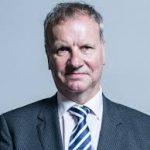
    Below is the text of the speech made by Pete Wishart, the SNP MP for Perth and North Perthshire, in the House of Commons on 23 June 2020.

    It is a real pleasure to speak in this debate. I have had the great privilege of having served in all the various ICGS working groups since their inception, and it is particularly good to be here today to say a few remarks on behalf of the House of Commons Commission on what hopefully will be the conclusion and the implementation of all the recommendations that have been made to the ICGS.

    As I look around the Chamber today, I can see several colleagues who have served on the various incarnations of the working group, and I pay tribute to them for their contribution and dedication. In particular, I pay tribute to the right hon. Member for South Northamptonshire (Andrea Leadsom), whose vision, leadership and guidance at the inception of all this helped to guide us through this process, so I thank her for her contribution today.

    Today, we are here to bring the ICGS in line with the third recommendation of Dame Laura Cox. It is worth briefly reminding ourselves of what Dame Laura Cox actually said about this House in her most damning report and the litany of issues that she uncovered. She talked of an

    “excessively hierarchical, ‘command and control’ and deferential culture, which has no place in any organisation in the 21st century.”

    That is what Dame Laura said.

    It is two years since Dame Laura Cox presented her report to the House. It was in October 2018 that the Commission overwhelmingly agreed to all three of her recommendations. We have heard that the first two have been implemented. One was, of course, the behaviour code, which has been put in place. The second was looking at historical cases, and today we are considering the third recommendation. Let us just remind ourselves what that is. It is to put in place the mechanism whereby complaints of bullying, harassment or sexual harassment brought by House staff against Members of Parliament would be an entirely independent process in which Members of Parliament will play no part. For this to happen, the Commission set up a working group to put together how we should respond to this and to bring this House in line with that recommendation. That was met with the Commission’s unanimous agreement to establish the independent expert panel to replace the Committee on Standards in considering cases brought under the ICGS.

    At our last meeting of the Commission, we confirmed our support for the implementation of the independent expert panel, and we asked for this matter to be brought before the House. The new panel will determine sanction in cases where the Parliamentary Commissioner for Standards does not have the power to invoke sanctions. As we have heard, this could include the suspension or expulsion of a Member of Parliament. These serious cases will be referred to the panel and will be considered ​by a sub-panel of three independent experts, supported by specialist advice. When decided and concluded, a Member of the House of Commons Commission, probably me, will move a motion to allow the House to implement the sanction determined by the IEP. Lastly, Madam Deputy Speaker, you will know that the Commission agreed that the House would be asked to consider whether there should be a time-limited debate in these circumstances, and that is where we are today, with the motions in the name of the Leader of the House.

    The motions accurately reflect the considerations of the House of Commons Commission, and its members are pretty much in line and in step with what Dame Laura Cox expects in the implementation of her third recommendation. That is, of course, until we get to paragraph D(1) in motion 5, where the Leader of the House makes that provision for the debate. If it is helpful to the House, what the Commission decided in our consideration of this issue was that we would let the House decide whether it wanted a debate. I think the expectation was that a couple of motions would be brought by the Leader of the House, which would give us flexibility in our options. Instead, we have this one determination of the Leader of the House, which is that we are now invited to a yes or no. I do not think that I am giving away any secrets, Madam Deputy Speaker, when I say that the Commission was almost split down the middle when we were considering this matter, and that was why we felt it was appropriate that the House should decide and determine this.

    My view as a Member of the House who has been involved in the ICGS for the past two and a half years is that what the Leader of the House suggests in paragraph D(1) breaks practically every principle and the whole spirit of the third Cox recommendation. It is little wonder that there is profound disappointment among House staff today. Such are the concerns that Dame Laura herself has felt the need to respond to some of the representations from staff. She notes the fears that a debate could result in a complainant’s confidentiality being compromised and speaks of

    “the chilling effect that this will undoubtedly have on complainants reporting cases of harassment or bullying”.

    There are real concerns that MPs will debate the findings of an independent judgment on one of their colleagues while protected by privilege, with staff having no equivalent platform. That cannot be right.

    The Leader of the House seeks to assure us with motion 6, but we cannot escape the overwhelming conclusion that Members and complainants could be identified inadvertently in a debate. Colleagues and friends of somebody who has been complained against will feel the temptation to get up there and defend them.

    Mr Carmichael

    The hon. Gentleman is drilling down into an important part of the issue, which is about procedural fairness. It goes to the point raised by the right hon. Member for Gainsborough (Sir Edward Leigh). Once we got into a debate, it is inevitable that we would get into the merits of the issue; how, procedurally, could we expect not to?

    Pete Wishart

    I think that concern has been expressed by the House staff after looking at the motions presented by the Leader of the House today.​

    As was mentioned by the Leader of the House and shadow Leader of the House, the House should make the ultimate determination about the expulsion or suspension of a Member of Parliament. That is right, but it should not be done through a debate. That is why I will be supporting the amendment tabled by the hon. Member for Rhondda (Chris Bryant), and I really hope that the rest of the House will too.

    It is disappointing that this little issue has presented itself after we have come all this way with full agreement, full consensus and the involvement of the House staff, and are just at the point of doing this. I say to the House: stick with the principles of Laura Cox and support the amendment this evening.

  • Jacob Rees-Mogg – 2020 Speech on Independent Complaints

    Jacob Rees-Mogg – 2020 Speech on Independent Complaints

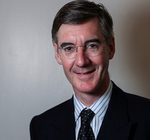
    Below is the text of the speech made by Jacob Rees-Mogg, the Leader of the House of Commons, on 23 June 2020.

    This is a dreadful position for us to be in as a House. The behaviour of a small number of Members of Parliament over years and decades has disgraced and shamed our parliamentary democracy, of which I, and many hon. Members, are so proud. Our ancient right that we should look after our own affairs is to be sacrificed, because the importance of restoring the trust of the British people in our system makes that the right thing to do. How we treat each other matters at all times in all places, but particularly in Parliament. It matters wherever people work together, for everyone should be able to perform their roles in an atmosphere of courtesy and respect, and it most certainly matters in the Palace of Westminster.

    There are about 13,000 passholders with access to the parliamentary estate. In recent years, we have been trying hard to create the kind of culture that prioritises having a safe working place where people are afforded respect and which enables them to speak out and be confident that they will be listened to. My predecessors, particularly my right hon. Friend the Member for South Northamptonshire (Andrea Leadsom), made an enormous contribution to that effort by achieving cross-party agreement for the establishment of an Independent Complaints and Grievance Scheme. That we had to do so is an indication of how far some in this institution had failed and had not lived up to the standards required of them.

    The ICGS has already been approached by a large number of people, receiving 201 calls and emails in the first quarter of this year alone from those who feel that they have faced bullying, harassment or sexual harassment. However, there are some complaints that have not yet come forward because of the concerns of the complainants that Members continue to play a role in the sanctions process. This is where we have the greatest challenge in restoring trust: not just between us and voters, but between us and those who work in this place.

    The approach I am putting forward today is motivated by supporting those who need to make complaints and allows for the restoration, I hope, of our reputation. Since becoming Leader of the House, I have spoken to a number of complainants and potential complainants about the progress made so far. Every conversation I have had has left me profoundly moved and, in some cases, shocked and appalled by some of the things that have happened to people in this House, some of which seem to me to reach the threshold of criminal activity. This place, which ought to be the epitome of good behaviour, has been besmirched by that. I am therefore determined to do more to continue the momentum for sustained culture change that was begun in the previous Parliament.

    I, of all people, cannot pretend that I like abandoning some of the ancient responsibilities and rights of Parliament, but it is our fault that we have to do this and so it is right to change. There is a problem of the power dynamic which can occur wherever those in a position of influence assume that they are able to act without consequences, so it is right that we seek to change the culture in order to challenge that assumption. In Westminster, we have introduced a behavioural code; established the “Valuing Everyone” training; replaced the Respect and Valuing Others policy with the ICGS; and extended the scheme to include historic allegations of some former members of the parliamentary community. The latter two steps ​were the result of Dame Laura Cox’s recommendations made in her report on the treatment of House staff. Her third recommendation, however, remains outstanding: that Members of Parliament should no longer be able to determine the sanctions imposed.

    It is no coincidence that that outstanding recommendation is by some distance the most constitutionally challenging and the most significant, too. Under our current arrangements, the Parliamentary Commissioner for Standards has the power to determine cases and impose sanctions up to a certain level of severity. Until now, more serious cases, including suspension and expulsion from the House, have been for the Committee on Standards to determine. In February, the House of Commons Commission agreed its preferred option of those presented by the staff team on a means of changing that: that there be an independent chair and seven expert panel members, none of whom will be MPs. The panel should be empowered to determine ICGS cases, decide on sanctions, and hear appeals by either party against the Parliamentary Commissioner for Standards’ conclusions. That proposal has been the subject of consultation over recent months and Dame Laura Cox herself was among those who supported that approach.

    While I am taking steps to strengthen it further, I am supportive of the House of Commons Commission’s proposed solution overall. Placing decisions of this kind in the hands of an independent expert panel is a fundamental break with the past that reflects our continuing efforts to make Parliament a better place to work.

    Alberto Costa (South Leicestershire) (Con)

    I wholeheartedly welcome the momentum for having a system that is fair and transparent. The Leader of the House referred to the constitutional significance of the creation of this new independent body. Is he aware of an independent body in any part of the UK with such sweeping disciplinary powers over its members that is not justiciable? My concern is that if an accusation is made against Members, they will not have any recourse to a court of law, whereas if an accusation of bullying against a member of House staff or Members’ staff is upheld by the panel, they would have recourse to a court of law or an employment tribunal.

    Mr Rees-Mogg

    The question of parliamentary privilege applying to the ICGS is one that will have to be determined by a court, and it is not entirely clear whether they would be covered by the article 9 rights. The reason we have to have a final vote in this House is that there is no court outside Parliament that can question the proceedings in Parliament. That is at the heart of the constitutional dilemma that we have been facing. It is also why we are making this fundamental break with the past.

    In allowing an independent body to take such action we are making a really important constitutional change. We are doing this—and we are right to do this—because of the way that some Members have behaved, and we have to stop that happening in the future. As Leader of the House, I am ashamed when people come to see me and tell me what they have suffered; I am appalled at the stories they tell me and shocked sometimes that they have not been to the police about them when they are so awful. That is why we have to have this change, which hits at the heart of our constitution. The House knows that I have an admiration and affection for our constitution that does not seek to change it lightly.​
    Let me come to the panel and the level of member that we expect. The panel’s members must bring significant expertise to the process, and we will expect it to be led by somebody who has a standing equivalent to that of a High Court judge. It must also include knowledge of human resources, employment law, bullying and harassment cases and sexual harassment cases. In a serious case, three of the independent experts would consider the sanction in the light of the report and recommendation of the Parliamentary Commissioner for Standards. A further three would act as an appeal panel if necessary.

    In cases considered by the panel that propose sanctions requiring action by the House, the panel would report directly to the House. At that stage, a motion would be moved by a member of the House of Commons Commission to implement the sanction, and it is at this stage where we find ourselves on the horns of a dilemma. On the one hand, it is constitutionally proper that a decision of this magnitude—the expulsion or suspension of a Member—can only be taken by the House as a whole. It is removing, in effect, albeit temporarily, the democratic representation of tens of thousands of people, and we can only take away that democratic representation by a motion of this House. It does not seem right that a decision that could overturn the result of an election in a constituency could be taken by unelected individuals.

    Sir Edward Leigh (Gainsborough) (Con)

    All bullying is horrible and goes against traditional good manners; we all accept that. I hope that the Leader of the House will emphasise the point that he just made: the fundamental difference between Members of Parliament and all other staff members is that we are elected by the people. We are responsible to the people, and the people must have the final say on whether we come here in the first place, when we leave and how we leave. That is very important. However distinguished an independent panel, only the people have the final say.

    Mr Rees-Mogg

    My right hon. Friend makes a crucial point: we are elected by the people, and we are answerable to them. That is why I support the principle that only the House of Commons holds the authority to make the decision to suspend or expel.

    Justin Madders (Ellesmere Port and Neston) (Lab)

    The Leader of the House is making an excellent speech. To pick up on the previous intervention, we may be democratically elected, but we are also employers, and we have a duty of care to the people we employ. Does he agree that that is equally important?

    Mr Rees-Mogg

    It is of fundamental importance, and I say again that I have had people come to see me who have been treated in a way that makes my skin crawl. You cannot believe that senior people would have behaved to people subordinate to them in such a way in any workplace, let alone in the House of Commons, which ought to be a model of good behaviour. That is why we have to have the counterbalancing bit, but we cannot give MPs an opportunity to delve into the personal details of a case and try it effectively a second time. The other place offers a cautionary tale in this regard.

    Having listened carefully to views expressed to me in recent days, I am proposing that we establish a convention that the Commission member moving the motion will ​do so formally. This means the expectation will be that there will be no detailed debate, while maintaining the constitutional right to debate. In addition, I am asking the House explicitly to restrict what it is permissible to refer to during any further proceedings on severe ICGS cases in the Chamber.

    To that end, motion 6, in my name, emulates the sub judice resolution, which the House carefully and successfully observes to avoid prejudicing any current criminal proceedings and which is enforced from the Chair. The motion sets out that the names of any complainants may not be referred to. The details of any investigations or specific matters considered by a sub-panel of the independent experts panel, in any motion, debate or question brought to the House, may not be referred to. Furthermore, the findings and determination of sanctions of a sub-panel may not be brought into question. The motion will ensure that any debate that does occur, which is something of a misnomer in this instance, is merely a short, factual exposition of the process, not the circumstances involved.

    Jim Shannon (Strangford) (DUP)

    I seek some clarification because I have been looking through the amendments that have been tabled, and the right hon. Member for South Northamptonshire (Andrea Leadsom) has tabled what I believe is an excellent amendment, which would address this issue. Is the intention to bring that forward?

    Madam Deputy Speaker (Dame Rosie Winterton)

    Order. That amendment has not been selected.

    Mr Rees-Mogg

    Thank you, Madam Deputy Speaker. I turn to amendment (a), tabled by the hon. Member for Rhondda (Chris Bryant) , who has been very helpful in this process and in the discussions I have had with him. I understand that some Members remain sceptical about the approach that I have set out and whether it is the right one, and this amendment seeks to remove entirely any possibility for debate in these circumstances. I am not entirely unsympathetic to this view, because our priority is to restore confidence in the ability of the House to achieve the standards that are reasonably expected of us and to ensure that people making complaints, some of whom, as I have said, have been treated in the most appalling way, feel that the system will not add greater pain to that which they have already suffered.

    However, it is my view that it would be wrong for the Government to have tabled a motion that denied the House the opportunity to consider a matter of this gravity. It should be for the House, not for Ministers, to decide that they wish to curtail the ability of Members to conduct debate. The House can set its procedures as it wishes, but it would not be constitutionally right for the Executive to seek to limit free speech in this House.

    I believe that this curtailment can be avoided and have set out how we can meet our constitutional requirements, while reassuring those wishing to access the ICGS who have not yet done so that they will have their confidential information preserved and protected. But if the House agrees to this amendment, it will willingly and knowingly have taken this approach, and in those circumstances, motion 6 will not be moved.

    While the amendments tabled today differ in terms of the means, I think we are all entirely united in the ends, signalling our collective determination to make a break ​with the past. Above all, this is a matter for the House, which this House must get right to show that we are genuinely committed to change.

    Mr Alistair Carmichael (Orkney and Shetland) (LD)

    The Leader of the House has taken us very deftly through the constitutional and procedural aspects, but there is a further test that I think the House needs to apply: whether the outcome of the decisions that we make will make it more or less likely that the people whom he has met and whose complaints he has heard will have confidence in the system to see it through to a conclusion. I suggest gently that that is why the amendment tabled by the hon. Member for Rhondda (Chris Bryant) is a sensible one.

    Mr Rees-Mogg

    The right hon. Gentleman makes an important point. I believe that the proposal that the Government have put before the House balances the constitutional needs and the protection of the individual complainants, but I make no criticism of those who have come to a different conclusion. I absolutely share his concern not only that we must ensure that people are not discouraged, but that we must all—in our own way, when we can and when it comes to us—encourage people to use these systems, because they are there to protect people who are vulnerable. That is very important.

    Meg Hillier (Hackney South and Shoreditch) (Lab/Co-op)

    The tone of this debate is in the right direction, but I really do have concerns about a bully pulpit being used in this Chamber. Even if people are not named, there will be gossip and innuendo about who is being referred to. I hate to refer to this, Madam Deputy Speaker, but a predecessor of Mr Speaker, in a published book, named Members of this House. If people of position and power do that, what confidence will people have if we still have an open debate in this Chamber, even if people cannot be named?

    Mr Rees-Mogg

    The hon. Lady makes a very fair point. I think the answer is that not having a debate in this Chamber at the end of the process, subject to very strict rules, does not mean that people may not write books saying things that they should not say or that they may not use other opportunities within parliamentary privilege. It is the question of constraining what can be done within parliamentary privilege that is essential, which is why I believe that something that is controlled and clearly set out in the rules is, on balance, preferable to trying to prevent this House from debating. However, I understand that others come to a different conclusion on what is a serious level of constitutional change because of past behaviour that has besmirched the name of this House and of politics and politicians generally.

    Taken together, the provisions have the effect of acting decisively to uphold the spirit of our efforts towards culture change, while respecting the traditions and requirements of our parliamentary democracy. They aim to build the confidence of complainants by ensuring that these matters will be treated with the sensitivity and professionalism that they deserve. We simply have to give people who feel that they have been abused the confidence that they need to come forward. Adopting Dame Laura Cox’s recommendation by establishing the independent panel of experts will help us to do that. I commend the motions to the House.

  • Jonathan Gullis – 2020 Speech on Desecration of War Memorials

    Jonathan Gullis – 2020 Speech on Desecration of War Memorials

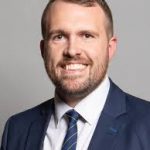
    Below is the text of the speech made by Jonathan Gullis, the Conservative MP for Stoke-on-Trent North, in the House of Commons on 23 June 2020.

    I beg to move

    That leave be given to bring in a Bill to create the offence of desecrating a war memorial; and for connected purposes.

    I find myself in the unique position of standing here presenting this Bill, with the Government in support of the cause and aims behind bringing such legislation before the House. It is the week of Armed Forces Day, and I say to all our servicemen and women: I salute you.

    My hon. Friend the Member for Bracknell (James Sunderland) and I have had constructive discussions with our right hon. and learned Friend the Lord Chancellor and Secretary of State for Justice, and my right hon. Friend the Home Secretary about the potential for this Bill to be put into statute. Such a Bill should not be contentious, and I and my hon. Friend the Member for Bracknell, my “co-sponsor” of the Bill, are delighted to have support from across the House for our ambitions.

    I stress that this Bill should not be perceived as a knee-jerk reaction to recent events, as some in the media have suggested. Back in 2009-10, the former hon. Member for Enfield, Southgate, David Burrowes, introduced a similar Bill, with the same intention of protecting our war memorials. My hon. Friend the Member for Bracknell and I wish to place on record our thanks to him for his efforts, and for having reached out to us and thrown his full support behind our work. We also wish to thank Lewis Fielder and James Clark, members of Conservative Friends of the Armed Forces, for their efforts in researching, drafting and aiding my hon. Friend and I in putting this Bill to the House.

    Every war memorial in every village, every town and every city across our country is sacred and serves to remind us of the immeasurable gratitude that we must afford to our armed forces, both past and present. The passage of time always presents the danger of dimmed collective recollections. Let us not forget the sacrifice and bravery of those who paid the ultimate price: young men and women who gave up their futures, loves, lives and dreams to ensure that the freedoms they once knew were protected from tyranny—for us, the unborn generations, who now sit idly by as monuments dedicated to their eternal memory are desecrated. I will not sit idly by, and neither will I be silent.

    A lack of comprehensive reporting on vandalism of this nature means that it is difficult to ascertain the exact number of incidents each year, although the War Memorials Trust does an excellent job of documenting such incidents. It reports that seven memorials have suffered from criminal activity since April, including the Cenotaph in Whitehall which has been graffitied and climbed on, and recently the Union Flag was nearly set alight. In 2017, a woman was arrested for urinating on a war memorial in Essex for the second time. During her arrest she became abusive towards emergency workers, and was sentenced to one month’s imprisonment for the first count of outraging public decency, three months for the second count, and three months for assault and abusive language. How that punishment fits the crime, I do not know.​

    The Bomber Command Memorial in Green Park has been attacked four times since Her Majesty opened it in 2012. In 2013, it was desecrated with graffiti that referenced the murder of Fusilier Lee Rigby. The perpetrator was sentenced to just 12 weeks’ imprisonment. Those who vandalise and abuse these monuments do not have the capacity to comprehend the strength, courage and bravery that it must have taken for, in this case, teenage boys to overcome the terror of midnight missions across occupied Europe in a tin can thousands of feet in the sky. More than 50,000 British, American, Canadian and Commonwealth young men lost their lives under Bomber Command to preserve and protect the liberties of democracy. Had the allied forces not been successful in their mission, let us make no mistake: we would be living under the tyranny of totalitarian, fascist insanity.

    The price of war is immeasurably high. I saw that first hand when a young man from Stratford-upon-Avon, Private Conrad Lewis, lost his life in Afghanistan back in 2011. The pain felt by friends and the community stays with me to this day. Those of us who value freedom of thought, speech and expression know that we can never repay the debt we owe to these men and women; all we can do is immortalise their memory, and display our gratitude for their sacrifice.

    Memorials stand in great, solemn, eternal remembrance of the glorious dead. We cannot bring back those lives, or erase the grief of families and communities, but the least we can do is ensure that memorials are adequately protected, and punish those who would deface, urinate on, spit on, defile, or graffiti them. Such actions, which have included swastikas spray-painted on statues, and Nazi salutes in 2020 before the Cenotaph, are the price we pay for ignorance and inaction.

    A blessed bond is formed between our present and our past through memorials. We see ourselves in the names and images of our fallen heroes, and perhaps we pause to reflect whether we would have had their courage and their nerves of steel in the face of evil itself.

    My great-great-uncle Allan Gullis, who still lives today, is a D-day veteran. I could not possibly speculate whether I would have had the sheer guts and bulldog spirit that he and his brothers in arms embody so fully, but the least that I can do is stand before the House today and try to secure the protection of their memory. My grandfather, Terrence Gullis, served in the Royal Marines during the Suez canal crisis, and my grandfather on my mother’s side, William Beacham, served in the RAF, undertaking his national service in Egypt. It is an honour to have such brave and committed men in my family. I would have liked to follow in the footsteps of those heroes but, alas, due to deafness in one ear, it was not my destiny.

    I am delighted, however, to represent the great town of Kidsgrove, where the Royal British Legion, on its own initiative, has set up a beautiful war memorial garden that is used every November to lay wreaths and remember our fallen. It has been an undoubted pleasure to attend the veterans breakfast club in Smallthorne, run by Martyn Hunt and Paul Horton, which serves all veterans across Stoke-on-Trent as a way of bringing our heroes together to share their stories and lend support to one another. Dotted across this country are extraordinary examples of individuals and community groups banding ​together to honour the dead. Every year, as I don my poppy, it brings me a great sense of pride and joy to see so many others doing the same.

    I am asking the House to do the respectable thing—the right thing—and back this Bill to create an explicit offence, distinguishable from damage to public property. Let us join our friends in Australia, the United States and Canada, and pay the respect that we owe to those who died in the freedom fight against tyranny. Although there is provision in existing legislation to hold criminals to account for damage to property, and offenders have been successfully prosecuted, relatively few are held to account for the severity of the aggravating circumstances that come with criminally damaging something as sacred to the nation as war memorials.

    In addition to the designation of a specific offence relating to unlawful damage to a war memorial, the Bill proposes the exemption of damage to war memorials from the £5,000 damages threshold required under the Criminal Damage Act 1971; the removal of a maximum fine in favour of an unlimited fine; and the establishment of a maximum custodial sentence of 10 years’ imprisonment. Despite some media reports, we are not calling for all offences to be met with 10 years’ imprisonment; we are enabling our judiciary to use their discretion over whether the offence is worthy of being moved to a Crown court, without the £5,000 threshold barrier blocking its way.

    Finally, I take the opportunity to praise my partner in this proposal, my hon. Friend the Member for Bracknell. He has an outstanding record as a public servant, with 27 years of military service under his belt. In this House, he serves as chair of the all-party parliamentary group on the armed forces covenant, and he remains unrivalled in his passion for veterans, the Commonwealth and remembrance. It is a privilege to know him and work with him as a fellow member of the 2019 intake. My hon. Friend will perhaps be blushing at such unreserved praise, but it is certain that he is cut from the same cloth as those whose memories I stand here advocating to protect and preserve. I thank him wholeheartedly for his service and for his help in laying the Bill before the House.

    I want to see the deterrence of criminal damage to the memory of our glorious dead. I hope that the House will support me in that endeavour.

  • Joanna Cherry – 2020 Speech on the Windrush Compensation Scheme

    Joanna Cherry – 2020 Speech on the Windrush Compensation Scheme

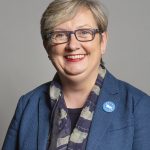
    Below is the text of the speech made by Joanna Cherry, the SNP MP for Edinburgh South West, in the House of Commons on 23 June 2020.

    The Windrush scandal brought shame on the United Kingdom and shame on the Conservative Government, who caused it to happen. Make no mistake about it, Mr Deputy Speaker, what happened was a direct result of the hostile environment policy. The Government must know that and yet, before dealing with Wendy Williams’ recommendations, they have pressed ahead with plans to extend the reach of the hostile environment policy to European Union citizens in the immigration Bill.

    I am concerned that, in today’s statement, the Home Secretary does not unequivocally commit to the sort of root and branch review of the hostile environment policy recommended by the lessons learned review. It is all very well to agree that black lives matter, but actions speak louder than words, and the reality is that many of this Government’s immigration policies continue to have disproportionate impacts on black, Asian and minority ethnic communities. If the Home Secretary does not carry out a root and branch review of the hostile environment policy, this will continue.

    The Joint Council for the Welfare of Immigrants has correctly identified that policies such as the right-to-rent scheme, which outsource the enforcement of immigration control to untrained members of the public, cannot be adequately reformed in such a way as to avoid the sort of discrimination that we have seen result. It is these policies that have resulted in real suffering for people from the Windrush generation and beyond, with people losing their jobs, unable to rent their homes and denied hospital treatment, including for serious diseases such as cancer.

    Can the Home Secretary tell us, in direct terms, that she will be carrying out the review of the hostile environment that was recommended by Wendy Williams? Wendy Williams said that the review should approach the measures of the hostile environment individually and cumulatively and demonstrate a plan to mitigate any particular cohorts impacted. She said that the review ​must be carried out with reference to equality law and the public sector equality duty. There have been calls for the right-to-rent scheme to be paused in the meantime and for the Government to consider pausing all other hostile environment measures until their effectiveness and impact can be evidenced. Will the Home Secretary state unequivocally for the record that this review of the hostile environment policy will happen, and will she give us a timescale today? Will she tell us whether the measures, such as the right-to-rent scheme, will be paused pending the outcome of the hostile environment policy? Finally, if assisting victims of the Windrush scandal is so complicated, why not extend legal aid to the lawyers who are trying to help them? That would be far more effective than inviting Members of Parliament into the Home Office.

  • Nick Thomas-Symonds – 2020 Speech on the Windrush Compensation Scheme

    Nick Thomas-Symonds – 2020 Speech on the Windrush Compensation Scheme

    Below is the text of the statement made by Nick Thomas-Symonds, the Shadow Home Secretary, in the House of Commons on 23 June 2020.

    I am grateful to the Home Secretary for her statement and for advance sight of it.

    I would like to start by celebrating the enormous contribution the Windrush generation and their families have made. The arrival of the Empire Windrush at Tilbury docks in 1948 was an important moment in our nation’s history: people from the Caribbean answering the call to help to rebuild the nation recovering from the second world war. Since then, the Windrush generation and their families have had a huge impact on every facet of national life: our NHS, our transport system, across public and private sectors, the arts, culture, religion and sports. But we also know that many who made new lives here did not get the welcome they were expecting. Many faced appalling racism, were locked out of jobs and homes, and were subject to terrible abuse in the streets.

    We may have hoped that all aspects of that had been consigned to the past, but 70 years later we have seen an incredibly strong reaction to the Black Lives Matter movement’s call for change here in the UK and little wonder. Compounded injustices over generations have created deep frustrations and hurt. The brave testimonies ​black people have shared about the impact racism has on their lives and their family histories has underlined that there is an undeniable case for action. Addressing unfairness and injustice begins at the door of the Home Office, with the appalling mistreatment of the Windrush generation.

    The Windrush scandal is a cause of national shame and the Wendy Williams lessons learned review is a damning indictment. It exposes callousness and incompetence that caused deep injustice, while making clear the impact of jobs lost, lives uprooted and untold damage done to many individuals and families. The review sets out 30 important and urgent recommendations, a number of which speak to a deeply worrying culture that has been allowed to develop over the past 10 years. Frankly, it is shameful that one of the recommendations called for the Department to develop

    “a clear purpose, mission and values statement”

    rooted in

    “fairness, humanity, openness, diversity and inclusion”,

    and that such a statement was not in place already. There are also recommendations which show the work required on issues relating to race and the need for better community outreach and engagement. It is, frankly, shocking that it took a scandal on this scale to bring such core failings to light.

    I welcome what the Home Secretary said about accepting all 30 recommendations, but the reality is that we need yet another statement before the summer recess before we even move towards implementation, when this report has been available since March. I welcome the commitment to appointing Bishop Derek Webley as co-chair of a cross-party working group, but that cannot be a substitute for action. The truth is that we have to see far more in the way of action from this Government to give the impression that they actually take this issue seriously. That is why we will be looking very carefully at the Government’s response to the recommendations of the Williams review. As with the Lammy review, I am afraid that the Government too often call for reviews; they are too slow to act and too slow to right the wrongs. The Government’s Windrush compensation scheme managed to compensate just 60 people in its first year of operation. The Home Secretary talked about more progress today, but she must know that that rate of progress is just too slow, given the number of years that have elapsed since the scandal first came to light and the fact that the scheme has already been in operation for over a year.

    It is little wonder that the reception was so bad for the Prime Minister’s recent announcement of yet another review on racial inequality, when the case for urgent action and the steps needed are abundantly clear. The reality is that, yet again, the Prime Minister was found wanting; in an important national moment, it is always words, not action. The anniversary of Windrush is an opportunity to celebrate and thank the Windrush generation, but while injustices persist, this is not enough. To ensure that such a national scandal never happens again, surely the Home Secretary must accept that the time for action is now.

  • Priti Patel – 2020 Statement on the Windrush Compensation Scheme

    Priti Patel – 2020 Statement on the Windrush Compensation Scheme

    Below is the text of the statement made by Priti Patel, the Home Secretary, in the House of Commons on 23 June 2020.

    With permission, Mr Deputy Speaker, I would like to make a statement on the Windrush compensation scheme.

    Yesterday, we celebrated Windrush Day, which marks the 72nd anniversary of the arrival of the Empire Windrush at Tilbury docks. The ship carried hundreds of people who had left their homes to build a new life in the United Kingdom, and to help this country rebuild following the destruction of the second world war. These men and women built their lives and went on to build their homes in the United Kingdom. They, alongside with many thousands of others who made similar journeys, and their descendants, have made an immeasurable contribution to the social, economic and cultural life of our country. When Britain was in need, they answered the call.

    Yet as we all know, they were the very people who went on to suffer unspeakable injustices and institutional failings spanning successive Governments over several decades. I have apologised for the appalling treatment suffered and, on 19 March, I made a statement after I received the long awaited Windrush lessons learned review from Wendy Williams. I have apologised for the appalling treatment suffered by the Windrush generation.

    The review was damning about the conduct of the Home Office and unequivocal about the

    “institutional ignorance and thoughtlessness towards the…race and the history of the Windrush generation”

    by the Department. There are serious and significant lessons for the Home Office to learn in the way it operates. I and the permanent secretary are currently reviewing its leadership, culture and practices, and the way it views and treats all parts of the community it serves.

    These reforms are only the start. I was clear that when Wendy Williams published her lessons learned review, I would listen and act. I have heard what she has said, and I will be accepting the recommendations that she has made in full. I am committed to ensuring that the Home Office delivers for each part of the community it serves and I will come back to update the House before the summer recess on how we will be implementing the recommendations. I look forward to discussing the plans further with Wendy this week.

    We have been working tirelessly to support the most urgent cases and those most in need. In April 2018, the Home Office set up the Windrush taskforce to ensure that those who needed documentation immediately could get it. A month later, the Windrush scheme was launched, providing free citizenship to those eligible for it.

    The Home Office has a dedicated vulnerable persons team in place to provide immediate support to people suffering with a range of vulnerabilities, including the financial hardships and destitutions that have been well documented. The team also administers the urgent and exceptional payments scheme, which provides immediate financial payments. To the end of March this year, the team has made 35 payments, totalling more than £46,000.

    Work is continuing unabated to ensure that those who suffered receive the documentation and the compensation that they need. So far, more than 12,000 people have been ​granted documentation by the Windrush taskforce, including more than 5,900 grants of citizenship, and the compensation scheme continues to make payments to compensate the losses and impacts that individuals suffered as a result of not being able to demonstrate their lawful status. The scheme was set up and designed with the backing of Martin Forde QC, in close consultation with those who were affected by the scandal, and in February I announced that I would extend it until April 2023 to give those who need our help as much time as they need to apply.

    We are continuing to process individual claims as quickly as possible. The first payment was made within four months of the scheme launching, and many interim awards are being made where parts of the claim can be resolved more easily and more quickly than others. But let me be clear: it is not a blanket one-size-fits-all scheme. It was deliberately designed with community leaders and Martin Forde QC so that the claimant is at the heart of each and every claim.

    Cases deserve to be processed individually with the care and sensitivity that they deserve, so that the maximum payment can be made to every single person. I simply will not call for targets when it comes to dealing with claims. These are incredibly personal cases—individual cases—that must be treated with the care, the dignity and the respect that they deserve.

    I want everyone who has been wronged to get the maximum compensation to which they are entitled, and through this bespoke scheme, we are working to achieve that. This compensation covers a very wide range of categories—far more than any comparable compensation scheme. It covers immigration fees; it covers loss of earnings; it covers benefits; it covers homelessness; it covers destitution. Overall, it covers 13 separate categories. Assessing claims in this way is ultimately beneficial to those who are making them, but it takes time to assess them and it takes time to get it right. While claims are being processed in full, many interim and exceptional payments have been made to make sure that people have access to money—to the funds that they need now.

    Clearly, I share the desire to see more claims completed. The rate of claims has already increased significantly in the past few months: as of the end of March, more than £360,000 had been awarded, and further offers have been made of approximately £280,000. I can confirm today that more than £1 million has been offered in claims so far, and more payments and offers are being made each week, but we can—and of course we must—do more. My determination to right the wrongs and the injustices suffered by the Windrush generation is undiminished, and I will do all I can to ensure that more people are helped and more people are compensated in full. If additional resources are needed, they will be provided.

    Now is the time for more action. We all have a duty to help those affected by this terrible injustice. Individuals will benefit from the compensation scheme only if they are sought out and encouraged to apply. We are working extensively with community groups and leaders to raise awareness of the Windrush taskforce and the compensation scheme, including with vulnerable people through the vulnerable persons team. Anyone who needs help or support to make a claim will receive it. The Home Office has funded Citizens Advice to provide free independent advice and support, and has hosted or ​attended more than 100 engagement and outreach events throughout the United Kingdom. As Members know, my door is always open, so I urge Members of the House to ensure that their constituents’ cases or concerns are raised immediately with me and my team so that they are progressed and resolved.

    Throughout the coronavirus pandemic, I have made sure that no one is left behind. Working with community leaders, I have launched a digital engagement programme so that outreach can continue despite the current social distancing measures. The first virtual support event was held on 21 May, and on 19 March I announced a dedicated new communications campaign to promote the Windrush schemes, as well as a £500,000 fund for community organisations to run outreach, promotional and support activities to increase awareness.

    We know, however, that there are a range of other issues and injustices affecting the Windrush generation and their families. Yesterday, I announced a new Windrush cross-Government working group, which I will co-chair with Bishop Derek Webley. The group brings together community leaders with senior representatives from a number of Government Departments to address the challenges faced by the Windrush generation and their descendants, spanning programmes on education, work, health and much more. The Prime Minister and I spoke to members of the group yesterday to discuss many of the actions needed and to deliver solutions. The first formal meeting of the group will take place this Thursday. I look forward to taking the work of the group forward, alongside the inspirational co-chair, Bishop Derek Webley.

    Nothing can ever undo the suffering experienced by members of the Windrush generation. No one should have suffered the uncertainty, complication and hardships brought on by the mistakes of successive Governments. Now is the time for more action across the Government to repay that debt of gratitude and to eliminate the challenges that still exist for them and their descendants. Only then can we build a stronger, fairer and more successful country for the next generation. I commend this statement to the House.

  • Boris Johnson – 2020 Statement on Relaxing Lockdown

    Boris Johnson – 2020 Statement on Relaxing Lockdown

    Below is the text of the statement made by Boris Johnson, the Prime Minister, on 23 June 2020. The document supplied by Downing Street was formatted in the manner shown below.

    Mr Speaker, before I begin, I am sure the whole House will join me in sending our deepest condolences to the families and friends of

    James Furlong, Joe Ritchie-Bennett and David Wails,

    who were brutally killed in Reading on Saturday.

    To assault defenceless people in a park is not simply an act of wickedness but abject cowardice,

    and we will never yield to those who would seek to destroy our way of life.

    Mr Speaker, with permission I will update the House on the next steps in our plan to rebuild our economy and reopen our society,

    while waging our struggle against Covid-19.

    From the outset, we have trusted in the common sense and perseverance of the British people

    and their response has more than justified our faith.

    Since I set out our plan on the 11th May,

    we have been clear that our cautious relaxation of the guidance is entirely conditional on our continued defeat of the virus.

    In the first half of May, nearly 69,000 people tested positive for Covid-19 across the UK;

    by the first half of June, that total had fallen by nearly 70 percent to just under 22,000.

    The number of new infections is now declining by between 2 and 4 percent every day.

    Four weeks ago, an average of 1 in 400 people in the community in England had COVID-19;

    in the first half of June, this figure was 1 in 1,700.

    We created a human shield around the NHS and in turn our doctors and nurses have protected us,

    and together we have saved our hospitals from being overwhelmed.

    On the 11th May, 1,073 people were admitted to hospital in England, Wales and Northern Ireland with Covid-19,

    by 20th June, this had fallen by 74 per cent to 283.

    This pandemic has inflicted permanent scars and we mourn everyone we have lost.

    Measured by a seven-day rolling average, the number of daily deaths peaked at 943 on the 14th April,

    on 11th May it was 476,

    and yesterday, the rolling average stood at 130.

    We have ordered over 2.2 billion items of protective equipment from UK based manufacturers, many of whose production lines have been called into being to serve this new demand –

    and yesterday, we conducted or posted 139,659 tests, bringing the total to over 8 million.

    And while we remain vigilant, we do not believe there is currently a risk of a second peak of infections that might overwhelm the NHS.

    Taking everything together, we continue to meet our five tests

    and the Chief Medical Officers of all four home nations have downgraded the UK’s Covid Alert Level from four to three,

    meaning that we no longer face a virus spreading exponentially,

    though it remains in general circulation.

    The administrations in Scotland, Wales and Northern Ireland hold responsibility for their own lockdown restrictions

    and they will respond to the united view of the Chief Medical Officers at their own pace, based on their own judgment,

    but all parts of the UK are now travelling in the same direction and we will continue to work together to ensure that everyone in our country gets the support they need.

    Thanks to our progress, we can now go further and safely ease the lockdown in England.

    At every stage, caution will remain our watchword, and each step will be conditional and reversible.

    Mr Speaker, given the significant fall in the prevalence of the virus, we can change the two-metre social distancing rule, from 4th July.

    I know this rule effectively makes life impossible for large parts of our economy, even without other restrictions.

    For example, it prevents all but a fraction of our hospitality industry from operating.

    So that is why almost two weeks ago, I asked our experts to conduct a review and I will place a summary of their conclusions in the libraries of both Houses this week.

    Where it is possible to keep 2 metres apart people should.

    But where it is not, we will advise people to keep a social distance of ‘one metre plus’,

    meaning they should remain one metre apart, while taking mitigations to reduce the risk of transmission.

    We are today publishing guidance on how businesses can reduce the risk by taking certain steps to protect workers and customers.

    These include, for instance, avoiding face-to-face seating by changing office layouts,

    reducing the number of people in enclosed spaces,

    improving ventilation,

    using protective screens and face coverings,

    closing non-essential social spaces,

    providing hand sanitiser

    and changing shift patterns so that staff work in set teams.

    And of course, we already mandate face coverings on public transport.

    Whilst the experts cannot give a precise assessment of how much the risk is reduced,

    they judge these mitigations would make “1 metre plus” broadly equivalent to the risk at 2 metres if those mitigations are fully implemented.

    Either will be acceptable and our guidance will change accordingly.

    This vital change enables the next stage of our plan to ease the lockdown.

    Mr Speaker, I am acutely conscious people will ask legitimate questions about why certain activities are allowed and others are not.

    I must ask the House to understand that the virus has no interest in these debates.

    Its only interest, its only ambition is to exploit any opportunities is to recapture ground that we might carelessly vacate.

    There is one certainty: the fewer social contacts you have, the safer you will be.

    My duty, our duty as the Government, is to guide the British people, balancing our overriding aim of controlling the virus against our natural desire to bring back normal life.

    We cannot lift all the restrictions at once, so we have to make difficult judgments,

    and every step is scrupulously weighed against the evidence.

    Our principle is to trust the British public to use their common sense in the full knowledge of the risks,

    remembering that the more we open up, the more vigilant we will need to be.

    From now on we will ask people to follow guidance on social contact instead of legislation.

    In that spirit we advise that from 4 July, two households of any size should be able to meet in any setting inside or out.

    That does not mean they must always be the same two households.

    It will be possible for instance to meet one set of grandparents one weekend, and the others the following weekend.

    We are not recommending meetings of multiple households indoors because of the risk of creating greater chains of transmission.

    Outside, the guidance remains that people from several households can meet in groups of up to six.

    and it follows that two households can also meet, regardless of size.

    Mr Speaker, I can tell the House that we will also re-open restaurants and pubs.

    All hospitality indoors will be limited to table-service, and our guidance will encourage minimal staff and customer contact.

    We will ask businesses to help NHS Test and Trace respond to any local outbreaks

    by collecting contact details from customers, as happens in other countries,

    and we will work with the sector to make this manageable.

    Almost as eagerly awaited as a pint will be a haircut, particularly by me,

    and so we will re-open hairdressers, with appropriate precautions, including the use of visors.

    We also intend to allow some other close contact services, such as nail bars, to re-open as soon as we can, when we are confident they can operate in a Covid-secure way.

    From 4th July, provided that no more than two households stay together,

    people will be free to stay overnight in self-contained accommodation,

    including hotels and bed & breakfasts,

    as well as campsites as long as shared facilities are kept clean.

    Most leisure facilities and tourist attractions will reopen if they can do so safely,

    including outdoor gyms and playgrounds, cinemas, museums, galleries, theme parks and arcades

    as well as libraries, social clubs and community centres.

    “Close proximity” venues such as nightclubs, soft-play areas, indoor gyms, swimming pools and spas will need to remain closed for now, as will bowling alleys and water parks.

    But my RHFs the Business and Culture Secretaries will establish taskforces with public health experts and these sectors to help them become Covid-secure and re-open as soon as possible.

    We will also work with the arts industry on specific guidance to enable choirs, orchestras and theatres to resume live performances as soon as possible.

    Recreation and sport will be allowed, but indoor facilities, including changing rooms and courts, will remain closed

    and people should only play close contact team sports with members of their household.

    Mr Speaker, I know that many have mourned the closure of places of worship,

    and this year, Easter, Passover and Eid all occurred during the lockdown.

    So I am delighted that places of worship will be able to reopen for prayer and services –

    including weddings with a maximum of 30 people,

    all subject to social distancing.

    Meanwhile, our courts, probation services, police stations and other public services will increasingly resume face-to-face proceedings.

    Wrap-around care for school age children and formal childcare will restart over the summer.

    Primary and secondary education will recommence in September with full attendance

    and those children who can already go to school should do so – because it is safe.

    Mr Speaker, we will publish Covid-secure guidelines for every sector that is re-opening,

    and slowly but surely, these measures will restore a sense of normality.

    After the toughest restrictions in peacetime history,

    we are now able to make life easier for people to see more of their friends and families

    and to help businesses get back on their feet and get people back into work.

    But the virus has not gone away.

    We will continue to monitor the data with the Joint Biosecurity Centre and our ever more effective Test and Trace system.

    And I must be clear to the House, that as we have seen in other countries,

    there will be flare-ups for which local measures will be needed

    and we will not hesitate to apply the brakes and re-introduce restrictions even at national level – if required.

    So I urge everyone to stay alert, control the virus and save lives.

    Let’s keep washing our hands,

    staying 2 metres apart wherever feasible, and mitigating the risks at 1 metre where not,

    avoiding public transport when possible, and wearing a mask when not,

    getting tested immediately if we have symptoms,

    and self-isolating if instructed by NHS Test and Trace.

    Today, we can say that our long national hibernation is beginning to come to an end

    and life is returning to our shops, streets and homes

    and a new, but cautious, optimism is palpable.

    But it would be all too easy for that frost to return

    and that is why we will continue to trust in the common sense and the community spirit of the British people to follow this guidance,

    to carry us through and see us to victory over this virus.

    I commend Mr Speaker this Statement to the House.

  • Mark Harper – 2020 Speech on BBC Regional Politics Coverage

    Mark Harper – 2020 Speech on BBC Regional Politics Coverage

    Below is the text of the speech made by Mark Harper, the Conservative MP for the Forest of Dean, in the House of Commons on 22 June 2020.

    A few thoughts occurred to me when I was listening to my hon. Friend the Member for Tiverton and Honiton (Neil Parish) and some of the interventions that I think the BBC board would do well to reflect on.​

    The first is the question of the licence fee. I have my thoughts, and although I have not reached a conclusion about the licence fee, I can see both sides of the argument. One of the important things for the BBC to reflect on is that if it wants to retain the support of people across the country—although the hon. Member for Glasgow East (David Linden) is no longer in his place, this is a debate that happens in Scotland, Wales and Northern Ireland, as well as in England—it needs to retain the support of people from across the country for a compulsory fee. My hon. Friend the Member for Winchester (Steve Brine) said that if people do not pay that fee, they will go to prison. The BBC does need to think about what it is delivering. If it is not going to deliver anything different from what is available on a purely commercial basis, actually the licence fee is difficult to justify, so that is worth its reflecting on.

    I talked about cost in my intervention earlier; that is actually very interesting, and again the BBC should reflect on it. I was looking at an interesting tweet from Chris Mason yesterday about technology. He had the example of a piece to camera that he did for the “Six O’Clock News” yesterday. The camera in question was the size of a highlighter pen, and the monitor used to film it was on his mobile phone. It seems to me that the developments in technology—I know this from interactions I have had with our own journalists from BBC Radio Gloucestershire about some of the technology now—mean that people can do things remotely. We do not have a whole swathe of people turning up; it is an individual, and those individuals do the recording, clip up the programmes and transmit them electronically straight into the studio. Technology should enable the BBC to deliver more local coverage more cost-effectively than ever before.

    Of course, the BBC also has more platforms. My hon. Friend the Member for Tiverton and Honiton talked about some well-watched television programmes in our region including “Sunday Politics West” and “Inside Out”. However, it is worth reflecting on the fact that these BBC local journalists not only produce content for BBC local radio, such as the fantastic BBC Radio Gloucestershire, and for television—for example, “Points West”, the evening news in our region, and “Sunday Politics West”—but also generate content for the BBC’s own website. I know that that can be controversial, because many local journalists and local newspapers think that that local content unfairly competes with them, and indeed it does, but we should just think about the fact that if the BBC is producing local content, it is a bit silly if we cannot access it on all the different platforms. The cost of producing regional and very local content is coming down and the number of platforms available for people on which to view that content is going up so people can see that content more effectively. Those are both questions for the BBC to focus on.

    The hon. Member for Chesterfield (Mr Perkins) also focused on accountability. This is not just about holding us here in Parliament to account on how we conduct ourselves locally and on our records as parliamentarians; it is also about local government, which he mentioned. It is important to have important local outlets—both newspapers and the BBC—because otherwise our local councils will not be held to account by anyone. Even in the time I have been involved in politics in my constituency, ​the level of coverage of what goes on in local council chambers has plummeted. We do not get the dedicated local government reporters that we used to get. There may be a big story going on in a local council—for example stories about social care or how we look after people with learning disabilities and how effectively we get them into work—but such local issues are never going to be covered properly by national broadcasters unless we have a truly national scandal. Instead, we have to depend on effective local coverage, which in terms of reach means the BBC.

    It is also worth focusing on how many people actually see this content. I may not be completely up to date with the figures, but I remember, on my most recent visit to BBC Radio Gloucestershire, asking about the number of people who listen to its programmes. Its morning breakfast programme, the drive time programme, is listened to by many people in my own constituency as they commute —or at least as they used to commute by car, in the days pre-coronavirus—and in Gloucestershire more people listen to that programme than listen to Radio 4’s “Today” programme. So more people in Gloucestershire listen to that local radio station for their news and current affairs and to hold their democratically elected politicians to account than listen to a national leading broadcast programme.

    That is really important, and it says two things to me. First, it says that if we did not have that local programme, we would not be holding local politicians, local business leaders and local decision makers to account. Secondly, the fact that the listening figures are so high suggests that my constituents and other Gloucestershire residents find that content more relevant and more interesting to them than that of the national broadcasting programmes that are available at the same time. If the BBC is thinking about its attractiveness to the public—this comes back to my point about the licence fee—it would do well to reflect on that before it wantonly casts these services aside.

    My final point, on the cost-effectiveness of the regional services, is the point I made in my intervention. When I visit Radio Gloucestershire—and also when I visit BBC Bristol when I am there for “Sunday Politics”—I look around the studio and see how the staff have to multi-task to put programmes together. I do not see a lot of fat, a lot of waste or a lot of unnecessary fripperies. I see a very cost-effective operation covering what my hon. Friend the Member for Tiverton and Honiton has described as a big region in the south-west. It is a shame that our colleague from Scotland, the hon. Member for Glasgow East, has gone, because my parliamentary neighbour, my hon. Friend the Member for Tewkesbury (Mr Robertson), is fond of saying—I checked this once, to ensure that it was accurate—that his constituency in Tewkesbury is closer to the England-Scotland border than it is to Land’s End. That just demonstrates the size of one region in England, and it shows the nonsense of suggesting that even that one region can be adequately covered from London, let alone all the regions in England. That is a really important point for the BBC to bear in mind.

    Those of us who have had the opportunity to go to BBC HQ at Broadcasting House will have noted the disparity in the resources put into the BBC centrally. I remember having a conversation with the then Prime Minister, David Cameron, who told me that, when he did a press conference, he used to marvel—that is perhaps ​not the right word—at the number of questions he used to get from different bits of the BBC. Every single BBC programme insisted on sending its own person, rather than there being a single person to ask a question. There would be a question from the “Today” person, a question from the “Newsnight” person and a question from the BBC’s political editor. That did not suggest an organisation that was focused on delivering value for money. The BBC should bear that in mind.

    Steve Brine

    On that point, sort of, has it not been fascinating during the Downing Street press conferences to see the regional reporters ask their questions? They do it with a straight bat, without an agenda and without a tone. They just get to the nub of the question that matters to the people in their area. Has not that just been so refreshing?

    Mr Harper

    My hon. Friend makes a good point. That is absolutely accurate, and the questions from the local journalists are often far more difficult for the Minister to answer because they are focused on the issue at hand. They do not have any of the Westminster aspect to them; they are straightforward questions. Those journalists are doing what journalists should always do, which is to ask us the questions that the listener or viewer at home wants them to ask. The journalist should be putting the question that the person at home, looking at the screen or listening to the radio, has in their head to the people making the decisions. If they are doing that, they are absolutely doing their job properly.

    My final point is about some of the subjects covered, which I think the hon. Member for Chesterfield also touched on, as did my hon. Friend for Tiverton and Honiton. I will pick two examples. The first, which was a little while ago—well, it seems like a long time ago, but it wasn’t really—is flooding, which impacted different parts of the country in different ways and was something that sadly we experienced ourselves in my county of Gloucestershire. That is one set of circumstances when local reporting is at its best—when journalists get out into communities and report on the aspects of the issue that really matter to individuals.

    I also agree with what the hon. Gentleman said about the coronavirus outbreak, two aspects of which are worth noting. The first is that the huge amount of very locally focused responses in our communities—through local resilience forums, county councils, district councils, volunteers, and town and parish councils—has been covered in local media outlets, including the BBC, in a way that it simply would not have been, and has not been, in national broadcasting.

    Mr Perkins

    The right hon. Gentleman is right that the local context has been different. What is also different is local accountability, because councils have decisions to make about the local response to coronavirus, and politicians have to answer for those decisions, whether they be council leaders or Members of Parliament. That is the other dimension to the point he is making.

    Mr Harper

    I am grateful for that spot-on intervention, which leads to my final point, about one of the things that we will now be focused on. The Prime Minister tomorrow will announce further moves, I hope, to enable us to get our economy back on track and functioning. One of the important ways to facilitate that is through the test and trace system, which is starting to be up and ​running, and that is being dealt with not just by the NHS nationally. There is also an important local component, in that locally based, locally employed and locally accountable directors of public health will be responsible by the end of this month for putting together a local outbreak plan to deal with the inevitable local outbreaks—I say inevitable because we have already seen outbreaks in our country and others, whether in specific localities or specific businesses. That will be absolutely critical in getting the country functioning again while keeping people safe, and those outbreak plans will be locally developed, by locally accountable officials and councils.

    That aspect is important, but when the inevitable outbreaks of coronavirus happen, it will also be really important to have quality journalism to report on what has happened in a non-sensationalist, factual way, so that local people know what is going on, what the facts are, what is being done to keep them safe and what they need to do to keep themselves and their communities safe. If we were to get rid of that local reporting and accountability, the country and our communities would be the poorer for it.

    My hon. Friend the Member for Tiverton and Honiton should be thanked for his wisdom in securing this debate, but also for brilliantly planning it to occur on a day when he would have a little more time than is often available in an Adjournment debate, thereby ensuring what I think will be quite a full debate. I hope the powers that be in the BBC watch BBC Parliament, which is another very valuable service delivered by the BBC, listen to the clear cross-party message—that should sound an alarm with them—from both main political parties and some of the smaller parties, and think very carefully about whether, come September, they should bring back BBC regional coverage and protect it in the months and years to come.

  • Toby Perkins – 2020 Speech on BBC Regional Politics Coverage

    Toby Perkins – 2020 Speech on BBC Regional Politics Coverage

    Below is the text of the speech made by Toby Perkins, the Labour MP for Chesterfield, in the House of Commons on 22 June 2020.

    I pay tribute to the hon. Member for Tiverton and Honiton (Neil Parish) for securing this debate. The level of interest that there has been shows the desire across the country to protect this incredibly important institution. He was encouraged by the hon. Member for Stoke-on-Trent North (Jonathan Gullis) to lead the campaign by setting up a Zoom call for us all to contribute to, but it seems to ​me that he has created a sort of face-to-face Zoom call that might be familiar to some of us who were here before the coronavirus era. It is a way for us all to get into the same room and discuss this, and that is great.

    Taking up the challenge set by the hon. Member for Cleethorpes (Martin Vickers), I think it is incredibly important to recognise the contribution that the BBC makes in my area, not just with “Sunday Politics”, but also with radio stations such Radio Sheffield and Radio Derby and, of course, to recognise the broader role of local media such as the Derbyshire Times and Peak FM, which ensure that, as local Members of Parliament, we are held to account and that we can communicate with our local communities and be on the receiving end of some wise and frank advice from our local constituents about the issues.

    It is incredibly important for our democracy that we are not just 650 people here to serve our parties, but we are people here to serve our local communities, to hear about local issues, to be asked about those local issues and to respond to those local points. That is the role that “Sunday Politics” plays, and there is no way that a politics programme for England would be able to do that. The idea that the issues that my constituents care about in Chesterfield and the local issues in the north-east or in Cornwall are all the same is just nonsense. The local holding to account that “Sunday Politics” does is incredibly important.

    Jerome Mayhew (Broadland) (Con)

    Does the hon. Gentleman agree that now is a particularly bad time for the BBC to be considering this move? We heard in the previous contribution about devolution to metropolitan mayors, and the like, which needs extra examination. Our response to covid has, in large part, been led by our county councils and second-tier councils, as well as by local resilience forums. Those bodies are increasingly powerful, and increasingly relevant to our constituents and the population of the regions. Now, more than ever, the BBC should be focusing on that issue, and not withdrawing from it.

    Mr Perkins

    I could not agree more. Coronavirus has brought into sharp focus the need for a local response, given the extent to which local areas are experiencing a global pandemic in different ways. In London, coronavirus hit hard up front, and there were then regional variations as it went on, and differences in local responses. Local clinical commissioning groups responded differently regarding testing and the availability of personal protective equipment, and the public must be able to learn about such issues locally, and to scrutinise and question their politicians about that response. Ministers have stood at the Dispatch Box and been asked to respond on a national basis, but politicians must also be held to account for what is happening in our local areas with testing, PPE, care homes, and all those sorts of things.

    Graham Stringer

    I do not know whether my hon. Friend is as sad as I am, but over recent weekends, I have switched on the Parliament channel, and people can see coverage of virtually all the general elections there have been since television started covering them. One really interesting factor from those BBC archives is that the swing across the country in 1955 was almost uniform. In 1959, commentators were shocked when there was a slightly smaller swing to the Conservatives in the north-west—it was a big change. The four countries ​of the United Kingdom are increasingly diverse. Does my hon. Friend agree that that means there should be more regional coverage, not less?

    Mr Perkins

    Once again, I absolutely agree. I think it was Tip O’Neill who was credited with the phrase, “all politics is local”, and in the last general election we saw that more strongly than ever before. I represent Chesterfield, an area that, as long ago as 2010 when I came to Parliament, was surrounded by Labour seats, but there has been a big change in our area. Similarly, in the cities there has been a change in the opposite direction. I am very conscious of that point, and as colleagues such as my hon. Friend the Member for Plymouth, Sutton and Devonport (Luke Pollard) know, in areas where there is perhaps less representation from one party, it is particularly important that people still get to hear a voice from the Labour party, or, in areas where Labour is strong, a voice from the Conservative party. I think that “Sunday Politics” does that, and it is important to ensure that in areas where one party is in the minority, that voice is still heard in a local dimension.

    As Member of Parliament for Chesterfield I have both the privilege and the slight irritation of being straddled between two areas. The majority of my constituents watch the Yorkshire version of “Sunday Politics” and regional news, but we are also covered by the east midlands region, and different people in my constituency watch different programmes. Because of that, when I have been on the two separate programmes, I have been minded of how different they are, and how they reflect the different issues that exist in West Yorkshire at one end, and Northamptonshire at the other end of the east midlands coverage. That gives me a strong sense of how different those areas are.

    I would not say that my constituents appreciate my appearances, but they certainly respond to the appearances I make and appreciate that local coverage.

    I noticed that the “Sunday Politics East Midlands” Twitter account has now been taken down. Someone at the BBC has made the decision, while the review is apparently still ongoing, to take down that account, to which people could go and see the coverage produced by the “Sunday Politics East Midlands” team. Recent such programmes have brought a local dimension to national stories: we hear a lot about HS2 on a national basis, but we have been able to debate what it means locally in the east midlands. Areas of the east midlands such as Chesterfield, Derby and Nottingham will be served by HS2, whereas in other areas HS2 provides a blight but will not provide a service. There is a perspective that is different from the national debate about HS2.

    If “Sunday Politics East Midlands” disappears, I worry about how the people of the east midlands will learn about the latest prediction from the hon. Member for North West Leicestershire (Andrew Bridgen) as to when the scrapping of HS2 is going to be announced. I do not know how they would ever find that out. Every six weeks or so, the hon. Gentleman comes on to tell us that it is about to be cancelled. I worry how people would find that out without the “Sunday Politics East Midlands” programme.

    Steve Brine

    I enjoy the hon. Gentlemen’s contributions; he is a big thinker on these matters. The Digital, Culture, Media and Sport Committee, of which I am fortunate to be a member, is currently holding a big inquiry on ​public sector broadcasting. What the hon. Gentleman and everybody else is saying goes to the heart of the question of what we want a public sector broadcaster to be. Do we want hundreds of thousands of pounds to be spent on salaries for small, niche programmes on national network television? Do we want a commercial entity such as Radio 2 to be financed by the taxpayer—by our constituents—on penalty of going to prison if they do not pay? Or do we want the sort of coverage that the hon. Gentleman is talking about? Ultimately, as we lead up to the charter review—I am sure that the Select Committee’s report will feed into that and into Ministers’ thinking—the debate is really about what sort of public sector broadcaster we want to have, is it not?

    Mr Perkins

    It absolutely is. I am conscious that local media—particularly radio—are very much under threat. I have previously mentioned Peak FM, which has been a great, small local radio station in my area. It has recently been taken over by Bauer and its programming is going to go to the east midlands. We are now told that a traffic jam just outside Corby is local news; that makes no difference to people in Chesterfield. As the local dimension of the private sector media increasingly diminishes, there is an opportunity for the BBC to say, “Look, this is what we are great at. Of course we are going to compete on a national basis with national programmes on a Saturday evening, but this is what is special about the BBC.” It will lose that at its peril: if the BBC loses programmes such as “Inside Out” and “Sunday Politics”—if it loses that sense of its ability to influence things locally—it will rue the day and we will all be the poorer for it.

    Other Members, particularly the hon. Member for Tiverton and Honiton, have mentioned the extent to which there is a sense that if something happens in London, it is national news—that if there is flooding in London or riots in London, we should all care about that. We all know that when we have flooding in different areas, it gets much more difficult to get local coverage. I entirely accept the point made by the hon. Member for Beckenham (Bob Stewart) about London having local news too, but for many of us who are more distant from London, there is a strong sense that what happens in London is given greater import than what happens in our areas. We are going to have the local elections in 2021, and we all know that what happens in London will be seen as national news. The London mayoralty is of course an important national post, but there are elections everywhere, and it is important that those elections are covered too. I do not think that will happen if these programmes disappear.

    I could say other things, but I shall end my speech there because many other Members wish to speak. I thank the hon. Member for Tiverton and Honiton for securing this debate. I hope that when the Minister responds, he will give a really strong assurance that the strength of feeling in this debate will be conveyed to the BBC, and that it will be conveyed in the strongest possible terms just how crucial these programmes are to our constituents.