Tag: 2020

  • Thangam Debbonaire – 2020 Comments on Affordable Housing

    Thangam Debbonaire – 2020 Comments on Affordable Housing

    Below is the text of the comments made by Thangam Debbonaire, the Shadow Housing Secretary, on 30 June 2020.

    The Westferry scandal shows that for all their fancy language, the Tories are simply prioritising the demands of housing developers at the expense of people who need affordable homes.

    The arrogance of Robert “three-homes” Jenrick proposing a roll-out of ill-adapted rabbit hutches is staggering – permitted development has been shown to be a failure and this is just another example of the Tories doing favours for their property developer mates. Meanwhile, our climate change targets are urgent, and there are millions of existing homes which need insulation and energy efficiency.

    Instead of thinking about housing developers’ business interests, the government should be focusing on the millions of people who see home ownership as an impossible dream, or the many key workers who have been stuck for years on council housing waiting lists and invest in high-quality, truly affordable homes which are well insulated and energy efficient and help to meet our zero-carbon emissions targets.

  • Jonathan Ashworth – 2020 Comments on the Lockdown in Leicester

    Jonathan Ashworth – 2020 Comments on the Lockdown in Leicester

    Below is the text of the comments made by Jonathan Ashworth, the Shadow Health Secretary, on 30 June 2020.

    The Government’s response to the situation in Leicester has left people anxious and confused.

    We support the Government’s decision to reintroduce lockdown restrictions. However, there are a number of outstanding questions about how the Government intends to implement these restrictions and get the outbreak back under control.

    There is confusion about essential travel and what it means for people who travel to work outside the boundaries. There is also no clarity about what extra resources will be put in place to increase testing capacity and what financial support will be available to businesses.

    The Government must take firm leadership on this. This is the first local lockdown. People in Leicester – and across the country – are looking for ministers to take responsibility for this issue.

    Number 10 said the afternoon press conferences would now only take place if the Government had ‘something really important to say’. We believe the situation in Leicester meets that criteria. That is why I am urging the Health Secretary to hold a press conference this afternoon and give the public the answers and reassurance they deserve.

  • Thangam Debbonaire – 2020 Comments on the Prime Minister’s Planning Reforms

    Thangam Debbonaire – 2020 Comments on the Prime Minister’s Planning Reforms

    Below is the text of the comments made by Thangam Debbonaire, the Shadow Housing Secretary, on 30 June 2020.

    A real terms cut in funding for affordable housing shows where the Tories’ priorities really lie: slashing planning regulations for their wealthy developer backers, not building good quality, environmentally sustainable and truly affordable housing for workers.

    It’s no wonder that Government wants to scrap planning regulations: the evidence from the Robert Jenrick cash-for-favours scandal shows us how desperate they are to help billionaire donors abuse the planning system and ride rough-shod over local people.

    Yet again the Conservatives are saying one thing and doing another while trying to deflect from their abysmal record on housebuilding after being in power for ten years.

  • Ed Miliband – 2020 Speech on the Business and Planning Bill

    Ed Miliband – 2020 Speech on the Business and Planning Bill

    Below is the text of the speech made by Ed Miliband, the Labour MP for Doncaster North, in the House of Commons on 29 June 2020.

    May I start by thanking the Business Secretary for the constructive conversations that he and I have had on the Bill? As he knows, we support the measures contained in it.

    The wider context to this Bill is the economic crisis that we face, the scale of which we have not seen for a very long time. As an Opposition, we have tried to work constructively with Government. Indeed, we have welcomed a number of steps that the Government have taken. We called for the furlough scheme and indeed have welcomed it, though we believe that too many people remain excluded from support. We called for the 100% underwriting of Government-backed loans, and we have welcomed the bounce back loans, too. We have also supported the Government on the difficult decision to move from 2 metres to 1 metre-plus where 2 metres cannot be observed, although we do have concerns about the test, track and trace system.

    I hope that we can agree that the past few months have shown the power of Government to step in and protect jobs and businesses at a time of crisis. My case today is that that power has not gone away, and neither has the need for it to be exercised. The Government must not shrink from that, because, let us be clear, we are not at the end of this economic crisis, but just at the beginning of it.

    Let me deal first with the provisions in the Bill. It is a short Bill and there is a large degree of agreement on it. The headline provisions, as the Secretary of State has said, will enable the hospitality industry to reopen quickly and serve a greater number of customers in a safe environment. We welcome the temporary loosening of planning regulations to enable bars, restaurants and cafés to serve customers outside their premises. I take the point that my hon. Friend the Member for Hackney South and Shoreditch (Meg Hillier) has made about the need for some caution here. It is important that local authorities continue to have discretion in these matters because they are best placed to make the judgments about the local impacts. It is also right to put on record the concerns of the shop workers’ union, USDAW, which has worried about the safety of staff. The guidance is very clear about the mitigation and reduction of risk that is needed if 1 metre-plus is in place, and I am sure the Secretary of State agrees that that is really important, and that it is also very important that the Health & Safety Executive takes a tough line in enforcing safety as well.

    We also welcome the measures in enabling construction sites to get back to work more easily through extended working hours. Again, and I am sure that Members across the House will agree with me, it is in the interests of local residents that local authorities have discretion in these matters.

    Meg Hillier

    I think we agree about the need for local authorities to have discretion, but they also need resources. In my borough, we have more than 1,300 licensed premises in a very small area of London, and a lot of licensing officers are needed just to deal with the flow of applications. Does my right hon. Friend not think that the Government need to address that?

    Edward Miliband

    My hon. Friend in her customary eloquent way anticipates my next point. We have seen—and I am grateful to my hon. Friend the Member for Croydon North (Steve Reed), the shadow Secretary of State for local government, for giving me the exact figures—£10 billion of costs loaded on to local authorities during this crisis, and only £3.2 billion provided by Government, despite the Secretary of State for Housing, Communities and Local Government saying that the Government would stand behind councils and give them the funding they need. We have another Bill that puts yet more pressure on local authorities, but with no clear plan about how they will be reimbursed, and our new clause 5 speaks to that issue.

    We also welcome the changes to transport licensing and the removal of the unfair relationship provision in the Consumer Credit Act to ensure that bounce-back loans are more easily accessed. I am grateful to the Secretary of State for the detailed discussions that we had about that particular provision.

    Those are the main provisions of the Bill and, as I said, there is cross-party agreement on them. Obviously, there will be detailed discussions in Committee. However, I have to say to the Secretary of State and the House that we are under an illusion if we think that the measures in this Bill will go much of the way towards addressing the crisis that we face: 4 July represents a reopening of pubs and restaurants, but it does not represent recovery.

    It is important to note that many sections of our economy employing hundreds of thousands of people, including gyms, leisure centres, live entertainment venues, beauty salons, conference facilities, night clubs and swimming pools, will still not be able to open for public health reasons. We support those public health decisions. Other parts of our economy will open only with severe restrictions, including large parts of our hospitality industry, which employs 3 million people or one in 10 of the whole workforce. The British Beer and Pub Association says that 25% of pubs will not be able to reopen even at 1 metre. The Government themselves acknowledge, in the scientific assessment of the change to 1 metre, that the hospitality industry will lose 25% to 40% of its revenue even at 1 metre distancing. That revenue translates into a risk to hundreds of thousands of jobs. Live performance remains prohibited, which affects the theatre sector, employing 290,000 people. Manufacturers, too, are reeling from the fall in domestic and worldwide demand.

    I say all that not to cast doubt on the public health measures being taken or to speak against the Bill, but to point to the wider context, which is that the Government are taking a one-size-fits-all approach to the furlough, for example, demanding an employer contribution from August and a cliff edge at the end of October. The shadow business Minister, my hon. Friend the Member for Manchester Central (Lucy Powell), received this letter from a venue in Manchester in the past week:

    “As the Government furlough scheme draws to a close, I will be making very difficult decisions this week so that I can give notice during the period of 80% furlough contribution to commence a redundancy consultation with the majority of my venue staff. With zero income and no appropriate financial Government support, I have no choice but to make these decisions.”

    We are not asking the impossible of Government; we are saying, “Look at what other countries are doing”, whether that is Spain, Italy, New Zealand, France or Germany. They are taking a sectoral approach to the furlough. They are saying that specific sectors are more affected by the public health measures and that, therefore, the economic measures have to match that.

    Richard Fuller

    The shadow Secretary of State will be aware that the Government measures taken across the economy, which he has welcomed, already raise issues of fairness between those who fall one side of the line and those who fall on the other side. What is his proposal for those sectors? Some businesses will fall just to one side, but who will be the expert to understand who fits where? I am all up for it if he can reconcile that, but there are risks, are there not?

    Edward Miliband

    Of course there are, but just because we cannot do everything does not mean that we should not do anything. The grants programme that the Government introduced was done by sector—retail, hospitality and leisure. The hon. Gentleman makes an important point about boundaries, and some business organisations would raise that issue, but I worry that technical concerns about boundaries, which have been overcome for the grants scheme, stop us doing something that makes real sense.

    Kevin Hollinrake

    What the right hon. Gentleman says about the sector-based nature of the grants scheme highlights the problem in his argument. All MPs in this place, I am sure, have been contacted by people—in the hospitality supply chain, for example—who were not getting support. It is so difficult to take a sector-based approach. Will he concede that that is not as easy as he thinks?

    Edward Miliband

    Of course it is not easy, but the hon. Gentleman’s implication is that nothing can be done for those sectors that are obviously more affected by the public health measures.

    Kevin Hollinrake indicated dissent.

    Edward Miliband

    The hon. Gentleman is shaking his head. If things can be done, they should be done, but my point is that the strength of the Government response is that it has been comprehensive. It has used the power of Government and it has not necessarily taken a one-size-fits-all approach. I am worried—we see this in the evidence that has been brought forward—about the one-size-fits-all approach.

    Kevin Hollinrake

    I speak as a business person as well as a Member of Parliament. In my view, the Chancellor made the job retention scheme very generous, continuing it a lot longer than many thought it would; and rather than have a sector-based scheme to help some people and not others, he has tried to help all employers and make it flexible for all the different categories of employer.

    Edward Miliband

    I do not disagree with the hon. Gentleman that it is important that we have had the furlough, but I disagree that it should be cut off at the end of October, because I really worry about the economic impact. We have 2.8 million people already claiming unemployment-related benefits, and I worry about the implications for these other industries.

    The tragedy is that the Government have spent £22 billion on the furlough, but I fear that we will throw away some of that investment by not recognising that specific sectors face specific challenges. I urge the Business Secretary—he knows this, as he talks to the same people that I do—to use all the powers of his office to make representations to the Chancellor to find a way of fixing that, so that we have a sector-specific approach to the furlough, including an extension beyond October.

    Just as I do not believe that the furlough should be abruptly ended, I believe that there are issues of access to loan finance. As I have said, the bounce back loans scheme has been successful at getting money out of the door, but the same cannot be said of the other small business loan scheme, the coronavirus business interruption loan scheme. In the case of CBILS, only half of all applications have been approved, and the supposed freeing up of the scheme as a result of bounce back loans being made available is yet to materialise. We still do not know why 48,000 out of 98,000 CBILS loans are stuck in a holding pattern, and we do not know how many have been rejected and how many are still in the queue. One of the things we are asking for in the Bill is for the Government to publish data on the true number of rejections and the total number of inquiries.

    The problem is not just with the small loan scheme. We have seen a wave of job losses in manufacturing, from Rolls-Royce to McLaren to Jaguar Land Rover. Make UK is predicting that as many as 170,000 jobs could be lost this year in the manufacturing sector alone. Any talk of levelling up will come to nought if we lose those jobs—I am sure that sentiment is shared across the House—and I urge the Secretary of State to look at the international comparisons of France and Germany, which have protected and supported strategic sectors of the economy, such as steel, aerospace and automotive, in a number of different ways. That is why our amendment to the Bill calls on the Government also to publish the true number of rejections in respect of the larger loan scheme, the coronavirus large business interruption loan scheme, and explain why 400 larger businesses have not been able to access support through the scheme. Again, we do not know whether they are stuck in a holding pattern and still waiting in the queue or have just been rejected. These sectors are calling for tailored Government support to help them through the crisis, but it has not been forthcoming. The big point is that, from hospitality to leisure to manufacturing, this is a general recession, but it was also much more acute in specific sectors, and the Government need to recognise this far more in their response.

    If one part of the Government’s strategy is about shielding sectors of our economy from the sectoral recession, the other part must be about job creation and employment. We are to have a speech tomorrow from the Prime Minister. It is a shame that we do not have a Budget; I do not really understand why we do not have a Budget in what is potentially the worst recession in 300 years. If now is not the time for a Budget, I do not know when is the time for a Budget, but there is a speech tomorrow and big promises are being made about it.

    The Bill rightly talks about what can be done in the construction sector. The way to help the construction sector is not just to tweak the operational hours, although that is important, but also to deliver on some of the promises the Government have made. Again, I think this view can be shared across the House; I do not often quote the Conservative manifesto approvingly—[Interruption.]—or at least not enough, but it promised £9.2 billion for energy efficiency in public and private buildings. Conservative Members all stood on that manifesto and I am sure that they support it.

    We know how behind the Government are on building retrofits. The Committee on Climate Change recently said that there has been “negligible progress since 2015” and that the challenge of retrofit and renovation has gone “largely unaddressed.” We know that investing in retrofit is the ultimate win-win. This is the ideal opportunity—it would help the construction sector, not just in relation to operational hours, and could create tens of thousands of jobs—but today there are reports that it is being blocked by none other than Dominic Cummings. Apparently, he is uninterested and thinks it is “boring old housing insulation”. The Secretary of State and I have a good relationship, and I am happy to give way to him so that he can say that the £9 billion is going to happen. We need the £9 billion, so I am happy to give way. He has overruled Dominic Cummings on Sunday trading; now is the time to overrule him on this.

    Let us also bring forward the £12 billion of social housing spending that has been promised. All these things are important, and they are also part of job creation. I think the idea that we need a green recovery is shared throughout the House, as least at the level of principle. Some people—assiduous readers—will have read over the weekend the Chancellor of the Duchy of Lancaster’s rather long speech, which mentioned Franklin Roosevelt 17 times. [Interruption.] I see Members nodding. Let me tell the House about Roosevelt: he put 3 million people back to work in the Civilian Conservation Corps. We need that kind of ambition on retrofit; on manufacturing low-carbon engines; on adapting our towns and cities to walking and cycling; on creating green spaces; and on reforesting and rewilding. We need what I call a zero-carbon army as part of a youth jobs fund.

    We should see all these things as part of the green new deal because—this is the point—we face an unemployment emergency in this country. We should be under no illusions: a million young people are forecast to be out of work this year. We need a scale of action that matches that. That is my point. The Government measures we have supported over the past few months have recognised the power of active government in a crisis like this. My appeal to the Government is not to shrink from that now, because we are just at the beginning.

    To conclude, we welcome the Bill as a step to help the hospitality and construction industry to reopen, but it is not nearly enough. The Government have shown that they are willing to take action, but we face the deepest and sharpest recession, possibly for hundreds of years, and Government power has to be continued to be used. The decisions taken by the Government in the coming weeks will determine how many jobs are lost and how many businesses survive. The commitment to do whatever it takes cannot be a hollow promise. We are calling for an extension to the furlough for specific sectors; an urgent job-creation programme with a green recovery at its heart; and real action on infrastructure, not just words. I urge the Government not to step back when our economy, our businesses and our workers desperately need support.

  • Alok Sharma – 2020 Statement on the Business and Planning Bill

    Alok Sharma – 2020 Statement on the Business and Planning Bill

    Below is the text of the statement made by Alok Sharma, the Secretary of State for Business, Energy and Industrial Strategy, in the House of Commons on 29 June 2020.

    I beg to move, That the Bill be now read a Second time.

    Covid-19 has had a profound impact across the economy. It required many businesses to shut their doors on 23 March, and they have taken a significant economic hit to protect the public’s health, so it was vitally important, at the start of this pandemic, that we put our arms around businesses to provide them with support to protect our people’s livelihoods at the same time as we protected our nation’s health.

    So far, the job retention scheme has supported over 9 million jobs; 2.6 million people have been helped by the self-employment scheme; over 850,000 small businesses have benefited from around £10.5 billion in grants; and over £40 billion of Government-backed loans have been made to over 970,000 businesses. Every one of these interventions has helped individual families in each of our constituencies, but we are now reopening the economy in a cautious and phased manner, and the measures in the Bill are designed to provide a boost to businesses to help them as they look to bounce back from a period of enforced hibernation.

    On 25 June, the Corporate Insolvency and Governance Bill received Royal Assent, and I thank the right hon. Member for Doncaster North (Edward Miliband) and all colleagues for their support in an expeditious passage for that Bill. Similarly, I hope we will be able to expedite the passage of the Business and Planning Bill. I acknowledge the very constructive discussions that we have had on the individual measures in the Bill with the shadow Secretary of State and, indeed, all shadow Ministers.

    The overall aim of the Bill is to provide an adrenaline boost to key sectors of our economy. We want to support the hospitality sector by allowing outdoor dining and off-premises sale of alcohol, helping the sector back on its feet with the promise of al fresco dining for all this summer.

    Jonathan Gullis (Stoke-on-Trent North) (Con)

    Does my right hon. Friend agree that the measures allowing al fresco dining are essential to allowing the food and hospitality sector to bounce back following lockdown, and will he encourage all those businesses to go and update their ceramics and buy purely from Stoke-on-Trent?

    Alok Sharma

    My hon. Friend makes a compelling case for his constituency, and he makes an equally important point that this is an opportunity to get businesses going—up and running—after a period of enforced hibernation.

    Sir Edward Leigh (Gainsborough) (Con)

    We are all very grateful for my right hon. Friend’s efforts, particularly to help small businesses. I have noticed in Lincolnshire that small businesses and shops seem to have done better during the lockdown, as people have wanted to shop locally. As we are helping small business, would it not be a retrograde step if we were to reopen Sunday trading laws, since it is our present Sunday trading laws that do so much to protect small shops and businesses from large businesses and supermarkets?

    Alok Sharma

    As my right hon. Friend will know, measures related to Sunday trading are not in the Bill, but of course Sunday trading has been temporarily relaxed in the past, during the Olympics, and that was about ensuring support for businesses and consumers. But as I said, that is not in the Bill.

    Through this Bill, we also want to support the construction sector to get Britain building again by enabling the extension of site operating hours and extending until 1 April 2021 planning permissions that have lapsed or will lapse between 23 March and 31 December.

    Katherine Fletcher (South Ribble) (Con)

    Does my right hon. Friend agree that construction is vital to getting our economy going, including in South Ribble, where my constituents are looking forward to the new Tesco’s in Penwortham? For that reason, I welcome these measures. Does he agree that they are vital to supporting growth as we come out of lockdown?

    Alok Sharma

    My hon. Friend makes an important point. I know she is working incredibly hard to support businesses in South Ribble, and I am sure she is looking forward to going to the Tesco’s once it is up and running.

    We also want to support the transport sector by enabling shorter-term licences for drivers of heavy goods vehicles and passenger carrying vehicles and allowing for the risk-based testing of HGVs and public service vehicles. These measures will allow goods and public transport to keep moving. We want to continue to support small and medium-sized enterprises through the quicker delivery of bounce-back loans, which have provided a financial lifeline for more than 920,000 small businesses so far. This measure is retrospective and will disapply elements of consumer credit law.

    Kevin Hollinrake (Thirsk and Malton) (Con)

    I speak as co-chair of the all-party group on fair business banking and support the suspension of the Consumer Credit Act 1974 with regard to bounce-back loans due to affordability issues, but does the Secretary of State agree that it is vital that lenders still comply with the requirement to treat customers fairly in the collection process or if there are debt issues later on and that forbearance is applied?

    Alok Sharma

    As ever, my hon. Friend raises an incredibly important point. Yes, forbearance is part of these measures, and we would expect that very much to apply.

    Before I turn to the detail of the Bill, I want to thank all those across industry and both Houses who have engaged with the Government to help develop the measures in the Bill. I also thank the Local Government Association, the National Police Chiefs’ Council, the Home Builders Federation and the British Property Federation for sharing their expertise. I am pleased to say that the measures in the Bill enjoy wide stakeholder support. The LGA, the Federation of Small Businesses, the British Beer and Pub Association, UKHospitality, the Freight Transport Association, the Road Haulage Association, the Royal Town Planning Institute, the British Property Federation and UK Finance have all expressed their support.

    Huw Merriman (Bexhill and Battle) (Con)

    I add my name to that long list, but can my right hon. Friend give some confidence to local authorities? There are a lot of planning rules and regulations, and some of our planning officers are quite conservative in their interpretation. Where there is discretion, can we send the message out from this place that decisions must be decided in favour of business and of opening up?

    Alok Sharma

    Of course we want to make sure that businesses open up, and we want local authorities to help local businesses do that, which is precisely the reason for these measures. We will publish guidance alongside the measures in the Bill, and I would ask local authorities to adhere to it. If my hon. Friend has any specific suggestions, I would be very happy to hear from him, as would my right hon. Friend the Secretary of State for Housing, Communities and Local Government, who will wind up this debate.

    Greg Clark (Tunbridge Wells) (Con)

    My right hon. Friend is making a compelling case for giving a boost to many sectors of the economy, but will he reflect on the fact that some sectors will not be able to reopen because of the necessary rules? I am thinking of theatres, concert venues and other music venues. Given the need to adhere to the rules, will he make special provision for those that cannot trade their way out of difficulty?

    On the point that my hon. Friend the Member for Bexhill and Battle (Huw Merriman) made, it would be very unfortunate if any of these venues, theatres or concert halls fell into insolvency, and we hope to avoid that, but in doing so we should guard against granting planning permissions that take them immediately out of those very valued uses. Will my right hon. Friend reflect on both during the passage of this Bill?

    Alok Sharma

    My right hon. Friend, who has previously served as Business Secretary with great distinction, raises a number of important points. On insolvency, he will know that with the support of both Houses, we passed the Corporate Insolvency and Governance Act 2020, which came into effect on 25 June. When it comes to providing support to businesses, I think the best thing we can possibly do is to open them up, and I know that that is a sentiment that he will appreciate as a former Business Secretary. I would love to be able to have the whole economy operating and opening up, but we all understand why we are taking a phased and cautious approach: we want to continue to meet our five tests, and we want to ensure that the R value stays below one. In the tourism sector and the theatre sector, which he mentioned, ministerial colleagues are working closely on these issues.

    I turn first to the temporary measures in the Bill to step up the recovery of our hospitality sector. Our 127,000 pubs, restaurants and cafés, which employ around 2 million people, are the lifeblood of our high streets and town centres. Social distancing guidelines significantly affect their capacity to accommodate customers, and food and beverage service activity has fallen by nearly 90% in the last quarter. The Bill introduces a temporary fast-track process for pubs, cafés and restaurants to obtain local council permission to place tables and chairs on the pavement outside their premises.

    Anthony Mangnall (Totnes) (Con)

    I spent my weekend in Dartmouth speaking to some of those businesses in the hospitality and tourism trade. May I associate myself with the words of my hon. Friend the Member for Bexhill and Battle (Huw Merriman) about making sure that councils are not over-zealous in their approach to allowing businesses to adopt the measures in the Bill for outdoor dining? I think it is very important that we can give those businesses reassurance.

    Alok Sharma

    Of course my hon. Friend makes an important point, but I think local authorities will understand that it is in their self-interest to ensure that businesses can open and that high streets flourish. I certainly encourage businesses to look at the guidance and adhere to it.

    Meg Hillier (Hackney South and Shoreditch) (Lab/Co-op)

    In my borough, licensed premises are a very important part of the local economy, and we work with local residents to support them. This measure, with seven days’ notice, allows an enormous amount of off-sales, which are already causing havoc in my constituency with people defecating, urinating and leaving problems in parks. People are talking about fake Glastonbury. This is going to cost my borough a lot of money to police. We are not party poopers, but we do not want the other sort of pooping, either. Will the Secretary of State make provision to allow councils some discretion where there is a particular problem with a licensed premises causing antisocial behaviour?

    Alok Sharma

    Ultimately, it is possible to revoke these permissions, and expedited processes have been put in place. Nobody wants to see bad behaviour, but this is a 10-day process, and there is an opportunity in the first five working days for anyone to put in their views to the local authority. Ultimately, the local authority decides. There is also a clear requirement that a legible notice is put up at the premises, so anyone who is in the locality will be able to see it when they pass by, and they can make representations if they wish. These new measures will cut the time to receive approval for this licence from an average of 42 working days to just 10 working days, and the application fee is capped at £100.

    Public safety and access for disabled people using pavements is of course absolutely vital, so I can confirm that local authorities will be able to refuse or revoke licences where appropriate. The Government will be publishing minimum requirements and guidance for footway widths and distances required for access by disabled people.

    Matt Western (Warwick and Leamington) (Lab)

    The Secretary of State spoke earlier about the organisations that he has consulted. Has he engaged with, say, the Guide Dogs for the Blind Association to understand the sorts of risks and challenges that people with sight loss face? We have a centre for guide dogs in my constituency. This is a real issue for these organisations.

    Alok Sharma

    I can confirm that we have engaged with disability groups in the preparation of the clauses in this Bill.

    We will also be making changes to alcohol licensing. Currently, any licensee wishing to add off-the-premises sales permission has to apply for a licence variation. This takes time, with a 28-day notice period, adverts placed, and sometimes a hearing. Ordinarily, of course, that is necessary. However, hospitality businesses are not operating in ordinary economic times, as we all acknowledge, so the Government are temporarily changing the process. Under the measures in this Bill, most licences will automatically and temporarily be extended to include off-the-premises sales. However, there are safeguards in place. The extension will not include premises that have been denied off-sales permission or had it removed within the past three years. Taken together, these measures will help our hospitality industry to get back to business over the busy summer months.

    Meg Hillier

    Has the right hon. Gentleman given any thought to allowing a review of this Bill, because—I am particularly talking about the hospitality industry—it will be coming into operation over a busy summer period, and we will see the effects of that? If he were to agree to a three-month review period where we, as a House, can see the evidence and then, if necessary, amend legislation, that would be a welcome step.

    Alok Sharma

    First, these are of course temporary measures. A 90-day rolling review, which I think the hon. Lady is proposing, would undermine the certainty that we are giving businesses in terms of these particular measures. She will know, however, that should the Government wish to extend any of the measures, they will be subject to made affirmative or draft affirmative procedures, so they will come before the House before there is any opportunity to extend them further.

    I now return to the issue of trying to get the construction sector moving. In 2018, this sector represented almost 9% of our GDP. Lockdown has had a profound impact on construction sites across the country. We estimate that almost 1,200 unimplemented major residential planning permissions, with capacity to deliver over 60,000 homes, have lapsed or will lapse between the start of lockdown on 23 March and 31 December this year. Therefore, the Bill introduces powers to extend these planning permissions and listed building consents to 1 April 2021. This will be automatic for permissions that have not lapsed at the point that these measures come into force. Lapsed permissions can be reinstated and can benefit from the same extension, but subject to necessary environmental approvals.

    We will also make it quicker for developers to apply for longer construction site working hours. This will help to facilitate safe working—for example, by staggering workers’ hours—and to make up for lost progress. Applications will be concluded within 14 days. This measure does not apply to applications from individual householders. Local authorities retain discretion and can refuse applications where there would be an unacceptable impact. Again, this is a temporary measure. Extended hours can only last up until 1 April 2021, unless extended by secondary legislation.

    Richard Fuller (North East Bedfordshire) (Con)

    Across my constituency, there is already tremendous local sensitivity about excessive developments, the planning process and some of the procedures for public participation in the process being curtailed—there are virtual meetings and sometimes council executives make decisions on their own. Will the Secretary of State assure me that the Bill will not limit public participation in anything that might be the result of an extension or expansion of existing planning permission or indeed a new planning permission?

    Alok Sharma

    No, it will not. I will talk a bit about hybrid appeal proceedings, and I think my hon. Friend will find that helpful.

    There are two further planning measures that relate to the new spatial development strategy for London and hybrid appeal proceedings. The Mayor of London will shortly publish the new spatial development strategy, setting out plans for new homes for London. The Bill temporarily removes, until 31 December, the requirement for the strategy to be available for physical inspection and to provide hard copies on request. That ask from the Mayor of London will help to address practical challenges from social distancing.

    Social distancing has also constrained the Planning Inspectorate’s ability to conduct hearings and inquires, and a backlog has been growing. Through the Bill, we will enable the inspectorate to combine written representations, hearings and inquiries when dealing with appeals. That change was recommended by the independent Rosewell review. A recent pilot undertaken on the review measures reduced average decision-making time from 47 weeks to 23 weeks.

    Jim Shannon (Strangford) (DUP)

    The Secretary of State mentioned 60,000 houses that big companies will be able to build, but does he recognise that small and medium-sized companies that do refurbishments, extensions and small works are critical to the core of the economy? Will he ensure that they can also progress their applications through councils for approval? They may be sitting on the line where that may not happen.

    Alok Sharma

    As I said, these measures will not relate to residential applications that have been made. The whole point is to get the construction sector moving. I have talked about a range of measures that we have set out for the sector, and I hope that more SME builders will be able to take advantage of them.

    The Bill will enable lenders to continue issuing bounce-back loans quickly and at scale. It will retrospectively disapply the unfair relationships provisions in the Consumer Credit Act 1974 for lending made under the scheme. Reflecting current circumstances, the bounce-back loan scheme allows lenders to rely on self-certification from the business that it meets the eligibility criteria for the scheme and can afford to pay back the loan. It also provides for simpler information disclosure requirements to the borrowers. That will ensure that small businesses can continue to access the financial support that they need without undue delay.

    Richard Fuller

    I am very grateful to the Secretary of State for giving way. I want to take him back to the point about public participation, because it is such a sensitive area. He said that in clause 20, the procedures for planning proceedings can be altered. Either now or in Committee, can he clarify who will be making those decisions and what impact that will have on public participation in relation to housing developments that might have a dramatic impact in the area? I want to be clear about whether the Bill will affect that dramatically.

    Alok Sharma

    The Minister for Housing, my right hon. Friend the Member for Tamworth (Christopher Pincher), will deal with the details of that. The point of these measures is to get the economy going, which my hon. Friend the Member for North East Bedfordshire (Richard Fuller) is keen to do. I understand his point, and we will address it in Committee.

    The Bill temporarily allows the issuing of one-year lorry or bus driving licence renewals, rather than the standard five years. Shorter renewals will be allowed if an applicant is otherwise healthy but unable to obtain the medical report required for a five-year licence. That will relieve pressure on GPs and allow drivers to continue to work.

    The Bill also reforms powers to exempt temporarily goods vehicles, buses and coaches from roadworthiness testing. That will allow the high demand for heavy-vehicle testing, which restarts from 4 July, to be managed in a manner that prioritises road safety by targeting higher-risk vehicles or operators.

    In conclusion, the Government have stood shoulder to shoulder with businesses throughout the covid-19 emergency and now, as we emerge from this pandemic, we need to support our economic recovery and help businesses with more flexible ways of working. The great British economy, helped by a willing public, is reawakening from its enforced slumber. Taken together, the measures in the Bill are designed to provide a much-needed economic boost, and I commend it to the House.


  • Chris Philp – 2020 Statement on Support and Accommodation for Asylum Seekers

    Chris Philp – 2020 Statement on Support and Accommodation for Asylum Seekers

    Below is the text of the statement made by Chris Philp, the Parliamentary Under-Secretary of State for the Home Department, on 29 June 2020.

    My thoughts and those of the Home Secretary and, I am sure, the entire House are with the victims of the appalling knife attack that happened in Glasgow on Friday afternoon. I would like to pay tribute to the brave first responders who, as always, ran towards danger to protect the public. They include Police Scotland hero David Whyte, who was very sadly seriously wounded. The suspect has been named as Badreddin Abadlla Adam, a 28-year-old asylum seeker originally from Sudan. The House will appreciate that I am able to provide only limited information on this case while the investigation is under way, but I can talk about the United Kingdom’s proud history of supporting asylum seekers.

    Last year, the United Kingdom made 20,000 grants of protection or asylum, one of the highest numbers of any country in Europe. We welcomed more than 3,000 unaccompanied asylum-seeking children, the highest number of any country in Europe. Indeed, it made up 20% of Europe’s UASC intake.

    The UK has a statutory obligation to provide destitute asylum seekers with support while their case is being considered. While asylum cases are being considered, asylum seekers who would otherwise be destitute are provided with free accommodation. The utilities are paid for, council tax is paid for and free healthcare on the NHS is available. Free education is available for those with children, and there is a cash allowance to cover other essential living needs, which recently increased by 5%, considerably more than inflation. The package needs to be viewed as a whole.

    During the coronavirus pandemic, we have stepped up the help available to go beyond the statutory requirements that I have just laid out. We have paused the usual practice of asking people to move on from supported accommodation when their asylum claim is decided either positively or negatively, so that they can remain in supported asylum accommodation. As a consequence of that decision, which was implemented on 27 March, around 4,000 more people are in supported accommodation than was the case at the end of March, because people are still coming into the system, but nobody is moving on. We have therefore been frantically procuring additional accommodation around the country to meet that additional need. The circumstances in Glasgow are slightly different, but I suspect we will come on to the specifics of Glasgow, so I will answer those questions in due course. That is the principal measure we have taken to ensure that people seeking asylum have been looked after and protected during the coronavirus epidemic.

    Where we have procured additional hotels, we provide full-board accommodation, including laundry services, personal hygiene products and feminine hygiene products. Wrap-around services are also provided, including welfare support, healthcare and access to mental health services. Asylum seekers also have 24-hour-a-day access to assistance via Migrant Help through a freephone number.

    We are working at pace to increase the available accommodation so that we can move asylum seekers from hotels into more permanent accommodation as quickly as possible, which I think we would all agree is more suitable. Efforts are currently under way to do exactly that. Over time and in due course, we will be returning to a business-as-usual approach in a phased, proportionate and careful way.

    We are committed to ensuring that vulnerable asylum seekers are provided with all the support they require. As our nation has been battling coronavirus, we have continued and will continue to look after asylum seekers. We will continue to drive forward the reforms required to support those asylum seekers who are in genuine need. I commend this statement to the House.

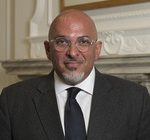
  • Nadhim Zahawi – 2020 Speech on De La Rue in Gateshead

    Nadhim Zahawi – 2020 Speech on De La Rue in Gateshead

    Below is the text of the speech made by Nadhim Zahawi, the Parliamentary Under-Secretary of State for Business, Energy and Industrial Strategy, in the House of Commons on 25 June 2020.

    It is customary to congratulate an hon. Member on securing a debate, but I think “congratulate” is the wrong word in this case, so I am going to commend the hon. Member for Blaydon (Liz Twist). It is nothing to congratulate anyone about given the job losses that we are discussing. I know, Madam Deputy Speaker, that you take a special interest in this because of the De La Rue presence in Epping Forest, and I am grateful to the right hon. Member for North Durham (Mr Jones) for his customary courtesy in letting me know that he was going to speak in this important debate. It is also appropriate to take the opportunity to thank the hon. Lady and other Members, and, importantly, all public, private, community and voluntary sector partners across Tyneside and the north-east, for their outstanding work and support during these challenging times.

    Tyneside and the broader north-east is a major industrial and manufacturing hub for the United Kingdom. It is a critical centre for the UK automotive industry, with the region typically producing over 500,000 cars a year. It is also a centre for producing medicines and healthcare products—the right hon. Gentleman mentioned the vaccine manufacturing and innovation centre in Oxford. There is much more work to do, and I am absolutely passionate and focused on working with the north-east on the future of the life sciences sector in that region.

    ​Mr Kevan Jones

    There were two shortlisted sites, according to the response given to my right hon. Friend the Member for Warley (John Spellar): Oxford and the north-east. If the Minister really wants to level up and actually put investment into the north-east, why did not he not insist on putting it in the north-east?

    Nadhim Zahawi

    I am grateful to the right hon. Gentleman. The VMIC project had already been awarded and was already happening. All I did was bring it forward by 12 months so we can have it ready by summer next year, not the year after. But I am grateful for his passion and for quite rightly holding the Government to account on what we will do in the north-east, which is also a key region for developing offshore and renewable energy technology.

    We are committed to ensuring that Tyneside and the north-east remain a key manufacturing development hub. The right hon. Gentleman speaks of life sciences development. Of the £3.4 billion that the Government have committed to growth deals across the northern powerhouse, £379.6 million—almost £380 million—has been allocated to the North East local enterprise partnership area. I am pleased to say that Gateshead has benefited directly from that investment, including just under £1 million for PROTO, a state-of-the-art research and development facility for emerging digital technologies, and £5 million for the development of a new 12,500-seat arena, conference and exhibition centre on a 10-acre site at Gateshead Quays.

    I would like to acknowledge the work done by the North East local enterprise partnership. Skills, employment and economic inclusion are at the heart of the North East local enterprise partnership’s strategic economic plan, which was refreshed in 2019.

    Liz Twist

    I thank the Minister for his comments about the PROTO development, which I am familiar with, and the Gateshead quayside development. We are enormously pleased with and proud of both of them, with the councils working in partnership with others. However, we also need to look at our manufacturing base and ensure that those traditional jobs are not left to slide because of new developments. Will the Minister address what can be done to assist on that point?

    Nadhim Zahawi

    I am grateful to the hon. Lady. She is absolutely right. We need to make sure that those traditional jobs are maintained, but also see where we can reskill and upskill into some of the growth industries, such as offshore wind. I know there is a big skills agenda that my right hon. Friend the Education Secretary is taking forward.

    The LEP has co-ordinated £18.4 million of capital investment across eight projects, with a further £28.5 million from public and private funding. I thought I should just mention a few of those projects. They include, addressing the hon. Lady’s skills challenge to the Government, the successful delivery of the Gatsby good careers guidance benchmark and the launch of the North East Ambition programme, supporting 170 schools and colleges. Still these are unprecedented times for businesses and communities across the country. I am grateful to have had the opportunity recently to reflect on the challenges faced by the manufacturing sector, to which the hon. Lady quite rightly refers, with trade union representatives, where we discussed what more the Government can do to support the manufacturing sector.​
    I share the hon. Lady’s disappointment at the news that about 250 jobs will be lost at the De La Rue currency and passport printing facility in Gateshead. I take this opportunity to express my sympathies to those workers and their families who will be impacted. Furthermore, I call on De La Rue to act responsibly in how it approaches the forthcoming redundancies. It is very worrying that, as the hon. Lady mentioned, staff only learned the news from the Chronicle and social media. That is not the way a responsible employer would act.

    I understand that there has been much speculation about the decision of Her Majesty’s Passport Office not to grant De La Rue the contract to produce the new British passport. To set the scene, between March 2017 and April 2018, the Passport Office undertook a rigorous, fair and open competition to identify the bidder that will be best able to meet the needs of its passport service and customers until 2029. That included in-depth due diligence to ensure that any bidder was capable of delivering the contract within the quality standards set out. The new contract was awarded to Thales and will deliver significant savings of approximately £140 million compared with the contract awarded in 2009 to De La Rue, which will ensure value for money for the taxpayer.

    Since 2009, a proportion of blank passports have been produced in Europe, with no reason why overseas production should not continue. Thales will manufacture passports from multiple secure locations. De La Rue historically operated a blank book passport assembly facility in Malta, to supplement its Gateshead operation. All passports produced by Thales will continue to be personalised with the passport holder’s personal details, such as a named photograph, in the United Kingdom. That continues to ensure that no personal data will leave the United Kingdom.

    It also extends Thales’s already significant presence in this country. Thales’s digital identity and security division operates from five sites in the UK and employs over 500 staff in this country. Since the contract was awarded in April 2018, Thales has increased its UK workforce by over 90 posts. Furthermore, it is not outsourcing the manufacturing of the British passport to a third party.

    I strongly believe that it was the correct choice to decide the next UK passport provider through free and fair competition, to ensure the best value for money for the British taxpayer. I also recognise that this year has been especially challenging for De La Rue. In November last year, the company reported that its half-year results had underperformed against market expectations, due primarily to reduced volumes and a reduction in margins in its currency business. That underperformance prompted the board to suspend future dividend payments and to push forward with a turnaround strategy. While we can acknowledge that the loss of the passport contract was disappointing for the business, it is clear that this alone does not account for the challenges that the business has faced.

    In response to a challenging and competitive market environment, De La Rue published details of that turnaround plan in February this year. Unfortunately, that plan involved a degree of cost reduction and a concentration on its core currency and authentication divisions. In June last year, De La Rue exited the passporting and identification business by announcing ​the sale of its identity products division to HID Corporation Ltd. The UK passport contract was not part of the sale, but by this period, De La Rue was aware that it had not won the renewal of said contract.

    Unfortunately, as part of its cost-saving programme, De La Rue announced a consultation to reduce the number of roles at the company’s headquarters and to cease all bank note printing and passport production at the Gateshead site. I note that De La Rue has said that it aims to preserve certain core services and roles at the site, and I urge De La Rue to ensure that it retains a presence in the Gateshead community. However, I recognise that this remains a tough and disappointing time for the employees of De La Rue who face redundancy, and I can assure them that the Government will do all they can to support them in this challenging period.

    Due to the challenges of operating in the covid-19 environment, the Department for Work and Pensions rapid response service has adapted to ensure that we can continue to support those facing redundancy. People will be able to access redundancy help and job search advice on the Department’s new job help campaign website. There is also information on gov.uk, and updated information packages are provided to employers to help them signpost employees to the support that is available.

    Liz Twist

    I note the reference to the increased speed of Government agencies being able to help people, but will the Minister also acknowledge that the situation with companies such as Debenhams, where a couple of hundred staff have lost their jobs with the closure of the Metrocentre store, is adding to the pressure on the services, and what we need is real support and real action, and real opportunities for all those staff?

    Nadhim Zahawi

    The hon. Lady is absolutely right to say that we need real support. There are three chapters to this challenge of covid. Chapter one was wrapping our arms around the economy and jobs, with schemes such as the furlough scheme and the bounce-back loans. Chapter two is now supporting businesses to restart and reopen; retail reopened in the middle of this month. Of course chapter three is about what stimulus we can inject into the economy, whether fiscal or non-fiscal—and the Chancellor will be saying more about this. The Secretary of State for Business, Energy and Industrial Strategy has conducted a deep dive with business and organisations representing business through a recovery taskforce, because we want to make sure that chapter three, which is about the recovery, is as robust and dynamic as we can make it. I assure the hon. Lady that the north-east will be very much a part of that.

    The support for those losing their jobs includes connecting people to jobs in the local labour market in the north-east by helping them with job searches, including CV writing, interview skills, and where to find jobs and how to apply for them. We will also help to identify transferable skills and skills gaps linked to the local labour market, along with advice on what benefits people may get and how to claim them.

    Furthermore, I can confirm that the Gateshead local authority is in touch with the company and stands ready to work with the Department for Work and Pensions, the Jobcentre Plus rapid response team and the National Careers Service to provide a package of support for any impacted employee. As I said earlier, ​the Government will do what we can to support these people and their families, and I believe that the Government can be proud of our record and how we have supported businesses across the north-east during the covid pandemic.

    Through the coronavirus job retention scheme, we have so far protected 8.9 million workers and almost 1.1 million businesses; 24,200 people have been supported by the scheme in Gateshead alone, and due to the Chancellor’s announcement to extend the scheme back in May we can continue to support businesses and employees as they return to work over the coming months.

    Furthermore, I am pleased to say that, through the various grant schemes the Government established to assist business, £36.8 million in grants has been paid out to 3,142 small businesses in the Gateshead local authority as of 21 June. We also recognise the importance of the Tyne and Wear metro to Gateshead, which the hon. Lady rightly mentioned, and the challenges it faces at present. That is why we have announced a further £7.6 million of support to keep it going on top of the £8.6 million announced on 1 May.​

    In the longer term, the Government have contributed £337 million of direct grants to provide a new fleet for this vital service. While I acknowledge that these are challenging times for all, I remain confident that there is a bright future ahead for Tyneside and north-east industries.

    The Government recognise that this is a challenging time for all businesses. We have provided unprecedented levels of support to help business. For those De La Rue employees who, unfortunately, face redundancy, the Government will do what we can to ensure they receive the support they need.

    Finally, I again thank the hon. Lady for securing this important debate, and I thank you, Madam Deputy Speaker, for your patience; I know this subject is important to you, as it is to other Members of this House.

  • Kevan Jones – 2020 Speech on De La Rue in Gateshead

    Kevan Jones – 2020 Speech on De La Rue in Gateshead

    Below is the text of the speech made by Kevan Jones, the Labour MP for North Durham, in the House of Commons on 25 June 2020.

    I congratulate my hon. Friend and parliamentary neighbour the Member for Blaydon (Liz Twist) on securing this debate. As she eloquently said in her speech, the workers from the site come from across the north-east, and I have quite a number in my constituency.

    People might say, “Well, 255 is a small number.” No, it is not, because of the type of jobs that we are talking about. They are high-quality, well-paid jobs. The individuals who work there have worked there for many years, in some cases. They have dedicated their lives to producing top-quality banknotes, and latterly passports. It is quite ironic that, in terms of withdrawing from the European Union, the Government said much about how great it was that we were going to get the blue passports back—although when I look at them, they seem more black than blue—but we then find that they are going to be printed abroad.

    In the past few days, people have been saying that the reason the Government have done this is European procurement processes. That is complete nonsense, because no other European country has done this. They have, quite rightly, seen the integrity of the passport system as critical national infrastructure and as part of their key manufacturing capability. That is what should have happened with this contract. I share some of my hon. Friend’s concerns about some of the management at De La Rue over the years.

    In the north-east, we are going through dark times at the moment with the pandemic. I spoke about that in the previous debate. Unfortunately it is going to get a lot worse, not only in terms of the pandemic affecting the north-east and the higher rates of mortality than in other areas, but the massive economic impact. So this is a further blow to the north-east economy. We should be looking at this decision and seeing how we can reverse it. In the coming months and years, the Government have to step in and direct contracts and support to those ​regions such as the north-east that need that support. Without that, we will be in a situation where, as I said in the previous debate, we will return to the dark days of the 1980s in the north-east, where unemployment will be at record levels and the lost generation that we saw in the ’80s will be repeated again. We cannot afford to do that.

    These are high-quality and very sought-after jobs. Anybody who works there will say that they are proud of working for De La Rue, because the jobs are not only well paid but highly skilled, and the terms and conditions are good. We do not lose those types of jobs in the north-east easily—they will not be easily replaced. I hear a lot from the Prime Minister about levelling up and investment in the regions. Well, he could do something about that now by reversing the decision on the passports. The north-east went through a terrible time in the 1980s and ’90s. We have turned the corner in some areas, but we are not going to do it in this current climate without some direct Government support.

    It saddened me this week, for example, when I learned of the Government’s decision to award the vaccines manufacturing and innovation centre to Oxford. Why Oxford? My right hon. Friend the Member for Warley (John Spellar) asked where the other potential site was. It was in the north-east. So where the Government can actually help the north-east, they are clearly still not doing it. This has to be changed. We cannot have a situation whereby jobs are going to be lost, but also what should be retained in the UK in terms of manufacturing should be retained in the north-east. This was a Government decision—they cannot get away from that fact—and it needs revisiting. Without that, the Government have to step in somehow to ensure that the types of jobs that are being lost are going to be replaced.

  • Liz Twist – 2020 Speech on De La Rue in Gateshead

    Liz Twist – 2020 Speech on De La Rue in Gateshead

    Below is the text of the speech made by Liz Twist, the Labour MP for Blaydon, in the House of Commons on 25 June 2020.

    I am glad to have secured this debate on the Government response to job losses at the De La Rue site in Gateshead. I know that you, Madam Deputy Speaker, take a particular interest in this debate, as you have a De La Rue site in your constituency of Epping Forest. I thank you for the concern you have expressed for the staff in Gateshead.

    On 25 March 2018, I stood in this Chamber as a fairly new MP to ask an urgent question of the Home Office about the awarding of the contract to produce UK passports to Franco-Dutch company Gemalto rather than to De La Rue, which produced the passports at Team Valley in my constituency.

    The De La Rue site, which quite literally prints money as well as producing passports, is one of the industrial jewels in the Gateshead crown. It produces high-quality, nationally important projects with great skill and in highly secure conditions. The staff are highly skilled and trained and well paid. These are quality jobs and staff are proud of the work they do. They do not just come from my constituency; they travel from a wide area around. Hon. Members from across the north-east will also have constituents who work at the site.

    In 2018, despite huge public support for keeping passport production in the north-east and in the UK, despite newspaper campaigns and despite meetings with Government Ministers, the contract was eventually awarded to Gemalto. UK passport production was to be offshored, with blank books—a highly valuable commodity—being produced overseas and the personalisation being done in the UK.

    Decisions were based primarily on cost in the procurement process that started in 2017. In my view, the Government should have taken a more strategic view from the start, as some other EU countries have done, believing that passport production is essentially a part of the integrity of our security system.

    I do not absolve De La Rue’s senior management at the time for getting the price wrong, but my concern is for the staff who worked so hard and with such great pride to produce a secure quality passport for Great Britain. We must learn those lessons for the future when we reconsider the passport contract, but meanwhile, De La Rue employees are bearing the after-effects of that decision.

    The loss of the passport contract meant the loss of 200 jobs as the contract came to an end, with a start date for the new contract of July 2019, but more job losses were to follow. In June 2019, a further 170 jobs were lost at Gateshead, from the currency production side. One of the two currency production lines printing banknotes was closed down as the company looked to reduce costs in the aftermath of the loss of their passport contract. Work was again transferred from Gateshead to the company’s other sites, including those in Gibraltar and Kenya.

    To add insult to injury, chief executive Martin Sutherland stood down with a bonus worth more than 30% of his executive pay of £197,000, as staff pay was frozen, 48% of shareholders voted against De La Rue’s remuneration ​report in June 2019 and the future of the company looked very uncertain. Staff at the Gateshead site were facing redundancy. The Guardian wrote in November 2019:

    “The farewell bonus for Sutherland, who finally departed last month, now looks like a wretched joke about a licence to print money.”

    Sadly, it is not a joke for the staff who actually printed the money for De La Rue.

    Each time I visited the site, I talked to staff, who are incredibly proud of the work they do and the responsibility that they carry. I talked to the union Unite about trying to save those jobs. Each time, top management told them that they would be looking to bring more work to Gateshead to replace the passport contract. None materialised.

    Last week, as the company financial reports were released, news came of the proposal to end production of currency at Gateshead, with the loss of 255 jobs, leaving only 90 jobs in highly specialised functions at a site that just a few years ago had more than 600 jobs. For many staff not on shift when the stock markets opened, the news first reached them via the Chronicle website, social media, a text from friends or local TV and radio news. The staff deserve better than that.

    Once again, work previously done in Gateshead will be moved to De La Rue’s other sites in the UK or overseas. There is a direct link between the decision to award the passport contract to Gemalto and the job losses across the Gateshead site. Because of the number of redundancies, there is now a consultation period of 45 days, so I will be working with Unite and echoing its call for this decision to be reversed and for work to be kept at the Gateshead site. Last week, I spoke to the current chief executive and chairman to let them know my anger at the decision and to support Unite’s call for it to be reversed. I will keep on pushing hard for that throughout the consultation period.

    However, the Government have a responsibility in this too, and I am asking the Minister to help me and my colleagues to retain these skilled, high-quality jobs in the north-east. I want to know what the Government are going to do to ensure that jobs such as these are retained in the north-east. We simply cannot afford to lose them. These highly-skilled, well-paid jobs will help to stimulate our regional economy. We need sustainable jobs in the north-east. The Government say that they want to level up the north of England, so they must take practical and decisive action to keep those jobs and to secure more of them for our workers.

    Behind those numbers are individuals, families and livelihoods. With the loss of those jobs comes a loss of security, of safety, of hope and of aspiration. Many will be shaken and shattered by this news, and those affected will emerge from the current pandemic even more uncertain about their futures. I join with Unite, the staff trade union, in calling for the company to reverse its plans and maintain production at its Gateshead site.

    As I have already said, in 2018 and 2019 the previous management of De La Rue told staff at Gateshead that they would work to bring new work to the site and that the site was important to the company. Those promises were not delivered. Empty words mean nothing to people in my constituency, so I urge the Government to ​act now. They can start by ensuring that De La Rue’s site is maintained and that the contract to produce passports is returned to the UK as a matter of urgency. They can also help by taking action now to help me to keep those jobs in Gateshead. We must act with immediacy not only to protect local quality jobs, but to safeguard our local economy and strengthen our place in a rapidly changing world. The staff of De La Rue Gateshead deserve no less.

    I will finish with one final irony. Today, almost one full year after the new contractor was due to take on the passport contract, some passports are still being produced by De La Rue staff on the Gateshead site in Team Valley in my constituency. That work is due to end at the end of June, just a few days from now. The remaining 80 passport staff will lose their jobs and passport production will cease on the site. I thank those staff and all the staff at the Gateshead site, and end with the hope that we will see a resurgence of the high-skilled, high-quality jobs we so need in the north-east.

    Madam Deputy Speaker (Dame Eleanor Laing)

    I thank the hon. Lady for graciously mentioning that I share her concerns, as De La Rue is a major employer in my Epping Forest constituency.

  • Steve Reed – 2020 Comments on Labour Referring Robert Jenrick to Parliamentary Commissioner

    Steve Reed – 2020 Comments on Labour Referring Robert Jenrick to Parliamentary Commissioner

    Below is the text of the comments made by Steve Reed, the Shadow Communities and Local Government Secretary, said in a statement on 26 June 2020.

    The Prime Minister can’t just sweep this issue under the carpet. There are still so many unanswered questions about Robert Jenrick’s unlawful attempt to help Richard Desmond dodge £150m in tax days before he made a generous donation to the Conservative Party.

    The Prime Minister has yet again shown woefully poor judgment by not referring clear breaches of the Ministerial Code to the Cabinet Secretary and he must now come clean himself about his own involvement in this case.

    The Government must publish all the remaining secret documents in this case to show the public what Mr Jenrick and the Prime Minister were really up to and prove that this is not the start of a new era of Tory sleaze.