Tag: 2020

  • Lisa Nandy – 2020 Speech on Hong Kong

    Lisa Nandy – 2020 Speech on Hong Kong

    Below is the text of the speech made by Lisa Nandy, the Labour MP for Wigan, in the House of Commons on 1 July 2020.

    The new security law is deeply shocking, and the arrests overnight have stunned the world. This will have a chilling effect on democracy. It fundamentally undermines the commitments made by the Chinese Government to the United Kingdom and those we made in turn to the people of Hong Kong when we signed the joint declaration. I pressed the Foreign Secretary yesterday not to waver in his commitment to the people of Hong Kong, and I am grateful to him for coming to the House today to make this statement, for advance sight of it, and most of all for honouring the promise he made on 2 June. He is right to do so and has our support.

    When will the Home Secretary provide details of the scheme for BNO passport holders and dependents, and has the Foreign Secretary made an assessment of likely take-up? Will salary thresholds apply? We are concerned that this does not become a scheme simply for wealthy Hongkongers to abandon the city and leave others behind. Under the national security law, the Government can extract money from those they believe to be involved in criminality or guilty of offences. In some cases, the people of Hong Kong will not be able to take sums of money out of the city and could have their bank accounts frozen, so what recourse to public funds will apply and will he ensure that dependents will be treated as home students for the purpose of tuition fees?

    The Foreign Secretary’s commitment to BNO passport holders is welcome, but it does not resolve the problem. I was deeply moved to see the young activists who bravely took to the streets to protest against this law, at considerable personal risk. The majority will not be covered by this scheme and must not abandoned. The loss of many highly skilled workers will be a blow to Hong Kong and to China. That is why we need additional measures. We in this House have been waiting for Magnitsky legislation for two years now. He must give us a date for when that will be introduced before the summer recess, so that targeted sanctions can be applied to those who breach human rights in Hong Kong.

    Overnight, pepper spray and water cannon were used against the pro-democracy protesters. It is now time for Britain to lead on an inquiry into police brutality. I welcome the cross-regional statement that our ambassador co-ordinated and place on record my thanks to him for his efforts, but will the Foreign Secretary now lead the charge for the appointment of a UN special rapporteur on Hong Kong? The provisions in the national security law that encourage people to confess and disclose others’ so-called “criminal behaviour” have raised serious concerns about the prospect of torture. We must not turn away.

    What conversations has the Foreign Secretary had with Carrie Lam about the provision for the Chief Executive to hand-pick judges? Given the comments by the former Hong Kong Chief Justice Andrew Li that this would fundamentally undermine the independence of the judiciary, what assessment has he made of the continuing role of British judges in the court system? I wrote to the Foreign Secretary some time ago to ask him to address the direct challenge made by British companies such as HSBC and Standard Chartered to the UK’s stance by supporting this law. We cannot allow British businesses to become complicit in undermining the international rules-based order that they themselves rely on. Yesterday the Foreign Secretary spoke up in this place in defence of press freedom. What discussions is he having with UK news agencies to defend their ability to continue to report freely on the situation on the ground, and with non-governmental organisations, which will be deeply concerned that the law applies anywhere in the world?

    The Government have taken a step forward today with the announcement of new rights for BNO passport holders and a statement at the United Nations, but this is no substitute for ongoing and sustained international leadership. I urge the Foreign Secretary to bring forward a comprehensive, detailed and serious package of measures with international partners, as I have outlined.

    Finally, the Government must now develop a much more strategic approach to their engagement with the Chinese Government. We support the Foreign Secretary’s view that a constructive relationship remains essential, but it is also clear that the UK needs far greater strategic independence in order to speak from, and act from, a position of values. Will he provide an updated assessment of the implications for national security of the involvement of Huawei in the 5G network? Will he make a similar assessment in relation to the planned nuclear projects involving CGN, in particular at Bradwell? Although this announcement is to be welcomed, I remain deeply concerned that his counterparts at the Treasury see Chinese investment as a central plank of the UK’s recovery and that the Government’s approach remains deeply confused. For too long in relation to China, we have had no strategy at home and no strategy abroad. I hope he can give us a commitment today that this marks the start of a very different era.
  • Dominic Raab – 2020 Statement on Hong Kong

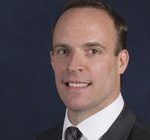
    Dominic Raab – 2020 Statement on Hong Kong

    Below is the text of the statement made by Dominic Raab, the Foreign Secretary, in the House of Commons on 1 July 2020.

    With permission, Mr Speaker, I would like to make a statement regarding the latest developments on Hong Kong.

    As feared when I addressed the House on 2 June, yesterday the Standing Committee of the National People’s Congress in Beijing adopted a wide-ranging national security law for Hong Kong. This is a grave and deeply disturbing step.

    We have carefully assessed the legislation. In particular, we have considered its impact on the rights, freedoms and, critically, the high degree of autonomy bestowed on Hong Kong under China’s Basic Law for Hong Kong and under the joint declaration, which, as the House will know, is the treaty agreed between China and the UK in 1984.

    Today I have the depressing but necessary duty to report to the House that the enactment of this legislation, imposed by the authorities in Beijing on the people of Hong Kong, constitutes a clear and serious breach of the joint declaration. Let me explain to the House the grounds for this sobering conclusion.

    First, the legislation violates the high degree of autonomy over executive and legislative powers and the independent judicial authority provided for in paragraph 3 of the joint declaration. The imposition of this legislation by the Government in Beijing, rather than it being left to Hong Kong’s own institutions to adopt it, is also, it should be noted, in direct conflict with article 34 of China’s own Basic Law for Hong Kong, which affirms that Hong Kong should bring forward its own national security legislation. In fact, the Basic Law elaborates on that, and allows Beijing to impose laws directly only in a very limited number of cases, such as for the purposes of defence and foreign affairs, or in the exceptional event of the National People’s Congress declaring a state of war or a state of emergency. None of those exceptions applies here, nor has the National People’s Congress sought to justify the law on any such ground.

    Secondly, the national security legislation contains a slew of measures that directly threaten the freedoms and rights protected by the joint declaration. The House will be particularly concerned by the potentially wide-ranging ability of the mainland authorities to take jurisdiction over certain cases without any independent oversight, and to try those cases in the Chinese courts. That measure violates paragraphs 3(3) and 3(5) of the joint declaration, and directly threatens the rights set out in the United Nations international covenant on civil and political rights, which, under the joint declaration, are to be protected in Hong Kong. That in particular represents a flagrant assault on freedom of speech and the right to peaceful protest for the people of Hong Kong.

    Thirdly, the legislation provides that Hong Kong’s Chief Executive, rather than its Chief Justice, will appoint judges to hear national security cases—a move that clearly risks undermining the independence of Hong Kong’s judiciary, which is, again, protected by the joint declaration in paragraph 3(3). Fourthly, the legislation provides for the establishment in Hong Kong by the Chinese Government of a new office for safeguarding national security, run by and reporting to the mainland authorities. That is particularly worrying, because that office is given wide-ranging powers, directly intruding on the responsibility of the Hong Kong authorities to maintain public order. Again, that is directly in breach of the joint declaration—this time, paragraph 3(11). The authorities in Hong Kong have already started to enforce the legislation; there are reports of arrests by the police, and official notices warning the people of Hong Kong against waving flags or chanting.

    In sum, this legislation has been enacted in clear and serious breach of the joint declaration. China has broken its promise to the people of Hong Kong under its own laws, and has breached its international obligations to the United Kingdom under the joint declaration. Having committed to applying the UN’s international covenant on civil and political rights to the people of Hong Kong, China has now written into law wide-ranging exemptions that cannot credibly be reconciled with its international obligations, or its responsibilities as a leading member of the international community.

    We want a positive relationship with China. We recognise its growth, its stature, and the powerful role it can play in the world. It is precisely because we respect China as a leading member of the international community that we expect the Chinese Government to meet their international obligations and live up to their international responsibilities. They have failed to do so with respect to Hong Kong by enacting legislation that violates its autonomy and threatens the strangulation of its freedoms. It is a sad day for the people of Hong Kong—one that can only undermine international trust in the Chinese Government’s willingness to keep its word and live up to its promises.

    For our part, the Prime Minister and the Government are crystal clear: the United Kingdom will keep its word and live up to our responsibilities to the people of Hong Kong. After further detailed discussions with my right hon. Friend the Home Secretary, I can now confirm that we will proceed to honour our commitment to change the arrangements for those holding British national (overseas) status. We have also worked with Ministers across Whitehall and have now developed proposals for a bespoke immigration route for BNOs and their dependents. We will grant BNOs five years’ limited leave to remain, with a right to work or study. After these five years, they will be able to apply for settled status, and after a further 12 months with settled status, they will be able to apply for citizenship. This is a special, bespoke set of arrangements developed for the unique circumstances we face and in the light of our historic commitment to the people of Hong Kong.

    All those with BNO status will be eligible, as will their family dependents who are usually resident in Hong Kong, and the Home Office will put in place a simple, streamlined application process. I can reassure hon. Members that there will be no quotas on numbers. I pay tribute to the Home Secretary and her excellent team at the Home Office for their work in helping to prepare for a moment that, let’s face it, we all dearly hoped would not arrive. She will set out further details of our approach in due course.

    In addition to changing the arrangements for BNOs, the UK will continue to work with our international partners to consider what further action we should responsibly take next. I can tell the House that yesterday in the UN Nations Human Rights Council, the UK made a formal joint statement expressing our deep concern about the human rights situation in both Hong Kong and Xinjiang. Twenty-six other nations joined that statement. It is the first time a formal statement has been made at the Human Rights Council on this issue, and it was delivered through our diplomatic leadership. We will continue to work with our partners in the G7 and the EU and across the region.

    I say again: we want a positive relationship with China, but we will not look the other way when it comes to Hong Kong and we will not duck our historic responsibilities to its people. We will continue to bring together our international partners, to stand up for the people of Hong Kong, to call out the violations of their freedoms, and to hold China to its international obligations, freely assumed under international law. I commend this statement to the House.

  • Robert Buckland – 2020 Statement on the Prisons Building Programme

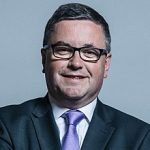
    Robert Buckland – 2020 Statement on the Prisons Building Programme

    Below is the text of the statement made by Robert Buckland, the Lord Chancellor and Secretary of State for Justice, in the House of Commons on 29 June 2020.

    My right hon. Friend the Prime Minister has previously made clear his focus on tackling crime and last year announced investment of up to £2.5 billion to create 10,000 additional prison places that are decent, safe and secure and support the modernisation of the prison estate.

    I am officially today, jointly with my right hon. Friend the Chief Secretary to the Treasury, reaffirming the Government’s commitment to building 10,000 additional prison places by announcing the funding and delivery of around 6,500 of these places through the construction of four new prisons which will provide a much-needed boost to the construction sector as it moves into a post covid-19 world.

    This work starts with Full Sutton, in East Yorkshire, where we already have outline planning permission for a new 1,440-place prison. Further work is under way to identify and secure sites for a further three new prisons which we anticipate will each comprise 1,680 places, subject to geographical and planning constraints.

    Together, these four prisons will create around 65% of the 10,000 additional places and will build on the design and progress that we have already made at Wellingborough and Glen Parva, as well as on the work we have done to ensure faster, cheaper and more efficient construction for public services, in particular using modern methods of construction.

    This demonstrates a clear commitment from the Government to the UK construction sector and its determination to help the country and the construction ​market get back on its feet following the covid-19 pandemic by offering a clear pipeline of work and investment.

    My right hon. Friend the Chief Secretary to the Treasury and I want to take this opportunity to thank constructors around the country for their commitment to keeping construction sites open and operating, and for their innovation enabling sites and associated activities to follow Public Health England (PHE) guidance and adhere to social distancing measures.

    The impact of covid-19 on the construction sector has been felt both in the demand for new buildings and the ability to operate safely in line with Government guidance. Her Majesty’s Prison and Probation Service (HMPPS) has felt this impact directly at the construction site for the new resettlement prison at Wellingborough in Northamptonshire. HMPPS has worked with suppliers throughout the covid-19 pandemic to ensure that construction has continued safely. Workers are following PHE guidance and the Construction Leadership Council’s site-operating procedures.

    While no decisions have been made on who will operate these four new prisons, we maintain this Government’s commitment to a mixed market in custodial services, and it is our ambition that at least one of these new prisons will be operated by the public sector to support the modernisation of the public prison estate. We have previously announced that the operation of both our new prisons at Glen Parva and at Wellingborough will be competed for via our prison operator services framework in shorter, targeted mini-competitions. Following a successful and robust evaluation of the bids received for the Wellingborough operator competition, we have a successful bidder, which will be announced soon.

  • Gavin Williamson – 2020 Statement on Rebuilding of Schools and Colleges

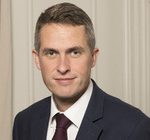
    Gavin Williamson – 2020 Statement on Rebuilding of Schools and Colleges

    Below is the text of the statement made by Gavin Williamson, the Secretary of State for Education, in the House of Commons on 29 June 2020.

    Today, the Government are announcing a transformative, 10-year school rebuilding programme as part of ambitious plans that will benefit schools and colleges across England.

    Investing in our school and college buildings is vital to delivering the world-class education and training needed to get the country back on its feet.

    We are committing to a 10-year, multi-wave rebuilding programme for schools. This will replace poor-condition and ageing school buildings, with modern, energy-efficient designs, transforming education for thousands of pupils.

    We will start with 50 schools in the most need of repair, supported by over £1 billion in capital funding—with full details of these projects and the wider, long-term programme to be set out following the spending review. We expect construction on the first sites to begin from autumn 2021.

    We are also providing £560 million of additional condition funding for the school system this year to help support essential maintenance projects. We will set out details of how this additional capital funding will be allocated shortly. This is on top of the £1.4 billion already provided for school maintenance in financial year 2020-21.​

    Part of the £1.4 billion funding for 2020-21 announced in April is provided through the Condition Improvement Fund (CIF), to support essential maintenance projects in schools across England. Today, I am announcing the outcome of the 2020-21 CIF bidding round. Over £434 million will fund 1,476 CIF projects across 1,243 eligible academies, sixth-form colleges and voluntary aided schools.

    Details of today’s CIF announcement are being sent to all CIF applicants and a list of successful projects will be published on www.gov.uk. Copies will be placed in the House Library.

    In March this year, the Chancellor announced that we are going to transform FE colleges across the country, investing £1.5 billion of new capital over the next five years, starting in 2021.

    Today, we are announcing that the Department for Education will bring forward £200 million of this capital funding to this year. This will enable FE colleges in England to undertake immediate remedial work in this financial year to upgrade the condition of their buildings and estates. We will set out further plans on capital investment to upgrade the FE college estate in England in due course.

  • Nick Thomas-Symonds – 2020 Speech About David Frost

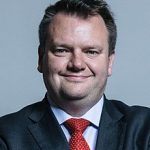
    Nick Thomas-Symonds – 2020 Speech About David Frost

    Below is the text of the speech made by Nick Thomas-Symonds, the Labour MP for Torfaen, in the House of Commons on 30 June 2020.

    I am grateful at least to the Cabinet Office Minister for turning up on behalf of the Home Secretary. I am also grateful to you, Mr Speaker, for granting this urgent question.

    After Sir Mark Sedwill’s letter on his departure—and I thank him for his work—No. 10 put out a press release indicating that the Prime Minister had appointed David Frost, currently the Prime Minister’s European adviser and chief negotiator with the EU, as the new National Security Adviser. The first duty of any Government is to keep people safe, and in carrying out that duty any Government should have objective, and at times challenging, advice from their National Security Adviser. That is why making a political appointment takes this Government into such dangerous territory.

    Independent, impartial, specialist advice on national security is crucial. Prime Ministers come and go, but security threats remain and evolve. Can the Cabinet Office Minister give one good reason why this is a political appointment? Can he tell us to whom ultimately the new National Security Adviser is accountable, and if he will be subject to the code of conduct for special advisers in this new special envoy status that seems to be being bestowed upon him? Was the Civil Service Commission involved in this appointment, and if so can the Minister outline what the commission ruled? Have the intelligence agencies and the wider intelligence and security community been consulted on this being a political appointee? And at such a crucial time in our trade negotiations with the EU, how will Mr Frost’s additional responsibilities impact upon him being able to achieve the best outcome for the United Kingdom by the end of the year, as the Government have promised?

    Also very worrying is the wider issue of a lobby briefing from February that No. 10 had a hit list of several permanent secretaries that it wanted to push out. Our civil service and our civil servants are world-leading and we should be proud of the extraordinary work they do. Weak Prime Ministers take advice only from those who agree with them; those who put the national interest first should welcome different views and welcome challenge. So can Cabinet Office Minister tell us, quite simply: what is the Prime Minister so afraid of, and why will he not put his duty to keep people safe first?

  • Joanna Cherry – 2020 Speech about David Frost

    Joanna Cherry – 2020 Speech about David Frost

    Below is the text of the speech made by Joanna Cherry, the SNP MP for Edinburgh South West, in the House of Commons on 30 June 2020.

    Of course, Sir Mark Sedwill should be thanked for his distinguished service, but the truth is that his card was marked last year when he warned the Cabinet that Brexit would be a disaster. He also said that the consequent recession could be worse than 2008 and that prices could go up by 10%. This is all about the revenge of the Vote Leave campaign, whose so-called mastermind is now pulling the strings of this Government—although one does have to wonder about the masterliness of a mind that thinks a good way to test one’s eyesight is to go for a 60-mile drive.

    I have three questions for the Minister. First, will he confirm that this is the start of the hard rain that Dominic Cummings promised for the civil service? Secondly, it has long been thought desirable for the Government to have the assistance of a civil service that is neutral, objective, above party politics and free from the taint of apparent bias. Does the Minister think there is any merit left in those qualities? Thirdly and finally, Lord Ricketts, himself a former National Security Adviser, has queried whether Mr Frost, a former diplomat, has the necessary experience of the wider security and defence agenda to fulfil the role of National Security Adviser. Will the Minister detail for us what experience Mr Frost has in those fields? Or should we be left with the impression that, even when it comes to national security, it is more important to have yes men in post than people with the requisite experience?

  • Theresa May – 2020 Speech about David Frost

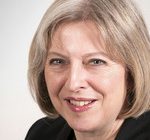
    Theresa May – 2020 Speech about David Frost

    Below is the text of the speech made by Theresa May, the Conservative MP for Maidenhead, in the House of Commons on 30 June 2020.

    Thank you, Mr Speaker. May I first pay tribute to Sir Mark Sedwill and thank him for his extraordinary public service over many years? I served on the National Security Council for nine years—six years as Home Secretary and three as Prime Minister. During that time, I listened to the expert independent advice from National Security Advisers.

    On Saturday, my right hon. Friend said:

    “We must be able to promote those with proven expertise”.

    Why, then, is the new National Security Adviser a political appointee, with no proven expertise in national security?

  • Anneliese Dodds – 2020 Comments on Government’s Jobs Announcement

    Anneliese Dodds – 2020 Comments on Government’s Jobs Announcement

    Below is the text of the comments made by Anneliese Dodds, the Shadow Chancellor of the Exchequer, on 29 June 2020.

    Unemployment has climbed to its highest level in a generation, and our country is suffering the worst economic hit of all industrialised nations. But instead of the Back-to-Work Budget our country needs focusing on one thing – jobs, jobs, jobs – the Chancellor will only be providing an ‘update’ on the economy.

    We urgently need the Conservatives to abandon their ‘one-size-fits-all’ approach to the economic support schemes, which will inevitably lead to additional unemployment. And we need concrete action and a laser-like focus preventing further job losses and supporting future employment.

  • David Lammy – 2020 Comments on Backlog of Court Cases

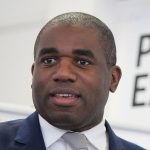
    David Lammy – 2020 Comments on Backlog of Court Cases

    Below is the text of the comments made by David Lammy, the Shadow Justice Secretary, on 30 June 2020.

    There can be no more dithering or delay when it comes to co-opting empty public buildings to act as temporary courts during the pandemic, as Labour has been telling the government to do for months.

    This is a backlog which has been building up long before Covid-19, due to a decade of court closures and cuts. Now the virus has compounded the problem even further, the government must take urgent action.

    Justice delayed too long becomes justice denied.

  • Tulip Siddiq – 2020 Comments on Children’s Sector Joint Statement

    Tulip Siddiq – 2020 Comments on Children’s Sector Joint Statement

    Below is the text of the comments made by Tulip Siddiq, the Shadow Minister for Children and Early Years, on 30 June 2020.

    Children seem to have been an afterthought in the Government’s response to this pandemic. We knew that young people would be among the most vulnerable in lockdown, so their wellbeing should have been one of the top priorities from the start.

    Labour and the children’s sector have warned for months about the need to prepare for an increase in demand for children’s social care and mental health services. Despite these warnings, it’s not clear that Ministers have a plan to protect those children who need it most.

    The Government must start prioritising the wellbeing of children and make sure the services that support them are properly funded.