Tag: 2019

  • Nick Conrad – 2019 Resignation Statement on Rape Comments

    Nick Conrad – 2019 Resignation Statement on Rape Comments

    Below is the text of the resignation statement made by Nick Conrad, the Conservative candidate for the Broadland constituency in Norfolk, on 8 November 2019.

    Five years ago I made ill-judged comments during an on-air radio discussion for which I made a genuine and heartfelt apology.

    Last night I was honoured to be made the Conservative candidate for Broadland and had hoped to become the MP for a constituency which is close to my heart. However it has become clear to me that the media attention on my previous comments have become a distraction.

    For me, the most important thing is for the Conservative Party to be successful in the forthcoming election -getting Brexit done and delivering on the people’s priorities. This is why I have reluctantly concluded I must stand down to allow one of the other excellent candidates the opportunity to win this fantastic seat.

    I would like to thank Broadland Conservative Association for their support and wish the party every success in the election on December 12.

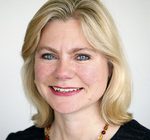
  • Justine Greening – 2019 Valediction Speech

    Justine Greening – 2019 Valediction Speech

    Below is the text of the speech made by Justine Greening, the Independent MP for Putney, in the House of Commons on 5 November 2019.

    As long as nobody heckles me, I am sure I will absolutely be able to stay to time.

    I want to start by saying a massive thank you to, first of all, my office team, who are up in the Gallery. They have done an absolutely incredible job for so many Members here over many, many years. I have to point out particularly the long-suffering Kate and Nikki. Without their assistance and support and that of the rest of the team that I have got with me today, I would never have been able to do any of the rest of the things that I have been able to achieve for my community in this place.

    Other Members have explained what it was like for them when they first entered the House. For me in 2005, winning back Putney from the Labour party was quite big news, and I found myself in the middle of a media storm from minute one of my time as an MP.

    Michael Howard came down the next day to, as I thought, congratulate the brilliant team at Putney Conservatives who had helped me with that amazing ​victory. I stayed up all night organising his visit as the great leader, and he promptly turned up and resigned right by my side. Perhaps the best legacy from the few months that he had left in his role in 2005 was that he got back together a parliamentary party that had been in opposition for quite some time. He had us talk through different policy areas, and we discovered that, other than arguing about Europe, we had much more in common than that which divided us.

    My time in this House has obviously been the greatest privilege of my life. I did not plan to be an MP, but I did it because I think people matter. I hope that I have always been a strong voice for people in Putney on the issues they care about, and I have simply sought to take their priorities and make them mine. My campaigning on Heathrow was perhaps an early indicator to the Whips and my party that I would stand my ground on local issues that matter to my community. I started my time here doing that, and I like to think that I have finished my time here doing that not only on Brexit, on which speaking up for local communities is crucial, but on a whole range of other issues, such as air pollution, quality of life, aircraft noise, and improving our transport. We were able to modernise Putney station and get improvements to Southfields station, and the lifts at both stations now mean that the whole public can access local public transport. I am particularly proud of those things, and I was on the case for getting a lift at East Putney station, and I very much hope that my successor will do the same.

    I tirelessly campaigned on serious issues such as youth crime and policing. In fact, my very first Westminster Hall debate was on youth and youth crime, but I am sorry to say that things have not moved on as much as perhaps they should have done in the intervening 14 years, and this House still debates the very issues that I was debating as an incoming MP.

    I want to reflect on the hugely important role that community groups and residents associations have played in my local community. Brilliant charities such as Regenerate, which works on the Alton estate in Roehampton, play an amazing role in inspiring young people to make more of their lives. There is the brilliant Putney Society—the ultimate residents association in Putney—and then, of course, there are incredible residents associations in Southfields, such as Southfields Grid, Southfields Triangle, and Sutherland Grove Conservation Area. All those organisations bring our community together and make it what it is, and I am so proud and delighted that I have been able to work with them for so many years.

    I have had probably more roles than most in this House. I started my time in government in the Treasury team with the then MP for Tatton, George Osborne, carrying out an emergency Budget to ensure that this country’s finances did not go the way of Greece’s, and I have reflected on that as we have debated what a no-deal Brexit might mean for us. I quickly discovered as a Minister that I had the ability to make a difference way beyond even perhaps what people might have thought my brief was, so I got stuck into looking at the tolls on the Humber bridge, and I was delighted that I was able to get them reduced. I ended up with a beer temporarily named after me in that part of the country, and that meant a lot to me because I watched the Humber bridge open as I grew up. I was delighted to be able to make a ​change that meant that it can be a successful piece of infrastructure that joins two wonderful communities, rather than dividing them.

    From there I moved on to the Department for Transport, where I had to make sure that transport enabled the 2012 Olympics and did not get in the way of them being the triumph they were. I worked with the then Mayor of London, who went on to do other things, including becoming Prime Minister. I am proud of that work, because hopefully we made the Olympics accessible to millions of people who did not have to worry about being suddenly stranded.

    From there my journey took me to the Department for International Development, which often operates out of the sight of our country. I could not be more proud of the truly world-class team in the Department. We worked hand in hand with the Ministry of Defence on Ebola, and we did pioneering work to bring education to children caught up by the terrible crisis in Syria. We took a decision in DFID that we would do our level best to make sure those children grew up educated and able to read and write. So much of the Department’s work happens out of sight of the British public, but the British public should be rightly proud of that work, which stretches beyond that to girls’ education and responding to humanitarian emergencies such as Typhoon Haiyan in the Philippines. I am truly honoured to have had so much time in that Department.

    After that, my final Cabinet role was perhaps my dream role: Secretary of State for Education and—perfect—Minister for Women and Equalities. I was the first LGBT woman in Cabinet and, of course, the first Secretary of State for Education to be educated at their local comprehensive school, and I am only too happy to have those two firsts and to have put something back into a school system that built me into being able to do anything with my life and to achieve what I have achieved.

    It was brilliant to be able to work with the most inspiring teachers I could have ever hoped to meet. It is a fantastic profession, and I would say to anyone who is thinking about what to do to make a difference with their life that they should go into teaching, because that is where they can shape the future. It was a privilege to be able to work with people in that profession, and it is one of the reasons why I focused so much on their continued professional development.

    Tim Loughton (East Worthing and Shoreham) (Con)

    I am very concerned and upset about my right hon. Friend’s departure, not least because somebody else will have to bring the jelly babies for us at Prime Minister’s Question Time. She has spoken at length about her extraordinary contribution to this House and to her community, but she has not yet mentioned one of her greatest legacies and interests, which I know she will continue outside this House, and that is her complete and utter obsession with social mobility. We all desperately want more to happen on that score in this country.

    Justine Greening

    My hon. Friend is quite right, and he brings me on to why I am here today as a Member who is departing the House. I have served my community and my country in Parliament for 14 years, but the mission that drives me more than any other is social mobility. It has characterised my life, and it is crucial to the future of our country and to making it a country in ​which there is equality of opportunity so that everybody gets the chance, and indeed the right, to use their talents. Part of the solution to delivering that is in government and in Parliament, of course, but the other part of the solution is surely outside this place. Working with businesses and organisations is part of how we will get opportunities to more young people. Through the social mobility pledge, I will be continuing to work on social mobility and, indeed, scaling it up.

    When I look to the horizon and where our country’s journey is going next, I recognise, understand and agree that this House will rightly remain obsessed with Brexit, but there will be a time after that. I want to make a constructive and positive contribution to social mobility, and I want to make sure that, when we get to that point, I am able to show that businesses are part of the solution for getting more opportunities to more young people. We must reflect on that and build on it further.

  • Ann Clwyd – 2019 Valediction Speech

    Below is the text of the speech made by Ann Clwyd, the Labour MP for Cynon Valley, in the House of Commons on 5 November 2019.

    I wanted to allow others to go first, but thank you, Madam Deputy Speaker.

    I was elected in the middle of a miners’ strike, in 1984, to the seat held at one time by Keir Hardie, the first leader of the Labour party. When he was the MP, it was called Merthyr and Aberdare, although people often leave out “Aberdare”. I am afraid it is quite likely that when the boundary commissioners get to work, my constituency will disappear altogether, but fortunately they have not got to work yet, and while there is still a Cynon Valley, I am very proud to have represented it from 1984 until today.

    I am standing down at this election with a heavy heart, especially as there is so much that I would still like to do. I have a long shopping list, and I have not completed the shopping. I do hope that other people will carry on and shop on my behalf, because these are all issues for which I think we can all campaign.

    One of the things that I am proud of is that when Tower colliery, in my constituency, was going to be shut by a previous Administration, I managed to sit down the pit for 27 hours. The Government of the day argued that the pit was uneconomic, but we kept it open for a further 10 years as a result of some of my efforts. The men who worked there, and the people in the community, were very pleased that that happened. I do not think that I have ever recovered after spending 27 hours down the pit.

    When I was a journalist, before I became a politician, one of the things for which I campaigned was compensation for miners, and for those with pneumoconiosis in particular. I am very pleased that when Tony Blair came into government I was able to advance that cause far more; in fact, I reminded him every single week that miners’ compensation should be arranged much faster than it was, because miners were dying without getting the money. So I am very pleased we did that.

    I was also concerned about coalfield regeneration, and one of the issues I am still concerned about is the reclamation of some land that was used for industrial purposes. The land in question covers 150 acres, and is a prime flatland at the bottom of a valley; there are not many valleys with so much flatland. On that site there ​was a Phurnacite plant that produced smokeless fuel, and when I was first elected it was one of the worst industrial polluters in the whole of Britain. We managed to get it shut down. Then there was a battle to get the toxic waste—tonnes and tonnes of it—taken away from the site and taken elsewhere. They wanted to bury it on site; I asked where else that was done and they said, “Nowhere,” and I said, “It’s not going to be done here.” So that toxic waste was taken away.

    I am pleased that with the help of the present Secretary of State for Wales we are working on greening the site, because the people there have lived with the dirt and dust for all these years and they cannot use that land, even though there are two lakes there and wildlife is returning: there are swans and kingfishers, and there is foliage that was never there before. The people in that area really should be able to enjoy recreation on those lakes and on that land, instead of having to push themselves under a fence in order to get on to it. I am pleased that we are in the middle of working on that, and I would like to have seen that work completed.

    I worked too on the north Wales child abuse cases, because children were abused in my constituency. One of my most harrowing memories is listening to the survivors of child abuse, some of whose lives never returned to normal. I hope all the child abuse cases are concluded fairly rapidly.

    I feel strongly about improvements in the health service, because I think I am the only person still alive who was on the royal commission on the national health service, the only one there has ever been. I remember our chairman, Sir Alec Merrison, saying at the time that unlike other royal commissions, our report would not gather dust. It did gather dust and continues to gather dust, however, but some of its recommendations are so worthwhile that I commend them to the present Administration.

    When I lost my husband seven years ago I had arguments with the health authority in Wales—it is a continuing argument—and I am grateful that David Cameron had the foresight, if I may say so, to ask me to run an inquiry into complaints in the NHS in England. I would like to have done the same thing in Wales, because I was very pleased to be able to do that, and pleased that all our recommendations were accepted. More cross-party work on such issues, which we all care about and all want to see improved, would be valuable.

    I speak Welsh—rwy’n siarad Cymraeg. I took my oath in Welsh and English, and I hope that one day it will be possible for Welsh to be a language used as a matter of daily life in this place as well. In the European Parliament, of which I was previously a Member, we managed to get substantial sums of money to assist the Welsh language there. I was very pleased that when I first got there in 1979 Barbara Castle was our first leader. You learned a few tricks from Barbara Castle. The first was that you got on with the other nationalities, if you could. Barbara never did, actually. I remember the leader of the German Socialists turning round to her one day and saying, “Barbara, you’re not in your national Parliament now.” That did not stop her. I do not think she ever got round to the idea of being in the EU, but I was pleased and proud to be there. I learned a lot of things, including how to vote electronically, which, after yesterday’s experience is perhaps something that will be sold to other Members. It certainly speeds things up.​

    There are other reasons why I was pleased that I went there first, before I came here. I have to say that it was a cultural shock for me to come here, because I had not realised how delusional people here were. I will tell you why. It was because we gave the impression that we did everything better than everybody else, when in fact there were many examples of other countries doing things better than we did, and I was pleased to have had the opportunity of experiencing that.

    I was sacked by two party leaders—[Interruption.] Not for incompetence! First, I was sacked by Neil Kinnock for voting against the defence estimates. Then I was sacked by Tony Blair for going to Iraq at a particular time, which is particularly ironic. I then became the special envoy on human rights to Iraq. I have to say that I do not have quite the same fond memories of the Whips Office as some colleagues on the other side.

    Sir William Cash (Stone) (Con)

    As the right hon. Lady knows, she and I came into Parliament on the same day—I think it was 3 May 1984—both in by-elections. I simply want to say what a pleasure it has been to be in the House with her all that time.

    Ann Clwyd

    Thank you very much. Yes, I remember our first few days here. If you come in in a by-election, it is always more difficult to assimilate. I am glad that my hon. Friend is still here. I have not always agreed it with him, as he well knows, but I respect him for his diligence and persistence, because those are two things that a Member of Parliament needs to do: to be diligent and persistent, and not to give up.

    One of the things I have been keen on doing is the promotion and protection of international human rights, and I have given my long-standing support to people in other countries, in the middle east, Turkey, Cambodia and East Timor. We always have arguments in this place about the arms trade, and I do hope that we are ultra-careful in future about who we sell arms to. One sadness for me is that we did not manage to get a report out in the last Session of Parliament on arms sales to Saudi Arabia. A sustained and strategic use of the parliamentary mandate and platform is therefore crucial to furthering causes and ensuring that the Government of the day are being properly scrutinised. Parliamentary questions and debates are important, and I found out that I have spoken in debates in the House 2,200 times. That is a useless fact, but somebody produced it today.

    A friend of mine in the House of Lords, Baroness Quin, phoned me a short time ago. She was in the European Parliament with me, and she reminded me of various things. She and I were in Senegal for a women’s rights conference—I do not know how many years ago—and suddenly there was a phone call for Joyce Quin to say that Captain Kent Kirk had landed on the coastline of her constituency to protest about fishing rights. Joyce was getting phone calls all the time from her constituents, who had no idea she was in Senegal. Of course, very often our constituents did not realise that part of our work was travelling to other countries and contributing to debates there.

    I have been committed to cross-party scrutiny through my long-term engagement with the International Development Committee, the Foreign Affairs Committee ​and the Committee on Arms Export Controls. I have also chaired the all-party parliamentary human rights group for many years, which has allowed me to work with colleagues from all over the world from across the political spectrum to raise awareness of serious human rights violations and breaches of international humanitarian law, as well as giving victims a voice and supporting them in getting reform and redress. Human rights is thereby depoliticised, as it should be. Some colleagues have also worked on the executive of the Joint Committee on Human Rights.

    I have supported the work of the Inter Parliamentary Union. We do not talk enough in this place about the IPU, particularly the British group, which enables me and fellow BGIPU members to communicate concerns, including human rights, when countries sometimes have to be called out. We build greater consensus on big issues and crises facing the world, such as climate change, international development, poverty alleviation and the refugee crisis. I pay tribute to the staff and secretariat of the IPU and highlight the work of its committee on the human rights of parliamentarians, which I have chaired several times and of which I was a long-time member. My vision for the Cynon Valley, the UK and the international community is unfinished business, a lot of it, as far as I am concerned.

    Most of all, I thank people in the House for their friendship, comradeship and support. I mean all sections of the House, particularly the doorkeepers, because when I was hobbling around on my new knee, I had great assistance from them. In fact, I got quite to rely on them. They gave me every help and they still do, even when I say “No, I’m all right now, thank you. I can get to the back row now, so you do not need to help me any more.” Particularly to all my colleagues and friends, I want to say that this has been a great place for building friendships. I thank you all and I am very sorry to be leaving you all.

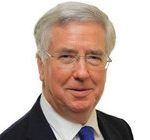
  • Michael Fallon – 2019 Valediction Speech

    Michael Fallon – 2019 Valediction Speech

    Below is the text of the speech made by Michael Fallon, the Conservative MP for Sevenoaks, in the House of Commons on 5 November 2019.

    I was first elected to this place as the first Conservative for 25 years to sit for the constituency of Darlington in the north-east of England. I have never forgotten that particular weekend. I set off on a train on the Sunday afternoon down to London and the buffet bar was closed. Somebody must have told the steward that the new MP for Darlington was on the train—I had been on television a bit—and he suddenly appeared with a tray of tea and toast and said, “We can’t have the new MP for Darlington going off hungry to take on his responsibilities.” He then stood there, shook his head and said, “Mind you, what hope have you got with all those Tories?”

    Along with my right hon. Friend the Member for Derbyshire Dales (Sir Patrick McLoughlin), who made the most splendid speech today, I had the privilege of serving—perhaps unusually—four Prime Ministers. I first served Margaret Thatcher as her Schools Minister and then John Major in the same capacity. With my right hon. and learned Friend the Member for Rushcliffe (Mr Clarke), we set up the first proper independent inspection service of our schools, Ofsted, and we ensured that school exam results were published and available to parents. It is extraordinary to think now that the exam results of individual schools were locked away in the director of education’s safe and that parents were not trusted with that information.

    I later had the equally unusual experience of working as deputy to two Liberal Secretaries of State, in the Department for Business, Innovation and Skills and the Department for Energy and Climate Change. Not only was that interesting, but it turned out to be quite a constructive experience. When the history of the coalition Government is written, perhaps we will see some of the benefits of that working together.​

    That period had a rather unusual ending. The day after the 2015 election, around lunchtime, I was called by David Cameron and reappointed as Secretary of State for Defence. As I was leaving the Cabinet table, he said the Secretary of State for Industry had handed in his resignation and the permanent secretary wanted somebody to be in charge for a couple of days while the rest of the Cabinet was assembled, so for a few hours I was Secretary of State for Industry. As I was picking up my papers, he added, “The Secretary of State for Energy has also handed in his resignation”, so I said, “Fine, I’ll have a look at that as well”. Then, as I was leaving, he said, “And the Secretary of State for Scotland has resigned”. So for a day or two I held those four portfolios together.

    I then had the most enormous privilege of all: working with our servicemen and women at the Ministry of Defence for three and a half years, leading them in the campaign against Daesh, resisting the challenge of a resurgent Russia and playing an important role in NATO. There can be no greater privilege than serving in that Department with the many willing and brave servicemen and women who have committed themselves to the service of our country. I want to put on the record my thanks to them all.

    Jeremy Lefroy (Stafford) (Con)

    I would just like to thank my right hon. Friend for all he did in that role, particularly the way he kept Members of Parliament on both sides of the House so well briefed. When the history books are written, they will show how seriously he—together with his colleagues in the armed forces and his ministerial colleagues—took that incredibly important role. I thank him for that.

    Sir Michael Fallon

    I am most grateful to my hon. Friend. It seemed to me incredibly important to keep the confidence of the House, having won its support back in 2015 for airstrikes in Iraq and then for their extension to Syria. Of course, that we were able to keep that confidence was down in no small part to the precision of our pilots and their skill in difficult conditions in minimising civilian casualties.

    My successor will inherit a thriving and prosperous constituency. My constituents enjoy a good quality of life, remarkably low unemployment, a wide choice of schooling, frequent rail connections to the capital and the protection of the green belt—over 90% of my constituency is green belt—but there is still work to be done, including on the regeneration of Swanley, one of the other towns in my constituency, especially through new investment and the promise of a fast link service from Maidstone and Otford through Swanley to the city of London.

    We also need to ensure that boys in my constituency have access to grammar school places. Whether you like it or not, Kent offers an 11-plus system, but Sevenoaks was the only district in Kent that did not have any grammar school places. I was delighted that after a 15-year campaign we managed to establish a girls’ school annexe, which has been open now for a couple of years, but we still need to ensure provision for boys’ grammar school places alongside it. We also need to continue to protect our green-belt protections in Sevenoaks. The Government’s unrealistic housing targets will put ​pressure on that green belt, though I know that my hon. Friends on the Front Bench are conscious of the need to balance the demand for new housing with our commitments to protect the green belt.

    I hope that this election campaign will not ignore some of the longer-term challenges our country faces. We have spent an awful lot of time—perhaps rightly, perhaps wrongly—debating the withdrawal agreement. In the end, that agreement only dealt with Ireland, our payments into the EU budget and the rights of EU citizens; we have not started yet on the major negotiation that really matters for business and jobs in my constituency, which is our future trading relationship, and I fear we have not yet started to explain to our electors some of the trade-offs that will inevitably be involved as we come to deal with the challenge to agriculture, financial services, the aerospace and automotive industries and our fisheries, and accommodating their legitimate right and desire to trade freely with the European continent with the views of our partners.

    We will have to quickly put in place the security partnership that has long been promised in various documents the Government have issued—I fear we have spoken far too little about this—and make sure there is no cliff edge at the end of January or February in the policing and judicial arrangements that our constituents expect and in the way our agencies work with other agencies across the European continent to deal with terrorism and organised crime. We will also need to work with our former partners in the EU to continue to uphold the rules-based international order. We do not debate foreign affairs nearly enough in this House. When I first entered Parliament, in the ’80s, we had much more regular debates on international affairs.

    We are dealing with a resurgent Russia that is in breach of many international conventions, whether on nuclear arms, chemical weapons or the protection of sovereignty under the Helsinki accords. We are dealing with a very ambitious China that is flouting the law of the sea convention, which it has signed, and continues to steal—there is no other word for it—the world’s intellectual property. And we are dealing with a mercantilist United States that is degrading the World Trade Organisation and slapping sanctions even on its friends in pursuit of a policy of “America first”. When it comes to holding the rules-based international system together, there really is a role for the leadership among the western nations, and particularly for our own nation here in the United Kingdom.

    Let me end by thanking all those who have helped me so much over the last 31 years, particularly the staff in my office.

  • Kevin Barron – 2019 Valediction Speech

    Below is the text of the speech made by Kevin Barron, the Labour MP for Rother Valley, in the House of Commons on 5 November 2019.

    I rise to make my final contribution after more than 36 years in this House. As I said when I announced that I was standing down, it has been the honour of my life to represent Rother Valley, a constituency that I first moved to at the age of eight, when my father, a Durham miner, moved to the south Yorkshire coalfields.

    Having been elected in 1983, my baptism came very shortly after, when 4,500 miners went on strike for 12 months. With the Orgreave coke works in my constituency, I was kept on my toes. That was followed by three years as the Parliamentary Private Secretary to the then Leader of the Opposition. I learnt quite a lot of things that I will not be sharing this afternoon—I am not even tempted to talk about the Whips Office, as the right hon. Member for Derbyshire Dales (Sir Patrick McLoughlin) has just done.

    The major work that I have done in the House is with Select Committees. When I was first elected, I served on the Energy Committee, and then for a short time, I was a member of the Environment Committee. I chaired the Health Committee for five years, from 2005 to 2010. One of the earliest things that Committee did was to secure a free vote in the House on bringing in a comprehensive ban on smoking in public places. Some people said at the time that it would be the end of the world as we knew it, but now people say that it is the most popular piece of public health legislation that the House has ever introduced. I spent eight years chairing the Committee on Standards, until September last year. We did not have quite as great a result as we did with the smoking ban, but my intention all along was to ensure that this place was better thought of by the people outside who elect and send us here. I think that to some extent we were moving along quite nicely on that, until something happened in 2016 that seems to have knocked us back quite a bit. Select Committee work is something that I have enjoyed.

    With regard to local achievements, clearly there are many, but the main achievement that I and my staff have had over many years is dealing with individual casework, for the people who come along and need help, perhaps because they have been unable to communicate their concerns. I have always said that I have been a voice for the voiceless in Rother Valley, speaking up on their behalf. Another thing I have been involved with in the constituency is coalfield regeneration. The advanced manufacturing park is now in the Rotherham constituency, but it used to be in Rother Valley when it was first put in by a Labour Government. It shows that we are recognised as having some of the finest manufacturing anywhere in the world. That came out of the old Orgreave coke works and the coalmine site. Such developments have transformed parts of south Yorkshire, and my voice and that of the Government were there for that on many occasions.​
    Finally, I want to say a few words of thanks to some individuals. For the last eight general elections, my friend and colleague Alan Goy has been my political agent. All Members will know how important it is to have a good relationship with their political agent. I also want to thank the staff who have supported me during my tenure. I will thank, in particular, my current staff, Sheena Woolley, Jacquie Falvey and Natalie Robinson, who support me in the constituency, and Kate Edwards and Michael Denoual, who work here in Parliament.

    As the right hon. Member for Derbyshire Dales said, your wife is a massive support in this job. Sadly, I lost my first wife Carol in 2008, but Andree, who I married a few years ago, has been a pillar of support. It would be difficult for anybody to do this job without that type of support at home.

    I do not want to turn this into a full-scale Oscars speech, so I will end by thanking the people of Rother Valley, who I have been honoured to represent. Whoever wins the seat at the election, I hope that they will feel the same satisfaction representing it that I have felt for many years.

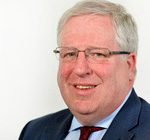
  • Patrick McLoughlin – 2019 Valediction Speech

    Patrick McLoughlin – 2019 Valediction Speech

    Below is the text of the speech made by Patrick McLoughlin, the Conservative MP for Derbyshire Dales, in the House of Commons on 5 November 2019.

    Thank you for calling me to speak, Madam Deputy Speaker. This is the last time that you will be able to call me. It was a great privilege working with you when we were doing opposite jobs, as Chief Whip and Opposition Chief Whip.

    I first saw inside the House of Commons in about 1972. In 1970, Cannock elected a Conservative Member of Parliament, Patrick Cormack, with one of the biggest swings in the country in that general election. Like any new Member of Parliament, he went round the local schools and invited us to come down to the House of Commons to have a tour. I came down in about 1972, and I remember it well. I was overwhelmed by the atmosphere, the beauty of the place and the history of the building—so much so that I remember saying to one of my best friends at the time, John Beresford, “I’ve decided what I want to do in life.” He said, “What’s that, Patrick?” and I said, “I want to come back to the House of Commons as a Member of Parliament.” I will always remember him saying to me, “If I was you, I’d keep that a secret.” It was not the kind of place that a comprehensive schoolboy from Cannock would end up.

    Leaving school at 16, I became involved in the youth wing of the Conservative party, and I fought my first general election in Wolverhampton South East in 1983. It was a great campaign but an unsuccessful one, when the Conservative party overall was doing incredibly well. I made several unsuccessful attempts at winning other seats, and I began to think that my friend John was right. But as we all know in politics, things happen suddenly. All of a sudden, a by-election was called in West Derbyshire, and I was selected as the candidate, when Matthew Parris, who has been a lifelong friend since then, decided to pursue a career in TV.

    I would like to pay tribute to the officers of the West Derbyshire Conservative association in those days, particularly Geoffrey Roberts, who is sadly no longer with us, but his wife Josie still lives in Bakewell. They took a bit of a gamble in 1986, selecting a 28-year-old who was hardly a typical Tory—somebody who left school at 16, had not been to university and had gone through 12 months of a coal strike. With our successful campaign in that by-election, and with my charm and personality, I managed to take a very safe Conservative seat with a majority of 15,500 to one with a majority of 100 votes.

    I came into the House of Commons on 13 May. My mother came down, and my pregnant wife was with me, and we were invited to have tea with the then Prime Minister, Mrs Thatcher. My mother was not overwhelmed at all by meeting Mrs Thatcher. She had never met a senior politician of any description. We met her in the Prime Minister’s office here in the House of Commons, ​and within a few minutes, it was almost as if I did not exist. My mother and Mrs Thatcher were talking away like two old fishwives. After 30 minutes, a note came in for the Prime Minister saying that she had to go to her next meeting. She looked at my mother and said, “I’m very sorry, but I have to go to my next meeting.” I will always remember my mother tapping her on the knee and saying, “Yes, my dear, you are busy, aren’t you?” to which Mrs Thatcher said, “Well, I am today. It’s just one of those days.”

    That is how I came to represent one of the most beautiful constituencies in England. It is a constituency dominated, to a great degree, by the Peak District national park. The Peak district is within an hour’s drive of 60% of the UK population, and some weekends it feels like they all come. The Peak District national park is a very important part of our country. Obviously it has strict planning rules and regulations, but I want to see people living in the national park and not priced out of it. We must bear that in mind.

    We have a number of important market towns in Derbyshire Dales, not least Wirksworth, Ashbourne, Bakewell and Matlock. They are thriving market towns, but at the moment their high streets are under tremendous pressure. I do hope that the new Government will think very carefully about how they can support our market towns and our high streets—that is incredibly important—and avoid putting extra unnecessary costs on them, or if costs are put on business, make sure they are across the board, including for the internet companies, which at the moment do not quite share their full burden.

    Sir Greg Knight (East Yorkshire) (Con)

    It has been a privilege and a pleasure to serve in this House with my right hon. Friend, but will he give the House a pledge that he will not write his memoirs, or if he changes his mind and does decide to write his memoirs, that he will make no reference at all to what happens in the Whips Office? Does he agree with me that whipping, like stripping, is best done in private?

    Sir Patrick McLoughlin

    I agree partly with what my right hon. Friend says. If he does not mind, I shall say something in a few moments about the Whips Office that may or may not get his approval, but let us see.

    Less than a year after I entered the House of Commons, we faced a general election. I have to say that it was an unusual election as far as West Derbyshire was concerned because two parties got what they wanted. My Liberal opponent had posters up and down the constituency saying, “100 more votes this time”. I am very glad that he got his extra 100 votes, and I was even more pleased that I got an extra 10,000. Let us leave that to the side, but we should be careful what we wish for.

    In 1989, I was invited by Margaret Thatcher to join her Government, and I went as a junior Minister to the then Department of Transport. One of the first issues that landed in the area I was responsible for, within a few weeks of my being at the Department, was the terrible Marchioness disaster on the Thames. As we have done in the previous debate, dealing with people who have suffered such tragedies is one of the more difficult parts of life in government, as it is when, as Members of Parliament, we have people who are hit by tragic circumstances and incidents that often cause ​the loss of life and the like. I think most Members of Parliament go out of their way to do whatever they can to help.

    I served in several Departments before John Major appointed me to the Whips Office in 1995. I spent 17 years there, becoming one of the most long-serving and perhaps, as far as my party is concerned, long-suffering Whips. When David Cameron became leader of the Conservative party in 2005, he made me the Opposition Chief Whip, and then he made me the Chief Whip in the coalition Government in 2010. There, I was really ably assisted by John Randall, who is now in the other place, as my Deputy Chief Whip—really a man of great and outstanding ability and high principle—and by the right Member for Orkney and Shetland (Mr Carmichael). I see in his place the right hon. Member for North Norfolk (Norman Lamb), who was also in the Whips Office.

    Norman Lamb (North Norfolk) (LD)

    I have to say that I never dreamed for one minute that I would ever serve under the right hon. Gentleman in any capacity in this place, but I found myself doing so and I found myself enjoying it and respecting his leadership, so I thank him for that.

    Sir Patrick McLoughlin

    I am very grateful to the right hon. Gentleman. I think, with the problems we inherited, that there was a lot the coalition Government did of which we can rightly be proud.

    I was Chief Whip for a considerable time, and I have to say that I was greatly assisted at the time by two people in the Whips Office to whom I want to refer—Sir Roy Stone and Mark Kelly. Roy Stone is basically the usual channels, as you well know, Madam Deputy Speaker. It is true that there have been only four people to hold the position of principal private secretary to the Chief Whip in the last 100 years, and Roy himself has been doing it since November 2000. The House, the Government and the Opposition have a great servant in Roy, and I really want to say a big thank you to him for the work he does. I think he would say that there is never a dull moment in what he does.

    I would like to say a few things about the Whips Office, which I think is quite often misunderstood both inside and outside this place. Contrary to some of the wilder stories, it is the personnel department of any parliamentary party, dealing with a wide range of issues both personal and political.

    Justine Greening (Putney) (Ind)

    In my experience, I always saw the Whips Office as a human resources department, but with the “human” bit taken out.

    Sir Patrick McLoughlin

    Well, everybody is allowed to have their views. All I can say to my right hon. Friend is that she ought to have to deal with some of the people the Whips Office has to deal with.

    I would like to say something to all people who come into this House of Commons. Whatever they think about the Whips Office and about the party system, very few people would get into this House on their own ability; they get here only because they belong to a major political party or a political party, and I think that is sometimes forgotten by them when they get here.

    In 2012, David Cameron gave me the option of becoming Secretary of State for Transport. As Chief Whip, I was aware of the offer just a little time in advance of ​the reshuffle, so I had time to reflect on it. It was a big step to move from the back office of politics to the front office, or to the frontline, as it so often seemed, particularly in those first few weeks at the Department for Transport, where I had of course started as a junior Minister some time before.

    I remember very well, Madam Deputy Speaker, you coming to me on that Monday afternoon, when I knew what was going to happen to me, and you told me that the Opposition day debate on Wednesday was going to be on rail fares. I did try to say to you that I did not think this was a very good idea and could you not find a different subject to take on. The next morning you realised why I might have suggested that, but as usual you stuck to your guns, and I found myself responding to such a debate that week.

    I found my four years at the Department for Transport one of the most fascinating periods that I spent in government, and it was a huge privilege to be the Secretary of State and head of a major Department such as that.

    Mr Adrian Bailey (West Bromwich West) (Lab/Co-op)

    I would just like to put on record that during the right hon. Gentleman’s spell as Secretary of State for Transport, a company—it will be unnamed—came to me in desperate straits over a problem that involved the Department for Transport and other countries, and it would have gone out of business within 10 days had it not been resolved. I took it to the right hon. Gentleman, we had a discussion, he did what was necessary and that company was saved, with about 120 jobs, and I would just like that to go on the record.

    Sir Patrick McLoughlin

    I am very grateful to the hon. Gentleman. As I said, it was an incredibly rewarding period.

    Within a few days or weeks of being there, I found myself having to phone Richard Branson to explain why his company was going to keep the franchise for the west coast main line, although he had previously been told that Virgin had lost it; that conversation I remember well. I would like to say at this point that it is fair to say that people such as Richard Branson and Brian Souter have done more for rail passengers in this country than many Secretaries of State, and they have improved our railways in a very dramatic way. I hope that, whatever plans come in the manifestos, we do not lose the involvement of the private sector in the railways. They have transformed our railways, and I think that is partly as a result of the private investment we have seen.

    I would like to take this opportunity, if I may, to pay tribute to some of the superb civil servants who supported me in my role. Among them, in my private office were Mark Reach and Rupert Hetherington, as well as Philip Rutnam, who was the permanent secretary for all the time that I was there, while Phil West was my principal private secretary for the entire four years I was at the Department. I had excellent special advisers—another often misunderstood role—in Ben Mascall, Simon Burton and Tim Smith, as well as a constituent of mine, Julian Glover, who knew more about the railways than anybody I have come across and would give me the history and everything else. He has written and had published not so long ago a book on Thomas Telford, “Man of Iron”, ​and it is great authoritative writing. People such as them who bring outside expertise straight into the political arena are really very important.

    I was encouraged by the unswerving support of the Prime Minister and the Chancellor of the Exchequer at the time, who were both great infrastructure enthusiasts—so much so that one of my problems as Transport Secretary was that, when visiting a construction site, I was always third in line to get a hi-vis jacket and a hard hat. In 2015 I was reappointed by the Prime Minister. I remember him saying, “Patrick, you’ve been going up and down the country promising all these schemes.” I pointed out that I had only done so after he had promised them in the first place, and that it would have been difficult to row back on promises made by the Prime Minister.

    Talking about infrastructure, one of the fascinating aspects of returning to the Department where I began my ministerial career was that I could appreciate fully just how long and difficult these major projects are. Crossrail is a good example. When I was first in the Department, in 1989, I remember the then Secretary of State saying, “We’re going to build Crossrail.” It is now being built. It has been delayed and gone over budget, but it will make a tremendous difference to London once it is finished.

    That brings me to High Speed 2. HS2 is not about speed; it is about capacity. It is about building a modern railway that is fit for our times and for a modern country. I could spend a long time talking about HS2, but I think that might try the patience of my right hon. Friend the Member for Aylesbury (Sir David Lidington), which I do not want to do. I accept the problems that he and his constituents face as a result of HS2, and those concerns must be listened to. However, I will find it ironic if I can take a high-speed train from London to Brussels or Paris, but not to Birmingham, Manchester or Leeds. It is absolutely essential that we increase our capacity.

    As we prepare to leave the European Union, I well recall the Cabinet meeting on the Saturday morning after David Cameron had returned from the negotiations —given that he has written about this in his book, I can now break the rule not to speak about Cabinet discussions. I said in that meeting, “I would love to live in Utopia, but the trouble is that I would wake up and find that the EU was still there.” We have to be realistic about what we want from Europe. We are leaving the European Union, and it is right that we do so—we said that we would be bound by the result of the referendum, and I strongly believe that—but it is the European Union that we are leaving, not Europe. We must make sure that we get a good trading relationship with the rest of Europe as quickly as possible.

    I will still be living in Derbyshire Dales. I shall miss tremendously being its Member of Parliament and being at the centre of things there. I am sure that I will still enjoy the company of so many good people, but it will be a different relationship. After 33 years, it is time to move on.

    One of my greatest supporters and helpers has been my wife. It is fair to say that she has always been my strongest supporter in public—in private, she has often told me the truth, and I have been the better for it. I first entered the House in a by-election, and it was chaotic; after six weeks of campaigning, I arrived here in the thick of it. I decided only last week not to seek re-election, ​and I have to say that my departure feels the same. One of the best pieces of advice that my wife ever gave me was when she was helping me with a speech that I was preparing. After typing it up, she looked at me and said, “Patrick, I’ve never known you to make too short a speech.” On that note, I want to end by thanking everyone, including all the officers and staff, for their help.

  • Paul Farrelly – 2019 Valediction Speech

    Below is the text of the speech made by Paul Farrelly, the Labour MP for Newcastle-Under-Lyme, in the House of Commons on 5 November 2019.

    It is a pleasure to follow my hon. Friend from Barrow and Furness—I suggest that he tries for size a majority of 30 on the third count at 6.30 in the morning.

    I am sorry not to have been here to listen to all the speeches, Madam Deputy Speaker. Once upon a time this was going to be a normal working day; I had a delegation from Slovenia here for a tour. Everyone will know that being a tour guide is an occupational hazard in the Commons, not least as I am the chair of the all-party British-Slovenia Group, the chair of the all-party British-German group and the vice-chair of the all-party group on Japan. Present difficulties notwithstanding, the internationalism of this place has always been a surprise pleasure that I will certainly miss.

    I also thank the hon. Member for Stafford (Jeremy Lefroy) for kindly losing to me in 2005—in the nicest possible way and as only he knows how—because otherwise I would not be here making these remarks. I still have his campaign T-shirt, which I found tidying up my cupboard, and which I asked him for as a present. I will keep it and cherish it.

    It feels strange to clear an office after 18 years. While packing up, I came across umpteen spare copies of my maiden speech from 2001, and I remember it well. I felt I had drawn the short straw, having to follow the lyrical Welsh tones of Adam Price, now the leader of Plaid Cymru. It felt like trudging in the footsteps of Richard Burton in a theatre audition. In making my speech, I felt sure I was the only grandson of a rabbit trapper from County Meath in Ireland to take his place on these green Benches. Now as I leave, I can burnish my Celtic credentials further, because on 2 March—my 57th birthday—the perfect present popped through the letterbox: my Irish passport. Whatever happens after ​the election, I will be remaining—no ifs, no buts, come what may—a citizen of the European Union, as will my three long-suffering children.

    It has been a privilege to serve as the MP for Newcastle-under-Lyme, my home town. I was the first born and bred “castle black”, as we say, for—well, I haven’t been able to find another going back 500 years. But 2001 was not my first general election; that came when I stood in Chesham and Amersham—my dry run—in 1997. So one of my first thanks this afternoon goes to my agent 22 years ago, Peter Ward, and his wife, Doreen, who wished me all the best again this week. I must also mention again the wonderful Keith Kingswood, the local constituency secretary back then. Just before the ’97 election, Keith flew to New York to see his son and collect a postal vote but tragically on the flight over contracted a mystery illness from which he did not recover. The day after the Blair landslide, while Labour was partying on the south bank, we were all attending Keith’s funeral in Chesham. My thoughts today are again with his wife Janet and his family.

    This job would be impossible without the support of families, so I have to thank my wife Victoria for putting up with all the late nights, the weeks and weekends away, the overseas visits and all the football and, in particular, rugby—she curses Commons and Lords RUFC. She was also the one person I forgot to thank on election night in 1997. In turn, I have never been allowed to forget it. In Newcastle-under-Lyme, I want to pay a special tribute to the first person I met when I first went back to help in 1993: a truly great council leader, Eddie Boden, who turns 80 in a few weeks. Happy birthday from Westminster, Eddie. My agent in Newcastle all these years, David Leech, has been a rock of support and strength. Sadly, he lost his wonderful wife and soulmate, Cynthia, last year. Newcastle is much emptier without her.

    Nothing could prepare me for this place. I was never a student politician or part of any network. I first got involved in politics in 1987, aged 25, when I took the day off work in London to do something, finally, about Margaret Thatcher. Through the occasional rebellions—student tuition fees, the dreadful war in Iraq, the dreaded B-word today—David and my officers in the constituency have always been loyal, steadfast and true. It was because of their efforts that a week last Friday in Newcastle-under-Lyme we were able to celebrate 100 years of continuous Labour representation in Parliament. We are one of only five constituencies in the whole of the UK to be able to do so. My majority might be a bit tight—we are one of 11 reluctant members of the “under 100” club—but I keep reminding people that at over 21,000 the Labour vote in Newcastle in 2017 was the biggest of my five general elections and the highest since that landslide under Tony Blair in ’97. It is the task of my successor as candidate, who was selected on Friday, to recreate that progressive alliance.

    Politics is a difficult and demanding trade, and that has never been more true than in these testing time, in the age of social media, but in this job one really can make a difference and be proud of doing so, for constituents and causes and projects that leave a legacy for the future. At the outset in Westminster, I was rebellious enough to stand up for students over high and variable tuition fees and had the temerity to organise a rebellion. I next crossed swords with my own Government through ​a private Member’s Bill to ensure fairer treatment of temporary and agency workers—protections eventually implemented, we should remember, by a European directive that helped vulnerable and low-paid people in 28 countries.

    I am also glad to have stood up for my beliefs in not voting for the legislation that paved the way for the referendum, or for the triggering of article 50. I understand that I am the only member of the Labour party to have departed from the whip on both those occasions, and the same applies to the right hon. and learned Member for Rushcliffe (Mr Clarke) in respect of the Conservative party.

    I am proud, too, to have served for 14 years on the Digital, Culture, Media and Sport Committee. The Committee has certainly made a difference, pursuing phone-hacking and, more recently, investigating fake news and abuse of social media, as well as helping to change libel law in the interests of my former profession: responsible, serious investigative journalism.

    Locally, there is much for Labour, and retired colleagues in north Staffordshire, to be proud of, such as our brand-new hospital and the excellent Newcastle college, to name but two. In Newcastle, my favourite place of all is the wonderful Peter Pan Nursery for Children with Special Needs, and I want to record my thanks to Peter Traves, who was Staffordshire’s education director until 10 years ago, for his help in securing its future in brand-new premises opposite my old school in Wolstanton. He is simply the best officer in the public sector with whom I have dealt in 18 years.

    Let me end with two final votes of thanks. This job would be impossible without great staff. I have had wonderful staff doing a wonderful job for constituents—Caroline Eardley, who has been with me throughout, Dr Barry Schofield and Martin Bell—and, in Westminster, Hannah Matin, Thomas Brayford and, for so many years, Dr Neil Watkins. We always need good officers in our constituency parties, and I want to thank the chair of my constituency party, Allison Gardner, for her wonderful support. Her drive and motivation, and her great sense of humour, made the last two elections enjoyable, and without her help I would not be standing here today.

    Finally, I thank colleagues across parties for all the work that we have done here in those years. I will certainly miss them, and I will miss it.

  • John Woodcock – 2019 Valediction Speech

    John Woodcock – 2019 Valediction Speech

    Below is the text of the speech made by John Woodcock, the Independent MP for Barrow and Furness, in the House of Commons on 5 November 2019.

    What a privilege it is to follow that heartfelt speech. It is also a coincidence, because, as the majority of the right hon. Member for Arundel and South Downs (Nick Herbert) has gone up at every successive election, mine has gone down. [Laughter.]

    In 2010, when I first came into the House, we achieved the lowest swing away from Labour in the entire country. In the most recent general election, in 2017, I hung on by a mere 209 votes. As most people who looked at that will know, it is a total miracle that I am here at all. I never expected to be able to make a valedictory speech ​and I have viewed every single day of this Parliament as an extra, unexpected bonus. It was hard enough to hold the constituency of Barrow and Furness, the home of the Trident nuclear submarine programme, with the former Leader of the Opposition, the right hon. Member for Doncaster North (Edward Miliband). People, probably understandably, did not trust him entirely on the issue of Trident. However, it was an impossibility to hold the constituency with the current Leader of the Opposition. It was only by completely disavowing him that I was able, against all expectations including mine, to hang on.

    I have, of course, paid in one way or another since then, but I will never forget the moment at 1 o’clock in the morning of election night when I thought, “My goodness, we might actually hold on here.” I had to get on the phone to my ex, Mandy, who ran my campaign to get me into Parliament in the first place, and say, “Look, you know I’ve offered to take the kids all summer, well…” I am deeply indebted to her for her forbearance on that and on so many issues, as we have made a crazy modern family life work. More on that towards the end of my speech.

    I want to say how sad I am to be leaving, but I think we can be really proud of some the things we have achieved over these past nine and a half years. The brand new maternity unit literally would not have happened without the campaign led by local mums, including Mandy. Of course, I supported the campaign wholeheartedly —I knew what was good for me—but it showed that when the people of Barrow and Furness stand up, they are able to make themselves listened to. Together, we have effected real change.

    The Leader of the House knows that it is more unusual to win a vote at the moment than it is to lose one, and 18 July 2016 will always be etched on my memory as the day that this House voted by 472 votes to 117 to renew Trident and fire the starting gun properly on the Dreadnought submarine programme, which, even now, is providing 9,000 directly employed jobs and sustaining the whole Furness economy. I am just sad to be leaving at a time when we are making critical decisions on how we ensure that that investment can lift the whole area out of the still really appalling pockets of deprivation and the lack of hope that remains in the Furness area. If I can play any role outside this place—possibly in a David Brent way, if I keep turning up to former offices—I want to play whatever role I can to ensure that that can happen in future.

    I came into this House having been privileged to serve as a special adviser for a period in No. 10, and I never thought that the life of a constituency MP—trying to help the community change and lead that change—would be what drove me. That is what I will miss most of all from the job. It is well known in this place, but completely unknown outside it, how relatively little of that we drive ourselves as MPs, so—like many others—I need to give my heartfelt thanks to my team. Frank, Natalie, Angela, Carmen and the new arrival, Sian, have done extraordinary things. Literally thousands of people have had their lives changed for the better in ways that, more often than not, I have not known about personally, but they have delivered. I am so pleased that Cassie, my office manager, has come all the way here—it is a hell of a long way to get down from Barrow; it takes four hours on the train on a good day— and is in the Gallery today. Like a number of my staff—but none more so than ​Cassie—she has stuck with me through some really difficult times and has stayed loyal, and I will always be grateful for that.

    As a constituency MP, I am proud of what we have done, but I wish that I could be proud of what we have achieved in our politics over the last 10 years. We are not standing here as a Parliament of success. I am sorry that my attempt to wrestle my politics—the politics of the progressive centre-left—out of the hands of the extremists that have gripped my former party has not been a success. I am really grateful to my friends—who will remain my friends—in the Labour party, even though we have taken a very different view on how best to tackle that extremism.

    I am really excited about the challenge that I am going on to as the Government’s special envoy on countering violent extremism; I want to continue to play a role in public life. Although I am sad to be leaving, I am leaving for absolutely the best reason: it was not part of the script that Issy and I would be having a baby, but it is a wonderful, wonderful thing on which to leave. Their two sisters, Maisie and Molly, are going to be wonderful big sisters, and I just cannot wait for the future that we have got together.

  • Nick Herbert – 2019 Valediction Speech

    Below is the text of the speech made by Nick Herbert, the Conservative MP for Arundel and South Downs, in the House of Commons on 5 November 2019.

    Thank you for calling me to speak, Madam Deputy Speaker, and commiserations on yesterday—I congratulate the new Speaker. I apologise for being unable to be here at the start of the debate. I had not intended to speak, but I decided only last night to stand down as the Member of Parliament for Arundel and South Downs, the constituency that I have been honoured to represent for nearly 15 years.

    It was a pleasure to listen to the speech of my right hon. Friend the Member for Derbyshire Dales (Sir Patrick McLoughlin). Some 33 years ago, while working as a ​young researcher, I helped a young candidate who was standing in a by-election in West Derbyshire. I claim that the 100 votes that my right hon. Friend secured to win the seat were won by me, and he claims that he would have won handsomely had it not been for my disastrous research.

    I went on to stand for Berwick-upon-Tweed in north Northumberland. Unfortunately, that was in 1997, the year of Armageddon. My efforts in that beautiful rural constituency were not helped early on when I opened a coffee morning with a speech urging everyone to vote Conservative, only to be told that I was in fact at a meeting of the Methodists. I could not have been expected to know that that particular village had two village halls, but I learnt an important lesson about knowing your constituency.

    I was immensely privileged to be chosen at the very last moment to stand for Arundel and South Downs for the Conservatives, and I believe that someone else will be very lucky indeed to be chosen at the very last minute to stand for what I believe is the best constituency in the country, full of the most wonderful people and strong communities. I will miss it a very great deal. I fought four general elections and my majority has gone up every time to a record level, and I know that it is smart to quit while ahead.

    I made my maiden speech in a debate on rural issues. I spoke last in that debate, too, and nobody told me that I was permitted to go to what the Americans call the restroom while waiting to make my speech. I waited for what seemed to be hours, absolutely desperate for it, and then made the shortest maiden speech in history as a consequence.

    I then went to see the Whips to explain that it was very important for the new Member of Parliament for Arundel and South Downs to watch Australia play the Duke of Norfolk’s XI at the Arundel castle cricket ground. The Whips told me that not only was that entirely possible, but I should submit any request, at any time, for any sporting event that I felt I needed to attend. I had no idea that they were being sarcastic and so proceeded to give them a long list of all the sporting events I wished to attend that year. I have never lived it down.

    I soon found myself on the Front Bench and, for a very brief time—this is a salutary lesson for all the young people who will enter the House after the election—was billed as a rising star. I then plummeted into the depths of the Home Office, a fall from which I never entirely recovered.

    I agree with my right hon. Friend the Member for Aylesbury (Sir David Lidington) that attending this debate, in which we have heard some marvellous speeches, is rather like attending the reading of one’s own obituary. I am not entirely certain that everyone would be effusive enough, so I intend to list some of the things that I have been involved in—my serious point is that I intend to continue working in a number of important areas that I have worked on in this place. They include LGBT rights, which my friend the hon. Member for Liverpool, West Derby (Stephen Twigg) mentioned, the campaign for equal marriage, setting up the all-party parliamentary group on global lesbian, gay, bisexual, and transgender rights, and setting up the Global Equality Caucus, run so ably by Alan Wardle and supported by Andrew Slinn.​

    I also set up the all-party parliamentary group on global tuberculosis, to help fight the world’s deadliest disease. The Global TB Caucus has succeeded in driving TB up the agenda, with a high-level meeting at the United Nations. It is ably led by Sarah Kirk, with support on the APPG from Janika Hauser, and it was set up with brilliant initial work by my friend Matt Oliver.

    I have recently assumed the chairmanship of the Countryside Alliance, which I intend to devote a lot of time to, returning to my roots, because I believe passionately in supporting rural communities, in the freedom to choose and in ensuring that we protect the rural way of life. I will be running the think-tank that I have set up, the Project for Modern Democracy, just as I previously set up the think-tank Reform, because I believe we need new thinking on Whitehall reform, planning and how we ensure markets operate fairly in the modern world.

    I just want to say something briefly about Brexit. I set up the national no campaign against joining the euro. For a long time I was thought of as a Eurosceptic, but I led the Conservatives In campaign to remain in the European Union. Nevertheless, I accepted the result of the referendum immediately. I want to dispute the idea that the only principled position for remainers to take is somehow to gainsay the referendum result. I do not believe that that is true. Actually, I think it is a principled and honourable position to accept the result of the referendum, because in the end it is about democracy. I have done that, which is why I support the Prime Minister in successfully seeking a deal. I do not think that we should demonise the millions of people who voted for remain, but have accepted the result and think a deal is possible. Rather, we should investigate more closely why people voted for leave and what exactly they wanted, and have a more mature, sober and sensible debate on those issues.

    Finally, I would like to thank my brilliant staff: Michelle Taylor, my wonderful constituency assistant; Alex Black, who runs my office; Lynsey White, my wonderful secretary; and Chris Cook, my researcher. I would like to thank members of my Conservative association and my chairmen, Angela Litchfield, Sue Holland, Malcolm Gill and Peter Griffiths. I thank my constituents for doing me the great honour of returning me to Arundel and South Downs. Above all, I thank my partner, my closest and best friend, Jason Eades, without whose tireless and unquestioning support I would never have been able to do this job in the first place. Thank you all for doing me this great honour. I am very sad to be going, but I know it is the right time to do so.

  • Teresa Pearce – 2019 Valediction Speech

    Below is the text of the speech made by Teresa Pearce, the Labour MP for Erith and Thamesmead, in the House of Commons on 5 November 2019.

    I would like to thank my fantastic family, my friends and my staff, who are amazing, as well as all the people I have worked with here and in the constituency, but most of all I would like to thank my husband, who nine years ago put his life, dreams and ambitions on hold so that I could follow mine.

    When you come into this place, it is the strangest thing. The first thing I did was to look for a job description, and as hon. Members all know, there is none. You become a combination of a councillor, a barrack-room lawyer, a trade union official and a social worker, yet an MP’s power, particularly in opposition, is more perceived than real. People ask you to get involved in everything and anything. When I was elected, I got 22,000 emails in the first year. The level of expectation from people is that you can solve everything from mice in their flat to conflict in the middle east, and of course the bins—there is always the bins. There are myriad ways that people can watch you now, and I am told by my constituents that I need to be at all these events in the constituency, but then the same people say to me, “I was watching the Chamber, and you weren’t in there. Where were you?” And at the same time, they want to know why you have not answered the 22,000 emails, which is why many people receive replies from me at 1 o’clock in the morning.

    There was much I wanted to say this afternoon about the things I had done and the things I wished I had done, but we have sat here and passed the Historical Institutional Abuse (Northern Ireland) Bill. I listened to that testimony and it was familiar to me, so I have changed what I planned to say because I needed to say this. I could talk about what I have achieved, but what has been achieved by me here has actually been achieved because of my parents. Both of my parents were brought up in care—my mother in the infamous Nazareth House, which we heard about earlier, and my father by the Christian Brothers—and I can give personal testimony about the damage done to them for the whole of their lives. The shadow Minister, my hon. Friend the Member for Ealing North (Stephen Pound), who is no longer in his place, asked from the Dispatch Box: what must those children have thought of adults, and how could ​they ever trust? Well, I can tell the House that they never did. It became increasingly difficult as they got older, when we needed to get carers or meals on wheels to go in, because everybody who came in who they thought was from the authorities they sacked immediately the same day. They feared to the very end of their lives losing their liberty, because they had lost it as children when they had been incarcerated.

    It is testimony to my parents that they never visited on me and my sister Rose the horrors of their childhood, and it is testimony to them that I am an MP now. My mother lived to see me elected, and she was as proud as punch. Sadly, my dad died in 2009, so he did not get the same bragging rights. My dad, Arthur Farrington, was what people would call a bit of a character. He had a tendency to embellish the truth, and sometimes he just made things up. He used to say to me and my sister that he was born in the workhouse, but then he used to say a lot of things so we did not take a lot of notice. When I was elected and was doing research on children’s homes in the 1930s, it came as a huge surprise to find that his parents were actually resident in Ormskirk workhouse at the time he was born. It seems I owe my dad a bit of an apology, as he was actually telling the truth. However, I still do not believe that the ring that my auntie had, which clearly came from Woolworths, was given to her by the Pope.

    It is a privilege to hold the office of MP. I left school at 17, got married soon after and became a mother, but at 18 I found myself deserted by my husband and facing the world alone with a small baby and bleak prospects while the rest of my friends went to university. However, thanks to a small council flat in Belvedere, a GLC-funded day nursery and a Bexley Council-funded careers adviser, I was set on the road to independence, self-respect and a career. I have been successful and my family has thrived because society invested in me, and that investment has been paid back over and over. Sadly, however, those services no longer exist for many who find themselves in the same circumstances and do not have that ladder. In fact, the safety net of the welfare state that once saved me no longer exists in that real sense. It is more like a trapdoor you fall through and you may never get back up. That is why I have spent the last nine years trying to speak up for Erith and Thamesmead, so my neighbours get the opportunities that I had and can turn around their lives when they fall on hard times.

    I would like to thank my constituents for the support they have shown me for the last nine years, electing me three times. It is now time to pass the baton on to someone else, and I am sure that they will show her the same support.