Tag: 2019

  • Theresa May – 2019 Statement Made Alongside Shinzo Abe of Japan

    Below is the text of the statement made by Theresa May, the Prime Minister, at Downing Street on 10 January 2019.

    Prime Minister Abe. It is a pleasure to welcome you to Downing Street.

    The UK and Japan are natural partners. Thriving, innovative, island nations – committed to defending the global rules that we have shaped together.

    Your visit comes at a crucial time. As the UK prepares to leave the EU and raise our horizons towards the rest of the world, our relationship with countries such as Japan will be increasingly important, and your Presidency of this year’s G20 allows us to work together towards our shared goals on the global stage.

    Our people face many of the same challenges. But we also both have immense opportunities. And today we agree a deep and dynamic partnership to shape the 21st Century together.

    Japan and the UK, as the world’s third and fifth largest economies, are already close economic partners. Japanese companies employ 150 thousand people here in Britain and trade between our two countries totalled £28 billion in the past year.

    Our exit from the EU provides an unprecedented opportunity to strengthen this trade and investment relationship.

    I welcome your renewed commitment, Prime Minister Abe, to us securing an ambitious bilateral arrangement, building on the deal already agreed between Japan and the EU. This gives businesses the stability and confidence to plan for the future, supports jobs, and gives more choice and lower prices to consumers.

    Our enhanced bilateral relationship will also allow us to explore ways to go further.

    We are already opening up export markets by ending the ban on sales of British beef and lamb to Japan. This will create opportunities worth over £120 million over five years, supporting farmers from the valleys of South Wales to the Highlands of Scotland.

    Our enhanced co-operation shows that, at a time when global tensions are escalating, we stand together to promote free and fair trade.

    As two of the world’s most innovative economies, we are uniquely placed to address the Grand Challenges of our time: an ageing society, the need for clean growth, how we respond to the increasing use of AI and data, and the future of mobility.

    Today we mark the start of a significant joint programme of research and collaboration that will transform the way people live in the 21st Century.

    British and Japanese experts, working side by side, will help people live independently in their home for longer, develop new treatments for chronic conditions like dementia and heart failure, and ensure a cleaner world for future generations.

    Together we will also ensure businesses and innovators are able to use big data legally, ethically and safely in the future. This is our modern Industrial Strategy in action.

    Our two cultures already inspire one another’s people. A quarter of a million Japanese tourists come to the UK each year, and we see growing numbers of British tourists visiting Japan.

    As part of our cultural exchange the National Gallery will send a major exhibition to Japan – including the famous ‘Sunflowers’ by Vincent Van Gogh, a painter himself inspired by Japanese art.

    And with Japan set to host the Rugby World Cup in 2019 and the Olympics and Paralympics in 2020, the UK is sharing our experience of delivering these events safely and successfully.

    Global economic growth is underpinned by security.

    In Tokyo, we signed a Joint Declaration that transformed our defence partnership and stepped up our collective response to the threats we both face.

    We saw the strength of our relationship when Japan added its voice to condemn the nerve agent attack in Salisbury. I want to thank you, Shinzo, for the support your nation showed.

    This year, we are increasing the number of combined exercises between our defence forces – on sea, land and air.

    And we will deploy the Royal Navy warship HMS Montrose to the region, following on from three naval visits in the past twelve months.

    This will help us to enforce sanctions against the DPRK as part of our joint determination to a peaceful resolution to tension in the region and the complete denuclearisation of North Korea.

    I also welcome our collaboration on new technologies, including exploring co-operation on future combat aircraft and missile development that will ensure our forces remain an effective deterrent, while supporting high-skilled jobs and industries.

    Working closely with Japan and our partners in the region ensures a more connected Asia that is free, open and stable.

    And British expertise will help deliver infrastructure projects in the Pacific region, unlocking commercial opportunities for companies across the UK.

    2019 is an historic year for Japan. We look forward to working closely with you to ensure a more peaceful, prosperous world.

    And I am confident that our shared optimism and close friendship will see our nations stand together to shape our shared future.

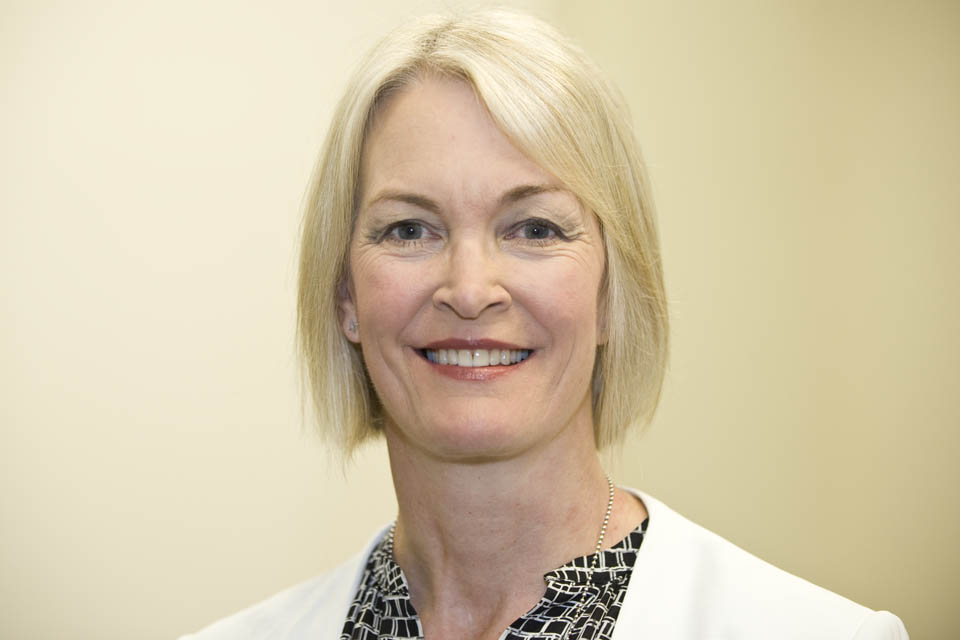
  • Margot James – 2019 Speech on Audience of the Future Launch

    Below is the text of the speech made by Margot James, the Minister for Digital and the Creative Industries, on 10 January 2019.

    I am delighted to be here at Unit 6, a showcase of the UK’s world leading contemporary art. Contemporary art is at the cutting edge. Its practitioners are always innovating and engaging people in new ways. So it is fitting that we’re here today to launch the ‘Audience of the Future’ demonstrators, which will be doing the same.

    Imagine being inside the world of a Shakespeare play, or in a video game as professional players battle it out for millions of dollars, or immersed in a national museum, solving a detective narrative involving dinosaurs and robots with fellow virtual museum-goers.

    These are only some of the experiences that will be afforded to everyone by immersive technology. The number of possibilities is only set to grow with the rate of technological change and our creative expertise.

    It is estimated that by 2023 the global immersive technology market will be worth between $95 billion and $105 billion. In the UK, we have around 1,000 companies specialising in immersive, generating £660 million in sales. I have a feeling these predictions will turn out to be underestimates.

    With our world-class creative businesses, researchers and technologists, and our expertise in arts, design, and computer science, Government has seen the opportunity for the UK to establish itself as the world’s most innovative economy.

    The Industrial Strategy includes a range of measures to improve our ability to turn new ideas into commercial products – including investing £725m in new Industrial Strategy Challenge Fund programmes.

    The Creative Industries Sector Deal was announced in March 2018 and leverages £72 million of this funding to support creative innovation – with a further £50 million being committed by industry.

    The Audience of the Future Demonstrators programme is a key part of this Deal, backed by £16 million of Government Industrial Strategy Challenge Funding and £6 million from industry.

    The programme will bring together globally renowned intellectual property, storytellers and technology companies to explore and pioneer cutting-edge immersive experiences.

    Today, I’m delighted announce the winning Demonstrators for three areas which UKRI have identified as having major opportunities to grow new audiences through immersive technology:

    In Performance, the Demonstrator will be led by the Royal Shakespeare Company and involve 15 specialist immersive organisations from theatre, music, video production, gaming and research.

    They will explore what it means to perform live, and use emerging technologies like virtual reality, augmented reality and mixed reality.

    Using devices such as mobile phones, extended reality headsets and streams into live performance environments, or even in the home, audiences will experience live performance like never before.

    In the field of Visitor Experience, the demonstrator will be a pioneering collaboration led by Factory 42 and involving the National History Museum and the Science Museum that will bring dinosaurs and robots to life by placing audiences in new worlds and giving them the ability to interact with them.

    Two multi-sensory and interactive worlds will be created in the iconic rooms of the Natural History Museum and the Science Museum, combining mixed reality technology and immersive theatre.

    Finally, the Sports Entertainment Demonstrator will focus on esports – which has the fastest growing global live sports audience. The consortium will include ESL, the largest esports content producer in the world, as well as leading academics and innovators across immersive technologies, data-driven content production and broadcast.

    This demonstrator will produce a new platform called Weavr to leverage the data-rich environment of esports and transform how the hundreds of millions of remote esports viewers can use virtual to reality to experience esports. Further down the line, Weavr could even change how we play physical sports.

    So I would like to offer my congratulations to the winning Demonstrators. I have every confidence that you will build incredible experiences that will change the way we engage with art, theatre, sports and more.

    One of the greatest privileges of the job I do is getting to experience the cutting edge. The experiences are truly transformative, and the more people we can bring them to, the faster we will build the market and the faster we will build more world-leading businesses.

    I am thrilled that we here in the UK are able to lead the world on immersive experiences. I’m excited to see what you all do.

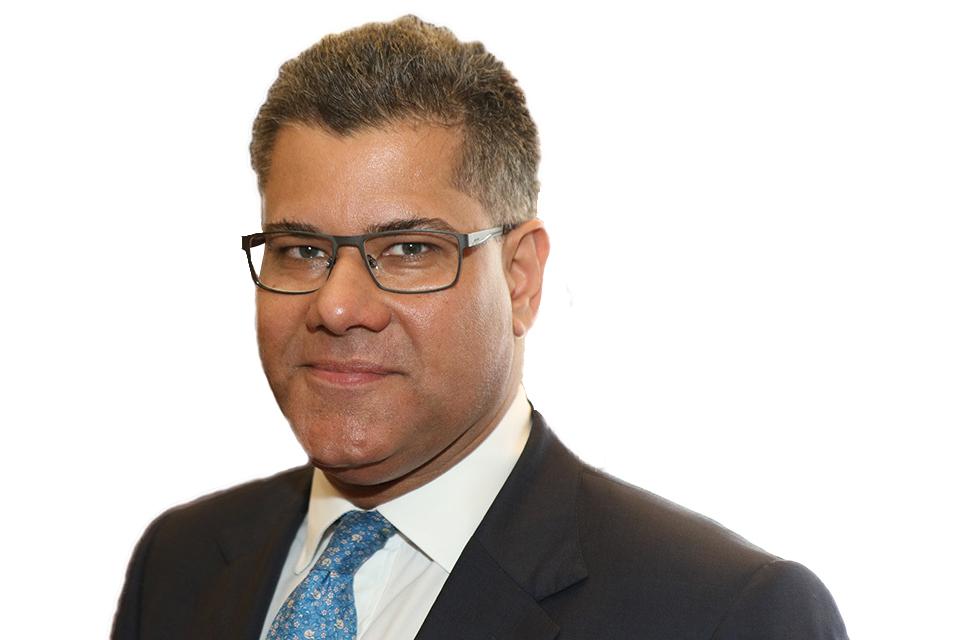
  • Alok Sharma – 2019 Statement on Universal Credit

    Below is the text of the statement made by Alok Sharma, the Minister for Employment, in the House of Commons on 8 January 2019.

    Universal credit is a vital reform that overhauls a legacy system that trapped people out of work; with six different benefits, administered by three different Government Departments, it was utterly confusing for claimants. All new claimants now receive universal credit. In the future, we will move claimants who have not changed circumstances from legacy benefits to universal credit in an approach known as managed migration. It is right that the Government should seek to align provision for all, in order to eventually operate one welfare system. The Department has long planned to initially support 10,000 people through this process in a test phase, before increasing the number of those migrated. The first phase will give us an opportunity to learn how to provide the best support, while keeping Parliament fully informed of our approach. Universal credit is proceeding as planned, with no change to the timetable of completing managed migration by December 2023.

  • Caroline Nokes – 2019 Statement on Asylum

    Below is the text of the written statement made by Caroline Nokes, the Minister for Immigration, in the House of Commons on 8 January 2019.

    The United Kingdom has a proud history of providing an asylum system that protects and respects the fundamental rights of individuals seeking refuge from persecution. This system includes supporting asylum seekers who would otherwise be destitute while their asylum claim is assessed. I am grateful for the attention Members of this House, including the Home Affairs Committee, have given to this matter.

    I have always been clear about this Government’s commitment to ensuring service users are provided with safe, secure and suitable accommodation and are treated with dignity and respect. I have listened to the concerns of local authorities and have reinforced my commitment to working in partnership with them in this area. I am also mindful of this Government’s commitment to provide value for money for the taxpayer. Today I am pleased to inform the House that we have procured contracts for asylum accommodation and support to deliver on each of these commitments.

    New contractual arrangements will be put in place in September of this year.

    Initial accommodation, dispersed accommodation, transport and associated support services will be managed as integrated services on a regional basis.

    Clearsprings Ready Homes has been awarded the contracts in the south of England and Wales;

    Mears Group has been awarded the contracts in Northern Ireland, Scotland and the north-east, Yorkshire and Humber region; and

    Serco has been awarded the contracts in the north-west of England, and the midlands and east of England regions.

    Advice, issue reporting and eligibility assistance services will be integrated into a single, nationally operated end-to-end service; the contract for these services has been awarded to Migrant Help.

    The contracts were designed after extensive engagement with local government, non-governmental organisations and potential providers. The contracts offer a number of improvements on the current arrangements to make them more sustainable and include changes to improve the customer journey and conditions for service users, addressing many of the recommendations in the Home Affairs Committee’s reports on asylum accommodation. In particular, the contracts will:

    Provide assistance to asylum seekers to apply for support and throughout their time in the accommodation and support system.

    Require accommodation providers to develop close working relationships with local authorities, liaise and consult with local authorities on the location of properties and share appropriate information with them.​

    Require providers to establish working relationships with the voluntary sector and local community-based support organisations and networks in order that they can signpost SUs to local services.

    Set clear requirements for the standards of the accommodation that meet the standards used for social housing across the UK.

    Require providers to have proactive maintenance plans and to regularly inspect and report on the findings of the inspections of their accommodation.

    Provide service users with a single point of contact, independent from accommodation providers and the Home Office, to report issues with their accommodation and to provide advice in relation to their support throughout the whole process.

    Set clear timescales within which repairs must be made, with a clear escalation process for service users.

    Enhance the approach to safeguarding through a range of measures including improved health screening and support in registering with a GP, improved safeguarding training and awareness of staff, the provision of more adapted rooms for service users with specific needs, and the provision of face-to-face advice and support for those who need it.

    Ensure that service users receive clear induction materials to help them settle into their initial accommodation and dispersed accommodation in local areas. This will seek to ensure a better understanding of the support that is being provided as well as how to navigate services in local communities.

    Support service users into mainstream services if they are granted asylum or to return to their home country if are refused.

    Gather feedback from service users about their experience of accommodation and support to monitor provider performance and improve the services that are provided.​

    Following the award of the contracts today, the Home Office will work closely with the providers to mobilise the contracts and transition services users to the new arrangements. We will communicate directly with our services users and stakeholders to ensure they are aware of the changes and how they will affect them.

    We will be working extremely closely with local authorities to ensure a smooth transition and will be involving them ever more closely in the operation of the new contracts as they go live.

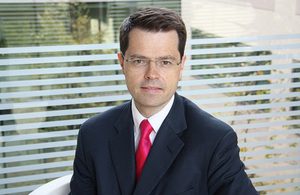
  • James Brokenshire – 2019 Speech at LGA Finance Conference

    Below is the text of the speech made by James Brokenshire, the Secretary of State for Housing, Communities and Local Government, at the LGA Finance Conference on 9 January 2019.

    Thank you so much for the kind introduction John [Councillor John Fuller, Vice-Chair, Resources Board, Local Government Association].

    It’s a genuine pleasure to be with you on my birthday – there’s nowhere I’d rather be. And you will recall that a year ago I had to step down from my role to fight lung cancer, so it’s great to be here with you, and in good health.

    As you highlighted, in many ways I feel as if I grew up with local government and certainly one of the favourite parts of my job is the chance to find out more about the work of your great councillors – our great councillors.

    You live and breathe the issues affecting your areas. You make the places you live in better and improve lives as a consequence of that. That’s why I certainly couldn’t be prouder to be working alongside you.

    But I’m under no illusion about the changes in local government. Challenging finances, shifting demographics and changing lifestyles can sometimes make it all feel like, just when you think you’ve got the answers, the questions then change again.

    And through all this, I’ve been impressed with how you continue to deliver quality public services and satisfaction remains high. I know that that is no small task.

    Local Government Finance Settlement

    But I have been determined you get the support you deserve, and the resources you need to grow your economies and ensure opportunity for all – where no one is left behind.

    It’s why, at last month’s provisional local government finance settlement, we provided a cash-increase of 2.8%: from £45.1 billion this year, to £46.4 billion next year.

    It’s a real-terms increase in resources and I’m pleased the settlement has been broadly welcomed. And in that context I’m very grateful to my colleague, Rishi Sunak, the Minister for Local Government, for his tireless efforts on this work which will continue into the coming weeks, and we look forward setting out the final settlement in early February.

    And today is another important part of that conversation.

    A conversation that addresses the immediate pressures we face, yes. But equally, it’s a conversation about a longer-term vision for a resilient, self-sufficient and innovative local government.

    A discussion that transcends numbers and duties, and reaches directly into the heart of communities.

    Or in other words: we need to explain ‘why place matters’.

    Meeting today’s pressures

    But there’s no hiding from the pressures that you face. Our additional funding will support some of our most vulnerable groups, with £650 million for social care in 2019-20.

    We’ve allocated £240 million of that to ease winter pressures – and that’s in addition to the £240 million we announced in October to alleviate winter pressures this year.

    The remaining £410 million can be used flexibly – either on adult or children’s social care and, where necessary, to relieve the demands on our NHS.

    As you know too well, adult social care is a complex issue. It’s something we need to get right.

    But I don’t think it should simply be seen as some sort of problem; it’s also very firmly an opportunity. An opportunity to reaffirm our commitment as a society to those who need our support.

    It’s why the NHS long-term plan which was announced yesterday I think will be a real game changer – giving us more flexibility to treat more patients at home or in their communities.

    Because better integration of the health and care systems remains the key, and the upcoming green paper on the future of adult social care will chart how we can do this.

    The Better Care Fund is already showing us how this might be done, for instance by improving patient inflow and freeing up nearly 2000 hospital beds. It’s a testament to the excellent work councils have been doing with their NHS partners.

    In addition, at the latest Budget the Chancellor pledged an extra £84 million over the next 5 years to expand our Children’s Social Care programmes. This will support more councils with high or rising numbers of children in care.

    It builds on the excellent work my department has already been doing to improve all services for families with complex problems, through our Troubled Families programme.

    Brexit

    But as we meet today and as we look to those pressures, we must also rise to tomorrow’s challenges.

    Brexit will generate a number of opportunities for local government. I’m grateful for how you’ve worked to prepare, to ensure we can be confident about our departure from the European Union.

    But I know that many of you, like me, have heard the same message on the doorstep – get on with the job and deliver Brexit.

    And looking ahead to next week’s vote – I’m clear that the deal we have on offer is a fair one.

    It meets the objectives the Prime Minister set out at the start of negotiations, and involves significant concessions from the EU.

    It delivers on the referendum result. It takes back control of our borders, our money and our laws. It protects jobs, security and the union.

    And the alternatives simply take us back to square one. More division and more uncertainty.

    We all have a duty to ensure every community can benefit from a modern, outward-looking Britain after Brexit.

    And no one is better placed to deliver that than you, and local authorities will be, I think, at the heart of our success.

    I am committed to ensuring local government and local leaders are adequately prepared to respond to any Brexit scenario.

    I have set up a delivery board to support the implementation of changes linked to Brexit within local government – and the work of this group will expand in the coming weeks and months.

    And I will shortly be announcing the allocation of £35 million to fund local authorities to support with their work on Brexit preparations.

    Self-sufficient local government

    But I’m mindful that our long-term thinking does require long-term funding – and I know you have called for greater certainty as we reach the end of the current multi-year deal.

    Next year we will finalise the new formula. A formula that makes the link between funding and local circumstances much clearer.

    And I’m encouraged by the strong consensus on the principles of our review of relative needs and resources. Because it doesn’t matter if you’re north or south, rural or urban, large or small – it simply has to work for everyone.

    Our business rates retention reform consultation will build on my department’s existing work with the sector to improve the way local government finance works.

    Because business rates retention will be at the heart of this change – the engine of a self-sufficient growth-led local government of the future.

    Under today’s system, local authorities estimate they will retain around £2.4 billion in business rates growth in 2018-19 – a significant revenue stream on top of the core settlement funding.

    And I recognise business rates appeals are an issue – and our consultation will address this too.

    Ultimately, we want to give local authorities – give you – more control over the money you raise. Our plans to increase business rates retention from 75% from 2020 does that and more.

    As well as continuing our existing pilots, at the draft settlement, I announced plans for a further 15 new pilots for 2019-20 and will also be piloting the 75% retentions rates in London.

    21st century local government

    Every authority stands to reap the rewards of increased growth in business rates income. And as we look ahead to the really important Spending Review, we have a unique chance to rethink and recast what local government in the 21st century can do.

    The days of people passively accepting what’s offered, I think, are long gone. In our digital age, the ability to feed-back, interact with and shape services is the new norm and government – central and local – needs to reflect that.

    It’s something my colleague Rishi Sunak has been looking at with his digital declaration: exploring how to apply new technology and new thinking to old problems, and transforming the ways we think about essential services.

    But the future of local government isn’t just in the cloud – it’s also on our high streets and in our communities.

    It’s why we provided a £1.5 billion support package for our high streets, with a further £420 million to repair and improve our roads and highways.

    And the lifting of the HRA (Housing Revenue Account) cap will put local government back on the front line of house building – local authorities can now borrow more to build more.

    And at the provisional settlement, I committed a further £20 million to maintain the New Homes Bonus baseline in 2019-20, to ensure we continue to reward councils for delivering the homes our country needs.

    Since it began in 2011, we’ve allocated £7.9 billion to reward 1.6 million additional homes.

    Because the success of our communities very much depends on all parts of our community having a decent, affordable, secure home – the challenge of a generation.

    Conclusion

    So, in conclusion, I’m pleased to be celebrating my 51st birthday with you.

    It’s a turning point for me personally after a challenging year – and equally I know the different challenges that you have faced too.

    But I am full of admiration for how you have responded – showing what world-class local government looks like.

    And while the year ahead could inevitably provide some new challenges, perhaps new surprises, there’s no question that we’re all better placed to face it – and thrive.

    And I look forward to working with you: to meet the challenges and to use the opportunities that lie ahead.

    To build the homes our country needs.

    To strengthen our communities.

    To encourage growth, helping ensure every part of our country can prosper.

    It’s the reason why we’re all here and why I’m genuinely so proud and privileged to work alongside you.

    Thank you.
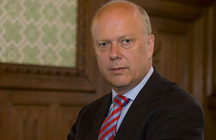
  • Chris Grayling – 2019 Statement on Drones

    Below is the text of the statement made by Chris Grayling, the Secretary of State for Transport, in the House of Commons on 7 January 2019.

    I should like to make a statement about the action the government are taking on our future policy on drones.

    The disruption caused by drones to flights at Gatwick airport last month was deliberate, irresponsible and calculated, as well as illegal. It meant days of chaos and uncertainty for over 100,000 passengers at Christmas, one of the busiest times of the year. Carefully planned holidays were disrupted, long-expected reunions between friends and relatives missed. Families were forced to spend hours at an airport, not knowing if or when they would reach their destinations – completely unacceptable and utterly illegal. I pay tribute to all at Gatwick and other airports who worked very hard to make sure people did get away, albeit belatedly, for their Christmas breaks, and I thank all those in the defence world and the police who worked hard to get the airport back together again, and of course Sussex police are now leading the investigation into this criminal activity.

    I am clear that, when caught, those responsible should face the maximum possible custodial sentence for this hugely irresponsible criminal act, and I want to assure the House that my department is working extremely closely with airports, the Home Office, the Ministry of Defence, the Civil Aviation Authority and the police to make sure our national airports are fully prepared to manage any repeat of what was an unprecedented incident. I spoke personally to the heads of the major UK airports before Christmas, and later this week the aviation minister, Baroness Sugg, will meet them again for an update on progress. In the meantime the Ministry of Defence remains on standby to deal with any further problems at Gatwick or any other airport if required.

    This incident was a stark example of why we must continue to ensure drones are used safely and securely in the UK. Today I am publishing the outcome of our recent consultation, “Taking flight: the future of drones in the UK.” We received over 5,000 responses to that consultation reflecting a broad range of views. Those responses underlined the importance of balancing the UK’s world-leading position in aviation safety and security with supporting the development of this emerging industry. The government are taking action to ensure that passengers can have confidence that their journeys will not be disrupted in future, aircraft can safely use our key transport hubs, and criminals misusing drones can be brought to justice.

    The UK is where technology companies want to build their businesses, invest in innovation and use science and engineering to bring immense benefits to this country. Drones are at the forefront of these technological advances and are already being used in the UK to great effect. Our emergency search and rescue services use drones on a regular basis. Drones can also reduce risks for workers in hazardous sectors such as the oil and gas industries, and this technology is also driving more efficient ways of working in many other sectors, from delivering medicines to assisting with building work.

    However, the Gatwick incident has reinforced the fact that it is crucial that our regulatory and enforcement regime keeps pace with rapid technological change. ​We have already taken some big steps towards building a regulatory system for this new sector. It is already an offence to endanger aircraft. Drones must not be flown near people or property and have to be kept within visual line of sight. Commercial users are able to operate drones outside of these rules, but only when granted CAA permission after meeting strict safety conditions.

    Education is also vital to ensure everyone understands the rules about drone use. That is why the CAA has been running its long-standing Dronesafe campaign and Dronecode guide – work that is helping to highlight these rules to the public. And on 30 July last year (2018) we introduced new measures that barred drones from flying above 400 feet and within 1 km of protected airport boundaries. In addition, we have introduced and passed legislation that will mean that from November all drone operators must register and all drone pilots complete a competency test.

    However, we now intend to go further. Today’s measures set out the next steps needed to ensure that drones are used in a safe and secure way and that the industry is accountable. At the same time these steps will ensure that we harness the benefits that drones can bring to the UK economy.

    A common theme in those 5,000 consultation responses was the importance of the enforcement of safety regulations. The government share that view. The majority of drone users fly safely and responsibly, but we must ensure that the police have the right powers to deal with illegal use. We will therefore shortly be introducing new police powers. These include allowing the police to request evidence from drone users where there is reasonable suspicion of an offence being committed, as well as enabling the police to issue fixed penalty notices for minor drone offences. Those new powers will help to ensure effective enforcement of the rules. They will provide an immediate deterrent to those who might misuse drones or attempt to break the law.

    My department has been working closely with the Home Office on the legislative clauses that will deliver these changes. It is of course crucial that our national infrastructure, including airports and other sites such as prisons and energy plants, are also adequately protected to prevent incidents such as that at Gatwick. We must also ensure that the most up-to-date technology is available to detect, track and potentially disrupt drones that are being used illegally, so we have also consulted on the further use of counter-drone technology. Those consultation responses will now be used by the Home Office to develop an appropriate means of using that technology in the UK.

    Of course, aviation and passenger safety is at the heart of everything we do. While airlines and airports welcomed our recent airport drone restriction measures, they also asked for the current airport rules to be amended in order to better protect the landing and take-off paths of aircraft. We have listened to those concerns, and we have been working with the CAA and NATS to develop the optimum exclusion zone that will help to meet those requirements. It is important to stress that any restriction zone would not have prevented a deliberate incident such as that at Gatwick. However, it is right that proportionate measures should be in place at airports to protect aircraft and to avoid potential conflict with legitimate drone activity. We will therefore introduce additional protections around airports, with ​a particular focus on protected exclusion zones from runway ends, alongside increasing the current aerodrome traffic zone restrictions around airports. Drone pilots wishing to fly within these zones must do so only with permission from the aerodrome air traffic control. We will amend the Air Navigation Order 2016 to implement these changes.

    I want to address some of the rather ill-judged comments that have been made by Labour Members. Let me remind them of three things. First, the event at Gatwick airport was a deliberate criminal act that can carry a sentence of life imprisonment. We can pass new laws until the cows come home, but that does not stop people breaking them, and the law is as tough as is necessary to punish the perpetrators of an attack such as this. Secondly, this was an entirely new type of challenge. It is noteworthy that, since the events at Gatwick, we have been approached by airports around the world for our advice on how to handle something similar. Thirdly, the issue was solved only by the smart and innovative use of new technology. For security reasons, I am not going to give the House details of how this was achieved, but I want to extend my thanks to the Ministry of Defence for moving rapidly to put a new kind of response into the field.

    There is no question but that lessons have to be learned from what happened at Gatwick. Passengers have to be able to travel without fear of their trips being disrupted by malicious drone use. Airports must be prepared to deal with incidents of this type, and the police need the proper powers to deal with drone offences. We must also be ready to harness the opportunities and benefits that the safe use of drones can bring. The measures I have announced today in response to the consultation will take us forward on that front, and I commend this statement to the House.

  • Sajid Javid – 2019 Statement on Migrant Crossings

    Below is the text of the speech made by Sajid Javid, the Home Secretary, in the House of Commons on 7 January 2019.

    With permission Mr Speaker, I would like to make a statement about the number of migrants trying to cross the English Channel in small boats and what the government is doing in response.

    But before that, I know the whole House will want to join me in sending our thoughts and prayers to those injured in the attack at Manchester’s Victoria station on New Year’s Eve and to all those affected by this cruel and senseless act.

    I would also like to thank the emergency services for their courageous response.

    Thankfully Mr Speaker there were no fatalities.

    And I am pleased to say that all three victims have now been discharged from hospital.

    Mr Speaker, let me now turn to the issue of English Channel migrant crossings.

    Over recent weeks, we saw a sharp increase in the number of migrants attempting to cross the Channel to the UK in small boats.

    Over 500 migrants – mostly Iranian – attempted to travel to the UK on small vessels in 2018.

    80% of them attempted this in the last three months of the year.

    Around 40% of the attempts were either disrupted by French law enforcement or returned to France via French agencies.

    Since 1 January, a further 25 have attempted to cross the Channel but they were disrupted.

    In addition, just this morning, a dinghy was discovered along the Kent coast.

    A number of individuals are now going through UK immigration procedures and 1 person has been arrested.

    Mr Deputy Speaker, I’m sure the House will want to join me in thanking all the law enforcement agencies and all those involved in the response for their tireless efforts over Christmas and the new year.

    This includes: Border Force, Immigration Enforcement, the Coastguard, the National Crime Agency, and the RNLI many of whom I met in Dover last week.

    I would also like to thank our French law enforcement partners for their efforts to date which have been collaborative, swift and thorough.

    The English Channel contains some of the busiest shipping lanes in the world the weather conditions are often treacherous and the inflatable boats that are being used are woefully ill-equipped to make such dangerous journeys.

    The migrants who choose to make the trip are putting their lives in grave danger and can, at times, also create dangerous situations for our rescue services.

    The reasons behind the increased crossings are diverse – and in many cases, are outside of our control.

    First, instability in the regions such as the Middle East and North Africa are driving people out of their homes in search of better lives in Europe.

    Second, organised crime groups are preying on and profiting from these vulnerable and often desperate people.

    They are falsely promising them safe crossings to the UK – even though the journey is one of the most hazardous and the most dangerous possible.

    Third, strengthened security at the French / UK border has meant it has become increasingly difficult for stowaways to illegally enter the UK in trucks and cars leading to more reckless attempts by boat.

    I have been very clear that robust action is needed to protect people, our borders and to deter illegal migration.

    Over the festive period, I took the decision to declare the situation a ‘Major Incident’.

    I appointed a dedicated Gold Command and I stepped up the UK’s response.

    As part of joint action agreed with the French, I have ordered two UK Border Force boats to be redeployed from overseas to patrol the Channel.

    This is in addition to the two already undertaking enhanced patrols in these waters.

    This will mean 4 Border Force Cutters in total.

    And this is in addition to the 2 Coastal Patrol Vessels currently operating and aerial surveillance of the area.

    Last week, I also requested additional help from the Ministry of Defence while we await the return of the 2 boats currently overseas.

    I am grateful that the Royal Navy has kindly offered the use of HMS Mersey which started patrols on Friday.

    I am also continuing to discuss with the French, what more they can do to stop people from attempting to make these crossings from France in the first place.

    I welcome the action plan that the French have outlined just this Friday which includes a commitment to increased surveillance and security in maritime areas prevention campaigns in French coastal areas to stop people from setting off in the boats in the first place and a reinforced fight against smuggling gangs.

    I’m also pleased to say that The National Crime Agency has also redoubled its efforts.

    Last week, two men were arrested on suspicion of the illegal movement of migrants.

    In addition, we’re doing important work in the home countries of the would be migrants to reduce factors which compel them to make these dangerous journeys in the first place.

    For example, we’re helping to create jobs, to build infrastructure, tackling modern slavery, providing education and delivering life-saving humanitarian assistance in response to conflicts and natural disasters.

    We’re also doing important work to undermine organised crime groups and we’ve committed £2.7 billion to the humanitarian response in Syria making us the second biggest unilateral donor to the region.

    We are also on track to resettle 20,000 refugees fleeing the conflict in Syria by 2020 as well as up to 3,000 of the most vulnerable people from the Middle East and North Africa, including children at risk of exploitation and abuse.

    In 2017, the UK resettled more refugees under national resettlement programmes than any other EU state.

    Let me reassure the House that I am continuing to monitor the issue of Channel crossings daily.

    Rt Hon and Hon Members will know that these crossings have also provoked a debate.

    But I’m not afraid to say that I think there are some legitimate questions that need to be asked.

    Why, for instance, are so many people choosing to cross the Channel from France to the UK when France itself is a safe country?

    The widely accepted international principle is that those seeking asylum should claim it in the first safe country that they reach – be that France or elsewhere.

    Indeed, many asylum seekers do just this.

    Domestic legislation from 2004 clearly states that if an individual travels through a safe third country and fails to claim asylum, it will be taken into account in assessing the credibility of their claim.

    Following these recent events, I have instructed my officials to look at how we can tighten this further and ensure these provisions are working effectively.

    Mr Deputy Speaker, Britain has a proud tradition of welcoming and protecting asylum seekers.

    We also have a long history of accepting economic migrants too – people like my very own parents.

    But all these routes need to be safe and they need to be controlled.

    Getting in a rubber dinghy is not.

    That is why I will not accept these Channel crossings as just a matter of a fact of life.

    Safeguarding lives and protecting the UK border are crucial Home Office priorities.

    And while we have obligations to genuine asylum seekers and we will uphold we will not standby and allow reckless criminals to take advantage of vulnerable people.

    Encouraging people to dangerously cross the Channel to come here is not an act of compassion.

    So I will continue to do all I can to stop these dangerous crossings.

    I commend this statement to the House.

  • Matt Hancock – 2019 Statement on the NHS Plan

    Matt Hancock

    Below is the text of the speech made by Matt Hancock, the Secretary of State for Health, in the House of Commons on 7 January 2019.

    Mr Speaker, with permission, I would like to make a statement about the NHS Long Term Plan.

    The plan sets out how we will guarantee the NHS for the future. It describes how we will use the largest funding settlement in the history of the NHS to strengthen it over the next decade, rising to the challenges of today and seizing the opportunities of the future.

    It’s worth taking a moment to reflect on when the NHS was first proposed from this dispatch box by Churchill’s Government in 1944.

    When even after the perils of war, infant mortality was nearly 10 times now, when two-thirds of men smoked and life expectancy was just 66.

    Ten years before we knew the structure of DNA, 4 decades before the first MRI.

    The NHS has throughout its history led the world. But one constant has been that core principle set out by the national government – that the NHS should be available to all, free at the point of use, according to need, not ability to pay.

    Mr Speaker, as last year’s 70th anniversary celebrations proved, the NHS is one of our proudest achievements.

    We all have an emotional connection to it, our own family story, and we all owe an enormous debt of gratitude to the people who make the NHS what it is, and work so hard, especially during the winter months when the pressures are greatest.

    Because we value the NHS so much, the new £20.5 billion funding settlement announced by the Prime Minister in June provides the NHS with funding growth of 3.4% a year in real terms over the next 5 years.

    This means the NHS’s budget will increase in cash terms by £33.9 billion, rising from £115 billion this year to:

    £121 billion next year
    £127 billion in 2020 to 2021
    £133 billion in 2021 to 2022
    £140 billion in 2022 to 2023
    and then £148 billion in 2023 to 2024

    This rise of over , over £1 billion more in cash terms than proposed in June, delivers on our commitment to the NHS and will safeguard the NHS for the long term.

    This will help address today’s challenges. The NHS is facing unprecedented levels of demand. Every day, the NHS treats over 1 million people.

    Last year, NHS staff carried out 2 million more operations and saw over 11 million more outpatients compared to 2010.

    Despite record demand, performance was better this December than last.

    As well as addressing today’s challenges, the NHS Long Term Plan sets the NHS up to seize the opportunities of the future.

    At the heart of this plan is the principle that prevention is better than cure.

    In the future, the NHS will do much more to support people to stay healthy, rather than just treat them when ill.

    So, first, the biggest increase in funding – at least £4.5 billion – will go to primary and community care, because GPs are the bedrock of the NHS.

    That means patients will have improved access to their GPs and greater flexibility about how they contact them.

    Better use of community pharmacists, better access to physiotherapists, and improving the availability of fast and appropriate care to help communities keep people out of hospital altogether.

    Next, the principle is that organisations across the NHS, local councils, innovators, and the voluntary sector, will all work more closely together so that they can focus on what patients need.

    Next, there will be a renewed clampdown on waste so we can ensure every penny of the extra money goes towards improving services and giving taxpayers the best possible return.

    Mr Speaker, ultimately staff are the heart of the NHS – the people who work in the NHS. And the Long Term Plan commits to major reforms to improve working conditions for NHS staff, because morale matters.

    Staff will receive better training and more help with career progression. They will have greater flexibility in their work, be supported by the latest technology that works for them, and be helped more with their own mental health and wellbeing.

    This already happens in the best parts of the NHS and there’s been a huge amount of work to support the people who work in the NHS. But I want to see it happen evrywhere.

    We will bring in training, mentoring and support to develop better leadership in the NHS at all levels.

    We will build on work already going on to recruit, train and retain more staff so we can address critical staff shortages.

    The plan published today is the next step in our mission to make the NHS a world-class employer and deliver the workforce the NHS needs.

    To deliver on these commitments, I have asked Baroness Dido Harding to chair a rapid programme of work, which will engage with staff, employers, professional organisations, trade unions, think tanks and others to build a workforce implementation plan that puts NHS people at the heart of NHS policy and delivery.

    Baroness Harding will provide interim recommendations to me by the end of March on how the challenges of supply, reform, culture and leadership can be met, and final recommendations later in the year as part of the broader Implementation Plan that will be developed at all levels to make the Long Term Plan a reality.

    Mr Speaker, that is the approach we will be taking to support the NHS over the next decade, but what does it mean for patients and the wider public?

    It means patients receiving high-quality care closer to home.

    Supporting our growing elderly population to stay healthy and independent for longer.

    More personalised care, more social prescribing, empowering people to take greater control and responsibility over their own health through prevention, and personal health budgets.

    It means access to new digital services to bring the NHS into the 21st century.

    More support for mothers by improving maternity services, more support for parents and carers in the early years of a child’s life so we can be the best place in the world – and this country can be the best place to be born, in every sense.

    We will improve how the NHS cares for children and young people with learning disabilities and autism by ending inappropriate hospitalisation, reducing over-medicalisation, and providing quality care in the community.

    The NHS will tackle unacceptable health inequalities by targeting support towards the most vulnerable in areas of high deprivation.

    And to help make a reality of the goal of parity of esteem between mental and physical health, we are going to increase mental health service budgets not by £2 billion, but £2.3 billion a year.

    For the first time ever, we will introduce waiting time targets for community mental health so that people get the treatment they need when they need it.

    And we will expand services for young people to include people up to the age of 25.

    Mr Speaker, the Long Term Plan focuses on the most common causes of mortality, including cancer, heart disease, stroke and lung disease.

    The health service will take a more active role in helping people to cut their risk factors: stopping smoking, losing weight and reducing alcohol intake.

    The NHS will improve the quality and speed of diagnosis and improve treatment and recovery so we can help people to live well and manage their conditions.

    And we will upgrade urgent care so people can get the right care more quickly.

    All in all, Mr Speaker, the NHS Long Term Plan has been drawn up by the NHS: by over 2,500 doctors, clinicians, staff, and patients.

    It will continue to be shaped and refined by staff and patients through an implementation plan framework in the spring, with events and activities across the country to help people understand what it means for them and their local NHS services.

    The experts who wrote the plan say it will lead to 150,000 heart attacks, strokes and dementia cases prevented, 55,000 more people surviving cancer each year – in all, half a million lives saved over the next ten years. Funded by taxpayers, designed by doctors, delivered by this government.

    It’s an important moment in the history of the NHS.

    Our Long Term Plan will ensure the NHS continues to be there, free at the point of use, based on clinical need, not ability to pay, better resourced with more staff.

    Newer technology with new priorities, fit for the future, so it is always there, in our hour of need.

    And I am proud to commend this statement to the House.

  • Chris Grayling – 2019 Statement on Ferry Operators

    Below is the text of the statement made by Chris Grayling, the Secretary of State for Transport, in the House of Commons on 7 January 2019.

    The government has entered into 3 contracts with ferry operators to provide additional ferry capacity and services into the UK as part of no deal EU Exit contingency planning.

    Whilst the ambition of government is to ensure an orderly exit from the EU, the Department for Transport has been undertaking a wide range of work to mitigate the impact on the transport system of a no-deal EU Exit.

    Significant work has taken place to understand the effect that this would have on the UK border and the impact on flows of goods between the UK and EU. Whilst the government has made clear it is committed to ensuring frictionless movement across the UK border, the scale of the potential disruption to the Dover Straits, if additional customs checks were introduced in Calais, Coquelles and Dunkirk, where freight services disembark, could be very significant. Given the importance of these routes, contingency work is being undertaken to mitigate potential impacts and ensure that goods can continue to flow into and out of the UK as freely as possible.

    A priority for government is to ensure that the Port of Dover and the Eurotunnel can continue to operate at the maximum possible capacity. The government is therefore working with both organisations and our French counterparts in Calais, Coquelles and Dunkirk so that any disruption or drop in throughput is managed effectively and mitigated.

    There is a clear willingness to reach agreements which secure the continued operation of these vital trade routes in all scenarios and the government remains confident that there will not be major disruption to the flow of goods across the border. Nevertheless, the potential for a decline in throughput remains possible in a worst case scenario and the government is therefore planning for all eventualities.

    As one of several contingency measures being undertaken, the Department for Transport has completed a procurement process to secure additional ferry capacity between the UK and the EU which can be used for critical goods such as medical supplies in the event of disruption to cross-Channel crossings. A negotiated procurement procedure without prior publication was concluded as allowed for by Regulation 32 of The Public Contracts Regulations 2015. An accelerated competitive process was carried out in order to ensure that capacity can be in place in time for a No Deal exit whilst at the same time securing value for money for the taxpayer. The Department approached a number of shipping providers capable of providing additional freight capacity in order to ensure fairness for the market and also engaged external expertise to ensure value for money for the taxpayer.

    Bids were evaluated on the basis that they met our strategic aims of providing additional freight capacity for a No Deal Brexit scenario. Bids were reviewed against a number of criteria, including journey time, quality of delivery plans, and the pricing submitted by bidders.

    The bids we received to provide capacity were subject to technical, financial and commercial assurance as part of standard due diligence procedures and consistent with that undertaken on all government contracts. This included a price benchmarking exercise to ensure that the taxpayer was getting good value for money, and assurance on the delivery plans of our bidders.

    The department commissioned external advice from three respected professional advisers to support this work. Three contracts were agreed with operators totalling c£103 million.

    Two contracts went to established operators, Brittany Ferries (£46.6 million) and DFDS (c£42.6 million). These contracts provide for additional capacity between the UK and EU on existing routes, via the provision of additional services and additional vessels. The contracts agreed with them include early termination provisions and other typical contractual provisions to ensure government has the right protections in place, such as in the event of an operator becoming insolvent.

    The routes agreed with Brittany and DFDS are away from the Dover Straits, and will run from the Ports of Immingham and Felixstowe (DFDS) and Poole, Plymouth and Portsmouth (Brittany) to destinations in Germany (Cuxhaven), the Netherlands (Vlaardingen) and France (Caen, Cherbourg, Le Havre, and Roscoff).

    The third contract was awarded to Seaborne Freight (£13.8 million), a new operator to provide a new service between Ramsgate and Ostend. Seaborne Freight has been preparing for some time to operate services on this route. The management team of Seaborne has extensive experience in the shipping and maritime sector, including the operation of ferry services on cross-channel routes, freight brokerage, port management and vessel chartering.

    Whilst the broad contract structure is the same for all three contracts including the provision that payment will only be made in arrears and on the successful provision of services, the Seaborne contract is also subject to the achievement of a range of key milestones including in relation to finalising funding and vessel chartering agreements.

    As with many operators in the sector, it is not uncommon that they do not own their own vessels and will be chartering them through third parties. The department has reviewed their plans for sourcing vessels with the support of external advisers. A number of large institutional investors are backing this service and the government’s contract represents a small part of the overall investment required by Seaborne to open this route. These lenders undertake their own rigorous due diligence before making financial commitments, providing a further level of assurance to government. Seaborne and my department are also working closely with Thanet Council to ensure that Ramsgate Port is ready to take new services. A programme of work to prepare the infrastructure is underway.

    In total the additional freight capacity delivered by these three contracts will be equivalent to around 8% of normal flows across the Dover Straights. Whilst this will not be sufficient to mitigate the full level of disruption possible in a worst case scenario, it will enable the government to provide essential capacity for the highest priority goods including medical supplies.

    In terms of next steps, the Department for Transport will provide support to and oversight of all operators to ensure that these services are delivered to meet the terms of the contracts agreed.

    I will provide further updates to Parliament at the appropriate points.

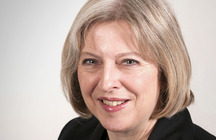
  • Theresa May – 2019 Speech on the NHS

    Below is the text of the speech made by Theresa May, the Prime Minister, at Alder Hey Hospital in Liverpool on 7 January 2019.

    Thank you Simon [Stevens] for giving us that overview of the NHS Long-Term Plan.

    I am delighted to be here with you all on this exciting occasion – because it’s one that truly marks a historic moment for patients across the nation.

    And I am pleased that this plan is being launched here at Alder Hey – a hospital recognised for delivering world-class care. It’s over one hundred years since Alder Hey first opened its doors to treat and improve the lives of our children. And much has changed since then.

    Advances in healthcare – from vaccinations through to drug treatments – have dramatically improved young people’s health.

    But what has not changed is the extraordinary care and compassion of the hospital’s staff.

    Something I have just seen for myself on the general paediatric ward – where brave young children are treated with outstanding kindness and dedication, and of course first-class medical care.

    And today, as we launch the Long-Term Plan here at Alder Hey – we are taking a big step to secure the future of our NHS for our children – and for their children.

    Now I have always felt incredibly proud to live in a country with a health service that is there for all of us when we need it most. Free at the point of use. Based on clinical need and not the ability to pay, and there for us at every stage of our lives.

    And at the very heart of our health service are its staff. Time and again, our doctors, nurses and other health professionals have demonstrated why the NHS stands shoulder to shoulder with the best in the world.

    They are the reason why the NHS is one of this country’s greatest institutions. An institution that is consistently what makes the people of this country most proud to be British.

    As a government we have always recognised this unique importance of the NHS.

    That’s why in 2010, when we took office and had to deal with the record peacetime deficit we inherited, we prioritised the NHS with real terms increases in spending every year.

    That money has delivered real improvements for patients.

    But demand for NHS services continues to grow – and our health service faces increasing challenges from an ageing population with complex health needs. It also needs to transform services and exploit the opportunities provided by new technologies.

    NHS leaders told us that making the necessary changes in technology, workforce and infrastructure will take time and careful planning. That’s why last year – in its 70th year – I committed to an ambitious funding proposal to help make the NHS fit for the future.

    Not a one-off injection of cash. Not money to plug a gap or shore up a problem – but funding to protect the long-term future of the NHS.

    Over the next five years – the NHS England budget will increase by £20.5 billion in real terms compared to today.

    This commitment is possible because of our strong public finances, and because as we leave the EU and take back control of our money, we will no longer be sending vast annual sums to Brussels.

    And crucially we have funded this commitment with no increase to people’s taxes.

    The NHS is the public’s priority, and so I have made it my number one spending priority.

    In return for this funding – because this is not just about money – I asked the NHS to draw up a long term plan, one that is clinically led and locally supported, with an absolute focus on cutting waste and ensuring every penny is well spent.

    And as we have just heard from Simon – this is a plan that will set the vision for the NHS over the coming decade.

    So together – the five-year funding settlement along with the ten-year plan – will provide both the certainty and long-term direction needed to transform patient care and secure the future of our NHS.

    Now as Simon has just referenced, last June, I set out six priorities which I wanted to see central to the plan – and which I am pleased to see reflected today.

    A more integrated health system that views health holistically – organising care around the physical, mental and social needs of the patient, and centring on what matters most to them.

    A health service that focuses much more on prevention and early diagnosis in order to address the needs of an ageing population.

    An emphasis on reducing variation between organisations across the NHS so that the world class care available to some reaches all parts of the country.

    A service where the workforce are better supported and recognised as the lifeblood of our NHS.

    And I wanted to see the NHS make greater use of technology, not only to make healthcare safer and more effective – but to make the most of exciting new possibilities and give you greater control over your own care. That means everything from being able to monitor conditions from the comfort of your home, to accessing your GP via your smartphone.

    Finally, I wanted to see the NHS go further than ever before to ensure mental health gets the proper attention it deserves, putting it on a par with physical health.

    So we are reshaping the NHS around the changing needs of patients today.

    The Long-Term Plan delivers against each of these six priorities – and much more – with actions backed up by record investment.

    And precisely because the plan is over 10 years, we can go much further on integrating care and embedding technology than we otherwise would have been able to.

    But a plan is only as good as its delivery.

    And ensuring its benefits are felt by patients will require strong leadership and front line support.

    That means empowering the NHS workforce to deliver – encouraging leaders in each organisation to learn from the best and for the best to help others.

    And while many hundreds of people have contributed to the plan’s development, over the coming months a broader range of local NHS leaders and front line staff will need to shape how it is implemented across the country.

    And I want to thank Baroness Dido Harding for leading on the workforce aspects of this.

    Not everything can be done at once – so, as always, there will be some careful choices to make. But delivered effectively our Long-Term Plan for the NHS will secure our health service for generations to come.

    Finally, I want to say a huge thank you to Simon Stevens, Ian Dalton, NHS staff, charities, voluntary groups and patients – and all those who have worked so hard, and contributed to this plan – as well as to Matt Hancock and his predecessor, Jeremy Hunt.

    This is an historic moment. Our vision is clear. Our commitment is assured. So let’s deliver the NHS of the future.