Tag: 2019

  • Philip Hammond – 2019 Speech at CBI Lunch in Davos

    Below is the text of the speech made by Philip Hammond, the Chancellor of the Exchequer, at the CBI in Davos on 24 January 2019.

    Let me start by passing on the PM’s apologies – I know she wanted to be here to address you this afternoon, but events have dictated otherwise.

    But I am delighted to be back here in Davos…

    …and to have the opportunity to address you once again.

    Professor Schwab first invited political leaders to what would become the World Economic Forum in January of 1974.

    It was a more leisurely affair in those days…

    In between skiing, the group of leaders who gathered here in 1974 were grappling with profound economic and political uncertainties:

    …the energy crisis…

    …sky-high inflation…

    …the collapse of the Bretton-Woods consensus.

    And here we are, 45 years later…

    …grappling with profound economic and political uncertainties!

    Plus Ça change!

    Closest to home, the terms of Britain’s withdrawal from the European Union remain unresolved, as the deadline looms ever larger.

    More broadly, the global economy is slowing…

    …and the threat of rising protectionism is increasingly affecting patterns of trade.

    And the impact of the coming wave of technological change on our societies and our economies is becoming ever more apparent…

    …bringing with it both challenges and opportunities.

    But I want to argue today that even against this rather inauspicious backdrop, Britain can – and will – prosper in the years ahead.

    The fundamentals of our economy are strong.

    Its resilience through the turbulence of the Brexit process has been particularly noteworthy…

    …and its growth prospects, according to the latest IMF forecast – providing we approve a deal with the EU – look perfectly respectable alongside our G7 peers.

    Our commitment to free and open markets is deep and enduring.

    And we are at the front of the pack in preparing our economy for the technology change.

    So my message today is this: Britain is a great place to do business.

    And we are determined, as we leave the European Union, to make sure that it remains that way.

    Let me begin with the subject that is uppermost in everybody’s mind – Brexit.

    It’s clear from our soundings last week that while Parliament has voted against the PM’s deal…

    …it has not yet formed a clear view of what it is in favour of.

    Next week, we will see various interventions by backbenchers.

    Some of which will attempt to create a mechanism for Parliament to express its view of the way forward.

    And in the meantime the government will continue to pursue a negotiated settlement that is likely to be acceptable to Parliament.

    And believe me, I understand the perplexity with which many of you, as business leaders, view the politics of Brexit.

    And I feel your frustration at the process and I have to say I share much of it!

    But politics doesn’t work like business.

    And while I am pretty clear what all my business interlocutors are seeking is an economic fix…

    …I want to explain to you this afternoon why we need to get the politics, as well as the economics, of this process right.

    Because even from the narrowest interpretation of business interest, it would be a Pyrrhic victory indeed to deliver a Brexit that appeared to meet the needs of the economy…

    …but which shattered the broad consensus behind our country’s political and economic system.

    In the 2016 referendum a promise was made to the majority who voted for Brexit – that they were voting for a more prosperous future.

    Not leaving would be seen as a betrayal of that referendum decision.

    But leaving without a deal would undermine our future prosperity, and would equally represent a betrayal of the promises that were made.

    And that is why I, having campaigned vigorously to remain, in the referendum have come to believe that the only credible and sustainable solution is for us to leave the European Union.

    To honour the referendum decision but to do so in a way that protects our economy in order to allow us to deliver that future prosperity that those voters were promised when they voted to leave the EU.

    The only sustainable solution is a negotiated settlement with the EU:

    A deal that supports the economy, protects jobs and allows us to continue a close trading partnership with our European neighbours.

    Now to do that right now, we need to find a way around the impasse over the backstop.

    And if we are to do so, it will take ingenuity and flexibility on the part of the EU.

    As well as a spirit of compromise on the part of some of my colleagues.

    It is surely in our national interest, all of us, to preserve faith in the political system and the democratic process…

    …as well as protecting our economy as we leave this process…

    …Surely in our interest to move forward to agree a negotiated Brexit that is a compromise that can begin to heal the nation and heal both political parties.

    Failure to do so could lead to instability, populism (political content removed).

    I know that for many business leaders…

    …right up there alongside the question of access to European markets…

    …is the question of access to labour.

    Openness to global talent is a fundamental feature of the UK economy.

    Migrants have made a huge contribution to our country over our history – and they will continue to do so in the future.

    But at the same time, one of the messages that almost all politicians divine from the Referendum result…

    …is a concern about our ability to control European Union migration: less, I personally think, about absolute numbers and more about a sense we have lost control of our own borders.

    And so we have to be clear that as we leave the European Union, free movement will end…

    …although I can assure you that short-term mobility for both business and leisure will continue.

    And the immigration white paper, published in December, offers a pragmatic way forward.

    First, while it constructs a universal framework for future migration control, it does not rule out the possibility that future trade deals – including with the EU – might make provision in this area.

    Second, it proposes a skills-based immigration system – where it is workers’ skills that matter, not which country they come from.

    And third, we have announced an extensive consultation into where the threshold for the highly skilled tier should be set…

    …and how we should deal with the challenge presented by the economies need for intermediate-skilled workers:

    The technicians; the carers; the chefs, the construction workers and the myriad others whose skills we badly need – but who often earn less than £30,000.

    Business should be hugely reassured by this commitment to engagement.

    And particularly to a twelve-month consultation period.

    So, while free movement is ending, the detail of what will replace it remains to be decided.

    And business has a real opportunity to help shape the policy.

    But if I may say so, it will only do so if it engages effectively and presents a clear consensus from the business community.

    So I urge you, collectively, to seize the opportunity to engage with this consultation…

    …and to bring forward constructive, consistent and evidence-based proposals.

    Let’s work together to design a system that responds to public concerns about immigration…

    …but also protects our economy and our businesses…

    …and becomes a part of the UK’s competitive advantage for the future.

    While negotiating Brexit it must of course be the immediate priority, we must also deliver a message to the British people and to our trading and investment partners, about Britain’s future, beyond Brexit.

    And it is a future based on a fundamentally strong economy.

    One that has grown continuously for the past eight years…

    …with employment breaking records again just this week…

    …and wages now thankfully rising significantly faster than inflation.

    The world’s fifth largest economy, ranked the 8th most competitive by the WEF…

    …which between 2015 and 2018, attracted more Foreign Direct Investment than any other EU nation, and more than France and Germany combined.

    These achievements are not an accident.

    They are the result of a deliberate economic strategy by this government:

    …to deal with the deficit so that debt is now falling…

    …to cut taxes on the wages people earn…

    …and on the businesses that employ them…

    …and deliver an Industrial Strategy, that is tackling the productivity challenge head on to sustainably improve our competitiveness, and hence the living standards of our people.

    We are driving investment through initiatives like the National Productivity Investment Fund…

    …the biggest sustained programme of public sector investment since the 1970s…

    …and our commitment to 2.4% of GDP as R&D spending.

    I am not, for one moment, complacent about our economic performance…

    …especially as we see increased risks in the global economy, and lower forecasts for global growth…

    …and I certainly recognise that continued Brexit uncertainty is taking a toll.

    But that should not obscure the strong foundations we have built for the future…

    …foundations that will ensure our economy grows and prospers, whatever the future has in store for us.

    That prosperity will be sustained by a deep and enduring commitment to free and open markets, to intelligent and appropriate regulation, and to a globally competitive tax system.

    We know that the free market is the only way to deliver the high-wage, high-skill economy of the future.

    And that Free Trade is the way to spread prosperity globally.

    (And by the way, the quickest way to boost global growth right now would be to liberalise trade in services).

    But we also know that to maintain public trust in the free market, we must make sure that the rules of the game evolve to keep pace with the changing nature of the economy…

    …especially when there are populists waiting in the wings to propose radical – and dangerous – so called “solutions” in response to every perceived failure.

    For example, it is clearly not sustainable or fair that global digital platform companies can generate substantial value in the UK, without paying UK tax on their earnings.

    That’s why the UK has been leading attempts to deliver international corporate tax reform for the digital age.

    But pending that global agreement, we have introduced a UK Digital Services Tax…

    …to make sure that global tech giants, with profitable businesses in the UK, pay their fair share towards supporting our public services.

    And now the French have followed us – with a tax broader in scope and with higher rates.

    We are also conducting an external Review of competition policy in the digital economy…

    …to examine the impacts of the emergence of a small number of dominant players in digital markets…

    …and how we can ensure that competition plays its proper role in driving business innovation and expanding consumer choice…

    …so that the economy as a whole benefits from new technologies.

    These initiatives show our determination to remain at the cutting-edge of these policy debates – and of regulatory solutions.

    Demonstrating in deeds, not just words, our commitment to build a digital economy that works for everyone.

    I spoke to you last year about the opportunities of the fourth industrial revolution:

    About how technological advances will lead to a revolution in the way we live and work…

    …with Artificial Intelligence transforming everything from factories to hospitals…

    …and in turn boosting our productivity and our living standards.

    But I also spoke about the challenges that this revolution represents…

    …and how they link to some of the concerns that drove the Brexit vote.

    About the need to address fears that automation and new technology may bring, not higher wages, but mass unemployment…

    …and that as new technology drives greater productivity improvements, the returns may flow to capital, rather than labour.

    In Britain, we are taking these concerns seriously.

    We are providing investment of course to build on the UK’s position as a world-leader in innovation and new technology:

    We have announced £1.6 billion funding in science and innovation and £950 million in our Artificial Intelligence sector deal…

    …and £50 million for the new Turing Artificial Intelligence Fellowships, which will attract and retain the best researchers from around the world.

    But we can and must go further.

    Artificial intelligence could add $15.7 trillion to the global economy by 2030.

    But only countries with the most advanced digital skills will fully realise these benefits. And we intend that Britain will be at the front of that cohort.

    So I can announce today that in addition to the Turing AI fellowships…

    …we will commit £100 million to establish 1,000 new PhD places in centres across the UK…

    …to create the next generation of AI innovators and build on the established research excellence of Britain’s universities.

    The potential prizes of the 4th industrial revolution are great, but we can only seize them if we can take our public with us.

    So we are also taking action to manage the impact of technological change on Britain’s society and economy…

    …by investing in programmes like the National Retraining Scheme – which we are delivering in partnership with the CBI and the TUC – to provide employers with the skills they need as the economy evolves…

    …and to reassure workers that they won’t be abandoned when the technological revolution reaches their job.

    And the new ‘T Levels’, which will also – admittedly decades too late – import into the UK’s technical education system important lessons from Germany, Scandinavia and the US.

    And Britain is also leading the debate on the ethical challenges of the Fourth Industrial Revolution.

    With the establishment of the Centre for Data Ethics and Innovation…

    …and through the Regulators’ Pioneer Fund, we are leveraging Britain’s track record of regulatory innovation to deliver a competitive advantage for our future economy.

    So in conclusion the future of Britain’s economy clearly depends on making a success of Brexit.

    But that is a necessary, not a sufficient condition for a prosperous future.

    If we look up for a moment from the immediate challenge of Brexit, we can see profound change ahead – and enormous opportunity.

    And Britain is leading the way into this future.

    Investing in new technologies…

    …promoting, not abandoning our commitment to free and open markets…

    …taking action to manage the impact of profound technological change…

    … building on our strong economic foundations.

    And, when the economic history of the first half of the 21st century comes to be written, it will not be about Brexit.

    It will be about a technological revolution of a speed and impact the like of which the world had never seen before…

    …a revolution that touched every aspect of our society, our economy, and our politics…

    …and if we get it right, it will be the story of how we in the UK leveraged our historic strengths to manage this change…

    …and to place Britain at the forefront of it…

    …as a nation ready for the future…

    … a great place to do business.

    Thank you.

  • Lucy Frazer – 2019 Statement on the IT Systems in Courts

    Below is the text of the statement made by Lucy Frazer, the Parliamentary Under-Secretary of State for Justice, in the House of Commons on 23 January 2019.

    I am grateful for the opportunity to update the House on the IT issues facing the Ministry of Justice over recent days.

    I start by apologising to those who have been affected by the intermittent disruption, which was caused by an infrastructure failure in our supplier’s data centre. Although services have continued to operate and court hearings have continued, we know how frustrating this is for everyone. The issue is that some of our staff in the Courts and Tribunals Service, the Legal Aid Agency, probation and Ministry of Justice headquarters have been unable to log on to their computers, but we have contingency plans in place to make sure that trials can go ahead as planned.

    The Prison Service has not been affected and—to correct inaccurate reporting—criminals have not gone free as a result of the problem. We have been working closely with our suppliers, Atos and Microsoft, to get our systems working again, and yesterday we had restored services to 180 court sites, including the largest ones. Today, 90% of staff have working computer systems. Work continues to restore services and we expect the remainder of the court sites to be fully operational by the time they open tomorrow morning. We are very disappointed that our suppliers have not yet been able to resolve the network problems in full.

    This afternoon, the permanent secretary, Sir Richard Heaton, will meet the chief executive of Atos and write personally to all members of the judiciary. I am very grateful to all our staff who have been working tirelessly and around the clock, alongside our suppliers, to resolve the issues.

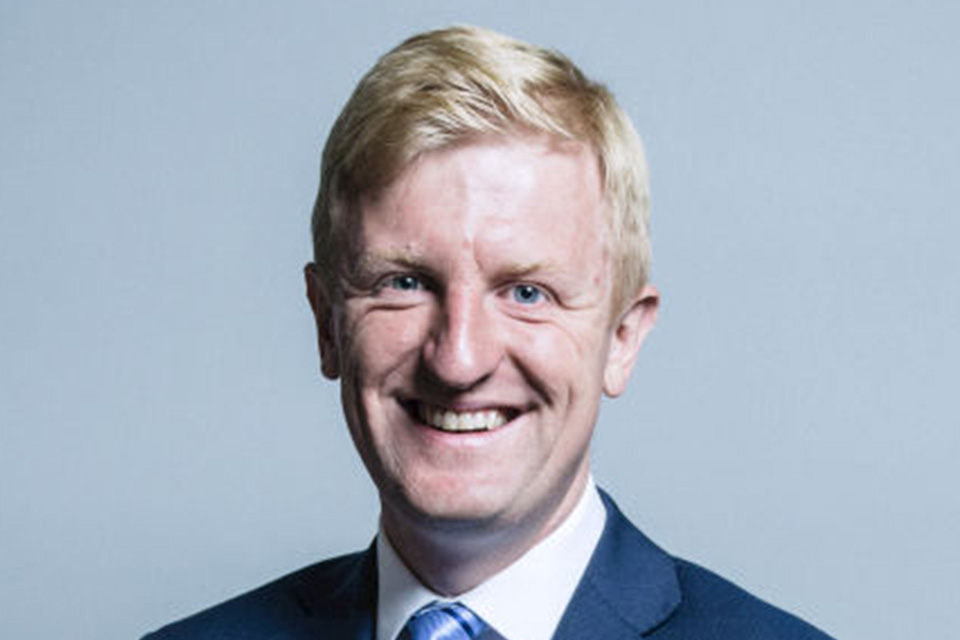
  • Oliver Dowden – 2019 Speech at ICT Conference

    Below is the text of the speech made by Oliver Dowden, the Minister for Implementation, on 22 January 2019.

    Well good morning.

    I was also at the conference in Paris [GovTech Summit 2018]. It was a great occasion bringing together representatives from GovTech from across Europe. And it’s a sharp reminder that whilst I think we can pat ourselves on the back for being leaders in the UK, there is an awful lot of competition out there, and the fact that President Macron himself lent his support to the event, demonstrates the commitment across other countries to ensure that they get up to speed in the race.

    So it really is a pleasure for me to join you at the government ICT conference.

    The internet has made the age we live in, one of options. If Google Maps doesn’t suit your needs, you might download CityMapper or Traveline instead. When it comes to social media, you might (as I do) prefer Instagram to Twitter. I can assure you there is no product placement going on there.

    Companies strive to give us the very best user experience so that we choose their product. With every tweak and iteration, we benefit from that competition and, in turn, our expectations are raised.

    People don’t have that option when it comes to interacting with government. From appointing a lasting power of attorney to checking your state pension, government provides services which cannot be found elsewhere.

    So, when you don’t have options (and you’re used to choice in pretty much every aspect of your online day-to-day life) you really do expect the best.

    It is crucial therefore that we do all we can to deliver an excellent service to citizens. I believe that we do this by exploring new technologies and sensibly implementing them, by supporting those who undertake this work and by encouraging the partnerships between the private and public sectors. And it’s this last component, I believe, which is the accelerant.

    It’s the right thing to do and it’s the only thing to do. In business, we’ve seen all too often that when it comes to embracing innovation and digital practices, it’s a case of adapt or close. Government clearly can’t close. We have people to serve. Government can’t deliver a second-rate online experience either. Our citizens deserve the best.

    That is why I have made this one of my top Ministerial priorities. This is for a number of reasons. First of all, I really want to make sure innovation that is standard practice in the private sector, becomes standard practice in the public sector. I also want to ensure there is benchmarking within government, and the best performing departments can share that best practice.

    I also want the government to think differently about how it can do things. If you think about the consumer experience, it’s been revolutionised in the past decade. The way we live has changed. But this change has not yet been reflected in government. So I want to put the building blocks in place to ensure this can happen.

    Finally, I’m also committed to ensuring that in doing this, we support the wider tech sector in the UK. Government can lead the way if it’s an intelligent and coordinated buyer of emerging technologies, and in so doing, help those small and innovative businesses to thrive, and address some of the challenges highlighted today about ensuring we create a level playing field so that SMEs are able to get their fair share of government contracts.

    We have the willing – the large audience I see before me attests to that. We certainly have the expertise – our tech sector attracts bright minds and billions of pounds of investment every year and, thankfully, we’re not starting from scratch. The Government Digital Service, for example, has changed the way people interact with government. From creating a single online home for government – GOV.UK – to creating the Digital Marketplace to make it easier for companies of all sizes to do business with government – the Digital Marketplace recently went Global – we’ve made great progress already.

    A strong tradition of public and private sector collaboration is part of the reason why the UK is a world leader in digital government.

    I firmly believe that in order to serve people efficiently, we need to partner with, and learn from our private sector. There is some incredible work being done – British companies working in Big Data, Artificial Intelligence (AI) and Blockchain have seen record levels of funding in 2018 and more investment than other European hubs. While the UK continues to attract more venture capital investment and tech IPOs than any other European hub in 2018, investment was down on 2017. That’s why I’m doing all I can to champion the UK’s govtech sector and our SMEs.

    Improving the process of procuring private sector expertise was one of my early priorities as a Minister. Helping level the playing field for small businesses – who are often the most innovative and flexible – has been a main priority in this work. I was pleased to introduce measures to exclude government suppliers from being awarded new contracts if they do not pay their subcontractors on time. This should provoke a behaviour change among our suppliers and provide a real boost to small businesses.

    It has been, and continues to be, a priority for me to identify and encourage relationships between the public and private sectors. To that end, I’d like to share exactly some of what has been achieved and give you some examples.

    One brilliant way we’ve been able to do this is through the GovTech Catalyst programme. Through it, we’re tackling terrorist images online, helping to solve the problem of rural isolation and loneliness and improving firefighter safety with tracking technology.

    The GovTech Catalyst is part of the push to bring innovation in government – but it has to be innovation that is appropriate, viable and strategic.

    The GovTech Catalyst fund encourages private sector companies to help solve public sector problems. Through the programme, public sector organisations are able to submit challenges. Successful challenges will become competitions that are open to private sector innovators to solve.

    It really does allow the public sector to trial innovative technology in a quick and cost-effective way, with a view to it being deployed at scale.

    The private sector is given a new route to work with government, government benefits from that expertise, and the public, who we are ultimately all here to serve, feels the benefit.

    That’s why I’m very pleased today to announce the five latest challenges today. So, let’s begin.

    Last month, an ex-Google engineer undertook what he claimed was the first US coast-to-coast drive completed entirely by self-driving technology. If that engineer was looking closely, he will have seen Oxford County Council gaining speed in his rear-view mirror. Oxfordshire County Council wants to investigate how it too can manage autonomous vehicles in local traffic management control systems.

    It is an ambitious aim, designed to make Britain’s roads safer, enabling a smoother passage from conventional to autonomous vehicles when that time comes. They are working closely with a number of partners, including Department for Transport and the Centre for Autonomous Vehicles.

    The next challenge comes from Leeds City Council. It wants to investigate how sensors can be used to monitor the condition of social housing. By using data and taking proactive steps to intervene and help vulnerable residents, we will save money and improve the quality of people’s lives.

    Leeds City Council will ensure that privacy concerns are addressed. This is about monitoring the property, not the person. Between 2016 and 2017, there were 330,000 new social housing lettings in the UK – the solution to this problem has the potential to improve housing conditions significantly and at scale.

    The third challenge comes from Scottish National Heritage. It seeks a digital tool to clarify the planning permission system. Scottish National Heritage, land managers and developers will be able to use the solution to better understand requirements and regulation, in doing so saving time and money. The solution could have a much wider application beyond Scotland, and indeed perhaps internationally as well.

    In Wales, Torfaen County Council wants to look at how, by better using data, it can better predict, sequence and modernise its social care offering. The result of this work will mean that resources can be better delivered to vulnerable users and lessen the so called ‘bed-blocking’ burden on the NHS.

    Finally, Waltham Forest Council in north east London, wants to use data to tackle housing issues in the capital using geospatial intelligence.

    An innovative approach using geospatial technology could accelerate house building. For decades this country has failed to build enough homes. It’s a problem successive governments have struggled with. And certainly it’s something that I’m very much engaged with in my wider portfolio brief as Minister for Implementation. In March, the Prime Minister announced that the planning process would be streamlined, so that building the homes we need isn’t held up by bureaucracy.

    So do search for GovTech Catalyst on GOV.UK for more information on how to apply to solve a GovTech Catalyst challenge.

    I hope you agree those are very interesting and exciting innovations that we’re embarking upon.

    And linked to that last challenge, the UK is a geospatial world leader and this government is committed to supporting the growth of this sector. Research estimates that by better using public and private sector geospatial data up to £11 billion of extra value could be generated for the economy every single year.

    In November, the newly created Geospatial Commission partnered with Innovate UK to launch a new government competition, in which organisations can apply for a share of £1.5 million to fund projects which use crowdsourced data linked to a location. Between £50,000 to £750,000 could be granted to eligible organisations. The deadline for applications is fast approaching (30th January).

    It’s open to businesses of any size, academic organisations, research and technology organisations and public sector organisations – this list isn’t exclusive, so do please check the website for more details.

    And we are soon to start a geospatial technology review and the Commission will publish its first Annual Plan in March, with the UK government’s first ever Geospatial Strategy by the end of this year.

    It does, I’m afraid seem to be the year of strategies, because the Innovation Strategy, which I announced last year, will also be published in spring this year.

    It will share our vision of how GDS and wider Cabinet Office can lay the foundations for government to use emerging technologies.

    The idea of this is to encourage collaboration between the public and private sectors to experiment together to find innovative solutions to public sector challenges.

    The strategy will guard against the risks, and there are risks that come with new technologies and digital developments. But it will also highlight the opportunities, and how departments can benefit from them to produce improved public services and better value for money.

    The strategy will cover issues that public sector teams face when developing, procuring and scaling emerging technologies. It will address the requirements on skills, leadership and governance that these technologies bring, including the need to ensure they are used ethically.

    This will also support the wider aims and ambitions of the government’s industrial strategy, which is designed to create an economy that boosts productivity and builds a Britain fit for the future.

    I want this innovation strategy to be developed in collaboration with experts inside and outside of government. For that reason, I’ve met with as many experts as my diary will allow. On Thursday, in fact, I’m heading up to Scotland to continue these conversations.

    This strategy will set the direction of travel and I hope that as Minister, I will be able to attract the attention, resource and funding to deliver the best public services. And certainly my conversations with the Treasury and Chief Secretary to the Treasury – this is all part of ensuring that as we approach the next spending round we’re thinking about all these challenges and how we can use these emerging technologies to drive greater efficiencies and better public services. And I know it’s something that the whole government is committed to.

    So, to end, it is by working together that we will drive our prosperity. Working together means learning from the successes and frustrations of others and forging new partnerships. I hope you will use this conference as an opportunity to do that.

    I’d like to end by thanking you all for the contribution you have made and will make to the delivery of first-class public services in this country.

    Enjoy the day. And thank you all for your time.

  • Liam Fox – 2019 Speech on Global Britain

    Below is the text of the speech made by Liam Fox, the Secretary of State for International Trade, in the House of Commons on 14 January 2019.

    As we take this debate into the early hours of tomorrow morning, I hope that we will be able to replicate the good humour, good manners and resilience that the Prime Minister showed during her two hours in front of the House this afternoon.

    It is a pleasure to open this debate on “global Britain and the economy” as we consider how to honour the decision made by the British people, in a democratic referendum, to leave the European Union. When Parliament made the decision to hold the referendum it made a contract with the British people that said “we are unable, or unwilling, to make a decision on this constitutional relationship. This will be decided by the British people and Parliament will abide by that decision”.

    We have a duty to honour our side of that contract, whether we ourselves voted to remain or leave in the referendum. When we, as members of Parliament, voted in that referendum we did so in the knowledge that our vote carried an equal weight to that of all other citizens of our country.

    For Parliament to attempt to block Brexit by any means would be an act of vanity and self-indulgence that would create a breach of trust between Parliament and the people with potentially unknowable consequences.

    It is clear that there are three possible outcomes to our deliberations. I want to say at the outset that Members will determine which route they choose, and while we may disagree, I do not doubt either their motives or their patriotism as they choose the course available to this country.

    The first is to accept the deal that has been negotiated – and there is no other deal available. The second is to leave the EU with no deal and the third is no Brexit at all.

    Before considering the implications of these options I think it important to underline the fundamental strengths that underpin the UK economy, the changing patterns of our trade and the future patterns of global trade.

    Mr Speaker, the UK has an excellent economic success story to tell. Since a Conservative-led government came to power in 2010, exports have grown by 38.1%, around 6% per year, driven by an increase in services exports of 54.8%.

    We sold some £618billion worth of goods and services in 2017, up 10.9% on the previous year.

    New figures released last week by the ONS revealed exports (of goods and services) in the year to November 2018 were worth £630bn, growing by £13.9bn since the previous year.

    There has now been 32 consecutive months of exports growth.

    As the UK considers future FTAs with the likes of the USA, Australia, New Zealand and the CPTPP countries, goods exports to these countries continued to boom:

    To the, USA: up 6.9% to £54.9bn

    To Australia: up 2.9% £5.1bn

    To New Zealand: up 3.8% to £869m

    To CPTPP: up 4.2% to £28.4bn

    With other notable goods exports growth to non-EU markets including Nigeria (up 29.2%), India (up 27.3%), and Thailand (up 18.5%), this news comes as London retained its position as the top tech investment destination in Europe earlier this week. According to Pitchbook and London & Partners, the capital received £1.8bn tech investment in 2018, more than Berlin and Paris combined.

    These achievements are no accident but the result of the innovation and hard work of British businesses, large and small, supported by a Conservative government that understands that wealth has to be created and that governments cannot simply promise to spend money without knowing where the income will come from.

    It is a matter of fact that the relative importance of the EU as an export market has been declining over the last decade – falling from 48.9% of the total in 2010 to 45.2% in 2017.

    Of course, the importance of the UK to EU trade varies from country to country.

    Figures compiled by Japanese investment bank Nomura show that Belgium’s economy is the most reliant on trade with the UK, with around 8% of Belgian GDP dependant on trade with Britain. That’s the highest level within the EU27.

    Belgium exports over €30bn of goods to the UK, which is Belgium’s fourth largest export market. It sells things like textiles, vehicles, chemicals, and food and beverages to the UK.

    Belgium’s finance minister has previously called for a quick trade deal with the UK post-Brexit to protect thousands of jobs in the country.

    When trade is looked at purely in terms of exports, Ireland is the most exposed. Around 13% of all Irish exports end up in Britain. The Netherlands also has a large reliance on the UK for exports and GDP.

    At the same time as the proportion of Britain’s exports to the EU has fallen we are trading more with other partners around the world.

    We export a huge variety of commodities. For example, we sold £22 billion worth of food, feed and drink abroad in 2017.

    In the year to November 2018, we sold £33.7 billion worth of cars, £25.2 billion worth of medicinal and pharmaceutical products, and £24.6 billion worth of mechanical power generator products – from aircraft engines, to gas turbines, steam generators to nuclear reactors. So much for Britain not producing anything anymore.

    But we also export a great many services – we are, in fact, the world’s second largest services exporter. In the year to September 2018, we sold some £82.4 billion of business services, £60.9 billion of financial services and £37.7 billion of travel services. Here, across the services sectors, the UK has huge comparative advantage. Services account for almost half of all our exports, 42.4% going to the EU, and 57.6% to non-EU countries.

    World trade is also at a pivotal moment. We are at the intersection of a series of major global trends – trends so seismic that they have transformed, or will transform, economies and societies across the world.

    Services are now a larger part of the world economy than ever before, and more easily traded across borders thanks to the internet and digital telecommunications.

    We live in an emerging knowledge transfer-based trading system where an engineering report, a 3D printer design, or new advances in machine learning can be just as valuable as the contents of a cargo container. The transfer of services and expertise in things like product design and software engineering – are becoming ever more important.

    A revolution in e-commerce is now underway. It is already a major component of world trade, from some of the world’s largest corporations, like Alibaba and Amazon, to the thousands of small companies who have never before been able to trade internationally.

    Major new opportunities are arising in the rapidly developing commercial and consumer markets of South East Asia, Africa and Latin America, and it is essential that Britain leverages its unique strengths to realise them.

    Britain’s consumers have embraced e-commerce, with around 20% of all goods in the UK bought online. At the same time, of goods sold online, the UK is third globally behind only China and the United States. Last year one in seven global online shoppers bought UK goods.

    It is therefore essential that we are able to operate an independent trade policy, allowing us to access the EU market which remains hugely important to us without tying our hands in our ability to access markets in some of the world’s fastest-growing economies.

    This deal enables us to develop a trade policy that will mean we can make the most of the opportunities of new technologies, and the changing shape of the global economy, striking a balance between protecting the markets we already have and tapping into new and rapidly expanding markets elsewhere.

    Mr Speaker, we must have a policy which is flexible and nimble, where we can make the most of the opportunities of new technologies, and the changing shape of the global economy.

    We can boost productivity, raise living standards and promote competitiveness. Working with Parliament, business, civil society and the devolved administrations, this deal allows us to have an independent trade policy for the first time in over 40 years.

    We have not got everything we wanted in this deal – but neither has the EU. There is give and take in any negotiation, and compromises have had to be made. But today I would just like to emphasise what this agreement and the political declaration do.

    They give the United Kingdom the freedom to decide for ourselves who comes here.

    How to support our farmers.

    Who fishes in our waters.

    And it gives us the freedom to open up new markets to world-class British goods and services around the globe.

    The Political Declaration sets out a clearly agreed vision for the UK’s future relationship with the EU and provides precise instructions to negotiators.

    What the Political Declaration does is set out an unprecedented arrangement for UK-EU economic cooperation, ambitious arrangements for services and investment, and ensures that our relationship is far more comprehensive than any other free trade agreement the EU has signed to date.

    The Political Declaration will enable both parties to deliver the legal agreements that will give the future relationship effect by the end of 2020, covering an economic partnership; a security partnership; and specific agreements on cross-cutting cooperation.

    There has been much speculation as to what the alternative to this agreement is.

    Let me be clear: there is no alternative agreement to that which has already been negotiated.

    The EU and the UK Government have painstakingly thrashed out this deal. It has been endorsed by the Prime Minister and the 27 leaders of the other EU Member States.

    Failure to accept a negotiated deal will lead us to either no deal or no Brexit.

    This government has been clear that it neither wants nor expects a ‘no deal’ scenario.

    Of course the government will continue to do the responsible thing and prepare for all eventualities in case a final agreement cannot be reached.

    But the evidence is clear that the best way forward for our businesses, for jobs and for our collective prosperity, is to have a Brexit deal.

    Some have suggested that it would be possible under article 24 of the GATT to maintain tariff free trade as an alternative to this negotiated agreement in a no deal scenario. Let me say that there are two immediate problems facing this suggestion. The first is that it would require the agreement of the EU itself and be based on the expectation of a future trade agreement or customs union to be operable.

    While it might be argued that this would be in the economic interests of the EU 27, we know from experience that the politics of the EU can take precedence over economic pragmatism. In the political atmosphere of no deal it would be difficult to cultivate the good will necessary for this to proceed.

    Secondly, this suggestion would not deal with all of the regulatory issues which are so important to many businesses.

    There are of course, Members of this House who want there to be no Brexit at all.

    I have to say this would be a democratic disaster. It would be a betrayal of the commitments given by this House to respect the result of the EU referendum and the manifesto commitments on which over 80% of MPs were elected.

    Mr Speaker, there are many who say that democracy exists on the understanding that a voter can change their mind.

    This is undoubtedly true. But democratic consent by the people is also founded on the understanding that the result of the vote will be carried out.

    Failing to do so would undermine the trust of the people. Not only that, but it would be politically unacceptable, a betrayal of our principles and potentially, a seismic and existential threat to our political system. We should not underestimate it. It would be to create a chasm of distrust between the electors and the elected of an unprecedented nature, a wilful destruction of the reputation of Parliament in the eyes of the people.

    We should also be under no illusion that the United Kingdom could somehow retain the status quo of its EU membership.

    This is not possible. It wasn’t possible even before the referendum was called because the EU itself is changing.

    The EU is committed to ever closer union.

    Even since the referendum there have been calls to move to qualified majority voting in areas from VAT to common foreign policy. These may, indeed, be right for those who wish to move towards greater integration, but they are not the right course for our country.

    Remaining in the European Union would be either to tie the United Kingdom into a more integrationist future or to create ever more tension and friction between ourselves and our European partners.

    Let me just say something briefly about two other suggestions. Some members of this House have raised the prospect of a so-called ‘Norway’ or EEA option.

    Re-joining the EEA Agreement would mean that we would have to accept all of the four freedoms of the Single Market, including free movement of people.

    It would not on its own be sufficient to enable our commitments to Northern Ireland to be met, including on avoiding a hard border between Northern Ireland and the Republic of Ireland.

    We’d be stuck in the Single Market, and if this were also coupled with staying in a Customs Union, as some have suggested, we would also be prevented from pursuing a fully independent trade policy.

    It would also leave our financial services industry exposed to a rapidly evolving body of EU regulation over which we would have no influence.

    In many ways it would be worse than remaining in the European Union, leaving us with many of the restrictions but, in perpetuity, unable to utilise any of the levers of decision-making.

    Mr Speaker, there are also Members of this House who have advocated a second referendum. But there are three substantive problems with this suggestion: on practical grounds, democratic grounds and constitutional grounds.

    Firstly, in practical terms, it would take time for this House and the other place, to pass the necessary primary legislation.

    The Electoral Commission would also have to fulfil its statutory duty to assess the ‘intelligibility’ of the question to be posed – a process taking around 10 weeks.

    A further 12 weeks would be required between the question being determined and the referendum actually being held.

    It is therefore completely impractical to hold such a referendum before the United Kingdom leaves the European Union on 29 March. It is entirely possible to see such a process taking up to a year before it could be completed.

    Secondly, there are clear democratic grounds to oppose a second referendum.

    This House voted overwhelmingly to hold the referendum – to give the decision on Britain’s membership of the European Union to the British people.

    A ‘People’s Vote’ has been held already – and it produced a clear, unambiguous instruction from the British electorate for us to leave the European Union. We are honour-bound to respect it.

    This House confirmed that it would do so when it voted -again overwhelmingly – to trigger Article 50 and begin the process of negotiations. This was further confirmed by the last General Election, in which the two main parties – comprising over 80% of the total votes cast – promised to respect the referendum result.

    Let us imagine, Mr Speaker, that a second referendum were held in which the Remain side won – perhaps with a narrow majority, on a lower turnout.

    Leave supporters such as myself could well begin demanding a third referendum – a best-of-three scenario. Where would it end?

    This would not settle the issue or heal our divisions – quite the opposite. It would further divide our already fractious country at a time when we need to come together.

    There is also the constitutional issue. If we overturn this referendum result, we will be setting a precedent that could be applied to other referenda too.

    Furthermore, a second referendum would create prolonged – not diminished – political and economic uncertainty.

    Mr Speaker, it is time to consign the divisions of the referendum to the past. This is a time to raise our sights and acknowledge that there is a world beyond Europe and there will be a time beyond Brexit – to build the economic opportunities this country needs to thrive as a truly Global Britain.

    This Withdrawal Agreement and Political Declaration is the way forward to achieve this Global Britain. To bring us together, seize the new opportunities out there in the world economy, and lead our country to a more prosperous, stable and secure future.

    Whilst the UK is leaving the EU, we are certainly not leaving Europe, and this agreement provides the foundation on which to build our continued cooperation with our European partners on trading, political and security matters.

    It will enable us to play a full and active role on the global stage, working closely with friends new and old and building an independent trade policy which caters to the strengths and requirements of the UK economy.

    This deal allows the United Kingdom to continue to participate in the EU’s existing free trade deals during the implementation period.

    But crucially, we will also have the benefit of being able to negotiate, sign and ratify new trade agreements and lay the foundations for future relationships with our trading partners across the world.

    We need to take a balanced approach, acknowledging the continued importance of our EU partners, whilst taking advantage of opportunities beyond the borders of our continent in the high-growth economies of Africa, Asia, and South America. I believe these will be key to our economic success as a Global Britain.

    This deal will give us the freedom to implement our own trade remedies regime, protecting jobs and livelihoods from unfair trade, set our own tariffs, and take up our independent seat at the World Trade Organisation for the first time in over 40 years.

    This will be a key opportunity to further our support for the international rules-based trading system, ensures it delivers free and fair trade, and particularly, to pioneer the liberalisation of trade in services.

    As I have outlined, there are fundamental changes in the global economy which simply didn’t exist when the Uruguay round concluded, and it is right that we position the British economy to take advantage of them.

    Even as the information revolution continues to transform our world at a staggering pace, with the system of free and fair international trade which underpins it lifting millions out of poverty, there is still much to do to reduce existing – and emerging – tariff and non-tariff barriers to trade that post a serious threat to global growth.

    And Britain can play a key role in this.

    Mr Speaker, we have an abiding duty to do what is right for our country.

    This agreement carries out the democratic will of the British people, to leave the European Union, as expressed by the referendum.

    It allows the United Kingdom to take back control of our borders, laws and money – and it delivers a close and cooperative partnership with the EU.

    Crucially, it delivers for the British economy. No negotiated agreement is likely to deliver everything that anyone wants. Perhaps no agreement could ever do so.

    But for our communities, our prosperity and for future generations, I believe this Agreement is the right thing for the United Kingdom.

    I commend this deal and this motion to the House.

  • David Gauke – 2019 Speech at Women’s Aid Public Policy Conference

    Below is the text of the speech made by David Gauke, the Lord Chancellor and Secretary of State for Justice, on 23 January 2019.

    Introduction

    It’s an honour for me to speak at this event. The wealth of knowledge and experience here today is so impressive and I’d like to pay tribute to Katie, and to everyone at Women’s Aid for making this conference happen, and thank our hosts and sponsors Freshfields and Lloyds for hosting this event.

    The space for discussion and the sharing of best practice it provides, is an opportunity to really influence our approach to domestic abuse and strengthen our response to an abhorrent behaviour that often hides in plain sight and creates a type of suffering that skulks in the shadows.

    With an estimated 2 million adults – straight, gay, partners, and parents – affected each year; with between a quarter and a third of children in this country having been exposed to it; with too many people suffering in silence, fearful of consequences for them and their abuser; with families left unable to flourish because of the devastating effects of it; with almost 60 per cent of female offenders in the system having experienced it; and with an estimated economic and social cost of £66 billion each year, it is crucial that we recognise our duty to protect and support the victims of domestic abuse.

    That duty is what prompted the government to commit to a new approach on this and to introducing a new draft Domestic Abuse Bill to Parliament.

    Draft Domestic Abuse Bill and consultation response

    As you know, in March last year we set out our proposals for that Bill and began a period of consultation so that all interested parties, including survivors, as well as support organisations and frontline professionals could contribute to the process.

    That includes many of you here today and let me say how grateful I am to all of you who responded and particular thanks go to Women’s Aid – not only for responding to the consultation but for keeping up the pressure to ensure that domestic abuse remains at the top of the agenda.

    The consultation allowed us to get to this point – harnessing a wealth of knowledge, experience, and expertise – so that we could draft a better Bill and strategy for dealing with domestic abuse.

    I realise we only published our response and the new draft Bill on Monday so you will still be digesting its contents. With that in mind, I wanted to take this opportunity to talk you through them.

    Promoting awareness

    When we started the consultation process we did so with an open mind but with four key objectives.

    Our first was promoting awareness. The idea that domestic abuse is something for families to address behind closed doors is now, thankfully, an outdated one. However, you told us that we need to do more to make domestic abuse better understood by everyone – so that victims know that they need not suffer in silence; and professionals – whether that be the police, teachers, GPs, or social workers – know the signs of abuse and are equipped to challenge it.

    That means it is crucial that we raise awareness with the public. We recognise that if we want to change attitudes we must engage with children at the earliest opportunity, which is why we will be introducing Relationship Education in all primary schools and Relationship and Sex Education in all secondary schools and recently consulted on draft guidance.

    In primary schools, the draft statutory guidance advises schools to teach the foundation knowledge of what constitutes healthy, respectful relationships. At secondary level, teaching will build on the knowledge gained at primary and introduce concepts about healthy intimate relationships, for example laws and concepts of consent, harassment and abuse.

    To raise awareness more widely, we are funding projects and helplines that aim to improve community awareness of domestic abuse; and the Department for Work and Pensions is updating its communication materials to better signpost victims to support.

    We will also introduce a statutory definition of domestic abuse, capturing the various types of abusive relationships that can exist, including economic abuse. To aid agencies in the way they identify domestic abuse, this definition will be accompanied by statutory guidance. At the same time, we will invest in domestic abuse training to include the police, social workers and probation services – as well as continuing to work alongside NHS England to raise the profile of domestic abuse with professionals throughout the health service. What we want is for victims to recognise that they are being abused and know that when they speak up they will be heard and they will be helped.

    Protecting and supporting victims

    Our second objective was how we can better protect and support victims.

    Clare’s Law – the Domestic Violence Disclosure Scheme – was an important step forward in making information available to potential victims about abusers’ history. It is now time that Clare’s law becomes law in the very real sense of the word. To do that, we will be able to issue statutory guidance to the police on how the scheme works; and work with them to enable online applications to the scheme – making it easier to access than ever before. When abuse does happen, we must recognise that no two victims are the same.

    Last year the government launched our Victims Strategy to improve the experience of a wide range of victims. That includes the many who experience domestic abuse and we allocated £8 million to projects right across the country specifically to support children whose lives have been devastated by it.

    We will now increase funding and build capacity for services aimed at disabled, elderly, LGBT+ and male victims; update training and guidance on economic abuse; and introduce a new crisis support system for victims with no recourse to public funds.

    We also want to make protective orders simpler and more effective, as well as making them more flexible so that they can better address the specific circumstances of each case. We will therefore legislate for the creation of a new protective order – a Domestic Abuse Protection Order, or DAPO – with a straightforward application process open to the police, the victim or other parties. The Order will also be available in any ongoing family proceeding, certain civil proceedings and in criminal proceedings.

    Putting this type of protection in place should mean abuse cannot continue or escalate – keeping victims and their children safe while they consider their options. For the new model to work in practice it will require training for agency professionals and this will accompany the statutory introduction of the DAPO.

    I think it’s really important that we are alert to the ongoing impact of abuse in the wider justice system. In my opening I mentioned a statistic: sixty per cent of female offenders in the country have experienced domestic abuse. That is a staggering statistic and it demonstrates why our response to abuse and addressing it at the earliest possible opportunity can be so crucial to breaking the cycle of victimisation and offending.

    We know that women who are both offenders and victims of abuse can struggle to access support. That’s why the Government announced £2 million domestic abuse funding last March to support female offenders. This funding has formed part of a two-year, £5 million investment through our Female Offender Strategy to improve community support for female offenders and women at risk of offending, including to address issues arising from domestic abuse.

    I am delighted today to be able to announce the second round of allocations from that fund, including – among others – organisations like Together Women in West Yorkshire who are working on a specialist integrated approach to domestic abuse, housing and support service – to help affected women to find the accommodation that can be the difference between them starting a new life or returning to prison; and Women’s Work in the East Midlands who are providing specialist one-to-one domestic abuse support – to help tackle mental ill health, improve self-esteem and provide the kind of training that can help women out of the revolving door of reoffending.

    This funding will help agencies responding to domestic abuse to build better links with these organisations and others like them across the country that support female offenders and those at risk of offending.

    Making sure potential victims are protected from abusers and doing our best to understand how to help those who are abused are – we believe – two crucial components to stopping abuse and its ongoing effects in their tracks.

    Transforming the justice process

    Our third objective was how we can transform the justice process for abuse victims. Going through the justice system can be scary and bewildering experience for any victim, let alone one who has experienced domestic abuse. You told us that we should prioritise the safety and wellbeing of victims and their children and offer more support as their cases progress through the system.

    This must start at the very beginning of the process and how authorities respond to abuse cases. We know there has been a recent increase in prosecutions for coercive or controlling behaviour – that is encouraging news. But it does not mean that we can take our foot off the gas. We must continue to improve understanding of the offence within statutory agencies so that we can continue to increase prosecutions. As we do that we will also review its effectiveness as an offence to ensure that it continues to disrupt abuse and serves the needs of victims.

    The government is also developing national guidance for police officers on serial perpetrators of domestic abuse, improving training so that they can support offenders to change their behaviour; and we are considering the introduction of a best practice toolkit, as well as continuing to test new risk assessment processes and the rollout of the body-worn video.

    When cases do go to court, we know that proceedings can be incredibly difficult for victims. We will therefore legislate so that domestic abuse victims are automatically eligible for special measures in criminal proceedings – to mitigate against any further trauma that their involvement in court might cause.

    Over the years we have taken several steps to improve the family court process for vulnerable people. We will now legislate to ensure that abusers are prevented from cross-examining victims in person – a practice which can serve as an extension of their abuse.

    However, we recognise that we must do more to protect victims in the courts. That’s why we have already allocated £1m in funding to Finding Legal Options for Women Survivors (FLOWS), a project providing front-line domestic abuse workers with the legal resources to safeguard women.

    We are now allocating £900k of funding to organisations based in a number of family courts – to provide specially trained staff who will offer dedicated emotional and practical support to domestic abuse victims before, during and after hearings. These organisations will also deliver a programme of awareness raising among key family stakeholders and practitioners.

    Taken together, we believe these changes can bring about a real step change in the way domestic abuse is investigated and prosecuted or litigated.

    Improving performance on domestic abuse

    Our fourth and final objective in this process was how we can improve performance. As a government we are committed to using high-quality data to underpin our policy making and following the evidence on what works. We recognise that domestic abuse is an area where we need more data and insightful analysis. So, we will develop means to better collect, report and track domestic abuse data.

    We will also look closely at local initiatives, the way agencies respond to abuse, and what the third sector does – so that we can identify the most successful methods and look at how they can work more broadly to effect and bring about change.

    Through this commitment we believe we can raise standards throughout the system when it comes to tackling domestic abuse.

    Conclusion

    This new draft Bill and new approach to domestic abuse is a once-in-a-generation chance to ensure that perpetrators feel the full force of the law. And it is a real opportunity to transform the lives of those affected. I know that you will have concerns about how some of these new measures will affect the wider system.

    As with any piece of primary legislation, the Ministry of Justice, working with the Home Office, has presented to parliament a detailed impact assessment that sets out the costs and benefits. We have also agreed to put forward the Bill for pre-legislative scrutiny to give parliamentarians the opportunity to feed in to this landmark piece of legislation and ensure that we get it right.

    But I think the prize in this is clear to see – a fundamental shift in the way we as a society look at domestic abuse, so that we can really start to turn the dial on preventing and tackling it.

    From raising awareness both amongst victims and those charged with protecting and supporting them, to understanding that different victims require different types of support, to shifting the justice process to work better for victims, collecting and analysing abuse data to drive better performance – we believe that the draft Bill and consultation response we published on Monday can do that.

    I cannot thank you enough for the input you’ve given to us already in creating this new approach. As the legislation enters and makes its way through both Houses of Parliament, we expect the close scrutiny to improve it even further and I look forward to your continued support to inform our thinking as that happens.

    Together, we will ensure that perpetrators can no longer hide in plain sight and bring domestic abuse out of the shadows once and for all. In turn, we can end the suffering of millions and ensure that every survivor is free to flourish.

    Thank you.

  • Jeremy Hunt – 2019 Speech at International Holocaust Remembrance Day

    Below is the text of the speech made by Jeremy Hunt, the Foreign Secretary, on 23 January 2019.

    Ambassador, distinguished guests, Ladies and gentlemen, I’m incredibly honoured to be here today as we remember those 6 million.

    Seventy-four years ago, almost to the day, Soviet soldiers advanced into Poland and liberated Auschwitz. There, amid heaps of corpses, they discovered about 7,000 men, women and children, emaciated, starving, stricken by disease. These broken human beings were among the handful of survivors of the 1.3 million people who had passed through the gates of Auschwitz.

    One of them, of course, was Primo Levi, who was found by Russian soldiers lying incapacitated with scarlet fever, indelibly tattooed with an identity number that he would bear for the rest of his life: ‘174517’. In his classic, If This Is a Man, he struggled to describe the essence of the crime wrought by the Holocaust. He said:

    Language lacks words to express this offence, the demolition of a man.

    In a moment, with almost prophetic intuition, the reality was revealed to us: we had reached the bottom. It is not possible to sink lower than this; no human condition is more miserable than this, nor could it conceivably be so.

    Nothing belongs to us any more: they have taken away our clothes, our shoes, even our hair. If we speak, they will not listen, and if they listen, they will not understand. They have even take away our name, and if we want to keep it, we will have to find in ourselves the strength to do so, to manage somehow so that behind the name, something of us – of us as we were – still remains.

    Primo Levi and other remarkable people summoned enough strength to preserve their dignity in defiance of relentless efforts to extinguish the last embers of their humanity.

    In 2006, I had the life-changing experience of visiting Auschwitz myself with Holocaust Education Trust. The trip was led by the inspirational Rabbi Barry Marcus, who many of you will know.

    Before going into the concentration camp, we visited a museum to commemorate the Poles who had sheltered Jews. The penalty, of course, was death, not just for the individual, but for every member of that individual’s family. More than 5,000 Poles took that risk. Many others across Europe looked away. What would each of us do if history repeated itself?

    I’ll never forget standing on that railway platform where so many human beings’ fate was decided by a simple instruction to turn left or right.

    I’ll never forget Rabbi Marcus singing in Hebrew as we reflected on the horror of what was around us. Nor will I forget the remarkable Polish guard who never once referred to Jews being killed: she always used the word ‘murdered’.

    And a question that troubled me as I tried to take all this in is, would I have looked away? Would I have done the right thing? With 3 young children that I have now whose lives are just beginning, what would I have done?

    So today as Foreign Secretary, it is an incredible privilege to honour some of those who did not look away, and who worked for the Foreign Office, or our sister organisation, the Secret Intelligence Service.

    One of them was Captain Frank Foley, whose bust we shall shortly be unveiling. Frank Foley fought in the trenches during World War One before being recruited by the British government and dispatched to our Consulate in Berlin. Ostensibly, he was in charge of passport control; in fact, he was an SIS officer – something that the government has taken the exceptional step of publicly confirming.

    After Hitler came to power in 1933, Foley used his official position to issue visas to thousands of Jews trying to escape Germany. He applied the rules with what might be called sympathetic flexibility.

    British visas could only be given to people with financial guarantees, a requirement that ruled out many Jewish applicants. So Foley invented a variety of ways to get around bureaucracy.

    Richard Lachs, a Jewish company administrator, was one of many desperate people with no chance of providing any guarantees. Penniless and unemployed, he had been hounded out of his job in Cologne and forced to take his family into hiding after the Kristallnacht pogroms.

    He sought asylum in the United States, only to be rejected because the quota was full. So he then applied for British visas for himself, his wife and their 2 children, with no guarantees – and little hope of success.

    Richard Lachs’s son, Werner, remembered what happened. “It was a Sunday morning,” he said. “A friend was there, and the post produced a letter from the British Passport Control Office in Berlin, requesting that my parents should send their passports to receive their visas. We just jumped up and down for joy.”

    The Lachs family did not know it, but Foley found a way of overlooking the regulations. He appears to have decided that since someone else called Lachs had previously been granted a visa, that person’s guarantee could be taken to cover Richard Lachs and his family as well. “I am 99% certain,” said Werner Lachs, “that but for Mr Foley, I and my family might have become another statistic of the Holocaust”.

    Today, Werner Lachs is 92. He has nine grandchildren, four great-grandchildren and he lives in Prestwich.

    A few months before the outbreak of war in 1939, Foley arranged visas for a 24-year-old Jew called Gunter Powitzer and his infant son, Walter. Yet, by the time the documents were ready, Powitzer had already been interned in Sachsenhausen concentration camp.

    So Foley went to the camp himself and demanded the prisoner’s release, explaining that since Powitzer now held a British visa and was entitled to British protection. Powitzer, who had recently been flogged, remembered how he was “bandaged, cleaned up and shaved” and presented to a “small man wearing glasses”.

    “My name is Foley,” said the visitor. “I am from the British Consulate in Berlin.”

    The following day, Powitzer was released from Sachsenhausen, reunited with his son and allowed to reach safety in what was then the British Mandate of Palestine. Had Foley not acted, Powitzer would have stayed in the camp where 30,000 inmates would be murdered by 1945.

    Nearly 70 years later, when a statue was raised to Foley in the Somerset town of his birth, a man called Asher Rubin wrote from Israel, “Frank Foley saved me and my father, Gunter Powitzer. Foley’s efforts are responsible for the lives of our family.”

    I hope SIS will forgive me if I add that Foley made good use of what is euphemistically called ‘tradecraft’. He would direct Jews to reliable suppliers of fake passports. He would place them in touch with SIS contacts who knew exactly how to cross the Swiss frontier. And he kept up a steady barrage of requests to London for more visas and more permits for Jews to settle in Palestine.

    Yet, as the Ambassador alluded to, the bleak truth is that not everyone in the British government of the day possessed the same moral clarity or the will to confront the realities of Hitlerism. The policy of appeasement, no matter how well intentioned, was futile and morally bankrupt.

    We should reflect that it was not the state as a whole, but remarkable individuals like Frank Foley who did the right thing, made the correct moral choice, often in defiance of the rules.

    So here I ask: what would each of us have done if we had been in his place?

    Frank Foley died in 1958 having observed the code of his profession and kept silent about his service. Four decades passed before Michael Smith wrote his biography and he began to receive the posthumous recognition. In 1999, Yad Vashem decided to honour Foley as one of the Righteous Among Nations. One of the Jews he saved happens to be the father-in-law of my cabinet colleague, James Brokenshire. Others include the grandparents of an SIS officer who is serving today.

    Thanks to Foley, many people were spared the ordeal that Primo Levi endured and chronicled. But even as we take pride in the memory of Frank Foley, we should never lose sight of the hard truth that when the crucial moment came and the moral test was posed, there were too few people like him.

    So today, we draw inspiration from his example, and we hope that those inspired will thus never be the next people to look away in the face of atrocity.

    Thank you.

  • Justine Greening – 2019 Comments on Brexit

    Below is the text of the comments made by Justine Greening, the Conservative MP for Putney, in the House of Commons on 21 January 2019.

    I wonder whether the Prime Minister and, indeed, the Leader of the Opposition recognise that with just two months to go, the past week has shown that party politics and Westminster will not deliver a resolution on Brexit, because party politics is not the same as Brexit—it is separate from party politics—so the situation will not change and the House will not find a route forward. The Prime Minister talks about social cohesion, but surely the most divisive thing to do would be for Members to vote through her deal knowing that our communities simply do not want it. Is it not time for us all to be honest about the fact that Parliament has run out of road? We have been debating for two and a half years; we could debate for another two and a half years and we still would not reach a resolution on Brexit. The only people who can do that now, surely, are the British people.

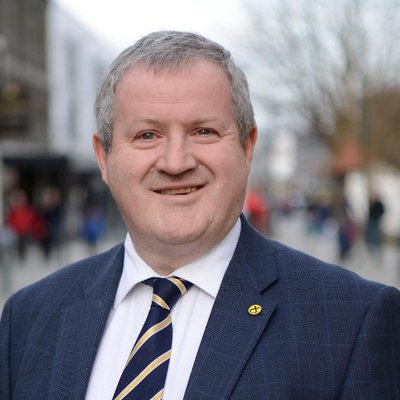
  • Ian Blackford – 2019 Comments on Brexit

    Below is the text of the comments made by Ian Blackford, the SNP MP for Ross, Skye and Lochaber, in the House of Commons on 21 January 2019.

    I thank the Prime Minister for the advance copy of her statement.

    All of us share the Prime Minister’s abhorrence and disgust at the bombing in Derry over the weekend. We are delighted that the efforts of the emergency services ​ensured that there was no loss of life. In the light of that incident, however, it was disturbing to see media reports this morning of at least the potential reopening of the Good Friday agreement. I welcome the Prime Minister’s comments this afternoon, but will she confirm that she will seek neither to amend or to add to the Good Friday agreement in any way? Many of us remember the dark days that Northern Ireland went through. This weekend’s attack was a frightening reminder of the fragility of the peace in Northern Ireland.

    On the subject of talks, the Scottish National party entered willingly into talks with the Prime Minister last week, and we remain ready to engage in those talks on the basis that we can discuss pausing article 50, taking no deal of the table, and a people’s vote. The Prime Minister talks about “no preconditions”, but in the letters that have gone back and forth between the two of us, she insists that the United Kingdom must leave the European Union on 29 March. That is not consistent with a desire to discuss a people’s vote. All preconditions must be taken off the table if we are to engage in meaningful dialogue. We know that the Prime Minister’s strategy is now to run down the clock. There is no sign that she is interested in meaningful talks or meaningful change.

    Prime Minister, take no deal off the table. She tells me that she has no desire for no deal. The Foreign Secretary has no desire for no deal. The Chancellor has no desire for no deal. The Leader of the Opposition has no desire for no deal. The SNP has no desire for no deal, and nor do the Liberal Democrats, Plaid Cymru or the Greens. Let us stop this charade. To have a people’s vote, we would have to extend article 50. It is not true that the only option is to revoke it—although we would welcome that. After last week’s result—a defeat by 230 votes—the Prime Minister has not come here with fundamental change. This Government are a farce and an embarrassment, and their leadership is shambolic.

    The Prime Minister must now step up. We must extend article 50 and end this impasse by bringing forward a second EU referendum. Do it for all sorts of reasons, but do it for the EU citizens living in the UK and now facing a registration scheme. I am grateful—I congratulate the Prime Minister—for the fact that fees have been waived for EU nationals, after a campaign led by the Scottish National party and our Government in Edinburgh, but it is shameful that people here, many of whom have been living here for decades, are being forced to register to stay in their own home. That is the fundamental fact. Not in our name. Where is the humanity of this?

    We in Scotland have another choice. We did not vote for Brexit. We will not be dragged out of Europe by a Tory Government we did not vote for. We might not be able to save the UK, but we can save Scotland. We have an escape route from the chaos of Brexit: an independent Scotland. Scottish independence will result in our country being a destination in Europe—a country at the heart of Europe, while the rest of the UK turns inward, isolated from its European neighbours. We want no part of it.

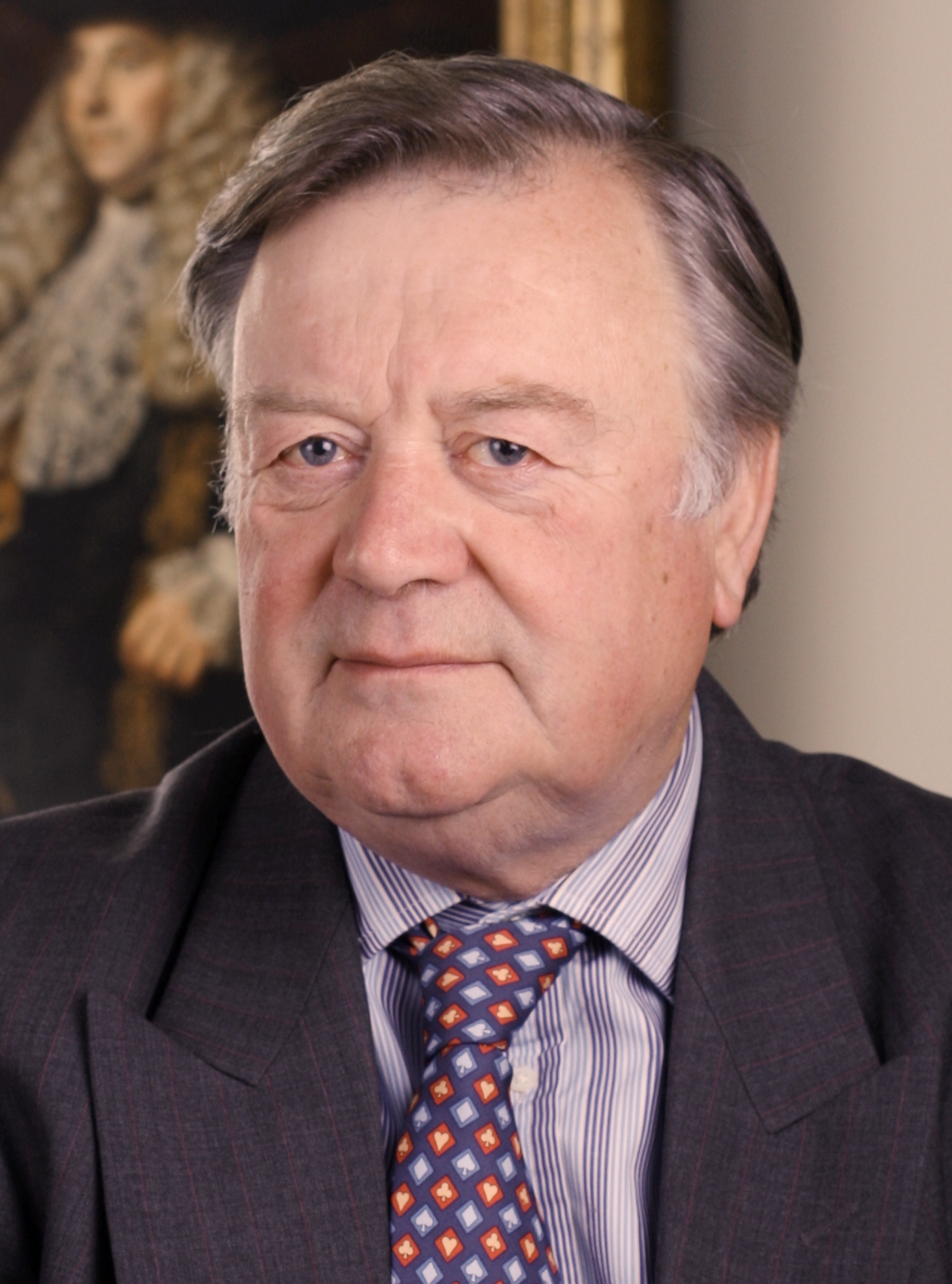
  • Kenneth Clarke – 2019 Comments on Brexit

    Below are the comments made by Kenneth Clarke, the Father of the House and the Conservative MP for Rushcliffe, in the House of Commons on 21 January 2019.

    As a supporter of the withdrawal agreement last week, I welcome the Prime Minister’s acceptance of the need for change in the light of the result and her reassurance that she will not compromise on a permanently open border in Northern Ireland, and that therefore any discussions that she has with the hard right wing on the Irish backstop will not compromise the commitment to a permanently open border.

    Will the Prime Minister also consider reaching out to those remainers who are not yet convinced of her agreement by at least relaxing—if she cannot do a U-turn—her normal rejection of a customs union? I do not see outside powers lining up to do trade agreements to compensate us for leaving Europe. Will she also consider relaxing her resistance to regulatory alignment with Europe? Regulatory alignment is not inconsistent with some tightening up, at least, of free movement of labour. I urge her to be flexible on every front, because there was a large majority against the proposal last week. There are probably more remainers who voted against her than there are Brexiteers, and she needs to reach out to those remainers.

  • Jeremy Corbyn – 2019 Comments on Brexit

    Below is the text of the comments made by Jeremy Corbyn, the Leader of the Opposition, in the House of Commons on 21 January 2019.

    I thank the Prime Minister for giving me an advance copy of her statement. I join her in condemning the car bomb attack we have seen in Londonderry at the weekend, and I commend the emergency services and local community for their response. The huge achievement of the Good Friday agreement in reducing violence in Northern Ireland must never be taken for granted. It was an historic step forward, and we cannot take it for granted.

    The Government still appear not to have come to terms with the scale of the defeat in this House last week. The Prime Minister seems to be going through ​the motions of accepting the result, but in reality she is in deep denial. The logic of that decisive defeat is that the Prime Minister must change her red lines, because her current deal is undeliverable, so can she be clear and explicit with the House—which of her red lines is she prepared to move on?

    The Prime Minister’s invitation to talks has been exposed as a PR sham. Every Opposition party politician came out of those meetings with the same response. Contrary to what the Prime Minister has just said, there was no flexibility and there were no negotiations—nothing has changed. [Interruption.]

    Mr Speaker

    Order. The Prime Minister was heard and, when there was noise, I called for it stop. The same must apply to the Leader of the Opposition. No one in this Chamber will shout the right hon. Gentleman down. They need not bother trying, because they are wasting their breath.

    Jeremy Corbyn

    Thank you, Mr Speaker. However, I do welcome the commitment that the fee for EU citizens to apply for settled status will be waived.

    The Prime Minister was fond of saying that this is the best possible deal on the table and that it is the only possible deal. However, our EU negotiating partners have been clear, saying that

    “unanimously, the European Council have always said that if the United Kingdom chooses to shift its red lines in the future… to go beyond a simple free trade agreement… then the European Union will be immediately ready… to give a favourable response.”

    The House voted to hold the referendum and to trigger article 50. There is a clear majority in this House to support a deal in principle and to respect the referendum result, but that requires the Prime Minister to face reality and accept that her deal has been comprehensively defeated. Instead, we now understand that the Prime Minister is going back to Europe to seek concessions on the backstop. What is the difference between legal assurances and concessions? What makes her think that what she tried to renegotiate in December will succeed in January? This really does feel like groundhog day.

    The first thing the Prime Minister must do is recognise the clear majority in this House against leaving without a deal. She must rule out no deal and stop the colossal waste of public money planning for that outcome. Questions must also be asked of the Chancellor. He reassured businesses that no deal would be ruled out by the Commons, yet he sanctioned £4.2 billion to be spent on an option that he believes will be ruled out. Last week, the Foreign Secretary said that it was “very unrealistic” to believe that the House of Commons would not find a way to block no deal. Will the Prime Minister meet with her Chancellor and Foreign Secretary to see whether they can convince her to do what is in her power and rule out no deal? If she will not do that now, will she confirm to the House that, if an amendment passes that rules out no deal, she will implement that instruction? The Prime Minister agreed the backstop because of her pledge to the people of Northern Ireland to avoid a hard border, but no deal would mean a hard border in Ireland and would break the Prime Minister’s commitment. Is she seriously willing to accept a hard border?

    Today heralds the start of a democratic process whereby this House will debate the amendments that will determine how we navigate Brexit. Of course, the Government ​tried to block us ever getting to this stage. They wanted no democratic scrutiny whatsoever. Labour has set out a proposal—I believe there may be a majority in this House for this—for a new comprehensive customs union with the EU that would include a say and a strong single market deal that would deliver frictionless trade and ensure no race to the bottom on workers’ rights or any other of the important regulations and protections that we currently have. As we have said consistently from the beginning, we will back amendments that seek to rule out the disaster of no deal and, as we have said, we will not rule out the option of a public vote. No more phoney talks. Parliament will debate and decide, and this time I hope and expect the Government to listen to this House.