Tag: 2019

  • Alok Sharma – 2019 Speech on Unemployment

    Below is the text of the speech made by Alok Sharma, the Minister of State for Employment, made at the STIR Conference on 13 February 2019.

    Ladies and gentlemen, it is a pleasure to be here.

    The last time I spoke to the BritishAmerican Business group was actually back in 2013. It was in Reading, you were on a roadshow and I was thinking what did we talk about because that was before Brexit.

    But I did look through the agenda and the agenda was trade – all about trade between the UK and the US. And TTIP. So it was current then and it is current now.

    Anyway, I probably shouldn’t digress from my speech so let me deliver the speech and then I am very happy to take questions on Brexit or anything else you would like.

    So let me start by saying there are 3.4 million more people in work today than in 2010, and around three quarters of all the jobs created over the last 8 years have been full-time, permanent roles and in what we refer to as higher level occupations which ultimately attract higher wages.

    All the increase in employment in the last year has been driven by full-time and permanent jobs. And I think from my perspective I want to thank all of you here because you are very much the people who have made this happen – so a huge thank you from me and the rest of the government.

    Actually people have been benefiting across every region of the country.

    Employment growth has been strongest in regions where it has historically been low. And this point was reinforced in the Resolution Foundation’s report which I helped launch last month as it set out how record employment has changed the United Kingdom.

    Across society, all groups are benefitting as well.

    In fact, it is those who previously found it harder to find jobs who are benefitting most from the jobs growth we have seen over the last 8 years.

    More women are in work than ever before; the ethnic minority employment rate is at a record high; youth unemployment has almost halved since 2010; a million more people with disabilities have entered the jobs market since 2013; and there are more than 10 million people over the age of 50 still in work.

    Now I’m not going to ask how many of you are over 50 – you all look very young to me. But I have just got over 50 so I am now an older worker, as we class it.

    And this is the group that we are going to be looking at today.

    As we live longer, healthier lives many people are extending their working life.

    But it may surprise many to know that, despite our increased longevity, men are actually leaving the labour market at an earlier age than in 1950, with women leaving at the same age.

    Whilst there are those who have planned and saved to retire early, there are lots of people exiting the labour market before they would really want to.

    Analysis of the British Social Attitudes survey which looked at working later in life showed that just 39% of those who had already retired did so because they wanted to.

    So that means 61% of people who retired did so not wanting to but wanting to work longer, or indeed because they had health conditions or were unable to work. And that’s quite a powerful statistic in my view.

    And while employers have long been making arrangements to enable parents to look after their children – which of course is a very good thing – there is also an increasing need to support their older workers who are caring for parents or partners. And I will return to this theme.

    It is widely accepted of course that boosting the number of older workers in employment has benefits.

    I want to focus on 3 in particular.

    The first are the rewards for an individual who enjoys a fuller working life; second is the boost for employers; and third is the benefit to the national economy.

    So firstly, I do think we are too quick to forget the impact that the routine and social nature of work has on our individual health and wellbeing. For most people, being in what they consider to be good work can be good for their health, both physical and mental.

    Secondly, at an employer level, I know from my conversations with businesses that you yourselves recognise the value of keeping hold of your talent or bringing their experience into your workforce.

    And not only that: we are all familiar with the productivity challenge we face in this country. Armed with more experience, the efficiency of older workers could be part of that solution.

    And thirdly at the national level, according to PwC analysis, if the UK could reach the employment rate for 55 to 64 year olds that Sweden currently enjoys, it would boost our GDP by £80 billion. This of course would mean boosting our employment rate for this co-hort to around 76%. This will take effort from all us – but we have made progress. Since 1984 we’ve lifted the employment rate for 55 to 59 year olds from around 60% to just over 74%.

    And it is with those 3 benefits in mind that I am convinced that improving employment rates for older workers is a collaborative process – requiring business, government and individual action.

    Around 2 years ago we launched our Fuller Working Lives strategy which was written by business, for businesses.

    It made recommendations about how businesses can retain, retrain and recruit older workers – with a strong business case alongside each.

    I won’t repeat the detail of it – you will have read that – but we have made progress since we set out that plan.

    As part of the recommendations there were a number of ideas around engaging with workers to support them on changing their working pattern and reshaping the end of their careers.

    Since then, much work has gone into what we are calling mid-life MOTs – a moment to take stock of your career and your finances, and to plan for the future with support from your employer.

    Last summer a number of organisations including Aviva, L&G and the Pensions Advisory Service ran pilots with their employees.

    And as we advocate for mid-life MOTs amongst business it is important that we in government set the pace on this.

    So last year my department ran our own pilots with just under 300 staff. It was voluntary and involved a personal review with their line manager and the opportunity to sit down with the Civil Service pension team.

    The initial feedback that we have got is that people found it a really useful exercise. What we are evaluating now is what impact those conversations have had on changing behaviour.

    And as the results of all the pilots are shared, ours as well as the private sector pilots, we will start to see how the midlife MOT can be used to ignite a cultural shift in how people plan for their later career.

    We now also have the Flexible Working Taskforce, and there may well be people here who are represented on that, which includes a range of government departments and business stakeholders.

    The theme of flexible working is also something that comes through in the government’s Good Work plan. I have to say that often flexible working is seen as a response to working parents, which I’ve said is a very good thing.

    But flexible working must also be seen through the prism of older workers.

    They are group who so often carry a range of responsibilities – caring for grandchildren, parents or indeed for their partners.

    They are often woefully undervalued in these roles, and their needs have not been voiced loudly enough in the debate about flexible working.

    Bringing their cause to the fore is something that we can make sure is achieved through this taskforce.

    While action has been taken and progress is happening, older workers are continuing to take on employment, there is more to do.

    And there are 2 areas in particular that I am looking at to boost the employment rates for older works. The first do with our jobcentres.

    Almost all are already paired with the National Careers Service and our Older Worker Champions are working actively on behalf of the older jobseekers we support.

    But on a recent visit to the jobcentre in Birkenhead I met a jobseeker in his fifties and a jobseeker in her twenties – and they sparked an interesting thought.

    While the older jobseeker had navigated the working world – with all its workplace politics – the way that employers recruit today was very new to him.

    Conversely, the younger jobseeker was far more comfortable with rigorous recruitment processes, detailed application forms and online testing, but actually welcome real-life insight into how to get-on once she had the she job wanted.

    At the moment, our jobcentres often working with jobseekers in clusters – young people, ethnic minority jobseekers, older workers and so on.

    To me it makes sense that in many ways to bring people with a shared experience together – building up their confidence and addressing specific barriers.

    But if we take down the divides between these groups, rather than just supporting each through shared experience they can help one another by sharing their different experiences.

    Just as employers value older workers as mentors, jobcentres should too – with the added benefit that the mentoring can be mutual.

    And of course it’s interesting in the context of the discussion we have just had about reverse mentoring – this is something that is as applicable in jobcentres as it is in the workplace more widely.

    The second area I am looking at is enrolment in our Work Experience Programme and Sector Based Work Academies.

    Currently, over fifties are in the minority of the people who start these programmes making up around just 10% of those who have taken up the opportunities since we launched these initiatives in 2011.

    But for those who have been out of work for a while or who are looking to change their job as they grow older, these are the bridges to the work that they are looking for.

    There needs to be a cultural shift in the opportunities we think older workers are open to. For example, apprentices are often thought of as fresh-faced, inexperienced workers.

    But increasingly employers are successfully opening up their schemes to older applicants, in some cases specifically targeting older workers.

    Jobcentres should be doing just the same with the opportunities they have on offer.

    So I have my to-do list on improving the employment prospects for older workers – I hope as you leave this conference later on today you will have your own.

    But before I conclude, I want to make the point that whilst the interventions I’ve talked about today focus on the over fifties, we must also get on the front foot with the young generation of workers coming in.

    There needs to be a resetting of the dial when it comes to how people plan their careers.

    A job for life is no longer a certainty – nor is it what many people want today.

    That does not need to be alarming – there is a sense of freedom in that.

    But to make the most of it, people setting out in their working life must be prepared to adapt.

    Adapt to how their job needs will change as their personal circumstances change over time.

    And, particularly for the new generations, how they adapt as the world of work changes as technology is replacing as well as creating jobs.

    People coming into the workplace now have a different attitude to their parents.

    They are starting to understand that lifelong learning is more crucial than ever. And that one’s legacy can be in 2 or 3 careers, not just in one.

    And I will repeat myself here. This doesn’t need to be alarming.

    Much has been said about concerns for the future of work – particularly in the face of automation.

    But each industrial revolution has created more jobs than there were before.

    So I am confident that we will continue to see a strong labour market. Bringing more people into the workplace – for our collective and individual benefit.
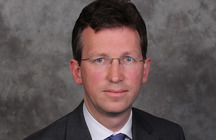

  • Jeremy Wright – 2019 Statement on the Cairncross Review

    Below is the text of the statement made by Jeremy Wright, the Secretary of State for Digital, Culture, Media and Sport, to the House of Commons on 12 February 2019.

    Thank you Madam Deputy Speaker.

    With your permission, I would like to make a statement about the publication of the Cairncross Review.

    I would like to thank Dame Frances Cairncross for leading the Review, along with the expert Panel and officials who have worked with her to develop it.

    Context

    Madam Deputy Speaker, this Review comes at an important time. In her report, Dame Frances paints a vivid picture of the threat to high quality journalism in this country.

    There are now around 6,000 fewer journalists than there roughly a decade ago.

    Print circulation of daily national papers fell from 11.5 million in 2008 to 5.8 million in 2018.

    And in this same time period, circulation for local newspapers has halved.

    As the Review makes clear, there are many reasons for this.

    But the main driver is a rapid change in how we consume content. The majority of people now read news online, including ninety-one percent of 18 to 24 years olds.

    And as this shift takes place, publishers have struggled to find ways to create sustainable business models in the digital age.

    As the Review sets out, between them, Google and Facebook capture the largest share of online advertising revenue and are an increasingly important channel for the distribution of news content online.

    They also hold an array of data on their users that news publishers cannot possibly hope to replicate, which further strengthens their position in the digital advertising market.

    This combination of market conditions threatens to undermine the future financial sustainability of journalism. Even publications that have only ever been online are struggling.

    And this should concern us all.

    Dame Frances notes that while high quality journalism is desirable, there is one type of journalism that society and democracy cannot do without, and that is public interest journalism.

    That is the type of journalism that can hold the powerful to account and is an essential component of our democracy.

    It helps us to shine a light on important issues – in communities, in courtrooms, in council chambers and in this Chamber.

    This type of journalism is under threat, especially at the local level.

    The Review cites numerous examples of what happens to communities when a local paper disappears.

    So Dame Frances’ report comes at a vital time, and I welcome her focus on public interest journalism.

    Madam Deputy Speaker, this is clearly an important issue and I wanted to set out to the House today how the Government intends to respond.

    There are many substantial recommendations in this Review. There are some areas where we can take them forward immediately.

    And other, more long-term recommendations, where we will be consulting with stakeholders about the best way forward.

    Immediate actions

    Firstly, the recommendations we are able to progress with immediately.

    Online advertising now represents a growing part of the economy and forms an important revenue stream for many publishers.

    But this burgeoning market is largely opaque and extremely complex, and therefore it is at present impossible to know whether the revenue shares received by news publishers are fair.

    The Review proposes that the Competition and Markets Authority conducts a market study into the digital advertising market.

    The purpose of this study would be to examine whether the online marketplace is operating effectively, and whether it enables or prevents fair competition.

    It is right that policy-makers and regulators have an accurate understanding of how the market operates, and check that it is enabling fair competition, and I have today written to the CMA in support of this study.

    I will also urge Professor Jason Furman to treat the Cairncross Review as additional evidence as part of his ongoing inquiry into digital competition in the UK, which is due to be published in the Spring.

    I also recognise that online advertising has given rise to a wider set of social and economic challenges. My department will therefore conduct a review on how online advertising is regulated.

    Madam Deputy Speaker, the Cairncross Review also cites concerns from publishers about the potential market impact of the BBC on their sustainability.

    They argue that the BBC’s free-to-access online content makes it harder for publishers to attract subscribers.

    The Review also questions whether the BBC is straying too far into the provision of ‘softer’ news content, traditionally the preserve of commercial publishers, and suggests this might benefit from the scrutiny of Ofcom.

    Let me be clear that Government recognises the strong and central role of the BBC here. As the review states, “the BBC offers the very thing that this Review aims to encourage: a source of reliable and high quality news, with a focus on objectivity and impartiality, and independent from government”.

    However, it is right that the role of the BBC, as a Public Service Broadcaster, is appropriately transparent and clear.

    The Review recommended that “Ofcom should assess whether BBC News Online is striking the right balance, between aiming for the widest reach for its own content, and driving traffic from its online site to commercial publishers, particularly local ones.”

    Of course, some of these questions were addressed as part of the Charter Review process.

    But I have written today to ask Ofcom to look carefully at the Review’s recommendations, and identify if there are any new concerns deserving attention.

    For instance, there may be ways in which the BBC could do more to drive traffic to commercial sites, particularly the local press.

    Another recommendation from the Review was a proposal for two separate forms of tax relief for news publications, one of which is intended to bolster the supply of local and investigative journalism by enabling it to benefit from charitable status.

    The Review noted that in the USA, philanthropic donations provide on average 90 per cent of the total revenues of non-profit news publishers.

    Although we have a different media landscape, as the Review sets out, charitable status could reduce the costs for those producing this essential public interest reporting, and pave the way for a new revenue stream through philanthropic donations.

    I recognise that this avenue has been explored previously, and that some hurdles will have to be cleared, but I believe we should pursue it.

    So I have written to the Charity Commission and look forward to hearing how they can help move this forward.

    Longer term work

    Madam Deputy Speaker, as I set out earlier there are also areas where we will need to consult further, and respond in further detail.

    First, Dame Frances recommends the establishment of an Institute for Public Interest News, to promote investigative and local journalism.

    The Review proposes that this Institute would act as a convener for those organisations with the means to support public interest news, including the BBC and online platforms.

    It would also be tasked with generating additional finance for the sector, driving innovation through a proposed new fund, and supporting an expansion of the BBC’s Local Democracy Reporting Service.

    This BBC funded scheme is a shining example of what can be done. The first of its kind in the industry, it is embedding 150 journalists within local publishers to produce local democracy reporting, particularly relating to local councils.

    I met some of these reporters last week and they have produced 50,000 stories so far between them, all stories that may not otherwise have been heard.

    The Government will explore, with others, what more can be done here.

    The Review also calls upon Government to do more to incentivise the publishing industry’s transition to digital.

    It proposes the introduction of an extension of the current scope of VAT exemptions so that they apply to online payments for all news content and not simply print news content, and new tax relief for public interest news providers.

    I am aware that there is passionate support for this within the publishing sector and we share their ambition for a healthy and sustainable industry.

    As this House knows, the Government always keeps taxes under review, and any decision to amend the UK tax regime is of course a matter for the Chancellor of the Exchequer as part of the annual fiscal cycle.

    I will be discussing this matter further with industry and my colleagues at the Treasury.

    I also wanted to highlight two recommendations in the Review that cover similar ground to work already taking place within Government.

    One is the Review’s sensible proposal that the Government develops a media literacy strategy, working with the range of organisations already active in this space.

    Evidence suggests that there is also a correlation between media literacy and greater propensity to pay for news. So, improving media literacy will also have an impact on the sustainability of the press.

    Making sure people have the skills they need to separate fact from fiction is the key to long-term success in tackling this issue and I welcome the focus that Dame Frances has placed on it.

    We welcome this recommendation, which relates closely to the Government’s ongoing work to combat disinformation.

    My honourable friend the Minister for Digital and Creative Industries last month hosted a roundtable on media literacy and the Government is actively looking at what more we can do to support industry efforts in this area.

    The other is the Review’s call for the creation of new codes of conduct between publishers and the online platforms which distribute their content.

    These would cover issues relating to the indexing of content on platforms, and its presentation, as well as the need for advanced warning about algorithm changes likely to affect a publisher.

    The development of these codes would be overseen by a regulator.

    The Review also proposes that regulatory oversight be introduced as part of a ‘news quality obligation’ upon platforms.

    That would require that platforms improve how their users understand the origin of an article of news and the trustworthiness of its source. Dame Frances recognises that platforms are already starting to accept responsibility in this regard.

    These two proposals deserve Government’s full consideration, and we will examine how they can inform our approach. That includes our work as part of the Online Harms White Paper, due to be published shortly.

    Conclusion

    Madam Deputy Speaker, this report sets out a path to help us put our media on a stronger and more sustainable footing.

    However, Dame Frances is clear that her Review is just one contribution to the debate.

    We cannot turn back the clock and there is no magic formula to address the systemic changes faced by the industry.

    But it is the role of any responsible Government to play an active part in supporting public interest journalism.

    We will consider this Review’s contents carefully, and engage with press publishers, online platforms, regulators, academics, the public and members of this House, as we consider the way forward.

    And I remain open to further proposals that may go beyond the recommendations or scope of this Review.

    Madam Deputy Speaker, I know that this is an issue that is of great concern to honourable members all across this House. And today’s Review is an important milestone.

    At the heart of any thriving civil society is a free and vibrant press.

    The Government, and I, have no doubt the House, is committed to supporting it through changing times, and ensuring it can continue to do its job.

    I commend this statement to the House.

  • Theresa May – 2019 Speech on Brexit to House of Commons

    Below is the text of the speech made by Theresa May, the Prime Minister, to the House of Commons on 12 February 2019.

    With permission, Mr Speaker, I would like to make a statement on the Government’s ongoing work to secure a Brexit deal that honours our commitments to the people of Northern Ireland, commands the support of Parliament and can be negotiated with the EU.

    On 29th January, this House gave me a clear mandate and sent an unequivocal message to the European Union. Last week, I took that message to Brussels.

    I met President Juncker, President Tusk, and the President of European Parliament, Antonio Tajani – and I told them clearly what Parliament wanted in order to unite behind a Withdrawal Agreement: namely, legally binding changes to the backstop.

    And I explained to them the three ways in which this can be achieved.

    First, the backstop could be replaced with alternative arrangements to avoid a hard border between Northern Ireland and Ireland.

    Yesterday, my Rt Hon Friend the Secretary of State for Exiting the European Union met with Michel Barnier to discuss the ideas put forward by the Alternative Arrangements Working Group comprised of a number of my Hon and Rt Hon Friends.

    I am grateful to that group for their work and we are continuing to explore their ideas.

    Second, there could be a legally-binding time limit to the existing backstop.

    Or third, there could be a legally-binding unilateral exit clause to that backstop.

    Given both sides agree we do not ever want to use the backstop, and that if we did it would be temporary, we believe it is reasonable to ask for legally binding changes to this effect.

    Mr Speaker, as expected, President Juncker maintained the EU’s position that they will not reopen the Withdrawal Agreement.

    And I set out the UK’s position, strengthened by the mandate that this House gave me, that this House needs to see legally-binding changes to the backstop and that can be achieved by changes to the Withdrawal Agreement.

    We both agreed that our teams should hold further talks to find a way forward, and he and I will meet again before the end of February to take stock of those discussions.

    So our work continues. The Secretary of State and the Chancellor of the Duchy of Lancaster are today in Strasbourg and last week the Attorney General was in Dublin to meet his Irish counterpart.

    And following my own visits to Brussels, Northern Ireland and Ireland last week, I welcomed the Prime Minister of Malta to Downing Street yesterday and I will be speaking to other EU 27 leaders today and throughout the week.

    The Right Honourable Gentleman, the Leader of the Opposition, shares the concerns of this House on the backstop. I welcome his willingness to sit down and talk to me and I look forward to continuing our discussions.

    Indeed, Government Ministers will be meeting with members of his team tomorrow.

    I think there are a number of areas where the whole House should be able to come together.

    In particular, I believe we have a shared determination across this House not to allow the UK leaving the EU to mean any lowering of standards in relation to workers’ rights, environmental protections or health and safety.

    I have met Trade Unions and with members from across the House, and my Rt Hon Friend the Business Secretary is leading work to ensure that we fully address all concerns about these vital issues.

    We have already made legally-binding commitments to no regression in these areas if we were to enter the backstop – and we are prepared to consider legislating to give these commitments force in UK law.

    And in the interests of building support across the House, we are also prepared to commit to asking Parliament whether it wishes to follow suit whenever the EU changes its standards in these areas. And of course we don’t need to automatically follow EU standards in order to lead the way – as we have done in the past under both Conservative and Labour Governments.

    The UK has a proud tradition of leading the way in workers’ rights, whilst maintaining a flexible labour market that has helped deliver an employment rate almost 6 percentage points above the EU average.

    Successive governments of all parties have put in place standards that exceed the minimums set by the EU.

    A Labour government gave British workers annual leave and paid maternity leave entitlements well above that required by the European Union.

    A Conservative-led government went further than the EU by giving all employees the right to request flexible working. And I was proud to be the Minister for Women and Equalities to introduce shared parental leave so that both parents are able to take on caring responsibilities for their child – something no EU regulation provides for.

    When it comes to workers’ rights this Parliament has set a higher standard before and I believe will do so in the future.

    Indeed we already have plans to repeal the so-called Swedish derogation, which allows employers to pay their agency workers less, and we are committed to enforcing holiday pay for the most vulnerable workers.

    Not just protecting workers’ rights, but extending them.

    As I set out in my statement two weeks ago, the House also agrees that Parliament must have a much stronger and clearer role in the next phase of the negotiations.

    Because the Political Declaration cannot be legally binding and in some areas provides for a spectrum of outcomes – some Members are understandably concerned that they cannot be sure precisely what future relationship it would lead to.

    By following through on our commitments and giving Parliament that bigger say in the mandate for the next phase, we are determined to address those concerns.

    The Secretary of State has written to all Members of the Exiting the EU Committee seeking their view on engaging Parliament in this next phase of negotiations.

    And we are also reaching out beyond this House to engage more deeply with businesses, civil society and trade unions.

    Everyone in this House knows that the vote for Brexit was not just about changing our relationship with the EU, but changing how things work at home, especially for those in communities who feel they have been left behind.

    Addressing this and widening opportunities is the mission of this Government that I set out on my first day as Prime Minister, and I will continue to work with Members across the House to do everything we can to help build a country that works for everyone.

    But, Mr Speaker, one area where the Rt Hon Gentleman the Leader of the Opposition and I do not agree is on his suggestion that the UK should remain a member of the EU Customs Union.

    I would gently point out that the House of Commons has already voted against this. And in any case, membership of the Customs Union would be a less desirable outcome than that which is provided for in the Political Declaration.

    That would deliver no tariffs, fees, charges or quantitative restrictions across all sectors, and no checks on rules of origin.

    But crucially, it would also provide for the development of an independent trade policy for the UK that would allow us to strike our own trade deals around the world, something the Labour Party once supported.

    On Thursday, as I promised in the House last month, we will bring forward an amendable motion.

    This will seek to reaffirm the support of the House for the amended motion from 29th January – namely to support the Government in seeking changes to the backstop and to recognise that negotiations are ongoing.

    Having secured an agreement with the European Union for further talks, we now need some time to complete that process.

    When we achieve the progress we need, we will bring forward another meaningful vote.

    But if the Government has not secured a majority in this House in favour of a Withdrawal Agreement and a Political Declaration, then the Government will on Tuesday 26 February make a statement and table an amendable motion relating to the statement; and a Minister will move that motion on Wednesday 27 February, thereby enabling the House to vote on it, and on any amendments to it, on that day.

    Mr Speaker, as well as making clear what is needed to change in the Withdrawal Agreement, the House has also reconfirmed its view that it does not want to leave the EU without a deal.

    The government agrees. But opposing no deal is not enough to stop it.

    We must agree a deal that this House can support. And that is what I am working to achieve.

    I’ve spoken before about the damage that would be done to public faith in our democracy if this House were to ignore the result of the 2016 referendum.

    In Northern Ireland last week, I heard again the importance of securing a Withdrawal Agreement that works for all the people of this United Kingdom.

    In Belfast I met not just with politicians but with leaders of civil society and business from across the community.

    Following this House’s rejection of the Withdrawal Agreement, many people in Northern Ireland are worried about what the current uncertainty will mean for them.

    In this House we often focus on the practical challenges posed by the border in Northern Ireland.

    But for many people in Northern Ireland, what looms larger is the fear that the seamless border between Ireland and Northern Ireland that helped make the progress which has followed the Belfast Agreement possible might be disrupted.

    We must not let that happen and we shall not let that happen.

    The talks are at a crucial stage. We now all need to hold our nerve to get the changes this House requires and deliver Brexit on time.

    By getting the changes we need to the backstop; by protecting and enhancing workers’ rights and environmental protections; and by enhancing the role of Parliament in the next phase of negotiations I believe we can reach a deal that this House can support.

    We can deliver for the people and the communities that voted for change two and half years ago – and whose voices for too long have not been heard.

    We can honour the result of the referendum.

    And we can set this country on course for the bright future that every part of this United Kingdom deserves.

    That is this Government’s mission. We shall not stint in our efforts to fulfil it.

    And I commend this statement to the House.

  • Matt Hancock – 2019 Speech on Technology

    Below is the text of the speech made by Matt Hancock, the Secretary of State for Health and Social Care, on 11 February 2019.

    This place has always looked to the future. Charles Darwin, Edward Jenner, Alexander Fleming: all fellows of this great institution, all coming together to “share knowledge” to “benefit society”.

    I’d like to thank another great fellow – Dr Eric Topol – for the amazing work he, and his team, have done to benefit the NHS.

    They’ve looked to the future. They’ve looked at genomics, digital medicines, AI and robotics. They’ve looked at the potential of new technology to save lives and improve the nation’s health and wellbeing.

    And they’ve looked at how tech can help staff, make their lives easier, and what we need to do to help our NHS workforce prepare for a digital future.

    The Topol Review is a forensically thorough analysis of what we need to do and how we should do it. But I’d like to take a moment to focus on the why.

    Why do I care about getting the right tech in the NHS? Why should we all care about getting the right tech in the NHS?

    It’s not about having the latest gizmos. It’s because the right technology saves lives. Every major technological leap, from penicillin, to vaccination, to MRI, has meant more lives saved.

    I’m confident that our children and grandchildren will look back at genomics, AI and robotics in the same way. They’ll be the ones asking us why, if we fail to seize this opportunity.

    As Dr Topol says, we’re 10 years behind in some fields. If we just made better use of today’s tech, we could save more people.

    So I care about tech because I care about people. I care about our NHS staff and our NHS patients. And I care about getting this right. Because I know the consequences when we don’t.

    There’s something that Dr Umesh Prabhu said that has stayed with me. It’s the reason why he devoted his career to becoming an NHS medical director and an expert in patient safety.

    When he was a consultant, he made a mistake. There were 2 babies with the same name on his ward. His junior doctor picked up the wrong case notes and when Dr Prabhu was brought the wrong x-ray, he discharged the wrong baby.

    Two days later that baby boy was admitted to another hospital with severe brain damage. The baby’s step-father had stamped on his skull. X-rays showed the baby had multiple rib fractures, some of which were old.

    As you can imagine, Dr Prabhu was devastated. Here was a man who cared deeply about his patients, who had made helping people his life’s mission.

    That tragedy had a profound effect on him. He vowed to change the system, to put in place safety protocols and ways of working that would mean a simple mix-up couldn’t lead to such devastating consequences again.

    Thankfully, thanks to his efforts, much has changed in the NHS since that happened. But it hasn’t changed enough.

    Dr Prabhu says human beings make 5 to 7 mistakes every day. Everybody makes mistakes. Doctors and nurses will make mistakes, despite their best efforts and intentions.

    That’s why, for me, getting the right tech ‒ tech that works, tech that helps our medical staff, that makes their lives easier, that reduces the chance of human error leading to human tragedy ‒ is so important.

    I care passionately about giving our medical staff the right tools to do their jobs. I understand their frustration at systems that make their jobs more difficult. I get how a tough day becomes even tougher because something won’t work like it’s supposed to.

    Digital tech has the potential to transform our health service in the future, but the right tech, right now, will improve lives, and save lives. So the work must begin now.

    We’re going to have a chief information officer or a chief clinical information officer on the board of every local NHS organisation within the next 3 years.

    Getting the right leadership, people who understand tech, who have tech skills themselves, involved in management decisions is vital to getting the right mindset in place. It’s the first step to training up staff, building up digital capability in hospitals and GP surgeries.

    So I’m delighted to launch the Topol programme for digital healthcare fellowships. This programme will give clinicians the skills to make a practical difference to their local NHS organisations and start them on a career path to become CCIOs and CIOs. That way, those leaders can help train and prepare our workforce for a digital future.

    And here I’d like to quote from the report: “There is a need to raise awareness of genomics and digital literacy among the health and social care workforce. This requires development of the skills, attitudes and behaviours that individuals require to become digitally competent and confident.”

    So, the Prime Minister and I have asked Baroness Dido Harding to take forward a ‘workplace implementation plan’. She will build on the recommendations in the Topol Review:

    all healthcare professionals should receive core training in genomic literacy to help them understand the basis, benefits and ethical considerations involved

    we need to create a career pathway from undergraduate to specialist, a digitally enabled health system with a culture of continuous learning, and we need to support the educators, and the development of the whole workforce

    Of course, we want the NHS to be world leaders in digital healthcare, so we need to attract the brightest and the best into our health service, we need to increase the number of clinicians, scientists, technologists and specialists.

    But if we want to see transformative change in the NHS, then we need to embed digital skills into every level, and every part of it.

    We must invest in training up the existing workforce. Staff must have the opportunity to learn about digital technologies and develop the necessary skills. They must have ongoing training.

    The government is putting a record £20.5 billion a year into the NHS – the longest and largest cash settlement in its history.

    It’s a once-in-a-generation opportunity. To seize that opportunity and build a better, more sustainable health service for the future, we must ensure our NHS workforce have the right tech and the right tech skills.

    Because, thirdly, and finally, I’d like to bring it back to why – why we’re here today.

    That’s not a metaphysical question ‒ I’m afraid I can’t answer that one for you ‒ but why I’m here today is because I want us to harness the power of digital technology, to shape it as a force for good, because I want to help the NHS cut costs and save lives.

    When we talk about the importance of data management and inter-operability, most of the public won’t know what we mean.

    This is what I mean: right now, Tesco has more sophisticated and more efficient systems than the NHS. They know who you are through loyalty cards, where you shop through store IDs, and what you buy through the items scanned at the checkout.

    That wealth of information means they can run their operations with just-in-time deliveries and market their goods to shoppers with personalised discount vouchers.

    In the NHS, we don’t have anything like that. We don’t use common identifiers to identify patients, we don’t know which hospitals a patient has been to, we don’t know which medicines have been put into them. We don’t even know what we already know!

    Of course, there are security and privacy concerns over sensitive medical data and that data has to be managed carefully and with consent. But the NHS is missing out on valuable information. Information that could make NHS services more efficient and safer.

    A world in which a hospital can’t pull up a patient’s GP record to see the reason for stopping and starting medications is downright dangerous. True inter-operability means having the right systems and the right standards.

    We have learned the lessons of the past. We don’t need the same system across the NHS, but we need the same standards so machines can talk to each other and data can be exchanged.

    Six acute NHS trusts have taken up ‘Scan for Safety’, a standard methodology using standardised naming conventions and proven technology to identify and monitor patients, and track products and places.

    I want to see this taken up by the entire acute sector. As the review says, we can have the most advanced tech, but we won’t see the benefits unless we have real inter-operability. So staff have to make scanning a routine part of their working day.

    It takes seconds, but saves hours. If adopted across the NHS, the time saved would equate to almost 400 extra nurses.

    As Dr Topol says in the report: “Wherever possible, the adoption of new technologies should enable staff to gain more time to care, promoting deeper interaction with patients”.

    Because, ultimately, this is about people. It’s about doctors like Dr Prabhu. It’s about babies like that little boy.

    For tech to succeed, for tech to fulfil its potential and deliver on its promise, then human beings are absolutely critical to making it happen. We need a culture change as much as we need a technological change.

    So, let’s work together towards a digital future that works for people, that puts people first, that helps the NHS do the job it is there to do, ensures the NHS is always there, for all of us, for generations to come.

  • Gavin Williamson – 2019 Speech on Defence in Global Britain

    Below is the text of the speech made by Gavin Williamson, the Secretary of State for Defence, at RUSI on 11 February 2019.

    Malcolm [Chalmers] thank you so much for having hosting this event here today at RUSI. It’s a real privilege and honour to be able to come along.

    It’s important to start off by asking the question why do we fight? It is fundamentally, to protect our people, protect our interests, and, of course, to defend Britain.

    As a nation, we’ve never shied away from acting even if that has meant standing alone as we did in the darkest hours of the Second World War. Even after the Berlin Wall fell 30 years ago, when there was no overwhelmingly obvious threat to our security, we recognised the UK had a role and responsibility to stand up for our values across the globe. Defending our values took us to Kuwait, Bosnia, Sierra Leone and Kosovo and it made a difference to millions of peoples’ lives.

    But, after September 11th, the importance of defence increased as a deadly new threat arose. A threat not just to any nation but to all who cherished the values of the Western way of life. A global ideology seeking the destruction of everything that we hold dear. We have learned much from fighting Al Qaeda and Daesh. But, while we tackled this extremism, state-on-state competition has reviving. Today, Russia is resurgent – rebuilding its military arsenal and seeking to bring the independent countries of the former Soviet Union, like Georgia and Ukraine, back into its orbit. All the while, China is developing its modern military capability and its commercial power.

    Today, we see a world of spheres of influence and competing great powers. Not only are we confronting a state like Russia. An ideological enemy without a state like Al Qaeda and Daesh. But the very character of warfare itself is changing. The boundaries between peace and war are becoming blurred. Our adversaries are increasingly using cyber-attacks, subversion and information operations to challenge us and the rules-based international order. Operating in the ‘grey zone’. Operating below the threshold of conventional conflict. Our Joint Forces Command is already dealing with this. But, we need to go further. We need to bring together our strategic capabilities. We need to integrate them more effectively and a greater agility to meet the demands of this increasingly contested environment.

    We and our allies must deter and be ready to defend ourselves. Ready to show the high price of aggressive behaviour. Ready to strengthen our resilience. And ready, where necessary, to use hard power to support our global interests.

    But there is a great opportunity here too. As we look at our position in the world, we should remind ourselves that we are a nation with a great inheritance. A nation that makes a difference. A nation that stands tall. Inevitably, there are those who say that we are in retreat. Those who believe that, as we leave the European Union, we turn our back on the world. But, this could not be further from the truth. Whether people voted to leave or remain, they believe Britain must continue to play an important and major role on the international stage.

    It is my belief that Britain has its greatest opportunity in 50 years to redefine our role. As we leave the European Union. And, the world changing so rapidly it is up to us to seize the opportunities that Brexit brings. We will build new alliances, rekindle old ones and most importantly make it clear that we are the country that will act when required. We should be the nation that people turn to when the world needs leadership.

    And Defence will be pivotal in reinforcing Britain’s role as an outward looking nation. We are making sure it does so in a number of key ways:

    A GLOBAL PRESENCE

    First, by increasing our global presence and building on our alliances.

    NATO. 70 years on from its founding, remains the bedrock of our nation’s Defence. In the past five years, the Alliance has come a long way. It is far more focused and ready to deter and defend against Russian hostile acts. But, more European nations need to be ready and capable of responding too. Stepping up to the 2% NATO target and not being distracted by the notion of an EU Army.

    Britain must be willing and able to lead the Alliance, to bring stability in a changing-world. We are a leader in NATO, this year hosting the Leaders Meeting here in London. Alongside this we have sent a Battle Group to Estonia to support NATO’s Enhanced Forward Presence. We lead multi-national maritime task groups in the Mediterranean and defend the skies over the Black Sea and the Baltics. And, we strongly support NATO’s Readiness Initiative to make sure forces are available and ready to do their job.

    And in NATO, we must stand firm against Russia’s non-compliance with the INF Treaty. If necessary being ready to deal with the threat that new Russian missile systems may pose. The Alliance must develop its ability to handle the kind of provocations that Russia is throwing at us. Such action from Russia must come at a cost. Nor, can we forget those countries outside NATO who face a day-to-day struggle with Russian attempts to undermine their very sovereignty. We stand ready to support our friends in Ukraine and the Balkans. These countries have the right to choose their own destiny and be free from Russian interference. At the same time, in such an uncertain age, like-minded nations must come together to increase their own security. That is why the United Kingdom is leading the nine-nation Joint Expeditionary Force which in a few months’ time will take part in its first deployment to the Baltics.

    But we must not see this as our limit. We must be willing to go further. History has taught us that crisis comes when we least expect it. As uncertainty grows we must be ready to act, bringing others with us. Readiness has to be our new watchword.

    In an era of ‘Great Power’ competition we cannot be satisfied simply protecting our own backyard. The UK is a global power with truly global interests. A nation with the fifth biggest economy on the planet. A nation with the world’s fifth biggest Defence budget and the second largest Defence exporter. And since the new Global Great Game will be played on a global playing field, we must be prepared to compete for our interests and our values far, far from home.

    That is why Global Britain needs to be much more than a pithy phrase. It has to be about action. And our armed forces represent the best of Global Britain in action. Taking action alongside our friends and allies. Action to strengthen the hand of fragile nations and to support those who face natural disasters. Action to oppose those who flout international law. Action to shore up the global system of rules and standards on which our security and our prosperity depends.

    And action, on occasion, that may lead us to have to intervene alone.

    Now, I know there are some that question the cost of intervention. But it is often forgotten the cost of non-intervention. The fact that this has been unacceptably high. It will not always be the role of the traditional Western powers to act as a global policeman but nor can we walk-on-by when others are in need. To talk…but fail to act…risks our nation being seen as nothing more than a paper tiger.

    I do not underestimate the challenges that this approach brings. But we do start from a position of strength. Our people are already acting around the world from the North Sea to the South Pacific to protect our interests and we already benefit from strong international partnerships. But we cannot take such relationships for granted.

    Our global presence must be persistent…not fitful. Patient…not fickle.
    Permanent…not fly-by-night.

    So, as well as our relationships with Europe, we need to build on our established relationship with the United States, Australia, New Zealand and Canada as part of the Five Eyes. With Singapore and Malaysia in the Five Powers Defence Arrangement. With other ASEAN nations, with Japan, the Republic of Korea and India. With our partners in the Middle East, and with our many friends in Africa – from Nigeria in the West to Kenya in the East.

    And we are seeking to use our global capabilities to strengthen our global presence.

    From this spring, HMS Montrose, along with five other naval vessels, will be permanently based in the Gulf using innovative crewing and support methods to keep the ship available for more of the time. Today, we also go further. And I can announce the first operational mission of the HMS Queen Elizabeth will include the Mediterranean, the Middle East and the Pacific region. Making Global Britain a reality. Significantly, British and American F35s will be embedded in the carrier’s air wing. Enhancing the reach and lethality of our forces and reinforcing the fact that the United States remains our very closest of partners. We share the same vision of the world. A world shaped by individual liberty, the rule of law and, of course, the tolerance of others. We have the unique ability to integrate with US forces across a broad spectrum of areas. And, we are more determined than ever to keep working together.

    We will also be using our string of global support facilities and military bases more strategically…to consistently project power both hard and soft. The Duqm port facilities in Oman are large enough to be able to support our aircraft carriers. The Al Minhad and Al Udeid Air Bases, in the Emirates and Qatar respectively, provide strategically important capabilities. In Bahrain, our Naval Base and our long-standing Maritime Command make a major contribution to our activities in the region but also beyond. Further afield we already benefit from facilities in Belize, in Brunei, in Singapore as well as our bases in Cyprus, Gibraltar and Ascension Island.

    And, I believe that we need to go further. Considering what permanent presence we might need in areas including the Caribbean and Asia-Pacific to extend our global influence. Our proactive approach shows we are not getting by on half measures. For us global engagement is not a reflex reaction to leaving the European Union. It is about a permanent presence.

    ARMED FORCES WITH MORE MASS

    But having that presence goes hand-in-hand with our multi-million-pound Transformation Fund, making sure our armed forces have the right capabilities as quickly as possible. And today, I can announce some of the first investments from that Fund.

    Take the Royal Navy. They are exerting British influence through greater forward presence. I want to capitalise on that. Investing now to develop a new Littoral Strike Ship concept. And, if successful, we will look to dramatically accelerate their delivery. These globally deployable, multi-role vessels would be able to conduct a wide range of operations, from crisis support to war-fighting.

    They would support our Future Commando Force. Our world-renowned Royal Marines – they’ll be forward deployed, at exceptionally high readiness, and able to respond at a moment’s notice bringing the fight from sea to land.

    Our vision is for these ships to form part of 2 Littoral Strike Groups complete with escorts, support vessels and helicopters. One would be based East of Suez in the Indo-Pacific and one based West of Suez in the Mediterranean, Atlantic and Baltic. And, if we ever need them to, our two Littoral Strike Ships, our two aircraft carriers, our two amphibious assault ships Albion and Bulwark, and our three Bay Class landing ships can come together in one amphibious task force. This will give us sovereign, lethal, amphibious force. This will be one of the largest and best such forces anywhere in the world.

    In 1940, Winston Churchill said: “Enterprises must be prepared with specially-trained troops of the ‘Hunter Class’, who can develop a reign of terror down enemy coasts.” Our actions mean that we will deliver on Churchill’s vision for our Royal Navy and for our Royal Marine Commandos.

    Turning to our Royal Air Force, fresh from celebrating its centenary last year, it is now firmly focused on the next 100 years. They already have 17 new RAF and Royal Navy F35 Lightning jets, capable of land-based operations anywhere on the globe and due to embark on our aircraft carrier for the first time later this year. We’ll soon have nine new Poseidon P-8 Maritime Patrol Aircraft enabling us to patrol thousands of miles of ocean and greatly enhancing our anti-submarine and maritime capability. We’re upgrading our AWACS aircraft with modern and better capability that will improve our battle winning airborne command and control. We are growing our operational Typhoon squadrons from five to seven – equipping them with world leading radar and now carrying deep strike Storm Shadow cruise missiles. And, to complement leading edge technology from F35, I have decided to use the Transformation Fund to develop swarm squadrons of network enabled drones capable of confusing and overwhelming enemy air defences. We expect to see these ready to be deployed by the end of this year.

    And the Army is continuing to modernise its forces. We will have a Warfighting Division with troops able to deploy from our bases at home and in Germany. We’ll increase the firepower and protection of the battle-proven Warrior and introduce the ultra-modern AJAX. And, at the tip of the spear, will be our elite Parachute Regiment within 16 Air Assault Brigade, able to deploy into any environment at a moment’s notice.

    So, we are making sure our armed forces have the sufficient mass to be in the right place, at the right time, with the right equipment to deal with the coming dangers.

    TRANSFORMING DEFENCE THROUGH INCREASED LETHALITY

    Finally, if we are to live up to our global role then our armed forces must continue to be a lethal fighting force fully adapted to the demands of 21st century warfare.

    When I came into the Department the talk was about cutting capability. But instead, this Government has delivered an extra £1.8 billion of Defence funding, keeping us on track and prioritising the right UK Defence for the decade to come. That includes £600 million to protect the future of our nuclear deterrence. This ensures we will deliver the new submarines on time and means that we are spending £4 billion every year to ensure the ultimate guarantee of our safety for another 50 years.

    That means £60 million to invest in Typhoon’s next generation radar. And, as the cyber threat grows, we are making a very significant additional investment on the £1.9 billion we spend on cyber capabilities. That’s funding to improve offensive cyber, putting the command and control structures in place across-Government. And, it will give us extra money to protect our network resilience from online attacks.

    With the threat from the Kremlin increasing in the North Atlantic, we’re spending an additional £33 million to improve our anti-submarine warfare capabilities.

    And, we will also spend £100 million on a variety of initiatives to modernise how we do business in defence. If this isn’t enough there will also be a further £24 million available through innovative Spearhead projects.

    Meanwhile, we are using our Transformation Fund to further increase our armed forces’ lethality. For example, we’re going to make sure that our ground troops – whether in the Army, the Royal Marines or the RAF Regiment – are going to get the same night vision equipment that their colleagues in Special Forces have. We’re also going to buy pioneering robotic fighting and logistic vehicles. Reducing the risk to our personnel and increasing the firepower and agility of our infantry.

    In addition, as a result of the Transformation Fund the Royal Air Force will double our armed ISR capability so we can identify and neutralise targets far faster. The Venom kinetic strike capability will mean those who wish to do us harm have more to fear.

    And to our armed forces quite simply the sky is not the limit. In space, they look forward to the investment we are making to enhance our space operations centre bringing together the best civilian and military minds.

    And our ambitions are greater still.

    I want to see our armed forces embracing transformation at an ever-faster rate, keeping pace with technological change, enhancing our mass and increasing our lethality. We shouldn’t be shy about the ambition that we have for our forces. The future of conflict will require us to be adaptable, agile and capable of using new technologies quickly and cost-effectively. I am determined to focus the Transformation Fund on investments that will create the armed forces of the future.

    That future, of course, is uncertain. But I expect to see, the Army using both manned and unmanned teams, Artificial Intelligence and the unmatched quality of our personnel to win, not just conventional wars but also dominate the conflict in the grey zone.

    I expect the Royal Navy to deploy flexibly, to be capable of being in many places at once and to ensure we have an efficient fleet of warfighting ships, looking at how they can grow both their mass and their lethality.

    And, I expect the Royal Air Force to operate the next generation with modern Air Command and Control, more combat air squadrons and energy weapons to keep our skies safe.

    CONCLUSION

    Wherever I go in the world I find that Britain stands tall. It’s not just because are the world’s fifth biggest economy. Not just because we have the world’s finest scientists, mathematicians and engineers. It’s because we have the world’s finest and best Armed Forces. Brave men and women who stand up for the values that we hold dear. Men and women that we are so truly proud of.

    They are contributing and they are the key capabilities that guard UK airspace and waters. They are supporting the civil authorities right across the United Kingdom. They are ensuring that we remain a leading member of NATO. They are protecting our interests and enhancing our prosperity. And they are showing, they are showing that Britain still matters on the global stage. Some still wish to cut Britain down to size and send her back to her shores. But to those I say that has never been our way. It is not in our nature. Britain has always sought to take risks. Britain has always stood up for its deeply held values. Britain has always been an outward looking nation. And against adversaries upping their spending…investing in new technologies… we have to respond. If we do not, we will find ourselves with fewer options when we face the challenges and the threats in the future.

    And Brexit. Brexit has brought us to a moment. A great moment in our history. A moment when we must strengthen our global presence, enhance our lethality, and increase our mass.

    So today I set out my vision for UK Defence in a more global age. But as we look to life beyond Brexit, I believe it is incumbent on us all to consider the role of Defence in our national life. Defence has always been the most vital and first duty of Government. But now we have an unparalleled opportunity to consider how we can project and maximise our influence around the world in the months and years ahead. It is up to all of us…from here on in…to make sure that our great nation seizes and grasps the opportunity that present themselves with both hands.

  • Damian Hinds – 2019 Speech to the Church of England Foundation for Educational Leadership Conference

    Below is the text of the speech made by Damian Hinds, the Secretary of State for Education, on 7 February 2019.

    Thank you very much. Nigel [The Rev Nigel Genders] said how good it was to see so many of you many people here.

    Talk about hard acts to follow. Thank you Sarah [The Rt Revd Sarah Mullally] for those very motivating words and I’d like to say a special thank you to The Rvd Rose [The Revd Rose Hudson-Wilkin]. What she does every day is the only private moment in parliament. It’s not broadcast. All of us across the House of Commons, of whatever party, stand together to remind ourselves why we are there.

    Wow. What about these folk? These amazing young people from St Mark’s Academy Mitcham and Archbishop Blanch School in Liverpool. I think we should take heart and a lot of optimism from them.

    These songs could hardly have been more appropriate: ‘This is me’; ‘Lean on me’. This is the aspect of resilience that I want to talk to you about today.

    Character and resilience in people. These are the qualities, the inner resources, that we call on to get us through the frustrations and setbacks that are part and parcel of life.

    So how do we instil this in them [young people]? How do we make sure that they are ready to make their way in the world as robust and confident individuals?

    Now, the Church of England knows a thing or two about character. It’s one of the reasons your schools get such good results and 88% of them are rated good and outstanding.

    Yours is one of the biggest names in education and in primary in particular.

    There have been church schools even longer than state schools but now we are seeing a new development: with more and more Anglican schools converting to academy status, and the development of distinctive diocesean multi-academy trusts. And, I hope to see more talented people to come forward, through your parishes, to join in this development, as governors and trustees.

    Albert Einstein once said: “Most people say that it is the intellect which makes a great scientist. They are wrong: it is character”. But what do we mean by character?

    Plenty of people have defined it in different and often complicated ways but I would like to suggest four pretty straightforward elements:

    First you have to believe you can achieve. You have to be able to stick with the task in hand, and see a link between effort today and payback some time in the future, even if it’s uncertain or rather a long way off. Finally, you need to develop the ability to bounce back from the knocks that life inevitably brings to all of us.

    Those four things would also set you up to a be a pretty good fraudster or bank robber. We want you to use strength of character to be good in the world and that is where virtues and values come in.

    So character must be grounded in virtues, in strong values.

    There has been almost as much debate about what virtues are, as there has about character.

    Now one thing I’m not going to do is presume to tell the Church of England about virtues because I fear it would be unwise.

    But I think the sort of things people have in mind are kindness, generosity, integrity, humility, tolerance and integrity.

    You and I know that education is about more than just academic achievement, important though that is. It’s about more than what happens in the classroom.

    So how can we ensure that what young people become is the very best version of themselves they can be? How do we instil virtues? How do we build character?

    One characteristic that is often attributed to those who have gone to public school is that they have a thing called ‘public school confidence’, a kind of ‘have a go’ assertiveness that you have from certain types of school.

    Well this confidence is clearly not something that should be the prerogative of those whose parents are able to give them an expensive education. All children should have it. And very many do so. So where do we get it from?

    Confidence comes from taking chances and seeing things work out; and it also comes from trying to do something – a project, an activity – until you get it right; it comes from learning ways to cope with whatever the task in hand is and it calls for bravery, gumption, maybe even a stubborn determination to succeed.

    As has often been said, courage comes before confidence. Maybe you can’t directly teach a child to be confident but you can certainly introduce them to opportunities, situations, where they need to be courageous.

    And it is worth mentioning that courage, of course, takes many forms. One thing it is not, is the absence of fear. rather, it is doing things despite fear or trepidation. For some people standing up to speak in front of your classmates might be no less frightening for some than representing the school at a swimming tournament is for someone else. Now if you’re lucky, success could be won on a game of chance.

    But courage – to have tried and succeeded, or to have tried and failed, but to get back up again anyway – comes from within. Our job is to help young people find this courage.

    In Angela Duckworth’s book ‘Grit’ she says that one of the ways we can improve our chances of building up character is if we commit to ‘one hard thing’, which she defines as something that requires regular, deliberate practice. The important thing is that you picked your hard thing yourself and that you stick at it, you don’t give up at the first experience of failure.

    Because, actually, failure and disappointment aren’t a bad thing – we’ll all face them at some point in our lives. It is learning that the world hasn’t ended, that builds the courage to go on.

    And of course as parents we don’t want our children to have the first experience of that in adulthood. To experience it now helps prepare them for the road ahead.

    Character and a positive outlook are all intrinsically linked to employability. Ladies and gentlemen, we are more aware of mental health and wellbeing than we have ever been. And rightly so.

    There have always been stresses and pressures with growing up. But for today’s young people there are also new and heightened pressures, partly due to the evolution of technology and media. This is also closely related to character and resilience – in Children’s Mental Health Week this agenda has never been more important.

    Young people can be vulnerable to the effects of social media: and the adverse, artificial impression of curated and altered images, the kind of visual enhancement which depicts people with perfect lives and perfect bodies.

    Material on eating disorders, self-harm, even suicide, is so much more readily accessible than even 10 years ago to children who may already be in a vulnerable phase.

    Then there are the different considerations around deeply immersive gaming and even with good old television, the arrival of binge watching, and the shift from lean-back group consumption, to anytime lean-forward, head-phones-in lone consumption.

    Of course there is good to be had from these technologies and media as well. But, every hour of screen time is an hour not playing out, not reading, or not sleeping. Time spent making virtual choices is time not the same as making real life choices, with real world successes and failures to comprehend, but there can often be real life consequences.

    Research is constantly changing our understanding of how technology affects young people. Last week a study linked excessive screen time with slow child development; a study from Prince’s Trust this week finds that half of young people say social media makes them feel anxious about the future.

    There is more research out today from the Chief Medical Officer. I want social media companies to do more in the interests of the next generation. That starts with the removal of content that may promote suicide and self-harm. But they must go further. Inside these companies are truly brilliant minds working out how to entice us to use their technology more. One of the strongest hooks they are using for our attention is the fear of missing out, of constant comparison and I’m afraid the anxiety that goes with it.

    I want that creative genius used for pro social ends. My colleagues at the Department of Digital, Culture, Media and Sport and the Home Office will set out a range of measures to tackle online harms and set clear responsibilities for tech companies to keep our young people safe.

    DCMS will also be allocating £100,000 to improve our understanding of how to address youth loneliness and I will come on to some of the ways my department will be supporting this initiative shortly.

    Now of course, for schools character development is an important aspect of their role and for so very many it is a very prominent part of what they do. Very many schools already deliver a rich and varied programme of activities both within the curriculum and out of school hours.

    And we are supporting these activities in schools.

    Thanks to our network of 120 music hubs throughout the country more than 700,000 children in state-funded schools are being taught to play a musical instrument;

    The primary PE premium is worth £16,000 per school for larger schools;
    Around 500,000 young people, aged between 15 and 17 have taken part in the National Citizen Service programme since it began. It’s a programme funded by government and designed to help shape more confident, capable and engaged young people;

    The £40m #iwill fund (jointly funded by DCMS and the National Lottery Community Fund) has attracted 20 match funders who have contributed a further £26.5 million to date, enabling more than 300,000 young people to become involved in social action;

    The Cadet Expansion Programme is increasing the total number of Cadet Units in schools to 500 and is also providing the brilliant cadet experience for thousands of children;

    And, in recognition of all this work, the EEF has now funded trials of 15 projects with a focus on character and essential life skills, to promote evidence based interventions.

    There are great opportunities out there. As you know, schools have a duty to promote the spiritual, moral, social and cultural development of their pupils.

    This is done throughout the school day through things like RE lessons but also by reinforcing or encouraging pupils’ self-belief and self worth.

    Take St Mary of Charity CofE Primary School which I visited recently. It’s part of Aquila, the Diocese of Canterbury Academies Trust. It had been rated ‘inadequate’ before joining the trust and is now ‘outstanding’ with a strong school ethos focusing on perseverance and resilience. I asked one 10-year-old what resilience meant and she told me in a very straightforward way: “It’s just believing in yourself, really, isn’t it?”. The pupils, all of whom are an absolute credit to the school, were keen, enthusiastic, willing to try new things.

    It’s at school that pupils will learn how to stand on the shoulders of giants, those individuals with stories of inspiration and courage from all corners of the curriculum: from RE, from history, from literature.

    You learn a lot from Atticus Finch, as you do from Ghandi, Shackleton or Helen Keller; as indeed you do from the lessons in the Bible and the holy books of the other great world religions. Values and virtues are not temporary; they don’t pass. They become part of every child you teach.

    We are also putting positive personal attributes at the heart of our Relationships Education. Treating yourself and others well is the core of having good relationships.

    And again I want to thank Nigel and the Church of England for the help you have given us.

    For those children who have the odds stacked against them from the outset, developing character strengths can be even more beneficial, even more important.

    The Social Mobility Commission is currently researching how extracurricular activities, networks and the development of so-called soft skills can influence social mobility, as well as some of the solutions for tackling this.

    I am keen to get the results of this research to take further steps on behalf of those children who aren’t getting the rich range of cultural experiences they need.

    Last month I announced a programme to bolster exchanges and foreign trips for disadvantaged children, to improve language skills but also to build independence, character and resilience.

    I also know that some fantastic work is being done with the pupil premiums. Take Northern Saints CofE School for example, which has a much higher-than-average number of pupils on free school meals. They used some of their £300,000 annual pupil premium funding to run nine residential programmes with the Outward Bound Trust, focusing in particular on their disadvantaged children.

    I would also like to urge those private schools, which are blessed with great facilities to do more to share them, to make them available to others so that the entire community can benefit.

    And there is more we can do together. I want to make sure every child gets to build up their character and resilience by testing themselves from a range of enjoyable activities.

    This is about being generally better equipped for life but I also suggest this subject of character and resilience, while it’s not the same as employability skills is closely related. These are things employers increasingly say they need more of.

    These activities don’t have to be a result of physical exertion. They can just as easily be something you do at school or at home or in an office that isn’t a hobby.

    I have heard repeatedly from teachers, parents and young people themselves about the areas of activity which will help develop character and resilience. All of them combine elements that will stretch and challenge and will help young people think, develop and grow and which will enhance their self-esteem and confidence.

    I wanted to distil this long list into something manageable so we have grouped these into five subsets – the five foundations for building character.

    We have grouped them into five subsets:

    First, there’s SPORT – traditional, competitive team sports and a wide range of other physical activities.

    Next CREATIVITY – which features all kinds of thoughtful and inventive activities, as well as traditional creative ones such as: art, design, creative writing and composing music;

    Third is PERFORMING – which emphasises more expressive activities for individuals or in a group including: drama, theatre, dance, playing in an orchestra or singing in a choir, public speaking and debating;

    The fourth category is VOLUNTEERING & MEMBERSHIP – through voluntary youth groups, campaigns of particular interest to the young, or school-based initiatives, as well as structured programmes like Duke of Edinburgh, or uniformed groups like the Cadets, Scouts and Guides. It also includes voluntary work, which dovetails to our final category….

    Which is WORLD OF WORK – from learning about careers and entrepreneuralism, to actual work experience or a Saturday job.
    I am delighted that the new Ofsted Framework is going to place clear importance on personal development and positive attitudes.

    Inspectors will evaluate the extent to which schools support pupils to develop their character – including their resilience, confidence and independence – and help them know how to keep physically and mentally healthy.

    A separate behaviour judgement will assess whether schools are creating a calm, well-managed environment free from bullying.

    This emphasises, lest there be any doubt, that clearly schools aren’t just about qualifications. We need greater co-ordination to increase awareness of all these opportunities available.

    I do want to make clear that I’m not piling on extra chores to a school’s to-do list. What I’m asking for is a joined up effort from the entire community.

    We all have an interest in making sure that young people grow up resilient, resourceful and confident in their abilities. It’s not something we can subcontract to schools.

    Now, the information on the activities available can be confusing for schools which is why, following a roundtable held on the development of the schools sport action plan, the Government will explore how to make it easier.

    This will include looking at how to support schools and sports governing bodies to link up and find out what is available in each local area for pupils to embrace. There will then be further work looking at how to signpost schools with other local opportunities, such as entrepreneurship programmes, digital after-school activities, public speaking and debating workshops.

    A number of very long-established organisations have also been making a massive contribution to developing character for decades.

    In the case of the Scouts, for 111 years. The Chief Scout Bear Grylls says that character “is what’s left when you strip away everything else. It’s who you really are.”

    Right now there are 640,000 members of the Scouts, who have seen 13 years of consecutive growth. There were over 500,000 members of the Guides at the last count in 2017 and growth is constrained not by lack of interest, rather a need for adult volunteers. Both have big waiting lists to join.

    I am particularly pleased to know that DCMS is running the Uniformed Youth Fund to create 6,000 new places in uniformed youth groups in deprived areas of England and to research how membership can address youth loneliness and isolation.

    The numbers participating in the Duke of Edinburgh award are also rising. Almost 276,000 starting it last year, which is up 1.7% on the previous year.

    What these numbers clearly show is that there is huge appetite and enthusiasm for organisations, which can deliver 5 foundation activities.

    I want to make sure that we embed these 5 foundations as widely as possible. In schools character developed is much more than the extracurricular.

    It all starts with good teaching. I know I hardly need to tell you this. Good teaching can be as good for character as it is for academic attainment.

    Good schools reinforce good character development through a common and consistent language: in the way the school shows itself to the outside world, as Rose reminded us, in the expectations, in school assemblies, in open days, in contact with parents.

    Homework and projects play a role in drawing on independence and stickability. I do realise it’s always going to be an uphill struggle to convince pupils that exams are a good thing, especially if one doesn’t go well, but this is where the really important life lessons lie. Failure isn’t the end. For some, it’s the kick-start that they need.

    This is not about a DfE plan for building character. It has to be about schools learning from other schools, it’s about business pitching in when it can, it’s about community groups speaking up and inviting schools in. It’s about individual adults volunteering. All of us need to work together, using the wide range of resources and experts that there are out there.

    I am going to be assembling an advisory group on how we can best support schools in their work to build character. This group will be made up of leaders and experts in their field, and will engage with people from the arts, sport, the voluntary sector and of course schools. The group will report recommendations in September with a view to implementing next year.

    One key area that I want the group to focus on will be developing a set of benchmarks for schools to use so that they can deliver their own approach to developing character and assess themselves on how they are doing.

    We already have something similar for careers guidance called the Gatsby Benchmarks. I want the advisory group to work up something similar for character.

    We know that many schools have already taken a thoughtful and strategic approach to character education, drawing on the evidence and deciding how their own ethos, curriculum and wider offer to pupils – including delivering these 5 foundations – can best build character. I want all schools to be able to go through this thinking and planning.

    The new benchmarks will give senior leadership teams a framework to help. And we will also be working closely with other departments in government such as DCMS and my colleague Mims Davies, who leads on youth and sport, on how we enable local partners and organisation to work with schools to make more opportunities available for young people.

    We are also exploring how schools could be recognised or accredited for the work they have done in this area. I know that the Association of Character Education is doing some very interesting developments in this space.

    Finally, I want to recognise some of the great practice that is already going on out there in schools and I plan to shortly reintroduce the National Character Awards which were started by my colleague Nicky Morgan. These will celebrate school programmes that develop a wide range of character traits including conscientiousness, drive and perseverance; virtues like neighbourliness and actions like service to your community, where even something small can have a huge impact on people who live there.

    Ladies and gentleman, I’d like to finish today by saying that when I go to visit schools, I don’t recognise this word snowflakes.

    I don’t recognise that in the young people I meet on my visits. The young people I meet are compassionate, civic minded and hard working. I know that there are 200 of them here today. I’d like to congratulate and thank you for coming here today.

    When I compare you and your peers to who I was at your age, my classmates and I, you have so much more confidence, ambition and gumption than we ever did. But of course we’d expect every generation to be better than the last. What I want is for us to reach higher and wider, to improve further still. To make sure that these opportunities are available for everyone and that we value fully the development of character and resilience in all our young people.

  • Nusrat Ghani – 2019 Speech on Buses

    Below is the text of the speech made by Nusrat Ghani, the Parliamentary Under Secretary of State for Transport, on 6 February 2019.

    Good morning everyone.

    It’s a pleasure to join you this morning.

    I’d like to thank Transport Times for hosting this key event in the bus calendar. And ensuring buses remain high on the agenda as an important driver of mobility, economic growth and community cohesion.

    One hundred and twenty years after the first motorised bus services were established in Britain – buses remain by far our most popular, effective, and flexible form of public transport.

    Over that time, transport technologies have come and gone.

    And travel patterns have changed dramatically.

    Yet throughout, buses have remained a constant.

    Part of the transport fabric of every town, every city and every region.

    You may have seen reports last week that passenger journeys were down slightly.

    But the fact remains that two thirds of all public transport journeys in Britain were made by bus and coach last year.

    4.4 billion individual bus journeys last year in England alone.

    And almost nine in ten passengers say they are satisfied with their bus services.

    Which is a tribute to the whole industry.

    But these numbers are so much more than just a set of statistics.

    Mere figures don’t reflect the purpose of those journeys – nor the benefits they bring to society. Benefits like taking children to school, young people to job interview and pensioners to medical appointments.

    Buses are the glue that binds communities together. And they are a vital link for those who may otherwise be isolated and for those who live in rural areas.

    But they also keep our high streets busy while tackling congestion and air pollution.

    So I’d like to take this opportunity to talk to you about what we are doing in government to ensure that Britain’s bus network not only serves people’s transport needs. But is also set up to continue contributing in all these ways to our society and economy.

    First – if we want buses to thrive over the coming decades, it’s vital that we continue to improve, to innovate and to move with the times.

    And to do this we have to ensure that buses participate in the digital revolution all around us.

    The rise of technology highlighted by innovations such as CityMapper’s journey planning app, as well as ride sharing services like UberPool, are changing the way we get around and the way we think about transport.

    Increasingly, mobility is being viewed more as a service planned and paid for via a smartphone. So if bus services are to continue accounting for three quarters of journeys, the industry has to reach out to customers to provide easy access to information about local bus services, fares, payment method and bus stops.

    Customers are going to demand real time data about the journey all through easy and convenient apps. And there’s a lot of great work going on to speed up the pace of change.

    For example operators are developing contactless and mobile ticketing – making travel more convenient.

    But as Secretary of State Chris Grayling said in a speech to the Confederation of Passenger Transport last week the industry also needs to respond to the growth of demand-responsive transport. Through initiatives like travellers being able to request journeys through a smartphone app or minibus services which take passengers where they want, when they want.

    That’s exactly what ArrivaClick does, which I saw when I visited Kent last week, as well as Go-Ahead’s PickMeUp service in Oxford and it can do it at a lower cost than a traditional fixed-route, fixed-timetable bus.

    Technology changes like these should be seen as an opportunity for the bus industry – not a threat.

    For example, we can use innovation to make buses accessible to all.

    Last summer I launched our Inclusive Transport Strategy – to help disabled people travel easily, confidently and at no additional cost.

    And the Bus Services Act 2017 contained a range of measures to harness technology in order to create better, more accessible services.

    Measures such as Accessible Information Regulations, which will speed up the delivery of audible and visible information on board local buses, with £2 million government funding to help smaller bus operators meet this commitment.

    The Bus Open Data powers in the Act will also lead to improved services, helping passengers to plan their journeys and secure the best value tickets.

    I saw this already happening on a trip to Reading Buses last summer for the launch of their Innovation Centre.

    Lastly, the Act enables local transport authorities to partner with local bus operators and introduce benefits like multi-operator smart ticketing, connecting bus timetables and ticketing with other modes of transport, such as rail, to provide more seamless journeys.

    Today I also want to highlight greener travel.

    Buses have a clear strategic advantage over other road transport in terms of the environment because they have the capacity to reduce car use, ease congestion and improve air quality.

    Fifteen percent of the fleet already uses low emission technology, with electric buses now on the streets of Liverpool, Guildford and others, such as Harrogate, which I was pleased to see in person.

    We’re supporting innovators to make buses cleaner than ever and last year the government announced £40 million of funding for 20 local authorities through the Clean Bus Technology Fund – providing grants of up to £500,000 to upgrade buses operating in areas of poor air quality, with low emission technology.

    And today I am delighted to announce that we are awarding £48 million to operators and local authorities across the country to help buy ultra low emission buses and invest even further in charging technology.

    This funding will support the purchase of 263 ultra-low emission buses, ensuring that communities from Cardiff to Nottingham, from Yorkshire to London, from Coventry to Newport, from Manchester to Brighton and many more places around the country can enjoy the benefits of cleaner, greener bus services that benefit society as a whole.

    It will also provide £14.2 million of investment in charging infrastructure, further supporting our progress towards greener journeys.

    Indeed, this latest investment reinforces the bus industry’s role as a leading contributor to the government’s Road to Zero Strategy and also to our Future of Mobility Grand Challenge, which encourages greener journeys through technological innovation.

    But buses also benefit society because of the role they play in improving lives on an individual level.

    As lead minister on the role of transport in tackling loneliness, this is a matter close to my heart and it’s essential that we act.

    Research by campaign group Greener Journeys found that two thirds of people sometimes feel lonely – while a third admitted that they deliberately catch a bus to ease these feelings.

    There’s some really imaginative thinking going on in the industry to examine if there’s more we can do.

    For instance, last week Go Ahead launched the Chatty Bus campaign – meaning that from Newcastle to Brighton, Chatty Bus ambassadors were on board buses talking to anyone who wanted a chat.

    Stagecoach also redesigned one of its open topped buses, previously used to transport holidaymakers around Skegness into a community bus which provides a friendly place for people to chat and have a cuppa.

    And National Express and First Group have been running their own campaigns aimed especially at preventing loneliness among older people.

    But stopping the scourge of loneliness will require a much more concerted effort.

    Which is why we made a commitment last year, in the government’s Loneliness Strategy, which was itself inspired by the visionary work of my late colleague Jo Cox to work with the transport sector and take action.

    So today I am delighted to make a further announcement. That the department is launching a major collaboration with Greener Journeys to explore how we can use buses to further address the issue of loneliness.

    This initiative is supported by a pledge from four bus companies, Go Ahead Group, Stagecoach, National Express and First Group to examine the vital role of buses in addressing loneliness.

    Whether that’s looking at how bus interiors can be designed to help with social interaction or considering how to roll out even more chatty buses -which have so far proved to be a great success.

    This is just the first step and there is huge potential for the transport industry to make a real difference to the lives of people who want more human contact. So I look forward to seeing more great initiatives over the coming year.

    I want to finish by talking about a theme which has run throughout this speech – and that’s partnership.

    I firmly believe that the quickest and most effective way of improving bus services is through partnership – whether it be through initiatives with government, working with local communities or effective collaboration between operators and local transport authorities to tackle congestion.

    I know that many of you are already involved in collaborative initiatives – whether they’re as a result of the government’s £2.5 billion Transforming Cities Fund. Or whether you are taking advantage of the collaborative opportunities afforded by the Bus Services Act. Legislation which provides new and improved ways for local transport authorities to partner with bus operators, like in York, where the city council and operators have launched a customer charter which sets out the standard of service that passengers can expect.

    But while we can legislate to encourage partnerships the impetus must come from you.

    So I would encourage all of you – operators and local authorities to continue to forge strong relationships which are so critical for achieving many of the goals I’ve spoken about today.

    Because if we can build a bright future for this industry, we will also achieve a bright future for the communities you serve.

    This will be built on new technologies, like the ultra-low emission buses we are supporting today.

    On effective legislation, like the Bus Services Act.

    On understanding what customers want.

    And on collaboration to tackle issues like loneliness.

    These are our objectives for the future – not just to boost bus services and not just to provide better journeys but to build a better society too.

    And we will build it through partnership.

    Thank you.

  • Matt Hancock – 2019 Speech on NHS Leadership

    Below is the text of the speech made by Matt Hancock, the Secretary of State for Health, at the Royal Society of Medicine, on 6 February 2019.

    “Trust me, I’m a doctor.” A phrase so reassuring that it’s a punchline.

    We trust doctors and nurses more than any other profession. It’s a bond of trust that is both implicit and unspoken. You see us at our weakest, our most vulnerable. You hold our lives, and the lives of our loved ones, in your hands.

    I was reminded of this unspoken bond of trust last week on a visit to The Princess Alexandra Hospital in Harlow. I met a mother with her newborn. Everything had gone well with the delivery and she was looking forward to taking her healthy baby home.

    The visible joy, and relief, in her face is something every parent has felt. I’ve felt it myself with all three of my children.

    We trust nurses and doctors, we trust the NHS, with something more precious to us than life itself. You have saved the lives of people I love.

    We trust you because we know that you’ll do everything you can to help us. That you won’t give up on us. That the safety and life of my child is as important to you as it is to me.

    But we can’t take that trust for granted. It has to be earned, and it must be protected. I think that’s why, when that trust is forsaken, the shock is so profound. When I learned what happened at Gosport, I was shocked.

    Families had entrusted their loved ones into the care of doctors and nurses. Elderly relatives, at their most vulnerable and frail, were failed by a system that took that trust for granted. Think about your grandmother, your grandfather: how would you feel if the people you trusted most had let you down?

    I get it. I understand. As Health Secretary, I’m sorry to those families in Gosport, Liverpool Community Hospital, Mid Staffs and everyone else who has been let down. But I’m not here today to point fingers and blame people.

    Instead, we must learn the right lessons about creating a caring, compassionate culture, about protecting and renewing the bond of trust between the public and the NHS – our nation’s most loved and respected institution.

    Because the other thing I was reminded of last week is that leaders create the culture. Because after I spoke to that new mother I spoke with the Chief Exec, Lance McCarthy, and I asked him what they do when things go wrong. What’s his approach to mistakes?

    And he gave me a brilliant answer. He said: “If we’ve made a mistake, then we’ve made a mistake. We should be open and honest, and apologise. And not be afraid to apologise because of any potential legal action.”

    As Secretary of State, that’s exactly what I want to hear. Because we all make mistakes. We should strive to avoid them, of course, but the fact of a mistake isn’t the biggest problem. It’s how we respond to them and how we learn from them, that’s what’s most important. And we must never let our fear of the consequences, stop us from doing the right thing.

    So what Lance has done at his Trust is introduce a ‘behaviour charter’. Patients, their families and medical colleagues know what they can expect: openness, honesty, trustworthiness.

    That way when mistakes do happen there’s an honest conversation: this is what went wrong, we’re sorry, this is what we’re doing to fix it.

    It’s not an admission of liability. It’s an acknowledgement that we can do better. It’s often the first step towards acceptance for the patient and their family. And it’s a vital part of the process of continuous improvement we need to see everywhere in the NHS. Taking responsibility, learning the lessons that need to be learned, continuous improvement.

    And what Lance has found is that clinical negligence claims haven’t gone up at his trust since they introduced this new charter. In fact, Lance believes, when people feel like they’ve been treated with honesty and candour, they’re less likely to resort to legal action.

    The simple act of saying sorry maintains the bond of trust with the public even when things don’t go as planned. But this isn’t just a moral issue for the NHS ‒ as important as that is ‒ it’s a financial issue as well.

    Compensation pay-outs have quadrupled from half a billion to £2 billion pounds a year over the past decade. That is unacceptable and it’s clearly unsustainable.

    If we don’t do something about the growing number, and value, of clinical negligence claims, it threatens to swallow up the record £20.5 billion a year we’re putting into the NHS, and derail our Long Term Plan to transform the health service.

    And that infuriates me, because it’s an injustice for taxpayers and our hardworking NHS staff. This is a once in a generation opportunity to put our health service on a forward footing so we can look to the future with confidence.

    We can’t afford to let it go to waste. There is a moral and financial urgency to act. We must improve patient safety, so there’s:

    • less paperwork for medical staff and more time for patients
    • faster resolution for those who are wronged
    • more money for frontline NHS services and less taxpayers’ money going to lawyers

    That’s what I want to see. That’s the approach we’ll be taking in our new patient safety strategy.

    Creating a more just culture in the NHS, a more open, honest and trustworthy culture, starts at the top. Getting the right leadership is vital. We need more people with clinical backgrounds and more people from outside the NHS.

    We need to ensure they get the right support, training and development so they can lead their organisations effectively and create the right culture for staff and patients.

    How do we strengthen this leadership? How do we encourage more inspirational leaders into the NHS? And how do we ensure we can hold to account that leadership once in place?

    First, and perhaps counter intuitively, I think we must cut the turnover rate at the top. To improve leadership in the NHS we must fire fewer people and attract the best talent. NHS leaders have some of the toughest ‒ yet most rewarding ‒ jobs in the country. So let’s support them to do the job they need to do ‒ and that will encourage more to step up.

    Next, we need to have a better structure, both to support and hold to account. Today we’re publishing Tom Kark’s review into how we can improve NHS leadership. I’d like to thank Tom for his work on this and I welcome his recommendations.

    Kark recommends that all directors must meet minimum competency standards to sit on the board of any health organisation, and where training is needed to meet those new standards, then it should be made available

    He also recommends a central directors’ database where information about qualifications and employment history can be easily accessed

    These new recommendations will ensure the fit and proper persons test is met and that unqualified or unsuitable staff can’t just move somewhere else in the NHS. We accept these recommendations in full and will get on with implementing them immediately.

    I’ve asked Dido Harding to consider the further recommendations, and how we can implement these recommendations, throughout the health service.

    Third, we’re working with the Healthcare Safety Investigation Branch and NHS Improvement to give more support to families when things go wrong.

    A new family engagement model will ensure relatives play an integral part in any investigation, that their concerns, and their complaints, are listened to and acted on.

    Nobody should feel like they’re being fobbed off or a nuisance. We must give families all the information in an open and transparent way. And ensure they’re treated with sensitivity and compassion before, during and after any investigation.

    That’s the same approach we’ll be taking when independent medical examiners start being introduced across England from April. Every death will be scrutinised by either a coroner or a medical examiner.

    Medical examiners will be someone bereaved families can talk to about their concerns. They will ensure investigations take place when necessary, help detect and deter criminal activity, and promote good practice.

    This new system will be overseen by a new independent National Medical Examiner. And training will take place to ensure a consistency of approach and a record of scrutiny.

    Finally, we need to encourage whistleblowing. Despite our best efforts, mistakes happen. We’re all human, we’re all fallible. Any doctor who says they’ve never made an error isn’t telling the truth. And the truth is more important than any one error.

    Mistakes should be seen as an opportunity to learn and improve, not a need for cover-up and denial. Honest feedback is a gift.

    So whistleblowers are doing the NHS a great service. Someone, who has the courage to speak up and put their head above the parapet, should be encouraged and embraced. Yet, sadly, all too often, they’re ignored, bullied and worse: forced out.

    Making someone choose between the job they love and speaking the truth to keep patients safe, is morally abhorrent and operationally foolish. It’s an injustice I am determined to end.

    We must change the way the system views whistleblowers: from a problem, to part of the solution. We must embed a ‘learn not blame’ culture in every part of the NHS, and ensure there are protections for staff and the public who speak up to save lives.

    So we must get the right leaders to create the right culture. A just culture, an open, honest and trustworthy culture. A culture of learn not blame. Saying sorry when we get it wrong, earning the public’s trust, never taking it for granted. Encouraging and supporting people with the bravery to speak up.

    There’s no one solution to patient safety. It’s a series of steps. It’s a path of continuous learning and improvement. There will always be more we can do, and we must always keep striving to do better.

    I want Britain to be the best country in the world to be born. That begins with making the NHS the best – and safest – place in the world to give birth. I want every parent to experience the same joy the mother of that newborn did, thanks to our brilliant NHS. Thanks to our brilliant NHS staff.

    So let us renew that bond of trust with the public. Make it a public, spoken, bond of trust: we will always be open with you, we will always be honest with you.

    When things go right and when things go wrong, you can always trust the NHS to be there for you and your family.

  • Theresa May – 2019 Speech in Belfast

    Below is the text of the speech made by Theresa May, the Prime Minister, in Belfast on 5 February 2019.

    I’m pleased to be back in Belfast today, with under 8 weeks to go until the UK leaves the EU I recognise that this is a crucial time for Northern Ireland. And ensuring that the unique needs of this part of the UK are met has been one of my chief priorities ever since I became Prime Minister.

    Any border that weaves its way through farms and villages, bisects hundreds of roads and lanes, and which is crossed and re-crossed by thousands of people every day would pose a logistical challenge in the context of Brexit.

    But when you add to those geographical factors Northern Ireland’s complex history, the different traditions and identities that make up its community, and the long path to peace that the people of Northern Ireland have walked over the last forty years – the challenge is even greater.

    Over the last two and half years, we have come a long way towards a solution that works for Northern Ireland and Ireland.

    We have agreed mutual protections for citizens’ rights, the maintenance of our common travel area, and set a framework for our future relationship that ensures tariff and quota-free trade and protects our close co-operation on security and law enforcement.

    But the UK Parliament rejected the Withdrawal Agreement because of their concerns about the backstop – the legal protocol to prevent no hard border in the event our future relationship is not in place at the end of the implementation period.

    I know that many people in Northern Ireland, and indeed across this island, are worried about what Parliament’s rejection of the withdrawal deal means for them.

    So I am here today to affirm my commitment, and that of the United Kingdom Government, to all of the people of Northern Ireland, of every background and tradition.

    To affirm my commitment to the Belfast/Good Friday Agreement, to its successors the St Andrew’s Agreement and the Stormont House Agreement, and to the principles they enshrine – which is absolute.

    And to affirm my commitment to delivering a Brexit that ensures no return to a hard border between Northern Ireland and Ireland – which is unshakable.

    I was 12 when the Troubles began and 41 when the Belfast Agreement was reached; for all my adult life, Northern Ireland has been a central political issue.

    The progress of the last few decades – from the Troubles to ceasefire; from ceasefire to political agreement; and from agreement to active participation by unionists and nationalists in institutions that enjoy cross-community support – has been a massive achievement and a landmark in the history of these islands.

    From the moment I became Prime Minister of the UK, I knew that one of my most profound responsibilities was to serve the interests of the people of Northern Ireland by doing all I could to protect and sustain that progress.

    Successive UK and Irish Governments have played their parts, often working together in close co-operation.

    But it has been the political parties in Northern Ireland – the UUP and the SDLP, the DUP, Sinn Fein, and the Alliance – it has been civil society groups like WAVE and Healing Through Remembering – and above all it has been the people of Northern Ireland who have achieved by far the most.

    Violence has not been eliminated. But it has been reduced to levels that would once have seemed impossible to imagine.

    Divisions remain entrenched in some communities. But many people, including those from the younger generations, are more and more interested in putting aside those divisions to build a shared future.

    Thanks to greater political stability, Northern Ireland is now a leading destination for inward investment, with over 900 international businesses investing in its economic success.

    Employment is at a near-record high and unemployment at a near-record low.

    And that transformation is reflected in the image that Northern Ireland projects to the rest of the world today.

    It is no longer one of violence, but of dynamism and success.

    And the decisive moment in that transformation was the Belfast Agreement in 1998.

    Its success was in allowing people of different traditions to feel that those traditions and their identities were respected, and that they could work together to build a successful future for all the people of Northern Ireland.

    It enshrined the principle that it is the ‘birthright of all the people of Northern Ireland to identify themselves and be accepted as Irish or British, or both, as they may so choose.’

    And it enshrined the consent principle: that it will always and only be for the people of Northern Ireland to decide what their constitutional future should be – and that the UK Government is solemnly committed to supporting and implementing their democratic wishes.

    These principles are the bedrock of peace and stability in Northern Ireland.

    And they will forever be honoured by the United Kingdom Government.

    A fundamental belief in the Union of Great Britain and Northern Ireland is part of my political heritage as a Conservative and Unionist – and that will never change.

    But the Unionism I believe in is one that respects absolutely the central importance of Irish identity to those people in Northern Ireland who claim it.

    And the United Kingdom I stand for is an open and tolerant union of nations and people.

    A country where every religion, every peaceful and democratic creed, has a place and every man and woman is equal before the law, treated with respect and has the opportunity to get on and succeed.

    Indeed, that Union can only ever be secure and prosper if it is built on that respect and acceptance of difference and diversity.

    Because the Belfast Agreement is not just the bedrock of stability here in Northern Ireland, its principles are fundamental to the security and success of the whole United Kingdom.

    Our absolute commitment to those principles has informed and directed my approach to Brexit – from my first speeches as Prime Minister to my first meetings with the Taoiseach.

    And in December 2017, in the Joint Report we agreed with the EU, we committed to protect the 1998 agreement ‘in all its parts…and to the totality of the relationships set out in it.’

    …‘to the avoidance of a hard border, including any physical infrastructure or related checks and controls’

    …and ‘to preserving the integrity of the UK internal market and Northern Ireland’s place within it.’

    These were commitments made in good faith.

    Our preferred approach has always been to deliver them through the Future Relationship.

    But I accepted the need for an insurance policy or bridging arrangement to guarantee no hard border if the Future Relationship was not in place in time.

    And that such a policy had to deliver legal certainty – through what is called a legally operative text – so it would give people and businesses on both sides of the border clarity and confidence over how these commitments would be fulfilled.

    That is why I agreed to the backstop in the Withdrawal Agreement.

    And unlike the original European Commission proposal, it did not impose a customs border between Northern Ireland and the rest of the UK.

    Many people, businesses, farming organisations and voluntary groups in Northern Ireland agreed with me. They spoke out in support of the Withdrawal Agreement and they defended the backstop.

    I know that wasn’t an easy thing to do and I am grateful to them for doing so.

    I fought hard to make the case for the deal as it stands. I believed it could command a majority in the House of Commons.

    But I have had to face up to the fact that in its current form it cannot. And the need for changes to the backstop is the key issue.

    While there were those in Northern Ireland who spoke in favour of it, it is also true that the backstop is not supported by the two main Unionist parties here.

    And this also influenced MPs in England, Scotland and Wales in voting against the deal.

    I can only deliver on the commitments we have made if I can get a deal through the UK Parliament.

    And meetings with MPs across the House showed that I can only get a deal through Parliament if legal changes are made to the backstop.

    And that is why the UK Government – and a majority of MPs from across the House of Commons – supported the amendment from Sir Graham Brady last week.

    It reaffirms our desire to leave with a deal and our commitment to no hard border between Northern Ireland and Ireland.

    And as Sir Graham himself set out, it would mean replacing the backstop with another arrangement which avoids a hard border or making legally binding changes to the backstop to introduce a time limit or create an exit mechanism.

    I know that the prospect of changing the backstop and re-opening the Withdrawal Agreement creates real anxieties here in Northern Ireland and in Ireland. Because it is here that the consequences of whatever is agreed will most be felt.

    I recognise, too, that the majority of voters in Northern Ireland voted to remain.

    And that many will feel that once again decisions taken in Westminster are having a profound – and in many cases unwanted – impact in Northern Ireland and Ireland.

    So I am determined to work towards a solution that can command broader support from across the community in Northern Ireland.

    As we do so, there are a number of commitments that will underpin our approach and which must be part of any alternative arrangements that we seek to negotiate with the EU and pass through the UK Parliament.

    First, we stand by our commitment in the Joint Report that there will be no hard border, including any physical infrastructure or related checks and controls.

    And this means people on either side of that border will be able to live their lives as they do now.

    I have spoken to people in places like Fermanagh who remember the customs border posts, approved roads and security installations of the not-so distant past.

    I have spoken to businesses who have supply chains that cross between Great Britain, Northern Ireland and Ireland.

    I understand how thousands of people move back and forth between Northern Ireland and Ireland every day – to go to work, to visit family, even to do their shopping.

    I understand what a hard border would mean – not just in terms of the disruption at the border itself, but in terms of trade for the whole island.

    The Belfast Agreement delivers “just and equal treatment for the identity, ethos and aspirations of both communities.” And for many a seamless border between Northern Ireland and Ireland is integral to delivering this.

    And I know this has been the cornerstone around which the community in Northern Ireland has come together to deliver peace and prosperity.

    And I will not do anything to put that at risk.

    So while I have said that technology could play a part, and that we will look at alternative arrangements, these must be ones that can be made to work for the particular circumstances of Northern Ireland.

    Second, neither will I compromise on my promise to protect Northern Ireland’s integral place in the UK.

    When the European Commission proposed a version of the backstop which involved creating a customs border in the Irish Sea, I successfully resisted it.

    And I have ruled out any return to such a suggestion.

    This would not only damage the integrity of the UK’s internal market which is so vital to businesses across the UK – and not least here in Northern Ireland.

    It would also ignore the very real concerns of many people about being cut off from the rest of the UK.

    Furthermore, we will also ensure there will be no new regulatory barriers between Northern Ireland and the rest of the UK without Northern Ireland’s institutions having their say.

    Third, there will be full protection for all existing cross-border co-operation.

    Many areas of cooperation have been identified – both those formally set out by the North South Ministerial Council such as cooperation on health and transport, or keeping the island of Ireland disease-free for animals and plants…

    …and informal areas of co-operation such as a single integrated electricity market that supplies power to everyone.

    Every area of existing cross-border co-operation must be respected.

    If these are ever to change in the future, it will be a matter for Belfast and Dublin in accordance with the three-stranded approach, not as a consequence of our EU exit.

    Fourth, we will uphold the rights enshrined in the Belfast Agreement for all the people of Northern Ireland, right across the whole community.

    This includes upholding commitments around mutual respect, religious liberties, equality of opportunity, tolerance and rights.

    I know that there are some in the nationalist community in particular who worry that some of their existing rights could be eroded when the UK leaves the EU.

    So we have already enshrined in the Withdrawal Agreement a legal guarantee of no diminution of equality and rights.

    There have also been serious concerns raised about how UK immigration rules treat citizens here exercising their rights under the Agreement to be Irish.

    The birth right to identify and be accepted as British, Irish or both, and to hold both British and Irish citizenship is absolutely central to the Agreement.

    But I know that in some cases recently, people have encountered difficulties in securing their rights as Irish citizens to bring in family members. I understand the serious concerns that have been raised.

    So I have asked the Home Secretary, working closely with the Secretary of State for Northern Ireland, to review these issues urgently to deliver a long term solution consistent with the letter and spirit of the Belfast Agreement.

    Without a devolved Government – and with only unionists represented in the House of Commons – it is more important than ever that we uphold our duty to ensure all voices in Northern Ireland are heard.

    I take that very seriously indeed and the UK Government will always work in the interests of the whole community.

    So tomorrow I will be sitting down with the political parties to discuss the way forward and ensure that we can deliver for all the people of Northern Ireland.

    Northern Ireland does not have to rely on the Irish Government or the European Union to prevent a return to borders of the past.

    The UK government will not let that happen. I will not let that happen.

    At the same time, we must continue to support all efforts that can lead towards the restoration of Northern Ireland’s political institutions.

    And the UK Government is absolutely committed to ensuring that when an Executive is restored it will have real influence to speak for all the people of Northern Ireland as we shape the UK’s future relationship with the European Union.

    As we work to address the unique challenges that Brexit poses to Northern Ireland, so I also want to ensure that we continue to maintain – and indeed enhance – the strongest possible bilateral partnership between the UK and Ireland.

    I have said many times that I want to see a new, deep and special partnership between the UK and the 27 Member States of the European Union.

    But our relationship with Ireland is deeper than our relationship with any of the other 27.

    It is uniquely rooted in ties of family, history and geography.

    The recent past has been a moment of reflection in the UK and Ireland as we have commemorated the centenary of a series of key events in our shared history.

    Ireland remembered the centenary of the Easter Rising in an inclusive manner which promoted a greater understanding of our often troubled history.

    While our two countries remembered together the shared sacrifice of so many who fought side by side in the First World War.

    The ceremony at Messines in 2017, attended by HRH the Duke of Cambridge and former Taoiseach Enda Kenny was particularly poignant, as it remembered the soldiers of the 16th Irish and 36th Ulster Division who both played a key role in the Allied victory in that battle.

    Today those ties of family and friendship between our countries are more important than they have ever been.

    And I believe there is a yearning in the hearts of all the peoples of these islands for a close and trusting relationship between all of us, and an absolute horror that we should take even a single step backwards in the progress we have collectively achieved.

    So I want to work closely with the Taoiseach Leo Varadkar and the Irish Government, as so many of our predecessors have before, to strengthen the bilateral relationship we have built.

    And this can and should take many forms.

    We already have the British Irish Intergovernmental Conference, and regular Summits between UK and Irish politicians. But as we leave the European Union, we will need to establish new ways of coming together to develop further our unique relationship.

    For example, the Irish Government has suggested annual meetings where the Prime Minister and Taoiseach, together with senior Ministerial colleagues, come together to discuss the big issues of the day.

    We will also want to strengthen our economic relationship and have already together identified areas like construction and smart cities as ripe for enhanced collaboration.

    And both the UK and the Irish Governments have already made clear that we would support the tantalising possibility of a joint UK and Ireland World Cup Bid for 2030, should our respective football associations choose to pursue this.

    We also want to find creative ways of enhancing the links between all our peoples – and in particular, to build the links between our young people.

    I know there is a sense that many British people do not know enough, or understand enough, about the complexity of the long relationship between the UK and Ireland. And a sense that some Irish people are less familiar with the forces and motivations that help to shape views in the UK.

    So as part of these new ways of coming together, I would like to us to look in particular at opportunities for our young people to discuss these issues and others in a structured way and to reflect on their vision for our future relationship.

    I know this is a concerning time for many people here in Northern Ireland.

    But we will find a way to deliver Brexit that honours our commitments to Northern Ireland…

    …that commands broad support across the communities in Northern Ireland…

    …and that secures a majority in the Westminster Parliament, which is the best way to deliver for the people of Northern Ireland.

    As we do so, I hope we can also take steps to move towards the restoration of devolution – so that politicians in Northern Ireland can get back to work on the issues that matter to the people they represent.

    For ultimately, the measure of this moment in Northern Ireland’s history must be more than whether we avoid a return to the challenges of the past.

    It must be how, together, we move forwards to shape the opportunities of the future.

    As Prime Minister of the United Kingdom, it is a profound honour and duty to play my part in shaping that future…

    …and to do my utmost to support the peace, prosperity and progress that can give the people of Northern Ireland, the brightest future for generations.

  • Margot James – 2019 Speech on Safer Internet Day

    Below is the text of the speech made by Margot James, the Minister for Digital and the Creative Industries, on 5 February 2019.

    Thank you for inviting me to this year’s Safer Internet Day event. I’m thrilled to be here at the BT Centre, and I would like to congratulate the UK Safer Internet Centre on coordinating a highly successful campaign which sees hundreds of organisations get involved to help promote the safe, responsible and positive use of digital technology for children and young people. This event is celebrated in over 100 countries and is one of the many Safer Internet Day activities happening all over the UK.

    I’m very encouraged to see so many young people here today in this auditorium. It is crucial that we in government, as we make policy, learn from young people about their experiences online. Digital technology and social media enable young people to access educational resources, make social connections, build relationships and demonstrate creativity.

    As the use of technology has grown, it has impacted every area of our lives. Planning a journey, checking your bank balance, organising campaigns, sharing photos, listening to music – all daily tasks that so many of us now complete online. And I know that many of the students here today are passionate about how technology benefits their everyday lives. I share that passion.

    But we also know that a lot of young people are worried about what they see or experience online.

    I’m looking forward to speaking with students from Dundonald Primary School, Kaizen Primary School, Viridis Schools Federation, Dr Challoner’s High School, Mayfield School, Sarah Bonnell School and Brooke School. I’m particularly interested in hearing about their experiences online and seeing what they have prepared for this year’s Safer Internet Day.

    I’m aware that many of you are Digital Leaders in your schools and I’d like to thank you for the contribution you make to Safer Internet Day, and extend my congratulations for all the hard work you have carried out at your schools to help ensure that your peers are well informed about how to stay safe online. The exhibitions you have been preparing are focussing on consent online. The theme of this year’s Safer Internet Day.

    Consent has been much in the news of late. A New York Times investigation has just found that the information being collected about us through apps on our smartphones is far more extensive than most of us imagine or are aware we have consented to.

    Last year the government made sweeping changes to the Data Protection regime and gave citizens new powers over their data. Consent, the theme of Internet Safety Day, must now be freely given, clear, unambiguous and fair. That’s really important.

    This legislation is not before time. Last week it was reported that Facebook have been paying users as young as 13 to download a Facebook Research app in contravention of Apple’s strict privacy rules. This app allowed Facebook to look at users browsing history and other network data by requiring users to install a “root certificate” – this certification enabled Facebook to decrypt those users browsing history including messages they sent, what apps they used and for how long, to amass a very rich data set in order to sell ever more targeted advertising.

    Apple responded by pulling the offending App and standing up for our privacy rights; they are among many voices in the States calling for similar privacy laws to the GDPR, that we have in Europe, to be enacted in the United States.

    Online safety is a top priority for the Government and we want to make the UK the safest place in the world to be online. We will soon be publishing an Online Harms White Paper which will set out clear expectations for companies to help keep their users, particularly children, safe online.

    Internet companies have always enjoyed legal protection from liability for user generated content. This laissez faire environment has led some companies to pursue growth and profitability with little regard for the security and interests of their users. There is far too much bullying, abuse, misinformation and manipulation online as well as serious and organised crime online.

    For too long the response from many of the large platforms has fallen short. There have been no fewer than fifteen voluntary codes of practice agreed with platforms since 2008. Where we are now is an absolute indictment of a system that has relied far too little on the rule of law.

    The White Paper, which DCMS are producing with the Home Office, will be followed by a consultation over the summer and will set out new legislative measures to ensure that the platforms remove illegal content and prioritise the protection of users, especially children, young people and vulnerable adults.

    It will also include ambitious measures to support continued education and awareness for all users and to promote the development and adoption of new safety technologies. We want to get to a place where we can enjoy the huge benefits of new technology has to offer, without our children, and other vulnerable individuals, being put at risk of serious harm.

    So Engagement with industry, charities, peers and academia sits at the heart of our approach. And back in November 2017, with thanks to the UK Safer Internet Centre, we were able to talk and listen directly to many young people, some of whom I believe are back here again today in this room. The conversations we had are helping us to develop world leading laws as well as other measures to make sure that the UK is the safest place in the world to be online.

    In developing the White Paper we have continued to engage with a wide range of organisations. And I am grateful to those organisations, including Childnet and the Internet Watch Foundation that are part of the executive board of the UK Council for Internet Safety, which I co-chair with Ministers from the Department for Education and the Home Office. The Council does hugely important work, bringing together expertise from a range of organisations in the tech industry, civil society and public sector to collaborate and coordinate a UK-wide approach to improving internet safety. It’s great to see that a similarly collaborative approach lies at the heart of Safer Internet Day.

    Let me repeat my thanks to The UK Safer Internet Centre for inviting me along today. I look forward to hearing more of your ideas about what more needs to done to help keep everyone safe online, and today is a timely reminder of the work ahead.

    The government is determined to act so that we can all enjoy the huge benefits of new technology, without our children, and other vulnerable individuals, being put at risk of serious harm.