Tag: 2019

  • Theresa May – 2019 Speech Following Government Defeat on Brexit

    Below is the text of the speech made by Theresa May, the Prime Minister, in the House of Commons on 12 March 2019 following the Government’s defeat on Brexit.

    On a point of order, Mr Speaker,

    I profoundly regret the decision that this House has taken tonight.

    I continue to believe that by far the best outcome is that the UK leaves the EU in an orderly fashion with a deal, and that the deal we have negotiated is the best and indeed the only deal available.

    Mr Speaker, I would like to set out briefly how the Government means to proceed.

    Two weeks ago, I made a series of commitments from this despatch box regarding the steps we would take in the event that this House rejected the deal on offer. I stand by those commitments in full.

    Therefore, tonight we will table a motion for debate tomorrow to test whether the House supports leaving the European Union without a deal on 29 March.

    The Leader of the House will shortly make an emergency business statement confirming the change to tomorrow’s business.

    This is an issue of grave importance for the future of our country. Just like the referendum, there are strongly held and equally legitimate views on both sides.

    For that reason, I can confirm that this will be a free vote on this side of the House.

    I have personally struggled with this choice as I am sure many other Honourable Members will. I am passionate about delivering the result of the referendum. But I equally passionately believe that the best way to do that is to leave in an orderly way with a deal and I still believe there is a majority in the House for that course of action. And I am conscious also of my duties as Prime Minister of the United Kingdom of Great Britain and Northern Ireland and of the potential damage to the Union that leaving without a deal could do when one part of our country is without devolved governance.

    I can therefore confirm that the motion will read:

    That this House declines to approve leaving the European Union without a Withdrawal Agreement and a Framework on the Future Relationship on 29 March 2019; and notes that leaving without a deal remains the default in UK and EU law unless this House and the EU ratify an agreement.

    I will return to the House to open the debate tomorrow and to take interventions from Honourable Members. And to ensure the House is fully informed in making this historic decision, the Government will tomorrow publish information on essential policies which would need to be put in place if we were to leave without a deal. These will cover our approach to tariffs and the Northern Ireland border, among other matters.

    If the House votes to leave without a deal on 29 March, it will be the policy of the Government to implement that decision.

    If the House declines to approve leaving without a deal on 29 March, the Government will, following that vote, bring forward a motion on Thursday on whether Parliament wants to seek an extension to Article 50.

    If the House votes for an extension, the Government will seek to agree that extension with the EU and bring forward the necessary legislation to change the exit date commensurate with that extension.

    But let me be clear. Voting against leaving without a deal and for an extension does not solve the problems we face. The EU will want to know what use we mean to make of such an extension.

    This House will have to answer that question. Does it wish to revoke Article 50? Does it want to hold a second referendum? Or does it want to leave with a deal but not this deal?

    These are unenviable choices, but thanks to the decision the House has made this evening they must now be faced.

  • Theresa May – 2019 Speech on Brexit

    Below is the text of the speech made by Theresa May, the Prime Minister, in Grimsby on 8 March 2019.

    Thank you Matthew for that introduction and thank you to Ørsted for hosting us today.

    Your work in offshore wind does not just provide skilled jobs here in Grimsby, it makes a direct contribution to the UK’s efforts to reduce our carbon emissions and protect our environment.

    Achieving the economic benefits of the global shift to sustainable green growth is one of the four Grand Challenges in our Modern Industrial Strategy.

    The UK is the world-leader in offshore wind, and yesterday we launched our Offshore Wind Sector Deal to build on that success.

    As an international company investing in the UK, Ørsted is making a major contribution to that success and I am delighted to be with you today.

    Next week, Members of Parliament in Westminster face a crucial choice.

    Whether to back the Brexit deal – or to reject it.

    Back it and the UK will leave the European Union.

    Reject it and no one knows what will happen.

    We may not leave the EU for many months.

    We may leave without the protections that the deal provides.

    We may never leave at all.

    The only certainty would be ongoing uncertainty.

    Months more spent arguing about Brexit, when we could be focusing on improving our NHS, our schools and our communities.

    It will be for the 630-odd MPs at Westminster who will be voting next week to take this decision.

    But they will take it on your behalf – and on behalf of tens of millions of people across the UK.

    Parliament gave the decision to leave or remain in the European Union to you.

    Thirty-three and a half million people took part in the referendum – the biggest turnout for a generation.

    The result was close, but it was clear.

    If it had gone the other way, we would be staying in.

    But the decision was to leave – and that is what we must do.

    As Prime Minister, my job has been to negotiate the very best deal I could.

    And I believe that is precisely what the government has done – working with the EU team led by Michel Barnier.

    Discussions have at times been difficult and robust but we have both worked in a spirit of mutual respect and co-operation to get a good deal over the line.

    I have made a lot of speeches about that deal over the last few months.

    Most of them have been in the House of Commons.

    On Tuesday I will be making another one, when I open the debate ahead of the vote.

    But Brexit does not belong to MPs in Parliament. It belongs to the whole country.

    It belongs to the people who voted for it and want to see it implemented, so we can all move on to a prosperous future.

    And that more prosperous future also belongs to those who voted against Brexit, and who expect politicians to make reasonable compromises to bring our country back together.

    Everyone now wants to get it done.

    Move beyond the arguments, past the bitterness of the debate – and out of the EU as a united country, ready to make a success of the future.

    That is why I have come here to speak to you today to explain why this debate is dragging on and what is at stake.

    Because it was in places like Grimsby that the referendum was decided and where what is at stake can be seen most clearly of all.

    People here in North East Lincolnshire voted decisively to leave the European Union in 2016 – by a ratio of 7 to 3. Everyone had their own reasons for voting.

    But having spent much of the past three years talking to people about Brexit – about their hopes, their aspirations and their fears too – some common themes emerge.

    People wanted more control over the things that matter to them.

    And the Brexit deal before Parliament gives them that control.

    Today, vast amounts of taxpayers’ money is paid to the EU – in 2017 we made a net contribution of over £8.9 billion.

    The deal stops that. Instead we will spend our money on our own priorities, like our long-term plan for our precious NHS.

    Today, immigration between the UK and the EU is defined by free movement.

    People can move from one EU country to another without a job offer.

    They make a big contribution to our economy, our public services and our society.

    But it means our government does not have control of how many people move to Britain every year.

    The deal I have negotiated ends free movement and takes back control of our borders.

    We can then create an immigration system built around people’s skills, not the country they come from.

    Today, the European Court of Justice has jurisdiction in the United Kingdom.

    The deal will end that. We will make our own laws and British judges will determine how they are applied.

    Today, the terms of our international trade are decided by the EU. We cannot negotiate trade deals with other countries around the world – the EU does that on our behalf.

    The deal means we will take back control of our trade policy in our own interests.

    Many of our farmers feel that the Common Agricultural Policy does not work for them; many in fishing communities feel the same about the Common Fisheries Policy.

    The deal takes us out of the CAP, so we can design our own support for farmers.

    The deal takes us out of the CFP, restoring full sovereign control of our waters – the biggest opportunity for our fishing industry for 40 years.

    These are the changes people voted for.

    They were my priorities in the negotiations.

    And they are what the deal delivers.

    But when people voted in the referendum, it was not just about our relationship with the EU.

    It was about much more than that.

    It was also a vote for real change in our own country.

    And it was a message to those in positions of power that for too many people working hard up and down the country, life was too hard.

    It expressed a desire for positive change.

    Not just to take back control from Brussels, but to empower communities here in the UK.

    To create greater opportunity for the next generation.

    And Grimsby is a place determined to build that better future.

    Like many towns it has its share of challenges. But it also has huge potential.

    And last year it became the first town in the UK to sign a Town Deal.

    I want to congratulate everyone who worked so hard to land the deal, including both local MPs – Melanie Onn for Great Grimsby and Martin Vickers for Cleethorpes.

    The deal represents a collaboration between local and central government, businesses and the wider community. It sets as its goal making the most of Grimsby’s assets.

    The UK’s busiest port by tonnage, ready to expand its operation after we leave the EU and strike new trade deals. Its location on the Humber ‘Energy Estuary’, ideally placed to consolidate its position as one of Europe’s leading centres for off-shore wind – with firms like Ørsted making a major contribution.

    And its maritime and fishing heritage, central both to Grimsby’s identity and its future.

    The deal is a model for other towns to follow – and it has inspired the new £1.6 billion Stronger Towns Fund that we launched this week.

    That fund stands alongside the other support we are giving to local areas – over £9 billion of local growth funds, £3.4 billion for the Northern Powerhouse, £1.6 billion for the Midlands Engine – as a key part of our wider Modern Industrial Strategy.

    The central aim of that strategy is to ensure that good jobs of the future are available in every community.

    We are lucky as a country to have in London one of the world’s great cities. But it is no good all the growth in our economy and the opportunities that growth brings being concentrated in London and the South East.

    We need an economy that works for everyone, a country where everyone can be proud of their community and every community offers people the opportunity to get on in life.

    That is the opportunity that awaits our country if we agree the Brexit deal.

    We can build the stronger communities that must be the real legacy of the vote to leave.

    So the deal delivers on the priorities of those who voted to leave.

    And it also addresses the concerns of those who voted to remain.

    By maintaining the close relationships between our police and security agencies, the deal means we can carry on working with our EU allies to keep people safe.

    By reflecting the interests and serving the needs of Scotland and Wales, Northern Ireland and England, the deal will keep our precious Union of four proud nations strong and united.

    And maintaining that strength is crucial.

    More than ever before, we live in an interconnected world.

    One in which every country is affected by the decisions of its neighbours and partners across the globe. That will not change after we leave the EU.

    And neither will the values that guide our actions as a responsible actor on the world stage.

    We will be a strong voice on the UN Security Council and in NATO, the Commonwealth and the World Trade Organisation.

    We will be a leading military power, meeting our obligations to uphold global security.

    And we will keep our promises to the world’s poorest people, not just because it is the right thing to do, but because it is in our national interest.

    The deal also safeguards the protections that EU membership currently gives us and which people rightly value.

    That starts with the rights of all those from the EU who have moved here, contributed to our country, and built their lives in the UK.

    We have also committed to protecting the rights and standards currently set at the EU level – from workers’ rights to environmental protections.

    Brexit will not be a race to the bottom. In fact in most of these areas the UK has led the way, ahead of the EU. And this week we have said that if the EU expands workers’ rights, we will debate those measures in Parliament and decide if we want to follow suit.

    Our ongoing commitment will start with the two directives that will come into force after we have left, and which the UK supports.

    But we will not tie ourselves in automatically to follow EU changes without Parliament having its say.

    That would mean weakening workers’ rights if the EU ever chose to do so. And it would not be taking back control. The UK has led the way in the EU, and we will lead the way outside it.

    Leaving with the deal means workers’ rights will be protected.

    And if they back the Brexit deal on Tuesday, MPs will give our whole economy a boost.

    In spite of the unavoidable uncertainty of the Brexit process, our economy continues to do well, thanks to its underlying strengths.

    The employment rate is at a record high, the unemployment rate is at a 40 year low, borrowing this year is at a 17 year low, and debt is falling.

    Just imagine how much more we could achieve with the certainty of a deal.

    Our energy would be focused on building our future relationship, forging new trade deals with the rest of the world, and tackling the other issues that matter to people.

    Businesses will invest and create more jobs.

    Money that would be spent guarding against the economic shock of a no deal exit could be put to better use – on the services people need and on growing our economy.

    And the UK would send a message around the world – a giant ‘open for business’ sign to investors.

    The democratic case for backing the deal is clear. And so is the economic case.

    It not only removes the risk of a no deal exit, it allows us to reap the enormous benefits of leaving with a deal.

    I have set out why I believe MPs should back the deal next week.

    It takes back control of the issues people care about.

    It delivers the change that communities voted for.

    It protects the things we value.

    And it sets us on course for a prosperous future.

    Next week Parliament will make its choice.

    In January, MPs said no to the deal for a variety of reasons.

    Some wanted to stop Brexit altogether.

    But others voted against it because they had genuine concerns – and they felt there was time for the government to get changes to address them.

    The biggest concern was about the so-called Northern Ireland backstop.

    The backstop is an insurance policy.

    It is there to guarantee that if we run out of time to agree our new relationship with the EU during the next phase of the negotiations it will not lead to a hard border between Northern Ireland and Ireland.

    Like any insurance policy, no side ever wants to use it.

    It is part of the deal that the backstop cannot be permanent.

    And it is not in the EU’s interest for it to be permanent, because they fear this would give us a competitive advantage in the long-term.

    But there are genuine concerns that there is no clear way out of the backstop if the future negotiations break down. I have taken those concerns to Brussels.

    I have explained them to every single EU leader.

    And we have put forward serious, detailed proposals to address them.

    The government is in discussions with the EU right now, focused on getting the legal changes MPs have asked for.

    As I have said before, this will not in any way alter our enduring commitment to the Belfast / Good Friday Agreement, and to avoiding a hard border, in all circumstances.

    The Belfast / Good Friday Agreement was a landmark achievement for the UK Government, the Irish Government, and the political parties in Northern Ireland.

    It brought peace to our country after many years of tragedy.

    The people of Northern Ireland are our people and their security and well-being is our security and well-being.

    But just as MPs will face a big choice next week, the EU has to make a choice too.

    We are both participants in this process.

    It is in the European interest for the UK to leave with a deal.

    We are working with them but the decisions that the European Union makes over the next few days will have a big impact on the outcome of the vote.

    European leaders tell me they worry that time is running out, and that we only have one chance to get it right. My message to them is: now is the moment for us to act.

    We have worked hard together over two years on the deal.

    It is a comprehensive deal that provides for an orderly exit from the EU, and that sets a platform for an ambitious future relationship.

    It needs just one more push, to address the final specific concerns of our Parliament.

    So let’s not hold back.

    Let’s do what is necessary for MPs to back the deal on Tuesday.

    Because if MPs reject the deal, nothing is certain.

    It would be a moment of crisis.

    MPs would immediately be faced with another choice.

    Either we leave the EU with no deal on 29 March. I do not believe that would be the best outcome for the UK or the EU.

    Or we delay Brexit and carry on arguing about it, both amongst ourselves and with the EU. That’s not in our interests either.

    More talking will not change the questions that need to be settled.

    And a delay risks creating new problems.

    If we were simply asking for a bit more time to pass the legislation we need to implement Brexit once we have agreed the deal, a delay would be straightforward.

    But if it were a delay to give MPs even more time to decide what we are going to do, the EU might insist on new conditions that were not in our interest before they agreed to such an extension.

    And that might lead to a form of Brexit that does not match up to what people voted for.

    It could mean no end to free movement.

    No ability to strike our own trade deals.

    No end to the big annual payments.

    No taking back control – which is what the British people voted for.

    And a delay could lead to something else – a second Brexit referendum.

    If we go down that road, we might never leave the EU at all.

    That would be a political failure. It would let down the more than 17 million people who voted to leave the EU and do profound damage to their faith in our democracy.

    Some of the people who voted in the referendum did so for the first time in years.

    Why should they ever bother doing so again if their decision were over-turned without ever being implemented?

    My message to those MPs who agree with me that we should not risk that is simple: the only certain way to avoid it is to back the deal the government has secured with EU on Tuesday.

    Let’s get it done.

    MPs face a historic choice next week.

    I am ready to take us out of the EU with a deal that is good for the UK.

    Ready to implement the decision of voters here in Grimsby and across the UK.

    And ready to get on with making a success of a new chapter for our country.

    But I can only do that if Parliament supports the deal on Tuesday.

    I need the support of those who, like me, voted remain but believe in honouring the result, and believe that leaving with a good deal is much better than leaving with no deal.

    And I need the support of those who voted to leave, but who accept that compromise is necessary if we are bring our country back together.

    There may be some on both sides who are not prepared to back a negotiated deal with the EU.

    Some because they cannot accept leaving the EU at all; others because they cannot accept any compromise on their vision of Brexit.

    I do not doubt the sincerity of their views – but I profoundly disagree with them.

    Ironically, both sides would find themselves in the same lobby come the vote next week, each voting the same way, but each hoping for the opposite result.

    I hope that they will be in the minority.

    The British people have already moved on.

    They are ready for this to be settled.

    By coming together as a Parliament, we can bring our country together.

    Boost our economy.

    Safeguard our security.

    Protect our Union.

    And take a decisive step toward the bright future that the British people voted for, and which you and our whole country deserve.

    Let’s get it done.
  • Jeremy Wright – 2019 Speech at the Enders Conference

    Below is the text of the speech made by Jeremy Wright, the Secretary of State for Digital, Culture, Media and Sport, on 7 March 2019.

    Good afternoon everyone and thank you the invitation to come and speak here today.

    I often talk about DCMS as being a department that is all about the things that connect us.

    Like the ties of civil society that bind us and the culture, sport and heritage that brings our nation together.

    These connections of course include our world class media. Media that gives us all shared experiences and inspires and informs us every day.

    And of course, I don’t need to tell you, the digital infrastructure that is needed to power our growth as a digital economy.

    It is a crucial time for these industries.

    In recent years, we have seen new technologies emerge, new firms entering the market and consumer habits changing beyond recognition.

    This also presents a range of new challenges for policymakers.

    How can we make sure that public service broadcasters remain valued and relevant?

    How can we incentivise the type of content that underpins a healthy democracy and society?

    And how can we make sure we have the right digital infrastructure to support the digital pioneers who can make this country a better place?

    So today, I want to outline three areas I see as crucially important if we are to keep forging the connections that are so important for a well informed and prosperous nation.

    Supporting domestic broadcasters

    The first is supporting the UK media in a landscape that is increasingly competitive.

    There has been a lot of discussion about print media in recent weeks, especially after the publication of the Cairncross Review into high quality journalism.

    So today I wanted to talk about our broadcasters, another part of our media that has undergone massive changes I know that you have been discussing this morning.

    Traditional TV set viewing of broadcast channels is declining at an increasing rate, with a 5 per cent decline year-on-year in 2018. And for under 25’s the figure has fallen by half since 2010.

    Even in the midst of this seismic change, our broadcasters remain powerful forces for good at home.

    PSBs work for the public benefit to foster shared experiences, stimulate learning and inspire change.

    The very nature of our PSBs means they perform services that are in our national interest.

    For example ITV’s regional news coverage and Channel 4 driving the growth of the sector outside London, including through setting up their national HQ in Leeds.

    And they are making a huge impact across the globe too, with hit shows like Sherlock, Planet Earth and Victoria being sold to over 180 territories worldwide.

    And of course these PSBs are joined by other diverse and creative broadcasters who share many of their essential values.

    Sky and Sky News are a very strong example of this and I am sure you will hear more about their work from Jeremy Darroch a little later.

    We must recognise that while global competition and the opening of markets has been beneficial, it has also created tough challenges for traditional broadcasters.

    And we must not lose the good that public service broadcasting can do and the impact it makes on our society, our economy, and our standing around the world.

    That is why the Government asked Ofcom to look at prominence.

    It is vital that our regulatory environment adapts with the market and audience expectations.

    And that means ensuring that public service content can be found easily on different platforms and within PSBs’ on-demand offerings.

    There is no point having prominence rules that relate to how material used to be viewed, rather than how it is viewed today and how it will increasingly be used – from smart TVs to voice control.

    And we will consider Ofcom’s report carefully when it is published, and if they make legislative recommendations we will look at taking them forward.

    But there is also a need to look more broadly at how we can strengthen the foundations that support public service programming.

    An example of Government taking a new approach is through the new pilot Contestable Fund.

    This will provide up to 57 million pounds for new, UK originated children’s content, with a further fund of up to three million pounds for public service radio programming.

    This will test a new way of helping emerging British talent reach UK audiences.

    The fund is on track to be launched on the 1st April and I would encourage all eligible broadcasters and producers to engage with it.

    Of course, on the subject of things scheduled to happen around this time, Brexit.

    I realise it has not been an easy period and like all businesses, you are looking for certainty.

    And I will do everything I can to seek the best possible arrangements for broadcasters over the coming months.

    We have already confirmed that EU exit will not have any direct impact on creative sector tax reliefs.

    And that in the event of no deal, the Government will underwrite the payment of awards made before exit day, for programmes like Creative Europe.

    And last month, we reaffirmed our commitment to EU co-production by signing the revised Council of Europe’s Convention on Cinematographic Co Production.

    I am passionate about creating the best possible conditions for this vital industry to thrive. But we accept that as a Government we do not have all the answers.

    I have been heartened to see the work that broadcasters have been doing to form partnerships to achieve greater reach and impact.

    Last week, both BBC and ITV announced their plan to launch a new Britbox service.

    I am pleased to see the BBC and ITV bringing forward an ambitious proposal and I look forward to seeing more detail on this service as it develops.

    I see partnerships like these as a part of a competitive and highly creative future for the sector.

    Level playing field

    In pursuit of that bright future, the second topic I want to discuss today is a level playing field.

    The UK rightly prides itself on its world-leading broadcast regulation that allows for free speech and innovation whilst protecting consumers. It is vital we have effective regulation for digital content too.

    The Government will soon be publishing a White Paper on Online Harms, which will set out clear expectations for companies, focusing most directly on those harms which present the gravest threat to user safety.

    But beyond the White Paper, we must also make sure that our concept of broadcasting, and our policies towards it, recognise and reflect the growing impact of the digital world.

    We all know the likes of Netflix and Amazon Prime are now an established part of our media landscape and we will soon see other players entering too.

    Viewers clearly welcome their presence here and they have made a substantial investment..

    Netflix reported that it made 40 productions in the UK last year. It has also made important investments in talent, through training schemes and production initiatives.

    They are increasing their UK presence and engagement which is great news for our creative industries and for viewers.

    And it’s not mutually exclusive to have a thriving PSB system and a thriving SVoD world.

    But as the SVoD landscape develops, we do need to understand what this means for UK broadcasters and UK audiences.

    Our regulation of broadcasters is widely appreciated – including by audiences – for its robustness and effectiveness, and it sets the framework for much of the cultural and economic benefit that we so value.

    It provides crucial consumer protections, especially with regard to harmful and inaccurate content, which plays an important role in ensuring trust in our broadcasters.

    But for relatively new on demand platforms, rules are in many areas not as robust.

    We place high expectations on our public service broadcasters to reflect and represent the full diversity of the UK’s nations and regions, and in doing so creating a product that often appeals across the globe.

    On-demand platforms undoubtedly have global appeal. But it is worth thinking about how we can encourage them to develop in a way that means the content produced here truly reflects UK audiences.

    Otherwise there are risks that audiences become more reliant on content that feels, as Sir Peter Bazalgette said recently, “curiously stateless”.

    These changes are something we will consider carefully as the sector changes rapidly.

    Another area where there may not be a level playing field is advertising.

    I announced last month that my department will be conducting a review of how online advertising is regulated, and my officials are now scoping out how to take this work forward.

    Equity between the regulated broadcast world and currently unregulated online world will also be an important part of our consultation which will be published shortly – on potential advertising restrictions for high fat salt and sugar products.

    The consultation will look at online restrictions as well as those for TV. We will the make a decision solely based on the evidence and the proportionality of impact.

    This distinction between online and offline is one of the most important policy questions of our time, and it applies to areas far beyond broadcasting.

    I went to California a few weeks ago to meet leaders of many of the world’s biggest technology firms.

    And I was clear that while we are very supportive of technology and innovation, we need to see technology companies doing more to face up to their responsibilities in this area.

    There is some important work underway. Only today we saw the conclusion of a joint US-UK challenge event on disinformation.

    This gave tech companies who are developing solutions the opportunity to demonstrate their products to a government audience.

    But as more and more of our content, and public conversations, move online, we will need robust and democratic frameworks to help us find the right path.

    This is not a move against technology; this is recognition that technology plays a huge part in our lives, with all the good it brings.

    But it brings challenges too and a responsive and responsible Government must address them.

    This is not an easy task but we all have a stake in getting this right and I’m looking forward to working with you all to do so.

    Telecoms

    And finally, I wanted to talk about another form of forging connections – economic connections through our digital infrastructure.

    The UK has a strong digital economy. But to maintain our global position – and be ready for the future – we need to invest now and at scale in the latest technologies.

    There is a real opportunity for the UK to become a world leader in digital connectivity – increasing our competitiveness, boosting productivity and meeting the future demands of consumers and businesses.

    And we have ambitions in this area to make sure as many people as possible get the benefits, whether they live in urban centres or rural communities.

    These ambitions were set out in the Government’s recent Future Telecoms Infrastructure Review, that sets out a long-term, national strategy for the UK.

    We want to see 15 million premises connected to full fibre by 2025, with coverage across all parts of the country by 2033.

    We want to make sure 95 per cent of the country has good mobile coverage.

    And we want the UK to be a world leader in 5G, a new age of wireless connectivity that will open up important new areas of growth for our economy.

    We have seen significant progress in recent months, with industry taking a leading role.

    The availability of full fibre in the UK is now increasing rapidly – spurred by network competition. A million premises received full fibre over the last year.

    But the UK still lags behind many of our peers, with only 6 per cent availability.

    Mobile coverage has markedly improved – but too many parts of the country still have poor reception.

    A strong, competitive telecoms market is the best way of delivering our ambitions.

    As a Government we are working to create the best possible conditions to support the large-scale commercial investment we need.

    Our barrier busting measures – such as our planned legislation to make sure telecoms services can be installed more easily – will reduce the cost of building fibre and mobile networks.

    Our Statement of Strategic Priorities for Ofcom is clear that stable, long-term regulation will be necessary to incentivise network investment – and ensure fair and effective competition.

    Our publicly funded Rural Gigabit Connectivity programme will launch in Spring to trial new approaches to fibre deployment in hard-to-reach areas.

    And we are spending 200 million pounds on a programme of 5G trials to put the UK at the cutting edge of this new technology.

    So a lot is being done – by the market and by Government. But there is a lot still to do.

    There is an issue with customer satisfaction in many parts of the industry, as we set out in the recent Statement of Strategic Priorities for Ofcom.

    This Government is committed to working with Ofcom and the CMA to safeguard the interests of telecoms consumers, including the vulnerable and less engaged.

    More needs to be done to clamp down on harmful business practices and make it easier for customers to switch networks.

    And we need to see more on coverage too.

    It’s time to make seeing “no signal” on your screen a thing of the past.

    Ofcom’s proposed spectrum auction will make important further progress towards that 95 per cent target.

    But the Mobile Network Operators must also show leadership in this area and I am calling on them to respond to this challenge.

    I want to see new innovative ideas from industry to deliver widespread, high quality coverage.

    And if necessary, we will consider every single tool that we and Ofcom have in the policy and regulatory toolbox in order to achieve that 95 per cent goal.

    It is essential that the UK has the telecoms infrastructure to meet the growing demands of consumers and businesses. And promote the benefits of connectivity across the whole of the UK.

    These are the opportunities that we need to seize, if we are to build on our world leading digital economy.

    Our future prosperity and future productivity depends on it.

    Conclusion

    This is a very important conference, bringing together our creators and our innovators are what make our country great. And you are all doing crucial work to make life better, easier and more fulfilling for so many people.

    A vibrant media means a vibrant democracy.

    And strong infrastructure means a strong nation.

    And we must have both.

    Thank you very much.

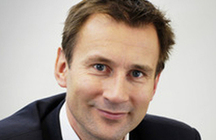
  • Jeremy Hunt – 2019 Speech on Cybersecurity

    Below is the text of the speech made by Jeremy Hunt, the Foreign Secretary, on 7 March 2019.

    I’m delighted to be here at Glasgow University.

    For centuries, this City and its University have been at the forefront of science, technology and medicine. The modern disciplines of physics and economics – and the Industrial Revolution itself – find their origins here. There could be no better setting for a speech about the challenges presented by the advance of new technology.

    Just occasionally, even a Conservative Foreign Secretary should break with tradition, so I propose to begin by quoting the late Tony Benn.

    In his book “Arguments for Democracy”, Benn wrote: “If one meets a powerful person ask them five questions: “What power have you got? Where did you get it from? In whose interests do you exercise it? To whom are you accountable? And how can we get rid of you’?”

    And the final question is by far the most salient.

    “If you cannot get rid of the people who govern you,” Benn wrote, “you do not live in a democratic system”. And he was right, of course.

    The freedom to pass judgement on your leaders and change your government peacefully, through the ballot box, is the defining quality of a liberal democracy.

    Millions of people have made immense sacrifices for the sake of that essential liberty.

    Exactly 3 decades ago, the year 1989 saw the fastest advance of liberal democracy in history.

    On 4th June, a free election in Poland triggered the fall of the Iron Curtain.

    Within a decade, another 16 countries had broken the chains of dictatorship.

    But what the Poles, Czechs and many others did not have to contend with in 1989 was the reality of cyber technology, a hugely powerful force for openness and transparency, but one that also possesses a dark side, capable of being used to subvert the very democratic processes we hold dear.

    Threats to democracy in cyber age

    So far, we’ve seen no successful interference in UK elections or referenda.

    Yet in the cyber age, an authoritarian regime armed with nothing more ambitious than a laptop computer could try to manipulate our democracy.

    In his book, The Perfect Weapon, David Sanger wrote that North Korea’s leadership went from “viewing the internet as a threat to viewing it as a brilliant invention for levelling the playing field with the West”.

    Events have demonstrated how our adversaries regard free elections – and the very openness of a democratic system – as key vulnerabilities to be exploited.

    In 2014, it was widely reported that Russian hackers calling themselves “CyberBerkut” tried to undermine the presidential election in Ukraine, including by tampering with the vote-counting system and delaying the final result. Last October, the British Government publicly confirmed that this group acts for Russia’s GRU military intelligence service.

    In 2016, the GRU targeted the United States, penetrating the email accounts of the national committee of the party that was then in control of the White House, before leaking information with the obvious aim of damaging its presidential candidate.

    For every example of publicly attributed interference, there have been others that never saw the light of day. Whilst we cannot know for sure the effect of these operations, the material fact is that the Russian state has tried to subvert democracy.

    And the implications are profoundly disturbing.

    At a minimum, trust in the democratic process is seriously undermined.

    But in a worst case scenario, elections could become tainted exercises, robbing the Governments they produce of legitimacy.

    And the greatest risk of all is that a hostile state might succeed in casting a permanent cloud of doubt over an entire democratic system.

    The uncomfortable truth of the cyber age is that authoritarian regimes possess ways of undermining free societies that yesterday’s dictators would have envied.

    During both World Wars – and despite the risk of invasion – British democratic institutions remained strong enough to remove Prime Ministers and change governments, in accordance with Tony Benn’s rule. Through every year of conflict, Parliament continued to hold by-elections without fear of outside interference.

    Yet in the cyber era, hostile states wouldn’t need to fight wars or expend blood and treasure to subvert democracy. At long range and minimal cost – perhaps without even being discovered – their cyber experts could inject propaganda into an election campaign and target swing voters, in order to favour one party over another. In a country with an electronic voting system, they could potentially manipulate the result itself. Democracy can never be taken for granted but in the cyber age, the message is clear: Britain and other democracies need a strategic approach to safeguard the free institutions at the heart of our way of life.

    Cyber deterrence

    The UK is one of the leading cyber powers in the world and GCHQ possesses extraordinary expertise, benefiting every part of the country.

    One of the reasons for that expertise is the great knowledge-base of our universities and I was very proud to visit the School of Computing Science here at Glasgow University.

    Along with our allies, we have improved our collective ability to detect those responsible for malign actions in cyberspace, including election interference.

    The Government has a £1.9 billion programme to protect British infrastructure and systems from cyber threats. The National Cyber Security Centre is doing excellent work to help safeguard British companies and institutions.

    But we must go further.

    Simply making it harder for our adversaries to inflict damage in cyberspace won’t be sufficient on its own. Nor will verbal condemnation or written agreements create the taboo we should seek for the manipulation of democratic elections.

    In 2013 and again in 2015, a UN Group of Governmental Experts affirmed that international law and the UN Charter applied to cyberspace, including the prohibition on interference in domestic affairs, which must cover elections.

    Ironically, Russia was among the countries in the UN General Assembly that endorsed these reports. But treating the symptoms is never as effective as dealing with the cause.

    We need a strategy that deters hostile states from intervening in free elections in the first place, a new doctrine of deterrence against cyber attacks in our democracies.

    The very word “deterrence” summons images of nuclear-tipped confrontation between superpowers during the Cold War.

    Henry Kissinger once wrote that a “new order of experience requires new ways of thinking” – and that is certainly true of the cyber age.

    Today’s tools are different from those of the Cold War and our responses must be different too.

    The British Government’s starting point is that we must impose a price on malicious cyber activity, including interference in elections, sufficient to deter authoritarian states. We won’t always react identically to every individual incident and a cyber attack will not necessarily encounter a cyber response.

    Instead, our approach to cyber deterrence has 4 principles.

    First, we will always seek to discover which state or other actor was behind any malign cyber activity, overcoming any efforts to conceal their tracks.

    Secondly, we will respond. That could include naming and shaming the perpetrator in public, in concert with our allies, exposing not only who carried out the action but, so far as possible, how it was done, thereby helping the cyber security industry to develop protective measures.

    Thirdly, we will aim to prosecute those who conduct cyber crime, demonstrating they are not above the law.

    And finally, with our allies we will consider further steps, consistent with international law, to make sure we don’t just manage current cyber attacks but deter future ones as well.

    Naming and shaming

    Now one of the most powerful tools is the sunlight of transparency.

    The British Government has already exposed a series of incidents, including the Russian cyber attacks in Ukraine, North Korea’s infection of thousands of computers with ransomware – including the computers of 48 NHS Trusts – the targeting of 300 universities by an Iranian group, and the theft of commercial data by hackers acting for China’s Ministry of State Security.

    In every case, Britain made these attributions in the company of our allies. Fourteen countries joined us to expose China’s actions; 19 publicised the operations of the GRU.

    But a doctrine of deterrence will require us to go further.

    The perpetrators must believe they run a credible risk of additional counter-measures – economic and diplomatic – over and above public embarrassment.

    The European Union has agreed that economic sanctions, including travel bans and asset freezes, could be imposed to punish malicious action in cyber space.

    Last October, Britain helped secure a decision by EU leaders to create a new sanctions regime for this express purpose. After Brexit, the UK will be able to impose cyber-related sanctions on a national basis.

    As for diplomatic penalties, we won’t hesitate to highlight any breaches of international agreements, such as when the operation by China’s Ministry of State Security broke a bilateral agreement with the UK and a commitment from every G20 country not to conduct or support malicious activity of this kind.

    Finally, Britain now has a National Offensive Cyber Programme, delivered by a Joint Mission between GCHQ and the Ministry of Defence.

    The UK has already conducted offensive cyber operations against Daesh terrorists in the Middle East, designed to hinder their ability to carry out attacks, protect British and coalition forces, and cripple Daesh’s online propaganda.

    The coalition to deter malign behaviour in cyber space and defend democracy needs to be as broad as possible. So the Foreign Office has 50 ‘Cyber Attaches’ in British embassies around the world, charged with working alongside their host governments to raise the cost of malicious cyber activity and safeguard a free and secure internet.

    We will increase their number by a further eight as we take forward the expansion of Britain’s diplomatic network. And today, we are helping over 100 countries to strengthen their cyber security, partially funded through our overseas aid budget. Among them are Commonwealth members, from Botswana to Jamaica, building on the Cyber Declaration agreed in London last year.

    Conclusion

    Gradually, and none too soon, the democracies of the world are joining forces to improve our response to the cyber manipulation of elections.

    But after multiple recent attempts, we can no longer afford to wait until an authoritarian regime demonstrably succeeds in changing the outcome of an election and weakening trust in the integrity of democracy itself.

    The risk is that after just a few cases, a pall of suspicion would descend over a democratic process – and once that happens, the damage would be difficult, perhaps impossible, to repair.

    So now is the time for Britain and our allies to act together to protect democracy in the cyber age by deterring those who would do us harm.

    Let me close with the words of a late Rector of this University, William Gladstone, who campaigned to extend the franchise with this phrase: “You cannot fight against the future. Time is on our side.”

    We too cannot resist the future represented by the cyber age.

    But we must safeguard the ability of the British people, secured by Gladstone and many others, to vote in a free and fair election safe from outside sabotage.

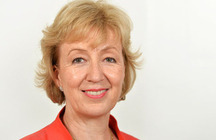
  • Andrea Leadsom – 2019 Speech on Women in Parliament

    Andrea Leadsom

    Below is the text of the speech made by Andrea Leadsom, the Leader of the House of Commons, on 27 February 2019.

    Thank you Vicky [Ford] for inviting me to speak about what is such an incredibly important issue – both for this Parliament and for our society as a whole.

    When I became Leader of the House of Commons in June 2017, I knew it could be quite a challenge.

    I recognised then that what we were doing – legislating to leave the European Union – was vitally important, but also that how we were doing it mattered too. It was predictable that temperatures would run high…

    … and so it was important to emphasise the need to conduct our debates in a spirit of tolerance and respect.

    But what no one could have predicted was that the issue of how we conduct ourselves would become about far more than just how we treat each other in the chamber.

    That we would need to take a long hard look at how the power and influence we wield have shaped behaviour in this institution.

    Our democracy needs and deserves a Parliament in which everyone is treated with dignity and respect.

    But it took the fall out from the #MeToo scandal to fully highlight how deficient Westminster had become.

    The revelations of widespread sexual harassment, bullying and abuse which emerged shocked us all.

    Now, I would argue that we have achieved a lot in the 18 months since then. You will draw your own conclusions no doubt.

    The Independent Complaints and Grievance Scheme, which has been up and running since July, is underpinned by a Behaviour Code, which was very widely consulted on.

    And there is now a system with real teeth that puts complainants at the heart of the process, and importantly respects their very clear need for confidentiality – which is why you have not seen a blow by blow account of everything it has done and said and concluded since it started last July.

    I think the test of an independent and confidential system is if it is reported in the press or not, and we are not – which is good news. We should all be pleased with that.

    I do think the complaints procedure, together with the further changes that we want to make, has the potential to transform Westminster from being well behind the curve to being a role model. Genuinely my aspiration is that we are admired around the world and I know lots of people here share that aspiration.

    And I hope we will be looked to, in part, precisely because of our willingness to accept that this work must be ongoing and it must be continuous.

    We cannot pat ourselves on the back and say ‘great job done, we have a complaints procedure, let’s move on to the next thing’.

    I have always said that the Independent Complaints Procedure was not the not the end of the process, but only the beginning.

    And it’s in that spirit that I want to make three brief points that I hope we can all agree on.

    Firstly, the harrowing nature of the stories we have seen about behaviour in Parliament sicken and appal us all, and that remains undiminished. We still have stories coming out now which are utterly unacceptable.

    When we hear individual examples of bad behaviour – as in Dame Laura’s report, or when we learn that a significant percentage of people remain very concerned – as in the Fawcett Society’s report, we are reminded that the urgency of further reform is as pressing as it ever was.

    It’s the need for ongoing reform that is my second point…

    The recognition that, to truly create an environment that we all want to work in, we must acknowledge that achieving culture change will take patience and tenacity. It is not going to be an overnight solution.

    That’s why, when the House approved the establishment of the Independent Complaints Producer last summer, we built in reviews of how it would function after six and after 18 months.

    The first of these reviews is now underway and will report back within a few months. We will be able to see exactly how we think it is going, what more there is to do, how we can improve on it further and so on.

    I’m encouraged that early evidence shows an increasing number of complainants are coming forward, because the culture definitely won’t change in Westminster until enough people have the confidence to think they can come forward and have their problems addressed.

    By ensuring confidentiality and inspiring confidence that the perpetrator will be sanctioned appropriately, I do think we have designed a system that people will trust.

    That leads me to my third point… That achieving culture change has to mean creating a system that protects everyone in Westminster.

    There are teething problems, as you would expect in a new system that is pretty groundbreaking around the world. These things must be tackled head-on.

    Parliament is a complex place. It is full of a wide variety of people:

    There are many contractors, where some of the difficulties arise.

    From tourists and constituents coming to lobby their MPs, to those working for parliamentarians and for the House itself.

    And of course to the Members of both Houses.

    All of these groups have their own issues and challenges.

    I’m very grateful to Dame Laura for her report examining the experiences of House of Commons staff, which is one part of the staff – about ten per cent of the total number of people – who work here.

    I am also grateful to Gemma White QC for her ongoing work at the moment into the behaviour of MPs and those they employ. She has just recently finished her inquiry into MP’s staff, current and past, and is now looking at MPs themselves who may have been subject to bullying or harassment, which is an interesting and important point.

    But when we talk about changing the culture, we do have to make sure the views of all those in Parliament are taken into account.

    Our democracy is fundamentally about ensuring that every hand can be counted and every voice can be heard.

    That can only happen in a Parliament where everyone is treated with dignity and respect.

    So, in conclusion, we have come a long way since the #MeToo scandal first hit our shores.

    But we still have a long way to go, make no mistake, and that is why I’m so delighted the APPG has chosen to focus on this issue today.

    As Leader of the House of Commons, I will continue to take my role in this very seriously. I will continue to do everything I can to press for change.

    And I will stand up for the approach taken in establishing the Independent Complaints Procedure – including the importance of defending the principle of confidentiality, and our actions to shift some of Parliament’s more outdated practices. I think things like Proxy Voting go some way to show we are actually living in the 21st century.

    So I’m looking forward to hearing about your discussions as we seek to keep our initial momentum going for many years to come.

    And I do urge all of you, whatever you do, whatever your role here in Parliament, to keep up the pressure – do not let me off, do not let anyone off.

    Keep coming forward with your ideas, give feedback, keep working towards it so we in Parliament can be proud of where we work. So we in Parliament can be role models for other workplaces around the world.

    Thank you very much.

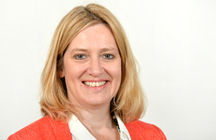
  • Amber Rudd – 2019 Speech on Disabilities

    Below is the text of the speech made by Amber Rudd, the Secretary of State for Work and Pensions, on 5 March 2019.

    Good afternoon.

    I am delighted to be with you and I’d like to thank Scope for graciously hosting us here today.

    I remember watching the 2012 Paralympics here in this Olympic Park. We watched outstanding athletes achieve extraordinary ambitions. One broadcaster dubbed them ‘The Superhumans’ but we have to keep this in perspective – their achievement was ‘superhuman’ but these disabled athletes have very human needs, requirements, aspirations, goals, successes and failures – like all disabled people, like all people without disabilities, like all of us.

    Equality is something we should never take for granted. Whether or not you’re a Paralympian, you want to be able to get into your local shop, your work or your home. And it’s important that we’re not just talking about equality for people with physical disabilities, but consider the full range of what disability can mean. This includes people with learning difficulties, and those whose mental health can hold them back; people whose disability may be unseen and lifelong, or those whose challenges and needs fluctuate. All of us, whatever age or need want an equal chance to live a life of opportunity and fulfilment. We intend to support disabled people in all phases of their life so that the pursuit of equality is a shared goal. Everyday Equality is one of Scope’s enduring strategies and I commend them for it.

    Scope has a long history of advocacy and support for disabled people. It was founded by 3 parents and a social worker with a specific practical objective: education for their children in order to improve their life chances. This objective has evolved and expanded over the years, changing in response to what disabled people have told them. Scope is well known for holding governments to account, and for speaking frankly when they don’t agree, and they don’t think we go far enough.

    So it is particularly apt that I am here today to talk about some practical initiatives that will improve the quality of life for all disabled people in Britain.

    Scope was founded – I discovered – in 1952 – the year my parents were married.

    Like many people, my sensitivity to the variety of barriers faced by disabled people was not well developed until I was confronted by them in my own life.

    My father became blind in 1981. For 36 years his blindness was a normal part of my family’s life.

    Of my life.

    I reflected on my father’s lack of sight, and how it affected his life and the lives of those who loved him, as I considered my role now in supporting disabled people in Britain.

    This government intends to change the landscape for disabled people: to level the terrain and smooth their path.

    The Department for Work and Pensions holds many of the levers to enable disabled people to achieve their potential, and lead positive, fulfilling lives.

    The benefits system should be the ally of disabled people. It should support them, and ensure that the assistance the government provides arrives in the right place for those who need it most. People with disabilities and health conditions have enough challenges in life; dealing with my department shouldn’t be one of them. So my ambition is to significantly improve how DWP supports disabled people and those with health conditions.

    Across the DWP, there is already huge commitment to helping disabled people navigate the obstacles they face. It is obvious to me that my colleagues in jobcentres and policy teams in Whitehall are in their jobs because they want to help people – and they do enormous good every day.

    But equally, I know that it doesn’t always seem that way to claimants. Some disabled people have said to me that they feel as though they are put on trial for seeking the state’s support.

    Now nobody in DWP wants that.

    So we need to do more to close the gap between our intentions and your experiences.

    Before I go any further, I want to thank the Minister for Disabled People, Sarah Newton, for all of her work. Sarah is committed to improving the lives of disabled people, and is a powerful advocate both within DWP and across government.

    Under her guidance, and that of her predecessors, positive change and improvement is already underway.

    We’ve stopped requiring the reassessment of those with the most severe and lifelong conditions, who already receive Employment and Support Allowance or Universal Credit. Those who’ve been awarded the highest level of Personal Independence Payment (PIP), whose needs are unlikely to decrease, now receive an ongoing award – with only a light touch review a decade later. This change recognises that people with the greatest health difficulties should be acknowledged as such, and treated in a way which respects their circumstances.

    We are now trialling the video recording of PIP assessments. It is hoped this measure will make assessments more transparent for all concerned.

    We can and must go further. We have already committed to reforming the Work Capability Assessment (WCA), and are continuing to collaborate with external stakeholders on this.

    But I am aware there is more we need to do.

    Of particular concern are the cases referred to tribunal following both PIP and WCA decisions. For example, between July and September 2018, 72% of PIP appeals heard found in favour of the claimant. Now that number is too high. We should do more to gather the evidence we need to make the right decision earlier, so that fewer claimants have to seek redress through tribunal. I will be looking at this matter over the coming months.

    And today, I am delighted to announce an imminent change:

    We will no longer regularly review the PIP awards for claimants who have reached State Pension age, unless they tell us that their needs have changed.

    This applies common sense and mutual understanding to a situation where needs are unlikely to change. This positive change will apply to the 270,000 PIP claimants currently over State Pension age; a group which will increase over time as more PIP claims are made.

    Looking forward, we have plans to smooth the application and assessment process.

    First, we are creating an integrated service for PIP and Work Capability Assessments from 2021.

    To enable this we are developing a single digital system, built to reflect the needs of our customers.

    We are joining-up our processes in order to work with customers as individuals, document the numerous interactions they may have with the department, and simplify their journey to getting the support that they are entitled to. This is not just about those customers who apply for more than one benefit; it is about improving the service for everyone who requires a health assessment to receive benefits.

    This will reduce the need for people to give us information multiple times, and reduce the number of face-to-face assessments that they attend.

    We hope that by developing our own digital platform, a greater range of assessment providers will compete to help us deliver this important service in the future.

    Secondly, we will test the feasibility of using a single assessment to determine eligibility for PIP, and ESA-Universal Credit.

    Building on the integrated service, we want to simplify claimants’ participation in these processes even further. We have listened to the concerns of those who feel they are being asked for the same information at face-to-face assessments for different benefits. We will therefore explore how a single assessment could improve the experience of those who apply for PIP and ESA-Universal Credit at the same time.

    And third, I want to build a strong relationship, based on trust and mutual understanding, between work coaches and claimants awaiting an assessment on Universal Credit. I am committed to ensuring that jobcentres deliver personalised, compassionate and positive support for people with disabilities and health conditions. An important part of this has been the 10,000 work coaches we’ve already trained to support claimants with mental health conditions.

    Now I accept that conditionality is a much debated part of the benefits system. Last month, in response to the Work and Pensions Select Committee, the department agreed to carry out a small test; work coaches will start from a point of no conditionality with a claimant awaiting a Work Capability Assessment, and scale-up where appropriate, focusing on what claimants can do. This contrasts with the current approach, which starts at full conditionality and then tailors down accordingly. My ministerial colleague, Alok Sharma, is taking this forward.

    But there is more to do, beyond the benefits system – if we are to help people with disabilities achieve their potential. Employment is central to that goal.

    Employment of disabled people has risen by 930,000 between 2013 and 2018. But we don’t want to sit back and think the work is done; far too many disabled people are missing the opportunity to develop their talents and connect with the world of work.

    So I will be reviewing our goal to get one million more disabled people in work by 2027. We can do more, and I want to set a new and more ambitious goal.

    We want to remove barriers and create more opportunities. We want to enable people to achieve their goals.

    If the government is to set higher ambitions for disabled people’s employment, integration and inclusion, we need to do more to prevent disabled people and those with health conditions falling out of work in the first place. Currently 300,000 disabled people leave work each year.

    We know that it’s possible to reduce the drop-out rate through better occupational health, workplace adjustments, and HR practices that support people to continue working to their capability. The benefits are clear: for individuals, businesses’ productivity and our economy.

    Prevention is better than cure. But when someone is too ill to work, the system that awaits them should provide the support they need without writing them off. I have been working with the Secretary of State for Health to look at how we can improve Statutory Sick Pay and Occupational Health, to enable employers to provide comprehensive, holistic support to their employees.

    We will shortly consult on reform of Statutory Sick Pay and improving access to occupational health. We want to encourage and support employers to play their part in this agenda.

    Plenty has been done – in signing-up employers to Disability Confident, and facilitating the record number of Access to Work grants that were approved last year – but there’s still more to do.

    None of us can achieve change alone. To tackle the injustices that disabled people face requires cross-government collaboration, and a far more joined-up approach. Sarah and I are committed to this approach. We know it is the most effective way to deliver for disabled people.

    We want to change and improve the way we engage with disabled people, disabled people’s organisations, and the charities that support disabled people.

    We will achieve more by taking you with us than by ploughing on alone, well-meaning but self-guided. Therefore, I will commission a new piece of research to better understand claimants’ experiences of the benefits system, and how to meet their needs.

    This research will complement the report that Scope published last week – which provides an important reminder of the extra costs faced by disabled people. Together, these will inform future policy-making to better reflect the needs of disabled claimants.

    Today’s announcements are a good start, but they are by no means the end.

    It is our ambition to go further: to listen harder and to reform effectively. We need to deliver policies, strategies and structures that are co-produced with disabled people – ones that improve the quality of life, the life choices, and the life chances of disabled people.

    I was close to my father. He meant everything to me. I want to believe I felt his anxiety, the struggles his blindness brought, every stumble, indignity and frailty. These weren’t intellectual exercises for me. They were visceral. I never pitied him. I empathised and I supported. He told me what he needed. He told me how I could help him and he guided me.

    As I look around this room I am certain that all of us want to deliver a fairer Britain. I want you to guide us, help us, and work together with us to provide the opportunities and support that disabled people expect and deserve.

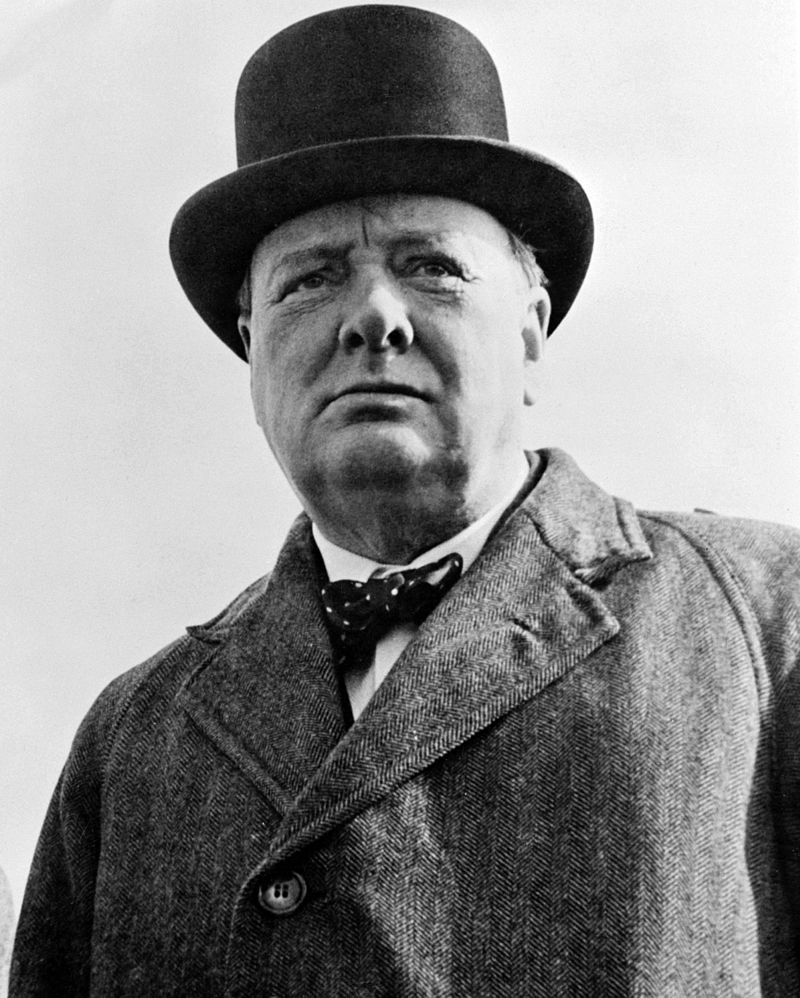
  • Winston Churchill – 1940 Speech on the Death of Neville Chamberlain

    Below is the text of the speech made by Winston Churchill, the then Prime Minister, in the House of Commons on 12 November 1940.

    Since we last met, the House has suffered a very grievous loss in the death of one of its most distinguished Members and of a statesman and public servant who, during the best part of three memorable years, was first Minister of the Crown.

    The fierce and bitter controversies which hung around him in recent times were hushed by the news of his illness and are silenced by his death. In paying a tribute of respect and of regard to an eminent man who has been taken from us, no one is obliged to alter the opinions which he has formed or expressed upon issues which have become a part of history; but at the Lychgate we may all pass our own conduct and our own judgments under a searching review. It is not given to human beings, happily for them, for otherwise life would be intolerable, to foresee or to predict to any large extent the unfolding course of events. In one phase men seem to have been right, in another they seem to have been wrong. Then again, a few years later, when the perspective of time has lengthened, all stands in a different setting. There is a new proportion. There is another scale of values. History with its flickering lamp stumbles along the trail of the past, trying to reconstruct its scenes, to revive its echoes, and kindle with pale gleams the passion of former days. What is the worth of all this? The only guide to a man is his conscience; the only shield to his memory is the rectitude and sincerity of his actions. It is very imprudent to walk through life without this shield, because we are so often mocked by the failure of our hopes and the upsetting of our calculations; but with this shield, however the fates may play, we march always in the ranks of honour.

    It fell to Neville Chamberlain in one of the supreme crises of the world to be contradicted by events, to be disappointed in his hopes, and to be deceived and cheated by a wicked man. But what were these hopes in which he was disappointed? What were these wishes in which he was frustrated? What was that faith that was abused? They were surely among the most noble and benevolent instincts of the human heart—the love of peace, the toil for peace, the strife for peace, the pursuit of peace, even at great peril and certainly to the utter disdain of popularity or clamour. Whatever else history may or may not say about these terrible, tremendous years, we can be sure that Neville Chamberlain acted with perfect sincerity according to his lights and strove to the utmost of his capacity and authority, which were powerful, to save the world from the awful, devastating struggle in which we are now engaged. This alone will stand him in good stead as far as what is called the verdict of history is concerned.

    But it is also a help to our country and to our whole Empire, and to our decent faithful way of living that, however long the struggle may last, or however dark may be the clouds which overhang our path, no future generation of English-speaking folks—for that is the tribunal to which we appeal—will doubt that, even at a great cost to ourselves in technical preparation, we were guiltless of the bloodshed, terror and misery which have engulfed so many lands and peoples, and yet seek new victims still. Herr Hitler protests with frantic words and gestures that he has only desired peace. What do these ravings and outpourings count before the silence of Neville Chamberlain’s tomb? Long and hard, hazardous years lie before us, but at least we entered upon them united and with clean hearts.

    I do not propose to give an appreciation of Neville Chamberlain’s life and character, but there were certain qualities, always admired in these Islands, which he possessed in an altogether exceptional degree. He had a physical and moral toughness of fibre which enabled him all through his varied career to endure misfortune and disappointment without being unduly discouraged or wearied. He had a precision of mind and an aptitude for business which raised him far above the ordinary levels of our generation. He had a firmness of spirit which was not often elated by success, seldom downcast by failure and never swayed by panic. When, contrary to all his hopes, beliefs and exertions, the war came upon him, and when, as he himself said, all that he had worked for was shattered, there was no man more resolved to pursue the unsought quarrel to the death. The same qualities which made him one of the last to enter the war, made him one of the last who would quit it until the full victory of a righteous cause was won.

    I had the singular experience of passing in a day from being one of his most prominent opponents and critics to being one of his principal lieutenants, and on another day of passing from serving under him to become the head of a Government of which, with perfect loyalty, he was content to be a member. Such relationships are unusual in our public life. I have before told the House on the morrow of the Debate which in the early days of May challenged his position, he declared to me and a few other friends that only a National Government could face the storm about to break upon us, and that if he were an obstacle to the formation of such a Government, he would instantly retire. Thereafter, he acted with that singleness of purpose and simplicity of conduct which at all times, and especially in great times, ought to be a model for us all.

    When he returned to duty a few weeks after a most severe operation, the bombardment of London and of the seat of Government had begun. I was a witness during that fortnight of his fortitude under the most grievous and painful bodily afflictions, and I can testify that, although physically only the wreck of a man, his nerve was unshaken and his remarkable mental faculties unimpaired.

    After he left the Government he refused all honours. He would die like his father, plain Mr. Chamberlain. I sought the permission of the King however to have him supplied with the Cabinet papers, and until a few days of his death he followed our affairs with keenness, interest and tenacity. He met the approach of death with a steady eye. If he grieved at all, it was that he could not be a spectator of our victory, but I think he died with the comfort of knowing that his country had, at least, turned the corner.

    At this time our thoughts must pass to the gracious and charming lady who shared his days of triumph and adversity with a courage and quality the equal of his own. He was, like his father and his brother, Austen, before him, a famous Member of the House of Commons, and we here assembled this morning, Members of all parties, without a single exception, feel that we do ourselves and our country honour in saluting the memory of one whom Disraeli would have called an “English worthy.”

  • Theresa May – 2019 Speech at Jordan Growth and Opportunity Conference

    Below is the text of the speech made by Theresa May, the Prime Minister, on 28 February 2019.

    Thank you Prime Minister Razzaz, it has been a pleasure to welcome you and King Abdullah to London today.

    And it has been fantastic to see the strength of support from right across the international community as we have come together with the private sector to demonstrate our commitment to Jordan and its future.

    In 2017, I was delighted to visit Jordan not once, but twice. And it was there in Amman that I and the King agreed a new ambitious partnership for the long-term benefit of both our countries. Today we have built on that partnership through our new initiative, the London Initiative.

    This Initiative backs Jordan’s Vision 2025 and supports Jordan in delivering social and economic reforms that will transform its economy, making the most of its young, talented and diverse workforce – and, crucially, actively encouraging the participation of its women.

    That vision is already becoming a reality – today has demonstrated how much has been achieved, and how Jordan’s reform programme is already making a difference. And earlier today, I heard from the King directly his own personal commitment to supporting Jordan’s government to drive forward these reforms.

    There of course remain complex and long-term regional and economic challenges.

    But Jordan has a robust and realistic strategy to bring about change. Coming together today provides us with the opportunity to shore up and transform Jordan’s economy, work together to tackle instability, and create an attractive environment for investment that can benefit not just Jordan but all of us now and in the future.

    That is why it has been so good to see governments, CEOs and investors backing this new approach to support Jordan – matching confidence with commitments that will help unlock growth, jobs and investment.

    And unlocking that potential, to enable Jordan to prosper and remain a beacon of stability, matters to all of us.

    Jordan sits at the centre of a region that has faced turbulence and uncertainty over the last decade. The political upheaval in 2010 and 2011, the emergence of Daesh, and the on-going conflict in Syria have changed the face of the Middle East.

    The people of Jordan have demonstrated resilience in the face of these challenges. They have carried a heavy burden, but despite having their traditional trade relationships severed, their energy costs increasing and supply disrupted, they have given shelter and support to more than 650,000 refugees from regional conflict.

    They have shouldered that load unsparingly and they deserve our gratitude.

    All the while, Jordan has been steadfast in the fight against terrorism.

    Steadfast as an ally in the Global Coalition against Daesh.

    Steadfast in pursuing peace and promoting stability in the Middle East. For decades, on these, and other issues, Jordan and the UK have stood side by side.

    As I told leaders at the first EU-League of Arab States Summit earlier this week – a stable, peaceful, prosperous region matters to the UK, Europe and beyond.

    The fortunes of all of our countries have long been intertwined.

    So we must be clear – a stable Jordan defends us from terrorist groups taking root and strengthens the border security of neighbouring countries. And that is why our collective support for Jordan is so crucial.

    Jordan is an old and cherished friend of the UK. At the heart of our long-term partnership with Jordan is a broad and deep commitment to tackling common challenges.

    Our continued close co-operation on defence, border security and intelligence adds to our collective security.

    We will work with Jordan and other regional partners to support peace and prosperity in the Middle East, and to find long-lasting solutions, backed by the international community, to sources of instability.

    And that is why so many of you are here today, to demonstrate our collective support and show Jordan that the international community remains in lockstep with it as it delivers its compelling plan for growth and economic reform.

    Today has demonstrated that the UK is at the centre of coordinating the assistance that will help lay the foundations for a strong and prosperous future for Jordan. Key to this is the role played by the IMF and the World Bank – pillars of the international system which defends and supports financial stability and sustainable economic growth – which matters to us all in today’s interconnected world.

    The extent of collective international support for Jordan has been clear from the commitments we have seen and heard today from governments. But we have to remember that the private sector will be the key to catalysing Jordan’s economic transformation, and that’s why I am so pleased to have so many representatives from the business community here today. As governments we can create the frameworks and environments which foster economic growth, but private investment is what will make the real difference.

    To demonstrate the extent of the UK’s own confidence in Jordan, and our determination to make the vision that Jordan’s Prime Minister and King have spoken about today a reality, I am pleased that the UK will be underwriting a $250 million World Bank loan to Jordan. This will come alongside a substantial uplift in our grant financing over the next five years. This will open the door to reinvigorating Jordan’s economy, attracting the investment needed to stimulate growth and create jobs.

    The UK’s assistance for Jordan is a practical demonstration of the approach I set out in Cape Town. This is about working in partnership, sharing our skills, experience and resources to jointly tackle the challenges we face in a way that delivers global security and prosperity.

    Our commitments are a tangible demonstration of the fundamental strategic shift in the way that the UK is using its aid programme – investing in the UK’s national interests, in a way that helps shape a global economy that works for everyone.

    And that is why this government remains committed to spending 0.7% of GNI on Official Development Assistance. We have been and will continue to be a global champion in this area, spending our aid programme innovatively and in a way that delivers value for money for the UK tax payer.

    Today has shown us what a modern, reforming, innovative Middle Eastern state can look like – and how a dynamic, stable Jordan can generate benefits not only for its people but for many beyond.

    But it is important now that we maintain momentum. I want to thank all those who have made commitments today – and everyone here for coming together to demonstrate your support for a brighter more prosperous Jordan of tomorrow.

    This has been an important milestone. We have an opportunity – and a way forward – to support Jordan and it is crucial that we all pull together as we form a global coalition to back Jordan for the future.

    A future in which together Jordan and the international community can bring about lasting change.

  • Nadhim Zahawi – 2019 Speech on Early Years Funding

    Below is the text of the speech made by Nadhim Zahawi, the Parliamentary Under Secretary of State for Children and Families, on 28 February 2019.

    Thank you very much for inviting me. A particular thanks to the member for Manchester Central, Lucy Powell, for inviting me here today, and for continuing to keep the political focus on school readiness in Greater Manchester. I am truly delighted to see such a range of early years professionals here today, and I would like to personally thank you for the hard work that you do. I know that all of you – whatever your role – share my passion and enthusiasm for ensuring our children get the best start in life.

    School readiness is hugely important, and that is why the Department for Education has such a focus on the early years, and on improving communication and language skills in particular.

    This is something that is very personal to me. Some of you may know that, at the age of nine when I came to this country from Baghdad, I couldn’t speak English, and I used to sit at the back of the classroom so the teachers didn’t ask me to speak in class. Sometimes when I got a bit more confident I tried to bring a few sentences together. My teachers thought I had learning difficulties. I now stand before you as MP for Shakespeare! But I had great parents and some great role models, and I learned English and then learned that being able to express yourself is the gateway to success, not just in school but in later life.

    It’s these crucial early years that make the most impact on a child’s future path – because for those children who start out behind their peers, it’s so much harder to catch up. All the evidence tells us that we need to improve children’s communication and language before they arrive at school, to get them on track to be confident, able learners.

    The Education Secretary has set a challenging ambition to halve the proportion of children leaving reception without the communication, language and literacy skills they need to thrive, over the next ten years. If we are to meet this ambition, we need to find new and creative ways of supporting children and families – as well as our workforce.

    Greater Manchester is leading the way, and I am delighted to be here to talk about how we can work together to design and deliver systems both locally and nationally that can hopefully ensure every child is able to thrive when they start school.

    I strongly believe that a key role for us in central Government is to support local leaders and professionals to innovate; and for Government to ensure the best ideas are able to flourish. The Children’s Social Care Innovation Programme has been a successful example of that approach. And our £6.5m Early Outcomes Fund draws on those lessons to help local authorities improve how they deliver services to improve early language outcomes. We will announce the outcome of that fund very shortly.

    Today I want to highlight some further examples of where local innovation and central policymaking are coming together to drive progress towards our shared ambition. These broadly cover three areas.

    The first of these is to address the work of the wider professionals involved in a child’s life.

    This ranges from GPs, health visitors, speech, language and communication therapists and many more. Health visitors play a particularly important role in identifying and supporting children with speech, language and communication needs.

    That is why my Department – in partnership with Public Health England – will train 1,000 health visitors. Wave 1 will begin shortly in areas of high need, including Oldham and Tameside.

    This is an area where Greater Manchester is really blazing a trail – both through your language pathway and your investment in tools to identify speech, language and communication needs early. Together these are designed to support the local workforce to identify speech, language and communication needs as early as possible and put in place support that is needed.

    Again, this is an important example of how Government can take innovative practice and take it to scale. My Department – again in partnership with Public Health England – is developing a new bespoke early language assessment tool, under government copyright, that will be made available to health visitors and professionals across a wide range of local authorities in need.

    Today, I am pleased to announce that the University of Newcastle, led by James Law – Professor of Speech and Language Science – will develop our early language assessment tool. The team working on this tool has extensive expertise in speech and language therapy, health visiting and general practice, and academic expertise in linguistics, psychology and statistics.

    We are also working with Public Health England to publish early language pathway guidance which will support local areas to develop and implement their own pathway – similar to that which you have done in Greater Manchester. You have really been the pioneers of this.

    Of course, the most important people in a child’s life are their parents. Which brings me onto the second area I want to talk about – improving the Home Learning Environment. Because the evidence is clear that what happens at home in the early years is absolutely key to outcomes later in life.

    That is why, in November, the Department held a summit, at which we brought together a coalition of over 120 businesses, voluntary groups, community and public sector organisations. These organisations all share a common goal – to help parents kick start their child’s early communication, language and literacy development at home.

    We want to get across that there are really simple, everyday things that every parent can do more of to help their children’s language and literacy.

    Since the summit, I have been working with some of these organisations to bring their commitments to life, and it is no surprise to me to find that there is some excellent, innovative practice here in Manchester. Today after this summit, I am visiting Manchester City Football Club, to observe one of their sessions that uses physical activity to enhance children’s communication and language.

    Our next steps are to launch a public campaign to encourage parents to chat, play and read more with their children. I recognise that it is important to get this message out there in local communities if we want to see a change in parental behaviour, and for this to work, I will really need your help and expertise.

    Our public, private and voluntary sectors are all a vital part of this coalition. From early years settings to libraries, from health visitors to local employers, everyone has an important role to play as part of this society-wide mission to improve the home learning environment.

    One of the most important contributions comes, of course, from early years professionals. And this brings me onto the third and final area I want to talk about today – which is supporting the work of our early years settings. I am always struck by the passion and commitment that I see first-hand when I visit early years settings up and down the country. I want to be able to support you to do your job as best as I can.

    I know this is a key focus for Greater Manchester. It is for me too. My department’s Workforce Strategy, published in March 2017, has resulted in a number of developments to support the early years sector in recruiting, retaining and developing its workforce. These include publishing new level 2 qualification criteria, and a new early years career progression map – both developed through work with sector stakeholders.

    I am also delighted to hear that you are encouraging and supporting the use of apprenticeships for your early years workforce. For employers, developing well trained and highly motivated staff who work to the standards they expect is hugely valuable. I am an enthusiastic supporter of apprenticeships and the grow-your-own ethos of the sector.

    I also want to address the importance of continued professional development, which I know is another key focus for Greater Manchester. This is why my Department – in partnership with the Education Endowment Foundation – is investing £5 million to fund and evaluate projects focused on high quality professional development and practice in the early years.

    And I recently announced a £20m Early Years Professional Development Fund, to help practitioners improve children’s early language, literacy and numeracy. This will be delivered via a ‘train the trainer’ model – much like your planned workforce academy. We recently tendered for a national training partner and are currently assessing the bids. I hope to be in a position to announce the preferred bidder shortly.

    Now there is one small but important group of early years settings that I want to mention in particular – Maintained Nursery Schools.

    The supplementary funding that my Department provides local authorities to enable them to protect Maintained Nursery School funding and reflect their higher costs is due to end by March 2020. What happens after that will be determined by the Spending Review. But the Spending Review has not yet happened, and this has created an unusual problem for local authorities and Maintained Nursery Schools.

    Rightly, you want to allocate places in Maintained Nursery Schools for this September in good faith, but without knowing whether the summer term of 2020 will be fully funded.

    Today I can reassure you that you can indeed offer places in good faith. We will provide local authorities with a further £24 million for their Maintained Nursery Schools, to enable them to continue funding them at a higher rate for the whole of the 2020-21 academic year.

    This should remove the immediate concerns about Maintained Nursery Schools. I know that this does not answer the question about their long-term future. But I think this is a pragmatic response – I hope you’ll agree – that recognises the excellent work that many Maintained Nursery Schools do. And it allows the Spending Review to determine the longer-term future of Maintained Nursery Schools, alongside wider early years considerations.

    I have set out this morning some examples of the relationship between central government and local leaders and professionals working at its best, taking innovations to scale. In short, if we are to improve outcomes for disadvantaged children, we must think about how we can do things differently – including through parents.

    No parent has all the answers – so we need to make it easier for them to kickstart their child’s learning at the earliest opportunity, whether by encouraging them to take part in educational activities as a family, support from trained experts at home to identify concerns earlier, or better access to high-quality early years education.” I look forward to working together to give all children the best chance to flourish at school and in later life.

    Thank you.

  • Nicola Blackwood – 2019 Speech on Rare Disease Day

    Below is the text of the speech made by Nicola Blackwood, the Parliamentary Under Secretary of State at the Department of Health and Social Care, on 27 February 2019.

    It is a such a pleasure to mark Rare Disease Day with you all.

    And I want to start by saying thank you to Genetic Alliance, Rare Disease UK and all of you whether you are patients, carers, researchers, clinicians or campaigners – it is down to you that we have come so far in recent years with rare diseases research and care.

    We all know that:

    for too long too many parents had to cope with a sick child with a rare disease but with little information as to what the disease is, let alone where they might find treatment

    for too long GPs were frustrated by being unsure where the best centre of expertise is to treat a particular rare disease

    for too long the treatment of those with a rare disease was been seen as a public policy afterthought rather than as a priority

    And this is why the establishment of the National Rare Disease Policy Board and Forum was a genuine turning point I think. It sent out a strong message to the whole system that information, diagnosis and treatment of those with a rare disease is not only now at the heart of the policy machine but it was also much more strategic and being developed with patients as its guide.

    My own experience as an Ehlers Danlos patient has been entirely typical I think and has led me to my own conclusions about rare diseases policy.

    I was undiagnosed for 30 years and went through all the usual experiences of the diagnostic odyssey – getting very sick from childhood and being referred to many doctors who each tried their best, ordering more and more complicated and invasive tests but ended up suggesting a psychiatrist or prescribing me something that just made me sicker.

    Finally, a wonderful neurologist with experience of EDS realised what had been going on and referred me to a specialist who diagnosed me in 20 minutes. Twenty minutes – after all those years.

    Over the next 18 months I acquired a fleet of specialists. Initially it was a disaster. As they started trying to find the right medical regime for me I got much, much sicker and I found trying to co-ordinate all the tests and appointments and new medications – while still working – impossible.

    I do not think there is a flat surface in this building I have not collapsed on – including on this very podium where I tried to give speech a couple of years ago.

    Then the NHS stepped in and saved me. The occupational therapist here in Parliament, my GP and the whole team at UCL Autonomic Unit literally picked me up and held my hand – helping co-ordinate my care and getting me the support I needed at work. Gradually, the pieces fell into place and I have clawed my way back to stable health. I will not pretend to any of you it was easy. It was not. And there were many setbacks along the way. But I do know I am incredibly lucky.

    Firstly, my battles are nothing compared to many of you here today and for that you have my unending admiration.

    Secondly, without my family I simply would not have made it. They have sacrificed beyond measure to care for me and I can never repay them.

    Thirdly, I owe so many NHS workers – nurses, doctors, my GP, pharmacist, paramedics and more – my stable health today. I am not sure I will ever be able to communicate to them quite how dramatically they have changed my life.

    But this process has also taught me indelible lessons about how urgent it is to improve care for rare diseases for everyone – not just the lucky ones like me.

    This is why we must never relent in our campaign to bring an end to the diagnostic odyssey – it is pernicious and even after diagnosis the damage it does to mental health of patients and their families must not be forgotten.

    We must press even harder on clinical awareness and groundbreaking research so more patients can be diagnosed and treated earlier.

    Finally, co-ordinating your care can feel almost impossible when you are ill and the complexity of services for rare disease must not act as a barrier to access for care.

    That is why the publication of the UK Strategy for Rare Diseases in 2013 represented such a significant achievement for everyone here today.

    It put the emphasis firmly on raising awareness, improving diagnosis, and enhancing research and patient care and we have come a long way.

    Today DHSC and NHS England have made good on the promise to publish annual updates to the implementation plan.

    One year on we can celebrate some incredible milestones – let me just highlight a few.

    Care co-ordination

    Firstly, on the issue of care co-ordination I have asked NHS England to implement a rare disease ‘insert’ from April 2019. This refers to a set of provider criteria to sit alongside NHS England specifications for services treating patients with rare diseases and allows NHS England to hold providers to account for the way in which they treat patients with rare diseases.

    There will be up to 3 criteria (depending on the nature of the service):

    ensure there is a person responsible for co-ordinating the care of any patients with rare diseases

    give every patient with a rare disease an ‘alert card’, including information about their condition, treatment regime and contact details for the individual expert involved in their care

    ensure that every paediatric patient has an active transition to an appropriate adult service, even if that adult service is not the commissioning responsibility of NHS England

    I hope that this will make a real difference for patients on the ground. I will be keeping a close eye on whether it does.

    Research

    Many of you will know that the National Institute for Health Research (NIHR) has established the new BioResource for Translational Research for Common and Rare Diseases.

    By March 2018, 37 individual rare diseases had been adopted and by 2022 we expect this number to have increased to 100.

    The in-depth phenotyping for rare diseases, linking that to genomic data promises to provide an invaluable research environment for rare diseases discovery.

    At Public Health England the National Congenital Anomaly and Rare Disease Registration Service (NCARDRS) has made brilliant progress expanding their registries this year.

    They have achieved 100% population coverage for conditions diagnosed either antenatally or postnatally, up from 49% in 2017 to 2018.

    I truly believe this will improve our understanding of the causes, diagnosis and treatment of rare diseases.

    I would like to thank everyone in this room who has played a part in developing these vital research projects.

    EU Exit and European Reference Networks

    I know though that many here are concerned about the potential impact of Brexit on our research capabilities. I want to stress the government is a strong supporter of the European Reference Networks (ERNs).

    We are keen to agree a future relationship with the EU that includes continued participation in the ERNs.

    We have made this position clear to the European Commission.

    In return, the European Commission have shown that they recognise the significant expertise of UK clinicians. Both sides appreciate the importance of maintaining UK participation.

    Refresh of the UK Strategy for Rare Diseases

    As we work hard on what our future relationship with the EU will look like, I am also aware that we need to work hard on what the future of the UK Strategy for Rare Diseases post 2020 will look like.

    I can reassure you that, post 2020, there will be an overarching framework to improve the lives of all those living with rare conditions. I am sure you will appreciate that it is too early to know exactly what this would look like, but I am personally committed to ensure that the rare disease community are closely involved as we move forward on this.

    Genomics

    The really big news, of course, is that in December 2018, the 100,000 Genomes Project completed its sequencing phase – a fantastic achievement by NHS England, Genomics England and other partners including Health Education England.

    I know that this project has delivered life-changing results for patients – 1 in 4 participants with rare diseases are receiving a diagnosis for the first time – but it wouldn’t have happened at all without the support and participation of many of you here today so I want to personally thank you for the historic role you have played in helping us transform life chances for so many others with rare diseases.

    Not only that, but this project has paved the way for using genomics in ‘everyday’ healthcare.

    Last year, NHS England launched the Genomics Medicines Service (GMS), making the UK the first in the world to integrate genomic technologies, including whole genome sequencing, into routine clinical care.

    As the NHS Long Term Plan in January, seriously ill children who are likely to have a rare genetic disorder, children with cancer, and adults suffering from certain rare conditions or specific cancers, will all be offered whole genome sequencing from 2019 under the new Genomics Medicines Service.

    This all speaks to a wider ambition.

    We want to lead the world in the use of data and technology to prevent illness, not just treat it.

    We want to diagnose conditions before symptoms occur.

    And we want to deliver personalised treatment, informed not just by our general understanding of disease but by our own personal, de-identified medical data – including our genetic make-up.

    Now you will know that the NHS Long Term Plan outlines our vision for the NHS over the next 10 years.

    The plan focuses on prevention and early detection and has been developed with frontline staff, patients and their families.

    The plan also sets out the ambition to focus targeted investment in areas of innovation, particularly genomics.

    This will enable more comprehensive and precise diagnosis, and allow patients to access more targeted treatments to reduce the use of harmful medications and interventions.

    In order to make this a reality, I am delighted to announce that we will be working with the National Genomics Board, people in this room and the broader genomics community to develop a National Genomic Healthcare Strategy. This will tackle not just rare diseases, but it will be built on the foundations that the rare diseases community helped build with the 100,000 Genomes Project.

    The National Genomic Healthcare Strategy will set out how the whole genomics community can work together to make the UK the global leader in genomic healthcare.

    It is vitally important that this is not just a government exercise: we will be leading a national conversation and I want to encourage everyone with an interest – patient, carer or professional – to share their views and contribute to a coherent, national vision.

    Conclusion

    There is so much more I could say but I just want to close with this.

    I know living with a rare disease or caring for someone for a rare disease can feel relentless. Unseen.

    Please do not lose faith.

    In the National Rare Diseases Policy Board, the Forum and in me as your minister, you have people advocating for you right at the heart of the system.

    But we know we cannot do it without you. The mountains we have climbed were only conquered when we worked in true partnership – and there is still so much more to do.

    That is why Rare Disease Day is all about you.

    Thank you for your dedication, your expertise and your sacrifice.

    And please – enjoy today, you’ve earned it.