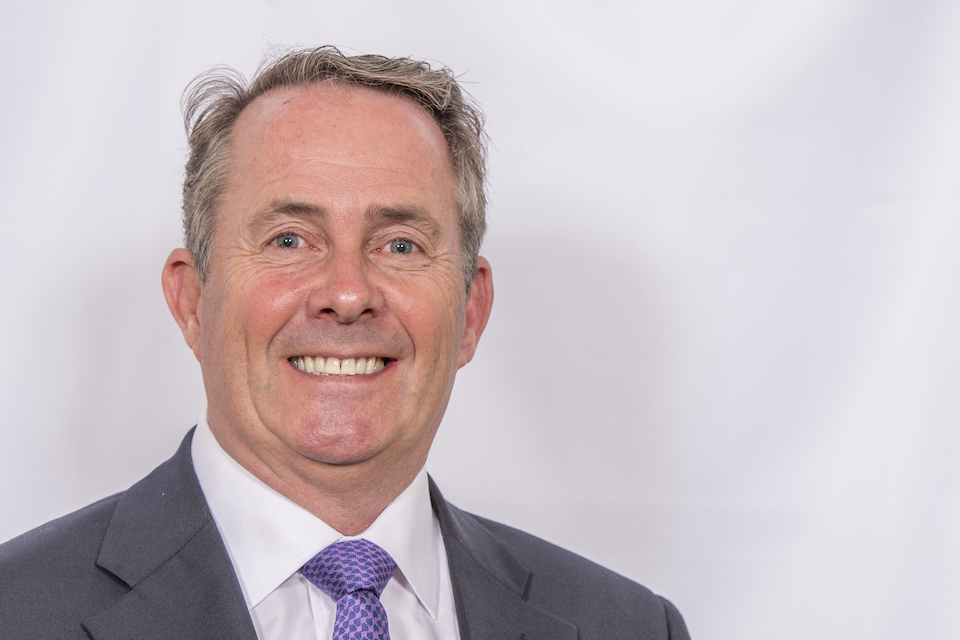
Tag: 2019

  • Liam Fox – 2019 Speech to the Institute of Government

    Below is the text of the speech made by Liam Fox, the Secretary of State for International Trade, on 15 May 2019.

    Good morning everyone.

    When people talk about, or write about, the Department for International Trade, they tend to do so in rather vague terms about what they call ‘trade deals’.

    While trade policy is an important part of what we do, it accounts for less than 20% of our total staff.

    As an international economic department we are responsible for helping sell UK goods and services to the rest of the world, negotiating market access for UK exporters, assisting outward direct investment for UK companies into overseas markets and for foreign direct investment into the UK.

    So I am very grateful to the Institute for Government for providing this opportunity to set out how DIT came into existence, its current role and its future ambitions.

    And I am proud to lead a department which has a direct and measurable impact on our prosperity.

    In 2017/18 alone, we helped UK businesses export goods and services worth around £30.5 billion.

    Using analysis by the Institute for Economic Affairs, it is estimated that this could potentially generate around £10 billion for the Exchequer.

    Despite a challenging global economic climate, British exports now stand at a record high of £640 billion – that’s a year-on-year increase of 3%.

    Since the Referendum alone, UK exporters have sold around £1.7 trillion of goods and services to the rest of the world.

    What’s more, our efforts to keep the UK in the global spotlight as an attractive place to do business has helped stock levels of foreign direct investment hit another record-high of £1.34 trillion.

    This has helped generate around 1,500 new jobs across the country each week.

    Between 2016 and 2018 we supported more than 3,500 inward investment projects, creating and safeguarding over 170,000 jobs.

    And the UK is the number one destination for foreign direct investment in Europe and third in the world last year behind only China and the United States.

    It actually seems remarkable to me that three years ago DIT did not even exist.

    When I was asked to set up the new department by the Prime Minister in 2016 we had nothing.

    No desks, no phones, no IT, no office and no staff.

    In fact, on day one I was 25% of the department!

    Today we are a department of nearly 4,000 people, led by an excellent Permanent Secretary in Antonia Romeo and equally excellent Chief Trade Negotiation Adviser, Crawford Falconer.

    The UK stands ready to implement an independent and visionary trade policy for the first time in more than 40 years.

    It is truly a pivotal moment for the country, and I am delighted to say that we are starting from a position of strength.

    I wanted this morning to take a step back, as Bronwen says.

    How did we get to this point? Where did we start from? And what lessons does it have for the future?

    When I became Defence Secretary in 2010 we were faced with reshaping a dysfunctional Ministry of Defence in real time – with £39 billion inherited departmental overspend, a 7% budget cut to be implemented to help reduce the government deficit, two military conflicts in Afghanistan and Libya, a strategic defence review that had not been conducted for 12 years and the loss of around 37% of our civil servants as a consequence of the above.

    People

    And this experience was crucial when it came to creating a new department.

    While we needed to develop our policies, our strategy and direction, as well as building the very infrastructure from which everything else flows – and all in a very short space of time – we were free from the limitations of someone else’s structures and constraints.

    We knew we had to be clear about our purpose from the outset.

    We had to find a way to incorporate existing organisations like UK Export Finance, our export credit agency.

    So we organised ourselves around three very distinct pillars: trade policy, including trade agreements; investment promotion; and export promotion.

    And everyone in the department belongs to one of these. And each of the pillars is owned by a dedicated Minister, and a dedicated Civil Service Director General.

    We also had to create an organisational plan to implement these three pillars, build HR and finance capabilities, find office space, and – crucially – find the very best people available to fill them.

    Setting up a Departmental Board, including recruiting a team of Non-Executive Board Members led by the excellent Simon Walker, was crucial as it acts as the central coordinating structure of the entire department.

    And the Board, which I chair, meets around 10 times a year.

    We just held our 27th board on Monday.

    It plays a fundamental role in challenging and scrutinising the department’s business, while simultaneously setting our strategic direction and supporting my Ministerial team and senior Civil Servants in delivering our long-term goals.

    We publish our agenda to our staff worldwide before the Board sits so they can comment and feed into it, and we inform them of our discussions and decisions afterwards both by email and by video.

    But even with this in place, it was clear that we had a problem: the UK had not operated its own independent trade policy for more than 40 years and there were very few civil servants or Government Ministers with direct experience in this highly technical field, and no collective Whitehall memory on which to draw.

    All of this could seem daunting, but I actually think that the uniqueness and genuinely ground-breaking nature of the challenges fuelled the excitement and expectation of what lay in store for the department.

    But pulling together this team in such a short space of time required a great deal of cooperation across Government.

    Now some might think that with more than 430,000 employees scattered across the country and internationally the Civil Service is unwieldy.

    Actually, nothing could be further from the truth.

    At its best, few organisations are as dynamic and quick to react as the Civil Service.

    So when the call went out for help in staffing DIT, other Government departments did all they could to release the people with the right skills.

    And our team worked frantically over the summer so we could hit the ground running when Parliament returned from the summer break in 2016.

    There is not a day goes by when I am not impressed by the dedication, drive and professionalism of those who have helped create DIT, and delivered world-class advice and delivered out objectives as the structures bedded in.

    Learning

    However, while we had some very experienced people from the outset, they did not necessarily come with the policy expertise that we required.

    That’s why we made it an early priority to reach out to the people who already had the expertise that we needed, holding consultations with trade experts around the world.

    We were able to draw on the skills and expertise from strategic partners such as Canada, Australia and New Zealand who advised us, for example, on establishing our own trade remedies function.

    And there was a great deal to learn, with policy details like procurement, intellectual property, tariffs or rules of origin requiring a whole new level of understanding, or a different perspective in the context of an independent UK trade policy.

    That’s why we unveiled the International Trade Profession last year.

    This is the newest Civil Service profession and is designed to recruit and train a new generation of international trading talent.

    More than 2,500 civil servants have joined so far and are being equipped with the skills they need to make our country the great trading nation that we can be.

    Another challenge was the need for DIT to become a credible, data-driven, intelligence-led and more efficient organisation.

    This meant developing our analytical, statistical and data science capabilities, and rolling out a new range of surveys and data collections to inform the development of trade and investment policy.

    We laid the groundwork to build solid relationships with the ONS and HMRC to deliver the necessary trade statistics, and we pushed forward with the OECD and WTO cutting-edge initiatives developing new measurements of digital trade and Trade in Value Added.

    I remember when we started commenting on the lack of data that seemed to be there and I remember saying that if I made decisions when I was still practising medicine on the basis of the same level of information I would probably have found myself up in front of the General Medical Council.

    But we have built that capability and are continuing to build it today.

    We made sure businesses were involved in helping shape the department from the outset by opening a channel of communication to understand what mattered to them, while at the same time opening the eyes of many companies to the potential of what was coming down the track.

    And we expanded our World Trade Organisation mission in Geneva as a very early priority in fact within days, to lay the foundations for when we take up our seat as independent member.

    Vision

    So having got the right people in the right places, we needed to set a clear direction for the department.

    So in my first major speech as Secretary of State I made the case in Manchester for free trade and an open and liberal trading environment and warned about the dangers of protectionism.

    I said there that “free trade has, and will continue to, transform the world for the better, and the UK has a golden opportunity to forge a new role for ourselves and importantly for the rest of the world.”

    I believe this passionately and setting out this intellectual creed from the start was essential in shaping DIT’s culture and its direction.

    But in a department the size of DIT, with a presence in 108 countries, political direction by my excellent team of Ministers and myself can only go so far on a day-to-day basis.

    So we wanted to create a set of values that went to the very heart of everything we do.

    We called it the DIT Spirit.

    Central to this is our “vision to create a UK that trades its way to prosperity, to stability and to security”.

    Our values of being Expert, Enterprising, Engaged and Inclusive guide how we deliver our vision and what we expect of one another.

    These values are in turn underpinned a raft of behaviours that we expect all staff to model.

    By setting out our values so early and clearly, we have been able to build a culture of trust and purpose which, in less than three years, is I think established, coherent and cohesive.

    This is reflected in our People Survey results, which have shown consistent improvement in the level of employee engagement across the department.

    If, of course, there’s a downside, it’s when the Treasury tell me we’ve got a very high application to job ratio and therefore there’s no free-market case to see our salaries go up!

    Senior leadership team

    Now the efforts of our early senior leadership team to build capacity at pace were quite remarkable.

    A single Departmental Plan needed to be built, publicly outlining our core strategic objectives, and how we were going to achieve them.

    Trade and investment sector teams, spread across several organisations, had to be brought together: from UKTI, UK Export Finance, the Trade Directorate team at the Department for Business, Innovation and Skills, and overseas teams from the FCO.

    Other teams such as the Trade Policy Group needed to be scaled up very quickly. And teams that didn’t even exist, including our corporate functions such as the Ministerial Strategy Directorate, Private Offices, Finance, HR and Communications functions all needed to be built.

    Future

    Everyone involved in DIT has been in some way involved in something ground-breaking.

    As the Institute for Government has said, the UK is unique in carrying responsibility for export promotion, export finance, trade remedies and international negotiations in a single department.

    We also carry export licensing on top of that.

    This sets us apart from so many of our strategic partners such as Australia, or Canada, the EU, or the United States.

    Indeed, across the non-EU G20 countries only China and Indonesia have a separate trade department. Which puts us in a strong position.

    We are an international economic department of state, which has brought together skillsets in trade promotion, trade policy, foreign direct investment, outward direct investment and export promotion in one place.

    We also convened The Board of Trade for the first time in 150 years to champion exports, inward investment and outward direct investment, but most importantly to ensure that their benefits are spread across all parts of the United Kingdom.

    We will be meeting tomorrow in Belfast and I’ve been fortunate enough to have senior individuals from across the political parties with experience, Patricia Hewitt, for example, former Secretary of State at DTI, is one of our members, Brian Willson also has joined us.

    We have also established a network of Her Majesty’s Trade Commissioners who are responsible for our nine global regions.

    They were selected from the very best talent, across both the public and private sector, for their expertise in specific markets from China to the US and everywhere in between.

    Their job, alongside our Trade Policy Group and our partners across the world, is to secure the best market access, trade and international relationships that the UK will need as demand from growing markets in Asia and growing technology change over the next decade and more.

    And our trade commissioners set priorities for wide geographical areas and promote the department’s work overseas, but they are responsible for their own regional trade plans, setting out our ambitions in those regions for exports, outward direct investment and foreign direct investment back to the UK.

    Now, there were those, and probably still are those, who believe that such a level of autonomy given by a Secretary of State to our Trade Commissioners was, to use the words of Yes Minister, “a very brave decision, Minister”.

    But I think our trust has been shown to be very well placed.

    And I’ve always said there’s no point in having the most intelligent and most intuitive staff if you don’t allow them to use their intelligence and their intuition to be able to serve the organisation better.

    As a department we’ve have continued to run the Exporting is GREAT campaign to raise awareness among UK businesses about how exporting can help firms to grow.

    We have launched the online great.gov.uk platform which has, among other things, a live directory of exporting opportunities.

    For the first time anywhere, a Government – this Government – is putting business directly in touch with potential customers overseas.

    Some 149,300 exporting opportunities have been advertised since the service’s launch to UK businesses.

    And we are continuing to support the excellent work of UK Export Finance, the world’s first credit agency which this year celebrates its 100th birthday.

    Its ground-breaking and innovative work remains as relevant today as it did when it was first created, with some £50 billion worth of financing available in 65 international currencies.

    Last year we launched the new Export Strategy to make Britain a 21st century exporting superpower.

    Through this we are informing, connecting and financing businesses of all sizes in a bid to increase our exports from 30% to 35% of our GDP moving us towards the top of the G7.

    One thing that struck me, however, is that not everyone understands the value of what we sell.

    So, this morning’s check you’re awake quiz: if I were to ask you to rank the following sectors in order of their estimated export contribution to the UK economy, with the greatest at the top, what would you say?

    So you have insurance and pensions, whisky, defence, and education. Where do you rank them from one to four?

    Well, it may surprise you to learn that based on the latest figures education would come top with £19.9 billion.

    Based on the latest ONS figures, the total export of insurance and pension services from was just behind at £18.8 billion.

    The defence sector comes in at £5.9 billion in the same period.

    And whisky exports, according to the ONS, were £5 billion last year.

    Now, drawing comparisons is always a minefield and I want to make clear that while these are official figures, I’m not strictly comparing like with like.

    But I think it gives us an idea of the huge diversity and strength of the UK’s exports – and not always in sectors that the public might readily think of as being exports for the UK.

    We’ve also secured a deal with the WTO to remain within its Government Procurement Agreement, providing access to the £1.3 trillion a year’s worth of procurement opportunities in the global public tender market in a no deal scenario.

    We have agreed a no deal tariff policy across Whitehall to minimise costs to business, mitigate price impacts on consumers, and support UK producers against unfair trade practices. In the event of a no deal exit, 87% of total imports to the UK by value will be eligible for tariff-free access.

    We have also set up a Trade Remedies Investigations Directorate to ensure the UK can continue to provide support to domestic industries to counter unfair subsidies or dumping. And we have worked to ensure we have bilateral agreements in place to ensure continuity of trade with key markets currently covered by existing EU trade arrangements worth £71 billion, whether that is in the event of no deal, or probably more importantly after the proposed implementation period. I could go on, but I think you get the picture.

    Conclusion

    What we have achieved in three years is working for Britain and I would just like to say that I’m enormously proud and grateful to my team.

    We are helping businesses access new markets, with new tools and new technologies to improve the living standards of people around the world, who are benefiting from greater choice at lower prices.

    This in turn helps drive global prosperity, contributes to global stability and security, and underpins the Government’s agenda for a Global Britain.

    We’re on the cusp of striking out with our own trade policy for the first time in more than four decades. When we do so we will have the freedom to shape a better future, not just for ourselves and our own people, but for the wider world too.

    As I’ve often said, we don’t see trade as an end in itself; we see trade as a means to an end.

    It is a way by which we can spread prosperity.

    Spreading prosperity helps underpin social cohesion; social cohesion underpins political stability; and political stability is the building block of our collective security.

    And it’s a continuum that cannot be interrupted without unwanted consequences. All we require is the courage to seize the opportunities that are out there and my department stands ready to help the country do just that.

    Thank you.

  • John Glen – 2019 Speech to Equifax Conference

    Below is the text of the speech made by John Glen, the Economic Secretary to the Treasury, on 16 May 2019.

    It’s a great pleasure to speak to you today.

    Technology and innovation is one of the most exciting and uplifting parts of my brief as City Minister and that’s particularly true right now with the political situation.

    The digital revolution rumbles on at breakneck speed, throwing up all sorts of interesting questions for the future of financial services…

    How do we protect consumers and investors without stifling growth and enterprise?

    How can technology help us balance the needs of an ageing population against the aspirations of young people?

    And how do we ensure that the most vulnerable members of our society aren’t locked out of the opportunities or left behind by the pace of change?

    Our answers to these questions, and others like them, will shape the strength and success of our economy every bit as much as Brexit, if not more so.

    It’s not a job for government alone. Government can play a convening role; but it’s a shared effort with business and academia.

    So the subject of today’s conference – Making Smart Decisions Together – is apt, and not just from a technological standpoint.

    I congratulate Equifax for putting together a programme that’s open to the social as well as the financial opportunities that arise from the advent of Open Banking, Big Data and Artificial Intelligence.

    What I’d like to do this morning is frame these discussions by outlining what the government is doing to ensure the UK remains at the forefront of innovation in these areas; and what we’re doing to help direct this technology towards the challenge of financial inclusion.

    Throughout history, there have been moments when technology takes a great leap forward…

    The invention of the World Wide Web – thirty years ago – was a case in point.

    Tim Berners-Lee’s supervisor famously described his proposal as “vague but interesting”, which must surely be the understatement of the century.

    Certainly, it has transformed the way we trade, bank, invest, borrow, pay and donate money, as well as how we work and communicate with one another.

    And the UK has been right at the heart of this transformation.

    In fairness, our geography helped.

    Wall Street is 2,500 miles from Silicon Valley – but on this side of the pond, you can walk from the Square Mile to the Silicon Roundabout in about twenty minutes.

    But, just as importantly, we had the connectivity and the skills necessary to flourish.

    The global reach of the City of London – allied to our nationwide strengths in research and innovation – proved a truly winning combination.

    Today, the UK is regularly voted the best place in the world to start and grow a FinTech business….

    …ahead of New York.

    …ahead of Paris.

    …ahead of Hong Kong, Singapore and Shanghai.

    Savour that for a moment… it’s a real tonic for those of us who believe Britain still has what it takes to tread a bold and ambitious path in the world.

    We have something very precious indeed, and the government wants to do everything we can to nurture the formula behind our success.

    We want our financial services sector to be the most competitive and innovative in the world.

    One that continues to fuel jobs and growth, while delivering choice and value for customers.

    And to achieve that ambition, we need to be ready to take advantage of the next great technological leaps as and when they arrive.

    Open Banking is a case in point.

    Two years ago, the Competition and Markets Authority published its ground-breaking Retail Market Investigation Order.

    It requires the nine largest banks in the UK to build standardised systems, so customers can share their financial information with FinTech firms quickly and securely.

    This has kick-started a transformation in retail banking.

    In November last year, a beauty salon in Kent became the first small business to apply for a loan in the UK using Open Banking.

    The lender, Iwoca, was able to use the customer’s banking transaction history to speed up the decision-making process – funds were released within an hour-and-a-half.

    Likewise, M&S Bank is using Open Banking to simplify its mortgage application process: now the data is readily available, most customers are no longer required to provide traditional bank statements.

    We can expect to see a growing number of new products and innovations appear as Open Banking gains traction.

    But this is nothing compared to the possibilities of Artificial Intelligence and machine learning.

    This data-driven revolution has already arrived – or at least, that’s what Alexa told me to say this morning.

    Of course, Equifax is itself one of the pioneers.

    Your patented NeuroDecision machine learning technology is paving the way for the use of advanced neural network modelling in credit scoring.

    And whether it’s banks using chatbots to provide personalised customer services…

    …investors drawing on big data analytics to make faster and more accurate market forecasts…

    …or insurance companies employing algorithms to spot financial crime…

    …no part of the sector will be left untouched.

    The UK is currently ranked first in the Government (AI) Readiness Index, based on our ability to absorb and exploit the potential of this technology.

    We’re already home to some of the most established names in the business, like Deepmind and Swiftkey.

    But we’re also home to the rising stars…

    Like Cleo, a London-based start-up which uses AI to analyse people’s spending habits to help them better manage their money. Founded in 2016, it now has 600,000 users across the UK and North America.

    And Onfido, which uses photo recognition algorithms to help companies verify their customers using live images. Established by three Oxford University graduates, it now employs 200 people in five countries.

    (PWC) predict that by 2030, (AI) could boost our national (GDP) by 10%.

    But this £230-billion opportunity won’t come about by itself.

    That’s why the government’s (AI) Sector Deal is bringing together almost £1 billion’s worth of contributions from government, industry and academia to unlock this potential.

    Together, we’re seeking to attract the best and the brightest from around the world with our new Turing (AI) Fellowships…

    And we’re investing in home-grown talent by creating more than 1,000 (AI) PhD and Masters places at universities across the country.

    Meanwhile, our pioneering Centre for Data Ethics and Innovation seeks to ensure the benefits of this technology are felt evenly across our society.

    This leads me to the crux of my message this morning.

    Digital innovation can’t just be about providing wealthy people with sophisticated products and services.

    If that’s all we achieve, then we will have failed to grasp the full potential of this technology.

    Because the real opportunity before us is to bring about a stronger and more resilient financial sector – one that caters for everyone in our society.

    I’m not trying to be all touchy-feely.

    I’m a red-blooded capitalist. I believe in the power of markets to lift people out of poverty and drive our individual and collective prosperity.

    But the hard truth is that a growing number of people feel like our economy doesn’t work for them, or their families.

    I encounter examples at my constituency surgery every week.

    Young people who can’t get on the housing ladder.

    Single mums and dads struggling with the costs of pay-day loans and rent-to-own schemes.

    Older people worrying about how to meet the cost of care without selling their home.

    My view is simple.

    Government and industry has an obligation to put this right, and to ensure everyone can access safe and affordable forms of credit that are appropriate to their needs.

    For our part, the government is directing £55 million from dormant bank accounts to help address the supply of affordable credit.

    This money will be arranged through a new independent organisation – Fair4All Finance – which will be fully operational in the autumn.

    In terms of the role for business, the government doesn’t want to mandate firms to provide products and services…

    Rather, we want to encourage lenders to think about how technology can help vulnerable individuals tell a more convincing story about their financial integrity, so they can access the normal financial choices that most of us take for granted.

    Take housing as an example.

    Many people who rent accommodation go on to face problems getting a mortgage because they have a low credit score.

    In 2017 we launched the Rent Recognition Challenge to find a simple way to record and share rental payment data with lenders and credit reference agencies.

    It was a ‘Dragons Den’ style competition, backed by a £2 million prize fund.

    One of the three winners – Bud – is using its share of this money to build an artificial-intelligence driven rental recognition tool which automatically detects when an individual is paying rent and prompts them to get the payments verified.

    It also takes advantage of Open Banking by allowing lenders to integrate this service into their apps, so people can use the data when they apply for a mortgage.

    This for me is indicative of the real power of FinTech – products that deliver a social as well as a financial benefit.

    Following on the success of the Rent Recognition Challenge, we are launching the Affordable Credit Challenge.

    We want to create a whole new market of products to serve credit unions and other social lenders – ones that are tailored to the needs of this diverse sector and the communities they serve.

    Applications open this summer, and I’m looking forward to seeing what ideas emerge.

    Of course, these are just two examples.

    Financial inclusion is a complex issue.

    But as the digital revolution continues, I have faith that it will offer more and more solutions.

    The only limit is whether we have the attitude, aptitude and ambition to make them most of the opportunity.

    I’m optimistic that we have, because every time I attend events like this, I’m reminded that the dynamism and energy of our financial services sector is alive and kicking.

    And I’m encouraged that together we can help tackle some of the great financial challenges of our time.

    So I wish you every success in your discussions today.

    And as we look to the growing opportunities for FinTech, let me assure you – the government is there to support you every step of the way.

  • Sajid Javid – 2019 Speech on Terrorism

    Below is the text of the speech made by Sajid Javid, the Home Secretary, in London on 20 May 2019.

    It’s a pleasure to be here in New Scotland Yard, the home of Counterterrorism Policing, with such a distinguished audience.

    And to be introduced by our outstanding head of CT Policing.

    Now, if anyone here is watching ‘The Looming Tower’, a TV drama about siloed US security agencies not talking to each other about potential threats, you might worry that’s how it works here.

    But if that was ever true there and then, it’s certainly not true here and now in the UK.

    Every week Neil and I sit down with the Director General of MI5 and we go through all of the high-priority investigations.

    Making sure the top threats are prioritised and coordinated.

    Since becoming Home Secretary a year ago, it’s been a huge privilege to be trusted with daily decisions that directly affect the security of our citizens.

    Some of them can mean the difference between life and death.

    So, it’s a responsibility I take very seriously.

    Being ultimately responsible for the security of more than 65 million people has meant me personally signing several thousand warrants, day and night.

    Giving the green light to operational decisions.

    All the while proactively reforming many policies across the board.

    It puts a lot of other Westminster issues in perspective.

    Most of my previous jobs were focused on unleashing what you might call the positive parts of human nature – such as enterprise, creativity, charity…

    But for those virtues to flourish, we also need to constrain the darker side – violence, exploitation, injustice.

    Tough decisions must be made to maintain our security.

    And nobody in government knows that better than the Prime Minister.

    Someone who has done more than anyone – both as our leader and as Home Secretary – to keep this country safe.

    Someone who has remained resolute in the face of terror attacks, cyber onslaughts and the use of a nerve agent on British soil.

    And I’d like to pay tribute to her today for her tireless commitment to our national security.

    The first duty of government is of course to protect its citizens

    That is why I want to talk today about how we are doing just that – protecting our citizens from individuals, organisations and even states that wish to do us harm.

    Security underpins everything – our liberty, and our prosperity.

    That spectrum of security goes all the way from Stop and Search on our streets, to supporting our soldiers on operations.

    From intervening early to stop a young person from carrying a knife or to prevent the risk of radicalisation.

    Fundamentally, security underpins the unity of our society and our values.

    And that, of course, is what motivates our enemies.

    Those that challenge us – whether it’s the twisted ideology of religious or political extremism, or the cold calculation of state actors, they do so because they detest our values.

    They seek to sow division between us because they see our strength in unity.

    They fear that strength, and that drives their hatred.

    For some, this can be very close to home.

    For Muslims, it is painful to see how the religion of our parents and grandparents is so often misunderstood and misrepresented… twisted by extremists on all sides so that they can sow the seeds of division and violence.

    But we are better and bigger than that.

    We are, and will always remain, an open, fair, and tolerant society.

    Those are our values.

    And we will not allow hatred, intolerance, and violence to destroy them.

    This country is under the protection of the finest police, security, intelligence, and armed forces in the world, many of them working right here in New Scotland Yard.

    Your excellent work, hand-in-glove with MI5, does more to keep us safe than most of the public will ever know.

    That’s the way it should be.

    Each and every day, our security services fight against terror – from large international terrorist groups, to radicalised individuals.

    In the past two years, they have foiled 19 major terrorist attacks – 14 of them Islamist, and 5 of them motivated by extreme right-wing ideologies.

    But those are just the headline figures.

    For each attack prevented, there are dozens more that never have the chance to begin in the first place.

    And despite this impressive work, the tempo of terrorist activity is increasing.

    The London Bridge inquest is a chance to reflect on the 2017 attacks in the UK.

    To remember the victims of terrorism, and the loved ones that they leave behind.

    And to examine publicly the systems we have put in place to protect the UK.

    To help us do just that, I can announce that I’ve appointed Jonathan Hall QC as the Independent Reviewer of Terrorism Legislation and I’m delighted he’s joined us here today.

    It’s clear that the threat from beyond our shores is also increasing.

    More than 250 dead in Sri Lanka on Easter Sunday.

    Worshipers slaughtered in mosques in Christchurch.

    A journalist shot dead by dissident republicans in Northern Ireland.

    And Al-Qaeda are regaining their strength.

    Old threats return as new ones emerge.

    In our ever more interconnected world, these threats are not constrained by national borders.

    Globalisation and the indiscriminate nature of terror means that we are all potential victims.

    Although the London Bridge attacks took place in the heart of our capital, more of the victims were foreign nationals than UK citizens.

    In fact, more UK citizens were murdered in the recent bombings in Sri Lanka.

    When it comes to security, no country is truly an island.

    We have seen how quickly dangerous ideologies, from Islamism to extreme populism and nationalism, can sweep across countries and continents.

    Daesh’s so-called Caliphate has now been defeated on the ground, but the poisonous ideology remains.

    In fact, of all the terrorist plots thwarted by the UK and our Western allies last year, 80% were planned by people inspired by the ideology of Daesh, but who had never actually been in contact with the so-called Caliphate.

    And just as its fighters were drawn from every corner of the world, including too many Brits, we have taken an international response to this menace.

    Now, many of these fighters have been captured but some may wish to return home.

    It is a challenge that dozens of our allies face.

    The police and security services have worked tirelessly to identify those intending to travel overseas to join Daesh.

    They have seized passports at the border and prevented them from leaving the country.

    And – along with concerned friends, families and public-sector colleagues, the police have directed hundreds of at-risk individuals to support from our Prevent programmes to move them away from terrorism.

    We did not stop everyone, as the case of Shamima Begum shows.

    But the systems we have put in place, they starved Daesh of many more British recruits.

    Of course, our action against Daesh does not stop at the border.

    We have been a leading member of a coalition of nations that has taken action to strike against Daesh, eroding their strength in the region, their threat to the region, and their threat to the wider world.

    That included the targeting of Mohammed Emwazi, the figurehead of their evil execution squad.

    And we are working with our international partners on efforts to prosecute fighters where they are captured.

    It is only right that those nations that have suffered most under Daesh have the chance to bring them to justice.

    But the difficulty in prosecuting Emwazi’s alleged collaborators – El Shafee Elsheikh and Alexanda Kotey – shows just how hard this can be.

    And it shows how I must remain single-minded in using all the powers at my disposal to protect this country.

    When we assess that someone poses a real threat, we will work to stop them from returning.

    Sometimes to do that I have to deprive people of their British nationality.

    I continue to do so, to keep this country safe.

    But I understand these decisions raise questions and they raise concerns.

    I first learned of the full parameters of the power in my previous role, when the then Home Secretary – she explained it to me.

    It was at that moment that I had the worrying realisation that, given my heritage, that power in theory could be applied to me.

    But I want to reassure anyone with the same thoughts that they have nothing to fear.

    Deprivation is never a step that is taken lightly.

    Those that say otherwise are only seeking to divide our society.

    Decisions are made following incredibly careful consideration of advice from the security services, counterterrorism policing and specialist legal and security officials at the Home Office.

    There is a statutory right of appeal.

    And the power can only be applied when depriving an individual would be conducive to the public good.

    Deprivation should never be the first choice of action.

    But when some of the world’s most dangerous people have the right to return to these shores…

    I will do everything I can to prevent that.

    Of those who have returned, we have already prosecuted over 40 returnees for offences committed overseas, or as a result of counter-terrorism investigations.

    But we do have to remember that young British children traumatised by their experiences in Daesh-held territories are victims too.

    So, we offer support to those who do return to the UK, and we are considering what more we can do to help them.

    I want to make sure this challenging situation can’t be repeated.

    So, under the new Counter-Terrorism and Border Security Act, we introduced a power where, if necessary to protect the public from terrorism, I can designate a region anywhere in the world and make it an offence for British nationals to be there.

    Today I can announce that I’ve asked my officials to work closely with CT policing and intelligence agencies to urgently review the case for exercising this power in relation to Syria, with a particular focus on Idlib and the North East.

    So, anyone who is in these areas without a legitimate reason should be on notice.

    I can also see that there may be a case in the future for considering designating parts of West Africa.

    But wherever this power is applied, I am determined it will not inhibit the delivery of essential humanitarian aid.

    From terrorism, to crime, to hostile state activity, we are facing international problems, that require an international response.

    My job title might be Home Secretary.

    But much of the threat we face at home comes from abroad.

    So, since taking this job I’ve travelled to Europe, Asia, the US and beyond to discuss global security issues with my counterparts.

    Wherever I have travelled, I have been welcomed with open arms and proposals of cooperation.

    It’s not just my winning personality.

    We are fortunate to be citizens of a country that is an intelligence and security superpower.

    After the United States, we are probably the largest contributor to the international system of defence and intelligence that keeps the world safe.

    There are other nations of similar size and similar resources. But what sets us apart is teamwork.

    More than any other country on Earth, the UK has a coherent, connected approach to intelligence and security.

    And when threats do appear, the world turns to the UK for leadership, support, and action.

    As these threats become more global we rely on an international system of defence, policing, security and intelligence.

    A safety net that is based upon cooperation, and unity.

    These structures rely upon free, democratic nations to pool information, coordinate law enforcement, and surrender suspected criminals across borders.

    Our European partners are, of course, key to this.

    They share the same values. They encounter the same challenges. They face the same enemies.

    There is no doubt that Europol, the European Arrest Warrant, the Schengen Information System and other channels of cooperation have helped to keep our citizens – and those of other EU countries – safe.

    We have kept track of dangerous individuals. We’ve prevented crime. We’ve frozen assets. And we have protected our citizens.

    Whatever the outcome of Brexit, we want this collaboration to continue.

    To that end, we are joined today by the Parliamentary State Secretary at the German Interior Ministry, Professor Gunter Krings.

    Welcome Gunter and I look forward to our meeting later today.

    Following my recent discussions with Interior Minister Horst Seehofer, we have reaffirmed our shared commitment to working together to protect citizens.

    Specifically, in the event of a no-deal Brexit we have agreed to intensify cooperation and swiftly conclude any necessary bilateral security arrangements.

    You see, whatever the outcome of EU Exit, the UK will still have the capacity and the capability to protect itself.

    Yes, a comprehensive and legally binding partnership on security is still our preferred option.

    But we have also worked hard to prepare for a no-deal scenario.

    And I have directed my department to make full use of the extra time we now have until October to do even more. Contingency plans are already in place to move police and judicial cooperation onto tried and tested non-EU mechanisms, such as Interpol.

    And we are building up other international capabilities.

    Last year I attended the Five Eyes summit in Australia.

    And in two months’ time I am pleased to say that we will host the next summit in Manchester.

    There we will take forward an agenda with our allies on emerging threats – from drones to cyber, and many of the issues that I’ve talked about today.

    As the only European member of the world’s foremost intelligence alliance, the UK is the hub of a truly global intelligence and security network.

    Nothing will change this.

    We have developed an overseas strand to our world-leading counter terrorism strategy CONTEST.

    We can ban terror organisations in the UK if they pose a threat anywhere in the world, which is why I recently proscribed Hizballah.

    And with 50 UK liaison officers providing expertise around the world, CT police are a great example of what we can offer the rest of the world.

    For example, in January, they were doing crucial work in Nairobi within hours of that horrific hotel attack.

    So, one certainty of Brexit is that it will not change the fact that we are one of the key global players in keeping people safe.

    But we know not all countries are as constructive in their approach.

    The conclusion of the Cold War was not the end of state-on-state threats that many had actually predicted.

    Salisbury was a sharp reminder of that.

    We continue to face direct threats from a range of state actors who wish to challenge our status, undermine our democracy, and divide our society.

    These range from espionage, to subversion, and sabotage, to disinformation, coercion and even attempted assassination.

    The risks posed to the UK from hostile states have both grown and diversified.

    Our country and our allies face a range of new and distinct threats, especially as foreign companies become increasingly engaged in our telecommunications infrastructure.

    We’ve already seen some of our closest intelligence partners – such as the US and Australia – set out their decisions on access to their networks.

    These are countries we must continue to co-ordinate closely with.

    I share some of their concerns and am certainly taking them into account as this government makes a final decision on 5G.

    Not all hostile state activity in this space is at the cutting edge of technology. Not all our work.

    In February we created a new power allowing police to stop people at UK ports and borders to determine if they are involved in hostile state activity.

    We also used existing immigration powers in dozens of cases and continue to do so to harden our defences against this activity and I will not hesitate to do so in the future.

    My message is clear – the UK is open to the world, but if you seek to do us harm, you are not welcome.

    But we do need to go further.

    Since the Salisbury attack, the Home Office has been reviewing the laws we have around hostile state activity.

    I believe that there are some real gaps in our current legislation.

    We have to ensure that we have the necessary powers to meet current and evolving threats to the UK, both domestically and overseas.

    Getting this right and having the right powers and resources in place for countering hostile states must be a post-Brexit priority.

    So, I can announce today that we are preparing the way for an Espionage Bill.

    This will bring together new and modernised powers, giving our security services the legal authority they need to tackle this threat.

    The areas this work will consider includes whether we follow allies in adopting a form of foreign agent registration and how we update our Official Secrets Acts for the 21st century.

    I have also asked my officials to consider the case for updating treason laws.

    Our definition of terrorism is probably broad enough to cover those who betray our country by supporting terror abroad.

    But if updating the old offence of treason would help us to counter hostile state activity, then there is merit in considering that too.

    The threats against us are many and varied.

    But that is no reason to be fearful.

    We are citizens of one of the safest countries in the world and a genuine intelligence and security superpower.

    We have robust legislation.

    We have international reach.

    World-class police and intelligence services.

    We take what we have, and we build on it – constantly improving our systems, our processes, and our capabilities.

    It is one of the things I think makes us exceptional.

    The United Kingdom has a combination of strength and unity that sets us apart from our friends and enemies alike.

    Those enemies range from entire states, to lone individuals.

    They seek to humiliate us.

    To destroy our democracy and to undermine our values.

    To sow the seeds of division.

    But they all have one thing in common.

    They know, deep down, that they cannot beat us.

    Because from every challenge we have emerged stronger.

    Determined.

    Unafraid.

    And, most importantly of all, united.

    Thank you very much.

  • John Glen – 2019 Speech to CityWeek

    Below is the text of the speech made by John Glen, the Economic Secretary to the Treasury, on 20 May 2019.

    It’s a great privilege for me to deliver the opening remarks at this year’s City Week.

    I think in ordinary circumstances, today would be a dream occasion for a Treasury minister.

    Unemployment down, wages up, inflation steady.

    Nine years of consecutive growth behind us. Five more to come.

    The City’s traditional strengths in good health, with a trade surplus in financial services of more than £60 billion – the largest in the world.

    FinTech flourishing; other new sectors taking root – in London and in the regions of the United Kingdom.

    I suspect several of my predecessors would have sacrificed their first born for such a positive set of indicators…or if not a first born, then certainly a private secretary or two.

    And yet there remains a stubborn shadow over an otherwise positive outlook.

    You won’t be hearing rhetorical gymnastics from me today to try to disguise the fact that we are not where I’d hoped we’d be in terms of Brexit.

    I know the City wants and frankly deserves certainty, and I’m sorry I can’t give you that today (Monday 20 May 2019).

    But it’s absolutely right that the government continues to seek consensus for a deal that can command a majority in the House of Commons.

    Yes, it’s a slow and frustrating process, but we’re a democracy;

    As Churchill said, “the worst form of government – except for all the others”.

    But the fact of the matter is we can’t allow the impasse in Parliament to hold the City back…

    So this morning, I want to look beyond Brexit, and talk about the long-term opportunities that exist for the United Kingdom among the markets of the future.

    That’s not to downplay your concerns.

    But now that the danger of a cliff-edge exit in March has passed, we do have an opportunity to pause, step back and take stock.

    Because the danger is that we become so drawn into the Brexit debate that we lose sight of where our real strengths and opportunities lie.

    So, let us start by asking ourselves: where will the growth in demand for financial and professional services come from over the next decade?

    Earlier this month, I welcomed my Hong Kong counterpart to London for the first UK-Hong Kong Financial Dialogue.

    We agreed to deepen our cooperation on financial services, particularly in accessing China and Asia.

    One of the initiatives we discussed was the Greater Bay Area.

    The potential found along this stretch of coastline is astounding.

    Eleven major cities.

    70 million people.

    Three of the world’s 10 largest container ports.

    And a £1.5 trillion economy which is expected to double between now and 2025.

    All within an area representing just 1% of China’s landmass.

    Now it struck me that we often approach the opportunities of China’s growth as if it were comparable to a traditional economic partner, when we should in fact be thinking of it as the equivalent of 4 or 5 European-sized markets.

    This is just the view in 2019.

    What about 2030, when Africa has a larger working age population than China?

    Or 2050, when Indonesia has displaced Germany as one of the world’s 5 largest economies; with Mexico, Turkey and Vietnam rapidly rising-up the ranks?

    PwC predict that by 2050, the ‘E7’ countries will have a 46% share of global banking assets, whilst the G7’s share will shrink to just 30%.

    This might seem a long time away, but in the grand sweep of history it really isn’t.

    And while it’s important we establish our future regulatory relationship with the EU, the fact of the matter is London isn’t a European financial hub. It’s a global financial hub. And we must never forget that.

    And if we’re serious about retaining London’s pre-eminent position, then we need to act now to strengthen the skills, the structures and the partnerships that will serve us in the decades ahead.

    Because the energy and focus we devote to this task will shape our future prosperity every bit as much as Brexit, if not more so.

    I know many of you are already focused on doing just that.

    Last week, I had the pleasure to attend Aviva’s annual reception in Parliament, where I heard about their efforts to expand into Indonesia’s growing insurance market.

    Everything I’ve seen in my time as City Minister gives me reason to be confident.

    Because while Parliament has been deadlocked, the City has been moving forward; doing what you do best…

    Embracing new ideas…

    Exploring new markets…

    Pursuing new opportunities…

    Believe it or not, some of us in Westminster are trying to look to the world beyond Brexit too.

    So what I’d like to do now is highlight four areas of activity where the government and the City are working together to unlock the long term global opportunity.

    Green Finance

    The first is Green Finance.

    As many of you know, the UK is already leading the world in this fast-developing sector.

    More than 100 green bonds have been listed in London to date, from 16 countries raising $26 billion.

    And a host of new initiatives are gaining traction, including green loans, green mortgages and ESG exchange traded funds.

    I want to do all that I can to maintain the momentum.

    Our aim is to establish the UK as the undisputed global hub of green finance, with links to all the major markets.

    Later this year, we will publish our Green Finance Strategy to put flesh on the bones of this growing ambition.

    And the Green Finance Institute – which will be launched on 2 July – will put our plans into action, developing and communicating the UK’s strengths in this dynamic market.

    I welcome the recent appointment of Dr Rhian-Mari Thomas as CEO, and under her leadership I have absolutely no doubt that the Institute will help drive the green finance agenda in this country and around the world.

    FinTech

    The second opportunity is FinTech.

    Last month’s FinTech Week was a chance to reflect on progress since the government published our FinTech Sector Strategy.

    Our five FinTech Bridges are up and running, linking our most promising start-ups with overseas markets.

    The revolution in Open Banking is underway, heralding greater competition, innovation and choice than ever before.

    And our regulatory sandbox has been widely admired – and much copied – all around the world.

    Indeed, the FCA’s proposal to create a global sandbox has now found form in the Global Financial Innovation Network.

    Operating since January, it’s looking at ways to enable firms to test products and services in multiple jurisdictions.

    A UK company – Onfido – is among those selected for the pilot programme.

    The very fact that the UK is front-and-centre of this work is testament to the global recognition of our FinTech strength.

    And it shows what we can achieve when government and business come together around a comprehensive, long-term set of goals.

    India

    And where better to leverage our growing strengths in Green Finance and FinTech than in the world’s fastest growing economy?

    India currently invests more in the UK than in the rest of the EU combined, and it’s the third area of opportunity I want to highlight this morning.

    The UK is already India’s partner of choice for professional and financial services.

    Last month saw the first ever Masala Bond issued by a sub-sovereign Indian entity…and they chose to do it here in London.

    Now we are working to extend our partnership.

    In February, the Green Growth Equity Fund invested over £150 million in Ayana Renewable Power; the first such investment by this new UK-India venture.

    We expect the Fund to raise up to £500 million of international investment through the City of London to support sustainable energy initiatives on the sub-continent.

    And in February, we launched the first UK-India Joint Working Group on FinTech, to identify mutual opportunities for our respective tech sectors.

    Both these examples are indicative of the opportunities that exist for the UK when we nurture our long-term partnerships.

    With that in mind, the government is very pleased to be co-hosting the Square Mile’s first ever India Day with the City of London Corporation on 16 July.

    China

    From India, our journey of opportunity and ambition continues eastwards, toward China, my fourth and final example.

    I’ve mentioned the inaugural Hong Kong Financial Dialogue.

    There was a real warmth and openness to our discussion that was obviously based on our shared history but, more importantly, the shared appreciation of the opportunities that exists to deepen cooperation between our two financial centres.

    We were joined by 60 industry representatives to discuss how we can maximise the opportunities around RMB internationalisation, the Greater Bay Area Project and the Belt and Road.

    Impressive as China’s growth has been over the past few decades, their experience of regulation, investment, project management and other areas is still maturing – which of course plays to the UK strengths.

    As the Chancellor made clear during his recent visit to China, the UK is a ‘natural partner’ when it comes to Belt and Road.

    A partner with the legal and technical expertise to support the design, development, contracting and delivery of major infrastructure projects.

    And with the capacity in our capital markets to help finance them too.

    Over the past decade we’ve established the UK as the leading financial services partner for China, and London as the leading global centre for RMB trading.

    And next month, here in London, we will use the tenth annual Economic and Financial Dialogue between our two countries to deepen that relationship further still.

    Global Financial Partnerships

    So I’ve given you a brief flavour of some of the initiatives I’ve been involved with as City Minister…

    Markets of the future…

    Allied to the rising economies of the world…

    And underpinned by the City’s time-honoured strengths…

    We’re nearly half way through 2019 and the possibilities are coming thick and fast…

    I highlighted India and China…but I could have just as easily chosen other examples.

    This week the PM and Chancellor will meet with leading figures from financial and professional services to discuss how to ensure that the UK’s business environment remains one of the most competitive in the world for these sectors.

    And when we leave the EU, we will pursue our Global Financial Partnerships Strategy…

    …seeking deeper, enduring, open and ambitious relationships…

    …making it easier for firms to do business with other markets around the world…

    …cementing the City’s position as the global capital of finance…

    …and shaping Britain’s place in the world for years to come.

    Unfortunately, I must leave to prepare for two Westminster Hall Debates and Treasury Oral Questions later today.

    But Katherine Braddick, HM Treasury’s Director General Financial Services, is here for the Panel Discussion.

    Let me end by saying I know Brexit is frustrating. I hear your varied concerns. The government hears them too, and we will do all we can to ensure you have the assurances and continuity that you need.

    But ultimately our success rests not on regulatory alignment or political agreements, critically important as they are.

    Our success rests on the confidence and ambition that exists in this room.

    You are the leaders and influencers within the Square Mile, and our economy at large.

    Where you tread, others will follow.

    So, I wish you every success for this week’s conference.

    And as you chart the way forward, I will do everything within the power of my office to support you on your journey of global opportunity.

  • Jeremy Wright – 2019 Speech at Launch of TechNation Report

    Below is the text of the speech made by Jeremy Wright, the Secretary of State for Digital, Culture, Media and Sport, on 14 May 2019.

    Thank you very much.

    It has been a successful and exciting few days for our DCMS sectors.

    Last week, four English football teams qualified for European finals, the first time ever that all the finalists have come from the same country.

    And this report shows that our digital economy is leading the way in Europe too.

    We are fourth in the world for scaleup investment after only the USA, China and India.

    Thirty five per cent of Europe and Israel’s tech unicorns have been created in the UK.

    And last year, total venture capital investment in UK tech topped six billion pounds, more than any other European country.

    This report is a worthwhile reminder of how far we have come. And it makes a number of interesting recommendations which we will study with interest.

    There is still work to do if we want to stay on top.

    So today I wanted to talk briefly about what change we need to see if we are to keep this momentum going in the years ahead.

    Encouraging investment

    First, we need to encourage investment.

    Today’s report tells a compelling story in this area. Investment for UK high-growth digital tech firms grew 61 per cent between 2017 and 2018 – driven in large part by our ambitious tech scaleups.

    And in the growing fintech sector, we were ranked number one in the world for scaleup investment.

    Despite this positive outlook, there are some firms that can find it challenging to raise capital, particularly within the tech for good sector.

    If we want mission-driven tech businesses to have a positive impact on society, then we need to help them flourish and scale up, through giving them the right support and funding.

    So we have announced that we are backing the UK’s leading dedicated supporter of social tech – the Social Tech Trust – to set up a new investment fund.

    This fund will provide ventures with the access to capital that they need at the right time, so that we can boost our already thriving tech for good sector, which was valued at 2.3 billion pounds last year.

    The aim is to raise up to 30 million pounds for this investment fund, to help ventures focused in three key areas of social transformation: health, wealth, and communities.

    This is part of a package of support, including a fund of one million pounds to drive social tech innovation in civil society, to help develop solutions to tackle social isolation and bring communities together.

    We also need to encourage innovation friendly regulation, especially for start-ups, which already face so many challenges in their formative years.

    Modern businesses require modern regulation – and the UK is leading the way in embracing change.

    The Financial Conduct Authority’s Green Tech Fintech Challenge is a good example.

    It supports a number of firms, including many of our dynamic start-ups, in developing products and services to help our transition towards a greener economy.

    The challenge provides guidance and live market testing, which can be essential in helping a product overcome the hurdles faced by businesses.

    I want our regulators to carry out their essential roles – preventing harm, and providing certainty to businesses and trust to citizens – whilst supporting the innovation that has helped us deliver these exceptional results.

    Skills and talent

    My second point is about having the best possible tech talent here in the UK.

    The report shows the UK is the number one destination for tech talent, employing five per cent of all tech scaleup employees globally.

    Success requires an immigration system that welcomes the world’s top tech talent.

    Like our Tech Nation Visa, which enables the brightest and best to come and work in the UK’s digital technology sector.

    And our Entrepreneur and Graduate Entrepreneur visas, which have recently been revived in response to feedback from the tech sector.

    As we leave the EU, we need a future immigration system based around bringing skilled people to the UK. I know this is a priority for you and I will continue to – reflect your needs at the Cabinet table and beyond.

    It is also pleasing to see that cyber, AI, and Cleantech are all featuring in the top ten sectors for employment in high-growth tech firms.

    This shows that the newest and most exciting technologies are being developed right here in the UK. But we need to make sure everyone feels the benefits.

    Digital technology is continuing to transform the nature of work and the skills that are valued by employers.

    And the best way to futureproof our economy in a time of unprecedented change is to promote digital skills. And I know that this is a view shared by employers too.

    From making coding in the curriculum compulsory at school age, through to supporting a more flexible labour market and expanding digital training for adults, we have a far-reaching programme to support digital skills.

    Our Digital Skills Partnerships have made huge strides to improve digital capability right across the country.

    And our AI Sector Deal included a focus on skills and talent, by developing new industry funded AI Masters programmes, cutting-edge PhD places and creating a globally respected fellowship scheme.

    This work is so important.

    Because we cannot become a truly digital nation until we have a skilled, digital workforce that makes use of all the available talent.

    Regional tech economy

    Finally, I want to talk about the importance of our regional digital economies.

    It is easy as we gather here in the heart of the capital to focus our attention on London.

    There is no doubt that London is one of the world’s great hubs for technology and commerce. And we don’t want to change that.

    London-based companies receive billions of tech investment every year, almost twice as much as their European counterparts.

    But we have a crucial opportunity to use technology to drive regional economies and help deliver prosperity right across the country.

    I have been pleased to see that the report illustrates that over the last 12 years, we have seen a much greater distribution of investment all across the UK, rather than just in the capital.

    It shows that although 36 per cent of tech investment is now in London, the East of England has seen a massive 206 per cent increase in capital investment over the past twelve years.

    This means that many of our towns and cities have thriving tech ecosystems and are creating fast-growing businesses that are competing successfully with European capitals.

    Sixty UK unicorns have now been created outside of London.

    And in terms of unicorns, Manchester is neck and neck with Amsterdam, while Oxford and Cambridge combined are outperforming Berlin and Paris.

    Last year, Tech City UK and Tech North evolved into Tech Nation.

    This wasn’t just a rebranding but reflects the Government’s commitment to supporting tech pioneers wherever they are based.

    And Tech Nation’s Enterprise Engagement Managers, who work alongside key digital partners in their host region, are a key part of our vision for future success.

    This means rolling out the best physical infrastructure all across the UK, for example through unlocking the potential of full fibre and 5G.

    And also through making sure we unlock the potential of our rural digital economies, through TechNation and also by using all the other levers that we have as a Government.

    Conclusion

    After this speech, I am taking the Eurostar to the VivaTech summit in Paris. So I am very grateful to you for hosting this event at Kings’ Cross…

    That summit brings together leaders from the tech sector, civil society and Government to discuss how to get the best from new technologies.

    And I will be taking this report with me.

    What better way to show that we remain an innovative and outward looking nation, open to new ideas, investment and talent from all across the world.

    This report tells a story of innovation and ingenuity.

    And our challenge now is to write the next chapter.

    Thank you very much.

  • David Gauke – 2019 Statement on the Court and Tribunal Estate Consultation

    Below is the text of the statement made by David Gauke, the Lord Chancellor and Secretary of State for Justice, in the House of Commons on 13 May 2019.

    On 10 May I published the response to the “Fit for the future: transforming the court and tribunal estate” consultation. It sets out how decisions regarding the future of the estate should be made and makes clear that people will continue to be able to access courts and tribunals while providing value for money for the taxpayer and ensuring long-term efficiency.

    The consultation published in January 2018, has been developed to complement HMCTS’ £1 billon reform programme, which is bringing new technology and modern ways of working to the justice system, making it more accessible for everyone. It received 249 responses and as a result, the response published today, strengthens and updates the principles underpinning future decisions relating to changes to our estate. It ensures that:

    When visits to courts are necessary, travel times and ease of transport will continue to be prioritised—with added support for vulnerable users

    Court and tribunal buildings will be fit for purpose and can be maintained at a reasonable cost to the taxpayer

    Specialist front-of-house staff will be at courts to support the public and legal professionals, and will be trained in new technologies

    The estate is aligned with the reform programme

    The provision for hearings in physical court rooms will remain essential for the fair, just and proportionate delivery of justice. Yet we anticipate that fewer interactions with the court and tribunals system will happen in this way. Any future changes to the court estate which result in the relocation of a service from a local area will be consulted on publicly before a decision is made, using the criteria set out in the Fit for the Future principles.

    We expect the modernisation being delivered by the reform programme to provide additional routes to justice and as a result lead to a reduction in the use of our court and tribunal buildings. These modem channels will be additional to, rather than substitutions for, existing routes. We make a commitment that we will not act on assumptions by proposing to close courts unless we have sound evidence that the reforms are actually reducing the use of those buildings.

    Naturally, with an estate of this size there may be changes in demand for reasons other than uptake of digital services, and in those circumstances, it may be ​sensible to close or merge courts. Furthermore, this consultation has no effect on previously announced closures which will go ahead as planned.

    Our response to the consultation addresses several concerns which we have committed to improving. One is that journeys to and from court should be reasonable and, for the overwhelming majority of users, this would be one that allowed them to leave home no earlier than 7.30am, attend their hearing and return home by 7.30pm the same day by public transport. We also set out how we will measure this commitment and what other factors we will consider, for example, the circumstances of users including those that are vulnerable.

    The consultation was broadly positive about proposals regarding the design of our court and tribunal buildings and reinforced the need for the security of those who use and work in our courts and tribunals to be paramount and for ensuring suitable facilities for vulnerable users. This is reflected in the new “Court and tribunal design guide” published today.

    Our revised principles will strengthen and guide our analysis and assessment when we consider future changes. It will better align the management of our estate to the wider modernisation of our services and will make sure the court and tribunal estate remains fit for the 21st century.

    Court and tribunal design guide

    Alongside fit for the future, HMCTS has also published a new Court and tribunal design guide. This has been developed after engaging with user groups, to make sure the guide improves the experience for court and tribunal users, while providing value for the taxpayer.

    It provides the standards for refurbishment and redevelopment of existing and future court and tribunal buildings. It aims to enable optimum use of facilities and improve user experience and, along with the key elements of safety and security, sets out five principles that must be incorporated into any building design. These principles define that court and tribunal buildings must be appropriate, effective, accessible, flexible and sustainable.

    The guide was developed through extensive engagement with court and tribunal users to ensure standards and designs meet their needs. The “fit for the future” consultation sought views on the proposed principles and approach to improving the design of court and tribunal buildings and a total of 181 responses were received.

    The guide will be used by HMCTS to help inform current and future building and refurbishment work undertaken across the court and tribunal estate. As lessons are learned and HMCTS reform initiatives develop, the design guide will be updated.

    A copy of the consultation response has been placed in the libraries of both Houses.

  • Victoria Prentis – 2019 Speech on Self-Build Housing

    Below is the text of the speech made by Victoria Prentis, the Conservative MP for Banbury, in the House of Commons on 13 May 2019.

    I wanted to call this debate “Kevin McCloud changed my life and I want him to change yours, too”, but I was told that was not entirely orderly.

    What I do want to impress upon the House is that self-building produces houses that are better quality, cheaper and greener. My husband and I were gripped by “Grand Designs” when it was first shown about 20 years ago. I was aware that our French and German contemporaries had been brought up in houses that their parents had built, and they were starting to build their own at our sort of stage. We were thrilled when a run-down house on a large plot became available in our village. We definitely fall into the “creative” type, rather than the “engineering” one, so we got a local architect and a building firm in the village to do the work for us. But coping with the legal side of planning, as well as the design and organisation, was in itself a huge time commitment.

    There were definitely television-worthy moments, and I am so glad we were not filmed: the day the glass wall broke into tiny shards as it was being installed; and when we moved in with two small children with only an outside loo and no floors. Thirteen years on, we still love our house. It was built for our needs: snooker, books and vinyl; and a large cooker. Where others have an eating area, we have a hose-down function room for community events. Most important to us are the incredible views of the Cherwell valley from every room.

    Did the planners encourage us? No, they were horrified by discussions about reed beds and solar panels, and we had to appeal and argue. They did, however, eventually have the grace to commend the final result. But Cherwell District Council has come on leaps and bounds since, and it is as passionate about building as I am.

    We are building at an enormous rate locally, with three new homes finished every day in our area; we regularly top the leaderboard. But much of my casework is about problems with the quality of build of large developers. We have a wall of shame in my office where we rank how many complaints we get for each major builder. Occasionally, I get their representatives in, in small groups, to show them who is at the top of that wall of shame. I find that that is quite effective, with householders suddenly finding that defects are rectified—safety in numbers not working is effective in those meetings. The lack of quality, as well as the uniformity of type, of so much mass development is a real concern to me, as it should be to Members across this House.

    In 2012, Cherwell District Council created Build! to look at alternative ways to deliver affordable houses for local people who buy a share in the property, which they self-finish to their own specification.

    Robert Courts (Witney) (Con)

    I am grateful to my hon. Friend for her characteristically entertaining and thought-provoking speech. I only wish there was time for me to make a speech. [Interruption.] Oh, of course, given the time, there probably is.​
    When I was a district counsellor, one of my most memorable visits was to my hon. Friend’s constituency to see that Build! project. Does she agree that there are two wonderful things about self-build that she has not yet had time to mention, although I am sure she will: first, it strips out the profit element and therefore means it is much cheaper; and, secondly, there is individuality in each build—the place-making and the village aspect that is so important to our constituents?

    Victoria Prentis

    My hon. Friend is absolutely right. The Build! scheme is a good example of a halfway house before a full self-build, which we all know is quite a commitment to take on. The scheme enables people to self-finish, and brings many of the benefits that my hon. Friend just outlined, possibly without all the pain of a full self-build process.

    We have quite a few examples of the Build! project throughout the constituency, but grouping is important, as I will come on to explain, and one great example is in Warwick road in Banbury, where there is a 16-house development on the site of a former care home. In creating the project, we learned that instant community cohesion is a major bonus to grouping self-builds: by the time people move in, they know not just their neighbours but the location and type of their soil pipes. That makes for a diverse but energetic community who look out for each other right from the beginning. It is quite extraordinary, and it is one of the very real benefits of grouping self-builds, even in quite small developments, such as blocks of flats.

    Another example is in a large building in a car park in Banbury town centre. People in flats next-door to each other look out for each other. They carry each other’s heavy pipes in for installation and help each other with other elements of building. It really makes a difference to how they go forward together as a community.

    One of my newest town councillors has just bought a one-bedroom Build! flat near Bicester Village station. She told me:

    “Without Build! and the support of CDC”—

    Cherwell District Council—

    “I would have really struggled to get on the property ladder. At 24, with a single income, I’m not very attractive to mortgage lenders. I bought a share in a self-finish flat. I pay a mortgage and a minimal amount of rent, and hope to work up to 100% ownership in a few years.”

    She continued:

    “This scheme has allowed me to finish my first property to my own specification. It was a bit of a shock to learn my doors wouldn’t fit over the new carpets and needed to be cut down. I’m in the process of tiling my bathroom, which has been a learning experience. It hasn’t been plain sailing but it will be an experience I’ll treasure.”

    That is somebody with, to put it politely, no self-build skills. She is a young woman doing it on her own aged 24. That is really commendable. It has enabled her to have a cheaper property finished to her own spec, and it has given her the confidence to get on to the property ladder. It is exactly the sort of scheme that we should roll out nationally.

    Jim Shannon (Strangford) (DUP)

    I thank the hon. Lady for bringing this idea to the House for consideration. The Minister and I were just at a meeting of the all-party group on healthy homes and buildings. Some ​of the ideas that the hon. Lady refers to are coming through in the White Paper that the all-party group published.

    Many years ago, before I got married, we did a project for my house back home. We referred to it as grip work—we employed a builder, a carpenter, an electrician, a plumber and so on to come in to do the work at each stage, thereby diminishing the cost factor at a time when, because we were younger, we were pushed for money and did not have very much. What does the hon. Lady feel that the House, and perhaps the Minister in particular—he is a good Minister—could do to help these projects and schemes for first-time new build owners?

    Victoria Prentis

    The hon. Gentleman has just helped—by telling us about his own experiences back home. What we can do is promote schemes such as Build! and the slightly more ambitious one that I am about to discuss, which are very easily rolled out across the country and which really can help new, young first-time buyers to realise their dream of property ownership.

    Bambos Charalambous (Enfield, Southgate) (Lab)

    I have a constituent who is interested in home building, but they had difficulty accessing the register of available land, which local authorities are required to keep. Can the hon. Lady advise me on how that was done in her local authority?

    Victoria Prentis

    Yes, I will come on to that. My local authority actually has provided enough houses—as indeed all local authorities are obliged to do—for people who want to build their own home. People wishing to build their own house must register with their local authority and a plot is supposed to become available in time. That is not always the case, and it is one of my real worries about people achieving their goals of self-build. I will cover that, and I am sure that the Minister will, too. That is one of the reasons for holding this debate: it is really important that we continue to press for plots to be made available so that people can begin to realise their dreams.

    Jim Shannon

    I am listening very intently to the hon. Lady. We also have a co-ownership scheme in Northern Ireland, which enables people who are financially restricted in getting a mortgage to buy half a house, and the co-ownership scheme gets the other half. It is also another way of enabling people to get on the first rung of the ladder and to move forward to get their own place, which is probably similar to the self-build project that the hon. Lady refers to.

    Victoria Prentis

    That is really important. Often, those help-to-buy schemes, or similar schemes, are not available to self-builders. They are in my constituency, because of a forward-thinking local authority, but they are not available across the country, and that is of real concern to me. The way mortgage lenders lend money is often not very helpful to self-builders, either.

    I come on to Cherwell District Council’s most ambitious project and the one about which we really do want to sing from the rooftops. Graven Hill, which is former Ministry of Defence land, is a 188-hectare site south of Bicester. It is the UK’s, and possibly the world’s, largest custom build site. Plots with services already installed are easy to buy, and planning regulations—I cannot believe that I am saying this sentence—are relaxed and ​user-friendly. Two thousand custom build homes are being created, and those with a local connection have the chance to buy first.

    I encourage everyone, particularly those involved in planning, to watch the fabulous programme, “The Street”, on Channel 4, the final episode of which aired last week during Self-Build Week. It is available to watch on catch-up for the next 30 days. There is a shortened taster programme, but you would miss the full experience, Madam Deputy Speaker, if you did not watch the whole thing. Watching the programme is six hours of your life very well spent.

    In the programme, Kevin McCloud—need I say more?—provides gentle commentary on the construction process of the first 10 builds on Graven Hill, demonstrating the positives and the stresses and how these houses meet the specific needs of the young, the old, the disabled and the unwell. These homes are definitely cheaper—around 20% cheaper—than other new builds. They are definitely ecologically sound. Just as the build quality is much better when a person does it themselves, individuals are consistently keener to take risks and try new ecologically interesting ideas in a way that big developers simply will not. So far the site as a whole has saved a significant quantity of carbon by sourcing tarmac from a local plant and by recycling aggregate on site. Some 90% of the waste generated at Graven Hill has been recycled, which is extraordinary on a big building site. McCloud does not shy away from the problems—this is very good telly—causing the reviewer of the series in The Daily Telegraph to call for a solid Victorian terrace to live in. However, what is clear is that what has been created is much greater than the sum of its parts. These are not just houses, but Graven Hill custom build houses. Their builders feel a pride in what they have achieved and that really shines through. They will definitely help to build a fantastic community.

    There are three major barriers to intrepid self-builders, the first of which is access to land, mentioned by the hon. Member for Enfield, Southgate (Bambos Charalambous). All planning authorities are required to maintain a register of those seeking to self-build, and to ensure that sufficient permissions are granted. Some 18,000 plots have been promised by Right to Build Day on 30 October. Will the Minister assure me that this is on track and will happen?

    The second barrier is mortgage and financing issues. When we inevitably went over budget in our own build, I remember that our mortgage company was distinctly unimpressed by our application for further funding and told us that our plot was worth less with our half-built house on it than it had been at the beginning. That was a low moment. My husband was self-employed, which also caused problems for the mortgage company. Low-deposit mortgages are not usually available to self-builders, and neither is Help to Buy because it relies on the purchase of a completed property by a single payment at legal completion. It is, however, available at Graven Hill for custom built homes. Central Government really could work more creatively with lenders to address those issues, and I would be grateful if the Minister thought further about that.

    The third major barrier is undoubtedly planning. At Graven Hill, the council has adopted contemporary planning regulations to ensure a fast approval process ​of a self-build plot in 28 days. This is revolutionary, and I do not see why every local authority in the country cannot follow suit. I remember the thousands of pounds in rent that we wasted while waiting for planners. I do not really know what they were doing, but whatever it was they did it very slowly. Addressing this issue is critical to the future promotion of self-building.

    The Government and the Minister are making all the right noises in policy terms, but real change has to come from creative thinking by local authorities and mortgage lenders. Without it, we will not see the revolution in self-building that I seek. The UK has one of the lowest self and custom build sectors in the developed world, running at about 8% of the market. This is a real way to solve our housing problems, build communities, and ensure good quality and ecologically sound architecture. To Cherwell District Council led by the quietly inspirational Barry Wood, the Graven Hill pioneers and Kevin McCloud —I salute you.

  • Jonathan Ashworth – 2019 Speech on Tessa Jowell Brain Cancer Mission

    Below is the text of the speech made by Jonathan Ashworth, the Shadow Secretary of State for Health, in the House of Commons on 13 May 2019.

    I thank the Secretary of State for an advance copy of his statement. We warmly welcome today’s announcement. His tribute to our much-missed friend and colleague was moving and powerful. It is an extraordinary testament to Tessa’s bravery that in the final harrowing months of her life, faced with a highly aggressive and very-difficult-to-treat cancer, and in full knowledge of the life expectancy associated with such a devastating cancer, Tessa led from the front to campaign for better brain cancer treatment for others. She spoke with extraordinary courage in the Lords, she brought the then Secretary of State and me together, and she convinced Ministers to shift policy, not by garnering sympathy, understandable though that approach would have been, but by persuasion based on facts and policy argument. It was typical Tessa.

    Tessa would have been delighted by the Government’s announcement—some 2,000 brain cancer patients a year will now benefit from the “pink drink” solution—but she would be keen to go further still. Almost 11,000 people ​are diagnosed each year with a primary brain tumour, including 500 children and young people, which is 30 people every day, and more than 5,000 people lose their lives to a brain tumour each year. Brain tumours reduce life expectancy by around 20 years, which is the highest of any cancer, and are the largest cause of preventable blindness in children.

    We live in hope of dramatic improvements, but further research is needed, given that less than 2% of the £500 million spent on cancer research is dedicated to brain tumours. I welcome the Secretary of State’s commitments on research, but does he agree that we also desperately need more involvement in clinical trials? The number of brain cancer patients taking part in clinical trials is less than half the average across all cancers. How will the Government encourage more trials and data sharing?

    Finally, we know that the NHS remains under considerable strain generally. The 93% target for a two-week wait from GP urgent referral to first consultant appointment was not met once last year. Neurosurgery is no exception. In March 2019, the 18-week completion target for referral to treatment pathways stood at 81.3% for neurosurgery— 5% lower than the average for all specialties—which made neurosurgery the worst performing specialty. This is a question of both resourcing and staffing. I know the Secretary of State has his answer on revenue resourcing—we disagree, but we will leave our political arguments for another day—but on workforce there are vacancies for more than 400 specialist cancer nurses, chemotherapy nurses and palliative care nurses, and there are diagnostic workforce vacancies too.

    Meanwhile, the staff who are there are reliant on outdated equipment, and we have among the lowest numbers of MRI and CT scanners in the world. Failing to diagnose early is worse for the patient and more costly for the NHS, so will the Secretary of State update us on when we can expect Dido Harding’s workforce plan? Can he reassure us that the cancer workforce will be a key part of that plan? On equipment and MRI scanners, can he guarantee that the NHS will see increased capital investment budgets in the spending review so that it can upgrade existing equipment and increase the number of MRI and CT scanners?

    Overall, however, we welcome today’s announcement. It is a fitting tribute to our friend Tessa Jowell, and like Tessa herself will touch the lives of so many.

  • Matt Hancock – 2019 Statement on Tessa Jowell Brain Cancer Mission

    Below is the text of the statement made by Matt Hancock, the Secretary of State for Health, in the House of Commons on 13 May 2019.

    I would like to update the House on the progress we have made in tackling brain cancer, including on a new innovation that is now available across England.

    For far too long, tackling brain cancer has been put in the “too difficult” box, and we are determined to change that. I want to pay tribute to the Petitions Committee, which did so much work on this; my hon. Friend the Member for Mid Norfolk (George Freeman), who picked up the subject in Government as Life Sciences Minister; my hon. Friend the Member for Castle Point (Rebecca Harris), the former chair of the all-party parliamentary group on brain tumours, which brought parliamentarians together; my hon. Friend the Member for St Ives (Derek Thomas), the current chair of the APPG; and, of course, Baroness Tessa Jowell, who campaigned passionately and tirelessly while battling the illness herself, and who, sadly, passed away a year ago.

    Brain cancer is the most common cause of cancer-related deaths in children and young people under 19. Baroness Jowell called for all patients to benefit from 5-aminolevulinic acid, or “pink drink” as it is otherwise known: a dye that makes cancerous cells glow under ultraviolet light, thereby making it easier for surgeons to target the right areas. Trials have shown that, when the dye is used, surgeons can successfully remove a whole tumour in 70% of cases, compared to 30% of those without.

    I am pleased to inform the House that we have now rolled out this ground-breaking treatment aid across England, with the potential to save the lives of 2,000 patients every year. That is part of the £33.9 billion extra that we are putting into the NHS and the NHS long-term plan. This procedure will now be expanded to every neurological centre in England. That is a fitting testament to Tessa Jowell’s memory.

    It is worth pausing for a moment to remember the courageous words that Tessa Jowell used to urge us to rise above our differences. She said that this

    “is not about politics but about patients and the community of carers who love and support them. It is…about the NHS but it is not just about money. It is about the power of kindness”.—[Official Report, House of Lords, 25 January 2018; Vol. 788, c. 1169.]

    That represents the very best of our democracy and of our Parliament. On behalf of all those who have died of brain cancer, all those—children and adults alike—who have campaigned, and all those seeking to do research, of which there is more to come in future, we are acting.

    I want to mention three further areas in detail. The first is research. In the past, not enough research was done into the causes of and treatments for brain cancer. In the last year, the Government have made an unprecedented £40 million available to fund cutting-edge research of new treatments and drugs through the National Institute for Health Research. That will build on our outstanding reputation for neuroscience and oncology research, and increase the quality, quantity and diversity of brain cancer research. That funding was further enhanced by Cancer Research UK committing an ​additional £25 million to support brain tumour research. The size of those pledges will cement the UK’s position as a leading global centre.

    Secondly, on our NHS cancer workforce, the number of specialist cancer staff in the NHS is set to grow as we put the £33.9 billion into the NHS over the next five years. Health Education England’s cancer workforce plan, and our upcoming NHS people plan, will set out in detail the steps we are taking to recruit a world-class cancer workforce. We made available an additional £8.6 million in the cancer workforce last year, and we aim to have 300 more radiographers start training by 2021.

    Finally, on empowering patients, we have worked closely with the Tessa Jowell Brain Cancer Mission, Jess Mills and others to ensure patients are at the heart of all these efforts. The mission brings together Government, the NHS, researchers, pharmaceutical companies and patients to ensure that data is shared and disseminated properly so that more patients in the UK and around the world can benefit from what is learnt. Due to the complexity of brain cancer, we must provide joined-up care that meets each patient’s unique needs. The NHS is focused on improving care for brain cancer patients to ensure they have access to dedicated out-patient clinics and consultations, wherever they live.

    I hope the whole House will recognise the important progress made over the past year in rising to the challenge set by Baroness Jowell and the families of those who have lost loved ones to brain cancer. That progress has been possible only through the collective effort of patients, the NHS, charities and industry. That work is and will continue to be collaborative.

    In her final speech in the other place last January, Tessa Jowell said:

    “I am not afraid. I am fearful that this new and important approach may be put into the ‘too difficult’ box, but I also have such great hope.”—[Official Report, House of Lords, 25 January 2018; Vol. 788, c. 1170.]

    That hope was an inspiration to us all. We will rise to the challenge that she left us. We must not waiver in that task. I commend this statement to the House.

  • Mike Gapes – 2019 Speech on 25th Anniversary of John Smith’s Death

    Below is the text of the speech made by Mike Gapes, the Change UK MP for Ilford South, in the House of Commons on 9 May 2019.

    I vividly recall the morning the BBC announced that John Smith had been taken ill. I had a meeting with Liz Pearce, who had been my general election agent and who was a councillor. She had just won us our first position in Redbridge, where we were going to form a Labour administration. Liz worked for me, and we had to have a discussion about the implications of that win for our relationship and whether or not she could continue to ​work for me. I was expecting it to be a difficult discussion. Then the message came through that John Smith had died. We cancelled our discussion immediately. We could not talk; we could not think. I remember coming here later. We always remember occasions which have such a huge, traumatic impact.

    I knew John Smith reasonably well. I knew him when I worked at the Labour party headquarters, in the policy directorate and then in the international section. At the time of the 1992 election, I was the head of that section. From time to time, I would arrange for him to meet incoming delegations. There were good discussions with the Social Democratic Party of Germany about how to modernise the policy of the Labour party.

    John Smith, although he was the shadow Chancellor, was much more than that. Neil Kinnock was trying to save the Labour party and bring us back from the abyss of the terrible period that we had suffered, to expel the Trotskyites and modernise the Labour party to make it electable. Although Roy Hattersley, now Lord Hattersley, was the deputy leader, many Members of Parliament said to me that the real deputy leader was John Smith. It was crucial that both wings of the party, the centre left and the centre right, worked together in that modernisation project.

    Other Members have already said how important John Smith was in relation to many of the policy reforms of that period. He was also clearly politically principled and brave. The shadow Budget that he published just before the 1992 election, which has not been mentioned yet, was controversial. Some people said—wrongly, in my view—that that was the reason why we did not win the 1992 election, but I remember a conversation with a woman in a queue at a bus stop when I was campaigning for election in ’92. I was fighting a very marginal constituency—we were number 61 on the list and Labour had to win 62 seats to be the biggest party. To cut a long story short, I got here and many others did not. This woman had a pram and young children, and I said, “So are you going to be supporting Labour? You’ll get £6 more; we are very concerned to help people like you.” She said, “No, you’ll just take it away from me in tax.” I asked, “Do you pay income tax? Are you working?” “No,” she said; nevertheless she was convinced she was going to lose it. That is the problem we had sometimes in politics—how to cut through the misunderstanding.

    I remember the debates around Maastricht when I came into Parliament in ’92. I remember the discussions we had after Neil Kinnock stood down and John Smith had been elected at a special conference by 90% of the vote for leader against Bryan Gould. Bryan Gould was my constituency neighbour in Dagenham, and I was under some encouragement and pressure from some people locally to support my constituency neighbour, and I did, for deputy leader, but I had no doubt who was going to be the best leader.

    John Smith played a brilliant tactical game in those Maastricht debates. He was able to embarrass and undermine the John Major Government on so many occasions. We had one occasion when there was a tied vote and the then Speaker gave the casting vote in favour of the Government, but the next day it was realised that there had been a miscount and the Government had won by one. We have had similar scenarios recently, but fortunately, so far as I am aware, the vote was accurately counted on that occasion.​

    We had a genius and a real intelligence in our leader at that time and we were surging ahead. Labour in opposition in 1994 was 20 points or more ahead in the opinion polls. going into European Parliament elections in 1994, Labour was going to do incredibly well. This was in the pre-proportional days, and we won all 10 seats in London. The campaign and platform was established under John Smith, but it was Margaret Beckett who took us into those elections because tragically we no longer had John.

    The party then moved to a younger generation, and the modernisation project, started by Neil Kinnock and continued by John Smith, was then continued under Tony Blair. That led to not one, not two, but three general election victories, and all the great achievements of that Labour Government, which, sadly, are not recognised enough by some in the Labour party today. I am not going to make a speech attacking the current leadership of the Labour party; I have done that before and will not do so today. I will simply say that John Smith, on this Europe day, would have read the election manifestos for the European elections with some degree of concern. He would have wanted a passionate case to be made for remaining in the European Union and for reforming it, as he argued, in speeches that have been quoted today, when he broke the Whip all those years ago, and as the Labour party argued, under his leadership, in the 1994 European election campaign. A moderate, mainstream and—in Labour terms—centre-right political leader, he was passionately pro-European, and in those days, that led to a significant electoral victory in those European elections. Let us look back 25 years to what could have been, and then look at where we are today.

    John Smith had some very nice human qualities. I remember sitting in the House of Commons Library late one night in 1993; there was almost no one else there, but suddenly I saw the Leader of the Opposition walking around looking for a book. We have not often seen Leaders of the Opposition of any party doing that in recent years—[Interruption.] I do not mean reading books; I mean walking round the Library in a normal kind of way. Also in 1993, John organised a reception in his room for all of us who had been elected a year earlier, on 9 April 1992. I was not there at the start of the reception because I had to rush from hospital, where my wife had given birth to our daughter. I remember this vividly, because when I arrived, everyone applauded me when it was announced that I had become a father that day. That is a strong personal memory for me.

    I also recall John saying, in that discussion with all of us who had entered Parliament the year before, “You have all got to learn how this place works. Spend your time understanding parliamentary procedure. Understand how Committees, questions and early-day motions work. Get to know what you will be doing here. I am not going to make any of you members of my shadow team. I want you to get an understanding of this place over the next few years. Some of you will be Ministers when we have a Labour Government, but I will want people who really understand how this place works.” What a contrast that is to the things that have happened since then.​

    John Smith was a great parliamentarian. He loved Parliament and he loved the debates. He is, and will be, sorely missed.