Tag: 2019

  • David Mundell – 2019 Statement on D-Day

    Below is the text of the statement made by David Mundell, the Secretary of State for Scotland, on 5 June 2019.

    As we mark the 75th anniversary of the Allied landings in Normandy, we should all take time to reflect on the enormous bravery shown by all those who took part. Scottish soldiers and sailors were of vital importance to the UK and international war effort, and Scottish engineers played a key role in building the famous Mulberry harbours which helped make the landings possible. Across Scotland we remember the ingenuity, courage and commitment of all those who were part of such a pivotal moment in modern history. And we remember all of those who didn’t make it home, giving their lives so that we have the freedoms we enjoy today.

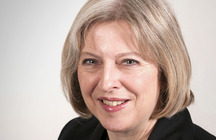
  • Theresa May – 2019 Statement on the British Normandy Memorial

    Below is the text of the statement made by Theresa May, the Prime Minister, on 6 June 2019.

    Thank you President Macron for your support to ensure a lasting monument to the service and sacrifice of those who fought in the Battle of Normandy – something which means so much to our veteran community and to the whole of the British nation.

    It is incredibly moving to be here today, looking out across beaches where one of the greatest battles for freedom this world has ever known took place – and it is truly humbling to do so with the men who were there that day.

    It is an honour for all of us to share this moment with you.

    Standing here, as the waves wash quietly onto the shore, it’s almost impossible to grasp the raw courage that it must have taken that day to leap out from landing craft and into the surf – despite the fury of battle.

    No one could be certain what the 6th June would bring. No one would know how this – the most ambitious – amphibious and airborne assault in all of human history, would turn out.

    And, as the sun rose that morning, not one of the troops on the landing craft approaching these shores, not one of the pilots in the skies above, not one of the sailors at sea – knew whether they would still be alive when it set once again.

    If one day can be said to have determined the fate of generations to come – in France, in Britain, in Europe and the world – that day was the 6th June 1944.

    More than 156,000 men landed on D-Day – of which 83,000 were from Britain and the Commonwealth.

    Over a quarter million more supported operations from air and sea – while the French Resistance carried out extraordinary acts of bravery behind enemy lines. Many were terribly wounded.

    And many more made the ultimate sacrifice that day and in the fierce fighting that followed, as together our allied nations sought to release Europe from the grip of fascism.

    Men like Lieutenant Den Brotheridge of the Oxfordshire and Buckinghamshire Light Infantry. 28 years old. Husband. Father-to-be. Thought to be the first Allied soldier to be killed in action after leading the charge over Pegasus Bridge.

    Marine Commando Robert Casson of 46 Royal Marine Commando, who was killed on the approach to Juno Beach, three weeks before his brother Private Joseph Casson was also killed in Normandy.

    And twins Robert and Charles Guy, 21, who both served in the RAF and were shot down and buried separately. Their names will now be reunited here.

    These young men belonged to a very special generation, the greatest generation. A generation whose unconquerable spirit shaped the post war world. They didn’t boast. They didn’t fuss. They served. And they laid down their lives so that we might have a better life and build a better world.

    The memorial that will be built here will remind us of this. Of the service and sacrifice of those who fell under British Command in Normandy, of the price paid by French civilians – and of our duty, and our responsibility, to now carry the torch for freedom, for peace and for democracy.

    I want to thank all those involved in this memorial. George Batts and the veterans who have campaigned so hard to make it happen. The people of Ver-sur-Mer, and Phillipe Onillon the town’s mayor.

    Here in Normandy, the names of those British men and women who gave their lives in defence of freedom, will forever sit opposite their homeland across the Channel.

    Here, in Normandy we will always remember their courage, their commitment, their conviction.

    And to our veterans, here in Normandy, I want to say the only words we can: thank you.

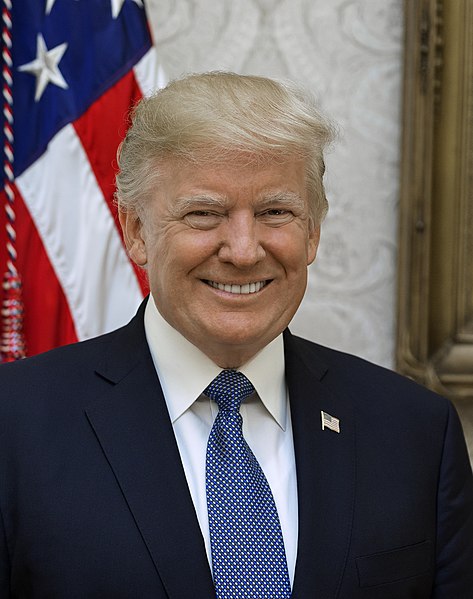
  • Theresa May – 2019 Press Conference with US President Donald Trump

    Below is the text of the press conference between Theresa May, the Prime Minister, and Donald Trump, the President of the United States, in London on 4 June 2019.

    This week we commemorate the extraordinary courage and sacrifice of those who gave their lives for our liberty on D-Day, 75 years ago.

    As leaders prepare to gather here from across the world, it is fitting that we begin with a celebration of the special relationship between the United Kingdom and the United States – enduring partners who stood side by side on that historic day – and every day since.

    For generations, at the heart of the transatlantic alliance has been our shared democratic values, our common interests and our commitment to justice.

    It is that unity of purpose that will preserve the deep-rooted ties between our people and underpin our nations’ security and prosperity for the next 75 years and beyond.

    So I am very pleased to welcome the President of the United States of America on this State Visit to the United Kingdom.

    For the past two and a half years the President and I have had the duty and privilege of being the latest guardians of this precious and profound friendship between our countries.

    As with our predecessors, when we have faced threats to the security of our citizens and our allies, we have stood together and acted together.

    When Russia used a deadly nerve agent on the streets of our country, alongside the UK’s expulsions the President expelled 60 Russian intelligence officers – the largest contribution towards an unprecedented global response.

    And, in Syria, when innocent men, women and children were victims of a barbaric chemical weapons attack, Britain and America, along with France, carried out targeted strikes against the regime.

    Since we spoke about NATO during my first visit to the White House we have maintained our support for this crucial alliance.

    Thanks in part to your clear message on burden-sharing, Donald, we have seen members pledge another $100 billion, increasing their contributions to our shared security. And I’m pleased to announce that NATO will soon be able to call on the UK’s Queen Elizabeth-class aircraft carriers and F-35 fighter jets to help tackle threats around the world.

    Today we have discussed again the new and evolving challenges to our security, our values and our way of life.

    We share the same view about their origin and our objectives in meeting them.

    But – like Prime Ministers and Presidents before us, and no doubt those that will come after – we can also differ sometimes on how to confront the challenges we face.

    I have always talked openly with you, Donald, where we have taken a different approach – and you have done the same with me.

    I have always believed that cooperation and compromise are the basis of strong alliances, and nowhere is this more true than in the special relationship.

    Today we have discussed again the importance of our two nations working together to address Iran’s destabilising activity in the region and to ensure Tehran cannot acquire a nuclear weapon.

    Although we differ on the means of achieving that – as I have said before, the UK continues to stand by the nuclear deal – it is clear we both want to reach the same goal.

    It is important that Iran meets its obligations and we do everything to avoid escalation which is in no-one’s interest.

    Recognising our nations are safer and more prosperous when we work together on the biggest challenges of our time, I also set out the UK’s approach to tackling climate change, and our continued support for the Paris Agreement.

    And we also spoke about China, recognising its economic significance and that we cannot ignore action that threatens our shared interests or values.

    As we have deepened our cooperation on security – including our joint military operations, and our unparalleled intelligence-sharing – so our economies too are ever more tightly bound together.

    Every morning 1 million Americans get up and go to work for British companies in America. And 1 million Britons do the same for American companies here.

    Our trading relationship is worth over £190 billion a year and we are the largest investors in each other’s economies – with mutual investments valued at as much as $1 trillion.

    Mr President, you and I agreed the first time we met that we should aim for an ambitious free trade agreement when the UK leaves the EU.

    And from our positive discussions today I know that we both remain committed to this.

    I am also sure that our economic relationship will only grow broader and deeper, building on the conversations we had and the ideas we heard from UK and US businesses when we met them earlier today.

    Tomorrow we will sit down in Portsmouth with our fellow leaders to reaffirm the enduring importance of the western alliance and the shared values that underpin it.

    And as we look to the future – in the years and in the generations ahead – we will continue to work together to preserve the alliance that is the bedrock of our shared prosperity and security – just as it was on the beaches of Normandy 75 years ago.

  • Penny Mordaunt – 2019 Speech at Land Warfare Conference

    Below is the text of the speech made by Penny Mordaunt, the Secretary of State for Defence, at the Land Warfare Conference on 4 June 2019.

    D-DAY

    In a few days’ time the nation will pay tribute to those who fought on D-Day. From Portsmouth’s Southsea Common to Bayeaux Cathedral…we will stand in silence recalling the incredible operations off the coast, in the air and on the beaches of Normandy.

    When we commemorate those events this week what will be in our thoughts? Will it be the landing craft, or the reconnaissance planes, or the supply ships. No. Our focus will be on the veterans, and all who made that immense endeavour possible.

    From the civilians who came together at a moment’s notice to build the Mulberry Harbours… wrap up small arms components and sew ID badges…

    …to the merchant sailors that swelled our naval force…and enabled the critical transport of men and supplies….

    …to the mighty endeavour of that 62,000-strong British element of the 21st Army Group who charged up the beaches

    …and those who made the ultimate sacrifice in those dark days.

    It was, according to Churchill, “the most difficult and complicated operation that has ever taken place”. It was so called ordinary people doing extraordinary things. It is the testimony of those who were there that will captivate us in the coming days. People like Bill Fitzgerald, just eighteen years old, as he along with his comrades stormed those beaches. Then as now it is the people who made the difference. And in defence, if we do not put our people first we will fail to generate and maintain the capability that we need. And we will have broken that covenant between the state and our communities and those who step up to protect them.

    As I speak the men and women of our armed forces are working across the globe …combatting terrorism …working with allies and partners to build up the resilience of fragile states… …delivering humanitarian aid to those most in need… …standing up for our values of democracy, tolerance and justice and achieving great things.

    I want to put on record my congratulations to Brigadier Celia Harvey who was selected today to be the Deputy Commander Field Army as a Major General. The third Female Army Major General 2* and the first female reserve 2*. My congratulations to her.

    LIVING WAGE FOR OUR ARMED FORCES

    We often say what an amazing job they do, because they continually provide us with opportunities to say so. We must take care of them. While they are serving and after they have served.

    That is why we will shortly consult on protecting against repeated investigations and litigations against our veterans and AF personnel into historic operations outside the UK. Actions which are not motivated or serve justice, and also consult on paying higher levels of compensation for those injured on combat operations, or to the families for those who have been killed.

    Nor should any solider, sailor, airman or women be asked to serve our country and not be sufficiently rewarded. The armed forces are exempt from the living wage, as they are in effect, on call 365 days a year, but I am determined to ensure the lowest paid members of the armed forces are lifted to ensure that none of them are below an acceptable salary to live well on. We are undertaking work to determine what a living wage looks like for those who can be called on day or night.

    They should get a living wage.

    That is what I will be arguing for in the decisions on this year’s pay review, and it will be a spending priority for me. It is the right thing to do, but I also recognise that the decision to serve is not motivated by money.

    People are motivated by what they will be doing and what that achieves in the world and the values that underpin it: protecting, serving, doing your duty for your country.

    Central to that is to understand what the Army is for.

    That sounds a simple question, but it is one that I am often asked, including by members of the British Army themselves. How can we build connections with our communities, how can we have a strong narrative to recruit if we cannot say what our purpose is.

    The reality is, the world is changing and the threats increasing from a diverse range of sources. As earlier speakers have said, Cyber attack is now the new normal. Between 2016 and 2017 NATO saw such attacks on its infrastructure increasing by 60 percent. Whether the origin is Russia, China or North Korea…or from hacktivists, criminals or extremists…the cyber threat can bring down our national infrastructure and undermine our democracy.

    All the while, we’re having to deal with the hybrid dangers as nations increasingly employ proxy actors to carry out aggression and intimidation at arms-length but now below the threshold of armed combat.

    Whatever the correct response to these new forms of aggression, in many cases their deterrence relies on a credible threat of hard power. And the reality is wars are still won or lost on land. We need to seize and hold territory endures and yes, the future may look very different in years to come, but meantime, while armour is relevant it must be capable, and we must be competitive.

    We have not been.

    Challenger 2, has been in service without a major upgrade since 1998. During this time the United States, Germany and Denmark have completed two major upgrades, whilst Russia has fielded five new variants with a sixth pending.

    Warrior, is even more obsolete, and is twenty years older than those operated by our key allies. Since Warrior’s introduction in 1988 the United States and Germany have conducted four major upgrades and Russia has invested in three new variants.

    So we must invest in our warfighting division, and it is critical we honour the commitments we made in the SDSR 2015 to maintain a world-class divisional war fighting capability, through upgrades and new vehicles, equipped to win wars in the information age…with advanced sensors and automated search, tracking and detection systems.

    At the same time, I am keen that we shouldn’t overlook the advantages of more joint ways of working. Look at the successes of the Joint Helicopter Force which brings all battlefield helicopters under a single command.

    Why can’t we do something similar with robotics and unmanned vehicles across all the services…by building a hub overseen by Joint Force Command? Not only will we be able to work better with industry and have a more integrated approach, but we will also be able to plug into what the rest of government is doing too.

    At DFID in my previous job I did a huge amount of work on drones, new designs able to lift heavy payloads, and get medicine and supplies into conflict zones and solve many headaches that humanitarians were facing. We boosted creativity through challenge funds and setting up an innovation hub. I think we should be doing more of this in Defence and supporting growth.

    In that way to we can create a common mission with the country that is wider than defence: The security and prosperity of the UK, that is what we are for. That is how we will serve our country. And those who put themselves forward to serve are special people.

    MAKING THE MOST OF TALENT

    There is more that we need to do to avoid people dropping out of the recruitment and training pipeline. Currently, for every eight applicants one soldier enters training. Just last year that figure was 12 applicants for every soldier. So we’ve made some good progress but we must do better.

    I am challenging the army to reduce that ratio to six to one. It’s also worth reflecting that, once a candidate passes the assessment centre we still lose up to seven per cent of applicants before they commence training. I want us to re-engage with these individuals that have dropped out. Individuals who felt a call to serve. Why did they leave? Was the army not for them? Have they considered another service? Have they considered a career on the civilian side?

    If we are serious about bringing up all our forces to the required strength then we must pursue every register of interest.

    And we also need to do more to encourage our people to remain in the forces –when they’re thinking of leaving or have reached the end of their current contracts. We already allow people to transfer between different services…offering quicker recruitment and rapid promotion to those with unique talents. But to say we haven’t really sold this is an understatement. We need to make sure that is not just feasible but positively encouraged.

    It makes sense when the British taxpayer has invested so heavily in a person that we make best use of that person in the service of their country.

    FULL VALUE OF DEFENCE

    We have to maximise every efficiency.

    But in making our pitch to the treasury we also need to talk about the full value of Defence. And that’s not just about jobs in industry, supply chain and services , or export sales, or inventions, or defence engagement which we often mention. It’s also about social mobility, and the fabric of our society.

    The Army is a place of great opportunity. You take people from all walks of life. You give them a sense of purpose, belonging and family. Indeed, you give them a home away from home and imbue them with those precious values of courage, discipline, integrity, respect for others, loyalty and selfless commitment. As Army Gunner and drummer Hussein Sadiq put it: “I ended up finding that the Army’s core values reflected my own.”

    But the Army does something even more than that. It fires ambition. The British Army has a long and proud history of discovering exceptional character and talent in people which nobody else could see or be bothered to look for.

    Rebecca Smith from Grimsby was at rock bottom and sleeping rough. She took a decision to walk into an Army careers office. She became a vehicle mechanic within the (REME) and rose rapidly through the ranks to corporal as a Challenger 2 expert. Having been recognised for her exceptional leadership talent she was recently commissioned from Sandhurst and is now on her young officers’ training course…returning to the REME as a second lieutenant. Her previous hard times are now a distant memory.

    The British Army has taught many to read and write, academic and practical skills, enabling huge numbers of people to have the tools they need to be active citizens.

    And just as I want defence to do more on the UK prosperity agenda I want us to do more on social mobility agenda too. At a time of rising knife crime and prevalent gang culture in some parts of the UK, the Army’s ethos can make a real difference to young people. It can offer hope.

    Defence has so much to offer, in our armed forces and our cadet units, but also in the fantastic organisations that sit in our communities alongside us. I have been so struck in particular how Military Preparation colleges have enthused those who other education establishments fail to inspire. They have encouraged study and physical fitness, self-confidence and self-worth, a sense of duty and service. And they have given some youngsters options where they had none.

    I believe it is time to use the skills and lesson learned at these colleges and elsewhere in the Army to address this national blight of gangs and weapons on our streets.

    Today I wish to announce, in support of the Ministerial Taskforce on Serious Violence, that my Department will be holding a summit involving Military Preparation Colleges and those working to divert young people away from gangs and violence. We will bring all that we have to offer to this issue.

    Courage is inspirational.

    We will never forget what the Army accomplished on D-Day seventy-five years ago. It still inspires us still today. An achievement which founded not on having the most powerful weapons but on having people equipped with extraordinary courage, ingenuity and determination.

    Today’s Army shares those qualities and our people are going out of their way across to globe to make a difference…protecting innocents…lifting people out of poverty…and providing hope for others from Estonia to Afghanistan, from Iraq to South Sudan.

    Yet, as we look into the future, an age in which the dangers are changing and growing, we will depend on our people more than ever.

    So we must look after them, like never before.

    That is my priority.

  • Theresa May – 2019 Comments on D-Day Commemorations

    Below is the text of the comments made by Theresa May, the Prime Minister, on 5 June 2019.

    The Normandy landings 75 years ago were a moment of historic international cooperation.

    And it is right that at the heart of today’s commemorations are the veterans who fought to secure the liberty and the peace that we now enjoy.

    The global challenges we face today are different in their origin and nature. But as we confront new and evolving threats to our security it is more important than ever that we continue to stand together in upholding our shared values and way of life.

    That’s why the UK has this week committed our Queen Elizabeth-class aircraft carriers and F-35 fighter jets to support the efforts of NATO forces to preserve the security and collective defence of our allies.

    As I host leaders from around the world today to mark this significant moment in our shared history, we will together reflect on the continued importance of the western alliance for all our countries’ security and prosperity.

    And as we unite to pay tribute to those whose bravery and sacrifice on the beaches of Normandy marked a turning point in the Second World War, we will vow never to forget the debt we owe them.

    Their solidarity and determination in the defence of our freedom remains a lesson to us all. And we will continue to stand up for the values of democracy, justice and tolerance that so many died to preserve.

  • Donald Trump – 2019 Speech During State Visit to the UK

    Below is the text of the speech made by Donald Trump, the President of the United States, on 3 June 2019.

    Your Majesty, Melania and I are profoundly honored to be your guests for this historic State Visit. Thank you for your warm welcome, for this beautiful weather — (laughter) — your gracious hospitality, and Your Majesty’s nearly seven decades of treasured friendship with the United States of America.

    This week, we commemorate a mighty endeavor of righteous nations and one of the greatest undertakings in all of history. Seventy-five years ago, more than 150,000 Allied troops were preparing on this island to parachute into France, storm the beaches of Normandy, and win back our civilization.

    As Her Majesty remembers, the British people had hoped and prayed and fought for this day for nearly five years.

    When Britain stood alone during the Blitz of 1940 and 1941, the Nazi war machine dropped thousands of bombs on this country and right on this magnificent city. Buckingham Palace alone was bombed on 16 separate occasions.

    In that dark hour, the people of this nation showed the world what it means to be British. They cleared wreckage from the streets, displayed the Union Jack from their shattered homes, and kept fighting on to victory. They only wanted victory.

    The courage of the United Kingdom’s sons and daughters ensured that your destiny would always remain in your own hands.

    Through it all, the Royal Family was the resolute face of the Commonwealth’s unwavering solidarity.

    In April of 1945, newspapers featured a picture of the Queen Mother visiting the women’s branch of the Army, watching a young woman repair a military truck engine. That young mechanic was the future Queen — that great, great woman. Her Majesty inspired her compatriots in that fight to support the troops, defend her homeland, and defeat the enemy at all cost.

    We also pay tribute to Prince Philip’s distinguished and valiant service in the Royal Navy during the Second World War.

    On D-Day, the Queen’s beloved father King George the Sixth delivered a stirring national address. That day, he said, “After nearly five years of toil and suffering, we must renew that crusading impulse on which we entered the war and met its darkest hour…Our fight is against evil and for a world in which goodness and honor may be the foundation of the life of men in every land.”

    This evening, we thank God for the brave sons of the United Kingdom and the United States who defeated the Nazis and the Nazi regime, and liberated millions from tyranny.

    The bond between our nations was forever sealed in that “Great Crusade.” As we honor our shared victory and heritage, we affirm the common values that will unite us long into the future: freedom, sovereignty, self-determination, the rule of law, and reverence for the rights given to us by Almighty God.

    From the Second World War to today, Her Majesty has stood as a constant symbol of these priceless traditions. She has embodied the spirit of dignity, duty, and patriotism that beats proudly in every British heart.

    On behalf of all Americans, I offer a toast to the eternal friendship of our people, the vitality of our nations, and to the long, cherished, and truly remarkable reign of Her Majesty the Queen. Thank you.

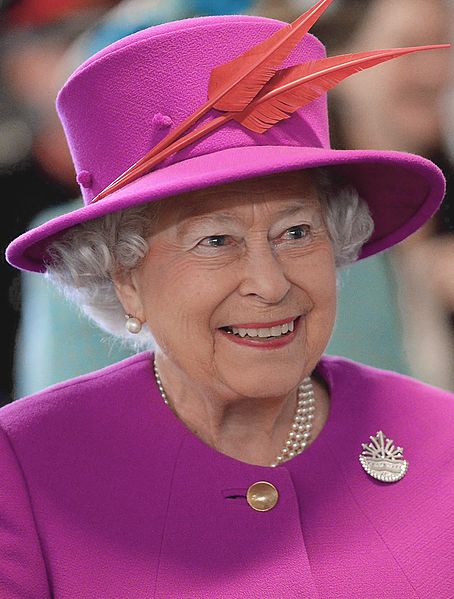
  • HM Queen Elizabeth II – 2019 Speech with US President Donald Trump

    Below is the text of the speech made by HM Queen Elizabeth II on 3 June 2019.

    Mr President, I am delighted to welcome you and Mrs. Trump to Buckingham Palace this evening, just 12 months after our first meeting at Windsor.

    Visits by American Presidents always remind us of the close and longstanding friendship between the United Kingdom and the United States, and I am so glad that we have another opportunity to demonstrate the immense importance that both our countries attach to our relationship.

    In the coming days, you will see some of our most treasured historical buildings, speak to the business leaders whose expertise and innovation drive our economies, and meet members of our armed services, past and present. You will also travel to Portsmouth and Normandy to commemorate the 75th anniversary of D-Day.

    On that day — and on many occasions since — the armed forces of both our countries fought side-by-side to defend our cherished values of liberty and democracy.

    Mr. President, in your State of the Union Address this year, you paid tribute to some of the American heroes who risked their lives, and we owe an immeasurable debt to the British, American, and Allied soldiers who began the liberation of Europe on the 6th of June 1944.

    I paid my first State Visit to your country at the invitation of President Eisenhower. As Supreme Allied Commander, he had ultimate responsibility for the execution of the Normandy landings. In his headquarters in St. James’s Square — not far from Buckingham Palace — British and American officers worked closely together to plan the freedom of a continent, and it would be no exaggeration to say that millions of lives depended on their common endeavour.

    As we face the new challenges of the 21st century, the anniversary of D-Day reminds us of all that our countries have achieved together. After the shared sacrifices of the Second World War, Britain and the United States worked with other allies to build an assembly of international institutions to ensure that the horrors of conflict would never be repeated.

    While the world has changed, we are forever mindful of the original purpose of these structures: nations working together to safeguard a hard-won peace.

    Of course, it is not only our security which unites us, but our strong cultural links and shared heritage. Every year, there are almost 4 million visits by Americans to the United Kingdom, with a great number claiming British descent. And with your own Scottish ancestry, Mr. President, you too have a particular connection to this country.

    We are also bound by the strength and breadth of our economic ties, as the largest investors in each other’s economies. British companies in the United States employ over one million Americans, and the same is true vice versa.

    Mr. President, as we look to the future, I am confident that our common values and shared interests will continue to unite us. Tonight, we celebrate an alliance that has helped to ensure the safety and prosperity of both our peoples for decades, and which I believe will endure for many years to come.

    Ladies and gentlemen, I invite you all to rise and drink a toast to President and Mrs. Trump, to the continued friendship between our two nations, and to the health, prosperity, and happiness of the people of the United States.

  • Theresa May – 2019 Statement on Ireland with Leo Varadkar

    Below is the text of the statement made by Theresa May, the Prime Minister, with Leo Varadkar, the Taoiseach of the Republic of Ireland, on 2 June 2019.

    In our statement of 26 April, we announced a new phase of political talks in Northern Ireland.

    The Secretary of State for Northern Ireland Karen Bradley and the Tánaiste Simon Coveney have updated us on progress since then.

    We welcome the constructive engagement shown by all parties to date. It is clear to us that the Northern Ireland political parties wish to see the institutions of the Belfast / Good Friday Agreement restored, but operating on a more credible and sustainable basis. While broad consensus has been reached on some issues, other areas remain to be resolved.

    The Secretary of State and Tánaiste believe that there is a genuine but narrow window of opportunity to reach agreement in the immediate period ahead and that it is essential to continue and intensify talks to this end.

    As Prime Minister and Taoiseach, we will continue to monitor this progress closely. We believe it is imperative that the parties now move without delay to engaging substantively on the shape of a final agreement.

  • Theresa May – 2019 Statement on Visit of US President

    Below is the text of the statement made by Theresa May, the Prime Minister, on 3 June 2019.

    This is a significant week for the special relationship and an opportunity to further strengthen our already close partnership.

    During his State Visit to the UK the President and I will be taking part in an historic commemoration of the D-Day landings and the sacrifice our armed forces made 75 years ago.

    And as we reflect on our shared history and honour those who fought so bravely on the beaches of Normandy, we also look to the future.

    Our relationship has underpinned our countries’ security and prosperity for many years – and will continue to do so for generations to come.

    We do more together than any other nations in the world. We are the largest investors in each other’s economies and our strong trading relationship and close business links create jobs, opportunities and wealth for our citizens.

    Our security relationship too is deeper, broader and more advanced than with anyone else. Through joint military operations, unrivalled intelligence-sharing and our commitment to NATO, our global leadership remains at the heart of international peace and stability.

    So I look forward to welcoming President Trump to the UK and to building on the strong and enduring ties between our countries.

  • Andrew Murrison – 2019 Statement on the Israeli Settlement Construction

    Below is the text of the statement made by Andrew Murrison, the Minister for the Middle East, on 3 June 2019.

    The UK Government is gravely concerned by plans announced on 30 May to advance tenders for hundreds of settlement housing units in occupied East Jerusalem.

    We are clear that settlements built on occupied Palestinian territory are contrary to international law and an obstacle to a two-state solution. Regrettably this takes us further away from a negotiated peace agreement.

    I visited Jerusalem on 28-30 May where I reiterated UK support for a two-state solution, with Jerusalem as a shared capital for both states.