Tag: 2019

  • Theresa May – 2019 Statement on the G20 and Leadership of EU Institutions

    Below is the text of the statement made by Theresa May, the Prime Minister, in the House of Commons on 3 July 2019.

    With permission, Mr Speaker, I would like to make a statement on my final G20 and final European Council as Prime Minister.

    At this G20 summit in Japan we discussed some of the biggest global challenges facing our nations, including climate change, terrorist propaganda online, risks to the global economy and rising tensions in the Gulf. These discussions were at times difficult, but in the end productive. I profoundly believe that we are stronger when we work together. With threats to global stability and trade, that principle is now more important than ever, and throughout this summit my message was on the overriding need for international co-operation and compromise. Alongside discussions with international partners on economic and security matters, I made it clear that Britain would always stand by the global rules as the best means of securing peace and prosperity for all of us. I will take the main issues in turn.

    On no other issue is the need for international collaboration greater than in the threat to our countries and our people from climate change. As I arrived in Osaka last week, I was immensely proud that Britain had become the world’s first major economy to commit in law to ending our contribution to global warming by 2050. I urged other G20 countries to follow Britain’s lead and set similarly ambitious net zero targets for their own countries. Those gathered at this year’s summit are the last generation of leaders with the power to limit global warming, and I believe we have a duty to heed the call from those asking us to act now for the sake of future generations.

    Taken together, the G20 countries account for 80% of global greenhouse gas emissions. Discussions were not always easy, but 19 of the G20 members agreed to the irreversibility of the Paris climate change agreement and the importance of implementing our commitments in full. It remains a disappointment that the United States continue to opt out on such a critical global issue.

    I outlined Britain’s continued determination to lead the way on climate change through our bid to host, along with Italy, COP 26 next year. And, recognising that more needs to be done to support developing countries in managing the impacts of climate change, I announced that the UK’s aid budget will be aligned with our climate change goals and used to support the transition to lower greenhouse gas emissions.

    Both as Prime Minister and previously as Home Secretary, I have repeatedly called for greater action to protect people from online harms and remove terrorist propaganda from the internet. In 2017, the attacks in Manchester and London showed how technology could be exploited by terrorists. Following those events, the UK took the lead and put this issue squarely on the global agenda. Through our efforts, the Global Internet Forum to Counter Terrorism was established—a body that has leveraged technology to automate the removal of propaganda online. But the horrendous attack in Christchurch reminded us that we must maintain momentum, and ensure a better co-ordinated and swifter response to make sure that terrorists are never able to broadcast their atrocities in real time. I therefore welcome the pledge by G20 leaders at this year’s summit to do ​more to build on existing efforts and stop terrorists exploiting the internet. The UK will continue to lead the way in this, including through our support of the major technology companies in developing a new crisis response mechanism.

    At this summit, discussions on the global economy were held against the backdrop of current trade tensions between the United States and China. In this context, I reaffirmed Britain’s commitment to free and fair trade, open markets and the rules-based trading system as the best means to bolster prosperity and build economies that work for everyone. The UK has long argued that the rules governing global trade need urgent reform and updating to reflect the changing nature of that trade. We continue to press for action to build upon the agreement reached at last year’s summit for World Trade Organisation reform, and I believe the best way to resolve disputes is through a reformed and strengthened WTO, rather than by increasing tariffs.

    This G20 was also an opportunity to discuss wider global issues with others, including Prime Minister Abe, President Erdoğan, Crown Prince Mohammed bin Salman, and United Nations Secretary-General Guterres. In my conversation with Prime Minster Abe, I paid tribute to him for hosting this G20 and thanked him for his role in strengthening the relationship between the UK and Japan—a relationship that I have every confidence will continue to grow over the coming years.

    In a number of my meetings, I discussed Iran and rising tensions in the Gulf. Escalation is in no-one’s interest, and engagement is needed on all sides to find a diplomatic solution to the current situation and to counter Iran’s destabilising activity. At the same time, I was clear that the UK will continue to work intensively with our Joint Comprehensive Plan of Action partners to keep the Iran nuclear deal in place. The breach of that deal by Iran is extremely concerning, and together with France, Germany and the other signatories to the deal, we are urging Iran not to take further steps away from the agreement, and to return to compliance. The deal makes the world safer and I want to see Iran uphold its obligations.

    I believe wholeheartedly in never shying away from difficult conversations when it is right to hold them. In my meeting with President Putin, I told him that there can be no normalisation of our bilateral relationship until Russia stops the irresponsible activity that threatens the UK and its allies. The use of a deadly nerve agent on the streets of our country was a despicable act, which led to the death of Dawn Sturgess. I was clear that the UK has irrefutable evidence that Russia was behind the attack, and that we want to see the two individuals responsible brought to justice. While the UK remains open to a different relationship, for that to happen the Russian Government must choose a different path.

    In my discussion with UN Secretary-General Guterres, we spoke about the importance of the multilateral system and the UK’s strong support for it. I also raised concerns about the Ebola outbreak in the Democratic Republic of the Congo and the need to ensure a comprehensive response, as well as emphasising the critical nature of continued humanitarian assistance in Yemen.

    I am proud that the UK continues to play its part in trying to provide relief in countries such as Yemen, and that we remain committed to spending 0.7% of our ​gross national income on development assistance. That commitment puts us at the forefront of addressing global challenges, so I am pleased that at this summit we announced our pledge of £1.4 billion for the Global Fund to Fight AIDS, Tuberculosis and Malaria, to help save lives.

    Turning to the European Council, the focus of these discussions was on what are known as the EU’s top jobs—the appointments at the head of the EU’s institutions and the EU’s High Representative. As I have said before, this is primarily a matter for the remaining 27 EU member states, but while we remain a member of the EU, I also said that we would engage constructively, which we did throughout. After long and difficult discussions over the last few days, the Council voted for a package of candidates with an important balance of gender, reflecting the diversity of the European Union. The Council formally elected Belgian Prime Minister Charles Michel as President of the European Council. The Council also nominated German Defence Minister Ursula von der Leyen as candidate for President of the European Commission; Spanish Foreign Minister Josep Borrell Fontelles as candidate for High Representative for foreign affairs and security policy; and the French managing director of the International Monetary Fund, Christine Lagarde, as candidate for president of the European Central Bank.

    The Commission President will now be voted on by the European Parliament in the coming weeks. After being approved by the Commission President, the High Representative will then be voted on as part of the College of Commissioners by the European Parliament before the college is appointed by the European Council. After consultations with the European Parliament and the ECB governing council, the European Council will appoint the president of the ECB. The European Parliament will also vote on its President today. Subject to the approval of the European Parliament, this will be the first time that a woman will be made President of the European Commission, and I would like to congratulate Ursula von der Leyen on her nomination.

    This was a package supported by the UK, and it is in our national interest to have constructive relationships with those who are appointed. Once we leave the European Union, we will need to agree the details of our future relationship. We will continue to share many of the same challenges as our closest neighbours, and we will need to work with them on a variety of issues that are in our joint interests. But that will now be a matter for my successor to take forward. I commend this statement to the House.
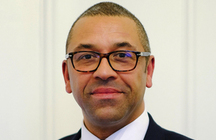
  • James Cleverly – 2019 Statement on EU Law Services

    Below is the text of the statement made by James Cleverly, the Parliamentary Under-Secretary of State for Exiting the European Union, in the House of Commons on 3 July 2019.

    Today, I wish to inform the House about the release of two new services by The National Archives, operating in the capacity of the Queen’s Printer, which will help aid legal certainty and support research in preparation for EU exit.

    Yesterday, I signed regulations for the commencement of the relevant powers and duties under part 1 of schedule 5 to the European Union (Withdrawal) Act 2018, which placed on the Queen’s Printer the statutory obligation to make arrangements for the publication of EU legislation relevant to the UK after exit.

    At 9:00 today, The National Archives released two new services. First there is a new online collection of documents and data, relevant to the UK, drawn from the EUR-Lex website: the official source of EU law, delivered as part of the Government’s official web archive. This is available for the public to search and will be updated until exit day, when it will be frozen and act as a permanent historical record of the relevant EU documents on our exit from the EU.

    Secondly, The National Archives has added relevant EU legislation to www.legislation.gov.uk. the official legislation website, in order to allow the public to locate the law as it applies to them postexit. This brings together EU legislation that will be retained in UK law on exit with details about the corrections made by UK statutory instruments for EU exit and will show the ‘as amended’ UK applicable versions of the texts. This service includes a full timeline of changes pre-exit and will incorporate the amendments made by UK legislation postexit, with annotations so users can verify the text of the legislation for themselves, if they wish.

    The Government have commenced these powers and duties now because these services are ready and their availability will be useful to those, such as businesses and the legal sector, who need to understand what the law is and will be on exit.

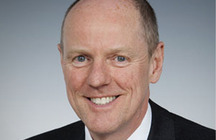
  • Nick Gibb – 2019 Speech on Schools in Winchester

    Below is the text of the speech made by Nick Gibb, the Minister for School Standards, in the House of Commons on 3 July 2019.

    I congratulate my hon. Friend the Member for Winchester (Steve Brine) on securing this debate and on his excellent and well-informed speech. He is particularly passionate about supporting schools in his constituency. We have many conversations around the building—in the Library and elsewhere—about his support for his local schools and his concerns about particular schools, and I do enjoy those conversations.

    My hon. Friend shares the Government’s ambition that every state school should be a good school that teaches a rigorous and balanced curriculum and offers pupils world-class qualifications. Since 2010, the Government have focused on driving up academic ​standards, and I note that all but one of the state schools in the Winchester constituency are graded good or outstanding. I wish Fey Wood, the headteacher of Oliver’s Battery Primary School, a happy retirement after a long and successful career in teaching.

    It is only by continuing to have the highest standards across the board that we can ensure that every school ensures that all children and young people are able to fulfil their potential. High standards, which are exemplified by many Winchester schools, have been a key focus of our radical reforms since 2010, but we recognise that there is still work to be done and remain committed to ensuring a sustained improvement in standards.

    As part of our aspiration that all children should experience a world-class education, we reformed the national curriculum, restoring knowledge to its heart and raising expectations of what children should be taught. This is being delivered by all maintained schools and sets an ambitious benchmark for academies that we expect them at least to match. Too many pupils, particularly from disadvantaged backgrounds, were being entered into low-quality qualifications, so we also reformed GCSEs to put them on a par with qualifications in the best-performing jurisdictions in the world. The result is a suite of new GCSEs that rigorously assess the knowledge and skills acquired by pupils during key stage 4, and are in line with the expected standards in countries with high-performing education systems.

    I note that for Winchester the average attainment 8 measure, which shows the average score of a pupil’s eight best GCSE grades, is well above the national average. Clearly, secondary schools in my hon. Friend’s constituency have adapted well to the new, more demanding GSCEs.

    The Government also introduced the English baccalaureate school performance measure, which consists of English, maths, at least two sciences, history or geography, and a language. Those subjects form part of the compulsory curriculum in many of the highest-performing countries internationally, at least up to age 15 or 16. The percentage of pupils in state-funded schools who take the EBacc rose from 22% in 2010 to 38% in 2018, but we want that to rise to 75% by 2022 and to 90% by 2025. I recognise the challenge that presents, but it is right that we should aim to provide the best possible education and therefore more opportunity for young people.

    Again, Winchester has risen to the challenge: in 2018, some 55.3% of pupils in the constituency’s state secondary schools entered the EBacc. My hon. Friend will be pleased that Winchester is leading the way.

    The Westgate School in Winchester is doing particularly well, with 66% of pupils entering EBacc—well above national and local authority averages. Having young people learning languages is vital if Britain is to be an outward-looking global nation, so it is excellent that 74% of Westgate’s year 11 pupils studied a language GCSE in 2018.

    Literacy is hugely important, Mr Deputy Speaker—sorry, Mr Speaker. You have been there long enough; I should know by now that you are not a Deputy Speaker. Children who are reading well by age five are six times more likely than their peers to be on track by age 11 in reading, and 11 times more likely to be on track in mathematics. Ensuring that all pupils in England’s schools ​are taught to read effectively has been central to our reforms, and we are now seeing the fruits of that work. By the end of year 1, most children should be able to decode simple words using phonics, and once they can do this, they can focus on their wider reading skills and develop a love of reading.

    In England, phonics performance has improved significantly since we introduced the phonics screening check in 2012. At that time, just 58% of 6-year-olds correctly read at least 32 out of the 40 words in the check. In 2018, that figure was 82%. In the district of Winchester, 84% of pupils—I think my hon. Friend mentioned that figure—passed the year 1 check. While that is just above the average, I am keen that we are ambitious and that the percentage of pupils meeting this standard continues to rise.

    We can see that this focus on phonics is having an impact. In 2016, England achieved its highest ever score in the reading ability of nine and 10-year-olds, moving from joint 10th to joint eighth in the Progress in International Reading Literacy Study—PIRLS—ranking. That follows our greater focus on reading in the primary curriculum, and the particular focus on phonics. At key stage 2, Winchester again does well, with 74% of pupils meeting the expected standard in reading, writing and maths in 2018, compared with 64% nationally and 68% in Hampshire—a figure that my hon. Friend also cited.

    Thornden School is a highly successful academy in my hon. Friend’s constituency—an example of the freedom we have given frontline professionals through the academies and free schools programme. Since 2010, the number of academies has grown from 200 to over 8,500, including free schools. Four out of ten state-funded primary and secondary schools are now part of an academy trust. Converting to being an academy is a positive choice made by hundreds of schools every year to give great teachers and heads the freedom to focus on what is best for pupils. It allows high-performing schools to consolidate success and spread that excellence to other schools. The figures speak for themselves: around one in 10 sponsored academy predecessor schools were good or outstanding before they converted, compared with almost seven in 10 after they became an academy, where an inspection has taken place.

    I note that my hon. Friend is a trustee of the University of Winchester Academy Trust—an innovative partnership supported by the university that has been successful in two free school bids. He will know at first hand the vital role that governors, trustees and clerks play in supporting our education system, and especially the additional reach and capacity that a multi-academy trust can bring to improving the education of even more children.

    My hon. Friend raised the issue of school funding. Core funding for schools and high needs has risen from almost £41 billion in 2017-18 to £43.5 billion in this financial year. This year, all schools are attracting an increase of at least 1% per pupil, compared with their 2017-18 baselines. Those schools that have been historically underfunded will attract up to 6% more per pupil, compared with 2017-18—a further 3% per pupil on top of the 3% they gained last year—as we continue to address historic injustices. In Winchester, the per pupil percentage increase in this financial year is 6.5%, compared with 2017-18.​
    We are well aware, of course, that local authorities and schools are facing challenges in managing their budgets in the context of increasing costs and rising levels of demand. We will be making the strongest possible case for education at the spending review and pushing for maximum levels of visibility for the education sector. I hope my hon. Friend will be reassured by that. The Secretary of State has made it clear that, as we approach the spending review, he will back headteachers to have the resources they need to deliver a world-class education

    My hon. Friend asks how we are helping schools to meet cost pressures. We have announced a strategy to help schools reduce their costs and make the most from every pound. This strategy includes recommended deals covering energy, water, IT and photocopying. Our Teaching Vacancies site, which is now available across the country, is a free job listing website that will drive down schools’ recruitment costs. We have also launched a new price comparison site called School Switch to help schools lower their energy price by comparing tariffs.

    My hon. Friend raised the important issue of high-needs funding. We recognise that local authorities, including Hampshire, are facing high-needs cost pressures. That is why we allocated an additional £250 million of funding towards high needs over this year and next year, on top of the increases we had already promised. Hampshire will receive £6 million of this additional funding.

    Our response to these pressures cannot simply be additional funding. That is why in December the Secretary of State wrote to local authority chief executives and directors of children’s services to set out our plans. Those plans include reviewing current special educational needs content in initial teacher training provision, and ensuring a sufficient supply of educational psychologists, trained and working in the system. We will continue to engage with Hampshire County Council and other local authorities, along with schools, colleges, parents and health professionals, to ensure that children and young people with special educational needs and disabilities get the support they need and deserve.

    My hon. Friend raised the issue of capital funding. Regrading capital funding for improvements, for financial year 2019-20 we have allocated £22.7 million to maintained and voluntary-aided schools under Hampshire County Council. This includes a school condition allocation of £18.98 million for Hampshire to invest in maintaining and improving its schools, as well as a total of £3.7 million in devolved formula capital for individual schools to spend on their own priorities. In 2018-19, maintained and voluntary-aided schools in Hampshire also benefited from an extra allocation of £6.5 million from the additional £400 million announced at last year’s Budget.

    Six schools in Hampshire are included in the Priority School Building programme, which is rebuilding or refurbishing buildings in the worst condition at over 500 schools. Hampshire has been allocated £231.2 million to provide new school places between 2011 and 2021, which they can invest in places at any type of school, including academies. The latest available data shows that there are 10,700 more school places in Hampshire today than in 2010.

    I thank my hon. Friend for raising the issue of teachers’ pensions. The teachers’ pensions scheme is an important one for this country. It is one of only eight that are guaranteed by the Government, because we believe that ​it is important that we continue to offer excellent benefits in order to attract and retain talented teachers. The employers’ contribution rate to the teachers’ pension scheme will increase from 16.4% to 23.6% in September 2019, as my hon. Friend pointed out. As confirmed in April, we will be providing funding for this increase in 2019-20 for all state-funded schools, further education and sixth-form colleges, and adult community learning providers. This includes local authority centrally-employed teachers, teachers at music education hubs and funding to local authorities for pupils with EHCPs who are educated in independent settings.

    My hon. Friend mentioned the supplementary fund. We have published how we are distributing the pensions funding to schools, but in order to match the funding as closely as we can to the actual cost that individual schools will face, we are allocating the funding using a per-pupil formula. That means we need a supplementary fund, to ensure that no school is placed in financial difficulty by the pension changes. It will mean that no school faces a shortfall of more than 0.05% of their ​overall budget. We are currently working with stakeholders on the specifics of the fund, with a focus on ensuring that the processes involved are as efficient and streamlined as possible for schools. We will announce details of the supplementary fund in October, including how schools can apply, alongside publishing school-level grant allocations.

    I want to congratulate my hon. Friend on the success of many schools in his constituency at improving and maintaining the high standards that our children deserve. I have set out the range of reforms that the Government have introduced since 2010 with the sole focus of raising standards. I thank him for raising his concerns about funding, and I hope I have reassured him that we will be making the strongest possible case at the spending review and pushing for maximum levels of visibility for the education sector.

  • Steve Brine – 2019 Speech on Schools in Winchester

    Below is the text of the speech made by Steve Brine, the Conservative MP for Winchester, in the House of Commons on 3 July 2019.

    The title of this Adjournment debate is “Schools in Winchester”; it has therefore been drawn fairly wide, and deliberately so. Supporting schools in my constituency, which for the record is Winchester and Chandler’s Ford during this debate, is a key focus for me. Winchester is my home; it is the place where my wife and I choose to live and bring up our children, Emily and William. They both attend local state schools, in primary right now, with my daughter about to make the transition to “big school”, as it is called, in September.

    Like every MP, I get into my schools regularly—I was in one just on Friday—and this means that I see the system as a parent and as a local representative. Here is what people say where I come from:

    “The schools in Winchester are excellent.”

    “House prices are driven up by the quality of the schools here.”

    “You can’t go wrong whichever school you go to.”

    There is a lot of truth in each of those statements.

    Across Hampshire for year R admissions, 92% of parents are offered their top choice of school. In the county, 91% of children attend schools that are rated good or outstanding—that was 69% when the Government came to office in 2010—and 68% of pupils in the county reached the expected standard in reading, writing and maths at key stage 2, compared with 65% across the country as a whole. In my Winchester constituency, we are ahead of the national average in the year 1 phonics check, in outcomes in reading, writing and maths at the end of primary and in the key progress 8 calculation, which takes primary school outcomes and measures them against a child’s GCSE outcomes five years later.

    In my constituency, every school bar one is Ofsted rated good or outstanding, and that applied to every school until quite recently. Yes, there is a plan to turn around Stanmore Primary School, which requires improvement right now, but it is a lovely school with a huge amount going for it, and I hope it knows that we in Winchester are right behind it and supporting it under the new leadership to come. As well as some 30 primary or junior schools in the constituency, we have three secondary schools in the city: Westgate and Henry Beaufort, which are ranked good, and King’s, which is excellent. We have two secondaries down in Chandler’s Ford: Toynbee, which is good and very much the rising star, and the excellent-ranked Thornden Academy, which is one of the top-ranked schools in the whole country. Finally, we have the Perins Academy over in Alresford. Perins is worthy of further mention because it heads up the Perins multi-academy trust, or MAT, which I know the Minister will be pleased to hear, primarily created to bring under its wing the previously failing Sun Hill Junior School in the town.

    We also have some strong leaders in Winchester’s schools. They are committed individuals who are always professional and who always engage sensibly and helpfully with me, for which I am grateful. On leadership, I just want to pause and pay special tribute to a lady called Fey Wood from Oliver’s Battery Primary School in Winchester. ​She retires later this month after a long career in teaching and a recent cancer battle, which she has come through with her trademark toughness and a lot of love from the city. When she came to the school in 2015, just 12 pupils applied to join the reception year. This year, there will be 34 who want to go to the school. I wish Fey a very happy and healthy retirement and thank her for everything she has done for the children and parents of Oliver’s Battery during her five years with us.

    So we have got it all going on, as they say, and I cannot claim, as a constituency MP, that my mailbag is consistently full of complaints from parents about the quality of the education their children are receiving or from teachers about the policies of Her Majesty’s Government. The Minister will be pleased to hear that. I first became the MP for Winchester nine years ago, and in the early years of the 2010 Parliament we had major capacity problems, especially in the city of Winchester. The baby boom that strangely coincided with the financial crash of 2008 had rather predictably by 2012 led to demand outstripping supply for us. If I am honest, Hampshire was very slow to plan for this, but in the face of a pretty concerted campaign by me and local parents, its response was first class.

    One of my proudest achievements so far as Winchester’s MP was to deliver a £10 million investment plan that brought 420 new primary places across the city online for September 2014 and included expansions at Saint Peter’s—the Catholic school in Winchester—All Saints, St Bede and Weeke, plus the creation of Hampshire’s first all-through school at the Westgate, which my right hon. Friend the Member for Loughborough (Nicky Morgan) visited when she was Secretary of State.

    So when it comes to schools in Winchester, capacity is in a good place now. Like many areas, we have major housing development taking place, including the new Kings Barton community, which will host the new Barton Farm Academy, sponsored by the excellent University of Winchester. I am thrilled to be a trustee of that school-to-be. We were on site last month for the ground-breaking ceremony for what will be a 420-place academy when full. Pupils will benefit from the university’s value-driven ethos, evidence-based learning and teaching and a passionate commitment to social justice. It is also an eco-school, and we are already incredibly proud of it.

    Ahead of this debate, I asked constituency heads for their thoughts on their school’s current funding position and whether they had had to make any reductions in teaching or other staff for the current 2019-20 financial year. I wanted to get a view on the teachers’ pension scheme, which the Minister will know is the source of much concern in the profession. I wanted to get from the heads themselves the current view, and it is fair to say I certainly got that.

    There is an understanding across the board among schools in my Winchester constituency that per-pupil funding has risen, but there is also frustration at the reduction in the lump sum in Hampshire to bring it in line with the national funding formula, which was a decision taken by the schools forum a few years back. ​The truth is that has created winners and losers, depending on the size of the school, a point to which I will return. Concern is unanimous within the schools about the rising cost base, including the unpopular apprenticeship levy. I would therefore welcome comments from the Minister on what procurement help the Department can offer to help schools meet the challenge of rising costs.

    Three of my secondary schools have told me that they have regrettably made staffing reductions in the past two years. Several told me about support workers, librarians and business managers not being replaced and about increasing science and maths class sizes. Kings’ School, which is ranked excellent, increased its intake by 24 pupils this year without increasing the number of classes, so tutor groups now have 30 pupils instead of 28. That increase in numbers has understandably undermined trust between the Winchester schools, putting something that we have called the Winchester schools teaching alliance in a fragile position and leading one secondary school to pull out of it altogether.

    Several heads made the point that they have had no choice but to cut back on continuing professional development in recent years, which is inevitably going to hit staff recruitment and retention—if it is not hitting it already—in Winchester and central Hampshire, which is already an expensive part of the world to live in.

    Jim Shannon (Strangford) (DUP)

    I sought the hon. Gentleman’s permission to intervene and talked to him about the matter that he is bringing to the House. Does he agree that the Government need to refocus on the point of the schooling system, which is to educate children, prepare them to reach their potential and help them to find a job that makes the most of what they have? Instead, there is a fixation on micro-management, which ignores our duty to ensure that schools are funded correctly and given enough to operate to an acceptable standard.

    Steve Brine

    The hon. Gentleman and I have danced in this Chamber many times during Adjournment debates—usually with me at the Dispatch Box—so it is good to see him in his place. I agree with some of what he says, but I do not think that schools are micro-managed by this Government. The Government have a focus on rigour for some of the key outcomes, and the Schools Minister has been absolutely laser-focused on that, as he should be. A good school looks at the whole person, and my schools in Winchester do that, but they are finding that a challenge right now, and I will come on to the reasons why.

    Finally on funding, I have my fair share of small rural primaries in Winchester, and the fair funding formula has not been good news for them all. For obvious reasons, the schools forum decision that I mentioned earlier has not created winners out of schools with a small role. Compton All Saints’ Church of England Primary School tells me that the new formula has left it operating with about £20,000 less than in previous years. That, as the Minister will appreciate, makes a massive difference in a school with only four classes.

    As the Minister will know, the Government have now published their response to the recent consultation on funding the changes to the teachers’ pension scheme employer contribution rate. This welcome announcement confirms that the Government will fund all state-funded ​schools, further education and sixth-form colleges and adult community learning providers to cover their increased costs from September 2019, when the rate for employer contributions is due to increase to 23.6%.

    The letter to me from the Secretary of State for Education, dated April 2019, said the grant will be accompanied by a “supplementary fund” to which schools facing unusually high pension costs—typically, I suppose, where a school faces a shortfall between its grant allocation and its actual increase in pension costs—will be able to apply for additional support. Ministers said they planned to announce details of how schools can apply to the supplementary fund in the autumn of this year, so will the Minister please update us on progress?

    More generally, the message I got is obviously one of relief that the TPS employer contribution has been fully funded for 2019, but schools need a lot more certainty—I am sure the Minister hears this a lot on his travels, and I know that he travels a lot—if they are to plan properly. Rolling one-year settlements are just not good enough.

    One of my schools tells me that it is part way through a four-year deficit recovery plan and that it aims to balance in 2020-21, but the great known unknown in its projections is staff costs. Governing bodies urgently need to take a long view of financial planning, and I urge the Minister in that respect.

    Other themes running through the responses centre on help for children with additional needs and for parent teacher associations, and I am sure we have all engaged with PTAs in our constituencies. I hear that PTAs in my patch—I know that other people hear this, too—are increasingly being asked to step up for major capital projects in the absence of any chance that schools in my constituency will be eligible for external funds.

    Will the Minister touch on what resource schools in places like Winchester can tap into when they need to make capital improvements to their site? I understand there is a capital maintenance grant, but Hampshire County Council tells me that its calculated liabilities—in other words, what needs doing—are currently around £370 million, whereas the grant received this year is around £18 million, which is obviously a big gap.

    I am very concerned by what I am hearing about children with special educational needs or additional needs, a subject about which you and I care passionately, Mr Speaker. If I am honest, this is the issue that brings together all the pressures, funding and otherwise, being communicated to me by headteachers in my constituency and by the local education authority.

    I am getting a consistent message from heads that they are seeing a marked increase in the needs of children, especially with regard to social, emotional and mental health. As one head put it to me,

    “Schools seem to be having to cope with increased levels of violent behaviour—not because the children are naughty but because we are unable to provide for their needs. Special school places are at a premium and children who need this specialist and therapeutic provision are having to be ‘held’ in mainstream school. This not only means their own needs are not being met—but also disrupts the learning of others. Teachers find working in this environment stressful and I have experienced good staff leaving because of it.”

    This familiar view has been expressed to me by several of my headteachers.​
    Funding pressures at local authority level, for which I appreciate the Minister and the Department for Education are not responsible, have left social care and children’s services under pressure, and schools are increasingly finding themselves plugging the gap. Teachers are becoming involved as lead professionals in supporting families and home life.

    Teachers have always done much more than teaching, of course, but right now it feels like they are expected to be housing officers, mental health professionals and even nutritionists to boot. I have spoken warmly of the teachers at my schools, and they are resourceful people, but that is pushing it. As one headteacher in Winchester put it to me recently, a small group of pupils are taking a very large slice of support and time, which obviously is then having an impact on the other children, but it is also having an impact on the children with less complex education, health and care plans, who then miss out as a result.

    I thought that IDACI—the income deprivation affecting children index—on the proportion of people under the age of 16 who live in low-income households could be a place to turn, but sadly it is not, because my constituency will always fall short of that measure, even though there are pockets of deprivation in Winchester; these are nothing special just because they have a fantastic view of the south downs or the city of Winchester from the playground. If we add in how stretched child and adolescent mental health services are and how stretched the supporting families programme is in my area, we have a perfect storm, which says clearly that we need so much more support in our schools, to stand with these often highly vulnerable children and their families.

    Clearly, we as a country are at a crossroads in our political life at this time. As we pause for breath before the new Prime Minister takes office later this month, I make this plea to my right hon. Friends the Members for Uxbridge and South Ruislip (Boris Johnson) and for South West Surrey (Mr Hunt), as well as to the outgoing occupant of No. 10, whom I know will hear these words acutely. When I was a Minister at the Department of Health and Social Care, as I was until recently, I was fortunate to work alongside two Secretaries of State as we landed a very healthy long-term financial settlement for the NHS and subsequently a long-term plan for how it would deliver the improved outcomes we wanted to see across the acute sector, public health and all the things I am passionate about. We clearly need a long-term plan for schools, backed by significant new investment—the first bit may be easier than the second—just as we did for the NHS.

    As the Minister knows, I have long been a member and supporter of the f40 campaign group and we have had some success. I pay tribute to the Minister because I know that he has personally done a huge amount with f40 and to push the fairer funding agenda within government, during a time of difficult financial constraint. It is a fact that over the two years 2018-19 and 2019-20, per-pupil funding in Hampshire is going up by £167, which represents 4% compared with the national average of 3.2%, and when changes in pupil numbers are taken into account, total funding rises in my county by £42.5 million. But when the dedicated schools grant for 2019-20 is divided by the number of students in Hampshire, each pupil is worth £5,523, which is the fourth lowest figure in England.​

    Although we have received an additional £6 million over two years in high needs block funding, we clearly cannot keep up with demand. Let me give an example. In 2014, there were 5,500 pupils with a statement across Hampshire, but in 2019 there are 8,300 pupils with EHCPs. It does not take a genius to work out that this has led to a big deficit—a £10 million in-year deficit at the LEA. I know from independent studies that the UK is a high spender on state primary and secondary education by international standards, and real spending per pupil is half as much again higher than it was in 2000, during the so-called Blair years of plenty, but we still have all that I have set out in this debate and schools facing very real financial constraints, which I know, from his letter in April, that the Secretary of State and the Minister do not duck.

    The long-term plan for schools must be part of a properly funded settlement that recognises the reductions in lump sum that have done so much to aid the current situation, enters into a new long-term deal with the profession on pay and pensions and, like the NHS long-term plan, takes seriously the wider services in society, such as CAMHS and social services, because when they fall down they significantly affect our schools.

    I would say, with the benefit of my experience in the Department of Health and Social Care that we did bring a long-term settlement for the NHS and we did bring forward a long-term plan for the NHS, but we did not, at the same time, bring forward the people plan of the workforce or a funded public health settlement. That weakened the NHS long-term plan, and those two elements are now playing catch-up. We must not make that mistake again with a new long-term plan for schools.

    We have much to celebrate in my constituency. I have given many figures in support of that and tried to be balanced in the way I have presented the schools in Winchester. We have strong leadership at the LEA, and I have given some stats relating to that, and very strong leadership in the schools themselves. Generally, we have a well-engaged parent body. However, there are signs for me, as a constituency MP for nearly a decade, that suggest we need change. I have set out some of that this evening, particularly in respect of the acute challenge that we face on high needs.

    Above all, we need that long-term plan. We need a long-term financial settlement for schools in Winchester and throughout the country. I would be grateful if the excellent Minister and the rest of his team at the Department left a note to that effect when, or if—although I hope not—they leave office in a few weeks’ time.

  • Rory Stewart – 2019 Speech at the Royal Institution

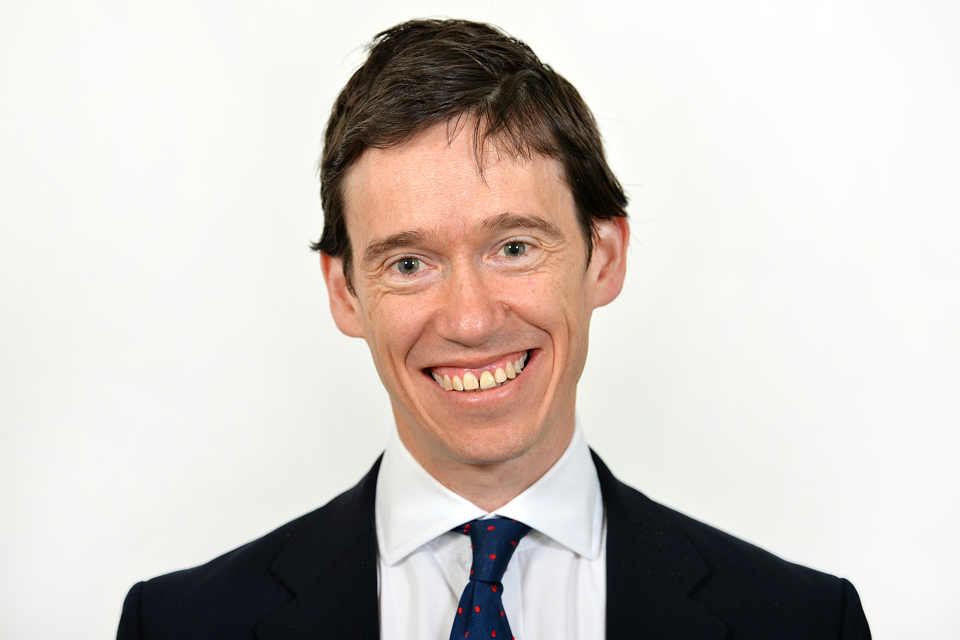
    Rory Stewart

    Below is the text of the speech made by Rory Stewart, the Secretary of State for International Development, on 3 July 2019.

    Can I just say please welcome my distinguished colleagues and friends, their Excellencies the Environment Ministers from the Gambia and also from Uganda. Thank you both very, very much for coming and it was a pleasure to meet you yesterday in central Lobby and I look forward to hearing your speeches. Thank you very much for coming and indeed to many, many other distinguished guests and friends.

    I see his Excellency the Israeli ambassador again and some other ambassadors I suspect and also Lord Stern somewhere, wherever he’s gone and everyone, indeed many others. I apologise if I’m missing anyone else, I blame the spotlights for my blindness.

    So I’m going to begin just to get this going and really I’m hoping this is much more of a discussion than my ranting on, but really hoping unapologetically, as a Secretary of State for International Development to talk about the environment, kind of, from the perspective of somebody engaged in development and from the particular perspective of somebody who is very aware of the way in which development is inherently political, by which I mean questions of power, distribution of resources, communities, are at the very centre of success and failure in the area of climate and the environment, as much as it is at the centre of any other area of development.

    It would be very easy to start simply with a nice happy story and indeed there are some happy elements to the story. So to begin with the positive note before I get on the problems, I’m extremely proud that the Prime Minister has now announced that all our overseas development assistance will be Paris compliant. And we will be pushing very hard to get other people to the same place of course.

    Very, very proud that Britain has now committed to going to net zero carbon by 2050. And, I as the International Development Secretary am determined to ensure that we double the amount that our department spends on climate and environment and above all that we double the effort that we to put in. So today for example I’m announcing over £190 million for a new research series of initiatives related to climate and the environment and in particular, focus on our work on resilience in the developing world.

    So these are all happy stories and indeed one of the reasons I’m not only blinded but also jet lagged and feel a bit light in the head is I was lucky enough to be in Abu Dhabi this Sunday, at the conference with the Secretary General of the United Nations and perhaps some of the people in this room, which is the preparation for what then happens at the UN in September and hopefully what will then happen with the COP summit and all of the work that you do I hope is going to help us to focus our minds.

    It was a a splendid conference but in a way it felt a bit like being at one of those intergalactic seminars in Star Wars, where all the ministers sit around the table with simultaneous translation reading out what is supposed to be two minute speeches that are inevitably never two minute speeches, all of us outcompeting ourselves to talk about how important climate was, but we still seem to be some way I fear, from really having a focused set of three or four issues that we really need to target in September. And as the United Kingdom Government, we will be trying to encourage one of those issues very much to be finance, another one of those to be early warning systems, and the third one is going to be ensuring that we integrate into the national development plans of everybody’s country their resilience measures in relation to climate. The problem at the end of Abu Dhabi is that we came up with about 15 or 20 of those things, so if we can try almost using soft power influence to try to get the UN system to focus on three or four we may get somewhere in September.

    I’m now however coming to the ‘but’, the big ‘but’, when it comes to development, climate and the environment. So the first big ‘but’ is understanding the gap between the scale of the problem and the resources that we actually have available. So in DFID it’s very common, particularly at this time of conservative leadership battles, to talk as though we spend an eye-watering sum of money on international development. And indeed we do spend a great deal of money. We spend 0.7 per cent of our GNI. But remember that 0.7 per cent of Britain’s GNI is still only £14.5 compared to- it’s the compared to that’s the important point- compared to a global funding gap annually on the SDGs of about $2.5 trillion dollars. In other words, the amount of money that we’re putting in is one 400th of the global need. And that really means that even if you put together major donors such as Britain, such as the United States, such as Germany and others we are still only scratching the surface.

    We’re still only able to scratch the surface of problems in developing countries. The problem gets even worse when you realise that the issues that we face around climate and the environment and development are not only issues in low income countries. I’ve just come back from Jordan, I was in Jordan yesterday. And Jordan is a very good example of the kind of problems we’re going to face over the next 20-30 years. Because on the surface, Jordan is in a very good place compared of course to a country like Malawi. So in Jordan for example literacy rates are well into the 90 per cent, the income per capita is at about the well in thousands of dollars a year, not in hundreds of dollars a year. And of course there is an enormous amount of infrastructure in place: they have all their energy generation, in fact they have an excess of energy. They have a good road infrastructure in place and their housing stock and water stock is far better than will exist in a country like Malawi.

    Nevertheless of course when you really get on the ground and start looking at things you realize that even a country like Jordan, that seems on the surface quite well off, is facing enormous problems. Youth unemployment rates at 40 per cent, growth currently is at about 2 per cent when in fact they need to generate nearly 6 per cent growth simply to keep up with their population growth. And when you begin looking at issues that relate to climate it gets even worse. So in Za’atari camp in Jordan for example where I was two days ago, a very large project by Unicef to dig boreholes for water they went 320 meters down to try to access water. Already, within a few months into the project it is beginning to run out of water. The water table is dropping so fast that it’s very, very difficult to provide the basic needs of the refugees in Za’atari, before you even begin to think about how it could provide irrigation for the agriculture that surrounds the camp. Tomato irrigation for example which is collapsing.

    Move on to tourism and you look at the wetlands around Azraq for example, a lot of energy has been put in since the early 1990s to restore this area this unique environmental area. But in fact what’s happening there too is the water stress is beginning to wipe out those wetlands and the tourism potential of those areas. Move on to renewable energy. Jordan is a fantastic place – I’m using Jordan’s example, but I obviously could apply this to about 100 countries in the world. Jordan is a country, and this is where you get politics into our questions about climate and environment, Jordan is the ideal country from which to generate solar energy. It has very, very unusually clear skies as it has very consistent sun energy and in fact over the last three-four years as you can imagine the cost of installation of these solar plants, of a 25 megawatt plant for example, has dropped threefold in just three and a half years. And in fact the feed-in tariffs have come down from 16 and a half cents a kilowatt-hour now down to two point six cents a kilowatt-hour. So it is now possible in Jordan to build a solar plant for a lower cost than a conventional fossil fuel pump. Of course it’s much cheaper to run it.

    But the problem in a country like Jordan of course is that they have already an enormous amount of existing installed capacity and that existing installed capacity for fossil fuel generation is tied into forward contracts going many, many years into the future, where they’re having to pay a considerable amount of money every year whether they use that fossil fuel plant or not to generate that electricity.

    And that problem which seems at the surface just a problem of contracts, from contract management and legal negotiation, of course relates to politics because the reason why all those contracts are in place goes back to the Arab Spring, goes back particularly to the fact the gas lines between Egypt and Jordan were attacked 12 times in the space of a year and the gas lines were blown up. Egypt decided to try to diversify its energy supply towards these other supplies which has now found itself in a situation that even when it has the gift of this extraordinary way of generating energy, it isn’t really able to make those investments work. If it could make those investments the potential is extraordinary, because in fact one of the major reasons for unemployment in somewhere like Jordan or the problems that businesses face in Jordan is exactly about the high cost of energy. In fact you pay more for your electricity in Jordan at the moment, than you do in the United Kingdom or the United States. It’s one of the reasons businesses can’t get off the ground. So then you would have thought the answer is for Jordan to build solar panels and export. There’s huge demand in Iraq, there’s huge demand in Lebanon, there’s huge demand in Turkey and indeed there are interconnectors running out of Jordan towards those places. But every one of those interconnectors I’ve mentioned runs through Syria. Which brings us back to the issue of politics, conflict and crisis. They simply can’t export to those countries because of politics, conflict and crisis. And I’ve used Jordan because Jordan is the easy place. You know Jordan is the place with literacy rates of over 90 percent. Jordan is the place with pretty high per capita GDP.

    If you moved to the Lake Chad basin and start thinking about the challenges with the climate and environment, in Chad, Mali and Niger, in Northeast Nigeria you are looking at problems which are many, many multiples more complex than the kind of issues that I’ve looked at in a middle-income country like Jordan.

    In the Chad basin you’re looking at a situation where the average number of children in a family in countries in the Sahel is as high as 7.3 or 7.6 per family. This is an extraordinarily demographic explosion. Lake Chad itself has almost vanished. This is a situation where there is an active insurgency initially with Boko Haram and now with an offshoot of the Islamic State; a situation in which the French military have been very dedicated and focussed but are still struggling to restore basic security to Mali. Most of us in this room would not wish to travel to Timbuktu at the moment, where problems of governance and corruption, where problems with the militaries of those countries, means that it’s almost impossible to access millions of people on those central border regions.

    And therefore where slick conversations about energy generation, climate resilience become very very difficult because none of us in the room can actually get to the frontline to really work out what’s happened. So it doesn’t matter, and I just want to try to get to this, it doesn’t matter that those places could theoretically be fantastic places to install solar panels. If you can’t do it in Jordan for the reasons that I mentioned there are 15 times more profound and complex reasons why it’s going to be very difficult to do it in those areas.

    Now let me then go to the other extreme, so I’ve jumped from Jordan back to the Lake Chad basin let me now jump forward to Britain. Even in Britain, and Britain is one of the wealthiest countries on Earth, and it’s one of the four or five richest economies on Earth. The depth of our institutions, the depth of our security, the peace, and not withstanding all of the complexities about Brexit, the maturity of our democracy, the amount of data we have available, the civil servants we have available, our ability to access every area, would have made you think that it would be very, very easy for a country like Britain to take the kind of steps that we are talking about other countries taking.

    But of course as the Environment Minister in DEFRA I was deeply aware when we got into the issues of flooding just how difficult and contentious those issues were, even in Britain. How even in Britain, with the Met Office, which is one of the great meteorological offices in the world, it was astonishingly difficult to come up with accurate predictions on flood risk. How even with an incredible amount of investments in I.T. and computing, it was impossible for us to actually formally model what happens in the Lake District if you have 14 inches of rainfall, because you actually find that your entire catchment models change because the water jumps from one catchment to another. Trees come down, rivers move and all your calculations about depth and velocity of water flow change. You end up talking to communities who you’ve told are facing a 1 in 100 risk of flooding, but who’ve been flooded twice in six years.

    Now of course the statisticians are very comfortable saying well the fact that you’ve been flooded twice in six years doesn’t impact the fact that you’re still only at a one in 100 risk of being flooded. And the point of view of the community, who has just seen a huge flood wall go up at enormous cost and then seen four years later the water come over the top of that flood wall, it doesn’t feel like that. And even in Britain, with an incredibly developed insurance industry, it is still quite difficult to get insurance, in fact close to impossible often to get insurance for the most exposed properties.

    Even with the Government putting in a £180-200 million, passing new types of primary legislation and people are angry, right? This is something to also bear in mind. They’re angry, even in Britain. They don’t have the other reasons necessarily that you might have to be angry if you were in the Chad basin, but they’re angry here. Why is that person getting the money? Why am I not? Why are you investing in that community not in mine? How about the value of my house? What happened to the flood measures you took downstream which are now flooding me upstream?

    So whether you were talking about Britain or Jordan or the Lake Chad basin, in the end many of the issues we’re talking about in climate and environment are intensely political, intensely connected with issues of security, finance, communities, preferences, decisions about whether you go for the 120,000 people on Humber who are living below sea level or the 17,000 people in an area around Keswick in Cumbria. And how you make that kind of calculation above all. How you justify that decision even to quite an educated well-informed population. So to move towards some sort of policy prescriptions coming out of this analysis. I think in moving forward, what we must resist in general is any idea that there is a purely technocratic solution to these kinds of problems. We must absolutely resist the temptation that many economists in this room will feel, to come up with a single mathematical formula, which will be able to resolve the very, very complex trade-offs between different types of, for example impact investments right? I feel very strongly that if we get into the question of how we encourage the private sector to make sustainable investments, put money in projects around the world, it would be very misleading to believe that it would be possible to come up with a single mathematical formula that would allow that company to really balance the question of whether their investment is going to emit carbon or whether their investment is going to pollute a river or whether investment is going to reduce the amount of child labour use. These are incommensurable values right? Child labour and carbon emissions are not things that can be put on a single mathematical scale.

    Again, we need to be very, very cautious and imagine that any of these problems really can be resolved simply through computer models of weather or even through the most eloquently written national development plans. Because in the end the grinding reality comes down to power in a local area, politics in a local area. Why is the investment getting in here? Why is the investment not going in there? And the money. Money that is always much more limited than we think. Again, we like to tell ourselves fairy stories that all we need to do is unlock the private sector, the public sector also, all we need to do is unlock the private sector. Well having spent a lot of time as an Environment Minister in Britain trying to unlock the private sector even in a wealthy country like Britain, it’s really tough. There are many reasons why companies do not want to make the investments that we believe as the government, makes enormous sense for them to invest in.

    And indeed you will hear good stories. There are good stories. But there are also, and you must push people when they start giving you good, happy stories, to tell you the bad stories. The places where we wished we were going to be able to get co-investment and we didn’t manage to get the co-investment in place.

    I also think that when we think about this, the SDG framework is very helpful. The SDG framework is very helpful because what it provides is firstly a way of challenging the very, very narrow, materialistic, income-based calculations which development economists from the 1960s pursued. Very, very narrow models of growth. Which still actually exists in the Treasury and DFID itself. A real tendency to imagine that all you have to say in DFID is that we’re pro-poor and that on the basis of that you can then confidently allocate money, because really a lot of those models were based on assumptions, which now look rather dubious.

    Let me take one example. One of the things that international development is currently patting itself on the back for, is the idea that somehow the international development agencies were responsible for removing hundreds of millions of people out of poverty since the early 1980s, of whom the largest number were in China.

    Now my suspicion is not withstanding the fact that we did do development programmes in China. I think the Chinese government would be somewhat reluctant to accept the analysis that it was the development agencies that were responsible for removing those people from poverty. In fact I might be more provocative, that it probably was not even within the gift of the development agencies to determine whether China will grow to 7.6 or 7.8 percent a year.

    However had we had a sustainable development model in our minds, had we thought about growth in a different way, it might be possible – not perhaps in a country on the scale of China but perhaps in some of these smaller countries with which we partner – to have a conversation about what type of growth you’re talking about. So we can’t affect whether your economy grows at 6.8 per cent or 7.2 per cent, but it is possible over 40 years to imagine a world in which when that growth has happened perhaps it hasn’t resulted in 1,000 gigawatts of coal fired power station. Perhaps it hasn’t resulted in massive river pollution perhaps it hasn’t resulted in the cutting down of all open forests. Perhaps it hasn’t resulted in some of the worst air pollution in the world in your capital city. These might be ways in which development agencies might think about the sustainable development and growth.

    And the secret to this is not numbers. The secret to this is values.

    In essence, this must be ultimately an ethical project. In the end the only purpose of DFID, the only purpose of many of the organisations we represent today, is a moral purpose. However much we try to dress it up as an exercise in economic self-interest or utilitarian calculation, it is fundamentally an issue of values and it’s only as an issue of values that it can really intersect with other local development plans in other people’s countries. And we have to take confidence from the idea that when we talk about sustainable development and the environment, this is not some post-colonial attempt by countries like Britain to lecture other people on how to treat their environment. Right? It is a shared conversation in which we acknowledge that people in those countries themselves, themselves have deep pride in their own environment, have deep pride in the ways in which they have avoided the mistakes that Britain has made – are capable of feeling. And I feel this very strongly, in Afghanistan people have enormous pride in their preservation of their own cultural heritage. In Jordan, people are taking enormous pride in their ability to generate clean solar energy.

    In many parts of the world people are taking incredible pride in their ability to protect their own natural ecosystems and generate food out of those ecosystems without disrupting rainforest, peat land or any other of those spectacular landscapes which we’ve inherited.

    We have to develop that sense of pride; that sense of values; that sense of a shared endeavour. And if we can get those things right then we can imagine international development, climate and the environment as a single thing. Not a series of weird trade-offs between pro-poor action on the one hand and carbon neutral action on the other, but an integrated approach in which I suspect what will link climate and development is often the notion of the environment itself, which is why I want to bring conversations about the natural landscape, conversations about biodiversity and ecosystems, conversations about species, conversations about landscape back into that linking narrative.

    Let’s take, to conclude, a real life example. I want to begin with real life examples. Let’s take the kind of work that DFID for example might be able to do in Myanmar.

    What we shouldn’t be doing in somewhere like Myanmar is pretending that we can determine whether or not Myanmar grows at 5.8 or 6 percent a year. Ultimately poverty in Myanmar by and large will be eliminated by the growth of the economy of Myanmar in the same way as poverty in China was eliminated by the growth of the economy in China.

    But what we can do is combine investments into a richer sense of partnership between Britain and Myanmar. A partnership that might on one hand involve working with community health workers to try to encourage people to take their anti-tuberculosis medicine to make sure at the end of six months they didn’t have TB and indeed were not transmitting TB through the region but might also, might also, involve investment in sustainable forestry, which is why I’m very much encouraging DFID to go back into the issue of forestry.

    How do you preserve the teak forests in Burma? How do you manage them responsibly. How do you think about their impact on climate. It might involve cash transfers to encourage mothers to provide nutrition to their children but it might also involve thinking about the ways in which sustainable tourism and the preservation of Myanmar’s cultural heritage might be a central part of helping Myanmar not only raise its economy but keep that sense of pride, that sense of values, the sense of the belief in their own landscape and environment which is going to be so central to progress.

    It might involve a discussion about Chinese investment into Myanmar and the way in which the Belt and Road initiative is currently pushing for a great deal of fossil fuel generation in Myanmar. And looking at alternatives to fossil fuel generation in that country. It might involve thinking about the way the road networks and the ports for instance, but it might also involve thinking about the fact that the Irrawaddy river dolphin, this absolutely unique animal, if any have been unfortunate enough not to have seen the Irrawaddy river dolphin, the Irrawaddy river dolphin actively works with fishermen to identify where the deepest shoals of fish are. They pop up and actually point and furiously flap with their flippers to push the fishermen in each direction, but there are only about 27 of these dolphins currently doing this in the Irrawaddy River and they are on the verge of extinction.

    So a grown up conversation with the Government of Myanmar from the Government of Britain could embrace all of those things and by embracing all those things find a way of expressing a world in which we do not pretend that we can on our own solve global poverty, because as I said our resources are barely one three hundredth of that issue. Where we don’t pretend that we can escape the issues of politics and power but instead we lean into the issues of politics and power, so lean into the relationship between Myanmar and China; lean in to the relationship between members of the Cabinet and the particular economic interests around the Irrawaddy river; lean into the questions that livelihoods of fishermen, lean into insurgent groups who are cutting down teak forests and smuggling across the borders; lean into issues of money; in order to achieve what we want which is a vision, a vision of what Aristotle would have called eudaimonia. In other words an idea of us working as a partner with other countries. Not just in doing well but in being well in doing well. Thank you very much.

  • Matt Hancock – 2019 Speech at Onward Human Capital Launch

    Below is the text of the speech made by Matt Hancock, the Secretary of State for Health and Social Care, on 3 July 2019.

    A ploughman, a lamp-lighter and a knocker-upper walk into a bar…

    It’s a really old joke.

    Because those jobs don’t exist anymore.

    They’re obsolete. We don’t have ploughmen, lamp-lighters, and knocker-uppers.

    Thanks to tractors, electric lighting and alarm clocks, you don’t have to pay someone to knock on your window to wake you up in the morning.

    Can you imagine what a weird job being a knocker-upper was?

    This debate has raged about automation for centuries, and it has been reignited because of artificial intelligence coming down the track, but it’s actually an old argument.

    Let’s talk the truth about technology.

    We need to be honest about what obsolete jobs were really like.

    Take mining for example. There’s a romance to the days of when men went down the pits. I come from Nottinghamshire mining stock, and I feel the proud legacy of our mining industry, and the contribution my forefathers made to making this country what it is – and the economic and political powerhouse the mining industry was.

    But does the romance meet the reality?

    I remember my grandmother told me how each of her 5 brothers, when they turned 14, were offered jobs down the pit. And I remember her telling me, very clearly, that they knew if they said yes, they’d be down there for life.

    They aspired to a better life. And think of it now and this generation.

    Would I want my children to do it?

    No, and I imagine every parent in the country would say the same.

    Because mining is difficult, dangerous, too often deadly work.

    And let’s not forget the environmental impact – we recently marked, celebrated, a new record in the number of hours without coal-generated energy production in Britain since the Industrial Revolution.

    The future is solar: high-tech, safe and clean. If we really want to improve people’s lives we need to take this lesson and apply it to our country’s future.

    While some only focus on the conservation of old jobs, our concern must always be the creation of better new ones.

    I use this poignant example of coal mining to make a point because we need to move on to the things that are bigger than Brexit.

    What’s mission-critical is that we create high-skilled, well-paid, secure jobs, and we equip and empower people to get those jobs.

    That’s how we build a Britain match-fit for the 21st century.

    Now, how do we do that?

    We need to see this in the context of what many people call the Fourth Industrial Revolution, because winning the Fourth Industrial Revolution is an economic and geo-strategic imperative.

    The First Industrial Revolution, the one powered by coal, saw mechanisation take over from muscle power.

    Britain led the world and became the richest and most powerful nation.

    In the Second Industrial Revolution, electricity and mass production transformed manufacturing.

    And Henry Ford, and the Americans, took the lead.

    The Third was electronics and early computers.

    And the Fourth is rooted in connectivity, completing the automation of straight-line routine tasks – both physical and mental – essentially leaving to us, humans, what only we can do: the complex, the creative and the caring roles.

    History shows us that, on average, new technology invariably creates more jobs than it disrupts. But the geography doesn’t always match. The new jobs aren’t always in the places where people live and want to be. And this is unsettling and creates profound challenges.

    I know this, again, because of my own family history. Two hundred years ago, we, Hancocks, were leading Luddites. My predecessor, Richard Hancock, led a 1,000 strong gang smashing up looms in Nottinghamshire.

    He was caught and banished to Australia, but if he was here today, I bet he’d tell you he did it because his family’s livelihood was threatened – his family were hand-weavers and the Arkwright loom was destroying his community.

    Now, I’m not defending Great Uncle Richard, and we Hancocks have learned a thing or 2 about how the world works, but you can’t dismiss his reasons, and how he felt, and we can’t dismiss those feelings today.

    Your report is absolutely right: the disruption and the opportunities of automation aren’t spread evenly across the UK.

    The challenge we face as a country is to ensure that Kingston-upon-Thames and Kingston-upon-Hull both benefit from the tech transformation of the Fourth Industrial Revolution.

    And there’s 3 things I’d like to pick out.

    Skills, innovation and making sure the whole country benefits from the coming tech revolution. I’ll take each in turn.

    First, skills.

    In Britain, today, we have a skills shortage.

    We don’t have enough people with the right skills for the jobs that are being created by our most dynamic companies. Whether it’s the Silicon Roundabout, the Golden Triangle, or the Northern Powerhouse, employers are having to recruit from abroad to find staff with the right skills.

    Of course, Britain should always be open to the brightest and the best talent from the around the world – the NHS certainly is.

    While this past decade, we’ve increased standards in schools, the world is changing and becoming more dynamic, and our education system needs to change too.

    The World Economic Forum says the jobs of tomorrow are going to be the complex ones writing the code: AI and machine-learning specialists, big data specialists, automation experts, information security analysts, robotics engineers, machine interaction designers and blockchain specialists.

    And it’s not just tech.

    There’s the creative industries that Britain is already a world leader in, and as Culture Secretary I saw first-hand the enormous contribution they make to our economy, from our fashion designers to our game designers, from the National Theatre to, yes, Alex the Glastonbury rapper.

    And then there’s the caring professions: nurses, doctors, social work and so many services that are the very essence of what makes us human: face to face, empathetic, able to connect in a way that machines can’t and probably never will.

    So the complex, the creative and the caring.

    These are the industries where the jobs of tomorrow are going to be concentrated.

    To ensure we’re equipping people across the country for these new jobs we need to ensure they get the best possible start at school.

    We need to ensure all of our schools are properly resourced, and all of our teachers get the support they need to ensure every child can fulfil their potential.

    We need to ensure our universities stay world leaders, but learning shouldn’t end there.

    We need to change the mindset that skills are something you acquire at the start of your career and then carry with you unchanged until retirement.

    That’s like buying a smartphone, never updating the software and expecting it to still be working in 50 years’ time.

    It’s not how the modern world works. As jobs require ever greater, and ever changing, skills we must place a greater emphasis on learning how to learn.

    I find the Onward proposal for a Retraining Tax Credit, aimed at low-skilled workers, incredibly powerful.

    We have tax credits for R&D so why not for retraining?

    We need to encourage companies to upgrade the skill-set of their staff.

    So investing in people should be seen at least as attractive as investing in research and development.

    As someone who oversees the nation’s largest employer, I know that it’s people who make the NHS what it is. So we must always invest in our people.

    As skills minister, I brought in degree-level apprenticeships so we could give people an alternative route into professions like insurance, accounting and the law, if they didn’t go to university.

    We introduced all-age apprenticeships so you can retrain at any point in your career to get into a well-paid job, because you’re never too old to learn new skills.

    Retraining is vital. It’s a concept we need to embrace across society to ensure everyone has the chance for a well-paid job in the future.

    Second, innovation.

    How do we create the right conditions for innovation?

    Here the government’s role is, partly, to incentivise innovation in the private sector, and directly to support innovation across the board.

    Let’s just pick one example: the NHS.

    Since I became Health Secretary, I’ve “axed the fax”, “purged the pager” and made the tech inside the NHS look more like the tech everyone in the outside world uses in 2019.

    But the tech of tomorrow isn’t something that can be driven from the top – centralised, hierarchical systems are incompatible with rapid innovation, because they assume that the boss has all the answers, when the truth is, we don’t even know what all the questions will be in the future.

    NHSX, our new specialist tech outfit, officially launches today, and it will take the same approach to innovation that Apple and Google do.

    NHSX is going to make the NHS a platform for innovation.

    It will radically simplify the system for developers and NHS decision-makers.

    NHSX will set national policy, national standards, and ensure systems can talk to each other.

    But it will open the door to new ideas and new people, help create a diversity of thought, by constantly welcoming innovators with an outward-looking approach.

    The NHS, historically, has been too closed to innovation from outside – partly that is because new tech has driven up costs, but digital tech can save costs, and make money go further.

    What it requires is a completely different approach to innovation. Not the 10-year cycle of creating and testing a drug, which rightly adheres to the precautionary principle, but trying things out, learning as we go along, iterative development.

    That’s how you innovate. That’s how you achieve excellence.

    So the role of government is to set the mission and ensure we have the right architecture in place: the right conditions to attract the best global firms, and support British innovators – a way in for the best international talent, and a way up for British people to get the skills and training they need.

    But we must go further. The real challenge of our times, as your report nails it, “is how we fix the gap between the headline statistics and the lived reality for people.”

    How we humanise the statistics.

    How we ensure work always pays.

    And how we stand up for capitalism and liberal democracy as 2 of the greatest innovations in the history of humanity.

    So the third, and final, thing I’d like to talk about is making sure the whole country benefits from our growing economy.

    One of the causes of Brexit was the dislocation in this country between those areas, predominantly cities, that are flying high, where a generation of growth, of attracting younger people and of increased diversity and dynamism has separated our cities from their hinterland.

    British cities today are more open, liberal and outward-looking than ever before. It’s true of London, but it’s true of our other big cities too.

    For half a century, during deindustrialisation, major British cities, outside of London, became relatively poorer than most of Britain. This isn’t the case in other countries.

    But that trend is reversing in Britain, as our cities are becoming richer and younger, and creating the high-paid tech-enabled jobs of the future.

    A generation ago, the average age of people living in urban areas matched those of rural areas.

    Now the average age of Britain’s biggest cities is almost a decade younger than in rural areas.

    It’s driven by many factors.

    One is 50% of young people go to university.

    And aspirational young people often leave rural areas for the cities.

    And here is a conundrum for conservatives: we support aspiration. I support aspiration. The aspiration for all people to reach their potential.

    But what happens if all the aspirational people were to leave a community?

    What if that is especially true of aspirational young people?

    We need to be aspirational not just for individuals but for entire communities.

    The purpose of a town is to be somewhere it’s easy to live and have a good life: easy childcare and good schools, local businesses providing great services, good connectivity both physical and digital, thriving high streets, high-quality owner-occupied family homes and the support of great NHS and social care.

    We have brilliant towns in Britain, and we have some of the most beautiful villages in the world – but not all of them are brilliant. Many haven’t seen the benefits of the strong economy we now have.

    We haven’t done enough to make whole communities aspirational rather than just helping aspirational people move.

    So skills, innovation and aspiration for every community.

    Now more than ever, this matters. We will deliver on Brexit. And we will move forward.

    But to do this – and for Britain to succeed after Brexit – we need to harness it and drive it right across the country. We need to harness the great potential of this technological innovation for every single person.

    We must be bold and brave after Brexit.

    We can be ambitious and aspirational.

    But we must be for the whole country and leave no one behind.

    Britain is a union, of nations, of cities, towns, and villages, and each part, each one of us, has a contribution to make to the future of this country.

    Each person has value to give.

    So we must invest in skills and training.

    We must spur innovation and embrace new technologies – as we’re doing in the NHS.

    And above all, we must ensure everyone shares in the success of this great country.

    That’s how we make a success of Brexit Britain.

  • George Eustice – 2019 Speech on the Religious Slaughter of Farm Animals

    Below is the text of the speech made by George Eustice, the Conservative MP for Camborne and Redruth, in the House of Commons (Westminster Hall) on 2 July 2019.

    I beg to move,

    That this House has considered the religious slaughter of farm animals.

    Before I get to the issue in the motion, I must say that free votes in the House are wonderful. Those moments when the party structures and the Whips withdraw from the debate—when there are no Whips to point to which Lobby to go through—allow each individual to engage with an issue using their own reason and judgment and can be incredibly refreshing for our politics. Some of the best-quality debates in Parliament take place under free-vote conditions. Cross-party alliances form and, in the end, the House tends to arrive at a sensible and proportionate consensus.

    Of course, the party system developed because, if there were free votes on everything, the Government would not be able to get anything done or deliver any of their manifesto commitments, but issues of ethics and religious conviction have always been universally accepted as free-vote issues. For instance, we have free votes on same-sex marriages and on contentious issues such as abortion. My key contention is that religious slaughter should be made a free-vote issue by every party in the House.

    Whitehall feels awkward about dealing with this complex issue and it is not sure what to recommend to Ministers. Governments of all shades have tended to leave the issue in the “Too difficult to address” box and have talked themselves into a stance that says, “Now is not the time to deal with it.” If we made it a free-vote issue for the House, we would liberate the Government of that burden of responsibility and, more importantly, liberate Parliament to address the issue.

    Jim Shannon (Strangford) (DUP)

    I spoke to the hon. Gentleman beforehand to get his thoughts about what he was going to say. In my council area of Ards, there was an abattoir that carried out some of the ritual killings and stunned and so on. It created jobs and stability and there was a system in place, which seemed to be acceptable. Is he looking for changes in the methodology of killing or does he want to stop it entirely?

    George Eustice

    I will go on to advocate a package of measures to improve our law, having looked at the issue in some depth. I would stop short of banning it altogether, but we could make major improvements, which I will come to.

    The history of our current derogation is long. The first regulations governing abattoirs and the humane treatment of animals in them were introduced through the Public Health Act 1875, which said that all animals should be “effectually stunned”. In 1904, a committee of the Admiralty considered in some depth the right methods of slaughter to deliver humane outcomes for animals and recommended that, without exception, all animals should be stunned. Subsequently, however, the Local Government Board issued a circular that drew on the advice in the 1904 report. It recommended that, as a general rule, all animals should be stunned prior to slaughter, but it created what has become a long-standing religious derogation for Jewish and Muslim communities.​

    David Simpson (Upper Bann) (DUP)

    I declare a number of interests in the industry. The 2017 Food Standards Agency report revealed that 84% of Halal-slaughtered animals were stunned prior to slaughter. That means that when the speed of production is important, people will stun them.

    George Eustice

    I was going to come on to that. There is no barrier to using stunning for Halal, provided it is what is called a recoverable stun. That same FSA report also worryingly revealed that 25% of all sheep slaughtered in the UK are slaughtered without stunning. That alarming rise is difficult to explain.

    Our laws were formalised by the Slaughter of Animals Act 1933, where the exemptions for religious slaughter were maintained. They have evolved from that through various stages, but the current position has not changed much since 1995. The principal plank of our national requirements on religious slaughter mainly revolve around standstill times. In the case of non-stunned slaughter, sheep cannot be moved until they have lost consciousness or, in any event, for at least 20 seconds. Cattle cannot be moved for at least 30 seconds, or until the animal has lost consciousness. There is a different requirement for chickens, which cannot be moved to the next stage of production until 30 seconds have elapsed or the bird has become unconscious. The purpose of those standstill times is to prevent stress on the animal.

    It is worth recognising how animals die in a non-stun slaughter situation. For sheep, most of the evidence suggests—I have discussed this with officials—that they typically lose consciousness in somewhere between 10 and 15 seconds. It takes slightly longer for chickens, which lose consciousness in between 15 and 18 seconds.

    The greatest concern, however, is always the impact on bovine animals—cattle—although they are small in number, because their physiology is complicated by the fact that they have a third artery that goes to the back of the head that continues to supply blood even after the cut has taken place. I apologise to hon. Members for going into the gruesome details, but if we allow such things to happen in our name, it is important to explain exactly what they are. For cattle, it typically takes 40 to 45 seconds for the animal to collapse—not to become unconscious, but to fall off its legs due to the lack of blood supply—and between one minute 20 seconds and two minutes for the animal to lose consciousness. A former Farming Minister, Jim Paice, once described a situation that he had seen when visiting a religious slaughter abattoir where it took six minutes for a bovine animal to bleed to death, which he said was a truly horrific event to watch.

    I often hear from representatives of organisations such as Shechita UK that the cut is so precise and clean that it all happens very quickly, but there is not really any evidence to support that. In fact, in the shechita slaughter process, if the blood starts to clot in the throat cut, it is permitted for the slaughterman to push his hand into the wound and disturb the clotted blood to resume the flow. Those are difficult situations. For bovine animals in particular, it is a major cause for concern.

    Neil Parish (Tiverton and Honiton) (Con)

    I thank my hon. Friend for securing the debate and for his point about it being a moral issue. We rear animals as farmers and we want them to be stunned when they are killed. It is us men who decide how they are killed, not the animal. ​New Zealand has brought in stunning for all the Halal it does across the world, and it exports a lot to the middle east. When we leave the European Union, we will have the opportunity to have a similar system.

    With shechita, I wonder whether we could not at least have post-stunning of bovine animals. What my hon. Friend has described is horrendous and we need to do more to relieve the suffering of those animals.

    George Eustice

    My hon. Friend makes an important point. I will come to how other countries address this challenge.

    All sorts of difficulties arise through our current rules on halal and shechita or kosher meat production. There are a wide range of definitions of halal. As hon. Members have pointed out, some statistics suggest that 70% to 80% of all animals slaughtered under halal are stunned. The key requirement for halal is that animals receive an Islamic blessing and that any stun should be recoverable, so that in theory they could regain consciousness. It is very hard to define what is halal, because it ranges from simply playing a recording of an Islamic blessing, right through to non-stun slaughter.

    In the case of kosher meat, there is a further problem. The hind quarters of an animal are not deemed kosher, even if the animal was slaughtered under kosher methods. That means that the rump of cattle and sheep ends up going into the mainstream market—usually the service trade through Smithfield, where unwitting customers in restaurants in London and other parts of the country buy the meat not knowing it has been slaughtered by kosher methods.

    Giles Watling (Clacton) (Con)

    Does my hon. Friend agree that the labelling of meat, so that consumers know the exact method of slaughter when they order their food from restaurants or supermarkets, might be a way forward to address overproduction and allow consumers to make an informed choice?

    George Eustice

    Labelling is indeed one option, which I was going to come to. It does not get us all the way, because we have the service trade, where labelling would be ineffective at helping consumers to understand how their meat was slaughtered.

    If we had a free vote in Parliament, what types of issues might we want to consider? Although this is a sensitive issue, it is important to ask whether our current derogation accommodates a religious need, or whether it is more a cultural interpretation of such a need. There is wide variance in what is defined as halal, depending on local imams.

    Mr Jonathan Djanogly (Huntingdon) (Con)

    I am trying to look at the consistency of what my hon. Friend has said. He has acknowledged that, as far as Jewish koshering laws are concerned, the animal has to be killed in a certain way, and certain parts of the animal are not allowed. He started by saying that he would stop short of banning it altogether—I think those were the words he used. How can he reconcile those two things? If we were to have stunning, it would in effect be a ban.

    George Eustice

    I was going to come on to that. Even within the kosher community, there is not a universal view on whether post-cut stunning should be permitted.​

    A couple of years ago, I visited Kuwait and talked to a meat importer about the issue of halal production. He explained to me that the main requirement in Muslim countries in the middle east is that there is no pork contamination in the food they eat, which is why all their protocols focus predominantly on not sharing machinery between pork production and lamb, chicken or beef production, to ensure that there is no pork DNA. That is their primary concern, alongside ensuring that there has been an Islamic blessing of the food. When I explained to him that the issue of non-stun slaughter was contentious, he said it is predominantly a western cultural interpretation of the Muslim faith.

    Interestingly, non-stun slaughtered meat is not a particular requirement in middle eastern countries. There are exceptions, but generally speaking that is not their primary concern. Indeed, non-stun slaughter is banned in Australia and New Zealand, which are the largest lamb exporters to all countries across the middle east, from Israel right through to Kuwait and Saudi Arabia.

    The other point about kosher meat is that Shechita UK insists that it is most certainly not a religious ritual, and a Hebrew blessing is not given. It is simply the case that the ancient holy books describe a method of slaughter that they believe remains the most humane approach. The principal concern for Shechita is that there should be no injury to an animal before it is presented for slaughter. They regard stunning as an injury to the animal—that is their particular concern—but that is not a universal view. There has been some rabbinical support for the idea of post-cut stunning, and we know that some abattoirs producing kosher meat allow post-cut stunning of bovine animals.

    I turn now to some of the options that we could consider. My hon. Friend the Member for Clacton (Giles Watling) mentioned labelling, which is a complex area because there is no single definition of halal. The simplest way would be to label meat as un-stunned, because that is a clearly definable legal definition. That causes some concerns for Jewish communities. They argue that if we did do that, we should also list whether an animal has been killed through anaesthetic gas or electrocution, or all manner of other things. Farmwell, which is a leading charity in this area, established a system that all religious groups are willing to buy into: a coded approach of numbers from one to 10, denoting the method of slaughter. However, it does not deal with the problem of food entering the service trade, where unwitting customers would buy it.

    There are a number of other things that we could do, including increasing the standstill time on bovine animals. The current limit of 30 seconds was probably due to a drafting error—we know that cattle do not lose consciousness that quickly. We could therefore move the minimum standstill time to at least one minute and 30 seconds or two minutes, to ensure that there is no movement of a bovine animal while it is still conscious. In conjunction, we could require a post-cut stun on all bovine animals, recognising that there is an issue with the physiology of bovines, which leads to a long and protracted death. I do not believe that a post-cut stun would violate the religious beliefs of either the Halal Food Authority or Shechita UK.

    As an alternative, we could simply ban the non-stunned slaughter of bovine animals, recognising that there are issues with that. We could introduce a maximum standstill ​time, which is the approach taken in countries such as the Netherlands and France, where there is a requirement to use a bolt gun if a period of, say, 40 seconds has elapsed after a cut has taken place and the animal has still not lost consciousness.

    We could introduce more formal quotas for abattoirs, which is an interesting idea. It is already the law that only food destined for Muslims and Jews is permitted to be slaughtered under our current religious derogation, but we know that there is a real problem with the mainstreaming of religious slaughter. We know that that provision, as drafted in our law, is unenforceable.

    When I discussed that with departmental lawyers, their response was that if somebody maintains that they thought that the animal was destined for a religious community when they committed the slaughter, that is sufficient to satisfy the requirement, so it is entirely unenforceable. In Germany they have a much more sophisticated quota system. They make an assessment of the need of orthodox religious communities, and abattoirs must apply for a licence and demonstrate that they have an actual market for the food they are producing.

    Sir Roger Gale (North Thanet) (Con)

    If I am fortunate enough to catch your eye, Mr Rosindell, I will come back to the basic principle. On this specific point, Germany can do it, so why can we not do it? It is not good enough for departmental lawyers to say, “Oh, it’s all far too difficult,” which is effectively what my hon. Friend has said. There is a way through this. We know the market is oversupplied. It should be limited, should it not?

    George Eustice

    I agree that adopting a German-style model, whereby we put in place the measures and mechanisms necessary to enforce something that has been a facet of our law since at least 1933, makes a lot of sense, and is probably the easiest option for the Government, given the alarm that there has been about the growth of religious slaughter.

    We could increase the period of standstill time before chickens move on to the next process. There is a very real concern at the moment that there is typically a moving shackle line for chickens, whose throats are cut randomly by people as they go past, but what happens if they miss a chicken? What happens if the chicken is not stunned through a water bath and they fail to cut its throat? The answer is that it probably proceeds to the next stage of production, which if I am not mistaken is a scolding tank to remove the feathers. It could enter that while fully conscious, which is horrific. We should be doing more to check that those birds genuinely lose consciousness before they move on to the next stage. It should not just be a moving shackle line.

    Giles Watling

    It is known that in many cases stunning fails during the process. Should we not clean up our act on stunning, as well as taking on the issue of labelling? I hate to drag my hon. Friend back to that issue, but why can we not put labelling on menus too?

    George Eustice

    So-called mis-stunning is also an issue. I am not pretending that religious slaughter is the only welfare issue. Another area of concern, about which I commissioned some work when I was Minister, is the make-up of the gas mixture used in the slaughter of pigs, which was also problematic. Clearly, because it relates to pigs, it has no religious dimension whatever. There are other issues, and mis-stunning is one of them. ​The point about mis-stunning is that even if they get it wrong, they are there immediately afterwards with a second stun, which can resolve the issue.

    I will conclude at that point, because we have only half an hour and the Minister will want to come back on some of these points. I seek to liberate him, the Government and all his successors from having to wrestle with this difficult issue. Instead, they should make it a free-vote issue and give it back to Parliament to decide.

  • Chris Bryant – 2019 Speech on Acquired Brain Injury

    Below is the text of the speech made by Chris Bryant, the Labour MP for Rhondda, in the House of Commons (Westminster Hall) on 2 July 2019.

    I beg to move,

    That this House has considered acquired brain injury.

    You might have noticed, Mr Rosindell, that we have considered this matter once or twice already over the past year or two, but today we are looking at some specific elements of acquired brain injury. As all right hon. and hon. Members will know, brain injury can relate to so many parts of Government: the Ministry of Defence, the Department for Work and Pensions, the Department for Education, the Ministry of Justice, the Home Office and so on. Today we have the Health Minister before us, so I am keen to focus on health-related issues.

    I know that many right hon. and hon. Members will have been approached by the Headway charity, clinicians who work in their area, patients or carers of people who have suffered a brain injury, and will want to make a contribution, so I do not intend to speak at great length. I am passionately conscious of the fact that, since I first became involved in this issue in Parliament three years ago, I have met so many amazing people—not only clinicians and people who work in the charity sector, but patients who have had brain injuries and spoken about what that experience is like. It is so important to hear that experience directly from individuals.

    One particularly poignant aspect of brain injury is that in the vast majority of cases it is completely invisible. Yesterday, I met Tom Hutton, who is here—I know we are not meant to refer to the Public Gallery, Mr Rosindell, but I have already and have got away with it. He was training on his bike for an Ironman a few years ago and had a collision with a small lorry. He was in an induced coma for a week. There is not a mark on his head. No one who saw him at work or in the street, including a Department for Work and Pensions assessor, would have the faintest idea that he had had a brain injury, or an injury of any kind.

    The fascinating thing he spoke to me about is that he has to talk to himself all the time. One symptom of brain injury is phenomenal fatigue, and if the sufferer does not see the fatigue coming, they can experience phenomenal depression, or dysphoria, as it is called.

    Nick Thomas-Symonds (Torfaen) (Lab)

    I warmly congratulate my hon. Friend not only on securing this debate, but on his fantastic campaigning work in this area. On the symptoms being invisible, Departments, particularly the Department for Work and Pensions, cannot pick up precisely how such injuries affect day-to-day life, and that needs to be improved.

    Chris Bryant

    Yes. The all-party parliamentary group on acquired brain injury—I see that two of the vice-chairs are in the Chamber—has been campaigning to ensure that everyone who does any kind of assessment for the Department for Work and Pensions, whether for personal ​independence payments, the employment and support allowance, or any other benefit, has a full training in acquired brain injury, so that they understand the variable nature of the condition.

    One element of the personality change that may come about is that somebody with a brain injury might be desperate to please the person in front of them, so they might want to give what they think is the “correct answer” to the question being asked by the official. That can give a misleading idea of what that individual’s abilities are.

    I have not asked Tom whether it is all right to say all this today—I see that he is nodding, so it is fine. When the Duracell battery inside someone’s head is running low, they talk to themselves to try to re-energise it, but that uses even more energy. That can lead to a vicious cycle: further depression and anxiety makes it more difficult to recharge the battery, in turn making it more difficult to get better.

    There are others who have had much more dramatic and traumatic injuries, perhaps where something has penetrated the skull. However, in the vast majority of cases, the injury will be inside the brain. A fundamental part of what we have to address is how the mind and the personality sit inside the brain. Right hon. and hon. Members might have seen the television series “MotherFatherSon”, which deals with someone who has had a massive aneurysm and then a stroke. Lots of things in the programme are not entirely accurate, but many families and individuals have to cope with the very real element of personality change. I met a wonderful woman three months ago told me that she wished that her old self would come back. She could remember what her old self was like, but it is not the person she now is. She just does not know how to recreate that personality inside herself. Again, it is this thing of talking to yourself all the time.

    If there has been impairment of the executive functions due to a brain injury to the frontal lobes, particularly in teenagers or as the young brain is still developing, it can lead to all sorts of other problems in terms of employability, and being able to engage with the wider world and their family. Sometimes people share far too much information; sometimes they are far too timid about being able to share information.

    Jamie Stone (Caithness, Sutherland and Easter Ross) (LD)

    On that point about sharing, as I told the Chamber in the debate on 9 May, my wife suffered from a meningioma. As I think the hon. Gentleman mentioned, a certain fretfulness can come into the character. On sharing, perhaps it is because I live in such a remote area, but I am surprised those who have come through the treatment are not encouraged more to share their pre-operative and post-operative experience with people who are suffering or are about to have a medical intervention, because it would give them great courage and help.

    Chris Bryant

    Yes, that is true. Because of the pattern of brain injuries across the country, it may be difficult for people to gather with people of a similar age and background. Lots of people with brain injuries arising from road traffic accidents are quite young—in their teens or early-20s. Sometimes they get put into support groups with people in their 60s or 70s. That is not an ​impossible combination, but sometimes it is not the most natural grouping for those with a much longer life expectancy.

    The most difficult element for a lot of people is the significant impairment in their ability to speak and communicate. Speech therapists are an essential part of the mix in bringing people back to a degree of independent living after a significant event. One worry across the whole of the UK is the shortage of people working in this field, who sometimes do not feel as valued in the team as they might. We need to ensure that speech and language therapy is still available for some time after someone has had their immediate intervention.

    One of the most common things that people tell me is that they are accused of being drunk, when in actual they have difficulty speaking properly because they have had a brain injury, not because they are a bad person. They feel the sense of stigma that attaches to not being able to speak as clearly as they might have been able to before their brain injury.

    Bill Esterson (Sefton Central) (Lab)

    My hon. Friend mentions that people can have the appearance of being drunk. My 15-year-old adopted son’s mum drank heavily while she was pregnant with him, which is where he acquired his brain injury. The most recent research suggests that every year tens of thousands of children are born in this country with foetal alcohol spectrum disorder; it is a spectrum, as the description implies. It is a massive problem, and it leads to the kind of emotional and behavioural difficulties that my hon. Friend will be familiar with from speaking to those who have had acquired brain injuries later in life. What are his thoughts on what is needed to address the numbers of people who have brain damage through their lives?

    Chris Bryant

    My mother was alcoholic. I do not know whether she drank during my pregnancy—[Laughter.] Was it my pregnancy? I mean before I was born. I am painfully conscious of how difficult it is for women who are alcoholic to stop drinking when they are pregnant. The message about the dangers of drinking during pregnancy has been out there for a long time, but we still have remarkably little in the toolkit for dealing with alcoholism in this country. Broadly speaking, it is still about the 12-step process, which has a very low success rate in comparison with other therapies and which relies on surrendering to a higher being, albeit not necessarily a religious one—it just does not work for an awful lot of people. The syndrome that my hon. Friend refers to is much more prevalent than we realised even 10 years ago. Further research is going on, and we need to ensure that it is fully understood across the whole educational spectrum, as well as the health spectrum.

    David Simpson (Upper Bann) (DUP)

    Does the hon. Gentleman believe that brain injury in children and young people requires a different approach from how we handle adult brain injury?

    Chris Bryant

    There are specific issues that affect children. It is a profound source of depression to me as a Labour Member and a socialist that a child from a poorer background is four times more likely to suffer a brain injury before the age of five than a child from a wealthy background. We need to look at all the elements that ​lead to that, because prevention is far better than cure. I have spoken in other debates about issues that relate particularly to education, including the importance of schools having as full an understanding as possible of how brain injury can affect a child. All the statistics now indicate that every primary school class in this country has at least one child who has had a significant brain injury, although many of them may be undiagnosed. That is an issue for every single school in the country, and I do not think that we have fully taken it on board yet.

    The experience of having had a brain injury often includes the sense of being pushed from pillar to post in the health system and in the organisations that the state provides. An element of that is inevitable, because something fundamentally chaotic is being brought into an ordered system. That is how it feels to the individual, too: they knew what their life was, and then suddenly—nearly always completely out of the blue—something has happened to radically change their life and their family’s lives, perhaps permanently. All too often, however, families have to fight for every single bit of support from the national health service, the local authority, the education system or wherever.

    If there is one thing that I hope will come out of all the work that we have done in the all-party group, it is that we can change that feeling of having to fight for every single element. So many patients have told me, “If I could devote all my energy to getting my brain better, rather than fighting for support, I would be a useful and fully functioning member of society. I would dearly love to be that person again.” If there were any way in which all the arms of the state could fully recognise that factor, that would be something that we should dearly hope for.

    The charity Sue Ryder does an awful lot of work with people who have had brain injuries and other neurological conditions. It reckons that 15,000 people who have had acquired brain injuries are now in generalist older people’s care homes, which are probably not the places to get the right support, but are the only places available. Sue Ryder is aware of at least 515 people who are placed out of area, a long way from home, which means that all the support systems that they might have through family, friends and so on are simply not available or are extremely expensive because of the travel.

    We really have to do far better. The Minister is very good on the subject—I have talked to her several times—but the tendency in the NHS and in Government circles is to put a positive gloss on everything and stress all the good things that have happened. I understand that, but we are still a long way from achieving what we all want, and what the people we are talking about deserve.

    The national clinical audit of specialist rehabilitation produced a report earlier this year—it has not yet been discussed in Parliament—on all the specialist rehabilitation around the country. Somebody who has had a major traumatic brain injury, or a brain injury caused by factors such as carbon monoxide poisoning, may at first need four or five people to feed them, clothe them, wash them and provide all the basics of their daily life. However, effective neurorehabilitation over a sustained period can and often does mean that they need just one person—or, in an ideal world, it gives them back the independent life that they had before, in as large a measure as possible.​

    The good news from the report is that the rehabilitation prescription that the all-party group has discussed is being steadily rolled out across the whole country. That means that patients and their families can say, “This is what we know we should be getting—we want to make sure that we are getting it.”

    Lilian Greenwood (Nottingham South) (Lab)

    I congratulate my hon. Friend on securing the debate and on his speech. Does he share my concern that neurorehabilitation in the UK is particularly limited for children? There is just one option for in-patient neurorehabilitation and post-hospital discharge, which is run by the Children’s Trust in Surrey. Should not every region have a paediatric neurorehabilitation pathway, rather than the patchy and underfunded set of services that we have at the moment?

    Chris Bryant

    My hon. Friend is absolutely right. Indeed, I know of a case that makes that point extremely keenly, where a young lad ended up having to go from south Wales to Surrey. Obviously in south Wales we love visits to Surrey, but it is a phenomenal cost for the family to have to visit their child there every week because it is the only facility in England and Wales. There is also an emotional cost in being a long way away and not being able to see their child every day. We really need a string of these paediatric services across the whole country.

    One of the great successes that the Government have introduced in the past few years is the major trauma centres, which are now saving many more lives—at least 800 more a year. People who would have died of brain injuries are now alive. However, the national clinical audit has found that only 40% of those who were assessed at the major trauma centres as needing in-patient rehabilitation actually got it. That means that across England and Wales we are probably about 330 beds short. We have to strive to get those beds and make sure that nobody fails to get the in-patient rehabilitation that they need, not least because rehabilitation works. According to the audit, 94% of those who got the rehabilitation that they needed ended up able to live far more independent lives.

    The net saving to the public purse from rehabilitation is significant. Extrapolated over a patient’s lifetime—in many cases it is quite young people who have had brain injuries—the average net lifetime saving from rehabilitation amounted to just over £500,000 per patient. That means that the total savings that would be generated from just this one-year cohort of patients alone was £582 million.

    Investing in the 330 beds that are needed, which might cost somewhere in the region of £50 million, would generate an enormous return for the public purse. Leaving aside the finances, there is also a moral imperative. If we can not only save people’s lives but give them back as much quality of life as is humanly possible—if we can do that medically—we should do that as a society.

    The other thing that I want to say about finances concerns the injury cost recovery scheme, which is a little-known aspect of the national health service. We always say that the NHS is free, and that is true. However, under the injury cost recovery scheme, local hospitals and ambulance services can reclaim an element of the cost when an individual has had an insurance claim met. The scheme was last reviewed in 2003, but in 2018-19 the sum total brought in by all the hospitals and ambulance trusts in England, Wales and Northern Ireland was £200 million, which is not an insignificant amount of money. In April, ​the amount that hospitals and ambulance services can charge was increased by the annual health and community services inflation measure, which meant that for in-patient care they can now claim £891 a day and for out-patients £725 a day. However, these amounts are capped at £5,381 a week and £53,278 in total.

    These amounts need to be reviewed. There is no reason why hospitals in the NHS should not be able to claim a significantly higher amount when there are significant insurance claims. The extra money would not come out of the money won by the individual; it would come out of the money paid in legal and other costs. The average cost for in-patient care for somebody who has had a brain injury runs to something like £16,000 a week, yet the maximum that the NHS can claim from insurance companies is just £5,381 a week.

    A regulatory impact assessment in 2006—the last one conducted by the Government—said that the cost to the NHS then was £170 million to £190 million. I reckon that in this financial year the figure would be more like £440 million, so yet again we have another means to find additional resources to put into these services.

    I want to end with the experience in south Wales. I recognise that the Minister is not responsible for that, but a large number of people in south Wales, including constituents of mine and of other south Wales MPs, end up using English health services because we do not yet have a major trauma centre in Wales; there will be one and I hope that it will be very successful. I hope that the Minister will accept that one thing that was slightly left out of the equation when the major trauma centres network was set up was how to integrate fully neuro-rehabilitation—good, strong rehabilitation—and the whole pathway from ultra-acute or hyper-acute services all the way through to care in the community and patients returning to their home. Such integration was slightly forgotten and left to one side, which is why a quarter of major trauma centres in England still do not have a neuro-rehabilitation consultant.

    I say to my colleagues in Wales: let us not make the same mistake in Wales. When the major trauma centre opens in Wales, I want to make sure that we have a fully functioning neuro-rehabilitation centre alongside it, so that every single patient who is assessed as being in need of in-patient neuro-rehabilitation will receive it and will continue to receive it for as long as they need it, so that they can return to full health. That should also apply to children and teenagers.

    I say that because in the end, although I am not as religious as I used to be, I always have this little thing running through my mind, and I apologise if it sounds too religious or pious for some. Jesus said something about his having come to give people “life in all its fullness”. The sadness for me is that we are managing to save people’s lives but are then unable to give them life back in all its fullness. That is what the NHS should be about in this regard, because otherwise there is a cruelty, if all we do is save somebody’s life but do not give them life in all its fullness.

  • Nadhim Zahawi – 2019 Statement on Early Years Education

    Below is the text of the statement made by Nadhim Zahawi, the Parliamentary Under-Secretary of State for Education, in the House of Commons on 2 July 2019.

    Today, I am announcing the allocation of just over £22 million for 66 School Nurseries Capital Fund (SNCF) projects across the country. This investment is part of our commitment to create more high quality school-based nursery provision for disadvantaged children. These innovative projects are intended to test and evaluate approaches aimed at closing the disadvantage gap, deepen our understanding of “what works” and spread best practice throughout the sector.

    I am also announcing the launch of a new campaign called Hungry Little Minds to encourage parents to provide a language-rich home learning environment, which, evidence shows, is crucial for improving early outcomes. The campaign is underpinned by a behaviour change model published by the Government in November and follows the ambition set last July by the Secretary of State for Education to halve in 10 years the proportion of children who finish reception year without the expected level of development in communication, language and literacy.

    These initiatives are part of our work to provide equality of opportunity for every child, regardless of background or where they live, because we know that improving support in the early years is the cornerstone of social mobility.

    Details of today’s announcement are being sent to all SNCF applicants and a list of successful projects will be published on www.gov.uk. Copies will be placed in the House Library. This statement has also been made in the House of Lords.

  • Marion Fellows – 2019 Speech on Unemployment and Autism

    Below is the text of the speech made by Marion Fellows, the SNP MP for Motherwell and Wishaw, in the House of Commons on 2 July 2019.

    I thank the National Autistic Society and the local group Autism Take 5 for their help in preparing for this debate.

    Of those who have been fortunate enough to have received a diagnosis, there are 540,000 people with autism spectrum conditions. Some 433,000 are aged 18-plus, and 107,000 children are currently diagnosed with ASCs UK-wide. Research by the Centre for the Economics of Mental Health sheds light on the impact on the UK economy through lost productivity. This Government emphasise the need for people to move into paid employment and for higher rates of economic activity, but the autistic population is standing out as they are experiencing social and employment exclusion more than any other group. The cost of this is £27.5 billion spent annually supporting people with ASCs, and a 36% loss in employment in that group.

    The World Health Organisation reports a substantial increase in people being diagnosed with autism spectrum conditions. Therefore, we must consider the large number of teenagers now approaching working age. This is significant because people with ASCs experience symptoms that are considered barriers to employment.

    Jim Shannon (Strangford) (DUP)

    I thank the hon. Lady for bringing this subject to the House for consideration. Every one of us in this House and those outside are concerned about it. Does the hon. Lady agree that support and understanding are the key to employment of people with autism, and that the option of free training—something different, and something proactive and positive for people with autism and their employers—should be available to private employers who wish to learn how to get the best from their staff, and ensure that their working environment is safe and secure for all workers?

    Marion Fellows

    I feel privileged that the hon. Gentleman has intervened in my Adjournment debate, and I could not agree with him more. I will come to his point later in my speech.

    Following a survey commissioned by the National Autistic Society, the London School of Economics advises that only 16% of adults with ASCs are in full-time employment, despite 77% of them wanting to work. These figures have remained static since 2007 and are considerably lower than the employment figure for people belonging to other disability categories, which currently sits at 47%. Therefore, those with autism spectrum conditions are disproportionally unemployed.

    We know that employment contributes to our identity and quality of life. Equally, we are only too aware that unemployment has significant individual and societal costs. As a result of these barriers, most people with ASCs who are fortunate enough to gain employment will experience mal-employment, and will most likely be placed in jobs that are a poor job fit for their skillset. This is commonly because the job does not align with individual interests, talents, specific skills or intelligence ​levels. It is common sense that the better the job fit, the more likely people are to succeed. By not addressing this, individuals with ASCs will experience high levels of job turnover, resulting in disjointed employment histories that limit their potential for continuous employment; we know that when applying for jobs, our work history can either facilitate or block our access to being invited for an interview.

    Every adult—with or without a disability—has the right to enjoy employment, and should be able to choose their career without restriction, to work in positive conditions and to be protected against unemployment.

    Martin Docherty-Hughes (West Dunbartonshire) (SNP)

    Does my hon. Friend agree that one of the major concerns for many people relates to workplace assessments and their effectiveness, or ineffectiveness, whether for those with autism or other disabilities? Does she agree that the Department really should consider how it measures the effectiveness of workplace assessments—say, for those with autism—in enabling them to stay in a job for a longer period?

    Marion Fellows

    I thank my hon. Friend for that intervention. He raises a very important point.

    It is recognised that jobcentre staff will encourage an individual to apply for and accept any vacancy. For someone with a fragmented employment history, this quickly becomes accepted as the only route to employment.

    Patricia Gibson (North Ayrshire and Arran) (SNP)

    My hon. Friend is making an excellent speech. Does she agree that we should ask the Government to follow the advice and example of the Scottish Government in creating an autism implementation team to improve outcomes, including in accessing work, for people with autism so that they are supported as they make their way in the world?

    Marion Fellows

    I thank my hon. Friend for her intervention. I do agree. In fact, there are many occasions when this Government could follow the excellent example of the Scottish Government, but in this case it could prove especially fruitful.

    Not all jobs are suitable for individuals with autism spectrum conditions, as a result of their own individual barriers. These are common symptoms of ASCs. It is accepted that ASCs will result in individuals experiencing strong resistance to change and poor social communication and interpersonal skills. They will struggle in acclimatising to new routines and procedures. However, this should not prevent them from accessing employment: it means that we need to change our approach within the workplace.

    Neil Gray (Airdrie and Shotts) (SNP)

    I congratulate my hon. Friend on securing this debate and on the way in which she is presenting her case. As well as the barriers of access to employment that she is speaking about, there are barriers of access for people with autism going about their daily lives in general. Does she agree that Hope for Autism, which is based in Airdrie but serves the entirety of North Lanarkshire, is an example of a specialist local organisation doing fantastic work to help young people with autism, and their families, not just in accessing work but in being able to cope with the barriers that they face?

    ​Marion Fellows

    I thank my hon. Friend. Yes, he is absolutely right. There are so many organisations UK-wide that support and help people with autism, but we need to really concentrate on getting people on the spectrum into employment.

    We need workplaces to become accessible for those with ASCs. I would argue that we need a more holistic approach and acceptance of an individual’s personal preferences and abilities. We must recognise the barriers that some will face when attempting to gain employment. In the first instance, job application forms can be too complex and without clear instructions. Most individuals with autistic spectrum conditions will struggle with deciding whether they should declare that they have an ASC. Again, this is a result of the neurotypical stereotyping that continues to exist today. In other words, people with ASCs are perceived as being very different, and there is no real understanding of the challenges and range of autistic spectrum conditions that exist.

    When someone with an ASC is fortunate enough to be invited for an interview, a variety of factors may impact negatively on their performance, as it might be called, in relation to a neurotypical candidate. It is important to recognise that they will be sensitive to sensory stimuli—bright lighting and so on—that will result in increasing their anxiety before they have even begun the interview. We use the neurotypical as a normative benchmark for interview success, but this needs to change. Interviews measure candidates demonstrating their social skills and having the confidence to maintain a flowing conversation. An interviewer will expect the interviewee to respond to questions quickly.

    However, the language used in questions can be misunderstood. Not everyone interviewing applicants is experienced or trained in interviewing techniques and can all too often ask one question that contains other questions, causing confusion for an individual with an ASC. One common question in interviews is, “Tell me about yourself.” Someone with an ASC will have difficulty in determining what exactly the interviewer wishes to know: it is too open-ended a question. Questions need to be concise and designed to avoid misinterpretation. They will struggle to read between the lines or understand the tone of voice. Many interviews use questions that require hypothetical scenarios and hypothetical answers. People with ASCs are factual thinkers and will find that line of questioning challenging. We also know that someone with an ASC will have problems understanding facial expressions and recognising social cues. It is widely accepted that people with ASCs experience difficulty in adapting to new routines and procedures. They will also struggle with adopting a flexible approach in unexpected situations, so not all jobs will be appropriate environments for them. I have not given an exhaustive list.

    The Government argue that disability support is in place, such as the local supported employment and intensive personalised employment support programmes, but those are generic disability employment programmes, not designed for autism spectrum conditions. We need specialised support that will prove more successful in assisting people with ASCs into employment and maintaining employment. That role should be taken up by Jobcentre Plus. With proper training, jobcentres would be able to support employers who take on those with ASCs.​

    Being employed offers structure and routine, which enhance an individual’s life. If employers need to change their approach to hiring staff and allow a time period for those with ASCs to settle into their roles and environment, that should be done. However, there is very little or no evidence to prove that the Government are taking steps to regulate the situation, in spite of their past commitment to do so.

    What is not being recognised are the attributes that people with ASCs have and can bring to the workforce. About half of those in this population will have higher education, with some educated to PhD level, yet they remain under-represented in senior organisational roles. So many people with ASCs are extremely skilled in maths, physics, computing sciences and engineering, yet they remain discriminated against, with their talents and intelligence being cast aside—all because the Government will not put into practice the recommendations provided by various autism charities.

    The Government are refusing to take the bull by the horns and activate their own strategy and the Equalities Act 2010 to its fullest extent; they would rather tiptoe around autism and claim that they recognise that changes need to be made. Where is the headway on this? People with ASCs are still being excluded and discriminated against. Given their abilities, they have exceptional characteristics as employees, such as honesty, efficiency, precision, consistency, low absenteeism, disinterest in office politics and attention to detail. However, as the hon. Member for Strangford (Jim Shannon) mentioned, the lack of appropriate training and support for employers means that they generally do not see these characteristics—only autism. More often than not, that means that people in the group are forced into entry-level jobs that will not last long, due to their intelligence levels.

    We cannot continue to repeat this vicious cycle with the new generation of workforce. When someone is excluded from the workforce despite their credentials, despite their abilities, despite their intelligence, what are the implications of their being unemployed? They are depression, isolation, anxiety and low self-esteem. The system is not fit for purpose.

    What are the Government planning to do to rectify the situation? They continuously categorise autism spectrum conditions as a “learning disability”. I suggest that being able to achieve a PhD, complete higher education and have expert level skills is not reflective of having such a disability. Not all people with autism spectrum conditions have learning disabilities, and we need the Government to recognise that. We need to stop regarding the autistic and neurotypical ways of thinking as polar and conflicting opposites; they are merely different, with no wrong or right side at play.

    The Autism Alliance has done amazing work in providing the confident autism and neurodiversity toolkit, but it is not being used enough. The difficulties many people with autistic spectrum conditions have may mean that, when they cannot get a job, they have to apply for benefits. Most of my casework is in relation to people requesting mandatory reconsiderations or people being forced to attend tribunals. It is all too obvious that the application forms for benefits such as the personal independence payment and employment and support allowance—

    Martin Docherty-Hughes

    Will my hon. Friend give way?

    ​Marion Fellows

    Yes, certainly.

    Martin Docherty-Hughes

    In relation to PIP and reconsiderations, does my hon. Friend recognise that, as I said to the Minister yesterday, 85% of all considerations were overturned in April 2019? Rather than that type of bureaucracy, we should be investing in the frontline, as my hon. Friend is saying.

    Marion Fellows

    Yes, I completely agree.

    As I have said, most of my casework is in relation to people coming to me as they cannot navigate the benefits system. They find it increasingly difficult, and many in fact just give up altogether. As a caring society, we should not allow that. Applications for PIP and ESA are designed in such a way that they eliminate the neuro-diverse mindset. They are designed by a Government who would have us believe they are using all the toolkits, training, expertise and guidance from the various charities. It is clear that if this were true, more adults would have accessed employment since 2007, and fewer adults would be struggling to navigate the discriminating benefit process in operation. As MPs, we cannot know the number of individuals who have tried to apply for these benefits and not got beyond an application. People may now be homeless, have mental health issues or worse because of how this Government are failing the autistic population of this country.

    I should like the Minister to address these questions. What steps will this Government take to close the autism employment gap? Will the Government commit to ensuring all Jobcentre Plus staff have proper autism understanding training? Will the Government commit to recording autism in the labour force survey so that we can measure progress in the employment of those with autism spectrum conditions?

    Finally, will the Government commit to raising awareness of the autism friendly employer award? This would help many more ASCs into employment. There are other awards that MPs could work towards, too. I am proud to be the first parliamentarian to receive the autism friendly award. It is not hard to make a difference for ASCs, but by raising awareness we, together, can perhaps raise employment levels for this under-represented group of society and harness their undoubted talents for the good of society and of the economy as a whole.