Tag: 2019

  • Andrea Leadsom – 2019 Statement on British Steel

    Andrea Leadsom

    Below is the text of the statement made by Andrea Leadsom, the Secretary of State for Business, Energy and Industrial Strategy, in the Scunthorpe Telegraph on 22 August 2019.

    The UK has been producing world-class steel since the 19th Century – it is a key part of our national heritage. From Scunthorpe to Sheffield, steel remains vital to our country’s manufacturing reputation.

    That is why the decision by the Official Receiver to progress an offer on the sale of British Steel is a positive step towards a secure future for the company.

    In my first week as Business Secretary, I visited the vast and impressive steelworks at Scunthorpe, seeing the dedication of British Steel’s workforce first-hand. It has clearly been a worrying and difficult time, and I was struck by the unwavering commitment to securing a future for the company. Their tenacity, hard work and dedication has helped ensure operations continue, orders are met, and production not only maintained but increased since the company entered insolvency. Reaching this milestone is due in no small part to the sheer commitment of British Steel’s employees to the company they feel so passionately about.

    British Steel plays a central role in the lives of communities across Scunthorpe, Skinningrove and on Teesside. I know and have heard first-hand what a devastating blow it would be if steelmaking were to end there. That is why our dedicated Support Group includes local MPs, local leaders and unions, as well as the company itself and its suppliers. Working constructively together has been a key factor in helping secure bids – and I also want to pay tribute to my predecessor Greg Clark, a driving force in this process.

    The government and everyone involved have left no stone unturned in their efforts to support a sale for the whole company, and as many will know, the preferred buyer of British Steel was confirmed last week by the Official Receiver as Ataer Holding.

    Ataer are not new to steel: they are the largest shareholder in Erdermir, Turkey’s largest flat steel producer – whom in the first 3 months of this year alone produced 2.4 million tonnes of steel and a profit of $186 million. When it comes to British Steel, Ataer have publicly stated that if this process is successful, their priority will be to increase production capacity and invest in clean steel production.

    The Official Receiver will now be focusing on finalising the sale. This process should be completed over the coming weeks and though there is much more work still to do, there is now cause for optimism.

    We will continue to work with all parties to ensure we do everything possible to secure a future for this business. Our aim is simple: to give British Steel every opportunity to realise its full potential.

  • Boris Johnson – 2019 Statement at the G7

    Below is the text of the speech made by Boris Johnson, the Prime Minister, at the G7 in Biarritz, France, on 26 August 2019.

    I’d like to thank President Macron for an incredibly stylish and highly effective Summit that he’s just hosted for us here in Biarritz.

    Every conversation that I’ve had with my fellow leaders, I’ve been struck by their enthusiasm to expand and strengthen their relations with our country – whether that’s on trade or security or defence, science and indeed the growing opportunities we’ve had to collaborate in space and technology.

    We’ve also spoken in Biarritz about the biggest global challenges confronting us all today and these are things that I think very much matter to the people in the UK.

    We’ve been talking about biodiversity. We’ve got to stop the tragic loss of habitats and species that is happening around the world. We can’t just sit back as animals and plants are wiped off the face of the planet.

    The world’s animal populations have declined by about 60% in the last fifty years – about a million species are now facing extinction.

    And we’ve seen in the Amazon rainforest the tragic increase in fires which are made more likely by deforestation. And that’s why today I’ve announce £10 million in new funding to protect and restore the rainforest in Brazil.

    With one million birds and 100,000 mammals losing their lives every year from eating or getting tangled in ocean plastic – we’ve got to do much more to protect the oceans, and today I’ve announced £7 million for the Blue Belt programme to extend our work to protect the vital marine ecosystems in conservation areas in overseas territories.

    And don’t forget Britain has the fifth biggest marine estate in the world.

    If we don’t act now our children and our grandchildren will never know a world with the Great Barrier Reef, or the Sumatran Tiger or the Black Rhino.

    And so next year at the biodiversity COP – the Summit in China – the so called aichi targets must, in our view, be replaced with new, more ambitious targets to help us get back the biodiversity that this planet is losing, and has lost.

    And I’m pleased that the G7 Summit today in Biarritz has accepted those UK ideas, those proposals for biodiversity targets, for humanity to set targets to stop the reduction of habitats and species. And obviously we are going to follow up on that at the COP Summit in the UK if we’re lucky enough to get that and I very much believe that we will.

    There’s one issue underpinning all that which I believe holds the key to tackling so many global problems and that is the vital importance of educating girls and I’m very pleased that here at the G7 people, everybody, every delegation has supported the UK’s campaign to give every girl in the world 12 years of quality education.

    Today I announced funding to give 600,000 children in the world’s most dangerous countries, where girls are twice as likely as boys to be out of school, the opportunity to go to school for the first time.

    We discussed Iran, and we are all agreed that Iran should never under any circumstances be allowed to get a nuclear weapon. And there is clearly an opportunity for Iran to now come back into compliance with a nuclear deal – the JCPOA – and to resume dialogue as well as to cease its disruptive behaviour in the region.

    We expressed, collectively, deep concern about what is happening in Hong Kong, and the G7 nations all want to support a stable and a prosperous Hong Kong. And we remain collectively committed to the one country two systems framework.

    And I was pleased that was reflected in the conclusions of the Summit, which was as I say very productive indeed.

    People can quarrel with Summits and with world leaders coming together in this way for discussions about the wide ranging issues we have had – but I really think that if the leaders who have been gathered together in Biarritz over the last couple of days really follow through on these discussions, and really mean what they say in the conclusions, I think it will make a real difference to the issues that the people in our country care very deeply about.

    So I thank you very much for sticking with it. I know it’s been a long old Summit, but I’d like to take your questions now.

  • Ann Widdecombe – 2019 Speech in the European Parliament

    Below is the text of the speech made by Ann Widdecombe, the Brexit Party MEP for the South West, in the European Parliament on 4 July 2019.

    Mr President, it is a great honour to speak on behalf of the largest single party in this place. And may I say that if I needed any convincing at all that the best thing for Britain is to leave here as soon as possible it was the way that those elections were conducted yesterday: if that is this place’s idea of democracy, then that is a serious betrayal of every country that is represented here, because it is not democratic at all.

    And that is just one of many reasons why Britain is right to be leaving this place, hopefully at Halloween. It is right because there is a pattern consistent throughout history of oppressed people turning on the oppressors, slaves against their owners, the peasantry against the feudal barons, and colonies, Mr Verhofstadt, against their empires. And that is why Britain is leaving. And it doesn’t matter which language you use: we are going, and we are glad to be going.

    I represent the South West of the United Kingdom and I found, on my very first day, that this place has decided – or at least the powers-that-be have decided – actually to increase the size of fishermen’s meshes, thereby reducing their income by 40%. That’s what you do here, that’s why we’re going. Nous allons, wir gehen, we’re off!

  • Donald Tusk – 2019 Speech on the June European Council Meeting

    Below is the text of the speech made by Donald Tusk, the President of the European Council, in the European Parliament on 4 July 2019.

    Mr President, Members of the European Parliament, first of all I want to congratulate the Members of this House on their election and to congratulate the new President. I offer you my best wishes and I hope for good cooperation between our institutions.

    To some, it is Parliament that represents genuine European democracy because of its directly elected Members, while to others it is rather the European Council because of the strong democratic legitimacy of the leaders. In fact, such disputes make little sense, as both institutions are democratic. In the end, we must respect each other and cooperate with each other, because only then can we build trust and change Europe for the better.

    That is why, honourable Members, before the European Council proposed the new leadership of the Union, I met with your representatives many times. I did so not only out of respect for you but also, above all, to make sure that the decisions are truly common. We managed to make these decisions on time, and actually much more quickly than five years ago. I believe they are good choices. For the first time in our history, the European Council proposed two women and two men to lead the key EU institutions. I feel happy and proud that we have achieved perfect gender balance in the top positions. This is a very positive change. Europe is not only talking about women, it is choosing women. I hope that this choice will inspire many girls and women to fight for their beliefs and passions. I also hope that it will inspire the European Parliament in its decisions.

    During the process of nominations, I was in close contact with the leadership of the Greens, especially with Ska Keller and Philippe Lamberts. I am fully confident that cooperation with the Greens and their presence in the EU decision-making bodies will benefit not only the governing coalition, but also Europe as a whole. Therefore, I will appeal to all my partners to involve the Greens in the nominations, even though there is still no European Council leader from this party. I hope that the newly nominated Ursula von der Leyen will also listen to my appeal and, in fact, I will pass this message to her directly later today. As you know, in many countries green symbolises hope and freedom. I have much faith in this symbol.

    Speaking about different sensitivities in Europe, I would also like to mention unity and geographical balance on the continent. As you know, I have personally struggled to maintain European unity in recent years, whether on solidarity with Ukraine, assistance to Greece, the migration crisis or the Brexit talks. Sometimes we were more and sometimes less successful, but eventually we always managed to stay together. This is because the leaders truly understand the power of unity. It is clear that only when we are united can we counterbalance the most powerful global players.

    At our last summit, we were also able to build consensus. It took us three days because I wanted to be sure that every Member State, big or small, from every corner of Europe, was on board when it came to the future leadership of the Union. Of course, there is still room for improvement, as regards representatives from the East, in the overall architecture of European positions. In particular, some Prime Ministers from the Socialist family were making commitments as regards geographical balance in this House.

    The European Council also covered a number of other topics but, since you know our conclusions, I will not take up any more of your time. Thank you and good luck again.

  • Simon Clarke – 2019 Speech on the Economics of Biodiversity

    Below is the text of the speech made by Simon Clarke, the Exchequer Secretary to the Treasury, on 14 August 2019.

    In May, the UN released a report on the state of biodiversity on Earth showing that species of all kinds – mammals, birds, insects, plants, fish – are disappearing at an alarming rate.

    One million species are at risk of extinction, including 40 percent of all amphibian species, 33 percent of reef-forming corals, and around 10 percent of insects.

    Unfortunately, it’s our species that is to blame:

    we’ve cleared 100 million hectares of tropical forest between 1980 and 2000

    we’ve brought a third of fish stocks to biologically unsustainable levels

    and every year, we dump 3—400 million tons of heavy metals, solvents, toxic sludge and other wastes from industrial facilities into the world’s waters

    The death of any one species is a special tragedy, and a haunting loss.

    But the loss of a million would be a threat to our entire existence.

    Because, as you all know, biodiversity is not mere window dressing. Nature truly provides:

    it gives us the basics of food, fibres and clean water

    forests and wetlands capture carbon and retain rain water

    what’s more, approximately half of synthetic drugs have a natural origin, including many of our cancer drugs, and ten of the 25 highest selling drugs in the USA

    The need for an economic framework

    So we can see the scale of the problem in front of us.

    We have scraped and scoured our environment to the bone.

    But, like the state of climate science before the Stern review, we don’t yet have the economic tools to shape the polices required to heal it.

    We might know that the UK’s 1,500 species of pollinators deliver an estimated £680 million annual value to the UK economy.

    But that’s just one part of the picture. We need to be able to quantify what is at stake, and we need to be able to do so on the broadest possible canvas.

    There’s an urgent need to better understand the intricate relationship between human wealth and welfare, and the environment’s biodiversity and ecosystems.

    At the moment, not all that is very useful commands high value.

    And not everything that has high value is very useful – as Adam Smith once observed, water is a fair bit cheaper than diamonds.

    The situation demands we think more deeply.

    We need to get to grips with the nature of value, and the value of nature.

    Above all, we need to understand that you cannot manage what you do not measure.

    And that to forge a sustainable economy in harmony with nature – to keep it clean, use it wisely and share it fairly…

    …we have to better understand the links between ecosystems, biodiversity and human well-being…

    …And to come up with creative and transformative solutions to help secure it all.

    This is an ambitious goal which can only be achieved through the concerted efforts and combined strength of all sections of society.

    We need national and international alliances between policy makers, science, the public and the business community.

    And that’s why I’m proud that Britain is playing a leading role.

    Earlier this year, the previous Chancellor announced an independent global review on the Economics of Biodiversity – the first on the topic to be led by an Economics and Finance Ministry.

    We were all thrilled when Professor Dasgupta agreed to lead the review. With his global intellectual standing, I can think of no one better.

    I am also delighted that leading lights from academia, public policy and the private sector have agreed to take part in an Advisory Panel to provide expert advice to Professor Dasgupta and his team with their work.

    As a humble politician, seeking sensible options for change, I would warmly welcome your thoughts not just on how we establish the economic framework… but also on the policy choices that may flow from this.

    It’s great to see so many of you here today, with an opportunity to contribute your ideas and engage on this critical issue.

    I look forward to hearing all about your day and will retain a keen interest throughout the year ahead.

    Thank you.

  • Jeremy Corbyn – 2019 Speech in Corby

    Below is the text of the speech made by Jeremy Corbyn, the Leader of the Opposition, in Corby on 19 August 2019.

    Thank you, Beth, for that introduction. You’re a powerful voice for the people of Corby and we need that voice in parliament.

    It’s great to be back in Corby and I’d like to thank all the staff and everyone involved at the Pen Green Centre for Children and Families for hosting us today.

    I’m sure I don’t need to convince anyone here that as we look towards the return of parliament in September the country is heading into a political and constitutional storm.

    It’s the Conservative Party’s failure on Brexit and its lurch to the hard right that has provoked the crisis our country faces this autumn.

    After failing to negotiate a Brexit deal that would protect jobs and living standards. Boris Johnson’s Tories are driving the country towards a No Deal cliff edge.

    We will do everything necessary to stop a disastrous No Deal for which this government has no mandate.

    Boris Johnson’s government wants to use No Deal to create a tax haven for the super-rich on the shores of Europe, and sign a sweetheart trade deal with Donald Trump.

    Not so much a No Deal Brexit more a Trump Deal Brexit.

    Have no doubt, No Deal would destroy people’s jobs push up food prices in the shops and open our NHS to takeover by US private corporations.

    That’s a price Boris Johnson is willing to pay because it won’t be him and his wealthy friends paying it – it will be you.

    Labour will do everything we can to protect people’s livelihoods.

    We will work together with the MPs from across parliament to pull our country back from the brink.

    I will bring a vote of no confidence in the government, and if we’re successful, I would seek to form a time-limited caretaker administration to avert No Deal, and call an immediate general election so the people can decide our country’s future.

    If MPs are serious about stopping a No Deal crash out, then they will vote down this reckless government and it falls to the Leader of the Opposition, to make sure No Deal does not happen and the people decide their own future.

    Labour believes the decision on how to resolve the Brexit crisis must go back to the people.

    And if there is a general election this autumn, Labour will commit to holding a public vote, to give voters the final say with credible options for both sides including the option to remain.

    Three years of Tory failure on Brexit have caused opinions to harden to such a degree that I believe no outcome will now have legitimacy without the people’s endorsement.

    But while Brexit is the framework of the crisis, we face the problems facing our country run much deeper.

    A general election triggered by the Tory Brexit crisis will be a crossroads for our country. It will be a once-in-a-generation chance for a real change of direction potentially on the scale of 1945 or 1979.

    Things cannot go on as they were before. The Conservatives and the wealthy establishment they represent have failed our country.

    They have failed to protect living standards, savaged our public services, deepened inequality and failed to keep us safe.

    Boris Johnson and his Tory cabinet have direct responsibility for the Tory decade of devastating damage to our communities and the fabric of our society.

    However, the Brexit crisis is resolved, the country faces a fundamental choice.

    Labour offers the real change of direction the country needs a radical programme to rebuild and transform communities and public services to invest in the green jobs and high-tech industries of the future and take action to tackle inequality and climate crisis.

    The Tories have lurched to the hard right under Boris Johnson.

    Johnson is Britain’s Trump, as the US president himself declared the fake populist and phoney outsider funded by the hedge funds and bankers committed to protecting the vested interests of the richest and the elites while posing as anti-establishment.

    The Tories cannot be trusted to deliver on their quick-fix promises because their first priority is tax cuts for the big corporations and the richest.

    The Tories can’t be trusted to deliver for the majority because they will always look after their own. Instead of fixing a failed system, they will turbocharge its inequalities, insecurities and climate destruction.

    Labour can be trusted to deliver to end austerity, to take on the elites and the vested interests holding people back and to transform our country for the many, not the few.

    Labour can be trusted to take the radical steps necessary to protect the environment provide hope, decent jobs, secure homes, opportunity to every nation and region and build a fairer country that works for all.

    Our country has been held back for too long by the establishment that the Tories represent.

    But together, we can take our future into our own hands and tackle the great challenges facing our country alongside Brexit; inequality and an economy run for the richest; public services that have been stripped back and sold off; and the climate emergency threatening our children’s future.

    Inequality holds all of us back. It means the talent of millions of people is squandered.

    We don’t have to be a country of food banks and rough sleepers at one end while the super-rich dodge taxes at the other.

    People have a choice.

    Labour will raise tax for the richest and make sure they pay their share towards the common good.

    The Tories will cut tax for the richest.

    Labour will require the big multinational corporations to actually pay the tax they owe in this country.

    The Tories will cut tax for big corporations.

    It’s Labour that will get more money into your pocket rather than line the pockets of multi-millionaires.

    We’ll introduce a real living wage of £10 an hour, including for young people who deserve equal pay for equal work.

    But we need to go further. The problem with an unfair economy isn’t just the imbalance of wealth; it’s the imbalance of power.

    Labour will give working people more power to win better wages and have security at work.

    We’ll put workers on company boards and give the workforce a 10% stake in large companies; paying a dividend of as much as £500 a year to each employee.

    And Labour won’t tell people they have to work until they are 75 before getting their pension, as Iain Duncan Smith’s think tank has suggested – a policy that discriminates against working class people – especially in manual jobs.

    It’s past time that we rewrote the rules of the economy – to shift wealth and power – from a small elite at the top into the hands of the majority.

    And that principle of empowering people doesn’t just apply to the workplace.

    We’ll bring rail, mail, water and the national grid into public ownership. So the essential utilities people rely on are run by and for the public, not shareholders.

    And we’ll give tenants more power and security including controlling rents, so dodgy landlords can’t rip them off.

    And when we talk about inequality, we aren’t only talking about economics. We need a government that’s seriously committed to tackling the entrenched inequalities faced by women and ethnic minorities too.

    The coming general election will be make or break for our public services.

    The new prime minister has been making some pre-election spending pledges over the past few weeks.

    That shows Labour has won the argument that austerity damages our country and that it was always a political choice.

    But it insults voters’ intelligence to expect them to be grateful for a bit of extra money here and there, with no confidence that it will actually be delivered when it’s Boris Johnson’s Tories who ran our public services into the ground in the first place.

    And it shows no understanding of the depth of the problem.

    Take crime which the Prime Minister is now trying to turn to his political advantage, with yet more promises to tackle what the Tories have failed to bring under control for a decade.

    In the 2017 election, Labour won the argument that Tory cuts to the police had made people unsafe, and we pledged to hire more officers.

    The Conservatives have now conceded that we were right, but police cuts are not the only reason violent crime has doubled.

    What the Tories won’t address is the much wider impact of austerity; the closed youth services; under-resourced mental healthcare; and the lack of funding for community mentoring.

    We take youth services so seriously that we will make it compulsory for local government to deliver them.

    And we know the direct impact that rhetoric around immigration, crime and stop and search can have on the lives of those from minority communities.

    Labour will rebuild our public services because we understand they are the glue that binds society together.

    We’ll restore pride in our NHS by funding it properly and end the sell-offs and privatisation.

    And we’ll create a National Education Service providing free learning from the cradle to the grave including free school meals for all primary children smaller class sizes for five, six and seven-year-olds and no tuition fees at university or college.

    So who can the public trust to rebuild our public services after a decade of Conservative austerity – Labour, or the Tories led by Boris Johnson?

    And on the issue that poses the greatest threat to our common future the climate crisis, it’s Labour that has shown leadership.

    We ensured our parliament was the first in the world to declare a climate emergency.

    That must be followed by radical and decisive action that will only be delivered by a Labour government.

    It certainly won’t come from the Tories the party that scrapped the Swansea Bay Tidal Lagoon, effectively killing off new onshore wind power projects, and is forcing fracking on local communities who oppose it.

    We have to turn the climate crisis into an opportunity, to rebuild British industry with a Green Industrial Revolution that will create 400,000 well-paid high-skilled jobs in renewable energy and green technology, particularly in parts of our country that never recovered from the decimation of our industrial base by Margaret Thatcher’s government places like here in Corby, where the closure of the steelworks cost thousands upon thousands of jobs.

    Imagine if the Derbyshire and Yorkshire coalfields that once powered the nation became the new centres of green energy generation.

    Or if towns that used to make locomotives built the next generation of high-speed electric trains.

    Just imagine how it would feel for those communities to once again be the beating heart of our economy while reducing our greenhouse emissions.

    That future is within our grasp.

    But I ask again: who do you trust to act on the climate emergency – Labour, or the Tories led by Boris Johnson?

    We can’t afford more of the same, but even worse. The future could be fantastic. New technologies have the power to liberate us and help tackle the climate emergency.

    But for too many, the future is frightening and uncertain because those technologies have been used instead to benefit the wealthy elite while driving down pay and security for millions.

    The next Labour government will take on those who really run our country the bankers, tax dodgers and big polluters. So that the real wealth creators, the people of this country, can have the services, jobs and futures they deserve.

    Because when Labour wins, we all win. The nurse wins, the pensioner wins, the student wins, the office worker wins, the engineer wins, we all win.

    The chaos and dislocation of Boris Johnson’s No Deal Brexit is real and threatening as the government’s leaked Operation Yellowhammer dossier makes clear. That’s why we will do everything we can to stop it.

    Then, after years of elite-driven austerity and neglect, we will recharge our politics with a massive injection of democracy kicking out the big money interests and putting the people in the driving seat.

    We will rebuild our public services by taxing those at the top to properly fund services for everyone.

    We will drive up people’s living standards by boosting pay, improving rights, and running our utilities and economy in the interests of the millions, not the multi-millionaires.

    And we will transform our communities with investment in every part of our country breathing new life into our high streets, giving security to older people and hope and opportunities to our young people.

    This is a historic moment, with the potential for real change to transform our country if we grasp the opportunity.

    Thank you.

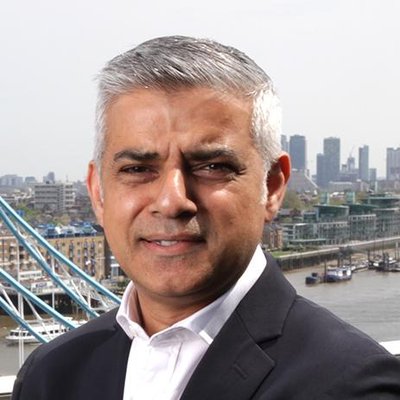
  • Sadiq Khan – 2019 Speech on the Causes of Crime

    Below is the text of the speech made by Sadiq Khan, the Mayor of London, on 15 July 2019.

    Thank you Debbie.

    And thank you Javaun.

    Not only for that introduction, but for the inspiring work you do at City Hall.

    Let’s show Javaun our appreciation.

    Thank you all for coming.

    And thank you to the Salmon Centre – who do brilliant work with young people – for hosting us today.

    Before I start, I’d also like to take this opportunity to mention several organisations and colleagues here today who are playing a vital role in our efforts to tackle violent crime.

    The NHS – from NHS England to UNISON’s London Ambulance service branch.

    Those from the sports world, such as:

    Football Beyond Borders. Fight for Peace. And Crystal Palace football club.

    Local government colleagues – from Councillors to youth workers.

    The voluntary sector, such as the Child Poverty Action Group and Barnardos.

    Faith leaders, representing London’s Churches, Synagogues, Mosques and Temples.

    Those working directly with young people, such as Ignite Trust, Dwaynamics, New Horizon Youth Centre, and those working in schools.

    And, of course, the police.

    I’d also like to mention the bereaved families who are present here this morning, as well as those campaigning on their behalf.

    I know it can be difficult to attend events like this.

    It can bring back distressing memories.

    But I want everyone to be a part of this conversation about how we tackle violent crime, and I’m grateful for you coming today.

    As Mayor, the safety and security of London is my top priority.

    Not a day passes without worrying about violent crime and its impact on Londoners.

    And it’s been an extremely difficult time for our city:

    Families and communities torn apart by senseless violence.

    People feeling fearful for themselves and their loved ones.

    And parents left grieving at the needless murder of their children.

    You can’t help but share the heartbreak of the grief-stricken families you meet.

    Or the worries of the fearful communities you visit.

    But these emotions must drive us to do all we can to prevent more tragedy.

    And lead us to be honest about the true causes of violent crime.

    For how can we expect to tackle this scourge if we’re not willing to be honest about the nature of the task at hand?

    The rise in violent crime across the country is a complex issue.

    One that’s been obscured by short-term thinking and political spin for far too long.

    This has prevented us from tackling the root causes head on.

    Well – it’s time to be honest.

    Honest about the scale of the problem.

    Honest about what’s actually happening away from the headlines.

    Honest about the role of families and communities.

    Honest about what the police can do – and what they can’t.

    Honest about what we can do from City Hall – and what we can’t.

    Honest about what the Government can – and should – be doing.

    And – ultimately – honest about what it will take – from all of us – to fix this problem for good.

    And this is what I want to talk about today.

    I love my job.

    I’m privileged to spend my day making our city a better, fairer and more inclusive place for all.

    But it’s also a job where you live and breathe the major challenges of a complicated, global city.

    I often lay awake at night with an overwhelming sense of apprehension:

    How many Londoners will be victims of violence in the coming days?

    How many women will have to suffer sexual assault or domestic violence?

    How many families will be left grieving due to bloodshed on our streets?

    And what more can we do to bring this suffering to an end?

    I believe it’s one of the responsibilities of my office to meet – if they want to – the relatives of those who’ve lost loved ones to violent crime.

    I don’t speak about this much.

    Because it’s personal.

    It’s private.

    But I think more of the stories of victims need to be heard if we’re going to be honest about this problem.

    And if we’re going to understand the true human cost of violent crime.

    So – today – I have the blessing of some brave parents to talk about the children they lost.

    Malcolm Mide-Madariola was only 17 when he was knifed in the heart outside a tube station last year.

    Malcolm was a high achieving student.

    He passed his diploma in Business Studies with distinction.

    And he enjoyed playing football for his school.

    Malcom was also known for his generosity and kindness.

    For putting his family and friends before himself.

    And not for causing conflict, but for being a calming influence amongst his peers.

    That fateful afternoon – when Malcolm was brutally killed – he was standing up for a friend who was being threatened.

    Dwayne Simpson – another young Londoner – was also stabbed to death.

    He lost his life in 2014.

    He was trying to defend a young boy who was being chased down the street.

    Dwayne didn’t have an easy start to life.

    And he received a criminal record for robbery at a young age.

    But when he came out of prison he turned his life around.

    He went to college, had a bright future, and secured funding to set up a local boxing club – now called Dwaynamics – to keep others away from criminal gangs.

    Due to the level of violence in his neighbourhood, Dwayne once told his mum that he didn’t know if he’d reach his 21st birthday.

    Tragically, he never did.

    There are so many more stories I could tell you.

    I don’t want any more parents, like Malcom’s, Dwayne’s or others, to have to go through the grief of losing a child in this way.

    Young victims struck down in the prime of their lives.

    So much talent wasted.

    And so much potential lost.

    It’s painful stories like these that explain why I never allow myself to forget the time I spend with grieving relatives.

    Because it motivates me every single day to ensure that other families don’t have to go through this kind of pain and anguish.

    I mentioned earlier that if we’re truly going to tackle this problem – which we must – we have to start with honesty.

    And honesty starts with looking at the facts.

    Violent crime in our city is clearly far, far too high.

    But how did we get here?

    Contrary to what some would have you believe; violent crime didn’t start rising in London the day I became Mayor in 2016.

    In truth, it’s been rising since 2014.

    With Serious Youth Violence rising from 2012.

    And the root causes go back even further than that.

    We should also be clear that this is not just a London problem.

    In fact, it’s been increasing at a higher rate in cities and regions across the country…

    …which is why violent crime has been on the front pages of local papers in the likes of Manchester, Birmingham and Bristol, as well as London.

    We should also be honest about the fact that our relentless focus on this problem in London since 2016 has started to make a difference.

    As the Met Commissioner, Cressida Dick, has confirmed – the situation is slowly improving.

    Serious incidents involving young Londoners is down by nearly 20 per cent compared to last year.

    And the number of homicides in the first six months of 2019 is 24 per cent lower than the same period a year ago.

    I don’t say any of this because I’m complacent.

    Far from it.

    Every single act of violence is one too many.

    And we clearly have a long way to go.

    Something which is intensely highlighted whenever we experience days of horrific, lethal violence on our streets.

    But if we’re going to continue to learn the right lessons, it’s critical that we’re honest and open when our approach is starting to show results.

    And to challenge the narrative that ‘nothing is being done’. Because it is.

    We also need to be honest about who the victims and perpetrators are.

    Here in London, one of the most diverse cities in the world, young black men make up 11 per cent of London’s youth population.

    Young black Londoners are over represented – as both victims and offenders.

    But it’s important to remember that the vast, vast majority of young Black Londoners make a positive contribution to our city – and 99 per cent are not involved in serious youth violence in any way.

    In other cities, like Glasgow, where the demographics are very different, it’s young white men who are more likely to be the perpetrators, as well as the victims, of violent crime.

    That’s because it’s not skin colour that determines your chances of being a victim or a perpetrator, but many other environmental factors – which I will come to later – such as disproportionate rates of poverty, unemployment and school exclusions.

    But this issue of disproportiality is impacting the wider black community, including those not directly involved – such as innocent Londoners like Malcolm, Dwayne and their families.

    This is something we must both acknowledge and seek to address.

    Not only in relation to youth violence, but more broadly.

    This means proactively tackling the barriers and inequality that black Londoners face.

    From housing and poverty to education and the work place.

    And – lastly – we must also be honest about the fact that youth violent crime is being fuelled by the drug trade.

    This means that as well as doing more to arrest and charge the criminals who are distributing and selling drugs, we must make people aware that taking drugs at middle-class parties is contributing to the bloodshed on our streets.

    Londoners must realise that there’s no such thing as a victimless crime.

    So what’s the solution?

    It seems like a cliché now, but I fundamentally believe that the mantra of the last Labour government still holds true:

    “Tough on crime, tough on the causes of crime”.

    This means working to tackle the underlying causes at the same time as understanding that the police will always have a huge, and vital, role to play.

    I want to put on the record – once again – my thanks to the brave men and women of the Met Police who are doing an incredible job under extremely difficult circumstances.

    As Mayor, I’ll continue to support our overstretched and under-resourced police to do everything they can to stem the bloodshed.

    And I’ll continue to defend the tactics they’re successfully using to drive down violence:

    Knife sweeps to get weapons of the streets.

    Intelligence-led drug raids and arrests.

    Highly visible policing in the areas worst affected.

    And targeted, intelligence-led Stop and Search.

    I know as well as anyone the negative impact that indiscriminate Stop and Search can have on communities.

    Done badly, it really can make it harder to tackle crime by pitting communities against the police and by discouraging key witnesses from reporting crime.

    Growing up in south London, I lost track of the number of times I was stopped and searched for what appeared to be for no other reason than the colour of my skin.

    And one of the things I remember being told as a teenager by my late dad was:

    “Always be respectful to the police. Never answer back. Don’t make eye contact. Don’t give them an excuse.”

    I know this experience has been shared by many black and Asian Londoners – regardless of their background or where they live.

    When I was a human rights lawyer, I was active in highlighting the disproportionate use of Stop and Search and – let’s face it – some examples of downright discrimination.

    But – since I’ve been Mayor – working with the police – we’ve been acting to end the very worst practices of Stop and Search.

    As part of this, we’ve rolled out Body Worn Cameras so that both the police and communities can have more confidence in their interactions.

    What we’ve found is that when it’s done professionally, properly and with evidence – Stop and Search can be effective in taking drugs and weapons off our streets, and therefore a vital tool we must use.

    So, again, I want to be honest – Stop and Search has increased under my Mayoralty.

    But that’s not to say it’s a panacea – in any way

    Despite what the candidates for the next Prime Minister want you to believe, we will never be able to solve this problem with Stop and Search alone.

    Another contentious issue is the number of police officers on our streets.

    There are some who criticise me for talking about police cuts in response to violent crime.

    They say that it’s somehow dodging responsibility or passing the buck.

    But it’s the truth.

    And as I’ve said today, we can’t tackle violent crime unless we’re honest about every aspect of it.

    Over 800 million pounds has already been stripped from the Met’s budgets since 2010.

    This is a total disgrace – and has created a huge amount of damage.

    You don’t have to take my word for it:

    The Home Office has acknowledged the link between police cuts and violent crime.

    Senior officers around the country have bravely spoken out for years.

    Even the Home Secretary has now said that police cuts have gone too far.

    And both Jeremy Hunt and Boris Johnson have finally acknowledged the same.

    It makes me so angry that for years the Prime Minister, the Chancellor and other Cabinet Ministers refused to admit what was clear for everyone else to see.

    And even angrier that – despite some warm words – the Government is still refusing to reverse all the cuts made since 2010.

    I’m doing all I can to fill some of the financial black hole:

    Investing a record amount from City Hall.

    Helping to set up a new dedicated Violent Crime Taskforce.

    And ensuring we have nearly 300 police officers focused on the areas worst affected, working alongside their colleagues.

    But – I have to be honest – I have one arm tied behind my back.

    Because the overwhelming majority of police funding comes from the Government.

    And I have no means of making up the gap.

    That’s why we desperately need the Government to reverse all the cuts and to put more police officers on the streets.

    And – on behalf of Londoners – I’ll continue to push the next Prime Minister to deliver on his promises to do just that.

    But while the Conservative candidates are trying to sound tough on crime – despite their record of supporting massive cuts – the truth is they’re desperately weak on addressing the underlying causes.

    The formula I mentioned earlier – “tough on crime, tough on the causes of crime” – requires both elements to happen.

    Being honest about violent crime means admitting that we can’t just arrest our way out of the problem.

    And it means admitting that there are certain environmental factors that can lead people to become more likely to commit crime.

    No one is born violent.

    Or born a criminal.

    But the truth is there is a complex and interrelated set of factors at play in people’s lives, homes and communities, which can alter the likelihood of someone taking the wrong road.

    These involve deep-rooted and engrained social and economic factors.

    Factors like the rise of child poverty.

    Like family breakdown and poor mental health.

    Like the lack of youth services across London.

    Like the negative impact of new forms of communication and social media.

    Like the link between drugs, gangs and violence – often involving organised criminal networks that span the globe, with operations the size of large companies.

    And like the fact that investment in public services and programmes designed to tackle these engrained problems have been decimated by a decade of austerity…

    This has removed the glue that holds our communities together, which previously prevented many people from slipping out of the system and into a life of crime.

    The depressing reality is that many young people coming of age now have only known austerity throughout their formative years.

    Their parents had insecure work and insecure housing.

    The help that used to exist for such parents – through programmes like Sure Start – has all but disappeared.

    Many of them were excluded from school and left to fend for themselves without any support.

    Their youth centres were closed down.

    And they’ve seen their job opportunities narrowed, and their aspirations curtailed.

    There is clearly a link between this perfect storm of cuts and regressive policies and the rise of violent crime since 2014, and serious youth violence since 2012.

    And, today, I’m releasing stark new analysis from City Hall, which truly lays bare the full extent of the relationship between serious youth violence and a whole range of socio-economic factors.

    It confirms that the areas of London with the highest rate of youth violence have:

    Higher rates of poverty and deprivation.

    A higher proportion of children in care.

    And lower levels of ‘positive life satisfaction’ amongst young Londoners.

    Yet there are still some who say that to acknowledge this link between poverty, deprivation and crime is somehow to excuse criminality and to let the criminals off the hook.

    I say this is dangerous rubbish.

    Not to do so is simply dishonest – and, unforgivably, allows violent crime to continue for another generation without addressing the underlying causes.

    The truth is:

    If we allow children to be brought up in deprived conditions.

    If we accept high rates of school exclusions.

    If we fail to tackle domestic and sexual violence.

    If we leave people in bad housing with a lack of employment and training opportunities.

    And if we decimate the very public services designed to support those most in need – as this Government has systematically done – then crime is much more likely to flourish.

    This is not to say that everyone growing up in these environments becomes a criminal.

    Or that we shouldn’t deal very toughly with those who break the law.

    Far from it.

    There is never any excuse for criminality – whatsoever.

    But any sensible society understands that it’s in our own interest to remove the conditions that allow criminality to thrive.

    We have to face the reality that:

    with hope at rock bottom,

    an absence of positive opportunities,

    and a worrying lack of worth being placed on people’s lives…

    …turning to criminality and gangs has become an all too easy route to satisfy the lure of gaining respect and money – however misguided that is.

    Gangs and violence is often the only sense of identity and belonging many young people know.

    And new and evolving forms of social media are being used to glorify violence and goad rivals.

    Earlier, I spoke about the actions the Met police is taking on violent crime.

    Well – we’re also doing some innovative work from City Hall to tackle the underlying causes.

    We’ve established the Young Londoners Fund and a range of youth and community initiatives.

    From the Culture Seeds programme to Sports Unite – which are providing new opportunities for young people.

    This includes plans to:

    Invest in projects during the summer holidays for thousands of young people at risk of becoming involved in crime.

    And funding initiatives to identify young people being exploited by county-lines drug trafficking, and then helping them to turn their lives around.

    We’ve also established the new Violence Reduction Unit.

    The VRU is working to reduce all forms of violence – including violence against women and girls – using what’s described as a public health approach.

    This is about using police enforcement first to contain and stop the spread of violent crime.

    And then tackling the root causes to prevent it from happening in the first place.

    This means intervening at critical moments in a young person’s life when they’re experiencing things that could increase the chance of them getting involved in violence.

    These adverse childhood experiences – as they are known – can be very varied.

    Take exposure to violence:

    A young person who’s been a victim of violence is much more likely to go on to commit violent crimes themselves.

    And according to the Met Police, 72 per cent of homicide suspects were previously victims of knife crime.

    That’s why – with the right intervention and support – we can prevent young people from taking the wrong road.

    To achieve this goal, we’re bringing together specialists from the NHS, the police, local government, probation and community organisations to understand the underlying causes of violent crime and to be ready to intervene when needed.

    We’re also getting better at sharing information between agencies and co-ordinating interventions.

    There’s no doubt we have a big task ahead.

    But we’re not starting with a blank piece of paper.

    We’re building on the public health approach set out in my Knife Crime Strategy two years ago.

    And we’re constantly learning from the successful implementation of a public health approach in Glasgow and other cities around the world – and adapting them in London.

    We’re also drawing on the excellent community practice already taking place in London – including by charities, councils and community groups here today.

    That’s why the first priority of the new director of the VRU, Lib Peck – who I’m pleased is here this morning – has been to listen to the Londoners most affected by violent crime.

    She’s looking at how we can use our resources to empower local communities to tackle the problem, rather than imposing a top-down approach.

    Our aim is to:

    Re-build trust between communities and agencies that can help.

    Join forces in spotting the risk factors in young Londoners that might lead to criminal behaviour.

    And then to focus our attention on what can actually make a difference before it’s too late.

    And, today, after much consultation with communities, I’m pleased to announce several projects that the VRU will be funding as part of this work.

    This includes:

    Creating a programme to reduce school exclusions.

    Providing support to young people affected by domestic violence.

    Supporting programmes for vulnerable parents to help create stronger families.

    Training youth workers.

    And establishing a Youth Action Group that will inform the VRU programme and advise City Hall.

    I know from my own life story the positive impact these kinds of programmes can have.

    Because I’ve seen how many young Londoners from deprived and disadvantaged communities often face key crossroads in their lives.

    And without the necessary support for them and their families at these crucial moments, they can take decisions and paths that not only harm their own future, but negatively impact the rest of society.

    Growing up on a council estate in South London, I saw first-hand how this can happen.

    I’ve witnessed these key moments in people’s lives.

    Some of my school friends were given opportunities to develop and gain confidence through family and community programmes, sport and other activities – whether it was boxing in the local club in Earlsfield or playing football at the weekends.

    Whereas others – with just as much potential – didn’t have the same positive influences in their lives, and were sucked into a life of crime and criminal gangs.

    I’ll never forget a visit to a prison when I was Shadow Justice Secretary.

    As I was walking around I heard one of the inmates shouting – “Sadiq” from behind a caged barrier.

    I looked over, and it was an old school friend.

    I remember that he was intelligent with potential to succeed, but, for a whole host of reasons, he’d taken some wrong turns in life and ended up in prison.

    There are no excuses for the crimes he committed.

    But I’m in no doubt that with the right support structure and opportunities growing up – his story – like so many others across London – could have been very, very different.

    So our approach amounts to a fundamentally different way of doing things to tackle violent crime in London.

    With more funding from City Hall than ever before.

    Greater collaboration with other public services and communities.

    And a more focused and evidence-based approach to addressing the underlying causes.

    But to be honest – we simply cannot do it on our own.

    So my message to the Government – and the new Prime Minister – is this:

    It’s time to acknowledge that this is a national problem that requires an urgent national solution.

    No more scratching around the edges.

    We need the Prime Minister to drive the implementation of a proper national strategy to:

    Tackle poverty and inequality.

    To support the most deprived communities in our country, and those who have been left behind.

    To invest in youth services and opportunities for young people.

    And to support our police with the long-term increase in funding they desperately need.

    So, let me end by saying this:

    The sad reality is the violence we’re seeing on our streets today is an appalling side-effect of increasing inequality and alienation caused by years of austerity and neglect.

    The lesson we must all learn is that you can’t cut public services, preventative measures and ignore the most vulnerable people in our country at the same time as keeping crime low.

    These things are fundamentally incompatible.

    What we’re seeing is a reflection of what happens following a nine-year experiment to shrink the state.

    The most depressing part of all of this is that our city – our nation – is being robbed of young people with so much potential.

    And – if we don’t change our approach as a country – we risk another generation taking similar paths to violence.

    The first step for the Government must be to stop viewing this problem in isolation, and to start being honest about the challenge we face.

    The next Prime Minister can’t continue to turn a blind eye to despair and the human cost of austerity.

    Of course, the police must be tough on crime.

    But we can’t expect them to bring down poverty and inequality too.

    This is not their job.

    It’s clear we need a strategy which is both tough on violence and tough on its causes.

    This is what we’re doing in London.

    But we need the Government to follow suit – we need their help.

    We’ve taken this approach as a country before – with success – and it’s possible to do so again.

    This means investing in young people.

    Investing in families.

    Investing in communities.

    And investing in our country so that we can expand opportunity for all.

    Thank you.

  • Jo Swinson – 2019 Speech on Becoming Liberal Democrat Leader

    Below is the text of the speech made by Jo Swinson, the Leader of the Liberal Democrats, on 22 July 2019.

    Thank you all so much.

    I am delighted, honoured, absolutely over the moon to stand before you as the leader of the Liberal Democrats.

    And as the first woman to lead our party.

    I joined this party when I was 17. And over the last twenty-two years, through all the ups and downs, the Liberal Democrats have felt like a family to me.

    Conferences, campaigns. By-elections from Brent to Brecon.

    Twelve years as an MP, three years as a Minister.

    Losing my seat. Winning it back again. And now standing here, as your leader.

    Ready, for the fight of our lives. You have put your trust in me not only to lead our party but also to lead and grow the bigger, open, liberal movement that our country so desperately needs.

    There are those out there who think liberalism has had its day, that it is somehow “obsolete”.

    But when I think of all the amazing people I met on the campaign trail and when I look around this room, I can feel the energy, the passion and the determination to fight for our values. Liberalism is alive and thriving.

    In the face of nationalism, populism, the catastrophe of Brexit.

    The two old parties have failed.

    Our party has been clear on Brexit from day one.

    We believe the UK’s best future is as members of the European Union, and that’s why, as your leader, I will do whatever it takes to Stop Brexit.

    It’s the Liberal Democrats who can lead the renewal our country needs. Together, we can build a better future.

    So, thank you for joining me – whether you are a lifelong Lib Dem or you have joined us for the first time today.

    I couldn’t have won this race without the love and support of Duncan, and my mum, or without the pure joy that Andrew and Gabriel bring me. And not a day went by on the campaign that I didn’t think about my dad. He’d have loved today.

    I want to thank my incredible campaign team and the many, many volunteers who have helped us over the last few weeks and months. And I want to thank my team in Westminster and in East Dunbartonshire.

    This is your victory too – it simply wouldn’t have been possible without all of you.

    We all know that running elections is a challenging business, so thank you to the returning officer and the staff at HQ who helped this election run smoothly – not least while fighting two Parliamentary by-elections!

    And I also want to thank Ed.

    Campaigns are hard. Constant scrutiny. Constant pressure. Endless travel. Endless hustings! So much time away from loved ones. I know Ed and I have both felt this, as we have toured the country from Aberdeen to Plymouth, and everywhere in between.

    Ed has carried himself with grace throughout – and never lost his passion, nor his sense of humour.

    I have a huge amount of respect for Ed – he was an exceptional minister in Government, and his environmental record is second to none. We have worked together for years and we agree on most things – which, I admit, may not have always made it the most exciting contest. Ed is a friend, and I am proud that we have both run clean campaigns, focused on the issues that really matter.

    Ed is a great talent for our party, and I can assure you that he will be absolutely central to our team.

    When I decided to stand for the leadership, I did so thinking the challenge facing our party would be a very different one. We were stubbornly on around 8% in the polls. New parties were springing up, courting Lib Dem votes. It seemed that the first task I would face as leader would be to ensure our very survival.

    But what a turnaround!

    Our best set of local elections ever. More MEPs than ever before. Opinion polls that put us in first or second place.

    The Liberal Democrats are winning again.

    For that, I pay tribute to my two most immediate predecessors: Tim for taking that brave decision in the wake of the referendum to say unequivocally that we are the party of Remain.

    And Vince for your leadership that has brought about our revival, for being the voice of reason in these unreasonable times. Vince, you have served our party and our country with distinction for decades. From your sage warnings before the financial crash, to your work rebuilding our economy as Business Secretary, you have been a constant source of wisdom. And as Leader of our party you have led a transformation in our fortunes. Thank you so much.

    I know that I have some pretty big shoes to fill – whether that’s Vince’s ballroom shoes, or Ming Campbell’s Olympic running spikes.

    Or Nick Clegg, who put the country first at a time of national crisis and showed that Liberal Democrats can make a real difference when we take power and put our principles into practice.

    Paddy Ashdown, who took us from an asterisk in the opinion polls to a credible political force. And Charles Kennedy, who was shouted down in Parliament for his principled opposition to the Iraq war, and whose sincerity endeared him to millions.

    And how much we all miss both Paddy and Charles today.

    When Theresa May called the general election in 2017, I knew in a heartbeat I had to stand and win East Dunbartonshire again.

    People had expressed their shock about the division and nastiness unleashed by the 2016 referendum, but sadly, I had seen it already.

    In 2014, Scotland’s independence referendum heralded a new politics, and not in a good way.

    Sandra, one of my local members, had a brick thrown through her window, which displayed a pro-UK poster. On the campaign trail, an elderly woman pulled up her coat sleeve to show the pro-UK campaign sticker on the inside of her wrist – such was her fear of wearing it on her jacket. A mob of hundreds outside the BBC, demanding Nick Robinson be sacked. Twitter trolls, fake news, demonising journalists, we saw it in Scotland first.

    And since then, that harsh, hostile politics has become the new normal.

    On 24 June 2016, I woke to that awful news that Leave had won the referendum. I turned on the TV and saw Nigel Farage, smiling smugly out of the screen, and I’ll never forget what he said – he boasted that they had won ‘without a bullet being fired’.

    I just felt sick. Just eight days earlier, Jo Cox had been shot and stabbed to death, just for standing up for what she believed in. Crass, insensitive. Farage just didn’t care. But we should not be surprised. This is the man who stood in front of that Breaking Point poster, deliberately designed to stoke division, fear and hatred in our communities.

    And I felt so gutted about the result. Not about the specifics of this or that EU institution. This was about who we are as a country. It feels like our liberal values are under attack.

    We champion freedom – but Brexit will mean the next generation is less free to live, work and love across Europe.

    We value openness – but Britain is in retreat, pulling up the drawbridge.

    We cherish equality, so that every individual can thrive: whoever they are, whatever their background, however they worship. But this is threatened too – that shocking picture of those gay women, bloodied, attacked on a bus. And the rise in Islamophobia and anti-Semitism, in the heart of British politics.

    Of course this is not confined to the UK.

    Trump’s attack last week on four members of Congress, all women of colour, started with him deploying the textbook racist ‘go home’ message. By the end of the week, we saw thousands of people whipped into fervour at a rally, chanting “Send her back”.

    Simply sickening, chilling. Echoes of a history we must not repeat.

    Ilhan Omar is a strong woman. She will not be cowed. But my heart breaks: for every immigrant who feels less safe, for every little girl of colour who feels afraid, for every person who feels less welcome in their own country.

    And I rage when Boris Johnson is more interested in sucking up to Donald Trump, than standing up for British values of decency, equality, and respect.

    Tomorrow, we expect Boris Johnson will take the keys to Number 10 – but he has shown time and time again that he isn’t fit to be Prime Minister.

    Boris Johnson has only ever cared about Boris Johnson. Just ask Sir Kim Darroch or Nazanin Zaghari-Ratcliffe.

    Whether it is throwing people under the bus or writing a lie on the side of one: Britain deserves better than Boris Johnson.

    And as for Corbyn’s Labour, I’ll make this quick. Any party that can’t decide where it stands on the biggest issue facing our country in generations, doesn’t deserve my time, and doesn’t deserve your vote.

    We need a Prime Minister who will rise to the challenges we face, not hide away from them.

    So I stand before you today, not as just as the leader of the Liberal Democrats, but as a candidate for Prime Minister.

    There is no limit to my ambition for our party and for our movement.

    I am ready to take our party into a general election and win it.

    And, if we want to be the party of government, we need to speak to the whole country, no matter how people voted three years ago.

    We need to reach communities from Norfolk to Newport, St Ives to Shetland, Gloucester to Gateshead.

    We need to start by being frank about what is going wrong – because the system we have isn’t working for people or for our planet.

    If you work hard and play by the rules, you should expect to earn a good wage, have a roof over your head and food on the table – that’s the social contract, and in the UK today it is fundamentally broken.

    We have families where both parents are working full-time on the so-called National Living Wage but who can’t provide the basics for their children – I’m talking about food, school uniforms, a warm home.

    And a planet that is at breaking point. We are the last generation who can act to stop catastrophic climate change, and yet the government is failing to take the urgent action we need.

    In the face of these challenges, it shouldn’t surprise us that people are attracted to the simple soundbites of Farage and Johnson – no matter how divisive, no matter how far removed from reality.

    If we want to defeat nationalism and populism, we need to give people an alternative vision for a richer, greener, safer and more loving country.

    Because when all that Farage and Johnson can offer is hate, we should give people hope.

    And our liberal movement to take on nationalism and populism must be inclusive.

    At one hustings, someone accused me of being a feminist first, and a liberal second.

    I answered how can you be a liberal, if you are not a feminist?

    You are not a liberal, if you do not recognise and unpick the structural inequalities in society that hold so many people back.

    As liberals, we want every individual to achieve their potential – and we are kidding ourselves if we think our society is a meritocracy.

    So I say to you, if you are tired of a politics that doesn’t include people like you, whether that’s because of your gender, disability or the colour of your skin, your accent, age, or who you love – then join us.

    This is a historic moment for our party. A moment of change.

    And the urgency of this moment in our country’s history needs us to think and act even bigger.

    Whether it’s Brexit or the climate crisis, we don’t have the luxury to wait fifteen or twenty years for us to rebuild our seats in Parliament.

    We need to work with others, in whatever form or shape, to keep growing that liberal movement, that force we need in British politics to take on nationalism and populism, and to deliver the future our children deserve.

    This is the time for working together, not the time for tribalism.

    And my message to MPs in other parties, who share our values is this:

    If you believe our country deserves better, that we can stop Brexit, that we can stop Johnson, Farage and Corbyn, then work with us, join us. My door is always open.

    And to everyone watching this right now.

    If you think that our country is headed in the wrong direction and you want to change that, you need to act too.

    Shouting at the television is not enough. You need to join us.

    If you want an economy that works for people and for our planet.

    If you want to build a richer, greener and safer future.

    If you want to keep our family of nations united.

    The answer is simple. Come, join us. Let’s do this. Let’s do this together.

    Let’s change politics so that we can transform our country.

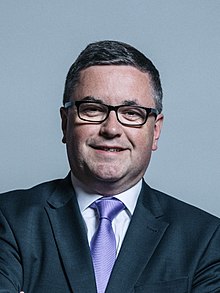
  • Robert Buckland – 2019 Speech at Swearing-In Ceremony

    Below is the text of the speech made by Robert Buckland, the Lord Chancellor, on 30 July 2019.

    Mr Attorney, I’d like to thank the Lord Chief Justice for what I was going to say was a generous welcome, a frank one is more accurate! But I genuinely very much look forward to working with him and indeed other members of the Bench here present and other judicial colleagues. I’d also like to thank my predecessor, David Gauke, a mere solicitor, for his deep commitment to supporting the judiciary and the rule of law.

    It is with the deepest sense of pride that I appear before you as Lord Chancellor. Many of us in this court will be familiar with the long and ancient history of the office, stretching back as it does to before the Norman Conquest. The names of some of the office holders echo down the generations: Becket, Wolsey, Thomas More, Francis Bacon. The names of others are, shall we say, somewhat more notorious, but we’ll draw a veil of charity over that.

    I am one of as yet very few people from Wales to have had the honour of wearing these robes. The most recent of my compatriots was Lord Elwyn Jones, appointed in 1974. As the Lord Chief Justice referred to, we share several similarities. First, he was, like me, born and raised in Llanelli, and second, he practised at the Bar, sat as a Recorder and was a Law Officer too. Finally, and perhaps most strikingly, Elwyn Jones took office in a minority Government at a time of great political uncertainty. He did go on however to serve as Lord Chancellor for five years, so let us see whether the similarities end there.

    When preparing for this ceremony it was reassuring to recall that I have had some practice – after all, I have borne direct witness, when I was Solicitor General, to four of my predecessors being sworn-in!

    Like them, I am before you today, and I have sworn an Oath that I will defend the independence of the judiciary and respect the rule of law. It is the safeguard of fairness and freedom in our society, providing for important principles like equality under the law and access to justice. And for me, this has far more than formal relevance.

    Indeed, I realise that this is the first time I have appeared in this Court from this side of the bench. It has been my privilege, first of all as junior counsel and then as a Law Officer of the Crown, to have appeared here from counsel’s row addressing a succession of appellate benches over the past 25 years or so. So for me, the law and its practice have dominated my adult life – I have lived it, which is why today is not just a political pinnacle, but a legal one for me too.

    What led me here? As a criminal barrister, I learnt about the power of advocacy; of giving those whose liberty was on the line a voice and ensuring that they were treated equally under the law, addressing hundreds of juries, prosecuting and defending in thousands of cases on the circuit and here in London too. The Wales circuit, the greatest circuit in the known world.

    As a Recorder in a Crown Court, I saw the benefit, but also the difficulty, in delivering justice effective and efficiently – which is why I take a particular interest in our courts and tribunals reform agenda.

    And, after election to Parliament by the people of South Swindon, which I have the honour to represent, and as the Solicitor General for nearly five years, I saw the importance of the separation of the branches of the State and the role of the law officers in ensuring that the Government respects and upholds the rule of law.

    The judiciary, as one of these branches, is rightly independent. Judges must be free to give their judgments without fear or favour. And as Lord Chancellor, I will endeavour to be sure-footed and steadfast in my solemn Oath to defend that hard-won independence.

    You, the judiciary, bring huge knowledge, experience and expertise to the judgments you make. I know that these can often be challenging and complex cases. And I want to thank you for the dedication and careful diligence with which you approach those decisions.

    This year we mark some important anniversaries. Today is exactly 70 years since the coming into force of the 1949 Legal Aid and Advice Act. Legal aid being provided for the first time in a structured way in certain cases in our higher courts, before the system further evolved to embrace a wider category of case. Having practised predominantly in cases involving criminal legal aid, I remain firmly of the belief that as far as possible the right support must be provided for those who need it, particularly where actions of the state directly affect the liberty, livelihood or welfare of the individual.

    And in that spirit, I believe deeply in the benefits of public legal education, something I focused on during my time as Solicitor General and something, I know, my Lord Chief Justice, you too are keen to promote.

    And as we mark the centenary of the Act of Parliament that enabled women to become lawyers for the very first time, we can be encouraged by the fact that more than half of trainee solicitors and barristers entering the professions are now women. That is great progress, but we still need to see more diversity, in all its forms, throughout the ranks of the professions and in the judiciary. And I will do all I can to promote this agenda in my time as Lord Chancellor.

    The evolution and endurance of this great office of state remind us where we have come from – how our rights and opportunities have evolved alongside an endurance of the essential principles upon which our justice system and society rely. The foundations of those institutions, I believe, are fundamentally strong and the roots of the principles and values we hold dear are deep.

    And I will work hard to maintain our international reputation for excellence we have when it comes to our legal services and our judiciary.

    Here at home, I want people to have confidence in a justice system that is fair, open and accessible, that protects victims and makes our streets safer – a justice system of which we can all be proud and whose values will and must endure.

  • Boris Johnson – 2019 Speech at the Manchester Science and Industry Museum

    Below is the text of the speech made by Boris Johnson, the Prime Minister, on 27 July 2019.

    Good morning everyone and thank you for joining me here in Manchester – in the heart of the world’s first industrial city.

    A city whose confidence and whose extraordinary future we can see in the changing fabric of the urban landscape, the mighty towers of Deansgate Square, last week’s extraordinary International Festival in Manchester.

    We can see it in the Christie, the hospital where the future of cancer treatment will be written at the vast new Paterson building, with new therapies saving the lives of people around the world for generations to come.

    This is not and has never been a city for negativity or navel-gazing.

    Indeed when the University of Manchester’s Andre Geim and Konstantin Novoselov said they were planning to extract a single-atom-thick crystallites from bulk graphite – I hope I’ve got that right – to give us the super-light super-strong wonder that is Graphene…

    I imagine that there were people who had no idea what difference it could make to their lives – and frankly people in this audience who have no idea,

    Yet today, we stand on the cusp of the Graphene age, with applications in everything from de-icing of aircraft wings to life-saving medicine.

    Their story of those pioneers is told here at the Science and Industry Museum, and it is one of the countless tales of Mancunian pioneers.

    Because time and again, when the cynics say something cannot be done – Mancunians find a way to get on and do it.

    And the centre of Manchester – like the centre of London – is a wonder of the world.

    But just a few miles away from here the story is very different.

    Towns with famous names, proud histories, fine civic buildings where unfortunately the stereotypical story of the last few decades has been long term decline.

    Endemic health problems. Generational unemployment. Down-at-heel high streets.

    The story has been, for young people growing up there of hopelessness, or the hope that one day they’ll get out and never come back.

    And in so far as that story is true and sometimes it is, the crucial point is it isn’t really the fault of the places and it certainly isn’t the fault of the people growing up there – they haven’t failed.

    No, it is we, us the politicians, the politics, that has failed.

    Time and again they have voted for change, but for too long politicians have failed to deliver on what is needed.

    Our plan now, this new Government I am leading, is to unite our country and level up.

    And I want to explain now what I mean by that.

    Now I am absolutely not here to tell you, Mr Mayor, that London has all the answers.

    Or that everywhere should be like London, or indeed like Manchester.

    Each place in our country has a unique heritage, a unique character, and a unique future.

    And indeed I recognise that when the British people voted to leave the European Union, they were not just voting against Brussels – they were voting against London too, and against all concentrations of power in remote centres.

    So I’m not here to say that Manchester or London are the template for other places.

    But I do believe there are lessons to be learnt from the success of cities like these.

    I remember London in the 1970s – how it was stuck in post-war gloom and doom.

    Between 1951 and 1981 the population actually declined – it went down 20 per cent it was so miserable.

    Yet, over the last twenty years, the capital of our country has been utterly transformed.

    London is today one of the world’s leading global cities (second only to Manchester!) – with the largest concentration of tech companies, artists, financial services, top class restaurants and all the rest of it.

    We can see the same thing happening now in this incredible city.

    So today I want to set out what I think are the basic ingredients of success for the UK, and for the places we call home: our cities or our towns, our coastal communities and rural areas.

    There are four things I think we need to get right.

    First is basic liveability. The streets need to be safe. There need to be enough affordable homes. There need to be jobs that pay good wages. There need to be great public services supporting families and helping the most vulnerable.

    Second thing – connections. That means great broadband everywhere, and it means transport. Inspiration and innovation, cross fertilisation between people, literally and figuratively, cannot take place unless people can bump into each other, compete collaborate invent and innovate.

    We need to literally and spiritually unite Britain, and that means boosting growth and bringing our regions together.

    The third thing that places need is culture. People love Manchester because of the fantastic arts and entertainment here, the football and music, the heritage and the creative industries that make it such a lively, wonderful place to live and work.

    We need to help places everywhere to strengthen their cultural and creative infrastructure, the gathering places that give a community its life.

    And finally, the fourth thing – places need power and a sense of responsibility, accountability.

    Taking back control doesn’t just apply to Westminster regaining sovereignty from the EU. It means our cities and counties and towns becoming more self-governing.

    It means people taking more responsibility for their own communities. London and Manchester have boomed partly because they have had Mayors – some better than others, I would say, but all with the power to speak for their cities, to bang heads together, to get things done.

    These are the lessons from London and Manchester. Liveability. Connectivity. Culture. And power.

    And the first condition of liveability is of course making our streets safer.

    Because recorded crime here in the North West is up 42 per cent. I think it’s time we got that down, and we will.

    Yesterday I met twenty new officers in Birmingham who are graduating after 15 weeks training. They will now join our brave and formidable police men and women who will be putting their lives on the line for our safety.

    But you want more of these policemen and women on our streets – and so do I.

    That is why I have committed to an extra 20,000 police officers over the next three years.

    Their recruitment will begin in earnest within weeks.

    And a new national policing board chaired by our dynamic new Home Secretary will hold the police to account for meeting this target.

    We will also give the police greater ability to use stop and search in order to drive a reduction in the violent crime that plagues our communities.

    But there is no point in arresting, charging and convicting criminals if we do not then give them the sentences they deserve.

    In fact the number of offenders with more than 50 previous convictions who were convicted but spared jail rose from 1,299 in 2007 to 3,196 in 2018.

    So we need to restore the public’s faith in our criminal justice system, by ensuring that people who repeatedly commit crimes are punished properly,

    and that means those that are guilty of the most serious violent and sexual offences are required to serve a custodial sentence that reflects the severity of their offence.

    And it is only by making the streets safer than you can create the neighbourhoods that people want to live.

    One of the biggest divides in our country is between those who can afford their own home and those who cannot.

    This is a long-term problem which all governments have failed to fix.

    So we will review everything – including planning regulations, stamp duty, housing zones, as well as the efficacy of existing Government initiatives.

    And, we will also emphasise the need, the duty, to build beautiful homes that people actually want to live in, and being sensitive to local concerns.

    And then of course to get great, great neighbourhoods, safe streets, allow people to own their own homes – we need great public services to make that possible.

    Which is why I have committed to delivering the funding promised to the NHS by the previous government in June 2018 and to ensure this vital money goes to frontline services as soon as possible.

    This will include urgent funding for 20 hospital upgrades and winter readiness.

    And proposals drastically to reduce waiting times for GP appointments.

    The NHS represents a sacred promise between the state and its citizens. A promise that says we will protect and support one another when we are at our most vulnerable and weakest.

    And the same should go for the other great service of wellbeing; particularly social care.

    Yet many people who have worked hard all their lives have had to struggle with the financial burden of care in their final years and been forced to sell their homes.

    The British people cannot understand why the health service is able to provide the same care for everyone, regardless of income,

    And yet the social care system cripples those with savings.

    For too long, I think politicians have simply kicked this can down the road. I want you to know, that can-kicking stops now.

    So I have promised to find a long term solution to social care once and for all.

    And that is what we will do – with a clear plan that will give every older person the dignity and security they deserve.

    At the same time, we will give every child the world class education they deserve.

    Which is why we will increase the minimum level of per pupil funding in primary and secondary schools and return education funding to previous levels by the end of this parliament.

    And we cannot afford any longer the chronic under-funding of our brilliant FE colleges, which do so much to support young people’s skills and our economy.

    We have a world class university sector; in fact it is one of the biggest concentrations of higher education anywhere in Europe right here in this city – why should we not aspire to the same status for our further education institutions, to allow people to express their talents?

    If you’re going to allow people to express their talents properly, then you need proper connectivity. It is absolutely crucial.

    Because if you are someone with a bright idea, or you are running a fantastic business, but you can’t get the connectivity you need and instead spend an eternity staring at that pizza wheel circle of doom on your computer screen – then you won’t be able to get your idea off the ground, you won’t be able to grow your business, and you won’t be able to find customers.

    And you can have all the talent in the world

    but if you are a young kid in a deprived town, with intermittent transport, and you can’t get to the places where the jobs are then you won’t have the opportunities you deserve.

    But people are able to meet each other, and compete with each other, challenge each other, spark off each other – around the water cooler or elsewhere –

    That’s when we get the explosion, or flash of creativity and innovation.

    That is what we are going to make that happen – not just here but across the country.

    First we’re going to invest in fibre roll-out and indeed we have just completed the build of a large fibre cable between Manchester and York alongside the Trans-Pennine railway route.

    This interconnects the Manchester and Leeds Internet Exchanges and strengthens the internet infrastructure for the Northern Powerhouse.

    I am delighted to see Jake Berry, sitting in the Cabinet, expressing this Government’s commitment to the Northern Powerhouse.

    And just now, before coming here, I met Barry White – at the Pomona site – part of a huge stretch of new tramline that will link up to Northern Powerhouse Rail.

    I want to be the Prime Minister who does with Northern Powerhouse Rail what we did for Crossrail in London.

    And today I am going to deliver on my commitment to that vision with a pledge to fund the Leeds to Manchester route.

    I want to stress it will be up to local people to decide what comes next, as far as I’m concerned that’s just the beginning of our commitment and our investment. We want to see this whole thing run.

    I have tasked officials to accelerate their work on these plans so that we are ready to do a deal in the autumn.

    It is the right thing to do, it’s time we put some substance into the idea of the Northern Powerhouse Rail, and that’s why we are here this morning.

    We want to inject some pace into this so that we can unlock jobs and boost growth.

    But I know people can’t wait and they want to see change faster. They want change now. It takes a while to build a railway, believe me.

    They want reliable, everyday services – so that the 18-year-old in Rochdale just starting out as an apprentice knows that they can get into Manchester for 8 o’clock each morning.

    So that people can get out and about in the evening, for a drink and a meal – boosting local businesses and growth.

    Services within cities, not just between cities. Services that mean people don’t have to drive. Services that don’t just give up at the end of the working day.

    So I am going to improve – with your help – the local services which people use every day. And I want that to start now with improvements that can happen in the short term.

    That means buses. I know a lot about buses, believe me. I love buses. I helped to invent a new type of bus, very beautiful that it is.

    I will begin as a matter of urgency the transformation of local bus services – starting here today in Manchester.

    I will work with the Mayor of Greater Manchester on his plans to deliver a London style bus system in the area under powers we gave to him – you Andy – in the Bus Services Act.

    I want higher frequency, low-emission or zero-emission buses, more bus priority corridors, a network that’s easier to understand and use.

    I want local partnerships between the private sector, which operates the buses, and a public body, which coordinates them.

    In London – where they have all these things – bus passenger journeys have risen by 97 per cent in 25 years.

    In other metropolitan areas – where they do not – it has fallen by 34 per cent over the same period.

    I think we can see the first results, here in Greater Manchester, within a few months.

    And I want the same for any other part of the country where local leaders want to do it.

    Good bus connections, good transport connectivity, is also vital to so many of the towns that feel left behind.

    We are also going to start answering the pleas of some of our left behind towns,

    And this might come as a surprise to some, but not everyone wants to live in one of our country’s great cities.

    Too many places – towns and coastal communities – that don’t feel they are getting benefits from the grown we are seeing elsewhere in the UK economy.

    Now I reject the ridiculous idea that everybody’s ambition is to get on their bikes and move to the city.

    Our post-industrial towns have a proud, great heritage – but an even greater future. Their best years lie ahead of them.

    So we are going to put proper money into the places that need it.

    We will start by ensuring there is investment from central government – by bringing forward plans on the UK Shared Prosperity Fund – and we have growth deals as well for Scotland, Wales and Northern Ireland.

    And we’re now going to have a £3.6 billion Towns Fund supporting an initial 100 towns. So that they will get the improved transport and improved broadband connectivity that they need.

    They’ll also get help with that vital social and cultural infrastructure, from libraries and art centres to parks and youth services: the institutions that bring communities together, and give places new energy and new life.

    Finally, of course, there is an even more radical shift that we need to make now to deliver this and I have seen myself the changes that you can bring about in towns and cities and regions, when local people have more of a say over their own destinies. A say over their own destinies.

    And I do not believe that, when the people of the United Kingdom voted to take back control, they did so in order for that control to be hoarded in Westminster.

    So we are going to give greater powers to council leaders and to communities.

    We are going to level up the powers offered to mayors so that more people can benefit from the kind of local government structures seen in London and here in Manchester.

    We are going to give more communities a greater say over changes to transport, housing, public services and infrastructure that will benefit their areas and drive local growth.

    And in doing so, we will see to it that every part of this country sees the benefits of the potentially massive opportunity that will come from Brexit.

    Over the last three years, we have tended to treat Brexit like some impending adverse weather event.

    I campaigned to leave the EU because I believed it was a chance to change the direction of the UK and make us the best country in the world to live.

    Leaving the EU is a massive economic opportunity – to do the things we’ve not been allowed to do for decades, to rid ourselves of bureaucratic red tape, create jobs, untangle the creativity and innovation for which Britain is famous.

    And we do not need to wait to start preparing to seize the benefits of that project.

    So we will begin right away to create the free ports that will generate thousands of high-skilled jobs – and revitalise some of the poorest parts of our country.

    We will begin right away on working to change the tax rules to provide extra incentives to invest in capital and research

    We will double down on our investment in R&D, we will accelerate the talks on those free trade deals

    And prepare an economic package to boost British business and lengthen this country’s lead as the number one destination in Europe for overseas investment.

    At the same time we will unite and level up across our country – as I say, with infrastructure, better education and with technology.

    And in so doing, making our whole nation not just an alright kind of place to live, or a better-than-average place to live but the greatest place on earth. The greatest place to live, to raise a family, to send your kids to school, a great place to start a business, to invest and to have a life –

    And where better than Manchester, where better than the Science and Industry Museum, to set out our ambition for doing so.

    Here today we can look back at centuries of progress, the inventions, ideas and breakthroughs that came out of Manchester, came out of the North, came out of the United Kingdom and shaped the world we know today.

    I just want you to imagine, if we were to reconvene here 30, 40, 50 or more years hence, what treasures this museum might hold then.

    I’m absolutely certain there will be displays celebrating the dawn of a new age of electric vehicles, not just cars or buses, but electric planes, made possible with battery technology being developed now in the UK.

    You will see tributes and dioramas commemorating the men and women who use new gene therapies to cure the incurable and achieve the impossible.

    Here in Manchester, home of the world’s first passenger railway, with Stephenson’s rocket behind me, we should remember that there were people back then who thought that the whole project should be abandoned as a danger to public health, because the speeds that were being proposed would be intolerable for the human body.

    So I can imagine in the future of this wonderful museum there will exhibits recording not only the breakthroughs in bioscience, here in Manchester and elsewhere that allow the UK to lead the world in producing genetically modified crops – blight-resistance potatoes will feed the world.

    But also a memorial to the sceptics and doubters, complete with bioengineered edible paper, with which they were forced to eat their words.

    I don’t blame the doubters and the sceptics, but all I will say, is that the evidence is behind us, there’s Stephenson’s rocket behind us, we’re sending rockets into space – we will expand our space programme as well.

    I don’t blame the doubters and the sceptics, it’s a natural human instinct, but time and again, they have been proved wrong.

    I think they will be proved wrong again.

    If we unite our country, with better education, better infrastructure, with an emphasis on new technology, then this really can be a new golden age for the UK.

    Time and again Manchester has shown the UK that anything is possible. Time and again this extraordinary country has delivered the same message to the world. That’s what we are going to do once more.