Tag: 2017

  • Anna Soubry – 2017 Speech on Brexit

    Below is the text of the speech made by Anna Soubry, the Conservative MP for Broxtowe, in the House of Commons on 26 June 2017.

    It is a great honour and pleasure to follow the right hon. Member for Wolverhampton South East (Mr McFadden). I agree with much of what he said and, indeed, with the excellent speech from my right hon. Friend the Member for Preseli Pembrokeshire (Stephen Crabb). As ever, I also endorse much of what was said by the right hon. Member for Leeds Central (Hilary Benn).

    People right across this House, and indeed this country, have to be utterly realistic and honest about this and accept that everything has now changed. In my constituency, I found very few angry remainers—I know there are many angry remainers, but it tends to be a London-based thing, and the results in London for the Conservative party say it all. However, in my constituency, there are very few angry remainers. What there is is an acceptance of the result and almost a sense of resignation—it is not agreement, and it is not a welcome. That is especially true of constituents who run their own businesses, who did not welcome the result and who do not welcome the fact that we are leaving the European Union. However, people have accepted the referendum result, and their message and their plea now is that we should come together and get the best deal we can in the national interest.

    That is why I am so pleased that we are already seeing changes in the approach being taken, and many other hon. and right hon. Members have expressed that view. I repeat much of what was said from the Opposition Front Bench about the need to change the tone. Those on the Government Front Bench need to wake up and understand that things have now changed. The rhetoric has to be dropped. The slogan that no deal is better than a bad deal is nonsense, and it has always been nonsense. The British people know that, and that is why they voted as they did on 8 June.

    Nobody likes somebody being very smart, but I am going to have to say this: I stood up in this place—on this spot—on two occasions, and I warned hon. and right hon. Friends of the dangers of ignoring the 48%, and the young in particular. The expression I used was that many young people who voted remain believe an older generation have stolen their future, and the result was there on 8 June. I hate to have been proved right, but I was. Look at the demographics of the results; they almost mirror those from the referendum. The older people were, the more likely they were to have voted Conservative; the younger ones—obviously, in my terms, that is anybody under the age of about 50—did not. More people under the age of 45 voted Labour in the election.

    Of course it is profoundly ironic that people who voted remain then voted for the Labour party and the Leader of the Opposition—a man who gave remain a very lukewarm seven and a half out of 10. If I may say so, Opposition Members, too, now have to wake up and accept the reality of the situation, because they have promised many of these people things they may not be able to deliver on. When they talk about the customs union, the single market and immigration, they now have to say what they mean, and they should stop being cowards about it: if they think they want the benefits of the customs union, they should have the—I nearly said a very unparliamentary word—courage to stand up and say that. They should make the case, and make the argument, just as we now need to make the case and make the argument about the benefits of immigration.

    Finally, this is a great country. We still have a very good economy. We have a great and bright future. That is not because we are leaving the European Union, but despite it. We now need to make sure we have the education and training to seize those opportunities.

  • Pat McFadden – 2017 Speech on Brexit

    Below is the text of the speech made by Pat McFadden, the Labour MP for Wolverhampton South East, in the House of Commons on 26 June 2017.

    This Queen’s Speech shows the extent to which Brexit will dominate our legislative agenda. We have the repeal Bill, and Bills on trade, customs, fisheries, agriculture and more. No matter what outside events may say, we now have a single-purpose Government and a single-purpose legislative programme. The Prime Minister called the election because she said that she could not get Brexit through Parliament. How ruefully she must reflect on that statement now. Before she said that, the article 50 Bill had gone through this House with a majority of 372 votes. The other place had not tried to block it. Given that that legislation went through, the election was never called because Parliament was blocking Brexit. It was called because the Government wanted to cash in on big opinion poll leads.

    The backfiring of that political gamble has left the Prime Minister leading a minority Government, dependent on the deal with the DUP that was announced today, at an immediate cost of £1.5 billion. When I was a child, we had a programme on television called “The Six Million Dollar Man”. I thought that that was a lot of money at the time, but the DUP has guaranteed far more than that for each of its representatives in this House. We enter the most important negotiations the country has conducted since the war weakened, not strengthened, with the authority of the Prime Minister shot to pieces, her Cabinet divided and her position sustained by nothing other than fear of another election.

    As these negotiations begin, we are reminded of a salutary fact. We have discussed Brexit far too often in the past year as though it was something Tory Ministers could define—we have heard that it would mean this, it would mean that and it would mean the next thing—but this is actually a negotiation between the two parties around the table; it is not a Tory wish list.

    When the Secretary of State was asked yesterday what he thought of Mr Barnier, he gave an insight into the level of preparation undertaken when he said, “He’s very French.” With that level of preparation, it is perhaps no wonder that the first demand, repeated four times in the article 50 letter—that the future trade negotiations take place alongside the article 50 negotiations—did not survive the first meeting on the first day. That reminds us that this is a negotiation between two parties, not a Tory wish list.

    In substance, what does that really boil down to after the election? As other colleagues have said, the thing that should go is this mantra that no deal is better than a bad deal. No deal would be damaging for the European Union, but as the past and perhaps future Chairman of the Foreign Affairs Committee said, it would, relatively speaking, damage us more. We know the consequences: tariffs on cars and bigger tariffs on agricultural produce. It would make it impossible to have no hard border, at least in economic terms, between Northern Ireland and the Republic of Ireland. It is, in relative terms, a gun held to our heads, not to the European Union’s head.

    Ultimately, this negotiation will come down to a choice for the Prime Minister: will she do as the Chancellor wants and put economic interests first, or will she put the hard Brexiteers first? In other words, will it be the national interest first or nationalism first? That is ultimately the choice that faces us.

  • Crispin Blunt – 2017 Speech on Brexit

    Below is the text of the speech made by Crispin Blunt, the Conservative MP for Reigate, in the House of Commons on 26 June 2017.

    This is a defining Parliament for Britain’s place in Europe and in the world, and Parliament will fail in its duty if it does not preside over the United Kingdom leaving the European Union, and doing so in as good order as our 27 partners and negotiators enable. This entails the historic amount of legislative activity announced in the Queen’s Speech to convert the acquis communautaire into UK law. Much of the work will be detailed and technical, and it is important that we get it right, but hopefully it will not be controversial. However, the diplomatic activity that we undertake in the coming months and years will be important for Britain’s future and must not play second fiddle to our legislative challenge.

    I welcome the commitment in the Queen’s Speech that Ministers will ensure that the UK’s leading role on the world stage is maintained and enhanced as it leaves the European Union. Few in this House, regardless of their position on the referendum question that we resolved a year ago, want the United Kingdom to be anything other than open and internationalist in its outlook. Now more than ever, the Foreign and Commonwealth Office will have a central role in maintaining our networks and alliances, and in developing our political, security and economic ties around the world.

    In the previous Parliament, the Foreign Affairs Committee, which I chaired, as I hope to do again in this Parliament, repeatedly called for the FCO’s capacity to be boosted. Immediately after the referendum, we reported that there was an urgent need substantially to increase

    “the funding available to the FCO commensurate with the enormity of the task it now faces.”

    Since then, the Department for Exiting the European Union and the Department for International Trade have been created, but the diplomatic task required in all European capitals and beyond will outlast the withdrawal process and is discrete from the trade agenda. I reiterate that just protecting the FCO budget is wholly inadequate for the task in hand.

    Events will continue to develop with serious consequences for our interests. The current crisis in the Gulf and the potential for a hot or protracted cold war on the Arabian peninsula threaten the stability and prosperity of key British partners and have undermined the effectiveness ​of the Gulf Co-operation Council. There are calls for the United Kingdom to play a role as a third party in the implementation and monitoring of any future agreement. We should do so, particularly by offering our expertise in auditing any counter-terror financing measures, and indeed on what the ground rules might be for political Islamists to take part in developing democracies. That would be in the interest of all parties. It is vital that we are ready and properly resourced to carry out such work if requested.

    Inevitably, I would like to be able to say much more in this debate about: our current operations in Syria; the future of liberated territory in Iraq and Syria; the authorisation of the use of force; a new sanctions regime as we leave the European Union; our involvement in the European Union’s future common foreign and security policy, and common security and defence policy; and, importantly, possible Brexit transition options. Finally, I want to make the point that 2020 would be a suitable date for the state visit of President Trump, which was notably omitted from the Queen’s Speech. I regret that people will now have to look at my website to see the full text of the remarks I had hoped to make in this debate.

  • Suella Fernandes – 2017 Speech on Brexit

    Below is the text of the speech made by Suella Fernandes, the Conservative MP for Fareham, in the House of Commons on 26 June 2017.

    Our great country is about to embark on a journey of national self-determination, rediscovering and building our identity as a great trading nation, an outward-looking nation and a nation that has every reason to be confident in its future. The Government have rightly rejected staying in the customs union and the single market. If we are to realise our aspiration of becoming a self-governing, global-facing democracy, we cannot remain signed up to the single market or customs union.

    Contrast the Government’s position with what we have heard from the shadow Secretary of State today: confusion and an illogical position, as he stated that membership of the customs union remains on the table. Contrast that with what the shadow Attorney General said this weekend: we will not necessarily be able to control our immigration policy. But that was what people voted for last year. If Brexit is to mean anything, it must mean control of our borders, our immigration policy and our trade.

    Why has the customs union not served our purposes? There are four main reasons. First, it has not served our country’s trade interests. The EU has a laughable track record on securing trade agreements with the more flourishing parts of the world. Since 1999, our trade deficit with the EU has grown from £12 billion to £71 billion. That is in contrast to our growing trade surplus with the rest of the world—we have gone from a deficit of £4 billion in 1999 to a surplus of £34 billion in 2016. There is therefore an amazing opportunity for our country to forge trade links with the rest of the world, rather than being reliant on the declining market of the EU.

    We will be able to strike new trade deals only if we are out of the customs union. The alternative is impossible because of the common commercial policy, which binds all its members. The Labour manifesto says that it wants to

    “work with global trading partners to develop ‘best-in-class’ free trade and investment agreements that remove trade barriers and promote skilled jobs and high standards”,

    but that is simply not possible as long as we are members of the customs union.

    Secondly, EU protectionism harms British consumers. We are denied products such as cheaper sugar from developing states because protectionist tariffs favour ​less efficient farmers in northern Europe. The EU customs union has pushed up the price of food and clothes by an estimated £500 a year for each household. By opening the market and lowering barriers to entry for new competition, prices will fall and consumers will benefit. Choice and quality will increase as producers will no longer have a captive market or a monopoly.

    Thirdly, the EU’s trade agreements have focused too much on goods. When 80% of our GDP is from services, we need to realign our trade policy. Lastly, the customs union severely penalises farmers and workers in developing countries when they export to the EU. The tariffs are unequal and discriminatory, and that really is an enemy of fair trade. If we want to, we can develop more opportunities to support African countries to become more sustainable and to industrialise.

    In conclusion, Brexit is not a crisis to manage, as the Opposition would have us believe. It is a golden opportunity for us to seize. I implore them to get behind the Government and support Brexit in all its forms.

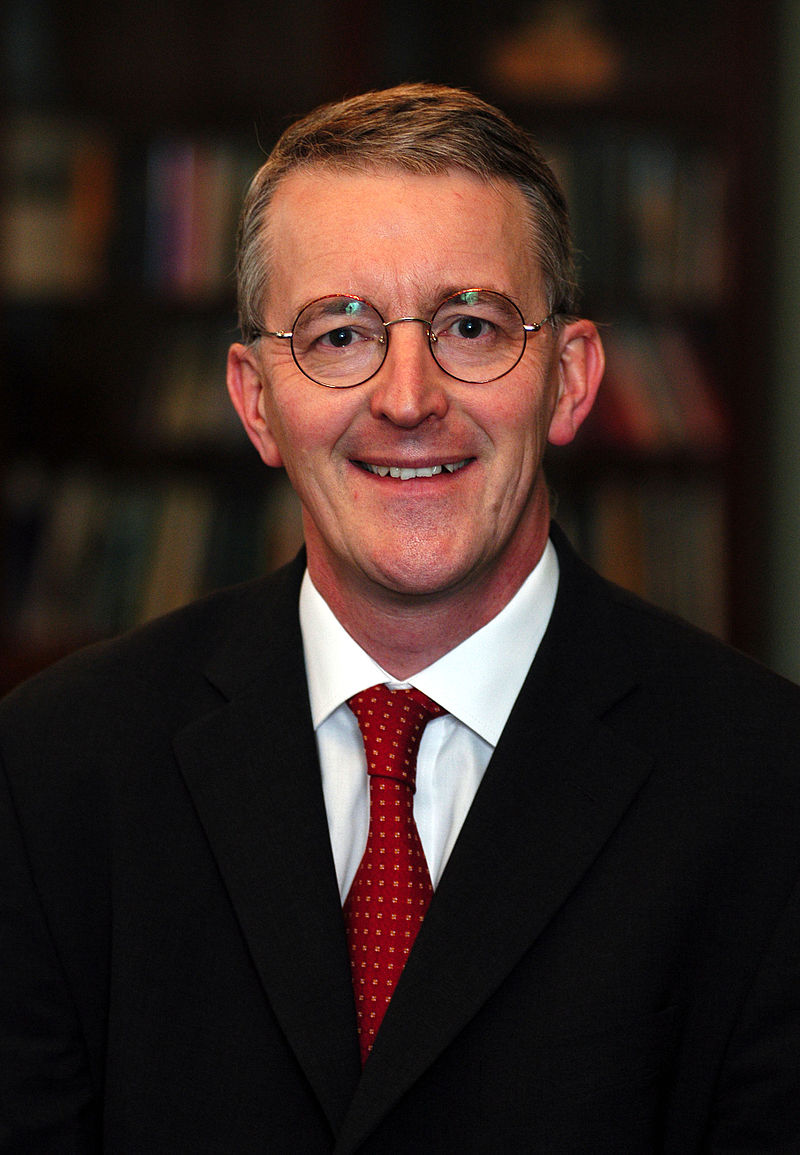
  • Hilary Benn – 2017 Speech on Brexit

    Below is the text of the speech made by Hilary Benn, the Labour MP for Leeds Central, on 26 June 2017.

    The Secretary of State was characteristically confident about the Brexit negotiations when he spoke, but even he would recognise that things are rather different now. Following recent events, the Prime Minister is clearly weaker than she expected to be, and the EU is stronger than many thought it would be. The non-appearance of the “row of the summer”, referred to a moment ago, reminded us all about who is actually in control of these negotiations as we listen to the ever-insistent ticking of the article 50 clock.

    In her speech on Wednesday, the Prime Minister promised that she would seek to “build a wide consensus” on Brexit. The words sound good, and our divided nation certainly does need to come together on this great matter. But let us be frank—the last 12 months have been spent doing anything but forging a consensus. Quite the contrary: we got no running commentary when people asked about the Government’s negotiating objectives; it took a recommendation of the Brexit Select Committee to get the Government to publish a White Paper; there was resistance to the need for transitional arrangements, although now almost everyone recognises that these will be necessary; and there was an initial reluctance to concede that Parliament will have the final say on any deal. I would like to think that this new commitment has come because Ministers have reflected on their behaviour and listened, but I suspect that it has much more to do with the outcome of the general election and the chaos that has ensued.

    Like my right hon. and learned Friend the shadow Secretary of State, I cannot understand why we continue to hear the argument that the Government would be prepared to leave the EU with no deal, given that we now know that the Chancellor of the Exchequer does not agree with that proposition. He made that absolutely clear in his interview a week ago, when he talked about leaving with no deal as

    “a very, very bad outcome for Britain”.

    He is right. I gently say to Ministers that the chances of this Parliament’s agreeing to leave the European Union with no deal have melted away, along with the Government’s majority. The question is how this consensus can be built. I echo what the right hon. Member for Preseli Pembrokeshire (Stephen Crabb) said a moment ago.

    I welcome the greater detail announced today on EU nationals, although the families affected still need answers to questions, including about what the new simplified system will look like, the cut-off date and how family members, including children, could join them. Earlier, the Prime Minister said:

    “After the UK has left the European Union, EU citizens with settled status will be able to bring family members from overseas on the same terms as British nationals.”

    In responding, will the Foreign Secretary confirm that in such cases, after March 2019, that will involve meeting an income threshold? That is what British citizens currently face. On the oversight of the arrangements and the rights of UK nationals, which we must of course protect, I personally think that a court made up of UK and European judges would be a very sensible way forward.

    But let us be clear—the issue of EU and UK nationals is meant to be the simplest, to be sorted out at the start of the negotiations, compared with all the fundamental questions so important to the future of our economy and our country: our trading relationship with the EU; access to the single market; how we will ensure that we continue to have the skills we need for economic growth; public services and the tax revenue that we need to pay for those services; the future of co-operation on foreign policy, defence, security, the fight against terrorism and science and research. On that latter issue, I do not understand Ministers’ reluctance simply to say that they wish to remain part of the Horizon 2020 programme.

    Given that the Government’s central aim—indeed, it is the aim of the Opposition—is to maintain tariff-free and barrier-free trade, I also do not understand why the Government have turned their backs on the simplest means of achieving that, which is to remain within the customs union, especially as that would solve the problem of the border between Northern Ireland and the Republic. Perhaps the Government have chosen this path because in practice they know that Britain will probably remain a member of the customs union for some time to come. The Chancellor’s speech at the Mansion House gave a strong indication of that.

    No one I have met, Ministers apart, believes that negotiating a new trade and market access agreement will be completed between now and next October. The best that we can look to is an agreement in principle to negotiate such a deal and then transitional arrangements that will cover the period from the end of March 2019 to the conclusion of these negotiations. In the meantime, as the Secretary of State knows, all this uncertainty is profoundly bad for business confidence, as is talking about leaving with no deal.

    On the great repeal Bill, Parliament faces a huge practical task in transposing the regulations and decisions, but Ministers need to understand, in the spirit of the new consensus, that the House will enable that to happen only as long as it is crystal clear that no attempt will be made to remove, erode or undermine any of the workers’ rights, consumer protection or environmental standards that the British people have come to value.

    Despite what the Prime Minister said, we have to be honest and recognise that there is not currently a consensus on the type of Brexit that we should seek, so the Prime Minister’s commitment will have to be given form through the Government’s actions. I urge Ministers to start demonstrating this new approach to the House, the British people and British businesses. I urge them to listen to the voices of the many and not just those who shouted loudest for leave during the referendum. I urge them to be flexible in their approach. Since we all want tariff-free and barrier-free trade, why do they not at the very least leave the prospect of remaining in the customs union on table, given that the Secretary of State—with, as he described it, his characteristic honesty—said on Sunday he is pretty sure but not certain that he will get the deal that he wants? I also urge Ministers to understand that, as my right hon. and learned Friend the shadow Secretary of State said so eloquently, if their confidence is misplaced, the unhappiness—indeed, the anger—that gave rise to the referendum result will return as people discover that the things that they were promised fail to materialise.

    If Ministers do all the things I have mentioned, we may find a way forward. If they do not, this Parliament, be it long or short, is going to be very hard work for them. That is not where we should want to be, given the scale of the task that we face as a country as we all seek to get the best deal that we can on behalf of all the people who so recently sent us here.

  • Stephen Crabb – 2017 Speech on Brexit

    Below is the text of the speech made by Stephen Crabb, the Conservative MP for Preseli Pembrokeshire, in the House of Commons on 26 June 2017.

    Thank you, Mr Deputy Speaker, for calling me to speak so early in the debate. It is a pleasure to follow the hon. Member for North East Fife (Stephen Gethins); I enjoyed listening to his speech and appreciate the spirit in which he made it. I think that many Members on both sides of the House will wish to return to the theme of working together pragmatically. It will certainly inform some of the remarks that I make in the next few minutes.

    I have not taken many of the opportunities that we have had in this House over the past 12 months to speak about Britain’s withdrawal from the European Union. In part that is because I had campaigned strongly for us to remain and on referendum day found myself part of the minority in the country, and certainly in my constituency, which voted strongly to leave. I have spent part of the past year trying to understand what drove that vote, not least in my constituency and across Wales, and how the debate is evolving. I have one or two observations to make.

    First, I have been deeply impressed by the pragmatic and assiduous approach taken by my right hon. Friend the Secretary of State over the past 10 months. I think that it has been appreciated on both sides of the House and, judging by what people on the continent tell me, deeply valued in the discussions with our European counterparts. Listening to his remarks today, and to those of the shadow Secretary of State, the newly right hon. and learned Member for Holborn and St Pancras (Keir Starmer), I was struck by the fluidity and room for manoeuvre that exists in both Front-Bench positions.

    That fluidity might reflect different shades of opinion within the Government, and certainly within the Opposition, on how we should take forward the Brexit negotiations, but it also reflects a level of pragmatism. Listening to both Front Benchers this afternoon, I asked myself whether a pragmatic centre ground might be emerging around which Members on both sides could coalesce. One of the things I took from the general election campaign is that the country remains hopelessly divided on this issue. If we in this Chamber are to do anything over the next two years, it should be to provide some kind of leadership that helps bring the country together.

    Alex Chalk (Cheltenham) (Con)

    No tariffs; frictionless trade; the best possible access to, but not membership of, the single market—is not the truth that there is vanishingly little difference between the strategic priorities of those on both Front Benches? Does my right hon. Friend agree that it would help our constituents, and indeed our negotiators, if all parties were to make that clear?​

    Mr Deputy Speaker (Sir David Amess)

    Order. Before the right hon. Gentleman replies, I appeal again to the House, because the more interventions there are, the less time there will be for the very many Members who wish to speak, including those who wish to make their maiden speeches.

    Stephen Crabb

    I am grateful to my hon. Friend for that intervention, because I was about to say that I was also struck by how similar the strategic objectives of both Front Bench positions actually are. The outlines are emerging of what I hope will be a pragmatic, sensible Brexit deal that can command widespread support across the country. The Government and the Opposition are united in wanting to prioritise jobs and prosperity and to protect workers’ living standards and the interests of our business community—I do not think that there is any dispute about that. However, getting an outcome that actually delivers that will require more direct honesty about some of the trade-offs that need to be made.

    In particular, we need to be far more honest with the public about the trade-off between maximising access to the single market—that is not the same thing as retaining membership of the single membership—so that we can enjoy as many of the benefits of those trading relationships that we currently enjoy, and the posture we adopt towards future EU workers wishing to come to this country. We had a good discussion earlier today about the offer being made to EU citizens currently living here, and we debated it at some length. Again, the point needs to be made that, despite the acknowledgment that clearly important details have yet to be resolved, we have the outlines of a deal with the European Union, which is a big step forward. If we carry the same spirit of pragmatism and generosity that has informed that offer into our negotiations on future EU workers, while also keeping an eye on the economic importance of people coming from overseas to work in this country—we do not debate that enough—there is a deal to be done that will give us a good chance of maximising trading access to the single market and protecting our economic interests as far as possible.

    Over the past year I have looked at different economic sectors and asked myself which group of EU workers, whether in the NHS, the road haulage industry or our agri-food sector, should not be here in a post-Brexit scenario. The truth is that one cannot put one’s finger on any significant group of EU workers currently here and contributing to our economy about whom we would say, “It would be better for this country if they weren’t here, and actually we should design a Brexit that will stop them coming here.”

    By focusing on our economic interests and being honest with the public—there is a particular challenge on my side of the House to us to debate this with our constituents in a more direct and honest way than we have perhaps been willing to do in recent years—I think we can move some of the opinion in the country that undoubtedly opted for Brexit a year ago because people thought that that was the change button for reducing immigration. The truth is that it is not, and we need to be honest about that.

    I am optimistic, having listening to my right hon. Friend the Secretary of State and the shadow Secretary of State, that there is a pragmatic and sensible centre ground that can emerge and around which we can ​coalesce, that will command the support of the business community—which at the moment feels that its voice needs to be louder in the Brexit discussions—and trade unions, and will reassure British workers and give us the best possible chance of enhancing, not diminishing, our prosperity in the years ahead.

  • Jim Fitzpatrick – 2017 Speech on Grenfell Tower Fire

    Below is the text of the speech made by Jim Fitzpatrick, the Labour MP for Poplar and Limehouse, made in the House of Commons on 26 June 2017.

    I am grateful for the opportunity to raise the tragic Grenfell Tower fire and to put on record a number of questions for the Government, most of which are on the record already, especially after the statement today by the Secretary of State for Communities and Local Government. I will not be covering the awful response by the authorities locally to the survivors—that is well documented—but I do want to pay tribute to all those who tried to help, volunteers and officials, and to my new hon. Friend the Member for Kensington (Emma Dent Coad), who has performed admirably in the service of her constituents.

    Because I was in the London fire brigade for 23 years and I am a former Fire Minister, I have been asked to make many comments on the fire. I need to say that I am no fire prevention expert. I was an operational fireman for 13 years and an elected Fire Brigades Union lay official for 10 years, acting as a safety rep, as well as performing other duties. I am therefore no expert, but I know many who are—those who work with the all-party group on fire safety rescue and in the field of firefighting, fire protection and fire prevention, and of course I had my departmental officials, who were also very knowledgeable.

    Armed with that assistance, experience and common sense, there are many questions that I want to ask or, rather, that I want the public inquiry to address. It would be very helpful if the Minister gave the House any details of when more might be known about the inquiry, which will face many questions on many issues. They include: the source of the fire; the rapidity of the spread of the fire; the catastrophic failure of all the fire protection features that the building should have contained; the building’s refurbishment, including the original specifications and the materials actually used, as well as the quality of the work and the finish; the monitoring of building control; the inspection of the completed job by the council, the designated responsible person and the fire service; and the recommendations of the Lakanal House coroner’s inquiry concerning a review of building regulations guidance in Approved Document B and the role of the Building Regulations Advisory Committee. I will finish with the question of the Government’s decision not to equip new schools with fire sprinklers, reversing the upgraded advice that they should have sprinklers, published in 2008.

    Mr Speaker, you may know—I would be surprised if you did not—that my original bid was for an Adjournment debate this week on the subject of the governance and accountability of registered social landlords, or housing associations, but obviously matters changed shortly after and I retendered my bid. When Labour came to power in 1997, there were 2 million homes below the decency threshold in our social housing sector. We tackled that challenge aggressively, spending billions on new kitchens, bathrooms, double glazing, central heating and security. The de-municipalisation of much housing brought many pluses in recent decades, but also problems. Those wider problems need examination, as we have heard with the many challenges in recent days, in connection ​with how we provide social housing in the UK. How we address that question sets the perspective for how we approach the build, maintenance and safety of those homes—the kind of housing I lived in for decades.

    In respect of the questions I want to raise, I would like to thank Jon O’Neill OBE of the Fire Protection Association, London fire brigade, Sir Ken Knight, Ronnie King, the Fire Brigades Union, the Commons Library and the Lakanal House coroner for their assistance with material for my remarks this evening. Let me take the questions in turn.

    The police have apparently identified the source of the fire as white goods on the fourth floor. London fire brigade and the Electrical Safety Council, along with my hon. Friend the Member for Hammersmith (Andy Slaughter), who I am pleased to see in his place, have been leading the Total Recalls campaign for such faulty white goods—dryers and the like—and for improvement in their design. Initially, the Government seemed well disposed to this. I am pleased to see the Minister for Policing and the Fire Service in his place, as he responded so positively and has had a number of meetings with colleagues about the campaign, which would have required compulsory product registration at the retail point of sale and better manufacturer marking of goods to allow them to be identified after a fire and traced back to source. One person has already died and there have been a series of serious fires, including one in a Hammersmith tower block. Fortunately, the fire integrity of that block was better than at Grenfell. If the Minister responding to the debate has any information about the campaign from his colleague, I would be very pleased to hear it.

    As for the fire integrity of the Grenfell block, it is difficult to know where to start. The public inquiry, assisted by fire investigators, forensic specialists from the Metropolitan Police Service and the Building Research Establishment, will pronounce on the cladding and the insulation, why the fire spread so rapidly and what other contributing factors there may be. There will be questions not only about the fire resistance specification of the material used for the refurbished block, but about whether the architect’s original plan was followed, as well as the finish. Those, along with compartmentalisation and correct fire doors, are the basis of the “stay put” policy about which so much has been written. I am sure that the public inquiry will look again at that as well.

    The failure of all the cladding panels tested since the fire, allied to the Secretary of State’s startling information from Camden earlier today about fire doors, indicates a complete systemic failure. Many decent local authorities and housing associations are under scrutiny in relation to how they manage their housing stock, and many good construction companies are as well. Questions about monitoring, building control, “responsible person” and fire brigade sign-off, and the rules that we put in place, will all be issues for the inquiry, as well as the question of how contracts are delivered, including the system of subcontracting.

    Alex Chalk (Cheltenham) (Con)

    Will the hon. Gentleman give way?

    Jim Fitzpatrick

    I am sorry. I hope that the hon. Gentleman will forgive me, but I have declined intervention requests from other colleagues. If I have time at the end of my speech, I shall be happy to give way.​

    I am not sure whether the Minister will be able to comment on any of those building matters. The fire service, as inspector and enforcement body, should offer us some peace of mind, but reports of a 25% reduction in both domestic fire brigade inspections and fire safety audits do not inspire confidence, and perhaps the Minister will be able to comment on the accuracy of those reports. I am pleased to see that the Minister for Policing and the Fire Service is present; he may be able to advise his hon. Friend.

    Of course, the Lakanal House fire, the six people killed there and the coroner’s inquiry were a wake-up call, as was the Shirley Towers fire in Southampton, in which two firefighters, Alan Bannon and James Shears, died. Much happened as a result, but not all the lessons were learned. The key lesson for the Government was about the reviewing of the building regulations guidance on fire, as contained in Approved Document B. That is the architects’ bible: it says what is allowed and what is required. The guidance needs to be reviewed regularly to take into account not only new methods of construction, but new materials being used. They are changing all the time, as we can see from the structures and the skyline around us. Approved Document B gives details of when and where sprinklers should be used, and what types of fire alarm system should be mandatory for which types of building.

    I welcomed the Secretary of State’s announcement earlier today, and the convening of his new independent expert panel of advisers. As I said to him at the time, the Building Regulations Advisory Committee has historically been central to such work. The last published review of Approved Document B appeared in 2006. Her Honour Frances Kirkham, CBE, the Lakanal House coroner, wrote to the Secretary of State in 2013 saying, very simply,

    “It is recommended that your Department review”

    Approved Document B. The Secretary of State’s response, in the same year, was:

    “We have commissioned research which will feed into a future review of this part of the Building Regulations. We expect this work to form the basis of a formal review leading to the publication of a new edition of the Approved Document in 2016/17.”

    As the Minister will know, however, BRAC has not met for five years, although a succession of Ministers assured us that work was in hand.

    As late as last Thursday, when I asked the Prime Minister what assurance she could give

    “that the review of building regulations and Approved Document B, as recommended by the Lakanal House coroner, will be carried out as urgently as possible, and that the Building Regulations Advisory Committee, which has historically undertaken this work, will be recalled as a matter of urgency”,

    she replied:

    “That work is indeed in hand.”

    She also said:

    “Obviously, that will be one of the issues that the public inquiry will want to look at.” —[Official Report, 22 June 2017; Vol. 626, c. 178.]

    As I said then, that work does not need to wait for a recommendation from a public inquiry. Can the Minister assure us that the new independent panel of experts will undertake it as a matter of urgency? I should be grateful if he could give us a timeframe for its work programme.​

    The final matter that I want to raise, before making some concluding remarks, is Government policy in respect of fire sprinklers in new schools. In 2008, the Minister of State at the Department for Education upgraded the guidance for local education authorities and school governors, and changed the wording on what was expected. He wrote, and the Department published, the following:

    “It is now our expectation that all new schools will have sprinklers fitted. Any exceptions to this will have to be justified by demonstrating that a school is low risk”—

    for instance, single-storey or brick-built. The Government have changed this guidance, and the now revised version from the Department for Education states:

    “The Building Regulations do not require the installation of fire sprinkler suppression systems in school buildings for life safety and therefore BB 100”—

    that is, building bulletin 100—

    “no longer includes an expectation that most new school buildings will be fitted with them.”

    The regulations that it cites are 11 years old. They are overdue for revision, and at least one coroner’s inquiry has requested that they be reviewed. I would be grateful if the Minister could confirm press reports at the weekend that the Government were reversing this and going back to the original guidance from 2008.

    Sprinklers save lives, and they are not as expensive as some detractors claim. The situation is not helped by TV adverts, dramas and films incorrectly portraying buildings being flooded whenever a sprinkler head activates. It is only the sprinkler directly above the fire that sprays water, not those across the whole building or even a floor. We know from reports that the cost of fitting sprinklers to Grenfell Tower would have been £200,000. If we divide that by 79—you do the math, Mr Speaker—it works out at just over £2,531 per death, and that figure is likely to come down as more deaths are confirmed.

    To conclude, we need to know the terms of reference of the public inquiry as soon as possible. We need to know who is to preside over it, when it will be expected to report and when we can expect interim reports on urgent life safety matters. We need to know when the independent panel will be convened, and when we can expect building regulations and the guidance in Approved Document B to be published.

    It has been said often over the past 12 days that the Grenfell Tower fire could have been prevented at best, or at least mitigated. The deaths could also have been prevented, at least in the main. It is right to acknowledge—there has been controversy over this—that the Lakanal House inquiry did not order the retrofitting of all high-rise blocks with fire sprinklers. What it did say was:

    “It is recommended that your department”—

    the Department for Communities and Local Government—

    “encourage providers of housing in high-rise residential buildings containing multiple domestic premises to consider the retrofitting of sprinkler systems.”

    It was not quite an instruction, but coming from a coroner’s inquiry, it was a pretty forceful recommendation.

    There will be harrowing accounts to come at the public inquiry and/or the inquests. Historically, the vast majority of safety legislation has been written after a ​tragedy or disaster, and that includes fire regulations. Health and safety regulations, which are much derided in the media, save lives but they also cost money. The message from the Secretary of State’s statement today is that there will be a cost to local authorities and registered social landlords, and we need assurances of Government support that will pay to keep our people safe. The full lessons of Grenfell Tower will not be clear until after the public inquiry, but it is clear that actions need to be taken now. The Government have a responsibility. Ultimately, the buck stops here in Parliament with all of us, and we need to commit the support that is needed in communities across the country now.

    Jim Shannon (Strangford) (DUP)

    I commend the hon. Gentleman for bringing this matter forward. There are 32 high-rise blocks of flats in Northern Ireland, plus other private high rises as well. Does he think that the independent panel of advisers should include Northern Ireland in its investigation, so that all parts and regions of the United Kingdom can benefit from its findings?

    Jim Fitzpatrick

    I am grateful to the hon. Gentleman for raising the matter of the devolved Assemblies, because there are different practices in different countries. I commend the Welsh Assembly in this regard. Ann Jones, a former colleague of mine in the Fire Brigades Union, has piloted legislation through the Assembly, and Carl Sargeant, the Minister, has been on to my office today. The legislation in Wales is different from ours; it has improved and is more protective. I know that there are different procedures in Northern Ireland and Scotland as well. A lead from the Westminster Government would be very welcome, and I look forward to hearing what the Minister has to say. My last word is to commend the emergency service workers—firefighters in the main—who risked life and limb to try to help. If we give them the resources and the kit, they will do the job, and we stand in admiration of them, as always.

  • Philip Hammond – 2017 Mansion House Speech

    Below is the text of the speech made by Philip Hammond, the Chancellor of the Exchequer, at the Mansion House in London on 20 June 2017.

    My Lord Mayor, Ladies and Gentlemen, I am delighted to be able to deliver this speech here today.

    And I am immensely grateful to the City Corporation for hosting us so soon after the cancellation of last Thursday’s banquet in the wake of the appalling tragedy which was then unfolding in West London.

    We have suffered a series of shocking events in the past few weeks: the Westminster, Manchester, London Bridge, and Finsbury Park terrorist attacks; and the terrible fire at Grenfell Tower.

    This fire was an unimaginable tragedy. My thoughts are with all those in the community who lost loved ones, and with the many people who are still suffering in hospital, and those who have lost their homes.

    Our immediate focus is to ensure that survivors have everything they need in terms of housing, clothes, food and other essentials.

    But we must, and will, also get to the bottom of the failure at Grenfell, and take decisive action to ensure nothing like this ever happens again.

    As Her Majesty the Queen observed on Saturday, none of us can escape the sombre mood that these events impose.

    But we should be cheered by the resilience of our communities and the strength of our shared values which shine through the dark clouds wherever such tragedies and outrages unfold.

    And even in the face of such events, the business of government must go on: managing our economy in challenging times, improving our public services, taking the steps that will deliver on our ambition of an economy that truly works for everyone, and, of course, the huge, complex and vital task of negotiating the end of our membership of the European Union, and the terms of the partnership which we want to see replace it.

    We have much work to do, and we’re determined to get on with it.

    And we have a solid foundation on which to build.

    Our economy has come a long way since the dark days of 2009.

    Last year we grew faster than any other major advanced economy bar Germany, business has created 3.4 million more private sector jobs, the deficit is down by three-quarters – and below 3% of GDP, while at the same time we have lowered income tax for 31 million people and taken 4 million out of income tax altogether through raising thresholds, with more to come.

    Inequality is at its lowest in 30 years, and the poorest households have seen their wages rise more since 2010 than in any other country in the G7, thanks to the introduction of the National Living Wage, adding £1,400 to the annual income of those in full-time work on minimum wage.

    A record of which we are proud.

    But that’s enough of our past achievements!

    I’d rather talk about the future.

    Travelling the country in the general election campaign I’ve had hundreds of conversations reflecting the challenges and issues that people face in their daily lives: fears about job security; about wage levels; the need for good schools for their children; a well-functioning health service; decent care for elderly relatives; or access to the housing market.

    And it’s clear, as many of my colleagues have noted, that Britain is weary after seven years of hard slog repairing the damage of the great recession.

    When I took office last year, I reset the fiscal rules, recommitting to achieving fiscal balance, but doing it over a longer timescale, creating additional fiscal space to support the economy, if needed.

    But we must not lose sight of the unchanging economic facts of life.

    Funding for public services can only be delivered in one of three ways: higher taxes; higher borrowing; or stronger economic growth.

    And only one of those three choices is a long-term sustainable solution for this country in the face of the inexorable pressure of an ageing population.

    Higher taxes will slow growth, undermine competitiveness, and cost jobs, so the government will remain committed to keeping taxes as low as possible.

    And higher discretionary borrowing to fund current consumption is simply asking the next generation to pay for something that we want to consume, but are not prepared to pay for ourselves, so we will remain committed to the fiscal rules set out at the Autumn Statement which will guide us, via interim targets in 2020, to a balanced budget by the middle of the next decade.

    Stronger growth is the only sustainable way to deliver better public services, higher real wages and increased living standards.

    I thought we had won that argument.

    But I learned in the General Election campaign that we have not.

    That we must make anew the case for a market economy and for sound money.

    The case for growth.

    And we need to explain again how stronger growth must be delivered through rising productivity.

    That means more trade, not less: maintaining our strong trade links with European markets after we leave the EU, as well as seeking out new opportunities for trade and investment with old friends and fast growing emerging economies alike.

    It means the UK remaining open to the talent, the ideas and the capital that have driven the success of our economy in the past, and will drive it in the future.

    But it also means addressing the domestic weaknesses that have plagued us: under investment, both public and private; inadequate skills; and regional disparities.

    This government has a plan to address all three.

    The National Productivity Investment Fund starts to address under-investment in economically productive infrastructure; T-Levels will overhaul our provision of technical education; and the Industrial Strategy will tackle regional economic disparity.

    Lifting productivity growth by even one quarter of one percent a year, on a sustained basis over 10 years would add £67 billion to GDP – that’s £2,400 for every household in the UK.

    Productivity is the elixir that raises incomes and living standards, and it must be a national priority to make every learner more skilled; every worker more productive; every business more competitive; and every public service more efficient.

    That is the route to higher wages, higher quality public services, and a brighter future.

    Productivity in the private sector, as in the public, is driven by investment.

    One of my immediate priorities is making sure government is doing all it can to facilitate access for firms, large and small, to patient capital, to allow them to grow and bear the fruits of the flow of innovation that is pouring out of UK universities.

    The European Investment Bank, and its offshoot, the European Investment Fund, have been an important source of funding for infrastructure investment and for growth businesses.

    I want that access to EIB funding to continue while we are members of the EU on equal terms, so I am engaged with EIB and will provide the assurances it needs to sustain the flow of EIB and EIF funding to UK businesses and projects.

    And to ensure that finance continues to be available after Brexit, alongside these discussions with the EIB I can also announce I am expanding the support available to capital funding in the UK.

    For infrastructure projects, we will broaden the range of the UK Guarantee Scheme by offering construction guarantees for the first time.

    And we’ll consider other credit enhancement tools, such as first loss guarantees, to reduce the financial risk that complex projects face.

    To support the venture capital funds that are so important to growth and innovation in our economy, the British Business Bank will raise the limits on the amount it can invest in venture capital funds from 33% up to 50%.

    And it will be able to bring forward some of the £400m additional investment that I announced at the Autumn Statement.

    In the long-term, it may be mutually beneficial to maintain a relationship between the UK and the EIB after we leave the EU.

    And we will explore the options together.

    But we cannot take chances. So we will be prepared, in case we do not maintain that relationship.

    Because investment is crucial for the economic future of this country, and we will not let Brexit uncertainty slow us down.

    Investment is critical to securing economic growth; And so is trade.

    The British public know that.

    A recent poll showed that 90% of respondents believe that free trade is positive for our economy, regardless of how they voted in the referendum.

    We are not about to turn inward. But we do want to ensure that the arrangements we have in place work for our economy.

    Just as the British people understand the benefits of trade – so, too, they understand how important it is to business to be able to access global talent and to move individuals around their organisations.

    So, while we seek to manage migration, we do not seek to shut it down.

    Let me quote you from our manifesto, (just in case, by chance, any of you didn’t read it):

    Britain is an open economy and a welcoming society and we will always ensure that our British businesses can recruit the brightest and best from around the world.

    Britain has benefited from globalisation.

    But we must not turn a blind eye to the growing tide of hostility to it in parts of the developed world.

    To counter that, we must push for a new phase of globalisation, to ensure that it delivers clear benefits for ordinary working people in developed economies.

    To date, much of the thrust of globalisation has focused on the removal of barriers to trade in goods.

    “Globalisation 1.0” if you like – expanding the opportunities for major goods exporters like China and Germany to sell their products to a larger market.

    But our economy is 80% services.

    And many of our areas of greatest competitiveness are in services – for example, finance and insurance, ICT and communications.

    So for the UK to be able to share fairly in the benefits of globalisation, we need to lead a global crusade for liberalisation of services.

    And we must employ that logic in our Brexit negotiations, to agree a bold and ambitious free-trade agreement with our EU counterparts that covers both goods and services.

    Let me talk in a bit more detail about what we want to achieve from those Brexit negotiations.

    The Prime Minister’s Lancaster House speech in January set out clearly the arrangements that the UK would like to agree, built around a comprehensive trade agreement in the context of a deep and special partnership that goes much wider than trade.

    But we recognise that this is a negotiation, and our negotiating counterparts, while broadly sharing our desire for a close ongoing relationship, will have their own priorities.

    So we must be clear about ours.

    I have said before, and I remain clear today, that when the British people voted last June, they did not vote to become poorer, or less secure.

    They did vote to leave the EU.

    And we will leave the EU.

    But it must be done in a way that works for Britain.

    In a way that prioritises British jobs, and underpins Britain’s prosperity.

    Anything less will be a failure to deliver on the instructions of the British people.

    So, how do we achieve this “Brexit for Britain”?

    Firstly, by securing a comprehensive agreement for trade in goods and services.

    Secondly, by negotiating mutually beneficial transitional arrangements to avoid unnecessary disruption and dangerous cliff edges.

    Thirdly, by agreeing frictionless customs arrangements to facilitate trade across our borders – and crucially – to keep the land border on the island of Ireland open and free-flowing.

    To do this in the context of our wider objectives will be challenging.

    It will almost certainly involve the deployment of new technology.

    And therefore we’ll almost certainly need an implementation period, outside the Customs Union itself, but with current customs border arrangements remaining in place, until new long-term arrangements are up and running.

    And finally, by taking a pragmatic approach to one of our most important EU export sector – financial services.

    Let’s be honest, we are already hearing protectionist agendas being advanced, disguised as arguments about regulatory competence, financial stability, and supervisory oversight.

    We can have no truck with that approach.

    But we acknowledge that, as Britain leaves the EU, there are genuine and reasonable concerns among our EU colleagues about oversight of financial markets that will then be outside EU jurisdiction, but which provide a vast proportion of economically vital financial services to EU firms and citizens.

    We saw just such a concern articulated in the EU’s proposal on supervision of CCPs last week.

    We must, and we will, engage with all genuine concerns.

    And we must be flexible and pragmatic in responding to, and resolving them.

    While never losing sight of the principal purpose of the regulatory and supervisory regimes: to ensure financial stability and to protect taxpayers from having to step in to deal with failure.

    Getting this right will be critical to the future success of the British economy.

    But it will also be critical to the future success of the EU economy.

    Remember, 60% of all EU capital markets activity is executed through the UK.

    UK banks provided more than £1.1 trillion of cross-border lending to the rest of the EU during 2015.

    And almost half of all British private equity investments in 2014 went into companies across mainland Europe.

    The financial ecosystem that underpins this activity is large and complex. And critical mass is important.

    Let me be clear about this.

    Fragmentation of financial services would result in poorer quality, higher priced products for everyone concerned.

    And when we talk about complex financial products like derivatives – we need to remind ourselves that these seemingly esoteric instruments are crucial to facilitating everyday commercial and domestic transactions across our continent, allowing households to obtain fixed rate mortgages, airlines to hedge their fuel costs, and farmers to have certainty over the price they’ll get for their produce.

    Avoiding fragmentation of financial services is a huge prize for the economies of Europe.

    And I believe we can do it if we approach the challenge with three simple principles.

    First, we will need a new process for establishing regulatory requirements for cross-border business between the UK and EU. It must be evidence-based, symmetrical, and transparent. And it must reflect international standards.

    Second, cooperation arrangements must be reciprocal, reliable, and prioritise financial stability. Crucially they must enable timely and coordinated risk management on both sides.

    Third, these arrangements must be permanent and reliable for the businesses regulated under these regimes.

    The industry needs confidence in the structures if it is to provide the financing needed to underpin growth in the real economy.

    In the UK. And across the European Union.

    The future of our economy is inexorably linked to the kind of Brexit deal that we reach with the EU.

    And I am confident we can do a Brexit deal that puts jobs and prosperity first, that reassures employers that they will still be able to access the talent they need, that keeps our markets for goods and services and capital open, that achieves early agreement on transitional arrangements, so that trade can carry on flowing smoothly, and businesses up and down the country can move on with investment decisions that they want to make, but that have been on hold since the Referendum.

    The collective sigh of relief will be audible.

    The benefit to our economy will be huge, in established sectors like manufacturing, the car industry, financial services, and pharmaceuticals; in emerging areas like biotech, and fintech; in the housing market; in the services sector; in the travel industry, in companies, large and small, right up and down our country, employing, between them, millions of people.

    Our departure from the EU is underway.

    But ensuring that it happens via a smooth pathway to a deep and special future partnership with our EU neighbours, one that protects jobs, prosperity, and living standards in Britain, will require every ounce of skill and diplomacy that we can muster.

    Yesterday was a positive start.

    It will get tougher.

    But we are ready for the challenge.

    And confident that we can deliver, for British jobs; British businesses; and British prosperity.

    Thank you. I’m now pleased to hand over to the Governor of the Bank of England, Mark Carney.
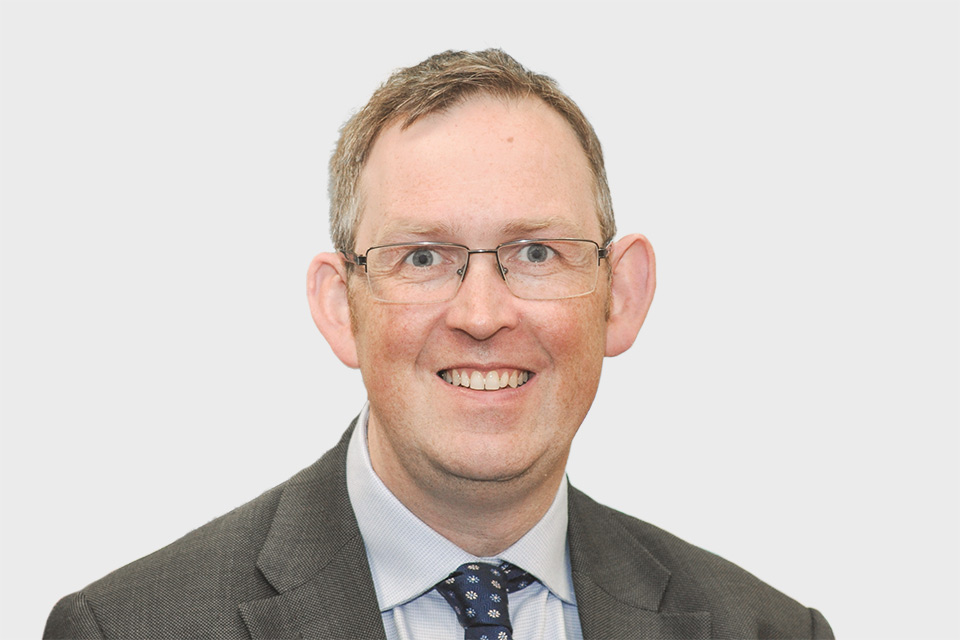
  • Paul Maynard – 2017 Speech on HS2

    Below is the text of the speech made by Paul Maynard, the Parliamentary Under Secretary of State for Transport, on 22 June 2017.

    Introduction

    It’s an honour to open today’s conference.

    It’s an honour; not least because of where we are this morning.

    In Birmingham, the city where a thousand-strong HS2 team is getting the project off the drawing board and into reality.

    On Curzon Street, just over the road from Birmingham’s original station — opened in 1838, abandoned in the 1960s, and which we want to open again for HS2.

    And in Birmingham Science Museum, whose halls show what this city has already achieved for science, technology and transport — and point to what it will achieve in future.

    But if it’s an honour to be here, today’s conference is for me also a special occasion for one more reason.

    New role and progress on HS2

    This is the first speech I’ve delivered in my new job — as Minister for HS2.

    For most of the past year, I’ve been working as Minister for Rail.

    Taking responsibility for everything to do with our railways.

    Except for HS2.

    A year ago, that division made sense.

    Back then, the HS2 Bill for Phase One — the stretch from Birmingham to London — was a concept that had yet to be approved by parliament.

    The route for much of the second phase of HS2 — from Crewe to Manchester and Birmingham to Leeds — had yet to be announced.

    The procurement for the main engineering works, the rolling stock, and the franchise for operating the railway — all had yet to be triggered.

    Back then, HS2 was still in the planning phase.

    A distinct, stand-alone project.

    But today, things have moved on.

    Those plans are now starting to be implemented.

    On sites up and down the route, the first enabling works are underway — we’ve begun the utility diversions, land clearance and environmental surveys.

    We’ll shortly award the multi-billion-pound contracts for the main engineering works.

    In April, we began the hunt for designers for 3 brand new stations, at Curzon Street, Birmingham Interchange and London’s Old Oak Common, as well as the expansion of London Euston.

    We’ve launched the competition to design, build and maintain HS2’s fleet of trains, and we expect to award the contract in 2019.

    By the end of this year, we expect to deposit the bill for the stretch of track beyond Birmingham and on to Crewe.

    And we have announced our preferred route for much of the sections from Crewe to Manchester and Birmingham to Leeds.

    Yet today is the start of our integrating this part of the future rail network into the rest of the passenger network.

    Because, most significantly of all, I am delighted that today we have announced the shortlist of bidders for the West Coast Partnership franchise — the franchise to operate services both on HS2 and the existing West Coast Line.

    One of the 3 consortia in the final round, each with a vast range of skills and much experience, will deliver that integration with us.

    One of these bidders will take on the role of running both the West Coast Main Line and HS2 simultaneously.

    Their responsibility — for integrating HS2’s services as part of the existing national rail network — mirrors my responsibility, in my new job, to oversee both our existing railways and HS2, and to ensure the successful integration of the two.

    The uniting of the HS2 brief and the rail brief under one minister for the first time should be taken as a signal.

    Of how far HS2 has come.

    But also of the government’s expectations for this project.

    That HS2 should not be a railway apart, or a better, faster alternative to the classic rail network.

    But rather for HS2 to join the existing network, to expand and enhance it.

    The case for HS2

    That vision of HS2 as an enhancement of the existing network has always been integral to the case for the project.

    And it’s a case still worth making.

    Take that old station over the road.

    Twelve years after it was built, the West Coast Main Line was completed.

    For the first time it became possible to take a direct train from London to Glasgow.

    That year, the UK population was 15 million people.

    That year, those 15 million people made 60 million rail journeys.

    It’s an impressive figure.

    But it’s small fry compared to the numbers our rail network caters for nowadays.

    Today we have a population of 65 million people.

    In 2015 we took 1.7 billion rail journeys.

    And the numbers keep going up, year on year.

    Already it can be a struggle to get a seat at peak times across much of the network.

    If we do nothing, the situation will get worse.

    Benefits of HS2

    But when we’ve built HS2, our railways will be able to carry an extra 300,000 people every day.

    It will be a radical upgrade to Britain’s rail capacity — and not just for the places that HS2 will directly serve.

    Yes, there’s the 8 out of 10 of Britain’s biggest cities that will be directly connected by HS2.

    And the many more places that will be served by HS2 trains running onto the existing network.

    But it’s because we’re treating HS2 as an addition and enhancement to our existing network that the benefits of HS2 won’t be restricted to its passengers – or even just those who live near a future HS2 station.

    Thanks to the way that HS2 will free space on our existing network, over 100 towns and cities across the country could benefit from new services on that existing rail network.

    We know that transport has a unique power to transform places.

    And I’d like us to start thinking about how HS2 will help places along the length and breadth of the country.

    I am grateful that, thanks to the hard work of many people in this room today, we are already making good progress: looking at how HS2 can have the same positive effects that high speed rail has had in cities such as Bordeaux and Utrecht.

    And how we can bring those effects to places such as Euston, Old Oak Common, Curzon Street, Crewe, Toton, Sheffield, Manchester and Leeds.

    It’s great to see, for instance, the plans already being made by the councils and local enterprise partnerships of Staffordshire and Cheshire.

    Plans for how HS2 could help support 100,000 new homes and 120,000 new jobs in the area.

    Then there’s Leeds City Council’s plans for how HS2 could help reshape the South Bank area of the city.

    And Greater Manchester Combined Authority estimates that, by 2040, HS2 will help create 180,000 new local jobs and add £1.3 billion to the region’s economy.

    These are some of the big cities and regions directly served by HS2.

    Their plans are well advanced, and I am grateful to everyone here who has contributed to these plans and many others.

    But I also want to maintain a focus on the smaller places along the route who will receive better rail services as a result of HS2.

    Even if, in many cases, it might still be too early for us to make concrete plans in every place.

    It’s not too early for us to start to shift expectations.

    To think what it might mean, for example, if HS2 can create more seats for passengers travelling between places such as Milton Keynes and Leicester.

    Or better intercity services to London from Shrewsbury and Telford, Tamworth and Nuneaton.

    Or more intercity services to London, perhaps from Middlesbrough, Hull and Lincoln.

    Along with many other places along the line of route.

    We know that HS2 will transform Euston and parts of Birmingham, Leeds, Manchester and Crewe.

    But we also need to start planning for the way that HS2 will bring improvements across much of the existing network.

    Skills

    Of course, I also want to be clear that the opportunity of HS2 is by no means restricted to the rail network.

    It’s an opportunity for our economy as a whole.

    Even someone who never travels by train stands to benefit from the thousands of jobs and apprenticeships created on the project.

    As well as thousands more created by the better connections HS2 will bring.

    During peak construction, we expect HS2 to employ 25,000 people.

    And when HS2 is complete, it will support many, many times that number of jobs in the wider economy.

    Then there’s the thousands of skilled engineers who will be trained at our High Speed Rail Colleges in this city and in Doncaster.

    Each of whom will gain the skills to work on HS2, but also the skills needed to maintain and enhance our existing infrastructure and to work on new projects.

    Then there’s all those who will be employed at the HS2 regeneration sites across the country.

    Where, in the Leeds South Bank project, 35,000 jobs are expected to be created.

    And in this region, the Greater Birmingham and Solihull growth strategy for the areas around the HS2 stations is planning for 36,000 new jobs — and 4,000 new homes.

    I could go on — but I know that later today you’ll hear much more about these plans and others.

    Conclusion

    I’d like to conclude by saying thank you.

    Thank you to everyone here who has already done so much to prepare the way for HS2.

    Whether you’re planning for regeneration, preparing to bid for contracts on the project or already involved in any way.

    The political case for this project has already largely been won.

    But to win the public case we need people to see what this project will do for our country.

    How it will transform places.

    Raise skill levels.

    And spread new opportunity.

    That’s exactly what – in one way or another — everyone gathered here is helping to do.

    So, thank you — and I look forward to working closely with you in the months and years ahead.

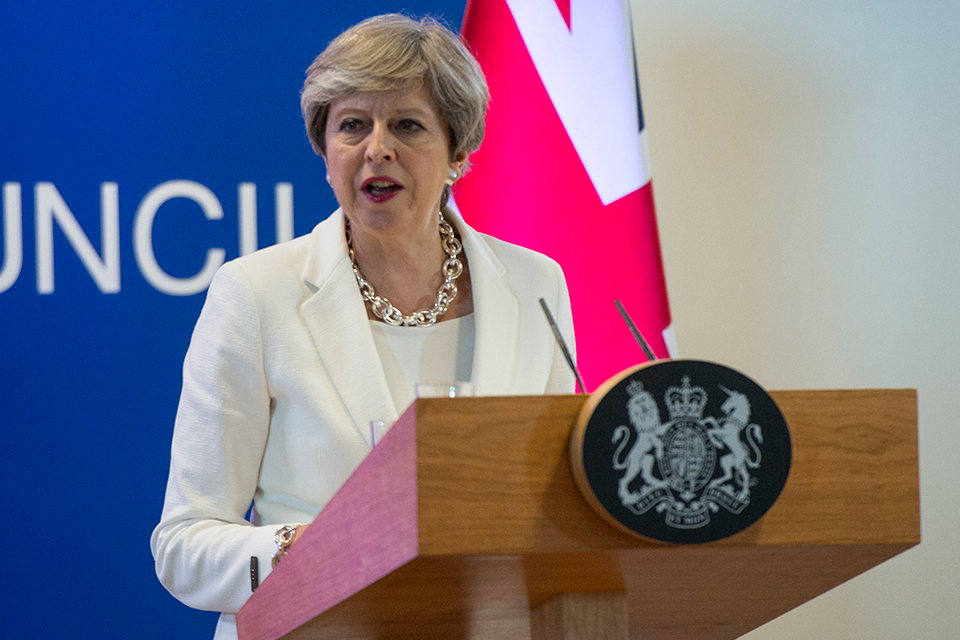
  • Theresa May – 2017 Statement on June European Council

    Below is the text of the statement made by Theresa May, the Prime Minister, on 23 June 2017.

    At this European Council we dealt with a broad ranging agenda.

    We covered issues that are of critical importance to the UK now – such as counter-terrorism and climate change. These issues will remain important after we leave the EU.

    That is why we will play a full role while we are members of the European Union, and why we want a deep and special partnership with our EU friends and allies after we leave.

    Last night I was also able to update other leaders on the UK’s proposal to give reassurance and certainty to EU citizens who have made their homes and lives in our country.

    Let me deal with a few of the items I and other leaders discussed.

    On security, there was strong commitment around the table to stand firm in the fight against terrorism and the online extremism that incites terrorism.

    I was able to thank our European partners in person for their support and condolence following the appalling attacks in Manchester and London.

    Those attacks have not just affected British citizens, but citizens from across Europe – just as British people suffered in the attacks in Paris and Stockholm.

    And I say this in a city which has itself suffered great loss from terrorist attacks.

    These atrocities have strengthened the need for us to work together to keep our countries safe.

    So I urged other leaders to put pressure on technology companies to do more to rid extremist content from the internet and to ensure that law enforcement agencies can access encrypted data.

    That is what has been agreed at this European Council, and it builds on the recent work I have done with President Macron of France.

    We must continue to work together to combat this evil, to defend our values, and to keep our citizens safe.

    On defence, we have welcomed plans for Europe to step up cooperation on capabilities, and for the EU and NATO to work more closely together. The UK will always be committed to the defence of Europe.

    On climate change, this European Council reaffirmed the commitment of the EU and all Member States to fully implement the Paris Agreement.

    The UK welcomes that joint commitment.

    We discussed the importance of the EU pursuing an ambitious trade policy, delivering jobs and growth. That trade must be fair as well as free. The UK will continue to play a leading role in pushing for openness in global trade.

    On migration, I emphasised the UK would continue to play its part in tackling the ongoing migration crisis – which is a challenge for our entire continent.

    The Council recommitted to a comprehensive approach to the crisis. That means dealing with the drivers of migration while also doing more to stem the flow of migration.

    This summit focussed on the Central Mediterranean route, and I confirmed a new UK bilateral commitment of £75 million to meet urgent humanitarian needs while also facilitating voluntary returns of migrants making these treacherous journeys.

    Finally, after the constructive start to our Brexit negotiations earlier this week, I wanted to briefly set out to my fellow European leaders the UK’s approach to giving reassurance and certainty to EU citizens living in the UK.

    I want all those EU citizens who are in the UK, who’ve made their lives and homes in our country to know that no one will have to leave. We won’t be seeing families split apart. People will be able to go on their living their lives as before.

    This is a fair and serious offer – it gives those three million EU citizens in the UK certainty about the future of their lives, and we want the same certainty for the more than one million UK citizens who are living in the European Union.

    On Monday, I will publish my proposals in full – and look forward to reaching an agreement at the earliest possible date.