Tag: 2017

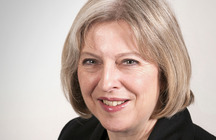
  • Theresa May – 2017 Open Letter to EU Citizens in the UK

    Below is the text of the open letter issued by Theresa May, the Prime Minister, to EU citizens living in the UK.

    As I travel to Brussels today, I know that many people will be looking to us – the leaders of the 28 nations in the European Union – to demonstrate we are putting people first.

    I have been clear throughout this process that citizens’ rights are my first priority. And I know my fellow leaders have the same objective: to safeguard the rights of EU nationals living in the UK and UK nationals living in the EU. I want to give reassurance that this issue remains a priority, that we are united on the key principles, and that the focus over the weeks to come will be delivering an agreement that works for people here in the UK, and people in the EU.

    When we started this process, some accused us of treating EU nationals as bargaining chips. Nothing could have been further from the truth. EU citizens who have made their lives in the UK have made a huge contribution to our country. And we want them and their families to stay. I couldn’t be clearer: EU citizens living lawfully in the UK today will be able to stay.

    But this agreement will not only provide certainty about residence, but also healthcare, pensions and other benefits. It will mean that EU citizens who have paid into the UK system – and UK nationals into the system of an EU27 country – can benefit from what they’ve put in. It will enable families who have built their lives together in the EU and UK to stay together. And it will provide guarantees that the rights of those UK nationals currently living in the EU, and EU citizens currently living in the UK, will not diverge over time.

    What that leaves us with is a small number of important points to finalise. That is to be expected at this point in negotiations. We are in touching distance of agreement. I know both sides will consider each other’s proposals for finalising the agreement with an open mind. And with flexibility and creativity on both sides, I am confident that we can conclude discussions on citizens’ rights in the coming weeks.

    I know there is real anxiety about how the agreement will be implemented. People are concerned that the process will be complicated and bureaucratic, and will put up hurdles that are difficult to overcome. I want to provide reassurance here too.

    We are developing a streamlined digital process for those applying for settled status in the UK in the future. This process will be designed with users in mind, and we will engage with them every step of the way. We will keep the cost as low as possible – no more than the cost of a UK passport. The criteria applied will be simple, transparent and strictly in accordance with the Withdrawal Agreement. People applying will not have to account for every trip they have taken in and out of the UK and will no longer have to demonstrate Comprehensive Sickness Insurance as they currently have to under EU rules. And importantly, for any EU citizen who holds Permanent Residence under the old scheme, there will be a simple process put in place to swap their current status for UK settled status.

    To keep development of the system on track, the government is also setting up a User Group that will include representatives of EU citizens in the UK, and digital, technical and legal experts. This group will meet regularly, ensuring the process is transparent and responds properly to users’ needs. And we recognise that British nationals living in the EU27 will be similarly concerned about potential changes to processes after the UK leaves the EU. We have repeatedly flagged these issues during the negotiations. And we are keen to work closely with EU member states to ensure their processes are equally streamlined.

    We want people to stay and we want families to stay together. We hugely value the contributions that EU nationals make to the economic, social and cultural fabric of the UK. And I know that member states value equally UK nationals living in their communities. I hope that these reassurances, alongside those made by both the UK and the European Commission last week, will provide further helpful certainty to the four million people who were understandably anxious about what Brexit would mean for their futures.

  • Chris Evans – 2017 Speech on Sale of Puppies

    Below is the text of the speech made by Chris Evans, the Labour MP for Islwyn, in the House of Commons on 17 October 2017.

    I welcome this timely opportunity to discuss the legislation relating to the sale of puppies in Great Britain, and the need for stricter enforcement of licences and inspections of breeders.

    Owning a puppy can be a rite of passage for so many people. Being responsible for a dog is part of growing up. I still remember the very first puppy that we owned. I remember my mother going to Aberdare Corn Stores to buy a small puppy, which we called Pep, for £5. He lived until he was 17: he was one of the lucky ones. Even today, I am delighted that my own son Zac will grow up knowing the companionship, the loyalty and the friendship that owning a dog brings.

    As I said, my mother paid £5 to Aberdare Corn Stores for our first dog, but those days are long gone. More people shop online now than ever before, so why should finding a puppy for sale be any different? Puppies are found and purchased without the buyer ever knowing where the dog has truly come from, or having any information about the breeder. People buy on the assumption that the puppy must have been bred in humane conditions. Sadly, that is not always the case, which is why there is now a need to discuss and review the problems with the current pet sale legislation and the licensing of breeders.

    The sale of pets in Great Britain is governed by the Pet Animals Act 1951, which covers breeders as well as third-party sales groups such as pet shops. It is old legislation, predating the internet. Let me put the Act in perspective. When it was passed, Winston Churchill was leader of the Conservative party and Clement Attlee was leader of the Labour party. It was passed three years before Elvis Presley would have his first hit record, and teddy boys were walking the streets of Great Britain. All those are long gone.

    That means that there is currently no law in the UK to regulate the sale of pets online. It would seem to be madness for us to legislate today for technological developments that will come 60 years in the future, but effectively that is what happened 60 years ago. The lack of regulation has consequences. Many unlicensed breeders have slipped off the radar of the local authorities responsible for them. Without regulation, the welfare of animals is compromised and unscrupulous breeders make tens of thousands of pounds in tax-free profit from naive buyers.

    Jim Shannon (Strangford) (DUP) The hon. Gentleman brings great issues to Adjournment debates and other debates in the House, and I congratulate him on that. Does he agree that simple humanity should dictate an end to puppy farm breeding, and that there must be legislation to formalise standards for anyone who wishes to sell a puppy, whether it be a pedigree dog or a mongrel?

    Chris Evans Of all the Members whom I expected to intervene on my speech, I would have expected the hon. Gentleman to do so in particular. He is a fantastic parliamentarian and I know that he loves this place. ​Again, he has made a very good point. I do, however, ask him please to let me continue my speech, in which I will answer his question.

    Battersea Dogs & Cats Home suggests that 88% of puppies born in the UK are bred by unlicensed breeders. Many people are falling into the trap of buying puppies from third-party sellers such as puppy farms, and some puppies are illegally smuggled from Ireland and Eastern Europe. Those who run puppy farms and puppy-smuggling businesses are rarely concerned with the welfare of their dogs and puppies. The mothers are treated like machines, bred within an inch of their lives, producing far more litters of puppies in a year than is legally allowed. They are kept in horrific conditions. “Unpicking the Knots”, a report produced recently by Blue Cross for Pets, found that many dogs were kept in enclosed spaces such as rabbit hutches, and without water. As an animal lover and a dog owner, I find that completely abhorrent.

    The puppies and their mothers are seen not as sentient beings, but merely as pathways to profit. Puppies are seized from their mothers long before the 12 weeks for which they are supposed to stay with them are up and are sold, malnourished and without vital vaccinations, to unwitting buyers. As a result, many irresponsibly bred puppies end up with life-threatening illnesses such as parvovirus and kennel cough. New dog owners are then faced with the financial and emotional hardship of ongoing veterinary treatment or, in many cases, the death of the puppy, which means that the buyer has essentially spent hundreds of pounds on a dog who lives for no more than six months.

    Although, as I said earlier, our dog lived for many long years, I remember the first thing that happened when we brought him home from the pet shop. His hair fell out because he was infested with mange. We took him to the vet and found out that he was only two and a half weeks old. His eyes had just opened. I accept that that was many years ago—in 1989—but it still happens in this day and age.

    Snatching puppies from their mothers too early can have ongoing impacts on the lucky dogs that do make it. The first 12 weeks of a dog’s life are its most important, with those crucial moments socialising with its mother and littermates dictating the dog’s future temperament as an adult. As a result, dogs born of irresponsible breeding often grow into anxious and aggressive adults, which can lead to additional costs being incurred in training and behavioural classes for the owners.

    Mr Alister Jack (Dumfries and Galloway) (Con) The hon. Gentleman describes very well the puppy farms, which are disgraceful and operate in agricultural terms in southern Ireland. Does he agree that Operation Delphin at the port of Cairnryan in my constituency, which to date has led to the seizure and return of over 500 puppies, has been a huge success? Does he also welcome the fact that that pilot scheme has been extended for another year, so it is to be hoped that the Scottish Society for Prevention of Cruelty to Animals will now be able to get on and send even more puppies back to the farms they came from, and stamp out this illegal trade?

    Chris Evans I know of that case in Dumfries, and it is a brilliant example, but as I will say later, this is all about enforcement, as there is only so much the Government ​can do through legislation. They should, however, look at the examples the hon. Gentleman has raised as a way forward.

    Robert Courts (Witney) (Con) I am listening with great interest to the powerful case the hon. Gentleman is unfolding about the horrors of this trade. He mentions enforcement, but does he agree that there might be a role, in addition to the legislative aspect he is looking at, for education for the public, so that people know the questions to ask of the seller? If they know there are certain red flags to suggest the puppy has come from an illegal source, that might help.

    Chris Evans To make a wider point, a fantastic aspect of this debate is that so many people have come to me with solutions. The hon. Gentleman is right: there should be a multifaceted attack on puppy farms and illegal dog breeding, and it should include education and raising red flags, as he suggests.

    Lyn Brown (West Ham) (Lab) I congratulate my hon. Friend on securing this debate and I am pleased to be attending it. Good friends of mine who are intelligent human beings who really worry about the care of animals have been taken in by puppy dealers, and by the role played by the child of the puppy dealer, pretending that the puppy in question is a loved puppy that has been with their family for ages. They can be completely unscrupulous in the stories they tell and the ways in which they dupe members of the public.

    Chris Evans These puppy breeders will go to any lengths to make a case and secure a sale; it is all about profit.

    I will use the example of my current dog; he is a fantastic dog with a great temperament. The key difference between the purchase of my first dog, which my mother bought from a pet shop, and that of my current dog is that I went to a reputable dealer, and met the mother and father, and saw what the puppy was like. The dealer also provided examples of what other puppies from that litter were like. There was a lot of further important information, too. I also had an information pack, so I knew who I was dealing with. We have had a fantastic time with the dog I have now.

    In this age of modern technology, consumers are increasingly turning to online shopping to purchase their goods, and it is no different when buying a puppy. However, as I have mentioned, online sellers are slipping through the net and are becoming increasingly difficult to regulate and identify.

    Blue Cross has been working in partnership with classified ad site Gumtree, which has been able to track repeated advertisers of puppies. It found that online sellers were using multiple email addresses, placing hundreds of adverts over the course of 24 months, and selling in multiple local authority areas—all the classic signs of a puppy farmer.

    These cases are only a drop in the ocean of the wider problem of unlicensed breeders abusing the legislation. The Pet Animals Act 1951 must be updated in line with modern internet use. I know the Department has in the past said that it believes the definition of a pet shop to be wide enough to include the sale of pets online, but the horrific reality of what is happening says otherwise. ​However, updating the legislation is only one way in which we can tackle the problem. It is also vital that we are firmer with the enforcement of licences and with inspections of breeders, which must be more frequent and thorough.

    In Wales, we are steps ahead of the rest of the country when it comes to regulating dog breeders. The Animal Welfare (Breeding of Dogs) (Wales) Regulations 2014 enabled the Welsh Government to enforce stricter rules for those wishing to breed dogs for profit. This is certainly a step in the right direction and I urge England and Scotland to follow suit, but the legislation is only as strong as the practices of the licensing officers. As elsewhere in the UK, local authorities in Wales are severely underfunded, and licensing officers are therefore not fully equipped or trained to do the job at full capacity. Many juggle multiple job roles, from inspecting food outlets in the morning to assessing dog breeders in the afternoon. Without full animal welfare training, licensing officers are unable to properly assess how fit a breeding establishment is for purpose. As a result, many puppy farms are issued licences. It is important to realise that this is not a Wales-only problem, a Scotland-only problem, a Northern Ireland-only problem or an England-only problem. It is a problem not only for the four nations but across European borders, and we need joined-up thinking on this.

    Chris Davies (Brecon and Radnorshire) (Con) I thank the hon. Gentleman for giving way and for bringing forward the debate this evening. As a fellow Welsh MP, he will know that one of the great embarrassments for us is the fact that puppy farming is quite prevalent to the west of our constituencies. My opinion on puppy farming has changed considerably since I went on a DEFRA Committee visit there last year. I was for puppy farming, but having visited a puppy farm, I changed my mind completely. The dogs were not allowed to be dogs; they were just breeding machines. I agree with almost everything that the hon. Gentleman has said, but I must point out that in Wales the law is already there and that the problem lies in its enforcement.

    Chris Evans That is absolutely right. The hon. Gentleman and I are both south Wales MPs. If anyone visiting Pembrokeshire drives down the road from Swansea to Carmarthenshire, all they will see are signs saying “Puppies for sale” and “Dogs for sale.” They might wonder why people are constantly selling puppies and dogs. Enforcement is the real issue; it is the crux of the problem. We might have the legislation but we also need strong enforcement.

    I understand that in enforcing stricter and more robust licensing laws, the work of the already thinly stretched and underfunded local authorities will increase. There is an urgent need for additional funding for local authorities, but the expertise of the third sector can also have a role. That is why I advocate charities such as the Dogs Trust, Blue Cross and the RSPCA working alongside the local authorities to aid them with inspections and with the enforcement of licensing standards. We cannot rely solely on the third sector to fix all our problems, but it is important that we foster collaboration between local authorities and the animal welfare charities that are experts in the area.

    We cannot talk about licences without talking about fees. There are no standardised licensing fees for dog breeders, and prices per local authority vary from £23 to £782. ​It is no wonder that many responsible breeders are so put off from applying for a licence. One way of rectifying this is by introducing a risk-based approach to licensing, with the level of risk that a breeding business poses determining the fee. There could be a rating system, with those with higher points and adhering to higher standards of breeding being awarded lower licensing fees. Such financial incentives would encourage compliance with higher standards and better practice—almost like the road fund licence in relation to polluting cars.

    In addition to the aforementioned proposals, we need to look further at third-party sales of puppies. Yes, we could call for a ban, but it is clear that the internet is like the wild west at the moment. It is so unlicensed that it would be difficult to clamp down on those third-party sales. I am therefore asking the Government to introduce an information campaign and to make it mandatory for a buyer to see the puppy interacting with its mother and its littermates before purchase; but we would need to ensure that such a requirement could be enforced. As unlicensed breeders become increasingly savvy in working round the regulations of breeding, it could only work if local authorities were given the necessary resources, perhaps using the proceeds of a licensing fee for that purpose. We should also contemplate forcing breeders to provide full seller information when posting adverts, and introducing the practice of assigning every breeder a unique identification number, as France has recently done.

    Yasmin Qureshi (Bolton South East) (Lab) It is great that my hon. Friend has secured this Adjournment debate. I have received many letters on this issue, and I want to let the Minister know that it is a real matter of concern for many of our constituents. I thank my hon. Friend for raising it.

    Chris Evans I thank my hon. Friend, who is a diligent Member of Parliament and a good friend since I came to the House.

    In conclusion, I urge the Government to review the current legislation surrounding sales of puppies and other pets in the UK. The 1951 Act must be updated to regulate online sales of puppies. More importantly, we need to ensure that local authorities and licensing officers receive full appropriate training to do their jobs properly. Once that has been established, we can consider a ban on third-party sales.

    This debate has shown the House at its very best, and I know that many Members will support me on this initiative. Dogs bring so much joy to our lives and help us in so many ways. Whether we keep dogs for work, as a health aid or simply for companionship, it is high time that we gave something back to our four-legged friends and afforded them the protection they deserve. My life has been enlightened by owning a dog. Dogs are important to me, and I will own dogs for the rest of my life.

    Finally, I thank Battersea Dogs & Cats Home, Blue Cross, RSPCA, Dogs Trust and the International Fund for Animal Welfare for their tireless work to improve welfare standards for dogs and animals across the country, and for bringing often ignored issues to the country’s attention. I hope the Minister will take on board some of the constructive suggestions that we have heard in this debate.​

  • Matt Hancock – 2017 Speech on the Digital Strategy

    Below is the text of the speech made by Matt Hancock, the Minister for Digital, to the Institute of Directors’ Digital Strategy Summit on 17 October 2017.

    Thank you for the invitation to join you here today.

    I always feel at home when I’m at the IoD. I feel at home, because when I am at home, I’m surrounded by entrepreneurs.

    My first job was solving the Y2K bug in cobalt in my family tech company. Both my parents started businesses. All my siblings have started their own businesses. I’m the one who took the low risk career – although given the last couple of years it doesn’t always feel like that.

    With that background, it would have been easy for me to go into business too. I love it, find it interesting, and I profoundly believe that business, done right, is a force for good in the world.

    But I didn’t, and there’s a reason. When I was growing up, the business that my parents ran – my stepfather wrote the code, my mum was in charge – the business was all around me and the main subject at the dinner table.

    In the early 1990s, I was a teenager. When recession hit, one of our big customers was struggling, and couldn’t pay their bills. We got to a point when if a cheque didn’t arrive by the end of the week, the business would collapse. We would lose everything as a family, and both my mum and stepdad would have been unemployed, and the twenty or so people who worked in the business, who we felt very strongly for, would have lost their jobs too. All through no fault of our own.

    Thankfully, late in the week the cheque did come. I remember the moment to this day. The business was saved, and the software became a big hit. So now, every time you type your postcode into the internet and it brings up your address, you can thank my stepdad Bob. I hope we’ve helped you with your christmas shopping over the years.

    This searing experience, as a teenager, made me start to ask the bigger questions: how can a perfectly decent business nearly go bust, because the economy had gone wrong? What can be done to stop that happening again.

    And while I did go on to work for the business, I then went to the Bank of England as an economist, and there I discovered that all the big decisions are made in Westminster. So here I am.

    And it is an honour and a privilege to be the UK’s first ever Minister for Digital, working to give others the opportunities I had, and to stop others suffering the fate we escaped so narrowly.

    So what does this mean, in this time of digital revolution?

    It means harnessing this amazing new technology, so that it works for the benefit of everyone. It means mitigating the risks, and ensuring the benefits can be accessed by all. It means supporting a thriving digital sector, a digital infrastructure that is not only fit for the present but the future, and easy and ubiquitous access for everyone in this country to the building opportunities digital technology offers.

    We’ve even changed the name of the department to include Digital. And as a Department we are expanding, bringing some of the finest minds from within Whitehall and from outside to work on getting this right.

    Our Digital Strategy, published in March of this year, set out how we intend to make the UK the best place to establish and grow a digital business and the safest place for citizens to be online.

    It set out seven pillars that underpin the changes we need to see and I would like to update you now on how we have already delivered on those, and how we are set to deliver further in the very near future.

    The Digital Strategy is complemented by the Digital Charter, as set out in the Manifesto, that sets out our approach to making the UK both the best possible place for digital businesses and the safest place for people to be online. On the former, it’s about pursuing a plan that reinforces the work we started with the Strategy, and on the latter, we need to approach the internet from a set of liberal values that allow us to seize the opportunities that unprecedented connectivity provides while also mitigating some of the harms it creates.

    Strategies and promises mean nothing if you don’t push them through. I’m pleased to tell you that, only six months since the launch, we are making great progress.

    The first pillar, and central to everything is infrastructure. In the Digital Strategy we committed to building a world-class digital infrastructure for the UK. That means ubiquitous coverage, so no one is left out, and with sufficient capacity not only for today’s needs but in readiness for tomorrow.

    We are making good progress in delivering today’s technology to all.

    We are on track to meet the target, set out in the Strategy, of superfast broadband coverage at 95% by the end of 2017. Then to reach the final 5%, in the Digital Economy Act, which received Royal Assent in April this year, we legislated for a Universal Service Obligation to deliver decent broadband to all. We recognise that broadband is now essentially a utility, not a nice to have. And I’m delighted that this is increasingly delivered by a competitive market of providers.

    For mobile reception, each MNO is obliged to provide voice coverage to 90% of the UK by the end of this year, and the speed of rollout has been impressive – 4G premises coverage rose from 29% in 2015 to 72% last year. In our Manifesto we set out that the next step is 95% coverage of the UK landmass, so people are connected where they live, work, and travel.

    We’re tackling, with the Advertising Standards Authority, the misleading use of so-called “up to” speeds, and the misdescription of technologies like “fibre” broadband, when it’s actually copper-to-the-premise. And we’re supporting community broadband providers to get to some of the hardest to reach parts of the country with the help of local residents.

    At the same time as fixing the current technology, we must focus on the next generation: 5G and full fibre.

    Our 5G strategy, released at Spring Budget 2017, outlined the steps we will take. As part of a £1.1 billion investment in digital infrastructure, we are funding a coordinated programme of integrated fibre and 5G trials to ensure the UK leads the world in 5G connectivity.

    To meet this ambition, Government, industry and academia must all work together. Just yesterday we launched the first competition for 5G Testbeds & Trials funding in 2018-19. We’re inviting bids for the innovative use of 5G, so we learn very early what we need to do to support its roll out in the real world.

    So supporting infrastructure – both the current and future technologies – is the first pillar of the digital strategy.

    The next pillar is skills.

    Britain needs stronger digital skills at every level, from getting people online for the first time, to attracting and training the very top coding talent in the world.

    It’s something we in Government can’t do on our own. So when we launched the Digital Strategy in March, we committed to establish a new Digital Skills Partnership, to both bring greater coherence to provision of digital skills training at a national level, and to increase the digital capability needed to build thriving local economies throughout the country.

    When we launched the Strategy, with industrial partners we promised to create more than four million digital training places. Just six months in, we and our partners have already over-delivered on this promise. Since that date, much progress has been made, including through companies like Barclays, Lloyds, Google, and many others.

    This comes on top of putting coding in the curriculum from age 8, and last week the announcement that one of the first of our new T-level technical qualifications will be in Digital.

    We want all these opportunities to be open to as wide a range of people as possible. We firmly believe that digital skills are essential, for everyone, to thrive in this digital age and that training in such skills should be an entitlement for all our citizens. So we legislated for Digital Skills Entitlement in the Digital Economy Act and are now developing the detail of the policy with the Department of Education. My friend and colleague Karen Bradley – Secretary of State for DCMS and I are working to deliver this entitlement, so that everyone can get the basic skills they need.

    Of course the greatest demand for skills is the tech industry itself.

    Over the past year we have seen investments in UK tech, including from Microsoft, Amazon, Apple, IBM, Google, and into British stars like Zopa, Monzo, and ARM.

    We’ve significantly expanded the British Business Bank’s capacity in scale up capital, and support the opening of incubators across the country. Pushing for a good deal for the tech industry is a core part of our Brexit negotiations, including the free flow of data and seeking to settle the issue of EU nationals at the earliest opportunity – a goal currently being frustrated by the European side.

    Ultimately, the goal of this third pillar of the Digital Strategy is to make Britain the best place in the world to start and grow a digital business, so that everyone who has an idea and the will to make it happen.

    When it comes broadening opportunity, we are committed to helping every British business become a digital business.

    That’s the fourth pillar of the Digital Strategy.

    In July we launched the Productivity Council, which, developed through discussions with UK business leaders, the Confederation of British Industry and the Institute of Directors, has been designed to encourage and support UK businesses to go digital. Analysis suggests that only a modest improvement across a broad base of firms could unlock billions of Gross Value Added every year.

    As an example of how we continue to encourage and support innovation, last month we together with TCUK launched our FinTech For All competition, targeted at fintech startups who show they can make a real difference to people in danger of being left behind by conventional financial services. We want to help startups who show they can help people struggling to manage their money, and make financial services available to all.

    The next, fifth, pillar is to make the UK the safest place in the world to live and work online, as set out in detail in our Digital Charter.

    As part of the Digital Strategy, our Digital Charter sets out how we need to balance the freedom of the internet with the need to mitigate its harms.

    Our Internet Safety Strategy, published last week, sets out our plan for making the UK the safest place in the world to be online.

    The Strategy sets out how we all must play our role in tackling issues of online harms. We want to bring together groups from across our whole society and hear from people of all backgrounds – including technology firms, schools, the voluntary sector, and citizens young and old as we turn that ambition into reality.

    We will bring in a statutory code of practice for social media companies, we are consulting on an industry levy to support educational programmes and technical solutions, and we want to see more transparency to help inform future policy.

    Throughout we will be guided by three core principles. The first is that what is considered unacceptable offline should not be accepted online. Secondly, all users should be empowered to manage online risks and stay safe. Lastly, technology companies have a responsibility to their users to develop safe online communities.

    To protect the amazing openness and freedom of the Internet that are its greatest strengths, we must balance an individual’s freedom with respect for the freedom of others online, just as we do offline.

    Ensuring the internet is safe means cyber security too, and our National Cyber Security Strategy, funded to the tune of £1.9bn, sets out what we are doing to help improve Britain’s cyber security.

    Now of course the security of any data is firmly the responsibility of the owner of that data – a principle that will be reinforced with the new Data Protection Bill – but Government has a role, to protect the nation, set standards so technology is secure by design, to educate, and for incident response.

    The sixth pillar of the digital strategy is to digitise Government.

    Since the creation of GDS in 2011, Britain has been a world leader in digitising Government.

    Dozens of Government services have been digitised, from applying for a passport, to applying for lasting power of attorney. The massive project to make tax digital is proceeding carefully, and the feedback from those who use the new digitised service is excellent. Our G-cloud procurement system is being copied around the world, as it allows and encourages contracts to go to small innovative companies, not the traditional main players. In February this year, we had 3,947 suppliers on the Digital Marketplace, of which 93% were SMEs. And as a result out GovTech market is booming.

    Just a fortnight ago, the Lord Chancellor tested the new small courts service digital solution, which seeks to open up access to justice.

    And our manifesto set out exciting next steps, including opening up geospatial data, and assuring peoples’ digital identity.

    This brings me to the final pillar: data.

    The Digital Strategy committed to unlocking the power of data in the UK economy and improving public confidence in its use. Data underpins any digital economy, and the effective use of data is built on trust. Research shows that, currently, more than 80 per cent of people feel that they do not have complete control over their data online, and that is too high.

    So we are strengthening our data protection laws through the new Data Protection Bill, making UK law consistent with the EU’s GDPR. Under its proposals individuals will have more control over their data, through the right to be forgotten and to ask for their personal data to be erased. They will also be able to ask social media channels to delete information they posted in their childhood – news that mightn’t yet be as welcome to the teen users of Twitter and Instagram as it will be when they look back on their posts some years from now.

    We also want to end the existing reliance on default opt-out or pre-selected ‘tick boxes’, to give consent for organisations to collect personal data, which we all know are largely ignored. The Data Protection Bill will make it simpler to withdraw consent for the use of personal data and require explicit consent to be necessary for processing sensitive personal data. It also expands the definition of ‘personal data’ to include IP addresses, internet cookies and DNA.

    On top of all that, new criminal offences will be created to deter organisations from creating situations – either intentionally or through pure recklessness – where someone could be identified from anonymised data. The data protection regulator, the Information Commissioner’s Office, will be given more power to defend consumer interests and issue higher fines for the most serious data breaches.

    And getting the governance around data right is about more than just the legislation.

    Good use of data means understanding and living with the ethical dilemmas and boundaries that artificial intelligence brings. When machines are making choices that until now have been made by humans, it’s important they stay inside the rules, but vital too that the ethics of the consequences of those decisions are considered.

    Data underpins the insurance industry. But what characteristics is it right for an algorithm to take account of when deciding the level of the premium?

    How do we deal with discrimination that can be thrown up by the application of AI to real world examples?

    I believe that getting the full governance of data right: the rules, the enforcement, and the ethical norms of behaviour, will set Britain fair to lead in the new world of big data, machine learning, and AI.

    Earlier this week we published a stunning report by Dame Wendy Hall and Jerome Pesenti into what we must do to be a world leader. I look forward very much to working with them and others to deliver on their proposals, and make the UK a world leader in this amazing new technology.

    So there we have it. Just over six months on from our Digital Strategy and we have been building all seven pillars of our digital strategy.

    And I want to end with this message. We can only deliver the UK’s digital strategy in partnership, between Government, yes, providing leadership, a legislative framework, and occasionally taxpayers’ cash.

    But Government in partnership with academia, civil society, and businesses large and small.

    And coming from small business myself, I know there are more good ideas out there than in here. So I want to hear from you, I want to know what we’re getting right, what we’re getting wrong, what amazing innovations you’re developing, and how we can make it easier for you to grow your businesses here in the UK.

    We have a big agenda and much to do, and I look forward to working with you to deliver it.

  • Matt Hancock – 2017 Speech on the Fourth Industrial Revolution

    Matt Hancock

    Below is the text of the speech made by Matt Hancock, the Minister of State for Digital, on 16 October 2017.

    One of the roles of Parliament is to cast ahead, to look to the horizon, and tackle the great challenges of our time.

    So I applaud the creation of the APPG on the fourth industrial revolution, which surely is one of the greatest challenges we face, as a nation, and as a world.

    The nature of the technologies is materially different to what has come before. In the past, we’ve thought of consumption as a one-off, and capital investment as additive. Yet put resources into the networks that now connect half the world, or into AI, and the effects are exponential.

    The reason is that the cost of storing and transmitting information has fallen, perhaps faster than at any time since the invention of the printing press. That time it transformed the world, democratised knowledge, and brought down the whole feudal system of Government. This time it’s just got started.

    And the nature of the new technologies is that the changes we are experiencing today, are probably the slowest changes we will see over the rest of our lifetimes. If you don’t much like change, I’m afraid I don’t have so much good news.

    Our task, in this building and around the world, is to make this technology, this change, work for humanity. And I’m profoundly confident we can. Because this technology is made by man, so it can be hewn to build a better future for mankind.

    And I’m delighted to speak alongside so many impressive colleagues who really understand this, and alongside Professor Klaus Schwab who literally ‘wrote the book’ on the 4th Industrial Revolution. Your work, bringing together as you do all the best minds on the planet, has informed what we are doing, and I’m delighted to work with you.

    For the 1st Industrial Revolution, the UK could claim to be the ‘workshop of the world’ – propelled by development of the steam engine, it reached its pinnacle in the mid-19th Century. But the UK has not had the monopoly on waves of industrialisation.

    Now, in the fourth revolution, we are determined to use our strengths to play a leading part. By its nature the fourth industrial revolution is more collaborative than the first. And we will play our part.

    The UK is already a world leader in key technologies – AI, nano and biotechnologies, and additive manufacturing to name a few. Our Industrial Strategy outlines what we’re doing to ensure the UK is a leader overall.

    And our Digital Strategy, embedded within the wider Industrial Strategy, sets out the seven pillars on which we can build our success. And inside that fits our 5G strategy, like a set of Russian Dolls.

    Our Strategy covers infrastructure, skills, rules and ethics of big data use, cyber security, supporting the tech sector, the digitisation of industry, and digitisation of government. All these are important.

    You will, for example, have seen that just yesterday we launched our review into Artificial Intelligence by Jerome Pesenti and Wendy Hall. It’s an excellent report which sets out what we need to do to support the enormous potential of AI while mitigating its risks. We want Britain to be at the forefront of work in AI, and this report shows the way.

    Today I want to focus on just two of those areas: skills and infrastructure.

    The 4th Industrial Revolution will change the kinds of jobs needed in industry. Our strong view is that as a nation we must create the jobs of the future. Digital revolution brings with it disruption. And as the RSA so powerfully set out last month, the risk is not that we adopt new technologies that destroy jobs. The risk to jobs comes from not adopting new technologies. Our task is to support redeployment not unemployment.

    Our goal must be to automate work, but humanise jobs. Allow machines to do the dangerous, boring, and repetitive, and ensure we humans have the capacity to do the creative, empathetic and interactive.

    We need a full spectrum skills response, from school to retirement.

    So we now have coding in the curriculum from age 8. For those already in work, the Digital Skills Entitlement provides free access to basic training and promotes lifelong learning.

    We can’t do this on our own, so our Digital Skills Partnership de-conflicts the huge amount of work going on in the private sector.

    It’s critical we have next-generation digital infrastructure in place. We’re taking steps to cement our position as a world leader in future technologies of full fibre and 5G through the £740m of funding from the National Productivity Investment Fund that the Chancellor announced last year.

    Travelling around the world I see much excitement at 5G, and I’m confident the UK will be at the front of the queue. And I’m determined we will do our bit.

    So today I am delighted to announce that we are launching the first £25m competition for 5G testbeds and trials projects. We already lead on the highly technical development of 5G standards through the international work of the University of Surrey and others.

    Now we are looking for innovative projects to test the roll out of 5G to develop the UK’s growing 5G ecosystem. We want projects that explore the real-world potential for 5G for example:

    – to deliver benefits for businesses;
    – to develop new 5G applications and services;
    – to develop and exploring new business models around key 5G technologies;  – or to reduce the commercial risks associated with investment in 5G.

    It will also support projects which explore ways of using 5G technology to address challenges in particular sectors, such as those faced in health and social care.

    It’s all about preparing Britain to take advantage of these extraordinary new technologies.

    Earlier this year, the ‘fourth industrial revolution’ was not a very well-known term – at least before it became a central topic at the World Economic Forum. It recently made its way into an item on BBC Breakfast television – this shows we’ve probably started to reach critical mass.

    It’s a pleasure now to introduce the man who made the fourth industrial revolution a household phrase: Professor Klaus Schwab.

  • Theresa May – 2017 Joint Statement with President Jean-Claude Juncker

    Below is the text of the joint statement issued by Theresa May, the Prime Minister, and Jean-Claude Juncker, the President of the European Commission, made on 16 October 2017.

    The Prime Minister and the President of the European Commission had a broad, constructive exchange on current European and global challenges.

    They discussed their common interest in preserving the Iran nuclear deal and their work on strengthening the security of citizens in Europe, notably on the fight against terrorism. They also prepared for the European Council that will take place later this week.

    As regards the Article 50 negotiations, both sides agreed that these issues are being discussed in the framework agreed between the EU27 and the United Kingdom, as set out in Article 50 of the Treaty on European Union. The Prime Minister and the President of the European Commission reviewed the progress made in the Article 50 negotiations so far and agreed that these efforts should accelerate over the months to come. The working dinner took place in a constructive and friendly atmosphere.

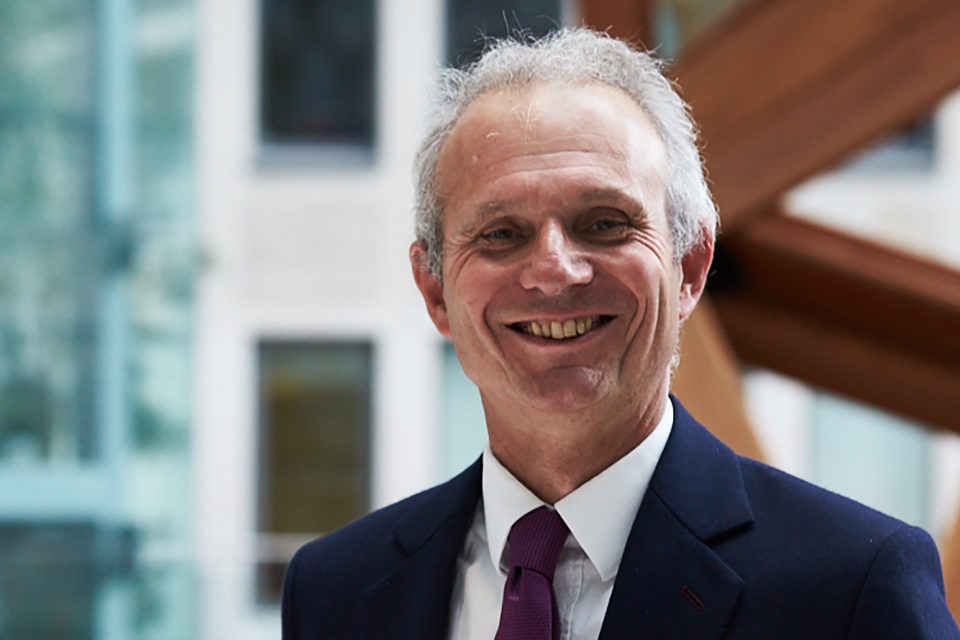
  • David Lidington – 2017 Speech at Lord Mayor Elect Ceremony

    Below is the text of the speech made by David Lidington, the Lord Chancellor and Secretary of State for Justice, on 16 October 2017.

    My Lord Mayor Elect, I am commanded by Her Majesty The Queen to convey Her Majesty’s express approval of the choice of the citizens of London in electing you to be Lord Mayor for the coming year.

    It is a real pleasure for me to be able to welcome you, your family and other guests to the Palace of Westminster to convey to you this message, and to be the first to congratulate you on receiving Her Majesty’s approval.

    Responding to Mr Recorder

    May I also welcome you, Mr Recorder, and pay tribute to your invaluable contributions to our justice system. As a prosecutor, you were renowned for your brilliant and scathing cross-examination. As a modernising judge, you have championed many of the key causes of the judiciary – mentoring junior colleagues and promoting diversity across the legal profession. I admire and appreciate your efforts in this, as I do your work as trustee of a prison charity focusing on offender rehabilitation. Wearing my less ceremonial hat as Justice Secretary, I thank you for everything you do to cut reoffending, cut crime and protect our society.

    The historic role of the Lord Mayor

    Turning to my Lord Mayor Elect, you too hold a most vital role – that of Under-Shepherd to the Under-Shepherd of the Bowman family flock. My delight that you are here is only faintly tinged with disappointment that you did not, on the way to Westminster, showcase your skills by driving sheep across London Bridge – a historic perk for freemen of the City of London. Not to worry, however – you will spend much of the coming year steeped in history and tradition as the 690th head of the oldest continuous democratic commune in the world.

    Laws and democracy were first introduced to London by the Romans, who founded the city on a square mile of former marshland. The Corporation of London traces its origins to Saxon civic arrangements, when bell ringers would summon citizens to St Paul’s Cross to debate and vote on pressing issues. In 1215, upon the sealing of Magna Carta, the then Mayor of London was one of only two designated guarantors charged with ensuring that the Crown did not renege on the deal to enshrine citizens’ rights and uphold the rule of law.

    More than 800 years later, it is my particular duty as Lord Chancellor to respect and uphold the Rule of Law, as well as defend the independence of the judiciary. I will look to you, My Lord Mayor Elect, to help promote London and the City as an enduring worldwide leader of financial and legal services whose reputation is founded on the Rule of Law. You will help strengthen economic ties with other nations, identify new business opportunities and provide reassurance that the UK remains the Number One destination for foreign investment.

    Pursuing post-Brexit opportunities

    The City is the engine of Britain’s financial and legal sectors, driving the economic wellbeing of the nation. In a little more detail, the UK had a trade surplus in the financial and insurance services sector of over £60 billion last year – overall, it contributed £124 billion to the UK economy. Of this, London accounts for just over half of the total gross value added – in the Square Mile alone, some 380,000 people walk into work every day. For every one job created in the City, three more are created in the regions. Legal services are crucial to the City – indeed, are so closely linked with finance activities as to be interwoven: our strong financial services beget strong legal services, and vice versa. It means that legal services swell the nation’s coffers by around £25 billion pounds and contribute a trade surplus of just over £3 billion. These statistics tell an extraordinary story: that the body that you will lead, the City of London Corporation, is at once a local council and a global powerhouse. As we prepare to leave the European Union, it is ever more vital that we build upon its international success.

    My Lord Mayor Elect, I bow to your undoubted expertise in building upon solid foundations. Somewhat unusually for a future audit partner at PwC who crunches FTSE100 balance sheets for breakfast, you read architecture at university. This explains why your heroes are not William Deloitte or John Pierpont Morgan, but Humphry Repton and Capability Brown. Since graduating, however, you have spent 32 years in accountancy. As such you are exceptionally well-placed to be a builder of a different kind – one who promotes the message of Global Britain, helping this country seek out – as it has throughout its history – abundant trading and business opportunities overseas.

    Work on this is well underway. My colleague, Lord Keen, has just launched the government’s ‘Legal Services are GREAT’ campaign in Singapore. This aims to promote English Law and UK legal services, including London as the go-to centre for dispute resolution for international litigants. Our capital city offers the highest standard of legal professionals with unrivalled expertise and experience, and verdicts that stand up to keen scrutiny, handed down by our independent and impartial judiciary.

    It is important that our legal services operate from courts that are fully equipped to deliver 21st century justice. I am delighted that the City of London is to replace all its courts – barring the Old Bailey, Mr Recorder – with a high-tech 18-strong courts complex in the heart of legal London, specialising in fraud, economic and cyber-crime. Perfect proof – if any were needed – that the City not only moves with the times, but remains well ahead of them. The City leads the world in fintech. It is only right that it also leads the world in dispute resolution and legal redress when fintech is abused – crucial for maintaining public trust.

    Mayoral Mission: the trust agenda

    My Lord Mayor Elect, you want the issue of public trust to be a key element of your Mayoralty – specifically, rebuilding relations between the City and the public following the financial crisis of 2008. It is clearly important that there is mutual trust between the public and businesses, and your programme will challenge City firms to connect with communities, operate responsibly and with integrity, and make a positive impact on society and the environment. This of course chimes with the best traditions of the City, stretching back centuries: as a local council, looking after the immediate needs of citizens; as a business hub, attracting the brightest and most innovative talents, and in general promoting knowledge, diversity and culture. Since medieval times, the great livery companies have been generous and enlightened patrons of charities and schools. I myself had the good fortune to attend Haberdashers’ Aske’s, founded in 1690 with a bequest from a wealthy Haberdasher, Robert Aske, to educate ‘Twenty poore Boyes, who shall be freemen’s Sonnes’.

    At the end of your schooldays, My Lord Mayor Elect, you took a gap year. Some of your guests may not know that you sought to fund this year off by sketching buildings and selling the artwork – I admit I do not know how successful this money-making venture proved to be. No matter – what is of interest to us is not the revenues raised but your subject matter. Not just any buildings – these were some of the beautiful Wren churches dotted around the City between the Gherkins and Walkie-Talkies. This was familiar territory for you: your father, grandfather and great-grandfather all worked in the Square Mile, and it was perhaps your destiny to follow them. You remember as a child being whipped off to your father’s office in London to watch the Lord Mayor’s Show. That’s now your show.

    Conclusion

    Your Mayoralty will promote all that is impressive about the City: the talent, knowledge, expertise, opportunities and energy. I am greatly looking forward to working with you. Let’s get this show on the road.

  • Ian Blackford – 2017 Speech to SNP Conference

    Below is the text of the speech made by Ian Blackford, the Leader of the SNP in Westminster, at the party’s conference in Glasgow on 10 October 2017.

    Conference, it is a huge honour to stand here today in the great city of Glasgow, and give my first speech to you as the SNP’s Westminster Leader.

    I am proud to lead our strong, talented, and hard-working team of MPs as the UK Parliament’s third party.

    In Westminster, the SNP are the real opposition to the increasingly right-wing, incompetent, and utterly shambolic, Tory government.

    While Labour flip-flops on so many of the big issues facing our country – from their ever-changing position on Brexit, to their on-off support for Tory welfare cuts, tuition fees, and nuclear weapons – it is the SNP that are providing the consistent and effective opposition that is desperately needed.

    Unlike the other parties, we have a united team of MPs that will always put Scotland’s interests first.

    And by working together, with common purpose, we are defending Scotland’s national interests, and leading the opposition to the Tories’ damaging austerity cuts and extreme Brexit plans – as we make the case for the sensible, progressive, SNP alternative.

    And, conference, I want to take the opportunity now to pay tribute to someone who has contributed so much to that work, over so many years, standing up for Scotland at Westminster – my friend and predecessor, Angus Robertson.

    Friends, the period since our Spring conference has been a turbulent time in UK politics.

    Despite cynically calling a snap general election on their own terms and timetable, with huge campaign resources, and all the odds stacked in their favour, the Tories lost their majority and Theresa May lost all credibility.

    We are now back to the days of a weak Tory leader, forced to placate the whims of her right-wing backbenchers just to shore up her own position.

    A Tory prime minister who is so desperate to cling on to power, that she was forced to beg the DUP to prop up her government with a billion pound bribe from the magic money tree we were all told didn’t exist.

    A billion pounds of investment that David Mundell – Scotland’s supposed man in the cabinet – assured us ought to have had Barnett consequentials, meaning an additional £2.9 billion for Scotland.

    Of course – when the Prime Minister refused to recognise this, rather than speak out and make a stand, the Secretary of State went into hiding and said absolutely nothing – failing to secure a single penny for Scotland.

    Once again, fully demonstrating, he is not Scotland’s man in the cabinet, he is the cabinet’s man in Scotland.

    And it was David Mundell who set the precedent for his new colleagues too – Theresa May’s ever obliging group of Scottish Tory MPs.

    Not so much Ruth’s rebels, as Theresa’s lobby fodder.

    Rather than doing the day job, standing up for the interests of their constituents, they have been acting like sheep at their Westminster leader’s beck and call – and being a crofter, I speak with some authority.

    Either unwilling, or unable, to stand up for Scotland – the Scottish Tories have been blindly rubber-stamping whatever damaging policies they are told to.

    And conference, while here in Scotland, under the strong leadership of Nicola Sturgeon, we have a progressive SNP government delivering bold and ambitious policies to make our country a fairer and more equal place – at Westminster the Tories are dragging the country backwards.

    If the main job of any government is to improve people’s lives and make sure we are better off, not worse off, then the Tories are failing by almost every conceivable measure.

    At last week’s Tory conference, Theresa May had the audacity – the sheer audacity – to claim the Tories were ‘Building a country that works for everyone’.

    Well conference, they say a picture tells a thousand words – and with that slogan literally falling apart, letter-by-letter, off the wall during her conference speech, it was the perfect analogy.

    Because the truth is – after seven years of austerity cuts, mismanagement and failure on the economy, the Tories are in danger of creating a country that works for no one.

    Back in 2010, the Tories told us they had a ‘long term economic plan’, but since then the UK government has missed almost every major economic target it has set itself, and today their credibility on the economy lies in tatters.

    Families are now earning less in real terms than they were when the Tories came to power.

    The UK has fallen to our lowest ever credit rating, the national debt is up to £1,813 billion, productivity has collapsed, growth has stalled, and the pledge to eliminate the deficit has been shelved and put back yet again.

    Make no mistake – austerity is a political choice, and this UK government’s policy has been to protect the wealthy in our society at everyone else’s expense.

    The UK government is shirking their responsibility to invest in, grow and rebalance the economy so that it works for everyone, not just the wealthiest few.

    Their Quantitive Easing programme has seen the Bank of England write a cheque for £435 billion pounds in support of the financial institutions.

    That is £435 billion that has been added to our national debt, pushing up asset prices for those fortunate enough to benefit, while costing the rest of us dearly.

    So while ordinary folk suffer, the wealthy have become richer.

    We have in effect rewarded the same institutions that created the financial crisis while the rest of society – yet again – pays the price.

    That’s fairness from a Tory government.

    And right now, across the UK, millions of people are suffering from a Tory pay cut – with wages lower now in real terms than they were in 2007, after the slowest decade of wage growth in over two hundred years.

    Under the Tories, the UK’s record on earnings has been much worse than almost every other developed economy – and with the increased cost of living, many people are now going from payday to payday barely covering the basics, with little to show or put aside at the end of the month.

    Worse still, draconian Tory welfare cuts are driving those on low incomes into poverty, debt and destitution – forcing families to rely on food banks and emergency aid just to get by.

    It is absolutely shameful.

    And today, thanks to this Tory government, young people across the UK face being the first generation in modern times to be worse off than their parents – with lower lifetime earnings, higher rents, and huge barriers to getting on the housing ladder.

    Conference, social mobility should be the very cornerstone of our society – and that is something I feel particularly passionate about.

    My formative years were spent in Muirhouse – a housing scheme in Edinburgh.

    I didn’t go to university. I went straight into work from school – starting out as a bank clerk.

    And with the opportunity to learn on the job, to prove my ability, and to work my way up, I was able to succeed in business like others in my generation.

    Conference, I want everyone to have those same opportunities – but too often now, thanks to the right-wing policies of this Tory government, the support and chances that people need to get on are being restricted or cut off entirely.

    And that is a disgrace.

    So while Tory MPs back policies that make families and young people poorer, and while Labour MPs abstain on austerity and welfare cuts – it is the SNP that are holding the Tory government to account.

    And it is SNP MPs that are driving forward the case for the progressive alternative.

    Fairer alternatives like the bill being brought forward by Glasgow South’s Stewart McDonald, to end the scandal of exploitative unpaid trial shifts when people are looking for work.

    So here’s a test for Theresa May

    Stewart McDonald’s Private Members Bill can make a big difference.

    It tackles a scandal that disproportionately effects our young people just starting out, and those looking to get back into work from unemployment or having had a child.

    And when you are desperate for a job and trying to get off benefits – if you get them at all – then any trial shift seems better than no trial shift.

    But no one should be deprived of a fair day’s pay for a fair day’s work. If you do the job -you should be paid for it.

    So to Theresa May and Jeremy Corbyn, I say this – we can make a real difference in the lives of those looking for work. We can make life fairer for our young people, and we can end the rip off practice of businesses who take prospective employees for granted.

    So join with us – and back this bill – and let’s end an injustice.

    Conference, Stewart’s bill is just one example of where our SNP MPs are working hard to make a real difference.

    Chris Stephens is working tirelessly to improve workers’ rights and challenge the Tory government’s anti-trade union laws.

    Mhairi Black’s campaign for justice for the thousands of WASPI women affected by the UK government’s unfair pension changes has also shown the fairer choices that could be made.

    We know a win is now in sight for WASPI women. Eight DUP and two Tory MPs have signed a parliamentary motion showing their support – meaning parliamentary arithmetic is now on our side to push the government to give women the pensions which are rightfully theirs. So today I am calling on Labour to unite with us and challenge the Tories to end this injustice.

    This afternoon – in parliament, it is the SNP that will be holding the government to account on another important issue – the disaster of Universal Credit.

    Neil Gray – leading on DWP Questions in the chamber – will be calling for the urgent halt of the Universal Credit roll-out – the shambles which has made so many people destitute.

    And conference, one of my very first acts as an MP was to lead the opposition in Parliament to the shameful Tory cuts to tax credits.

    The two child-policy is deeply flawed, and my colleague Alison Thewliss MP has been working tirelessly in her campaign against the UK government’s callous rape clause, which has been condemned by many organisations including the British Medical Association – and which forces women to disclose rape to avoid a financial penalty.

    The SNP will continue to campaign against this abhorrent policy, and I call on Philip Hammond to U-turn and scrap the two child policy in his next budget.

    And as we approach that Budget, next month, it is the SNP that will continue to argue for an end to austerity that is damaging our public services, cutting family support, and holding back the economy.

    Instead we’ll call for a meaningful fiscal stimulus to boost growth and mitigate against the impact of leaving the EU.

    We’ll demand an end to the scandal of a Tory government that is charging VAT to Scotland’s police and fire services, and taking millions of pounds away from the frontline.

    And conference, with the Brexit gun fired, and the count-down to March 2019 rapidly underway, this Budget must be – above all – a Brexit budget.

    A budget built and delivered on the vital premise that we are staying in the Single Market and customs union.

    Because we know that even the threat of an extreme Tory Brexit is already damaging the country – driving up costs, scaring off investment and jobs, and squeezing living standards even further.

    And that is before we have even left the EU.

    Because let’s be clear – leaving the world’s largest Single Market and customs union would cost Scotland dearly – with the potential to lose 80,000 jobs, £11.2 billion a year, and with cuts to family incomes across the country.

    Our business community and our key industries are warning, week-in week-out, of the huge damage that would be done.

    Even Ruth Davidson admits that Brexit could deliver an economic hit that the UK may never recover from.

    But while Ruth Davidson, David Mundell and the Scottish Tory MPs all sit on their hands and obey Theresa May’s every demand on Brexit – regardless of the impact on Scotland,

    And while there is barely a fag paper between Labour and the Tories’ extreme Brexit plans, under Jeremy Corbyn,

    SNP MPs will continue to fight tooth and nail to protect Scotland’s national interests.

    Led by Stephen Gethins, our shadow Brexit team are holding the UK government to account – standing up for our vital place in the single market and customs union, pressing for a guarantee for the rights of the three million EU nationals living and working here, and opposing Tory plans to use the EU Withdrawal Bill as cover for a power grab from the Scottish Parliament.

    SNP MPs will always stand up for Scotland – for our NHS, our universities, our food and drink sector, and the many other industries and communities that stand to lose out if the Tory Brexiteers get their way.

    Of course, as the damage of Brexit becomes clearer, and as right-wing Tory policies continue to make families across Scotland worse off – we know that independence remains the only way to truly shape our own future.

    But for as long as we remain tied to Westminster, you can be sure that our SNP MPs will continue to provide the strong voice that Scotland needs.

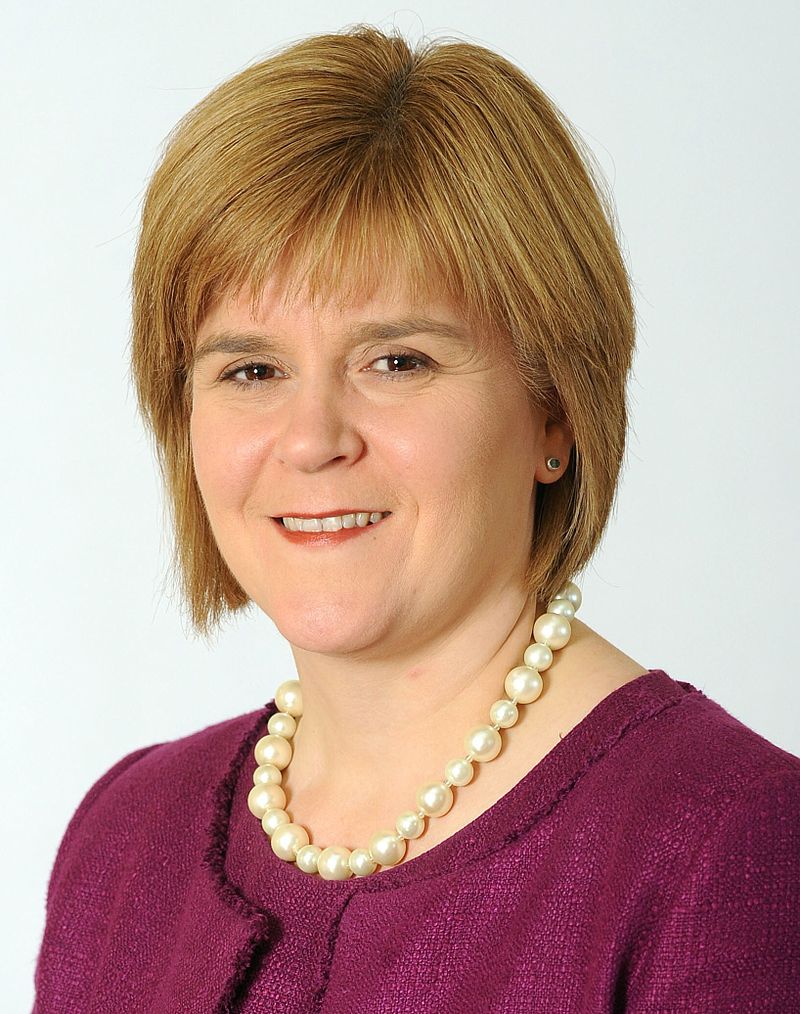
  • Nicola Sturgeon – 2017 Speech at SNP Conference

    Below is the text of the speech made by Nicola Sturgeon, the Scottish First Minister and Leader of the SNP, at the party’s conference in Glasgow on 10 October 2017.

    Friends,

    Leading this Party is a great privilege – one enjoyed by just a few people in our history.

    Earlier this year we lost one of our past leaders – a true giant of our movement.

    Gordon Wilson had the good fortune to be born in Govan in this city.

    And to represent Dundee in the House of Commons.

    Two great cities.

    When Gordon became leader of our party in 1979, he was one of just two SNP MPs at Westminster.

    Hopes of a new Scottish Parliament had just been scuppered.

    It was a tough time.

    But Gordon’s commitment and political skill laid the groundwork for the SNP’s future success.

    New members and younger voters may not know of Gordon’s contribution, but it can’t be overstated.

    He kept the flame alive.

    He devoted his life to serving Scotland.

    And all of us owe him a deep debt of gratitude.

    Friends,

    The three years I have been your leader can be described in many ways.

    Dull isn’t one of them.

    We’ve had an EU referendum.

    A Scottish Parliament election.

    And not one, but two, Westminster campaigns.

    Different election contests, for different Parliaments.

    But with one common thread.

    Victory for the SNP in all of them.

    Of course, we’ve had tough days along the way – and we learn from them.

    In June we lost good colleagues from the House of Commons.

    Let us thank them for their service.

    But let me offer a gentle reality check to our opponents.

    The SNP is polling at a higher level today than we were at this point in the honeymoon days after our 2007 win or our landslide in 2011.

    Our lead over the second placed party now is twice what it was in October 2008 – and it is five times that of 2012.

    Ten years into government, the verdict of the Scottish people is clearer than ever.

    They trust the SNP to deliver for Scotland.

    And we will work each and every day to retain that confidence.

    That applies here in this great city too.

    For decades, Glasgow has been run by Labour.

    In May, that came to an end.

    The cronies and time-servers are out.

    Fresh ideas, Susan Aitken and the SNP are in.

    The difference is already clear.

    Under Labour, a bitter school janitor dispute rumbled on for months.

    Within weeks, it was resolved by the SNP.

    For years, under Labour, women were denied the equal pay they are entitled to.

    Conference

    It may take us a bit of time to fix Labour’s mess, but I make this promise today.

    Fix it we will.

    The injustice suffered by low paid women in this city will be put right.

    Equal pay for equal work, denied for too long, will be delivered by the SNP.

    As we fight for Scotland, our opponents fight each other.

    Scottish Labour is currently having its annual leadership election.

    Hypocrites, plotters, betrayers, barrel scrapers.

    No, that’s not what we’ve been calling the candidates.

    That’s what they’ve been calling each other.

    These days, ferrets in a sack distance themselves from Scottish Labour.

    And as for the Tories – well, they’re now back in third place in Scottish politics.

    And no wonder.

    They are a policy vacuum.

    And the racism, misogyny and sectarianism within their ranks has been on full, ugly display.

    The disgusting views that have been expressed by too many Tory politicians have no place in public life.

    It’s time Ruth Davidson found some backbone and kicked the racists and bigots out of her party.

    Conference

    The opposition in Scotland are all over the place.

    That’s why more than ever the responsibility is on us, the SNP, to provide the good government that the people of our country expect and deserve.

    It is up to us to inspire the optimism that will drive Scotland forward.

    Just as we have over the past decade.

    Our record is a strong one.

    More than £3 billion extra for the NHS.

    Almost 12,000 more health service staff.

    And the best performing emergency departments anywhere in the UK.

    Prescription charges abolished.

    And no privatisation of healthcare.

    Conference

    As long as the SNP is in office, the NHS will always be in public hands.

    Now we are focussed on vital reforms to shift more care and more resources into communities. Tough decisions, yes – but necessary to make our NHS fit for the future.

    As in health, so too in education.

    In our schools, higher passes are up by almost a third.

    Ten years ago, just 12% of young people in this city left school with 3 Highers.

    Today, it is 30% and rising.

    Now we are reforming school education – empowering headteachers and delivering more money direct to the classroom.

    Friends

    I said we would close the attainment gap in our schools – and, mark my words, that is exactly what we are going to do.

    We have rebuilt the country’s infrastructure too.

    From Lerwick harbour in the north.

    To the Border Railway in the south.

    From the Queen Elizabeth Hospital in the west.

    To the magnificent new Queensferry Crossing in the east.

    And what an amazing feat of Scottish engineering that is.

    Look and travel across our wonderful country – the evidence is all around us.

    Improved rail connections the length and breadth of Scotland…

    The new Aberdeen bypass, upgrading the M8…

    Dualling the A9 and making it our first electric-enabled highway…

    Superfast broadband being extended to 100% of premises.

    Conference

    We are connecting Scotland for the 21st century and beyond.

    The SNP is Scotland’s Party and we are delivering for all of Scotland.

    This progress is good for Scotland.

    And it has another benefit.

    It shows the way for the rest of the UK.

    Last week, Theresa May said she would freeze tuition fees in England.

    She said they won’t rise above £9,250.

    Well, I can announce today that we will match that commitment.

    We will also freeze tuition fees.

    But we will freeze them at zero.

    Politicians elsewhere in the UK argue about whether fees should be frozen, reduced or abolished altogether.

    We’ve settled that issue.

    We abolished tuition fees. We restored education as a right.

    And we now have record numbers of young people going to University.

    While others debate fees, we are focused on the next challenges.

    Reforming student support. Widening access.

    Our mission is this.

    To give young people from poorer backgrounds – not just a better chance of going to university – but an equal chance of going to university.

    On housing too – one of the biggest issues of our time – while Westminster dithers and delays, Scotland is leading the way.

    When we came into office, council house building in Scotland had ground to a halt.

    The last Labour government built 6 council houses.

    Not 6000 or 600 or even 60.

    Just 6.

    So 8 years ago, we started a new generation of council house building.

    And since then, we’ve built 8,500 council houses.

    Overall, we are building new social housing at a faster rate than any other part of the UK.

    And now we are going further.

    Over this Parliament, we will deliver 50,000 more affordable homes.

    We are backing our commitment with record investment.

    £3 billion in this Parliament – almost 80% more than in the last five years.

    We’ve already set out how much money councils will be allocated each year.

    And we will not allow any of it to be diverted to other priorities.

    Let me make this clear to every council today.

    If you don’t use all of your allocation to deliver new housing, we will take back the balance and give it to one that can.

    On money for housing – if you don’t use it, you will lose it.

    Every last penny of our investment will go to delivering the new houses that people across this country need.

    That is our guarantee.

    Friends

    Over the past ten years, we have led the way.

    We should be proud of what we achieved.

    Our focus now is on the next ten years and beyond.

    The world we live in today is changing at a faster pace than we have ever known.

    The challenges we face are generational.

    Our responses must be transformational.

    Last month we unveiled our programme for government.

    A new programme for a new Scotland.

    It offers practical solutions to the daily concerns people have.

    And it aims to equip our country to prosper in a fast changing world.

    As we look ahead we face a choice.

    We can trail in the wake of the change that is coming.

    Or we can choose to shape our own future.

    Let’s resolve this today:

    We will not wait for others to decide for us.

    Let’s resolve to put Scotland in the driving seat.

    A country which values education and cares for future generations will always be in the driving seat.

    At the heart of all we do is a determination to make Scotland the best place in the world to grow up.

    I’ve referred already to our school reforms.

    But it is what we do in the early years that matters most to the life chances of children.

    The baby box really is a beautiful thing.

    Not just for all the practical help it provides Or even the contact it promotes between pregnant mothers and midwives.

    It is beautiful because of what it says.

    All children are born equal. All children are valued. All children deserve the same start in life.

    But much as I love it, the baby box is not the most significant of our early years policies.

    Our expansion of nursery education is.

    It is truly transformational.

    Currently, we deliver around 16 hours of early education and childcare a week – that’s already an expansion.

    But it means some parents still face a struggle to find and fund the childcare they need to allow them to work.

    We are going to change that.

    By 2020, we will deliver 30 hours a week for every three and four year old and eligible two year old.

    It will give children the best start in life.

    It will free parents to find work.

    And each month it will save families around £350 on the costs of childcare.

    That is the kind of real, practical help that young parents need.

    Often when I talk about this policy, I’m asked – sometimes sceptically – if we will really be able to fund it properly.

    Well, today, we put our money where our mouth is. Over the past few months, we have undertaken detailed work to assess the investment needed.

    Right now, we invest around £420 million a year.

    I can announce today that by the end of this Parliament, that will double to £840 million a year.

    Friends

    That is a commitment unmatched anywhere else in the UK.

    And it is the best investment we can make in Scotland’s future.

    Every child matters.

    That includes those who grow up in care.

    Last year, I set out plans for a fundamental review of the care system.

    We want it to have love at its heart.

    We are also delivering practical help to level the playing field for care leavers – like full grants and guaranteed places for those with the grades to go to university.

    We want to make life a little bit easier for those leaving care.

    So I can announce today a further step.

    We will change the law so that all young care leavers are exempt from paying council tax.

    Friends

    We can do all these things because we are in government.

    We can make a difference every day – with decisions that benefit this and future generations.

    The greatest responsibility of all that we owe to the next generation is to protect the planet.

    In 2009, we passed world leading climate change targets and we met them.

    Next year, we will go further.

    A new climate change bill will set even more ambitious targets.

    We will meet our obligations under the Paris Accord.

    Conference

    Every industrialised country, large or small, must play its part to meet our collective duty to safeguard the environment.

    And let me be blunt about this.

    That applies just as much to the White House as it does to Bute House.

    Environmental campaigners recently described our programme for government as the greenest in the entire lifetime of the Scottish Parliament.

    We should be proud of that.

    In that programme, we committed to setting up Low Emissions Zones in our four biggest cities by 2020, to improve the quality of the air that we breathe.

    The first of these will be in place by the end of next year and I am very pleased to announce today that it will be located here in the city of Glasgow.

    Conference

    We should also be proud of how we handle the difficult decisions involved in tackling climate change.

    We don’t rush to judgment.

    We weigh up the evidence.

    We listen to the people.

    And we come to clear conclusions.

    Clear conclusions like this one –

    Fracking is now banned in Scotland.

    Tackling climate change is a moral obligation.

    It is often seen as a challenge.

    But it is also a massive opportunity.

    Scotland can be a world leader in the technologies that will drive forward the low carbon economy of the future.

    Jobs and investment are there to be won.

    So we are leading by example.

    We will end the need for new petrol and diesel vehicles by 2032 – 8 years ahead of the rest of the UK.

    An ambitious target, but one we know can be met.

    In 2007, we pledged that by 2020, 50% of the electricity we consume would come from renewable sources.

    Last year, ahead of schedule, we achieved 54%.

    That’s great for our environment.

    And the lesson for our economy is this – by leading the way in using new technology, we send a message to the world that Scotland is the best place to develop it.

    Already, we are home to the largest tidal power array in the world.

    And next week, we will celebrate a new global first.

    I will officially open the world’s largest floating windfarm, situated right here in Scotland, off the coast at Peterhead.

    Conference

    Our ambition is simple –

    To put ourselves in the driving seat of change.

    That is why we are establishing a new National Manufacturing Institute and increasing our investment in business research and development.

    And it is why we have made this decision too.

    At our conference in March, you asked us to set up a Scottish National Investment Bank.

    And in our Programme for Government we committed to doing just that.

    Conference

    The Investment Bank is about doing things differently for the new age.

    In our manifesto last year, we also pledged to explore the option of a new publicly owned energy company.

    The idea, at its heart, is simple.

    Energy would be bought wholesale or generated here in Scotland – renewable, of course – and sold to customers as close to cost price as possible.

    No shareholders to worry about.

    No corporate bonuses to consider.

    It would give people – particularly those on low incomes – more choice and the option of a supplier whose only job is to secure the lowest price for consumers.

    Conference

    We will set out more detail when we publish our new Energy Strategy.

    But I am delighted to announce today that – by the end of this Parliament – we will set up a publicly owned, not for profit energy company.

    Conference

    We are taking real action in government now to meet the challenges of tomorrow.

    Responsible intervention to advance the collective good.

    We are also taking steps to empower communities.

    Local ownership. More autonomy for our islands.

    And of course land reform.

    Exactly 20 years ago, the people of Eigg bought their island from its owner.

    And so started Scotland’s modern journey of land reform.

    That journey continues today.

    In recent months Ulva, an island off the west coast of Mull, has sought permission to follow in Eigg’s footsteps.

    If permission is granted, the residents can get on with raising the money needed.

    Conference

    The Scottish Government has carefully considered the application.

    And I am delighted to announce that we have today granted permission to the people of Ulva to bring their island into community ownership.

    Scotland’s islands and rural communities attract visitors from across the globe.

    The tourist boom that our country is enjoying is great news.

    It means more jobs and investment.

    But it can also mean pressure on transport, services and facilities – especially in rural areas.

    The Scottish Government is determined to help.

    So I am pleased to announce today that we will establish a new £6 million Rural Tourism Infrastructure Fund.

    It will take bids from communities and work with local councils.

    And it will allow even more people to enjoy this, the most beautiful country in the world.

    Friends,

    Giving every child the best start, with the opportunity to live a healthy life, with a great education, and in a clean environment is at the heart of our programme for a new Scotland.

    But today’s generation faces another defining challenge.

    It is one that is rocking the foundations of political establishments across the democratic world.

    It is the challenge of our age – tackling the unfairness and inequality felt so sharply by so many.

    Here in the UK inequality is among the worst in the developed world.

    We intend to drive change here too.

    The fact that real wages have stagnated or fallen heightens the sense of unfairness.

    So to our nurses, teachers, police officers, firefighters – to all of our dedicated public sector workers – let me reiterate this commitment today.

    Next year, we will seek pay deals that are affordable but also fair.

    The 1% pay cap will be lifted.

    We are the only government in the UK to make this unequivocal commitment.

    It is now time for others to do so too.

    Making decisions that tackle the big challenges is the responsibility of our government.

    Last year, this conference asked us to investigate the feasibility of a citizens’ basic income.

    So we’ve announced the funding to do just that.

    You asked us to tackle period poverty.

    So we set up a pilot scheme to help low income women.

    And last month we announced free sanitary products for all in our schools, colleges and universities.

    Conference

    I can announce today that this groundbreaking commitment to tackle the gender injustice of period poverty will be delivered from the start of the new academic year next August.

    Scotland and the SNP – once again – leading the way in building a better, fairer country for all.

    Of course, a fair society must be paid for.

    Decisions taken at Westminster still determine our overall spending power.

    Revenue from income tax makes up just one third of our budget.

    But the prospect of more Tory austerity and the impact of Brexit pose growing threats to our public services and the most vulnerable in our society.

    That means it is right to consider how our limited tax powers might help us protect what we value most.

    As we do so, this question will be centre stage.

    What kind of country do we want to be?

    Too often, the debate on tax is framed as the economy versus public services.

    That’s wrong.

    Our taxes pay for the support that our businesses need to thrive just as they do for our health service and our schools.

    And our competitiveness as a country is about more than just our tax rates.

    It depends on the strength of our public services, the skills of our people and the quality of our infrastructure.

    It is a fact that a good society needs a strong economy.

    But let’s never forget this.

    No economy will reach its full potential without a strong, fair, inclusive society.

    And that’s what our government will always work to protect.

    Friends

    The Tories often accuse the last Labour government of bankrupting the UK.

    I’ll leave Labour to answer for itself.

    But there is no doubt about this.

    There is a bankruptcy at the heart of this Tory Government.

    It is a moral one.

    The rape clause.

    The misery being caused to so many by the shambles that is Universal Credit.

    Treatment of disabled people so appalling that the UN brands it a human catastrophe.

    And all the while tax cuts handed to those who earn the most.

    That is Tory austerity.

    Heartless, shameful, self-defeating.

    For the sake of decency, austerity must end – and it must end now.

    Conference

    We stand for a Scotland that is fair at home.

    And we want our country to play its part in building a better, fairer world.

    There is now a battle of ideas underway across the globe.

    A battle between those who want to turn inwards and those determined to look outwards.

    We know what side we are on.

    Our party is internationalist to its core and it will always be so.

    We’ve opened our doors and our hearts to refugees from Syria.

    We are working with the United Nations to support women in conflict resolution.

    In Africa and Pakistan we’re helping fight poverty and give girls the chance to be educated.

    We’re sending aid to Rohingya muslims fleeing violence in Burma.

    And our ground-breaking Climate Justice Fund is helping provide clean water in Malawi and irrigation in Zambia.

    Conference

    We will never accept that a limit should be placed on the contribution Scotland can make to building a better world.

    Strong voices for peace and justice are needed now more than ever.

    Last week, ICAN, the global campaign against nuclear weapons won the Nobel Peace Prize.

    Our party stands proudly as part of the global movement for peace.

    So let us restate this today.

    No ifs, no buts from the SNP.

    We say no to weapons of mass destruction.

    We say no to nuclear weapons on the River Clyde, or anywhere else.

    Friends,

    Sometimes we underestimate the goodwill the rest of the world has towards Scotland.

    Last week, I visited Dublin to promote Scottish business.

    The warmth of feeling in Ireland towards Scotland is tangible – as is their frustration and utter bewilderment at the direction of the UK.

    While I was there, I met with the new Taoiseach and I am delighted that he accepted my invitation to visit Scotland next year.

    We look forward to welcoming him as we strengthen the ties between our two countries.

    The UK Government may want to retreat from Europe.

    We intend to stay at its heart.

    Conference

    15 months on from the Brexit vote, the Tories’ failure to guarantee the rights of EU citizens to stay here shames them.

    We don’t have the power to guarantee these rights ourselves. I wish that we did.

    But we will act where we can.

    The Tories want to make EU citizens apply for the right to stay and pay for the privilege.

    They should think again.

    But if a fee is imposed, I can confirm today that – as a minimum – the Scottish Government will meet the cost for EU nationals working in our public services.

    It is a move that will give practical assistance to individuals.

    It will help us keep the doctors, nurses and other public sector workers that we rely on.

    And it will send a clear message to our fellow EU citizens, in actions not just words, that we welcome you, we value you and we want you to stay.

    Friends

    Immigration is not an easy subject for politicians.

    But we have a duty to be straight with people.

    If we accept the Tories’ arbitrary target the number of people working and paying taxes here will fall.

    That means fewer people to generate the tax revenues we need to pay for our public services and support our older citizens.

    An immigration policy designed to appease UKIP must go.

    A Scottish policy that meets Scotland’s needs and lives up to Scotland’s values must take its place.

    It is time to give control of immigration policy to our own Scottish Parliament.

    And put ourselves in the driving seat of decisions that really matter.

    In so many ways, the chaos unfolding at Westminster threatens Scotland’s best interests.

    Labour’s position is as clear as mud.

    For the Tories, the Prime Minister has lost control.

    The hard-liners are running amok.

    They loathe the European Union.

    And they don’t much like devolution either.

    The EU Withdrawal Bill gives Westminster control over Scottish agriculture, fishing, the environment, GM crops, fracking licensing and a whole host of other devolved powers.

    It is a blatant power grab.

    Conference

    We will not allow a Tory government to undermine devolution.

    Our message to the Westminster Tories is clear.

    Hands off Scotland’s Parliament.

    We do want Scotland to stay at the heart of Europe.

    But that does not mean we think the EU is perfect.

    Sometimes it fails to live up to its founding values of human dignity, freedom, democracy and equality.

    When the people of Catalonia – EU citizens – were violently attacked by police just for trying to vote, the EU should have spoken up, loudly, to condemn it.

    Friends,

    In Catalonia, I hope dialogue will replace confrontation.

    It is time for the Spanish government to sit down with the government of Catalonia.

    It is time for them to talk and to find a way forward.

    A way forward that respects the rule of law, yes.

    But a way forward that also respects democracy and the right of the people of Catalonia to determine their own future.

    Friends,

    Choosing your own future. Being in charge of the decisions that shape your destiny.

    Being in the driving seat and not simply at the mercy of events.

    That is the essence of independence.

    And we are the party of independence.

    The case for independence doesn’t depend on Brexit.

    But Brexit does show us what can happen when we don’t control our own future.

    Over the years, there have been many decisions taken at Westminster that I disagree with.

    But in the course of my lifetime, there have been three defining moments when a decision taken there has changed fundamentally our country’s path.

    In all three, Scotland’s interests have been cast aside.

    In the 1970s, when oil was discovered in the North Sea Westminster had a decision to make – set up an oil fund or not. They chose not to.

    Independent Norway took a different decision.

    Last month, their oil fund topped one trillion dollars.

    One trillion reminders that taking your own decisions is better than letting others take them for you.

    After the financial crash, Westminster was faced with another choice.

    Stimulate the economy or impose austerity.

    They chose austerity.

    The result has been a £3 billion cut to Scotland’s budget, the dismantling of the welfare state and thousands more children growing up in poverty.

    It is shameful.

    And now, Westminster is pursuing the hardest possible Brexit, knowing that it will make us all poorer.

    Just think if those decisions had been taken in Scotland.

    The difference could be dramatic.

    The security of a multi-billion pound oil fund.

    Investment, not Tory-imposed austerity

    And a country at the heart of Europe.

    When we think about those wasted opportunities, it should make us all the more determined that, in future, we will do things differently.

    It should make us determined to put Scotland’s future in Scotland’s hands.

    Friends,

    As I have always said, Scotland should have the right to choose our future when the terms of Brexit are clear.

    We have a mandate to give the people that choice.

    That mandate was won fairly and squarely.

    But exercising it must be done with the interests of all of Scotland at heart.

    People want clarity about Brexit first.

    We respect that.

    But to all of you here in this hall and across our country who are impatient for change, let me say this.

    We may not yet know exactly when the choice will be made.

    But we can, we must, and we will always make the case for independence.

    With the UK government so engulfed in chaos and taking the country down a path of self imposed decline, the need to do so has never been greater.

    So let us make our case with conviction.

    Let us address concerns head on.

    And above all, let us inspire confidence in our fellow citizens that the way things are now is not the way they must always be.

    There is a better future to be had for all of us, if we chose to build it, together.

    Friends,

    The gap between Scotland’s interests and Westminster’s priorities has never been wider.

    The House of Commons is polarised.

    There are deep divides not just between parties but within them.

    Politicians tipped to be future Prime Ministers hark back to Agincourt and Waterloo.

    They look to the past and the days of empire.

    We must look to the future.

    If the last year has taught us anything it is this –

    In an age of rapid global change we cannot afford to be bystanders.

    That means speaking up for universal democratic rights.

    And, yes, it means campaigning for independence.

    But it also means acting and governing today.

    Taking action now so that everyone has a stake in Scotland’s success.

    Providing opportunity and security for our young people.

    Caring for the elderly and those in need.

    Building a sustainable, green economy to create jobs and place Scotland at the cutting edge of technology.

    Our focus must be on what really matters – building a better Scotland and contributing to a better world.

    That has never been so vital.

    The late Canon Kenyon Wright once said this:

    “There is another way. It is marked ‘The Road of Hope’. Hope for a new nation at ease with its past, confident in its present and hopeful for its future.”

    This is the time to believe in and work for that better future.

    To put ourselves firmly in the driving seat of our own destiny.

    That is what the people of Scotland deserve.

    That is what we will deliver.
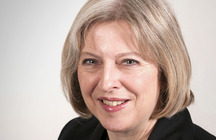
  • Greg Clark – 2017 Statement on Bombardier

    Below is the text of the statement made by Greg Clark, the Secretary of State for Business, Energy and Industrial Strategy in the House of Commons on 10 October 2017.

    With permission, Mr Speaker, I would like to make a statement on Bombardier, updating the House on the trade dispute brought by Boeing against that company. The case has serious implications for the workers at Bombardier Aerostructures & Engineering Services—Short Brothers—in Belfast, where the wings for the C Series aircraft are manufactured.

    Following a complaint by Boeing, the US Department of Commerce has made two provisional determinations in the case, calculating duties of 220% in relation to alleged subsidies for Bombardier and of nearly 80% in relation to alleged mis-selling by Bombardier into the US market. These initial determinations are bitterly disappointing, but they are only the first step in the process: a final ruling in the investigation is due in February and would be subject to further appeal, were this to be upheld. This Government have been working tirelessly to bring the case to a satisfactory resolution and we will continue to do so.

    In filing the petition, Boeing asserted three claims: first, that without Canadian and UK Government subsidies Bombardier would have been unable to develop the C Series; secondly, that Bombardier is selling at or below production cost its C Series aircraft in the US; and thirdly, as a result, that this is causing the threat of imminent material injury to the US domestic aerospace industry. This action followed Bombardier securing an order from Delta Airlines for 75 aircraft.

    The Boeing petition makes allegations about funding support from the Canadian federal Government and the Government of the Province of Quebec for the C Series. It also alleges that the UK’s provision of £113 million of repayable launch investment funding, committed to Bombardier Short Brothers in 2009 to support the development of the composite wings, contravened trade rules. We strongly and robustly refute that allegation.

    I want to make the Government’s position very clear: we consider this action by Boeing to be totally unjustified and unwarranted and incompatible with the conduct we would expect of a company with a long-term business relationship with the United Kingdom. Boeing does not manufacture a competing aircraft, so although Boeing claims harm in respect of the Delta aircraft order, it actually has no product in the 100 to 125-seat sector. Furthermore, this system of launch investment for the development of new aircraft reflects that of all major commercial aircraft programmes in their early years, including the Boeing 787. We refute entirely any suggestion that our support contravenes international rules.

    The Shorts factory in Belfast employs more than 4,200 excellent skilled workers, with almost a quarter of those working on the C Series. It also supports a supply chain of hundreds of companies and many more jobs across the UK, as well as supporting nearly 23,000 workers in the United States of America, where 53% of the content of the C Series is produced by US-based companies. We will continue to work tirelessly to safeguard jobs, innovation and livelihoods in Northern Ireland.

    From the outset, as is obvious, this has been a dispute that joins Canada and the UK, and we have been assiduous in working closely with the Government of ​Canada in our response. The Prime Minister has discussed the case with Prime Minister Trudeau, and I have been in regular contact with Canadian Foreign Minister, Chrystia Freeland, to co-ordinate our response and actions. We have had intensive engagement from across government at the highest levels. The Prime Minister has discussed the matter twice with President Trump, stressing the crucial importance of Bombardier’s operations in Belfast and asking the US Government to do all they can to encourage Boeing to drop its complaint. My Cabinet colleagues, including the Foreign Secretary, the Defence Secretary, the Chancellor of the Exchequer, the Trade Secretary and the Northern Ireland Secretary, and I have reinforced our serious concerns with, among others, the US Secretary of Commerce, the US Secretary of State, the US Treasury Secretary, the US Trade Representative and other members of the Administration, as well as, on this side of the Atlantic, the EU Trade Commissioner. My colleague the Minister for Energy and Industry, my hon. Friend the Member for Watford (Richard Harrington), has met Boeing International’s president, and I travelled to Chicago to meet Boeing’s president and chief executive to make absolutely clear the impact of these actions on the future relationship with the United Kingdom.

    I am grateful for the consistent and indefatigable efforts of the constituency Member, the hon. Member for Belfast East (Gavin Robinson), and indeed the whole community in Northern Ireland who are united in opposition to this action. We will continue vigorously and robustly to defend UK interests in support of Bombardier, its workforce in Belfast and those in its UK supply chain. We will continue to work jointly and collectively with the Canadian Government. We will work closely with Bombardier, its workforce and its trade unions, and we will do everything we can to bring about a credible, early resolution of this totally unjustified case. As I said, the initial determinations are the first step in the process, but we completely understand the worry and uncertainty facing the workforce, which means that the earlier this issue can be resolved, the better. To that end, I expect to have further discussions with Boeing, Bombardier, the Canadian Government and the US Government in the days ahead. The House should be aware that neither this Government nor our counterpart in Canada will rest until this groundless action is ended. I commend this statement to the House.

  • Karin Smyth – 2017 Speech on Air Rifles

    Below is the text of the speech made by Karin Smyth, the Labour MP for Bristol South, in the House of Commons on 9 October 2017.

    Mr Speaker, thank you for allowing this debate on the use and control of air rifles. This is a subject that the House has debated in the past, but which continues to have serious consequences for many of those we represent. Too many lives have been unnecessarily lost and too many serious injuries have been inflicted upon innocent civilians. Sadly, a large proportion of these victims are children and young people. We cannot ignore the issue and we need to do something about it.

    Let me explain my interest in the issue. On 1 July 2016, my young constituent, Harry Studley—then just 18 months old—was shot in the head and critically injured with an air rifle. Thanks to the efforts of the local emergency services, including the swift intervention of the Great Western air ambulance and the clinical staff at Bristol Children’s Hospital, little Harry pulled through despite his injuries. Harry’s parents, Ed and Amy, have explained to me that he has been left partially sighted, suffers memory loss and has post-traumatic seizures as a result of the incident. A local man was convicted of causing Harry grievous bodily harm and jailed for two years.

    Many people living in Bristol and the west country will recall hearing about this devastating incident in the local media. Parents listening to the heart-breaking details of the case would understandably have asked, “Could this happen to my family? Could the incident have been prevented? What can be done to make these weapons safer? Should these weapons be banned?”. Those are all valid questions and there are more. In young Harry’s case, it was suggested that the weapon was being cleaned. Would legislation making trigger locks compulsory on these weapons have prevented this dreadful and life-changing incident? We will never know in this specific case, but we have a solemn duty as elected representatives to scrutinise, to keep asking questions on behalf of those we serve and to bring greater safety.

    As Harry continues to recover, I pay tribute to his family. They have shown great resilience in the face of adversity. Crucially, they have been tenacious and determined that we should all learn from the incident that transformed their futures. As part of this work, they have closely monitored further incidents with air weapons. They were encouraged by the debate held in Westminster Hall in September 2016 by my right hon. Friend the Member for Delyn (David Hanson), whose long-standing interest in the issue dates from 1999 when a constituent of his, aged just 13, was killed. The 2016 debate called for the introduction of trigger locks, the safe storage of air weapons and a review of the impact of recent Scottish legislation, which I will come to later.​
    In a written response to my right hon. Friend the Member for Delyn, the then Home Office Minister responsible, indicated that the Government would

    “review the current air gun leaflet”

    and

    “keep a close eye on the introduction of air weapons licensing in Scotland”,

    an issue to which I now turn.

    Jim Shannon (Strangford) (DUP) I congratulate the hon. Lady on bringing this topic to the House for consideration. She will know, after discussions I had with her earlier, that Northern Ireland has very strict legislation covering air rifles and, indeed, all weapons. I say kindly and carefully to her that the British Association for Shooting and Conservation and the Countryside Alliance have laid out strict protocols and rules within the remit of the law. Does she feel that the law in England and the UK is sufficient to stop these things happening?

    Karin Smyth I am grateful to the hon. Gentleman for that intervention, for the information he has shared with me and for his expertise in this area. The point I will come on to is that we need to learn in England from what happens in Northern Ireland and Scotland and that children in Bristol South should be afforded the same level of security as children there, and I will return to that.

    Hon. Members will know that, following a series of tragic incidents involving air weapons, the Scottish Government acted to address the problem. Under the Air Weapons and Licensing (Scotland) Act 2015, it has been an offence since the start of this year to use, possess, purchase or acquire an air weapon without holding an air weapon certificate. It is a condition of that licence that weapons are securely stored in order that access and possession cannot be gained by a person who is not authorised. The licence application also requires the disclosure of criminal convictions, and the police must be satisfied that the applicant can possess an air weapon

    “without danger to the public safety or to the peace”

    before issuing an air weapon certificate. That is over and beyond section 21 of the Firearms Act 1968, under which a person who has been convicted of an offence may be prohibited from possessing firearms, including air weapons.

    In the run-up to the change in the law, 20,000 air weapons were surrendered to the authorities in Scotland and destroyed—20,000 fewer potentially lethal weapons were on the streets, and I think the House will agree that that makes Scotland safer. However, in England, just since the start of May 2017, there have been incidents involving air weapons and children in Carlisle, Bury, Chelmsford, Ipswich, Exeter and, most tragically, Loughborough, where, in August, a five-year-old boy was reportedly shot and killed with an air rifle—another tragic child death. In spring 2016, a 13-year-old boy was killed in Bury St Edmunds.

    Jo Churchill (Bury St Edmunds) (Con) I thank the hon. Lady for bringing what I consider a very important issue to the House. I pay tribute to that young man, and to his family and friends, all of whom have come to see ​me, and we have discussed some of the items the hon. Lady is raising today. Does she also agree that guns that are not manufactured by licensed manufacturers cause a problem and need to be looked at? There are also issues around hair triggers, magazines that do not necessarily show that they have been discharged and ammunition being left in the chamber that is not known about. Does she agree that those are the sort of things we should be looking at?

    Karin Smyth I am grateful for that intervention, and I certainly want to learn from other hon. Members’ experience and work in this area. I assured the Studley family in my constituency that, on issues such as this, hon. Members will work together cross party to achieve the best legislation.

    In his speech last year, my right hon. Friend the Member for Delyn informed the House that 17 children had died as a result of air weapons in the last 27 years. Sadly, it appears that that number has risen again, and I repeat that we need to do something about that. I ask the Minister to reconsider the response given last year to my right hon. Friend; it is simply not good enough to review the text of a leaflet.

    In this House, on 20 April, the then Leader of the House of Commons, the right hon. Member for Aylesbury (Mr Lidington), told me the Government have

    “no plans to ban or licence”—[Official Report, 20 April 2017; Vol. 624, c. 801.]

    air weapons, on the basis that misuse applies only to a small minority of people. Many of the people we represent would argue that many of the laws that currently protect them from all sorts of heinous acts are in place to protect them from a small minority, and even if only a small minority is affected, the consequences of their actions are grave and merit our attention, regardless of the numbers.

    Many hon. Members share an interest in animal welfare, and I would add that, since successfully securing this debate, I have been contacted by Cats Protection, the International Fund for Animal Welfare and others.

    Rachael Maskell (York Central) (Lab/Co-op) My hon. Friend is making an excellent speech. I became aware of this issue when cats in my constituency were shot and I looked into it. We now know that over 1,800 cats have been shot since 2012. Cats Protection has a live petition, which already has 72,000 signatures, calling for the licensing of airguns. Does my hon. Friend agree that it is time we updated our legislation in line with Scotland and Northern Ireland?

    Karin Smyth I am grateful to my hon. Friend for her intervention and I know from my reading of previous debates that she has done a lot of work on this issue. I shall certainly be asking for more updates on the comparison with Scotland to identify whether that is the right way to go.

    Most of the law in England and Wales on air weapons dates from the 1960s and it is time properly to re-examine the legislation to see whether it is fit for the 21st century. When an issue has such a devastating effect on the lives of families with such regularity, I would expect the Government to be considering such action already. It is for the Minister to decide what any review should cover, but at the very least I would expect a detailed consideration ​of licensing in the light of the change to the law in Scotland; of whether the fitting of trigger locks should be mandatory for all new air weapons sold; and of whether the reasonable precautions requirement on all airgun owners for the safe storage of air weapons and ammunition is adequate. My constituents are also interested in laws governing the registration and transfer of these weapons and would be grateful for an explanation of the current position and any proposed changes.

    I am grateful for the opportunity to raise these questions and stress in closing that the purpose of my securing this debate is not to ban air weapons outright. It is about their safe use. I want children and young people in my constituency to be protected from future tragedies like those that have been all too common in recent years. Surely Bristol South’s children deserve the same protection as children living in Scotland.