Tag: 2017

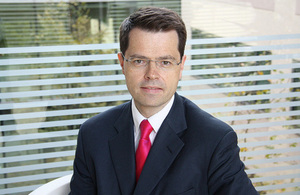
  • James Brokenshire – 2017 Speech to European Policy Centre

    Below is the text of the speech made by James Brokenshire, the Secretary of State for Northern Ireland, to the European Policy Centre on 6 November 2017.

    It’s a great pleasure to be here in Brussels today … and I’m grateful for the opportunity to update you on the current situation in Northern Ireland.

    During my visit today I am taking the opportunity to brief senior members of the Commission along with MEPs as the UK Government continues its negotiations to leave the EU in 2019.

    And of course part of my role … working with the Prime Minister and the Secretary for Exiting the EU … is to ensure that we secure an agreement deal that delivers for all parts of the UK, including Northern Ireland.

    Everyone here knows that Northern Ireland has unique circumstances which need to be recognised in the final withdrawal treaty to leave the EU … and making progress on the border between Northern Ireland and Ireland is essential in moving negotiations to the next phase.

    But before I talk specifically about Northern Ireland in the context of leaving the EU I thought it would be useful to give an overview of the current political, economic and security situations there.

    Because as I stand before you today, nearly a quarter of a century after the terrorist ceasefires and twenty years after the Belfast or Good Friday Agreement, it’s easy to assume that everything in Northern Ireland has been solved.

    And you could easily be forgiven for thinking that’s the case.

    Northern Ireland today is in so many respects unrecognisable from where it was in the early 1990s.

    Until the beginning of this year we had seen a decade of devolved government in Northern Ireland led by the Democratic Unionists and Sinn Fein … the longest such period of uninterrupted devolved government since the 1960s.

    The kind of terrorism that I used to see growing up in the 1970s and 1980s is no longer a daily fact of life … along with the military presence to deal with it.

    Northern Ireland today is the most popular destination outside of London for foreign direct investment into the UK. And of course relations between Northern Ireland and Ireland … and between the United Kingdom and Ireland … are at their strongest ever.

    So there are so many positives to take about Northern Ireland.

    The beautiful scenery and countryside.

    The industrial heritage.

    The exciting new opportunities.

    Our thriving creative industries.

    The quality of life.

    The warmth and friendliness of people who live there.

    And of course the example that Northern Ireland has shown the world as to how it is possible to emerge from a period of terrible suffering and conflict to a new era of peace, stability and greater prosperity.

    In that context I would like to pay tribute to the European Union … including Michel Barnier … for the support you have given to Northern Ireland … backing the peace process, encouraging economic growth and providing vital funding for programmes designed to bring communities together.

    The EU can be very proud of the role that it has played in Northern Ireland over decades … and both the UK and Irish Governments are very grateful for that.

    But for all of this progress significant political, economic and security challenges remain … and I would like briefly to take each of these in turn.

    Politically, Northern Ireland has been without a functioning devolved government since the beginning of this year. Civil servants have been able to spend money but key decisions over local services that require political input have not been taken.

    Crucially, a budget for the current financial year has yet to be set.

    This is putting public services under strain … and very soon both the UK Government and the Northern Ireland Civil Service assess that Northern Ireland will begin to run out of resources.

    Earlier this year I had to step in and legislate to set some local taxes so that local councils could continue to carry out their functions.

    We have now reached the point at which it is unlikely that an Executive could be formed in time to pass a budget for Northern Ireland by the end of this month.

    In those circumstances I am left with no option but to legislate at Westminster to enable the Northern Ireland civil service to continue spending money to already agreed totals.

    This would not be my budget … it would be one prepared by the Northern Ireland civil service on the basis of the previous Executive’s priorities.

    Should an Executive be formed the budget could be amended or changed … and indeed if an Executive were formed with sufficient time left under expedited procedures to pass the budget bill in the Assembly … I would clearly wish to proceed instead with legislation to enable that to happen.

    I’m clear … introducing and passing a budget in Westminster does not mean that we are introducing direct rule, any more than legislating for local taxes did earlier this year.

    And needless to say, the UK Government will only take this step with the greatest reluctance … not because we want to but because we have to.

    But it would be a dereliction of duty to see the public services on which people rely begin to disintegrate before us.

    Of course I still hope we can avoid this step.

    The UK Government … along with the Irish Government … is working tirelessly to bring about an agreement between the main Northern Ireland parties that would enable an Executive to be re-formed.

    And we will stick at it, because . . . as President Clinton’s visit to Northern Ireland last month, nearly 20 years after his key role in the Belfast Agreement, prompted many of us to reflect . . . we have come so far.

    But ultimately we have a responsibility to provide good governance in Northern Ireland … and we will not shirk our responsibilities.

    The next area where we have a great deal more work to do is in strengthening the economy and building a stronger society.

    Northern Ireland’s economy continues to grow.

    Unemployment is still falling … while in the past twelve months employment has hit record levels. As I said earlier we continue to attract significant foreign direct investment.

    And we have some world beating businesses.

    But the economy is still far too dependent on government spending.

    And we need to rebalance the economy in a measured and sensible way.

    Levels of worklessness and welfare dependency are still far too high.

    So we are looking at things like City Deals that have proven very successful in other parts of the UK.

    And we remain committed to the devolution of Corporation Tax so that Northern Ireland is better able to compete for investment with its nearest neighbour, Ireland.

    But for that to happen Northern Ireland needs a functioning devolved government.

    Alongside strengthening the economy, we need to tackle deep seated social divisions.

    In Northern Ireland today over 90 per cent of public housing is segregated along sectarian lines.

    Over 90 per cent of children in Northern Ireland are educated separately.

    It is regrettable that additional so-called peace walls … or interface barriers … have been erected since the signing of the Belfast or Good Friday Agreement in 1998 and still divide communities today.

    Indeed some independent estimates put the cost of division in Northern Ireland at around £1.5 billion.

    So bringing people together … and building a stronger, more shared society has to be an urgent priority.

    Most of the responsibility for tackling this rests in the devolved sphere.

    And the previous Executive had made a start … for example with programmes under its strategy called Together: Building a United Community.

    For our part the UK Government has provided significant financial support … for example in helping to fund schemes to promote greater shared housing and more shared and integrated education.

    But clearly much more needs to be done.

    It requires significant political will and drive if we are to overcome decades … some might say centuries … of division and build a stronger more united community.

    And that needs to come primarily from local politicians working together for the good of the whole community. So there’s another reason why it’s so important to have a functioning Executive back up and running.

    The community divisions that still exist in Northern Ireland can, on occasion, still fuel tensions and public disorder … though on a much reduced scale than in previous years.

    And they can also be exploited by paramilitary and terrorist groups that continue to exist and operate in Northern Ireland.

    The threat level from dissident republican terrorists remains severe in Northern Ireland… meaning that an attack is highly likely.

    Even though they are relatively small in numbers, they retain lethal capability and intent.

    The fact that you don’t hear more about them is primarily down to the superb efforts of the Police Service of Northern Ireland, our security services and An Garda Siochana.

    And the levels of co-operation that currently exist between the PSNI and the Garda … and between the UK and Irish Governments … must be preserved, and where possible enhanced, following Brexit.

    In addition to the continuing threat from terror too many communities in Northern Ireland are held in the grip of paramilitary groups … criminals who prey on society primarily to line their own pockets.

    They engage in gangsterism and carry out brutal attacks … often by appointment … on people within their own community to exert fear and control.

    Following the 2015 Fresh Start Agreement the Executive … working with and supported financially by the UK Government … devised a strategy for tackling paramilitary groups with the aim of putting them out of business for good.

    There was never any justification for the existence of paramilitary and terrorist groups in Northern Ireland … and there is none today.

    But if the strategy for tackling paramilitary activity is going to be at its most effective … and that will only be seen through results on the ground … then it needs to be led locally.

    And that’s another reason why Northern Ireland needs a properly functioning Executive.

    Finally, Northern Ireland needs a fully functioning Executive to ensure that its voice is fully heard as the UK leaves the EU.

    As I have said before … we joined the Common Market in 1973 as one United Kingdom and we will leave the European Union in 2019 as one United Kingdom.

    And as the Prime Minister has made clear … leaving the EU will mean that we leave both the single market and the customs union.

    I find it difficult to imagine how Northern Ireland could somehow remain in … while the rest of the country leaves.

    But as we have made equally clear we are determined to find bespoke solutions to Northern Ireland’s unique circumstances … not least as the only part of the UK to share a land border with an EU member state.

    We need to deliver an outcome that works for all parts of the United Kingdom.

    We fully recognise the extent to which the Northern Ireland economy, while an integral part of the UK economy, is also fully integrated with that of Ireland particularly in areas like the agri-food sector.

    We fully recognise the flow of traffic across the border on a daily basis for people going about their business be it to work, study, shop or simply visit friends and relatives.

    And we fully recognise those ties of family and shared history that exist between people on the island of Ireland as well as between Ireland and Great Britain.

    All of this requires creative and imaginative thinking by the UK and Irish Governments along with negotiating partners in the EU. But I believe solutions can be found … and it is in that positive sense that the UK Government has approached the current phase of negotiations and we will continue to do so.

    And the Northern Ireland and Ireland position paper published by the UK Government in August set out clearly and positively where we stand.

    We want to ensure that the Belfast or Good Friday Agreement is fully protected … including the constitutional principles that underpin it, the political institutions it establishes and the citizens’ rights it guarantees.

    We want to preserve the Common Travel Area … and, yes, ensure that we have as frictionless and seamless a border as possible between Northern Ireland and Ireland with no physical infrastructure at the border.

    We want to protect the single electricity market that operates across the island of Ireland to ensure continuity of supply for the benefit of business and domestic consumers.

    At the same time we need to ensure that nothing is done that undermines the integrity of the UK single market … Northern Ireland companies sold four times as much into Great Britain than to Ireland in 2015.

    And of course no border between Great Britain and Northern Ireland or anything that fractures the internal market of the United Kingdom, which benefits Northern Ireland hugely.

    Of course none of this was ever going to be easy.

    But I believe that with a positive attitude on all sides it is achievable.

    As both the Prime Minister and the Secretary for Exiting the EU, David Davis, have set out to the House of Commons in recent days, significant progress has been made in the negotiations so far.

    Within the Northern Ireland-Ireland Dialogue, we have agreed that the Belfast or Good Friday Agreement should be protected in full, including its constitutional arrangements.

    We have proposed that the UK and the EU seek to agree text for the Withdrawal Agreement that recognises the ongoing status of the Common Travel Area…and have already developed joint principles with the EU on this.

    We have also mapped out areas of cooperation that function on a North-South basis to ensure this continues once the UK has left the EU.

    And we are determined to press on so that we can move to the next phase of negotiations as we deliver on the democratic wishes of the people of the UK as set out in the June 2016 referendum.

    During this speech I have deliberately set out some of the big challenges that face us in Northern Ireland. But I want to end on a positive note.

    Nearly twenty years on from the Belfast or Good Friday Agreement Northern Ireland is immeasurably in a better place.

    Huge progress has been made.

    What have often looked like insurmountable problems have been overcome.

    We’ve seen commitment, courage and above all leadership on all sides.

    And we’ve seen enormous international goodwill and support … including from the EU.

    But we can’t just rest on what has been achieved.

    We need to tackle today’s challenges in order to build a better tomorrow.

    For our part the UK Government … along with our partners in Ireland … are determined to do just that…

    As we strive to build a stronger, more prosperous Northern Ireland for everyone. And a Northern Ireland that can look to the future with confidence and optimism.

    Thank you.
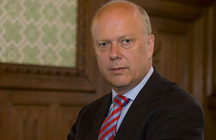
  • Chris Grayling – 2017 Speech on Automated Cars

    Below is the text of the speech made by Chris Grayling, the Secretary of State for Transport, on 6 November 2017.

    Good morning ladies and gentlemen.

    Thank you for that welcome.

    I’m delighted to join you for today’s (6 November 2017) conference.

    To have this chance to talk about how we’re getting ready for automated vehicles.

    And what they mean for you and your businesses.

    You may have seen over the weekend – hundreds of magnificent old cars taking part in the world’s longest running motorsport event.

    The annual London to Brighton Veteran Car Run.

    They were continuing a tradition which goes all the way back to 1896.

    The year of the first London to Brighton.

    Which was known as the Emancipation Run.

    Because it celebrated a recent increase in the speed limit from 4 miles per hour (mph) to an eye-watering 14 mph.

    We tend look back on those early motoring years with nostalgia.

    Pioneering manufacturers like Daimler and Panhard producing cars for an enterprising and extremely rich clientele.

    But 1896 was a landmark motoring year for less romantic reasons too.

    It was the year in which a London woman became the first recorded pedestrian to be killed by a car.

    When she stepped off a curb and was hit by a gas powered vehicle, driven by a certain Arthur Edsall.

    There was no precedent for such an accident.

    So Edsall was released without charge.

    And the coroner was quoted as saying he hoped such a fatality would never happen again.

    Of course it didn’t take long to realise that these new horseless carriages were not just temperamental to drive.

    They were also dangerous – for a society wholly unprepared for their arrival.

    So perhaps it’s not surprising that 1896 was also the year when the first UK car insurance policy was sold.

    Details of those early policies are long lost.

    But the service they provided was fundamental.

    To establishing a framework that protected the victims of accidents, and focused attention on road safety.

    But that also made car ownership viable, and ultimately allowed the market to grow.

    With all the benefits of driving that we take for granted today.

    Since then, of course, motor insurance has grown into a massive industry.

    An industry that’s innovated in response to changing technology.

    Changing legislation.

    And changing driving conditions.

    But despite this progress, we’ve seen nothing in our lifetimes that can compare with the motoring revolution that’s just around the corner.

    A revolution that will transform the way we travel.

    The way we buy, run and power our cars.

    And the way we insure them.

    The autonomous, ultra-low emission vehicles that are in development now will be as different to today’s family saloons as those early vehicles which participated in the first London to Brighton run.

    They represent an unprecedented leap forward in the history of the automobile.

    So much so that future generations will see 20th century motoring with a driver at the wheel controlling a vehicle powered by an internal combustion engine as merely a quaint stepping stone on the journey to cleaner, fully autonomous and more efficient road transport.

    Social and safety implications

    The potential benefits of these new technologies for human mobility – and for wider society – are tremendously exciting.

    Many who can’t currently drive will be able to take to the road.

    Elderly people.

    Or people with disabilities which prevent them from travelling today.

    They’ll discover a new sense of freedom and independence.

    And there is also the potential for us to make much more efficient use of the road network.

    There are currently 6 cars for every 10 people in the UK.

    But they are only used about 3% of the time.

    Connected and autonomous taxis could deliver the same number of trips with just 10% of the vehicles, according to one recent study.

    An autonomous car fleet could reduce delays by 40% on the strategic road network, and 30% in urban areas.

    But just as importantly, there are huge safety implications.

    Self-driving cars should make road travel far safer.

    By eliminating the biggest contributory factor to accidents today – human error.

    Which in 2016, was responsible for over 85% of all reported UK road incidents.

    And these benefits are coming soon.

    Sooner than most people expect.

    In fact, I expect the first self-driving cars to reach the market – and to be used on UK roads – by 2021.

    The government is already taking steps to make this happen and consulting with industry partners for their views.

    Never before have we experienced such a profound change in motoring technology in such a short space of time.

    And there are major opportunities in this fast emerging market for those who are best prepared.

    Exports of low emission vehicles are already worth £2.5 billion to our economy.

    But it is estimated that the market for autonomous vehicles could be worth £28 billion to the UK by 2035.

    That’s why we are so committed to becoming a global leader in the design, development and use of autonomous vehicles.

    The UK code of practice for testing automated vehicles on public roads is recognised as one of the most open in the world.

    Leading manufacturers like Nissan and Volvo have already announced test programmes in the UK.

    And to support further growth, we’re investing £100 million in R&D – match-funded by industry – across more than 50 collaborative projects.

    Such as Pathfinder pods in Milton Keynes.

    We’re also investing £100 million – again match-funded by the industry – to provide a comprehensive range of virtual, yet real-world testing environments for developers and investors to use.

    The scheme will be co-ordinated through MERIDIAN.

    A new government-backed and industry-led hub.

    To co-ordinate and promote connected and autonomous vehicle technology in the UK.

    In October we announced the winners of a £51 million government competition to develop self-driving car testing infrastructure.

    Including new facilities at 2 of the motor industry’s biggest proving grounds.

    And our third open R&D funding competition closed just a couple of weeks ago.

    Meanwhile colleagues at the Centre for Connected and Autonomous Vehicles recently attended the Intelligent Transport Systems World Congress in Montreal.

    Where they were busy explaining why we’re the leading country for the research and testing of new autonomous technologies.

    And the ‘go to’ location for global investors in this field.

    So we’re making real progress.

    Preparing the UK for change.

    Though we can’t be complacent.

    That’s what the Automated and Electric Vehicles Bill is all about.

    Keeping ahead of the curve.

    The bill’s making smooth process through Parliament.

    And I’m sure that will continue through to Royal Assent.

    As you know, one of the key objectives of the bill is to set the legislative groundwork for automated vehicle insurance.

    We have worked very closely with the insurance industry to get it right.

    So I’d particularly like to thank the ABI and its members today for the support we’ve received.

    The measures in the bill will help us provide certainty to the insurance industry – and clarity to the public – about the changes ahead.

    Automated vehicles will make collisions rarer.

    But when cases do come to market, our current compulsory insurance framework might not fully protect the people and businesses involved.

    As things stand, they may not be covered for collisions caused by autonomous vehicles, because only the driver’s use of the vehicle is insured.

    Victims might have to take vehicle manufacturers to court, which would be time consuming and expensive, undermining the quick and easy access to compensation that is a cornerstone of our insurance system.

    If we fail to address this beforehand, we risk jeopardizing consumer protection, and undermining the competitiveness of our automotive industry.

    Having consulted widely, we are creating a new compulsory insurance framework that covers motorists when they are driving, and when the driver has legitimately handed control to the vehicle.

    This will ensure that victims have quick and easy access to compensation.

    And that insurers can recover costs from the liable party, which in the majority of cases is anticipated to be the manufacturer.

    It will allow consumers to buy insurance in the same way they do today.

    And in turn, it could also reduce premiums.

    One of the UK’s largest insurers has said that “as well as making our roads safer, insurance premiums are based on the cost of claims and therefore we expect substantially reduced premiums to follow.”

    So automated vehicles, introduced alongside the effective insurance framework proposed in this bill, could deliver significant financial and safety benefits for ordinary road users.

    We have already had many productive debates when these measures were included in the previous Vehicle Technology and Aviation Bill.

    Changes have been made to the current bill that take some of those concerns into account.

    However, we know that there are still wider issues to be discussed.

    Issues that can’t be settled until automated vehicle technology has evolved further.

    Since we do not yet know how the technology will fully work, regulating early could diminish the benefits we want to achieve.

    It is imperative that we do not over regulate – or worse, regulate badly – while the technology is still developing.

    This could potentially result in regulation that is unsafe for the public.

    Or compromise the UK’s position in the market.

    There are a number of important conversations about regulations taking place at an international level, and it would not be in UK interests to act unilaterally before decisions have been made.

    So, our proposed regulatory programme will allow us be flexible and agile in response to future developments.

    On the question of data handling.

    This is clearly a matter for vehicle manufacturers and service providers.

    There is a regulatory framework currently within the Data Protection Act.

    But research projects will help provide evidence of how data should be recorded and shared.

    Where we see barriers, we will act to remove them in a pragmatic manner.

    Where necessary, we will help lead international negotiations.

    As we are doing at the moment on harmonising guidelines, standards and regulation on cyber security for the global automotive industry.

    So to sum up.

    We are well positioned not just to follow changes in motoring technology over the next couple of decades.

    But to lead them.

    And part of our preparation is to make sure our regulatory framework is ready for the arrival of driverless vehicles.

    Just as we saw at the dawn of motoring in the late 19th century, the success of tomorrow’s cutting edge automotive industry will depend on an effective and affordable insurance framework.

    Once again, insurance will be the enabler that helps the vehicle market to grow.

    So millions more people can enjoy the benefits of motoring.

    So we can reduce congestion and harmful vehicle emissions.

    And so we can look forward to significantly safer road conditions.

    There’s still a long way to go.

    And there’s much about the technology we don’t yet know .

    But I can promise you that we will continue to work closely with you.

    To secure a motor insurance framework that is fit for the future.

    Not just for consumers.

    And for the car industry.

    But for you and your businesses too.

    Thank you.

  • Lord Duncan – 2017 Maiden Speech in the House of Lords

    Below is the text of the maiden speech made by Lord Duncan of Springbank in the House of Lords on 9 October 2017.

    My Lords, this is the first time I speak in your Lordships’ House. The phrase “baptism of fire” probably springs to mind. This is indeed one of the most challenging issues that we will face as a country and as constituent parts of that country. But before I go on to that, if I may, this is also my maiden speech so I hope noble Lords will indulge me for a moment before I return to the business in hand.

    I come to the House from another place, not along the Corridor, as many have done—not for want of effort on my part, I hasten to add—but from over the channel, from Brussels and the European Parliament. I represented Scotland, the largest and many would say the best constituency in the European Union. I learned a great deal from watching how that chamber works. Some things worked well and some things did not. I suspect we will be able to look again at how things are developing there with some interest as the Brexit process goes on.

    Just as Charles de Gaulle lamented the challenge of governing a land of 246 cheeses, the challenge is all the greater trying to represent a land of 118 distilleries, as Scotland has. However, the tour is slightly more invigorating than the tour of cheese production in France. I had hoped to bring to this House some experience of events in Brussels and Edinburgh, but given the extraordinary collection of talent on the Benches on both sides, from former Commissioners and ambassadors to distinguished former MEPs, frankly, I just hope to keep up. I recognise that there is a wealth of experience in the debate today, and I hope to try to respond to some of that.

    When the Garter Principal King of Arms asked me to consider which place name I would take as my title, I asked, somewhat tongue in cheek, whether I could take Brussels. He smiled benignly, as is his wont, and explained only if I could claim to have achieved a great military victory there. I fear my success on the non-road mobile machinery directive was perhaps not quite qualification enough. Instead, I chose Springbank in the county of Perth. My grandparents moved to the newly constructed council scheme of Springbank Road in the town of Alyth in 1934. They came from a mill cottage with an earthen floor. My mother was born ​there in 1936 on the kitchen table, as she would often tell me, and thank goodness for Formica. Upon marriage, my father moved into the same house and it was there that my brother and sister were born. Indeed, for the first few years of their marriage that is where they lived, alongside my grandparents and their other son. My parents’ first home of their own was also in the same council scheme. My grandparents lived their whole life in Springbank Road, as did my mother, who passed away only a few years ago. I am the third generation to hail from Springbank and I believe that it is appropriate to take that as my title. I also again commend the notion of council housing, which I believe we are once again looking to improve. It is significant and important and I commend it.

    Before I move on to the substantive elements of the debate, I should give my thanks to my noble friends Lord McInnes of Kilwinning and Lady Goldie for guiding me so expertly through my introduction here only a few weeks ago. I have to admit that it was most nerve-racking experience of my parliamentary career and I would not want to go through it again. None the less, it was an extraordinary thing to find myself here among noble Lords. I also thank the doorkeepers who have guided me more than once up different corridors and helped me to locate toilets, which are not well publicised, in different parts of the building. I thank again the clerks who have guided me through various other elements of my work and my ministerial colleagues who have guided me in so many of the elements of what I am about to speak of today. They have all shown me great kindness and I appreciate that a great deal. It is a privilege to be here.

    Perhaps I may turn to today’s business. Let me begin by commending the approach of my noble friend Lord Selkirk: the union is precious and there is no question about that. Throughout the debate we have heard many noble Lords speaking of that very precious union. Indeed, as my noble friend Lord Lang of Monkton began the debate, he recognised that we must not take this union for granted. We had a close shave not so many years ago, and again the noble Lord, Lord McAvoy, was very kind to point out how we worked together to try to move forward and recognise the challenges faced at that difficult time.

    I shall start by addressing head-on the point made by my noble friend Lord Lang. There was a delay in the response to this paper; that is not appropriate and it will not happen again. We must make sure that we address these challenges in good time and we cannot take for granted that time will be given to us to make sure that that happens. It is also important to stress the attitude of this Government, which is to ensure that both the Brexit process and the devolution process work together. A number of noble Lords pointed out the challenge of the piecemeal approach we have adopted to our constitutional evolution, and indeed some of those changes have not always been in the best interests of the entire union. Some have been made in haste and some, I suspect, we regret and would revisit were we to have an opportunity to do so. The challenge with devolution as we understand it is that it is a ratchet that moves in only one direction. The problem is that if we do not get it right the first time, it unfortunately moves on too fast to change it around.​
    The joint ministerial committees were mentioned a number of times by several noble Lords, including my noble friends Lord Lang and Lord Dunlop, and the noble and learned Lord, Lord Wallace of Tankerness. I was a clerk in the Scottish Parliament in the early days of the joint ministerial committees and I can assure noble Lords that they were not working well then—long before we had the situation of Brexit and long before we had embraced many aspects of devolution. There were a number of reasons for that. I think that to some degree everyone expected different things from those committees and everyone was slightly disappointed by not getting what they wanted out of them. Let me answer some of the other questions which have been raised. How often have the joint ministerial committees met this year? Not enough—they must meet more often. The times we face now are a challenge and we must embrace that by doing so together, using these committees to help us take the steps forward; of that I am in no doubt whatever. But I should also stress that although these committees have not met as often as perhaps all would have wished, to some degree there were extenuating circumstances such as the election and other elements. None the less, we need to do better.

    However, I would also say that the bilateral discussions have been significant and important at all stages of the process. The noble Lord, Lord McAvoy, was right to point out that we are well served by a Civil Service that is able to continue to collaborate even when politicians cannot always quite find themselves at the same table facing each other in the same direction. For example, in rural affairs, over the past few months of the summer period there have been more than 50 face-to-face meetings to discuss each of the aspects of Brexit as they impact on the rural affairs agenda, and that is not without significance. Again, it is important that we are as open as we can be. The UK Government are committed to being as open as they can and have been so throughout the process. Part of the challenge, however, is that we have not always been able to secure from the others participating the same level of openness, and that in itself can be a challenge. The consent aspect has to work both ways. There needs to be collaboration from both sides; it cannot just be all give on one side and all take on the other. It is important that we recognise that.

    Perhaps I may go into a little more of the detail. Again, I am fearful that I will not be able to do justice to the sheer range and depth of knowledge and expertise that noble Lords have displayed today. Perhaps I may take a moment to say that, as someone who sat in the European Parliament for a number of years, I have probably experienced more serious debate and insight in the past few hours here than was often the case in some of the debates I witnessed there. First, I turn to the reports themselves. There are elements that we must look at in trying to address how we consider the devolution settlement. It is easy to look on it as unfinished business, but the question is: what would finish that business? How shall we bring together each of the constituent parts to create what needs to be a functioning constitution? We cannot simply keep feeding the crocodile and hope that it will eat us last. There needs to be a recognition ​of what we are for. What is our country and what shall be our constitutional settlement? We need also to recognise that each constituent part must play its role in that. We do that against the backdrop of Brexit, which makes the whole process considerably more difficult in terms of trying to achieve progress. However, I am well aware that we have to achieve that progress because without it we will be in a terrible situation.

    The noble Lord, Lord Jay, made a significant contribution to the discussion today. I am under no illusion about some of the challenges the noble Lord has presented to the Government. What I would say as a former Member of the European Parliament is that there is a challenge in how the acquis communautaire functions, how the frameworks within which we exist today have been constructed and how the devolution settlement itself embraced those frameworks. It is true to say that when we witnessed the changes in Brussels, as we have done over the years, they have been negotiated by the United Kingdom with the involvement of the home nations; none the less, the devolution frameworks were established within an established European framework. That was the glue, as the noble Lord rightly put it, but none the less it was there. That is why the Government have no ambition to change in any fashion the powers currently exercised by the devolved Administrations. What we have to do is work out where the frameworks need to be functional. At the moment there are 111 areas in the Scottish legal world and 64 in the Welsh where again, we hope to collaborate to establish exactly where we can find a common framework, a common approach and the right outcome.

    We have no ambition to retain powers that we do not need and do not deserve to hold. We must recognise that the devolution settlement is fixed; we will do so, but we must also recognise that on day 1 after Brexit, each element of our procedures must be legally sound. We can take no risk of there being an upset, stumble or breakdown, and we should take time to echo the points made by so many of my colleagues on these Benches. We must take time to ensure that we get the frameworks settled and sorted and workable. If we get them wrong, we will live to regret it. One problem we face now is that that day is fast approaching, so we need to make sure that on day 1 we have a legally sound system, but that we work out how, as a common people of different nations, we will come together and pull in that direction.

    The noble Lord, Lord Desai, is quite right. England can often be overlooked and it is one of the great challenges that we sit in what many people consider to be one of the Chambers of the English Parliament—and yet, the very nation of England itself can often be overlooked in the wider sense of the word. That is a great pity, and we need to recognise that as each of the other home nations pushes for particular changes to the wider constitutional settlement. I served as a clerk on the committee when my noble and learned friend Lord Wallace of Tankerness was in the Scottish Parliament—not that long ago, it seems, but here we have arrived, apparently for greater things.

    I am aware that we face serious challenges in working out each of the component parts of the overall settlement. I am particularly concerned about the devolution settlement and the replacement for the structural funds and the common agricultural policy, to which reference was made. The Government have given a commitment to 2022. In truth, that is one year more than we would have been able to offer to the wider Welsh, Northern Irish and Scottish farmers and others. That is a year more than we would have had if we had stayed in the EU. We are giving a greater degree of certainty. Each of those elements is up for significant change.

    When I met the Commissioner for Agriculture in Brussels not so long ago, he talked about the fact that the overall sum of money given to farmers will be significantly reduced in certain areas and that farmers will have to tackle that. As a Government, we are committed to 2022 and we will see how we can reform and move forward at that point; but there is still no desire, I hasten to add, to seek powers being drawn back from those Administrations—none at all. It is about trying to recognise where we can work together. To give some examples—I am aware we are often accused of not explaining where those examples may rest—we are currently focusing on the wider question of pesticides. We are conscious of the food and feed law for animals, but we need a common approach. We are aware of the food labelling issue because, as we begin to look at some of the geographical indicators—I was in the Western Isles not so long ago, breakfasting on Stornoway black pudding, a feast of kings—we need to recognise that we need a common approach across the United Kingdom. The final example is infectious diseases—which is more fun to talk about than look into, I hasten to add.

    We face challenges in establishing what the frameworks need to look like. We need collaboration, and that is where the joint ministerial committees will work. It is at such gatherings that officials will sit down and work, because in truth, many of these issues are almost above our pay grade. They are at the level of detail where we need to understand how the law comes together with practical and policy issues. That can be something of a challenge.

    The noble Lord, Lord Wigley, is right to point out the issue of Catalonia. We cannot see such issues being resolved with bloodshed on the continent of Europe. I absolutely agree. I am also fully aware that the Edinburgh agreement, which was brokered between the Government of the United Kingdom and the Scottish Government, is a template for how other nations may embrace the demographic and democratic challenges presented by independence movements. It is a model that many people across Europe should be looking at.

    I hope the Welsh football team are doing rather well right now—I am sure the noble Lord, Lord Wigley, is as interested in the outcome of that match as I am—but at the same time, he is right to talk about multiple geometry. Much of our situation today is about the asymmetry of our land. We do not face, as the US does, a number of small, medium-sized and large states all mixed together. We have such asymmetry ​and we need to recognise that. That may be part of the challenge when we start looking at the JMC. How do we contain within the JMC the correct structures to reflect the fact that—as the noble Lord, Lord Desai, pointed out—England is just bigger? How do we recognise that asymmetry, but none the less recognise the obligations we have to the home nations to reflect on the wider settlement of our constitution? It is not as easy as I would like to think.

    My predecessor, the noble Lord, Lord Dunlop, has been very kind to me during my time finding my feet. I have not yet witnessed the tartan hippo, although I have witnessed many other tartan animals, if I may be a little unkind. A challenge in trying to do one’s job is embracing social media—it is not always full of laughter, it is fair to say.

    It is important to stress that there is an existential threat to our nation. There is no question of that. One thing I would note in passing is that there are far too few nationalists in here. There needs to be more. That seems an odd thing, perhaps, for a unionist to say, but if we are to reflect the wider interests of our country, we must recognise that those voices need to be heard in both Chambers, not just in the House of Commons. That is perhaps not for me to create, but for others to look into; none the less, at this time, more than any other, we need those voices as part of the overall discussion that we are looking into.

    Some of the aspects which my noble friend Lord Dunlop was kind enough to point out need to be addressed at the technical level. There are technical deficiencies. There are some issues around subsidiarity which we need to look at and then work out how best to do the job. Certainly in the Scottish situation devolution need not rest in Edinburgh, any more than in Wales and Northern Ireland it need rest in Cardiff or in Belfast. We need to recognise where power needs to be exercised. That is the European concept of subsidiarity. We need to recognise where it works even within the United Kingdom itself. If we can do that, we have a fighting chance of ensuring that our union continues. As someone who comes from outside the central belt of Scotland, I am very conscious that there is a great lament that overcentralisation to Edinburgh can be a huge problem, yet it needs to be addressed.

    My noble friend Lord Lexden is quite right that some of the issues that we are talking of are worthy of note. The long delays in responding are unacceptable, and I am happy to confirm that we will not be moving in that direction again. We will move to address that.

    “Devolve and forget” is not a concept that I wish to see go forward. We cannot simply hope to push things away, particularly during the Brexit process.

    I am conscious that I have several other Members to respond to. Let me make one commitment: if I do not address their questions this evening, I ask them to hunt me down and I will come back to them. I do not wish them to feel that they have been short-changed because I have seemingly glossed over their points.

    In the latter moments of my speech, I need to stress Northern Ireland. That will be one of the intractable aspects of the overall Brexit situation. It is equally a challenge within the wider devolution question. I assure noble Lords that James Brokenshire, the Secretary of ​State, is working very hard, but we have to recognise that the challenge need not rest solely with those inside the would-be Executive or Assembly; it is at all levels within Northern Ireland. They must also be part of the wider question of devolution and Brexit.

    How do I finish off without short-changing other noble Lords who have spoken? Many of your Lordships have raised important issues. We need to recognise that the EU has provided the constitutional glue within which we as a Parliament have been able to operate, but we must also recognise that because of the approach that we have taken—by holding a referendum—that glue will not be as available to us to hold these things together. We must find another glue, something else that works for us as a people but also as a country. I hope that we can do so.

    I am fully aware of how challenging Brexit will be, but I assure your Lordships that, in so far as I can, I will respond to any and all entreaties to co-operate and to collaborate. We will do all that we can to ensure that there is serious dialogue on all aspects, not just with MSPs and AMs but with councillors as well, to make sure that all are part of the process. This is an important time and we cannot get it wrong, because the ratchet is turning in only one direction. If we are not careful, we will turn it too tight and, as with winding up those old-fashioned clocks, the whole thing will unravel in our hands.

    I again thank your Lordships for your forbearance and kindness in listening to my remarks. I assure you that I will do all I can to take forward the issues that we have discussed today in a timely, sensitive and careful manner.

  • Matt Western – 2017 Maiden Speech in the House of Commons

    Below is the text of the maiden speech made by Matt Western, the Labour MP for Warwick and Leamington, in the House of Commons on 12 October 2017.

    Thank you, Madam Deputy Speaker. I am grateful for the opportunity to make my maiden speech in this important debate. Although I have spoken several times already in the Chamber, questioning the Prime Minister and other Ministers, this is indeed my formal introduction to the House.

    The past five months have been extraordinary, and it is a great honour for me to represent Warwick and Leamington, a constituency that also includes the town of Whitnash and a number of villages. I wish to place on record my thanks to them. I would also like to thank my predecessor, Chris White, for the work he did as a constituency MP, and specifically his support for the charitable sector and the local games industry. He served the community well, and I wish him well. It is work that I will most definitely build on.

    It is a happy coincidence that my maiden speech should coincide with the news, published yesterday in The Independent and by the BBC, that Leamington has been declared the happiest town in the UK. Delightfully, the survey that led to this finding was conducted after 8 June, which doubtless explains everything.

    My constituency is not only the happiest place in the UK. Apparently, it was one of the first provincial towns in England to possess the other key attribute of happiness ​—a good range of Indian restaurants. You do not need to take my word for it: whilst a predecessor, Sir Anthony Eden, liked to quote from Shakespeare, in this instance I am going to quote from the historian, Lizzie Collingham, author of a definitive history of curry:

    “Leamington was one of the first provincial English towns to have a selection of Indian restaurants. The area’s very proximity to Coventry and Birmingham, where many of Britain’s Bangladeshi and Pakistani immigrants found work in the car industry, made it, where Indian food is concerned, one of Britain’s pioneering towns. It still is.”

    As if to underline that, one of our very many local establishments was proclaimed winner of Midlands Curry House of the Year and shortlisted for the national awards. So none of you should need any inducement to visit the locality—and you will be most welcome.

    But good eating is not all it has to offer. My constituency has been home to such luminaries as Joseph Arch, a 19th-century pioneer in unionising agricultural workers and in championing their welfare. Arch also agitated for the widening of the franchise—ambitions that were to some degree fulfilled in the Representation of the People Act 1884. In the ensuing 1885 general election, Arch was returned as the Liberal MP—we can all make mistakes—for North West Norfolk, making him the first agricultural labourer to enter the House of Commons.

    My constituency was also home to Randolph Turpin, who was considered by some to be Europe’s best middleweight boxer of the 1940s and ‘50s, and went on to become the undisputed middleweight champion of the world, in defeating no less than Sugar Ray Robinson. And it was home to Sir Frank Whittle, one of Britain’s greatest inventors, the creator of the jet engine, and indeed once to my hon. Friend the Member for Chesterfield (Toby Perkins), the as-yet-unknighted Toby Perkins.

    Warwick is famous for its glorious castle, the seat of the legendary kingmaker Guy of Warwick. It is the medieval county town for a shire that once included both Birmingham and Coventry. Today that would be some county. Leamington, its noisy neighbour, is perhaps now the happiest town in the UK but was certainly not favoured by the late John Betjeman in his poem “Death in Leamington.” Fortunately, Betjeman saved his greater wrath for elsewhere, famously inviting “friendly bombs” to rain down upon a different town. In fact, despite being a major manufacturing centre, the constituency was not the victim of significant bombing in the second world war, unlike neighbouring Coventry, sadly, but during the war it was the seat of an important team of camoufleurs—artists and engineers who played a leading role in developing the art and science of camouflage. It is interesting that one of the constituency’s most significant contributions to the defence of our country back then was through design.

    Design and innovation permeate the recent history of our towns. In the post-war period, the legendary Donald Healey set up his car business on the Emscote Road in Warwick, going on to produce some of the finest sports cars the world has ever seen. Not far away, Malcolm Sayer was designing the E-Type Jaguar. I am proud of my constituency’s impressive contributions to design and technology and its continuing role in developing innovative technologies of all sorts. That continues to this day with the world-leading Warwick Manufacturing Group, which is part of the University of Warwick and has collaborated with industry, Government and other ​universities in developing battery cell technology, new materials, and digital applications. It is therefore no surprise that what is still referred to as the gaming industry finds itself home here. Along with Dundee, it leads the industry with more than 50 local businesses, employing 2,500 people and generating £188 million in turnover, and it is about to grow exponentially. I am proud that it is leading the revolution in not just virtual reality, but augmented reality. I can honestly say that I have seen the future— through a headset.

    The constituency’s relative economic buoyancy is exactly that: relative. It has depended on the single market and the customs union, together with our openness to attract the best in the world. Football clubs, such as my beloved Arsenal, have benefited similarly. Warwick and Leamington is an exceptionally diverse, international and multicultural community. Engineers, designers, academics and working people of all sorts from Europe and around the world have made the area their home. As Leamington’s proud restaurant history reminds us, it has also long been home to distinguished communities originating from the Indian subcontinent, who have played, and continue to play, an important role in the economic and cultural life of the west midlands. By way of example, our magnificent gurdwara is now celebrating its 50th year. That diversity explains in part my constituency’s openness to international business and migration. It voted remain in the EU referendum. Since the vote, residents and representatives of Warwick University, Jaguar Land Rover and other businesses have consistently voiced their concerns to me about the impact of Brexit. They tell me that they simply want clarity and certainty—urgently. Economic matters are critical in their planning, and they expect Government responsibility, not party infighting. I am confident that they would agree with me: no deal, no way. They are right to worry.

    The prolonged lack of clarity over the post-Brexit landscape on the British economy is an issue for the majority of my constituents. Some have already voiced their concerns about potential exclusion from the EU’s data protection framework, which would impede the continued free flow of data among EU and EEA states, without which businesses and the economy will suffer. The Lords EU Select Committee states that we are facing a dangerous cliff edge in that regard. Data is critical in our society and for our businesses, but we need strong safeguards. I echo the words of my hon. Friend the Member for Cardiff West (Kevin Brennan) about what data means, particularly for the younger generation, who, interestingly, can be viewed as a data commodity, but we must not allow our young people to become a commodity.

    My constituents are already noting Brexit’s impact on the region’s ability to attract and retain the talented skilled workers on which it relies, and they are worried about the continuing weakness of the economy overall. The economy is extremely fragile and vulnerable to currency fluctuation and interest rate changes. Since 2015, we have witnessed a surge in unsecured household debt, which has reached levels not seen since 2007-08. Consumption growth—the sole driver of the UK economy for nearly a decade—is faltering, partly because much of that growth was driven by the £35 billion windfall that households received in PPI repayments. That is some economic stimulus by any measure. The effect of ​that short-term windfall is now tailing off. Since 2011, that extraordinary, one-off cash injection helped to fund, for example, higher retail car sales and new kitchens, but for little longer. Car sales have been falling since April 2017, which is as good an indicator as any that consumer confidence is declining significantly. Investment growth—the real driver of wealth—has failed to return to the UK after the financial crash of 2008, but only here. Growth in all other developed nations now exceeds the UK’s.

    Like so many of the Government’s claims, assertions about Conservative economic competence have proven ill founded. UK debt has continued to rise. The Government have failed to meet their own economic targets. Real wages have fallen by 15% for many in the public sector and have been stagnant for most. CPI inflation is rising and will soon exceed 3%. Household budgets are being truly squeezed. Sterling has fallen by up to 20%; by contrast, personal unsecured debt has sky-rocketed.

    Individually, those elements would be concerning enough; together, they augur serious concern. At the same time, the cost of housing is rocketing. In my constituency, average rents have increased by 26% in the past six years. In the past 10 years, only 50 council homes have been built in the area although 2,400 people are on the housing waiting list. Last year, 705 people applied as homeless to the local authority—130% up on 2010, compared with a 29% increase nationally over the same period. Some 3,600 people in my constituency regularly use our food banks. There are several night shelters in our towns and in recent months the numbers attending have doubled. The work there is increasingly important and I place on the record my thanks to Margaret, Chris, Susan, Vishal and all the other volunteers.

    Quite simply, the housing market is broken. As has been confirmed by a Prime Minister not known for her Marxist principles, the energy market is also broken. As with so many Government announcements these days, it is too little, too late. Energy is ripe for revolution and it is vital that we should take this opportunity to democratise it. That will bring prosperity to all, as well as address the urgent crisis of climate change.

    In his maiden speech in 2010, my predecessor stated that Warwick and Leamington had excellent frontline services. He was right: in 2010, we did. Seven years on, we do not. We have lost police—in Warwick, we have lost the police station. We have lost teachers, full-time firefighters, and health professionals from the NHS. Many are demoralised. I will not continue because all hon. Members face the same reality in their own constituencies.

    What can we do? The International Monetary Fund has one suggestion: rebalance the tax system. A report just published by the IMF finds that higher income taxes for the rich would help reduce inequality without having an adverse impact on growth. Perhaps implementing some of the Labour party’s policies would be a good start to getting us on to a more secure economic footing as we face the enormous disruption of Brexit. Perhaps that is an announcement for next week. My constituents, whether residents or businesses, need, now more than ever, a strong Government ready to protect jobs, deliver a shared prosperity and enable all to flourish. Above all, I will speak for them. That is the vision that I will represent in Parliament. I thank hon. Members for their attention.​

  • Bernard Jenkin – 2017 Speech on Essex University

    Below is the text of the speech made by Bernard Jenkin, the Conservative MP for Harwich and North Essex, in the House of Commons on 2 November 2017.

    I am grateful to you for granting me this debate, Mr Speaker, and it is a pleasure that you should be in the Chair, given that you are also the chancellor of the University of Essex. We are fortunate that you have taken on that role. I am also grateful to my right hon. Friend the Minister for Apprenticeships and Skills for being here, and I look forward to her reply to this debate. I hope she will convey the points of concern I am raising to her colleague, the Minister for Universities, Science, Research and Innovation.

    As the UK prepares to leave the EU, universities, including the University of Essex, are facing much uncertainty: what access will there be for EU students and academics after the UK leaves the EU? What fees will EU students be liable to pay? Will EU students still have access to the UK student loans system? Will the UK continue to participate in EU research programmes such as Horizon 2020? Despite all that, I have never doubted that the UK’s universities will continue to thrive outside the EU, just as they did before we joined.

    The 2018 QS World University Rankings put four UK universities in the top 10 in the world, and nine in the top 50. What is more, there are opportunities for universities when we leave the EU. By levelling the playing field between EU and non-EU students and academics, universities will be better able to compete with all our international rivals—the big US universities and the emerging universities of Asia, as well as the European universities. But the Government need to make decisions as soon as possible so that universities can plan for the future.

    Since I was first elected for Colchester, North in 1992, I have had the privilege of representing the University of Essex in Parliament. We have a close relationship, and I am a member of the court of the university. Over the years, I have witnessed how much the University of Essex has contributed to academia, the local economy and the wider community. It continues from strength to strength. I make no apology for using this opportunity to set out the university’s progress and achievements. In June, Essex was awarded “gold” in the teaching excellence framework. Essex was also ranked in the top 15 in England for student satisfaction for the fifth year running in the national student survey, and 22nd in “The Times and The Sunday Times Good University Guide 2018”. Furthermore, Essex was ranked in the UK’s top 20 universities for research excellence in the last research excellence framework.

    Very few universities excel in both education and research, while also performing strongly in measures of overall student experience, graduate prospects and quality of facilities. Essex is one of a very small group of universities that genuinely achieves that. As a result, Essex students benefit from a research-led education that not only equips them to succeed on their courses, but provides them with the skills to succeed in their chosen careers after graduation. I look forward to continuing to work with the university in the years ahead, as it builds on these achievements.​

    The Higher Education and Research Act 2017 will introduce a new regulatory framework. One of its effects is to establish two new bodies, one called the Office for Students and the other called UK Research and Innovation. I will not elaborate on the complex details of the reforms, but there is concern that those two bodies must work closely together, reflecting the importance of integrating research and teaching. I know that a consultation is in progress, but I hope the Minister can reassure universities about that in her response.

    I commend to the Government the 2014 Public Administration Committee report on the effectiveness of public bodies, “Who’s Accountable?”. I was Chair of that Select Committee at the time. Ministerial directions will not be enough to ensure co-ordinated working. Our report found that to make things work effectively in such a situation, the Department must develop confident, open and trusting relationships, both within the Department on the two policy areas and between the officials in the Department and the leadership of those two public bodies. There is no other way to ensure a high level of co-operation between the two bodies so that the mutual benefits that result from excellent research and outstanding educational experiences are promoted.

    This is proving to be a record year for recruitment at the University of Essex, with close to 6,000 students starting undergraduate or postgraduate courses this autumn. The university has seen unprecedented levels of interest in student places, with more than 20,000 applications for 4,400 undergraduate student places this year. This has allowed the university to continue to grow in size. In 2016, it had 14,000 students, compared with only 9,500 in 2012. The university plans to grow further, increasing student numbers to 20,000 by 2025.

    The University of Essex has recruited more than 152 new academic staff over the past three years and invested heavily in its professional services. That recruitment continues as the university continues to grow. It is also making a significant investment, until 2021, of around £90 million in its teaching facilities, student accommodation, knowledge gateway building programme and sports facilities. I look forward to seeing the outcome of that work.

    Will Quince (Colchester) (Con) I congratulate my hon. Friend on securing this important debate. As he knows, around half the University of Essex’s students live in the Colchester constituency. Does he agree that the university plays a huge social, cultural and economic role in Colchester’s prosperity? We are incredibly proud to have the university linked so strongly to our town.

    Mr Jenkin I certainly agree with my hon. Friend. He will be as acutely aware as I am of what a big role the university plays in the civic life of Colchester and the surrounding area.

    The University of Essex’s research is pioneering and world class. Its department of government, at which you studied, Mr Speaker, is ranked the best in the country in every assessment of research quality that has been undertaken. The university is also in the top four for social science research, fifth for economics and 10th for art history. Last year, the university secured £42 million of externally funded research income, including half a ​million pounds secured by a biological sciences research team to investigate marine bacteria, which will improve our understanding of the impact of global warming on this vital part of Earth’s life-support system.

    The Public Administration and Constitutional Affairs Committee, of which I am Chair, scrutinises the UK Statistics Authority, which has done work on what is known as big data. As Chair of that Committee, I am delighted that the University of Essex won £27 million from the Economic and Social Research Council to support its work on understanding society up to 2021. It is the largest longitudinal statistical study of its kind, and it provides crucial information for researchers and policy makers about changes in attitudes and behaviours over time and on the causes and consequences of deep-rooted social problems and change in people’s lives. The university’s status as a leading centre of expertise in analysing and handling big data, such as that generated through the Understanding Society programme, received further validation in 2016, with UNESCO’s establishment of its only chair in analytics and data science at the university.

    I would be grateful if the Minister set out how the Government will remain fully committed to recognising and rewarding research excellence wherever it is found, whether at Essex or elsewhere. I would also like to pay tribute to the late Anthony King, who, in 1968, became reader in government at the University of Essex, which gave him the opportunity to shape the department, which now enjoys such a renowned reputation.

    University of Essex research has impact through partnerships with businesses of all sizes. That work was recognised when the university was ranked in the top 10 in the UK for engagement with business through what the Government recognised as knowledge transfer partnerships, and supported through the programme run by Innovate UK, to help businesses improve their competitiveness through better use of UK knowledge, technology and skills.

    The knowledge transfer partnerships are one of the main ways in which the university ensures its research feeds into business activity, and the range and scope of those partnerships is extensive. For example, Essex works with the digital agency, Orbital Media, to use artificial intelligence to create automated online GP services. Essex also works with the organisation Above Surveying, which will use the latest technology to improve the way its drones monitor and inspect solar farms.

    Essex is continuing to expand its business engagement and the University of Essex Innovation Centre is now being built on the Colchester campus. This is a joint initiative with Essex County Council and the south-east local enterprise partnership, which, when completed, will provide space and support for up to 50 start-ups and smaller high-tech businesses in the Knowledge Gateway research and technology park.

    The university’s research impact also supports public institutions in tackling challenging social and economic issues. In conjunction with Essex County Council, the university has appointed the UK’s first local authority chief scientific adviser, Slava Mikhaylov, professor of public policy and data science, who supports Essex County Council to develop policy rooted in scientific analysis and evidence. ​

    Essex was one of the very first universities to start offering degree apprenticeships in higher education, which provide students with the skills that industry needs and allow them to combine studying for a full degree with gaining practical skills in work. Such apprentices get the financial security of a regular pay packet, while providing businesses with a cost-effective way to bring in new talent and skills or develop their workforce. Tech giant ARM, alongside local small and medium-sized enterprises, is already offering degree apprenticeships in partnership with Essex. The university’s work in this area is hugely beneficial, with both students and businesses standing to benefit a great deal from these opportunities.

    This determination to use research to drive growth has led to Essex being asked to lead a £4.7 million Government project in the eastern region and to grow the economy through improved productivity by encouraging collaboration between universities and businesses. The “Enabling Innovation: Research to Application” network will build collaborations to support business innovation across Essex, Kent, Norfolk and Suffolk.

    I am enormously proud of the University of Essex’s work. However, I am also proud of its global outlook and international spirit.

    Mr Mark Francois (Rayleigh and Wickford) (Con) I declare an interest: I went to Bristol—I am sorry about that. As an MP from the south of the county, may I confirm to my hon. Friend that the reach of the university goes across the entire county and indeed beyond? In the south of Essex, we greatly value the economic contribution that the university makes to the life of our county.

    Mr Jenkin I very much welcome my hon. Friend’s intervention. At the point where I am celebrating the University of Essex’s global reach, it is entirely appropriate that Southend and Rayleigh should be included in the equation.

    Staff and students come from all around the world and the university collaborates internationally on a high proportion of its work. The Times Higher Education rankings for 2018 placed the University of Essex second in the UK for “international outlook” and I am delighted that applications to the university from international students continue to increase. I am also delighted that, on their arrival in Essex, international staff and students are met with such an open and inclusive welcome.

    As the UK regains control of its borders following Brexit, I urge the Government to ensure that barriers are not put in the way of universities such as Essex, one of the UK’s great export success stories, continuing to attract talented students and staff from around the globe.

    Giles Watling (Clacton) (Con) Does my hon. Friend agree that as well as having an excellent chancellor, the University of Essex is a great centre for the local community it serves, not just the global community? This summer I was fortunate enough to give out graduation certificates to hundreds of students who attended during the summer break. Does my hon. Friend agree that the university serves a useful purpose in that regard?

    Mr Jenkin I am very grateful for that intervention because I did not have that element in my speech.

    The Government will be aware that EU membership has obliged us to provide support for students from EU countries. Leaving the EU will provide us with an opportunity to support more students from poorer countries, and I encourage the Government to look at how the UK can do this. The higher default rate among EU students taking out UK taxpayer-funded student loans is a burden. According to figures released by the Student Loans Company earlier this year, this figure stands at approximately 4% for EU domiciled student loan borrowers compared with around 0.5% of English domiciled student loan borrowers. The percentage of students who are yet to have their repayment status confirmed, or who have not supplied their incomes and have therefore been placed in arrears, is also higher among EU domiciled student loan borrowers.

    It is hard for the Student Loans Company to pursue loans being repaid from abroad. These losses should not fall on the British taxpayer, nor should British students have to pay higher interest rates as a consequence. I hope that the Minister will make it clear that the UK will no longer be obliged to offer student loans and subsidised fees to EU students after the UK leaves the EU, not least because these students come from far wealthier countries than other countries that we should want to help more.

    Essex is also leading the way on women’s equality, so it is appropriate that this Minister, who is also the Minister for Women, is replying to this debate. Essex gave its female professors a one-off salary increase in 2016 after an audit revealed a pay gap between its male and female professors. It was the first university in the UK to do so and the decision was covered in national media. This was a brave and bold move, and, one year on, the gender pay gap between male and female professors has not reopened. The university and its vice-chancellor, Professor Anthony Forster, deserve credit for this.

    I do not need to say how important universities are to individuals, to our society and to our economy. They transform people’s lives through education and the value of their research, provide businesses with people who have the vital skills they need, and make a crucial contribution to the UK economy. They enrich our society and culture as places where conventional wisdom can be challenged and where contentious issues can be debated with passion on all sides. The University of Essex was one of the few universities that remained officially neutral during the EU referendum. I personally helped to find speakers from both sides of the argument for a major debate hosted by the university just prior to the vote. Essex has set the highest example of impartiality and protection for freedom of speech.

    In conclusion, I am sure that the Minister will want to join me in congratulating the University of Essex for all that it is achieving. However, I hope that she will address the concerns I have raised, particularly those arising from the UK’s decision to leave the EU. These uncertainties about access for foreign students and academics to UK universities, or about the replacement of EU funding, are not dependent on the outcome of any negotiations with the EU. The Government can decide things such as our future immigration policy ​right now. The Government can decide now that they will guarantee, at least in principle, to replace EU funding with UK funding, particularly as when we leave the EU we will no longer be required to support non-UK EU spending, which amounts to some £9 billion a year. There is no excuse for extending uncertainty unnecessarily. I hope that the Minister will at least agree with that.

  • Matt Hancock – 2017 Speech on Supercharging the Digital Economy

    Below is the text of the speech made by Matt Hancock, the Minister of State for Digital, to TechUK’s annual conference on 31 October 2017.

    Thank you for the invitation to join you here today.

    Whenever I’m with techUK, I feel I’m among like minds. Because my roots are in business, and my roots are in tech.

    Both my parents started businesses, and all my siblings have started their own, and it might have seemed natural for me to learn from their example and take that route too – and to go into tech.

    But what I also came to learn is that business needs the right environment to thrive. How can the whole system work against, or work for, the hardworking, enterprising, entrepreneurial founder?

    This is a question I first asked for very personal reasons. When I was growing up, the business that my parents ran – my stepfather wrote the code, my mum was in charge – was all around me and the main subject even at our dinner table. My first job was in the company, solving the Y2K bug in COBOL.

    When I was a teenager, in the early 1990s, recession hit. If our customers struggled, if they couldn’t pay their bills, then our business struggled along with them, and that impacted the twenty or so people we employed. Friends, I should say, as much as colleagues. At one point, in the worst of the recession, we came close to losing everything. My mum, my stepdad and all the people who worked in the business would have lost their jobs. All through no fault of our own, all through outside factors.

    We got through it. In fact the software became a big hit. And now every time you type your postcode into the internet and it brings up your address, you can thank my stepdad Bob. I hope we’ve helped you with your Christmas shopping over the years.

    But what those early experiences taught me was that it isn’t ever enough to have a good idea and the will to drive it through. To go from concept to reality – and then to ubiquity – requires a strong environment for enterprise.

    And that environment, while best not entirely determined by Government policy, can certainly be shaped and guided by it.

    Because while I did go on to work for the business, I then went to the Bank of England as an economist, and that’s where I discovered all the big decisions are made in Westminster. So here I am, and in a job directly concerned with improving the environment for tech businesses.

    So I really feel it when I say it is an honour and a privilege to be the UK’s first ever Minister for Digital, working to give others the opportunities we had, to – wherever we can – help you take those ideas, those sparks of hope and make something real and successful.

    But what does that mean, in this time of digital revolution?

    It means harnessing this amazing new technology, so that it works for the benefit of everyone and not only an interested few. It means mitigating the risks, and ensuring the benefits can be accessed by all. It means supporting a thriving digital sector, and a digital infrastructure that is not only fit for the present but the future, with easy and ubiquitous access for everyone in this country to the growing opportunities digital technology offers.

    Our Digital Strategy, published in March of this year, set out how we intend to make the UK the best place to establish and grow a digital business and the safest place for citizens to be online.

    I’m pleased to tell you that, only six months since the launch, we are making great progress. Today, I would like to update you now on how we are making the UK the best place in the world to start and grow a digital business, and how we are set to continue these developments in the very near future.

    We understand that in order to have a thriving digital economy, we need to support tech businesses at every level, from startup to scaleup.

    Over the past year we have seen investments in UK tech, including from Microsoft, Amazon, Apple, IBM and Google, and into British stars like Zopa, Monzo, and ARM.

    We’ve significantly expanded the British Business Bank’s capacity in scale up capital, and actively support the opening of incubators across the country.

    Preparing Britain for success in the rest of the twenty first century, in the face of the fastest advance in technology in history, means making sure everyone has the skills they need to thrive in the digital world.

    Britain needs stronger digital skills at every level, from getting people online for the first time, to attracting and training the world’s top coding talent.

    Again, this isn’t something we in Government can do on our own. So when we launched the Digital Strategy in March, we committed to establish a new Digital Skills Partnership, to both bring greater coherence to provision of digital skills training at a national level, and to increase the digital capability needed to build thriving local economies throughout the country. ​ Our partners in industry ​pledged​ more than four million free digital skills training opportunities​. Since then, we have made great progress, through companies like Barclays, Lloyds, Google, and many others.

    On top of that, we have put coding in the curriculum from age 8, and recently announced that one of our first new T-level technical qualifications will be in Digital.

    We want all these opportunities to be open to as wide a range of people as possible. We firmly believe that digital skills are essential, for everyone, to thrive in this digital age and that training in such skills should be an entitlement for all our citizens. So we legislated for Digital Skills Entitlement in the Digital Economy Act and are now developing the detail of the policy with the Department of Education. My friend and colleague Karen Bradley, Secretary of State for DCMS, and I are working to deliver this entitlement, so that everyone can get the basic skills they need.

    We’re not stopping at digital skills, we are also looking at technologies of the future.

    The Industrial Strategy Green Paper, published in January, identified AI as a major opportunity for the UK, with real potential to boost our future economy. We already have some of the best minds in the world working on AI, and many areas of the UK economy – health, education, finance, to name just three – have already embraced innovation through AI.

    The challenge now for Government is to build a strong partnership with industry and academia to cement our position as the best place in the world to base and develop this new technology.

    So in March we launched an independent review – Growing The Artificial Intelligence Industry – led by Jérôme Pesenti and Dame Wendy Hall. The final report was published just a couple of weeks ago and sets out what we must do to support the enormous potential of AI – from smarter scheduling of operations in health care, to hiring on-demand self-driving cars – while mitigating its risks. My thanks to Dame Wendy, Jérôme and team for their excellent work.

    Now I look forward to working with all of you, and with the wider industry, to deliver its proposals. Together we can make the UK a world leader in this amazing new technology, and can make sure all our citizens benefit from its use.

    We are also endeavouring to make the UK the safest place in the world to live and work online, as set out in detail in our Digital Charter, which sets out to balance the freedom of the internet whilst mitigating potential harms.

    We want to work closely with all of you to develop solutions to the issues at hand. We will make sure that the Charter is underpinned by an effective regulatory framework, but will only use regulation where other options are not working. Where regulation is necessary, we will ensure it supports rather than stifles innovation and growth, by providing clarity for innovators and building confidence amongst users.

    So there we are. Just over six months on from our Digital Strategy and we have been consistently working on making the UK the best place in the world to start and grow a digital business.

    But coming from small business myself, I know there are more good ideas out there. So I want to hear from you, I want to know what we’re getting right, what we’re getting wrong, what amazing innovations you’re developing, and how we can make it easier for you to grow your businesses here in the UK.

    We have a big agenda and much to do, and I look forward to working with you to deliver it.

  • Sajid Javid – 2017 Speech to National Association of Local Councils Conference

    Below is the text of the speech made by Sajid Javid, the Secretary of State for Communities and Local Government, to the National Association of Local Councils Conference on 31 October 2017.

    Good afternoon everyone, it’s great to see you all here today.

    As it’s Halloween I’m sure that, like my kids, you’d rather be out, cap in hand, demanding treats and threatening unpleasant consequences if you don’t get them.

    Or as I like to call it, “Negotiating the local government finance settlement”.

    When I arrived at No 10 today for Cabinet, the Prime Minister complimented me on my scary Halloween mask.

    I had to say “No, Prime Minister, this is just my face.”

    Perhaps she thought I had come as ‘Uncle Fester’!

    Before I go any further, let me congratulate NALC on reaching its 70th birthday.

    I’d like to thank Sue Baxter, in particular, for all her work as chair.

    She’s a leader you should all be very proud of.

    And I’m not just saying that because she’s one of my constituents!

    You did vote for me Sue, right?

    In this special anniversary year it’s great to see that more people than ever before have turned out for your annual conference.

    Someone was telling me you’ve literally outgrown your previous home.

    I’d like to think you’re all here to see me, although I know the real draw is Angela Rippon…

    The growth of your conference is no accident.

    It mirrors the growing role, profile and importance of parish and town councils.

    It shows that the sector is in robust health, that it is ambitious, keen to do more, looking to the future.

    I often talk about councils and councillors being the front line of our democracy.

    And that’s particularly true of the kind of councils represented here this afternoon.

    Just look at the town we’ve gathered in, a town that is also celebrating a significant birthday this year.

    The MP for Milton Keynes South, the wonderful Iain Stewart, he represents more than 130,000 people.

    That’s not just registered voters, but everyone who lives in his constituency.

    On the borough council, this hotel is in Bletchley Park ward.

    That has three councillors and is home to about 15,000 people.

    So between them they can engage with about 5,000 people each.

    But on Bletchley and Fenny Stratford town council, the two councillors responsible for this ward, Queensway & Denbigh North, they represent only about 2,000 people between them.

    Let’s say a thousand each.

    That gives them an extremely strong connection to the individual men, women and children they serve.

    The kind of local insight that even the most well-meaning MP or Minister could never hope to match.

    And that’s why local councils are so important.

    You truly are a part of the communities you serve.

    Your parish’s priorities are your priorities.

    Its problems are your problems.

    Of course, it’s a hugely diverse sector too.

    Big and small.

    Rural and urban.

    Parish and town.

    Two-thirds of you spend less than £25,000 a year, but 30 have a precept worth over a million pounds.

    In this year’s LGC survey, local priorities ranged from provision of car parking to – my personal favourite – the problem of “feral boar and free-roaming sheep”.

    But some issues are universal.

    Just look at housing.

    I’ve made no secret of the fact that fixing our broken housing market is my number-one priority in this role, the measure on which I expect to be judged.

    And you have a massive role to play in that.

    Neighbourhood Planning has revolutionised community involvement in the planning process, giving people a whole new voice in the big decisions that affect their lives.

    Far from being the “NIMBY’s charter” that some predicted, we’ve found that neighbour plans actually lead to MORE new homes getting built than would otherwise be the case.

    And in nine out of 10 cases, the development of those plans has been parish-led.

    It’s a great example of the value of that bond between local councils and local people.

    With your ear to the ground and your finger on the pulse, you know what your community will need in order to make new housing work.

    It’s a great example of the most local tier of government helping Westminster to get things done.

    You don’t just help to implement neighbourhood planning – you helped to shape it too.

    NALC worked extremely closely with my department to make sure the Neighbourhood Planning Act really worked for the people it was meant to serve.

    So thank you – on behalf of the whole government, but also on behalf of the countless families who will finally be able get a home of their own as a result.

    It’s local councils delivering for local people.

    And that’s something I want to see more of in the months and years ahead.

    Because let me get one thing absolutely clear.

    Both myself and government remain absolutely, 100 per cent committed to localism and devolution.

    Last June, the people of Britain told us that they wanted to take back control.

    That they wanted more influence over their lives.

    That they didn’t want to be governed by some remote legislature and executive over which they felt they had little influence.

    Yes, the referendum was about Europe.

    But the message, the lessons, go much deeper.

    Ask most British people where they live and they won’t name their principal local authority area.

    They’ll tell you about their town, their village, their neighbourhood.

    Local identity isn’t about lines on a map, it’s about community.

    People are more attached to their town or village than to their district or borough.

    By their very nature, a top-tier authority has to act in the interests of tens or even hundreds of thousands of people.

    And on such a crowded stage, a single community can struggle to make its voice heard.

    That’s not a criticism of principal authorities.

    It’s just the way it is.

    So among the public the appetite for greater localism, the desire for communities to take back control, is clearly there.

    National government is eager to see it happen too.

    Principal authorities are looking for ways to delegate delivery of some services.

    And, together, that makes this a truly exciting time for ambitious parish and town councils.

    That ambition is already bearing fruit, right across the country.

    We’ve seen parishes setting up business improvement districts, driving economic growth locally.

    You’ve taken on responsibility for running libraries, maintaining green spaces, delivering youth services and more…

    …all of it tailored to meet the needs of your community, not the needs of a distant bureaucrat.

    I’m particularly pleased to see so many of you getting involved in health and wellbeing, one of the themes of this conference.

    Whether it’s through social prescribing, tackling isolation, or helping communities become dementia-friendly, you’re your local connections mean you can deal with small challenges before they become big problems.

    That takes the pressure off local health services, and helps us in in Whitehall to deliver on national priorities.

    So you’re already doing so much more than just caring for allotments.

    And I see no reason why, if you have the capacity and the will, you can’t continue to expand your responsibilities.

    I want you to think big, I want you to innovate.

    The general power of competence has given you a great tool with which to do.

    But if there’s still a barrier that is stopping you from improving services I want you to tell me so I can help you tear it down.

    A perennial obstacle is, of course, finance.

    I know many of you have found new, innovative ways to raise money, that’s great to see.

    Others have used your reserves to help maintain services and keep the cost to local taxpayers as low as possible.

    But I also know that not enough cash from the principal support grant is finding its way down to your level.

    And that’s just not right.

    Principal authorities should be devolving responsibilities to local councils because you best placed to deliver more tailored services…

    …not so that they can save a few pounds and get important work done on the cheap.

    They certainly shouldn’t be using parish precepts as a means of avoiding their own cap on council tax increases.

    Doing more with less is one thing.

    Doing something for nothing is quite another.

    The government has previously issued guidance to billing authorities on this, making clear that they should work with parish and town councils to pass down appropriate levels of funding.

    But from my conversations with you, it’s clear that too many top-tier councils aren’t following that guidance closely enough.

    So let me promise you all today that I’ll be exploring ways in which I can strengthen the requirement for principal authorities to pass a share of local council tax support to their towns and parishes.

    It’s the least you deserve.

    As you do more for your residents, so their interest in your work is likely to increase.

    If you’re going to maintain the incredible trust and close relationship that you currently enjoy with the communities you serve, then you’re also going to have to deliver equally high standards of transparency and openness.

    It’s two-and-a-half years since the transparency code for smaller authorities became mandatory for the very smallest councils, ending the need for complicated external audits.

    I know that complying with it hasn’t been straightforward for many of you.

    You’re running very small operations, some of you didn’t have the in-house expertise needed to get material online in an appropriate manner.

    Some of you didn’t even have websites!

    That’s why my department invested £4.7 million in the transparency fund to help you meet the new standards.

    NALC know more about local councils than anyone, which is why we asked you to manage the fund through your county associations.

    And you’ve done a great job.

    Last time I checked, the grants team had approved well over 3,000 applications worth millions of pounds.

    That translates into hundreds of thousands of people gaining a greater insight into and understanding of the work that their councillors do.

    And that means they will trust you more, support you more, and encourage you to do more.

    Of course, the code is only mandatory for the smallest of councils.

    That means, for a significant number of you here today, it is merely best practice – a guide you should follow, but can choose not to.

    I’m not going to stand here today and say I’ll force all you to follow its principles.

    But I think it’s in your own interests to do so.

    As larger councils, you’re far more likely to be taking on the delivery of more local services.

    And if you do that, your taxpayers will, quite rightly, expect a greater degree of transparency about where their money is being spent.

    Yes, there will be audited accounts and annual meetings and so on.

    But in 2017, people expect that data and details about the services they pay for will be easily available to all.

    Making sure that happens is vital to maintaining the trust that you have built up over so many years.

    Basketball coach John Wooden once said that “the little things make big things happen”.

    That’s a mantra that should be carved into the wall of every local council office in England.

    Because what you do matters.

    It always has done.

    But in 2017, 70 years after the NALC first met, it matters more than ever.

    With a national government committed to localism…

    …top-tier councils eager to devolve service provision…

    … and a population clamouring to take back control of their lives, your role on the front line of democracy has never been more important. Yes, the areas you’re responsible for may seem small in the grand scheme of things.

    Maintaining a small park seems insignificant when compared to running the social care system, negotiating Brexit, or tackling nuclear proliferation.

    But the little things make the big things happen.

    You hold our communities together.

    You make our towns and villages places that people want to live and work.

    You provide the solid local foundations on which we can build an outward-facing global Britain.

    And now is the time for the little guys to think big.

    To innovate.

    To show ambition.

    Now is the time for local councils to build on their unique experience and insight, to step up and show what they are capable of.

    There has never been a more exciting time to be in local government.

    There have never been more opportunities ahead of you.

    Making the most of them won’t be easy, there will be challenges ahead.

    But know this.

    If you show ambition, if you stand up, if you want to do more, I will support you every step of the way.

    Thank you.

  • Amber Rudd – 2017 Speech to APCC and NPCC Partnership Summit

    Below is the text of the speech made by Amber Rudd, the Home Secretary, to the APCC and NPCC Partnership Summit on 1 November 2017.

    London is one of my favourite cities to travel through. I love the architecture, the history and the throng of the crowd. But today’s route really made me stop and think. My journey started near Parliament, and from there I drove over Westminster Bridge, past Borough Market and through London Bridge, and this year, these places of course have taken on a new significance.

    We’ve witnessed terrorist attacks at these sites and Manchester Arena, Finsbury Park and Parsons Green. On each occasion police officers responded with exemplary skill and bravery – working long hours and putting themselves in harm’s way to keep others safe. We will never forget the heroism of PC Keith Palmer who was fatally stabbed while defending our Parliament.

    So today I want to start by saying thank you to all of you who have played your part and I know it’s been utterly exhausting.

    I would also like to take this opportunity to extend my deepest condolences and sympathy to the victims and families who have lost loved ones in New York in such a vile and cowardly act of terrorism. Our thoughts are with you at this most difficult time.

    The day after the Parsons Green attack, I met officers who had been part of the response team. I could see what a strain events like this put on emergency services. And in Manchester, I met the team of detectives who are working tirelessly to investigate the Manchester Arena bombing. It’s true that in all jobs there are bad days at work, but there’s few which involve confronting terrorists.

    But I’m not here today to talk about terrorism – horrific as it is. What I want to talk about is local policing and how best to fight the day to day crime which blights people’s lives.

    The Crime Survey for England and Wales, acknowledged by the ONS as our best measure of long term crime trends, shows there’s been a substantial 9% fall in crime over the last year – and a 38% drop since 2010. This has led to more confidence in the police with latest figures showing that 78% of people now have confidence in their local force.

    But we also know that police-recorded crime had gone up by 13% this past year. This reflects continued improvements in crime recording and an increased willingness of victims to report crime. However, it also reflects a genuine increase in some specific crime types including homicides, knife crime and firearms offences.

    Types of crime which ruin lives and cause irrevocable damage to families and communities.

    We all need to account for, and find solutions to, these worrying rises.

    But behind these national rises are huge local variations.

    Take the example of police recorded knife crime for instance. While in the year to June 2017 it was up by 36% in the Metropolitan Police area, it was down 16% in the Greater Manchester Police Force area. During this same period, the East of England has seen a 19% drop in homicides, whereas the East Midlands has seen a 35% rise.

    Local policing can make a difference. You’re probably tired of Conservative Home Secretaries standing here and saying the Home Office doesn’t run policing.

    But it’s crucial. You are the ones who are responsible for cutting crime and delivering an effective and efficient police service for your local area.

    Of course, part of being a Police and Crime Commissioner is about speaking to the government about resourcing. But it mustn’t just be about lobbying the government for money.

    It needs to be about cutting crime, delivering on the priorities you were elected on and being held to account by local people in your area when you don’t.

    So when crime statistics go up, I don’t just want to see you reaching for a pen to write a press release asking for more money from the government. I want you to tell your local communities and the victims in your area what your plan is to make them safer.

    Because policing can make a difference.

    Just as we at the Home Office will set out what we are doing to make the country safer.

    Because we do still have a role to play. Giving you the powers you need. Supporting you when you need to be supported. Challenging you when you need to be challenged. And yes, in making sure you have the right resources.

    When it comes to powers, I hope you, as police leaders, feel we are responding to the recent changes in crime. Because as crime changes, the powers you need are changing too.

    Following the worrying recent rise in violent crimes, we’re taking action. We’ve recently published our consultation outlining how we’re intending to crack down on violent crime and offensive weapons. This will be complemented next year by the publication of a new strategy to combat serious violence.

    We’re going to prevent children purchasing knives online and we’re going to stop people carrying acid in public if they don’t have a good reason. And as I outlined at the Conservative Party Conference, the sale of acids to under 18s will be banned and the public sale of sulphuric acid dramatically limited.

    Attacks with knives and acid ruin lives. Confidence and happiness can be lost forever.

    We need to make sure that the thugs who think of attempting these horrible acts are stopped before they are able to realise their hateful ambitions – and that they face the full force of the law.

    And on stop and search.

    I know there are those who think it’s a controversial tactic, and I know it has been badly used in the past.

    But figures show that stop and search reforms are working. The stop-to-arrest rate has risen and once again is the highest on record. The new data published as part of the ‘best use of stop and search’ scheme shows that around two-thirds of searches result in some kind of police action.

    It is my belief that stop and search is a useful tool for the police, especially to target rising levels of knife crime and acid attacks, and that you should have the confidence to use it where necessary. My message to you today is that officers who use stop and search appropriately will always have my full support.

    However, let me be quite clear. No-one should be stopped because of their race or ethnicity. Locally, where there are racial disparities in the use of stop and search, chief constables will still need to explain these.

    Because if stop and search is misused, then it is counter-productive and, more importantly, it damages confidence in policing.

    And when you tell me you need additional powers, it’s my job to listen carefully.

    You said that officers have concerns about pursuing and apprehending moped-riding criminals. You explained that some officers worry about their legal position when pursuing suspected offenders when they’re on mopeds or scooters.

    So we’ve listened and we’re taking action. We’re reviewing the law and practice regarding police pursuits. We want to make sure officers feel they have the legal protection they need to go after moped and scooter gangs. And I can announce today that we will finish the review early next year.

    My officials at the Home Office are working with the police, including the Police Federation as well as the IPCC and other criminal justice agencies, to do this. But I can say today that there will be change. Officers have said they don’t feel confident they will be supported if they pursue a criminal on a moped. These criminals terrorise our streets, intimidating people into giving over their phones or wallets and leaving many too scared to walk outside their front doors. I don’t want any officer to feel that they cannot pursue someone like this because they have taken their helmet off. We will always support the police and officers, not the criminals who commit these awful crimes on our streets.

    But the job of the Home Office isn’t just to give new powers; it’s also about providing support, constructive challenge and ideas.

    Because police reform is not an objective which left the Home Office when Theresa May did. And whilst policing is in a much better state now than it was in 2010, there’s still work to be done and that work is easier to do when we collaborate.

    I’m really pleased that in the policing vision 2025, you’ve set out a transformative programme for yourselves. My department is committed – and stands ready – to do whatever it takes to support you with these plans. This includes making our expertise and resources available to the Police Reform and Transformation Board where helpful, for example to help them address commercial, procurement or programme management issues.

    We also want to help you further professionalise the sector. That’s why we continue to work alongside the College of Policing. We are putting in place multiple reforms in this area, such as the Policing Education Qualifications Framework, to ensure that policing continues to develop its existing workforce and attract the best recruits. We are also establishing the Licence to Practise Scheme to give those who operate in the most high risk and high harm areas the correct skills and training to do so.

    We’re also supporting those of you in the audience who want to deliver greater efficiency and effectiveness through closer collaboration between emergency services, to benefit your local communities. We’ve legislated to enable PCCs to take on responsibility for fire and rescue services locally, where a local case is made, and to place a statutory duty on all three emergency services to collaborate. But you are in charge and you can decide where the opportunities lie for your area and your communities.

    I am delighted that on the 1st October, Roger Hirst in Essex formally became the country’s first Police, Fire & Crime Commissioner, and I know PCCs elsewhere have, or are considering, submitting their own proposals.

    And look, as I’ve said, I know that policing can be a stressful business. You work long hours, you deal with people at their worst and no doubt this has an impact on physical and mental health. That’s why in July I announced £7.5 million of funding to pilot and – if it is successful – fund a dedicated national police welfare service to help those who need it.

    But I’ll tell you something that we won’t stand for. Officers being attacked, abused and spat at while they do their jobs. This sort of behaviour is unacceptable. That’s why we are supporting new legislation which will send a clear message that we will not tolerate attacks on emergency workers and we will ensure that those who are violent are punished.

    You protect us and it’s right that we protect you.

    So the Home Office’s job, and my job, is to give you the powers you need to keep us safe.

    We will use our coordinating role to support and, where necessary, challenge you.

    And, yes, it’s our job to provide you with the right level of funding and resources.

    We’re investing £1.9 billion in cyber security which will contribute to relieving pressures on individual forces tackling online and cyber enabled crime.

    We’re providing funding to bolster counter-terrorism policing in the wake of this year’s terror attacks. For example, we’re putting an extra £24 million into counter-terrorism policing in addition to the £707 million already announced.

    And since 2015 we’ve protected the total amount of spending that goes to policing in line with inflation. That means that overall police spending is increasing from £11.4 billion in 2015 to 2016 to around £12.3 billion in 2019 to 2020.

    Within that we’re spending hundreds of millions of pounds to ensure you continue to reform and become more productive.

    And today I am pleased to announce the award of £27.45 million police transformation funding to a further ten projects which includes:

    – £1.9 million for the Metropolitan Police to design a single call handling system and centralised control rooms for London’s emergency services

    – £6.87 million to South Wales Police to help them join up with health professionals and other local partners to better support the vulnerable people they come into contact with, many of whom have had traumatic childhoods

    – £2.87 million to MOPAC’s drive project which involves working with serial perpetrators, offering one-to-one support to break the cycle of domestic abuse

    All the remaining successful bids will be listed on the Home Office website.

    I know a number of you have been calling for more money on top of this. We’ve always been clear that decisions about funding need to be based on evidence and not assertion.

    That’s why the policing minister will have visited or spoken to every force in the country ahead of this year’s spending settlement.

    We appreciate that the increase in complex, investigatory work has put pressure on forces, as well as the efforts to deal with the unprecedented wave of terrorist attacks we’ve sadly seen this year.

    But police financial reserves now amount to more than £1.6 billion and the independent inspectorate remains clear that there is more forces can do to transform, with greater efficiencies still available.

    So these are the considerations we will balance as we take decisions on future funding. Listening to your concerns, but also critically evaluating them. So we get the decisions right for the people we serve.

    But I don’t want to finish by talking about resourcing. Because I don’t believe the people we serve want to hear disagreements between us on whether a hundred million pounds should be given straight to forces as part of the core grant, or instead bid for as part of the transformation fund.

    They want to hear about what we are doing, together, to cut crime.

    Because being a PCC, or chief constable for that matter, should be about agreeing and then delivering on a plan to cut crime in your area.

    Remind yourselves that millions of people voted for you in the PCC elections in 2016. They voted for your plans to keep them safe.

    Because, they like me, believe policing can make a difference.

    And we’re already seeing some great examples of your initiative:

    Like Marc Jones, the PCC in Lincolnshire who has funded an initiative to deploy a team of nurses to the police control room to help officers deal with incidents involving mental health issues. Or like Martin Surl, the PCC for Gloucestershire who backed a 12 month trial to reintroduce horseback patrols to help serve the public and reduce crime.

    And if you look back over the cumulative effect of your work since PCCs were first elected in 2012, then you should be really proud.

    You’ve presided over a fall in traditional crime, you’ve made efficiencies which have saved hundreds of millions of pounds for the taxpayer, and you have increased the proportion of officers on the frontline. You’ve brought real democratic accountability to British policing and you’ve shown true leadership.

    But now it’s time for you to rise to the challenge of leading the next chapter of reform so you deliver for your local communities.

    Because policing can make a difference. And together we can improve people’s lives.

    Thank you.

  • Matt Hancock – 2017 Speech on Building a Full Fibre Britain

    Below is the text of the speech made by Matt Hancock, the Minister of State for Digital, at the Broadband Stakeholder Group 2017 Conference held on 2 November 2017.

    Thanks for the opportunity to speak with you today.

    Like many of you, I often meet interesting people in my job. But there’s one serious frustration. And that is, just as I’m talking to them about the many fascinating things they do, instead they want to badger me about their broadband. Every day.

    This problem reached its zenith just last week when I met Tim Peake, Britain’s inspirational astronaut, and he collared me about the broadband on his space station.

    Tim, for next time you’re up there, I’m sure one of our ambitious Altnets can help.

    So today is different. Because today, it’s you who’ve got to listen to me talk about broadband. And not just my broadband, but everyone’s.

    It is a full year since I spoke to the Broadband World Forum, and set out our plans for a full fibre future. Today I want to talk about the exciting momentum that is building in this industry and about our plans for the future.

    Let’s start by acknowledging Britain’s current high levels of connectivity.

    The recent Global Connectivity Index published by Huawei, once again ranked the UK top five out of 50 major nations in terms of connectivity.

    Our superfast connectivity is the best in Europe.

    Our economy has the biggest digital economy, by proportion, of major nations, and we have one of the highest percentages of individual Internet usage. President Trump’s use of Twitter probably contributes to America’s higher score.

    This is in no small part because Government has strongly supported the digitalisation of the economy, and made sure the business environment is friendly to new innovations and the growth of the market.

    The statistics to back this up are clear.

    We have announced that up to £645 million is to be made available to help take superfast broadband coverage to 98 per cent of the nation over the next few years.

    In total we are investing £1.1 billion in our digital infrastructure to support the next generation of fast and reliable mobile and broadband communications for consumers and businesses.

    And to support businesses we are introducing 100% business rates relief for operators who install new fibre on their networks.

    Superfast broadband is also now available to over 94% of premises, on the way to hitting our target of 95% by the end of the year, and on mobile, the MNOs are legally obliged to reaching ninety per cent geographic coverage by December. 4G coverage continues to rise sharply.

    The Connectivity Index also predicts that, as these amazing digital technologies advance, our advantage will drive future economic growth. That’s one economic forecast I am prepared to make.

    But we can always, always do better.

    Over the past year we have published both our Digital Strategy and published our 5G strategy.

    We have agreed on the separation of BT and Openreach.

    Virgin Media continues at pace with the rollout of Project Lightning bringing ultrafast speeds to more and more of the country.

    KCOM are also doing their part and are on track to cover 150,000 premises with their Lightstream Project in Hull.

    We have seen record levels of investment into the altnets, including £500 million from Cityfibre and £200 million from Hyperoptic.

    Openreach has established its independent board and declared its clear direction in the pursuit of the full fibre future.

    We have published proposals for the USO.

    We have secured over a billion pounds more of taxpayers’ money for next generation technologies and we have introduced rate relief for putting new fibre into the ground.

    So we have been busy.

    I think this effort demonstrates beyond any doubt the UK Government’s commitment to a full fibre and 5G future. We are guided by our mission to deliver full connectivity where people live, work, and travel.

    I said a year ago that “I will be on the side of the challenger, helping in every way I can to deliver fair competition and a level playing field.”

    I meant it then, I mean it now.

    And I’m delighted the Altnets are going from strength to strength.

    CityFibre, which is already in more than 40 cities, has announced plans to extend its network in more than ten extra cities across the UK.

    Gigaclear is bringing ultrafast speeds to consumers and their network now spans over 15 counties.

    Community schemes like B4RN and others are expanding.

    Indeed INCA has estimated that coverage from its members could potentially reach 18 per cent of UK premises by 2020.

    We welcome these developments and encourage more.

    But before I set out our next steps on delivering full fibre and 5G, let’s turn first to progress on the current technology of fibre to the cabinet or, as it might better be known, copper-to-the-premise.

    We have invested £1.7bn of UK taxpayers’ money in delivering superfast broadband. For today’s needs, it delivers what an average household wants.

    Reaching 95% by the end of the year is a very important milestone, and not least with the over £600m of funding from claw-back in the existing BDUK contacts, we hope to go further.

    Universal coverage of high speed broadband of at least 10Mbps is an important manifesto commitment that we must deliver, so everyone has today’s technology, as we develop the solutions and market for tomorrow’s.

    On the USO, we have published our consultation on the regulatory option and will be responding to the consultation shortly.

    We are also considering the offer put forward by BT to deliver the USO. We welcome their proposal, and we are considering both options on the table, but unless BT can convince us they will deliver universal coverage by 2020 we will have no option but to go down the regulatory route.

    We are determined to deliver high speed broadband to all by 2020.

    And then, we turn our attention to full fibre. For while the existing copper network is important today, a copper-to-the-premise solution is not fit for the future.

    So while completing the rollout of today’s technology is important, we are determined to be on the front foot with the technology of tomorrow too. That means full fibre. We cannot stress enough that full fibre is the future.

    For we are in the very early days. UK full fibre coverage is just 3%. This will not stand. We will strain every sinew to get it rolled out in Britain.

    Over the last year we have unveiled a whole suite of policies to get the UK’s full fibre roll out going.

    Like the CTTP roll out, this is a mixed-economy approach: with some taxpayers’ funding, but the majority of funding from the market.

    First, we are helping to level the playing field by supporting insurgent altnets reach their fibre ambitions through the Digital Infrastructure Investment Fund, which will improve access to commercial finance.

    Next, we are investing £200m to fund locally-led projects across the UK. This “Local Full Fibre Networks” programme aims to provide the fastest and most reliable broadband available.

    Working with providers and local bodies we have shaped a programme focused on improving the business case for the private sector to invest in fibre networks, and to connect even more homes and businesses.

    The Local Full Fibre Network project involves upgrading connections into public buildings with fibre, providing gigabit connection vouchers to increase business take-up; and improving access upgrades to publicly-owned infrastructure. And we’re working with Network Rail and others to open up existing fibre, and roll out new fibre down train lines. This rail project is incredibly important and we welcome approaches from industry on how to get connectivity down our railways.

    We’ve got going. Our six wave one projects will trial the approaches outlined for the programme, including public sector as an anchor tenant, reusing public sector infrastructure, and testing gigabit vouchers.

    We are particularly interested in how the market responds and how much full fibre build is stimulated.

    But we’re not just waiting for the results. We’re already pushing on with the next wave.

    We are developing a competitive process for local areas to bid for resources from a ‘Challenge Fund’, and that is for projects that will support the stimulation of large scale commercial investment in full fibre networks. Recently we invited local bodies from across the UK to submit expressions of interest in the programme, and their responses will help further shape how we operate this fund.

    Details on how the fund can be accessed will be announced shortly, and at that launch we will clearly explain the competitive process through which funding will be allocated. Be clear, there will be no ring fencing of funds to particular regions. Regional roadshow events in support of the Challenge Fund process will take place over the coming months.

    The crucial thing about all these projects is that they are actively designed to show this works, to level the playing field, and to help make the business case both inside and outside Government.

    Of course taxpayers cash isn’t everything. So we’re also working on reducing cost and ensuring the market is structured right.

    Many of you have complained about the cost of laying fibre. Ofcom are working to reduce costs, to open up ducts and poles, to reduce burdens and to get the wholesale pricing structures right. They and we are determined to ensure there is a strong return on the investment that is so badly needed. We very much welcome Ofcom’s efforts in these areas and hope the outcome of the Wholesale Local Access market review will further encourage fibre investment. And I welcome the laser-focus of Lord Adonis’s National Infrastructure Commission which is demonstrating the case for and the terrific returns to connectivity.

    To reduce some of the direct costs of roll out, on top of the business rates holiday, we have set up a barrier busting taskforce across Government.

    In May 2017 the Broadband Stakeholder Group published its report ‘Tackling Barriers to Telecoms Deployment’. This looked at the factors slowing down the rollout of UK Broadband, including local authority planning and the business rates regime for fibre.

    As a direct response to this excellent report, our Barrier Busting Taskforce aims to reduce the costs of street-works, liberalising planning, to simplify wayleave agreements and tackle every and any barrier to rollout. We will systematically examine every issues flagged in the report, and then working with local bodies to identify solutions or to implement best practice. We are working with local authorities to standardise their approach and reduce bureaucracy, and we’re prepared to change regulations if needed, on planning, transport, and wayleave rules if we need to. We want to hear from you about the practical barriers to deployment.

    Like you, we want to get the cost per premise passed down.

    As well as government funding, and busting barriers, we are determined to ensure that we get the market structure and incentives right.

    I believe that the market for full fibre will look very different to the market for copper connections, and we want to see a fully competitive market for full fibre with a panoply of potential players. And I’m pretty sure one of the reasons so many players large and small are getting going at scale now is to play a part in that competitive market in the future.

    The first action we took last year of course was to reach agreement on the future structure of BT and Openreach. I welcome that agreement, and I can already see the new Independent Board under the astute Chairmanship of Mike McTigue making a difference.

    The test of the success of the legal separation will be twofold.

    First, significantly increased investment by BT Group, through Openreach in the country’s full fibre digital infrastructure.

    And second, Openreach becoming more responsive to its industry customers, both by entering into new arrangements with customers other than BT group, and being proactive and enthusiastic on working with others on the ground, for example opening up access to ducts and poles. Like Ofcom, we want Openreach to provide better access to data on its duct and poles so competitors can plan new networks.

    While I welcome the work Openreach are doing to reposition themselves, I am concerned at the speed BT Group are moving in formally implementing the agreed split. Unless we make significant progress very soon we will have to talk to Ofcom about what would be needed to make this happen.

    So, we have made progress in improving the market, to ensure we have a competitive market for our full fibre future.

    But we want to make sure we get it right.

    So in the coming months, we will be examining the market for investment in future connectivity in the UK, to ensure we have markets and regulations that encourage investment now and in the future. The purpose of this work, which we shall lead, will be to build on what has been achieved so far, and make sure that the conditions are as good as they can be to maximise investment in full fibre and new technologies.

    This commitment to developing a full fibre Britain will make the country the best place in the world for a telecommunications company to invest, because with full fibre comes unlimited potential for business. I’m not sure if I mentioned, but we really are determined to deliver Britain’s full fibre future.

    Finally, I want to turn to the interaction with mobile. Because of course what really matters to people is not the mode, but the connection. A fast, reliable, secure connection, whenever you need it, wherever you live, work, and travel.

    In a market that’s increasingly vertically integrated, the links between fibre and mobile are increasingly clear.

    At a basic level, I find it astonishing that a large proportion of 4G base stations today are connected via copper and radio links. While this may be adequate for 4G services, it makes it hard to maximise the benefits of 4G, let alone reach the fast approaching multi-gigabit demands of 5G.

    And we’re going to need fibre spines in much greater density to deliver that 5G connection.

    I don’t believe 5G and full fibre are alternatives. Even if 5G can bring great speeds to your phone, there’s only ever limited spectrum, so full fibre and 5G are complementary technologies.

    Our 5G strategy, published at Budget 2017, sets out how we will lead the world in 5G, and we are working on an update to be published before the end of the year.

    In October, we launched a competition to select a number of projects to be funded in 2018/19 as part of the 5G Testbeds & Trials programme.

    This first phase of the programme will help encourage the development of a 5G ecosystem in the UK and builds on the foundations laid by our investment in the 5G university research announced at the Budget. As with full fibre, our aim is to demonstrate the benefits 5G can deliver for businesses and how new applications and services can be developed using 5G technology.

    The full fibre and 5G programmes are being taken forward under a shared budget, and we hope to fund joint projects that explore the interplay between the two.

    As I travel the world I am yet to find a country more prepared than we are for 5G. I’m absolutely determined that Britain will be at the front of the queue.

    So there you have it.

    I’ll end by saying this.

    We all want people to stop badgering us about their broadband. And I want to ensure they don’t have to badger us ever again, whether they are up in space or down here on earth.

    We have set these goals. We’ve hired some brilliant people to deliver them. We are clear-eyed in our ambition.

    But we can’t do it without you.

    We can get the ball rolling. We can set the framework.

    But it is you, the businesses of Britain, who are going to deliver the connectivity people crave.

    So take this moment. Rise to the challenge. And together we will give Britain what it needs to be fit for the future.

  • Nick Gibb – 2017 Speech at FASNA Conference

    Below is the text of the speech made by Nick Gibb, the Minister of State for School Standards and Minister for Equalities, at the FASNA Conference on 2 November 2017.

    Year on year, the voice of Freedom and Autonomy for Schools National Association (FASNA) grows ever more prominent in the nation’s great education debates. FASNA – under the stewardship of Tom Clark – continues to be an independent voice, arguing for the empowerment of teachers and the pursuit of evidence-based policies that enable schools to raise standards for all pupils.

    FASNA promotes autonomy for schools, believing that autonomous schools are the best vehicle to innovate and raise standards for their pupils, in the best interest of local communities. This is a belief that we share. Thanks to the reforms of this government, support from organisations like FASNA and the hard work of teachers and headteachers around the country, there is now a burgeoning empirical evidence base for this belief.

    Herein lies the power of greater freedom and autonomy for schools. By empowering teachers and headteachers and promoting an atmosphere of innovation and evidence, power is wrestled from the old authorities. Ideas are weighed and, if they are found wanting, they can be discarded.

    By unleashing the proliferation of ideas, it is no longer the exclusive prerogative of LA advisers or education faculties of universities to dictate pedagogy or curriculum to teachers. Teachers – empowered by our reforms – have seized back their profession.

    And thanks to powers granted by the government and the expansion of the academies and free schools programmes, teachers and headteachers now enjoy far greater control over the destiny of their school. Decision making has truly been localised and professionalised.

    Alongside the greater freedoms made available to teachers in free schools and academies, the government also scrapped 20,000 pages of unnecessary regulation and guidance, freeing teachers to focus on teaching.

    Greater powers now exist to deal with disruptive behaviour, which for too long blighted English education. Importantly, the government granted teachers anonymity if they faced allegations from parents or pupils.

    But freedom has not only been granted, it has been seized. For example, Tom Bennett’s report, ‘Creating a Culture’ – drawing on evidence and examples from high performing schools – documents how all schools in all circumstances can achieve high standards of behaviour.

    It is the determination of teachers to prove that all children thrive when given a classical liberal education – after decades of being told that Shakespeare and good behaviour isn’t for children from certain backgrounds – that has been the most important consequence of greater teacher autonomy.

    The flourishing online community of teacher-bloggers – who share their experiences, challenge received wisdom and critique evidence – are raising the status of the profession and improving the lives of pupils. Few examples from teaching better sum up the perennially underestimated effects of freedom than the effect that this heterodox collection of teachers have had on the profession.

    And this new education commentariat – distinguished from those they are replacing because of their current classroom experience – are taking their influence offline. Through teacher-organised, grassroots conferences such as ResearchED, evidence of what really works in the classroom is spreading quickly throughout the system.

    From Andrew Old’s long-standing campaign against the so-called ‘Ofsted teaching style’, to Greg Ashman’s tireless commitment to evidence-based practice and Jo Facer’s thoughtful and personal reflections, these classroom teachers provide insight, commentary and challenge from the classroom – making redundant those who seek to speak for teachers.

    And teachers have seized control of schools too. This year’s GCSE results go to show the effect of greater autonomy: 8 of the top 10 schools for progress made by pupils were academies or free schools.

    These extraordinary schools are changing what is thought to be possible and raising expectations across the country. They are an example to any school seeking to improve.

    And whether you look at Reach Academy Feltham, Dixons Trinity Academy or the Harris Academy Chain – which had three schools register Progress 8 scores above 1 – there are some obvious similarities.

    All of these schools teach a stretching knowledge-rich curriculum. Each has a strong approach to behaviour management, so teachers can teach uninterrupted. And all of these schools serve disadvantaged communities, demonstrating that high academic and behavioural standards are not – and must not – be the preserve of wealthy pupils in independent schools.

    In the areas of the country where the government’s reforms have matured most rapidly, school-level autonomy twinned with a sensible accountability system has created a range of different schools from which parents can choose.

    All around the country, the government has built the foundations of an education system through which teachers and headteachers control the levers over school improvement and parents exercise choice, wrestling power away from local education authorities and handing it back to local communities.

    With an intelligent accountability system to maintain high standards, innovative schools collaborate and compete with one another to improve teaching, the quality of their curricula or retention of their staff.

    The guiding principles behind the reforms to the curriculum, assessment and accountability structure were simple: raise standards, increase rigour and ensure that every child – whatever their background – receives a high-quality, knowledge-rich academic education up until the age of 16.

    Schools are now judged based on the outcomes and progress they achieve for their pupils, giving a truer picture of the achievements of schools. The government wants to do even more to attract teachers to schools in challenging areas, but the change in emphasis in the accountability system should go a long way towards breaking down the barriers to attracting teachers to where they are most needed.

    Of even greater significance has been the refinement and improvement of the national assessment system. In order to encourage schools to enter more pupils into rigorous academic GCSEs, the government introduced the EBacc performance measure, a key combination of academic subjects: maths; English; two sciences; a humanity; and a language. This combination of subjects provides pupils with a broad academic core of knowledge and provides pupils with the best opportunity of being admitted to the UK’s most prestigious universities.

    A recent report from the Sutton Trust found that pupils at schools that had enthusiastically adapted its curriculum to enter more pupils into the EBacc combination of subjects were more likely to achieve good English and maths GCSEs and go on to take A level or equivalent Level 3 qualifications, as compared to a set of schools with similar characteristics.

    Additionally, the pupil premium gap closed slightly more in these schools compared with schools with similar pupil intakes, but which had not adapted its curriculum choices to promote greater take up of the EBacc.

    This policy has resulted in some significant improvements. Since 2010, the proportion of pupils studying the science component of the EBacc has risen from 63% to 91%. Similarly, the proportion of pupils studying either history or geography has risen from 48% to 77%. These figures show the scale of what has been achieved in education over the past seven years.

    However, there is much more to do if we are to achieve our manifesto target of 75% of pupils studying for the EBacc by 2022 and 90% studying the EBacc suite of qualifications by 2025. This year, for the first time the proportion of pupils entering subjects in all five pillars fell slightly, whilst the proportion of pupils entering four pillars or more rose 6%. More pupils took more EBacc subjects, but fewer pupils took all five EBacc subjects needed.

    The proportion of pupils taking GCSE languages has risen from 40% to just 47% this year, falling from 49% last year. Too few pupils are being taught a foreign language. In an ever more globalised world, having an economy with a voracious appetite for people with knowledge of a foreign language and being a great trading nation and host to the world’s financial capital, we must do more to ensure more pupils study languages at GCSE.

    We cannot always rely on businesses’ demand for multi-lingual senior staff to be met by foreign born or non-UK employees or those educated in the independent sector. We need those opportunities to be equally available to young people educated in our state schools.

    Our accountability system – including the EBacc entry and attainment measures – rewards schools for their achievements and incentivises behaviour that improves outcomes for pupils, maintaining standards and allowing for innovation. But, too many schools have been competing on an unequal footing because of the unfair and anachronistic funding system.

    The unfair, opaque and outdated school and high needs funding system meant the same pupils would attract significantly different levels of funding depending on where in the country they went to school. The government is grasping the nettle and addressing this unfairness.

    As FASNA knows, the need for reform has been widely recognised, because of the manifest unfairness in the current system. For example, Nottingham receives £555 more per pupil than Halton despite having similar proportions of pupils eligible for free school meals.

    For the first time, school funding will be distributed according to a formula based on the individual needs and characteristics of every pupil and school in the country. This will direct resources where they are needed most, and provide transparency and predictability for schools.

    Time and time again since 2010, the government has demonstrated the desire to take on the big questions that confront our country.

    Following extensive consideration, involving two public consultations – generating over 26,000 responses – and a large number of meetings with teachers, headteachers, councillors, governors, academy trusts and MPs, the government announced the final national funding formula for schools and high needs in September.

    The introduction of the national funding formula is supported by significant extra funding of £1.3 billion across 2018-19 and 2019-20, over and above the budget announced at the 2015 spending review, ensuring that no school will lose out as a result of these reforms.

    Thanks to our careful management of the public finances, we are able to increase core funding for schools and high needs from almost £41 billion in 2017-18 to £42.4 billion in 2018-19 and £43.5 billion in 2019-20. That’s £2.5 billion more in 2019-20 than in 2017-18. This will allow us to maintain school and high needs funding in real terms per pupil for the next two years.

    To provide stability, the Government has announced that local authorities will continue to decide final, individual school budgets for the next two years.

    However, the funding local authorities receive will – for the first time – be allocated according to a clear and transparent formula based on the characteristics of pupils and schools in their areas.

    This historic reform, backed by increased investment, will ensure:

    An increase in the basic amount of funding every child attracts to their school, compared to our proposals in December

    A minimum per pupil funding level of £4,800 for secondary schools and £3,500 for primary schools in 2019-20

    A minimum cash increase for every school through the formula of one per cent per pupil by 2019-20, with underfunded schools seeing rises of up to three per cent per pupil in 2018-19 and a further three per cent per pupil in 2019-20

    A £110,000 lump sum for every school to help with fixed costs, and an additional £26 million to rural and isolated schools to help them manage their unique challenges

    The final national funding formula will benefit schools right across the country. Rural schools will gain on average 3.9% through the formula, with those schools in the most remote locations gaining 5.0% and schools with the highest numbers of pupils starting with low attainment will gain on average 3.8%.

    In order to provide transparency to the public, we have published the full detail online, so that everyone can see notional figures illustrating what these reforms mean for their local schools.

    We have also recognised the need for additional investment in high needs to support the most vulnerable pupils. Every local authority will see a minimum increase in high needs funding of 0.5% in 2018-19, and 1% in 2019-20. Overall, local authorities will gain 4.6% on average in their high needs budgets.

    These much-needed reforms to school funding provide teachers and headteachers with the resources they need to continue to drive up standards in schools, and they allow parents to choose the best school for their child safe in the knowledge that they will receive the fair funding their child deserves.

    By combining greater autonomy, raised expectations and a level playing field for all, the school system has gone from strength to strength. Where appropriate, the government has stepped back, with teachers, schools and MATs having control over their destiny. No longer does the scourge of the ‘Ofsted teaching style’ dictate pedagogy in English classrooms. Now teachers are free to pursue and debate the most effective teaching methods.

    But government has played, and will continue to play, an important role. As well as levelling the playing field and liberating teachers from unnecessary constraints, the government has played a crucial role in raising standards for all.

    Thanks to the phonics reforms, 154,000 more pupils are on track to be fluent readers this year than in 2012. The review of the national curriculum has seen knowledge restored to the heart of schooling, better preparing pupils for working life and introducing them to the great conversations of humankind.

    Government will continue to raise standards for all children, whatever their background. We are determined to close the ‘word gap’ that exists when pupils first arrive at school. We know that disadvantaged pupils arrive in reception with less developed language and vocabulary than their more affluent peers.

    In the interests of having a socially just and socially mobile society, it is important that we do more to address this inequality. Children who struggle with language in reception are six times less likely to reach the expected standard in English at age 11 and ten times less likely to achieve the expected level in maths, demonstrating that early language development is key to unlocking potential.

    And we are determined to make progress in preparing pupils for the rigours of secondary school. The new primary maths curriculum and the introduction of the multiplication tables check will help ensure that every pupil leaves primary school knowing their times tables, granting secondary maths teachers the freedom to cover complex mathematical concepts secure in the knowledge that their pupils have the requisite domain knowledge.

    Alongside a dynamic and self-improving school system, government has an important role to play in spreading excellence to all parts of the school system.

    That is what we will continue to do.

    Over the past seven years, the school system has been transformed:

    Teachers and headteachers have been empowered, being given additional responsibilities, more autonomy and a greater voice

    Rigour has been returned to our education system, with more pupils studying core academic subjects and innovative free schools and academies leading the way in raising standards

    Schools will be funded fairly and transparently for the first time FASNA has played a key role in the national education debates, arguing for greater freedom and autonomy for schools. Your contribution has been invaluable in shaping, developing and fine-tuning national policy, and I look forward to working with you in the future.