Tag: 2016

  • David Cameron – 2016 Speech on Prison Reform

    davidcameron

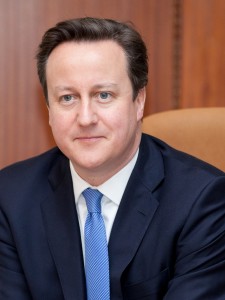
    Below is the text of the speech made by David Cameron, the Prime Minister, at the Policy Exchange, Westminster in London on 8 February 2016.

    Let me begin with a pretty extraordinary fact: it’s well over 20 years since a Prime Minister made a speech solely about prisons.

    To be frank, it can sometimes be easy for politicians to worry so much that their words will be caricatured, that they might just as well avoid this whole area.

    And it can be easy for us all – when these buildings are closed off by high walls and barbed wire – to adopt an “out of sight, out of mind” attitude. I want this government to be different.

    When I say we will tackle our deepest social problems and extend life chances, I want there to be no no-go areas.

    And that must include the 121 prisons in our country, where our social problems are most acute and people’s life chances are most absent.

    So today, I want to explain why I believe prison reform should be a great progressive cause in British politics, and to set out my vision for a modern, more effective, truly twenty-first century prison system.

    My starting point is this: we need prisons.

    Some people – including, of course, rapists, murderers, child abusers, gang leaders – belong in prisons. For me, punishment – that deprivation of liberty – is not a dirty word.

    I never want us to forget that it is the victims of crime who should always be our principal priority.

    And I am not unrealistic or starry-eyed about what prisons can achieve. Not everyone shows remorse, and not everyone seeks redemption.

    But I also strongly believe that we must offer chances to change, that for those trying hard to turn themselves around, we should offer hope, that in a compassionate country, we should help those who’ve made mistakes to find their way back onto the right path.

    In short: we need a prison system that doesn’t see prisoners as simply liabilities to be managed, but instead as potential assets to be harnessed.

    But the failure of our system today is scandalous. 46% of all prisoners will re-offend within a year of release. 60% of short-sentenced prisoners will reoffend within the same period.

    And current levels of prison violence, drug-taking and self-harm should shame us all. In a typical week, there will be almost 600 incidents of self-harm; at least one suicide; and 350 assaults, including 90 on staff.

    This failure really matters.

    It matters to the public purse: this cycle of reoffending costs up to £13 billion a year.

    It matters to you: because in the end, who are the victims of this re-offending? It’s the mother who gets burgled or the young boy who gets mugged.

    It matters to the prison staff – some of the most deeply committed public servants in our country – who have to work in dangerous and often intimidating conditions.

    And yes, it matters to the prisoners themselves, who mustn’t feel that society has totally given up on them.

    I’m clear: we need wholesale reform.

    And I am convinced that with the right agenda, we can be world leaders in change just like we have been in welfare, just like in education – we can demonstrate that with the right reforms, we can make a lasting difference to people in our society.

    Resetting the debate

    Now that begins with resetting the terms of the debate, especially when there are unhelpful, but well-worn mantras that I think hold progress back.

    For years, education was set back by the soft bigotry of low expectations – the idea that the most disadvantaged children shouldn’t be expected to achieve the best results.

    Likewise, police reform was partly set back by the false notion that the number of officers you had mattered, more than how smartly they were actually deployed.

    And welfare reform was set back by the lazy idea that fairness could be judged by the size of a cheque, rather than the chances you offered.

    One by one, in this government we’ve taken those arguments on – and we created the platform for reform.

    Today, we need to do the same with prisons.

    I think there are 3 views that have held back our progress.

    And together, they’ve helped produce the sterile ‘lock ‘em up’ or ‘let ‘em out’ debate that I think has often got in the way of real change.

    The first is the idea that prisons are packed to the rafters with people who don’t deserve to be there.

    This is not wholly untrue – there’s a strong case for the severely mentally ill, or women with small children, to be dealt with in a different way.

    But this position of some – that we could somehow release tens of thousands of prisoners with no adverse consequences – is nonsense.

    It’s simply not borne out by the evidence.

    Prisons are not full of offenders sentenced for drug possession, licence fee evasion or petty, victimless crime.

    It’s actually pretty hard to get into prison in the first place.

    Here are the facts: only 7% of prisoners are sentenced to custody for a first offence – and these will inevitably have been very serious crimes.

    70% of prisoners have at least 7 previous offences, and the average prisoner has 16 previous convictions.

    So you won’t hear me arguing to neuter judges’ sentencing powers or reduce their ability to use prison when it is required.

    Of course, there is one group I do want out of prison much more quickly, instead of British taxpayers forking out for their bed and breakfast: and that is foreign national offenders.

    One of the big barriers here is that we don’t systematically record the nationality of offenders early enough – and this can hamper our ability to deport them.

    I know the frustrations of prison governors when they have to try to find out someone’s nationality after they’ve already arrived in prison.

    So I can announce today that we will now legislate to give the police new powers to require foreign nationals to hand over their passports, and make them declare their nationality in court.

    The second view that has held reform back is the idea that the only reliable way of cutting crime is to toughen sentencing and substantially increase the prison population.

    Now again, there is some truth in this, and I know that incapacitation – prisoners being unable to threaten public safety while they’re behind bars – is absolutely vital.

    I’ve made this point myself about prolific burglars many times.

    That’s why we’ve toughened sentencing, including for the most serious violent and sexual offenders, and rightly so.

    But I think politicians from all sides of the political spectrum are starting to realise the diminishing returns from ever higher levels of incarceration.

    For a start, under this government we’ve already cut crime by around 23% in the last 5 years while keeping the prison population largely flat.

    And the truth is that simply warehousing ever more prisoners is not financially sustainable, nor is it necessarily the most cost-effective way of cutting crime.

    Worse than that, it lets the other parts of the criminal justice system that are failing off the hook. It distracts us from the job of making prisons work better.

    And it fuels prison overcrowding, which hampers efforts to rehabilitate offenders – and that just makes us all less safe.

    So the question must be: wouldn’t we be better to focus our scarce resources on preventing crime in the first place and by breaking the cycle of reoffending?

    The third view that has held back reform is the one that says that prisons are too soft – that they’re a holiday camp, and we should make them harsher to provide more of a deterrent.

    Now, I get hugely frustrated when I see the poor security that, for example, means prisoners able to access Facebook, or prisons that appear to be awash with alcohol and drugs.

    We are taking more action on drugs, corruption and mobile phones. We’ve legislated to criminalise possession of so-called legal highs in prison.

    We’re developing a new Corruption Prevention Strategy to deal with the small number of corrupt staff who allow contraband in our prisons.

    And I can announce today that we are going to work with the mobile network operators to challenge them to do more, including developing new technological solutions, so we can block mobile phones’ signals in prisons.

    But you know what?

    Prisons aren’t a holiday camp – not really. They are often miserable, painful environments. Isolation. Mental anguish. Idleness. Bullying. Self-harm. Violence. Suicide. These aren’t happy places.

    It’s lazy to subscribe to the idea that prisoners are somehow having the time of their lives. These establishments are full of damaged individuals.

    But here’s the point: 99% of them will be released one day, back into our communities.

    So we should ask ourselves: is it a sensible strategy to allow these environments to become twisted into places that just compound that damage and make people worse?

    Or should we be making sure that prisons are demanding places of positivity and reform – so that we can maximise the chances of people going straight when they come out?

    Think about it this way: being tough on criminals is not always the same thing as being tough on crime.

    Principles of reform

    So we need a new approach – one that doesn’t waste too much energy discussing big existential questions about the prison population or trap us into often false choices between so-called tough or soft approaches.

    We’ve got to move on – and develop a sensible plan for prison reform that will deliver better outcomes, improved public safety and lower costs for taxpayers.

    Michael Gove is just the man for the job.

    And I want to thank Ken Clarke and Chris Grayling for the good start we made in this area in government – and Nick Herbert for changing our approach on prisons in opposition.

    In reforming prisons, we need to look no further than the approach we’ve taken in reforming other public services.

    Our reforms have followed some general rules.

    One: give much greater autonomy to the professionals who work in our public services, and allow new providers and new ideas to flourish.

    This is how you institute a culture of excellence – empowering staff, as well as charities and businesses, to innovate and try new things.

    It’s exactly what we did in education – with academies, free schools and new freedoms for heads and teachers.

    Two: hold these providers and professionals to account with real transparency over outcomes.

    Just as we have done in education and policing, we need better data – to allow meaningful comparisons to be made between different prisons – so the best performing institutions and best performing leaders can be recognised and rewarded.

    Three: intervene decisively and dramatically to deal with persistent failure, or to fix the underlying problems people may have.

    This is the lesson from our troubled families programme. We know piecemeal, fragmented solutions don’t work. Instead, you need to see how an individual’s problems link together, and intervene in the right way.

    So while we’ve got the opportunity that prison presents, we need to be far better at deal with and at addressing prisoners’ illiteracy, addiction and mental health problems.

    Four: use the latest behavioural insights evidence and harness new technology to deliver better outcomes.

    We’ve done this in welfare, for instance through the introduction of greater conditionality – meaning that those who are out of work must show they are taking meaningful steps to find employment, in return for getting their benefits.

    And the number of workless households has fallen by an incredible 480,000 since 2010.

    By applying these principles, I believe we really can deliver a modern, more effective prisons system that has a far better chance of turning prisoners into productive members of society.

    So let me explain more what we will do in each area.

    Greater autonomy

    The first part of our strategy is to put professionals in the lead and to remove the bureaucratic micromanagement that disempowers them. The prisons system today is incredibly and uniquely centralised.

    Think about this, and think about it from the perspective of the boss of a prison – the prison governor.

    924 prison service instructions and prison service orders are currently in operation. These are documents issued from ‘headquarters’ to prescribe the running of our prisons.

    Together, they amount to an incredible 46,000 pages of rules, regulations and guidance. Now some of this will be necessary, I accept. Prisons need rules.

    But we’ve reached the point where someone in Whitehall is sitting around deciding how many jigsaws a prisoner should be able to keep in his cell, how many sheets of music they can have in their possession – 12, in case you’re wondering – and even how many pairs of underpants they’re allowed.

    Think about the kind of morale-sapping, initiative-destroying culture this can create in an organisation.

    Want to try something new? Ask head office.

    Think you’ve found a better way of organising things? Get back in your box.

    Looking for motivation and inspiration on a Monday morning? Go and look elsewhere.

    There’s a governor I spent some time with this morning who made exactly this point. He said it’s almost as if, in doing the things he needs to, to get businesses in to prisons and to get workshops going ultimately he said he’d have to break the rules. This is obviously the wrong approach.

    Prisons are often accused of infantilising the prisoners, but we’re actually infantilising the staff.

    This is one of the toughest environments we ask people to work in.

    And I want the leadership team of a prison to be highly-motivated, to be entrepreneurial and to be fired up about their work, to be a team who don’t ask permission from the centre every time, but are just empowered to get on and try something new.

    So this is what we are going to do.

    We are going to bring the academies model that has revolutionised our schools to the prisons system.

    We are going to give prison governors unprecedented operational and financial autonomy, and be trusted to get on and run their jail in the way they see fit. They’ll be given a budget and total discretion over how to spend it.

    So, for example, they’ll also be able to opt-out of national contracts and choose their own suppliers.

    Instead of being prevented from transferring money between different pots, they can decide what they want to focus resources on.

    And they’ll also be able to tailor their own regimes – including the amount of time spent ‘out of cell’ doing purposeful activity.

    I can announce today that we will create 6 such reform prisons this year, run by some of the most innovative governors from across the prison estate.

    We’ll follow this with a Prisons Bill in the next session that will spread these principles across the rest of the prisons system.

    And because we know that state monopolies are often very slow to change themselves, and because the involvement of the private and voluntary sectors in prisons has been one of the most important drivers of change in this system since the 1990s, we’ll ensure there is a strong role for businesses and charities in the operation of these reform prisons and the new prisons we will build in this Parliament.

    Together, this will amount to the biggest shake-up in the way our prisons are run since the Victorian times.

    And we’ll adopt the same principle in youth justice, too.

    As Charlie Taylor’s interim review will recommend tomorrow, we’ll explore using the free school process to set up secure alternative provision academies.

    In short: this will mean turning existing Young Offender Institutions into what will effectively be high quality schools that will demand the highest standards.

    And we want to attract the best talent into our prisons.

    I want us to make it even more aspirational for people to work in a prison and to want to run a prison.

    So just as we have done with the police, we’ll put rocket boosters under direct entry and fast-track schemes to attract the very best into managing the prison system so that it can benefit from greater diversity, fresh ideas and new leadership.

    Transparency and accountability
    With freedom and autonomy must come accountability – and that’s why the second part of our plan must be to improve transparency.

    Here are some questions for you:

    What is the best performing prison in the country?

    Which is the prison that is achieving the best reoffending results?

    Which is the prison where offenders get the best qualifications to help them get a job when they’re released?

    The answer is: we don’t know. Seriously, we have no idea. This just isn’t good enough.

    Any modern public service has to be able to demonstrate its value. It’s how you can make meaningful comparisons between different services.

    But most of all, it’s how the people working inside the system can find out what’s working and what isn’t working – and adapt accordingly.

    It can incentivise more of the kind of projects I saw this morning, like the Halfords Academy that is getting people the skills they need to find work.

    So I can announce today we will now develop meaningful metrics about prison performance.

    We will measure the things that really count: reoffending levels compared to a predicted rate; employment outcomes for prisoners; whether or not the offender went into permanent accommodation; and what progress was made on basic literacy and key skills.

    And I can also announce that we will not only publish this data, we will develop new Prison League Tables that allow us to easily compare different institutions.

    This transparency isn’t just a very powerful way to drive culture change, it also allows the government to hold those working in the system more easily to account.

    Using this information, we can use other tools – like payment for performance – to drive further improvements.

    It’s working in academies, it’s working in troubled families, it’s working in the Civil Service – so I can announce today that we will work with prison staff to examine a new financial incentive scheme to reward staff in the best-performing prisons.

    Intervention and treatment

    By introducing autonomy and transparency, we can get the structures right to improve outcomes. But we often need more direct, and joined up, intervention to help turn people’s lives around.

    Consider these facts: 24% of those in prison have been in care as a child.

    49% have an identifiable mental health problem. Nearly half.

    47% almost half, have no qualifications whatsoever.

    And behind these numbers, we have human beings.

    Children who felt the raw pain of abandonment at a young age – pain that never goes away.

    Young people who were abused physically by those they trusted most – with violence and fear often devastating the sanctuary of home.

    Kids who never had proper discipline and so never learnt the virtues of delayed gratification or impulse control.

    Arriving at school already far behind, and the frustrations of illiteracy or maybe dyslexia leading to bravado, misbehaviour and exclusion.

    Exposed to alcohol and drugs too young in life. Kicked out of the house as a teenager and learning to survive on the streets.

    I spoke last month about extending life chances.

    But we have to recognise that the prison population draws mostly from the ranks of those whose life chances were shot to pieces from the start.

    This doesn’t excuse where they ended up, nor does it say anything about the anguish they caused for victims.

    But it does, I believe, help to explain what’s happening.

    This is important: cutting reoffending is just a pipe dream unless we truly understand the turmoil and the trauma that define the lives of so many who have ended up in prison.

    This is a golden opportunity to correct some earlier – often catastrophic – state failure.

    I want prisons to be places of care, not just punishment; where the environment is one conducive to rehabilitation and mending lives.

    That’s why I’m so passionate about building new prisons.

    I think it’s frankly a disgrace, that for so long we’ve been cramming people into ageing, ineffective prisons that are creaking, leaking and coming apart at the seams.

    These are places that were barely fit for human habitation when they were built, and are much, much worse today. They design in bullying, intimidation and violence.

    As one staff member told the Chief Inspector of Prisons last year, “I wouldn’t keep a dog in there.”

    So I am proud that this this government has made a £1.3 billion commitment to knock many of these prisons down and to build 9 new ones, including 5 during this Parliament.

    As Policy Exchange’s work has shown, these new prisons can be far more effective at rehabilitating offenders, with modern facilities and smart use of technology such as biometric key systems.

    But it isn’t just about new buildings; it’s about what goes on in them. And here we must think afresh about prison education.

    Over 50% of prisoners have the English and maths skills of a primary school child. Many have learning difficulties.

    But at the moment, governors have almost no control over who their education provider is, or what is taught.

    We have only 4 organisations nationally who provide education in prisons, and the way these services are organised is not producing anything like the results we need.

    We’re focusing too much on the number of qualifications – regardless of their usefulness – and neglecting basic literacy and good-quality qualifications that are actually going to help these people to find work.

    This needs to change.

    Soon Dame Sally Coates will publish her review of prison education.

    It will recommend giving control of education budgets to prison governors, letting them bring in new providers – whether further education colleges, academy chains, free schools or other specialists.

    I can announce we back that recommendation 100%. And we’ll go further: I can also announce we’ll protect those budgets in cash terms, with £130 million a year.

    I also want the best and brightest graduates to want to teach prisoners, even if it’s just for a short period in their career.

    So just as we have backed programmes which get graduates teaching in our worst schools or working in social services, I can announce that I have asked Brett Wigdortz, chief executive of Teach First, to advise on setting up a new social enterprise that will work to develop a similar scheme for prisons.

    And I’m pleased to say David Laws has agreed to chair this new organisation.

    Next, we’ve got to sort out mental health treatment and drug treatment.

    This is one area where I believe that we, as a country, really need to ask some searching questions.

    There’s been a failure of approach, and a failure of public policy.

    In terms of approach, frankly, we are locking up some severely mentally ill people in prison who should not be there.

    And that’s why, as a matter or urgency, I have asked Michael Gove and Jeremy Hunt to look at what alternative provision can be made for more humane treatment and care.

    In terms of policy, I worry that at the moment the design of mental health treatment cuts out governors and staff.

    So I can announce that for mental health, we will now move towards full co-commissioning for governors and NHS England – meaning prison leaders can have much more say in defining the kind of services their prisoners need and how the available budget is used.

    This will begin in reform prisons and, if successful, will apply nationwide from 2017, underpinned by new legislation in our Prisons Bill.

    We will also publish healthcare data on a prison-by-prison basis, so there is proper transparency about outcomes and performance.

    And we will also move towards co-commissioning for drug treatment funding, so governors have more freedom to set up the therapeutic communities, drug-free wings and abstinence-based treatment programmes that their offenders need.

    When it comes to turning prisoners’ lives around though, there is a new front we need to open: tackling extremism.

    We have around 1,000 prisoners who have been identified as extremist or vulnerable to extremism.

    And we know, through intimidation, violence and grooming, some of these individuals are preying on the weak, forcing conversions to Islam and spreading their warped view of the world.

    I understand not only what a problem this is causing for prison management who are trying to deliver a safe environment, but also what a danger the risk of radicalisation poses for public safety when prisoners are released.

    We will not stand by and watch people being radicalised like this while they are in the care of the state.

    That’s why Michael Gove has commissioned a review of this issue.

    And I want to be clear: I am prepared to consider major changes: from the imams we allow to preach in prison to changing the locations and methods for dealing with prisoners convicted of terrorism offences, if that is what is required.

    I look forward to the review’s recommendations.

    But I can announce today two things we will definitely do:

    We will develop a new prison-based programme for countering the non-violent extremism that can lead to terrorism and violence and this will focus on those at risk of radicalisation, regardless of the crime they originally committed – as well as those convicted of terrorism offences.

    And to deal with the most serious cases, just as we introduce mandatory de-radicalisation programmes in the wider community, we will also introduce these in our prisons.

    Behaviour change

    Everything I have spoken about today is about what goes on in prison. But rehabilitation doesn’t end at the prison gates; it’s about what happens outside them too.

    That’s why Chris Grayling began the Transforming Rehabilitation programme – and it means every prisoner now receives support and supervision on release.

    This was a huge landmark reform of the last Parliament that [INAUDIBLE] has the potential to make a real impact on reoffending and public safety.

    Outside prison, I believe we should be really creative and much more open to the new thinking, the new technology, and the understanding from behavioural insights.

    For example, Judge Steve Alm in Hawaii has been pioneering the idea of ‘swift and certain’ sentencing to deal with drug offenders.

    Instead of just locking them up, they are randomly tested for drugs in the community on certain days of the week. If they test positive, they’re instantly jailed for between 24 and 48 hours.

    And then they come back out, and the process starts over again. And the results are fascinating.

    It’s perhaps the most successful community sentence anywhere on the planet.

    Massive reductions in drug use and re-arrest rates.

    Perhaps more effective than even intensive drug treatment in terms of changing behaviour.

    Almost 20 US states have now adopted this model, as well as others like it – including drug courts and problem-solving courts that adopt a similar tough love approach.

    And why do these programmes work?

    Because instead of an uncertain and often random sentence, delivered months or sometimes even years after a crime is committed, this is far more instantaneous and much more demanding for the offender.

    And because punishment is less severe but much swifter and more certain, it allows you to apply punishments far more frequently.

    More punishments, delivered rapidly. A real, meaningful deterrent.

    That is how to bring about lasting behaviour change.

    That’s why a promise to introduce legislation for a new swift and certain sentence was in our manifesto.

    And I can announce today that the Justice Secretary and Lord Chief Justice have set up the first joint working group to examine how to deliver problem-solving courts in England and Wales.

    We have also got to be much smarter about using new technology.

    We have already pledged to expand the use of alcohol monitoring tags, which enforce drinking bans for those offenders convicted of alcohol-related crimes.

    And there is also a huge opportunity presented by new satellite tracking tags.

    Satellite tracking will be ground-breaking for the criminal justice system – meaning that the police and probation service can know where an offender is at all times.

    It means we can tightly manage and accurately track someone’s movements – opening up radical new sentencing options.

    Satellite tracking tags could be used so that more prisoners can go out to work in the day and return in the evening.

    They could help some offenders with a full-time job to keep it, and just spend weekends in custody instead.

    This could revolutionise the way we release prisoners on licence at the end of a sentence, and dramatically toughen up community sentences.

    We’ve made too slow progress in getting this technology on-stream, and I want us to go faster.

    So I can announce today that major new pilots will begin on satellite tracking later this year, and we will have this technology rolled-out right across the country before the end of the Parliament.

    I especially want to look at how we use these tags for female offenders.

    A sad but true fact is that last year there were 100 babies in our country living in a prison. Yes, actually inside the prison. In the prison’s mother and baby unit, to be precise.

    Prison staff do their best to make these environments pleasant.

    Some units even have special sensory rooms, so that babies can see colours, sights and sound – even nature – that they wouldn’t otherwise see inside the grey walls of a jail.

    I understand why this happens. But we should ask ourselves: is it right?

    When we know the importance of the early years for child development, how can we possibly justify having babies behind bars?

    There are actually women in these prisons who were born in the same prison 20 years earlier, and then have ended up there later as criminals themselves.

    Think of the damage done to the life chances of these children.

    I believe we’ve got to try to break this cycle.

    So I want us to find alternative ways of dealing with women offenders with babies, including through tagging, problem-solving courts and alternative resettlement units.

    There is one other area where I want us to be bold, and where we can use the latest thinking to make a difference – and that is to help prisoners find work on release.

    There’s a simple problem: today, ex-offenders are often rejected for jobs out right because of their past.

    I want us to build a country where the shame of prior convictions doesn’t necessarily hold them back from working and providing for their families.

    Of course, I want businesses and organisations to know who they are interviewing.

    If a conviction is ‘unspent’, they need to know about it and make the right decision for that business.

    But here’s my question: should offenders have to declare it up-front, before the first sift of CVs – before they’ve been able to state their case?

    Or might this be done a bit later, at interview stage or before an actual offer of work is made?

    They’ve done it in America – it’s called ‘ban the box’- and I want to work with businesses, including the many who’ve already signed up to the Business in the Community campaign, to see if we can do this here.

    And because I believe in leading by example, I can announce today that every part of the Civil Service will be ‘banning the box’ in these initial recruitment stages.

    Conclusion

    So this is our agenda for a revolution in the prisons system – all centred around those powerful public service reform principles.

    This will take time and a lot of hard work to deliver – just as in education and welfare – and I’m under no illusions, it won’t be easy.

    This system will be hard to change because it is, in some ways, still stuck in the dark ages – with old buildings, old thinking and old ways of doing things.

    So I don’t want to go slow here – I want us to get on with proper, full-on prison reform.

    And the prize is big: if we get this right, we can begin to deliver the lower reoffending rates that will protect the poorest who so often bear the brunt of crime.

    If we get it right, we can change the culture so that our brilliant staff can be empowered to lead the world with new rehabilitation techniques and smarter ways of managing prisoners.

    If we get it right, we can change lives, improve public safety and bring hope to those for whom it was in short supply.

    Turning waste and idleness into prisons with purpose. Turning remorse and regret into lives with new meaning.

    Finding diamonds in the rough and helping them shine.

    That is our mission. Let’s get to work.

  • David Davis – 2016 Speech on Brexit

    Below is the text of the speech made by David Davis at Institute of Chartered Engineers in London on 4 February 2016.

    It has been over 43 years since Britain joined the European Economic Community. For all that time there have been calls for Europe to reform. For Europe to be more democratic, more competitive, more functional. And for Britain to lead that reform.

    The result? If anything Europe has become less democratic, less competitive and more dysfunctional. And Britain has become more side-lined.

    The EU has been in decline for some time now. There is no change of course in sight. The risks involved in staying are clear for all to see – low growth, high unemployment, and waning influence.

    In 1975 the EU was the bright future, a vision of a better world. Now it is a crumbling relic from a gloomy past. We must raise our eyes to the wider world.

    The UK has been a persistent advocate of reforming and modernising the EU.

    Even a decade ago there was hope of radical reform, as the EU expanded from 15 nations to 28. Some thought the new members, only recently independent themselves, would shift the EU away from its centralising, statist destination, and towards a more democratic, more trade-focussed direction.

    The hope was that Europe would become ‘wider, not deeper’. With hindsight, this hope now looks ridiculous. The siren calls for ‘more Europe’ have only increased.

    The UK also proselytised for a ‘two-tier’ or ‘two speed’ Europe, with a loose decentralised group around a more centralised Franco-German core. With the Eurozone, we now have a de facto two-tier Europe, but one that works to the detriment of the non-Eurozone countries.

    Centred on Germany, the EU’s largest and most powerful nation and the paymaster of Europe, the Eurozone constitutes a dominant majority.

    This is downright dangerous. The core Eurozone countries will not accept any curtailment of the decisions they need to make to save the Euro. At the same time, the non-Eurozone countries cannot accept decisions that are against their interests, imposed on them by the Eurozone core.

    It will only lead to conflict, conflict that can only be prevented by veto procedures that would be unacceptable to either side.

    Economic growth on the continent has ground to a halt. Since the turn of the century, the EU has grown at a third of the rate of the global average, and the Eurozone has grown even more slowly than that. Europe’s share of global GDP is falling, as is its share of global trade. This trend is expected to continue.

    When we last voted on our membership in 1975, trade with Europe was the vast majority of our total trade. This has fallen since then, and in 2008 the UK started to trade more with the rest of the world than with Europe. The fact is that Europe is becoming less and less important.

    The Euro has become a destroyer of jobs. Unemployment across the continent is running at almost 10%, with youth unemployment double that at 20%. For individual countries, these figures are even worse.

    Greece and Spain are suffering from youth unemployment rates of nearly 50%, and Italy almost 40%. Unemployment is destroying the prospects of a whole generation of young Europeans.

    The Euro is an experiment that has failed. In its short life it is already responsible for sovereign debt crises in several European countries, high unemployment, and dramatic trade imbalances across the Eurozone.

    But then the European project has been a litany of failures. From economic catastrophe, the collapsing single currency experiment, a poor record on increasing trade, the damage done by merging home affairs, to the undoubted foreign policy failures.

    Then there is the Schengen Zone. The passport-less travel area once held up as the pinnacle of European integration is crumbling before our very eyes. The migration crisis that has brought more than a million refugees to Europe’s shores, with many more expected to come, is a stake in the heart of a borderless Europe.

    The strength of any policy can only be judged by how it copes with crisis. Schengen, just like the Euro, is failing under the pressure.

    Even with justice, the EU causes conflict.

    From the faulty European Arrest Warrant, that has led to innocent Brits being detained for months overseas in terrible conditions without trial, to the slow steady creep of the jurisdiction of the European Court of Justice, we are increasingly finding that our justice system is incompatible with the one on the continent.

    So the problems facing the EU are mounting up. Economic stagnation, high debt, high unemployment, high regulation, ineffective foreign policy and failing internal policies.

    This is the backdrop to the Government’s renegotiation of our term of membership.

    Government’s Negotiation

    The Government has four strands to its renegotiation:

    • economic governance, ensuring that the Union operates for the benefit of all 28 members;

    • competitiveness, and a target to cut the regulatory burden for business;

    • sovereignty, and an opt-out for Britain from ‘ever closer union’;

    • and finally immigration, and the proposed ‘emergency brake’.

    This renegotiation is a once in a generation opportunity. Unfortunately, the Government has spent ed this opportunity on demands are so unambitious as to be a waste of time.

    The concessions outlined by the Prime Minister on Tuesday will have little, if any, impact on the nature of the EU. They will do almost nothing to address the very issues that the Government itself has identified.

    Take immigration.

    265,000 people migrated to the UK from the EU in the last year. Many of them from poorer, Eastern European countries.

    Such high levels of migration are to be expected given the enormous wage differentials across Europe. There are 6 EU members where the average wage is less than a third of the UK’s minimum wage, and a further 8 countries where it is less than half.

    Given such incentives, it is surprising that more people are not making the journey.

    This has consistently been a top issue for voters for over a decade.

    The Government’s answer? That an ‘emergency brake’ system be put in place, that would allow member states to partly deny in-work benefits to new arrivals for up to four years.

    But the big caveat is that it would be necessary to prove that services were under strain, and secure the approval of a majority of other EU states.

    It is rumoured that a French negotiator told his British counterpart that they were, “happy to give the British anything they wanted, so long as it was nothing of substance.” He must have had the emergency brake in mind when he said it.

    When you look at the figures, it is clear that even should the measure be introduced, the emergency brake will have no impact whatsoever.

    This is for two reasons.

    The first is that very few EU arrivals claim in-work benefits in their first four years.

    In the first year after arrival, only 10% of EU nationals claim tax credits. This number jumps to around 20% by the fourth year.

    Take up of Tax Credits by EU Nationals
    Thanks to: Michael O’Connor & Stronger In Numbers​

    This is because 50% of migrants from the continent are single and childless, with a further 25% not single but also childless. This means that 75% of EU migrants will only be eligible for very low levels of in-work benefits, if at all.

    By the time the referendum takes place, a single earner without children on the minimum wage will be entitled to less than £10 per month in tax credits.

    Not even with a very generous leap of imagination can anyone believe that the loss of this amount would dissuade people from coming to this country.

    The other problem with the brake is that the Government’s own policy to dramatically raise the minimum wage in the form of the national living wage will have the effect of abolishing in-work benefits.

    By 2020, when the living wage is due to be £9 per hour, and the personal tax allowance has risen further, in-work benefits will be minimal. And the minimum wage in this country will be an even greater multiple of the average wage of the poorest EU members.

    Average Wages in Eastern Europe and the UK Minimum Wage

    The Government has said that ‘no calculation has been done on how much the proposed brake will cut EU immigration’. This is hardly surprising given the number will be very close to zero.

    Then there is the matter of Parliamentary sovereignty.

    The primary reason that I believe Britain should vote for Brexit is not economic, it is political.

    It is so that the United Kingdom, the first great liberal democracy of the modern era, the fifth largest economy in the world, can recover control of her own destiny.

    The renegotiation does not call for any repatriation of powers. It offers no confirmation of Parliament’s sovereignty. All the Government has demanded is an exemption from ‘ever closer union’, and the Government’s proposed ‘red card’ system to block unwanted laws.

    Given the ‘ratchet’ nature of the European Union, the exemption from ‘ever closer union’ is not worth the paper it is written on. And the ‘red card’ proposal is worth even less.

    The ‘red card’ system only operates on draft laws, only works if there is a ‘subsidiarity’ argument, and needs the agreement 55% of EU Parliaments.

    This is the much the same as the old ‘yellow card’ system, that was also unworkable and which William Hague previously claimed is too difficult to satisfy.

    Just consider: a blocking minority in the European Council is 35%. If this 35% cannot be reached, then it is inconceivable that there will be simultaneous rebellions in 15 European Parliaments on the same issue.

    The red card is not, on any interpretation, a parliamentary veto. It returns no power to Parliament, does not help us protect our national interests and offers no protection from EU lawmakers.

    On the Government’s calls for greater competitiveness, there has not been a single year that has gone by without European council meetings concluding with rallying cries to cut regulation and increase competitiveness.

    Yet year after year the regulatory burden increases and Europe’s competitiveness declines. No specific regulations have been identified to be culled. No pro-competitive measures have been unveiled.

    There is no reason to think that President Tusk’s almost detail-less commitment to greater competitiveness will be any different to all the other commitments that have gone before.

    In summary, the Government’s renegotiation boils down to a few vague measures that either won’t have any effect, or will change so little as to not be worth the effort.

    The most common reaction from the press and the public seems to be, “is that it?”

    We have squandered our only opportunity to gain any meaningful reform for Europe.

    Given the disastrous direction of Europe, its 40 year long inexorable and irreversible trend to more centralisation, and the lack of meaningful change, in my view the safest option for Britain is to leave.

    It is not just that exit from Europe is nothing to fear. For Britain to remain as a member of the European Union would be to bind us to an institution that is creating a slew of unnecessary risks, would be to forgo control of our own destiny, and to give up on real opportunities to improve the lot of our people.

    Economic Consequences of Brexit

    So given that the safe course for Britain is to leave, it is vital to set out how we will leave, and what sort of relationship we can expect once we do.

    There are some who are nervous of laying out in detail how we see it playing out. I am not.

    This is the biggest question we will face in a generation. It is our democratic duty to make the consequences clear. The options are very good ones. And you cannot beat something with nothing, even if that something is membership of the creaking edifice that is the EU.

    In 2006 Professor Patrick Minford assessed that the net effect of the EU on costs and competitiveness was so detrimental that departure from it was likely to prove beneficial even if all the government managed to negotiate in Brexit was WTO terms of trade – ie. the minimum legally possible.

    At the time I thought that was an optimistic view of Brexit. However, that was before I took a hard look at the numbers.

    The starting point is to ask what benefits we derive from our membership of the EU, namely trade, investment and access to global markets.

    It has long been claimed that membership of the EU increases trade, and with it wealth and welfare, among its members.

    Well let us just assess how accurate that is.

    Now understanding and explaining movements in trade is difficult. They can be effected by bank crises, oil shocks, global disruptions like the collapse of the Soviet empire, new members joining the community, new competitors and so on. The best way to assess whether we got an advantage from entering Europe is to compare our export performance into Europe against that of a comparable group of similarly developed competitor countries who did not enter.

    This exercise has been done by Michael Burrage in an exercise for the Civitas think tank. He took the European export performance of the UK and measured it against the European export performance of a group consisting of America, Australia, Canada, Iceland, Japan, Norway, and Switzerland.

    The three graphs below show this performance in three distinct periods. Before entry into the EU, then after entry in what you might think of as the Common Market period, and then in what might be termed the Single Market period.

    Given that the stated intent of the Single Market was to improve on the trading performance of the Common Market, you would expect our performance to get progressively better in each graph. The actual facts are illuminating. Red is the UK, black is the OECD group.
    Growth in Value of UK Exports 1960-1972
    Thanks to Michael Burrage and Civitas

    Growth in Value of UK Exports 1973-1992
    Thanks to Michael Burrage and Civitas
    Growth in Value of UK Exports 1993-2011
    Thanks to Michael Burrage and Civitas

    The first graph shows how, prior to our entry into the European Community, we actually performed worse than our non-EU OECD competitors, at least until we were about to enter when we had a sudden sprint.

    Then, as the second graph shows, once we were inside the Common Market, our trade with Europe performed better, as you would expect.

    The final graph is the most telling. In the Single Market period our exports grew if anything slower than our OECD competitors, despite our membership. During the Single Market period, despite all the costs incurred, the treaties signed, the regulations implemented, despite all the controversies of the European project, our performance in selling to Europe was worse than our competitors outside the EU.

    Why is this?

    There are two possible reasons. One is that the burden of the Single Market bureaucracy handicapped us against our competitors. This is almost certainly true to some extent, but the far bigger reason is that during the common market period there were high external tariff around Europe.

    Trade tariffs during the 1980’s and 1990’s were far higher than they are today, before they were reduced by the World Trade Organisation and its predecessor the General Agreement on Tariffs and Trade. Our success in the 80s and early 90s was the result of being inside a trade protectionist barrier, and little else. That is now largely gone, and with it we are now at a disadvantage to our global competitors.

    European Common External Tariff 1988-2013
    World Bank Data

    Foreign Direct Investment

    Another benefit that we have supposedly derived from our membership is increased foreign direct investment in our economy.

    It is certainly true that at the beginning of the Common Market period there was a spike in foreign investment in this country.

    However, since the barriers have come down we have received far less foreign investment than either Norway or Switzerland, both outside of the EU, even once we have accounted for their oil industry and financial services.

    Growth in FDI 1983-2012 compared with 3 independent countries
    Thanks to Michael Burrage and Civitas

    So there seems to have been no discernible benefits to our trade or to foreign direct investment.

    The final supposed benefit of our membership is how the EU ‘increases our influence on the world stage’, and increases our ‘clout’, allowing us to secure more favourable trade terms across the world.

    Put to one side how our adding our ‘clout’ has not improved the EU’s dreadfully weak foreign policy.

    We can test out how well that ‘clout’ has served our interest if we look at the EU’s performance on trade agreements.

    When negotiating trade agreements with other countries, the EU has to balance the interests of the 28 different member states. This has had dire consequences for the UK.

    To start with trade agreements negotiated by the EU take a very long time to conclude. We still don’t have free trade agreements with China, India or the US. The talks with India have been ongoing for almost a decade.

    Our interests are not well represented in trade negotiations. The majority of free trade agreements that have been successfully negotiated by the EU are with North African or South American countries, with far more historical and cultural links to Mediterranean countries than to us.

    The only Commonwealth country to enjoy a free trade agreement with the EU so far is South Africa, and that has more to do with Nelson Mandela than the UK’s ‘clout’. Other than that the first will be Canada, which is just pending.

    This is all a function of how marginalised Britain’s interests are within the EU. It is no surprise than we have been outvoted in the Council more than twice as often as any other country.

    The consequence of this is that these trade deals are not tailored to our requirements.

    Much has been made of how hard it would be for a single country to negotiate successful trade deals on its own. But if we compare the EU’s trade deals to those that Switzerland have negotiated, with its small population and limited global influence, then we see something interesting.

    Free Trade Agreements


    Thanks to Michael Burrage and Civitas

    Switzerland have seen an increase in growth rates in trade as a result of two thirds of their free trade agreements. The UK has only seen an increase in growth rates in trade from one third of the EU’s free trade deals.

    So little Switzerland, with its population of 8 million, is able to negotiate better trade deals for itself than the EU does on our behalf.

    Does anyone seriously believe that Britain, the fifth largest economy in the world, would not be able to negotiate by itself at least as successfully as Switzerland?

    Just as damning is that the majority of these trade agreements do not include services. Services account for over three quarters of all the UK’s economic activity. They have provided much of our economic growth in recent years, as well as most new employment.

    Our creative industries, our financial services and legal services are some of the best in the world. It seems certain that they would be included in any trade deal negotiated by the UK.

    So on trade, on investment, and on access to overseas markets the benefits we have supposedly derived from the EU are far less than commonly understood. They may well be negative.

    As I said, I was initially doubtful of Professor Minford’s assessment that we would be better off outside of the EU irrespective of the EU’s response. But he is very likely to be right.

    Those business groups such as Goldman Sachs and the CBI, who have warned of catastrophe should we leave, are likely to be wrong.

    It is not surprising that these business are making the argument to stay in.

    At the end of the day these businesses are arguing for their own, very narrow interest. Indeed, I think we should all raise an eyebrow at the tremendous concern that these companies are showing for our national welfare, given that at least six of Britain’s ten biggest multinationals pay no corporation tax at all.

    Nevertheless, we should pay attention to their concerns. They have huge sunk costs in distribution and supply networks, and worry about losing access to existing EU markets. And whilst they are not job creators or particularly good innovators, they still represent an important component of our economy.

    Employment by size of company 1998-2010
    Thanks to University of Aston

    These businesses can relax. There is no doubt that such access would continue in the event of British exit. No-one can reasonably say that the UK would cease to have access to European markets.

    The worst case scenario is that the UK would revert to trade on a World Trade Organisation basis, with tariffs imposed on our exports into the EU.
    WTO Trade Position

    WTO Trade Position
    Thanks to Open Europe

    Let us leave aside cars and food for the moment. Everything else has relatively small barriers, and these are almost certainly negotiable down to zero.

    If Europe wants to stick to trading on a WTO basis, they are very badly positioned to do so.

    Everyone knows that the balance of trade is in Europe’s favour.

    UK Trade Balance with EU and non-EU Countries 2000-2014
    ONS Data

    We currently import £59 billion more from Europe than we export. After Brexit we would be Europe’s largest export market, worth £289 billion in 2014, larger than China.

    To see our importance to Europe, you only need to walk down the street. More than a quarter of all cars sold in this country are Mercedes, BMWs, Audis or VWs. And those are just some of the German brands. We are Europe’s second largest, and fastest growing car market.

    This negotiation will primarily be about politics, and our European colleagues pre-eminently concerned about their national interest.

    We are too valuable a market for Europe to shut off. Within minutes of a vote for Brexit the CEO’s of Mercedes, BMW, VW and Audi will be knocking down Chancellor Merkel’s door demanding that there be no barriers to German access to the British market.

    And while they are at it they will be demanding that those British companies that they own will have uninterrupted access to Europe. We are talking Mini and Rolls Royce, owned by BMW, and Bentley, owned by Volkswagen. Premium brands with healthy demand across Europe.

    And this is not just German cars. The same will happen with Shell and Unilever in the Netherlands, EDF, EADS and the viticultural trade associations in France, Seat in Spain, and Fiat and the fashion designers in Italy.

    The pressure from European companies for a free trade deal between the UK and the remaining member of the European Union would be huge.

    We have far more to gain than we have to lose, while the opposite is true for the EU. People have spoken, wrongly, about 3.3 million British jobs being ‘linked’ to our membership of the EU. Well there are over 5 million jobs on the continent that are linked to trade with Britain.

    Trade and Jobs into UK
    Thanks to Daniel Hannan

    Access to our market is more important to Europe than our access to theirs.

    To put it bluntly, the most powerful country in Europe needs this negotiation to succeed to the tune of a million jobs, on cars alone. The second most powerful needs it to the tune of half a million jobs, on wine and cheese alone. The first few months may be hysterical, but the leaders of France, Germany, Spain, Italy Poland and the rest know that the way to lose elections is to destroy your own industries. That is a powerful advantage for us.

    And then there are the absolute benefits that Britain would gain. Our food imports would be cheaper outside of the common external tariff. We would be free to reduce our regulatory burden, making our businesses more competitive. We would be able to negotiate our own trade deals, opening up new markets.

    And then there is the City.

    The prevailing thought seems to be that the City would be damaged should we leave the EU. This is extremely unlikely, and it would be perfectly possible to negotiate proper protection for any significant areas at risk.

    There are two obvious examples where the City might gain.

    TTIP, the upcoming EU-US trade deal looks likely to exclude financial services, due to a tiff between American and French film makers, and American concerns about having to recognise .

    Any UK-US trade deal would not omit one of the UK’s most important sectors.

    And then is the Financial Transaction Tax. Within the EU we would face the circumstance where French bonds sold in the City would have to have the tax charged on them, and then remitted to the French Treasury.

    Outside the EU, the city would be free to work as before, such as trading in euro-denominated bonds, while ensuring that it is free of the threat of an FTT, as well as being free of all the other stifling European legislation.

    And any action taken against an independent City would de facto be also against New York and Hong Kong, which would be too stupid for words.

    In total, it is easy to see Britain could be better off out, even on such terms. And this is the very worst case scenario.

    Some people have suggested that we should look to Norway, or to Switzerland, to see what terms we can expect once we have left.

    The idea that we have to fit our future into some Procrustean bed created for far smaller countries is nonsense.

    Key Negotiation Aims

    The conventional options are laid out in the table, with a reminder of what they involve. We do not need to disappear into the details – always a problem with discussions on Europe – but let me outline what we should take from them.

    The first one, EEA membership, often called the ‘Norway option’, works well for Norway but is not really appropriate for a major power like the UK.

    Sometimes pejoratively described as ‘government by fax’, the balance of power looks to be squarely on the EU side. The disparity is exaggerated – Norway is represented on 200 EU committees, it does not have to accept every ruling, half its financial contributions are voluntary, and many of the EU’s regulations are copied from other international organisations’ requests – organisations on which Norway is represented and we are not!

    Nevertheless, as it stands this model would not work for us. To make it viable it would need an arbitration court (not the ECJ), a dispute resolution procedure, and a number of other institutional changes. It would be possible to design and even negotiate such a structure, but it would take much more than 2 years.

    The Swiss option, EFTA membership plus a host of bilateral treaties, is the best starting place and is informative in many ways.

    It is not perfect for us however. It incorporates ‘free movement of people’ for the moment, although there is a clash coming on that, after a Swiss referendum was carried in favour of applying an emergency brake – a real one this time!

    However, understand the comparative negotiating position.

    Switzerland is a small country surrounded by the EU. Its trade is absolutely dominated by the EU – over 62% of its exports go to Europe. It runs a large trade surplus, and it is not big enough to be a critical market for any EU nation.

    The negotiation between the EU and Switzerland in the 1990s was marked by some hostility after it rejected EU membership, and yet it struck a decent deal.

    The optimum aim for us would be similar, but without the free movement of peoples. That would not be on the table. Essentially we would be looking for a full scale free trade agreement. And it has just been done by another country.

    If you want a model of how this would look, go on the European Commission website and look at the Canadian Comprehensive Economic and Trade Agreement that the EU has just struck.

    It eliminates all customs duties, which the EU website excitedly describes as worth €470 million a year to EU business. A similar deal with Britain would save it 5 times that on cars alone.

    This would be a perfectly good starting point for our discussions with the Commission.

    At the same time these negotiations are going on Britain will need to undertake a massive programme of simultaneous negotiations to negotiate free trade agreements with target countries that will be key to a more global approach.

    Trade Targets

    If you read as many assessments of Brexit as I have, you can easily come to the conclusion that each side of the argument tends to get exaggerated. I am certain that the catastrophic predictions of the Europhiles are simply nonsense. That is why Toyota, Nissan, Airbus, even BMW, Opel and Volkswagen have now said that Brexit will not hinder their investments in Britain, sometimes in reversal of previous positions.

    On the pro Brexit side, too, there are a range of estimates from modestly to dramatically better off. The difference here depends most upon exactly what we choose to do with the country and its new found freedoms. The greatest improvements will come if we grasp the opportunities for free trade with both hands.

    That means immediately seeking Free Trade Agreements with the biggest prospective markets as fast as possible. There is no reason why many of these cannot be achieved within two years. We can pick up the almost complete agreement between the EU and Canada, and if anything liberalise it. We can accelerate our component of the TTIP deal with the USA, and include financial services.

    Trade Targets


    Diverting our current contributions to the EU will help to smooth the transition period following the referendum.

    The most effective policy would be to continue, in the short term, all of the EU’s current spending within the UK.

    This means continuing to support agriculture, separate from the Common Agricultural Policy, as well as continuing research grants and regional funding.

    But this would not come near to accounting for our total contributions – around £18 billion gross and £9 billion net.

    We should find a way of improving the global trade performance of our economy. The companies that find it hard to export are the small and medium ones, for obvious reasons. They do not have the huge international sales and transport departments of the biggest companies.

    We could afford to fund a new Board of Trade, dedicated to helping British businesses create new links to countries with which we achieve trade deals.

    The funding would be available to set up an office in every major commercial centre and capital, completely separate from the Foreign Office, staffed with experts who know the language, the customs and the regulations and are on hand to help British businesses develop links in the country.

    Imagine an 0800 number and an email address where a small manufacturer in Lancashire can call Shanghai or Mumbai or Sao Paolo, and find out in English how to negotiate the import regulations, find a freight forwarder, hire a warehouse, translate a brochure, the simple things that stop too many small businesses from operating abroad. They may be small companies, but this is not small beer: I am talking a billion pound project here.

    We must see Brexit as a great opportunity to refocus our economy on global, rather the regional, trade. This is an opportunity to renew our strong relationships with Commonwealth and Anglosphere countries.

    These parts of the world are growing faster than Europe. We share history, culture and language. We have family ties. We even share similar legal systems. The usual barriers to trade are largely absent.

    The Prime Minister has repeatedly stated that we are a trading nation with global horizons. This is undoubtedly true. So it is time we unshackled ourselves, and began to focus policy on trading with the wider world, rather than just within Europe.

    We would also have the opportunity to reform our economy, pushing through the changes necessary to create a dynamic, modern economy. Competitive tax rates, a competitive labour market, and effective, rather than burdensome, regulation. After Brexit we can put all that right without asking Brussel’s permission.

    The European Union was a noble vision. It was borne out of Europe’s history. A history of war, conflict, tyranny and destruction.

    Two world wars ripped Western Europe apart. It is an entirely understandable, indeed an admirable, response to such horror to want to break down national barriers and increase bonds between peoples and countries.

    Spain emerged from Franco’s tyranny. Portugal from Caetano. Greece shook off the rule of the Colonels. And after the Berlin Wall fell, whole swathes of Eastern Europe rediscovered democracy and liberty.

    Faced with such a history it is entirely understandable that the European Union came into being. It is a profoundly peaceful project, dedicated to protecting democracy across Europe.

    But this history is not our history. Britain has its own proud tradition of fighting tyranny, of protecting liberty and democracy both at home and abroad.

    For us, Europe has always been about trade. For the continent, it is about so much more. This does not mean either side is wrong. But the European Project is not right for us. The Global Project is.

  • David Cameron – 2016 Statement in Copenhagen

    davidcameron

    Below is the text of the statement made by David Cameron, the Prime Minister, in Copenhagen on 5 February 2016.

    Thank you very much Lars, it’s very good to be here in Copenhagen today with you. We have a very good relationship, a very good friendship.

    Our discussions have focussed on 3 issues: on our bilateral relations, on EU reform, and on the migration crisis.

    And I just want to say a few words on each.

    Bilateral relationship

    Our bilateral relationship is particularly close. We are firm NATO allies – indeed HMS Ramsey is taking part in a NATO exercise here right now.

    We also co-operate closely on counter-terrorism and in the fight against Daesh.

    And I saw for myself the bravery of Danish soldiers as our 2 countries served alongside each other in very close quarters in Afghanistan.

    Trade in both directions between our 2 countries is worth £6 billion a year. And over 600,000 Brits visit Denmark annually.

    We work very closely together in the EU. And again, as you’ve just heard with a similar outlook. We share a lot in common. Proud nations. But outward-looking.

    EU reform

    On EU reform, as you know, I’m working hard to secure reform in 4 areas – economic governance, sovereignty, competitiveness and welfare.

    And on welfare, let me explain why the British people have concerns and what I’m trying to fix.

    I support the principle of free movement and I greatly value the contribution that many make when they come to Britain.

    But the challenge we’ve identified is the scale of movement we’ve seen from across Europe to Britain over the last decade and the pressure that has put on public services.

    Now these are problems that we can share.

    For example, I know as we’ve just heard that in Denmark you have concerns about paying child benefit for children not living here.

    And that’s why the reforms I’m seeking can benefit other countries too.

    I’ve now secured a commitment from the commission to address this.

    So the text the Council has put forward shows real progress in all 4 areas, including on protecting the legitimate interests of non-euro member states, which of course is so important to Denmark too.

    Now as Lars has just said, this deal must be legally binding. The Danish model – negotiated in 1992 – has set a powerful precedent for that. As the Prime Minister has just said, over 20 years later, it still stands.

    But as I’ve said, there is still important detail to be nailed down if we’re to get a deal in February.

    And that’s why the hard work continues.

    Migration crisis

    We’ve also discussed the Syria donors conference that I hosted yesterday with others in London.

    And I want to thank your Prime Minister and the Danish people for the very generous pledge that you made.

    I’m proud to say we brought together world leaders, we raised records funds and identified crucial long-term assistance through the creation of jobs and crucially the provision of school places for refugee children.

    This will give those in desperate need real hope for the future. But this should only be the beginning.

    The more we do to create the opportunity for people to stay in the region, the less likely we are to see them making the treacherous journey to Europe. A journey that has sadly resulted in so many deaths.

    So we’ve had good discussions here today and I want to thank you Lars again for giving me such a warm welcome.

  • Nick Gibb – 2016 Speech on a Good Education

    nickgibb

    Below is the text of the speech made by Nick Gibb, the Schools Minister, at Hild Bede College, Durham University on 4 February 2016.

    Can I start by saying thank you for inviting me to come and speak to you today. It is a great pleasure to be back at my old college.

    One thing that I miss enormously from my undergraduate days is the time to think, and the time to read. Ministerial duties permitting, I still try to carve out spare hours to enjoy a good book. Ever since becoming Schools Minister, I have been particularly entertained by passages in novels which address English schools.

    Zadie Smith’s wonderful account of life in modern London, ‘NW’, features the protagonist Natalie Blake – an upwardly mobile Londoner who goes from her inner-city school to university, and then on to a successful career as a lawyer. Whilst seeking out a primary school for her son, she visits a medieval parish church which has been engulfed in the urban sprawl of north-west London.

    A dedicated autodictat, we are treated to Natalie Blake’s stream of consciousness as she picks up and reads a leaflet in the church: “…present church dates from around 1315 … Cromwellian bullet holes in the door…”.

    Natalie’s reading continues: “… the famous shrine of Our Lady of Willesden, ‘The Black Madonna’, destroyed in the Reformation and burnt, along with the ladies of Walsingham, Ipswich and Worcester – by the Lord Privy Seal. Also a Cromwell. Different Cromwell. Doesn’t say. This is where decent history GCSE-level teaching would have come in helpful…”.

    On reading that passage, I wondered whether Natalie’s life is irretrievably held back by her inability to distinguish between Oliver and Thomas Cromwell? Perhaps not. But the situation described in this passage of the novel is indicative of a broader phenomenon: that the recipient of a core academic curriculum leaves school with an intellectual hinterland, which allows them to make sense of the world around them.

    Since coming into government in 2010, our reforms to the A levels, GCSEs, and the national curriculum have focused on bringing a new level of academic rigour to English state schooling. And central to this mission has been elevating knowledge to become a central component of a good school education.

    Had Natalie studied for the new reformed history GCSE, due to be taught from September 2016, she would have stood a better chance of knowing about both Oliver and Thomas Cromwell, thus having the knowledge to understand the historical significance of her parish church.

    ‘Knowledge’, I hear people gasp. ‘Surely education is about so much more than that. It is about creativity, problem solving, thinking critically, and inventing?’.

    Yes, I agree whole-heartedly that a good education is about all those things. But each of them is dependent upon, and impossible without, a fundamental basis of knowledge about the subject in question. Put simply, a commitment to social justice requires us to place knowledge at the heart of our education system. And this is not a statement of opinion – it is a fact established by decades of research by cognitive scientists, as I shall soon explain.

    It is an unfortunate fact, however, that many modern conceptions of education either ignore the importance of knowledge, or actively deride it. During the 1960s, it became fashionable amongst educationists to dismiss the accumulation of knowledge as a joyless anachronism: rote learning of unconnected facts, inflicted upon bored and unwilling pupils. School curricula were increasingly rewritten to focus not upon subject content, but upon skills and dispositions.

    History became less about mastering the understanding of a period, and more about analysing primary sources. Foreign languages teaching moved away from learning grammatical structures and a wide vocabulary, and towards communication. And in maths, it was believed that memorisation of times tables and basic arithmetic at an early age could be bypassed by learning through real-life mathematical problems.

    This philosophy endured and strengthened over the next half century, and had a marked effect on the quality of education that generations of children have received in Britain. For me, the crowning glory of this dumbing down was the 2007 rewrite of the national curriculum, which systematically expunged any mention of subject content, replacing it with references to ‘processes’, ‘concepts’, and with an overlay of ‘personal, learning and thinking skills’ such as ‘independent learning’ and ‘learning to learn’.

    As Schools Minister, I have visited around 400 schools, watched thousands of classes, and seen countless examples of this philosophy in action. It always saddens me to see thrilling content of education, be it timeless literature, scientific wonders, or great historical events, being relegated to a backseat, so that these comparatively joyless ‘skills’ and ‘processes’ can come to the fore.

    Now, I am sure that many here may be thinking back to their own recent education, and contending that you studied a core, subject-based academic curriculum at school. If that is the case, you should feel fortunate that you were part of a minority.

    On entering government in 2010, we were concerned that nationwide only 31% of pupils were taking a GCSE in history. Only 26% of pupils were taking a GCSE in geography. Worse still, only 43% of pupils were studying a GCSE in a foreign language, down from 76% in 2000.

    We saw that the majority of English pupils were not studying a combination of academic subjects which – up to the age of 16 – would be seen as entirely standard at most independent schools, and indeed in many foreign countries.

    And even for those who did enter GCSEs in academic subjects, the examination content had been so watered down that it no longer represented a mastery of any given subject. A history GCSE could consist entirely of 20th-century topics; a religious studies GCSE could consist of just 1 religion, or very little religion at all; and around 90% of pupils entering the English literature GCSE delivered by 1 exam board answered questions on a single text: ‘Of Mice and Men’. Now, John Steinbeck is a great author – ‘East of Eden’ is my all-time favourite novel – but even I doubt this short novella was deserving of such overwhelming attention.

    In addition, grade inflation had been allowed to diminish the value of our qualifications. From 2005 to 2010, the proportion of pupils achieving 5 good GCSEs increased year on year. But as Professor Robert Coe of this university showed, English pupils’ performance in international assessments and annual benchmarked aptitude tests showed no improvement at all.

    This was the state of English education that we inherited on coming into government in 2010. Since then, our reforms have focused on raising the ambition of what pupils are expected to study at school, and putting subject content – which I believe to be the real joy of education – at the core of school life.

    We have removed over 3,000 low-value qualifications from performance tables and introduced rigorous new standards for the technical and professional qualifications that remain.

    We introduced the English Baccalaureate (EBacc) measure in 2010, which shows the proportion of pupils in a school being entered for a combination of GCSEs in English, mathematics, 2 sciences, history or geography, and a foreign language. Schools have risen to this challenge: the proportion of pupils entering this EBacc combination of subjects nationwide has risen from 23% in 2012 to 39% in 2015.

    And due to a long process of examination reform which is only just coming to fruition, the examinations that children are taking are becoming more academically ambitious, not less. Since September, pupils have been studying the reformed English literature GCSE for the first time, including the study of both a 19th-century novel and a modern text. Instead of a strict diet of Steinbeck, pupils can read George Orwell and Jane Austen, Kazuo Ishiguro and Charlotte Bronte – and they will be reading the whole novel, not just extracts.

    From September, the new history GCSE will be studied, which will supplement 20th-century global history with British depth studies, from the reign of King Edward I to the English Civil War and Restoration.

    Our curriculum reforms also look to the future, as the school curriculum must adapt to incorporate the breakthroughs of the technological age. That is why we have introduced a new national curriculum for computing, which focuses on programming languages, computational thinking, and Boolean logic – making this country, I believe, the first in the G20 to do so. The old IT curriculum simply taught children to use programmes such as Microsoft Word: now, pupils are learning to code and create programmes for themselves.

    This culture of increasing academic ambition is having a beneficial knock on effect for A level studies, where since 2010 there has been a 27% increase in pupil entries for further maths, a 15% increase in pupil entries for physics, and a 15% increase in pupil entries for chemistry.

    Non-STEM (science, technology, engineering and mathematics) subjects are seeing similar increases at A level. Economics, up 29%. Religious studies, up 19%. Spanish and geography, both up 16%. Whilst for years, comments about ‘the youth of today’ have implied decline and disappointment, today’s youngsters will be better educated and better informed about the world than the generations preceding them.

    In England, it has always been possible to secure a good education, through top comprehensive schools, grammar schools or independent schools. But it is socially disadvantaged pupils who have historically missed out, and found their life chances limited by the quality of education they received. Research by the Sutton Trust in 2014 showed that pupils eligible for free school meals who scored in the top 10% nationally at the end of primary school were significantly less likely to be entered for the EBacc than their wealthier peers who achieved the same level aged 11. Disadvantaged pupils – the very children most in need of an academic, knowledge-based curriculum – were the least likely to be given the opportunity to benefit from it.

    It is the driving ambition for this government that a core academic curriculum should not be the preserve of a social elite, but instead the entitlement of every single child. Though there are some inequalities which schools cannot address, the unequal distribution of intellectual and cultural capital is one that they can.

    But there remain many working within education who would challenge my assumption that a core academic curriculum is a valuable inheritance for all pupils. Such figures think it superfluous to know, for example, Oliver Cromwell from Thomas. I am sure many here will have seen the Royal Society of Arts talk by the educationist Sir Ken Robinson, now pushing 14 million views on YouTube. In his talk, he accuses the traditional, academic curriculum of being a relic of the 19th century, a ‘factory model’ of schooling, which squanders pupil creativity.

    As his enormous popularity shows, Sir Ken Robinson’s views are superficially appealing. But I believe them to be profoundly wrong.

    An educationist who has shaped my thinking on this more than any other is Daniel Willingham, professor of cognitive science at the University of Virginia. With reference to robust scientific evidence, he explains how the ‘thinking skills’ most prized by schools and employers – problem solving, creativity, inventiveness – are dependent upon considerable background knowledge.

    You may suppose that ‘thinking scientifically’ is a discrete skill, that when learnt can be applied to any new context, but this is not the case.

    To give one of the many examples that Professor Willingham cites, in one experiment, eighth-grade pupils in America were given 2 tasks. In 1, they had to manipulate a computer simulation to keep imaginary creatures alive. In another, the pupils had to evaluate how the surface area of swimming pools was related to the cooling rate of its water.

    Students were consistently better at thinking scientifically on the first problem, rather than the second – something that the researchers attributed to pupils’ greater familiarity with the relevant variables. In general, American eighth-graders are better informed about health and survival, compared to volume, surface area and cooling rates.

    And it is a well-known principle that great inventions are made, not through a moment of pure inspiration, but through analogical thinking. The ‘eureka moment’ of any great invention occurs when existing knowledge is brought to bear in new contexts: the novel application of what is already known.

    Alexander Graham Bell’s first diagrams for the telephone made explicit reference to the biological structure of the human ear. George de Mestral invented Velcro through looking at the tiny hooks of the cockle-burs which stuck to his dog’s fur when he was hunting in the Alps.

    This insight, that complex thinking depends upon background knowledge, can be applied to any subject of study.

    It underlies our recent announcement that all pupils will be tested on their multiplication tables at the end of year 6, an announcement which was strongly opposed by the General Secretary of the National Union of Teachers. She expressed the classic anti-knowledge view, suggesting that number recall is not necessary for understanding mathematical concepts, and arguing that children today can always look up their times tables on their mobile phones.

    Such a position is called into question by 5 decades of research by cognitive psychologists, which shows that pupils and adults who are able to solve complex mathematical problems, also have strong recall of their times tables and basic arithmetic. This should not come as a surprise – it is far easier to simplify the ratio 21:63 when you instantly recognise that both numbers are divisible by seven.

    In 2013, a controlled trial was carried out where 195 first grade pupils in America who were struggling with mathematics were given 16 weeks of specific tutoring where they practiced their number knowledge. The pupils were then tested on areas such as word problems, simple arithmetic and 2-digit calculations. Compared to the control group who received no such tutoring, these pupils had a statistically signification improvement in all 4 areas tested.

    Number knowledge tutoring does improve maths ability and the repeated practice of simple arithmetic helps pupils to solve more complex mathematical problems. Yet some educationists still insist that such practices are old-fashioned and unpleasant for pupils, and impoverish the education that our pupils receive. Little better exemplifies the unwitting cruelty of good intentions.

    The anti-knowledge – and, I would argue, anti-evidence – position in education debates has, in recent years, been bolstered by the advent of the internet. One well known educationist shot to fame a few years ago with a popular TED talk, extolling the ability of pupils to learn independently from the internet. He asked in his talk: ‘if there’s stuff on Google, why would you need to stuff it into your head?’, and added ‘I decided that groups of children can navigate the internet to achieve educational objectives on their own.’

    However, according to research from academics such as Professor Hattie, web-based education has so far been a great disappointment in raising education standards. This is backed up by international evidence from the OECD which shows that increased internet use in schools does not lead to higher academic outcomes. The 5 countries where pupils spend the least time using the internet in school – Poland, Japan, Hong Kong, Shanghai and South Korea – are all amongst the world’s highest achieving jurisdictions in international tests.

    Now, I am a great supporter of the intelligent use of computers in schools, but it is mistaken to believe you can outsource your memory to Google and still expect to think well. Say, for example, you are reading an article about nuclear energy, and come across an unfamiliar term: radiation. So you Google it. But the first paragraph on the Wikipedia article mentions another unfamiliar term: particles. So you look it up, but the definition for ‘particles’ uses another unfamiliar term: ‘subatomic’. The definition of which in turn contains the unfamiliar terms ‘electrons’, ‘photons’ and ‘neutrons’, and so on and so forth in an infinite series of google searches which take the reader further and further away from the original term ‘radiation’.

    It is no more possible to think fluently on a given topic with the help of the internet, than it is to talk fluently in a foreign language with the help of a bilingual dictionary.

    As cognitive psychologists such as Daniel Willingham explain, the interaction between long-term and working memory is foundational to how we learn. Our working memory can only cope with between 5 and 7 new pieces of information at once. All other information must already reside within long-term memory for new information to be assimilated, or else cognitive overload is the result. This is precisely why it is so difficult for a novice to learn new information by browsing articles on the internet.

    Many of us here will have a rough understanding of the structure of atoms, and the science behind radiation. We have known about it for so long, that we tend to take for granted. That, and so many other bits of factual knowledge that we draw upon in our daily life, reside in our long term memory because once, in the dim and distant past, a teacher took the time to teach it to us.

    From talking to officials and teachers who have visited schools in the Far East, it is clear that countries such as China and Singapore have a pronounced pro-education culture. But I worry that in the West, we can have a tendency to disparage the importance of school. People like to quote great intellects, such as Mark Twain, who stated ‘I’ve never let my school interfere with my education’, or Albert Einstein who purportedly, but probably didn’t, say ‘education is what remains after one has forgotten what one has learned at school’. I could not disagree more strongly: a good education is transformative, and I am sure everyone in this room can think of at least one teacher who changed the direction that their life has taken.

    When I defend the merits of an academic curriculum, I am often assailed with the same argument: ‘I learnt all about algebra at school’, or ‘I learnt all about atoms and radiation, and have now forgotten the lot. What use has it been?’ To that argument, I would have two answers.

    Firstly, when knowledge recedes from instant retrieval in our memory, it still remains logged in our long-term memory.

    This is shown by a cognitive principle is known as savings in relearning. Say, for example, that 15 years ago you gain an A grade in GCSE Spanish, but have forgotten it all in the intervening years. Ten years later, you find yourself working in Spain. You will have to learn Spanish again from scratch, but will it be easier second time round? Your intuition may say yes, and it would be correct.

    This phenomenon has been confirmed by researchers in Japan. Japanese missionaries, who had spent time doing working in Korea up to 45 years previously, were tested on Korean words. They were then made to learn those that they did not get correct. At the same time, they were made to learn pseudo-words to act as a control. The former missionaries relearnt the Korean words much more quickly, even though the initial test suggested they had been forgotten. This shows that a residue of knowledge remains in the mind even when it can no longer be recalled.

    But even if you never relearn content learnt at school, I would maintain that such content was not learnt in vain. Perhaps you are now firmly attached to your English literature degree, and resent all of those hours spent learning about enzymes, ecosystems and eukaryotic cells for your biology GCSE.

    But at the age of 14, would you really have been in a position to decide where to specialise? Being exposed to a broad and encompassing academic curriculum at a young age is a great privilege, as it enables you to make an informed decision about which paths you wish to pursue later in life.

    On this point, I often consider the novel ‘Of Human Bondage’ by Somerset Maugham. In a story based on Maugham’s own difficult youth, which was full of failures and false starts, the protagonist studies German in Heidelberg, he studies to be a painter in Paris, he works as an accountant and a dressmaker, before finally realising his calling to be a doctor.

    In his first anatomy lecture at medical school, the lecturer tells the young students: “You will have to learn many tedious things, which you will forget the moment you have passed your final examination, but in anatomy it is better to have learned and lost than never to have learned at all.”

    I think that Maugham was onto something. What is true in anatomy, is true in wider life. The lecturer was, of course, paraphrasing Tennyson’s famous couplet in his poem ‘In Memoriam’, that it is better to have loved and lost than never to have loved at all.

    As such phrases demonstrate, great poetry has a remarkable ability to etch itself into the conversation of society. Thomas Gray’s poem ‘Elegy Written in a Country Churchyard’ is, I believe, one of the most moving poems in the English language. Its verses leant the title to both Thomas Hardy’s novel ‘Far From the Madding Crowd’, and Stanley Kubrick’s film ‘Paths of Glory’.

    Much like Natalie’s visit to a medieval church in ‘NW’, Thomas Gray’s poem was inspired by an evening looking at a graveyard, which sets his mind wandering. In particular, he regrets the potential that must be squandered when people are brought up in poverty and in ignorance – this was 1751, a long time before universal state education. As he puts it: ‘Knowledge to their eyes her ample page | Rich with the spoils of time did ne’er unroll’. Gray suggests that within the country graveyard, there may be ‘some mute inglorious Milton’, whose lack of a good education forever left his potential untapped: ‘Full many a flow’r is born to blush unseen’.

    It is this thought that animates me most as Schools Minister: the generations of school children whose potential was squandered by schools which never taught them the rudiments of literacy and mathematics, which never challenged them to read timeless works of literature, which fobbed them off with so-called vocational courses when they were more than capable of benefiting from a core academic curriculum or high-quality technical and vocational qualifications.

    Our education system should be an engine of social mobility, extending opportunity to every young person, ensuring that they reach their potential.

    We have already made significant progress in building an education system which delivers on that vision. But we have further to go, and you could help realise that objective. I think the final message I would like to give today, particularly to the undergraduates in this room, is of the joys of being a teacher.

    I have always hated that lazy saying, ‘if you can’t do, teach’. My mother was a primary school teacher, and I am a profound believer that teachers have the power to change children’s lives.

    The thought that always strikes me when I see an inspiring teacher, communicating the subject that they love with warmth and passion, is what a remarkable and difficult craft effective teaching can be.

    Great teachers are masters of their subject, who tell stories, impart wisdom and inspire curiosity. They motivate, cajole and guide pupils to surpass their own expectations of themselves. And evidence suggests that teaching is finally gaining the status it deserves in this country.

    In 2010, 61% of trainee teachers had an undergraduate degree at level 2:1 or above. This year, that figure is 74%. Crucially, in 2012 the proportion of trainee teachers with a 2:1 or above surpassed the national average of that year’s graduating cohort for the first time. The annual initial teacher training census shows us that the proportion of new teachers holding a first-class degree is at an all-time high.

    To ensure that the calibre of teachers keeps on improving, we have expanded schemes such as Teach First, which this year has sent over 1,500 teachers to work in primary and secondary schools serving low-income communities in every region of England. Teach First is now the single largest graduate recruiter in the UK, a remarkable achievement.

    Since 2010, we have put teachers in the driving seat of our reforms to improve state education in England. We have given schools, and teachers, unprecedented freedom to teach as they see fit, without an overbearing education bureaucracy driving their actions.

    To this end, we have removed 21,000 pages of unnecessary school guidance, reducing the volume by 75%. In addition, teachers who believe that they are able to create something better within the state education system than the status quo, are now empowered to do so through the free schools programme, which is providing outlets for idealism across the country.

    We are working to create a teaching profession which recognises talent and ambition, as well as time-served. We have funded targeted programmes to develop excellent teachers for challenging schools, such as High Potential Senior Leaders, currently delivered by Future Leaders. For bright and ambitious young graduates, a career in teaching now offers rapid advancement opportunities to rival any other profession.

    I genuinely believe that there has never been a better time to become a teacher. So if you love your subject, and want to share that love with eager young minds, then there can be few better careers for you than teaching. And if you do not, then at least be thankful of the enormous privilege it is to be the recipient of a good education.

  • Sajid Javid – 2016 Speech on Britain’s Young People

    CBI Conference

    Below is the text of the speech made by Sajid Javid, the Secretary of State for Business, Innovation and Skills, at East Wintergarden, Canary Wharf, London on 4 February 2016.

    I’ve had the privilege to live and work in different countries and cultures all around the world.

    And I’m not exaggerating or being trite when I say that the UK is, by far, the best.

    It’s the most open, the most tolerant, the most diverse in every way.

    My parents had very little when they left Pakistan for Britain.

    This nation has given them so much.

    It gave them a place to start again.

    The opportunity to work hard and be rewarded for it.

    The chance to make good on that most basic of ambitions.

    To secure for your children a better, more comfortable life than your own.

    So I have a lot of love for my country, and I never take it for granted.

    But I’m not blind to reality.

    I know things are far from perfect.

    That the playing field is far from level.

    And that equality before the law, equality on paper, does not guarantee fairness in the real world.

    I first noticed it when I was a kid, in a Bristol playground, when I saw that people who looked like me were treated differently by some people.

    Called different names, told different things, presented with different expectations.

    Today, 40-odd years later, it’s impossible to deny that our tolerant, diverse, open society still has a long way to go.

    Just look at the statistics.

    Only 6% of MPs are from ethnic minority backgrounds, compared to 14% of the people they serve.

    More than half of FTSE 100 CEOs went to private schools, even though only 7% of Britons do.

    Not even a third of Britain’s local councillors are women.

    Young black men are more likely to be in prison than in a top university.

    And if they do make it into higher education, they can expect to earn 23% less than their white counterparts after graduating.

    The first Race Relations Act was passed 4 years before I was even born.

    But after half a century of equal opportunities legislation, race, class and gender still play an immeasurable role in people’s life chances.

    And even if we could click our fingers and eliminate, overnight, all the explicit and unconscious bias in society, it wouldn’t be enough.

    So much in our society depends on networks, on experience and on expectations.

    On knowing people who have been there and done that.

    On having someone pushing you in the right direction, telling you what is possible rather than what’s not.

    It’s the kind of support that many people in this country take for granted.

    But for too many of us, it is still sadly lacking.

    And that’s why UpRising is so important.

    Because it creates those networks.

    It provides the mentors that more privileged individuals have always had access to.

    It gives young people a positive message, the support and encouragement that has too often been denied them because of who they are or where they come from.

    Above all, it gives them the confidence to go out there and fulfil their potential.

    To follow their dreams rather than limit them.

    And that’s not just morally sound, it makes good economic sense.

    As Business Secretary I know that the job descriptions of tomorrow have yet to be written.

    But I do know for sure that, if Britain is going to remain competitive, we will need our workforce to be diverse, innovative, flexible and mobile.

    And that’s a perfect description of UpRising’s alumni.

    I’ve been particularly impressed by the Emerging Leaders Network (ELN).

    It reflects, far better than the House of Commons or the City boardroom, what modern Britain is all about.

    And I was delighted to hear that many ELN members have set up their own companies.

    A nice boost for the long term economic plan!

    So I’d recommend to any aspiring young leader that they become a part of this network.

    And I’d urge all the organisations here tonight to support it.

    Because I know what a difference it can make when you find the right champion, the right mentor, the right inspiration at the right time.

    I know it because I was lucky enough to find 3 of them myself.

    I was born in Rochdale, but I grew up in Bristol in a place called Stapleton Road.

    A tabloid newspaper – one based in a tower just over there! – once dubbed it “Junkie Street”.

    They said it was the most dangerous road in Britain, “a moral cesspit”.

    So when I was doing my O-levels and thinking about what to do next, my school was very clear.

    I should leave at 16 and go get a low-paid, low-skilled job.

    Not because it was the best thing for me, or because I wasn’t clever enough to do A-levels.

    But because that’s what kids from Stapleton Road did.

    We didn’t do A-levels.

    We didn’t go to university.

    We certainly didn’t set our sights on the FTSE 100 boardroom or the green benches of Westminster.

    In the end I had to change school in order to be allowed to carry on with my studies.

    And it was at my new school, the brilliant Filton Technical College, where I met the first of my great mentors.

    A guy named Stan.

    Stan taught economics, and he was great at it.

    But he didn’t just teach.

    He inspired.

    People raised eyebrows when I announced I was thinking of going to university.

    Voices all around me were saying I should quit while I was ahead.

    Leave school at 18 and get a job in an office somewhere.

    They said there was no point applying to university, I’d only be disappointed and dejected when I got turned down.

    That people like me didn’t go into higher education.

    Not Stan.

    He encouraged me, he supported me, he wrote me references.

    Above all he made me believe in myself, gave me the confidence to apply and to succeed.

    So, thanks to Stan, when I was 18 I packed my bags and headed off to university.

    The first Javid to ever do so.

    And that was my first great UpRising.

    I loved Exeter University, thrived there.

    I made good friends, lifelong friends.

    I studied hard, I had fun, I learned more about myself and more about the world.

    But after nearly 3 years, when I started thinking about what to do next, the naysayers surfaced once again.

    I’d become fascinated by international finance…

    I wanted to go to London and work for one of the big city banks.

    And people told me not to:

    “Don’t bother applying Saj…”

    “People like you don’t work in the Square Mile…”

    “You’ll only be disappointed…”

    And in many ways they were right.

    I applied to all 5 of the major British merchant banks.

    I was rejected by every single one!

    I remember an interview at Rothschilds, I was full of excitement.

    I walked into the room, and was faced with a panel of 7 old, white men in pin stripe suits.

    It was the living, breathing embodiment of the old boys’ network!

    One of the first questions they asked – after whether I’d gone to a private of state school – was what my father did for a living.

    So I said “He used to drive a bus, now he runs a little shop selling women’s clothes”.

    The panel didn’t so much answer as make a noise: “Ewww….”

    And at that point I realised I probably wasn’t going to get the job!

    Fortunately there were some more enlightened minds around, and I got a job with Chase Manhattan on Wall Street.

    It was a brilliant place to work, mostly because of my boss, an American woman named Cindy.

    And she was my second mentor, the next person I have to thank.

    She showed me the ropes, she invested a huge amount of time in my career.

    She wanted me to do well and she made sure I did.

    When people ask how I got to be a vice-president of Chase Manhattan at the age of 25, I can answer with 3 words: “Because of Cindy”.

    So that was my second great inspiration, and my second great UpRising.

    Now I’d always loved politics, I have my dad to thank for that.

    And by 2005 I was thinking about switching careers.

    About becoming an MP.

    A Conservative MP.

    And yet again those voices came whispering back.

    “It’s the Conservatives, Saj, they’re the whiter than white party…”

    “They’ve been around since 1834, they’ve only got two BME MPs and have never had a single Muslim one…”

    “People like you don’t get selected…”

    “Know your limits, don’t overreach, you’ll only be disappointed.”

    By now I was getting used to ignoring such advice!

    I found a wonderful association in wonderful constituency.

    And in May 2010 I had the honour of becoming the Member of Parliament for Bromsgrove.

    A constituency that’s more than 95% white!

    I was as shocked as anyone!

    I remember driving home after the count, I turned to my wife and said “Laura, in your wildest dreams did you ever think I’d actually become an MP?”

    And she looked at me and said: “Darling, you’re not in my wildest dreams.”

    Received wisdom for new MPs says you should keep your head down, learn the ropes, find your way around.

    Park any thoughts of promotion until you’ve clocked up a couple of terms on the back benches.

    And the usual suspects were there once again, warning that people like me shouldn’t be too ambitious.

    But the third person I have to thank saw things differently.

    You might have heard of this one, he’s called George.

    George Osborne.

    He gave me my first real break in government when, in 2011, he invited me to become his Parliamentary Private Secretary.

    A year later I joined his ministerial team at the Treasury.

    And I continued working with him right up until I joined the Cabinet in 2014.

    So he was responsible for my third great UpRising.

    I’m still in touch with Cindy, I saw her last year.

    I don’t know what Stan’s doing now, or even if he’s still with us.

    If anyone at Filton knows where he is I’d love to thank him in person.

    And as for George… I hear he’s doing quite well!

    I can honestly say that if I hadn’t stumbled across Stan, Cindy and George when I did, I wouldn’t be standing here today.

    And I am absolutely committed to making sure that the next generation don’t have to rely on being that lucky.

    Now I know the world of politics is a pretty partisan place at present.

    The dividing lines between right and left are starker than they’ve been for some time.

    And it’s certainly not fashionable for an MP to praise a member of the other team.

    But you know what?

    Some things are bigger than party loyalty.

    That’s why I cannot praise Rushanara Ali highly enough for her work with UpRising.

    Rushanara, thank you so much, what you’re doing is just incredible.

    And that’s why I was delighted to see the Prime Minister recruiting David Lammy to lead a review of perceived racial bias in the criminal justice system.

    Last weekend you will also have heard the Prime Minister saying that he wants to tear down barriers of race, class and gender at our top universities.

    In 2014 just 27 black students entered Oxford University out of an intake of more than 2,500.

    And only 1 in 10 of the poorest white working class boys enter higher education.

    That’s why we’re introducing a new transparency duty for universities.

    It will highlight those universities where representation of ethnic minorities and those from disadvantaged groups are low.

    And it will help schools, colleges and higher education institutions identify where more work needs to be done.

    Of course, such challenges aren’t limited to the education system.

    So tonight I can announce that we’ve asked Baroness McGregor-Smith – Ruby to her friends! – to lead a review of the issues faced by businesses in developing BME talent, all the way up to executive level.

    Ruby has been there and done that.

    Born in Northern India, raised in West London, she has worked her way up to become CEO of a £2 billion company.

    She’s seen for herself the challenges that young BME people face.

    She knows all too well how your background can be a barrier in too many workplaces.

    And she’s shown us all how it’s possible for an Asian woman to succeed in modern Britain.

    Ruby is an inspiration, a role model, and I wish her all the very best.

    Because we have a claim to be the most successful multiracial, multifaith democracy on earth.

    But our success isn’t enough if there are young people who don’t feel like there’s a fair chance for them.

    Take that guy in the video we just saw.

    He could see the towers of Canary Wharf looming over his estate.

    But they may as well be on a different planet for all the contact he had with the people who worked inside them.

    You shouldn’t look at people like me or Rushanara or Ruby and say it’s amazing that we’ve succeed in spite of our backgrounds.

    You should be asking why more people with our backgrounds haven’t made it this far.

    Antoine de Saint-Exupéry, author of the Little Prince, once wrote that:

    Building a boat isn’t about weaving canvas, forging nails, or reading the sky.

    It’s about giving a shared taste for the sea.

    We can ban discrimination.

    We can pass legislation.

    We can guarantee equal rights.

    But that alone is not enough.

    If we’re going to deliver the true equality that Britain’s disadvantaged young people deserve, we can’t just open the doors.

    We have to let them know they are open.

    We have to give them the confidence and the means to compete with their more privileged peers.

    We have to give them a shared taste for the sea.

    So I applaud the work being done by UpRising to make that happen.

    And I’d urge everyone here tonight, and everyone across the country, whatever their politics, to play their part in making the UK a fairer, more equal place.

    One where everyone can find their own Stans and Cindys.

    One where what you can do matters more than what you look like.

    Where everyone has the chance to experience their own UpRising.

    Because the UK is the best country on earth, and its young people deserve no less.

    Thank you.

  • Michael Fallon – 2016 Speech on Defence Thinking

    michaelfallon

    Below is the text of the speech made by Michael Fallon, the Secretary of State for Defence, at the Royal College of Defence Studies on 4 February 2016.

    It’s good to see so many of you here today and I’m proud to know that we have some 50 nations represented in this room.

    Today is a chance for me to give you an insight into our UK defence thinking at present.

    But it’s also an opportunity to pick your brains.

    Great challenges require great military minds

    …and when we have so many brilliant brains in the room

    …we can’t fail to come up with some solutions.

    Challenges

    Let me return to the challenges we’re facing.

    As our National Security Strategy identified not long ago.

    …the world is becoming more dangerous and uncertain

    …with the interconnected threats we’re facing

    …increasing in scale, diversity and complexity

    Our strategy identified a number of issues likely to preoccupy us in the coming decade

    …increasing terrorism, exemplified by Daesh

    …the resurgence of state based threats, such as Putin’s Russia

    …and the rise of technology, especially cyber

    …which as the attacks on TV stations and banks in recent months show…poses a very real threat.

    Taken together these dangers are destabilising the rules based order and undermining our security and prosperity.

    In the past few months we’ve been also reminded of other interrelated issues putting our system under further strain.

    Rogue nations like north Korea are testing nuclear weapons

    …and a huge migration is spilling into the Med

    …and testing Europe’s commitment to free movement

    Response

    In response to these challenges the UK government set out a comprehensive strategy with overriding national security objectives:

    – protecting our people

    – projecting our global influence

    – promoting our prosperity

    To deliver those priorities we’ve chosen to invest in bigger, bolder defence

    …spending 2%, to grow our budget year on year

    …and using an augmented £178 billion equipment plan

    …to fit out a larger joint expeditionary force backed up

    …with new carriers, more F35 earlier, maritime patrol vessels, successor submarines and Ajax Armoured Vehicle.

    I’m sure you’re up to speed on the contents of our National Security Strategy.

    So let me make 3 points about our approach

    Active

    First, it’s about being more active.

    We need to be able to respond to multiple threats on many concurrent fronts.

    Last year we took part in more than 20 operations in 19 countries.

    This year we’re maintaining that operational energy.

    UK’s Typhoons will be back in eastern Europe for the third time

    …policing Baltic skies

    We’ll be intensifying our efforts in NATO exercises

    … sending more than 1,000 troops

    …to support Exercises Anaconda and Swift Response

    …based in Poland and the Baltic states

    We’re playing a major role in defeating Daesh.

    And following the decisive Parliamentary vote, our planes are now striking the terrorists.

    In Syria as well as Iraq.

    We’re also leading the coalition’s strategic communications work as well

    …exposing the evil nature of the extremists

    At the same time we’re doubling UN peacekeeping effort.

    At Christmas I was in Nigeria meeting our forces helping the government it is fight against Boko Haram.

    Integrated

    Secondly, our approach is about becoming more integrated.

    At a time of increasing demands

    …when the threats facing us as a country transcend departmental boundaries

    …we’ve recognised the need to take a “whole government” response

    …co-ordinating effort across Whitehall departments

    That’s why we conduct not strategic defence reviews but strategic defence and security reviews.

    …combining our National Security Strategy

    And it’s why we now have bodies such as the National Security Council

    …providing collective strategic leadership across Whitehall

    …on national security and crisis issues

    Our integrated approach isn’t just illustrated by new structures

    …but by our response on the ground

    Look at the way we dealt with Ebola in Sierra Leone.

    Our armed forces built treatment centres

    …that were staffed by NHS volunteers

    …delivering life saving care.

    While staff from our development department and FCO

    …alongside our charities

    …got out into the villages

    …to educate local people about prevention.

    Significantly, this work and our Afghanistan operation made increasing use of stabilisation units

    …combining civilian and military effort to build stability overseas

    In fact, we’ve come to the view that defence and development are two sides of the same coin.

    You can’t tackle extremism without tackling the instability that feeds it.

    Which is why we’re the only major country in the world not just meeting the NATO target.

    …but spending at least 0.7% on development

    And we’re now applying our integrated template to the policy arena.

    This year we’re creating a number of new policy making and delivery Joint Units.

    …bringing together diplomatic and defence expertise to develop and implement UK policy for NATO and for EU Common Security and Defence Policy

    …joining up defence and the FCO to formulate UK policy on UN peacekeeping missions

    …and consolidating our approach to arms and counter proliferation into a single place…here at MOD.

    Battle of ideas

    But perhaps the most interesting area where this joined up approach is being employed

    …is in the battle of ideas

    Today we’re seeing countries and religions

    …who feel they have been denied their due place in the world

    …becoming increasing assertive

    …looking to redraw the map and aggressively impose their views

    So our security depends as much on winning the argument as it does on winning the fight.

    That requires unity of purpose

    …and a total cross government response

    This is precisely how we’re now tackling Islamist extremism.

    We’re not just looking to target the terrorists

    …shut down their online presence

    …stop their financial support

    …and prevent their fighters crossing our borders

    We’re looking to call out their extremist narrative

    …supporting reforming voices within the Muslim community to put a moderate perspective

    …stopping the apologists from painting this as a clash between Islam and the west

    …and preventing the fusion of religion and politics…followed by the swift slide into radicalisation

    But we’re also looking to do something else.

    We’re looking to make our case

    …as a proud nation with much to offer the world

    A nation that offers its citizens

    …freedom from discrimination

    …religious tolerance

    …and opportunity for all…whatever your class, creed or colour

    Challenges

    Yet we face a significant barrier in getting our messages across.

    Our enemies

    …unencumbered by truth

    …are able to use social media

    …using other cyber tools to instantly pump out their malignant messages

    …to distort evidence in a Babel of voices

    …while we are hampered by our need to check every fact

    So we’re having to develop better strategic communication that allow us to deliver a faster truth.

    Taken together our new integrated approach is revolutionising defence and government.

    My military colleagues are now having to get used to the sensation of feeling somewhat less independent.

    On the other they’re revelling in getting a seat at a bigger table

    …guaranteeing them greater influence

    National resilience planning is one such area.

    Instead of just being called out when the storm hits

    …military planners are being embedded in key government departments

    …so their vital expertise is plugged into the contingency solution

    International

    My third point continues the theme of integration.

    But it is about integration at an international level with allies and partners.

    We can’t deliver our national security goals and tackle global threats without their support.

    So the UK is now looking to become international-by-design

    …and work far more closely with our allies and partners.

    NATO

    You’ll see us…in the coming year…doing even more to modernise NATO…the cornerstone of our defence

    At the last NATO summit I attended in Wales

    …Barack Obama and David Cameron called on the alliance

    … to address the lack of investment…

    …danger of equipment obsolescence

    …and need for faster response

    Since then seven nations have pledged to increase their spending and put together rapid reaction force

    …with the UK setting the pace

    …committing to 2%

    … and leading the Spearhead Force in 2017.

    But as we look ahead to the Warsaw conference in a few months’ time

    … big challenges remain

    We need to galvanise the alliance

    Not only do we need it to live up to the commitments made at the last summit.

    Not only must we provide a strong response to Russia

    … and decide how NATO can respond to threats on its Southern flank.

    But we have to make sure NATO continues to evolve and adapt, military, politically and institutionally, so it’s capable of dealing with whatever is thrown at it.

    In particular, we have the grander…no less vital task… of reinventing deterrence for the 21st century.

    Making sure it can deal with

    …not just with traditional military aggression but the hybrid challenge…of war waged through proxies

    …and cyber attack, which blurs the line between military and civilian

    EU

    The UK isn’t just committed to NATO.

    We’re pressing for a more coherent European security architecture

    …that sees the EU and NATO properly coordinated

    …with both playing to their strengths

    We’ve seen the effect EU economic sanctions have had on Russia

    …and the security co-operation that followed in the wake of Paris

    We’ve also seen the EU and NATO make good progress on strategic communications and countering the hybrid warfare threat.

    But we must sure this new found sense of coherence continues

    Worldwide footprint

    Besides upping our impetus on the multi-lateral front

    …we’re also expanding our worldwide footprint to ensure we can continue having a global impact

    When the problems arise we need to be able to react quickly.

    That’s why we’re leading on the Joint Expeditionary Force.

    … with our Baltic, Danish, Dutch and Norwegian friends

    …allowing us to rapidly deploy a specialist force in the event of crisis.

    And our fleet of foot will also be significantly enhanced through our UK/France Combined Joint Expeditionary Force which stands up this year.

    Meanwhile, our partnership with the US and Germany… in the Transatlantic Capability Enhancement and Training initiative (TACET) which will improve our understanding of the situation in the east and again improve our ability to respond.

    Projecting power is one thing.

    But we also need to be able to project the influence that can spot trouble down the track

    …and head it off before crisis turns to chaos

    We’re working hard right across the world.

    We’re building a naval base in Bahrain to magnify the support we can provide across the Gulf.

    We’re doing more in Asia, getting more out of our forces in Brunei working with Singapore, Malaysia, Australia and New Zealand to improve our 5 powers defence arrangement and engaging regional allies such as Japan and India

    We’re reinforcing our on-going engagement with south American defence partners.

    And we’re now creating British Defence Staffs in the Middle East, Asia Pacific and Africa

    …giving us an enduring footprint across those regions.

    Conclusion: questions

    But talk of defence diplomacy brings me back to you.

    If there’s one thing more important than money or kit to international work

    …it’s dialogue.

    Only by sitting down together

    …discussing the issues we face…in an academic forum such as this

    …can we hope to come up with some collective solutions

    So in a break with the traditions of a speech

    …which require you to ask me questions at the end

    …I’d like to pose you a few questions first.

    Developing some of themes I’ve discussed.

    How can we develop a 21st century deterrence posture with a clearer understanding of the types of activity that can threaten a nation?

    How can we ensure an effective collective response to such challenges?

    And how can we work together to put out that faster truth so necessary in winning the great battle of ideas?

    As with any diplomatic engagement, getting an immediate answer isn’t the point.

    Having the conversation is what counts.

  • Philip Hammond – 2016 Speech on Global Uncertainty

    philiphammond

    Below is the text of the speech made by Philip Hammond, the Foreign Secretary, at the Savoy Hotel in London on 4 February 2016.

    It’s a great pleasure to address such a senior business audience.

    Lloyds Business Leaders Meeting
    I think it’s true to say that the business and political cycles don’t always coincide.

    But I suspect right now is the exception that proves the rule: most of you will be watching developments as we enter the final stages of our EU renegotiation process just as keenly as most politicians.

    And I will, of course, talk about those EU reforms later in my remarks: why they’re necessary for the future health of both the British and the wider European economy.

    But our EU reform agenda is just one part of a much wider, more ambitious package of reforms, aimed at equipping Britain to compete and win in this 21st Century globalised economy.

    As we enter 2016, the world is once again facing economic uncertainty; but this time, unlike 2008-2010, we are simultaneously dealing with a level of global strategic insecurity and instability that we have not seen since the end of the Cold War.

    The start of this year of course has underlined just how uncertain the global economic outlook is.

    You all know the key statistics.

    The IMF estimates that the global economic growth rate in 2015 will be just 3.1% – the lowest for 7 years.

    Oil prices dipping below $30 a barrel.

    Stock markets around the world volatile, to say the least.

    And there’s been significant speculation about the nature of the slowdown in the Chinese economy and the Chinese authorities’ ability to manage it, and what all that means for global growth prospects.

    Combined with this economic instability, the global security environment remains extremely volatile.

    Just four weeks ago, the DPRK announced the test explosion of what it claimed was a thermonuclear, or hydrogen, bomb, reminding us all of the ambitions of North Korea’s illegal nuclear programme.

    And despite the cooperation with the international community that led to the nuclear deal, Iran has continued to test fire ballistic missiles, in violation of UN Security Council resolutions.

    Meanwhile the old adversary, Russia, is rearming at an alarming pace, despite its economic difficulties, and challenging the international community with aggressive behaviour in Syria, Ukraine and indeed closer to home as Cold War-style probing flights test our defences on a regular basis.

    The migration crisis in Europe, driven by the civil war in Syria and the rise of Daesh in Iraq and Syria, continues, and represents a real political threat to some of Europe’s Governments.

    If we add to these challenges the spread of Daesh and its affiliates to North Africa and parts of Asia; the civil war in Yemen; continued tension across the Middle East; and recent terrorist outrages in Europe and elsewhere in world; and the strategic impact of oil prices on critical and / or fragile countries across the Middle East, it all adds up to a picture of serious instability across the world.

    A potentially toxic mix of threats that represents a grave challenge to UK and to global security.

    So what is the Government’s response to this broad ranging set of challenges?

    You all know just as well as we know, that businesses, and thus, economies prosper when uncertainty about the long term business environment is minimised and confidence is maximised.

    We, of course, cannot be immune from the international climate, but domestically we can and we will seek to insulate the UK economy as much as we can through our long-term economic plan. We are continuing the transition from a low skills, low wage, high tax, high welfare economy; to the higher skills, higher wage, lower tax, lower welfare country that we want to see.

    In 2014, we were the fastest growing economy in the G7; and in ‎2015 we were up there again, as one of the two fastest-growing major advanced economies alongside the United States.

    We’ve grown almost three times faster than Japan, twice as fast as France and faster than Germany.

    We’ve backed business, cutting Corporation Tax from 28% to 20% over the last Parliament, one of the biggest boosts British business has ever seen – with further phased cuts to 18% by 2020 still to come.

    And, despite the dire warnings about our austerity programme from the doom-mongers and those who wanted to spend and borrow more, there are now 2.7 million more private sector jobs than there were in 2010; and over 900,000 more British businesses.

    Living standards are rising.

    But as we’ve recovered from the recession, the old structural weaknesses that have plagued the British economy for decades have re-emerged into the limelight:

    Failings in our education and training system;

    A welfare system that has too often acted as a disincentive to work;

    And an infrastructure deficit that will take decades to correct.

    And I am proud to say that we are tackling these familiar challenges – starting during the Coalition, despite the economic and fiscal difficulties that we faced, and continuing under this Government.

    And all the while reducing the public sector deficit steadily to our target of delivering a surplus in 2019-20.

    Reforming our schools and our vocational training; transforming student finance to ensure our universities have the funding they need to compete in the global marketplace for talent.

    Fixing a welfare system that politicians – of all parties – have talked about for years, but always shied away from reforming. We’re fixing that welfare system so that work really will pay, all the time, for everyone.

    And investing in infrastructure, right through the difficult years of fiscal austerity, and now increasing by 50% our investment in roads and rail to give Britain the networks it needs – as well as facilitating massive private investment in Britain’s creaking power generation sector.

    In short, and if I may coin a phrase, we are fixing the roof.

    And when it comes to the global economy, we reject the advice from those who say we should cut ourselves off from the rest of the world – somehow isolate ourselves from the world’s problems whether they are economic or political.

    In a globalised, interconnected economy, sustainable economic growth will not come from isolation.

    We have to engage with the fastest-growing economies of the world, and the economies with the greatest potential, like never before.

    And we are.

    Through the Spending Review, we have protected the crown jewel of the Foreign Office – our global diplomatic network – and given it a mandate to lead the charge for British businesses across the globe.

    Now I know that Diplomats can’t do your overseas business for you. And we won’t try to.

    But what we can do is coordinate British business approaches to key opportunity sectors; lobby foreign governments for access and for fair treatment; and help to create the most benign environment possible for British business through advocating and supporting liberalisation and reform in the fastest-growing economies.

    We’re reforming UKTI, as Francis Maude I suspect has already explained to you this morning, making it leaner and more focused on the markets where we, Government, can make the biggest difference to what you, business, are doing.

    And I can’t mention UKTI without thanking Lloyds for your support for the GREAT campaign, which is has done huge amounts to boost Britain as a brand around the world.

    With China, we’re forging a new, 21st Century partnership – demonstrating in deeds our stated intention to be China’s partner of choice in the West; and to do that by being the Western market most open to Chinese investment.

    And we are also opening up new markets for British businesses back in China, creating greater access to the world’s fastest-growing consumer market.

    And it’s not just China.

    We’re building a closer relationship with India, building on Prime Minister Modi’s visit at the end of last year and the agreements reached by the Chancellor and Finance Minister Jaitley on financial services, infrastructure and technology.

    We’ve seen exports to South Korea more than double since 2010.

    We’re the driving force behind efforts to deliver an EU-Japan Economic Partnership Agreement that could deliver an extra £6 billion in UK exports.

    And now, Britain is the leading advocate, working with the US and other like-minded EU partners, for a new Transatlantic Trade Deal – TTIP – that has the potential to add almost £100bn annually to Europe’s GDP, and £10bn to Britain’s, bringing huge benefits for particularly the City, but for British businesses in general and for the British people.

    Reforming the EU to make it more competitive

    And a core part of our plans to boost the international competitiveness of the UK economy is the package of EU reforms that were outlined in documents published by Donald Tusk on Tuesday.

    The Prime Minister has said this is a deal that is far from done.

    And some of the most important details are still up for negotiation in the run up to the February European Council.

    But I believe that the framework represented in that package, if – and only if – we can get agreement on the details, has the potential to address the four most important areas of concern about our EU membership for the British people.

    The text draft delivers substantial progress in each of those areas – welfare, sovereignty, competitiveness and governance of the Eurozone.

    Now I know that not all of these baskets of issues are as important to business as they are to the British electorate and I won’t go through the detail of all of them.

    But I do want to address the two baskets that business leaders tell me are of greatest concern to them: the arrangements for a fair settlement between the Eurozone and the non-Eurozone countries in the EU; and the competitiveness agenda.

    First, competitiveness.

    We all know the problems created by the over-regulation and bureaucracy emanating from the Commission in Brussels that imposes burdens on business, limiting growth and costing jobs.

    Making the EU more competitive in the global economy is crucial to Britain’s continued membership.

    And the good news is that, after many years of a, frankly, cavalier attitude to Europe’s declining competitiveness, most of our EU partners, and certainly the Juncker Commission – one very nasty recession and 7 years of persistent high unemployment later – do now get it. That we do need to be competitive if we are going to maintain our current position.

    The separate draft Council Declaration on competitiveness that was published on Tuesday sets out the significant steps the EU will take to deliver progress in all the areas that we’ve been pushing:

    – progress towards completion of the single market, including in energy, digital and services;

    – on completing international trade deals, including TTIP;
    and, for the first time, introducing sector-specific regulatory burden-reduction targets, with an accountability mechanism, which will be particularly important to small and medium-sized businesses.

    Secondly, in the equally crucial area of ensuring that Britain – and in particular, our hugely important financial services industry – will not lose out as a result of our decision not to join the Euro, we have secured the protections that we need.

    We want the Eurozone to succeed. The Eurozone countries are our biggest market, and we want to be able to continue to grow our trade with them.

    But we cannot allow Britain to be bullied into changes to facilitate Eurozone integration that would be bad for Britain.

    We cannot accept the British economy, British businesses and British workers losing out as a result of changes imposed on the EU by the Eurozone countries who now form a Qualified Majority in the EU.

    Now, for the first time, in these texts we have proper recognition that the EU has more than one currency, with explicit recognition that further Eurozone integration must not discriminate against non-Eurozone members, like the UK; that any discrimination based on the currency of a member state is unlawful.

    If we can deliver this deal as drafted, never again will Britain be forced to bail out Eurozone countries; and never again could the EU attempt anything as clumsy as its “location policy” seeking to limit the clearance of Euro-denominated financial instruments to institutions located in Eurozone countries.

    And underpinning these measures is a new mechanism – a brake that we can pull – to ensure that if these safeguards are not being properly applied in accordance with this agreement, the issue in dispute will be addressed at the European Council.

    Now as I said earlier, this is far from being a done deal.

    And there will be some robust discussions with the EU institutions and with our EU partners on these two baskets – and on the sovereignty and migration issues that are of even greater salience with the British people – in the run-up to the February Council in two weeks time.

    But we are confident that we can reach an agreement that delivers what we need. But we are clear that we’re in no rush to do this.

    Getting the right deal is more important than getting a quick deal; if it can be done at the February Council, good. If it can’t be done at the February council we’ll continue working on it. And only when the deal is done will we decide the timing of the referendum that will put it to the British people. But whether it’s sooner or later, that referendum is a commitment we have made and a commitment that will be delivered.

    And as the public debate on our EU membership reaches its crescendo, I would urge all of you as business leaders, on whatever side of the argument you come down, to please get involved in that debate.

    And I know, from my many discussions with business leaders, the frustrations that many of you have with the EU and actions that have, in the past, seemed like an attack directed at the success particularly of the financial services sector in this city.

    But I also know that most of you will regard access to the single market, and Britain’s unique position as the first point of investment for many foreign companies into the EU, as of paramount importance to your future success.

    And I say this to you: Business has a crucial role to play in this debate. These are complex economic issues and people who work for you will expect that you understand these issues better than they do, that business is in a position to make an objective, dispassionate judgement about the balance of advantage for Britain staying in the EU versus leaving it. And they deserve to hear it from those who are qualified to opine on all sides of this debate before they make up their minds, so that when they come to cast their votes, however they choose to vote, they have done so in full possession of the facts.

    Delivering reform in the future

    For my part, the most significant part of this deal is not the detail.

    It’s something more fundamental.

    It’s the fact that this negotiation has happened at all and that, if we get agreement at the Council meeting later this month, we will have delivered significant and enduring change to the way in which the European Union operates.

    Because for the last forty years the European Community, now the European Union, has operated on a one-way ratchet.

    It has accrued more and more powers from the Member States’ Governments, extending its areas of competence far beyond our membership of the single market that was the basis of the last European referendum in this country in 1975.

    But if this deal is agreed and implemented we will have passed the peak of European Union interference in the UK.

    The tide will be running in the right direction – and we see more and more people across Europe aligning themselves with our views on competitiveness, burden reduction and subsidiarity.

    More and more governments being elected in the European Union countries that agree with our vision of the future of Europe.

    The ratchet will have been broken – in favour of a more balanced, less ideological, more pragmatic, two-way mechanism.

    Other countries, particularly those in the Eurozone, will wish – and will need – to integrate further in the future.

    But Britain and the British people have never been signed up to ever closer union.

    We have never believed in the one-way ticket to economic, social, fiscal and political union – the inevitable destination of the Eurozone, if it is to succeed.

    And we have never believed that the key decisions affecting how this country is governed should be made in Brussels rather than just up the river, in Westminster.

    The draft text presented this week demonstrates that powers can flow back from Brussels to the Member States; that restrictions can be applied to new migrants; and that the powers of Eurozone Member States can be fettered to protect the interests of the non-Eurozone Member States.

    But let us be clear: whatever agreement is reached will not be the end of the process.

    No-one is asking, no-one is suggesting, that Britain should stop fighting for open markets and free trade if we stay inside the European Union.

    No-one is asking us to endorse as “final” or “perfect” any part of the EU arrangements.

    Britain can, and will, continue to fight for an outward-facing, open-market, non-interventionist EU from the inside as we have done for years and, if I let you into a secret, as many of our fellow Member States would want us to carry on doing in the years ahead.

    Britain is the second largest economy in the EU; and may well become the largest in the next 20 or so years.

    And if the British people decide that our future is in the EU, that should be a future of leadership, a future in which Britain shapes the European Union for the future not grumbles from the sidelines about the direction of travel.

    So Ladies and Gentlemen, I return to the theme I set out at the start

    With a potentially toxic mix of instability in the international markets and a particularly volatile global security environment, charting a clear and certain course is vital to maintaining our economic security, the foundation upon which our national security is built.

    Whether it’s the reforms to our tax system, to our welfare system or to the business environment here at home, the crucial international trading relationships we’re strengthening abroad, our commitments on Defence spending and the overseas aid budget or the renegotiation of the terms of our membership of the EU, we are taking the actions needed to ensure Britain’s prosperity.

    And to ensure Britain’s national security.

    We can’t be immune from external shocks.

    And we cannot isolate ourselves from global threats.

    But by enacting our bold reforms, backing business, backing job creation, strengthening our Armed Forces, boosting our competitiveness and building up global trade we will maintain and grow Britain’s position as one of the most competitive and dynamic developed economies in the world, and one of the most capable partners in defending the Rules-Based International System.

    Business, and business leaders, are and will be a vital part of that success.

    And I and all of my colleagues in Government look forward to continuing working with business to deliver it.

    Thank you.

  • George Zambellas – 2016 Speech on the Royal Navy

    Portrait of First Sea Lord Admiral Sir George Zambellas of the Royal Navy

    Below is the text of the speech made by Sir George Zambellas, the First Sea Lord, at the Navy Club in London on 4 February 2016.

    Thank you for that kind introduction.

    It’s a pleasure to follow the Minister for Defence Procurement, and I very much intend to pick up on some of his themes.

    But first, I’d like to say a few words on where the Royal Navy stands following the Strategic Defence and Security Review.

    SDSR overview

    Almost 18 months ago, on a dark November day, the Navy Board met in Scotland to determine our SDSR strategy.

    We made what, in retrospect, was a quite extraordinary decision to define a highly ambitious future for the Royal Navy, based around 3 core capabilities of Continuous At Sea Deterrent and Carrier Strike, together with Amphibious Readiness.

    It was reasonable in terms of an aspiration for a great nation.

    But it was extraordinarily ambitious simply because of the wholesale political and budgetary uncertainties of the time.

    Yet, with May’s General Election everything changed, and the first part of our plan looked possible.

    The newly elected majority government had already committed to renewing the deterrent, and to bringing both our 2 new aircraft carriers into service, so the big building blocks of our future were already in place, even before the SDSR began.

    And then the July budget last year defined a financial future of 2% for defence that gave our plan fiscal depth, perhaps not so much in the very early years, but certainly thereafter.

    So, our focus switched, therefore, to making sure that the totality of these strategic promises were met, and that the necessary supporting and enabling components were properly credible.

    And that, by and large, is what the SDSR delivered:

    8 highly credible anti-submarine warfare Type 26 frigates;

    9 new Maritime Patrol Aircraft necessary to protect the deterrent and support sea control;

    At least 5, and listening carefully to the Prime Minister and Chancellor, probably more, new general purpose frigates too;

    More F35B jets flying from our carriers, and earlier than planned;

    Plus the Fleet Solid Support Ships necessary to sustain their global reach.

    So nothing fancy, merely the necessary supporting components to deliver these 2 strategic responsibilities credibly.

    Balanced fleet

    But there are 2 other really noticeable features of the SDSR.

    Firstly, we’ve met this objective while maintaining investment in a balanced fleet.The Royal Marines remain the UK’s ‘go-to’ contingency force.

    The drumbeat of submarines under construction at Barrow continues, with signs of improved support performance.

    Every helicopter type in the Fleet Air Arm is being replaced or upgraded.

    There are 4 new tankers as well as supply ships for the Royal Fleet Auxiliary.

    Plus investment in larger patrol ships, unmanned mine countermeasures technology, Special Forces, reserves and all the other capabilities which deliver power at sea, and from the sea.

    National Shipbuilding Strategy

    The second noticeable feature was that 2015 marked the first time in decades that the Royal Navy emerged from a defence review unscathed. In fact, we’re set to grow, in ships and people. The increases may be modest for now, but soon the government will unveil its National Shipbuilding Strategy. It will set out plans to replace all 13 Type 23 frigates on a one for one basis. This will be achieved, as I’ve said, with 8 Type 26 anti-submarine warfare frigates together with at least five general purpose frigates.

    Those 2 small words, “at least”, are hugely significant. For the past 20 years, and longer, we’ve have to make do with the words “up to”.

    Remember the phrase “Up to 12 Type 45 destroyers”, which of course became 8 and then 6?

    So I don’t know about you, but I’ll take the words “at least” over “up to” any day.

    Carrier journey

    And none of this journey and outcome happens by accident. SDSR 2015 was a huge team effort across the Royal Navy, and defence.

    Yet the seeds were sown many years ago, decades ago in fact.

    It’s down in no small part to the strategic foresight and steadiness under fire of the men who have stood in my place, and all those who supported them, many of whom are here tonight.

    And while there have been setbacks along that journey, too often the focus was on what was lost, when it should have been on what was retained.

    Because the navy of tomorrow is born out of the navy of today; and our case was reinforced, year-after-year, by our sailors and marines on operations, demonstrating what we offer the nation.

    Nothing is more reflective of this truth than our carrier journey.

    This year, this month, marks the fiftieth anniversary of Denis Healy’s seminal 1966 defence white paper, which cancelled the CVA-01 carrier project. 50 years.

    Some thought, perhaps hoped, it would mark the end of British carrier based air power.

    Yet there followed in the 1970s perhaps some of the most imaginative staff work the Ministry of Defence has ever seen as 3 “through-deck cruisers” slowly, quietly, evolved into small aircraft carriers.

    And so began what Nick Childs aptly termed “the Age of Invincible”: 3 decades of carrier operations: in the Falklands, followed by Bosnia, the Gulf, Kosovo, and Sierra Leone.

    Indeed, those who argue that the Queen Elizabeth class carriers are too big, fail to appreciate that their size was determined precisely because of experience gained through back-to-back operations in the 80s and 90s.

    It’s now 18 years since George Robertson stood up in Parliament and set this project in train.

    It’s not been an easy journey since then.

    There were a few moments when it was frankly touch-and-go.

    Plenty of people predicted they wouldn’t be built, or that they would suck the rest of the navy dry.

    Even 5 years ago, we had commentators helpfully suggesting that the Libya intervention was evidence yet again that we could rely on land based air power for future operations.

    Not only had they forgotten the lessons of 1982, but they seemed not to notice when France and Italy deployed their carriers, despite having airfields within easy reach, or our own brilliant creative use of HMS Ocean for Apache strike, which once again showed that the navy does not let the nation down.

    And just look at where we are today.

    In the United States, the first squadron of US Marine Corps F35Bs is operational, with UK personnel alongside them every step of the way. This summer you’ll see the F35 in UK skies. Get used to the sight because many more are coming our way.

    Meanwhile, in the Gulf, our frigates and destroyers have been working with US and French carriers. Our people have been integrated with theirs; in both cases honing the skills that will serve our own carrier centric future.

    And then in Rosyth, HMS Queen Elizabeth’s diesel generators and gas turbines are up and running. Her radars are turning and burning. She is alive.

    Prince of Wales is catching up fast: now structurally complete; the first members of her Ship’s Company joined last month.

    HMS Queen Elizabeth’s sails from Rosyth later this year. It will be a great day for the Royal Navy. It’s the day when the ghosts of 1966, and 1981, are finally laid to rest. The 50 year circle will be closing.

    But as you will appreciate, to view these 2 ships as a mere replacement for the Invincible class, or a return to the halcyon days of fast jet carrier operations in the 60s and 70s, is to underestimate entirely what they represent in both practical and symbolic terms.

    From the mid-2020s the UK, already one of only three nations to maintain a Continuous At Sea Deterrent, will become one of an equally select few to wield a Continuous Carrier Capability.

    Indeed, it was telling that it was the Chancellor of the Exchequer who announced that more jets would be ordered sooner than expected to “step up the carrier punch of the United Kingdom”.

    These ships symbolise our military strength, our engineering and technical ability, our global economic ambition and our international authority.

    So thank you. Through the years we’ve stuck to our course.

    We’ve quietly and persistently made the case… well, perhaps not always quietly…

    There is now a huge amount of work in the years ahead.

    But the Royal Navy is heading forward at full steam to where we belong, back as a big deck carrier operator; back at the heart of our nation’s defence; back to the front rank of maritime powers.

    Innovation and the future

    So in the last few minutes, I want to look ahead.

    Those who know me well know that I couldn’t be on my feet without saying a few words about innovation.

    Innovation in the minds of some is fundamentally about technology.

    But innovation is much more about attitude than technology.

    So what the navy, or perhaps more widely defence, needs to do is create the environment in which people feel free to think, free to change, and comfortable in taking risk.

    There is no doubt that the world that the world in which we are operating is changing rapidly.

    So the utility of innovation, the flexibility of our approach to leadership, war fighting and capability, has at the very least to match, if not beat, what today’s enemy can achieve.

    Meanwhile, underwater, some of you will know, and I won’t expand, we have seen extraordinary performances from our submarines.

    We have met our operational responsibilities precisely through imaginative, innovative, utilisation of underwater technologies, and all credit to our submariners for their phenomenal performance.

    So I just wanted to say that the future of the service shouldn’t be seen through the binary utility of innovation in a technical sense.

    It will be through the attitude of our young leaders, and through the imagination of our command and management structures.

    And that more than anything else, is our future.

    Conclusion

    So the SDSR 15 marks the start, not the end, of the Royal Navy’s ambition.

    Much of this will fall on the shoulders of the young men and women stepping off the parade ground at Raleigh, Dartmouth and Lympstone.

    But the commitment, the enthusiasm, the professionalism do not change.

    They have fantastic careers ahead of them, in a Royal Navy now growing in size and ambition, as well as capability.

    If I could do it all again I would in a flash, and I’m sure many of you would too.

    But the next generation will continue what you, and what I, have always sought to do:

    To protect and advance our nation’s interests;

    To take the UK’s message of maritime prosperity and ambition around the world;

    And, when called to do so, to “engage the enemy more closely”…to fight and win.

    Thank you.

  • Justine Greening – 2016 Closing Speech at Syria Conference

    justinegreening

    Below is the text of the speech made by Justine Greening, the International Development Secretary, in London on 4 February 2016.

    Thank you Baroness Anelay. I now have this amazing privilege of being the person that gets to wrap up this incredible conference that we’ve had today.

    I want to start by saying a huge thank you to absolutely everybody who’s contributed today, and to everyone who’s been working so hard, over so many weeks and months, to put this Conference together.

    On behalf of the UK Government, I’d also like to massively thank our co hosts Germany, Norway, Kuwait and the UN.

    But most of all, I want to say thank you to everybody here, individuals, countries, NGOs and businesses, who came here today and pledged to stand by Syria in the weeks, months and years ahead.

    I think nobody came here this morning doubting the scale of the challenge we’re facing. We’ve heard so many speakers today talk about that.

    This is not only the world’s biggest and most urgent humanitarian crisis but its far-reaching consequences are touching all of us. The unprecedented people flow. A whole generation of children at risk of being lost to conflict.

    And in these last five years the people of Syria have endured so many horrors – the barrel bombs, starvation and torture inflicted by the Assad regime, the unspeakable atrocities committed by Daesh and others involved in the fighting.

    Now, peace alone will give the Syrian people their future back but in the meantime the question that we faced today was could the world come together and make a real and lasting difference to the lives of the millions of people affected by this crisis?

    Could this be a turning point and a day of hope for those people affected by the Syrian conflict?

    And in the end it all comes down to choices.

    And I believe that today we’ve made the right choices.

    Because countries, donors and businesses have all stepped up, you’ve all come forward, and we have raised new funds for this crisis to the amount of over $10billion dollars.

    As the Secretary General said, together we have committed the largest ever amount in response to a humanitarian crisis, in a single day.

    That is a phenomenal, record-breaking total but it also fully reflects the enormity of the crisis that we’re all facing and the scale of the suffering.

    It also represents a promise, a promise not just to the Syrian people but to those countries that we’ve heard from today who are supporting them, countries like Lebanon, Jordan, Turkey, Iraq and Egypt who have shouldered so much of the responsibility.

    But we’ve gone beyond simply funding. Because today was more than that, it was more than about getting funding for UN agencies and NGOs to provide day to day life-saving support, as vital as that is.

    We also made a choice on behalf of Syria’s children and children in host communities as well. Today the world has been unequivocal: that there should be no lost generation of children affected by the Syrian conflict.

    And we have pledged to deliver education to children inside Syria and outside Syria. We’ve pledged to make sure that there’s access to education for all refugee and host community children by the end of the 2016-17 school year. Now this is a monumental pledge and a crucial one – not just for those children and their hopes for their future. But it’s an investment in Syria’s future as much as anything that we’ve done today.

    And today we’ve also made a second critical choice on supporting jobs for refugees and economic growth in the countries hosting them.

    And these historic agreements with Turkey, Lebanon and Jordan have the potential not only to open up economic opportunities for refugees – but to create jobs as well for local people, and to leave a legacy of economic growth in the countries that have so generously opened their borders to the vast majority of Syrian refugees.

    Finally, and critically, we have all condemned – again – the ongoing atrocities committed by all parties to the conflict. We do not accept them – the barrel-bombing, the sexual violence, the targeting of schools and hospitals. And today with one voice we have rightly called on all parties to the conflict, and those with influence over them, to ensure that International Humanitarian Law is upheld.

    Today’s been an unprecedented response to an unprecedented crisis. We’ve offered an alternative vision of hope to the people of Syria and all those affected by this crisis.

    And we should take real pride in what we’ve been able to achieve today.

    Now, though, we need to deliver.

    Today we’ve set the ambition. For the sake of Syria and for all of us, we’ve now got to make that ambition a reality. And we’ve got to keep our promise to the Syrian people.

    If we can, I believe that in the years ahead we can truly look back with pride and with hope on what we’ve managed to accomplish today.

    And I think that in the years to come, we will truly be able to say that we’ve been part of a historic and incredible day.

  • Nicholas Macpherson – 2016 Speech on Keynes’s General Theory at 80

    Below is the text of the speech made by Sir Nicholas Macpherson, the Permanent Secretary to the Treasury, at HM Treasury in London on 4 February 2016.

    Keynes was the greatest British thinker of the 20th century. He had an extraordinary mind. He was a brilliant polemicist. And I am proud that he served in Her Majesty’s Treasury, whose view I shall seek to represent here tonight.

    But 80 years on from the General Theory he remains elusive. Partly because he was a creature of his time – the chronic under demand of the inter war years. And partly because his ideas were continually evolving. Keynes was and is a paradox. A liberal who proposed protection. A capitalist who regarded most business people with contempt. A conscientious objector who worked round the clock in support of the war effort.

    The General Theory is a masterpiece. It put macroeconomic analysis and policy firmly on the map. It provides huge insights into expectations, uncertainty and the operation of markets. His description of the stock market in chapter 12 should be compulsory reading for economists and investors alike.

    It also provided much though not all of the basis for what came to be known as “Keynesianism”: a view that government could not just manage demand but seek to smooth the operation of the trade cycle through fiscal policy.

    Whether Keynes himself would have supported such an approach, had he lived, we will never know: the General Theory was focused on addressing persistent depression. Chapter 22 (Notes on the Trade cycle) is almost an after-thought. It was Hicks, Meade and others who sought to operationalise “Keynesianism”.

    Now is not the time to set out a defence of the much maligned Treasury view of the 1920s and 1930s. I would merely make two points.

    First, the Treasury view evolved over time: as George Peden has shown, it was much more nuanced than some of its critics have claimed. And secondly its focus on monetary policy as a way of regulating the economy, set out in Ralph Hawtrey’s seminal Economica article of 1925 , is still relevant today.

    The Treasury policy of loose monetary policy and tight fiscal policy after the UK came off the gold standard in 1931 proved highly effective.

    Similarly, in recent years, the speed of the authorities’ interventions on monetary and credit policy have been instrumental in the UK’s recovery.

    And so the question I would like to address tonight is whether, beyond the initial loosening and tightening of fiscal policy by the then Chancellor in 2008-09, the Treasury should have made more use of Keynesian policies in recent years.

    I will set out 9 reasons why the Treasury remains cautious if not sceptical about an activist fiscal policy. For completeness, I should make clear that many of the arguments apply equally to using monetary policy as a tool for fine tuning: the Treasury has always been as sceptical about crude monetarism as naïve Keynesianism. First, the labour market is much more efficient than it was in the inter war period. Policy since the 1980s has focused on reforming industrial relations, improving work incentives and pursuing more activist welfare to work policies. Just as unemployment peaked at a lower level in the 1990s recession, so did it again in the 2009 recession, with unprecedented real wage adjustment facilitating the maintenance of employment. Keynes’ case for public works in the 1930s rested on his view that nominal (and hence real) wages could not adjust not least because of the strength of the trades union movement.

    Secondly, over my working life, there has been a persistent tendency to mistake structural weakness for cyclical weakness. Keynes was writing at a time of chronically low demand but it’s not at all clear that recent experience fits this description. Apart from a brief hiatus in 2011 caused by the Eurozone crisis, unemployment has been falling persistently since early 2010: in the last three years, it has fallen by over a third, while the rate of employment has reached a record high. Throughout this period, until input prices began to plummet in 2014, core CPI inflation remained above its pre-crisis average, and did not fall below 2 per cent on a sustained basis until September 2014. Neither of these indicators are obvious signs of chronic lack of demand, and I doubt Keynes would have seen them as such, while the evidence is building that the growth of productive potential in the UK (and the US) has slowed significantly since the financial crisis. But throughout this period the “Keynesian” prescription has been the same: more stimulus and a higher deficit.

    That naturally leads on to my third argument: the issue of asymmetry. For most of the post war period, Governments found it much easier to lower interest rates than to increase them, and to relax fiscal policy than to tighten it. No wonder there was a tendency for inflation always to be a little higher than desirable and for deficits to predominate at the expense of surpluses. Now, Gordon Brown dealt with the former through making the Bank of England operationally independent in 1997. In a democracy, it is difficult to see how fiscal policy could be contracted to an independent body. However, successive governments have sought to address this tendency through elaborate fiscal rules, and more recently through George Osborne’s creation of an independent Office for Budgetary Responsibility.

    Fourthly, “Keynesian” demand management is likely to be much more effective in a relatively closed economy, like the United States, than an open economy like the UK. Here, demand expansion has historically fed through into imports and the current account: as Mark Carney recently pointed out, you cannot always rely on “the kindness of strangers” to help solve balance of payment problems. That led Keynes to argue for protection in the 1930s, just as Wynne Godley and the new Cambridge School argued for import controls in the 1970s. The Treasury has consistently set a very high bar when considering protection. Its commitment to Free Trade dates back to Gladstone. And you only have to look at the famous Kindleberger spider web diagram to see the damage protection did to the world economy in the 1930s.

    Fifthly, the mythical “shovel ready” infrastructure project is precisely that: a myth. This is nothing new. The Treasury made the same point in the 1930s. But it is more of a problem today given the inexorable growth in planning law and wider regulation. Keynes’s suggestion in Chapter 10 of the General Theory that “the Treasury fill old bottles with bank-notes, bury them…in disused coalmines which are then filled up to the surface with town rubbish, and leave it to private enterprise…to dig up” would be the victim of many a health and safety regulation and environmental impact assessment today. In short, the lead times for getting public investment up and running are long and variable.

    That leads some latter day Keynesians to advocate short term tax changes. Here, there tend to be administrative lags: for example, a change in the national insurance rate takes six months. That takes you inexorably to changes in VAT, which Alistair Darling reduced on a temporary basis in November 2008: that did bring forward expenditure albeit at some cost. An alternative is to increase current spending. But the problem there is that you can only do that by increasing entitlements, or employment or wages. Such changes are notoriously difficult to reverse.

    Sixthly, there are the economic costs to businesses and individuals of continually changing tax rates and spending programmes. Businesses and consumers want a stable tax system. It enables them to plan with certainty. Tax policy is best set in a medium term framework, as for example the current Chancellor has been seeking to do with the corporate tax regime. The move to multi-year spending reviews from 1998 onwards also reflected the view of successive Chancellors that public service managers can spend money more efficiently if there is budget certainty over the medium term.

    Seventhly, Ricardian equivalence is also relevant to fiscal policy’s effectiveness. A “permanent” stimulus will lead consumers to conclude that it will have to be financed, neutralising its impact. A theoretical case can be made that any Ricardian offset will be smaller if consumers know that a stimulus is temporary. Nevertheless, they are still likely to “look through” the change to some degree, reducing any inter-temporal effect. Whether for Ricardian reasons or because of wider leakages to imports, the Office for Budget Responsibility has estimated the fiscal multiplier at less than one. And interestingly, Nick Crafts has estimated that fiscal interventions in the early 1930s would not have paid for themselves .

    The role of the multiplier takes me to a eighth argument: the sheer magnitude of the fiscal interventions that would be necessary to stabilise the economy. This can best be illustrated either by looking at the extent to which the private sector savings ratio varies year by year; or by the extent to which output diverges from trend. The latter is much easier to estimate ex post than ex ante. But on the face of it, output has diverged from trend by up to 4 per cent of GDP since 1990. Using OBR estimates of the multiplier, stabilising the output gap would have required at times interventions of £100 to £250 billion compared to a neutral stance. And even if a limit was placed on discretionary counter cyclical interventions of, say, 1 per cent of GDP in any one year, there would still be regular changes in policy of up to £18 billion a year. Whether or not that would unsettle the market, it would certainly trigger the damaging effect on economic efficiency I mentioned above.

    Finally, I would argue that there are positive benefits (as well as costs) to the trade cycle provided it can be kept within reasonable bounds. As Nigel Lawson has said, “the superiority of market capitalism lies in particular in two areas: the freedom and encouragement it gives to innovation and risk taking…,and the discipline that drives up efficiency and drives down costs. The former is stimulated most during the cyclical upswing, and the latter is compelled most during the downswing. It is at least arguable that if economies moved in a straight line rather than a cyclical pattern, there might, in the long run be less of both these benefits. ” In short, Schumpeter may still have as much relevance today as Keynes.

    The Treasury may be sceptical about activist demand management. But that does not mean it abdicates responsibility for economic performance. As the nation’s economics ministry, it attaches a high weight to microeconomic policies that promote growth, productivity and employment.

    Since the 1970s, successive Chancellors have sought to create a macroeconomic framework which seeks to create price stability. For the most part the Treasury has relied on monetary policy to achieve that objective: since 1997, an operationally independent Bank of England has been tasked with hitting a symmetric inflation target. Fiscal policy has generally played a subsidiary role, with Chancellors setting it to achieve a medium term objective – a surplus under Nigel Lawson and George Osborne; a current surplus under Gordon Brown – underpinned with a target for the national debt.

    That does not mean that there is no role for fiscal policy. In the recent downturn, the automatic stabilisers played an important role in supporting demand. As George Osborne has said “by not chasing the debt target we…allowed the automatic stabilisers to operate and that is a sensible economic decision… That supports the economy in that sense, during a cyclical downturn. ”

    And as a pragmatic institution, the Treasury would never rule out recommending a fiscal response if the conditions were right.

    But it is no surprise to me that the response to the recent crisis has focused on monetary policy and the credit channel rather than on fiscal policy. In 2008 we saw the advent of the special liquidity scheme, the credit guarantee scheme and “quantitative easing”. Latterly, we have seen the funding for lending scheme, supplemented by other interventions such as “help to buy” – all of which have been designed to reduce the gap between official interest rates and the rates companies and households pay.

    If you have a banking crisis followed by a credit crunch, you need to treat the disease rather than the symptom. Similarly, it’s in the nature of a banking crisis that government deficits are likely to rise, often sharply. That is not a time to take risks with the deficit – there are always inflection points when just a little extra borrowing can do untold damage to how you are perceived in the market. Yields start to rise. Debt servicing costs begin to spiral. And that risk increases if you go into a down turn with an already high debt level.

    Some neo-Keynesians may write off the modern Treasury view as expounded by “practical men who believe themselves to be quite exempt from any intellectual influence, [but] are usually the slaves of some defunct economist. [Or] Madmen in authority, who hear voices in the air, [and] are distilling their frenzy from some academic scribbler of a few years back.” But I’d like to think that Maynard Keynes – who understood markets as well as anybody – would have approved of what the Treasury has done since 2008.