Tag: 2016

  • Nicky Morgan – 2016 Speech on International Women’s Day

    nickymorgan

    Below is the text of the speech made by Nicky Morgan, the Secretary of State for Education, at the Churchill War Rooms in London on 8 March 2016.

    Thank you Alison [Stephenson – Director, Head Office MOD and the MOD Civil Service Gender Champion] for that kind introduction and good afternoon ladies and gentlemen and happy International Women’s Day.

    It’s such a pleasure to be at the Cabinet War Rooms to talk to you today, and I want to thank the Ministry of Defence and my friend and colleague Penny Mordaunt for hosting this event on this special day.

    I should point out that Penny is the first woman ever to hold the ministerial portfolio for the armed forces – and I’m sure that she is the first of many talented women who will take on this and other MOD roles.

    I’m delighted that we are here marking International Women’s Day – and right the way across Whitehall this is a day when we take the opportunity to celebrate just how far we have come on the road to gender equality.

    But it’s also an opportunity to take stock of how far we still have to travel to create an equal and inclusive society for women and girls.

    Every single government department has a role to play in the fight for gender equality – not just in the UK but around the world.

    My colleague Justine Greening has been putting women’s rights to the top of the agenda in the developing world and beyond.

    Her commitment to, and I quote, “breaking the chains of dependency” from men is such a powerful message, especially today.

    And here at the Ministry of Defence there is fantastic work going on in terms of recruitment, outreach and leadership to ensure that more women have the opportunity to enter the armed forces.

    And I fully support the Prime Minister and the Defence Secretary who are united in wanting to see all roles in the armed forces opened up to women so that they can serve and protect their country in any way that they choose.

    I’m looking forward to seeing the contribution that women continue to make as they shape the defence agenda more than ever before.

    And I can also announce today that the government will be extending the Convention on the Elimination of All Forms of Discrimination against Women to the British overseas territories of Anguilla and the Cayman Islands.

    This is a significant move with well over 35,000 women and girls expected to benefit from the standards and expectations of gender equality set out under the convention.

    I’m a great believer that our responsibility for gender equality stretches beyond our own shores.

    Put simply, we have a duty to protect and empower women.

    The fact is, sexual violence is not about sex, it’s about power.

    It’s a tactic of war, a weapon of terror used to destroy lives and fuel conflict.

    Victims often find that there are no laws to protect them, no support system to help them recover, and no hope of justice.

    All they have is stigma, humiliation and pain.

    And we mustn’t shy away from talking about this.

    As Angelina Jolie said so powerfully at the End Sexual Violence in Conflict Summit in 2014 “war zone rape is a crime that thrives on silence and denial”.

    And so that’s why I welcome the government’s ongoing commitment to tackling sexual violence and in particular the commitment that by November 2016 all UK troops deployed overseas will receive training on the prevention of sexual violence.

    We must continue to fight for gender equality and support women around the world, whether that’s at home in the UK or in conflict zones like Syria.

    You will know better than anybody that we are fighting currently a global war against the evils of Daesh.

    There is no more abhorrent an example of how some women are still treated as slaves, reduced to little more than property.

    We know that women are raped and abused at will so we are right to take the fight to Daesh and to stand up for our values here and overseas of equality and justice for all.

    But women and girls are not just survivors and victims of war; they are also leaders and peace builders.

    Talking about gender equality and conflict isn’t simply about some idealistic notion that women want peace more than men do – far from it.

    Statistics show us that the active and meaningful involvement of women in conflict settlement and peacebuilding leads to longer lasting agreements and better and more lasting outcomes for women and men.

    Women are vital to the fulfilment of stability, security, and cooperation.

    I firmly believe that conflict through a woman’s eyes brings a valuable perspective, one which has often been ignored in our history.

    It’s this diversity of perspectives that ensures effective peacebuilding which takes into account the needs of the whole population.

    Our overarching theme for this International Women’s Day is the importance of women’s representation and empowerment.

    Someone who truly championed women’s empowerment was former foreign secretary Lord Hague who was absolutely right when he said that the “greatest strategic prize for our century is the full social, political and economic empowerment of women.”

    And we need men and boys to be advocates for this.

    An equal world won’t be one that improves just for women – it will improve for men and boys too.

    That’s why I want to see more campaigns like HeForShe with men and women standing together, making the case passionately for equality in the best interests of humankind.

    Now we are making progress here in the UK on women’s representation and empowerment with more women on FTSE 100 boards than ever before and almost a third of MPs and a third of the cabinet are women.

    But we know that women remain badly underrepresented across many walks of life.

    And as Minister for Women and Equalities but also Secretary of State for Education one of my key priorities is to ensure that young people have strong female role models – whether that’s in the armed forces, in politics, schools or the workplace.

    We need our young people to view women who are running the show as the norm, not the exception!

    That’s why women and girls like Malala Yousafzai are so important.

    Despite being only 18, she is an absolute giant of global politics.

    Her tireless campaign for female education reminds us that around the world some girls don’t even get to go to school – let alone choose which subjects they want to study.

    But I’m not here to say to you that violence and discrimination against women only happens in far-flung countries around the world.

    The sad fact is that in schools, in places of work, in homes, in every part of Britain, there are still women and girls who aren’t being treated with the respect that they deserve and who suffer physical and psychological violence.

    Last year there were 1.4 million female victims of domestic abuse and over 300,000 victims of sexual violence in the UK.

    This is simply unacceptable.

    And so today I want to reiterate this government’s commitment to doing everything we possibly can to tackle all forms of violence against women and girls in the UK.

    The Home Secretary has led on several important measures in tackling violence and abuse – allowing women for example to check their partner’s criminal history, introducing domestic violence protection orders and criminalising forced marriage.

    And I’m delighted that today we are publishing a refreshed Violence Against Women and Girls strategy which sets out a package of awareness raising and support for victims.

    And of course in my role as Education Secretary I want us to do everything we can to prevent violence occurring in the first place.

    That’s why we are supporting fantastic charities like Freedom – which educates pupils about when someone might be at risk of barbaric practices like forced marriage and FGM.

    Now we know that some progress has been made.

    In 2014 to 2015 the Crime Survey gave the lowest estimate ever of victims of domestic abuse since questions on the topic were first asked 10 years ago.

    We need to make sure that this trend continues and that this issue keeps getting the traction and the airtime that it desperately needs.

    So today I want to celebrate how far we have come whilst recognising that we must all do more to build a truly inclusive society.

    I’m a firm believer that actions speak louder than words and that’s why I’m passionate about driving this agenda forward. And why it’s such a pleasure to be here with you today.

    As Emma Watson eloquently pointed out in her speech on equality to the UN in 2014, “we don’t just want to talk” about gender equality, we want to see meaningful change.

    So I hope that you will join me in committing ourselves to reaching our destination – a place where women and men are truly equals.

    Equals who walk side by side in pursuing the safer, freer and more prosperous world that we all want to live in – thank you.

  • Hugo Swire – 2016 Speech at Asia 2025 Event

    hugoswire

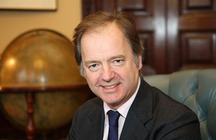
    Below is the text of the speech made by Hugo Swire, the Minister of State at the Foreign & Commonwealth Office, at Asia House in London on 8 March 2016.

    Introduction

    Thank you Michael for that kind introduction. I am delighted to be here at the launch of Asia 2025. The list of contributors to this excellent book – and the distinguished guest list this evening – reads like a Who’s Who of all things Asia, and is a credit to the respect which Asia House commands, both in this country and in the region.

    You’ll forgive me that I have not read the whole book, but I have seen some extracts of the expert opinions it contains. I know many of the authors are with us tonight so I won’t pick any out for fear of favouritism, but I will say that I am sure it makes for fascinating reading.

    Many spoke of risks, challenges and uncertainties, yet all relished the possibilities, potential, and opportunities they presented. Whether we’re in politics, diplomacy or business, we all know that risk and opportunity are two sides of the same coin.

    Some commentators are sounding the alarm about the Chinese economic slowdown, and the impact this might have on other economies in the region and further afield. This does not change the fundamental fact that Asia is now – and will remain – a major engine for global growth, and one with which we must continue to engage.

    How Asia is changing

    You only have to look at how Asia is changing, and the astonishing pace of that change. China’s Pearl River Delta now encompasses 42 million people – that’s more than the 20 biggest European cities put together. It’s the largest urban area on the planet. There are 160 cities of over 1 million people in China alone. And despite hundreds of millions of people moving into cities in the last decade, Asia’s urbanisation surge is only just beginning. This urbanisation is directly linked to income growth and consumer spending. The purchasing power of Asia’s growing middle classes is going up faster than the sky scrapers they are moving into.

    This huge movement of people is not restricted to Asia. They are travelling overseas in ever greater numbers. India overtook China recently to become the fastest growing outbound travel market – predicted to more than triple to 50 million between now and 2020.

    Two of the world’s top three economies are now Asian; a third of global trade and GDP is represented by Asia. Some predict that by 2025 as many as two thirds of the world’s population will be Asian. Both the G7 and G20 will be hosted in the region this year – clear testament to its growing significance.

    Why this matters to the UK

    There is no doubt that these seismic economic shifts are being felt right across the world, and the UK is feeling them too. Some contributors in the book you are launching today argued persuasively that the Asian economic centre of gravity was shifting westwards. Others argued just as forcefully that it was the centre of gravity of western economies that was heading east.

    Of course both are right. People in Europe are looking east as never before, but Asians are also increasingly looking west – as students, investors and tourists. Some estimates suggest that Chinese tourists spend as much as £8,000 during a visit to the UK. (Informal sources suggest much of this is spent in Bicester village.) This increasing integration is having a huge impact on the UK. Cheaper Asian imports – from T-shirts to televisions – have given British people today a standard of living their grandparents could only dream of. But at the same time these products threaten the livelihoods of lower skilled British workers. So economics spills over into politics, with protests about globalisation – not least against free trade agreements such as the Transatlantic Trade and Investment Partnership (TTIP), which is already the subject of urban myths.

    Inter-connectivity

    But we all have to accept that this increasing global inter-connectivity is here to stay and embrace it. Asia is embracing e-commerce. Ten years ago only 2% of Indonesia’s population used the internet. This year a third are expected to: that means 100 million Indonesians connected globally, with huge implications for economic growth and social change. Chinese consumers spent a record £10 billion online in just one day last year.

    At an individual level, it means that a teenager on a laptop in Hanoi can do business with a company in Huddersfield. At a country level, it has meant a recognition of growing economic inter-dependence and the need to join forces with others.

    Like our work with the Republic of Korea – building a new fleet of ships for the Royal Navy, which has led us to work together to promote the project to third countries. Or our plans to bring Typhoon fighter jets to Japan later this year, for the first non-US military exercise Japan has ever hosted.

    Cooperation like this not only breaks down barriers between countries inside the grouping or partnership, it also magnifies their individual power and influence outside it.

    In the trading context, you can see the proof of this in the EU – which I’ll come to in a moment. You can see it in the Commonwealth, where we are expecting to see the value of intra-Commonwealth trade reach $1 trillion by 2020. And you can see it in ASEAN’s economic success, and the launch of the ASEAN Economic Community (AEC). Almost two thirds of ASEAN’s growth in the last quarter century has come from productivity gains. Today ASEAN is the fourth largest exporting region in the world, accounting for 7% of global exports.

    We support ASEAN’s Vision 2025, with its plan to tackle non-tariff barriers, harmonise the regulatory environment and liberalise services. These changes will be crucial for boosting growth in South East Asia and strengthening integration with the rest of the world economy. We also support the Free Trade Agreements that the EU is pursuing with countries in the region – we see these as laying the foundations for an EU-ASEAN FTA.

    The UK, the EU and other like-minded economies are gradually building a global free trade network – through the Trans-Pacific Partnership (TPP), the Transatlantic Trade and Investment Partnership (TTIP) and various EU Free Trade Agreements, with the Republic of Korea, Vietnam and Singapore. (Only yesterday I was able to reaffirm our commitment to the EU-Vietnam FTA during our third Annual UK-Vietnam Strategic Dialogue here in London.) An agreement with Japan is in the pipeline; I very much hope to see soon a resumption of negotiations on the EU-Thailand FTA; and the UK is advocating a feasibility study on an EU-China FTA.

    Interconnectivity – security

    The benefits of international cooperation are not just seen in trade. It is a simple truth that in an inter-connected world, problems and threats in the form of Daesh-inspired terrorism, instability in the South China Sea or the North Korean menace require a unified response. Large multilateral organisations like the EU or NATO, ASEAN or the UN are listened to in a way that no individual country is. That is plain fact.

    I am pleased that United Nations Security Council Resolution 2270 passed unanimously this week, delivering a strong response from the international community to North Korea’s nuclear test and satellite launch using ballistic missile technology. We must stand united against acts that so flagrantly disregard international agreements and responsibilities.

    And it makes sense that these groupings come together for discussions. ASEM is a good example – giving the UK and its European and Asian partners a forum to discuss issues of mutual interest and further consolidate their influence.

    EU – good or bad?

    Change, and increasing global connectivity, are as relevant to us here in Europe as they are for people in Asia.

    Like Asia, the European Union has changed a great deal over the last half century. From its roots as a means to prevent further conflict between France and Germany the EU has grown into something different. Whilst with a whole range of new members this is inevitable, it does mean that reform is now clearly needed if the EU is to respond to the changed demands of the 21st Century.

    But that aside, it is clear that the Union has brought peace and stability to its member states and to much of the European continent. It has introduced democracy, the rule of law and market economics to the former communist countries of Central and Eastern Europe. And it acts as a champion for those values globally.

    EU – good for Britain

    A lot of this is down to the multiplying effect of EU cooperation. Its members have achieved more together than they could have achieved alone. The United Kingdom’s membership of the EU, like our membership of NATO, the Commonwealth and the UN, amplifies our power and influence on the world stage.

    In Asia, it gives us greater leverage in the negotiations on free trade agreements and on the comprehensive investment agreement with China. These are tough negotiations, and our negotiating power to secure market opening in important sectors is much greater from within the EU than outside it.

    At a time of increasing economic uncertainty and rising security threats, cooperation at an international level is more important than ever. The EU has powerful tools at its disposal, be they security, diplomatic, economic or humanitarian. They allow us to project our influence further than it would otherwise reach. Of course NATO remains the cornerstone of UK defence – we will never give control over such decisions to the EU. But the EU complements NATO’s military activities with its important longer-term stabilisation and development arms.

    Of course the benefits also go the other way. The UK gives EU foreign policy greater credibility thanks to our global perspective. We are after all one of the EU’s two serious military powers. We are the only major nation to have kept our promise to spend 2% of our national output on defence and 0.7% of our national income on international development. We take the lead on cutting red tape, negotiating FTAs and extending the single market. So our membership of the EU benefits both the UK and the EU.

    For all these reasons, I believe that the United Kingdom will be stronger, safer and better off in a reformed EU. Looking at the issue from an Asia perspective, it makes no sense at all for us to withdraw from the European Single Market just at the moment when Asia is creating one of its own.

    EU Referendum

    Some say the whole renegotiation and referendum exercise is an unnecessary gamble. If we were convinced of the case for staying in, why take the risk of Brexit by putting it to a referendum? I have two simple answers to these questions.

    First, like many, I am aware that the EU has its shortcomings. But I believe that the deal which the Prime Minister successfully negotiated is a landmark agreement which delivers tangible benefits for the UK in the four key areas of concern: economic governance, competitiveness, sovereignty and welfare/migration. The deal gives the UK special status within the EU that no arrangement outside the EU could match. It is a good deal for Britain – as the Prime Minister has said, it is a deal that gives us “the best of both worlds”.

    The deal he secured on competitiveness is of particular relevance to you here this evening. It is a tacit recognition by the EU of the need to reform in order to respond to the economic challenge Asia represents. The rise of Asia underlines the case for the UK to stay in the EU and to influence reform from within.

    Secondly, this referendum is about democracy. More than a generation of new voters have joined the British electorate since our accession in 1973. I am one of them. In last year’s election, this Government was given a clear mandate to renegotiate the terms of our EU membership and to let the electorate – not the politicians – decide whether to stay in or to leave. In setting a date for the referendum on 23 June we are honouring our electoral commitment.

    Conclusion

    So in conclusion, while challenges and uncertainties remain, the opportunities that Asia offers the UK and the West are undeniable, and now is the time to seize them. The best way to do that is in cooperation with others. So I for one intend to continue promoting international cooperation, working with my Ministerial colleagues to reform the EU from within, and keeping the EU firmly focused on the opportunities in the world beyond, above all in Asia. Thank you.

  • Justine Greening – 2016 Speech on Women’s Empowerment

    justinegreening

    Below is the text of the speech made by Justine Greening, the Secretary of State for International Development, at the Overseas Development Institute in London, on 8 March 2016.

    Introduction

    Thank you for that introduction. I’m delighted to be here at the end of what I know has been a fantastic, powerful day.

    And I’m delighted to be speaking here, on International Women’s Day, looking ahead to what I believe is an absolutely vital year in the battle for girls and women’s rights.

    And, actually, I know I said this time last year that 2015 was a key year for gender equality.

    And 2015 was an important year for girls and women – as we successfully fought for that standalone gender equality goal, Global Goal 5 in the new Sustainable Development Goals, and – against real opposition – for the first time the world has key targets on sexual and reproductive health, ending FGM and child marriage.

    What’s more we’ve made sure that gender equality runs through the Global Goals, because no goal, whether on education, sanitation or health, will be considered achieved unless it’s achieved for everyone – women and men, girls and boys. No one can be left behind.

    But that’s why this year, 2016, is so important. Last year was about getting the rights of women and girls on the world’s to do list – this year is about doing that to do list. We shouldn’t lose a single moment when it comes to making these goals a reality.

    2016 will also be the year of the UN High Level Panel on girls and women’s economic empowerment – announced by the UN Secretary General in January…the first time the UN have ever put together a High Level Panel on this.

    In the UN Secretary General’s words: “To achieve the Goals, we need a quantum leap in women’s economic empowerment”.

    I absolutely share that view and I’m very proud to be one of the founding members of this Panel. I believe that women’s economic empowerment is something that simply can’t wait. Girls and women around the world can’t wait, the world can’t wait. A lack of empowerment for women is pulling us all down.

    The challenge

    But what I want to be very clear about today is that when it comes to winning the battle on gender equality, we are getting there but it’s taking far, far too long.

    Yes there have been big victories in the battle for women’s rights – but, frankly, the pace of change has not been good enough – and that’s what we need to keep at the forefront of our minds this International Women’s Day. If we are to achieve the acceleration in progress for girls and women that we want and so badly need.

    The problems faced by girls and women will have been set out many times over the course of today. The statistics that, in some parts of the world, paint such a terrible picture for so many women.

    Child marriage: 1 in 4 girls in developing countries will likely be married before the age of 18, and 1 in 12 before the age of 15
    1 in 3 women worldwide are beaten or go through sexual violence in their lifetime. How is that something any of us can accept?

    200 million women around the world have undergone FGM. This represents brutal violence against women. In Uganda, a woman is 123 times more likely to die in childbirth than a woman in the United Kingdom

    Globally, just 50% of women participate in formal labour markets and have the financial independence that brings – compared with 77% of men

    In 17 countries, husbands can legally prevent their wives from working

    In 29 countries women are prohibited from working at night

    And in 34 countries women do not have the same inheritance rights as men.

    Even here in Britain we need to ask ourselves searching questions.

    It was 150 years ago that John Stuart Mill presented a petition to Parliament to give women the same political rights as men. Over six decades later, in 1928, all women over 21 in Britain finally won the right to vote. Change really took time to happen here – and we still have further to go. There are still glass ceilings to smash.

    Party leaders have come and gone, but there’s been just one female leader of a major political party.

    There are more women on FTSE 350 boards than ever before, with representation of women more than doubling since 2011.

    But as CBI Director-General Carolyn Fairbairn set out earlier this year, there are just 9 more female executive directors on FTSE350 boards than in 2010 and the number of female chief executives has hardly moved.

    Even in our schools, where you might think there must be equality as women have been teachers for decades. In fact, only 37% of school heads are women despite three-quarters of teachers being female.

    Here in London, the UK’s capital and one of the most advanced in the world, more progress is needed:

    – less than a third of London Assembly members are women (8 of 25)

    – on average men working in the City earn over £20,000 more than women

    – more than half of all newly identified cases of FGM, 1,300, in the UK from July to September last year occurred in London.

    When we look globally, according to the World Economic Forum, the global gender gap across health, education, economic opportunity and politics has closed by only 4% in the past 10 years, with the economic gap closing by just 3%. They suggest it will take another 118 years to close this gap completely.

    On the flip side of this:

    If girls and women were operating at their full potential and playing an identical role in labour markets to men’s then, according to the McKinsey Global Institute’s recent research, an estimated $28 trillion, or 26%, could be added to global GDP in 2025.

    They estimate the UK could add £0.6 trillion of additional annual GDP in 2025 by fully bridging the gender gap.

    So the world shouldn’t just wait for girls and women’s economic empowerment to steadily happen – we should turbo charge it.

    And what that shows is that our global economy needs women’s economic empowerment as much as any other lever that the central bankers can pull.

    And as well as being about basic, human rights for girls and women – gender equality is also in all our interests. When women are losing out – we’re all losing out. And at a time when there is still much economic uncertainty in global markets, we can’t afford to lock women out of the workplace – we need them in board rooms, offices and in industry.

    Economic empowerment goes right to the heart of women’s rights – it’s about jobs but it’s also about access to bank accounts, tackling violence against girls and women, overcoming discriminatory laws and reducing the burden of unpaid domestic work. All things the High Level Panel must tackle.

    I believe women’s economic empowerment is a game-changer – both for tackling poverty and for building global prosperity.

    No country can afford to leave half its population behind. This has been going on for too long – I don’t accept it.

    The UN High Level Panel is fundamentally about turbo charging all our efforts to deliver real and lasting change and I’m proud to be part of that.

    Voice, choice, control

    The question for all of us today is not just where we need to go but how fast we can get there – how we can accelerate the pace of change.

    What’s that going to take?

    I think it comes down to voice, choice and control. We have to look at politics, the business world, the attitudes people have within their communities and in the home.

    So what about women having a real voice over the decisions that affect them? Internationally we need the next UN Secretary General to really pick up the baton on gender equality – perhaps for the next UN Secretary General to be a woman for the first time.

    Again, on women having a voice, we need women to be equally represented in Parliaments around the world.

    In Somalia – where only 14% of MPs are women, in Sierra Leone – where just over 12% are women, but also Japan – where only 9% are women. And Britain – where it’s still only 30% despite all the progress we’ve made. We still need around 130 more women MPs here to be equal. Let’s find the 130 more.

    My message to women in Britain is: if you’re a great, capable woman then run, run for Parliament or for local government, or to be a police commissioner, and if you know a great, capable woman – then ask her to run.

    What about women being able to choose their own futures? Whether they’re sitting in Britain’s boardrooms or smallholder farmers in Ethiopia they need to be economically empowered.

    And finally the control women have over their lives and their own bodies, when and how many children they have, when they get married, not having FGM.

    We have to finally overcome those discriminatory social norms that hold women back – the cultures and traditions that can define what a girl is for. Culture and tradition should never be used as an excuse for inaction on girls and women’s rights.

    Britain is going to fight for a world where there is voice, choice and control for women.

    Nationally, we are getting our own house in order, with new league tables to put the spotlight on companies that are failing to address the gender pay gap. By supporting women to start and grow their own businesses, including through start-up loans & mentoring. And by supporting FGM and forced marriage units as well as refuges and rape support centres.

    Internationally, we will continue to work with countries that are moving in the same direction on this – supporting countries like Ethiopia that are focused on stamping out harmful practices such as child marriage and FGM. But this political leadership is, of course, not the case everywhere.

    In countries where that political leadership simply is not there, we’ll focus on supporting their grassroots movements, the local organisations and women’s rights groups, the women and men, girls and boys demanding change.

    When John Stuart Mill – a man fighting for women’s rights it’s worth pointing out – when he presented that petition to allow women to vote to Parliament, the establishment was all against him. By 1928 resistance had broken down. And that was because of a grassroots movement – the suffragettes – who kept fighting for change and in doing so transformed this country.

    It all adds up to this: the mission for gender equality will underpin everything we’re doing at DFID. It underpins what this government is doing in the UK. And it needs to underpin the work of the UN, the work of all governments around the world.

    The fight for women’s rights needs to have the same momentum, the same progress, the same deal-making, the same pace and urgency we’ve recently seen around the climate change movement in recent years – culminating in that ground-breaking deal in Paris. If we can do a deal to save the planet, then surely we can deliver gender equality now, in the 21st Century, too.

    Call to action

    So, I want to conclude with a call to action – not just to this room, but to everyone who cares about this issue, in Britain and around the world.

    Inequality between men and women is the greatest unmet human challenge the world continues to face this century. It requires the same global commitment that we’re now seeing around tackling climate change. The whole world needs to rally round women’s rights.

    The Sustainable Development Goals is a blueprint for women’s rights around the world – so let’s use it.

    In the end by building a better world for women, we are building a better world for everyone. We can see the world we all want – we just need to accelerate towards it as fast as we can. We’ve got to go further, faster.

    I’ve often said that when it comes to women’s rights – if we’re not winning this battle then, de facto, we’re losing it. There’s plenty of people who think things have already gone too far and will try to claw back the progress we’ve made. Just to stand still we have to keep winning.

    But the other aspect of that is we are now seeing a network effect. As we see more progress, and more rights for girls and women – there’s more and more voices to call for change.

    So the more we can be and give a voice to those that don’t have one, the more we shout for change, the more we can give a platform to those voices demanding change – I believe the more irresistible this movement will become until no country can withstand it.

    I don’t want someone in my place to be here in 150 years’ time talking about this day and this speech I made. In fact, making a similar speech about the need for more pace and urgency on women’s rights because there’s still more to do. It’s too long to wait. In our lifetimes, for our girls, for our children, for everyone – let’s all of us, men and women, girls and boys, finish off the job. Let’s make women equal.

    Thank you.

  • Matt Hancock – 2016 Speech on International Women’s Day

    Below is the text of the speech made by Matt Hancock, the Minister for the Cabinet Office, at Portcullis House in London on 8 March 2016.

    It’s a great privilege to be here today with you all, and it’s a joy to be hearing from these inspirational public servants.

    I’ve been an MP for nearly 6 years now, and I’ve spent a fair amount of time here in Portcullis House.

    It’s named after a Tudor badge that has been the symbol for our Parliament for over 500 years. It denotes fortitude, strength and stability.

    Castles and ramparts and gates have for millennia been erected to keep people out. That is a perception we must change.

    In my first speech as Cabinet Office Minister I said that to govern modern Britain, the Civil Service has to be more like modern Britain.

    Whether it’s a matter of social background, or gender, or ethnicity, or sexual orientation, we must end the injustice of unfair discrimination.

    Indeed one of the reasons I’m in public service is because I passionately believe that everyone should have the chance to reach their potential, whatever their background.

    I came to Westminster to fight for that principle and I intend to do so with every tool at my disposal.

    I want my daughter to have every opportunity that my sons have. And like all of you here today, I pledge to do my duty to build a world in which all can succeed.

    I’m proud of this great feminist cause, and I’m proud to call myself a feminist in making that pledge.

    This is a moral quest. Indeed I believe it to be a self-evident, cornerstone British value.

    We are all individuals with strengths, weaknesses, hopes and dreams. For each of us these things add up to the unique contribution that every one of us can make.

    Yes, it’s a moral quest, but it is also deeply practical.

    My core mission as Cabinet Office Minister is to help the government deliver more than the sum of its parts.

    A crucial and integral part of that is opening our doors to the best talent, making sure all people have the opportunity to grow and excel.

    It’s good business sense to bring in as many different ways of thinking as possible. Difference promotes innovation and strength.

    International Women’s Day is a chance to hold up a mirror to ourselves. To do so we must take a good hard look at where we are, where we need to go, and how we get there.

    So let’s look at where we are. Today, women make up 54% of our civil servants. A record 44% of new public appointments last year were women.

    The Bridge report I commissioned recently found that we’re improving gender access to the upper echelons of the civil service.

    Since the launch of the Talent Action Plan in 2014 we’ve improved support for returning mothers, increased the number of job shares, and put a halt to all-male interview panels.

    But as you climb higher the numbers get worse. 60% of junior employees are women, but only 40% of the Senior Civil Service.

    It’s striking that in 1996 – the year the portcullis was officially recognised as Parliament’s emblem – the figure was less than half that.

    Research shows the gender pay gap is closing, and in some cases has closed.

    We’re making progress, and this should be celebrated. But parity hasn’t yet been reached everywhere, and so there is more to do.

    First, we must turn our commitment to equal opportunities in public leadership roles into meaningful action.

    I want to see an end to single-sex shortlists and selection panels for public appointments. Whilst this is currently the case in the majority of competitions, I want it to be the standard across the board.

    This shows we’re serious about gender parity, and I hope that the private sector takes notice and follows suit.

    Next, our new digital advisory group for the government’s digital revolution is made up of 50% men and 50% women. And we intend to have more women on boards in the future.

    I want more women to consider a career in the Civil Service, and I want those that are here to be proud of their job and their achievements.

    So we’re going to make the selection and promotion process as transparent and fair as possible by tackling bias, conscious or otherwise, and making name-blind recruitment standard.

    There’s a lot more to do, and I’m going to set out our full strategy to boost social mobility in the Civil Service in the spring.

    So, to those storming the ramparts of injustice, I support you. Let us tear down these barriers to fairness for all.

    Today is an important day but one day isn’t enough. We must make sure our top institutions are bastions of equality and opportunity.

    They must be exemplars for the society we want to build. A society where everyone has the chance to succeed, and to serve their country.

    And I hope that you too will continue to be standard bearers for that society.

  • Andrea Leadsom – 2016 Speech at Women in Nuclear UK Conference

    Andrea Leadsom
    Andrea Leadsom

    Below is the text of the speech made by Andrea Leadsom, the Minister of State at Department of Energy and Climate Change, on 2 February 2016.

    Introduction

    I am very pleased to be here today supporting Women in Nuclear UK’s mission to address the gender imbalance in the nuclear sector and delighted to speak to you as part of the only all women Commons Ministerial team!

    I have worked in a number of male dominated sectors so, for me, this issue has a deep, personal resonance.

    We can send people to the moon. We can explore the vast depths of our oceans. We can build great cities and towering structures. We can even talk to our computers. We have achieved greatness in many areas. But on the issue of gender imbalance, while there has been progress in the UK and around the world, far more needs to be done.

    It is imperative that we empower women now and for the future. A great number of British women have inspired us throughout history, succeeding against all the odds, to blaze a trail for future generations to follow.

    Down through the centuries, British women have made their mark; in areas such as politics, literature, medicine, and social reform.

    Jane Austen the great novelist, Dorothy Hodgkin won the Nobel Prize in Chemistry in 1964, and Helen Sharman was the first British woman in space.

    We look to them, and many others, with pride and revel in their legacy that changed our society forever.

    These women serve as a reminder as to what can be achieved when women are given the opportunity to reach their full potential.

    I want the nuclear industry to be a launch pad for the next generation of world changing women pioneers, I want the nuclear industry to provide strong female role models, strong female leaders and a strong female presence in the sector’s workforce.

    Today I want to set out why it is imperative that we address the gender imbalance, what initiatives are in place within the nuclear industry and what more can be done.

    Gender balance globally and the UK

    The World Economic Forum’s 2015 Global Gender Gap Report ranks 145 economies according to how well they leverage their female talent pool. The UK is in 18th place, up from 26th place in 2014. Iceland holds the top spot, 5 years in a row, with three Nordic countries following close behind.

    What is the reason behind these countries’ success? Among other equitable policies, it is the combination of high female labour force participation, salary gaps between men and women being among the lowest in the world and abundant opportunities for women to rise to positions of leadership. We must learn from these countries leading in the area of gender balance.

    However, according to PwC, more than two thirds of the UK’s biggest 100 energy companies fail to count a single woman on their boards. In the nuclear industry, only 8 women hold board positions out of the 100 positions available. Additionally, the NIA reports that of its members’ – 64,000 employees – only 17% are female. In engineering, IT and technical sectors, women earn on average £10K less than their male colleagues.

    The nuclear industry can and must do much better than this.

    Benefits of gender equality in the nuclear sector

    So, why should the industry concern itself with gender imbalance? The simple answer is that a nuclear industry which is equally appealing to both women and men will provide nuclear sector companies with access to the entire pool of talent the UK has to offer.

    Conversely, an industry that is not attractive to women risks losing the best talent to competitors.

    The fact remains that companies with a gender balance perform better because diversity brings together varied perspectives. Simply put, the nuclear sector cannot reach its full potential without maximising all available talents.

    The skills gap challenge

    So, as we deliver the UK’s nuclear programme over the decades to come, it is imperative that we address the skills gap. In 2015 the total demand for skilled nuclear workers was approximately 77,000 Full Time Equivalents. This number is expected to rise as both the civil and defence nuclear new build programmes gather pace. Demand is forecast to peak in 2021 at over 111,000.

    The nuclear industry thrives on innovation in areas such as decommissioning and small modular reactors. A diverse workforce is therefore far more likely to support innovation.

    And the fact remains, we are going to need a more skilled workforce across the civil and defence nuclear sectors. By not attracting women to the sector, we will be, by default, recruiting from a much smaller pool than we need to. So it therefore makes absolute sense to attract more women to these sectors.

    Current initiatives

    We are making progress.

    The new MentorSet scheme, co-ordinated by the Women’s Engineering Society, will help women in Science, Technology, Engineering and Maths by providing independent mentors who understand the challenges faced in the engineering and allied sectors.

    The Department for Energy and Climate Change is already a member and I encourage you all to join as well. By participating in the MentorSet scheme you will be demonstrating a clear commitment to your female employees and to the Women’s Engineering Society’s vision of a better and more diverse world.

    Additionally, Women in Nuclear launched an Industry Charter that lays out 10 points which business leaders signing up to must address. 30 companies have already signed up to the Industry Charter.

    In 2014, EDF Energy more than doubled the female proportion of its new intake of graduate engineers to 32% within a year. At EDF, women now account for 20% of the company’s apprentices, up from 6% and I was delighted to meet some of those apprentices on my recent visit to EDF’s Cannington Court at the end of last year.

    Also, the Nuclear Industry Association’s “Regeneration” campaign seeks to engage young people on issues relating to energy and provides information about jobs and skills available to them in the industry. This initiative encourages young people, especially girls to continue to study STEM subjects.

    Encouraging women to pursue STEM subjects

    These subjects are of course crucial. But in the UK, only 1 woman to every 7 men works in science, technology, engineering and maths. We need to get more girls interested and excited about STEM subjects.

    The nuclear industry has some great STEM initiatives. WiN UK have done a terrific job in getting the message to young girls that they can have a successful career by pursuing these subjects. In 2015, WiN UK spoke to over 1,000 students about the fulfilling careers the nuclear sector has to offer.

    Also, EDF’s “Pretty Curious” campaign is helping to change perceptions of STEM by sparking the imagination of young girls and inspiring them to continue to pursue science-based subjects at school and in their careers.

    There are already success stories. Amy, without wanting to copy the leader of the opposition too much, I just wanted to mention, is 21 and an electrical maintenance technician at Hinkley Point B. Bethany who is a 23 year old reactor chemistry engineer at Heysham 2 Nuclear Power Station. Also, on a visit to Sellafield, I met Dorothy, who has a key role leading innovative Sellafield decommissioning.

    There could be countless more women just like Amy, Bethany and Dorothy, but we need to create the right environment, provide the right tools and not expect girls to fit into the existing framework for achieving success.

    Prominent women in nuclear and the need for more women in senior positions

    In more senior, leadership roles we have Dame Sue Ion, Chair of the Nuclear Innovation and Research Advisory Board and an expert advisor on the nuclear power industry.

    Ann McCall is the waste management director at RWM and Kinna Kintrea, the assurance director at the NDA has a long history of working in manufacturing and male dominated environments.

    And of course, my congratulations go to Miranda Kirschel, the chair of Women in Nuclear UK, who was just recently awarded an MBE for services to promote equal opportunities in the nuclear industry.

    I am also delighted that the Office for Nuclear Regulation has hired its first female Chief Executive. I know you heard from Adriènne Kelbie earlier today and I’m sure she will do a fantastic job.

    It is through these high profile appointments that we really will start to effect change. We need to see more women in positions of leadership, and the only way to achieve this is for leaders in the nuclear industry, whether they be male or female, to enable and champion this change. Change must come not only from the top, but at the grassroots level as well. I want women in senior and high profile positions to be the norm, not the exception.

    All these women demonstrate it is possible to be successful in what are currently male dominated sectors. I worked in the banking and finance industry for 25 years, then went into politics and now I am a Government Minister – all typically male dominated arenas. I know from my own experience that Women can succeed in these areas given the right opportunities.

    What more can be done

    But more needs to be done. The Industry Charter, that I mentioned earlier, is a great way to get you, the business leaders in the nuclear sector to take a look at your own organisations and your recruitment practices. I urge you to review the targets you have set for your organisations on the recruitment of women and set new, more ambitious goals.

    Also, we must continue to break the perception that STEM subjects are just for boys and encourage more girls to take up these subjects.

    We need businesses to step up their game. We need to see more females in adverts that send a clear message that women are not only welcome but will be given the same opportunities as men. And we need to hear from more female scientists about the work they do. We need to roll out a different set of role models so that girls and women know that science and the nuclear sector are areas which they can work in, successfully and equally.

    Conclusion

    The transition towards a low carbon economy through our commitment to building a new generation of nuclear power plants represents a fresh opportunity for the nuclear industry to embrace gender equality. We have an opportunity to be a world class leader in narrowing the gender imbalance. How we address this issue may well set a precedent for other industries and countries.

    It is imperative that companies in the nuclear sector take individual ownership of tackling the issue of gender imbalance, and place diversity firmly at the heart of their recruitment, retention and progression.

    We want a sector that welcomes women and one that provides the same opportunities as to their male counterparts. Let us chart a new and better path for the women of this country.

  • Nicky Morgan – 2016 Speech at ASCL Conference

    nickymorgan

    Below is the text of the speech made by Nicky Morgan, the Secretary of State for Education, in Birmingham on 5 March 2016.

    Thank you, Allan [Foulds, President of ASCL], for that kind introduction.

    It’s fantastic to see so many of you here, and particularly to see those familiar faces from all the schools I’ve had the pleasure of visiting over the past 18 months.

    Please do keep the invitations coming, because I can say, hand on heart, that the very best part of my job is when I’m able to leave Westminster and Whitehall, to see beyond the headlines, the statistics and the speeches, and to witness first-hand the fantastic work that you’re doing to change young lives in schools right across the country.

    It truly is a privilege.

    That leads me on to the first thing I want to say to you today, to acknowledge something which isn’t said enough, perhaps because it doesn’t make for good copy for journalists, or it doesn’t have the same appeal as eye-catching initiatives for politicians.

    And that is this: the vast majority, more than 8 in 10 schools in this country, do a good or outstanding job; the vast majority of school leaders are tireless and passionate advocates for the young people they serve; and the vast majority of teachers are engaging and inspiring their pupils to achieve their all.

    You don’t have to take my word for it, the figures speak for themselves. More children are joining secondary school with a better grasp of the 3Rs; there are record numbers of ‘good’ and ‘outstanding’ schools; and fewer pupils are leaving school and ending up NEET.

    These improvements are being driven from the ground – by confident, innovative leaders like you, who’ve embraced autonomy to achieve truly remarkable progress.

    The truth is, and I know it might not always feel like this, we are in a golden age of education in this country.

    Expectations are higher, standards have improved, and outcomes are better than at any time in our country’s history.

    That is worth remembering, particularly as we engage in the debate on how to drive our education system forward further still, because we start from a very good base.

    At the same time, all of us here recognise that in a globalised world, where the young people you teach are going to have to compete for jobs not just with young people from the same town, county or country, but with their peers from across the globe, we cannot afford to let our education system stand still. We can always do more and achieve better.

    Educational excellence

    Inevitably, my focus, and that of my department and Ofsted, must be on that minority of schools where the quality of education isn’t yet good enough.

    After all, even if a single school isn’t performing as well as it could be, then hundreds of children aren’t getting the education they deserve and the chance to reach their full potential.

    Children get just one shot at their education and we owe it to them to give them the best one.

    It is, as I have said many times before, a matter of basic social justice – our duty and our obligation to the next generation.

    As the Prime Minister has made clear, this is a one nation government – focused on unlocking real social justice and improving the life chances of those who so often have been left behind.

    Education is at the heart of that agenda.

    So yes, we need to do a better job; and by we I mean all of us – politicians, leaders and even the media – of recognising all that is excellent and inspiring about our schools today.

    But we also need to be unapologetic about tackling failure where it occurs and be ready to give those schools who are struggling a helping hand.

    In November in a speech to Policy Exchange, I made clear that my goal over the course of this Parliament is to spread educational excellence everywhere.

    I don’t need to tell you that too many of those struggling schools are concentrated in certain parts of the country – many in our coastal towns and rural areas.

    Simply hoping for improvement isn’t enough, because these areas are not only underperforming, but they also lack the capacity and support that they need to improve.

    Quite simply that means that just by virtue of being born in one part of the country, a child is destined to receive a worse start in life.

    Delivering educational excellence everywhere means ending the scandalous demography of destiny which has no place in 21st century Britain.

    It means providing the means by which the innovation that has transformed educational outcomes in cities like London can spread across the country.

    It means a zero tolerance approach to underachievement, no excuses for failure and bringing a culture of aspiration back to all our towns and communities.

    Leaders at the heart of the system

    And the only people who can make that vision a reality are you.

    Sure enough, politicians can make things easier or harder for you to succeed: we can make sure that you have the resources you need and that the accountability system we design leads to the right incentives.

    But ultimately there is no substitute for good leadership.

    That’s why, as a government, we are such firm believers in a school-led system, with great leaders in the driving seat.

    Why do we want all schools to become academies? Because we believe that the people best placed to lead schools are you – the heads.

    Why do we believe in multi-academy trusts (MATs)? Because we want the best leaders to extend their reach to as many schools as possible.

    Why have we stripped back the national curriculum? Because you know – better than we ever could – how best to inspire and engage your students.

    All of our reforms are about bringing power, responsibility and accountability together in your hands, where it belongs.

    Let’s dispense with this notion once and for all that somehow local authority control of schools led to democratic accountability.

    Let me honestly ask you: how many local elections in your patch have been fought over the quality of education?

    I don’t ever remember being on a doorstep and being quizzed on what my local authority was doing on local schools.

    But that doesn’t and shouldn’t mean that the school-led system is about the government leaving schools to fend for themselves.

    A school-led system does not mean creating a Wild West where schools compete in a survival of the fittest – far from it.

    Instead, a genuine school-led system means the government getting out of the way and focusing on providing the scaffolding that helps those good schools to turn around weaker ones.

    It means the government not meddling in schools or micromanaging the process but supporting improvement through schemes like the National Teaching Service, helping to build sponsor capacity and discharging our duty to hold schools to account on behalf of parents.

    Having read the blueprint numerous times, I know we share a vision that is broadly aligned, where government provides a helping hand, but where improvement and innovation are driven from the sector itself.

    Of course, devolving power from politicians to school leaders inevitably means more demands on leaders. If we’re to have a truly self-improving school system, then that means leadership itself must adapt and improve as well.

    Already we see models of leadership adapting and evolving to meet the challenge of running a school-led system, ranging from the potential offered by MATs for young teachers to quickly accelerate to leadership positions, right through to the opportunities to become a CEO of a large MAT responsible for 30 to 40 schools.

    And I’m genuinely excited by the potential offered by the work you, NAHT and the National Governors’ Association are doing on the Foundation for Leadership, which in time will see ever more leadership development driven directly by those who know what it takes to make a great leader.

    For my part, I want to do all I can to remove the barriers to your success.

    The heads I met before this speech talked to me about our accountability system. I want to be clear – I never want our inspection system to be a barrier to talented leaders taking on and supporting new schools. And I want to reiterate that just like every other commitment in our manifesto, when we said we will reduce the burdens of inspection, we meant it.

    But there are other challenges as well, and I want to focus on just a couple.

    Teacher recruitment

    The first, it won’t surprise you to hear, is teacher recruitment.

    We know that recruitment is a challenge.

    We hear your concerns, and we know that while headline data shows a sustained low national vacancy rate, the reality on the ground for many heads is that they are struggling to attract the brightest and the best.

    Let me level with you. We have a growing economy and leading employers intending to recruit 7.5% more graduates than last year from a smaller overall graduate pool, so even with all other things being equal, we would face a challenge.

    So we are doing all we can to drive recruitment and improve retention. And we’re getting more returners coming back into the profession.

    Tomorrow I’ll be talking more about measures we’re taking to support part-time teachers and particularly women, so that our schools don’t lose out on their talent.

    And later this spring, 3 workload review groups will be reporting to me on how to tackle the issues which have seen some great teachers leave the profession.

    But I need your help to tackle this challenge.

    By all means, lobby me about what more the government can do to improve recruitment and retention.

    But let’s not inadvertently create a vicious cycle where talk of a crisis actively puts people off entering the profession. Let’s focus on communicating to the outside world what a great profession teaching is, how rewarding it can be, and what good teachers have the power to do.

    Funding

    I know that for some of you, funding is also a challenge, and here again I want to be as frank as I can. Compared to the rest of the public sector, the schools budget secured a relatively generous funding settlement. There simply isn’t, in a time of austerity, a magic money tree from which government can find more.

    But I know there are pressures and it is indisputable that we are expecting you to do more with the budgets you have.

    Those pressures make the introduction of a national fair funding formula even more urgent, and we remain committed to beginning the transition from next year – because it must be right that the same pupil, with the same characteristics attracts the same amount of funding.

    We also want to help schools to reduce unnecessary costs. I know many of you have already used our school efficiency metric, and in the coming months we’ll be doing much more to help schools get the best value for money from their budgets. And there are many more areas I could discuss. I’m sure you’ll challenge me on some of them during the Q and A.

    The prize

    The long and short of it is this: achieving what we all want to see – a world class education system – won’t be easy. Striving for excellence means stretching ourselves.

    For me, this is why I came into politics. Nothing makes me angrier than the thought of potential lost through lack of a decent education, which is why I want to play my part in building a system that delivers true excellence for all.

    I know from speaking to you, that for many of you, your motivations for being teachers are very similar. We are all here because we want the same thing: to offer the best education we possibly can – one which values each and every teacher and extends opportunity to each and every child.

    Your generation of school leaders has already achieved so much, and as I said before, this is very much a golden age for education standards in this country.

    I can’t pretend your jobs will ever be easy and you know that, but my commitment is to ensure that government supports you as much as we can but doesn’t get in the way – so you can set about improving our school system further.

    I’d urge you to seize that opportunity. Don’t be afraid to be bold, don’t wait for permission, and don’t be held back by fear of inspection.

    Because every time you are able to open a young mind to a new concept, every time you succeed in teaching them something new, you are helping to build a piece of their future.

    If we are able to make a reality of the school-led system, then the prize will be great.

    We’ll be able to build something that no country has yet achieved: a truly fair and meritocratic society, where life chances are determined by talent and effort, not the circumstances of birth – an end to demography as destiny.

    Thank you for everything you do.

  • Michael Wilshaw – 2016 Speech to ASCL Conference

    michaelwilshaw

    Below is the text of the speech made by Michael Wilshaw, the Chief Inspector of OFSTED, in Birmingham on 4 March 2016.

    Thank you for that introduction, Stephen, and thanks for inviting me to speak at your annual conference once again.

    Can I first of all apologise for pulling out of last year’s conference at short notice. But I’m afraid an emergency heart operation got in the way. Nevertheless, all these things have an upside because it reassured the doubters that I really do have a heart. Indeed, I have a very big heart for our education service and particularly for the great work that you do as headteachers. That’s not just an idle platitude at the start of a speech, but a deeply felt belief in the power of headship to change young people’s lives for the better. Standards have improved in our country over the last 20 years principally because of you.

    A tough job made tougher

    Yours is a tough job. But there is no better one. And the best heads, despite the difficulties and the anxieties, know this to be true. In my view, every head has to be Janus-like. What I mean by this is that part of you is always looking one way – at what’s happening in the classroom and in the corridors to ensure that young people are being taught well. But another part of you is always worrying about the 2 looming vacancies in the maths department and the possibility of losing the best head of science you’ve ever had to the school down the road whose budget allows a higher salary to be paid.

    This constant head-turning always gave me a painful crick in the neck, but at the moment you probably need a double dose of Ralgex applied liberally when resignation deadlines come round.

    Recruitment is a burning issue and all of us, including the Department for Education, have got to face it head on and develop strategies not only to solve the present problems but also to ensure that we don’t face these staffing issues again and again and again.

    I feel passionately about this because for a dozen or so years as a head I was compelled to travel to Galway, Cork and Dublin to attract Ireland’s finest to teach in east London and if that didn’t work, raid the school budget to fly to New Zealand or Australia. But I suspect budgets now won’t allow that extravagance.

    The problems around recruitment, as I said to the select committee earlier this week, are threatening to undermine the progress that all of us have made. But it will also make it harder to meet the challenges of more demanding assessment, higher floor targets and a changing curriculum. I know you will meet these challenges in the same way that previous generations of headteachers have met earlier challenges. But you need help. The reasons for the teacher shortages are already well documented so I don’t need to dwell on them too much today, other than to say that the exponential growth in international schools abroad, many of which are sponsored by our top public schools, is pouring petrol onto the fire.

    As I pointed out last week, there are now an estimated 8,000 international schools, many of them employing our teachers. And that figure is forecast to nearly double over the next few years. What joy! How wonderful for the independent sector, how miserable for the rest of us.

    I have to confess that as a head, it was always my ambition to make my school so good that parents would rather opt for a free state education than an independent one. Therefore it’s good to see that the Good Schools Guide is recognising that our schools are getting so much better. Our job must be to convince parents, particularly those of more able children, that state secondary schools can deliver the very best education and help youngsters achieve their full potential.

    It is precisely for this reason that I have asked HMI to focus on the progress of the most able pupils more than ever before during school inspections. They will be particularly tough on schools where children are coming into Year 7, having done well at primary but then tread water rather than swim upstream.

    I want to see, and you want to see, more youngsters from the state system going to the top universities year on year. I particularly want to see poor youngsters getting to the Russell Group in greater numbers than they are doing at the moment. If that is to happen, then the gap in progress and attainment at secondary level between free school meal children and their peers has got to start closing. It really is an indictment of our secondary system that this 28 percentage point gap has not closed in nearly 10 years. This really can’t go on. It is morally indefensible and a waste of so much pupil premium money.

    However, let’s be clear, these recruitment problems are not just being fuelled by a rapacious independent sector and an improving economy, but also by public perceptions of our profession.

    One way you can certainly help is by refusing any request for your school to feature on a ‘fly on the wall’ television show. The problem with these programmes is that they provide great TV but little reality. They inevitably focus on the sensational, at the cost of presenting a balanced picture of what goes on in our schools. The spotlight always falls on the ‘lippy’ kid and the NQT in trouble and gives a distorted view of our state system. All they do is reinforce the caricatures of comprehensive schools promoted by those who don’t understand them, would like to get rid of them and return to selection.

    However, no matter how much effort we put into raising the status of the profession, I fear we will never properly get on top of the teacher supply issue unless, and until, the National College for Teaching and Leadership starts to get ahead of the curve. Put bluntly, the National College of Leadership has to show leadership. It has to say more about leadership. And it certainly has to deliver more teachers to your front door. At the moment, it is letting down our system, our schools and our children, particularly in the poorest areas.

    As I argued in my Annual Report, shortages are being exacerbated because the current teacher-training regime is too disorganised, too unevenly distributed and too driven by market forces. The freedom that good and outstanding schools now have to take more control of teacher training – while a positive development – risks further widening the inequalities in our system because there are few strategies in place to prevent this happening.

    You will know that I have previously voiced concern about an emerging two-tier education system. More and more, we see the best schools in the most popular areas snapping up the best teachers while underperforming schools in poorer or more isolated areas are facing an increasingly desperate struggle to find good candidates. They are trapped in a vicious cycle – unable to recruit because they are struggling, but unable to improve because they cannot recruit.

    Headship remains a great job

    Having said all this, you know and I know that most headteachers will do their very best to cope with these problems.

    And let’s not forget, the opportunities and rewards out there for the problem-solving, creative and ambitious head are greater now than ever before. Secondary headship is well remunerated and executive headship even more so. And rightly so. It’s one of the most important jobs in any community and vital to our country.

    Today’s good and ambitious head can not only shape the lives of young people but also shape our national system through system leadership.

    The good and ambitious head can now find themselves running a multi-academy trust or becoming a Regional Schools Commissioner or, my goodness, even ending up as Her Majesty’s Chief Inspector.

    The critical importance of headship is a theme I have returned to time and again during my time at the Ofsted helm. Our inspection evidence consistently shows that having the right calibre of leader in charge is key to a school’s success.

    Leadership succession

    That is why perhaps the single most important duty of any headteacher is to plan effectively for their own succession. In a much more autonomous system, with so much depending on appointing people who know how to use their freedoms, it is vital that we do more to nurture leadership.

    I have long worried that bringing through the next generation of leaders has not been given the priority that it deserves. The same attention that has been given to structural reform in the last few years now needs to be given to ensuring that our country not only has enough high-quality teachers but enough great leaders, particularly in those regions that are languishing in mediocrity.

    It is for this reason that I commissioned HMI to carry out some fieldwork to gain a better understanding of the systems in place across the country to identify and prepare the next generation of great secondary headteachers. The findings will inform my next monthly commentary. It should have some important things to say.

    Weaknesses remain in secondary sector

    As a nation, we need to be assured that there are enough great leaders to sustain high standards and to tackle the deep problems that have still to be overcome in our state school system.

    For make no mistake, while the system has got better, improvement is only partial.

    Inspection evidence over the last academic year demonstrates that England’s primary schools continue to forge ahead. However, as you well know, secondary school performance remains a problem in large swathes of our country.

    As a result, there should be some anxiety that when the next PISA tables are published later this year, our rankings won’t show much improvement.

    Those who read my last Annual Report or my recent IPPR speech on the northern powerhouse and the low outcomes for pupils in Manchester and Liverpool, will know how concerned I am that educational success isn’t spread evenly across the country. What improvement we have seen in secondary schools has been disproportionately driven by schools in some parts of England, particularly London, and not others.

    There is an 11 percentage point gap between the proportion of secondary schools that are good or better in the South and East and in the North and Midlands. This is something we cannot ignore, especially as primary schools are doing just as well in these regions as they are in the South.

    Local politicians in underperforming parts of the country must be as determined to drive their schools to do better, irrespective of their status, as they are to lobby for fast trains or new motorways. Children in their regions deserve as good an education as children in the South. Without a decent education, many will remain trapped in a cycle of deprivation that no amount of extra roads and railways will ever help them to escape.

    Children in Salford, Knowsley and Bradford need to have the same opportunities as those in London, Oxfordshire and Surrey.

    However, it remains the case that some of the weaknesses in secondary schools I have highlighted over the past 12 months are more generic and need attention right across the country.

    As I’ve already implied with my earlier comments about independent schools, we still have far too many secondaries not building on progress made at primary school, especially when it comes to meeting the needs of the most able.

    The survey that Ofsted brought out last autumn, entitled The wasted years?, found that in too many secondary schools, Key Stage 3 is not given the priority it deserves. Its status as the poor relation to other key stages is exemplified in the way many schools monitor and assess pupils’ progress and in the way they allocate resources and timetable teachers. Too often, inspectors found that the best and most experienced teachers were heavily weighted towards Key Stages 4 and 5.

    The quality of teaching and the rate of pupils’ progress in Years 7 to 9 are too often failing to prepare youngsters for the next stage of their education. Modern foreign languages, history and geography, in particular, are being taught in a way that is failing to engage or enthuse pupils in many of our schools at this key stage.

    This is a serious concern given the government’s clear ambition for the great majority of pupils who started secondary school last September to enter the EBacc subjects in 5 years’ time.

    You will also know that I have real concerns about the overall quality of provision for the many children who do not succeed at 16 or who would prefer an alternative to university. Our system is adept at guiding students into higher education. But it still struggles, despite the recent focus on apprenticeships, to inform them about alternative career pathways available to them.

    Preparation for employment remains poor and careers guidance in both schools and colleges is uniformly weak. We simply have to improve the quality of our technical and vocational provision and present it as a valid educational route if we are to equip youngsters with the skills they need and that employers want.

    So my major question to you today is the one I have posed in the past and will continue to ask in my remaining few months in this job.

    If some schools can get these things right, then why can’t more do so?

    The task of any secondary headteacher and any leader of a federation or multi-academy trust must be to properly address these systemic weaknesses in their institution or their constituent schools.

    So that when an inspector walks in and rattles off the important questions:

    What are you doing to strengthen the Key Stage 3 curriculum?

    What are you doing to make sure your most able pupils are being stretched?

    What steps are you taking to improve outcomes for your youngsters on free school meals?

    How do you ensure that your Year 11 students fully understand the range of career and study options available to them?

    You should be able to answer by demonstrating progress in each of these areas.

    Challenging the system to do better

    Since being appointed Chief Inspector, you know that I have had to sometimes deliver difficult messages.

    I am very well aware that I have often been challenging and outspoken on a number of issues. And I know I have been particularly tough on secondary schools in the last couple of years. But I hope you understand my reasons for being so.

    I am desperate to see standards rising in all our schools and for every child to have the chance of a decent education that will set them up for life in an increasingly uncertain and competitive world.

    I know my decision to scrap the satisfactory grade and replace it with requires improvement, for instance, caused a fair degree of ferment at the time. But you know as well as I do that we couldn’t carry on with a situation where 2 million children were being consigned to a mediocre education year after year, inspection after inspection.

    The fact that we now have nearly 1.4 million more children in good or outstanding schools than in 2010 convinces me that it was the right thing to do and should give us all cause for optimism.

    And despite all the challenges and the problems that I’ve alluded to, I do remain an optimist. One of the undoubted upsides of this job is being able to tour the country, taking in places like Stoke-on-Trent where I was last week, and seeing dedicated and talented leaders producing results in the most difficult circumstances. It reinforces my sense of optimism and my belief in the power of headship in particular.

    As I have remarked before, one the most gratifying things I do is to write to those headteachers who are leading schools that require improvement but where inspectors have judged that the leadership is tackling the weaknesses and turning things around. That is such an exciting experience for all involved, including inspectors.

    I am also committed to recognising the achievements of those people who are showing true system leadership. I recently took pleasure in writing letters to the first of the heads nominated by HMI as ‘exceptional leaders’. Heads who have turned their ambitions for success into reality. Heads who have managed to raise standards for children not only in their own schools, but at other schools nearby. I look forward to writing many more such letters in the months ahead.

    Formally recognising exceptional leadership is just a small demonstration of my determination to support good and ambitious headteachers. Indeed, Ofsted will always support those who are doing their best, particularly in challenging circumstances. Those who attack the inspectorate, as they have done regularly over the last 20-odd years, should recognise that. They should also remember how dismal things were before greater accountability was introduced in the early 1990s.

    Ofsted remains an important and influential lever for improving standards.

    Inspection, however, will never be an exact science – and nor, in my view, should it be. Our judgements are always going to be a balance between historical data, observation on the day, and our professional assessment of the leadership being exercised at every level.

    It would be foolish to argue that any system based partly on human subjectivity is infallible. However, in the last few years we have done more than at any previous time to eradicate inconsistencies and make inspections as robust as possible. Ofsted occasionally gets it wrong but when we do, we intervene much more quickly and take steps to put it right.

    However, I appreciate we need to do even more to instil even greater confidence in the reliability and consistency of inspection.

    That is why I have introduced more independent scrutiny of our complaint investigation arrangements to ensure that they are seen as transparent, fair and objective. Since September, we have had external representatives sitting alongside Senior HMI on our new complaints-scrutiny panels. To date, these panels have considered more than 20 such cases and the feedback has been positive.

    Quality assurance is central to our work and we will continue to modify and refine our QA systems as we move forward.

    Promised reforms have been delivered

    When I addressed this conference 2 years ago, I promised that Ofsted would move towards a more proportionate and risk-based inspection regime, alleviating the pressure and burden on the majority of schools that were now good.

    I made a commitment to bring inspection in-house as soon as our outsourced contracts reached their expiry date. I also made a commitment that our inspection teams in future would not only include many more serving heads from good and outstanding schools but would also be led by Her Majesty’s Inspectors.

    I am pleased to be here in front of you today knowing that I have honoured each of these pledges.

    As you know, since September, Ofsted has been inspecting schools judged good at their last inspection in a radically different way. Our new model of HMI-led short inspections starts from the premise that the school remains good. The focus of inspection is very much on whether the culture of the school is supporting good teaching and learning and whether the leadership has a real handle on the strengths and weaknesses of the school. And, most importantly, that the leadership has a clear plan to put things right.

    Inspectors take a pragmatic view of any isolated pockets of weakness as long as the school is heading in the right direction and leaders have identified what needs to be done.

    This is designed to encourage honest dialogue between the HMI and senior leaders. We want you to be equally open about what is working well and about what needs to improve. In other words, don’t obfuscate or try to cover up weaknesses that will almost inevitably become apparent during the course of the inspection.

    So far this academic year, nearly 7 out of 10 good schools we have re-inspected have either stayed good or improved to outstanding. In the schools that remained good, HMI encountered a positive culture where pupils were keen to learn. The leadership of teaching, learning and assessment was secure across the school. Governors had a sound grasp of both the school’s strengths and the areas needing improvement. They did not stray into operational matters.

    Inspectors were satisfied that the weaknesses identified by leaders and corroborated by inspection evidence were not having a detrimental impact on overall standards. These schools, to all intents and purposes, remained good schools.

    In the minority of schools that went down a grade or more, inspectors, by contrast, often found an overly generous self-assessment of the school by governors and senior leaders that was not supported by evidence. Leaders were slow to take action to address weaknesses and there was too much variation in the quality of middle leadership. In these schools, the messages of the head and senior leaders were not getting through to middle leaders and frontline teachers. As a result, disconnection led to variability across the schools in terms of teaching and behaviour.

    It is still early days, but the feedback we have had so far on these new, more flexible arrangements has been encouraging. I would be really interested in hearing the views of anyone here who has had first-hand experience of a short inspection.

    Meanwhile, my colleague Sean Harford and others have been working hard to dispel many of the common staffroom myths that build up over time about what Ofsted requires when it comes to things like lesson-planning, observation and marking.

    The message is taking time to get through, especially to classroom teachers. So I will make it plain once again: Ofsted wants schools to simply focus on doing the basic things well and acting in the interests of their pupils and their parents.

    We do not have a prescriptive idea of what the teaching should look like, how books should be marked, feedback provided or progress assessed. We are only interested in whether it works.

    As I have already outlined, we have taken some important steps to reduce the unnecessary pressure and burden of inspection.

    You must do so as well by not using Ofsted as a management tool to do what should be done as a matter of routine. A good head should always say to staff, “I want you to do this for the benefit of the children, not for the benefit of Ofsted.” A weak head uses the fear of Ofsted as an unnecessary crutch to compensate for poor leadership.

    So please don’t spend an inordinate amount of time preparing for inspection, which for most schools will now only come around every 3 years and will last for just a day. Please don’t expend precious time and resources on game-playing and ‘Mocksteds’. And please try to refrain from providing a living to those consultancy charlatans still claiming to know what Ofsted is looking for.

    Conclusion

    I would like to end my speech as I began it – by acknowledging the real challenges you are facing as school leaders. I know that Ofsted will never be popular but I do hope you can see why we have been so vital to the education system in this country and why our children have benefited from greater accountability.

    In a few months’ time I will be handing over the reins to my successor. From whichever side of the Atlantic they may hail, I’m sure you will make them feel as welcome as you have always made me feel.

    In ASCL conferences to come, I hope very much the next Chief Inspector will be able to congratulate you for delivering sustained improvement in secondary school standards, for bridging the regional divide and for sending many more children from the comprehensive system to our top universities.

    My abiding belief in the power of great leadership means I am confident that all this can be achieved. I wish you every success.

    Thank you for listening.

  • Chuka Umunna – 2016 Speech on Gangs and Serious Youth Violence

    By Chuka_at_Lambeth_College.JPG: CommonsHelper2 Botderivative work: Off2riorob (talk) - Chuka_at_Lambeth_College.JPG, CC BY-SA 3.0, https://commons.wikimedia.org/w/index.php?curid=16891849
    https://commons.wikimedia.org/w/index.php?curid=16891849

    Below is the text of the speech made by Chuka Umunna in the House of Commons on 3 March 2016.

    Mr Chuka Umunna (Streatham) (Lab): I beg to move,

    That this House calls on the Government to establish an independent, all-party commission, involving a wide-ranging consultation, to identify the root causes, effect of, and solutions to, serious youth violence, including knife crime, its links to gang culture and the sale of illegal drugs.

    At the outset, I wish to say how grateful I am to the Backbench Business Committee for granting this important debate, and I am also grateful to the 19 other Members of the House who supported this application. In particular, I have worked with my hon. Friends the Members for Lewisham, Deptford (Vicky Foxcroft) and for Westminster North (Ms Buck), my right hon. Friend the Member for Tottenham (Mr Lammy) and my hon. Friend the Member for Croydon North (Mr Reed), among others, for several years on these issues.

    The issues that we are discussing today are difficult. There is no single cause for the violence that we have seen, nor one single solution. What we are seeing on the streets of our country is leading to a senseless loss of lives. That perhaps explains why the digital debate organised on Twitter ahead of this debate by the House of Commons digital team was the House of Commons most successful such debate in terms of the number of Twitter accounts reached—more than 8 million. The hashtag for today’s debate is #stopyouthviolence. I recommend that anyone watching this debate uses it.

    At the outset, it is important to acknowledge that our young people are among the very best in the world. Their creativity knows no bounds; their energy is infectious; and they put the great in Great Britain. They give us confidence that our future will be even better than our glorious past.

    It is also important to note that the violence that we are talking about is committed by a minority—a significant minority—of young people. We should not draw the conclusion that all of Britain’s youth are engaged in serious youth violence. I say that because, too often, the youth of our country are demonised. They are demonised in our national media, and I do not want us to add to that today. It is important in this debate to recognise how wonderful our young people are and to celebrate them. It is because we care so much for them and because we do not want to see their talent and their futures wasted that we are holding this debate today.

    In 2007, the violence in different communities—in urban city centres in particular—across our country was put into sharp relief by the shooting, in broad daylight, of a young man, Andre Smartt-Ford, at Streatham ice rink in my constituency. To this day, no one has been charged with Andre’s murder, but his mother continues to fight for justice and is now working through the JAGS Foundation to prevent other families from going through the same thing. Tracey Ford has voiced her strong support for this debate today. She is joined by many other parents, such as Richard Taylor, who also lost his young son, Damilola Taylor, to this violence. He set up the Damilola Taylor Trust, which established the Spirit of London Awards to celebrate our young people.

    Representatives from SOLA are here today. We pay tribute to all those parents and to those who are working to better the lives of our young people.

    What followed from Andre’s death in 2007 was a catalogue of tragedy, with 29 teenagers losing their lives in London alone in 2008. The number of fatalities has abated since that time, but, let us face it, the problem has never gone away. Following falls between 2009 and 2012, we have seen the number of serious youth violence offences in London increase by 13.4% and the number of offences the Metropolitan police tags with its gang violence indicator measure increasing by more than 25% since 2012. Much of this goes unreported. Members can go to any A&E in the kind of communities that I am talking about, and they will hear about all sorts of things that are not reported and that do not feature in the figures.

    According to Citizens Report, which is a not-for-profit organisation that collects local data on this issue, 17 teenagers lost their lives to this violence last year, which is up from 11 in 2014. Just two weeks ago, I was notified by police of gunshots being fired on a Friday in a location in the north of my constituency. On the Saturday after, there was a multiple stabbing of a young man in the south of my constituency, and then on the Sunday, just outside my constituency, there was a drive-by shooting. On Monday this week at 5.30 in the afternoon, a teenager was stabbed in the north of my borough, in Oval, after a fight at a chicken shop, and so it goes on.

    Catherine West (Hornsey and Wood Green) (Lab): I congratulate my hon. Friend on securing this important debate. I am so pleased we have been granted three hours to debate a crucial issue not just for young Londoners, but for all communities. Does he agree that there are far too many firearms in circulation in London, and that previously, where a fist or, dare I say it, a knife might have been used, now a very large gun and increasingly sophisticated firearms are being used in these terrible crimes, and that makes the situation even more difficult to manage?

    Mr Umunna: I entirely agree. When I was a trustee of a youth charity in Brixton called the 409 Project, I wrote an article in 2007 about the availability of guns and knives, and I did a kind of focus group with some of the young people in our area. What shocked me was the level of detail that some of our young people in Lambeth were able to give me about a gun—they could tell me how many bullets a MAC-10 could spray in a second or in a minute. My hon. Friend is right to raise that issue, and she is right to say that this is not just a London problem. The situation is serious and it is getting worse. It is not confined to London. Last Sunday a teenager was stabbed in Bristol. We hear of this happening all over the UK.

    Marcus Fysh (Yeovil) (Con): In my constituency I have recently seen the impact of large-city drug crime moving into the regional towns, and I am very concerned to make sure that Avon and Somerset police devote enough resources away from the big cities such as Bristol to be able to combat that. I do not want see that deteriorate into violent crime which, thankfully, we have not yet seen, but what the hon. Gentleman is saying about the increase in London and Bristol is a worry.

    Mr Umunna: I am grateful to the hon. Gentleman for his intervention, which highlights the suite of issues, including the drug trade, which hang heavy over this debate and will come through as our dialogue progresses.

    I want to say something about the title of this debate. I put in for it using the word “gang” deliberately, because we need to talk about the use of this term. We often refer to youth violence and gang or gang-related violence, but it is pertinent for us to question whether we should use the word “gang” at all, in spite of the title of the debate.

    Ian Joseph of Middlesex University, who is watching this debate from the Strangers Gallery, has done some very interesting work in this area. He argues that the official definition of a gang distorts the focus of interventions and promotes an understanding of everyday behaviour that does little to permanently avert young people from the real causes of violence. He argues that to be effective, interventions must give greater account of how cultural norms and social processes impact on young people’s friendships and the local neighbourhood-based relationships that they have.

    This is backed up by others. The Centre for Criminal Justice Studies has also questioned whether we should be using that term. I wonder whether, by using the term and labelling young people as gang members, we reinforce the notion that they are gangsters. What is a gangster? I wonder how helpful it is for us to use the term. Let us face the fact that using the term enables officialdom to put all these young people in a bracket—“Oh, they’re part of a gang. If they lose their lives, oh well, that doesn’t matter. They’re part of a gang.” I am not sure we should allow this to carry on.

    Paul Flynn (Newport West) (Lab): I regret interrupting the fine speech that is being made. Is my hon. Friend familiar with the work of Harriet Sergeant, a rare journalist who has gone to great trouble to engage with members of this underclass? Perhaps “gang” is the wrong word. From reading her books and articles on the matter, one comes away with a profound feeling of regret at the gulf of misunderstanding between official bodies and those who are part of that underclass, and great sympathy for the problems involved and the depth of suffering of those gangs who, in my view and her view, have been badly neglected.

    Mr Umunna: I am grateful to my hon. Friend for referring to Harriet Sergeant’s work. Hopefully, those using the hashtag for this debate can post a link on Twitter so that those watching can read more of her work.

    Part of the reason why I am not sure how helpful it is to use the word “gang” any more is that things have changed a lot just in the borough I represent in London. Around the time I was first elected, in 2010, we had mass groups of young people who had labels for their groupings. Now the situation is more parochial: things are often confined more to a particular estate, and we have much smaller groups of young people. The situation is also far more fluid.

    Whitney Iles, the chief executive officer of Project 507 —she, too, is watching the debate in the House—works to prevent young people from engaging in this kind of violence. She put things really well when she told me that we give young people this gang label, but we never give them a way to get rid of it. So let us consign it to the bin, and let us not refer to it again in the House after this debate, if we can possibly avoid doing so.

    The reasons for serious youth violence are not new, and we know what so many of them are. Yes, some violence is carried out by young people from dysfunctional, often chaotic families with a history of, say, domestic violence in the background. However, very often, a lot of young people who get wrapped up in these things come from quite stable families. Sometimes there is an issue because two parents are struggling to make ends meet and holding down two jobs to pay the bills. There is a link there because, as I heard from some young people this morning, someone will often have a desire to help provide for their family—for their mum—and they get wrapped up in these activities as a way of making money to help mum pay the bills.

    I really do not care if the usual suspects in the media start saying, “Oh, you’re excusing all this.” We are not providing excuses today, but unless we look at why these things happen, we will not be able to prevent them. I can see the headlines: “MP says children are trying to pay the bills so they go and knife people”. That is not what I am saying; what I am saying is that we must understand the underlying causes if we want to prevent this violence from happening again.

    Bob Stewart (Beckenham) (Con): I thank the hon. Gentleman for making a very good speech. Is not fear the real reason why people join these groups? A young person who lives on an estate in an area where these groups operate and who is not a member of any group will be fearful that a group will set upon them and do them great damage. In my limited understanding of this problem, it seems that fear is the spur for young people joining such groups.

    Mr Umunna: The hon. Gentleman makes a very important intervention. I agree with him: fear is definitely a major factor, and I will come to it shortly. Trauma also plays a role, and I will come to that too.

    There is another common theme, which I have talked about with my right hon. Friend the Member for Tottenham and my hon. Friend the Member for Westminster North. Time and again, at every community meeting on this issue, we hear that there are simply not enough things for our young people to do. I get fed up of hearing that every week and every time we discuss this issue in the House, because nothing ever seems to get done about it. We have to ensure that there are more meaningful things for our young people to do outside school hours, and I am not talking about some windy church hall with a table tennis table. We need decent, proper activities that will expand our young people’s horizons and give them things they will enjoy doing in their local areas. Otherwise, we have the problem of collectives of their peers becoming their surrogate family. That relates to the issue that the hon. Member for Beckenham (Bob Stewart) talked about, but I will come on to that in a moment because I want to go through some of the other factors.

    In relation to popular culture, it is too easy to blame rap music or whatever, but it is a society thing. We live in a society that promotes and glamorises violence. It is too easy to say that it is the fault of the creative industries. We increasingly have a society where our young people are encouraged to engage in these kinds of violent activities. This is promoted among us and we have to deal with it.

    We live in a society that not only promotes violence and too often glamorises it, but promotes an ideal whereby our young people define themselves by reference to what they have as opposed to who they are. There is a consumerism element. Helping one’s family to get on is definitely an issue.

    Matthew Pennycook (Greenwich and Woolwich) (Lab): Will my hon. Friend acknowledge that this is about not just young people providing for their family but about their desire to have things, and the role of criminal gangs in offering them a quick buck, so that they are able to earn money to buy things, which because of their low income they are otherwise unable to have?

    Mr Umunna: There are so many big elephants in this room of issues, but one is poverty and deprivation. We cannot ignore the part that that plays. My hon. Friend is right to raise that issue. Young people who do not have anything are often robbing from other young people who do not have anything, then there is revenge, and we end up with a cycle of violence. That is definitely part of what we see happening.

    Part of the reason that too many of our young people do not have enough money is the unemployment rates among them. Our education system is producing a whole generation who do not always have the skills that our employers need, particularly the technical and vocational skills. Let us face it, this has happened under Governments of all persuasions. I do not see this as a party political issue; I am not interested in scoring any points. We have to deal with the problems in a skills eco-system that is not giving our young people the skills that they need to offer employers to get a job. Let us not forget that hanging over this is the fact that youth unemployment is double the main rate.

    The things I have spoken about are fairly obvious—the more talked-about factors—but we need to delve far deeper into the causes than we generally have. The hon. Member for Beckenham referred to the belief of many young people that they are safer in a group than they are on their own. As academics have argued, the perceived need for safety and protection tends to validate behaviour and levels of violence in ways that can obscure the boundary between right and wrong. There is also the issue of being bullied and how that interrelates with carrying or using a weapon. We do not like to talk about that, but we should. There is a semi-formal, often unsupervised daily routine outside school, but sometimes inside school too, that can incubate the production of behaviour and values that lead to a life of this kind of violence, and the expected norms of school and wider mainstream society are juxtaposed against that.

    In addition to the fear that the hon. Gentleman talked about, the other big issue is trauma—the sheer trauma that many of our young people experience in their daily lives, which requires much greater consideration than we see reported in our media.

    To return to the work of Whitney Iles, this issue needs to be seen as one not just of violence prevention, but of health, particularly mental health. Our young people are being traumatised by some of their experiences, but they are being given no support to deal with it. Unless we start engaging with them, not only on the obvious level, but at a deeper level, we will not be able to resolve the violence on our streets.

    What should be done? First, the Labour Government introduced Every Child Matters, which had a strategic aim to provide wraparound care for young people from long before they went to school to long after they left. That did bring in teenagers, but I think we need to adopt an “every teenager matters” approach, with much more targeted schemes and versions of the previous initiative, in order to address problems experienced by teenagers. It must be said, however, that, as my right hon. Friend the Member for Tottenham has said, the problems are impacting on younger and younger children, not just teenagers.

    Secondly, we have to elevate the standing of youth work in our country. It is about time that we put it on the same pedestal as teaching. Often, youth workers spend as much time as teachers with our young people, but we do not talk about their profession in the same way. We have to do so and put it on a pedestal; we cannot just look at it as an add-on. Too often, youth work is left to people who have other jobs and who may, through their tenants or residents association, be providing youth work on top of their daily job. It needs proper funding so that people can do youth work full time and so that we regard our youth workers in the same way as we regard our teachers.

    Thirdly, I really do think that the Government have done some good things, and that is why I want them to reverse their decision to disband the very important ending gang violence and exploitation peer review network, which spreads best practice to local authorities and others. It is due to end in April—next month—but I really hope the Government will reverse that decision, because it is a good network and I have heard very good feedback about it from all over the country, including Lambeth. I want it to continue.

    Fourthly, we have to ensure that our young people are properly taught in school about the consequences of what they do, and that they are provided with support to deal with their experiences outside school as well. I want to see more role models who have been members of groups and who have been victims, or even perpetrators, of acts of violence and suffered the consequences. I want more of them to go into schools and tell their story so that future generations do not take the same wrong turn as they did. There is nothing like having somebody who has lived that life telling young people what will happen if they carry on down that avenue. We need to provide much more support to our schools.

    This is controversial, but I do not care and am going to say it anyway: a lot of the young people who get wrapped up in all this ultimately have quite commercial and entrepreneurial instincts. Their energy, however, is simply not channelled in the right way and the result is that they turn to criminality and highly illegitimate, terrible ways of doing things. If many of our young people received enterprise teaching in our schools, and if they were provided with inspiration and more access to opportunities to set up their own business, do their own thing and work for themselves in a way that delivers the goods and some money, perhaps we would be able to stop them taking a wrong turn. I can just see the write-ups saying, “MP says terrible gangsters should start businesses”, but, frankly, I do not care. If they have that kind of instinct, I want to make sure that they do not end up taking a wrong turn and doing illegitimate business, but that they set up a business and become the next Branson. I would like to see many of the kids from the Tulse Hill estate in my constituency going on to be the next Richard Branson.

    Ms Karen Buck (Westminster North) (Lab): My hon. Friend is making a very important point. Does he agree that the Evening Standard should be congratulated on its campaign? He is recommending precisely the sort of work that it has been doing in support of people turning away from gang violence. It is turning young people’s skills and expertise towards business and entrepreneurship, and ensuring that they are able to make something of their lives.

    Mr Umunna: I completely agree with my hon. Friend. The Evening Standard has done excellent work in its “Frontline London” campaign, which it has plastered on the front page frequently. I would like to see other publications and media outlets following its example.

    None of us is excusing wrongdoing; none of us is excusing the violence that we see; and none of us would argue that for people who commit such offences, there should not be sanctions. Of course there should be sanctions. I suppose the point that everybody will make today is that, if we can prevent people from doing such things in the first place, we will not have to apply those sanctions. Too often, the debate is about clamping down, zero tolerance and banging people up. It is harder to focus on how we prevent them from doing those things in the first place.

    That is, ultimately, why I would like the Government to set up an independent cross-party commission on these issues, involving a wide-ranging consultation that, importantly, includes young people. Too often, we talk about young people but they are not at the table when we do so. I would like the commission to identify the root causes and effects of, and the solutions to, youth violence so that we do not see more death on our streets.

    To wrap up, I think we should be absolutely honest, up-front and frank about the fact that, if we were talking predominantly about middle-class children from comfortable, middle-income families and wealthy neighbourhoods, the issue would be much higher up the national agenda. The murder of young people by other young people who fit that middle-income demographic profile would command many more column inches. It is a disgrace and a damning indictment of our society that, increasingly, it is becoming immune to what is happening on our doorsteps. Our society is ignoring the issue, putting a whole generation of young people into a corner and saying, “That is what happens with those kinds of young people from those kinds of areas.” I want to make it very clear in this debate that the House of Commons recognises that no matter what their background—whether they grow up on an estate or in a comfortable neighbourhood—every single young life matters. We will not stand by while violence and fatalities continue to hit the next generation, because it is our future.

  • David Cameron – 2016 Speech at UK-France Summit

    davidcameron

    Below is the statement given by David Cameron, the Prime Minister, at the UK-France Summit held in Amiens, France, on 3 March 2016.

    Thanks Francois. Very good be here today. This Summit has been about how Britain and France stand together to keep our people safe.

    And there is nowhere more fitting for us to meet today than here in Amiens – where a century ago 600,000 British and French soldiers were killed or injured fighting for our freedom.

    Visiting the Pozieres cemetery this morning brought home again the humbling scale of that sacrifice, and that’s why I will be here again in July to honour all those who gave their lives at the Battle of the Somme.

    Throughout the last century Britain and France stood shoulder to shoulder in the defence of our values and our way of life. And we do so again today.

    The horrific terrorist attacks in Paris last November were – as I said at the time – an attack on us all.

    And Francois and I have talked today about the measures we must take to defeat this evil. About how we can strengthen our bilateral security relationship. And how we can work together to tackle the migration crisis. And I want to say a word on each.

    Daesh

    First, we need a comprehensive strategy to defeat the threat from Islamist extremism – both at home and abroad.

    Since the attack in Paris, British fighter pilots have joined their French counterparts carrying out military strikes against Daesh in Syria as well as in Iraq.

    Our action is degrading Daesh’s capability, and they are now struggling to hold territory that they once confidently claimed.

    We also need an end to the civil war in Syria and a government in Damascus that can bring peace and stability to that country.

    We welcome the latest truce.

    It could provide an opportunity to make progress at next week’s peace talks. But these will only succeed if there is a change of behaviour by the Syrian regime and by its backers.

    That’s why tomorrow, Francois and I, along with Chancellor Merkel will call President Putin.

    We will underline that Russia needs to end its attacks on Syrian civilians and the moderate opposition. And accept that there has to be a transition away from Assad to a new leader who can reunite Syria and bring peace and stability to that country.

    We have also discussed the importance of tackling the threat of Islamist extremism in Africa, and we have agreed to step up our efforts in Nigeria, and across the Sahel, including training regional forces and supporting the Multi-National Joint Task Force in its fight against Boko Haram.

    We also need to protect ourselves from radicalised extremist Muslims here at home. So we have agreed to strengthen our counter-terrorism co-operation, particularly on information sharing, transport and aviation security.

    Bilateral defence co-operation

    Turning to our bilateral defence co-operation.

    Our ability to detect threats and act on them, including militarily, is vital if we are to defeat the scourge of terrorism.

    We have already seen how we can use unmanned aerial vehicles to protect us from this terrorist threat. And today we have agreed to jointly invest £1.5 billion to develop the next generation of a combat air system.

    This will be the most advanced of its kind in Europe, securing high-end engineering jobs and expertise in both the UK and France.

    Migration

    Finally, we have discussed the migration crisis facing Europe.

    The United Kingdom has not faced anywhere near the scale of migrants coming to Europe as other countries because we are outside Schengen and retain control of our borders.

    And in Calais, we have worked together with the French to strengthen security to deter migrants from trying to enter Britain.

    I want to thank President Hollande for this co-operation and today I can announce that we will invest an additional £17 million in priority security infrastructure in Calais to assist the work of the French police.

    The money will also go towards efforts to move people from the camps in Calais to facilities elsewhere in France, and will fund joint work to return migrants not in need of protection to their home countries.

    The real challenge is in the eastern Mediterranean where we need to break the business model of the criminal smugglers and dissuade people from embarking on a fruitless and perilous journey in search of a new life in Europe.

    That is why the NATO mission is so important and we will meet in Brussels on Monday to discuss what more we can do within the EU to tackle this problem.

    Conclusion

    So this has been an important Summit.

    We stand here today – as leaders of 2 strong nations, who will always stand together in the defence of our values and our liberties.

    That co-operation will continue for years to come, just as it has throughout our history.

    But we should be clear how our partnership within the European Union makes a tangible difference to the scale and breadth of what we can achieve together.

    It was through the European Union that we imposed sanctions against Russia when it illegally invaded Crimea almost 2 years ago.

    It was through the collective economic muscle of the EU that our sanctions brought Iran to the negotiating table and put a nuclear bomb beyond their reach.

    It is through co-operation and intelligence-sharing with our European partners that we best fight cross-border crime and terrorism, giving us strength in numbers in what is a dangerous world.

    We both firmly believe our membership of the European Union allows us to amplify our strength, projecting great power internationally, increasing the security of our citizens and boosting the competitiveness of our economies. We are both strong proud nations who are clear about our influence in the world and clear that our membership of the European Union enhances that role, rather than detracting from it. We believe we are safer, and better off in a reformed European Union.

    Thank you Francois again for welcoming me here today, for your friendship and continued partnership in ensuring the safety, security and prosperity of all our people.

  • Sajid Javid – 2016 Speech at British Chambers of Commerce

    Below is the text of the speech made by Sajid Javid, the Secretary State of Business, Skills and Innovation, at the British Chambers of Commerce on 3 March 2016.

    Good morning everyone.

    Let me start by saying it’s a real pleasure to be here.

    Over the past year I’ve spoken at least half a dozen local Chamber of Commerce events, everywhere from Westminster to Birmingham to Durham.

    At this rate I’m not quite going to make it round all 52 chambers before the next election!

    But I know that with a membership of 100,000 companies employing almost 5 million people, there’s no better way to take the pulse of British industry than to talk to the BCC.

    As far as I’m concerned, you really are the voice of business in this country.

    Now the name of this session is ‘New Dawn or Back to the Future’.

    So in that spirit let’s hop into our DeLorean, get up to 88 miles per hour and travel back in time to 1978!

    I’m a 9-year-old schoolboy in Bristol, with a full head of thick, dark hair.

    A short walk from here, in Downing Street, Prime Minister James Callaghan is, just about, clinging on to power.

    One of his administration’s final acts is to throw more than £50 million of taxpayers’ money at the creation of an American carmaker. The DeLorean Motor Company. In return for the government covering half of the company’s start-up costs, DMC bases itself in Northern Ireland.

    But construction of its factory is plagued by delays.

    The cars themselves quickly win a reputation for being poorly made, overpriced and unreliable.

    Fewer than 10,000 are ever built.

    And after just 4 years the company goes bankrupt – taking a thousand jobs and a vast pile of taxpayers’ money with it.

    In the end, DeLorean provided the world with 2 things.

    The basis of Doc and Marty’s fictional time machine.

    And an all-too-real case study of what government involvement in business should not look like.

    You see, nobody knows business like business.

    And politicians who use taxpayers’ money to try and pick winners or take over private companies almost inevitably end up with egg on their face.

    That’s why my approach to industry is very different to many of my predecessors.

    I’m not singling out one industry or sector or company and trying to force it to be a success.

    I’m working to create the conditions in which all businesses can thrive.

    Now before I say more about that, let me address an important issue.

    Because the media silence on this issue has been deafening, but you may have heard there’s a referendum coming up on the European Union!

    Later this year we’re going to have a referendum, and we’ve all had to think hard about the decision we’re going to have to make.

    I, personally, have no time for ever-closer political union.

    But I accept the UK does well from being part of a 500-million strong single market.

    I see the benefits of the many trade agreements that have been negotiated by Brussels in the 4 decades since we joined.

    And I recognise that it could take many years to replicate that position following a British withdrawal.

    Since the Single Market was launched it has added more than £200 billion a year to the EU economy in today’s prices.

    However, regardless of whether we vote to stay or go, one thing is clear.

    In 2016 we can’t afford to only trade with the close and the familiar.

    The world is too big, the international marketplace is too diverse to simply stick with our neighbours on the continent or our Anglophone allies in North America.

    But on this incredibly important issue, my mind is made up.

    It’s about head v heart and I thought with my head: for businesses, jobs and growth, remaining in the EU is the best answer.

    Now at the start of this year, John Longworth had a very simple request for government.

    He wanted to see deeds, not words.

    Action, not reviews.

    Decisions, not dithering.

    Well, John, I like to think that’s exactly what we’ve been doing!

    We’ve already delivered the lowest rate of corporation tax in the G7, set the investment allowance at its highest ever permanent level, and lifted thousands of people out of employer National Insurance contributions.

    And in the previous Parliament we gained a unique distinction.

    We became the first government in recent history to reduce overall levels of regulation.

    Between 2010 and 2015 we cut £10 billion of red tape.

    The World Economic Forum says the UK has the lowest burden of regulation in the G7.

    And the proportion of businesses saying government regulation is a barrier to success fell from 62 per cent in 2009 to 51 per cent in 2014.

    But that’s still too high.

    So today I can tell you that we’re going to reduce the regulatory burden still further.

    Under the Small Business, Enterprise and Employment Act, all governments are required to publish and report on their performance against a business impact target (BIT).

    That’s the value of deregulation they hope to achieve, and how they plan to measure it.

    This morning, we’re publishing a BIT of £10 billion.

    That’s right – we want to cut the cost of regulation by another £10 billion.

    It’s an ambitious target not just because of its size, but also because of its scope.

    For the first time ever, the BIT doesn’t just cover the impact of legislation.

    It also includes the way statutory regulators enforce existing rules.

    Rather than being allowed to hide behind red tape, they’re going to have to look at the cost to business of the way they work.

    We’re also introducing a new rule for government departments.

    In the last Parliament we introduced a policy called ‘One in, two out’.

    It meant that every time a new regulation that cost money to comply with was introduced, the government had to remove or modify existing rules with double the cost to business.

    For every 1 pound of regulatory burden we created, 2 pounds worth had to be removed.

    Today I can announce that we’re upgrading that to ‘One in, three out.

    If departments want to bring in new regulatory costs for things that weren’t in our manifesto, they will be expected to find savings worth 3 times as much.

    This won’t be easy to achieve.

    But it will certainly focus the minds of policymakers.

    It’s very easy for a Whitehall bureaucrat to come up with an idea that looks great on paper and, with the stroke of a pen, place a huge extra burden on businesses.

    But if that same civil servant has to also find ways to remove 3 times as much red tape, they’ll think twice before putting new regulations in place.

    We’re also bringing departments, regulators and businesses together for a rolling programme of Cutting Red Tape reviews.

    The first 3 of these reviews, covering waste, energy and adult social care, are being published today.

    And you’ll be pleased to hear that they’re not just languishing on the dusty shelves of Whitehall.

    They’re being used to implement real change.

    So John, while we have brought you reviews, we have also brought you action!

    For example, the waste review found that delays and unnecessary burdens associated with the environmental permit system cost legitimate businesses millions of pounds a year.

    By the end of this month, the Department for the Environment, Food and Rural Affairs will publish revised guidance that makes the whole process a lot less burdensome.

    The energy review revealed that existing rules led to some businesses being charged for both generating and storing energy.

    That cost one company alone, for example, £10 million extra a year.

    Following the review, the Department of Energy and Climate Change is now consulting on whether to update the regulations, a move that could benefit consumers, businesses and the environment.

    And the adult social care review found that care homes in England have to deal with inspections by local authorities, clinical commissioning groups, the Care Quality Commission, their local fire service, the Health and Safety Executive, and independent organisations like Healthwatch.

    Over the course of a year that’s 1 inspection every 8 weeks! And they often involve the same people being asked the same questions.

    As a result, the Department for Health and the Department for Communities and Local Government are putting in place a new action plan.

    It will make co-ordination between all those bodies the norm rather than a novelty.

    Finally, I am today launching a root and branch review of the way local authorities regulate businesses.

    For many businesses, especially smaller ones, your local council is the arm of government you have the most contact with. And it can also be the source of a huge amount of troublesome red tape, much of it built up over many years without being properly reviewed and updated.

    The review’s findings will be shared right across government, going to all relevant departments and regulators.

    And its aim is to agree a set of reforms, covering both legislation and enforcement, that will reduce unnecessary costs and burdens on business.

    It all comes down to my fundamental view that government should stand behind business rather than in your way.

    That regulation should provide necessary protection for consumers, for employers, for employees, without making it harder for you to make a living.

    I grew up above the family business. I spent most of my adult life working in business. I know just how hard it is to make a business work.

    And how that task gets infinitely harder when you have to deal with petty, pointless bureaucracy.

    That’s why I’m different to many previous Business Secretaries. Because I trust you to get on with what you do so well. I don’t believe that you need someone from the government peering over your shoulder all the time.

    I know that the vast, vast majority of British businesses are run by responsible, hardworking men and women who know their jobs much better than I do.

    You deserve a regulatory regime that’s fit for business and fit for the future. And with me, that’s exactly what you’re going to get.

    Thank you.