Tag: 2016

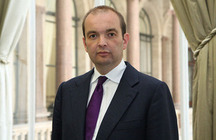
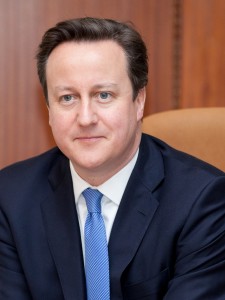
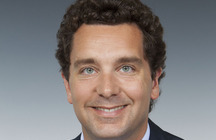
  • Edward Timpson – 2016 Speech to Virtual School Heads

    timpson

    Below is the text of the speech made by Edward Timpson, the Minister of State for Children and Families, in York on 22 March 2016.

    Thanks Alan for that warm welcome. The first thing I want to do is reassure you that I do really exist! Those of you who have attended this event before will know that my presence at your more recent annual conferences, for reasons beyond my control has, perhaps ironically, been virtual and through a pre-recorded message.

    So, it’s a particular pleasure to be here with you today, a little croaky, but genuinely in the flesh and at a time when, having already achieved a significant amount as a body of professionals, you’re looking to be even more ambitious for your role and for the education of children in care.

    I’d also like to take the opportunity to join others in thanking York St John’s University for hosting this conference and to everyone, especially Alan and Jane, who’ve been beavering away to make sure we have such a rich and varied programme on offer throughout the day.

    From the sneak preview I’ve had of the next presentation, I can see that you’ve not let the grass grow under your feet since your role became statutory. As I’d expect, your 7 priorities are rightly ambitious.

    And how exciting to be a virtual school head at a time when we’re planning and now delivering a raft of reforms to improve children’s social care more widely.

    In January, we announced the setting up of a new social work body to ensure social work education supports a world-class social work profession.

    We’re also developing a new Partners in Practice programme with the country’s best performing council and leaders, and we’re establishing a What Works Centre, so that social workers and others across the country, can learn from the very best examples of frontline social work.

    And in all of this, you, as virtual school heads, have a key role to play in helping realise our ambitious once in a generation programme of whole system transformation of children’s social care.

    Given the theme of today’s conference – “what can we learn from research and each other?” – it seems entirely appropriate it’s happening in a university. It’s true that we know more than we once did about the factors that impact on the educational outcomes of children in care

    But, as the paper researched jointly by the Rees Centre and University of Bristol last year demonstrated, we need to know and understand more. So I’m encouraged that research and development feature in 2 of the 7 priorities the national body of virtual school heads has set itself over the next 12 months.

    The importance of the virtual school head role

    But why is this so important? Well, as many of you will know, virtual school heads are a passion of mine. And so is helping every child in care get the chance to fulfil his or her potential.

    I know only too well from my own experience of growing up with foster siblings how easy it was for children in care to get lost in the system, for their education to take a back seat while other parts of their life were prioritised, something my father John decided to highlight in his agony uncle column in the business section of a national newspaper only yesterday – a shameless plug!

    As virtual school heads you are changing that. I know that on so many occasions it’s you, as the virtual school head, who’s been that parent with sharp elbows, the educational advocate a child has needed.

    It’s why as soon as I was elected to Parliament almost 8 years ago, I made it my mission to push the plight of children in care’s education to the top of the policy pile. And it’s why one of the first things I did as the Children’s Minister was to implement my own recommendation from a cross-party report and make the virtual school head role statutory – only the sixth statutory post that a local authority was required to have. It’s also why we introduced the pupil premium plus and gave the responsibility for its management to virtual school heads.

    Celebrate virtual school head achievements

    At your 2014 conference, the then Children’s Commissioner laid down a gauntlet at your feet. She asked you what you were going to do with your statutory status.

    Your response? Well, you’ve risen to that challenge, both as individuals and as a professional body, to affirm loud and clear that we all have a responsibility to help looked-after children have high aspirations and to succeed, and you’ve also put some grease on those sharp elbows.

    Within 2 years, your national body has taken you from a loose network of professionals that was not universally understood, to one where you have real currency and clout.

    You’ve forged a working partnership with Ofsted at both a national level and across the 9 regional networks. And, although I know it may feel like a mixed blessing when Ofsted comes knocking to inspect local authority children’s services, they now want to know about the work of virtual school heads.

    The work you’ve done over the last 2 years to foster links with Ofsted is significant and can only help in increasing your profile and status across children’s services and beyond.

    You’ve also been building strong links with the Association of Directors of Children’s Services, and it was encouraging to see the joint policy paper you published with ADCS and the National Consortium for Examination Results, setting off a national conversation about improving outcomes for children in care.

    I’m also pleased this work is being embedded through a new virtual school head website that will be a hub for good practice and robust peer review, 2 key elements to achieving an excellent service.

    In the last few years you’ve also made much needed progress in raising awareness in schools about understanding children’s attachment and its impact on learning. Mike Gorman’s partnership work with Bath Spa University in this area has been nothing short of inspirational, and through the great work of Tony Clifford, the virtual head in Stoke, you’ve directly influenced the development of NICE guidelines on attachment.

    And not only do virtual school heads now get invited to the Education Select Committee to give evidence on the mental health of looked-after children; it seems that the virtual school head model is being embraced by other countries – I know that, Ian Wren, the virtual school head from Melbourne, Australia is here, eager to share experiences and learn more from your endeavours.

    So I wanted to be here today to pay tribute to your achievements, for your passion, your energy, your belief in making sure everyone does his or her very best to give children in care the support they deserve. It warms my heart to know that in every corner of the country there are dedicated professionals and carers championing their cause.

    Conscious there is more to do

    But of course – and you don’t need a minister to tell you this – there’s always more to do. None of us believe we’ve cracked it, making our roles redundant. Far from it.

    So in reflecting on the theme of today’s conference I’d like to talk about 2 areas where I believe it’s possible to make even more of a difference: the first is understanding and applying research and evidence to practice – building on the learning from today’s conference; the second is increasing the focus on what it means to be a great corporate parent.

    Using evidence-based research

    We all know that the reasons why children who come into care don’t perform as well as their peers are both complex and enduring.

    So if we’re serious about improving their educational outcomes, and helping them reach their potential, we need to avoid over simplistic conclusions and ensure that our policies and decisions are based on strong, reliable evidence.

    Yes, some of the statistics surrounding the outcomes of children and care seem stark and troublesome at first glance, but we need to go much deeper to really understand what lies behind them.

    That’s why I was so pleased to be at the launch of the joint research by the Rees Centre and University of Bristol last November on the educational progress of looked-after children in England. It was the first major study in England to explore the relationship between education outcomes and the care histories and characteristics of the young people looked after.

    I’m sure you’ll have discussed the findings in your regions just as we’ve been discussing them with ADCS. I could talk about them all at great length as my officials know to their cost! But in the time, I have I’ll highlight 3.

    Firstly, it appears that children who’ve been in care longer do better than those who have been in short-term care, therefore suggesting that care can provide a protective factor educationally. This is not the perceived wisdom out there in the public arena, an orthodoxy we now need to challenge.

    Secondly, and this comes as no surprise, the research shows that stability is a strong indicator of educational attainment. In particular, the research revealed that:

    – each additional change of care placement after the age of 11 was associated with one third of a grade less at GCSE

    – young people who changed schools in years 10 and 11 scored over five grades less than those who didn’t

    Serious food for thought, not just for virtual school heads, but the wider children’s social care workforce.

    And thirdly, the other stand-out message for me in the research – one that on the face of it is blindly obvious but nonetheless under-appreciated – was that schools doing well for other pupils do well for children who are looked after.

    That explains why the choice of school for every child in care is so important, and why that decision can have such profound consequences for that child in our care.

    So what are the policy and practice implications from this comprehensive study for virtual school heads?

    For me, research like this is all about helping you use the levers at your disposal to greatest effect.

    You’ve got the pupil premium plus, looked-after children get priority admission to schools, and you’re one of the handful of statutory roles a local authority is required to have. Therefore I urge you to reflect on the research, and use this power – as I know you do every day – to bring about real, transformative change in the lives of children in care.

    The good news is: we’ve already seen some outstanding, innovative, ground-breaking practice from virtual school heads restless in their pursuit of educational excellence for their children, refusing to accept watered down, tokenistic commitments from other professionals, prepared to use their powerful positions to push the boundaries of possibility.

    That’s fantastic, but to help you achieve more for our looked-after children, I appreciate you need a sharper way of measuring the progress these children are making. So, for me, another significant conclusion from the report was that it would be better to measure the educational progress of looked-after children relative to those with the same prior attainment, rather than in relation to absolute attainment. I’m pleased and relieved to say that this conclusion reflects the policy position we’ve ourselves reached.

    So, to take our thinking forward on this and on other strands of work emerging from what the research evidence is telling us – and in the spirit of working alongside each other – we’ve established an education working group co-chaired by a DfE official and Debbie Barnes, chair of the ADCS educational achievement policy committee.

    That group, which also includes Alan Clifton as the chair of the national group of virtual school heads, and representatives from the voluntary sector, has already met twice and is establishing a joint workplan. A significant strand of its work will be focused on how we can use data better to help understand and measure improvements in what children in care achieve – and therefore, of course, track the impact of what we’re doing, and target our energies at the highest impact interventions. Because we all want to know that our efforts are achieving the maximum return in the form of outstanding outcomes for children in care.

    Building partnerships with others

    Another significant area for the group is around how you as virtual school heads, can work more closely with teachers and other school staff, and importantly with foster carers, to develop your understanding of the role they have to play in driving educational aspiration for looked-after children.

    And, to that end, I was struck that the young people participating in the Rees Centre research said that teachers provided the most significant educational support to them. Yet teachers themselves felt they needed more training to do this effectively, particularly in supporting children’s emotional and mental health.

    So I’m delighted that some virtual schools, like the Tri-borough, are rolling out training programmes to schools, something I would strongly support and encourage all of you to do too.

    There’s also good work been going on in London through the Greater London Assembly Fostering Achievement as well as in other parts of the country to help foster carers develop the necessary confidence to engage with schools. After all, foster carers are the parent at the school gate, the parent able to reinforce at home what goes on in the classroom, the parent who can give you an invaluable insight into children under your wing.

    I’m also pleased the government is funding a £3 million joint pilot between the Department for Education and NHS England for training single points of contact in schools and specialist mental health services.

    Through 27 clinical commissioning groups and 200 schools the pilots will ensure that children have timely access to specialist support where needed.

    And virtual school heads should quite rightly be at the heart of these developments, central to modelling the way in which their local authority, schools and even health professionals should live and breathe the principles of every good corporate parent:

    – promoting a culture of high aspirations

    – ensuring stability, and

    – making sure everyone understands and is deeply committed to their role in helping every child in our care to succeed

    Embracing new challenges

    Looking a little further over the horizon, the eagle-eyed will have seen that schools white paper published last Thursday announced that we’ll consider changing legislation to extend your current role and the role and responsibilities of the school designated teacher for looked-after children to support children who have left care under an adoption order. Like children in care, adopted children face unique challenges at school. We know they often struggle to keep up with their classmates and I’ve followed with interest what some local authorities are already doing to support adoptive parents and their children.

    Of course, you won’t be their corporate parent and so your role for this group would be quite different, more one of providing information and advice. But, we believe this is not only the next logical step, but the right thing to do.

    In thinking hard about your future role and remit, I don’t doubt the scale of challenge in what’s being asked of you as individuals and as a collective professional body of virtual school heads, whether that’s spotting opportunities to tap into innovation, or trying to make meaningful links across professional disciplines and agencies.

    But, I believe your very own National Association of Virtual School Heads (NAVSH), puts you in a strong position to take on those challenges and more.

    Yes, you’ve set them an ambitious to do list: to commission and disseminate research that drives change; provide an independent and consistent voice for the people who know the most about children in care and to provide strong links between virtual schools across the country.

    But it’s a vision I commend, because it’s one that’s about getting it right for virtual school heads so that you can get it right for children in care. It’s empowering, isn’t it, to know you can be agents of real, meaningful and life-long change for some of our most vulnerable children. It’s why we do what we do – to see before our very eyes a child’s life chances transform from what might otherwise be a hopeless, hapless future, to one full of possibility, positivity and purpose. Not that you need it, but you have my permission to go out there and make it happen!

    Thank you.
  • Michael Fallon – 2016 Speech on the UK’s Independent Nuclear Deterrent

    michaelfallon

    Below is the text of the speech made by Michael Fallon, the Secretary of State for Defence, at the Policy Exchange in London on 23 March 2016.

    Thank you John.

    It’s always a pleasure to speak at Policy Exchange.

    Policy Exchange has led the public policy debate over the past 14 years on issues as far apart as housing and the impact of lawfare on our Armed Forces.

    So I’m delighted to launch the new National Security Unit here today.

    I’m pleased to see Policy Exchange going global. I know – under John Bew’s direction – you’ll bring your trademark clarity to the broader issues of national security.

    At the moment all our thoughts today must of course be with our friends in Brussels.

    The Strategic Defence and Security Review identified terrorism as one of the greatest challenges we face and it set out plans to tackle it.

    Today, however, I want to focus on another important national security issue: the case for our independent nuclear deterrent.

    DEFENCE AND DETERRENCE

    Defence is the first duty of any Government.

    As our SDSR said…and I quote…: “Defence and protection start with deterrence, which has long been, and remains, at the heart of the UK’s national security policy”.

    Deterrence means convincing any potential aggressor that the benefits of an attack are far outweighed by its consequences.

    Deterrence draws upon the full spectrum of our capabilities… diplomacy, economic policy, law enforcement, offensive cyber, covert means…and, of course, our Armed Forces.

    Which is why the most fundamental role of the Armed Forces is not to fight wars, but – through their very existence – to deter, and thus to prevent war.

    For no part of our Armed Forces is that more true than our nuclear capability. If nuclear weapons are fired, they have failed. But they are used every day: to deter.

    This Government was elected on a manifesto that included a commitment to build four new ballistic missile submarines … replacing the Vanguard submarines that come out of service from the early 2030s.

    And we’ve committed to a debate and vote this year so that Parliament can endorse that decision. So now is the right time to set out why we should retain our nuclear deterrent.

    There are three reasons.

    Because we are realistic about the world we live in.

    Because we take our responsibilities to the British people and to our Allies seriously.

    And because that means that nuclear weapons are relevant now and are going to be relevant for the foreseeable future.

    Let me take each in turn.

    1. REALISM

    First, it’s about realism.

    Some characterise this debate as one of extremes. Between those who want to disarm and those who never will disarm.

    Let me reject that artificiality. We all agree on the destructive power of nuclear weapons, and that we must do everything to ensure they will never be used.

    We also have a shared ambition to see a world where nuclear weapons states feel able to relinquish them.

    Where we really differ is how best to achieve this.

    On the one hand are those idealists who believe that unilateral disarmament will make us safer…

    …on the other are those of us who recognise that the real world threats to the United Kingdom are growing not diminishing.

    So we must be realistic about the world in which we live.

    The Labour Government’s 2006 White Paper on the future of the deterrent identified risks to the UK from major nuclear armed states from emerging nuclear states, and state sponsored terrorism.

    Those risks have not gone away.

    Indeed, nine years on, our own SDSR judged that the United Kingdom is facing challenges that are growing in scale, diversity, complexity and in concurrency.

    Nor has the nuclear threat gone away. The SDSR recognised, and I quote, “continuing risk of further proliferation of nuclear weapons” and concluding that we could not “relax our guard… or rule out further shifts which would put us under grave threat”.

    And Russian behaviour is a case in point here.

    Russia has become more aggressive, more authoritarian and more nationalist. Its illegal annexation of Crimea and support of Ukrainian separatists through the use of deniable, hybrid tactics and media manipulation have shown its willingness to undermine the rules based international system in order to promote and secure its own perceived interests.

    Russia is upgrading its nuclear forces; and Russia is threatening to base nuclear forces in Kaliningrad and in the Crimea.

    The last two years have seen a worrying increase in both official Russian rhetoric about the use of nuclear weapons and the frequency of snap nuclear exercises.

    And we should take heed of those developments.

    North Korea is another worrying case study. North Korea is the only nation to have tested nuclear weapons in the 21st century. It now claims to have withdrawn from the Nuclear Non-Proliferation Treaty. It’s developing long-range missiles, and continues to flaunt its new found nuclear capabilities.

    Just as we must be realistic about the growing nuclear threats, we also have to acknowledge that our prospects of single-handedly convincing the world to abandon its nuclear arms… are limited.

    Now we are committed to creating the conditions for a world without nuclear weapons, in line with our obligations under the Nuclear Non-Proliferation Treaty.

    And we have led the way on disarmament.

    We’ve cut our nuclear stockpiles by over half since the height of the Cold War

    Last year I reduced the number of deployed warheads on each submarine from 48 to 40 last year

    And we have pledged to reduce further our stockpile of nuclear weapons to no more than 180 warheads by the mid-2020s.

    Other nations have not followed suit.

    There remain about 17,000 nuclear weapons in the world… we have less than one per cent of them.

    It is frankly naïve – even vainglorious – to imagine that the grand gesture of UK unilateral disarmament could change the calculations of nuclear states, or those seeking to acquire weapons.

    Far more likely they would see it as weakness.

    So the only way to create the global security conditions necessary for achieving nuclear disarmament is by working multilaterally…

    by taking tangible steps towards a safer and more stable world

    And by giving states with nuclear weapons the confidence they require to relinquish them.

    Our recent efforts, working alongside other leading powers, secured a deal with Iran and showed what can be achieved.

    But we should also be realistic about how long this will take.

    As the great nuclear theorist and former MOD Permanent Secretary, Sir Michael Quinlan, once wrote:

    ‘no safer system than deterrence is yet in view, and impatience would be a catastrophic guide in the search. To tear down” he said… “the present structure, imperfect but effective, before a better one is firmly within our grasp would be an immensely dangerous and irresponsible act.’

    2. RESPONSIBILITY

    That brings me to my second point. We have a political and moral responsibility to our people and our Allies.

    No-one would claim the nuclear deterrent solves all of our national security requirements.

    Terrorist threats are all too real – as we saw so tragically yesterday. But nuclear weapons were never intended to combat terrorism.

    They are intended to deter the most extreme dangers our nation might face.

    What’s more, our independent deterrent isn’t just key to our security; it contributes to our NATO allies’ security as well.

    NATO is the cornerstone of our defence. It is first and foremost a defensive alliance. And it is also a nuclear alliance.

    By maintaining our independent nuclear deterrent, alongside the US and France, we provide NATO with three separate centres of decision-making.

    That complicates the calculations of potential adversaries, and it prevents them threatening the UK, or our allies, with impunity.

    Now some will ask why we possess nuclear weapons when other Allies such as Germany do without them.

    But we can’t rewrite history. We were one of the original nuclear powers. Others were not.

    And many of those Allies signed the Non-Proliferation Treaty in the late 1960s in the knowledge they were covered by NATO’s nuclear umbrella, including the United Kingdom deterrent.

    It would not be the action of a strong and valued ally to withdraw that protection.

    And how would the United States or France respond if we suddenly announced that we were abandoning our nuclear capabilities…

    …yet will still expect them to pick up the tab and to put their cities at risk to protect us in a nuclear crisis?

    Without our nuclear contribution to NATO, could we guarantee that a potential adversary might not miscalculate the degree of United States commitment to the defence of Europe?

    As one of the leading member of NATO we shouldn’t now think of outsourcing our commitments.

    That would not make us safer and it would have no moral merit.

    It would weaken us now and in the future.

    It would undermine NATO.

    And it would embolden our adversaries.

    3. RELEVANCE

    That brings me to my third point: the relevance.

    Our independent nuclear deterrent is relevant not only for today but also for the foreseeable future.

    The UK case does not rest on our assessment of threats that face us now….

    …but on our assessment of what the world could be like in the 2030s, 2040s, 2050s and beyond…

    And the truth is we don’t know.

    No-one accurately predicted the end of the Cold War…or the coming of the Arab Spring, Russia’s annexation of Crimea, or the rise of Daesh.

    Those who argue in favour of scrapping our nuclear deterrent unilaterally must be certain – absolutely certain – no extreme threats will emerge in the next 30 or 40 years to threaten our security and way of life.

    And they can’t be so certain.

    That is why successive Governments for over sixty years have concluded that this country should retain its nuclear weapons.

    Now the UK government last formally presented the case for the future of the UK’s Nuclear Deterrent to Parliament in 2006.

    Launching that White Paper Tony Blair, said “an independent nuclear deterrent is an essential part of our insurance against the uncertainties and risks of the future.”

    That was the right judgment then.

    It’s the right judgment now.

    Our nuclear deterrent has helped keep the peace between the major powers for decades.

    Abandoning it, would undermine our security and that of our allies. It would not make us safer.

    And once we gave up those weapons, there would be no going back to them.

    OBJECTIONS

    That is the case for retaining a nuclear deterrent.

    And I put it to you that it is hard to argue against the principle.

    But, before concluding, let me finally address the main practical objections that people have raised.

    First, the claim that there are cheaper and more effective ways of providing a similar effect to the Trident system.

    There aren’t.

    Successive studies have looked at this in detail…

    … under Labour Ministers in 2006…

    …and more recently under the Conservative and Liberal Democrat Coalition in 2013.

    They reached the same conclusion.

    A minimum, credible, assured and independent deterrent requires nuclear submarines with ballistic missiles.

    Other options were considered.

    The Trident Alternatives Review in 2013 assessed what ships, aircraft, submarines and silos could deliver nuclear weapons; and which missiles, bombs or nuclear warheads were most appropriate.

    It found that submarines were less vulnerable to attack than silos or aircraft.

    They can maintain a continuous posture in a way that aircraft and land-based alternatives cannot.

    It made clear that alternative delivery systems, such as cruise missiles, wouldn’t have the same range as the Trident missile … reducing the reach and capability of our deterrent.

    Only the current submarine-based, Trident missile system offered the resilience but also the cost-effectiveness that successive UK Governments sought. The second objection is that submarines will somehow become obsolete, through technological developments such as unmanned underwater vehicles or cyber threats.

    The ocean is a vast, complex and challenging environment in which to conduct large scale anti-submarine warfare.

    Our confidence that submarines will not be rendered obsolete by technology is partly based on classified analysis, but also on some obvious facts.

    Operating quietly for long periods in the ocean is highly demanding. It requires endurance, a powerful energy source, resilience from high pressure and corrosion, and stealth.

    The ability to track submarines and then communicate their position brings with it many significant challenges.

    Now we dedicate considerable resource to assessing these emerging capabilities. And we judge that there is no inherent reason, for the foreseeable future, to believe that unmanned submarines will be substantially more difficult to counter, than manned submarines.

    As for cyber-attack, while deployed, submarines operate in isolation. It’s hard to think of a system less susceptible to cyber-attack.

    And it’s also worth asking, if nuclear submarines were redundant, or going to be redundant, why would the United States, China, Russia and France all be spending tens of billions of dollars on their own submarine based ballistic missile systems?

    As practical as these objections appear, they are in fact simply the latest in a litany of arguments employed to justify an anti-nuclear position.

    COST

    The third practical objection is cost.

    Now we must remember that security underpins all the Government’s priorities.

    With the fifth biggest defence budget in the world…backed up by our commitment to invest 2 per cent of GDP in defence… we can afford conventional and nuclear capabilities.

    Our estimate is that four new submarines will cost £31 billion to build. We’ve also set a contingency of £10 billion on top of that.

    But the £31 billion acquisition cost will be spread over 35 years, which works out as an insurance premium of 0.2% per year of total Government spending.

    Twenty pence in every £100 pounds the Government spends…for a system that will provide a capability through to the 2050s and beyond.

    I believe that that is a price worth paying.

    CONCLUSION

    So let me say in conclusion…before nuclear weapons, major powers embarked on two of the most destructive wars imaginable.

    Many millions died, millions more suffered.

    Yet, for all the conventional conflicts since, and there have been many of them, there hasn’t been major conflict between nuclear armed states. The devastating possibilities of nuclear war have helped maintain strategic stability.

    And our independent UK nuclear deterrent has played its part.

    Those who still oppose it must prove to us how relinquishing it would make us safer.

    Now we should not accept nuclear deterrence as the last word in ensuring freedom from major war. Our commitment under our Non-Proliferation Treaty obligations is clear.

    But to abandon our deterrent now would be an act of supreme irresponsibility.

    In 2007 Parliament voted to maintain the minimum strategic nuclear deterrent beyond the life of the existing system.

    Last year Parliament voted twice to retain our deterrent.

    This year Parliament will have the opportunity to vote on the principle of Continuous At Sea Deterrence and our plans for Successor.

    This is not a judgment about short term threats.

    It is about the threats we may face over generations to come.

    We should not gamble with our national security.

    The United Kingdom’s independent nuclear deterrent remains right for our nation – for as long as the global security situation demands.

    Thank you.

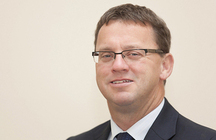
  • James Duddridge – 2016 Speech on Bringing Peace to Great Lakes

    jamesduddridge

    Below is the text of the speech made by James Duddridge, the Parliamentary Under Secretary of State at the Foreign and Commonwealth Office, at the UN Security Council on 21 March 2016.

    Thank you, Mr President, for convening this important and timely debate. I join others in thanking the Secretary-General for his briefing.

    Bringing peace to the Great Lakes area has been one of the most difficult challenges faced by this Council. Decades of violence and chaos have left millions dead; millions without hope or indeed a home; millions vulnerable to attack from armed groups.

    The UN Charter pledges to save successive generations from the scourge of war. In the seventy years since collectively we’ve made this pledge, nowhere has it rung more hollow than in the Great Lakes region.

    Nowhere is this more obvious today than in Burundi. When I visited the country in December of last year, I heard horrific stories of suffering and abuse. People spoke of torture, of disappearances, of extra-judicial killings, of mass graves and murders, indiscriminate raids on their homes. I met with health workers who were running out of medicine for sick children, human rights activists living in fear for their lives and traders that were helpless against the collapse of the economy that prior to the troubles was doing so well as we’ve heard earlier.

    In January, the Office of the High Commissioner of Human Rights noted that extra judicial killings were increasing despite the Government’s claim that the situation was normal. Evidence of nine mass graves, one of which contained at least one hundred bodies, was cited in the same report. Again, denied by the Burundian Government. And the violence continues today. Abductions and killings are creating a climate of fear. Just last month, Human Rights Watch presented credible evidence of the increasing and worrying use of organised sexual violence.

    The United Kingdom is committed to doing everything, everything in our power to seek a peaceful resolution to the situation in Burundi. We must not, collectively or individually, repeat the mistakes of the past. We thank the Secretary-General for his leadership and the members of this Council for their leadership and active engagement, particularly during their second joint visit to Bujumbura and Burundi earlier this year. We welcome the pledges made by the African Union and the East African Community to take decisive action to prevent human rights abuses and crimes against humanity more generally in Africa.

    We, the United Kingdom, stand ready to support the AU. We thank Uganda for their constructive participation in this mediation process. We also welcome the participation of His Excellency Benjamin Mkapa, former President of Tanzania, in these efforts and offer him our strongest support and indeed assistance.

    It is right that the international community should play its part. However, let us be clear, let us be under no misunderstanding – the primary responsibility for this crisis lies with the Burundian Government. The Burundian Government has failed in its fundamental duty to its nation, to support the security and safety of its own people. It has within its power the power to change things. Burundi has found a pathway to peace before. And it must do so again.

    President Nkurunziza must deliver on his promises to the Secretary-General and representatives of the African Union. The first step is simple. The Government must participate in a fully inclusive political dialogue with all parties. Not just those parties President Nkurunziza feels happy dealing with. All parties must be included, as peace among just a few is no peace at all.

    We have learnt time and time again elsewhere in the world that for peace to endure, communities need ways to resolve conflict peacefully. The United Kingdom believes genuinely that democratic and accountable governance is the best foundation for stability. That means a frank, lively and uncensored national debate, an active, representative civil society, and a freely operating media.

    It also means timely and democratic transitions of power to maintain lasting stability. Failure to allow that transition puts the progress across the Great Lakes at risk. We urge all countries in the region to use electoral processes to demonstrate their commitment to peace, stability and accountability. Today, this is particularly pertinent to the Republic of Congo, which held elections yesterday, following a referendum in which the national debate could sadly not be said to have been either ‘frank, lively or uncensored’.

    Looking across the border, 2016 is a critical year for the Democratic Republic of Congo. The United Kingdom is a particularly close long-term partner of the people of the Democratic Republic of Congo and we want them to enjoy stability and prosperity. We stand by UN Security Council Resolution 2211.

    DR Congo must hold elections this year, in accordance with their Constitution. With every missed milestone in their democratic journey, the Government loses credibility with the United Kingdom, and I believe with this Council. It breaks a promise not to us, but a promise to its people and this risks causing further instability in this already fragile region. We know that the process is not easy, and we are ready to help, with funding and supporting the electoral process.

    This Council has also offered its full support to the Government of DR Congo and I expect that to be repeated when MONUSCO’s mandate is renewed later this week. DR Congo must make the most of this support, and seize this opportunity to show leadership across the region.

    The United Kingdom believes in the enormous potential of the countries and the people of the Great Lakes. That is why we have maintained our strong friendships and support. But their fates are inextricably linked, so their governments must work together if this potential is to be realised. The Peace and Security Cooperation Framework signed by the countries of the region in 2013 offered a comprehensive joint approach to the region’s problems. But not enough has been done to deliver it.

    We all know that peace and security are fundamental building blocks for economic growth. Together they hold the key to unlocking the potential of the people of the region. The Great Lakes Private Investor Conference held in Kinshasa, which we’ve heard some of earlier during the debate, last month highlighted how poverty fuels conflict in the region. But it also showed that investment, economic growth and job creation can and will build peace. In recognition of that, the United Kingdom recently appointed trade envoys to Democratic Republic of Congo and Rwanda.

    Mr President, I urge leaders of the region to play their part in bringing peace, making the measures set out in the Peace and Security Cooperation Framework a reality, uniting to build long-term peace and prosperity. As they strive to do so, the people of the Great Lakes will have the full support of the United Kingdom, and, I hope, this Council.

    Mr President, obrigado [thank you].

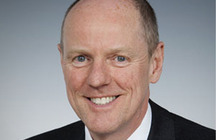
  • Nick Gibb – 2016 Speech on Music Education

    nickgibb

    Below is the text of the speech made by Nick Gibb, the Schools Minister, at City Hall in London on 22 March 2016.

    Thank you Munira [Murza, Deputy Mayor of London for Education and Culture] for that kind welcome. And thank you for inviting me here today to talk about how good-quality music education should lie at the heart of every school in this country.

    It is a privilege to speak to so many music teachers from across London. Many teachers tend, by necessity, to work in small music departments so days such as these provide an important opportunity to meet fellow teachers and share ideas.

    I have enormous admiration for the work of music teachers: passing on a knowledge of and passion for music – of all forms – to new generations. I look back with great fondness and gratitude to the early exposure to music that I received as a child.

    Singing in the St Edmund’s Parish Church Choir in Roundhay, Leeds, gave me a lasting love for choral music. The delight I still feel today when I listen to ‘Zadok the Priest’ or Allegri’s ‘Miserere’ can be traced back to my schooldays. That is not an invitation for you to ask me to sing today by the way.

    An initiative from last year that the department helped achieve, and that I was delighted to see occur, was the Classical 100 music app – launched by the ABRSM in collaboration with Classic FM and Decca. This is a new digital resource, designed and made freely available to all primary schools. It includes recordings of 100 classical pieces of music composed over 10 centuries, ranging from children’s classics such as ‘Peter and the Wolf’ and ‘Carnival of the Animals’, to works such as Beethoven’s ‘Fifth Symphony’ and Handel’s ‘Messiah’. The recordings are supplemented by digital teaching resources, including information about the composers and the stories behind the music.

    I saw the app trialed at the end of last year at St Charles Catholic Primary School in central London, where a wonderful teacher entranced her class by playing them Tchaikovsky’s ‘Dance of the Sugar Plum Fairy’. So far, 339 London primary schools have signed up to use the resource, and I would encourage any here who haven’t already to access it, and delve into the treasure trove of timeless pieces of classical music that it contains.

    For me, the Classical 100 encapsulates 2 vital principles for music education in our schools. Firstly, ensuring that it is of a high quality. And secondly, ensuring that it is made available to all children, irrespective of birth or background.

    Due to our focus on increasing the uptake of EBacc subjects at GCSE, the government has been accused by some of damaging the status of arts in schools. This is absolutely not the case. I make no apologies for our belief that more schools should be offering a core academic curriculum to their pupils up to the age of sixteen. But there is no reason why this should imperil the status of arts subjects such as music: both can and should coexist in any good school.

    In fact, since the EBacc was announced, the percentage of state school pupils entered for at least 1 GCSE in an arts subject has increased. And so has the number of entries to music GCSE.

    The government is committed to ensuring that high-quality music education is not the preserve of a social elite, but is the entitlement of every single child. That is why funding for our highly successful music hubs, in which I am sure many here today are involved, is remaining at £75 million in 2016 to 2017. Nearly £11.7 million of that will go to hubs in London.

    Music education hubs ensure that every child in England has the opportunity to learn a musical instrument through weekly whole-class ensemble teaching programmes. Music education hubs also ensure that clear progression routes are available and affordable, and many hubs subsidise the cost of lessons for pupils. Under this programme, any budding seeds of musical passion that young children have will not remain buried and unnurtured. I hope that in years to come, adults with a passion for music will have the work of music hubs to thank for first introducing them to musical performance.

    Many schools work hard to nurture a love of music amongst their pupils. At St Charles Primary School in Ladbroke Grove, where 39% of pupils are eligible for the pupil premium, the school provides subsidised small group lessons to all children in key stage 2 who want them. Over 50% of all key stage 2 pupils have instrumental lessons outside the class environment and this summer 35 of them will be taking ABRSM exams. Pupils are charged just £4 a lesson and many receive them completely free.

    Learning a musical instrument can be a complicated business and children need support from their parents. But parents who have never learned to play an instrument themselves may struggle to help their children. So I am delighted that the GLA has commissioned a new guide for parents from the ABRSM. The guide will be launched in September and some promotional films on the guide will be shown during the lunch break today.

    Here in London there is the marvellous Mayor’s Music Fund for Young Londoners. This provides 4-year scholarships to children who show significant musical ability and a real commitment to developing their talent, but whose families do not have the financial means to support ongoing tuition.

    When it comes to provision of music education, the government believes in equity, but it also believes in excellence. Talented young musicians need the opportunity to make music with others of a similar standard, and access to selective ensembles and demanding repertoire. The music education hubs provide high-quality borough or county-wide ensembles and signpost the most talented toward specialist provision.

    For the same reason, the government supports national youth music organisations such as the National Youth Choir of Great Britain and the National Youth Orchestra, to help ensure that no one is turned away because their parents cannot pay.

    There is a clear concern amongst the public that careers in the arts have become the preserve of the privileged and privately educated. To ensure that this is not the case in years to come, the government will continue to fund over 500 full-time places at 4 specialist music schools, as well as a similar number of places at 4 specialist dance schools, through the Music and Dance Scheme. The vast majority of pupils board, and means-tested bursaries are available to ensure that entry to the schools is based on pupils’ talent, not on their parents’ ability to pay fees.

    The scheme also funds places at the junior departments of the 6 English music conservatoires, and at 6 music and 9 dance centres for advanced training. We fund almost 1,300 students to take up places at these institutions, over 60% of whom receive a full bursary. With 4 of the music conservatoires here in London, young Londoners are particularly well placed to take advantage of these opportunities.

    In fact, with the wealth of cultural institutions on offer in the city, and the emphasis that the Mayor’s office has placed on developing high-quality music teaching in schools, I can think of no places in the country where it would be better to be a pupil, or teacher, of music.

    In terms of professional development for music teachers, I am delighted that the Music Excellence London network will be building on the work of the ‘Peer to Peer’ and ‘Teach Through Music’ programmes that were funded through the London Schools Excellence Fund. Music Excellence London will combat the isolation that some music teachers experience, and support teachers to develop and improve their classroom practice.

    Important though it is, playing an instrument is not the only aspect of a good music education. Music is also an academic subject, and the new national curriculum ensures that it will be taught as such. It sets the expectation that pupils will perform, listen to, review and evaluate music across a range of historical periods, genres, styles and traditions, including the works of great composers and musicians.

    By the time they leave key stage 3, children from all backgrounds should be prepared to, if they wish, embark on a GCSE course with confidence.

    That is particularly important now that the GCSE will be more rigorous. When we revised music qualifications last year, we were told that the gap between GCSE and A level music was too wide. Many students who did well at GCSE were unable to cope with the demands of the AS and A level syllabus. We have tackled that not by dumbing down the A level, but by increasing the challenge of the GCSE. At GCSE, students now have to read and write staff notation. And at least 1 area of study must contain music from the western classical tradition, better preparing pupils for A level study and beyond.

    Our vision for music education in this country can be summed up in 2 words: equity and quality. From their first exposure to the joys of music at a young age, through to providing for the brightest and most talented young musicians, all children deserve to be given the chance to fulfil their musical potential. Thanks to London’s 28 music hubs and the Music and Dance Scheme, and thanks to the Mayor’s music fund, these principles are clearly being fulfilled in the capital.

    I would like to say thank you for the inspiring work you do, ensuring that future generations of Londoners live lives enriched by music, and I hope you all have a wonderful day here at the Mayor’s summit.

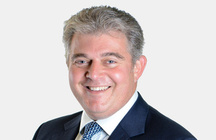
  • Brandon Lewis – 2016 Speech at Home Builders Federation Policy Forum

    brandonlewis

    Below is the text of the speech made by Brandon Lewis, the Housing Minister, at the Home Builders Federation Policy Forum in London on 22 March 2016.

    Introduction

    Thank you for inviting me here today.

    Last week we set out our plans:

    – for an economy set to grow faster than any other major advanced country in the world;

    – for a labour market delivering the highest employment in our history;

    – and for businesses that are creating jobs, and building the infrastructure this country needs.

    I don’t need to tell you that the British economy has grown much stronger over the past 6 years.

    The extra homes you are building reflect that progress.

    And your companies’ reports confirm it.

    Economies don’t thrive by accident.

    This government confronted our country’s problems.

    We made the right judgements and took the difficult decisions.

    We had a long term vision, and pursued a long term plan.

    Today the deficit is down by two thirds, and is continuing to fall.

    And our economy is stronger and more resilient.

    Progress on housing

    We used the strong economic foundation we established after 2010 to improve the housing market. My job and yours is to make sure that work continues.

    Challenge for the future

    We all know much more needs to be done to create a housing market that meets peoples’ needs.

    That supports aspiration, increases mobility, boosts productivity and helps local economies grow.

    Spending Review

    In the Spending Review we doubled investment in housing, and set out the largest house building programme for 40 years.

    We aim to build a million homes [by 2021] and double the number of first time buyers in this Parliament, continuing work started in 2010.

    Some have a questioned our emphasis on affordable home ownership.

    But we make no apology for this innovation.

    It’s what working people want.

    86% of people say they would choose to buy their own property.

    And yet the aspiration and reality of home ownership has drifted apart.

    Why should we not help make aspiration more affordable?

    It’s simply old-fashioned political dogma to insist governments only intervene in the market to support renters, when most people would rather buy.

    To persist with this outdated mindset risks creating a generation of young people exiled from homeownership.

    Budget measures

    Starter Homes / Shared Ownership

    We’re committed to building Starter Homes, and in the Budget we set out some of ways we will achieve this.

    Councils will shortly be invited to apply for a share of £1.2 billion Starter Homes Land Fund.

    To remediate brownfield land so it’s ready for construction, and bring more land into the system

    We’ll also publish a new prospectus for the Help to Buy: Shared Ownership scheme for first time buyers, and you’ll soon be to bid for a share of £4 billion to get the work started.

    Releasing more land for house building

    In the Budget we extended that same support to areas wanting to establish Garden Villages.

    Public land

    For the first time ever local authorities have committed to an ambition to release public sector land for house building.

    Land with capacity for at least 160,000 new homes will be released – matching the central government target.

    At the same time the HCA will work with Network Rail and councils to bring forward land around stations for housing, commercial development and regeneration.

    And we expect the first sites to be brought forward shortly.

    In London we have approved the business case for a new Thameslink station at Brent Cross, paving the way for 7,500 new, and desperately needed, homes in the capital.

    We want to release more public land, but we also want to increase transparency across the whole the land market, so we’ll be making it easier to access information on land ownership

    Planning

    Planning permission was granted for more than a quarter of a million homes last year.

    It’s a huge turnaround for the planning system we inherited in 2010, which was in a state of disarray, and a byword for conflict.

    Permissions are starting to outstrip construction by some by an ever increasing margin.

    And that is an issue that must be addressed.

    But we’re always looking for any improvements that can be made.

    We’ll be setting statutory deadlines for the Secretary of State’s decisions, and streamlining local plans.

    We’ll also explore the scope for more ‘zonal’ plans that send clear signals about development potential and offer permission in principle on identified sites that have the support of local people.

    At the same time we want to improve the use of planning conditions to prevent delays getting on site.

    For example, ensuring pre-commencement conditions can only be used with the agreement of the developer.

    Role of the house building industry

    We’ll always look for to make improvements – but the government can’t be the only players in the housing market questioning the way we do things.

    Everyone needs to respond to the extraordinary demand for new homes.

    And our ambitions for house building will only be achieved if we’re all working towards the same goal.

    Government or industry – we will all be judged on our actions, not words.

    There is a desperate need for new homes in this country, and a millions of young people who want a home of their own.

    We all bear responsibility for supporting their aspirations.

    History will not remember us kindly if we allow a generation to face exile from homeownership.

    Do we really want our children to be worse off than their parents?

    Or feel compelled to leave the communities they love and grew up in?

    Forced to decline good job opportunities, and all because local housing is too expensive?

    That is bad for our economy, and it’s bad for society.

    We have been working with the HBF and will continue to do so in the coming weeks. Industry is equally committed to our goal and I would like to thank everyone at the HBF for their work.

    So I would like to finish with a challenge.

    To use the long term commitment of the government to boost capacity in your industry:

    – to build out faster;

    – use new technology better;

    – and invest in apprenticeships so you have young people with the right skills to build homes.

    Other countries are doing this – there’s no reason why we can’t too.

    We need to play our part in the global economy. I fully support the work the Prime Minister has done and is doing in Europe. We need the stability of the EU.

    Imports and exports have an effect on house building. Certainty and confidence affect the market.

    Help to Buy demonstrates this. It is no co-incidence that our economy grew as house building grew.

    Help to Buy gave confidence to buyers and developers. We know that Help to Buy doesn’t affect house prices, but it does impact on supply.

    Conclusion

    There is still a profound need to build more homes in this country, across all tenures, and support the aspirations of people who want to buy a home.

    This will be a defining challenge of our generation, and it’s a prize worth fighting for.

    The economic and social legacy will last far beyond any of our lifetimes.

    Young people have the same hopes and dreams of past generations, and the same ambitions for the future.

    Let’s ensure their hard work can be rewarded with a home of their own.

  • Rob Wilson – 2016 Speech on UK Social Investment Market

    robwilson

    Below is the text of the speech made by Rob Wilson, the Minister for Civil Society, at Lloyd’s of London on 22 March 2016.

    Good morning everyone, it’s a great pleasure join you at the launch of QBE’s innovative Premiums 4 Good insurance product here at Lloyds of London.

    Congratulations on the launch of this product – its great to see 40 early adopters.

    I’m reliably informed that I am in good company today, surrounded by people who want to make a real difference. And that is crucial to what I want to talk to you about.

    We all have an important role in making a difference to people’s lives.

    When I choose to donate to a charity, I expect that charity to act in a responsible way and to be transparent in how my donation is used.

    When I make a pension saving, I expect the investment manager to offer me a choice of investments and to keep me informed about its performance.

    When you take out an insurance policy with QBE and their “Premiums 4 Good” product, you can choose where some of that premium is invested and expect it to report on the social and environmental impact generated by it.

    These examples all have 3 things in common:

    – a focus on consumer choice

    – an intention to generate a positive impact, whether financial or social

    – transparency and accountability about how that impact gets delivered

    These are principles I have been embedding in my programme of reform across charities, civil society and social investment. They are core to my vision of a bigger, stronger society here in the UK.

    So let me tell you about what we as a government have done in the past, what we are doing in the present, and my vision of what we can do in the future.

    Past: Charity sector reform

    You will all be aware that the charity sector has had its fair share of difficulties recently. In the last year I have been focused on reforming the regulatory framework for charities and social sector organisations.

    I have given the sector the chance to sign up to better standards of behaviour. If it fails to follow through on commitments to do things differently, I will take more prescriptive measures to ensure those who donate to charities and those who benefit from charities are protected.

    I have ensured fundraising self-regulation is remodelled – a new fundraising self-regulator is being led by Lord Grade. This will provide confidence that fundraising scandals are now firmly behind the charity sector.

    It provides a platform of public trust and confidence that the sector needs for a generous public to continue to donate to the causes that matter most to them.

    Through the Charities Act, I have enhanced the powers of the Charity Commission to enable it to regulate the charity sector more effectively. Ensuring our charities have a framework fit for 2016 and beyond – subject to minimum bureaucracy but robust oversight.

    The Act also contains a statutory power of social investment for charities, to better enable them to make investments that contribute to their charitable mission as well as providing a financial return. This is the first ever definition of social investment in legislation.

    I hope this sends a strong signal to both the charity sector and the wider investment community that this government is committed to seeing social investment grow.

    Past: Social Investment

    The government took a number of pioneering measures in the last parliament to help with that growth:

    We set up Big Society Capital – the world’s first social investment bank. With contributions from the big four high street banks it received £600 million of capital to be allocated to social investments.

    We established Access – the foundation for social investment. With £100 million to support more organisations to take on investment, it will help stimulate the pipeline of social investment deals over the next 10 years.

    We created a Social Investment Tax Relief, modelled on the successful Enterprise Investment Scheme, to stimulate social investment by individual investors.

    We commissioned the world’s first Social Impact Bond, working on the principle that government only pays for the outcomes it wants to see and that are successfully delivered.

    Investors provide the up-front capital needed to scale up innovative services – the investor is then repaid by government when the specified outcomes are delivered.

    Present: Social Investment

    You will hear hardly any mention of Social Impact Bonds in the media today. I intend to talk about them frequently in the weeks and months ahead.

    Social Impact Bonds, or SIBs, are increasingly being deployed to deliver public service reform that cuts to the heart of some of the biggest challenges that we face as a country.

    They often focus on prevention and early intervention, which will help us to contain the ever expanding demands on our public services.

    In many cases, the delivery organisations are charities and social enterprises who have the experience of delivering successful programmes across local areas.

    SIBs help to foster a genuine partnership between government, Big Society organisations and social investors – bringing in the additional investment needed to support these organisations, who can innovate in ways that big government simply cannot.

    Perhaps most importantly though, they focus on delivering meaningful outcomes for real people. For example, supporting a child out of residential care into an adoptive home, a young person into their first job, or a rough sleeper into supported accommodation.

    The Prime Minister recently announced our new £80 million Life Chances Fund – an important next step on a journey that will show how social investment can transform local public services.

    This is a down payment on a Social Impact Bond market that I hope and expect to be worth more than £1 billion by the end of this parliament. The SIB model will become the norm for the way many of the more challenging public services are funded in years to come.

    I have also set up a commission to look further at dormant assets. I believe there are a host of such assets which belong, in aggregate, to the public and should therefore be used to benefit the general public and not specific firms who may be, unwittingly or not, sitting on these stores of potential public value.

    I expect the commission to report back later this year and I look forward to institutional investors playing their part in unlocking this puzzle.

    The UK is a world leader in social investment – to remain so, we need to continue to push the agenda. This is the right thing to do because of the social benefits it leads to, but also because it supports the UK economy.

    We attract foreign capital to investment opportunities in this country at the same time as exporting our expertise in this growing area to other states around the world. I will be unrelenting in pushing us all to seize this opportunity.

    Future

    My vision for the future of social investment is informed by the principles I set out at the start of this speech:

    – that individuals have genuine choice in how their money is managed in line with their values.

    – that institutional investors build social impact considerations into all their investment decision-making – recognising that fiduciary duty is not only compatible with, but ought to include an appreciation of, social and environmental factors.

    – that there is a culture of feedback on investment performance that includes social impact as well as financial performance.

    To achieve this vision I am beginning to think about further reforms that will make it easy for more people to be social investors. To connect their investments with the causes they care about.

    Firstly, requiring pension providers to offer products to scheme members where a specified percentage of their money goes to social investments. I think this should be as easy for the scheme members as ticking a box when they are deciding how they want their pension invested.

    Working with the grain of people’s behaviour by asking about their preferences at the right time to allow them to take action.

    It is something that we already see working successfully in the French pension system where billions of euros have been channeled to social impact investments.

    Secondly, updating the guidance and regulation around fiduciary duty to better account for social investment and non-financial concerns.

    The Law Commission has already set out a number of recommendations around fiduciary duty and its compatibility with environmental, social and governance factors. Broadly these say that fiduciary duty means considering both financial and non-financial factors. Or, put another way, fiduciaries are not doing their job correctly unless they are considering investments in the round.

    I want to see these principles more fully incorporated into the investment strategies of investment managers. I want to make sure that when investment managers are thinking about their fiduciary duties they are thinking about people’s investment preferences in more than just financial terms.

    This doesn’t mean reduced financial returns. It does mean considering how social impact can sustain or even enhance those returns.

    If the end beneficiary of financial products has limited ability to directly engage with investment choices then the investment manager, acting as a proxy, needs to be thinking about those preferences in a holistic way.

    75% of millennials say that it is important that a company gives back to society instead of just making a profit – these are the kind of preferences that need to be better thought through by investors.

    I have already mentioned the power of social investment for charities that I recently legislated for, better enabling them to combine investments with financial and social returns. I would like to see this approach replicated across the wider investment industry.

    Thirdly, creating a ‘social investor’ category along the lines of the ‘restricted investor’ category in the crowd-funding space.

    Currently the cost of compliance with full FCA regulations can be out of kilter with the small scale financing needs of most social sector organisations.

    A ‘social investor’ category, safeguarded with a maximum limit to each investment of say £250, would make it easier for ‘everyday’ investors to back local causes they care about, ranging from saving the local pub to sustainable energy production.

    And finally, developing a dedicated social investment ISA to make social investing easily identifiable to mass market investors.

    Product providers have made limited progress in developing social investment based offerings. I feel that an ISA allowance that has characteristics specific to social investment would provide the impetus needed to get a meaningful range of socially themed products in front of investors from the general public.

    This could be in the form of a dedicated additional ISA allowance for social investments of say £1,000 to sit on top of the existing allowance.

    I would very much welcome your ideas and engagement on this as well as some of the ongoing work I mentioned earlier. The role of the investment industry will be a large factor determining the success of further social investment reforms.

    Key messages

    I want to highlight some thoughts around social investment which I see as key.

    Social Investment is taking off – institutions are already making social investments.

    The investment manager Cheyne Capital is running a social impact property fund which I understand will make close to a £1 billion of investments in social property.

    Threadneedle has a UK social bond fund with tens of millions of pounds under management which can be accessed by individual investors. I believe this is just the tip of the iceberg for retail fund offerings.

    And today we are here to mark this innovative insurance product from QBE – demonstrating how social investment can be applied to new areas of financial provision.

    Millennials are demanding this.

    They will be the beneficiaries of the largest inter-generational wealth transfer in our history. Successful investment managers and product providers will need to cater for their preferences.

    They are more interested in values-based lifestyles than previous generations – that includes consumption choices but also the way they want to invest.

    They are also much more likely to demand transparency and accountability from those who manage their money. But the market is not yet providing suitable vehicles for them to express these preferences.

    The government wants to back these people in the choices they want to make.

    As I mentioned earlier, we are committed to growing the social economy. We will use social investment as a way to transform how public services are delivered, making them not just smarter but much more compassionate.

    Closing remarks

    I hope you have heard some clear and consistent messages from me today:

    That I am undertaking a wide programme of reform in those areas that fall under my responsibility; for charities, for social investment and ultimately for a bigger stronger society.

    That this government has taken decisive action to enable social investment in the past, that we are doing more now and that I want to take this much further in the future.

    That I expect major drivers of this progress to be the principles of increased consumer investment choice, transparency of how individuals investments are handled and a focus on better reporting of impact.

    The time for social investment is now – government expects institutions to actively engage in this space. We are listening, but want to see more of the kind of approach embodied by the ‘Premiums 4 Good’ product.

    I am looking forward to the growth of an investment market that better connects its customers with the causes they care about. And I am looking to the investment community to help me deliver it.

    Thank you and good luck to Premiums 4 Good.

  • Ed Vaizey – 2016 Speech on Culture White Paper Launch

    edvaizey

    Below is the text of the speech made by Ed Vaizey, the Secretary of State for Culture, Media and Sport at the Southbank Centre in London on 23 March 2016.

    It’s been a great privilege to have been arts and culture minister for six years – and on occasion to have been the heritage minister as well. It’s a wonderful job that has taken me all over the country and enabled me to experience many of our great cultural treasures and some outstanding events. Be they national and grand or local, small and exquisite, each has immense value.

    Fine art, heritage, music, dance, libraries, museums, theatre and other cultural pursuits describe and raise the human condition. They are valuable in and of themselves. But they also contribute in other ways: to our economy, to our education, to our health and wellbeing. They make places great and give them an identity.

    We have remained ambitious for culture – even during a very tough economic climate – and we have achieved, in my view, a great deal.

    We increased the share of National Lottery funding for the arts and heritage.

    We introduced tax credits for theatres and orchestras, and now we will do the same for exhibitions.

    We encouraged resilience in the sector and worked with our partners to roll out endowments and capacity-building schemes, in recognition of the vital role of philanthropy.

    We maintained free entry to our national collections and increased freedoms for museums. Recently, we secured £150 million to move collections out of storage in Blythe House and enable greater public access.

    We introduced the Cultural Gifts Scheme.

    We created music education hubs, expanded In Harmony, and introduced a range of cultural education programmes.

    We established the new English Heritage charity which runs a wide range of historic properties and in which we invested £80 million.

    Last year, we secured a good deal for the arts and heritage in the Spending Review that was welcomed across the sector.

    The role of our libraries has changed over the last 50 years and is continuing to evolve with society’s digital expectations. That is why we created the Libraries Taskforce.

    Attendances and participation have continued to rise. Over the last Parliament, we saw a third of heritage assets removed from the ‘at risk’ register for the right reasons. We continue to see phenomenal success and creativity, led by an outstanding generation of cultural leaders. So I think we can be in good heart.But of course there are challenges right across our cultural landscape. We want to address those challenges. We want to maintain our ambition.

    That is why we are the first government in fifty years to publish a White Paper on culture, one that offers a comprehensive assessment of that landscape.

    The great Jennie Lee was the last – and indeed only – arts minister to publish a White Paper. I am honoured to follow in the footsteps of someone so distinguished. Elected to the House of Commons at the age of 24 when she was too young actually to vote, she played a pivotal role in the foundation of the Open University and expanded the Arts Council so that it did more work in the regions, along with creating art institutions at the South Bank Centre.

    Jennie Lee’s White Paper is short and to the point – no more than 20 pages and a hundred paragraphs. It is challenging – to the arts themselves. It is aspirational – the beginning of a process, rather than the end. And many of the themes it identified in the middle of the 1960s are as relevant today, in the middle of the second decade of the 21st century.

    The biggest challenge Jennie Lee identified in her White Paper was ensuring that the arts should not be the preserve of a privileged few. Despite enormous changes to arts and culture in this country since 1965, the same concern animates our own White Paper.

    There are now many families for whom a trip to the theatre, a historic house, or a museum is second nature. But this is far from universal. Many of our institutions do great work in this area. But the challenge is to make that work sustainable, to make the engagement permanent, and to really try and reach those who are the hardest to reach.

    So the Government will challenge all cultural organisations in receipt of government funding to do more to reach out to people of all circumstances and backgrounds. Arts Council England will regularly report to government on the progress being made.

    A Cultural Citizens Programme will be launched in places that have especially high deprivation and low cultural engagement.

    Starting in September, ACE will help institutions to engage young people from disadvantaged backgrounds by immersing them in the work they do and introducing them to the people that run those institutions.

    We will pilot the programme in three areas – the North-West, North-East and West Midlands – and hope that by the end of the third year it will be operating in up to 70 places and reaching 14,000 young people. I hope that many of them will end up forging a career in culture – and that all of them will be enriched and inspired in a way that stays with them for life.

    We also need to do much more on diversity. ACE has already made a start on this. But we need much more diversity in the leadership of our arts organisations, much more diversity among those who work in them, both on and off the stage. We will make it clear to arts organisations that we want to see real and tangible progress in diversity – that is a legitimate expectation of anyone who applies for public funds.

    Cultural activity should be nurtured in every corner of the country. There is a great debate, as there was in Jennie Lee’s time, about the balance of funding between London and the rest of the country.

    This debate is presented in stark terms, when the reality is far more nuanced. Nevertheless, we want to build on what ACE is already doing, in rebalancing its funding between London and the regions, with schemes such as Creative People and Places.

    So we will introduce a new Great Place Scheme, which will bring national arts and heritage Lottery funders together to work with councils, cultural organisations and universities to make culture a core part of local authority’s plans and policies.We will initially pilot this in twelve areas, at least four of them rural. Historic England will provide advice on how to use planning and development to bolster local culture.

    Culture should never be considered an add-on or a fringe activity, when a whole host of organisations would benefit from a closer relationship with culture. The Great Place Fund will be a catalyst for delivering comprehensive and sustainable strategies.

    The North East Culture Partnership has done sterling work in this field already – and can be an inspiration to others. Its Case for

    Culture has brought together more than 1,000 people and organisations – including twelve local authorities and five universities along with business, sport, education, tourism and cultural bodies – to work towards major cultural development over the next fifteen years.

    Today, at my behest, the Leadership for Libraries Taskforce has launched a consultation on our vision for public libraries in England that sets out a bold and dynamic direction of travel for the next five years. I very much welcome your comments and feedback through the consultation process to help shape the final Ambition document by Summer 2016.

    Our historic built environment is a unique asset. We have announced £3 million of new funding for the Architectural Heritage Fund and we are supporting Historic England in launching Heritage Action Zones. And I am delighted that Bernard Taylor has agreed to lead a review of Church buildings. This will examine new models for opening these buildings up, bring their history to life and sustain them for future generations.

    Our museums are a huge draw and extremely popular. It is clear from all the work we have done that they face specific challenges and merit a separate review.

    It will consider three main themes: firstly the framework for different kinds of museums, secondly those museums that are directly sponsored by government, and thirdly local and regional museums. The review will touch on multiple issues, but with a particular focus on shared services, storage, digitisation and resilience. We want to see many more objects brought out of storage, and made available, in an informal setting, to the public.

    And we want Britain to be a world leader when it comes to the digitisation and dissemination of our great collections. As announced in the Budget, we will bring in a new Museums and Galleries tax relief from April next year, and will begin our consultation on this in the summer.

    We want all our organisations to increase their resilience and long-term sustainability. More than £60 million of funding is available to help cultural organisations improve their resilience.

    I’m also tremendously excited by the new virtual Commercial Academy for Culture, which will use existing networks and forge new ones, in order to build a strong centre of commercial expertise. And we will pilot an innovative new matched crowd-funding scheme to support the cultural sector’s use of this rapidly growing fundraising tool.

    While our White Paper recognises the importance of the local, we also understand that there are global treasures, and that we need to play our part in protecting them.

    Culture is a key part of this government’s international development work, and we are signatories to several international cultural conventions and have taken a lead as members of organisations such as the Council of Europe and UNESCO.

    We are committed to helping protect World Heritage Sites and subject to legislation this country will finally ratify the 1954 Hague Convention for the Protection of Cultural Property in the Event of Armed Conflict and its two Protocols.

    Last year the Government hosted a highly successful cultural protection summit at which experts of all stripes discussed what more we can do to protect cultural assets. A £30 million Cultural Protection Fund, managed by the British Council, will make a serious contribution to these efforts.

    This White Paper is an unapologetically ambitious exercise – far- reaching in scope and driven by a fierce determination that the great gifts that cultural engagement bestows should be available to all.

    All of us who are responsible for cultural institutions must not only make clear that everyone is welcome, but do all we can to encourage them in.

    That is my mission. Thank you.

  • David Cameron – 2016 Commons Statement on European Council

    davidcameron

    Below is the text of the statement made by David Cameron, the Prime Minister, in the House of Commons on 21 March 2016.

    With permission, Mr Speaker, I would like to make a statement on last week’s European Council, which focused on the migration crisis affecting continental Europe.

    Mr Speaker, the single biggest cause has of course been the war in Syria and the brutality of the Asad regime. But we have also seen huge growth in people coming to Southern Europe from Afghanistan, Pakistan and North Africa, all facilitated by the rapid growth of criminal networks of people smugglers.

    There are over 8,000 migrants still arriving in Greece every week. And there are signs that the numbers using the central Mediterranean route are on the rise again. So far 10,000 have come this year.

    Of course, because of our special status in the European Union, Britain is not part of the Schengen open border arrangements – and we’re not going to be joining.

    We have our own border controls. And they apply to everyone trying to enter our country – including EU citizens.

    So people cannot travel through Greece or Italy onward to continental Europe and into Britain. And that will not change.

    But it is in our national interest to help our European partners deal effectively with this enormous and destabilising challenge.

    We have argued for a consistent and clear approach right from the start. Ending the conflict in Syria. Supporting the refugees in the region. Securing European borders. Taking refugees directly from the camps and the neighbouring countries but not from Europe. Cracking down on people smuggling gangs.

    This approach – of focusing on the problem upstream – has now been universally accepted in Europe. And at this Council it was taken forwards with a comprehensive plan for the first time.

    As part of this plan, the Council agreed to stop migrants from leaving Turkey in the first place to intercept those that do leave, while they are at sea, turning back their boats, and to return back to Turkey those that make it to Greece.

    There can be no guarantee of success, but if this plan is properly and fully implemented, in my view it will be the best chance to make a difference.

    For the first time we have a plan that breaks the business model of the people smugglers, by breaking the link between getting in a boat and getting settlement.

    Mr Speaker, I want to be clear about what Britain is doing – and what we are not doing – as a result of this plan. What we are doing is contributing our expertise and our skilled officials to help with the large-scale operation now under way.

    Royal Fleet Auxiliary ship Mounts Bay and Border Force vessels are already patrolling the Aegean. British asylum experts and interpreters are already working in Greece to help them process individual cases.

    At the Council I said that Britain stands ready to do even more to support these efforts.

    Above all, what is needed – and what we have been pushing for – is a detailed plan to implement this agreement and to ensure that all the offers of support that are coming from around Europe are properly co-ordinated.

    And our share of the additional EU money which will go to helping refugees in Turkey under this agreement will come from our existing aid budget.

    But Mr Speaker, let me also be clear what we are not doing.

    First, we are not giving visa-free access for Turks coming to the UK.

    Schengen countries are giving visa-free access to Turks. But because we are not part of Schengen, we are not bound by their decision.

    We have made our own decision which is to maintain our own borders. And we will not be giving that visa-free access.

    Second, visa-free access to Schengen countries will not mean a back-door route to Britain.

    As the House knows, visa-free access only means the right to visit. It does not mean a right to work. It does not mean a right to settle.

    Just because for instance British citizens can enjoy visa-free travel for holidays to America, that does not mean they can work, let alone settle there. Neither will this give Turkish citizens those rights in the EU.

    Third, we will not be taking more refugees as a result of this deal.

    A number of Syrians who are in camps in Turkey will be resettled into the Schengen countries of the EU. But again that does not apply to Britain.

    We have already got our resettlement programme and we are delivering on it.

    We said we would resettle 20,000 Syrian refugees over this Parliament, taking them directly from the camps. And that is what we are doing.

    We promised 1,000 resettled here in time for last Christmas. And that is what we delivered.

    The other 27 EU countries agreed to 2 schemes.

    One to relocate 160,000 people within the EU, but by the time of last December’s Council, only 208 had been relocated.

    The second to have a voluntary resettlement scheme for 22,500 from outside the EU, but by the end of last year, just 483 refugees had been resettled.

    We said what we would do – and we are doing it.

    And Mr Speaker, Britain has given more money to support Syrians fleeing the war, and the countries hosting them, than any other European country.

    Indeed we are doing more than any country in the world other than the United States – spending over £1 billion so far, with another £1.3 billion pledged.

    We are fulfilling our moral responsibility.

    Mr Speaker, turning to the central Mediterranean, the EU naval operation we established last summer has had some success – with over 90 vessels destroyed and more than 50 smugglers arrested.

    HMS Enterprise is taking part, and we will continue her deployment through the summer.

    What is desperately needed is a government in Libya with whom we can work so we can co-operate with the Libyan coastguard, in Libyan waters, to turn back the boats and stop the smugglers there too.

    There is now a new prime minister, and a government whom we have recognised as the sole legitimate authority in Libya.

    These are very early days but we must do what we can to try and make this work.

    And that is why at this Council I brought together leaders from France, Germany, Italy, Spain and Malta, to ensure that we are all ready to provide as much support as possible.

    Mr Speaker, turning to other matters at the Council, I took the opportunity to deal with a long-standing issue we have had about the VAT rate on sanitary products.

    We have some EU wide VAT rules in order to make the single market work.

    But the system has been far too inflexible – and this causes understandable frustration.

    We said we would get this changed – and that is exactly what we’ve done.

    The Council conclusions confirm that the European Commission will produce a proposal in the next few days to allow countries to extend the number of zero rates for VAT, including on sanitary products.

    This is an important breakthrough.

    It means that Britain will be able to have a zero rate for sanitary products – meaning the end of the tampon tax.

    And on this basis, the government will be accepting both the amendments put down to the Finance Bill tomorrow night.

    Mr Speaker, my Rt Hon Friend the Member for Chingford and Woodford Green spent almost a decade campaigning for welfare reform and spent the last 6 years implementing these policies in government.

    In that time we have seen nearly half a million fewer children living in workless households, over 1 million fewer people on out of work benefits and nearly 2.4 million more people in work.

    And in spite of having to take difficult decisions on the deficit child poverty, inequality and pensioner poverty are all down.

    My Rt Hon Friend contributed an enormous amount to the work of this government and he can be proud of what he achieved.

    And Mr Speaker, let me say this.

    This government will continue to give the highest priority to improving the life chances of the poorest in our country.

    We will continue to reform our schools.

    We will continue to fund childcare and create the jobs.

    We will carry on cutting taxes for the lowest paid – in the last Parliament we took 4 million of the lowest paid out of income tax altogether and our further rises to the personal allowance will exempt millions more.

    Combined with this we will go on with our plans to rebuild sink estates to help those with mental health conditions to extend our troubled families programme to reform our prisons and to tackle discrimination for those whose life chances suffer because of the colour of their skin.

    And Mr Speaker in 2 weeks’ time we will introduce the first ever National Living Wage – giving a pay rise to the poorest people in our country.

    All of this is driven by a deeply held conviction that everyone in Britain should have the chance to make the most of their lives.

    And Mr Speaker, let me add: none of this would be possible if it weren’t for the actions of this government – and the work of my Rt Hon Friend the Chancellor – in turning our economy around.

    We can only improve life chances if our economy is secure and strong.

    Without sound public finances you end up having to raise taxes or make even deeper cuts in spending.

    You don’t get more opportunity, you get less.

    And it’s working people who suffer.

    So we must continue to cut the deficit, control the cost of welfare, and live within our means.

    We must not burden our children and grandchildren with debts we didn’t have the courage to pay off ourselves.

    Securing our economy, extending opportunity: We will continue with this approach in full because we are a modern, compassionate, one nation Conservative government.

    And I commend this statement to the House.

  • Hugo Swire – 2016 Speech on Advancing the Rule of Law in China

    hugoswire

    Below is the text of the speech made by Hugo Swire, the Minister of State at the Foreign & Commonwealth Office, at the Great Britain China Centre on 16 March 2016.

    Introduction

    Thank you Martin for that kind introduction, and to the Great Britain China Centre (GBCC) for convening this seminar on ‘Advancing the rule of law in China’, in such auspicious surroundings. Thank you all for coming this afternoon. It’s wonderful to have so much expertise in one room.

    Importance of the rule of law

    All of us here know how important the rule of law is. It is the cornerstone of an open and fair society; it promotes prosperity and stability; it provides the transparency and legal clarity needed to promote trade and investment; and it ends impunity and improves access to justice for all citizens.

    Rule of law enables states to function on behalf of their citizens. Without it, elites can misappropriate a nation’s wealth, abuse power and control access to entitlement. States without the rule of law are often the poorest and most fragile.

    Rule of law in China

    Whilst we of course recognise that China has made unprecedented improvements in social and economic rights and personal freedoms in the last 30 years, there is no doubt that its application of the rule of law and the Rules Based International System, at home and further afield, continues to present challenges. Recent events in Hong Kong and the South China Sea have raised questions about China’s commitment to the rule of law. The Foreign Secretary raised both these issues with counterparts during his visit to China in January.

    Hong Kong

    Turning first to Hong Kong. The peaceful return of Hong Kong to Chinese sovereignty under One Country Two Systems was one of the great successes of United Kingdom-China diplomacy. Rule of law is a key part of that system and has been fundamental to Hong Kong’s continued economic success. It is one of the main reasons why British and international businesses have chosen to locate their Asian headquarters in Hong Kong. As long as the rule of law remains in place it makes good business sense.

    That is why the upholding of that rule of law remains so fundamental to Hong Kong’s future growth and prosperity. That is also why we are so concerned about the disappearance of British citizen Lee Po and other employees of the Mighty Current publishing house – as the Foreign Secretary set out in our most recent 6 monthly report to Parliament.

    Our current information indicates that Lee Po was involuntarily removed to the mainland. This constitutes a serious breach of the Sino-British Joint Declaration on Hong Kong and undermines the principle of One Country Two Systems. We call again for the immediate return of Lee Po to Hong Kong.

    South China Sea

    The United Kingdom is also concerned about tensions in the South China Sea and the effect that these could have on regional peace and security, global prosperity – given the $5 trillion worth of trade that passes through it each year, around one-third of global seaborne trade by value – and the principle of freedom of navigation. We are concerned about moves towards militarisation of the South China Sea – most recently the siting of missiles on Woody Island, part of the Paracels – and other unilateral actions, such as large scale land reclamation, that change the facts on the ground.

    We do not take sides on sovereignty in the South China Sea. But we do have an interest in the way in which territorial claims are pursued. We want to see claims settled peacefully in line with international law.

    So we are watching closely the case launched by the Philippines against China under the UN Convention on the Law of the Sea. The United Kingdom fully supports countries’ rights to use these peaceful dispute settlement proceedings, and will respect the outcome of the ruling, as should the rest of the international community. And how China responds will also be seen as a signal of its commitment to the Rules-Based International System.

    Domestic issues

    We also continue to have significant concerns about a range of civil and political rights issues in China. Access to justice is part of this and that is why it forms an important part of our dialogue and cooperation with China.

    We raised our concerns yesterday at the Human Rights Council in Geneva. We regularly report on them as part of our annual Human Rights Report, and we are one of only a handful of countries that insist on an annual human rights dialogue with China, at which we raise both individual and thematic cases. We look forward to the next round of the dialogue, which is scheduled to be held here in the United Kingdom next month.

    Why engage on the rule of law?

    In this context, I believe there are clear reasons why it is in the United Kingdom’s interest to deepen our rule of law engagement with China. It is the right thing to do to support social and economic equity and growth. It is the right thing to do to support our values and human rights. It is the right thing to do to fight corruption.

    It is also the right thing to do for United Kingdom trade. It supports our companies and our people who – like their Chinese counterparts – need certainty and transparency to grow their business, create jobs, boost innovation. This means the provision and implementation of rules for setting up or closing a business, protecting property rights or paying taxes.That is why the United Kingdom has been so successful in attracting investment, not least from China itself, which chooses to invest more in the United Kingdom than anywhere else in Europe.

    We believe that developing the rule of law is in China’s interests too, and I am pleased that President Xi Jinping has prioritised it in the third and fourth Plenums. Because as the Chinese economy moves into its next phase of development, it needs to unleash entrepreneurship and innovation on a huge scale. As it does so, economic progress will increasingly depend on the development of the rule of law. This will provide the certainty and the security that investors and entrepreneurs demand.

    Rule of law in China – United Kingdom cooperation

    The United Kingdom is particularly well placed to engage due to our comparative advantages in this area – from our common law system and the excellent reputation of the judiciary, to our strong legal services sector. Following the strengthening of the United Kingdom-China relationship with the State Visit of President Xi last year, we are now better placed than ever. A good example of this strengthened relationship is the agreement we reached during the State Visit not to support state-sponsored cyber enabled commercial espionage.

    We are already making the most of this closer relationship. The United Kingdom is one of China’s primary partners for Intellectual Property cooperation. This has helped shape real change – on civil court procedures, patent protection and copyright enforcement. These changes have been welcomed by British companies, who lose hundreds of millions of pounds every year due to the lack of protection for Intellectual Property.

    Plans for future cooperation

    It makes sense that we try to take our cooperation further. The Foreign Secretary discussed it with his ministerial counterparts in Beijing earlier this year. Among the areas of collaboration identified were training of judges, judicial reform, and legal clarity for bilateral trade and commerce.

    In the next few months, the GBCC will be taking forward an exciting new partnership with the China Law Society. This will build on the GBCC’s excellent work on judicial reform and transparency, and expand the scope of their work in China to support the Foreign and Commonwealth Office’s wider programme.

    In May, Supreme Court President Lord Neuberger will lead the United Kingdom delegation to China for the third United Kingdom-China judicial round-table.

    In the same month, the Prime Minister will hold a high level Anti-Corruption Summit. We have been working closely with China on anti-corruption, in the framework of the G20, and look forward to seeing a high-level Chinese representative at the summit.

    In June, we will welcome Supreme People’s Court President Zhou Qiang to the United Kingdom to study the development of the common law system.

    And in July, Baroness Neville Rolfe, Minister responsible for Intellectual Property at the Department for Business, Innovation and Skills, will visit China to focus on Intellectual Property issues.

    I am delighted that we have recently agreed a new programme of funding to support this new strand of cooperation between the United Kingdom and China. This work will build on our existing cooperation in a wide range of areas from judicial reform and transparency to regulatory reform, from dispute resolution and arbitration to intellectual property, from access to justice to anti-money laundering.

    Wider context

    Of course there are wider international considerations which make our cooperation with China on the rule of law even more pressing. As a permanent member of the United Nations Security Council, China is already a key player in the Rules Based International System. With rapid growth and increased exposure to global economic and political risk, we expect China to play an increasingly active role on the international stage. And we welcome the recent support the Chinese gave to the latest United Nations Security Council Resolution against the continuing ambition of North Korea to develop its nuclear programme.

    Part of this will be in shaping multilateral institutions and international law to ensure they are fit for purpose for the 21st century, whether this be the way in which the international financial institutions are governed or the standards that are applied to cross-border procurement.

    How we define that phrase – fit for purpose – will be a key task for the United Kingdom, China and others, working together to secure prosperity and security for all of our people. That is why we support efforts to reflect China’s growing economic and political power in multilateral institutions, as well as China’s initiative to establish the Asian Infrastructure Investment Bank (AIIB). We have just provided one of the AIIB’s vice presidents, in the form of Sir Danny Alexander, former Chief Secretary to the Treasury.

    Conclusion

    So to conclude: we have our differences, but these should not in any way preclude us from working together, both to further the rule of law and to develop the international system of governance for the 21st century. There is much that we can learn from each other, much that we can share and much that we can do together to the benefit of both our peoples and the wider world. This is wholly in keeping with our global partnership.

    We want China’s reforms to succeed. We do not believe they will unless China demonstrably applies the rule of law and adheres to the International Rules Based International System. We do believe that an enhanced, mutually beneficial partnership on the rule of law will help. In that spirit, we are determined to continue building a stronger and deeper United Kingdom-China relationship to enable that partnership to flourish, for the benefit of the people of both our countries into the 21st century. Thank you.

  • David Cameron – 2016 Statement on European Council Meeting

    davidcameron

    Below is the text of the statement made by David Cameron, the Prime Minister, on 18 March 2016.

    Good afternoon,

    This European Council has rightly been focused on the migration crisis affecting continental Europe.

    With over 8,000 migrants still arriving in Greece every week and signs that the numbers using the Central Mediterranean route are on the rise once again, it is absolutely vital that Europe takes the concrete action necessary to stem these flows.

    And that is what we’ve agreed here today.

    This is a plan to break the link between getting in a boat and getting settlement in Europe. It’s a plan to bust the business model of the smugglers. And it’s a plan to reduce the numbers coming from both Turkey and Libya.

    Let me say a few words on each.

    First, I welcome the agreement we have reached with Turkey today.

    We will work together to stop migrants from leaving Turkey in the first place, to stop at sea those that do leave and to turn back the boats and to return back to Turkey those that do make it to Greece.

    For the first time in this crisis, I believe that we have a plan, if properly and fully implemented, that really could help to make a difference deterring people from coming and shutting down the trade that the smuggling gangs have been exploiting.

    Now we’ve got this on paper, we have absolutely got to make it work in practice.

    This will not be easy.

    It will require a comprehensive and large scale operation.

    Britain will help. We have the expertise. We have skilled officials. Indeed, we are already playing our part.

    Royal Fleet Auxiliary ship Mounts Bay and border force vessels are patrolling the Aegean.

    Asylum experts and interpreters are already working in Greece to help them process individual cases.

    And today I’ve said that we stand ready to do more.

    But it all needs to be part of a fully worked up plan to be drawn up – at our suggestion – in the next few days.

    Now let me be clear about the part the UK plays in this because of our special status.

    We will not be giving visa free access for Turks coming to the UK. That is a decision taken by Schengen countries for the Schengen area. We are not in the Schengen area, we are not bound by their decisions. This is a national decision by Britain and we won’t be giving that visa free access.

    Second, we will not be taking more refugees – we have our programme of resettling people direct from the refugee camps and that stays the same.

    We are already investing in the Syrian refugee camps in Turkey and elsewhere and we have been calling for others to do more – so the financial commitment agreed today is money rightly spent and our share comes from our existing aid budget.

    With this new agreement today, I do think we can significantly reduce numbers coming to Europe via the eastern Mediterranean.

    But we mustn’t take our eye off the ball and forget about other routes – particularly across the central Mediterranean from North Africa.

    Now the EU naval operation we established last Summer has had some success – over 90 vessels have been destroyed and more than 50 smugglers arrested.

    HMS Enterprise is taking part and we will extend her deployment through the Summer.

    But with a new government now in Libya, we now have an opportunity to make this operation more effective – working with the Libyan coastguard in Libyan waters so we can turn back the boats and stop the smugglers there too.

    Now this isn’t going to happen overnight – but we need to start now.

    That’s why today I brought together leaders from France, Germany, Italy, Spain and Malta to discuss how we make this happen.

    And we all agreed that we would work with the new Libyan government, that we’d commit the necessary resources and we’d look towards the next stage of the mission which is going into Libyan territorial waters.

    And we all agreed that we would:

    – work with the new Libyan government

    – we’d commit the necessary resources

    – and we’d look toward the next stage of the mission which is going into Libyan territorial waters.

    Finally, I just wanted to seize the opportunity here at this summit to address a concern of many people back at home – the VAT rate on sanitary products.

    We have some EU wide VAT rules in order to make the single market work.

    But on the specific issue of VAT on sanitary products, we have been pressing the European Commission for several months to bring forward proposals so we can apply a zero rate.

    I secured clear Council Conclusions for this and that’s exactly what they will do – with proposals in the coming days.

    What’s more, I also secured backing from all other European leaders for this plan.

    So we are now a step closer to stopping this tampon tax once and for all.

    It shows that when we fight for our interests here, we are heard and we can get things done.

    We can reform the EU to make it work for Britain.

    And at this summit we have shown that once again.

    And I believe that Britain will be stronger, safer and better off in a reformed European Union.

    Thank you very much.