Tag: 2016

  • Patrick McLoughlin – 2016 Speech to Parliament on HS2

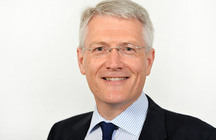
    Patrick McLoughlin

    Below is the text of the speech made by Patrick McLoughlin, the Secretary of State for Transport, to the House of Commons on 23 March 2016.

    Madame Deputy Speaker, I beg to move that the Bill be now read a third time.

    Our railways and roads power our economy.

    It is almost 2 centuries since this House gave its backing to a pioneering railway from London to Birmingham.

    A line which changed our country.

    And on which many of our great cities still rely today.

    Of course we could leave it as it is for another 2 centuries.

    Congested and unreliable.

    And suffer the consequences in lost growth, lost jobs, and lost opportunities.

    Particularly in the midlands and the north.

    But this House has already shown that it can do much better than that.

    By backing a new high speed route alongside other transport investment in road and rail access across the country.

    In 2013 Parliament passed the High Speed Rail (Preparation) Act, paving the way for HS2.

    Backed by welcome support and cooperation from all parts of the House.

    For which I wish to thank all parties.

    We have made outstanding progress since then.

    British contractors are bidding to build the line.

    British apprentices are waiting to work on the line.

    British cities are waiting to benefit from it.

    Which is why today’s vote is so important.

    On what will be a great British railway.

    Phase One will be the bedrock of this new network.

    Phase 2a will take it further to Crewe.

    And Phase 2b onwards to Manchester and Leeds.

    Our trains are more than twice as busy as they were 20 years ago.

    And growth will continue.

    HS2 will help us cope.

    It will work, it will be quick, it will be reliable, it will be safe, and it will be clean.

    And when it is finished we will wonder why we took so long to getting around to building it.

    I know many Hon Members will want to speak so I will keep my remarks short.

    I will touch on the detail of the Bill.

    I will also set out the work that has been done on the environment.

    And then I want to describe what will come next including what we are doing to build skills and manage costs.

    First, the Bill before the House today authorises the first stage of HS2 from London to Birmingham.

    This Bill has undergone more than 2 years of intense parliamentary scrutiny since 2013.

    Even before Phase One of the Bill was introduced, the principle of HS2 was extensively debated on the floor of this House.

    In April 2014 we had the second reading of Phase One of the Bill.

    Then there was a special Select Committee.

    I want to thank all members of the Committee, particularly my hon Friend the Member for Poole, who chaired it so ably.

    I also want to pay special tribute to my hon Friends the Member for North West Norfolk and the Member for Worthing West – who, along with the Member for Poole, sat for the whole of the Committee Stage.

    The committee heard over 1,500 petitions during 160 sittings.

    It sat for over 700 hours and over 15,000 pieces of evidence were provided to it.

    It published its second special report on 22 February 2016.

    The government published its response, accepting the committee’s recommendations.

    Many of the changes made to the scheme in select committee were related to the environmental impacts.

    Building any road or rail link has impacts.

    But we will build it carefully and we will build it right.

    For example, HS2 Ltd have today started work to procure up to 7 million trees to be planted alongside the line and help blend it in with the landscape.

    Changes at select committee will mean less land take, more noise barriers, and longer tunnels.

    We have done a huge amount of work to assess environmental impacts.

    More than 50,000 pages of environmental assessment have been provided to the House.

    We have produced a Statement of reasons’ setting out why we believe it is correct to proceed with HS2.

    This information is important to ensure that the House makes its decision – to support this vital project – in light of the environmental effects.

    I expect construction of HS2 Phase One between London and Birmingham to begin next year (2017).

    To enable this HS2 Ltd have this morning announced that 9 firms have now been short-listed for the civil engineering contracts for the line.

    Those contracts alone will create over 14,000 jobs.

    And we want those jobs to be British jobs.

    This is why the HS2 skills college, with sites in Birmingham and Doncaster, will open its doors next year to train our young people to take up these opportunities.

    But it’s not just about jobs. It is also about materials too.

    HS2 will need approximately 2 million tonnes of steel over the next 10 years.

    We are already holding discussions with UK suppliers to make sure they are in the best possible position to win those contracts.

    Later this year I will set out my decisions on HS2 Phase Two.

    As this happens we must have a firm grip on costs.

    The November 2015 Spending Review confirmed a budget for the whole of HS2 of £55.7 billion at 2015 prices.

    HS2 is a major commitment of public money, but it is an investment which Britain must make. And can afford to make.

    The cost of HS2 equates to around 0.14% of UK GDP in the Spending Review period.

    Now, I respect the fact that there are those in this House who take a different view of this project.

    But this is about the future of our nation.

    A bold new piece of infrastructure that will open to passengers in just 10 years’ time.

    This is about giving strength not just to the north, but also to the Midlands.

    Today I can get a high speed train to Paris and other parts of Europe, but not to Birmingham, Manchester, Leeds or Scotland.

    This is about boosting the links to the Midlands manufacturing heartland.

    The connections to Leeds, York, the north-east and Edinburgh. To the north-west, Liverpool, Manchester and Glasgow.

    It is about making HS2 part of our national railway network – such as at Euston.

    Here we are not only building a world class high speed rail station, but we are also funding work by Network Rail to prepare a masterplan for Euston station.

    An important step forward in our vision of an integrated hub that will enhance the area.

    At Old Oak Common I have agreed to the transfer of land to the Development Corporation, paving the way for in excess of 25,000 new homes and 65,000 jobs.

    High Speed 2 is a measure of our ambition as a country.

    A measure of our willingness to look beyond the immediate to the future and to a hard-headed view of what we need to succeed as a nation.

    This is a railway which will unlock that future.

    I urge colleagues to support the Bill at third reading as they have done to date and for the carry over motion so that the Bill can continue its passage in the next session.

    I commend the Bill to the House.

  • Anne Swift – 2016 Presidential Address at NUT Conference

    nut

    Below is the text of the speech made by Anne Swift, the President of the NUT, at the party’s annual conference in Brighton on 26 March 2016.

    Conference.

    I am enormously proud to be your president and I am looking forward to meeting many of you in your associations and divisions during the coming year.

    I come from a family of trade unionists. My father was a shop steward at the Massey Ferguson tractor factory in Coventry and my mum, who is here today, was a branch secretary for the Civil and Public Services Association when she worked for British Telecom.

    My parents taught me the value of hard work and the power of collective action. A power which is seriously eroded under the present government’s anti Trade Union Bill

    My parents worked through the period in the 1970s when three-day-weeks and short time working was the norm. They both held down a number of jobs to make ends meet and ensure their family of five children didn’t go without.

    Ironically, one of the jobs my dad had was delivering fresh meat from butchers to school kitchens in rural Warwickshire. Jamie Oliver would have been delighted. How times have changed.

    I was supported by my family to go to college without the cost of crippling tuition fees and I left with no student debt. Only children of the rich can say that today, not working class families like mine.

    At this conference we will discuss a wide variety of issues and much will be said by many erudite speakers urging the Executive to take forward important campaigns. Announcements in the last two weeks have galvanised many of those campaigns and I congratulate all those who have demonstrated this week and signed the petitions calling for the government to have a referendum on academisation and to scrap the plans altogether. Well over 100,000 signatures, for each, means the issues must be considered for Parliamentary Debate – Let’s have that debate.

    With so much going on in education you will be pleased to know I am not going to try to cover everything in this speech. I will stick to what I know and leave our expert delegates to speak on other important matters. When I was teaching I worked on the calculation that you should only keep your audience sitting still for double their age in minutes; 4 year olds – 8 minutes; 5 year olds 10 and so on. So I think I should have enough time today!

    I have recently left my job as head teacher at Gladstone Road Primary School, a local authority community school in Scarborough. 820 pupils and a staff of 130 made it the largest in North Yorkshire with many challenges. I miss my colleagues, the wonderful children and the day-to-day problem solving. But what a sense of relief, as I felt the weight of the job lifted from my shoulders on the last day of the autumn term.

    But I know that you, and thousands of teachers, are still bowed down by the weight of workload, mainly generated to provide evidence for others. The accountability regime has all but sucked the joy out of teaching, in many ways, and the constant meddling by politicians has led to chaos and confusion. This has been exemplified by the recent announcements on testing for primary pupils.

    But teaching is still the best job in the world and the most worthwhile. I am constantly amazed at the spirit of teachers who take their pupils on exciting visits, put on amazing productions and bring out the best in their pupils, with a real joy and devotion to the young people.

    I have been fortunate enough to attend the Schools Prom at the Royal Albert Hall. I am proud that this magnificent showcase of young musical talent is sponsored by the NUT.

    The Government seems to forget that the music industry along with other creative arts, theatre, dance and drama, are major earners for this country and we lead the world in our cultural heritage and talent. If we focus so heavily on Maths and English to the exclusion of the arts, we will be doing our young people a great disservice, and cutting off a source of enjoyment and potential careers for the next generation.

    Our job in primary schools is to sow the seeds so that young people can be inspired to find out what they are good at and be given the means to learn all they can without being tested to destruction.

    I have a vivid memory of one of my teachers when I was a fourth year junior, a Year 6 today. My teacher, Mr Carr, had displayed on the working wall a model of a volcano, from which, when you pulled various levers and tabs, “lava erupted and fumaroles appeared.”

    This gave me a love of Geography, coupled with the opportunities given by my parents to go camping every weekend around the Midlands and the many family holidays all over England and Wales – countries not known for active volcanoes, I know; but still, these experiences and a creative teacher encouraged me to find out why places and landscapes are like they are.

    The new curriculum, despite being content-heavy, is without instructions on how to teach; at least in the foundation subjects. This makes spaces for teachers to be creative in the way the body of knowledge is taught to children, to develop the skills of the geographer, historian, scientist, etc.

    And technology can help – you only have to search for a topic on the internet and there are many generous teachers willing to share their ideas. I am very proud to belong to a community of professionals who refuse to be dogged and dispirited by the cold hand of government and the accountability regime.

    Our Union also has useful resources for curriculum design and assessment through the Year of the Curriculum and Year of Assessment, both available on the website. And I would like to thank our Education and Equalities Department for the wonderful work they do in holding a torch for education.

    When I was packing up my office to leave, I came across topic plans from the 1990s. I obviously had more time then, as I created covers using a drawing program on the BBC Acorn computer.

    They look primitive nowadays but show just how much technology has changed in the last 30 years. However, the topic plans with their interlinking of subjects could be used today.

    I firmly believe we must hold true to our principles of creativity to make what could be uninspiring bodies of knowledge come alive for our pupils. For teachers too, this chance to be creative meets a need in them and makes the job exciting and fulfilling.

    Who knows what will inspire our young people to engage with learning. We don’t even know what jobs they will be doing when they leave school – the rate of change is exponentially greater than it was when I was at school.

    I asked my eight-year-old grandson when he thought the iPad was invented. “Before I was born,” he said. It was actually released in 2010. Look how many of you are on your mobile devices, and this year we have a conference app and next year, maybe, digi-voting. One day, maybe, we will attend a virtual Annual Conference. I hope not.

    When today’s reception class children leave school they will be engaged in jobs that haven’t yet been invented. If they have jobs at all, as it is predicted that 50% of jobs will be carried out by robots by 2028. I hope that’s not true either!

    One job that is not attracting young people is teaching. Even bursaries are not doing the trick and there is evidence that where bursaries are taken up for training, the trainee does not necessarily go on to get a job in school – what a waste of up to £30,000 in bursary payments.

    With the numbers of teachers who leave in the first five years of teaching and the rising school age population, we have the perfect conditions for a shortage of teachers.

    In the NUT we have been warning of this for over two years. As late as last July, Nick Gibb, the Schools Minister was saying: “I don’t believe there is a crisis. We’re managing the challenge.”

    But the Commons Education Select Committee announced in October that it was going to investigate whether there is a crisis in recruitment. The Committee should listen to us and the evidence given by the NUT.

    The National Audit Office also severely criticised the Department for Education in a report this February, showing the Government has no real idea of the impact of its policies on teacher recruitment and retention.

    So how is the DfE responding? Are they cutting workload, reshaping accountability, paying teachers more, listening to the voice of the profession? No.

    Instead it has produced a prime-time TV advert suggesting that ‘great’ teachers can earn £65,000 a year! Complaints have been made to the Advertising Standards Authority about the misleading nature of this ad.

    Perversely, the DfE have also announced the closure of recruitment to school-based training schemes and instead decided to focus on Teach First and the National Teaching Service.

    What they fail to understand is that you can’t keep denigrating the education service, dismantling the known and trusted routes into teaching via universities and colleges, imposing unjust accountability regimes, and still expect teaching to be an attractive profession.

    I have grave doubts about the School Direct route through Teaching Alliances, which has shifted the responsibility for training students away from universities to schools. I call this the apprenticeship model of training, more usually associated with craft industries, where student teachers spend most of their time in the classroom and go to college for day release to learn about pedagogy.

    This has had a devastating impact on education departments in universities, leading to a much reduced role, the redundancy of staff and loss of expert knowledge.

    It follows a view by Government that learning on the job is preferable to time spent learning the theory which underpins practice. It has had an impact on schools who are expected to do the work formerly carried out by the university for very little funding. I am sure many of the teachers who enter the profession via this route are very able, but they have been short-changed.

    The teaching alliances have also had to fill the gap left by the demise or reduction in the role of local authorities to provide Continuing Professional Development for staff, and again this leads to increased workload as expertise is sourced from within the alliance or purchased from commercial suppliers who have designed teaching programmes or assessment packages. This has created a very lucrative ‘edu-business.’

    When I wrote this speech in February I thought that the teacher shortage, the diminution of the training available both to students and in-service teachers, along with the changes which took place prior to this Government to remove the requirement for children to be taught by a Qualified Teacher all of the time meant that schools will eventually be staffed by a few “qualified, expert teachers,” supported by other para-professionals. Well, now Nicky Morgan has come clean. In the latest white paper “Educational Excellence Everywhere” (I’m sure there is a joke to be made about the number of Es here) schools will be free to employ anyone to teach and it will be up to the head to accredit them.

    We have seen this happen in Early Years where some schools have a qualified teacher in the reception class but “practioners” in the nursery or pre-reception class. These people are skilled and can support teachers well, but, where settings are led by qualified teachers, outcomes for children are better.

    This was one of the conclusions from the Effective Provision of Pre-school Education (EPPE) research, one of the biggest longitudinal surveys from 1997 to 2004, and updated again in 2014.

    Having qualified teachers who engaged with the children in shared sustained thinking was one of the key findings. This principle is one of the aspects of the Early Years Foundation Stage and forms a characteristic of effective learning.

    Early Years settings, and all schools, need to be properly staffed by qualified teachers who can plan a play-based curriculum, centred around enquiry and fit for the age and developmental stage of the children.

    We must be alert to any reduction in this caused by funding cuts and political demands for the formalisation of early education. This battle is not yet won. The legislation allowing anyone to teach and the baseline assessment tests put play at risk.

    Save the Children has recently launched a campaign: Read on. Get on. They have asked the Government to invest in nurseries so that every nursery is led by a qualified teacher. In Scotland, Nicola Sturgeon has also announced a commitment to put qualified teachers in every nursery by 2018. They recognise that young children who are disadvantaged, particularly, need the most qualified people to work with them to enhance their life chances. Our government is going in the wrong direction.

    I attended one of our “Reading for Pleasure” conferences where it was stated that “children from a home with few or no books arrive at school with a vocabulary of approximately 3,500 words.” Contrast this with a child who owns 50 books; they have a spoken vocabulary of over 7,000 words and a great deal of knowledge about how books and reading work.

    It has been one of my greatest professional pleasures to teach children to read. The delight on a child’s face when they recognise words in different contexts and realise they can read them, and make meaning from what they read, are “golden moments”. They have achieved a difficult cognitive challenge. We must do all we can to make reading an irresistible pleasure, not a chore.

    I find it incredibly sad that in the children’s section of a well-known bookshop a whole wall is dedicated to practise work books for the English and Maths curriculum.

    Sad, too, that some schools are sending home nonsense or pseudo words for Year 1 children to learn to read. This is not reading but barking at print. And children who can read are penalised in the phonic test for trying to make a pseudo word a real word.

    I hope I live long enough to look back on this time and laugh at the absurdity, in much the same way as people of my generation recall the Initial Teaching Alphabet.

    I do not blame the schools for doing all they can. They are under pressure and accountable for every child passing the phonics test, even though an increasing number of children arrive in school with severe speech and language difficulties.

    My recommendation to Nicky Morgan is to put a speech and language therapist in every school if she seriously wants disadvantaged children to read well. That, along with increasing the number of educational psychologists and access to mental health services would go a long way to meeting the needs of our pupils and really supporting them to access education.

    However, without tackling the root causes of poverty, many children will be disadvantaged. I have witnessed the impact of austerity measures on children and families. The stress of poverty translates to anxiety in children.

    We are urged to close the gap in terms of educational outcomes, but the gap between the rich and poor has grown larger and now 3.7 million children are living in poverty, despite Government’s redefining of poverty to exclude income! And in the recent budget we were promised more years of austerity and the disgraceful targeting of the most vulnerable people in our society to suffer more cuts.

    In my school we appointed a family support advisor to help parents deal with housing issues, money management, behaviour issues and the benefit system.

    Like many schools we had a pupil support advisor – a trusted adult children could tell their fears and worries too. With funding cuts those roles will be in jeopardy

    It breaks my heart when I think of the children arriving at school hungry, without warm clothing, and some so angry at the hand life has dealt them they hit out at all around them.

    Schools cannot fix the greater societal ills – Government must play its part and yet they seem even more determined to divide society into the deserving and undeserving poor with tax breaks for the rich and cuts for the vulnerable .

    With the removal of levels from the national curriculum, the Government is relying even more heavily on test results to measure the success of schools. Campaigns such as You can’t test this highlight the absurdity of trying to capture the worth or merit of learning in a numeric test score.

    The Government is wilfully disregarding the evidence which has been collected over a number of years. During my teaching career we have had the well respected Assessment Reform Group reporting on effective assessment, and academics such as Paul Black, Dylan Wiliam and Shirley Clark have written and spoken with knowledge and authority about the place of assessment in moving learning on and providing evidence of learning.

    Measuring human endeavour – especially learning – is complex and depends on a number of variables, but the Government wants even our youngest children reduced to a score. Of all the tests, baseline must be the worst. There are so many variables, the most obvious being the age of the child. It is not good to have an August birthday!

    I also learned recently that the baseline tests have been designed so that only 2.5% of pupils can achieve top marks. So it is already a test, not of what children might be capable of, but a deficit model illustrating what they can’t do.

    The research from the NUT and ATL by Alice Bradbury and Guy Roberts Holmes – with quotes from teachers – illustrates the ridiculousness of the baseline test. It has nothing to do with assessing children to inform provision and planning, but everything to do with school and teacher accountability. The research also points out the temptation to err on the side of caution and give children a low score in the test in order to demonstrate good progress as the child moves through the system. This will affect how children are judged by subsequent teachers and Wendy Ellyatt from the Save Childhood Movement has coined the phrase “Scored for Life.”

    My niece is the mother of a 4 year old with an August birthday. She went to parents evening recently and was distraught to hear that her little girl is behind in her phonics and has to stay in at playtime to catch up. I tried to reassure her that my great niece is doing really well and is doing exactly as she should for her age and stage of development.

    This obsession with teaching children the “basics” at an ever earlier age is damaging. Very few countries start formal learning before the age of seven, as they know a child’s brain is still not sufficiently developed to make the neural pathways needed for abstract thinking.

    Why are we being directed to teach in ways that are so harmful, rather than going with the natural grain of human development? We must resist this and campaign with our allies in the Early Years field, and parents, to show there is a better way.

    The Early Years and, I would argue for this to continue beyond the age of seven, should be centred around the development of oral language, playfulness and self-regulation – factors known to achieve better outcomes for pupils.

    We also have to bust the myth of linear progression. Anyone who has taught children knows that progress is not made in a simple upward trajectory from a given starting point. Children plateau whilst they consolidate prior learning; make leaps forward as new learning makes sense and becomes internalised; and at times regress due to various circumstances, such as prolonged absence or traumatic events. There is no evidence to show a correlation between baseline scores and later academic achievement. But the myth persists – this graph shows the standard expected linear progression and has been used as the basis of target setting and to measure the performance of schools and individual teachers. But only 1 in 10 children actually follow this path. This graph shows the variety of pathways to achieve the expected attainment at age 16. How this is going to translate to assessment without levels is anybody’s guess.

    The mass of data collected about individual pupils, aggregated together and then sliced every which way, is phenomenal. I wonder if parents know just how much information is held by Government on their children. Who knows for what purposes it might be used in the future? Did they give permission for this information to be collected and stored? Do they realise, as they did in Wales, that baseline is really a measure of their parenting?

    So, the measures used are spurious, the way information is used to hold the service to account is partial and the data is not statistically sound.

    This simplistic approach to assessing achievement is built on the sandiest of foundations. At some point the whole assessment edifice must come tumbling down.

    Let’s give it a good shake now and protect our children and profession from this dangerous and damaging nonsense.

    The impact of the new curriculum and testing arrangements is also having a detrimental effect on pupils with SEN. They are dispirited, as the tests constantly show what they can’t do and as they get older they become more aware of this. The tests will create even more children who will be designated as having additional needs because they don’t reach the bar raised arbitrarily by government.

    We have always promoted inclusion – that is, a system which includes every child whatever their strengths or disabilities. In our mainstream schools children are not included in every lesson, as they are constantly subjected to booster groups, additional support and intervention programmes.

    With an already narrowed curriculum, particularly for Year 6 children, those with SEN or a perceived SEN are taken from their art, music, P.E. lessons, and so on – all to accelerate them, to close the gap, and to try and make sure the data looks good.

    Of course children need help, support and differentiated programmes to help them achieve their best. But it should not be at the expense of a broad and balanced curriculum which engages all children, assesses them to help teachers plan the next steps and ensure they are motivated and prepared to be responsible citizens.

    Having schools which resemble exam factories are not just an anathema to us – “the blob,” as we were once referred to – but even the CBI recognises that employers want young people who are resilient, motivated, able to show initiative, work in teams and be creative.

    My school took part in the Exam Factories? research. For a long time teachers have been saying the testing culture and accountability regime is detrimental to our children. In this study, the children themselves have their say.

    In the interviews with pupils, one of my Year 5 girls, in response to the question “What is education for?” answered “To make your dreams come true.” Unfortunately, Year 6 pupils saw education as much more about getting good test and exam results.

    One of my mum’s favourite sayings, and she has many, is “All things will pass.” And this period will come to an end, eventually. We may well look back on it as an era:

    • when education was “measured by statistics and governed by numbers”;
    • when only that which is easily measured by pencil and paper tests was considered worthwhile;
    • with a focus on performativity at the expense of deep learning.
    • when education was seen as a commodity, ripe for private profit, rather than a public good;

    And a time when data was used to misinform by politicians and schools were held to account using very narrow measures.

    Our job is to hasten the demise of this period in order to protect the public education service for our pupils and teachers. We do not underestimate the scale of the task, as we recognise only too well that the Government reforms are driven by the Global Education Reform Movement.

    Learning is packaged and sold via multinational companies and educational charitable foundations. They use education to offset their tax liabilities. Education is reduced to a single indicator – e.g. an Ofsted judgement or SAT results, etc. – and presented in oversimplified form.

    But we should use data, or information as it is being called by Ofsted, to challenge the Government.

    Ask your MP –

    • What evidence is there that academies raise standards?
    • How much will it cost to convert all schools?
    • How can they guarantee a school place for every child?
    • Do they want children taught by unqualified staff?
    • How much has Baseline Assessment and other tests cost?
    • Are they happy that the market can respond to the needs of the service, rather than planning based on proper analysis of teacher supply and future pupil populations?

    The original arguments for becoming an academy – more money, freedom from local authority control, and the autonomy to provide whatever curriculum the school wanted – have largely disappeared.

    The multi-academy trusts hold more power over a school and they are much more tightly controlled than ever they were by a local authority. And the tests ensure every school has to devote large amounts of curriculum time to the content of the English and Maths programmes of study

    The Government still spins a narrative of failure in the state school system to justify ‘academisation’ as the means to raise standards in schools. But there is no compelling evidence that becoming an academy leads to a better education for children. Nicky Morgan can say it but she cannot produce any evidence.

    Indeed, research has shown that a school is six times more likely to remain ‘inadequate’ if it has become a sponsored academy than if it remains a local authority community school – with access to support, collaboration with other schools, and the sharing of good practice.

    As a number of scandals in academies have emerged, the Education Select Committee, last year, stated that oversight arrangements were not robust enough!

    Hence the arrival of the Regional Schools Commissioners, who are vying with Ofsted to pronounce on the quality of schools in their area. As if schools need another layer of accountability. Does this mean an end to Ofsted?

    One of the other weights that has been lifted from my shoulders is the dreaded Ofsted inspection. As a head teacher, I have found that there are two responses to the word Ofsted – sheer terror, or a blasé “they must take us as they find us” attitude.

    I was in the former camp. The anxiety which shrouds many schools from Monday to Wednesday is palpable. I know the feeling of glancing at the clock at lunchtime every day, waiting for the call and the relief at about one o’clock on a Wednesday knowing we weren’t going to get a visit that week.

    Maybe this says more about me and my insecurities. I know my school was and is a good school with outstanding teachers, but even so the anxiety was huge.

    I have seen good people driven out of the profession or made ill by the strain of the inspection system, based for the most part on data which is so variable and built on sand.

    Being put in an Ofsted category continues the pressure and intolerable demands which drives even more workload for the staff. No wonder so many young and early-career teachers leave, and so many staff are demoralised. But we should be careful what we wish for. The alternative may be worse.

    It is clear now that the Government are going all-out to privatise schools though the academy programme. Many ideas have been imported from the charter-school movement in America.

    And now the Secretary of State is suggesting the next Chief of Ofsted should be recruited from the USA. If the American system is so good, why don’t they top the international league tables?

    I am sure there are brilliant teachers in the US battling to provide a worthwhile education, whilst implementing systems designed by people with little knowledge of how humans learn, nor a willingness to tackle the causes of poverty which have such an impact on educational outcomes.

    As we think about the future and four more years of this administration, I am reminded of a quote from a pupil which I kept on my office wall (I am not sure where it is from).

    I’ve been sitting and wondering what the future will be like.
    It took me quite a long while. When I finished, I realised a lot of the future was gone. So a lot of the future is in the past.

    We must not sit and wonder – we must not procrastinate but activate.

    We can fight back. There are examples around the world – for instance, the Chicago teachers’ strike in 2012, and if you get a chance to see the Banner Theatre depiction of the strike you will be inspired.

    The Government has sought to break the unions, and the opportunity for ordinary people working in public services to withdraw their labour, with their anti-trade-unions Bill.

    We must remember these rights were hard won by the chain-makers, the match girls, the Tolpuddle Martyrs, and our predecessors in the NUT since we were formed in 1870.

    Many campaigns led by women, who as a group are still treated badly by governments and large corporations. It is still the case that women make up 50% of the world population and yet own less than 1% of property. The development of our women’s networks, attendance at women’s TUC and the work of our advisory groups continues to bring the issues to the fore. We know from casework that many women teachers have their careers cut short as they find themselves in capability procedures. Thank goodness for our lay officers and paid officials who represent them so ably.

    Our union recognises the dangers, understands the issues and focuses on the campaigns that will make a difference. It is essential that we stand together with our fellow professionals. We are a union that stands up for education and protects our members in their workplaces.

    We should say No to Nicky; No to forced academies, No to privatisation and No to ludicrous testing and accountability systems.

    I am delighted that we are working closely with the Association of Teachers and Lecturers. We have carried out a number of joint events and together we will have more success in our campaigns.

    In Finland, one union – the OAJ – represents educators from pre-school to university level. The Finnish government sees consultation, discussions and negotiations with the OAJ as essential to securing the education service it wants.

    It is an example of a great partnership between the profession, business and government to achieve their combined aim of an education service which produces responsible citizens. If our Government wants to model our education service on a system from overseas, it would do well to look at Finland. Closer to home, the education service in Wales, Scotland and Northern Ireland is looking very different to that in England.

    We should also be proud of the fact that the trade union movement is the largest volunteer group committed to looking after one another.

    Not just in our country, but the worldwide solidarity with other teachers. I have always found some of the most moving parts of our conference are when we are addressed by our brothers and sisters who are our union guests.

    It is sobering to hear stories of teacher trade unionists imprisoned for defending members, or even killed in the pursuit of their profession. Governments the world over know the power of education to free people and it is not insignificant that the denial of education to women and girls is used as a means of disempowering them.

    The bravery and courage of those who stand up for education in dangerous places is tremendously inspiring and we are right to stand in solidarity with them. So many children are denied an education and are living in terrible circumstances in warzones and as refugees. Our hearts go out to them. Lets educate the next generation to be peacemakers, respectful of others and welcoming to all.

    I truly believe that I would not have stayed in teaching and progressed in my career if it were not for the NUT.

    The opportunity to attend wonderful CPD events like the National Education Conference, meet with colleagues who give so freely of their time to support others, and the great information from headquarters based on evidence and research, make it the only union for me.

    When I began teaching 34 years ago this was a popular print on T-shirts.

    Administrator, social worker, coat finder, arbitrator, government directive reader, curriculum implementer, artistic director, form filler, language specialist, pencil sharpener, accountant, musician, fundraiser, report writer, nose wiper, public relations officer, petty cash clerk, examiner, surrogate parent, walking encyclopaedia, scapegoat… But you can just call me a teacher!

    Today we would have to add “data collector, evidence provider, e-safety enforcer…” and I am sure you could add more titles.

    We have as our strapline for this conference “creative spaces – not exam factories”. And I am pleased and delighted that a dedicated profession of teachers and support staff do their very best every day to make this the case.

    We should say “Yes to a broad, balanced and creative curriculum, Yes to assessment to plan next steps for children, Yes to qualified teachers and yes to democratic oversight of schools which focuses on support and collaboration. Are you listening Nicky?”

    All to give every child the inspiration to have dreams and the means to make them come true.

    On my office wall I had pictures of people who inspired me to go beyond my comfort zone – my heroes.

    I believe that you are heroes: not for just one day, but every day – standing up for what is right, in the cause of education in its broadest sense. Who knows who you might inspire! And what they might achieve!

    Delegates and visitors, I wish you a great conference.

    Thank you.
  • Sam Gyimah – 2016 Speech on the Importance of School Funding

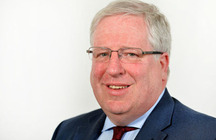
    samgyimah

    Below is the text of the speech made by Sam Gyimah, the Parliamentary Under Secretary of State for Childcare and Education, at the FASNA Spring Conference held in the Grand Connaught Rooms, London on 10 March 2016.

    Thank you for that kind introduction.

    It is a pleasure to be speaking to FASNA today. An organisation established by educationalists who wanted to take charge of their schools’ own destinies.

    An organisation that recognises that autonomy drives innovation and pushes for ever higher standards for students.

    And this government is committed to the very principles upon which you are founded.

    Today, there are over 5,000 academies, free from local authority control, across England. And we are committed to moving toward full academisation during this Parliament – ensuring that every child has access to a school with the autonomy and freedoms, that you tirelessly champion, and that will allow pupils to flourish.

    Europe

    But, before I discuss the importance of our reforms to the role of the LA and schools funding, I would like to set out my position on something everyone is talking about right now and that’s Britain’s membership of the European Union.

    It is better for Britain that we stay as part of the EU.

    It will be better for British businesses to have full participation in the free trade single market – bringing jobs, investment, lower prices and financial security.

    It will be safer because we can work closely with other countries to fight cross-border crime and terrorism.

    We will be stronger because we can play a leading role in one of world’s largest organisations from within.

    Helping to make the big decisions that affect us.

    The task of reforming Europe does not end with the agreement secured by the Prime Minister.

    But our special status gives us the best of both worlds – securing the benefits of being in the EU for families across the UK, but staying out of the parts of Europe that don’t work for us. So we will never join the Euro, be part of Eurozone bailouts or an EU super-state.

    I believe that Britain is stronger, safer and better off in a reformed European Union. And I will continue to campaign for us to vote to remain.

    Levels of spending in schools and consultation launch
    But moving on, because – as we know – education is not an EU competence!

    Realising potential and transforming education is central to this government’s mission of extending opportunity and delivering social justice.

    The Spending Review was evidence of that: protecting core schools funding in real terms for the duration of this Parliament.

    And this is a strong commitment because funding to schools is over £40 billion – the largest education budget given to primary and secondary schools in this country’s history.

    That record level of funding has been driven by the additional funding we added to schools budgets through the pupil premium over the last Parliament. We are now delivering more than £2.5 billion a year to meet the Conservative manifesto commitment to target additional funding at the most disadvantaged students.

    Larger budgets also mean an even greater imperative for us to ensure parents know that funding is being used in the best way possible to further their child’s life chances.

    And I want to take this opportunity to thank sector groups for their constructive engagement with government to push this important topic further up the education agenda.

    On Monday, the government announced the first stage of its consultation on fair funding. This is the first stage of our consultation as we seek views on the principles we use to design the formula, the building blocks we use to construct the formula, and the factors we include in the formula.

    We want to develop a system of funding that is fair and transparent, with resources matched to pupils’ and schools’ needs consistently across the country.

    This is a foundational element of the education system. It will be more important than ever to see the responses from across the education sector – helping us to make the right decisions on funding reform.

    I look forward to seeing FASNA’s response to the consultation, alongside other interested parties from across the entire education sector.

    Linking government objective to funding reform

    The government’s objective for education is straightforward: to deliver educational excellence everywhere. It is through this objective that we will deliver a highly educated society in which every child can reach their potential.

    As the minister with responsibility for education funding, the word that focuses my attention the most is ‘everywhere’.

    Everywhere means we must approach education with the aim to deliver a level playing field for all pupils. It must be an approach in which all our schools, teachers and, most importantly, pupils can reach their full potential.

    And what do I mean by a level playing field everywhere?

    It means:

    – high-quality teachers everywhere

    – high aspirations everywhere across the system

    – a funding system that is blind to irrelevant factors

    It means a funding system that is wide-eyed to factors that impact educational success – be that special educational needs, disability or economic disadvantage.

    The development of existing system

    I don’t think anyone really disagrees with those principles.

    But despite this, the current arrangements for funding our pupils could not be more different. In the current system, the difference between the highest average rate of funding and the lowest rate of funding is nearly £3,000.

    In the current system, the difference in a school’s annual budget – the same school, with the same pupils – can vary by up to £2.5 million depending on the school’s location within England.

    That cannot be the right system of funding if we are serious about educational equity and teachers having the right resources to support pupils with the same educational needs. My question – and I’m sure your question also – is how have we possibly ended up with a funding system like this?

    The wide variations are driven by local authorities who determine their own local formula. Formulae that are complex, opaque, but crucially very different from one another.

    And as well as widely differing local formulae, local authorities are making decisions to transfer money between their budgets for schools, for special needs and for early years. Meaning that money allocated for schools may not reach frontline teachers.

    This kind of decision-making is out of date, as more schools become academies, independent of local authority management and often operating in groups that cut across local authority boundaries and indeed regions.

    And all of this is compounded by a system for allocating funding to each local authority area that is based, not on a calculation of local need, but by reference to local authority spending decisions that were made more than a decade ago, with no proper account of how circumstances have changed in that time. To say it another way: a year 7 pupil’s funding allocation is determined on educational needs in their area before they were even born.

    But what do these points mean practically? It means the same child, in the same circumstances, can be funded vastly differently from one location to the next.

    Right now, a parent that moved just a few miles from Haringey to Hackney would increase funding for their child by £1,000. Or choosing to educate your child in Darlington rather than Middlesbrough would be a difference of nearly £700.

    And these are just 2 of the countless examples of the excessive funding variations, for the exact same child, that is evident across the whole of England.

    Let me make my position clear:

    – this system is not fair to schools and teachers

    – this system is not fair to parents

    – most importantly, this system is not fair to young people

    We’ve ended up with so much inequity of funding because in many cases locally, the distribution of funding has been decided primarily to protect past funding levels, irrespective of changes in the needs of pupils from year to year.

    Let me give you one more example: in Reading, students receive on average £4,000 per pupil. In Wakefield, a local authority with a lower proportion of students on free school meals and a lower proportion with additional language needs, each pupil receives £4,500.

    Simply put: areas in which educational needs are lower are receiving more funding. As the IFS have acknowledged, the current system is one in which local authorities are not good at targeting funding towards the factors that influence educational needs such as disadvantage. Local authorities prefer, when designing their formula, to spread funding in the basic per pupil rate rather than targeting it at the pupils who deserve this additional funding – spreading the impact rather than targeting it at those with the highest needs in order to level the playing field.

    It is a credit to your organisation that you continue to promote school autonomy across a system that is blatantly unfair to some of your schools.

    Schools that work against the odds of the funding system and deliver outstanding outcomes for their students.

    That is why it is this government’s intention to move toward a formula where we fund schools directly.

    Removing the local authority middle man.

    Placing funding directly in the hands of your outstanding school leaders who know how to use it best.

    Principles of funding reform

    The principles of our funding reform are simple:

    – fair

    – based on pupil needs and characteristics

    – transparent

    We need to rebalance funding so that historically under-funded pupils receive what they deserve. To help schools in those areas drive forward ever-improving student outcomes. Because we know that some schools have been resolute in their push for excellence in the absence of fair funding. In York, over 80% of schools are considered ‘good’ or ‘outstanding’ despite it being one of the most poorly funded areas within the country.

    This is proof enough that excellence can be achieved everywhere in a fairly funded system. But let me make one thing clear: fair doesn’t just mean equal. We know that funding must take account of differences in local area costs and local challenges. But fairness does mean that funding, everywhere in the country, should be dependent on need.

    Let me stress this point again: when I think of funding reform, it is the pupil who is the front and centre. Our most important role is to ensure the right level of funding supports each and every pupil. Of course, schools and areas must be funded adequately, but our most important principle is to get the right level of funding to each pupil. We will achieve this by aligning our funding principles to educational needs.

    And these points are recognised by the OECD who show that a well-designed funding formula can be the most efficient, stable and transparent method of funding schools. But, more importantly, one of its central recommendations is that funding must be responsive to students’ needs.

    Funding equality achieved by funding those schools with similar characteristics at the same rate, and directing more funding to schools where pupils have higher educational needs. How can we believe in a level playing field with equality of opportunity when these disparities are common across the whole education funding system?

    A national fair funding formula will realign our funding policy with the underlying objective of an educationally equal playing field.

    Aligning funding to need – delivering educational excellence everywhere.

    Sector bodies

    I am also pleased that sector bodies and unions across the whole of education have engaged constructively on these issues and offered their support. A campaign driven by the F40 to address the clear inequity in the system, and a campaign that is supported organisations such as the ASCL, the NAHT and FASNA.

    High needs

    But, I know that funding reform is about more than just the schools budget – because the same arguments apply to our funding for high needs.

    However, this is – bluntly – a more difficult area than the schools budget. We know that students with special educational needs and/or disabilities need additional funding to help them achieve their potential.

    But, it is more difficult to put into a formula because high needs are less predictable.

    That is why we must design a system that recognises this and allocates money to local authorities transparently and fairly without perverse incentives.

    But, this isn’t just about fairness for pupils. This is about fairness for parents – who tirelessly look after their children with additional needs to give them best education possible.

    It isn’t fair to the pupils or the parents that funding, as of right now, is not strongly enough related to need.

    ISOS research for the department identified large inequities in the system: in one local authority the average funding for a student with a statement or on school action plus was £15,000 but in another local authority it was less than £4,500. How can this be the right system of funding?

    A child’s type of care and support should not be determined on geography alone. The pupil who requires a speech therapist in Surrey is no different to the pupil who needs that support in Liverpool.

    In the system as it stands today, we have now has seen some local authorities who are underfunded struggling to implement the SEND reforms of the Children and Families Act introduced in 2014.

    I want a system of high-needs funding that means parents know their child will have funding that properly reflects their needs and not a system of funding linked to what was spent by that local authority in the past.

    Parents and their children with high needs deserve to know that the funding they need will be there irrespective of where they choose to live.

    They deserve that security. They deserve that equality.

    Synthesis and finish

    I think the case for change is very clear.

    Local variation in funding has become so wide – that pupils are funded on the basis of geographic accident.

    Funded as a result of history; not funded as a product of pupils needs.

    We all agree that we cannot build opportunity that is equal for all children and young people in that kind of funding system.

    That is why our national funding formula will be about fairness.

    Individual pupils will be front and centre – ensuring that funding, in every school across the country, is best matched to pupils’ educational needs.

    And through that, funding reform will be the foundation in ensuring educational excellence is achieved everywhere.

    Thank you.

  • Robert Goodwill – 2016 Speech on the Importance of the Maritime Industry

    robertgoodwill

    Below is the text of the speech made by Robert Goodwill, the Minister of State at the Department for Transport, at the Mersey Maritime Industry Awards in Liverpool on 10 March 2016.

    Thank you for inviting me to speak here tonight at the Mersey Maritime Industry Awards, celebrating the fantastic achievements across the maritime industry in the Liverpool City region.

    I’ve had a very informative visit here in the Liverpool City region today. It was here 300 years ago that the world’s first enclosed commercial wet dock opened in Liverpool. Its design meant that for the first time in history, ships could load and unload whatever the state of the tide. So where better for me to start my day today than at the Port of Liverpool to visit Liverpool 2….

    A place well known for its history of innovation.

    Liverpool has long been established as the country’s primary centre for transatlantic movement of goods. The opportunities there continue to develop as US ports and the Panamá Canal itself increase their own capacity for larger box ships.

    And I know the ambition is strong also to attract ships from Asia and elsewhere, taking advantage of proximity to north-west markets and distribution centres.

    We’re seeing some last minute delays, but this will be a facility well worth the wait and complementing other post-Panamax developments, meaning the UK is superbly placed to facilitate growth in trade with all our international partners.

    That in turn feeds into the Northern Powerhouse, and work is well underway on a freight and logistics strategy for the north. We have worked with Transport for the North to make sure that freight through ports such as Liverpool has the prominent billing it needs, despite the understandably strong focus on passenger transport.

    I was most excited to see the progress being made at the Maritime Knowledge Hub today. It creates great potential for the growth of the UK’s maritime skills base.

    With sea trade expected to grow significantly, the need for a highly skilled workforce has never been greater.

    The Hub is a new addition to the UK’s maritime training institutions providing world-class research and respected qualifications.

    Next week is National Apprenticeships Week and the maritime sector is leading the way in shaping the future of apprenticeships through the maritime trailblazer.

    It is critically important that the maritime industry continues to attract and train the next generation of seafarers and mariners in order to sustain its future. That is why government continues to play its part by investing in the training of UK officers and ratings through our £15 million Support for Maritime Training (SMarT) fund.

    Our commitment to maritime is shown through our acceptance of all the recommendations made to government coming out of the Maritime growth study last year.

    They won’t necessarily be easy to implement. But of course this a partnership. We have to work closely together – government and industry. And together we will see results.

    We have already set up a Ministerial Working Group and have taken action so that the Maritime and Coastguard Agency have appointed a commercial director to lead the shipping register and deliver improvements in service.

    Things are already moving in the right direction.

    The growth study highlighted the size and diversity of the UK’s maritime sector – ports, shipping, business services, training, research, engineering and manufacturing.

    The UK has a cluster of maritime industries of global significance and we must consider this interconnected network of businesses as whole.

    By ensuring that we, in government, take a strategic approach to all parts of the maritime sector.

    And by encouraging greater communication, coordination and cooperative between the many elements of our maritime cluster.

    We all understand the importance of trade. Free trade creates jobs; protectionism (although billed as protecting jobs) ultimately destroys them. Free trade operates best with effective and efficient logistics – this is where you guys come in.

    I believe the objective of free trade are best served with the UK being part of a reformed EU.

    Only, for example, as part of the EU can we land the TTIP deal with the US that would boost transatlantic trade volumes.

    We can build on the UK’s strengths, generate sustained growth and compete internationally.

    Thank you.

  • Philip Hammond – 2016 Easter Message

    philiphammond

    Below is the text of the statement made by Philip Hammond, the Foreign Secretary, on 25 March 2016.

    “Easter is a season of hope for all Christians. At this time of celebration my thoughts are with all those facing persecution, discrimination and denied the right to worship freely, particularly Christians in the Middle East. This Government has pledged to stand up for the right to live and to worship free from discrimination, and we will continue to work actively to make this a reality”.

  • Theresa May – 2016 Statement on the Brussels Attacks

    theresamay

    Below is the text of the statement made by Theresa May, the Home Secretary, in the House of Commons on 23 March 2016.

    With permission, Mr Speaker, I would like to make a statement about the terrorist attacks in Brussels, our response and the threat we face from terrorism in the United Kingdom.

    The cold-blooded attacks in Brussels yesterday morning have shocked and sickened people around the world. Fourteen people were murdered and 106 wounded when two bombs exploded at Brussels airport. A further attack at Maelbeek metro station an hour later killed 20 people and wounded more than 100 others. As the Prime Minister has just said, four British nationals are among the injured and we are concerned about one missing British national. Their families have been informed and they are receiving regular consular assistance. We are working urgently to confirm if any other British nationals have been caught up in these attacks.

    The investigation into the attacks is still ongoing. These figures may change and it will take some time for a fuller picture to emerge. But we know that Daesh has claimed responsibility.

    Mr Speaker, these were ordinary people simply going about their daily lives, families going on holiday, tourists visiting the city, workers making their way to their offices. They have been attacked in the most brutal and cowardly way. I am sure the whole House will want to join me in sending our thoughts and prayers to the victims, their families and those who have been affected by these events.

    In Belgium, the authorities have increased the country’s terrorist threat level to four, the highest level available, meaning that the threat is serious and imminent.

    Yesterday, I spoke to my Belgian counterpart Jan Jambon, to offer my condolences and to make clear that the UK stands ready to provide any support that is needed.

    Belgium is a friend and an ally, and we work closely together on security matters. Following the attacks in Paris last November, we deployed police and intelligence service resources to Belgium to support the ensuing investigation, which last week resulted in the arrest of Salah Abdesalam.

    This is the fourteenth attack in Europe since the start of 2015. In January last year gunmen killed 17 people at the office of Charlie Hebdo and a Jewish supermarket in Paris; in February, two people were shot dead at a synagogue and café in Copenhagen; in August an attack was prevented on a Thalys train en route to Paris; and in November 130 people were killed and many more were injured in a series of concerted attacks in Paris.

    There have been further attacks in other parts of the world, including in Bangladesh, Saudi Arabia, Lebanon, Kuwait, Egypt, and in Tunisia where 30 British holidaymakers were murdered. More recently, a suicide bomber killed at least five people and injured more than 30 in an attack in the heart of Istanbul.

    And there continues to be a threat from Northern Ireland-related terrorism. The murder of prison officer Adrian Ismay who died on 15 March is a stark reminder of the many forms of terrorism we face.

    In the UK, the threat from international terrorism – which is determined by the independent Joint Terrorism Analysis Centre – remains at SEVERE, meaning that an attack is highly likely. In the last 18 months, the police and the security services have disrupted seven terrorist plots to attack the UK. All were either linked to, or inspired by, Daesh and its propaganda. We know too that Daesh has a dedicated external operations structure in Syria which is planning mass-casualty attacks around the world.

    UK threat picture and immediate response

    Mr Speaker, following yesterday’s attacks in Belgium, the government took precautionary steps to maintain the security of people in this country. This morning the Prime Minister chaired a second meeting of COBR, where we reviewed those measures and the support we are offering to our partners in Europe.

    Border Force has intensified checks at our border controls in Belgium and France, increased the number of officers present at ports and introduced enhanced searching of inbound tourist vehicles. Further measures include security checks on some flights and specialist search dogs at certain ports.

    The police also took the decision to increase their presence at specific locations – including transport hubs – to protect the public, and to provide reassurance. In London, the Metropolitan Police have deployed additional officers on the transport network.

    I can – however – tell the House that neither deployment is in response to specific intelligence.

    Government response to the threat

    As I have informed the House on previous occasions, since 2010 the government has undertaken significant work to bolster our response to the threat we face from terrorism.

    Last year, the Counter-Terrorism and Security Act provided new powers to deal specifically with the problem of foreign fighters, and prevent radicalisation. We extended our ability to refuse airlines the authority to carry people to the UK who pose a risk. And we introduced a new power to temporarily seize the passports of those suspected of travelling to engage in terrorism. This power has now been used on more than 20 occasions, and in some cases has led to longer-term disruptive action such as the use of the Royal Prerogative to permanently cancel a British passport.

    A week ago the House debated the second reading of the Investigatory Powers Bill, which will ensure that the police and the security and intelligence agencies have the powers they need to keep people safe in a digital age.

    Through our Prevent and intervention programmes we are working to safeguard people at risk and challenge the twisted narratives that support terrorism. This includes working with community groups to provide support to deliver counter narrative campaigns. Our Channel programme works with vulnerable people and provides them with support to lead them away from radicalisation. And as we announced as part of Strategic Defence and Security Review in November last year, this year we will be updating our counter-terrorism strategy, CONTEST.

    In addition, we have protected the counter-terrorism policing budget. Over the next five years we will invest an extra £2.5 billion in a bigger more capable global security and intelligence network. This will include employing over 1,900 additional staff at MI5, MI6 and GCHQ and strengthening our network of counter-terrorism experts in the Middle East, North Africa, South Asia and Sub-Saharan Africa.

    Government response to the threat in Europe

    Together, these measures amount to a significant strengthening of our domestic response. But as the threat continues to adapt and morph, we must build on our joint work with our international partners.

    As this House is aware, the UK enjoys the longest lasting security relationship in the world through the Five Eyes – with our allies the United States, Australia, Canada and New Zealand.

    That relationship allows us to share information, best practice and vital intelligence to disrupt terrorist activity, prevent the movement of foreign fighters and stop messages of hate from spreading.

    Following the attacks in Paris last November, our security and intelligence agencies have strengthened co-operation with their counterparts across Europe, including through the Counter-Terrorism Group, which brings together the heads of all domestic intelligence agencies of EU member states, Norway and Switzerland. Through this forum, the UK has been working to improve cooperation and coordination in response to the terrorist threat and to exchange operational intelligence.

    And we are also working bilaterally to increase aviation security in third countries.

    Because as I told the Five Country Ministerial in February, defeating terrorism requires a global response, and we will not succeed by acting in isolation.

    The United Kingdom has intelligence and security services that are the envy of the world, and some of the most enduring international security relationships.

    Together with our allies around the world, we must act with greater urgency and joint resolve than we have before.

    We must continue, as we already do, to share intelligence with our partners, be proactive in offering our expertise to help others, and encourage them to do likewise.

    We must organise our own efforts more effectively to support vulnerable states and improve their ability to respond to the threat from terrorism.

    And we must do more to counter the poisonous and repugnant narrative peddled by Daesh and expose it for what it is – a perversion of Islam built on fear and lies.

    Conclusion

    Mr Speaker, this is the third statement to the House that I have given following a terrorist attack in just over a year. Each horrendous attack brings pain and suffering to the victims and their loved ones. Each time the terrorists attack they mean to divide us.

    But each time they fail.

    Today, all around the world people of all faiths and nationalities are standing in solidarity with Belgium, just as they stood together after the other appalling attacks. In the UK, people of all backgrounds and communities – Muslim, Sikh, Jewish, Hindu, Christian, and people of no faith – are united in our resolve to defeat terrorism.

    The terrorists sought to strike at the heart of Europe. They seek to attack our values and they want to destroy our way of life. But they will not succeed.

    These attacks occurred away from the shores of the UK, but we should not forget that our own threat level remains at severe, which means that an attack is highly likely. We will remain vigilant. The police and security services will continue in their dedication to keeping people safe. And the public should remain alert.

    Together, we will defeat the terrorists. This is the challenge of our generation. And it is a challenge we will win.

    I commend this statement to the House.

  • Amber Rudd – 2016 Speech on Energy Benefits of Staying in the UK

    amberrudd

    Below is the text of the speech made by Amber Rudd, the Secretary of State for Energy and Climate Change, on 24 March 2016.

    Introduction

    I’m here today because on the 23rd of June, you will make a decision that will set the direction of the country for generations to come.

    A definitive, lasting choice that will impact upon the lives of our children and grandchildren.

    Are we stronger, safer, better off inside the European Union?

    I wholeheartedly believe that the answer to this question is a resounding yes.

    As the Energy Secretary, my first responsibility is to make sure that our families and businesses have the certainty of secure energy supplies that they can rely on…now and in the years ahead.

    Today I want to make the case for why being a member of the European Union helps to deliver that certainty.

    It’s actually pretty simple.

    It’s about safeguarding our national and economic security…

    It’s about lower costs for our households and businesses…

    It’s about creating jobs and investment which mean the security of a regular pay packet for working people…

    It’s about getting our voice heard and influencing action taken in response to the biggest global challenges we face.

    In short, I’m not willing to take the risk with our economic security.

    So why do I believe that energy is an important issue in this debate?

    Energy at the heart of the Union

    65 years ago, on 18 April 1951, a treaty was signed in Paris that created the European Coal and Steel Community.

    This was the first concrete step towards the EU we know today.

    This was born out of the ravages of two world wars.

    European co-operation began with an agreement on energy resources.

    To ensure we didn’t fight for them, but traded freely and fairly.

    And energy co-operation remains at the heart of the Union today.

    Whether it’s about making us collectively more energy secure, making energy cheaper, or dealing with the global issue of climate change.

    But more fundamentally, safe and secure energy supplies support everything we do in our day to day lives and everything we do as a country.

    When we turn on the light, switch the heating on, or plug in our phone to charge. We never think about that energy not being there.

    But it wasn’t always this way. I’m old enough to remember the power cuts of the 1970s. When Britain was the sick man of Europe.

    When I was growing up, we had candles and boxes of matches dotted around the house just in case.

    But because of the hard work of the British people, this is no longer the case.

    In fact, the UK is now ranked the fifth most energy secure nation in the world.

    But I also believe that our membership of the European Union has played its part in delivering this security.

    Let me tell you why.

    Security

    Here in Kent, I am reminded that whilst we are an island, we have very real and physical connections to Europe.

    We’re at the site of one of those connections today. The BritNed interconnector helps to provide the electricity we need.

    And over the next five years we intend to double our ability to import electricity with similar new connections to France, Belgium and Norway. And there are potential new projects with Denmark, Iceland and Ireland further down the track.

    These new connections alone could save British households nearly £12bn over the next two decades by driving down the price of electricity.

    They act as an extension lead to the vast European energy market, bringing cheap electricity from the continent.

    They are the perfect example of how being in Europe helps to deliver energy security at home.

    Britain’s geography means we are exposed.

    We are an island. It is potentially much harder for us to import and export electricity and gas.

    Of course, our North Sea reserves have helped to ensure UK energy security for decades.

    And, as the Chancellor’s budget last week demonstrated, we continue to support the industry in maximising the recovery of oil and gas.

    But reserves in the North Sea are declining.

    In 2015 we imported almost half of the gas we need to heat our homes and power our businesses. And two thirds of this imported gas comes through pipelines from the continent.

    By 2030, even if we develop the potential of UK shale gas, we are expected to import about three quarters of our gas.

    In other words, we will have to continue to work with our closest neighbours to deliver energy security in the future.

    Relying on energy from abroad is not without risk.

    We have seen how countries such as Putin’s Russia use their gas as a tool of foreign policy. Threatening to cut off supplies or drastically increase prices.

    We mustn’t let our energy security be hijacked as a political pawn to bring Europe to its knees.

    By working together in the European Union we can stop this becoming a reality.

    As a bloc of 500m people, we have the power to force Putin’s hand.

    We can coordinate our response to a crisis. We can use the power of the internal market to source gas from elsewhere. We can drive down the price of imports, as has happened recently in Eastern Europe.

    To put it plainly – when it comes to Russian gas, united we stand, divided we fall.

    However you look at it, an internal energy market helps to guarantee our energy security. Which is the bedrock of our economic security.

    I’m not willing to play fast and loose with either.

    Prices

    Let me turn to getting the best for our households and businesses.

    The European internal energy market is about making sure it is cheaper and easier for us to buy and sell energy.

    Without barriers – a level playing field.

    This is Britain’s agenda – trade and liberalisation to drive down prices – which has now been embraced by the rest of Europe.

    It was Britain that pushed to break up the monopolies on building cross-border cables, like the one we are at today, exposing them to proper competition that drives down costs and ensures real value for money.

    It has been estimated that a fully integrated internal energy market could save up to £50bn per year by 2030.

    Existing EU energy efficient product standards for items such as TVs, fridges and washing machines, will save UK households an average of £60 on their energy bills this year, rising to £120 a year by 2020.

    And that’s ignoring the benefits of new and tighter product standards in the future.

    That would mean lower bills not just for families and businesses across Europe, but right here in Britain.

    You might ask what’s the alternative? A question that those campaigning to leave seem unable or unwilling to answer.

    I’m clear that our energy security is non-negotiable so let me try again.

    Outside the EU, could we still benefit from these lower prices?

    Could we still set the rules that govern the internal market to ensure that they are in our interest?

    Could we still trade energy between ourselves and Europe without facing higher costs or barriers?

    Well, we don’t even know on what terms we could negotiate these important questions.

    How long it would take?

    How would the markets respond to the economic shock of Brexit?

    And those who want us to leave simply cannot tell you what a future outside the internal energy market would look like.

    And most importantly, they can’t or won’t tell you what the cost might be.

    But we can get an idea of what these costs might be.

    National Grid, which is responsible for running Britain’s electricity system, is neutral in this debate.

    It has assessed the risks and costs, because it will have to deal with whatever decision we make as a country.

    Today, it has published an independent report looking at what the consequences of leaving the EU could be.

    Either to become like Norway – inside the internal market but with no say over its shape.

    Or like Switzerland – who are outside the internal market and have been negotiating without success for almost a decade to try and get access on decent terms.

    The study contains some eye-catching numbers.

    The UK’s membership of the European Union helps keep our energy bills down. If we left the internal market, we’d get a massive electric shock because UK energy costs could rocket by at least half a billion pounds a year – the equivalent of peoples’ bills going up by around one and a half million pounds each and every day.

    People want and deserve lower energy bills, and we’re doing everything we can to make that happen, but leaving the EU could put all of that at risk and would hit the poorest in society the hardest.

    These are the hard facts from an independent body charged with operating our energy system.

    Even if we managed to negotiate to remain part of the internal market – on the lines of Norway – we would have to pay for access and have no say over the rules.

    This would be giving away power, not getting it back.

    I don’t know about you, but the prospect of being an EU rule taker, but not an EU rule maker, has no attraction whatsoever.

    Investment

    The report from National Grid also highlighted the impact of Brexit on investment and businesses in the energy sector.

    Their analysis showed the risk of several hundred million pounds of higher investment costs for UK energy infrastructure as a result of the uncertainty Brexit would bring.

    And this doesn’t include the impact on the UK’s energy sector due to the uncertainty about sterling in the event of a Brexit. This would likely increase the cost of importing electricity, gas, oil and energy equipment – all needlessly adding costs to UK energy.

    This isn’t just an energy issue. Almost half of all foreign investment in Britain comes from the EU.

    100,000 British businesses export to the EU. 3.3 million jobs are linked to trade with other EU countries.

    Yes, we are the 5th largest economy in the world – something we should be proud of – but our economy is stronger because we are in Europe.

    So is our ability to secure the investment we need in UK infrastructure to make sure it’s fit for the 21st Century. Being in the EU helps attract that investment.

    Just look at the record levels of investment in UK energy infrastructure.

    In 2014, direct investment in UK utility projects from elsewhere in the EU amounted to some £45bn.

    We win a third of all the EU’s renewable energy investment.

    And this investment creates jobs.

    There are around 12,000 companies in Britain working in the low carbon economy.

    £121bn of turnover. £44.9bn of value added to the UK economy.

    Take for example DONG energy from Denmark.

    They have invested £4bn so far helping to develop offshore wind in the UK. And they intend to spend a further £6bn in the years ahead.

    Investments that will create over 2000 jobs.

    Take Siemens.

    They employ almost 14,000 people in the UK and are currently investing over £300m in a new factory in Hull, creating up to 1,000 direct jobs.

    They certainly want us to stay in.

    Siemens’ Chief Executive has been pretty clear.

    “To me,” he told ITV, “this is not about surviving, it’s about thriving, it’s about growing and we’re very sure we can better grow our business in the UK as part of the European Union.”

    Being in the EU helps us attract billions and billions of pounds of investment in our energy system and supply chain. Taken together, this investment helps support 660,000 jobs in the UK’s energy sector. Does anybody really think all of that investment would continue if we left the EU, and with no extra cost? Why would we want to cause worry and hardship to hundreds of thousands of families in the UK who rely on our energy industry for their livelihoods? A stable regime gives investors confidence. For them unfettered access to the EU single market of 500m people can make the difference between being merely a going concern and a booming business.

    Leaving the EU would put all this investment at risk.

    The leave campaign cannot tell British businesses how long they would have to wait to re-negotiate the existing EU trade deals with over 50 other markets, not to mention missing out on those EU trade negotiations, like with the US and Japan, that are well under way.

    In the race for investment, why would we shoot ourselves in the foot by creating this uncertainty?

    Working people will ultimately pay the price for this with fewer jobs and higher prices.

    That is not a price I am willing to pay.

    Global Standing

    The final point I want to make is a personal one.

    Just like our membership of the UN Security Council, and NATO, remaining in the EU is about our standing in the world and the impact we can have on global issues as an individual nation.

    With Putin on the prowl and Daesh sharpening their swords, our unity and our shared values – of free speech, democracy and equality – are more important than ever.

    Beyond these immediate dangers, there are longer term challenges that require us to work together to resolve.

    Take the recent climate change conference in Paris where 200 countries came together to sign the first global climate deal ever agreed.

    I was there. I saw first-hand how the EU played a pivotal role in driving this deal through.

    The deal was ultimately negotiated between the world’s biggest economic powers: the US, China and the EU.

    And it was UK representatives who were leading negotiations on behalf of the EU.

    If we left the EU, with the UK responsible for just 1% of global emissions, I doubt we would have even been in the room.

    How do I know? Because I was there in the room, and many others weren’t.

    The global deal in Paris is in the UK’s interests, and frankly we wouldn’t have got it without being part of the EU.

    I firmly believe that from our position in the EU we can influence the great geopolitical challenges of the day – to make the world a safer place for Britain.

    And let’s be clear, the deal in Paris is not just about our national security, it’s also about our economic security.

    Those who want us to leave have a tendency to argue that tackling climate change hampers our economic competitiveness.

    I disagree.

    It is our own domestic law – the Climate Change Act – that sets out obligations to the next generation.

    Our own system – the UK’s Carbon Budgets – sets the pace.

    We are also not the only ones taking action.

    The Paris Agreement was about levelling the playing field between us and the rest of the world. Making sure that every country makes its fair share of effort to combat climate change.

    And within the EU, we are at the table, shaping climate policies so they work for British businesses.

    And so they are focused on cutting carbon in a cost effective way. Not driven by backward looking renewables targets.

    And by having a seat at the table we are reforming the EU itself.

    Since we re-entered Government in 2010, we have led the way on convincing other countries that binding renewables targets aren’t effective.

    This kind of reform was at the heart of the Prime Minister’s renegotiation.

    Getting a new deal for Britain. But remaining a member of the EU so we can continue to have a seat at the table to set the rules, and effect change at a global level.

    In other words, the best of both worlds.

    Conclusion

    Today I have laid out my case for why I believe we should remain in the European Union.

    I firmly believe that we will be stronger, safer and better off as a member of the EU than we would be out on our own.

    Our businesses will be better off because they have full access to the free trade single market, bringing jobs, investment and financial security.

    Our families will benefit from lower households bills.

    Our children will grow up in a safer, more secure world, as we play a leading role in one of the world’s largest organisations from within. Helping make the decisions that affect them.

    Those who would have us leave can’t even provide a plan for what happens next.

    They are offering risk at a time of uncertainty. A leap into the dark.

    For me, having to risk paying a Brexit premium to keep the lights on doesn’t feel like “stepping into the light’.

    It’s clear to me that the alternatives won’t work for Britain.

    Paying all the costs, but making none of the decisions that set the rules of the game.

    Paying more to guarantee our economic security, whilst losing out on business opportunities, exports and jobs.

    So I ask, why cut ourselves off?

    Of course, the EU isn’t perfect. We have to continue to reform it to make sure that we are getting the best deal for the UK.

    But I don’t believe we should make the best the enemy of the good.

    I don’t want this country to just be on the fringes.

    I want us to be at the centre of things, making things happen, leading in Europe and getting the best for our people.

    My judgement is clear.

    In the EU, our future is stronger and more secure, and our families and businesses are better off.

    My answer is this.

    We choose in. We remain. We stay.

  • Matt Hancock – 2016 Speech on Social Mobility in Civil Service

    Below is the text of the speech made by Matt Hancock, the Minister for the Cabinet Office, at St Thomas More Catholic School in London, on 24 March 2016.

    The man this school is named after, Thomas More, was a man of principle. He wrote of a utopian society governed entirely by reason, where women and men enjoyed equal access to education.

    When he was making this argument, in the 15th and 16th century, this was a revolutionary egalitarian idea.

    He’s also, as chance would have it, the patron saint of civil servants.

    But fast forward 500 years from Thomas More’s day, and we still have work to do to stamp out disadvantage in society and to open up access to the world of public service.

    The Civil Service is the engine of government, under the democratic direction of politicians like me, but responsible for driving forward improvements to this country.

    It’s an amazing place to build a career, filled with interesting people and important, exciting work.

    If you join the Civil Service you could be a diplomat with the Foreign & Commonwealth Office. You could work on groundbreaking infrastructure and aid projects, on defence to keep our country safe or on health to protect our wellbeing.

    You could help make our schools and universities work better to educate young people, or improve our justice system, better to rehabilitate offenders.

    You can be keeping hearts beating one day and working at the beating heart of politics the next. You could be the next James Bond, the next Kofi Annan, or if you’re a Harry Potter fan the next Arthur Weasley.

    There’s a world of opportunity in public service. And we need to do more to make sure everyone has access to that chance.

    To do that, we need to hold up a mirror to ourselves and see what we must do to improve.

    Holding up a mirror

    I want everyone to be able to reach their potential. And I want the Civil Service to make the most of all of Britain’s talents; to reflect modern Britain.

    The Civil Service has already made huge progress on equality in terms of race, gender and sexuality. It is now more diverse than it has ever been and compares favourably to many public and private employers.

    The proportions of people from ethnic minorities or declaring a disability are at historic highs; and women make up 54% of the Civil Service.

    But the representation of all these groups at senior levels is still far too low.

    That’s why one of the first things I did when I took this job was commission a report into diversity in our graduate Fast Stream, because you can’t fix your problem if you aren’t willing to hold a mirror up to yourself.

    What we found was that the most glaring inequality exists beyond legally protected characteristics, when you look at social background.

    One in 3 people employed in Britain today are working class. That compares to less than 1 in 10 applicants to the Fast Stream, and less than 1 in 20 successful applicants.

    On this measure the Civil Service has a less diverse intake than Oxford University.

    Let’s get out there and change this.

    Reaching out to the Public

    We’re facing up to the problem. So how do we fix it?

    Your gender, or the colour of your skin, or the postcode you were born in or any other circumstance of your birth, these things should not dictate your chances in this world.

    The public sector mustn’t shut people out. It should reach out.

    This isn’t just the right thing to do. It also makes good business sense to bring in as many different ways of thinking as possible.

    All the evidence shows that organisations work better when they have people from different backgrounds, different perspectives.

    Publicly traded companies with male-only executives perform worse than those with both male and female executives, and higher ethnic diversity is linked to increased earnings.

    This is especially important in a business where you face the range of challenges we do in the UK government.

    The public sector’s work is far too crucial for those involved to sit in an ivory tower. Everyone in government has a duty to do their best to serve the public. So we are setting up a schools outreach plan for civil servants, and I want to encourage every civil servant to reach out, to devote an hour each year to visiting schools and inspiring future generations to work across government.

    How we’re going to lead

    And I want our public services to set an example, blazing a trail for other employers to follow. Today we’re publishing our 2016 Talent Action Plan, which sets out the progress we’ve made in the past year and the steps we’re taking to tackle inequality and extend social mobility going forward.

    We’re going to reform the Fast Stream selection process, reach out to university campuses where we haven’t in the past, and boost our internship programmes and our mentoring schemes.

    But just because you choose not to go to university that doesn’t mean you shouldn’t have an opportunity to serve your country.

    So we’re going to take on 30,000 new apprentices in the next 4 years, with at least 750 Fast Track apprenticeships each year.

    In 2050 I want the top civil servant, the Cabinet Secretary, to be someone who came into the service as an apprentice. You may be sitting in this room.

    I want to reform our system to be more sensitive to social and economic background.

    We have a government that exists to serve the British people, and it should not and cannot shut any of the British people out.

    But you can’t manage what you can’t measure. We can only truly tackle the glaring inequalities that exist in our workplaces if we face up to them, and if we know what to look for. And at the moment there’s no agreed way of looking at this problem.

    Which is why today I can announce that we’re joining with dozens of major businesses to develop a social mobility index – a ground-breaking new standard measure of social and economic background.

    We’re going to use this index to boost social mobility among the biggest employers in every sector of the economy.

    The British don’t like to discuss things like their parents’ background, particularly at work.

    But it’s incredibly important that we have a proper measure so that we can make sure everyone has the same opportunity to succeed, whatever the circumstances of their birth.

    The Civil Service needs to be a leader, driving change by being the most inclusive employer in the world. We should reward effort over upbringing. Potential over polish. Ability, over what accent you happen to have.

    Conclusion

    My colleagues and I in government have a duty to serve the British public to the best of our ability. You have a different duty.

    You have a duty to yourself to make sure that you stand up and do everything that you’re capable of.

    I firmly believe that people exceed your wildest expectations when you give them a chance.

    Whoever you are, if you are willing to work for it there’s a place for you to serve your country and to achieve your potential in the public sector.

    500 years ago Thomas More was fighting to open the doors of society to the disadvantaged. Today that battle is still going on, and it’s a fight we must win both for the sake of principle and of practicality.

    To do this we have to throw open the doors of government to new talent. Don’t let yourself be held back, and we are on your side.

  • Andrew Jones – 2016 Speech on Investing in Hastings

    andrewjones

    Below is the text of the speech made by Andrew Jones, the Parliamentary Under Secretary of State for Transport, in Hastings on 18 March 2016.

    Introduction

    Thank you for your welcome.

    It’s great to be down on the beautiful south coast in a town with such a fantastic history.

    And with the cutting-edge driverless cars on display at this summit.

    We can also see something of the Hastings of the future, too.

    In fact, with the presentations from the rail and bus companies, as well as Highways England and Network Rail here today.

    You will have heard about the transport improvements already in progress for Hastings.

    As yesterday’s budget showed, investing in the rail and road network in the UK is a priority for the government.

    And there’s certainly more work to do for Hastings.

    As the Roads Minister, I have seen how new expressways, new link roads or even things as simple as better junctions can unlock investment, spread prosperity and ultimately improve people’s lives.

    Because a modern transport network doesn’t just lead to faster journeys from A to B.

    It creates new jobs and housing.

    It cuts congestion and improves the local environment.

    And most of all, it creates opportunity.

    2015 improvements

    One of the privileges of being a Transport Minister is getting out of the office.

    And seeing the work underway to improve infrastructure and make sure Britain has a network fit for the 21st century.

    Witnessing the local pride and the sense of anticipation from people who will reap the benefits is the most enjoyable part of my job.

    – the business that will now be able to invest

    – the mum who finds her narrow street is quieter and safer for her children

    – or the job-seeker who finds a new employment opportunity within easy travelling time

    The Combe Valley Way only opened in December.

    But it is great to see for myself the positive impact it has made to the seafront and indeed the whole town.

    Ending years of frustration for local people.

    And providing far quicker journeys across the region.

    Bexhill and Hastings waited a long time for the road.

    And now it’s here, it’s already helping communities previously blighted by congestion.

    The Combe Valley Way should encourage economic regeneration across the area.

    That’s why we put over £50 million into it.

    And that’s why this government is determined to invest in the transport infrastructure in this country.

    But the new road is just the start of what we are doing in this region and throughout the country as a whole.

    Across the UK we are investing £15 billion over the next 5 years.

    Which will pay for 100 projects to introduce similar improvements for areas across England.

    This will include capacity improvements along the A27 to build the dual carriageway Arundel bypass.

    And create a far better road around Worthing, Lancing and East of Lewes.

    All this work will benefit Hastings by creating faster, more reliable journeys along this key south coast corridor.

    Next steps

    So I’m pleased to come here at a time when real progress is being been made on improving your road links.

    But you will want to hear about what can happen next for this area.

    This morning I travelled up and down the A21 to see the Kippings Cross section for myself.

    Around 35,000 vehicles use the road every day, so the importance of the A21 to East Sussex and Hastings is clear.

    It’s a crucial link between the M25 and the south coast.

    Of course, £70 million of improvements to the road are already underway, with the dualling of the Tonbridge to Pembury section due to open next year.

    And as the Chancellor confirmed this week, the process for preparing for the next period of strategic road investment starting in 2020 has now been announced.

    It means that the investment in our road network will continue.

    And that we can enter the research stage for delivering the next wave.

    Of course, that research takes time.

    But it is vital for ensuring that when we invest in roads, taxpayers’ money is being used for maximum value and to achieve the best possible designs.

    So between now and March 2017, Highways England will be reviewing the UK’s entire strategic road network.

    To see what road improvements we can make to best overall effect.

    The public, local authorities, businesses and politicians will all get the opportunity to have their say – including in Hastings.

    Then, by the end of 2017, Highways England will present its findings to the government.

    We will consult on that plan those too – providing another chance for people to have their say.

    And we will make the final announcements on in 2019.

    Of course, comprehensive improvements to the southern section of the A21 would be a very large undertaking.

    Because of the scale of that proposal, the A21 may well be a candidate for a future strategic study by the government.

    Such studies are used to examine the very biggest challenges facing the road network.

    They have been used to look at, for example, links across the Northern Pennines.

    And improvements to the busiest parts of the M25.

    But most importantly for me, my visit today has ensured that when I work with Highways England, and when we take those final investment decisions in 2019, I will be in possession of the full facts on the ground.

    Conclusion

    And so in conclusion, as the announcements the government has made this week have made clear, transport investment is a cornerstone of this government’s plan for economic growth.

    That isn’t to provide impressive-looking figures on a spreadsheet.

    It is about allowing towns like Hastings to achieve their potential.

    And that’s a prospect everyone here can support.

    Thank you.

  • Theresa May – 2016 Speech on Crime Prevention Strategy

    theresamay

    Below is the text of the speech made by Theresa May, the Home Secretary, on 23 March 2016.

    Before I turn to why we are all here today I just wanted to say a few words about the terrible attacks that took place in Brussels yesterday and I am sure that the thoughts of everyone in this room are with the families of the victims and the injured and all those who were caught up in yesterday’s events.

    The Prime Minister has spoken to Prime Minister Michel. I have spoken to the Belgian Interior Minister Jan Jambon and our message was simple: we stand together against the terrorists and they will not win.

    We already work closely with the Belgian authorities on security matters. We share intelligence routinely and after the November attacks in Paris we deployed police and intelligence service resources to Belgium in support of the investigation into the attackers, which last week resulted in the arrest of Salah Abdul Salam.

    And we will continue to work together with our partners, not just in Belgium and other European countries, across the Five Eyes alliance and with our allies across the world to share intelligence, to cooperate on security, and to defeat those who wish to use terror to try to intimidate us.

    That spirit of co-operation, working together to keep citizens safe, is what brings us all together at this conference today.

    This is the second International Crime and Policing Conference we have hosted, bringing together scholars, experts and law enforcement leaders from around the world to better understand how known crimes are changing, where new crimes are emerging, and how we can best respond together. Because even though crime has fallen here and in many other countries over the last 20 years, the threat is changing and crime is still too high.

    I want to begin by talking about a very modern type of crime problem. Like more traditional forms of criminality, those behind this crime wreak havoc in other people’s lives. They subvert security measures; they unscrupulously gain the trust of their victims; and they create untold misery to thousands of families, businesses and people every single year.

    But unlike burglary, vehicle crime or street theft, the criminals who commit these crimes do not have to meet their victims or physically enter their homes. They break in using a keyboard, often while sitting in their back room or their bedroom hundreds and thousands of miles away, sometimes in another criminal jurisdiction entirely. And instead of creating a single victim, they can create thousands, some of whom do not realise what is missing for weeks or months.

    I am talking about the type of industrial scale fraud we now see committed over the internet. In just one case last year, 1 single teenager hacked 50,000 individual computers and corrupted 1,400 servers with malware. The valuables stolen included emails, personal data and credit card details which were used to make purchases online. A money-laundering scheme was established to fund a trip to Mexico – and a family in the US was targeted, harassed and threatened.

    Some of you may know of someone who has experienced something similar. You may yourselves have had your own computer hacked, money taken out of your bank account, or your data hijacked and held to ransom – or perhaps you know of someone who has received a bogus call from their bank, the police, a claims management company, an online seller or a loan company – only to find out it was a scam to fleece them of their money and their savings.

    This then is the reality of a great deal of crime today: faceless, contactless and conducted from a distance. It is changing the nature of victimhood, changing the nature of crime, and changing the nature of police investigations – and if we are to keep pace, if we are to stop these crimes, our response to crime prevention must change too.

    Today, in many countries crime has fallen dramatically compared to 20 or 30 years ago.

    Since I became Home Secretary in 2010, overall crime in England and Wales is down by more than a quarter, according to the Crime Survey for England and Wales – compiled by the Office for National Statistics. Burglary is down by 21%. Car theft is down by 26%. Violent crime is down by 25%.

    If we go back even further, the reduction is all the more astonishing. Since the mid-1990s, when crime in this country peaked, the number of crimes in England and Wales has fallen from 19 million a year to 6.6 million last year – a drop of 66%.

    In 1995, if you owned a car you had a 1 in 5 chance each year of having it broken into or stolen. Now, that chance has dropped to 1 in 25. That same year, the risk of your home being broken into and burgled was close to 1 in 10. Now it’s 1 in 40. And the risk of being a victim of violence was 1 in 20. Last year, it was 1 in 50. This is excellent news, not only for those people who might otherwise have suffered car crime, been robbed, or been on the receiving end of a violent attack, but it is good news for communities and society as a whole.

    But this reduction has not happened by accident. There was a time when people thought there was nothing you could do to end crime. When my predecessor Michael Howard arrived at the Home Office in 1993, he was shown a graph with crime on an upwards trajectory rising year on year. ‘Home Secretary’ officials said to him:

    The first thing you must understand is that there is nothing you can do about this. Your job is to manage public expectations in the face of this inevitable and inexorable increase.

    Thankfully, Michael Howard did not listen to those hollow warnings, and instead took tough measures to bring crime down.

    This reduction has happened as a result of concerted, wide-ranging action by governments, law enforcement, industry and the public. What has brought about the dramatic drop in vehicle theft and burglary is not just down to the tremendous work of the police – although improvements in forensics and tactics may have played an important part. But it is thanks to a combination of other factors too: developments by manufacturers, such as immobilisers in cars and more secure door and window locks; improvements in the local environment, such as CCTV in car parks and better layout of housing estates; treatment for potential offenders such as heroin and crack users; better information and incentives, such as the Home Office’s Car Theft Index and insurance companies giving people an incentive to improve their home security; and greater awareness by the public, such as more people locking their car doors and the establishment of local neighbourhood watch schemes.

    This combined approach has worked. Crime is now at historically low levels. And thanks to the experience of the last 20 years, we now know more about how to stop crime from happening, and prevent people from becoming victims, than we have ever done before. And we must apply that logic to the present.

    Because while crime is down, it is changing and we cannot afford to become complacent. As I have just said, today technology is allowing criminals to operate on a much bigger scale, with greater speed and anonymity, and a far-wider reach than ever before.

    At the same time, we are uncovering the scale of many previously hidden or neglected crimes. We are seeing more people coming forward to report appalling crimes such as child sexual abuse, domestic abuse and modern slavery. That more people have the confidence to do so is to be welcomed, because too often in the past people feared repercussions or not being believed. And we should also welcome the fact that recent high profile cases involving TV presenters and premiership footballers are exploding the myth that some perpetrators are too famous, rich or powerful to face justice.

    These shifts are already radically changing the law enforcement response. Now, virtually every physical crime requires some form of digital investigation. Digital evidence is increasingly being used to support prosecution. And the police, prosecutors and judges will testify to the sheer scale of abuse cases currently being taken through the courts, resulting in more charges, convictions, and prison sentences for offenders than ever before.

    But as crime changes, so too must our approach to crime prevention. We need to stem the flow of emerging crimes, not just change our response after the fact. We need to understand what has worked effectively in the past, and how we can have the most impact in the future. We need to view crime prevention as an issue for all of us, and not just focus purely on a law enforcement response. And we need to do all this vigorously, energetically, intelligently and with the confidence that if we pull together we can drive all kinds of crime down.

    Because if we apply the lessons of the past, at the same time as using the best new techniques and technology, I believe we can solve the problems of the present. That’s why today we are setting out a new approach to crime prevention, based on what has worked in the past and with a clear and evidence-based understanding of what we need to do now.

    Two years ago, I established a unit in the Home Office called the Crime and Policing Knowledge Hub. Its purpose is to generate first rate knowledge of crime trends and the drivers of crime, in order to inform our response.

    As I told this conference last year, in this country, we believe that there are 6 main drivers of crime: alcohol, drugs, opportunity, the effectiveness of the criminal justice system, character and profit. They are not the only influences over criminal behaviour and they do not explain all crime, but by thinking about crime in this way, and understanding the interplay of different factors behind a particular crime problem, we can devise an effective response.

    First, there is strong evidence linking alcohol and violent crime and disorder. The facts are well-known but no less shocking for it. Over the last decade, in around half of all violent incidents, the victim believed the offender or offenders to be under the influence of alcohol at the time of the offence.

    So we need to ensure that the night time economy is safe, and that town centres are places of enjoyment. Building on our previous reforms to the Licensing Act 2003 we will make sure licensing authorities have the right powers and information to prevent alcohol crime and disorder. We will improve the late night levy and give police and crime commissioners the right to request that local authorities consult on introducing that levy. We will ensure that licensing authorities have much better intelligence when they are making decisions about the management of the night time economy. We will publish information about alcohol-related crime and disorder on Police.uk. And we will encourage local areas to share details about individuals and premises that have had their licences revoked in other areas.

    The second driver is drugs – one of the biggest factors behind the rise and fall in acquisitive crime in this country between the early 1980s and now. Previous Home Office research has shown how the growth of heroin and crack users between 1982 and 1995 accounted for around half of the rise in burglaries, robberies and theft of vehicles over that period. Today, heroin and crack use is still a threat, but we face new challenges from so-called legal highs.

    That is why we introduced the Psychoactive Substances Act, to ban the sale of psychoactive substances and to end the absurd situation where new drugs were being created more quickly than law enforcement, and the law, were able to take them off the market.

    Later today, Karen Bradley, the Minister for Preventing Abuse, Exploitation and Crime, will talk more about our work to tackle drug misuse. And we are refreshing our drugs strategy which will set out new action to prevent drug use, restrict its supply, and go further to help those dependent on drugs to recover and live a life free from harmful substances.

    The third driver is character. An important finding from criminology is that the vast majority of crimes are committed by a small minority of people. The evidence tells us that there is nothing inevitable about criminality – no one is doomed to be a criminal by their upbringing. But there are some circumstances, like low levels of self-control, which are associated with a higher likelihood of offending. And we know that those characteristics can be influenced by what children experience growing up. So if we are to reduce the likelihood of future criminal behaviour, we need to build positive characteristics and resilience, particularly in young people at risk of harm or offending. That’s why we are expanding our Troubled Families Programme, which helps families where there are difficult, entrenched and multiple problems, and extending funding to the National Citizen Service so that 60% of all 16 and 17 year olds are given the chance of taking part.

    We must also address damaging social and environmental factors such as abuse, so we will introduce a professional development programme for teachers on core concepts of consent and healthy relationships. In addition, we have just launched a new teenage relationship abuse campaign, ‘Disrespect NoBody’, which encourages 12-18 year olds to re-think their views of violence, abuse, controlling behaviour and what consent means within relationships.

    Next, we know that criminals thrive on opportunity – it seems obvious but the easier it is to commit a crime, the more crimes they will commit. If we can remove that opportunity and make crimes harder to commit, the evidence suggests that many criminals just won’t commit them.

    Today, the equivalent of open windows and insecure car locks are weak online passwords, insecure mobile phone technology and forgetting to keep security features up to date. In fact, GCHQ estimates that 80% of cyber crime could be prevented by better passwords, security software and remembering to download all software updates, which generally fix bugs that hackers can otherwise use to gain access.

    Most of us have little idea how easy it can be for cyber criminals to get hold of our personal details online, or how much of our personal information is shared by the various apps we have downloaded onto our phones and tablets. So the Home Office has developed a new risk assessment tool to help people understand, on the basis of their online and offline behaviours, how vulnerable they are to fraud, cyber and financial crime, and what steps they can take to prevent themselves from becoming a victim.

    We are publishing today an updated picture about how mobile phones are stolen and who is most at risk. This includes the latest findings from the Behavioural Insights Team’s mobile phone theft ratio about specific models targeted by thieves. We are also publishing updated information that signposts the public to the various anti-theft security features on offer from a number of mobile phone manufacturers. And we are publishing a buyer’s guide for mobile devices setting out the cyber security features to look out for when purchasing or using smartphones and tablets.

    And we will also reduce opportunities by restricting access to items which contribute to certain crime types. So today I am pleased to announce a voluntary agreement with major retailers on a set of principles to prevent the underage sale of knives in their stores and through their websites. The agreement means that the retailers will have committed to requiring proof of age at point of purchase, collection or delivery, that knives will be displayed safely and packaged securely, and that staff will receive regular training. I am delighted to say Tesco, Lidl UK, Amazon UK, Wilko, Argos, Asda, Poundland, Sainsbury’s, Morrisons, John Lewis and Waitrose have all made this commitment, and ebay UK supports it as well. We will work closely with the British Retail Consortium to get other retailers to commit to these principles.

    And where voluntary action can only go so far, we will use legislation – to ban the sale, manufacture and importation of so-called ‘zombie-killer knives’, which glamorise violence and are clearly targeted at young people. These are dangerous weapons and have absolutely no place on our streets. Under the secondary legislation, which will be introduced through powers in the Criminal Justice Act 1988, offenders would face up to 4 years in prison.

    The fifth driver is the effectiveness of the criminal justice system. There is good evidence that would-be criminals can be deterred from crime or re-offending if they perceive the system, including policing, as being effective. That is why policing known crime hotspots and taking a local problem-solving approach to address what is causing local concentrations of crime can be so effective, especially when aided by new techniques like data analytics and predictive policing.

    Our criminal justice system must therefore act as a powerful deterrent. As crime changes, the police, prosecutors, courts, prisons and probation must have the capacity to stay ahead. That is why we are providing funding, through the Police Transformation Fund, to develop digital investigation and intelligence capability in policing, and ensure that officers have the skills required to tackle new forms of crime such as online fraud. And we will use new technology to transform punishment too, by using satellite tracking of offenders.

    The final driver of crime is profit. Most acquisitive crime is financially motivated and many serious and organised crimes, from organised immigration crime to online fraud, are built on sophisticated business models generating vast illicit gains. These criminals trade in illegal substances, services, and in people. They generate income from others’ misery and exploitation. And they launder their proceeds through legitimate financial systems, facilitated – unwittingly or otherwise – by lawyers, accountants and financial advisers. Organised criminals don’t commit crime because they need to feed a habit. They commit crime, for the most part, because they can turn a profit doing so.

    Since 2010, we have confiscated almost £1 billion in proceeds of crime, and the Serious Crime Act 2015 closed many of the loopholes used by criminals to get around confiscation and asset freezing. We are working with the professional sector to deter solicitors and accountants from becoming involved in money laundering. But we need to go further to break the criminals’ business models and make it harder for organised criminals in particular to benefit from their crimes.

    We will implement a new Anti-Money Laundering and Terrorist Financing Action Plan. Because if criminals know they can’t convert their ill-gotten gains into legitimate income, it should deter them from committing the crime in the first place.

    A few weeks ago, I launched the Joint Fraud Taskforce with over 40 major banks and financial organisations to strengthen the collective response of the government, the financial sector and law enforcement. And for the worst offenders, we are introducing a new top 10 most wanted fraudsters to focus effort and resources – and ensure that those coordinating the most activity find it more difficult to operate.

    And, as you will hear later on today, we are working with businesses to prevent modern slavery in their global supply chains, to help put a stop to the appalling abuse of people that most of us thought had been abolished over a century ago.

    I have outlined the approach in our new modern crime prevention strategy and the action we are taking to address the different drivers of crime. But of course most crimes will have more than one driver, and it is when we take a range of actions covering those many drivers that we can most successfully address a particular crime type.

    Take metal theft. In 2010, metal theft starting rising exponentially in line with the high global price in copper and lead. Churches, road signs and even civic statues were targeted, and in 2011 Network Rail reported a 50% rise in the number of metal thefts from their lines that resulted in more than 6,000 hours of delays to people’s train journeys.

    Yet once we understood the drivers behind this metal theft, it was clear what needed to be done. So we took action to address profit, opportunity and the criminal justice system by banning cash payments for scrap metal to make sales traceable, creating a joint intelligence hub to better monitor metal infrastructure, and introducing larger fines, tougher sanctions and a new licensing scheme for scrap dealers.

    The result was a fall in metal theft by 30%. And railway delays due to metal theft fell by 80% in the 3 years after 2010/11.

    So today we need to apply the same approach to all types of crime. And most importantly, we all need to play our part in making life harder for criminals.

    Because as I said earlier, the one thing we can learn from the last 20 years is that neither government nor the police can prevent crime on their own. Everyone with an interest in making our lives and communities safer needs to take responsibility.

    The police need to develop the right capabilities and ensure they are effectively deployed. Academics can help to fill the gaps in our evidence base on changing crime. Manufacturers and retailers should work with us to identify new ways to design out crime from products and services. Voluntary sector organisations – like Neighbourhood Watch and Crimestoppers – can support the police and provide advice to the public. And the public must play their part in protecting themselves, their possessions and their data from modern crime.

    At the opening of my speech, I spoke about online fraud and the new types of crime we are seeing. Crime is changing. But that doesn’t mean we should think they can’t be stopped.

    Time and again, we have proven that if we take the right steps, if we work together, and if we invest in the right capabilities, there is nothing inevitable about crime and nothing inexorable about its rise.

    We must prevent crime, not just respond to it. And if we do so, we can make our country safer, reduce crime in our communities, and reduce the harm done to vulnerable people.

    Crime is not inevitable. Together, let’s deliver the same reductions in the next twenty years, and we have seen in the last.